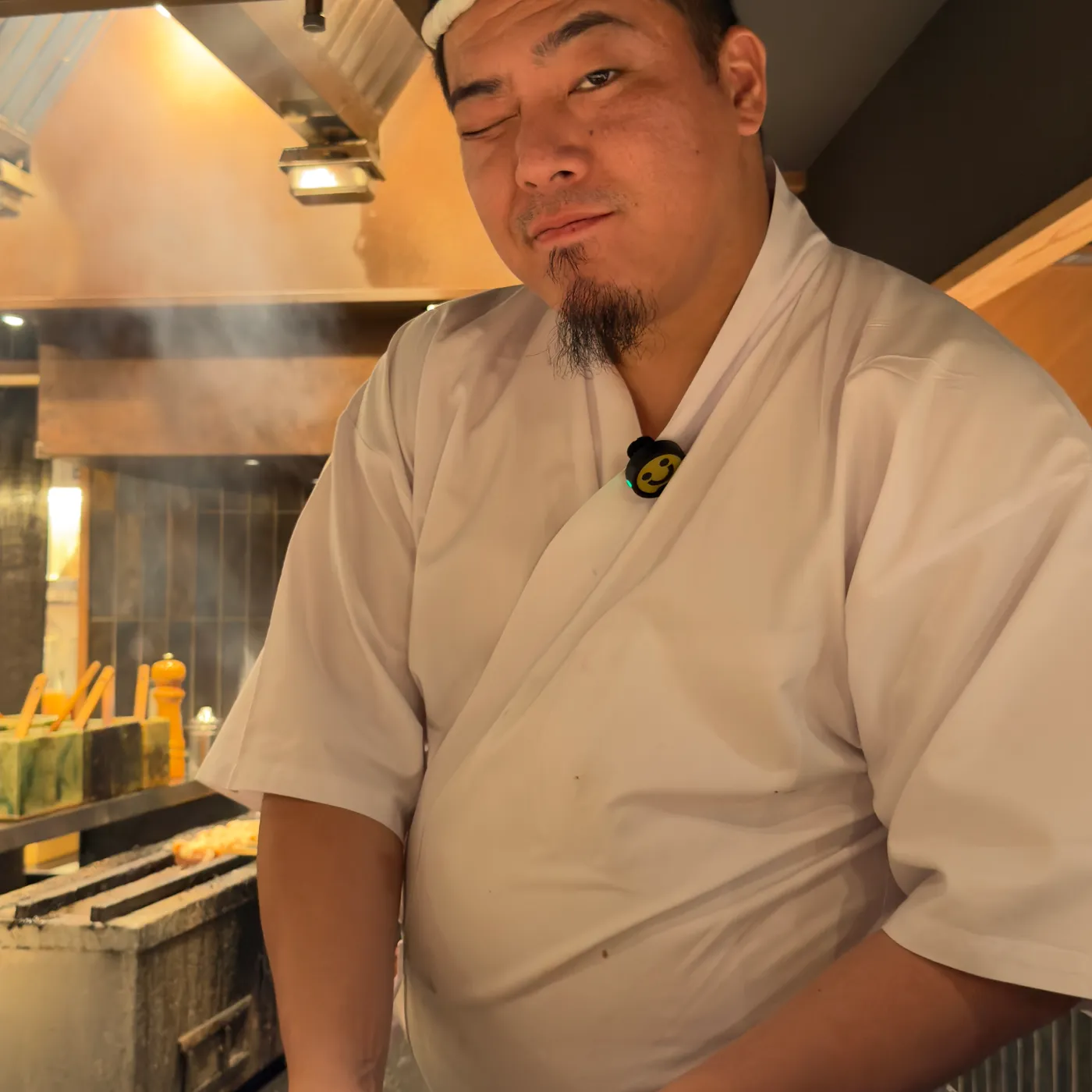
Eiki Tokyo
Visited Tue, Nov 24, 2026 · Dinner
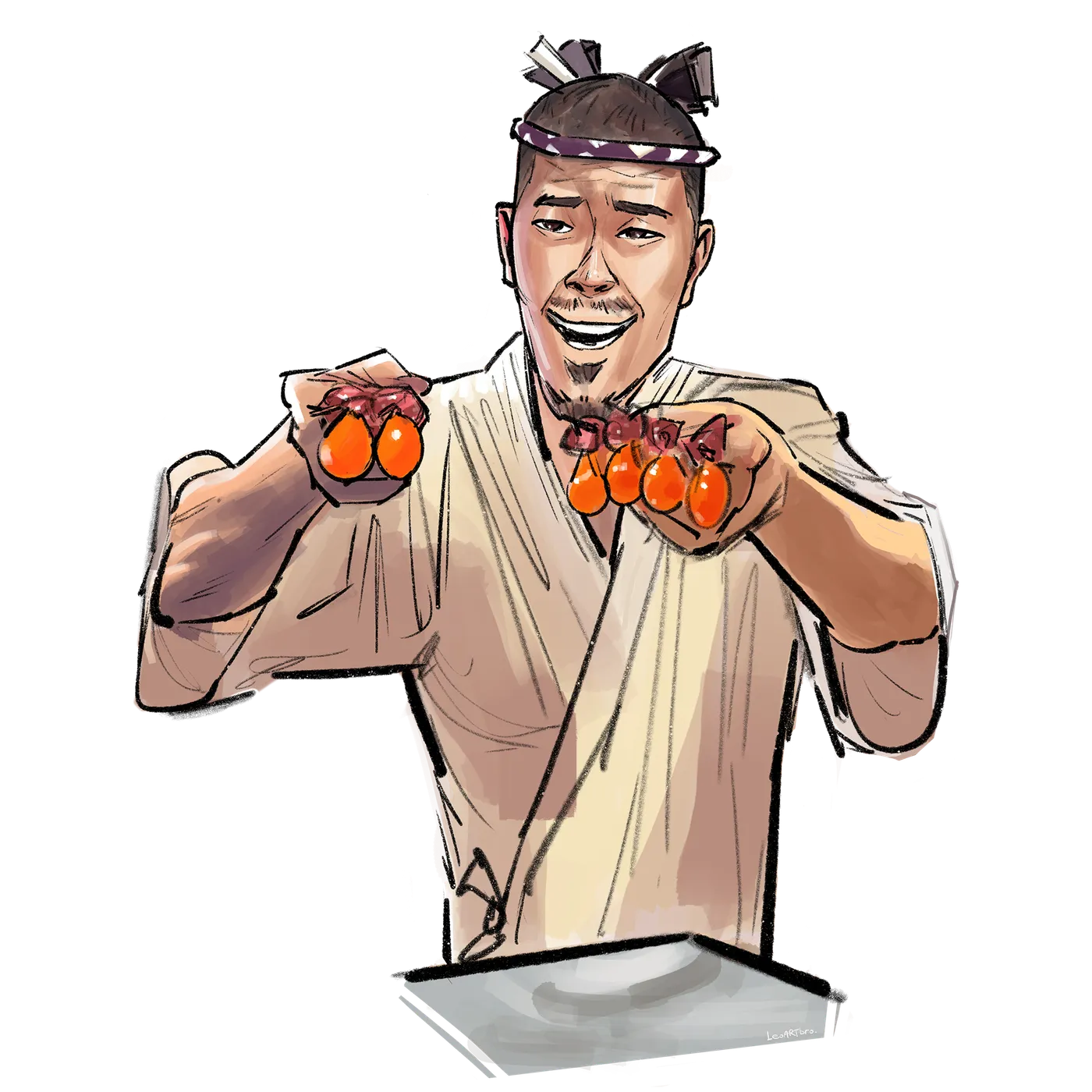
Eiki Tokyo
Back with Kohei
I have been following Kohei-san around Tokyo for almost ten years. Not in a creepy way, I hope.
I first met him at Torishiki, where he stood behind Ikegawa-san and learned from one of the great yakitori masters. Then he moved to Torikado, so naturally I followed him there. Later, he opened Eiki, and by then changing restaurants clearly wasn't going to get rid of me.
It had been a while since I last sat in front of him, so walking into the new EIKI TOKYO and seeing Kohei behind the grill again made me very happy.
Of course, I came for his yakitori, but with Kohei the food has never been the whole story. He talks, jokes, laughs, looks at you while he cooks, and somehow keeps the whole evening loose and fun without ever losing track of what is happening over the charcoal.
At one point, he picked up a chicken thigh and introduced it as “the yakitori of yakitori.” Then he looked at us and added, “This is yakitori!”
He was very pleased with himself, and why shouldn’t he be? After all those years next to Ikegawa-san, followed by all the years standing behind his own grills, Kohei has earned the right to be proud of a piece of chicken.
What we ate
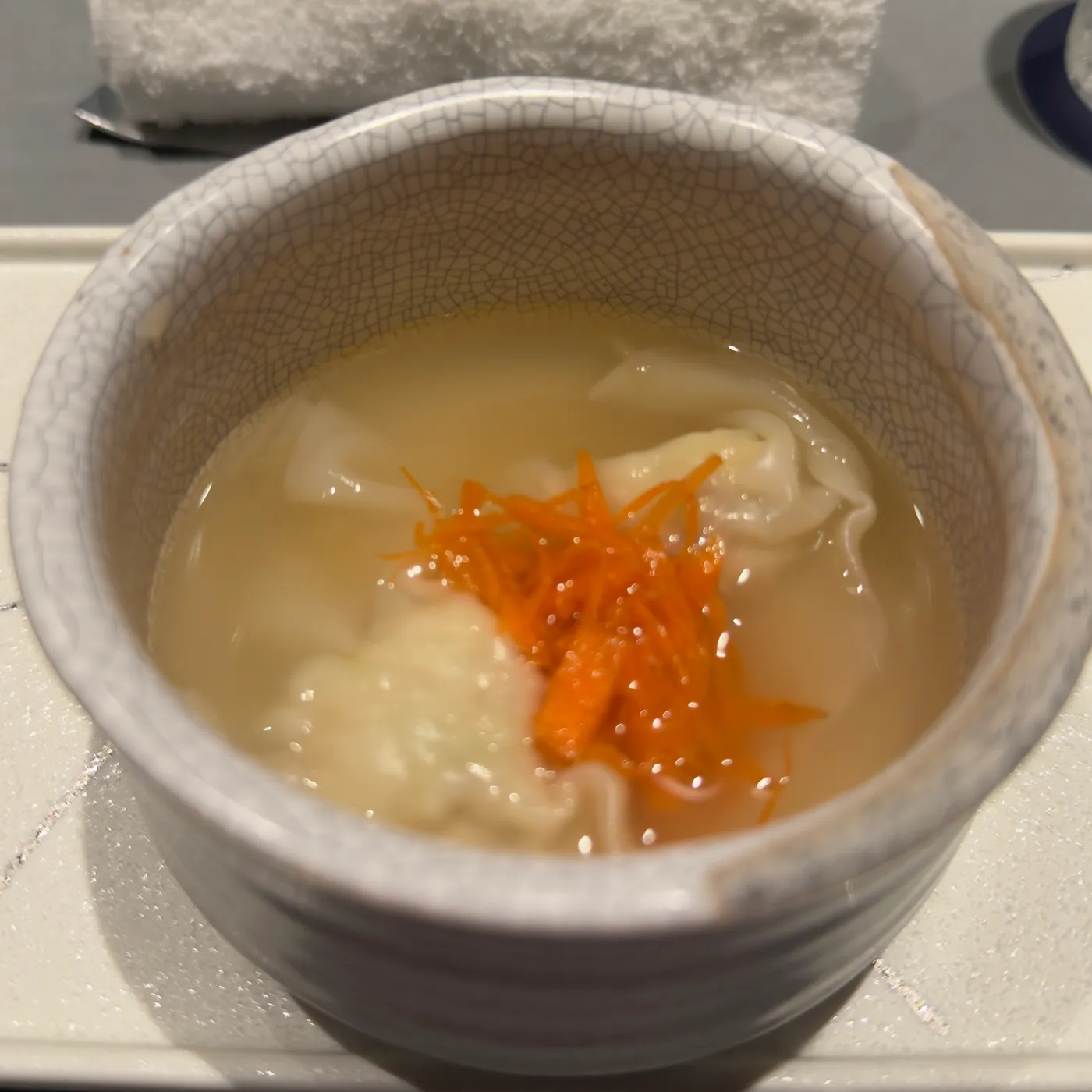
Wontons in Broth — ワンタンスープ
Thin-skinned wontons in a pale, cloudy broth, with fine orange strips over the top. The broad folds of the wrappers sit partly submerged, surrounding the filling.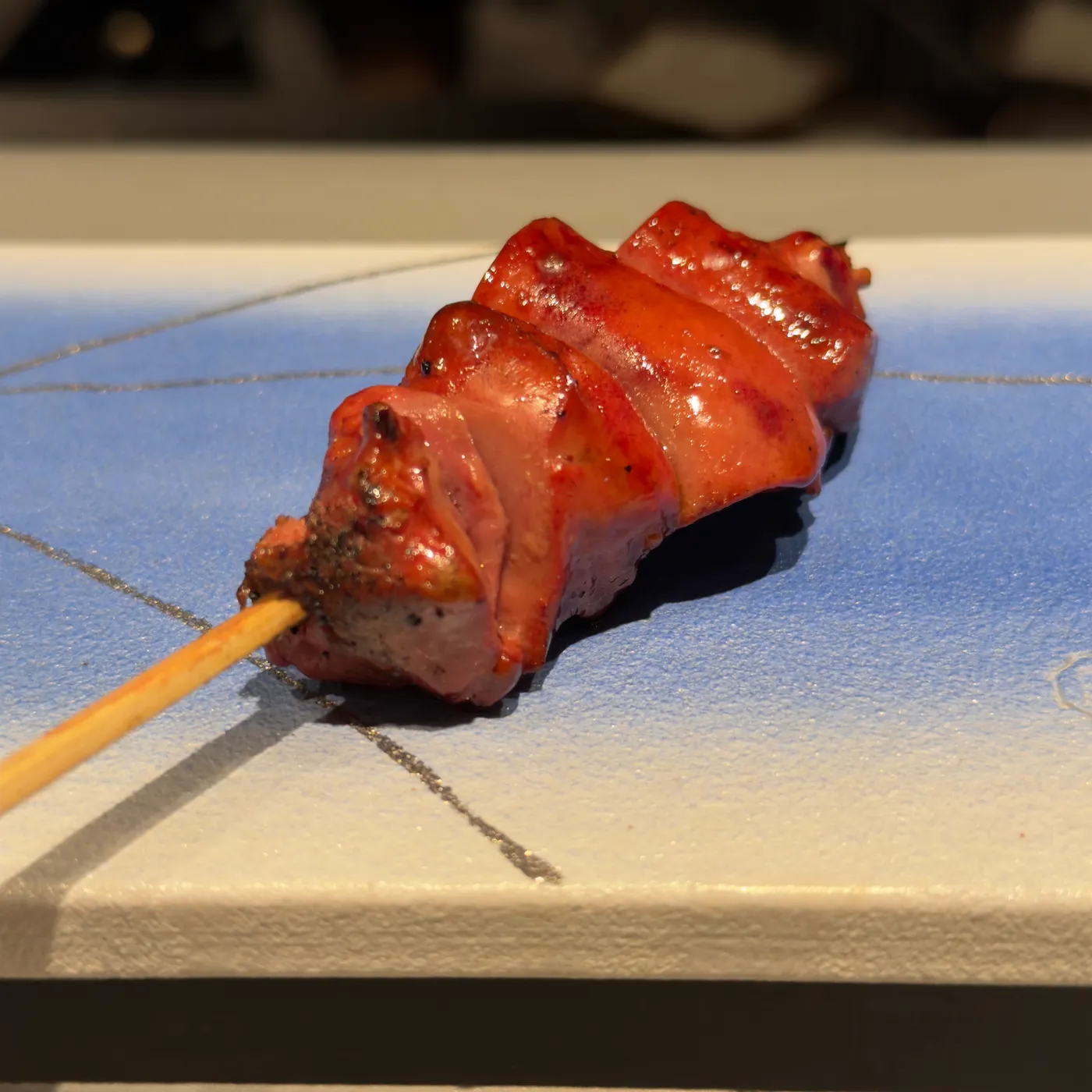
Chicken Liver — レバー
Particularly fatty chicken liver, threaded in generous pieces along the skewer. The smooth lobes have a glossy surface, with darker patches where they have met the heat. The substantial pieces give this skewer a different shape and character from the thinner, folded cuts.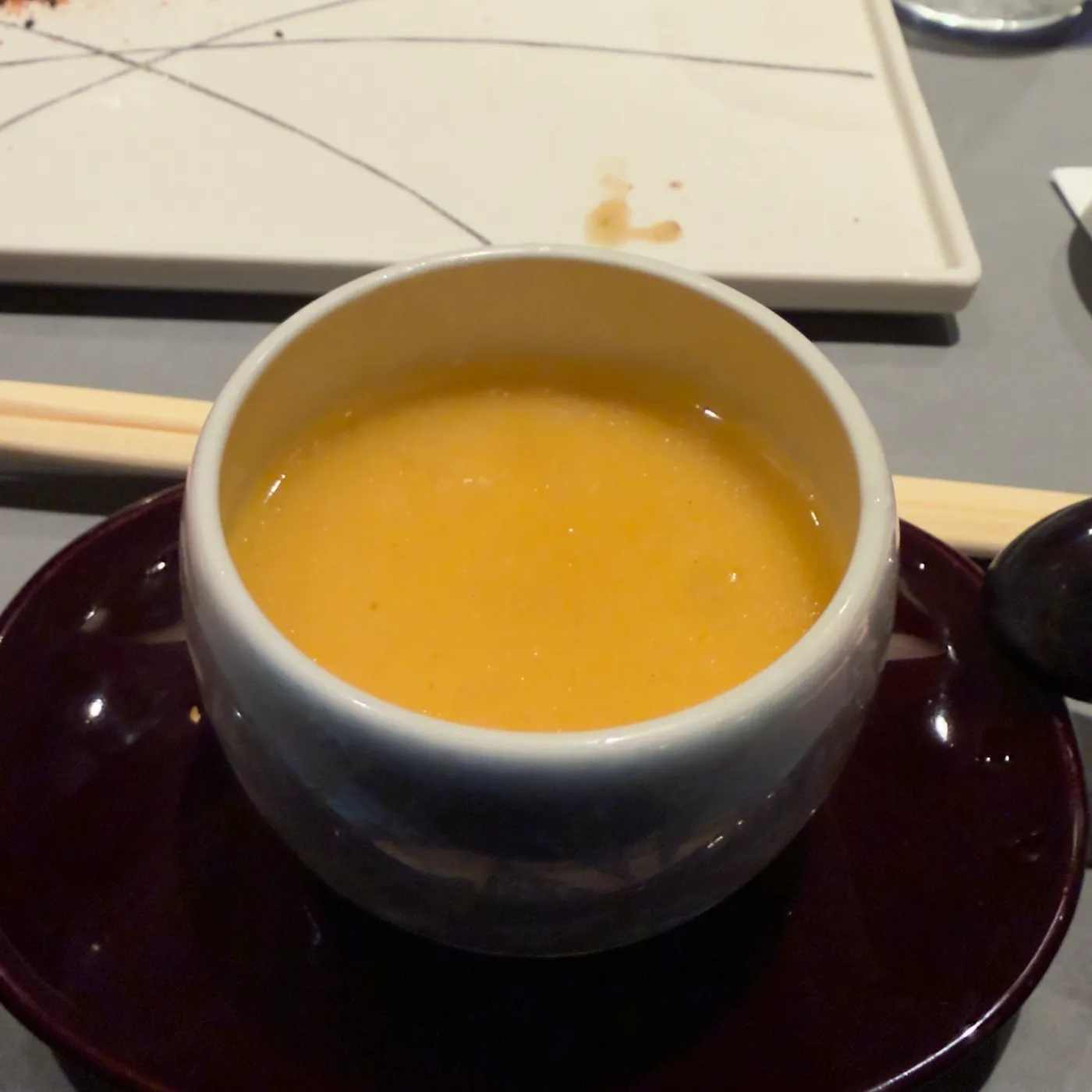
Chicken Paitan Chawanmushi — 鶏白湯の茶碗蒸し
Steamed egg custard made with tori paitan, a cloudy chicken broth, and ginkgo nuts. The chicken broth is incorporated into the custard itself, rather than served separately, giving the familiar egg preparation a chicken-stock base.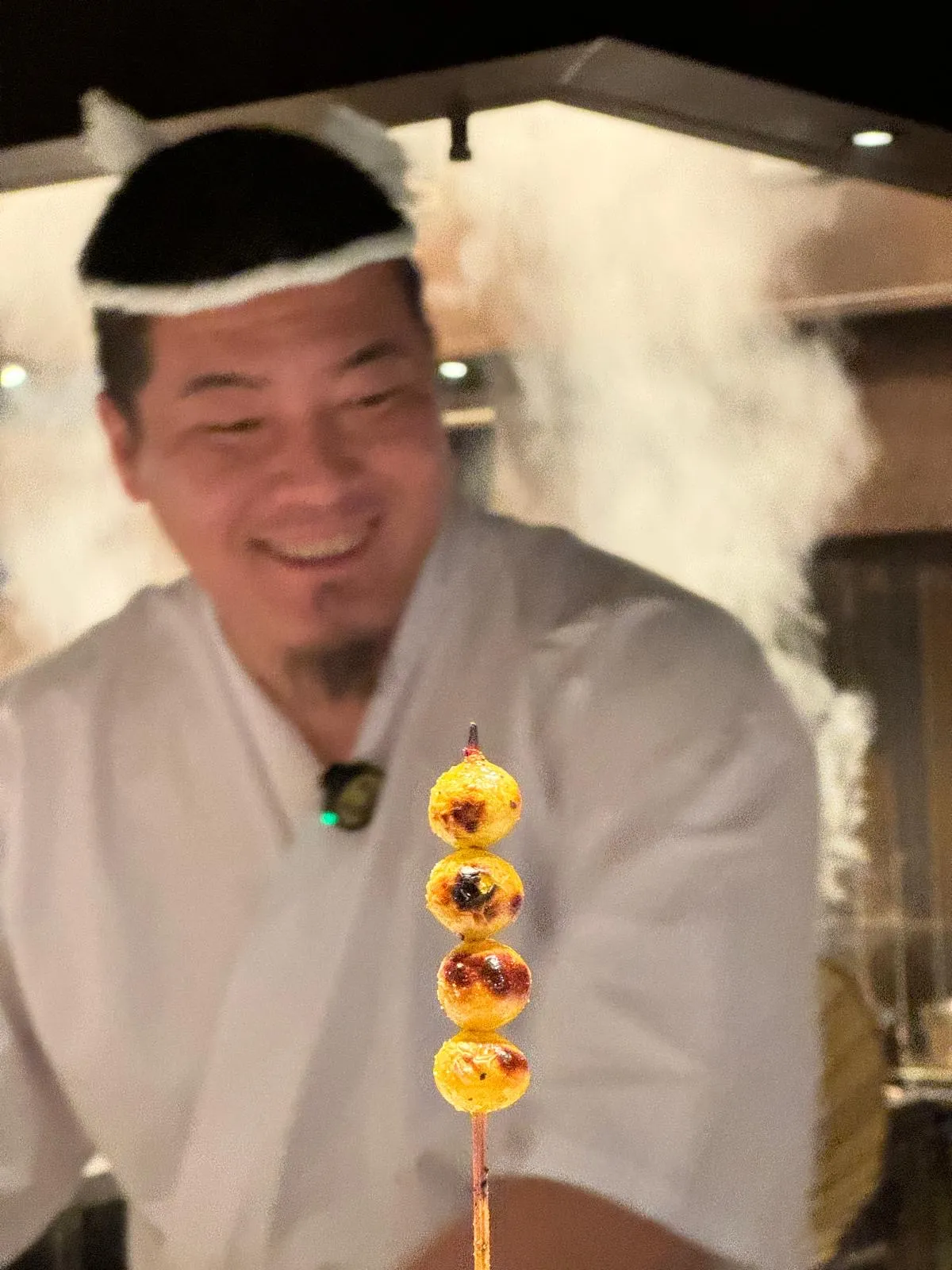
Ginkgo Nuts — 銀杏
Four peeled ginkgo nuts grilled on a slender skewer. The yellow surfaces are browned and blistered in places, leaving the individual nuts intact rather than hiding them beneath a sauce or garnish.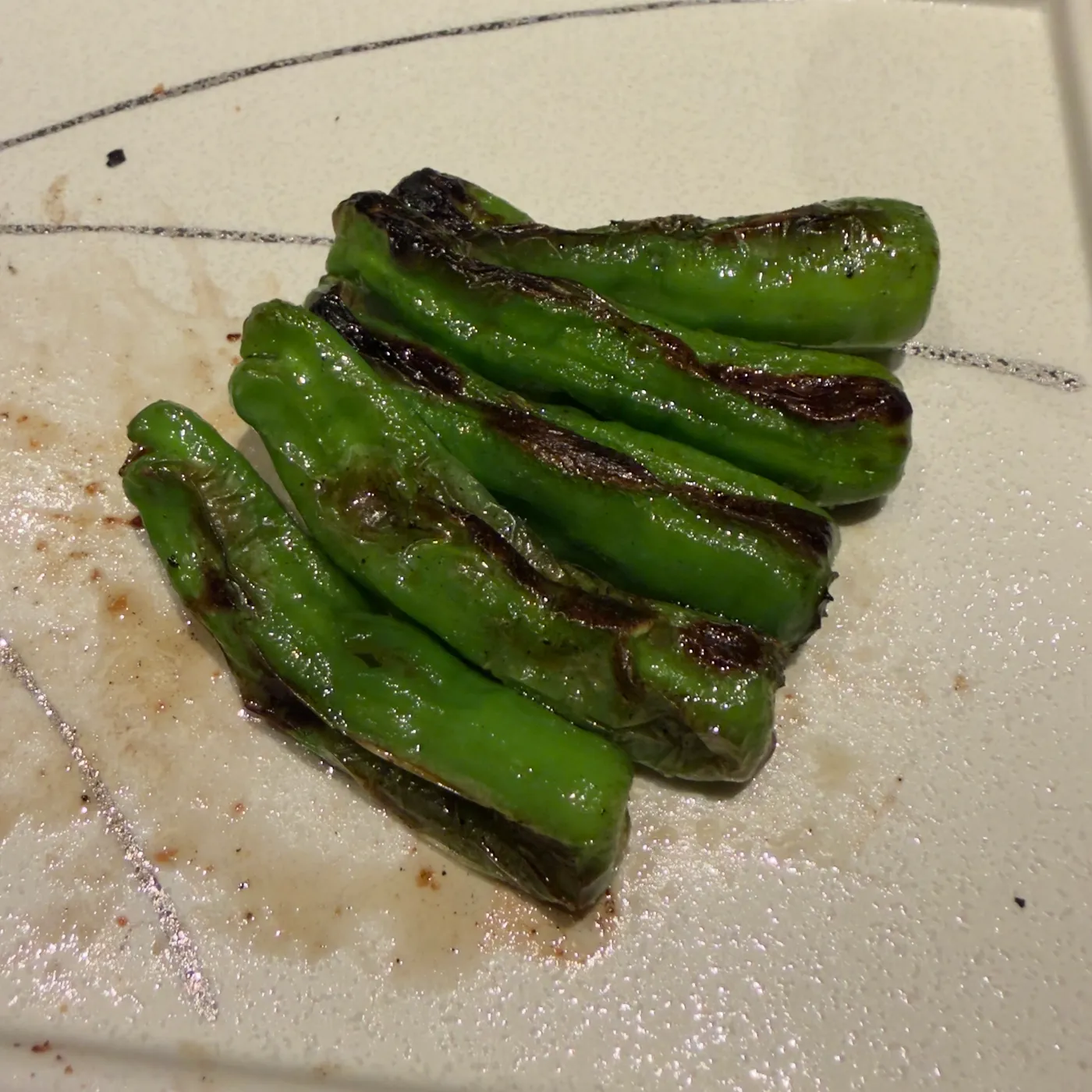
Shishito Peppers — ししとう
Green shishito peppers grilled until their skins blister and darken in patches. Served together on the plate, with the char concentrated along the raised surfaces of the peppers.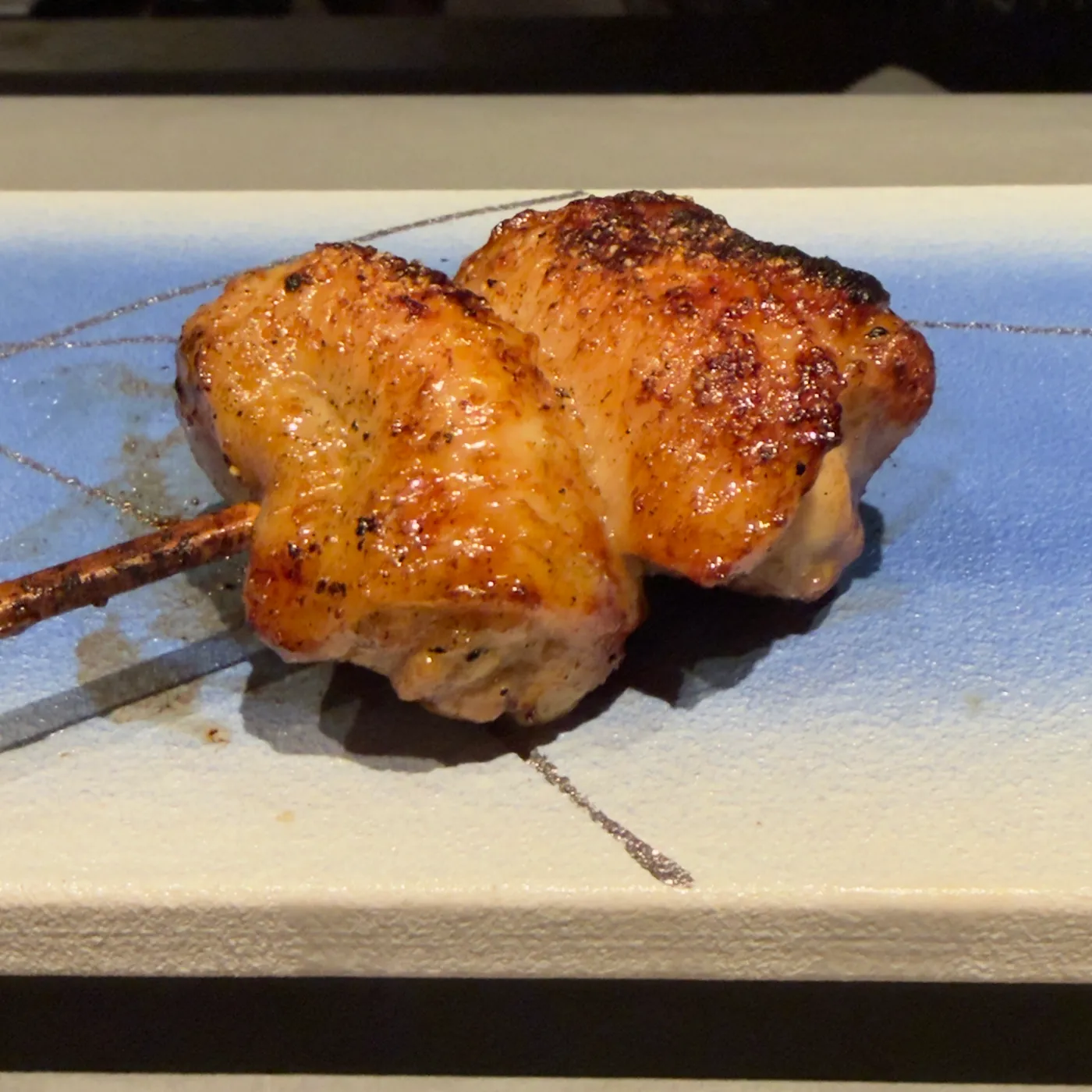
Boneless Chicken Wings — 手羽先
Chicken wings with the bones removed, threaded onto skewers with the skin exposed to the heat. The broad pieces develop an evenly browned surface, with darker edges around the skin. The bones have already been dealt with in the kitchen, so the whole piece can be eaten as it is.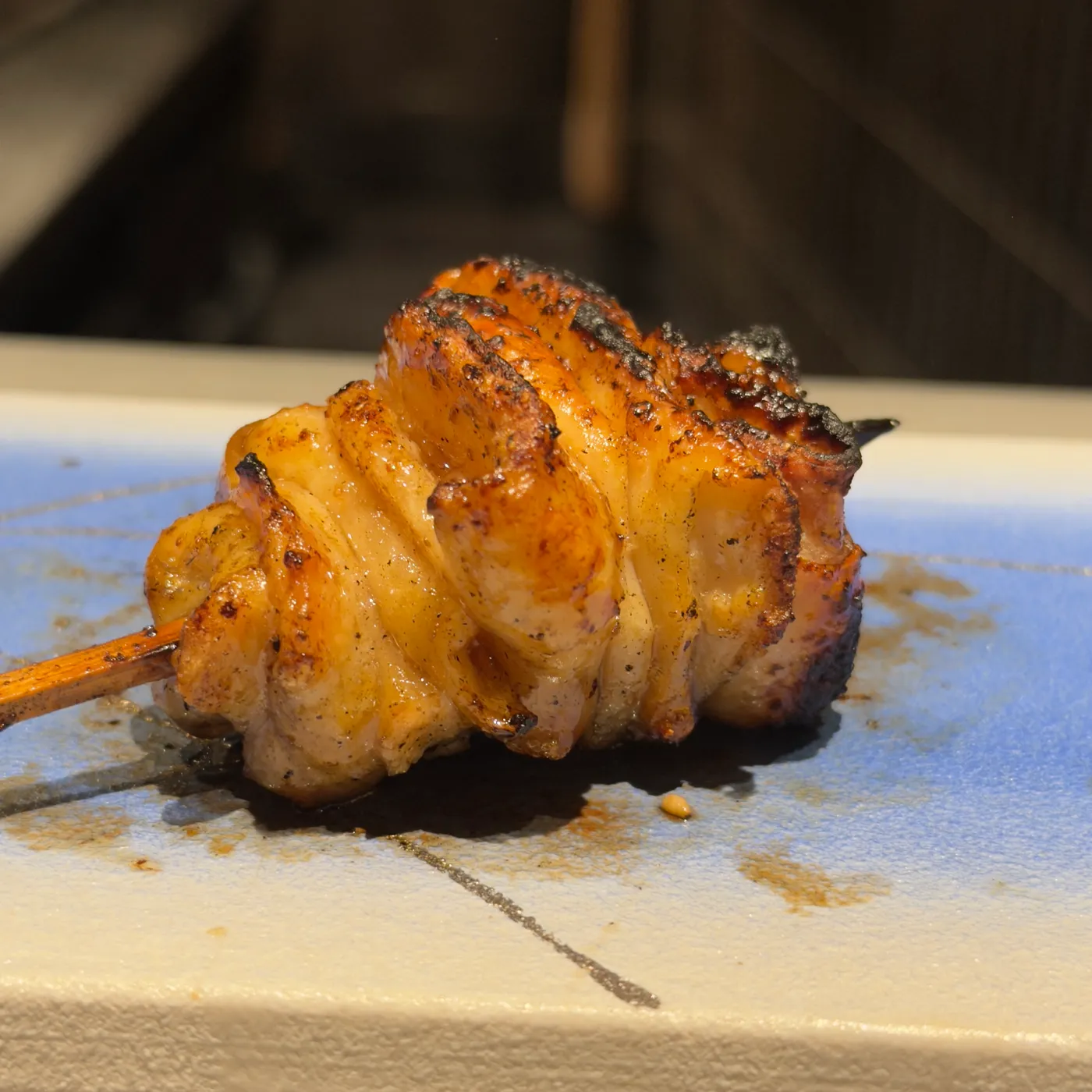
Chicken Skin — 皮
Chicken skin gathered into thick folds along the skewer. The raised edges are deeply browned, with darker char on the ridges and paler layers visible between them.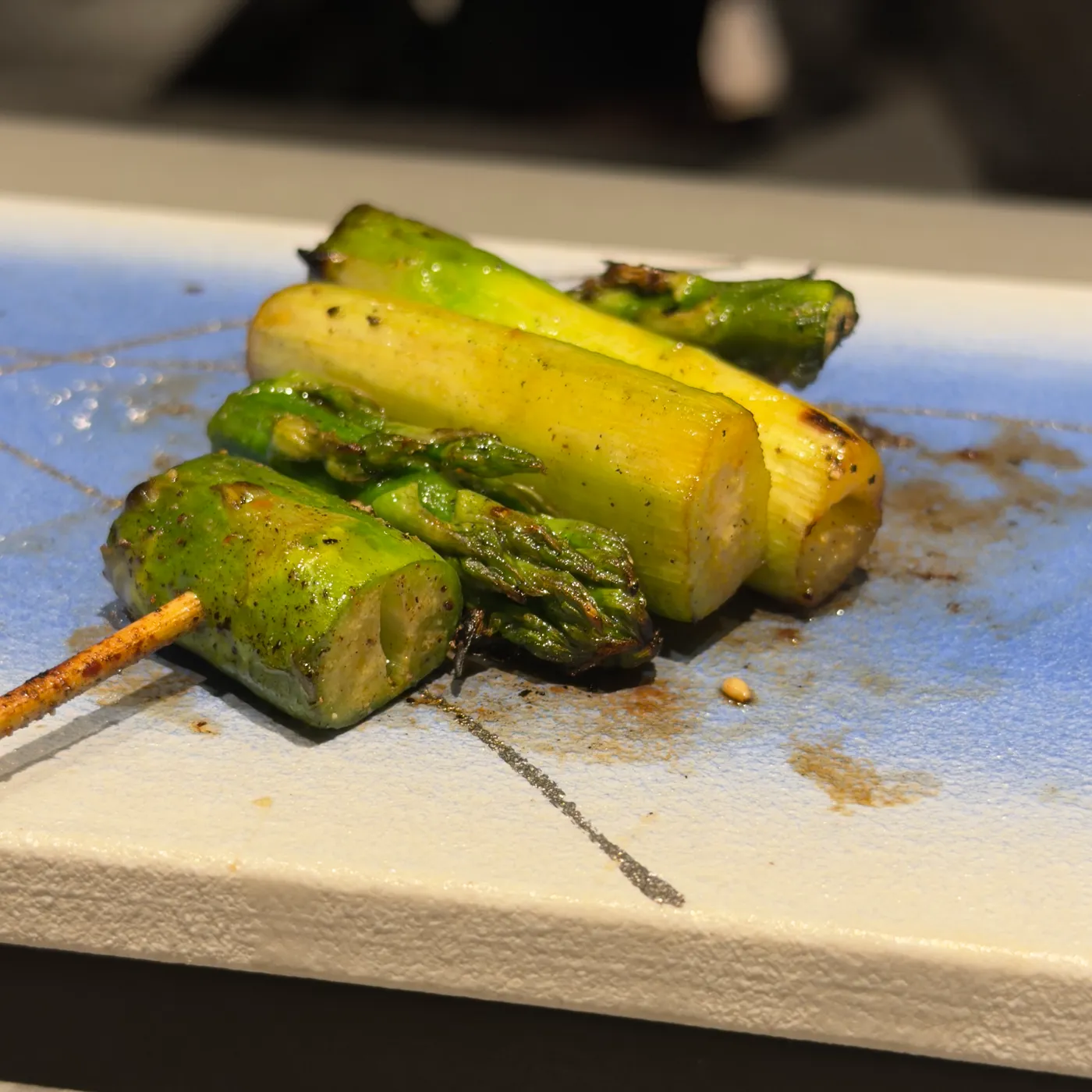
Grilled Asparagus — アスパラガス
Thick asparagus stalks cut into sections and threaded alongside the tips. The arrangement exposes both the cut ends and the outer surfaces to the grill, with browned patches across the green stalks and more delicate tips.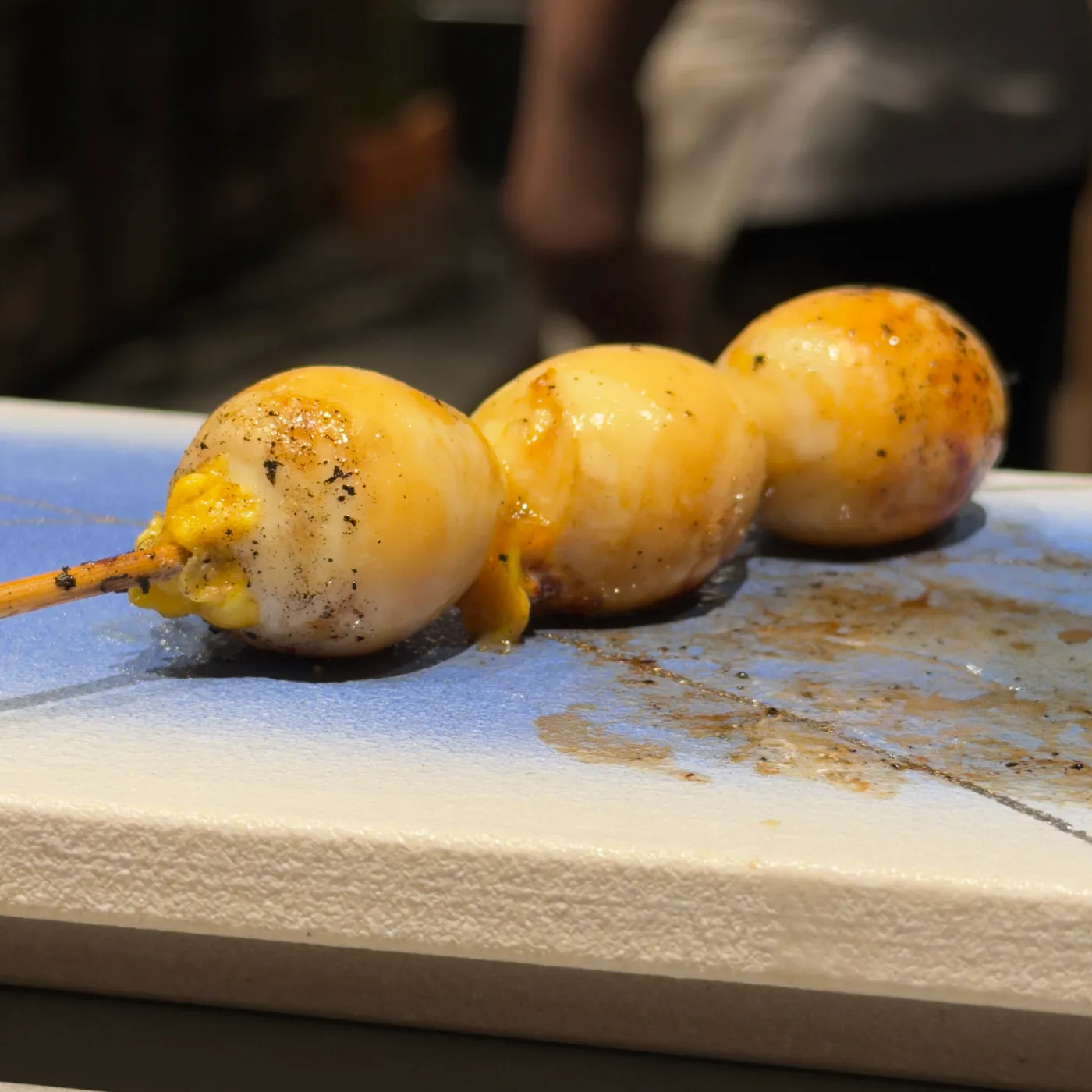
Quail Eggs — うずらの卵
Three peeled quail eggs grilled whole on a skewer. The whites have golden-brown patches, with a little yellow yolk visible around the pierced ends. Keeping the eggs whole preserves the contrast between their browned exterior and the yolk inside.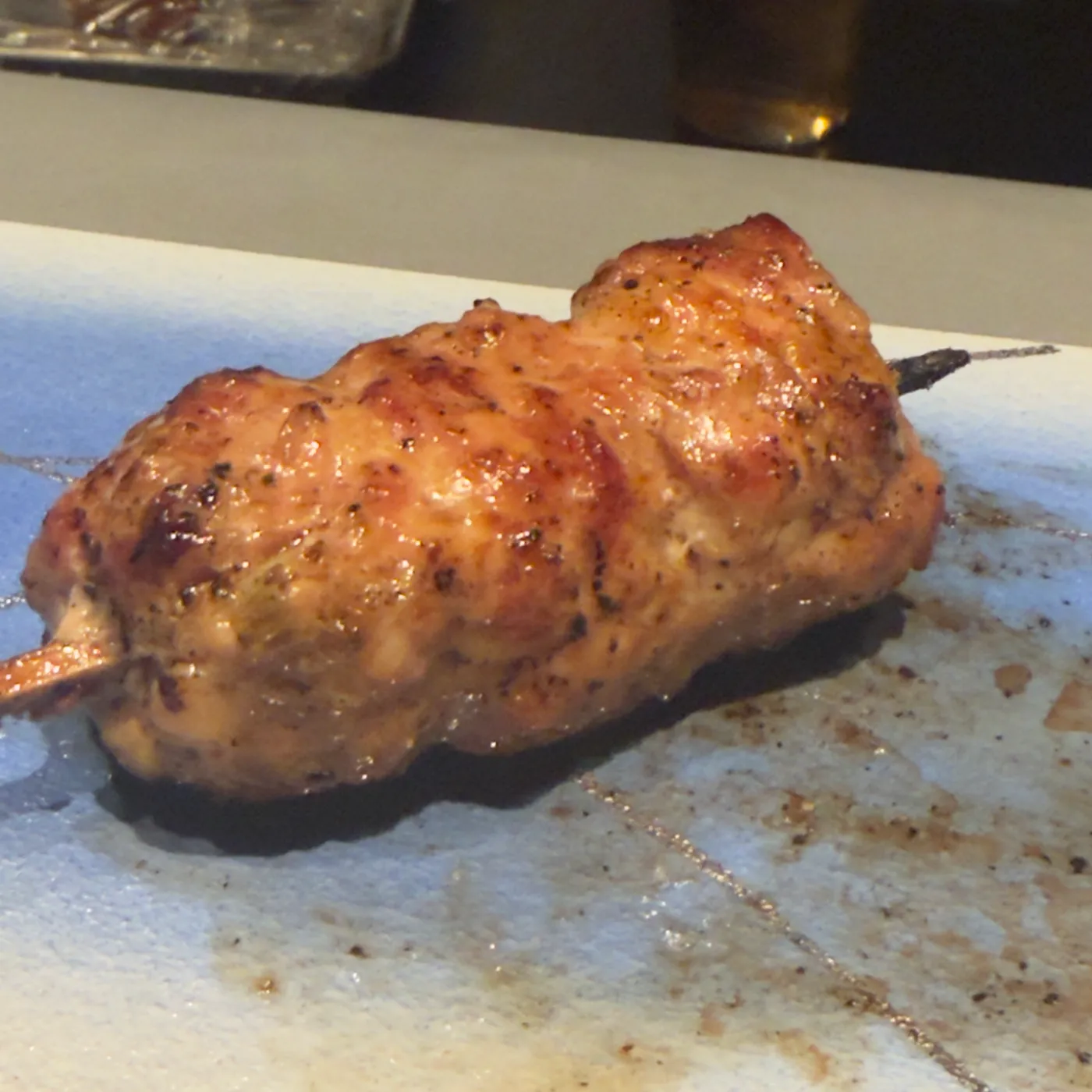
Tsukune — つくね
Minced chicken shaped around a bamboo skewer and grilled as an elongated piece. The surface is textured and browned, with darker coloring around the edges.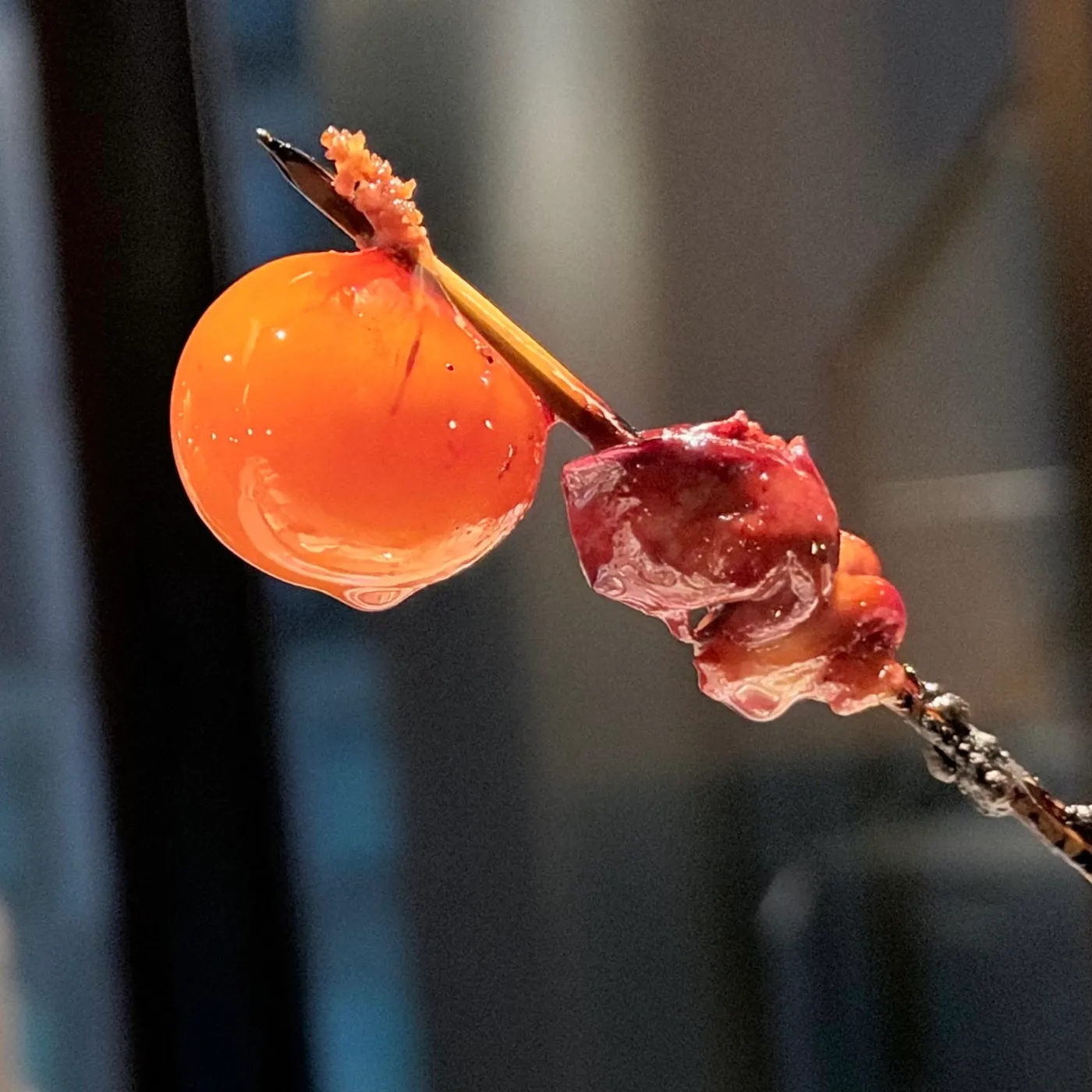
Chōchin — ちょうちん
A bright orange developing egg yolk hangs from the skewer beside small pieces of grilled offal. The yolk remains whole and glossy, contrasting with the browned pieces beside it.