Yakitori Shinohara
Visited Sun, Nov 15, 2026 · Dinner
Yakitori Shinohara
The Man and the Fire
I’ve always considered yakitori one of the most demanding forms of cooking. The chef works almost impossibly close to the heat, maintaining intense concentration for hours while simultaneously turning skewers, adjusting their positions, and moving them between hotter and cooler areas of the charcoal. Every cut behaves differently, and even a momentary lapse in attention can turn carefully prepared food into something burnt.
I’ve heard stories of yakitori artisans who, after years of working so close to the fire, have lost sensation in their fingertips. I cannot say how common this is, but it illustrates the physical demands of a profession whose apparent simplicity conceals an enormous amount of skill and endurance.
On November 15, we returned to Yakitori Shinohara in Tokyo’s Nishiazabu neighborhood. It was a pleasure to see chef Adore Shinohara again after some time, and our guests thoroughly enjoyed the evening.
Shinohara was born in Tokyo in 1978 and grew up around his parents’ izakaya near Tokyo Station’s Yaesu exit. He began working in Japanese cuisine at eighteen, subsequently gaining experience in yakiniku, Western cooking, and other Japanese kitchens. After further training in yakitori, he opened his own restaurant in Nishiazabu in January 2021, at the age of forty-two.
When we spoke, he explained that his ambition was to bring the techniques he had acquired throughout his career into yakitori. That broader experience is evident in a menu that extends well beyond skewers, incorporating vegetables, chawanmushi, foie gras, croquettes, and clay-pot rice.
The restaurant itself reflects his attention to detail, from the substantial cypress counter and specially crafted copper ventilation hood to the Japanese ceramics he selects, sometimes visiting the potters personally.
But what interested me most was his conviction about the chicken he uses.
Shinohara described Kuro Satsuma-dori, a jidori chicken from Kagoshima raised for at least 150 days. Production is limited, he explained, and the birds are raised in an environment that contributes to the flavor of both the meat and skin.
“I don’t think there’s another chicken that can surpass this one,” he told me.
He added that he felt fortunate to work with it.
I appreciated the simplicity of that statement. Here was a chef who had spent decades learning different aspects of cooking, expressing his belief in an ingredient without needing to dress it up in elaborate culinary philosophy.
And now it was time to see how he brought that ingredient, his experience, and the fire together.
What we ate
The Opening Courses
Grilled Turnip from Higashi Farm
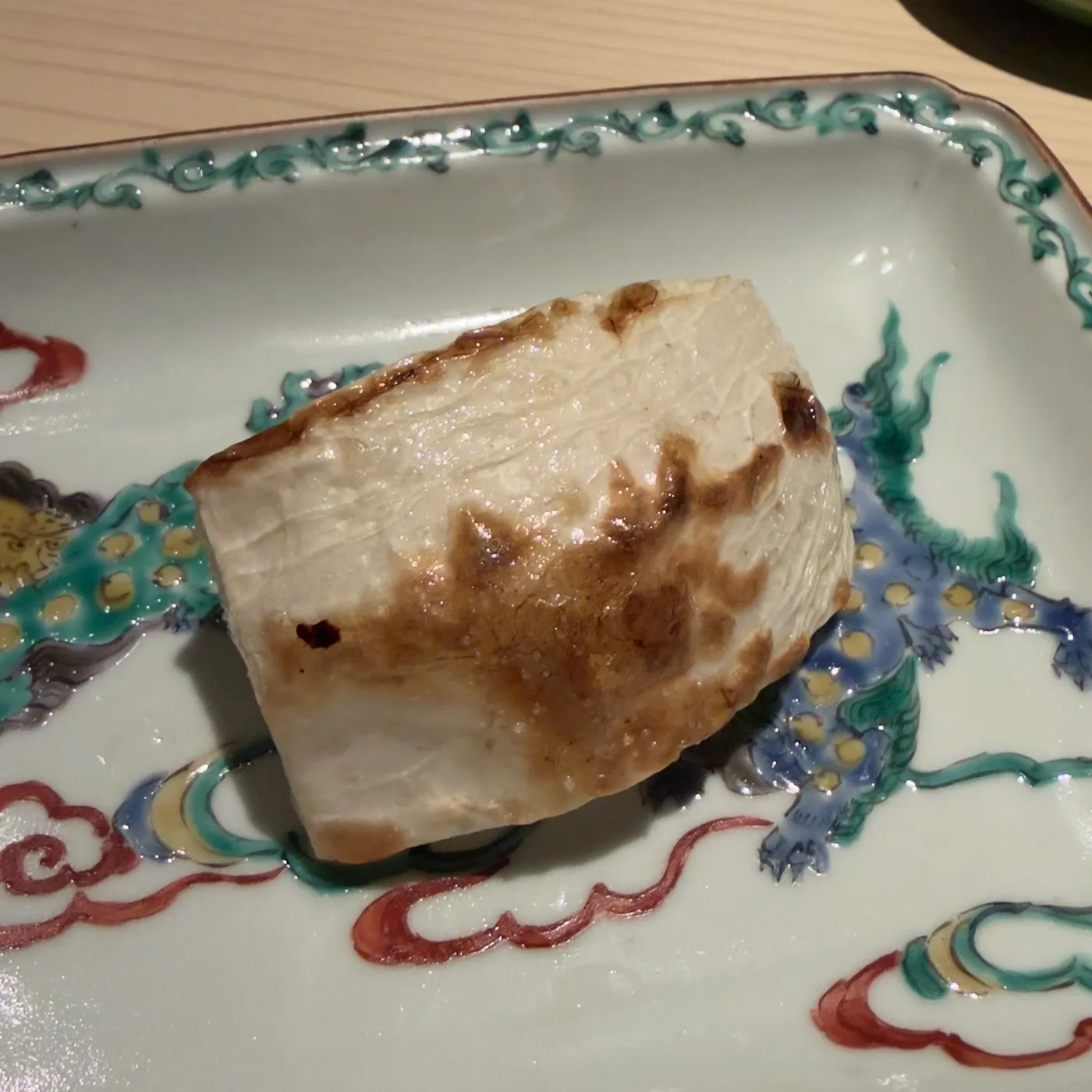
We began with a grilled turnip from Higashi Farm, its pale flesh marked by browning from the heat. It was an appropriately simple introduction to a meal in which charcoal would play such an important role. Vegetables offer their own challenges on the grill. Their water content, density, and natural sweetness respond differently to heat than meat does, and the cook must adjust accordingly.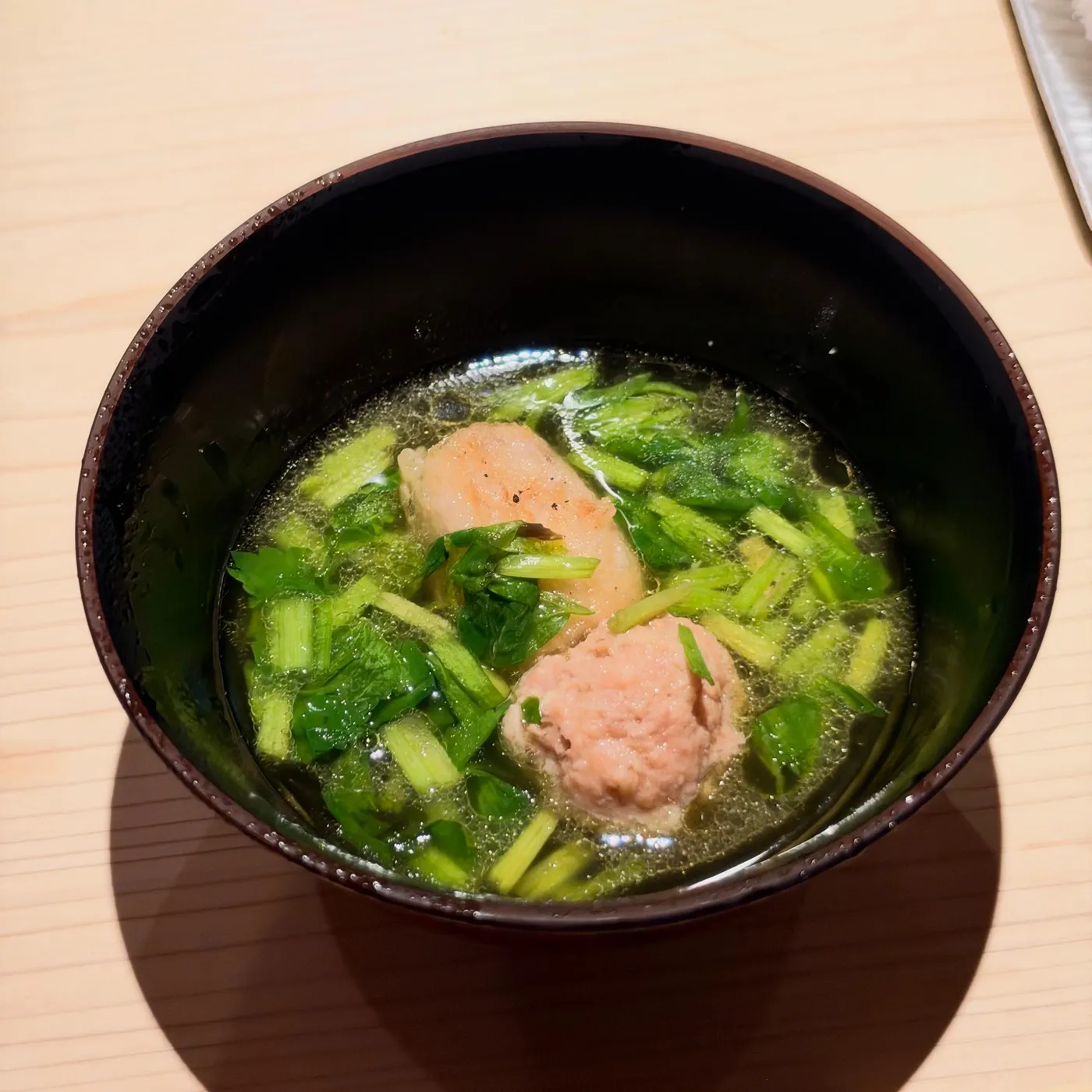
Ten-Hour Kokutei Chicken Soup
Next came a clear chicken soup that Shinohara said had taken ten hours to prepare. Made with Kokutei chicken, it contained tsukune, or chicken meatballs, and ebi-imo, a variety of taro prized for its texture. Fresh green vegetables completed the bowl. The long preparation of the broth provided an interesting contrast to the immediate, intense cooking of yakitori. While a skewer may spend only a relatively short time over charcoal, a soup like this depends on hours of careful extraction.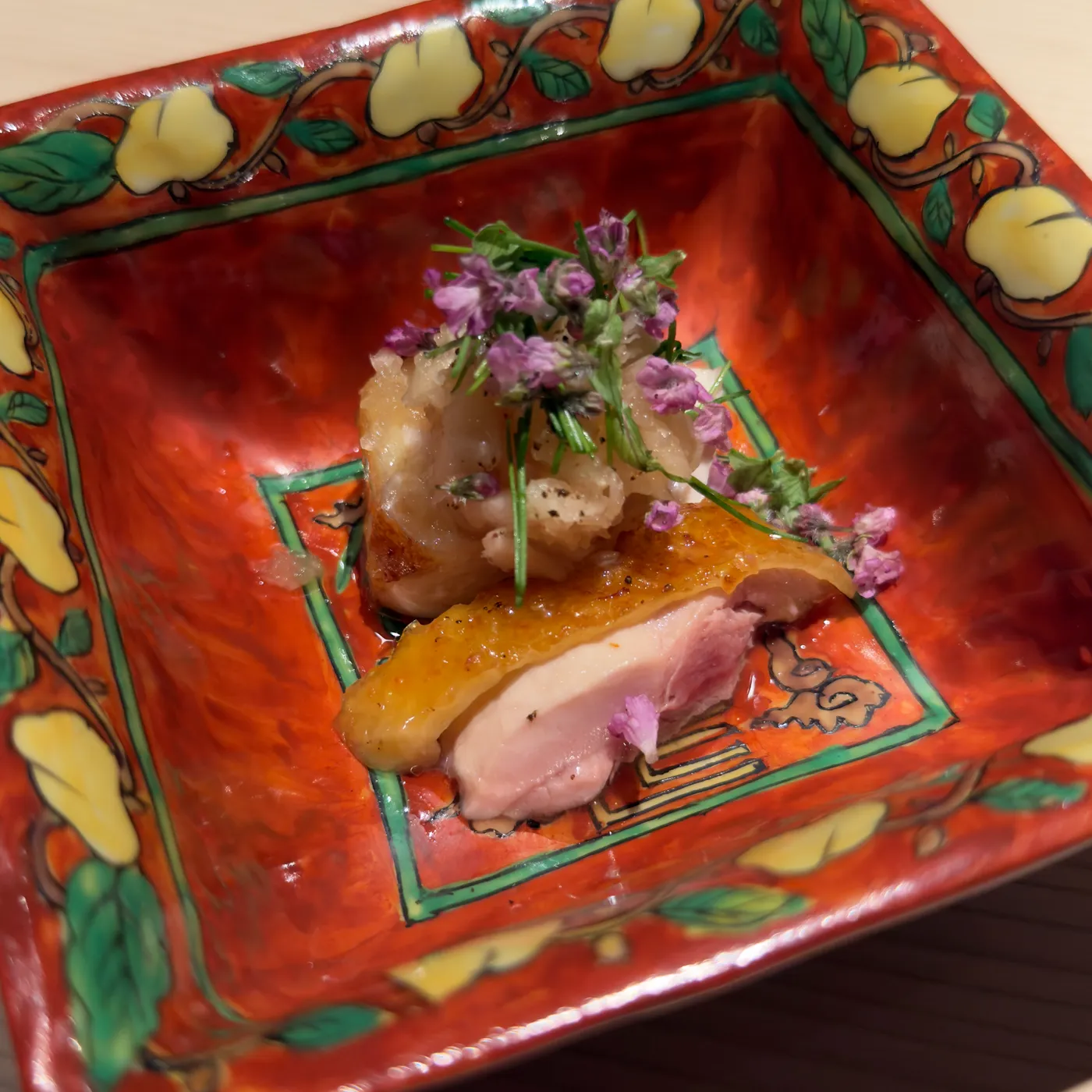
Kokutei Chicken Tataki — Breast and Thigh
The next preparation brought together chicken breast and thigh, served as tataki on a beautifully decorated red ceramic plate. The two cuts offered a direct comparison of different parts of the bird. Breast and thigh naturally differ in fat content, structure, and texture, making them interesting to experience together. The dish came with grated garnish and delicate herbs.The Grill Begins
Chicken Wing with Leek — Tebasaki
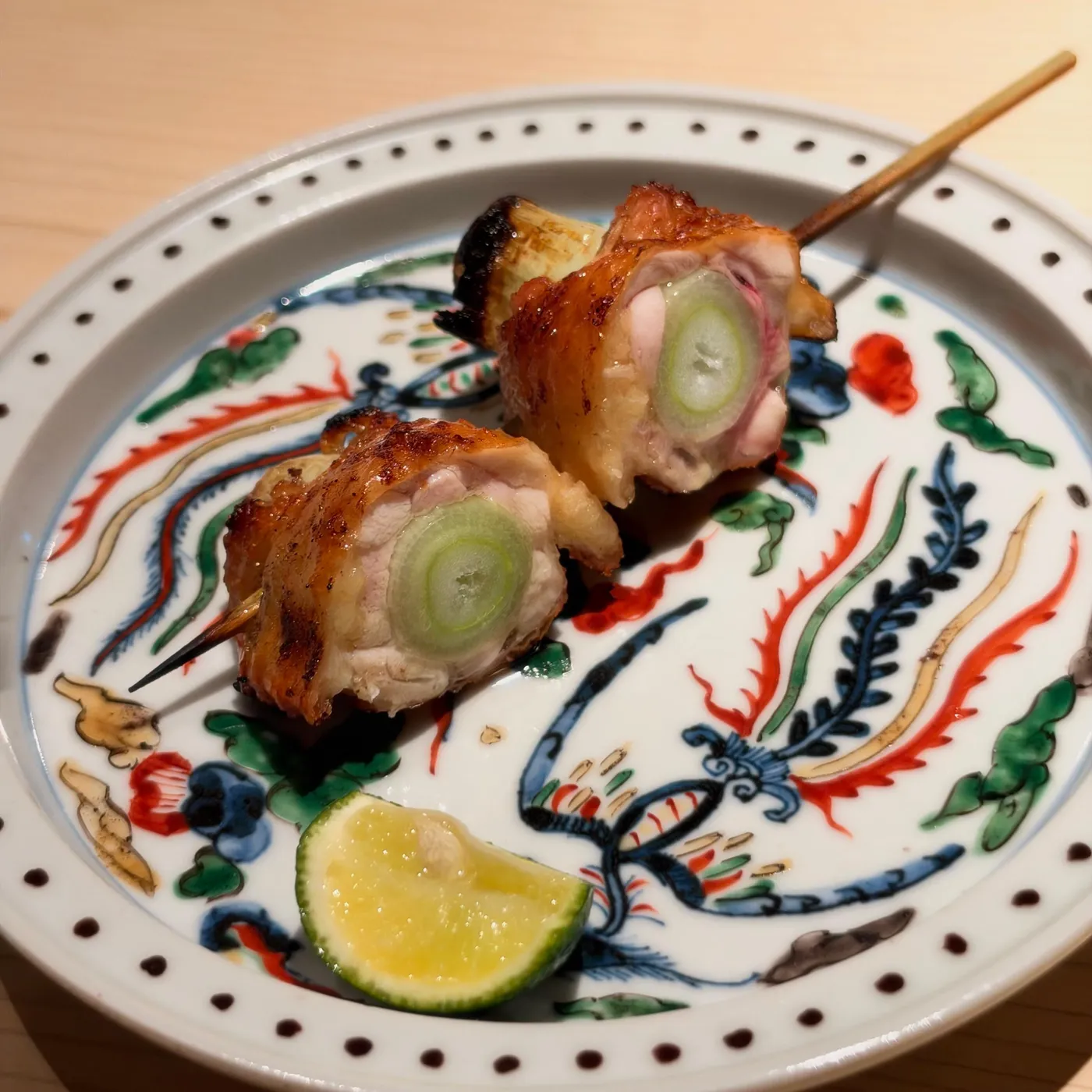
One of the first skewers combined chicken wing with leek. The leek was enclosed within the chicken, creating a cross-section of pale green vegetable surrounded by meat and browned skin. A wedge of citrus accompanied the skewer. Chicken wings are an interesting part of yakitori because the relationship between meat, fat, skin, and bone requires careful preparation before they ever reach the grill. Here, the combination with leek brought another ingredient into that relationship with the fire.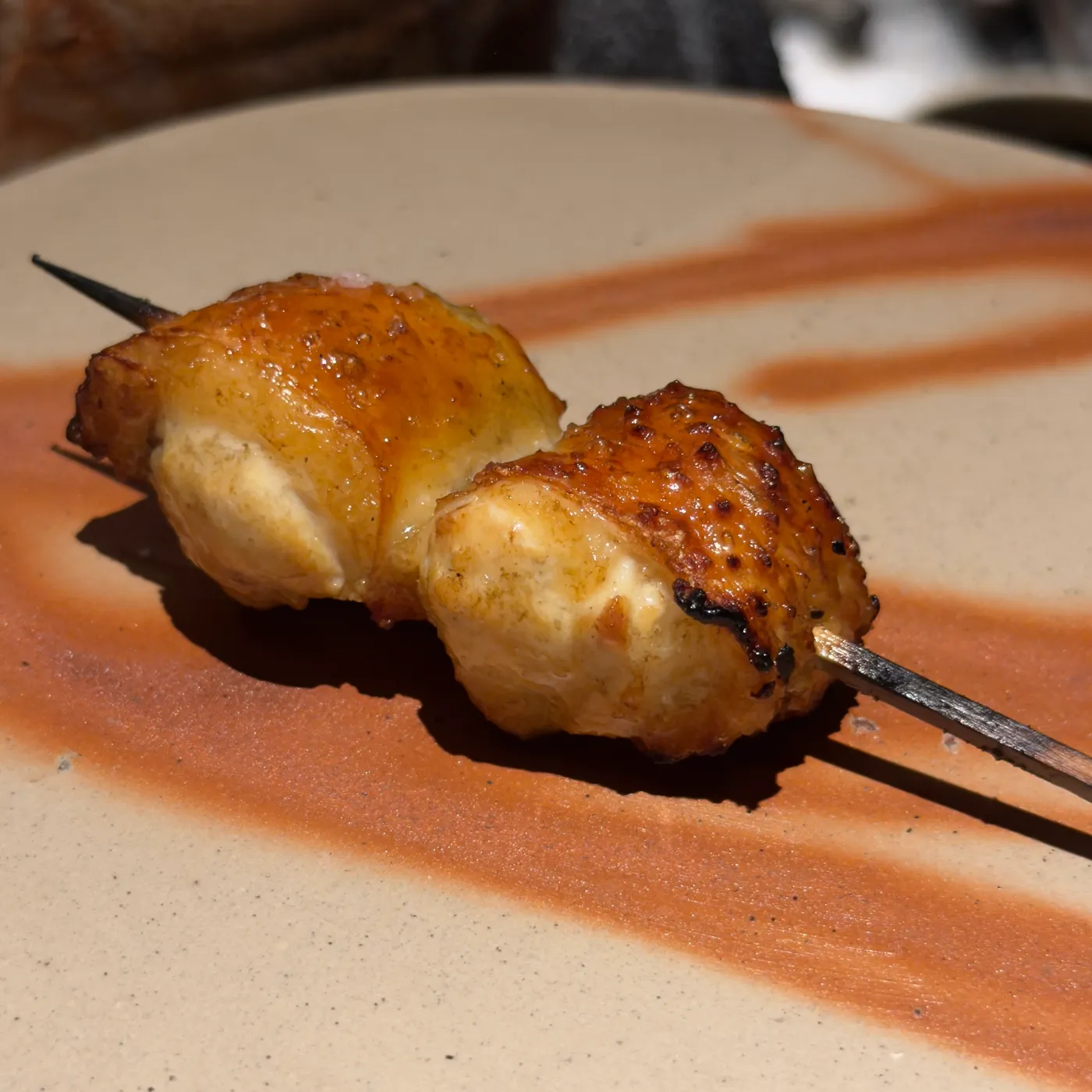
Chicken Shoulder — Kata
Shinohara then served chicken shoulder, known as kata. The shoulder is a relatively small cut whose structure differs from the more familiar breast and thigh. On the skewer, it had a golden-brown exterior with visible areas of lighter meat beneath. Yakitori offers an opportunity to appreciate the anatomy of a chicken in a way that few other preparations do. Instead of combining several cuts into a single dish, the cook presents them individually, allowing each part to retain its identity.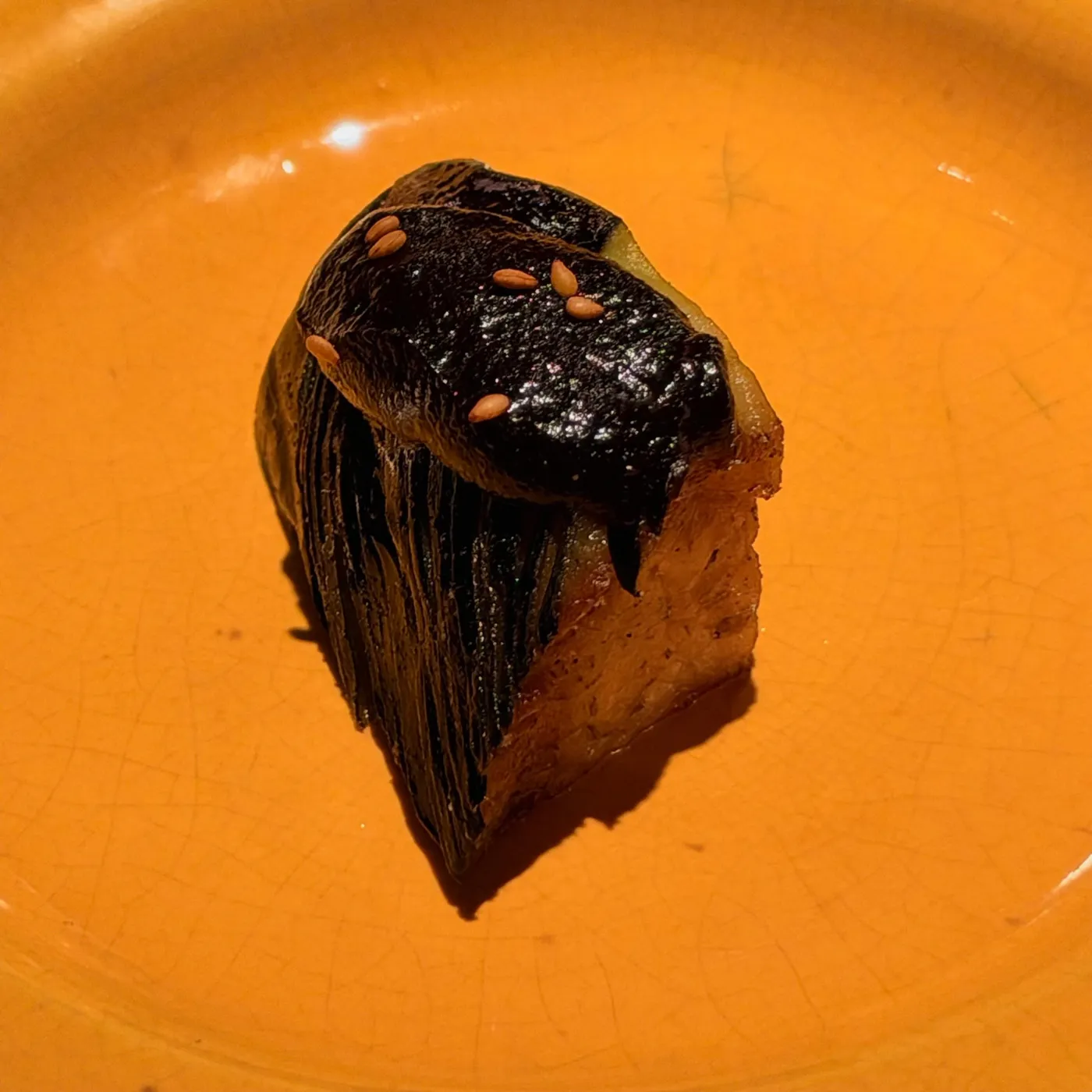
Eggplant with Dengaku Miso
The next vegetable preparation was large Japanese eggplant with dengaku miso. Dengaku is a traditional preparation in which a seasoned miso mixture accompanies an ingredient. Eggplant is particularly suited to this approach because its soft flesh provides a contrasting texture to the miso's concentrated flavor. It was another example of Shinohara incorporating preparations from the broader Japanese culinary tradition into the progression of a yakitori meal.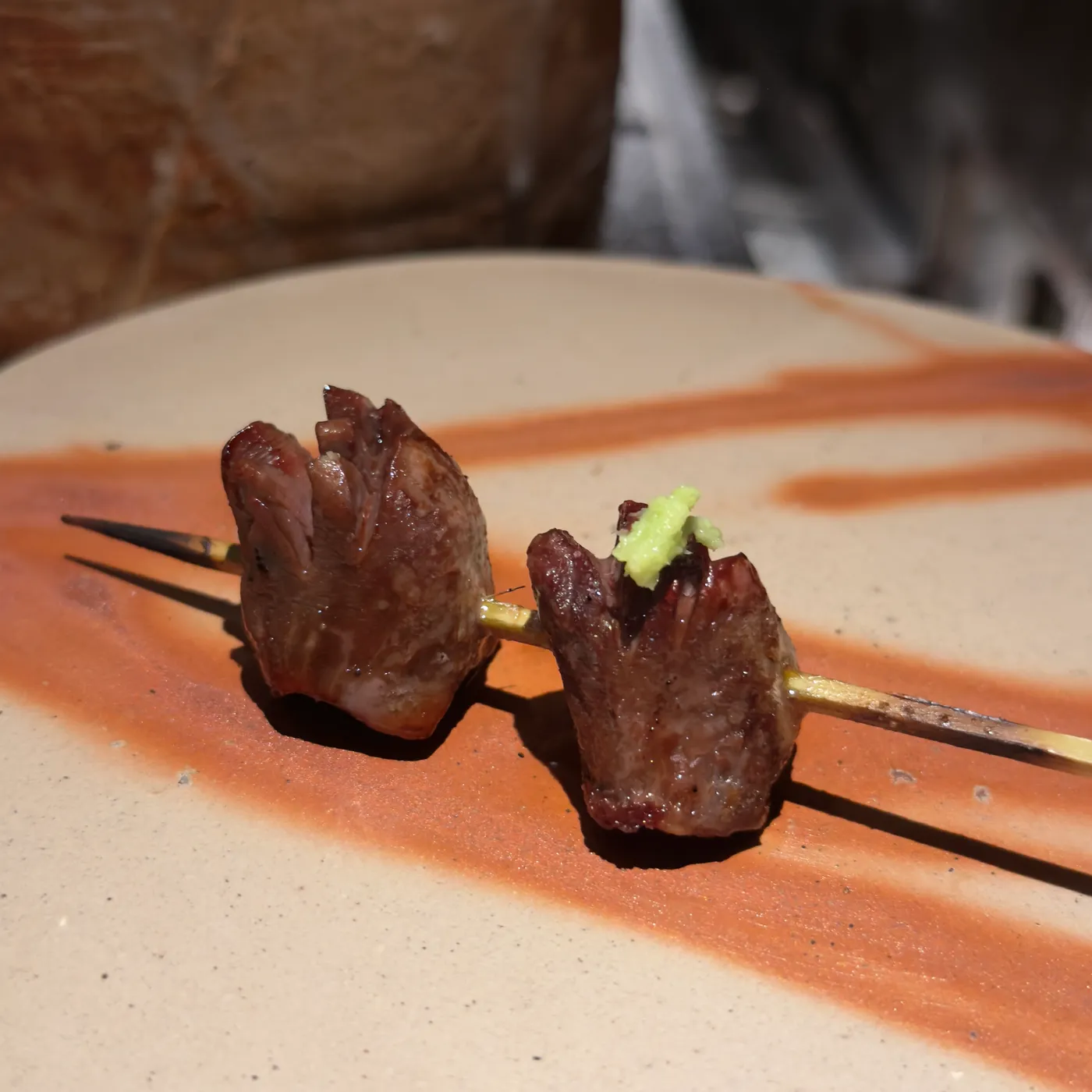
Chicken Gizzard — Sunagimo
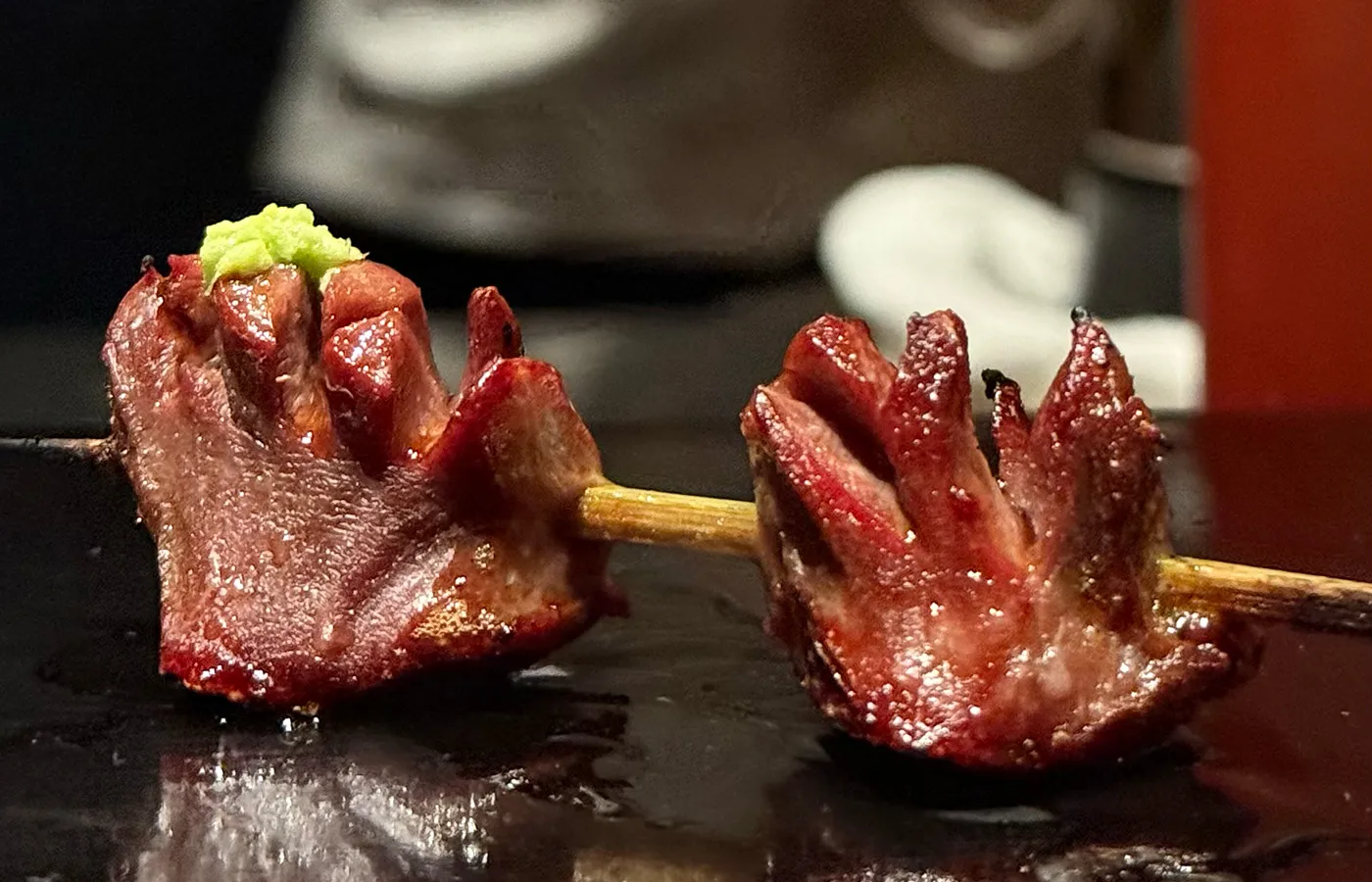
Gizzard, or sunagimo, is one of the cuts that makes yakitori so interesting. Unlike more familiar chicken meat, the gizzard is a muscular digestive organ, with a firm texture that requires careful trimming and cooking. Its character is defined as much by texture as by flavor. Shinohara served it as a skewer of two dark, compact pieces, one finished with a small green garnish.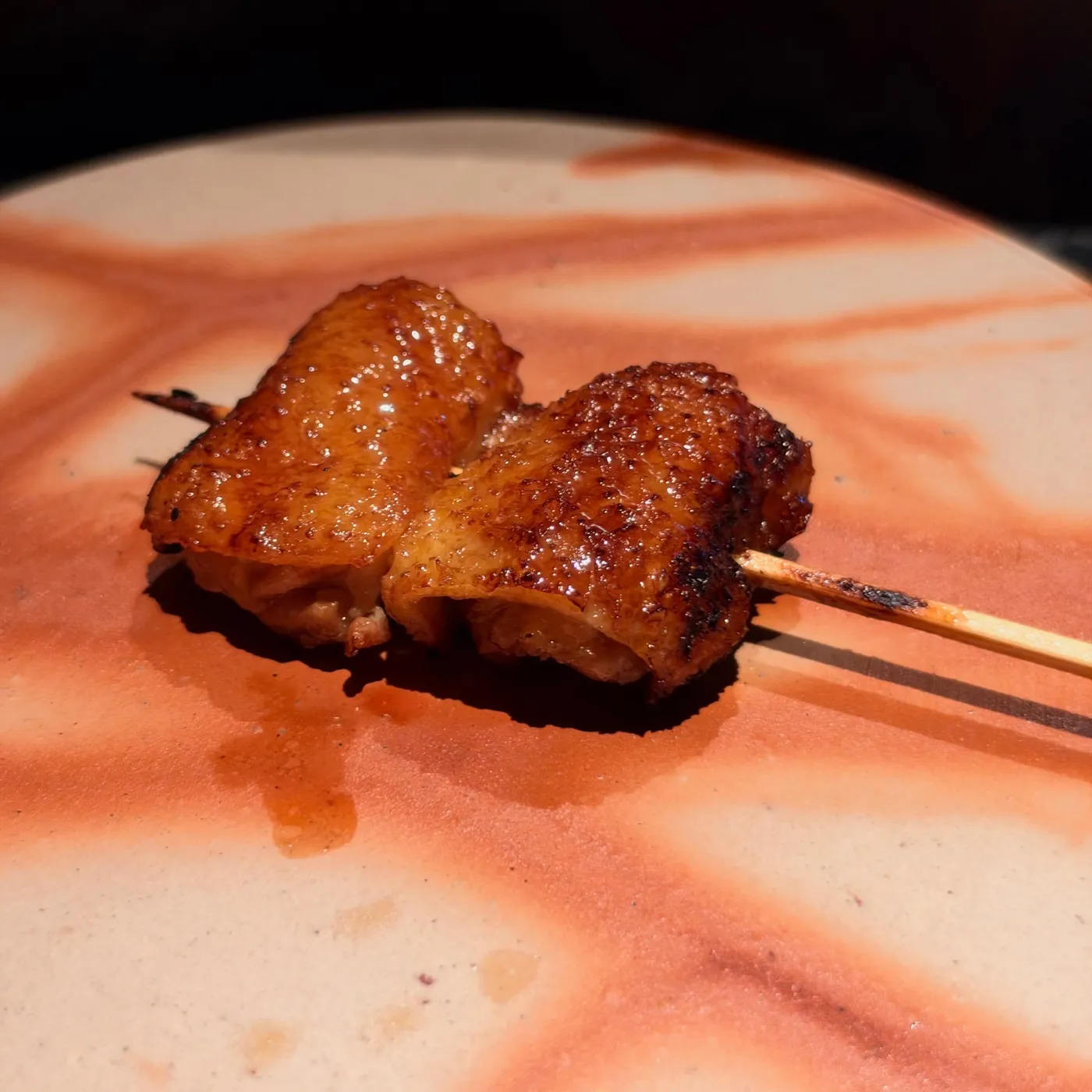
Chicken Neck with Skin — Kawa-tsuki Seseri
Next came seseri, the meat from the chicken’s neck, with its skin still attached. Neck meat is valued for the work these muscles perform during the bird’s life, giving it a distinctive texture. When the skin is retained, the cook must balance rendering the fat with cooking the meat beneath it. The photographed pieces showed deeply browned, glossy skin surrounding the meat.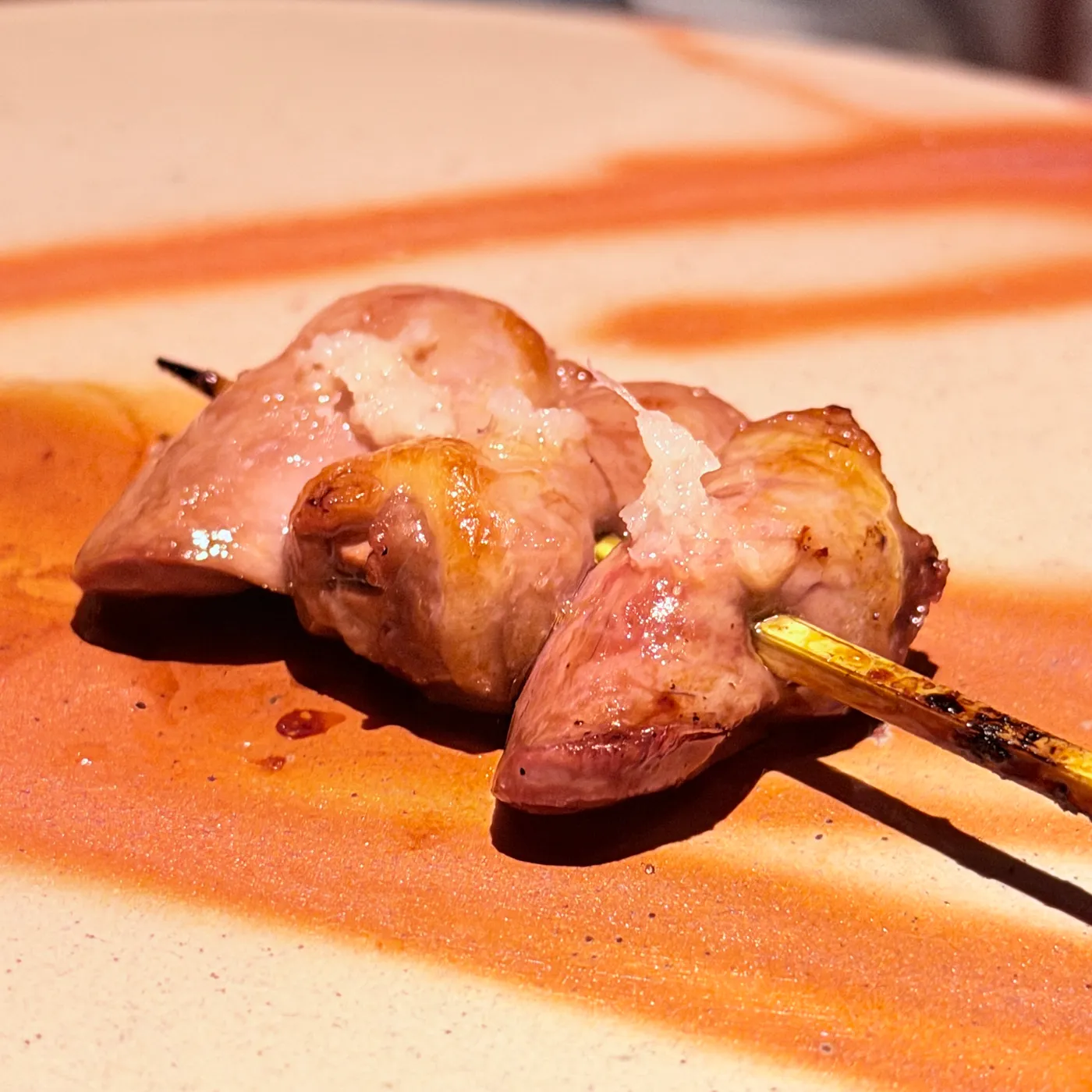
Chicken Heart — Hatsu
Chicken heart, or hatsu, followed. The heart is another reminder that yakitori treats the entire bird as a collection of distinct ingredients, each with its own character. The pieces were presented on a skewer with a little grated garnish, their surface lightly browned while the interior retained the appearance of the organ’s dense muscle.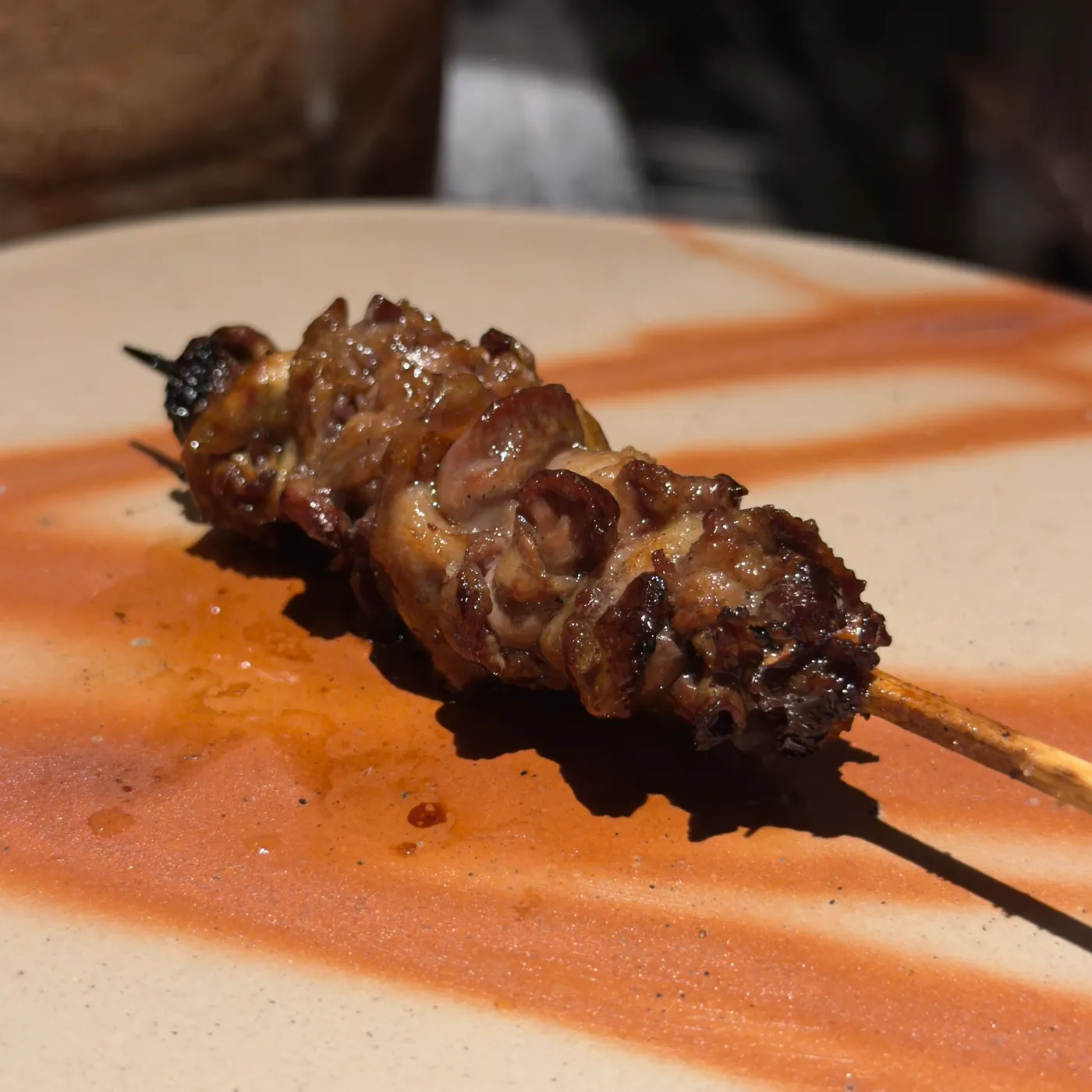
Hatsumoto — The Base of the Heart
One of the evening's more interesting exchanges came when Shinohara tried to explain hatsumoto. He repeated the Japanese name several times before finding a simple way to describe it in English. “Connected to hearts,” he said. And that was exactly the point. Hatsumoto refers to the area at the base of the heart, associated with the major blood vessels. It is distinct from the heart muscle itself and available in very small quantities from each chicken. The exchange reminded me how difficult it can be to communicate the anatomy of these specialized cuts across languages. Sometimes a single Japanese word carries a distinction that requires several sentences to explain in English.Beyond the Skewers
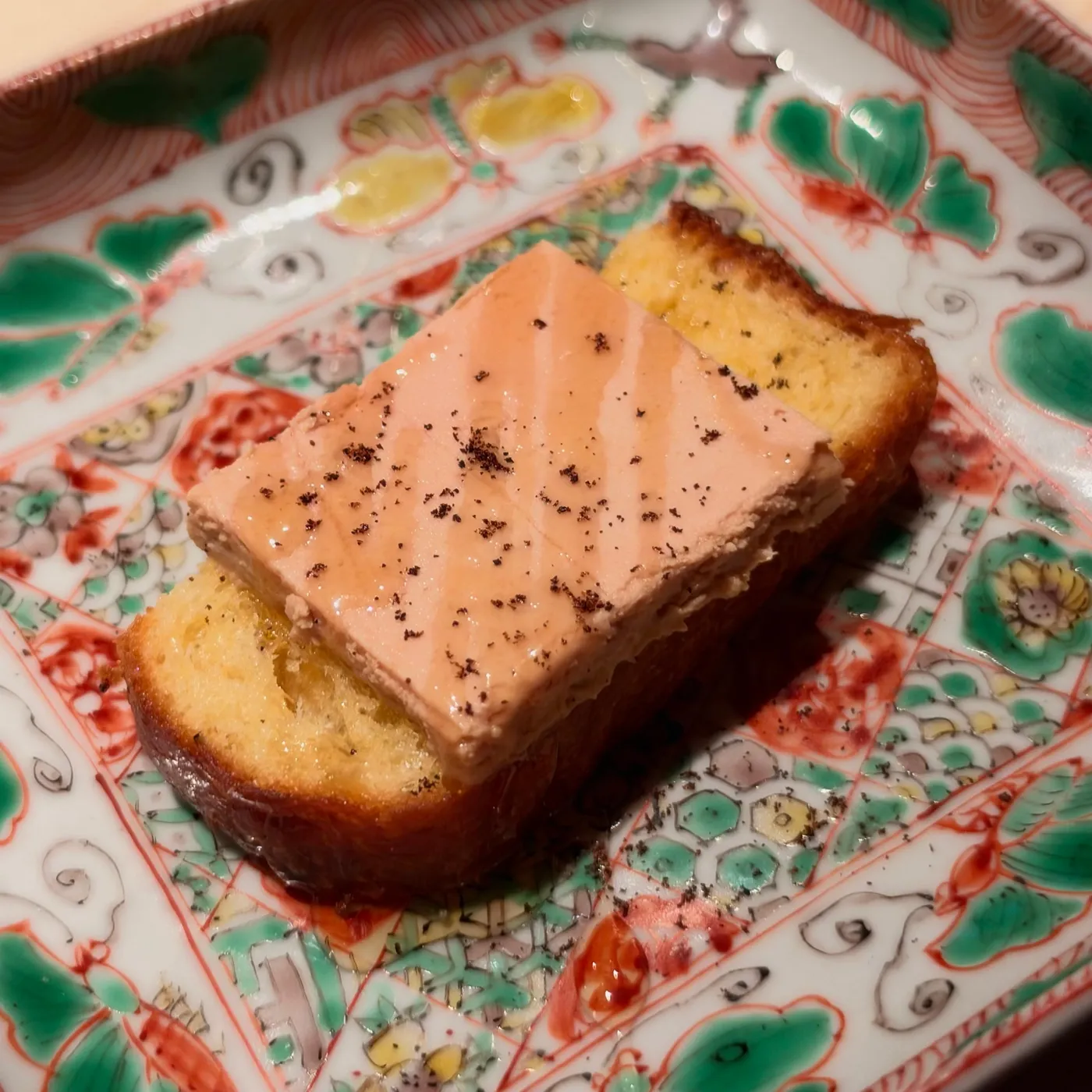
Foie Gras Pâté with Brioche
The next preparation took us away from chicken. A rectangular portion of foie gras pâté was served on toasted brioche, accompanied by honey and Tasmanian pepperberry. The richness of the pâté, the buttery brioche, and the sweetness of the honey formed a combination quite different from the charcoal-grilled skewers. It also reflected Shinohara’s broader culinary background and his willingness to include preparations from outside the conventional yakitori repertoire.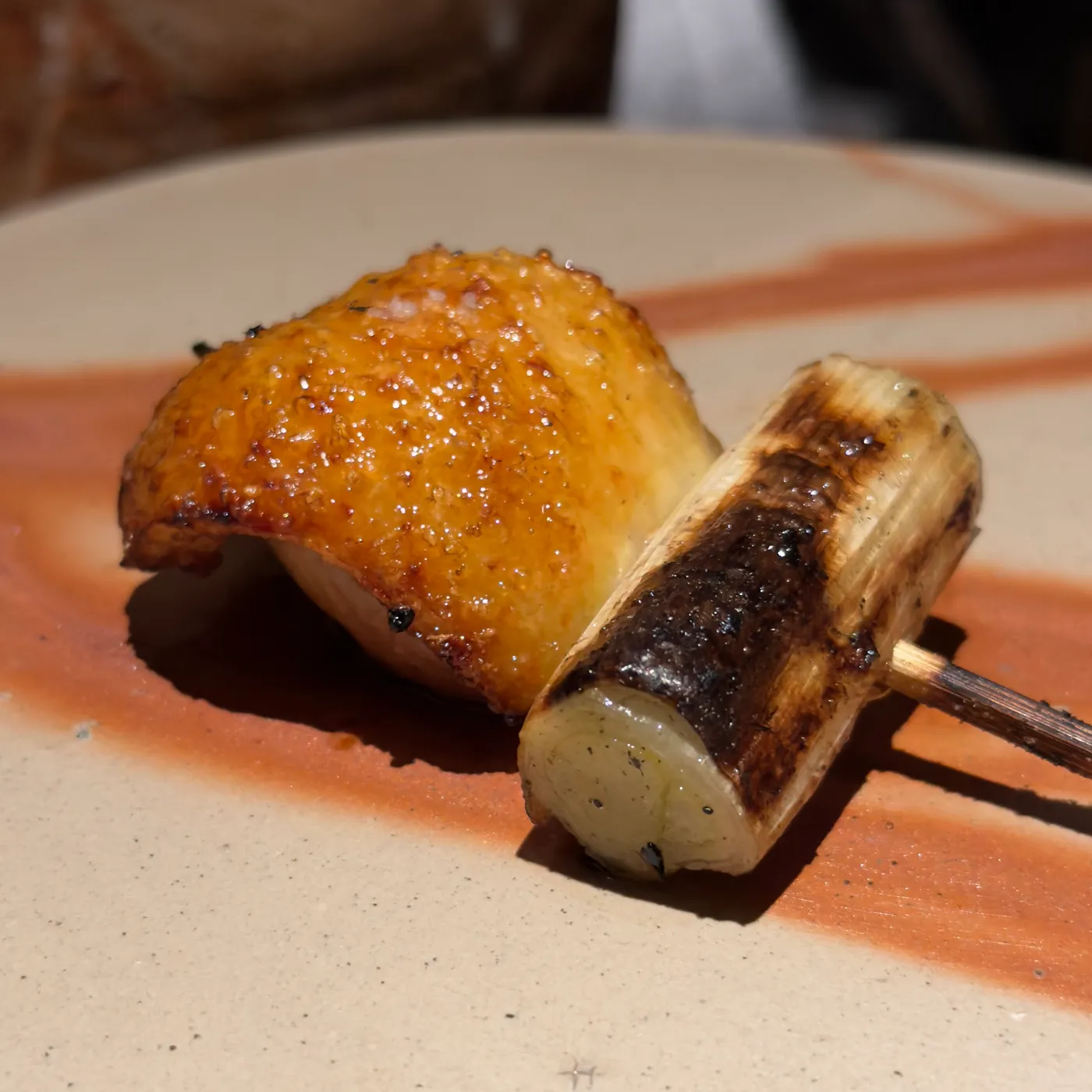
Sori — Chicken Oyster
Another cut Shinohara included in his menu was sori, also known by the French expression sot-l’y-laisse. This is the small, oyster-shaped piece of meat located near the thigh joint. Its limited quantity makes it one of the more distinctive cuts in whole-bird cooking.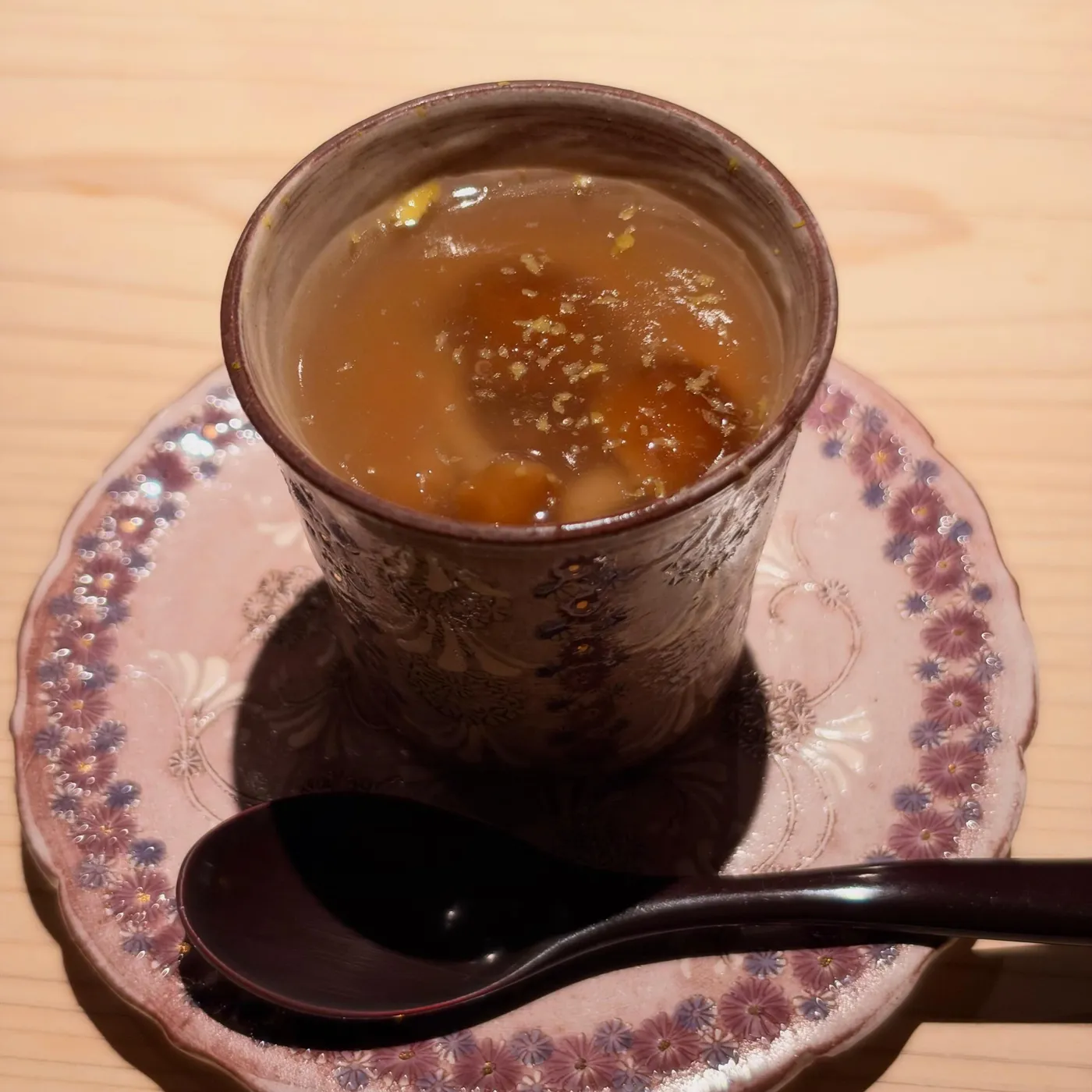
Chawanmushi with Turnip and Nameko Mushroom
The meal then returned to Japanese cuisine with chawanmushi, the delicate savory egg custard. Shinohara specified that he used Ryū no Tamago eggs, with a thickened sauce of turnip and nameko mushrooms. The custard was presented in a ceramic vessel, its surface covered by the glossy sauce. Chawanmushi depends on a very different approach to heat from yakitori. Instead of direct exposure to charcoal, the eggs are gently steamed until they set into a delicate, smooth custard. Its inclusion was another example of the techniques Shinohara brings into his menu from Japanese cooking more broadly.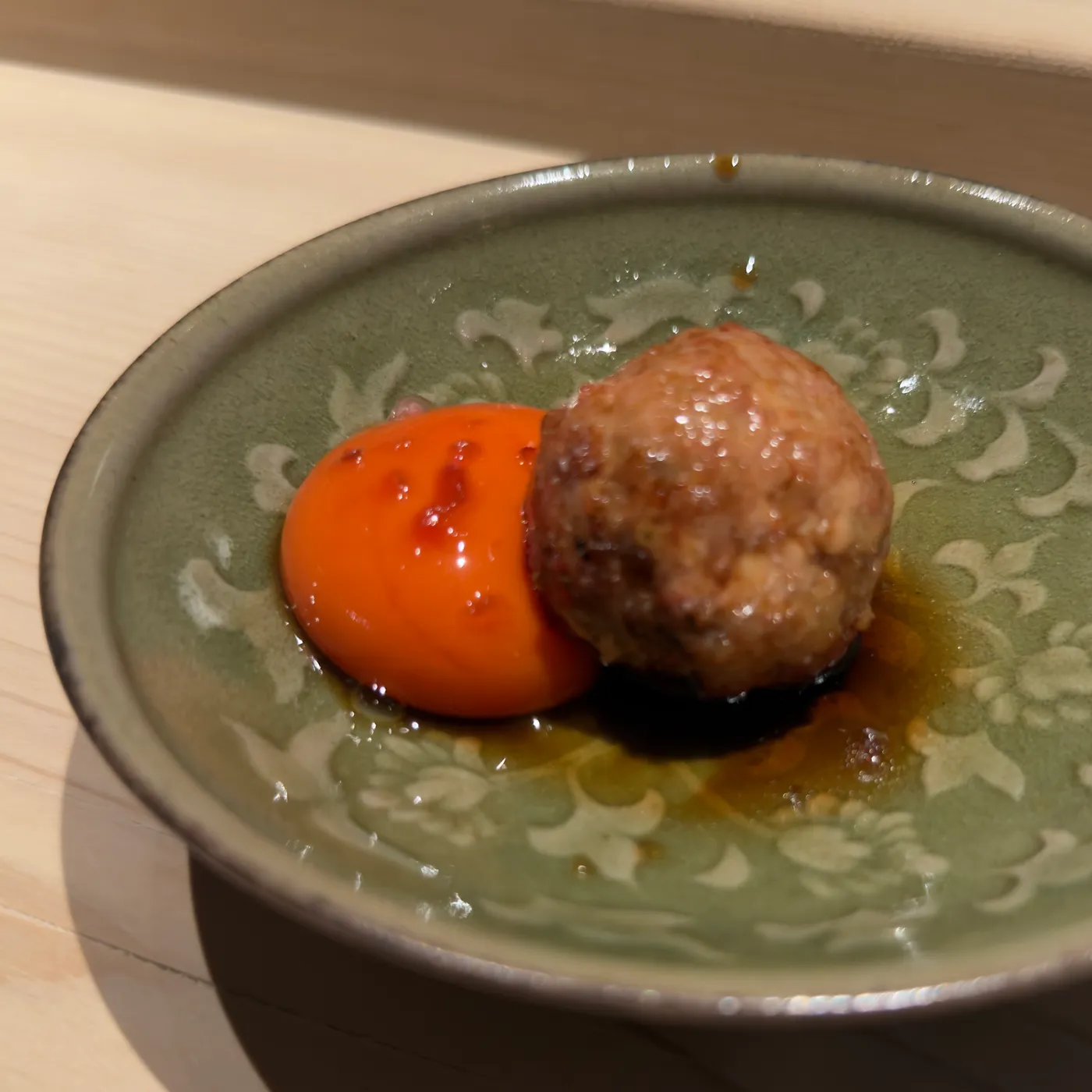
Tsukune with Egg Yolk
We also had a separate preparation of tsukune, served with a vivid orange egg yolk. The grilled chicken meatball was presented alongside the yolk in a shallow ceramic bowl, with sauce beneath. This is one of yakitori’s familiar pleasures: minced chicken shaped and cooked over charcoal, then combined with the richness of egg yolk. The yolk changes the experience of the meatball, bringing another texture and a more rounded richness to each mouthful.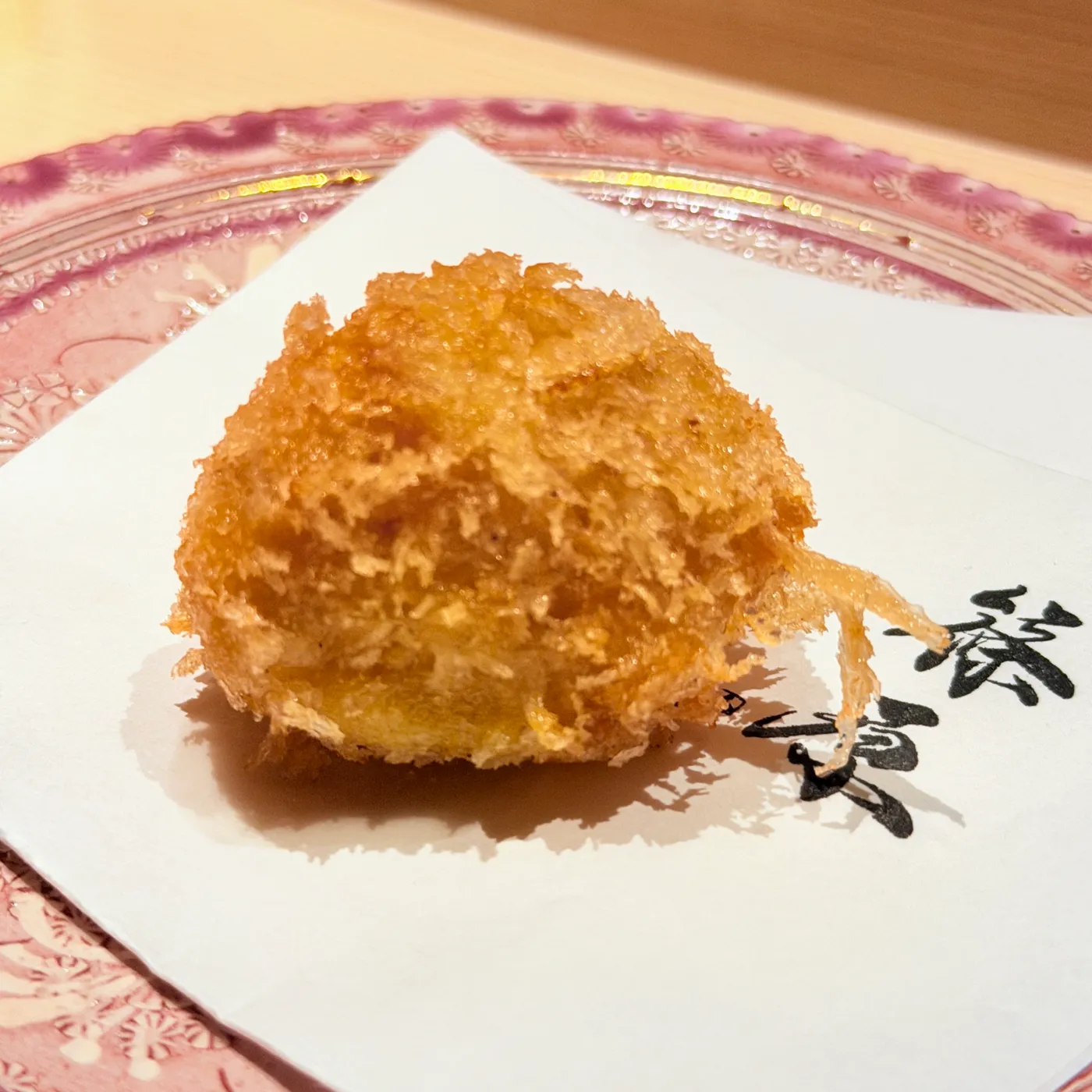
Three-Year-Aged May Queen Potato Croquette
The croquette was made from May Queen potatoes that Shinohara described as having been aged for three years. The finished croquette arrived with a deep golden crust, its irregular surface showing the fine texture of the fried coating. Potatoes stored for an extended period can develop different characteristics from freshly harvested ones, although the precise effects depend on storage conditions. Here, the use of aged potatoes was the distinguishing detail Shinohara chose to emphasize.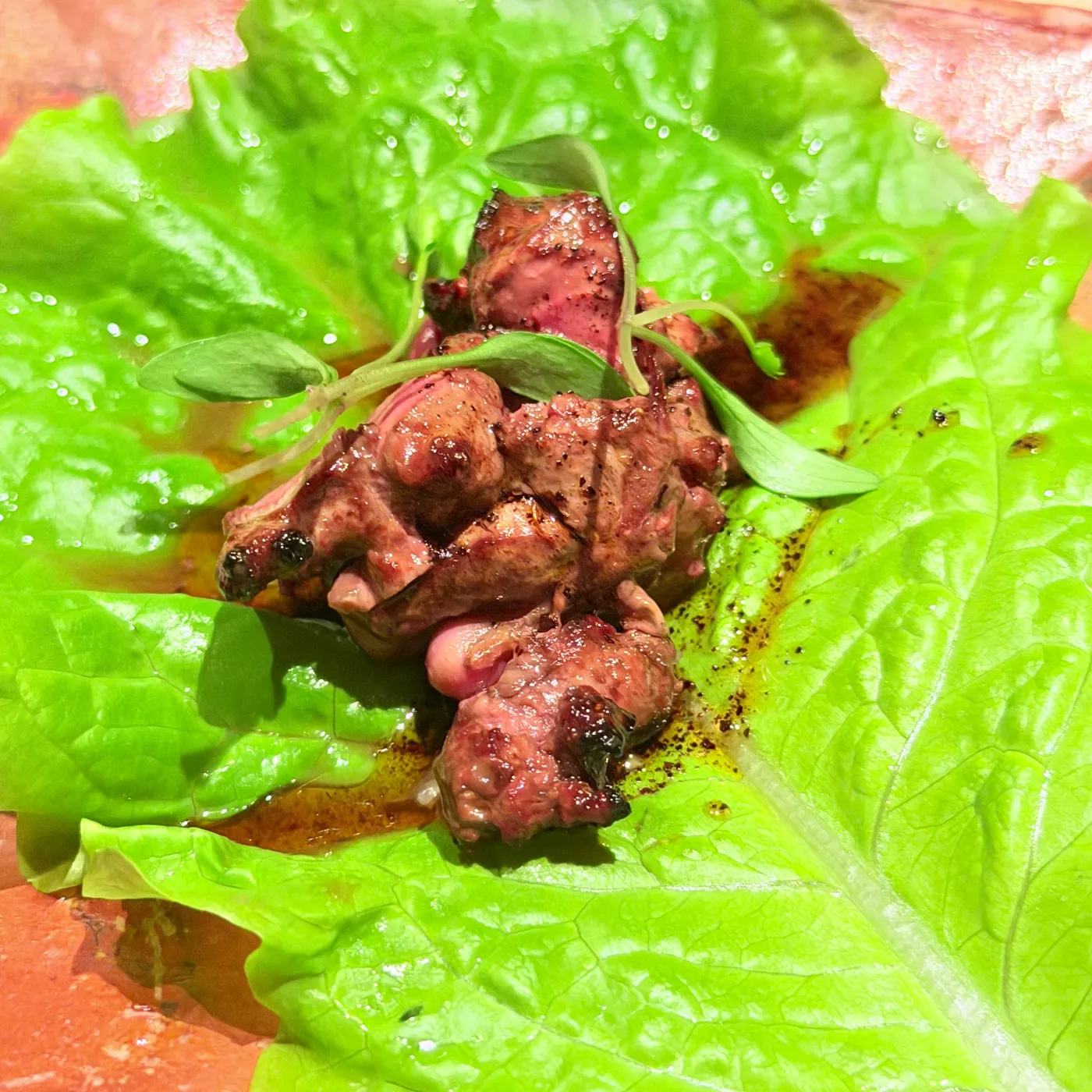
Chicken Kidney — Segimo
Another organ preparation followed: chicken kidney, or segimo, served on a bed of fresh lettuce. The kidney is one of the smaller and less familiar parts of the bird, with a character quite different from the muscle cuts served earlier. Alongside the heart, hatsumoto, and gizzard, it illustrated the breadth of ingredients that can emerge from a single chicken.The Closing Savory Courses
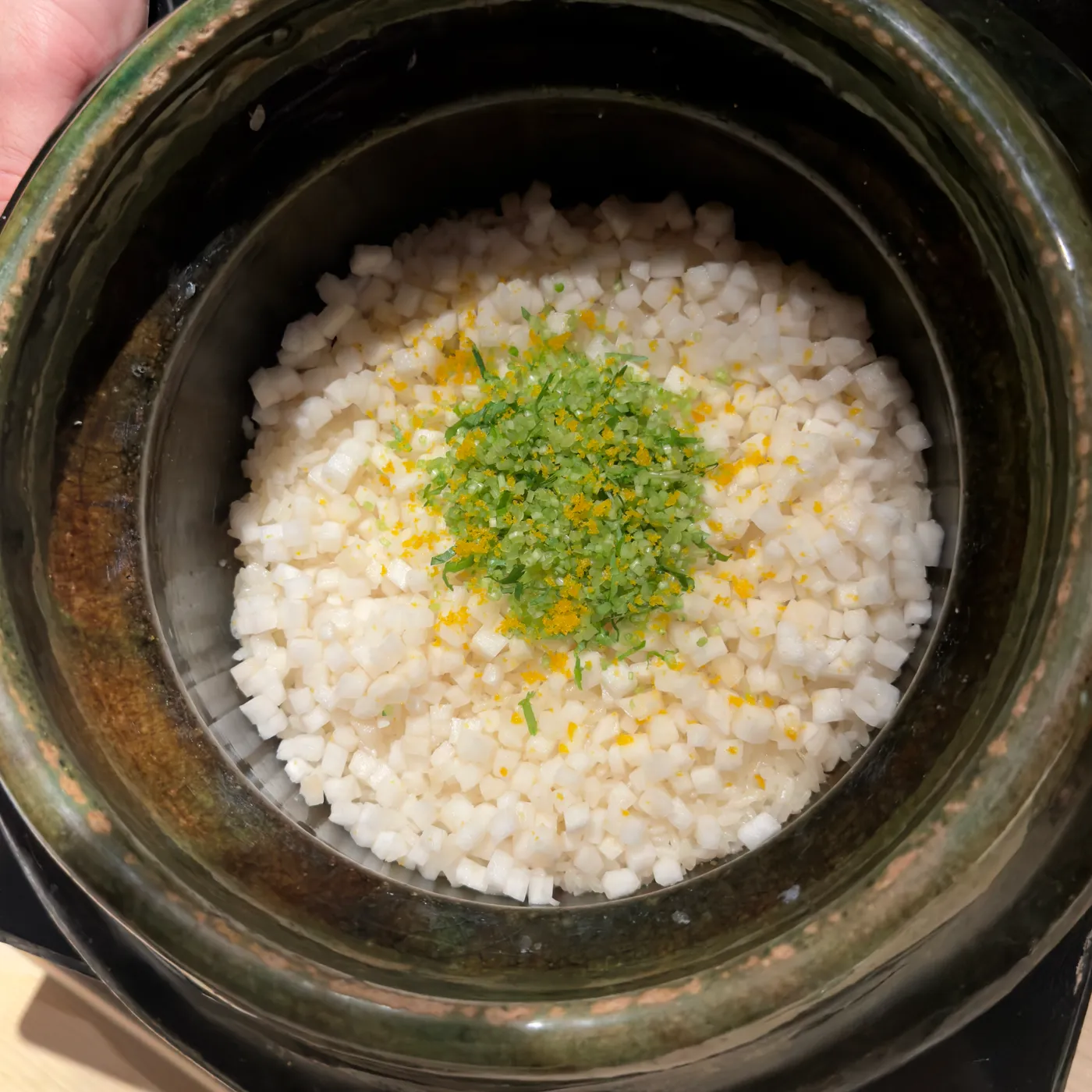
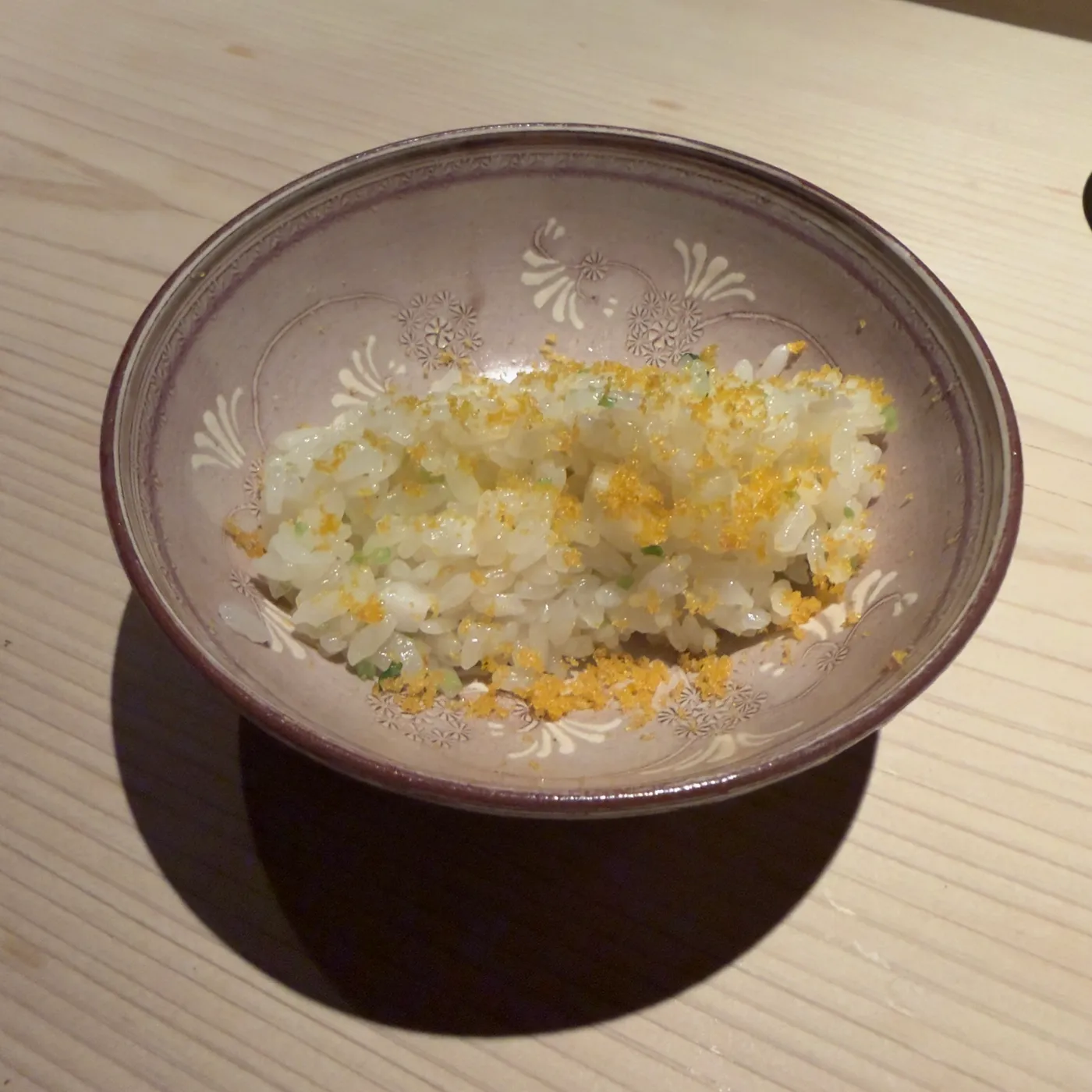
Clay-Pot Rice with Kyoto Shōgoin Turnip and Karasumi
One of the final savory preparations was rice cooked in a clay pot with Kyoto Shōgoin turnip and karasumi, the cured roe commonly made from mullet. Shōgoin turnip is associated with Kyoto’s vegetable traditions. Its mild flavor provides a contrasting foundation for the concentrated salinity and savory character of karasumi. The first photograph shows the rice in the clay pot, covered with finely cut turnip and green garnish, with the karasumi scattered over the surface. The second shows the finished rice served in an individual bowl. The two photographs belong together because they document both the presentation of the complete preparation and the portion served to each guest.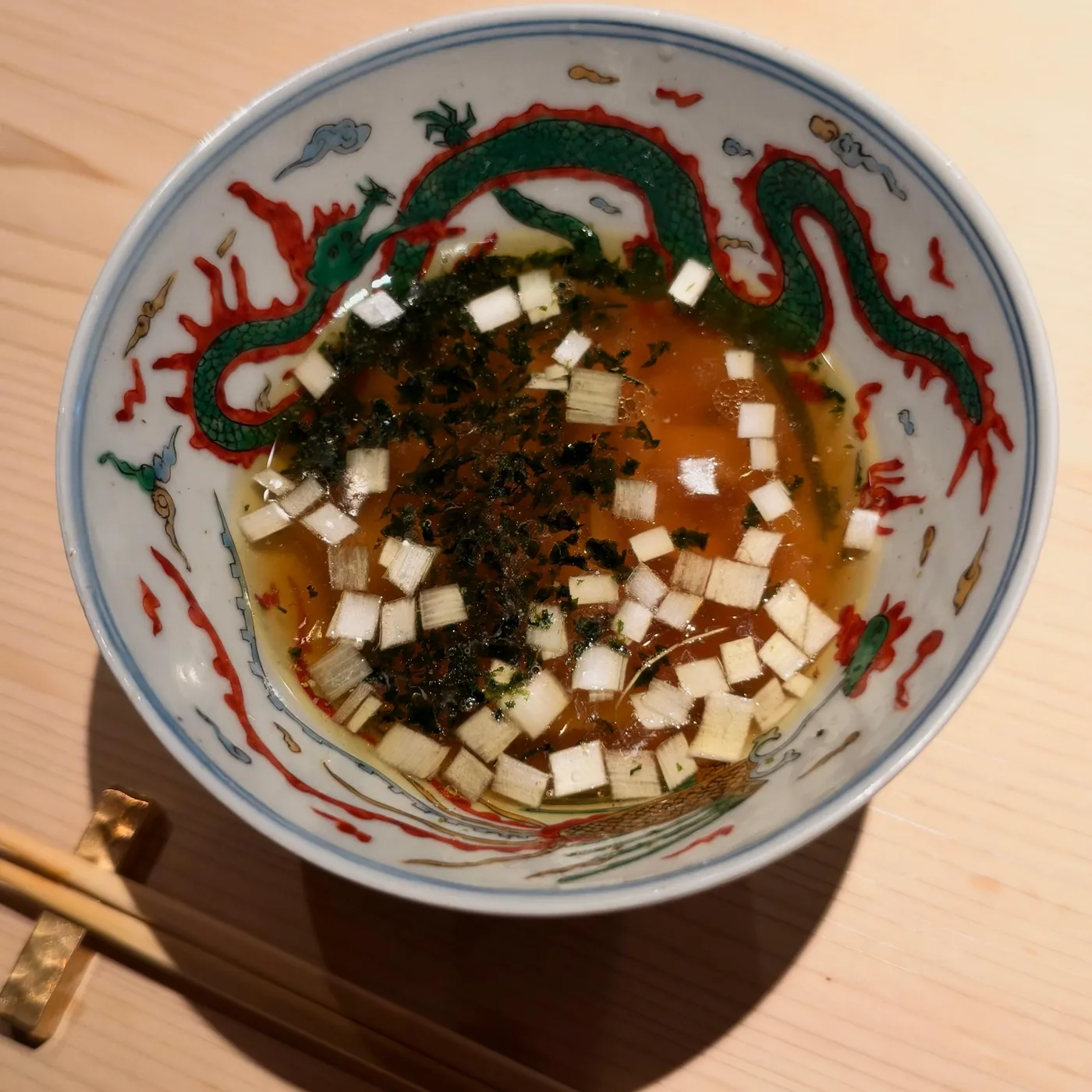
Ramen
Ramen followed as another closing dish. The bowl contained a seasoned broth with finely cut vegetables and dark green garnishes. Its presence near the end of the meal continued the menu’s movement beyond grilled skewers into other forms of Japanese cooking. The exact broth and noodle preparation remain to be documented.Dessert
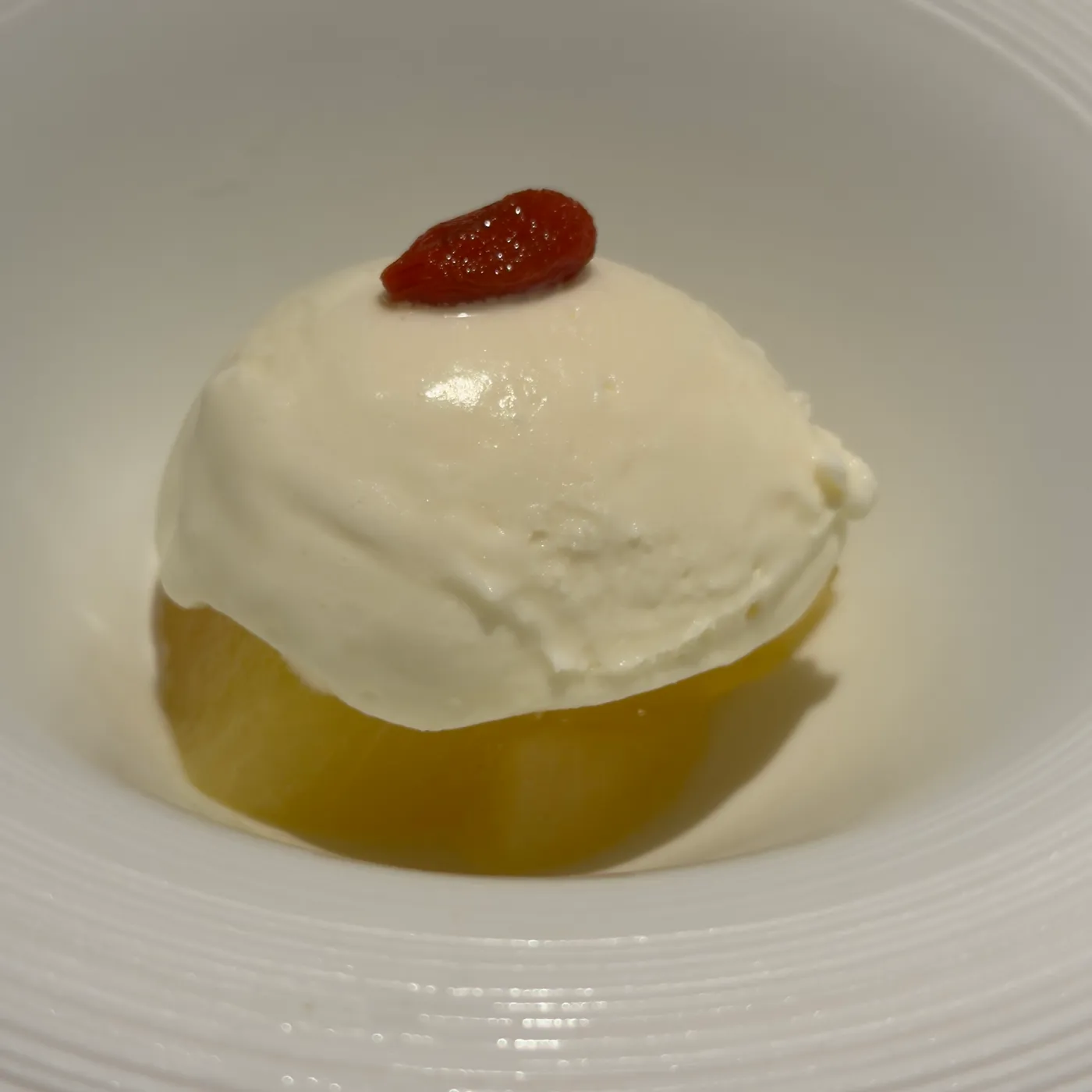
Homemade Almond Tofu Ice Cream with Fruit Compote
The dessert was homemade almond tofu ice cream served over fruit compote, finished with a small red garnish. Shinohara identified the fruit as apple. The presentation was simple: a smooth, pale scoop of almond-flavored ice cream resting on the compote, bringing the meal to a close with a different texture and temperature from everything that had preceded it.