Saito
Visited Thu, Nov 19, 2026 · Lunch
Sushi Saito — 鮨さいとう
Many, Many Oishii
In August 2016, I met a bunch of people who changed my life.
Five months earlier, three of my friends had lost their lives in an ISIS terrorist attack on Istiklal Street in Istanbul, and the rest of us had been injured. I had fallen into a deep depression and eventually decided that I needed to do something to save myself. I decided to return to Istanbul.
But that's a story for another day. (You can read more about it here.)
From Istanbul, I flew to Ibiza to meet a bunch of foodie friends from Facebook. At a party there, where none other than Keiji Nakazawa was feeding us sushi on brown rice, a woman I had never met before asked me if I would like to join her reservation at Saito in Tokyo in October.
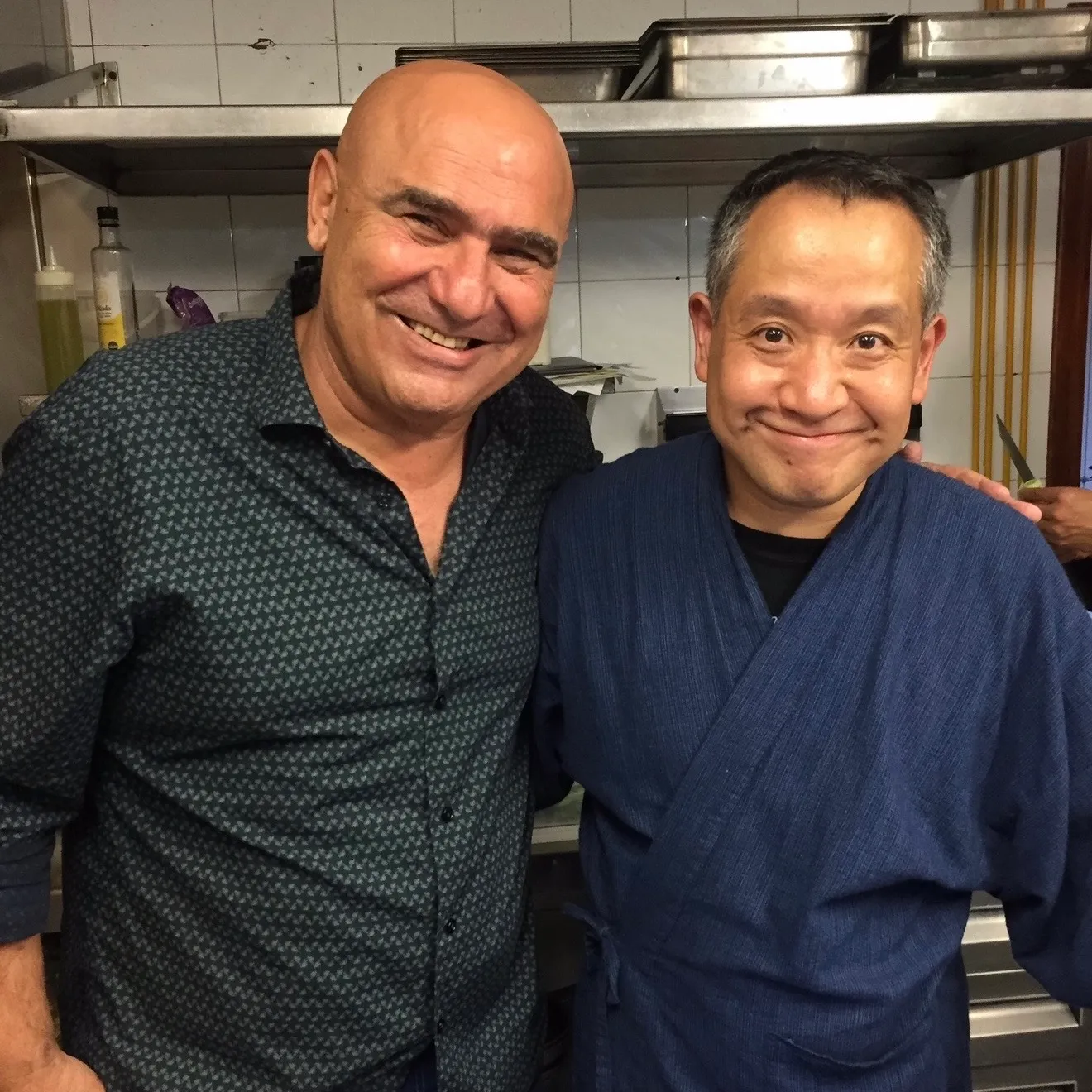
With legendary Keiji Nakazawa in Ibiza.
It took me a split second to decide. Not because I wanted to eat at Saito. Back then, I had absolutely no clue who this Saito was. “Sure, I'm in,” I told her, and the following morning I bought a round-the-world ticket.
I looked at this bunch of strangers who were crisscrossing the world for food and thought to myself: I like what these people are doing. Perhaps this is a good idea for what to do with the rest of my life. :)
And that is how, two months later, I found myself sitting in front of Takashi Saito.
Ten Years of Watching His Hands
I have spent ten years watching those hands, and I still don't quite understand how he does it. There are so few movements involved in the making of each piece of nigiri. One, two, three, and there it is. I don't know another sushi chef who makes it look quite so effortless.
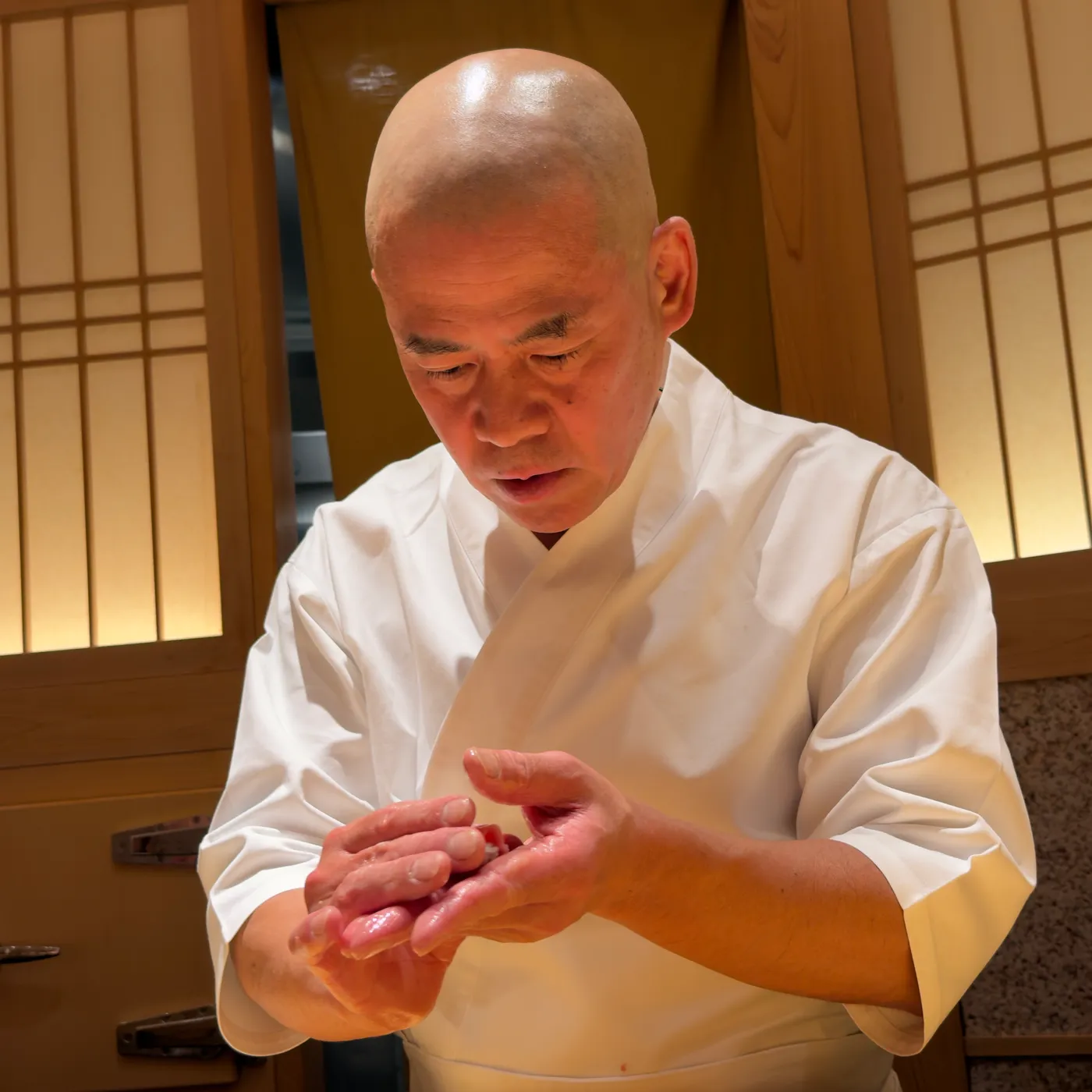
Utter concentration.
Recently, however, I have been watching another pair of hands. Those of Ishikawa san, Saito's sous chef, who is in charge of the restaurant's second counter. Watching him cut his fish and make his nigiri, I recognize many of the movements I have spent the past ten years observing at Saito's counter. I wanted to know how that happens.
But first, let me show you what we ate.
What we ate
Otsumami
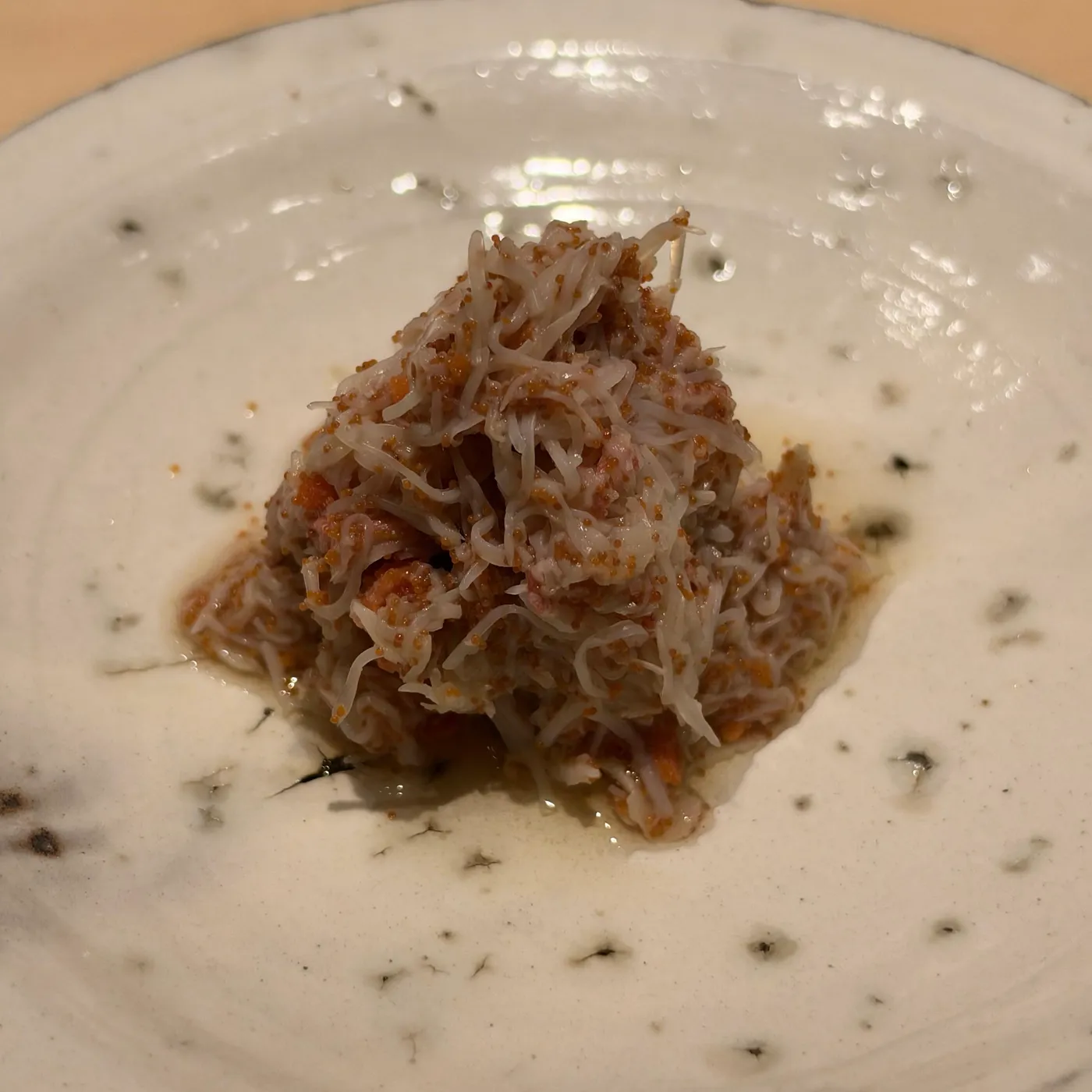
Kobako-gani — 香箱蟹
Female snow crab, one of the great seasonal delicacies of the Japanese winter, combining the sweetness of the crab meat with the richness and texture of its roe.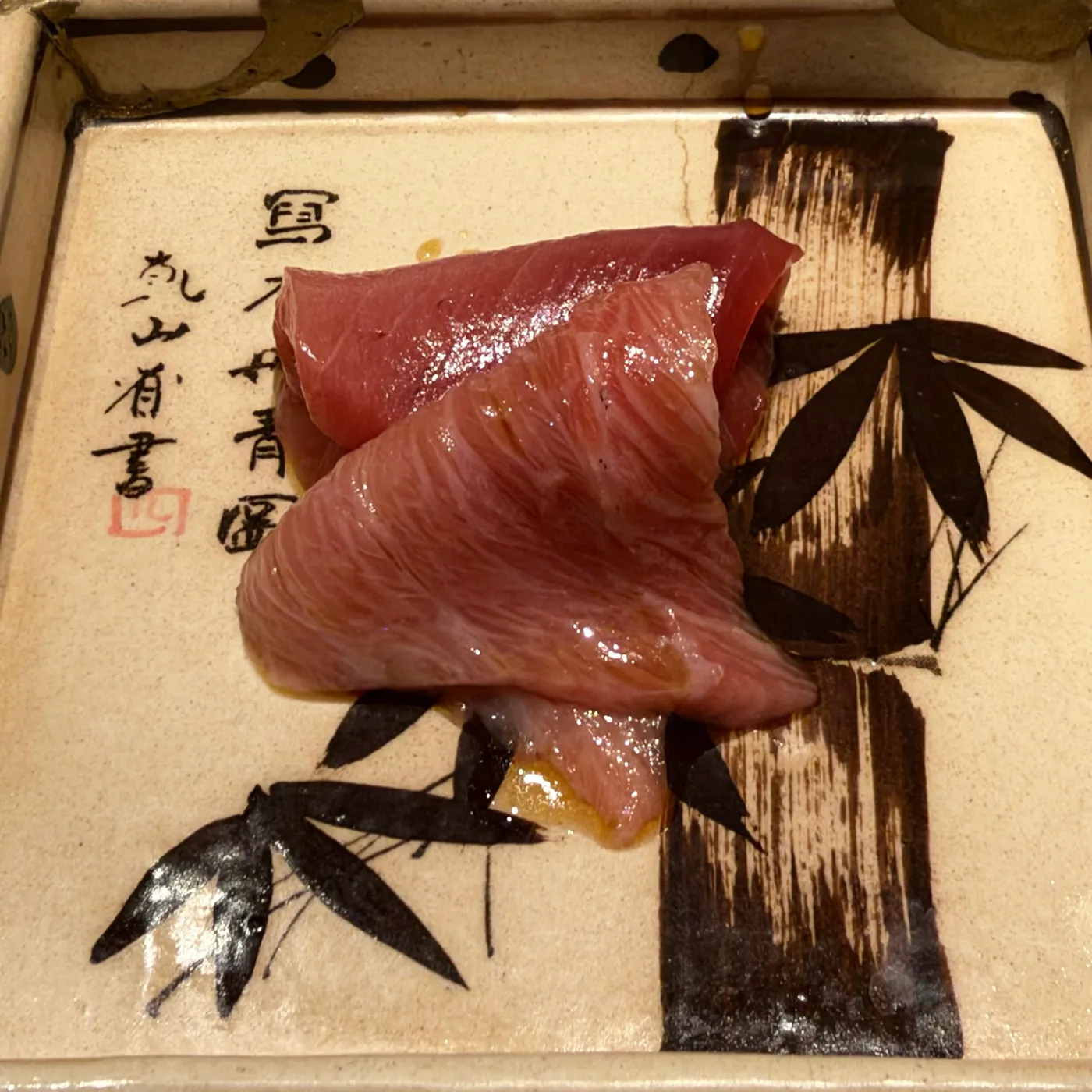
Baby Tuna — メジマグロ
Chutoro and otoro from a young tuna, served as sashimi. An interesting opportunity to compare the two cuts with those of the mature tuna that would follow later in the meal.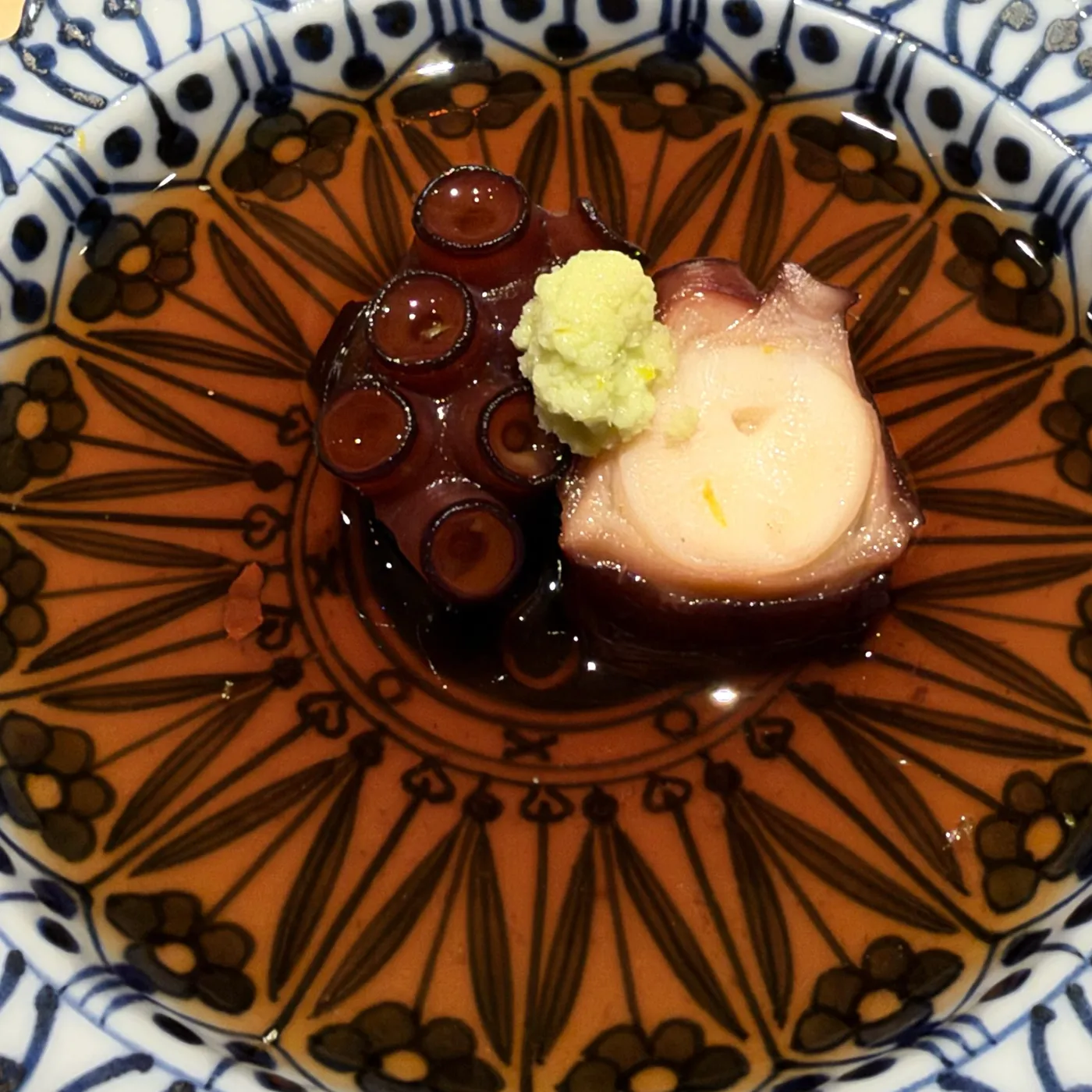
Tako — 蛸
Two thick pieces of octopus in soy sauce with freshly grated wasabi.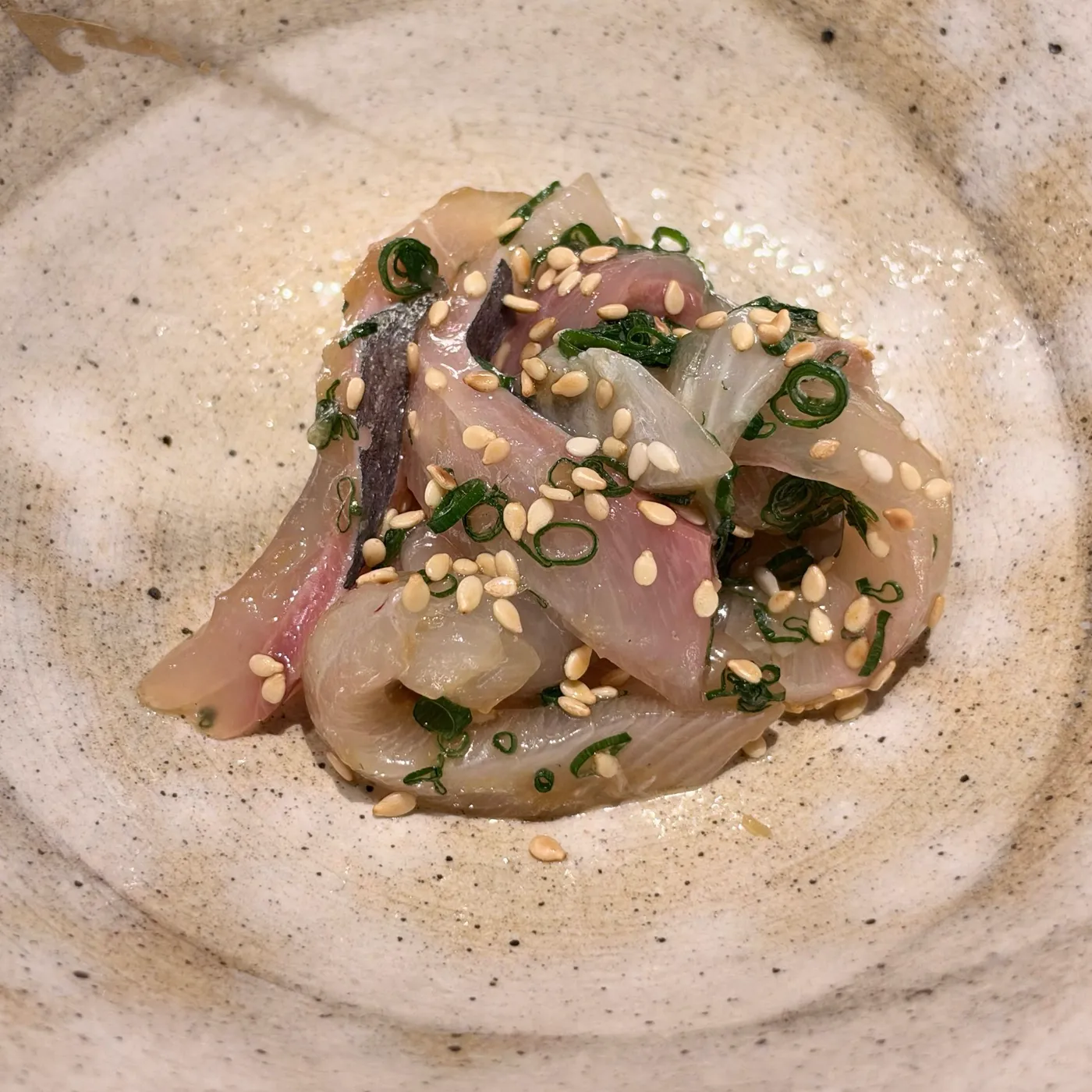
Marinated Aji — 鯵のマリネ
Horse mackerel marinated with sesame and finely chopped negi. Saito san described this preparation as a marinade rather than namerō.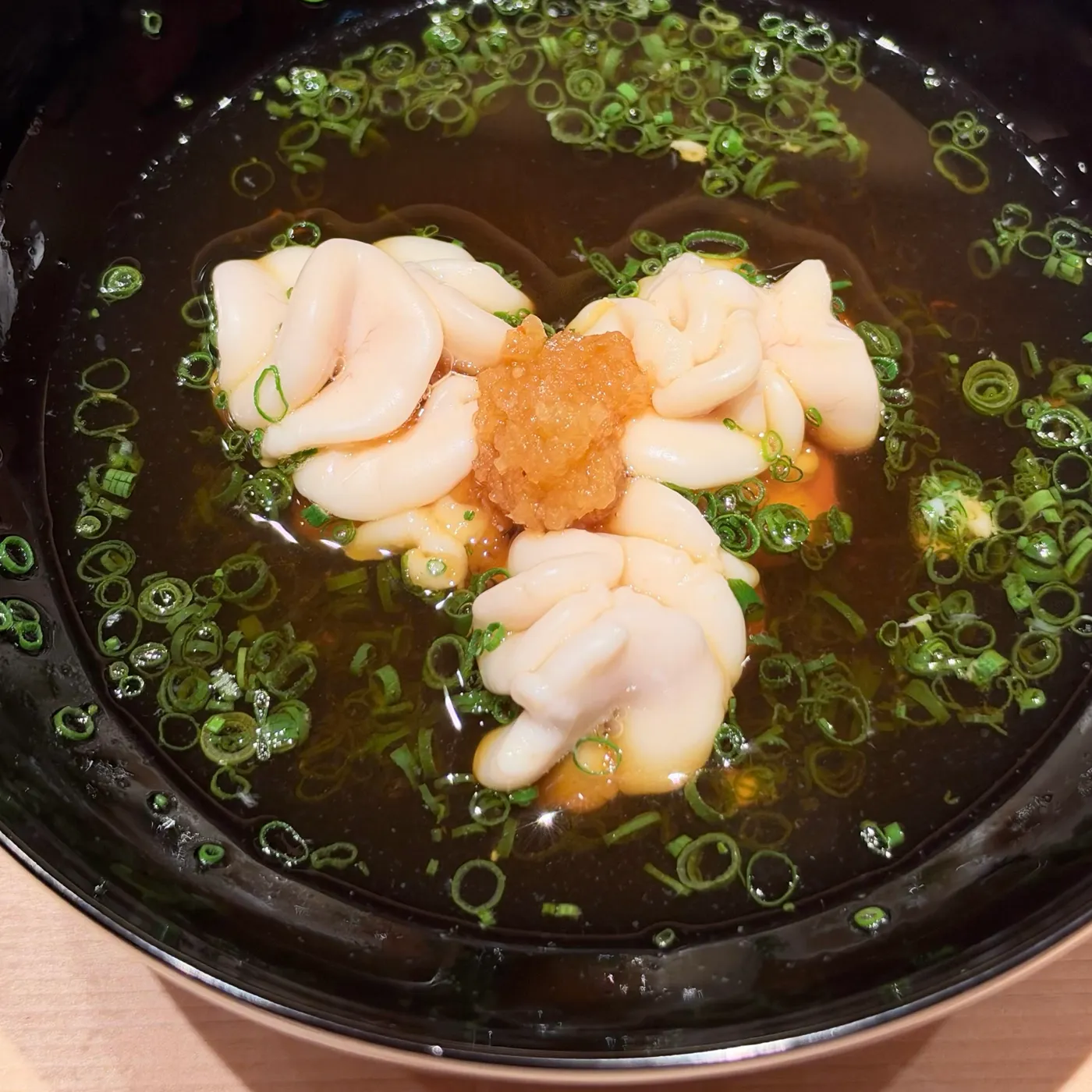
Shirako — 白子ポン酢
Cod milt with ponzu, momiji oroshi and finely chopped green onions.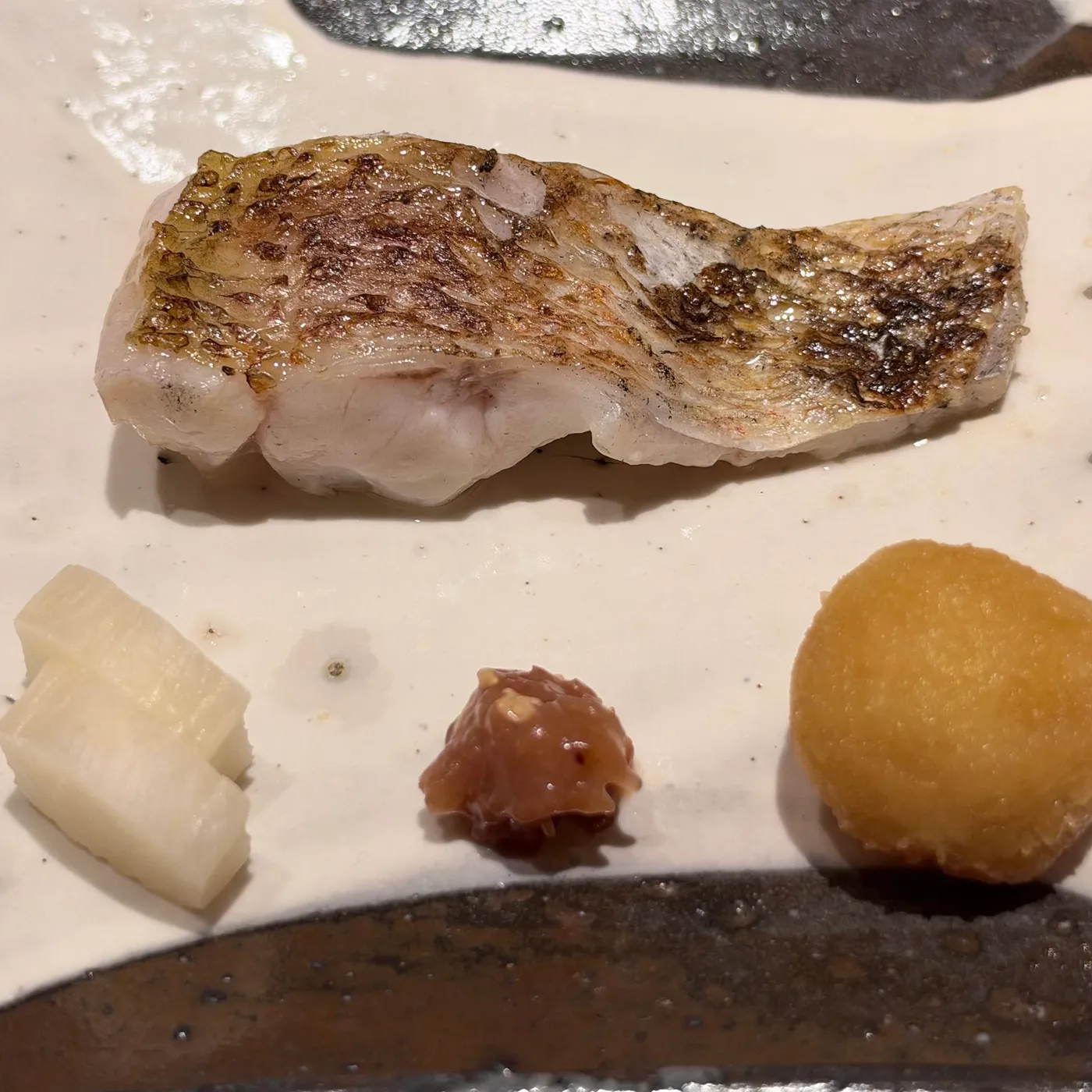
Nodoguro — のどぐろ
Grilled blackthroat seaperch with browned skin. One of those fish whose natural fat makes it so well suited to grilling.Sushi
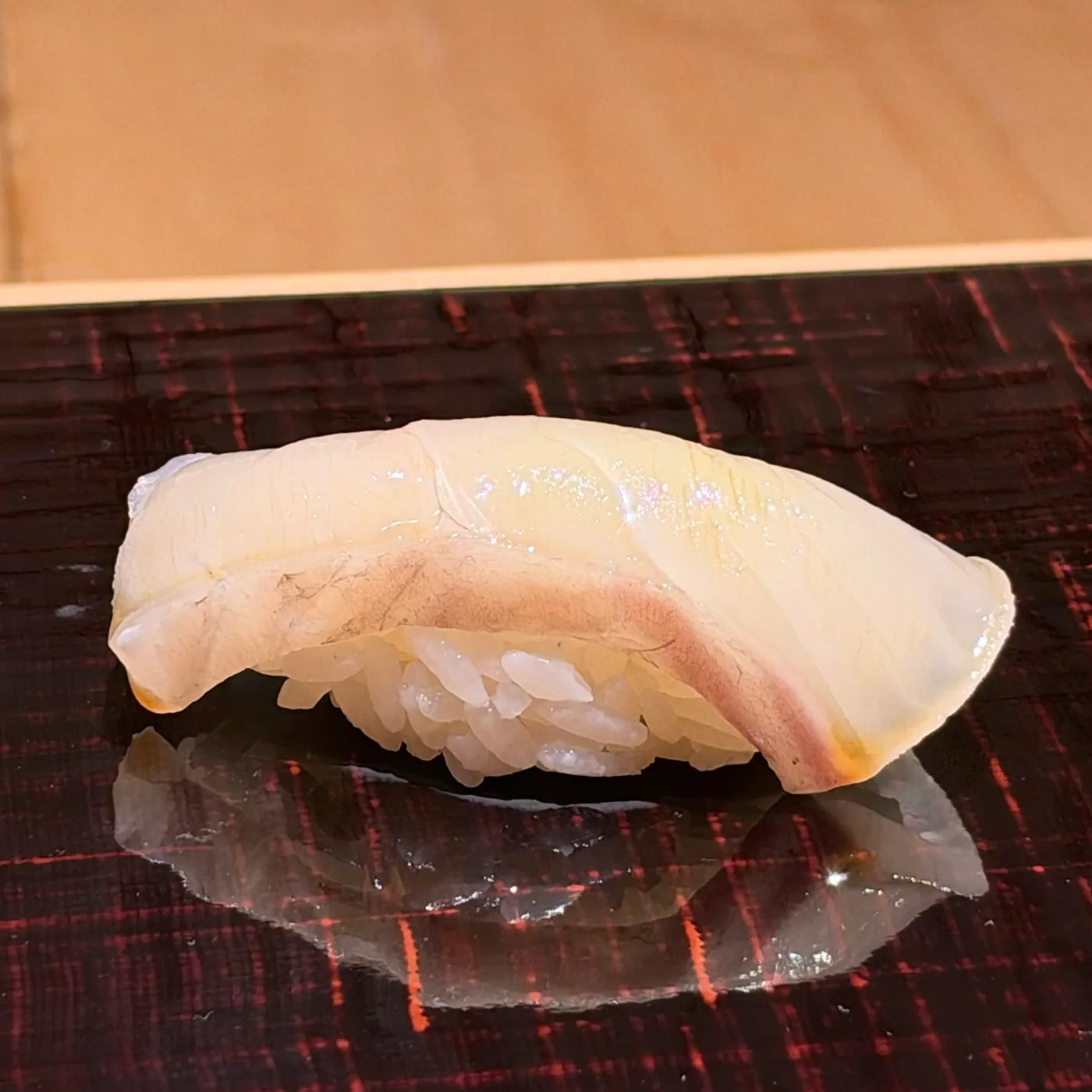
Karei — 鰈
Flounder.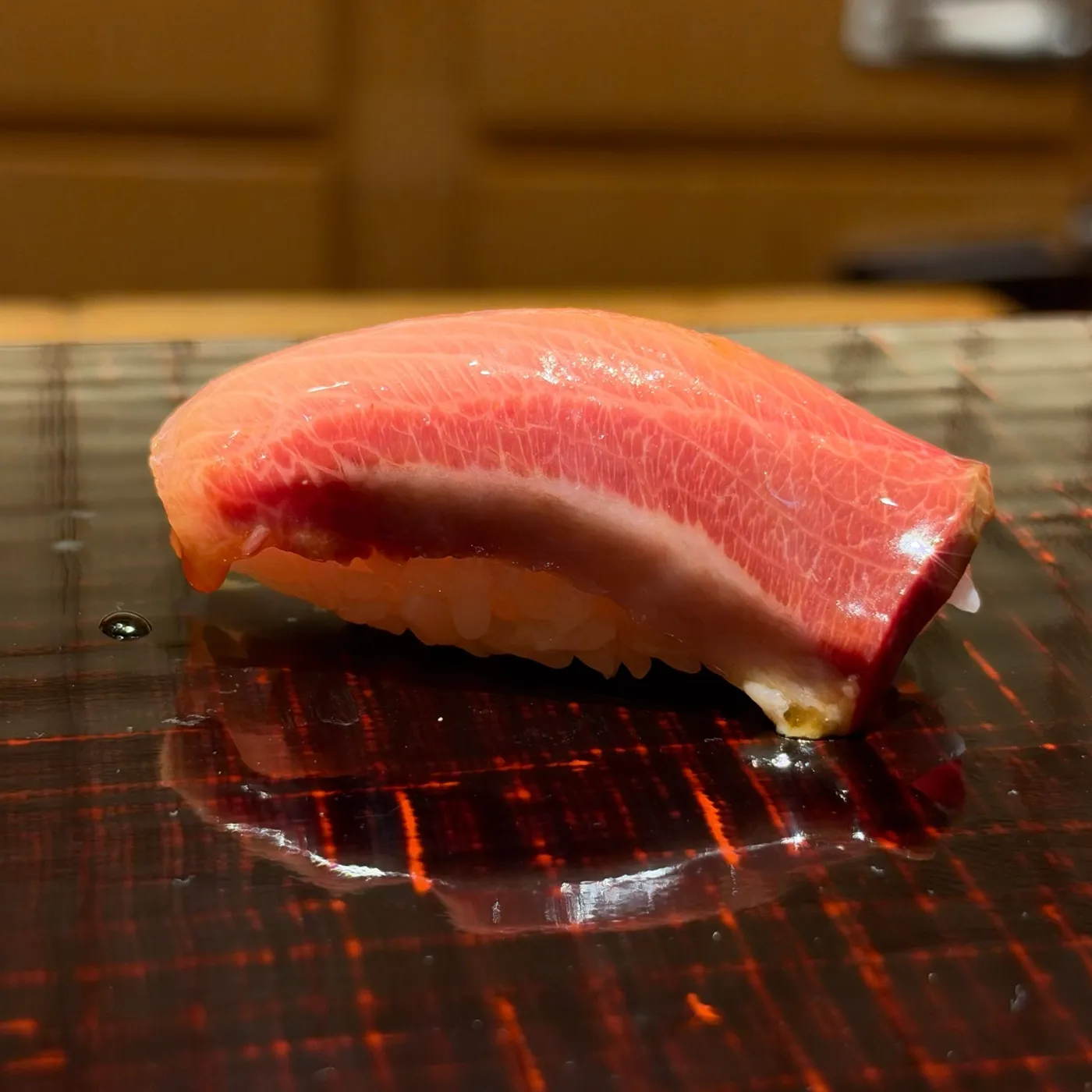
Buri — 鰤
Winter yellowtail. Just look at the marbling.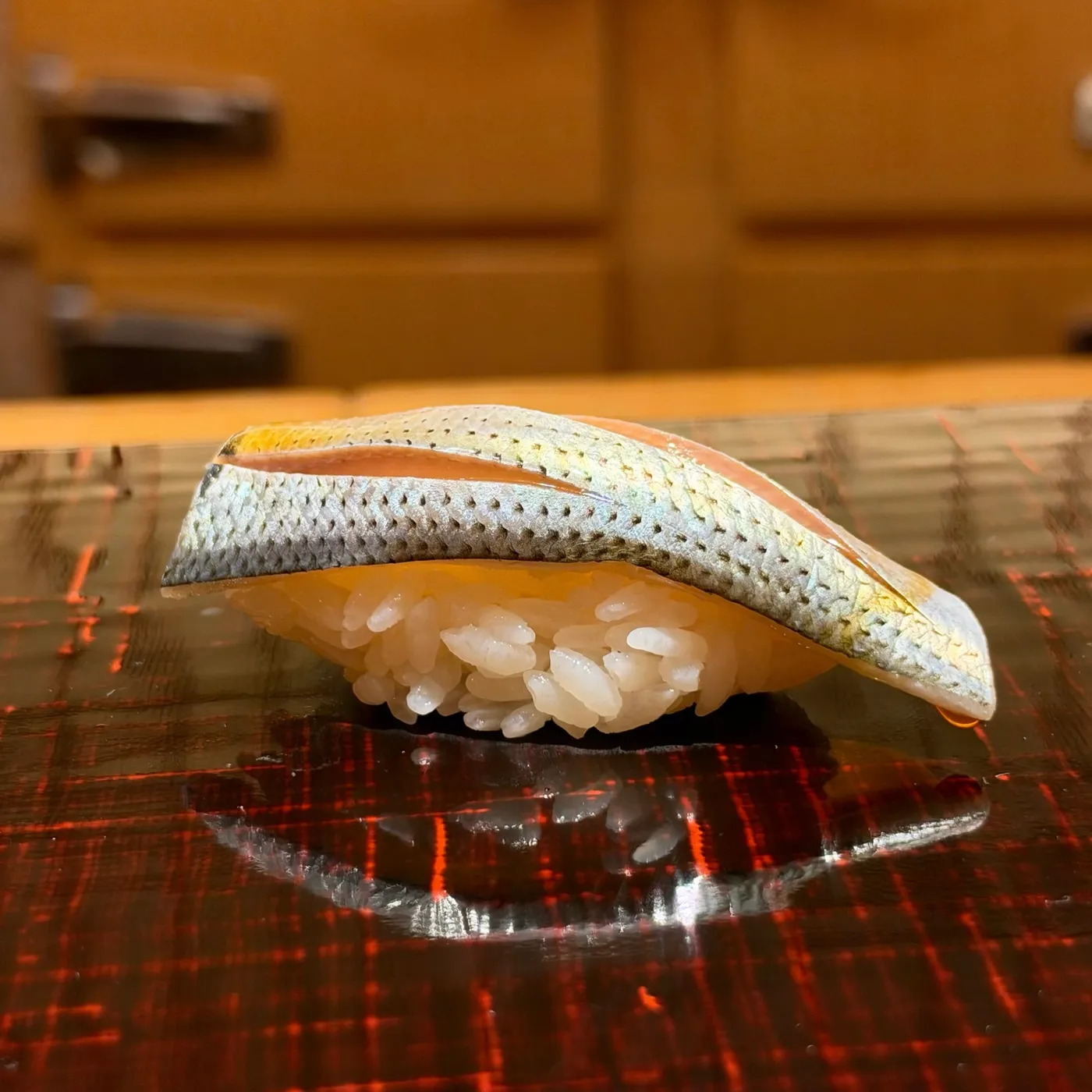
Kohada — 小肌
Gizzard shad.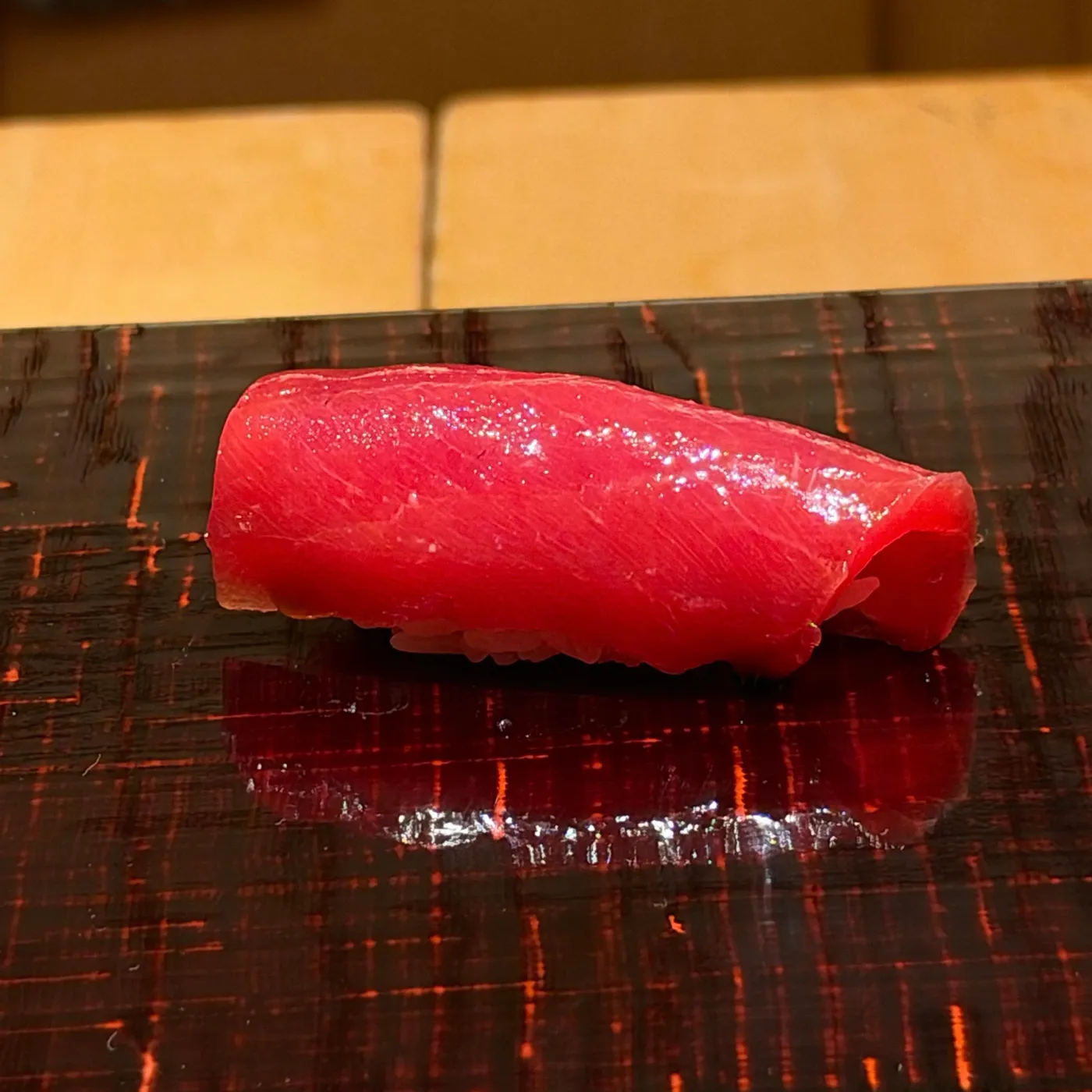
Akami — 赤身
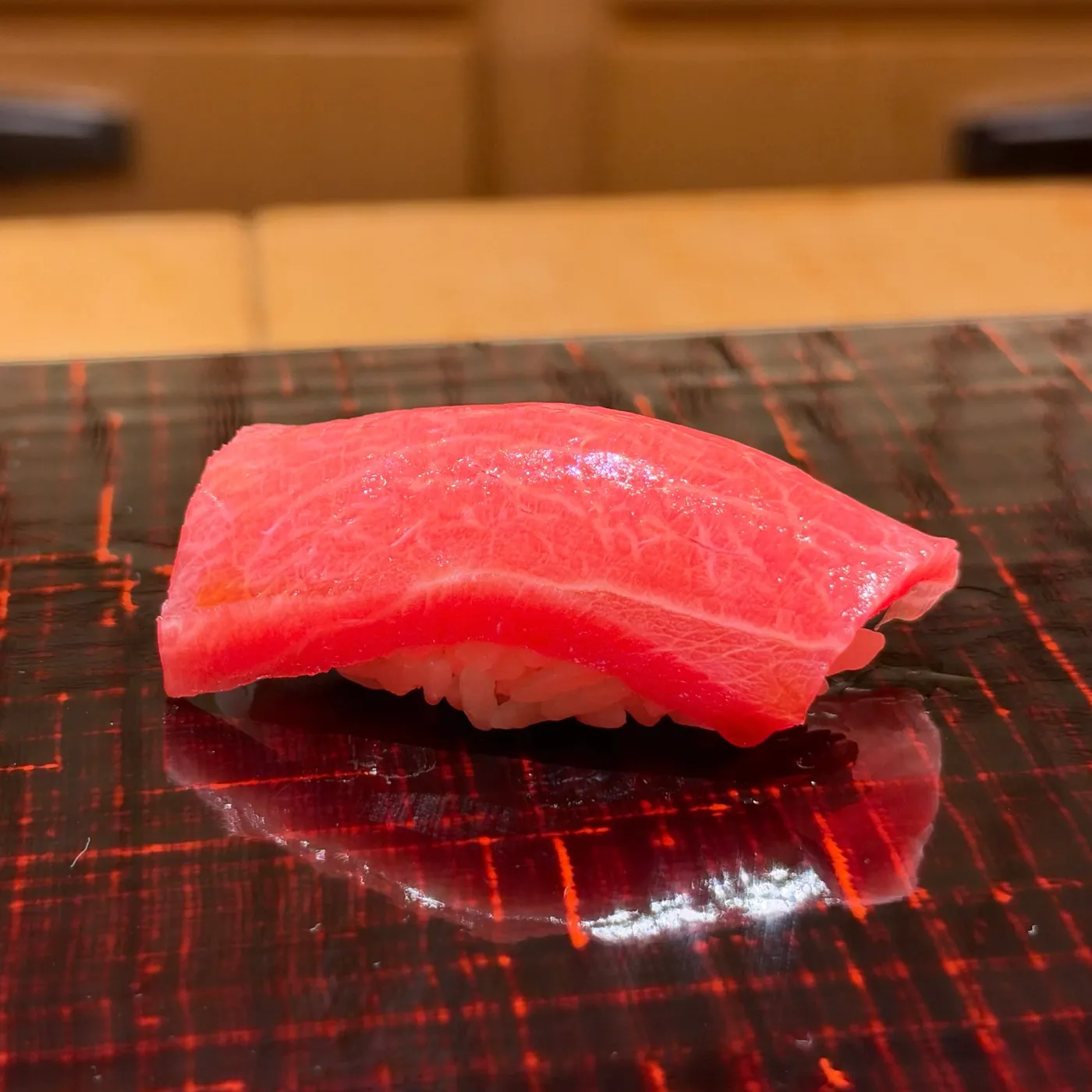
Chutoro — 中トロ
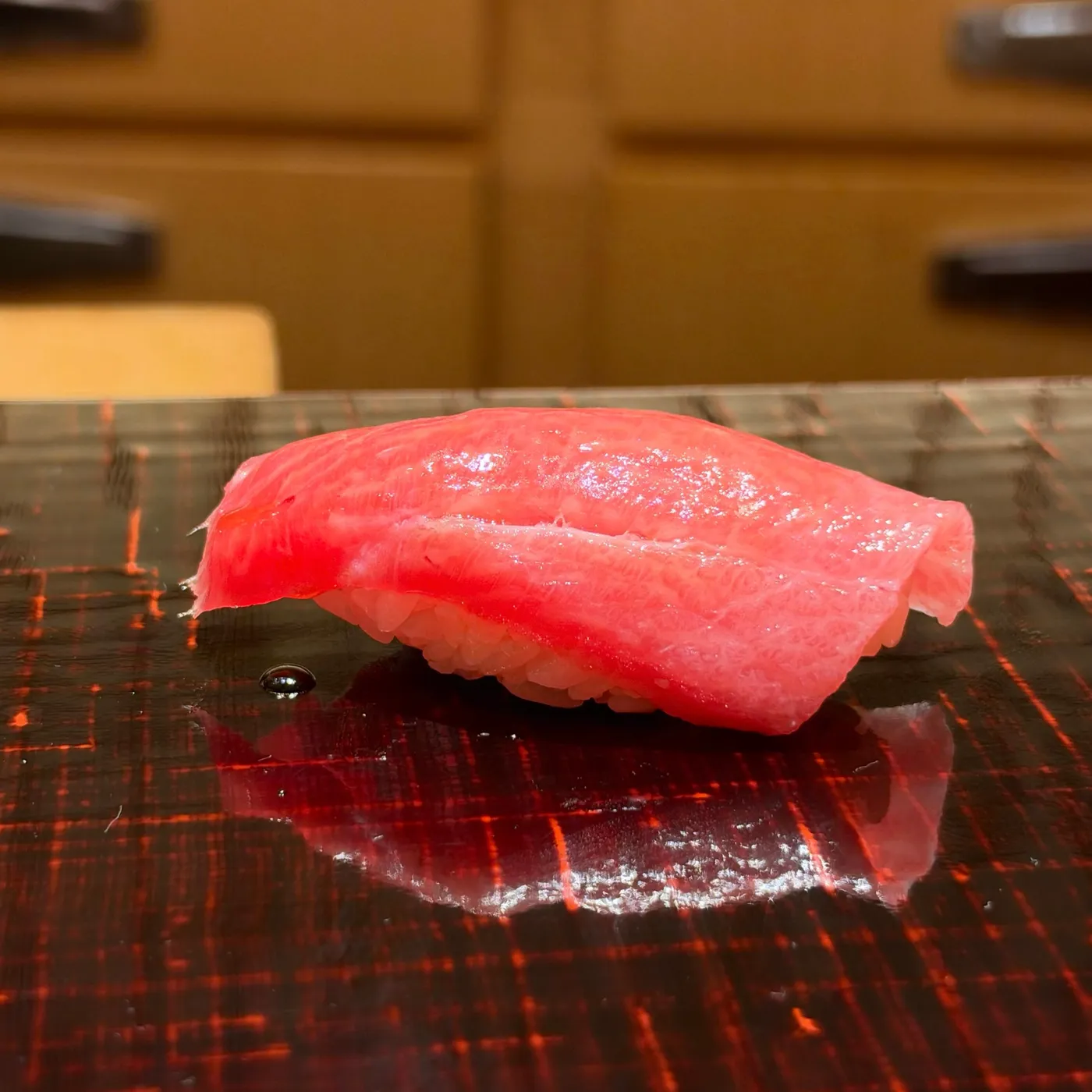
Otoro — 大トロ
Our three-piece tuna sequence. During our conversation, Saito san identified the marbled fatty tuna from Shiogama in Miyagi Prefecture as shimofuri, correcting our suggestion that it was jabara.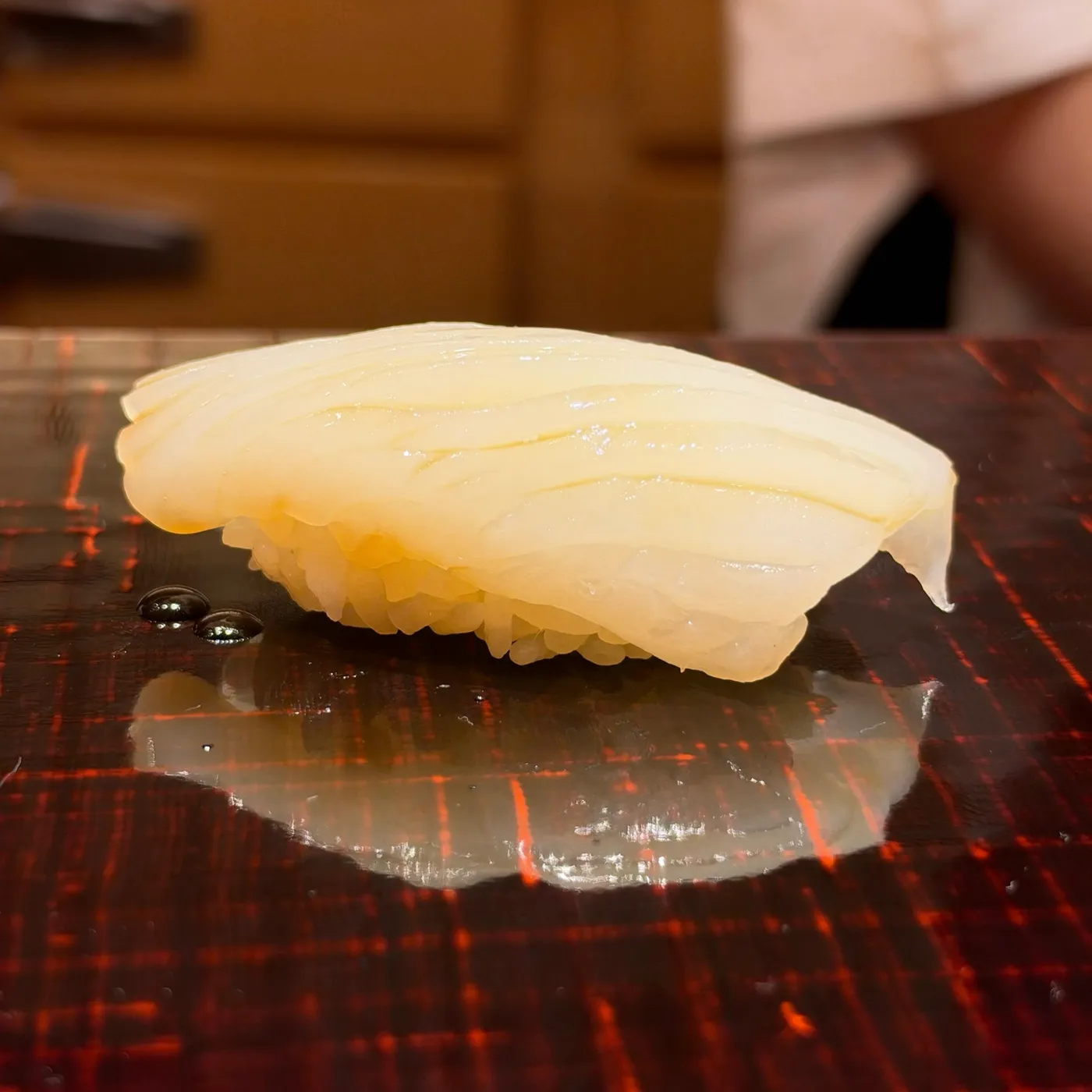
Aori-ika — アオリイカ
Bigfin reef squid. Omer described its texture as velvet, an expression that Saito san immediately understood. Look at the delicate knife work.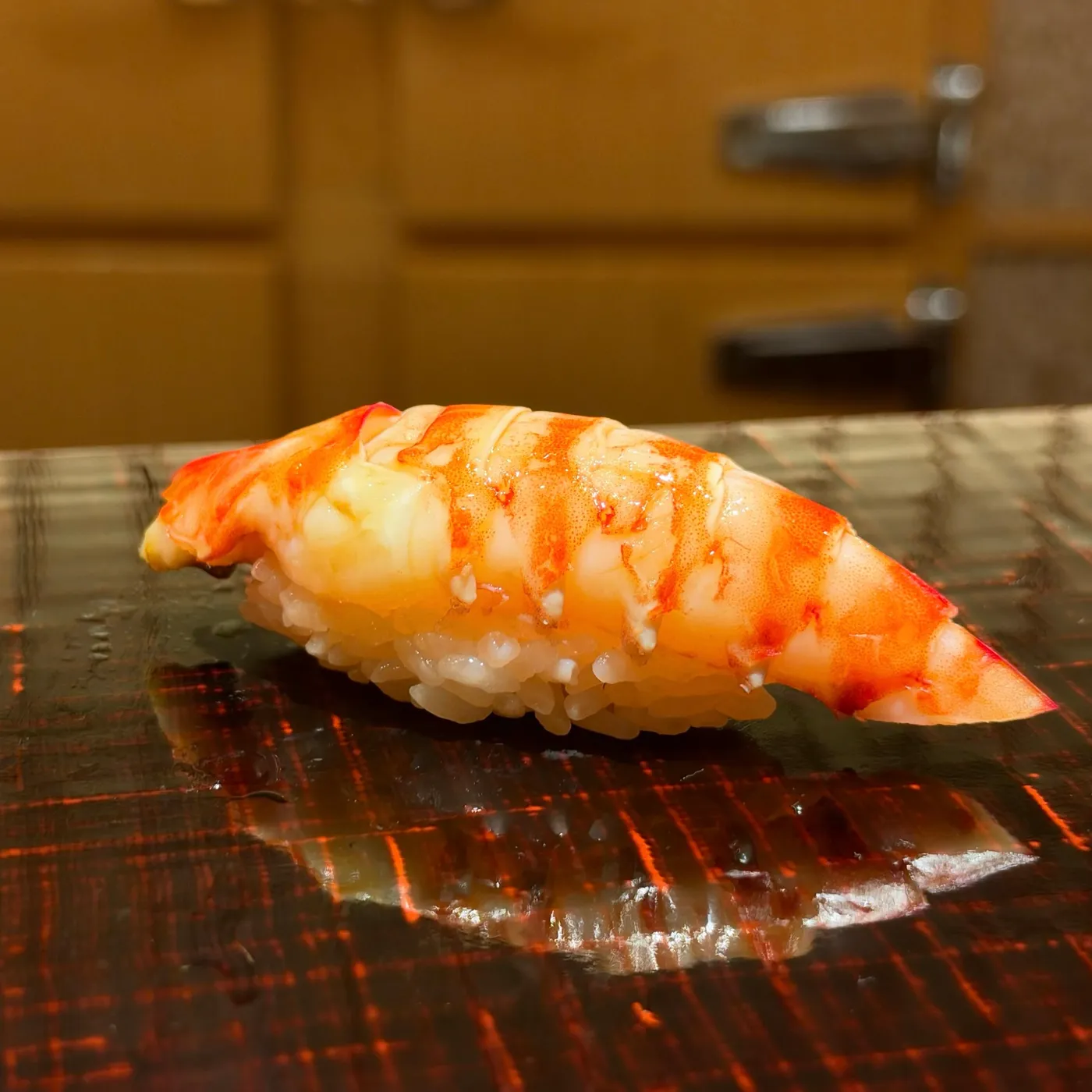
Kuruma-ebi — 車海老
Japanese tiger prawn.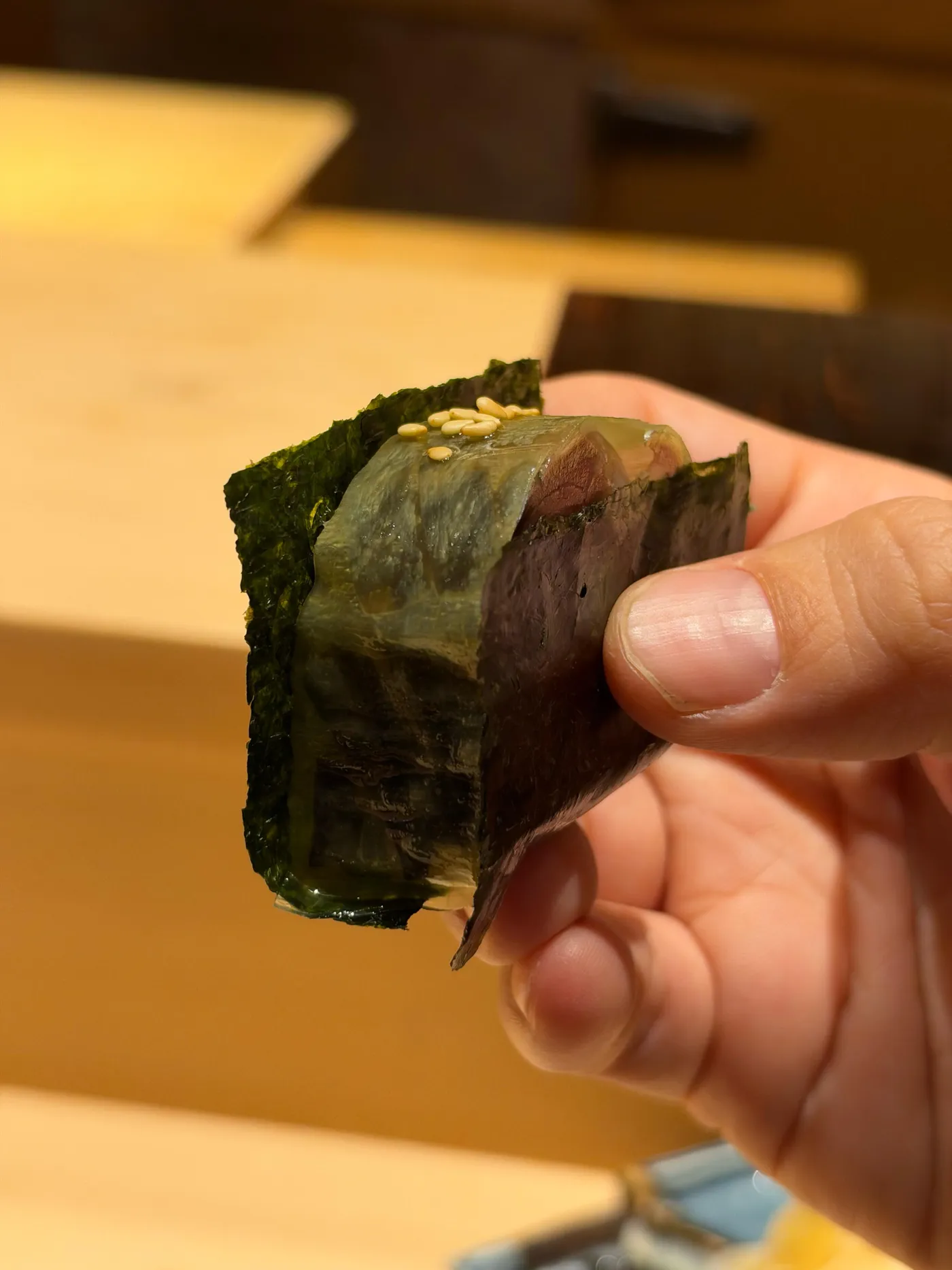
Shime-saba Sushi — しめ鯖寿司
Vinegar-cured mackerel with sesame, wrapped in nori. I love eating mackerel this way, holding it in my fingers and biting through the seaweed into the fish.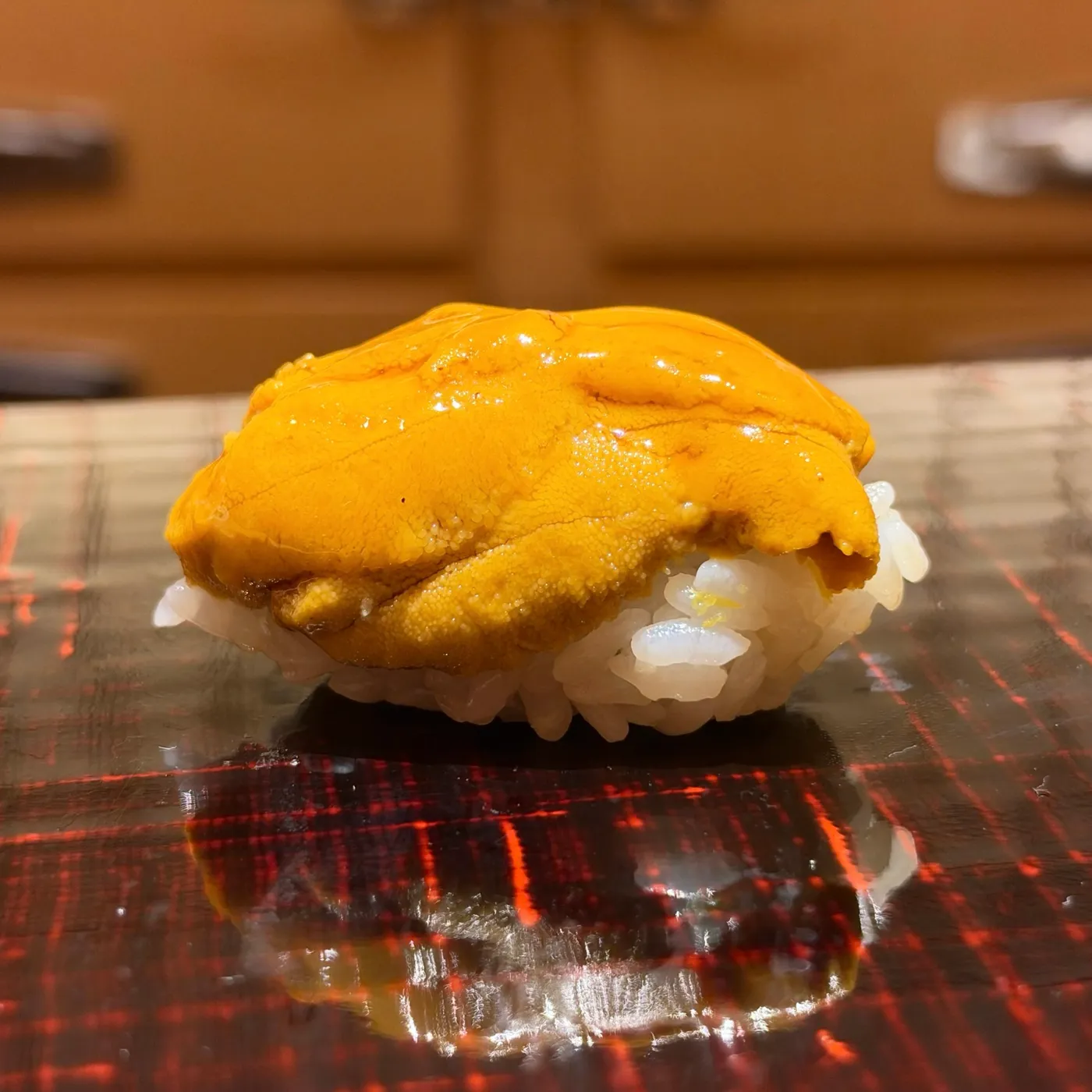
Uni — 雲丹
Sea urchin from Nemuro in eastern Hokkaido, served directly on the shari rather than as a gunkan. Saito san confirmed that no citrus had been added.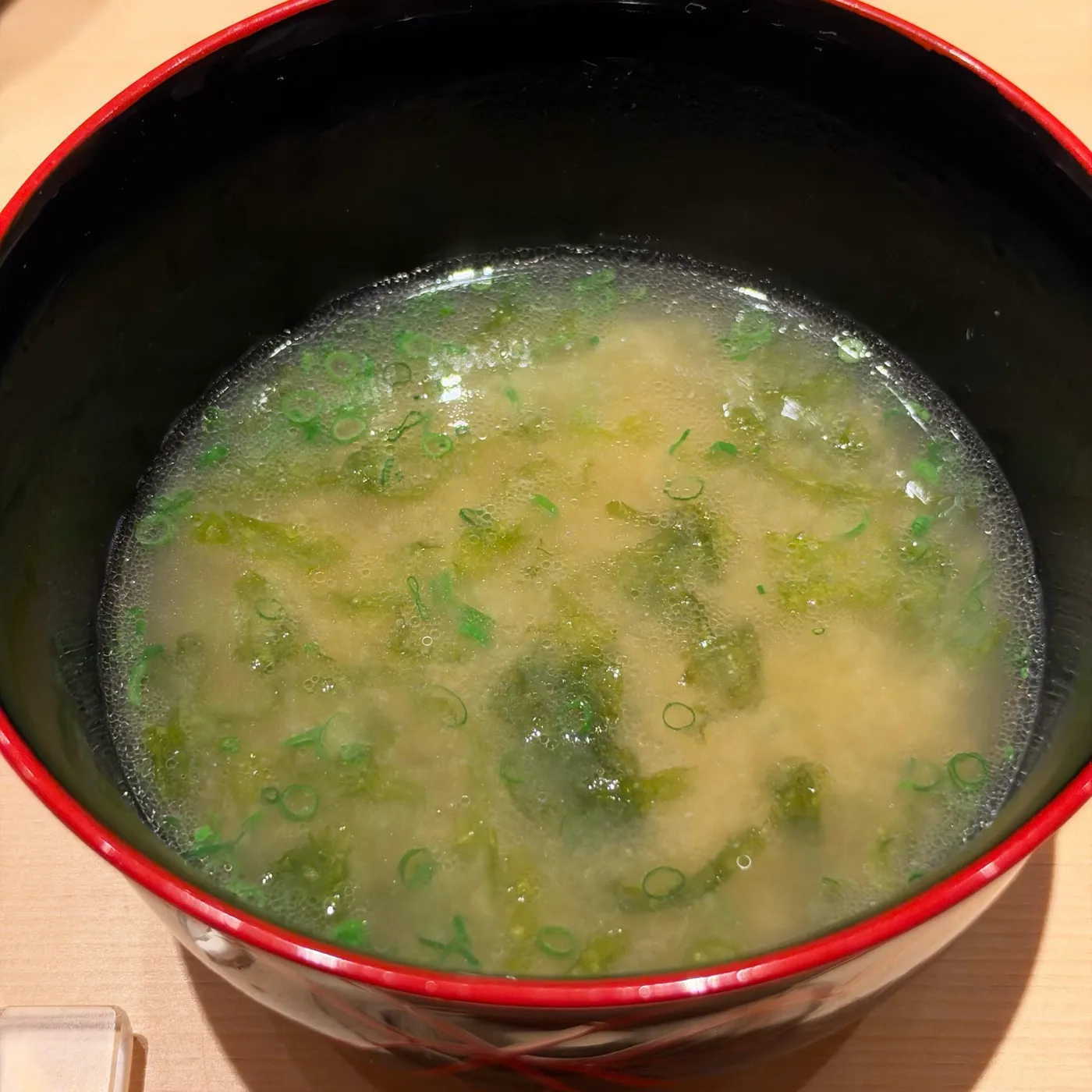
Miso Soup — 味噌汁
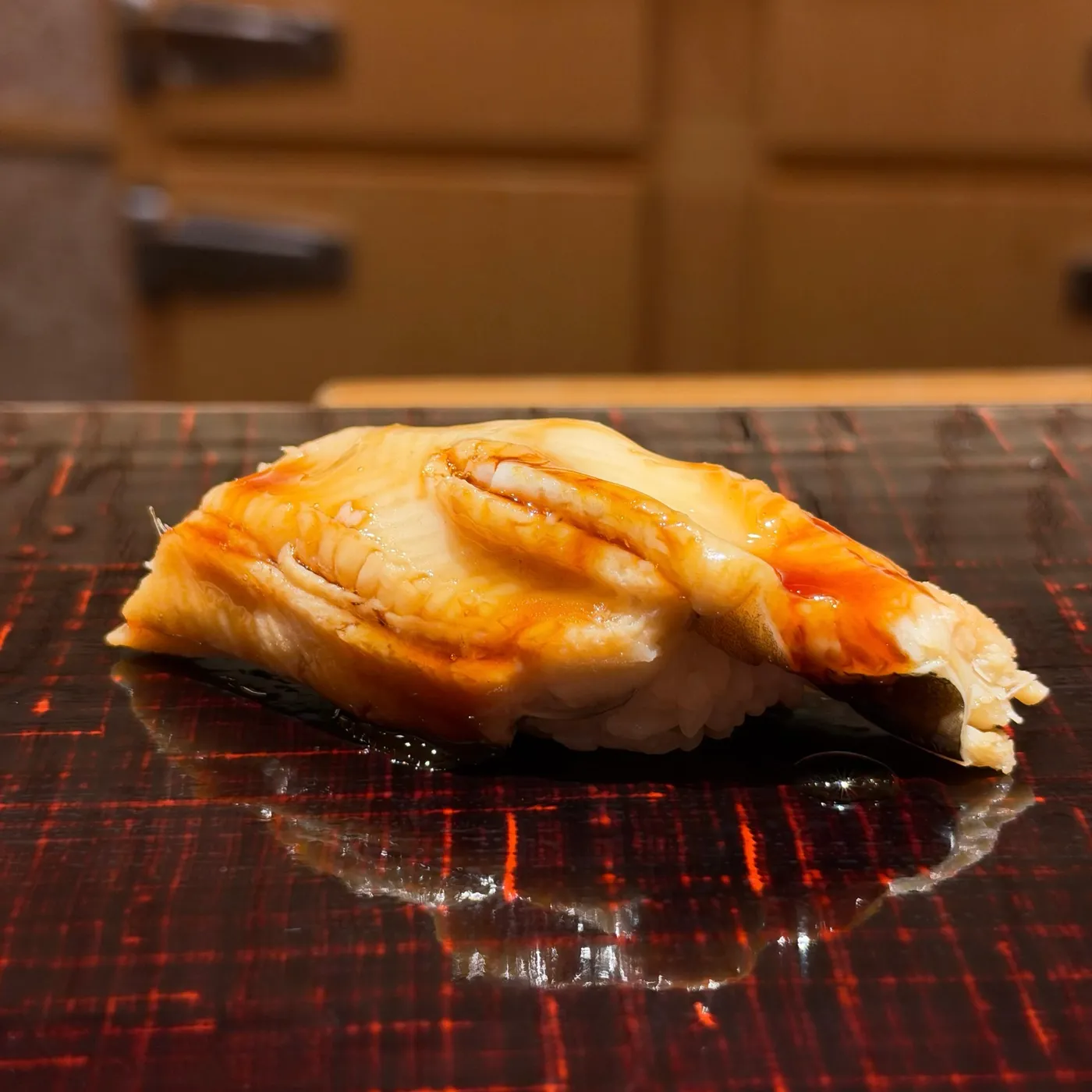
Anago — 穴子
Conger eel brushed with tsume.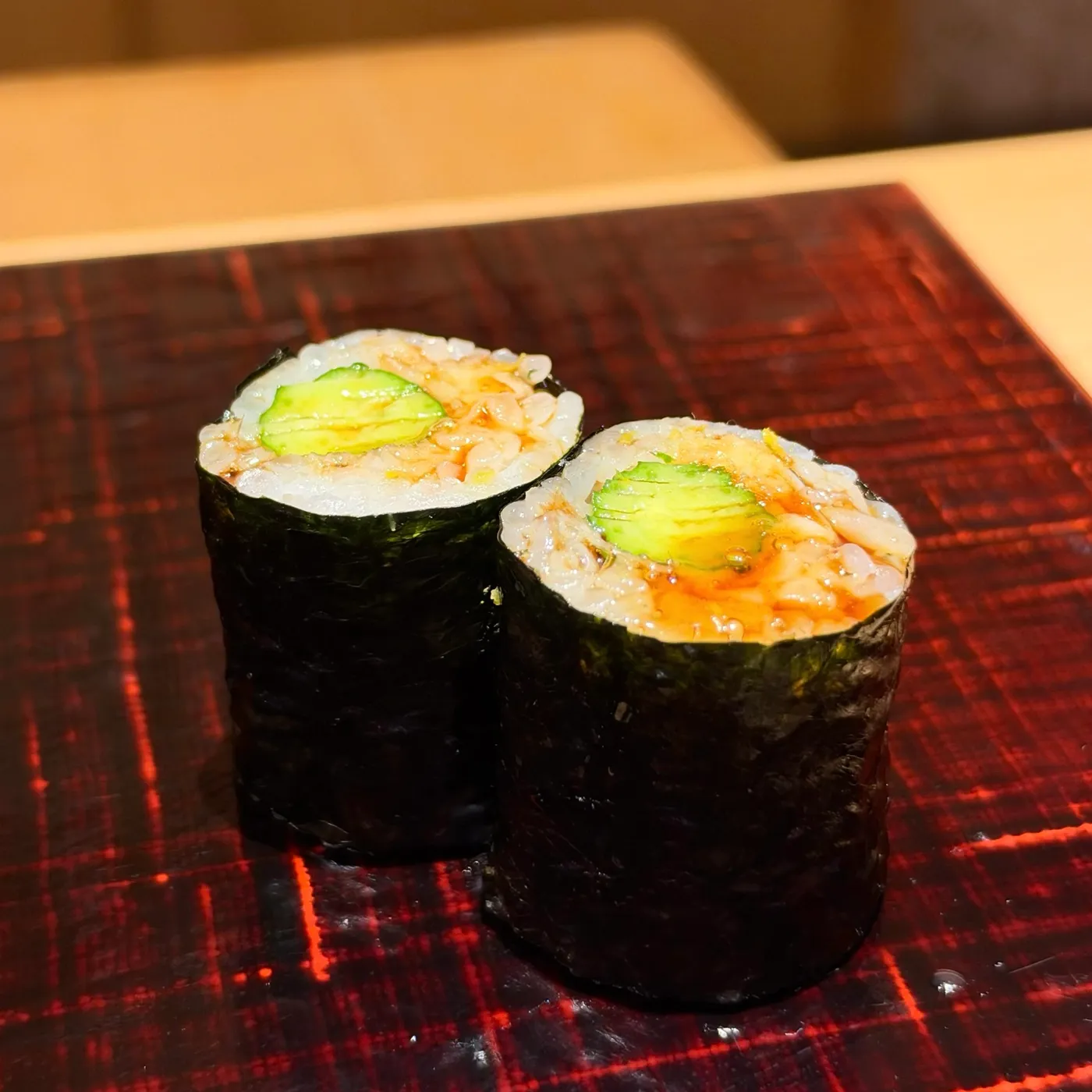
Anakyu — 穴きゅう
Anago and cucumber, one of my favorite sushi rolls. I asked Saito san to make some for everyone. :)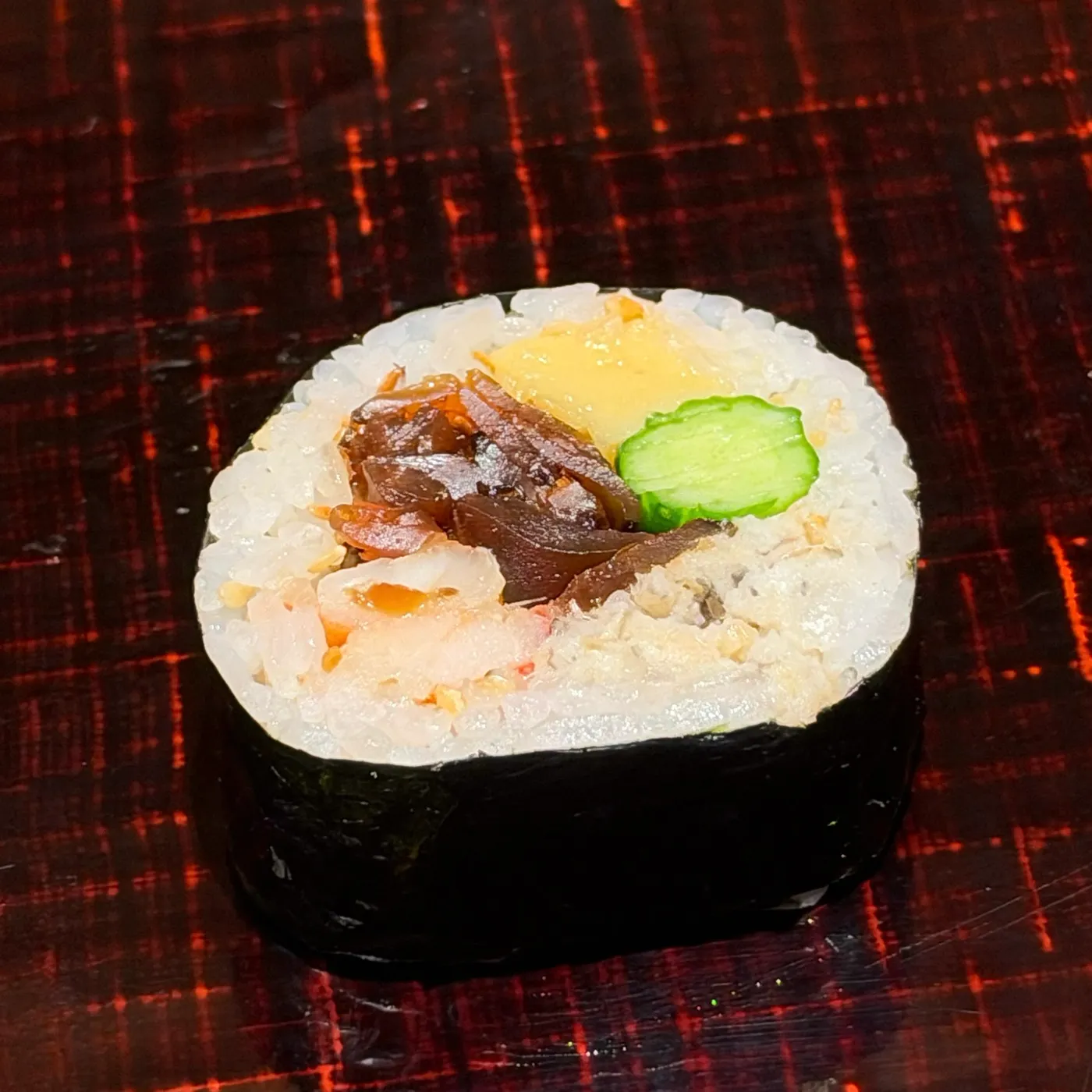
Futomaki — 太巻き
A thick sushi roll with kanpyō, shrimp, egg and cucumber.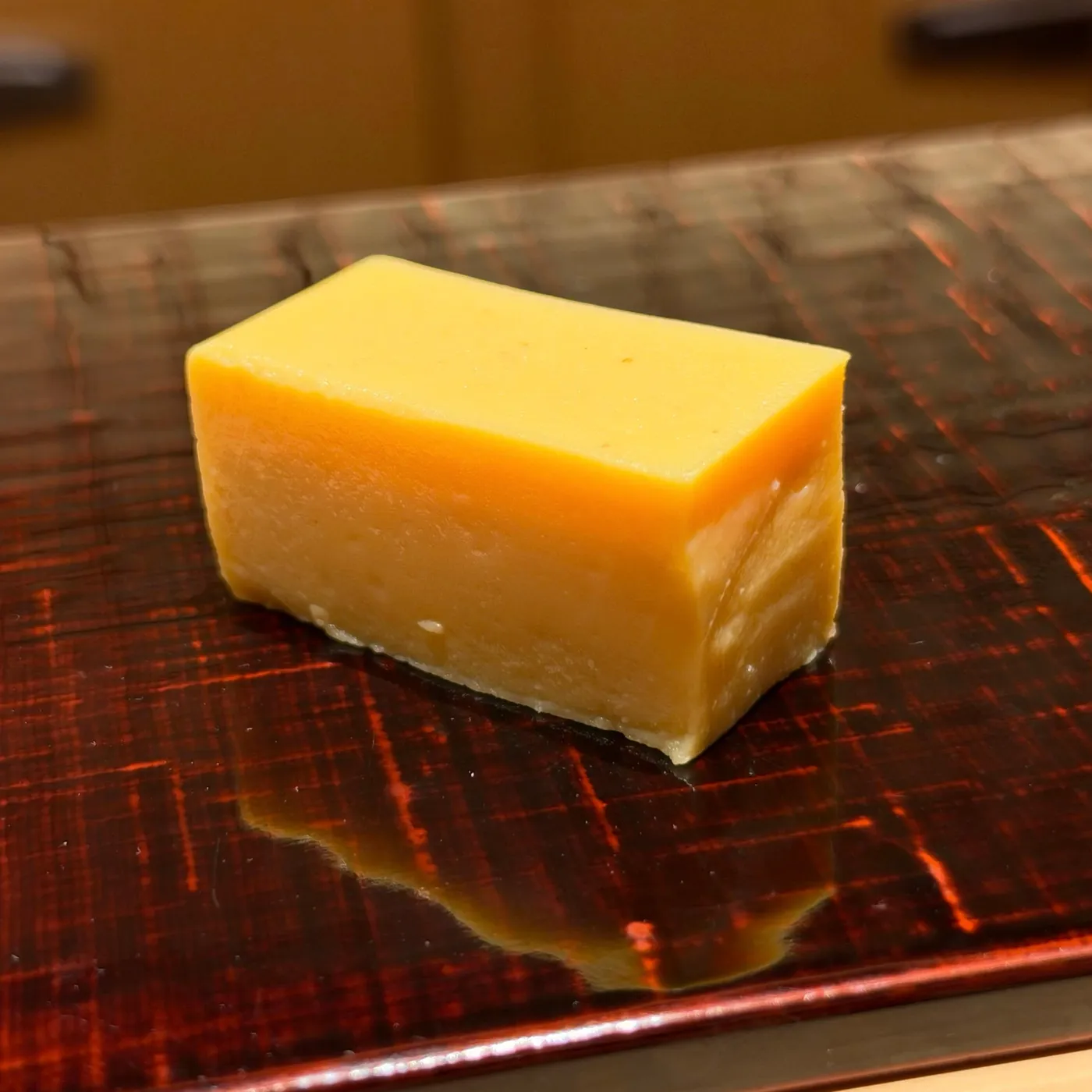
Tamago — 玉子
Saito san's tamago is steamed rather than baked, giving it that smooth, almost custard-like texture.What we drank
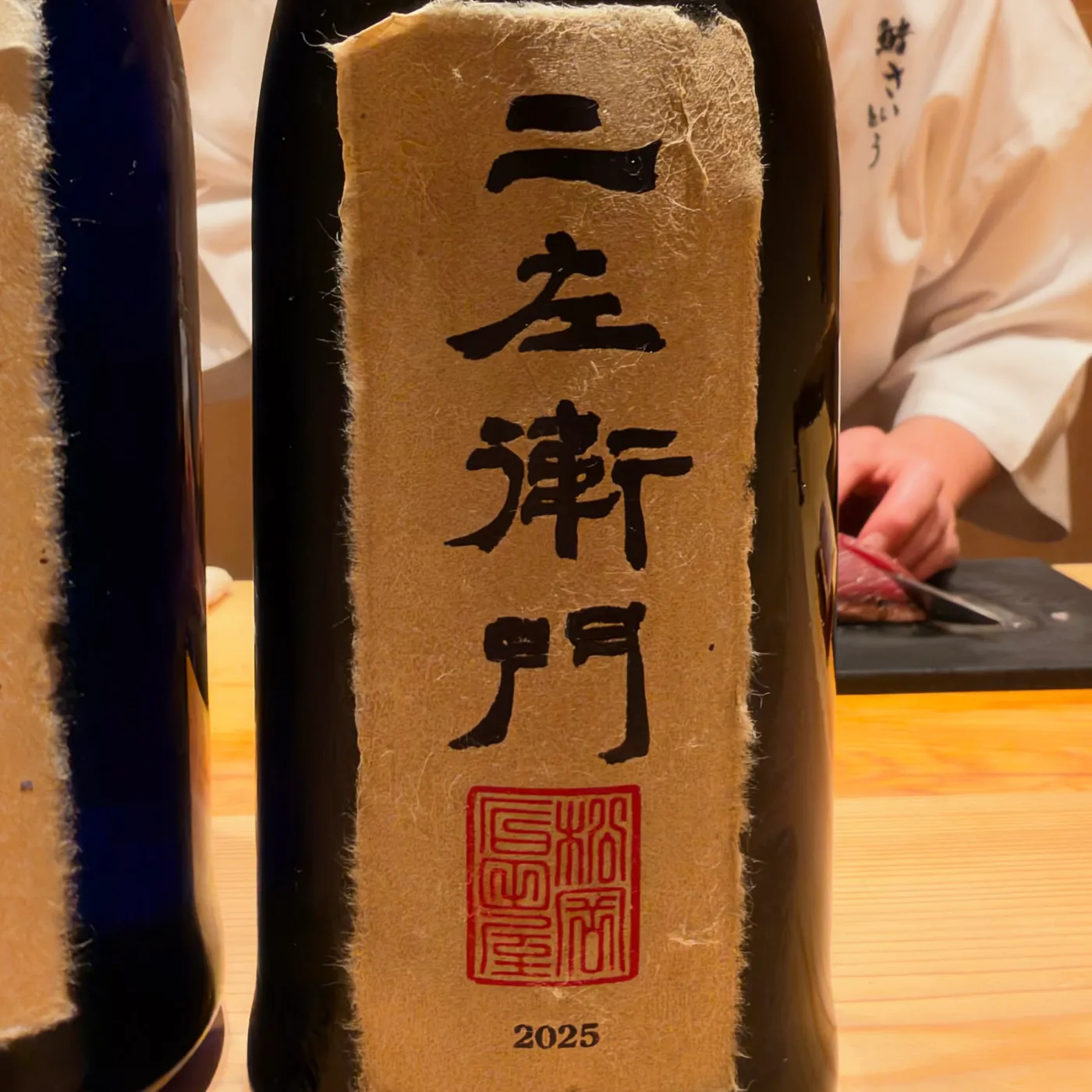
The Good Kind of Stealing
Most of us who spend time in Japan eventually become familiar with the word mottainai. We often encounter it in relation to food: leaving something delicious on your plate or throwing away an ingredient that could still be used. During my conversation with Saito san, I discovered another use of the word.
At one point during his apprenticeship, Ishikawa san had left Sushi Saito to work elsewhere. Eventually, Saito san welcomed him back. Having eaten Ishikawa san's sushi, I was curious to know what his master had seen in him all those years ago.
「将来性は持ってましたからね。浩司は。もったいなかった、途中で辞めたのは。」
He saw potential in Ishikawa san and felt that it would have been a waste for him to quit halfway through. I had always associated mottainai with things that should not be wasted. I had never thought about it in terms of the potential of another human being.
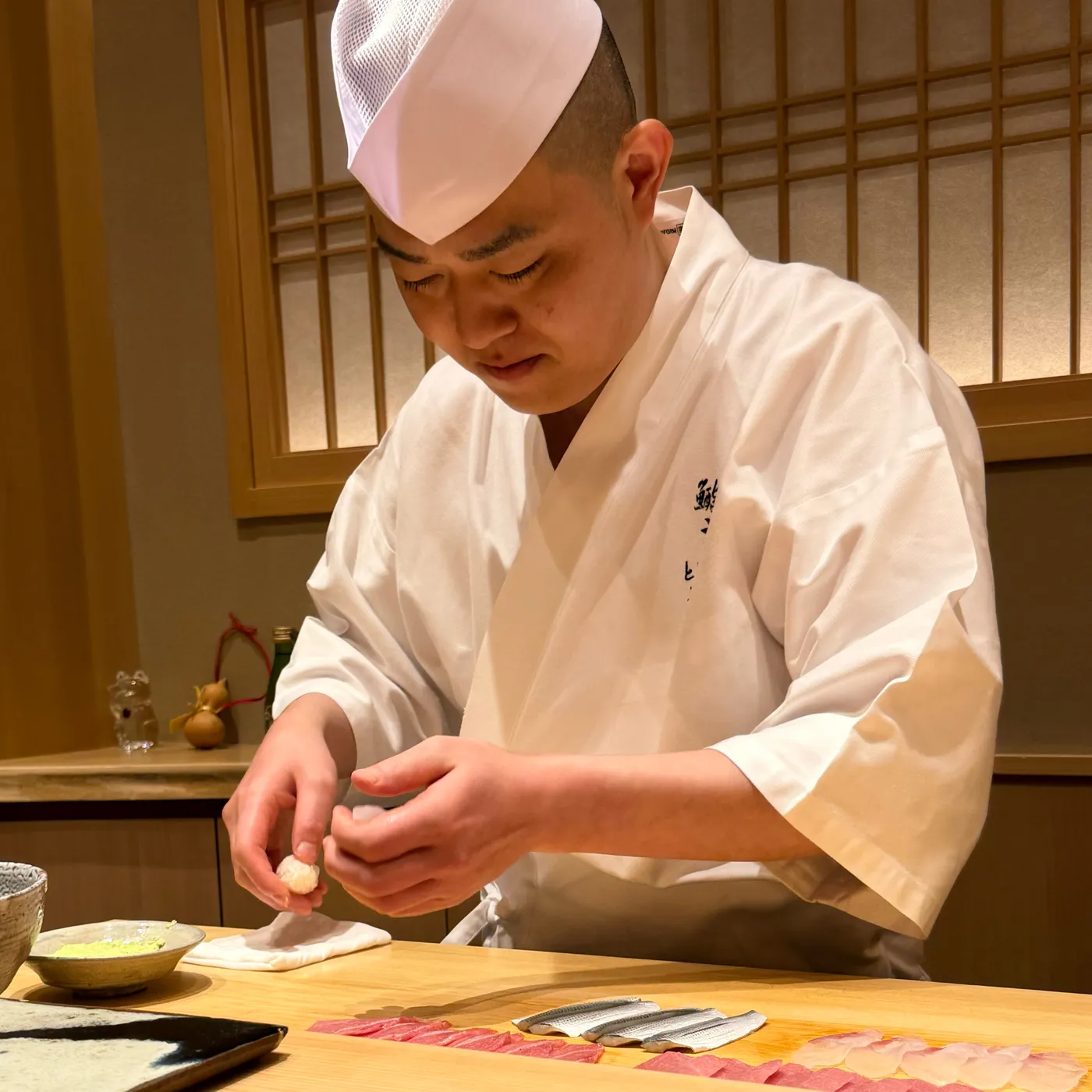
I wanted to understand how Ishikawa san had acquired those movements that reminded me so much of his master. Saito san explained that he is strict about cleanliness and the neatness of the preparation work. When it comes to cutting fish and making nigiri, however, much of the learning takes place through observation. Ishikawa san, he told me, had worked very hard to imitate him.
「まず真似ることできないと無理ですからね。」
“First, you have to be able to imitate.”
Omer explained the Japanese concept of stealing someone's technique, a traditional way of passing craftsmanship from one generation to the next. The good kind of stealing, I suggested. :)
Saito san is happy to answer his apprentices' questions, but there are things they must learn by watching and practicing for themselves.
For ten years, I have been watching Saito san's hands simply because I enjoy watching him make sushi. Ishikawa san had been watching those very same hands for an entirely different reason. Today, when I sit at his counter, I can see the results.
Even Saito Needs to Hear Oishii :)
Before taking my guests out to eat in Japan, I always tell them that every person who cooks for another human being, whether it's your mother, your grandmother, a friend or one of the most celebrated chefs in the world, wants to know that the person eating their food is enjoying it.
I encourage my guests to be loud and generous with their appreciation. If something is delicious, say oishii. If the next thing is delicious too, say it again. There is no reason to keep that information to yourself.
In my experience, we foreigners have a little advantage here. Japanese diners tend to be more restrained in expressing their enthusiasm, whereas we can happily say oishii again and again.
I had been telling my guests this for years without ever having properly tested my theory. Who better to ask than Saito san? I told Omer it was time for my stupid question.
How does Saito san feel when someone sitting at his counter tells him that his sushi is delicious?
「めちゃくちゃ嬉しいです!そのためにやってるんですから。」
“It makes me incredibly happy! That's why I do what I do.”
I had a follow-up question. Is once enough, or would he prefer to hear it many times during the meal?
「メニーメニー美味しい、メニーメニー美味しい!」
“Many, many oishii! Many, many oishii!”
Ten Years Later
Sometimes I think about that woman in Ibiza who casually asked a stranger whether he would like to join her for sushi in Tokyo. Neither of us could have imagined what that invitation would mean to me. Ten years later, traveling around the world for food is what I do for a living.
Thank you, Saito san, for ten years of sushi and friendship. Looking forward to many, many more oishii in 2027. ❤️
I AM A HUNGRY TOURIST.