Antica Osteria del Mirasole
Visited Sun, Nov 8, 2026 · Lunch
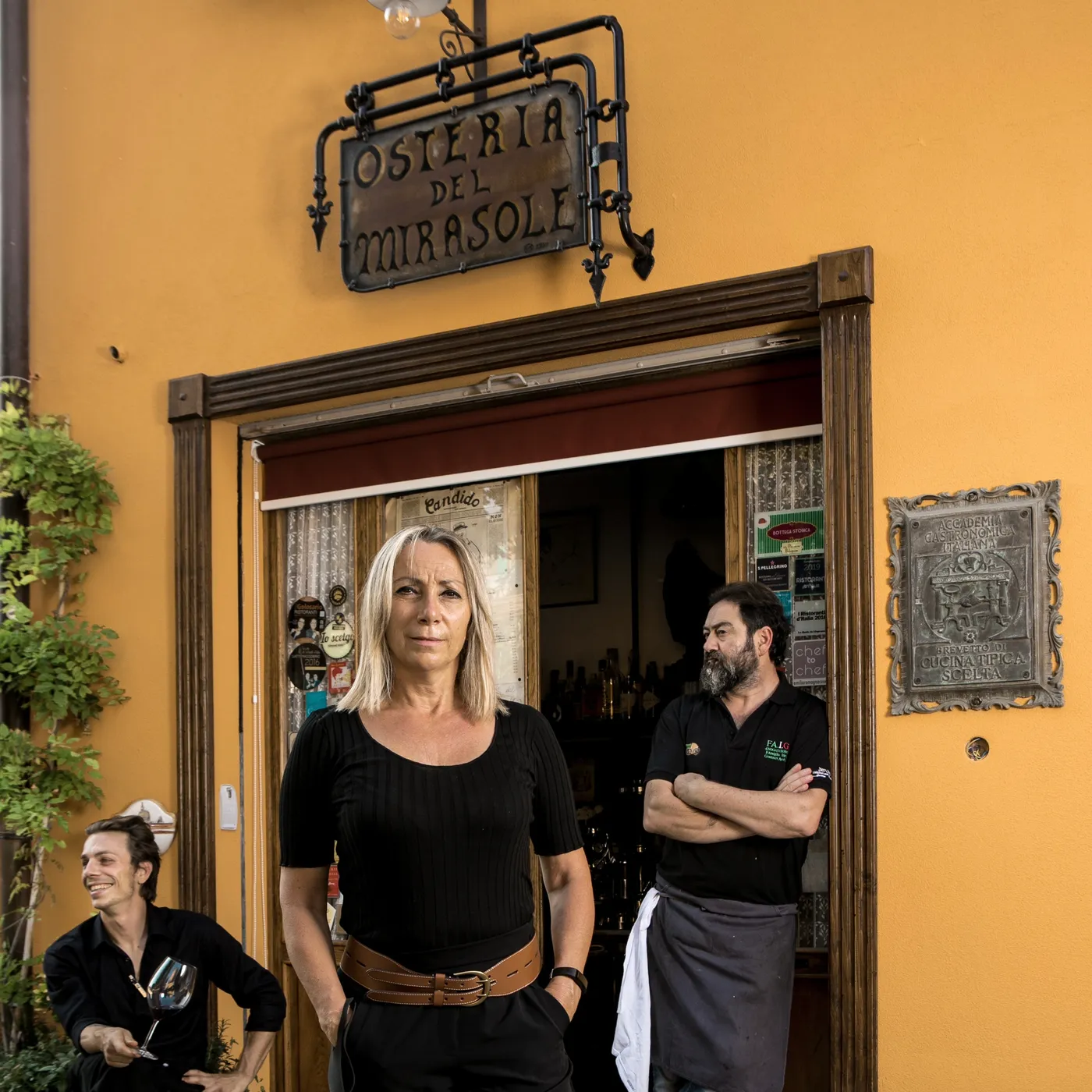
Franco, Anna and Riky.
Antica Osteria del Mirasole
From the Family's Land to Franco's Fire
Some restaurants are built around a chef. Others are built around an extraordinary ingredient or a cooking tradition. At Antica Osteria del Mirasole, I discovered something that brings all three together: an entire family's work, from the fields to the dining table.
We arrived for Sunday lunch after Riky had spent the previous day sending me voice messages about his family, their farm, and the dishes we were going to eat. I had asked him to explain the story behind the food, but he gave me something more interesting. He explained how different parts of his family's life came together to create this restaurant.
At the center is his father, Franco Cimini, who opened Mirasole in 1989. Franco has spent his life cooking, and much of that cooking takes place over the wood embers of the fireplace facing the dining room. But the ingredients don't begin in Franco's kitchen. Many of them begin with the farming, livestock, and dairy work connected to Anna, his wife, and her family.
Riky is their son. He looks after the dining room and wine cellar, bringing together the food his father cooks and the wines he wants his guests to discover. His enthusiasm for all the different parts of this family enterprise made me want to understand Mirasole from the very beginning.
A Restaurant Franco Would Want to Eat In
Franco's story began long before Mirasole opened its doors. According to Riky, his father was fascinated by cooking from a young age, and that fascination led him into important Italian kitchens, including those of Venice's grand hotels.
By 1989, Franco had developed a clear idea of the kind of restaurant he wanted to create. He wanted a place he himself would love to visit whenever he went out to eat. Somewhere familiar, generous, and deeply connected to the cooking he believed in.
That was the beginning of Mirasole. The wood-burning fireplace, visible from the dining room, became an essential part of the kitchen, not a decorative feature. Franco uses it every day, adjusting the heat and the cooking to the particular character of the meat.
I like this idea of creating the restaurant you would want to eat in yourself. It takes confidence, because it means deciding what really matters to you and working at it for decades. Listening to Riky, I sensed this was still how his father approached the kitchen.
The Story Begins in the Fields
What makes Mirasole especially interesting is that the family does much of the work that happens before an ingredient reaches the restaurant. Riky explained that their agricultural operations include land used mainly for permanent pasture and cereal cultivation, providing feed for cattle and pigs.
The family's cattle also provide milk for Parmigiano Reggiano. Riky described the process from the cheesemaker's work with fresh milk through salting and finally aging, when the cheese is left to develop its character over time.
He told me about their aging warehouse, holding more than 40,000 wheels of Parmigiano Reggiano. I particularly liked his description of those wheels being gently cared for by time as they wait for the moment when they are finally opened.
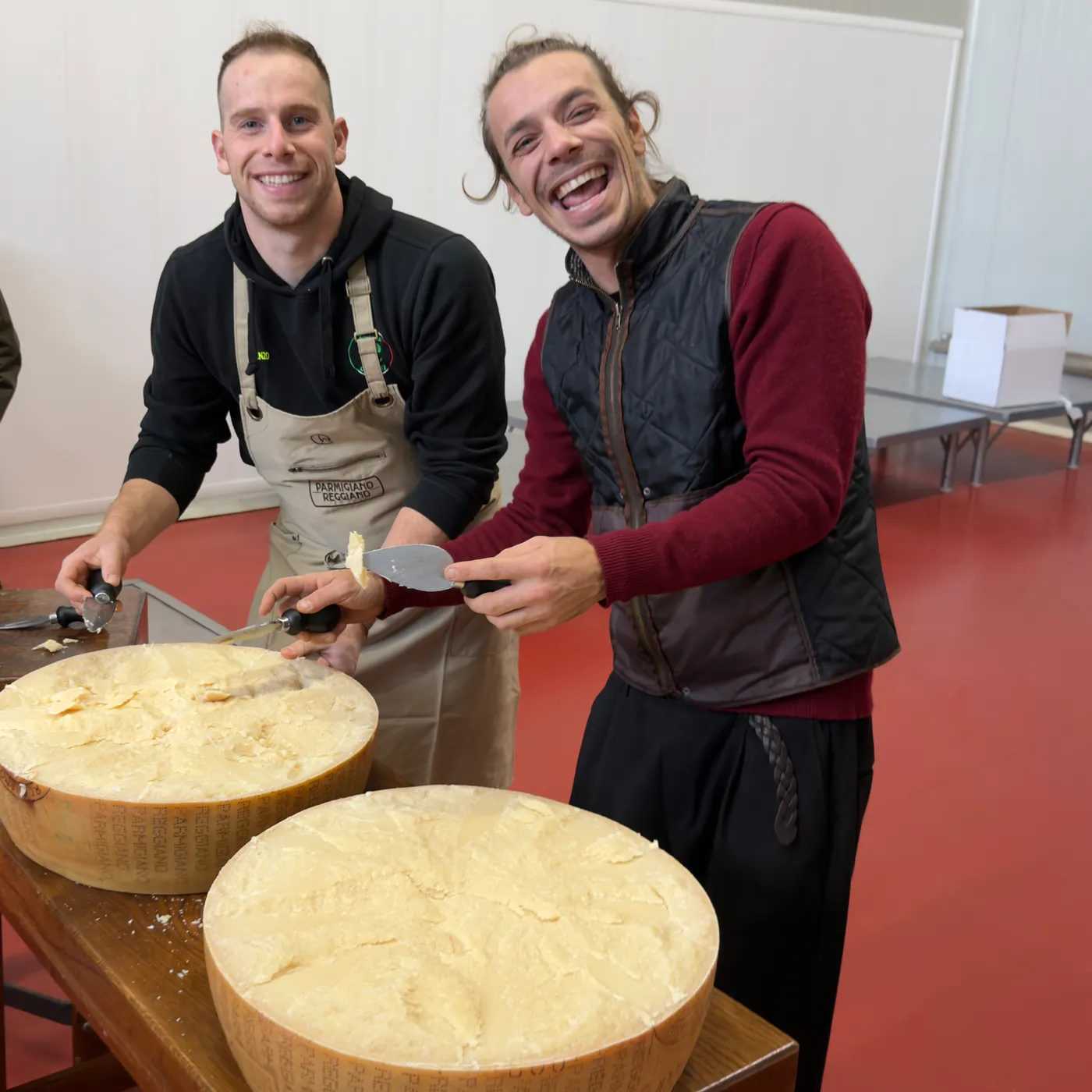
Riky and Lorenzo
Parmigiano Reggiano is such a familiar part of Italian cooking that it's easy to forget how much work goes into producing it. The quality of the milk, the cheesemaker's skill, the salting, and the long maturation are all part of the story, even before a piece of cheese reaches the table.
Riky also described the family's work with pigs, from raising the animals to preparing salumi and curing pork legs. His uncle Valerio is involved in this side of the operation, including the methods of salting, aging, and producing different cured meats.
The more Riky explained, the clearer the connection became. The milk becomes Parmigiano. The pigs become salumi and other preparations. Meat from the cattle finds its way into Franco's cooking. The osteria is the final point in a much longer chain of work.
The Meat and the Fire
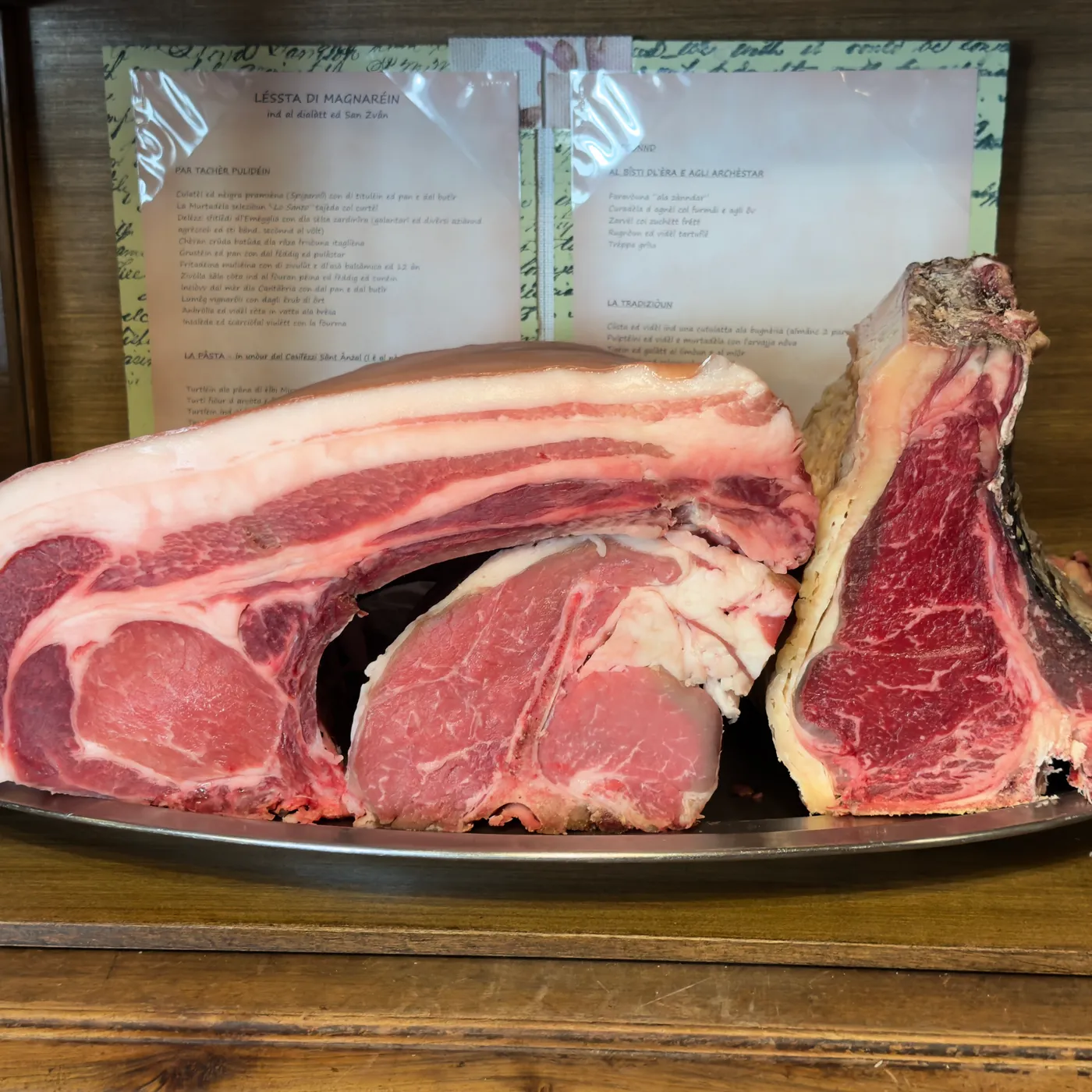
The meat at Mirasole.
Riky described how Franco selects and treats different cuts of meat, sometimes aging them before finishing them over wood embers. The photograph of the raw cuts, with their different structures and fat distribution, helps explain why one cooking method cannot suit every piece.
One of the preparations we were going to eat was particularly interesting: beef neck from the family's cattle, deboned and protected with pork lard during a long aging period. Rather than cooking it slowly until it falls apart, Franco gives it a brief encounter with the embers and serves it warm, almost like carpaccio.
It is a good example of how much cooking happens before the meat touches the grill. Aging, treating the cut, and deciding how much heat it needs are all part of the work. The fire provides the final touch.
And then there is the other important part of Mirasole: the dining room. Riky told me that he wants the people who come through the door to become his guests rather than simply customers. He brings his own passion for wine and hospitality to the food his father prepares.
After hearing all this, I looked forward to lunch even more. We weren't simply going to eat a collection of Emilian dishes. We were going to taste the result of decades of cooking, farming, production, and family experience.
What we ate
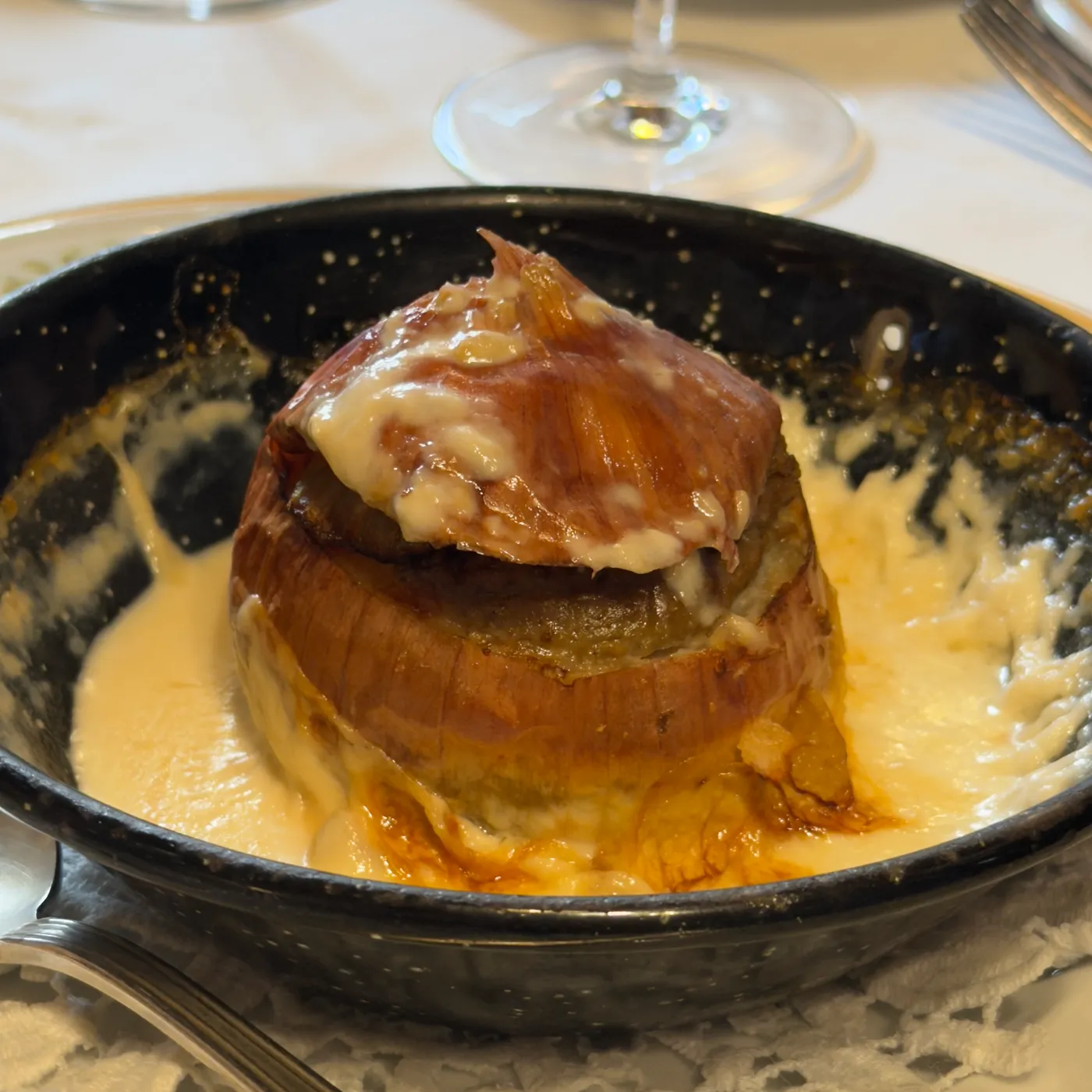
Cipolla Dorata Ripiena di Fegatini di Coniglio | Golden Onion Stuffed with Rabbit Livers
We start with a golden onion, one of the area's traditional varieties. Franco fills it with rabbit livers, then gratinates it in the oven with Parmigiano Reggiano and cream. The onion arrived in its own dark pan, surrounded by a rich, creamy sauce. The chef lifted the top to reveal the filling, then placed it back, keeping the onion's original shape intact. What interests me about this preparation is how a familiar vegetable becomes the centerpiece of an appetizer. The sweetness of cooked onion, the savory character of rabbit liver, and the richness of Parmigiano and cream all belong to the same traditional kitchen. It's an unmistakably Emilian way to begin a Sunday lunch, and a wonderful introduction to Franco's cooking.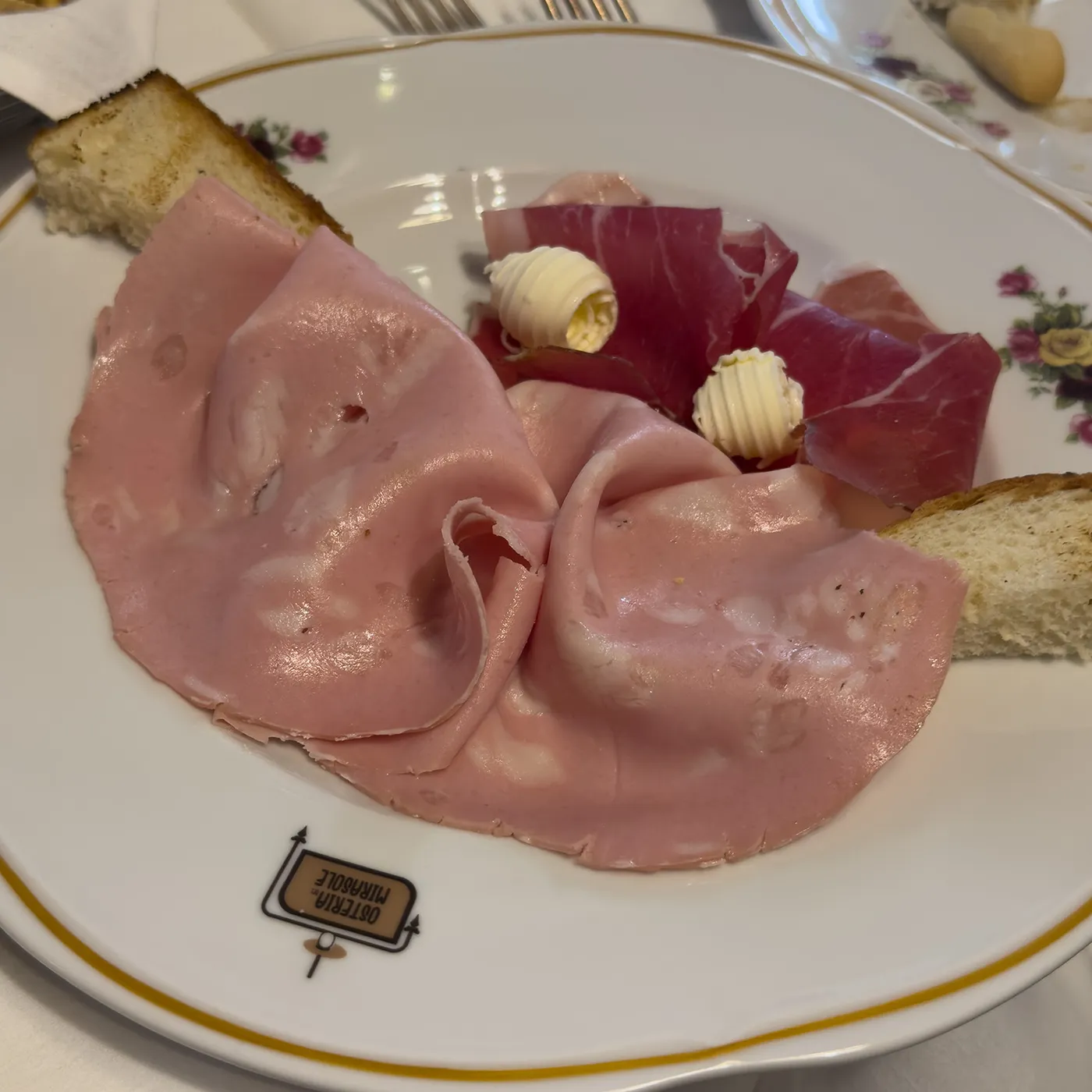
Salumi Emiliani e Accompagnamenti | Emilian Cured Meats and Accompaniments
Riky had told us that he wanted to begin the meal with a selection of cured meats representing both the region and the family's own work. He spoke about culatello from Massimo Spigaroli of Antica Corte Pallavicina and mortadella Lo Santo from the Riserva di Wellani, alongside preparations made from the family's pigs. Among their own products, he mentioned salumi, pancetta and coppa di testa. His proposed accompaniments included Parmigiano Reggiano, good balsamic vinegar, seasonal giardiniera preserved in vinegar, and warm focaccina. What I like about this selection is that it brings the work of different producers to the same table. There are specialties from people Riky admires, alongside the results of the family's own approach to farming and meat processing. For me, this is one of the great pleasures of eating in Emilia-Romagna. Even before the pasta arrives, there is an extraordinary range of flavors, textures and traditions to discover.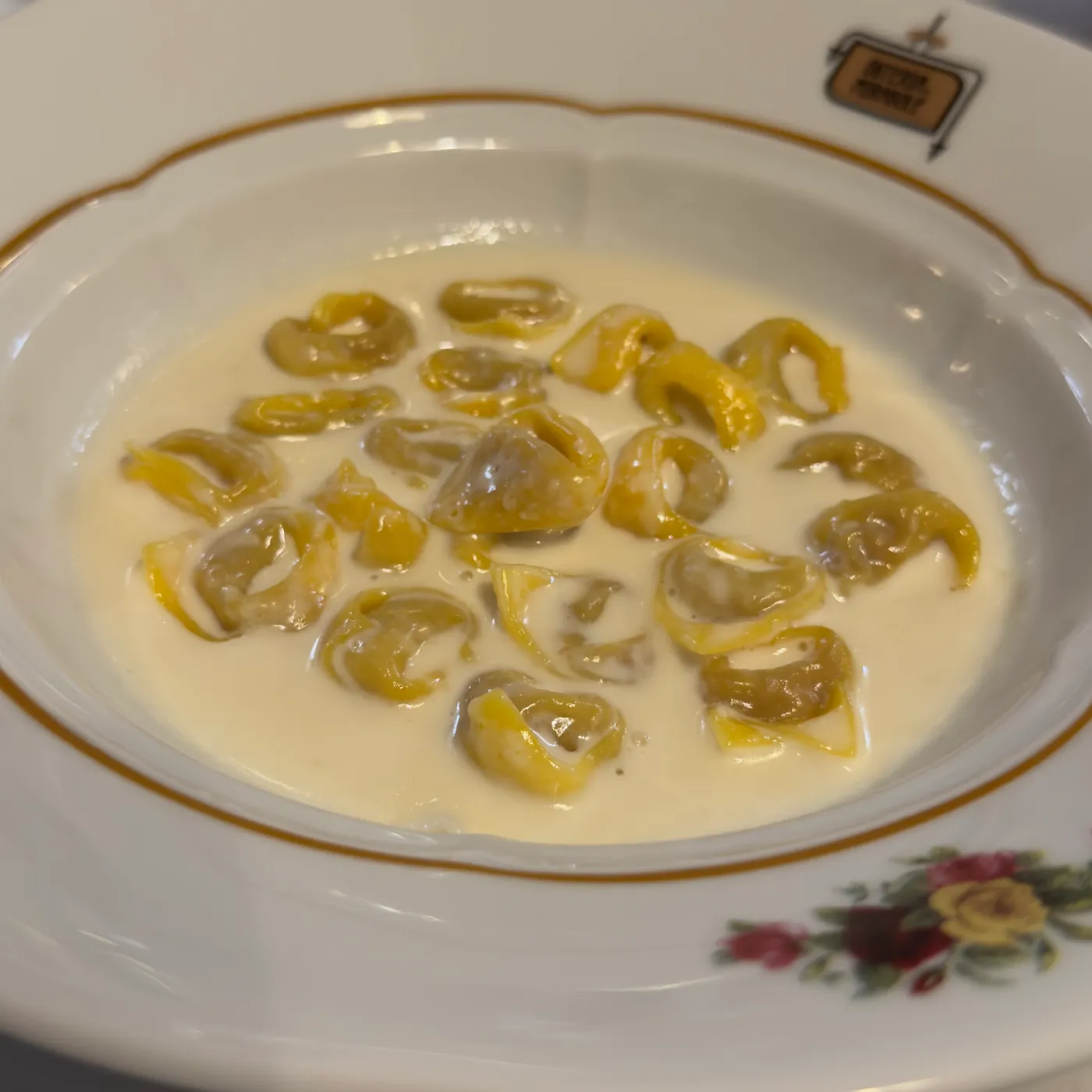
Tortellini Bolognesi con Panna da Affioramento | Handmade Tortellini with Cream from the Family's Dairy
Now we were getting to the heart of Emilian cooking: fresh egg pasta, rolled by hand and filled with meat and Parmigiano Reggiano. Riky had explained that they could serve the tortellini in broth, but he particularly wanted us to taste them with panna da affioramento. This is the cream that naturally rises to the surface of milk, and at Mirasole it comes from the family's own dairy operations. It connects one of Emilia's most recognizable pasta traditions directly to the milk produced by the family's cattle. The tortellini arrived in a deep plate, surrounded by a generous quantity of pale cream. The little parcels remained clearly visible, with their delicate folds and meat filling beneath the pasta. I loved the idea that a dish could bring together so many aspects of the family's work without needing to announce them. The pasta, the Parmigiano in the filling, and the cream in the sauce all belong to the same larger story.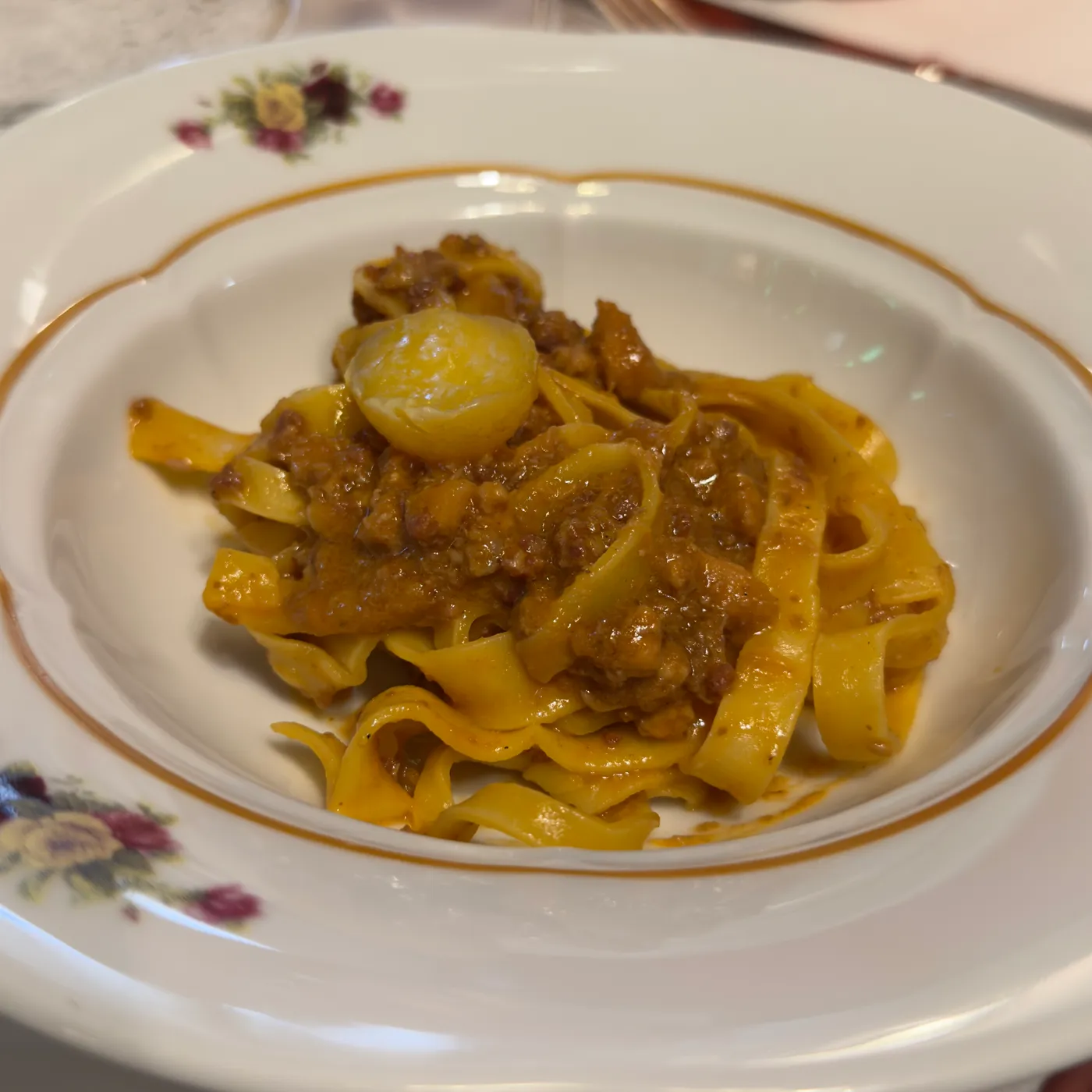
Tagliatelle al Ragù del Cortile | Franco's Tagliatelle with Courtyard Ragù
This was one of the dishes I was most eager to try after listening to Riky's explanations. Franco's ragù del cortile is made with beef and pork, but it also incorporates the lesser-used parts of animals that Italian cooks often refer to as the quinto quarto, or fifth quarter. Riky mentioned small hearts, livers, combs, and ovaries among the ingredients. These are combined with the more familiar cuts of meat to create a rich ragù, using parts that might otherwise be overlooked or discarded. The sauce arrived clinging to broad ribbons of handmade tagliatelle. Its deep color and pieces of meat gave the dish a substantial character, and the way it was served felt generous. What matters to me here is Franco's attitude toward the animal. Respect doesn't end with choosing a beautiful steak. It also means understanding the less familiar cuts and knowing how to turn them into something worth eating. This ragù expresses that idea more clearly than a long explanation ever could.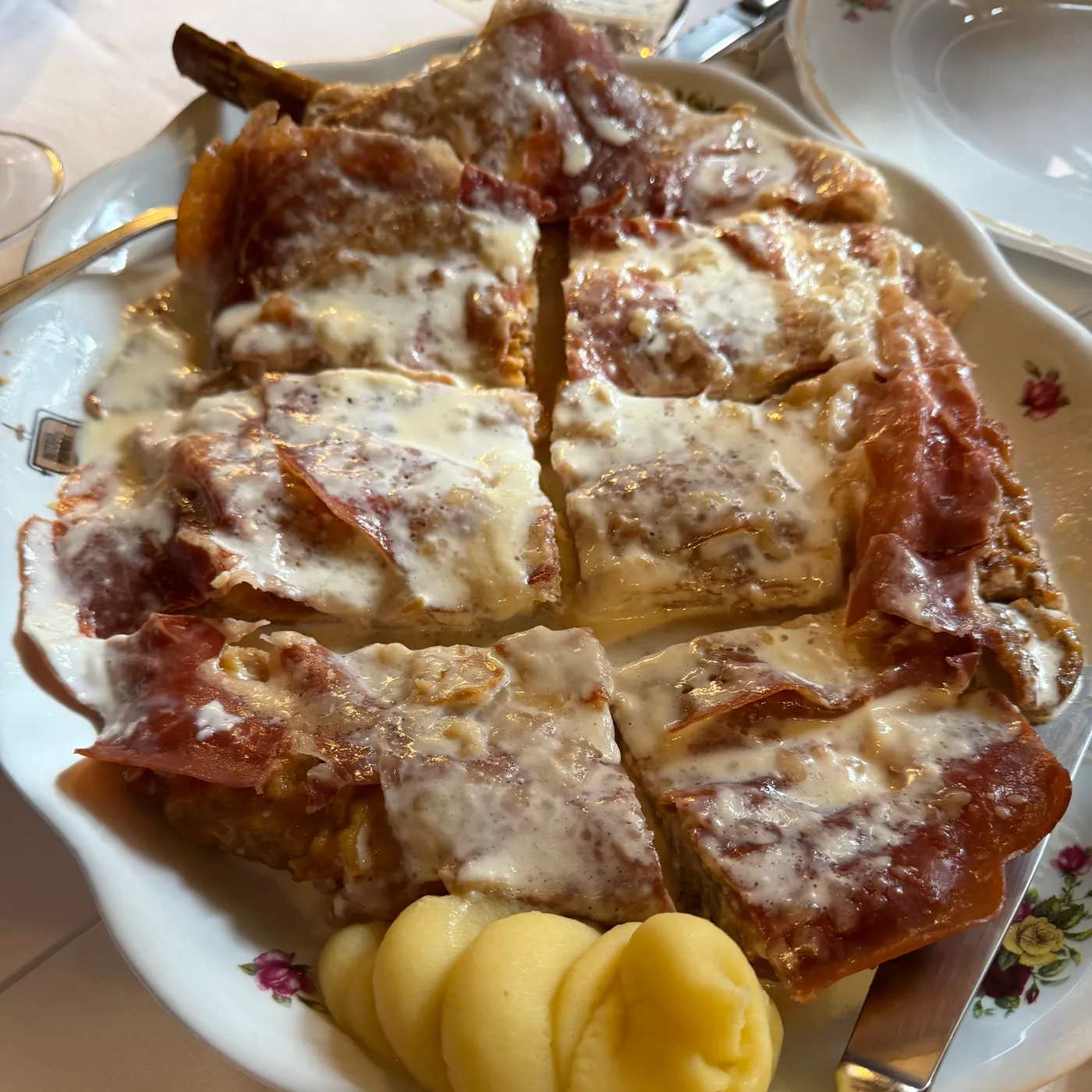
Cotoletta alla Petroniana | The Grand Bolognese Veal Cutlet
Then came one of the great expressions of Bologna's generous cooking: cotoletta alla petroniana, named in honor of San Petronio, the city's patron saint. Riky explained that Franco begins with bone-in veal, pounded thin in the style known as orecchia d'elefante, or elephant's ear. The meat is fried in butter, then finished with prosciutto crudo and Parmigiano Reggiano. Our platter arrived with the cutlet divided into generous portions, each covered with prosciutto and a rich layer of melted cheese. A serving of smooth mashed potatoes completed the presentation. This dish makes no apology for its richness. Veal, butter, prosciutto, and Parmigiano come together in the kind of preparation that explains the abundance for which Emilian cooking is so loved.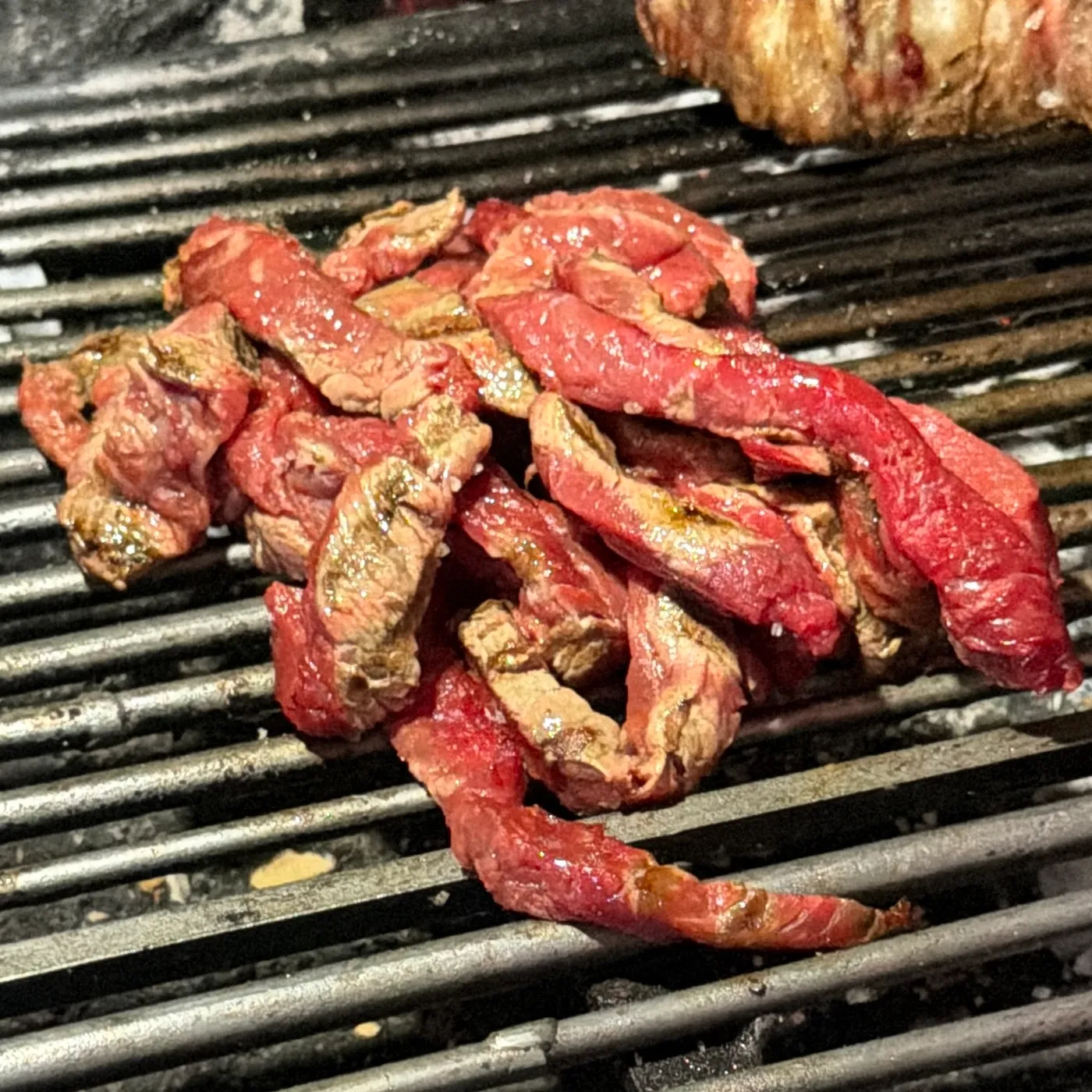
Collo Reale di Manzo alla Brace | Aged Beef Neck Cooked Over Wood Embers
This preparation took us back to the fireplace and the years Franco has spent working with wood embers. Riky described the meat as collo reale: the neck from the family's cattle, deboned and protected with pork lard during a long aging period. After that preparation, the beef is briefly seared over the embers and served warm, in a style reminiscent of carpaccio. It is an unusual treatment for a cut often associated with much longer cooking. The photograph captures the meat directly on the grill, its red interior still visible as the outer surfaces begin to change under the heat. It is a glimpse of Franco's work at the moment when all that preparation meets the fire. I find this combination of long aging and brief cooking particularly interesting. So much time goes into preparing the meat, yet the final encounter with the heat is deliberately short. It makes the grill a place of precision, not simply intensity.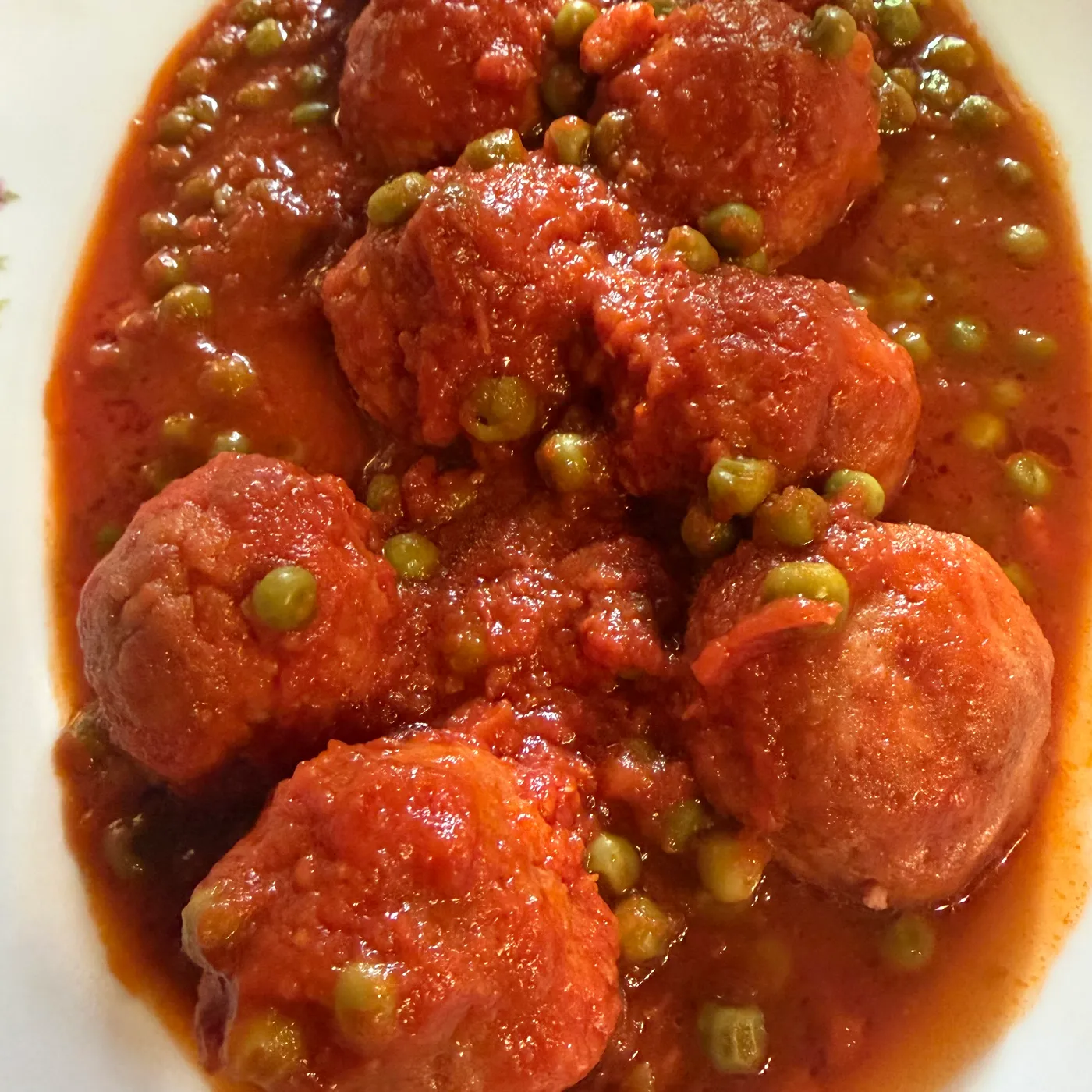
Polpettine al Pomodoro e Piselli Novelli | Butter-Fried Meatballs with Tomato and Young Peas
After the richness of the cotoletta and the precision of the beef over the embers, the meal returned to something wonderfully familiar: meatballs in tomato sauce. Riky explained that Franco first fries the polpettine in butter, then stews them with tomato and young peas. The finished dish arrived in a generous pool of red sauce, with the peas scattered among the meatballs. There is something deeply comforting about preparations like this. They don't require unfamiliar ingredients or elaborate techniques. Their pleasure comes from a familiar combination prepared with attention and care. For me, this is exactly the sort of dish that belongs at a long family Sunday lunch in Emilia.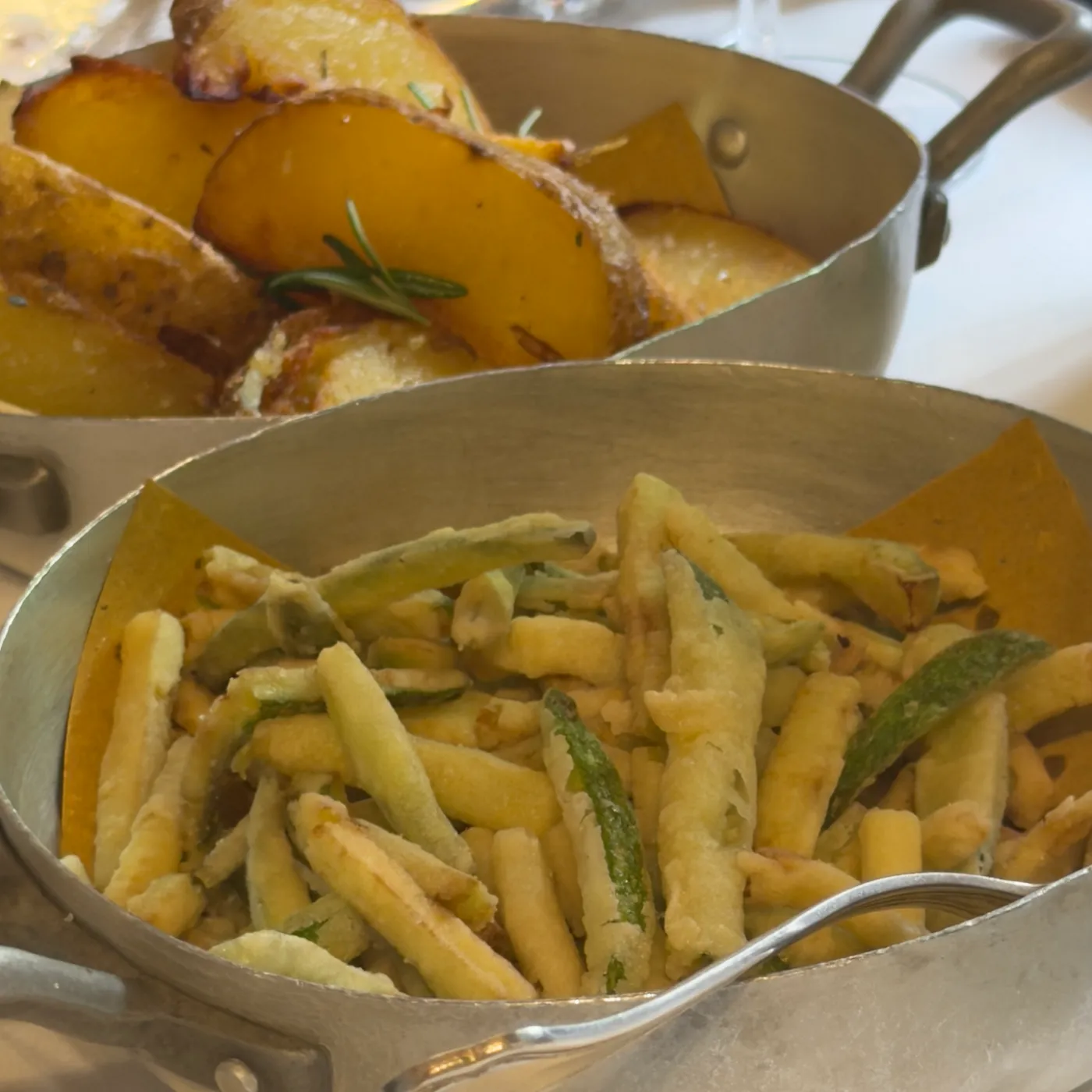
Contorni della Casa | Roast Potatoes and Fried Zucchini
Alongside the main courses came two pans of accompaniments, served in the middle of the table for everyone to share. One held golden potato wedges with rosemary, while the other contained lightly battered, fried strips of zucchini. The potatoes brought their browned surfaces and rosemary fragrance. The zucchini offered a contrasting texture, with the green vegetable still visible beneath its pale coating. I love this way of serving vegetables. Nothing is individually arranged or overcomplicated. The pans arrive at the table, everyone helps themselves, and the meal continues.Desserts
Crème Caramel
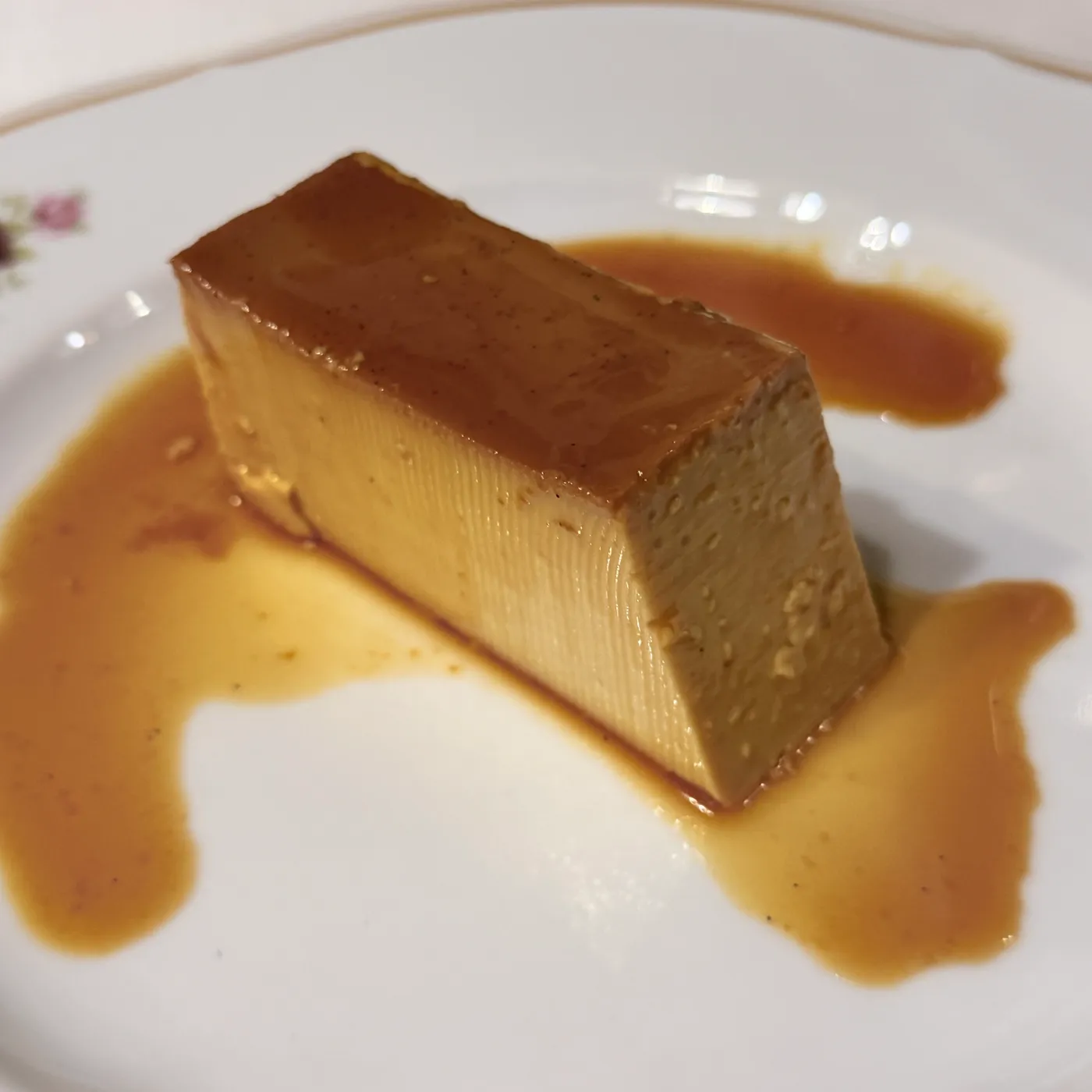
For dessert, Franco's kitchen served crème caramel, one of the traditional sweets Riky had mentioned in his recordings. Ours arrived as a neat rectangular slice of custard, with a dark caramel surface and sauce spreading across the white plate. The smooth interior was clearly visible where the custard had been cut. It's a familiar dessert, and that familiarity is part of its pleasure. After such a generous lunch, a classic crème caramel feels entirely at home.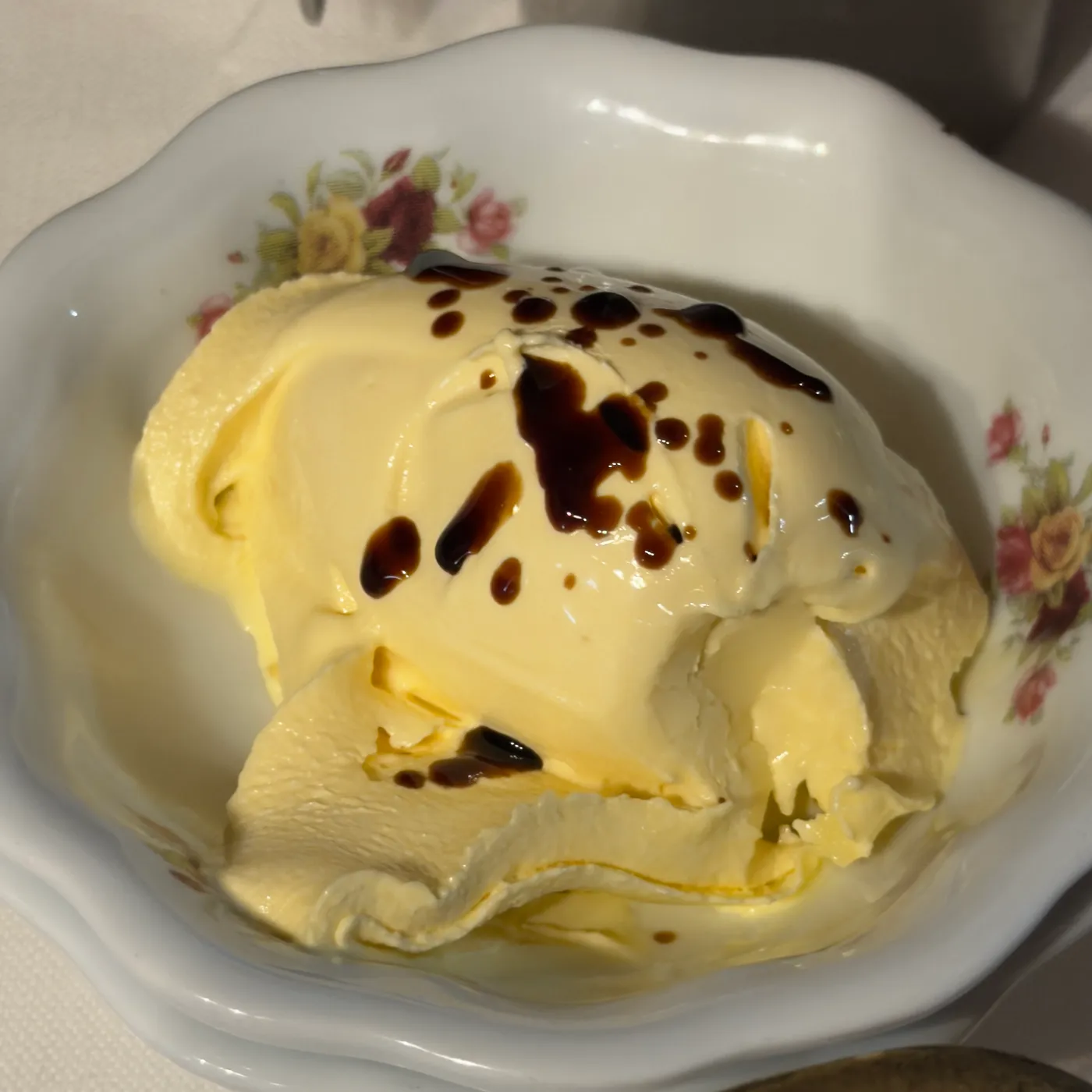
Gelato con Aceto Balsamico | Ice Cream with Balsamic Vinegar
The second dessert brought together two things that belong naturally to this part of Italy: rich ice cream and balsamic vinegar. A generous serving of pale yellow gelato arrived in a small floral bowl, finished with drops of dark balsamic vinegar across its surface. It's a simple combination built around contrast. The gelato's cold sweetness meets the balsamic's darker, sharper character, giving the familiar dessert an unmistakably Emilian identity.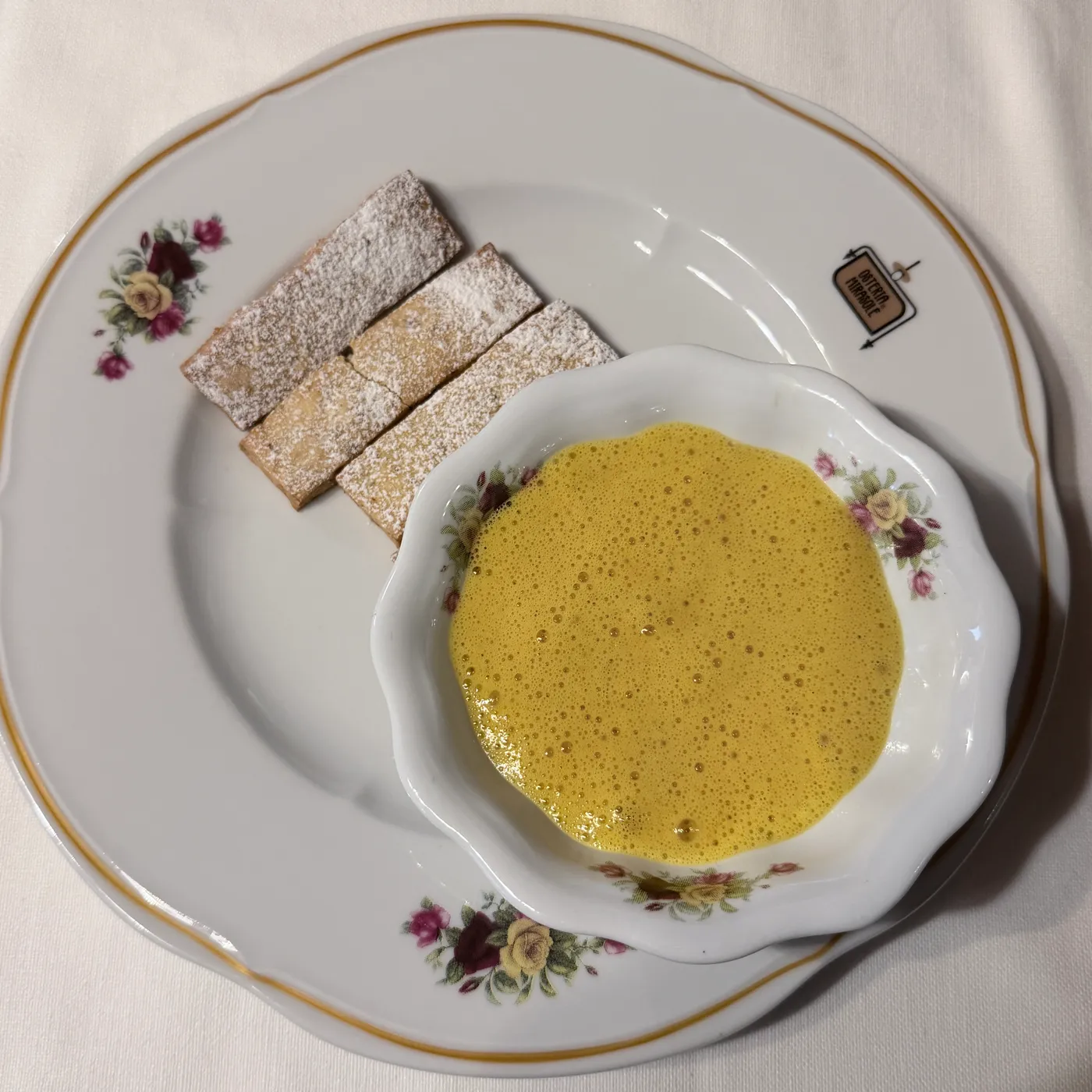
Biscottini di Frolla con Zabaione | Shortbread Biscuits with Zabaione
We finished with shortbread biscuits and zabaione, another traditional dessert Riky chose for lunch. The biscuits arrived as neat rectangular pieces, dusted with powdered sugar. Beside them sat a small bowl of golden, foamy zabaione, ready for dipping. I love a dessert that encourages you to linger over the final minutes of a meal. A biscuit, a spoonful of zabaione and another conversation around the table are all that is needed. It was a fitting conclusion to a Sunday lunch that began so many hours earlier with stories about the fields, the animals, the dairy, and the people behind the food.What we drank
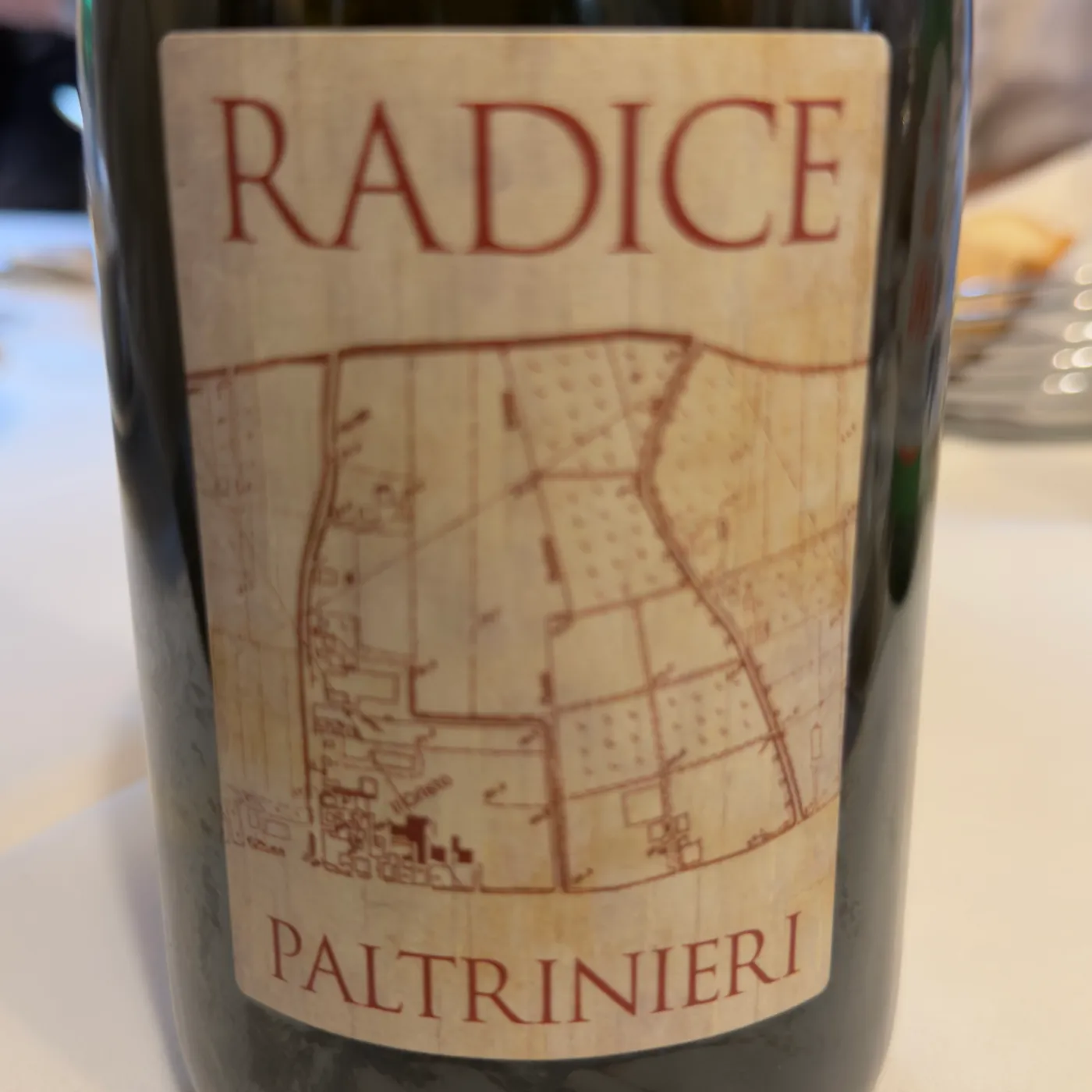
Paltrinieri Radice Lambrusco di Sorbara DOC 2025 | Emilia-Romagna
Radice comes from Gianfranco Paltrinieri in Sorbara, one of the areas closely associated with Lambrusco di Sorbara. The 2025 bottle we drank is a dry, lightly sparkling wine made through refermentation in the bottle, a method explicitly identified on its back label.
Lambrusco belongs naturally at the Emilian table, particularly alongside rich pasta, cured meats and traditional dishes. Riky had told us he wanted to include a local sparkling wine with the pasta, and this was one of the bottles we drank.
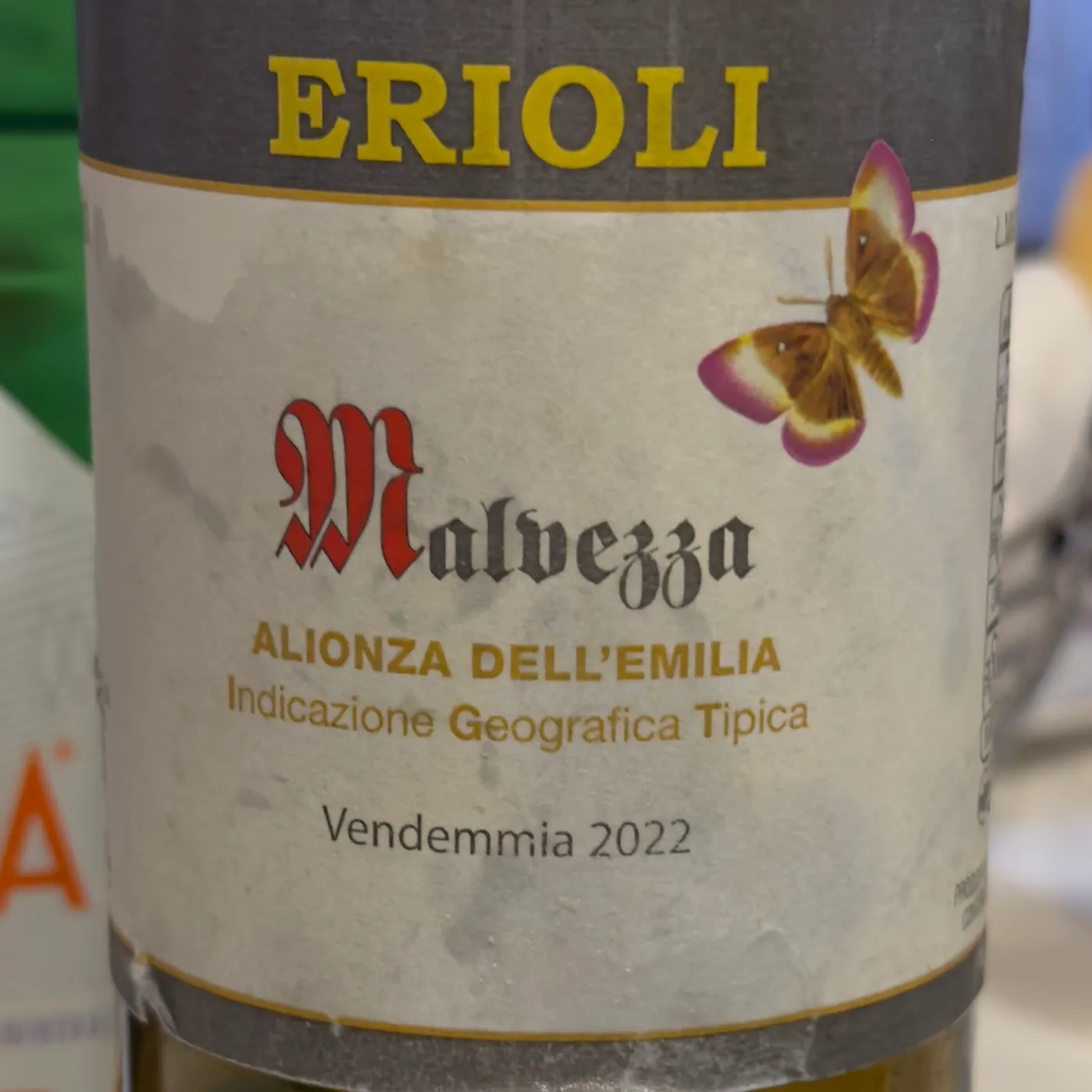
Erioli Malvezza Alionza dell'Emilia IGT 2022 | Emilia-Romagna
Malvezza is a 2022 Alionza dell'Emilia IGT from Erioli. The label identifies Alionza, a much less familiar regional grape than the varieties most people immediately associate with Emilia-Romagna.
That made it an interesting addition to our table. Alongside the Lambrusco, it offered another opportunity to encounter the wine traditions of this part of Italy without looking beyond the region.
The People Behind the Food
What stays with me after a meal like this isn't simply the memory of the dishes. It's the realization of how much work went into each one before it reached our table.
There are fields to cultivate and animals to care for, milk to transform into cheese, salumi to prepare, and meat to select and age. Recipes have been refined over decades, and Franco has learned to use the fireplace in his own way.
And then there are the people who bring all of this together. Anna's connection to the family's agricultural side, Franco's life in the kitchen, and Riky's enthusiasm for the dining room and wine cellar form different parts of the same story.
I particularly liked the way Riky described his guests. He doesn't simply want people to come and eat; he wants them to feel welcomed into a place that means something to his family.
After this Sunday lunch, I understood what he meant. Mirasole is not just where the family serves its food. It's where so much of the family's work finally comes together.
Thank you, Franco, Anna, Riky, and everyone involved.
This is why I love traveling for food: to meet the people behind it, understand their work, and remember the stories long after the table has been cleared.
Dudi
I AM A HUNGRY TOURIST.