Piazza Duomo
Visited Wed, Nov 11, 2026 · Lunch
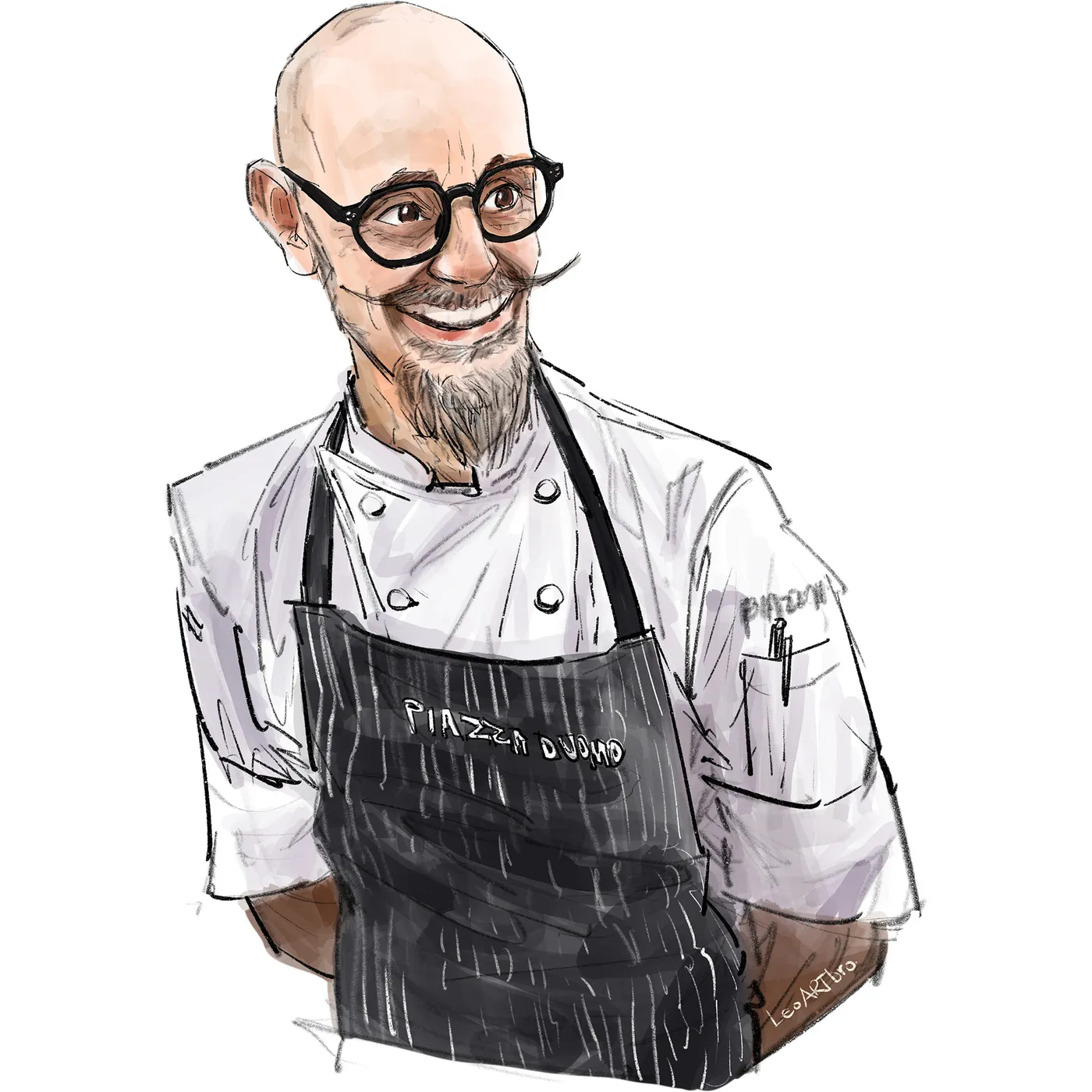
Enrico Crippa.
Piazza Duomo
Two Dreams, One Extraordinary Restaurant
For many years, Piazza Duomo has been my favorite restaurant in Italy, and one of my favorite three-Michelin-star restaurants anywhere in the world.
There is something about Enrico Crippa's cooking that gets to me every single time. His imagination, his extraordinary sensitivity to ingredients, his obsession with the seasons, and the unmistakable personality that comes through in every dish.
Enrico is also one of those rare chefs who hardly ever leaves his kitchen. He lives for cooking. And today, during our annual White Truffle Road Trip, we returned to Alba for a special white truffle menu prepared by one of the chefs I admire most.
But before I tell you what we ate, I want to tell you a story.
Two Dreams
Piazza Duomo opened in 2005, the result of a partnership between the Ceretto family and Enrico Crippa. And today, after our extraordinary lunch, Enrico explained its beginnings to me in his own words.
Bruno Ceretto had a dream of creating an important restaurant in Alba. Enrico had a different dream: to cook at the highest level in a region blessed with extraordinary ingredients.
As Enrico put it, Bruno fulfilled both dreams.
I love that story because it explains something essential about Piazza Duomo. This isn't a restaurant that happens to be in Piedmont. It exists because of Piedmont, its landscape, its seasons, its people, and the astonishing things that grow here.
But Enrico wanted to approach that abundance differently.
Piedmont is a region celebrated for its meat, wine and traditional cooking. Enrico chose to give vegetables a much more important role, developing a cuisine deeply connected to nature, but unmistakably his own.
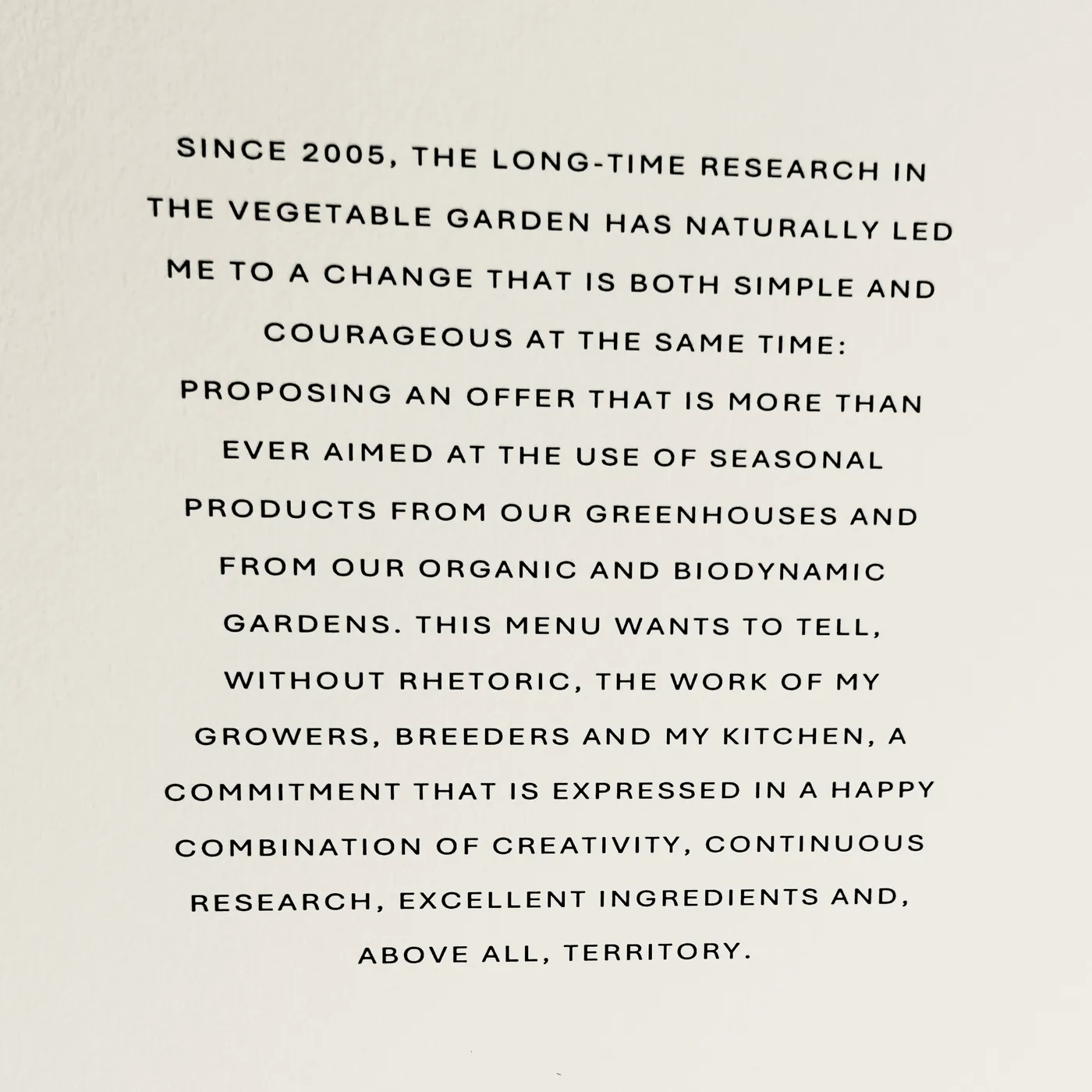
Enrico Crippa's philosophy, in his own words.
Since 2005, his exploration of the vegetable garden has become central to the restaurant's identity. The greenhouses, organic and biodynamic gardens, growers and kitchen all contribute to a menu that changes constantly.
Today, Enrico told me something that captures his philosophy better than anything I could write.
“I simply couldn't create a menu in January and serve exactly the same thing until December. I need something new every single day.”
And then he said something even more personal.
“I live for this work. I'm incredibly fortunate to be doing the job I dreamed of doing when I was a child.”
You can feel that devotion in his food.
And now, my friends, let me show you why.
What we ate
The Star of the Menu
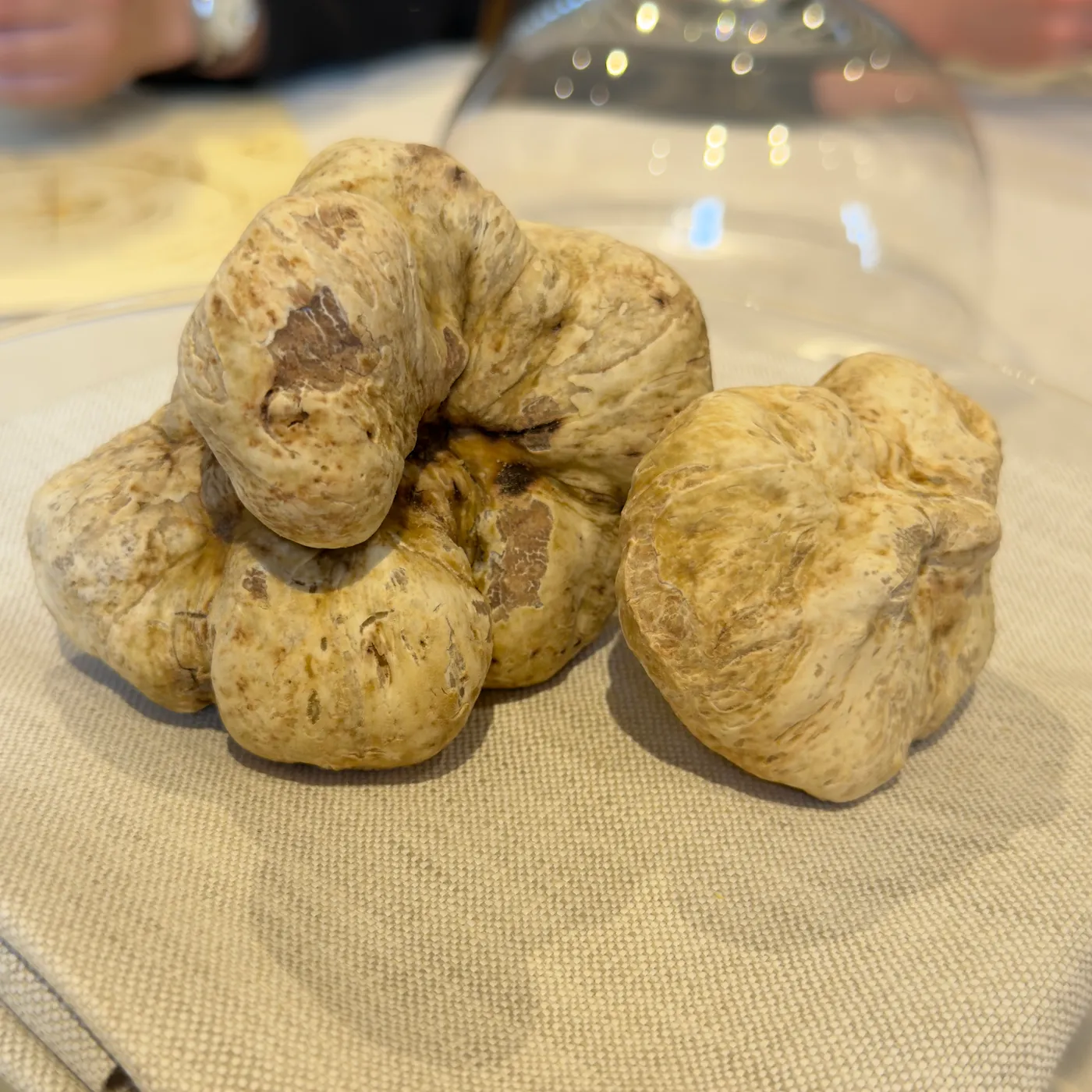
The Star of the Menu.
Ah, the white truffle of Alba! ❤️ This is why we travel to Piedmont every autumn. And today, these extraordinary truffles were going to accompany some of Enrico Crippa's most personal creations.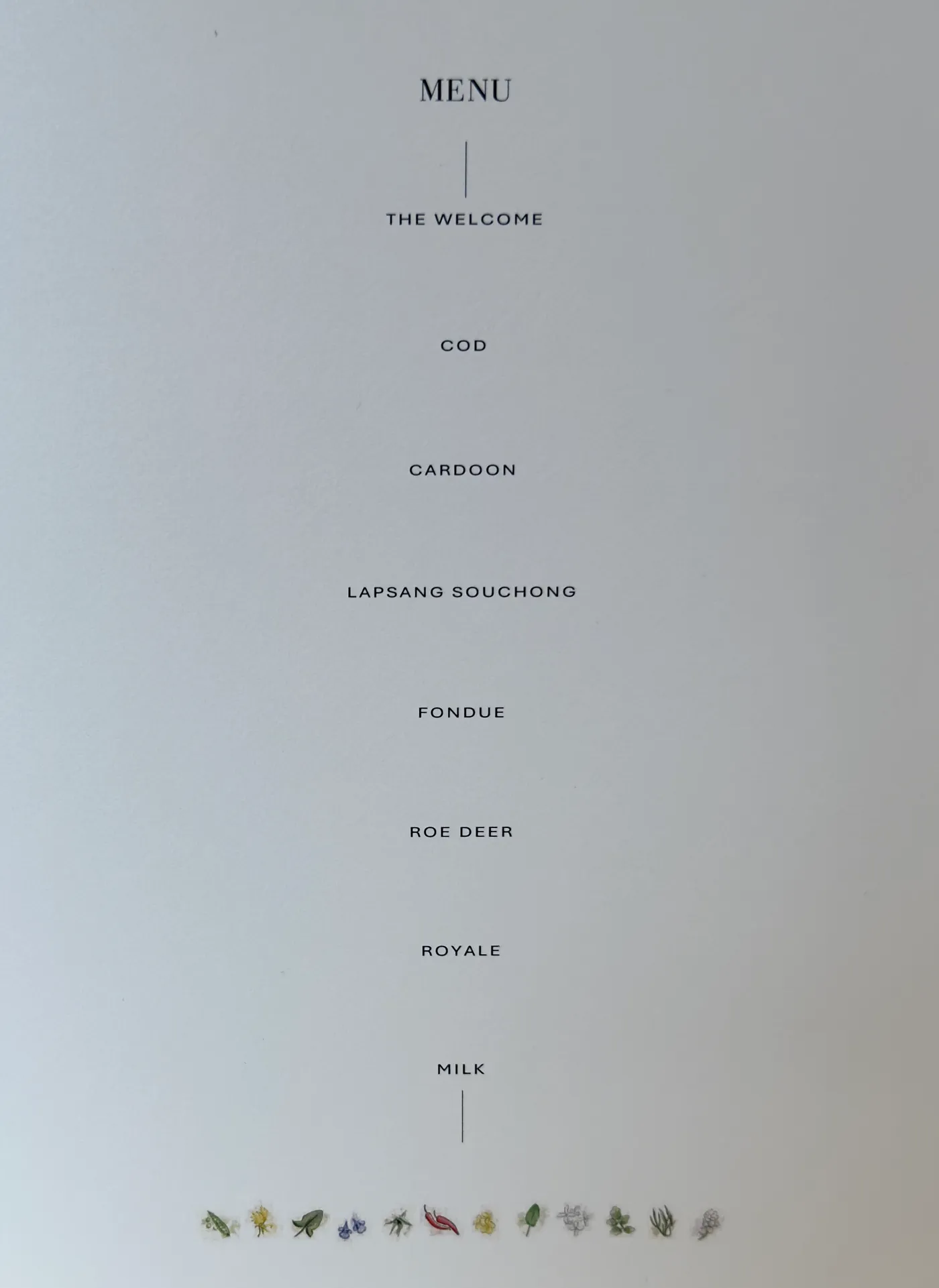
Our special menu at Piazza Duomo.
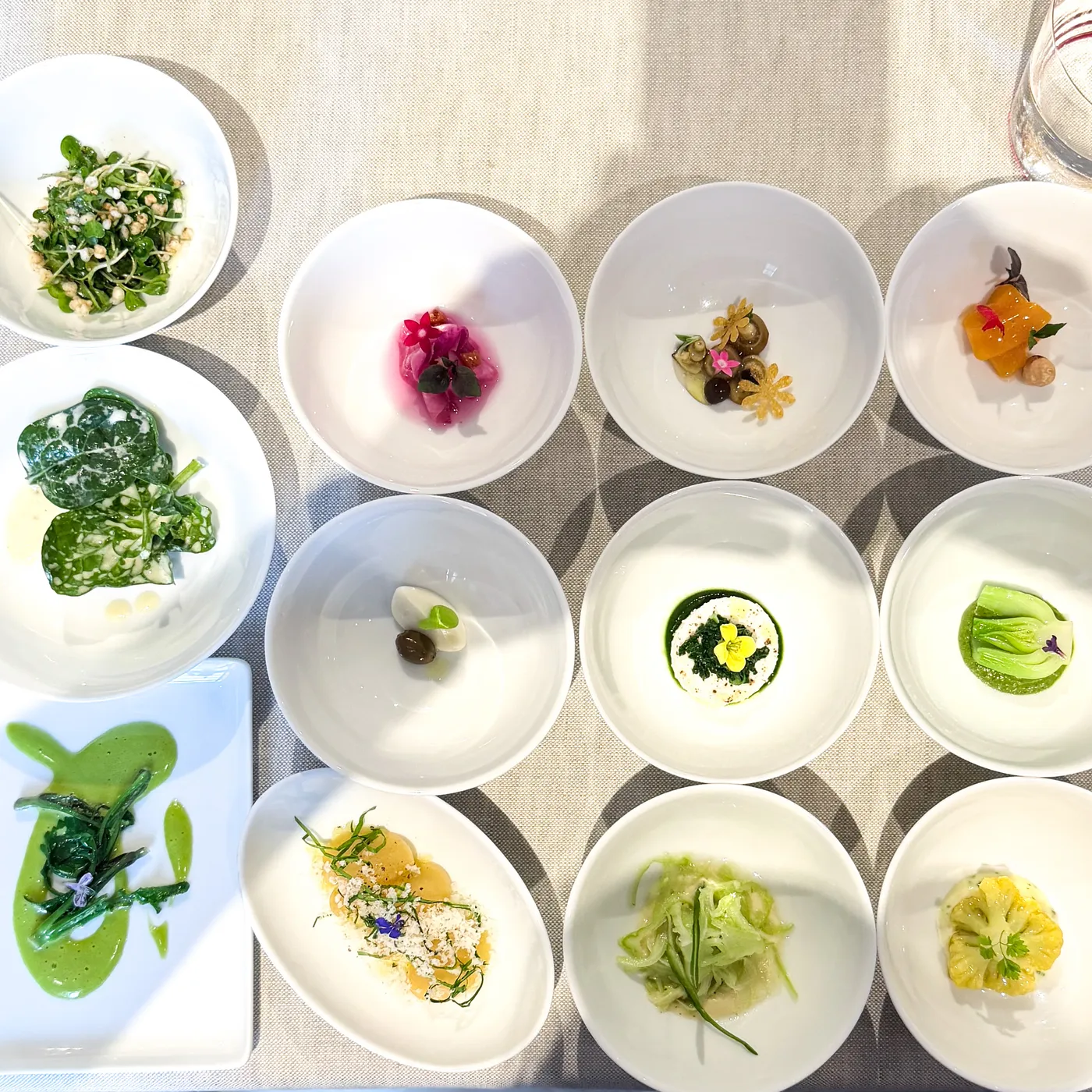
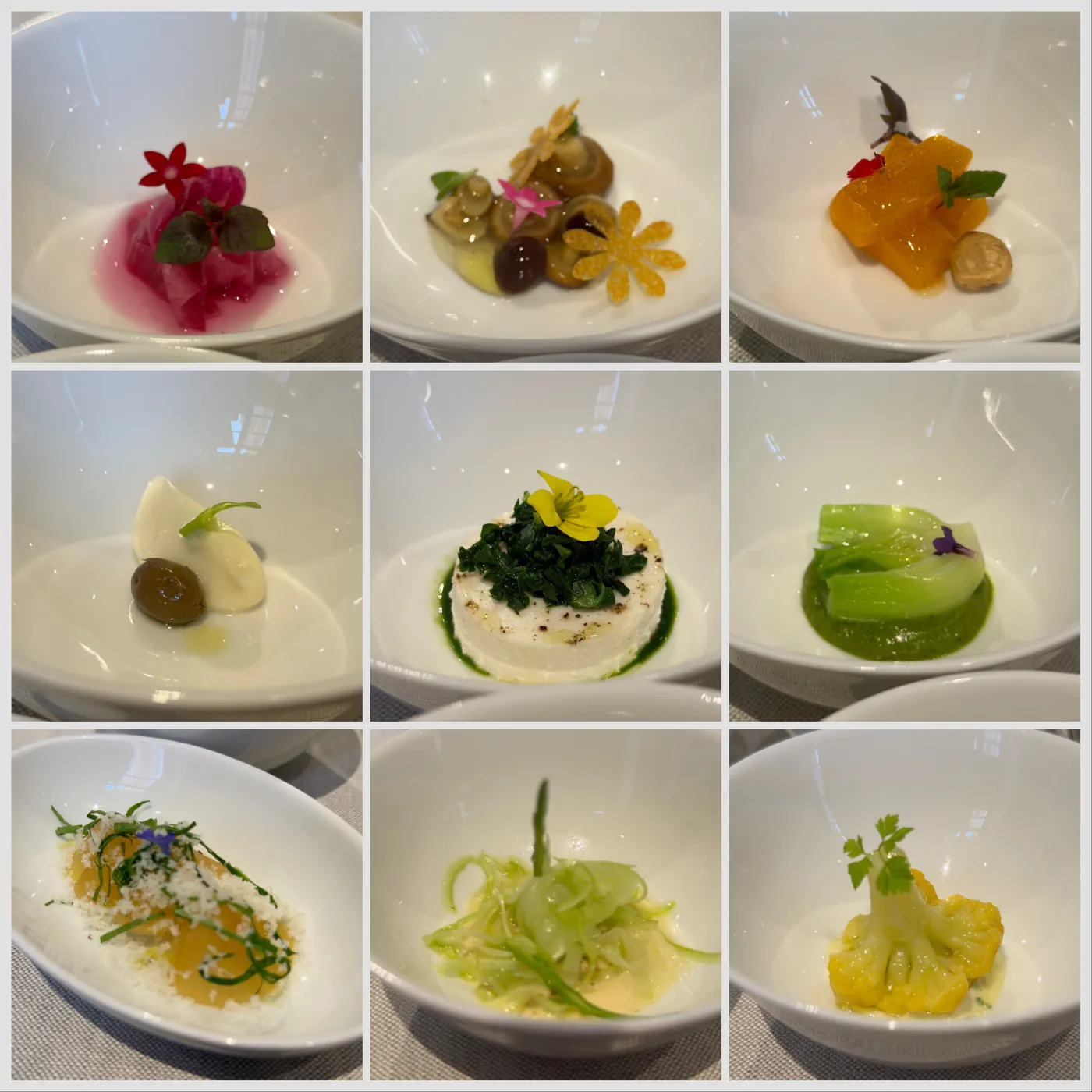
The Welcome | Twelve Little Expressions of the Garden
Our lunch began with a collection of twelve small preparations, each built around vegetables, herbs and ingredients treated with remarkable precision. Yellow cauliflower with a gently acidic béarnaise. Pak choi with parsley, garlic and anchovy salsa verde. Sweet-and-sour pumpkin with toasted Alba hazelnuts. Puntarelle with chickpea cream and spices. Sheep's milk ricotta with cavolo nero. Pioppini mushrooms in carpione with crispy potatoes. And that was only half the story. There was daikon marinated in miso with Parmigiano and arugula, cauliflower with Taggiasca olives and fig oil, radish with red lychee water and goji berries, and baby spinach picked from the garden that very morning, alongside other tiny preparations. Twelve small dishes, twelve different ways of looking at the vegetable kingdom. What an introduction to Enrico Crippa's world!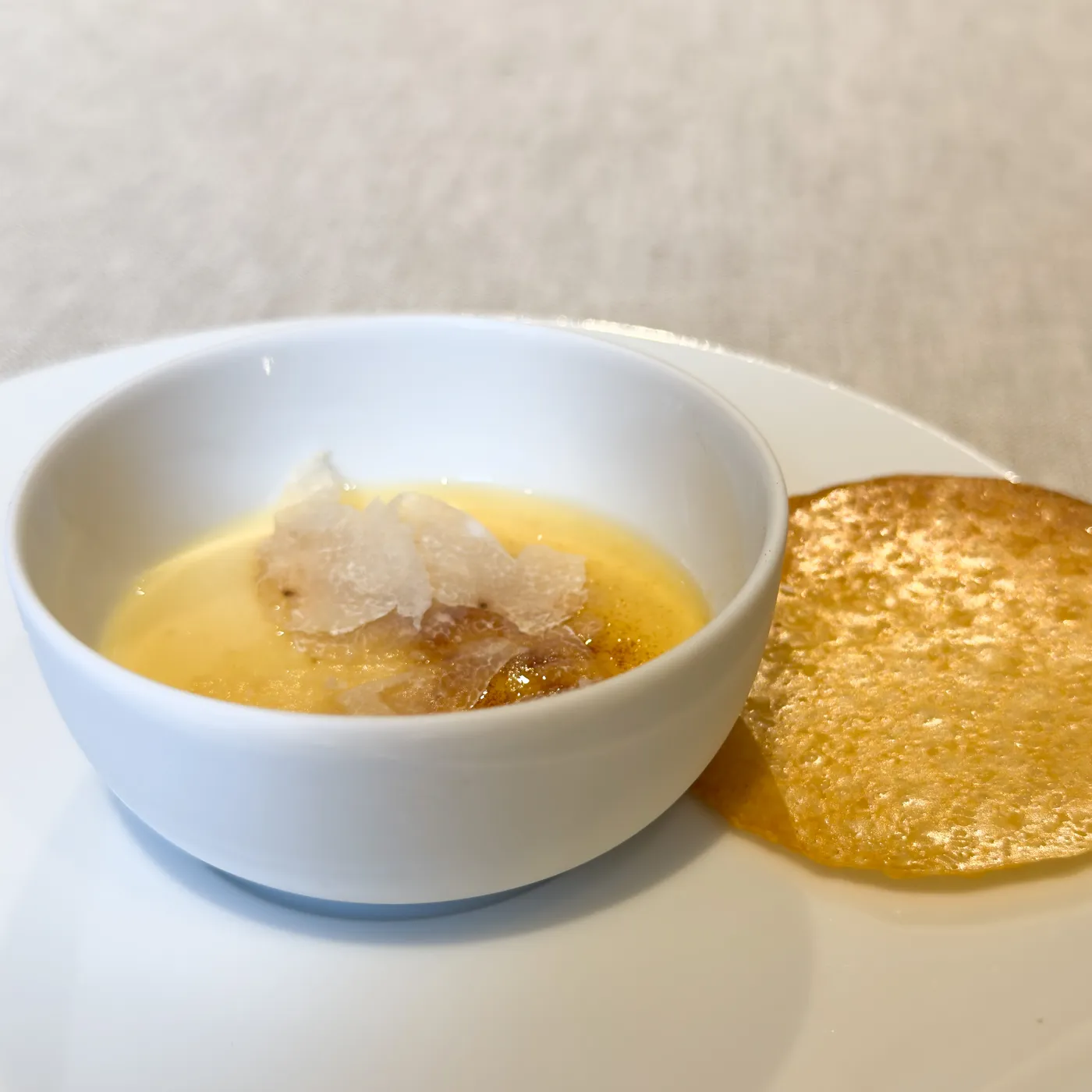
The Piedmontese Pudding
A savory Piedmontese pudding made with eggs, pancetta, Parmigiano and a little sugar, accompanied by a delicate onion wafer. A small, comforting preparation that brought us back to the familiar flavors of Piedmont, before the menu took us somewhere altogether more adventurous.Insalata 21·31·41·51 | The Garden That Never Stops Growing
Now we arrive at one of the most fascinating dishes in contemporary Italian cooking. Enrico created his famous salad in 2007. The numbers in its name originally represented the changing quantity of ingredients throughout the seasons: twenty-one in winter, when the garden was at its barest, and fifty-one in summer, when nature was at its most generous. But the garden continued growing. Today, according to Simone Dalla Gasperina, who guided us through the meal, the salad contains approximately ninety different ingredients at this time of year. In spring and summer, that number can reach an astonishing 130. And yet the name has never changed.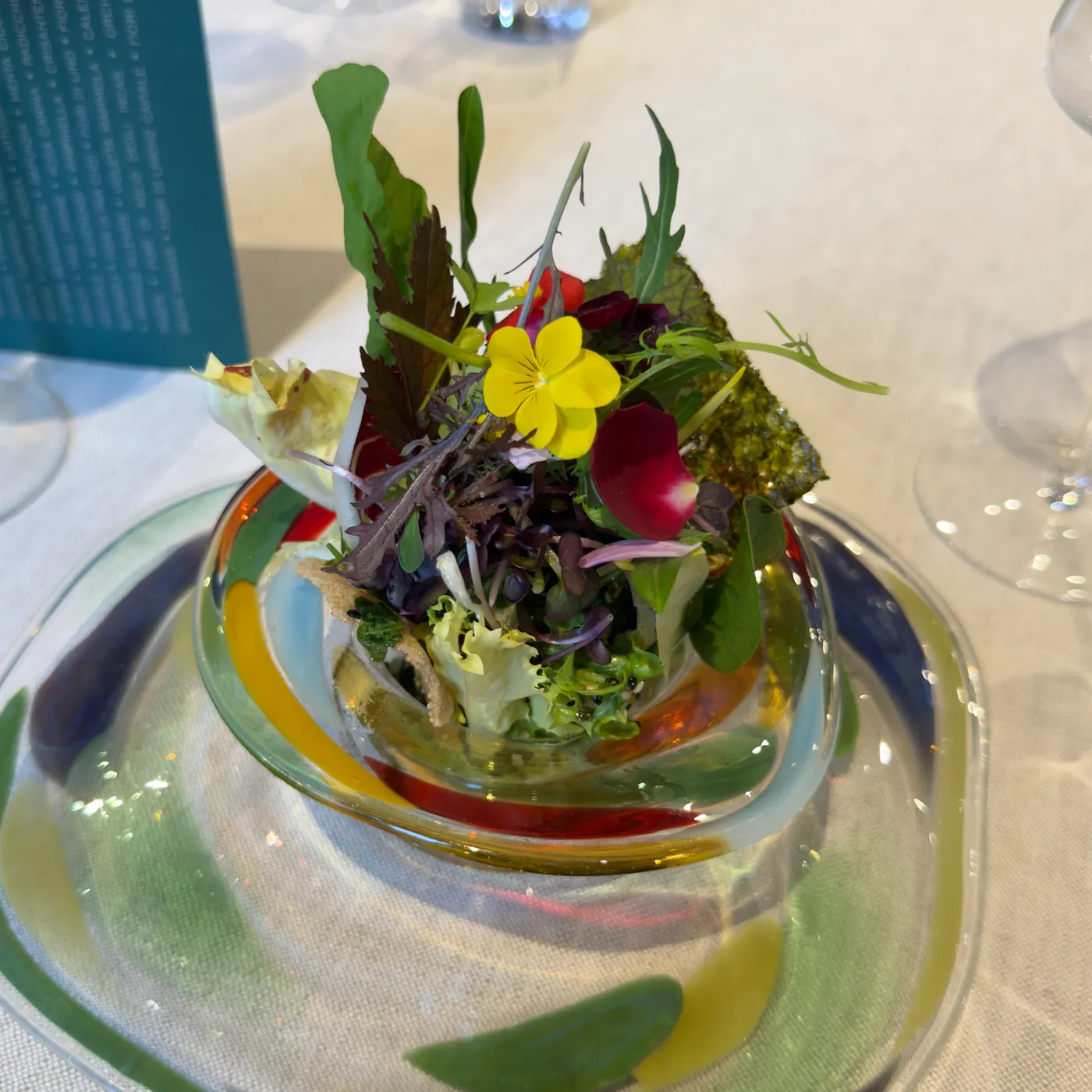
Insalata 21·31·41·51.
The salad is served in two layers. The upper leaves, flowers and herbs are completely undressed, allowing us to taste their individual character. Underneath, a second layer is gently seasoned with grapeseed oil and Barolo vinegar. And there is one final surprise. When the salad is finished, you lift away the bowl to discover a citrus-scented dashi broth beneath it, recalling the water at the bottom of a flower vase. You drink the broth to finish the experience. An entire garden, its changing seasons and the imagination of one extraordinary chef, expressed in a single dish.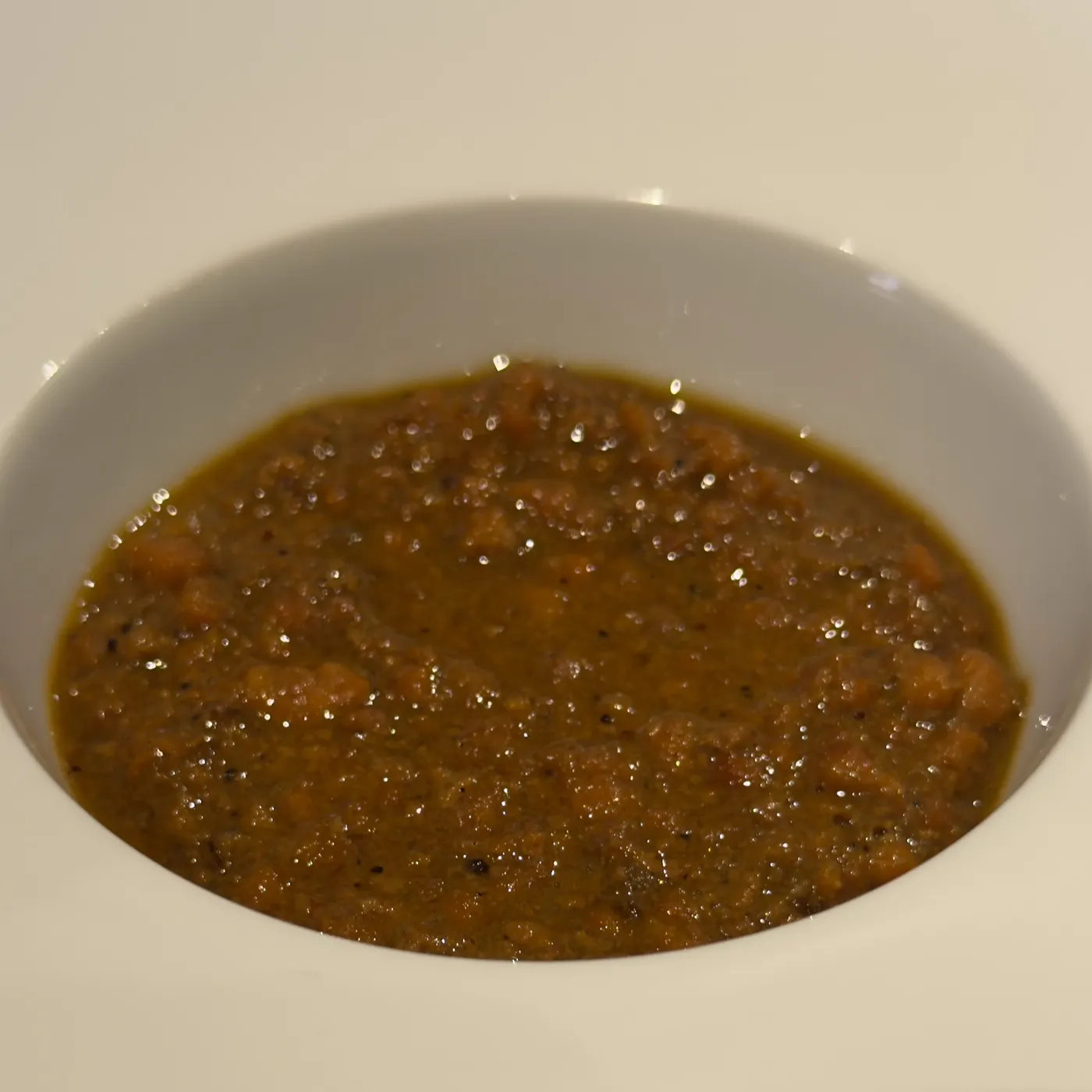
Ragù di Cortile | Chicken Ragù with Polenta Sporca
A white ragù made with chicken, served over polenta sporca, or dirty polenta, prepared with a mixture of cornmeal and buckwheat flour. The name is wonderfully rustic, but the preparation is carefully considered. A reminder that even at Piazza Duomo, with all its creativity, the traditional cooking of the region remains close to Enrico's heart.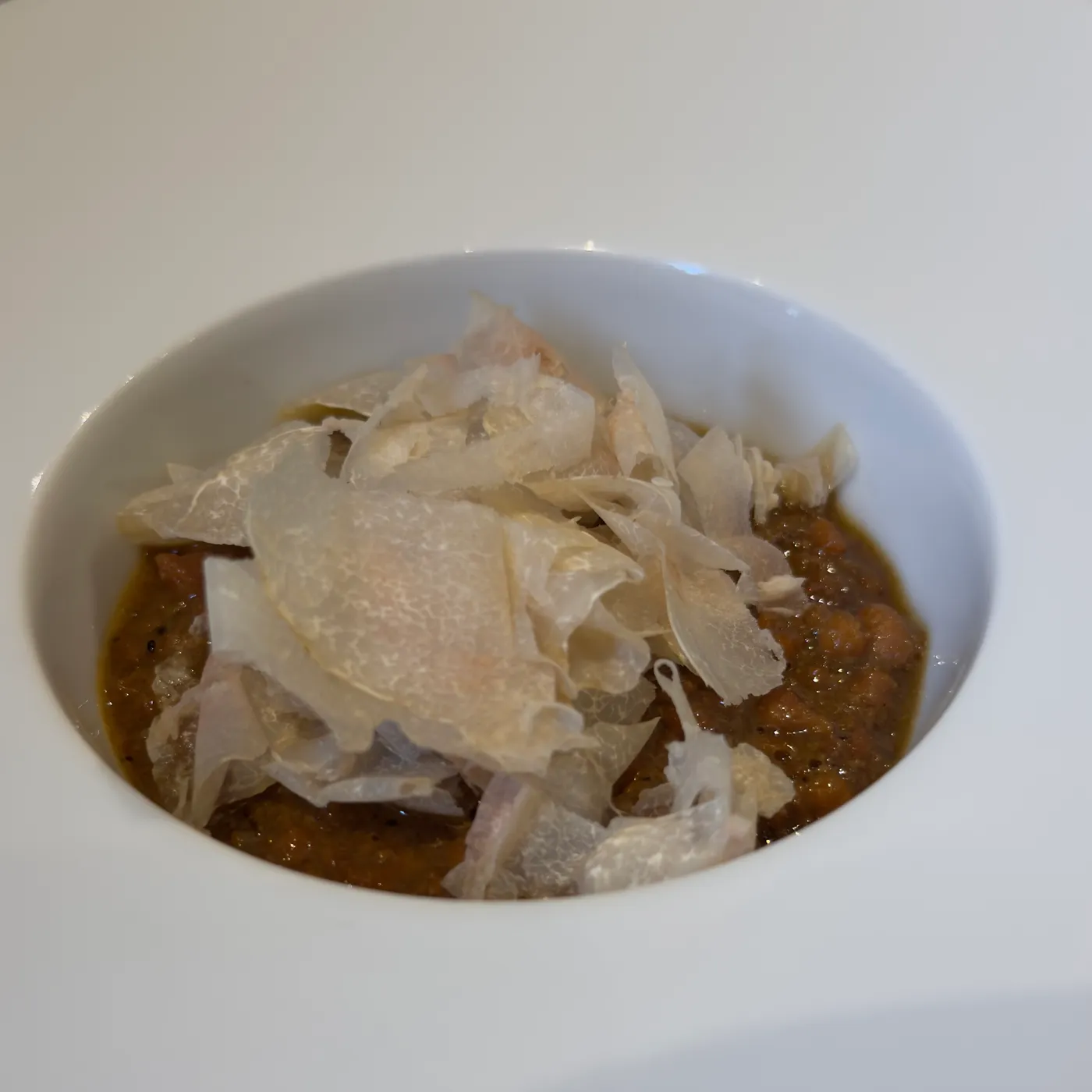
Ragù di cortile with white truffle.
And, of course, our white truffle made another appearance.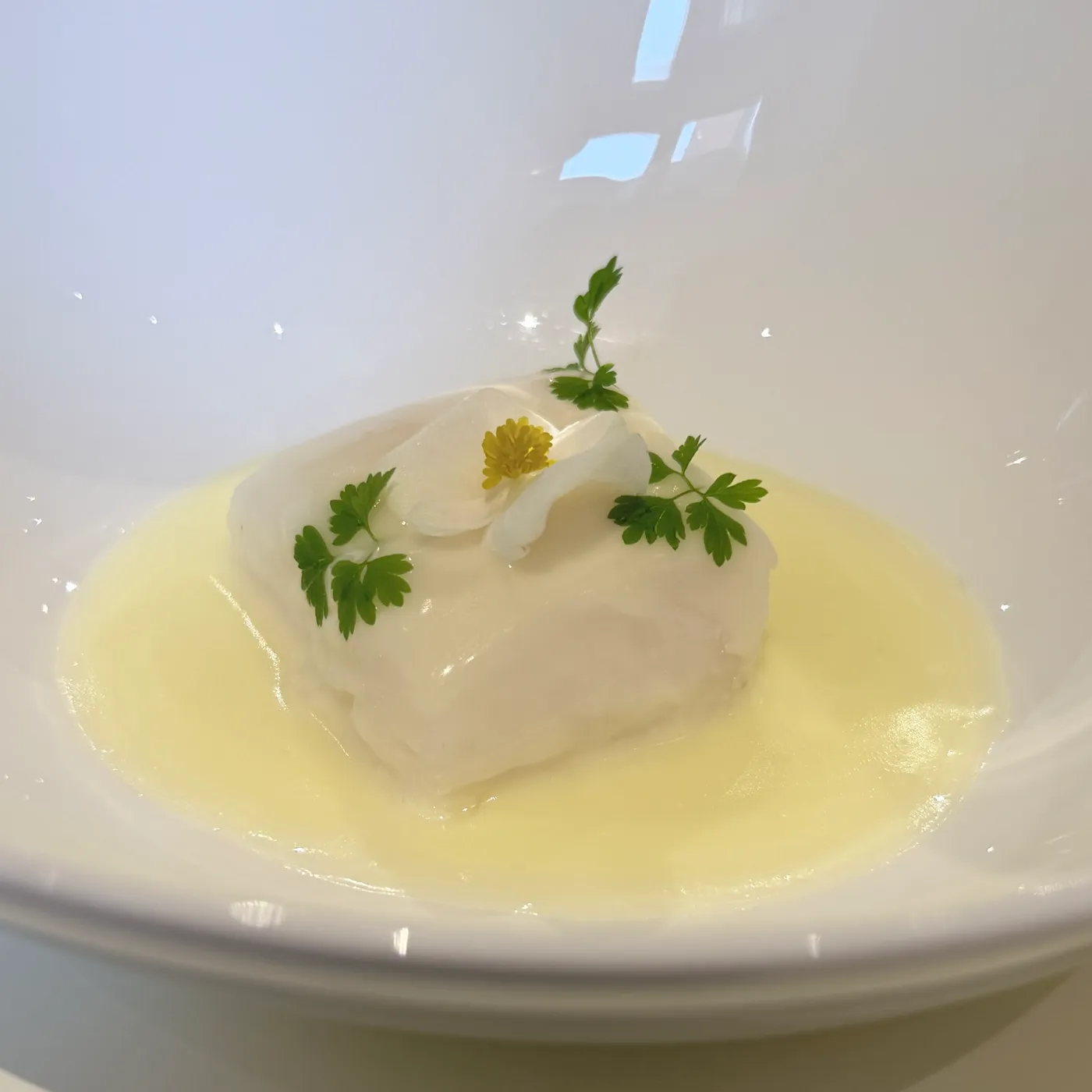
Cod | Sous-Vide Cod with Buttermilk Sauce
A beautiful piece of cod, gently cooked sous-vide, accompanied by a sauce made from buttermilk. Simone explained that the kitchen uses the leaner liquid separated from cream during butter-making, whipping it with additional butter to create the sauce. Such a simple idea, and such an interesting way to transform an ingredient that might otherwise be overlooked.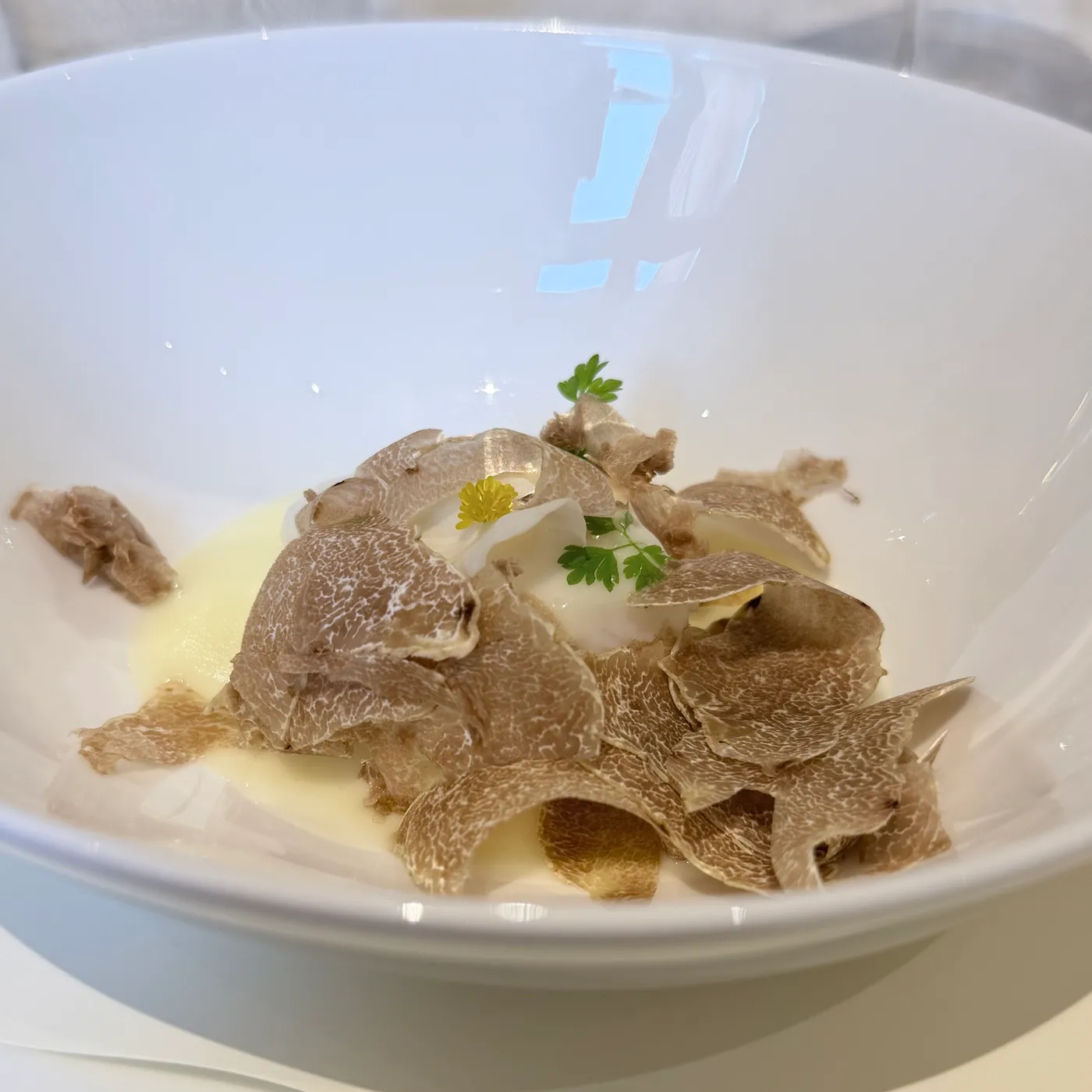
Finished with white truffle.
Then came the white truffle, generously shaved over the fish. A quiet, delicate preparation that allows the cod, the butter and the truffle to do the talking.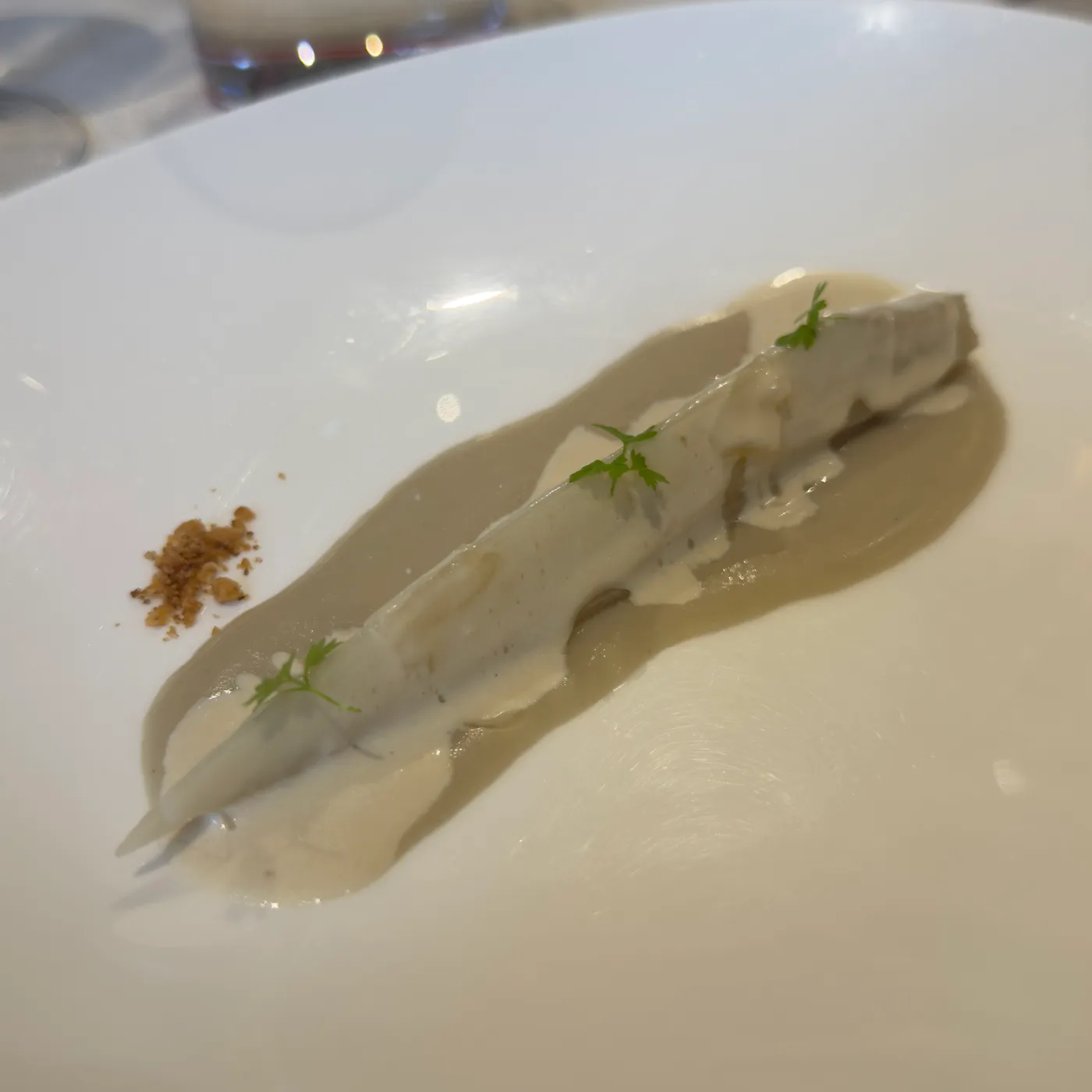
Cardoon | Cardoon, Anchovy Sauce and Hazelnut
Cardoon is a vegetable traditionally eaten in northern Italy, southern France and Switzerland. Simone explained that its flavor recalls artichoke, although it is more delicate. Here, the cardoon is cooked in milk and served with cardoon purée, anchovy sauce, a few almost transparent slices of pancetta, and a crumble of Alba hazelnuts and muscovado sugar.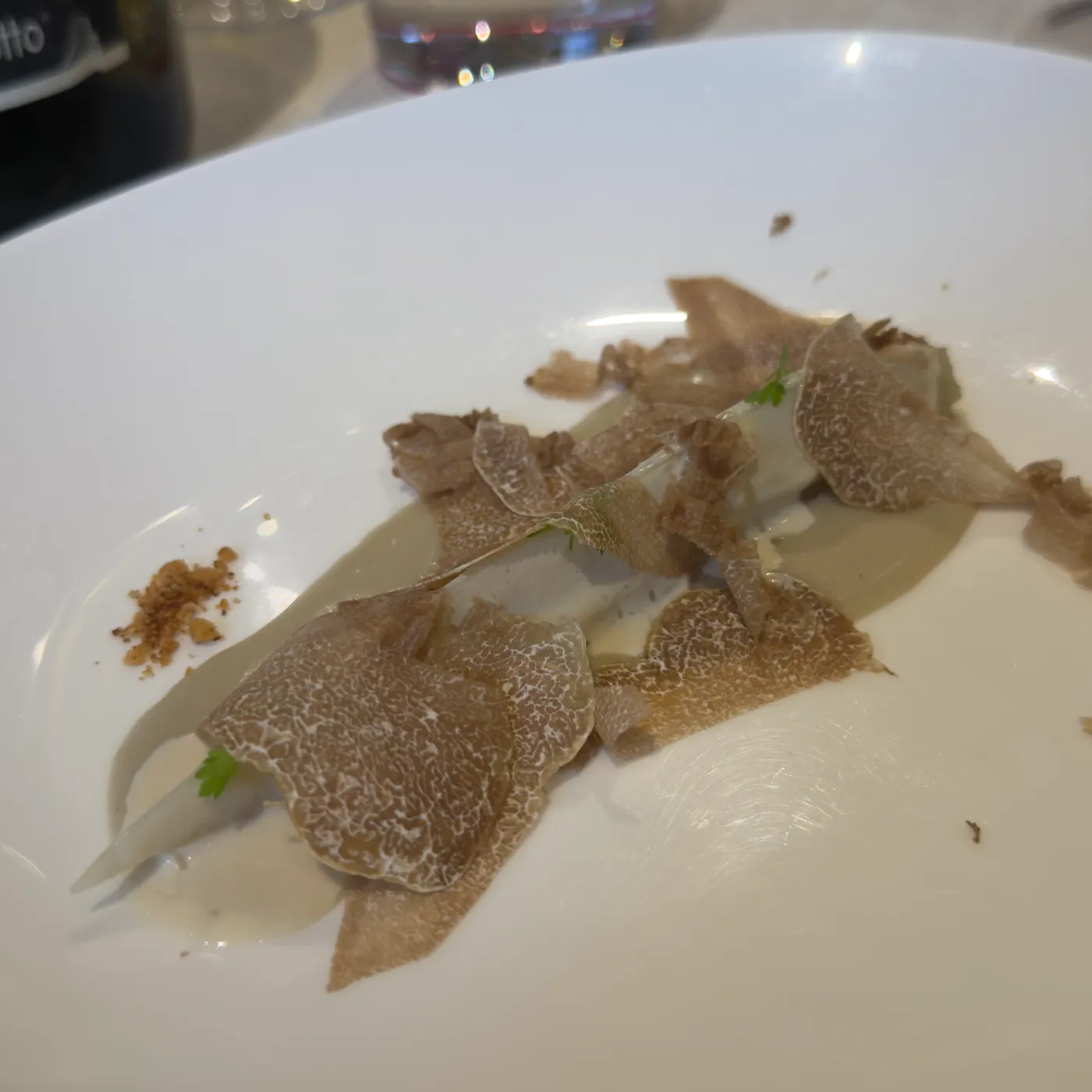
Cardoon with white truffle.
I love dishes like this because they place a vegetable that many people barely know at the very center of the plate. And when that vegetable is treated with this much thought, it needs no apology for being the star.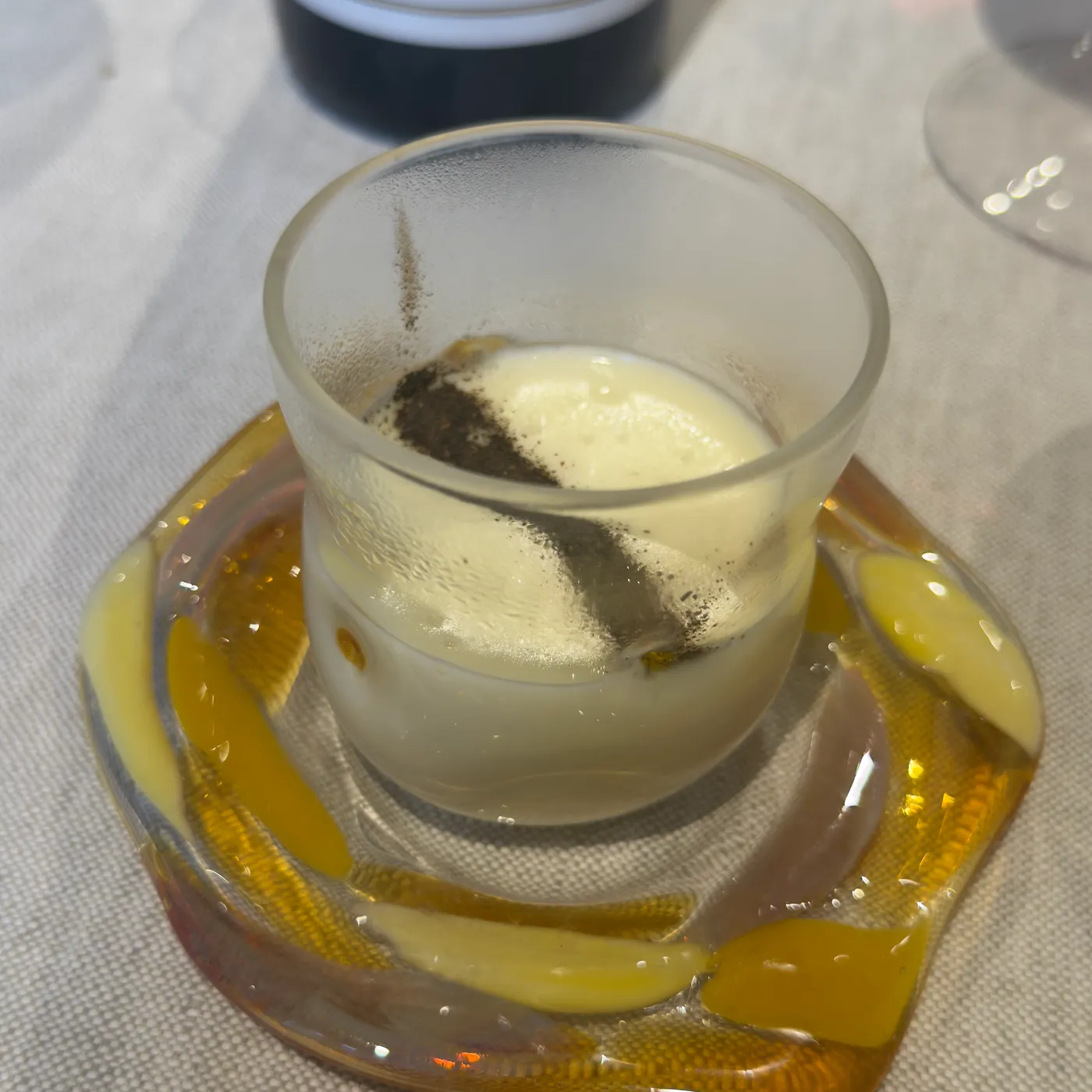
Lapsang Souchong | A Memory of the Truffle Hunters' Fireplaces
This might be my favorite story of the entire lunch. When Enrico first came to Piedmont, he began visiting the homes of the local truffle hunters, the trifolau. He noticed something that connected them all. The moment you entered, you could smell the fireplace. The smoke had worked its way into the walls, leaving a deep, lingering aroma. It wasn't unpleasant. Quite the opposite. It was comforting, familiar and beautiful. Enrico wanted to capture that memory in a dish. And, wonderfully, he found the ingredient he needed some 11,000 kilometers away, in Fujian, China. Lapsang Souchong, a tea smoked over pine wood.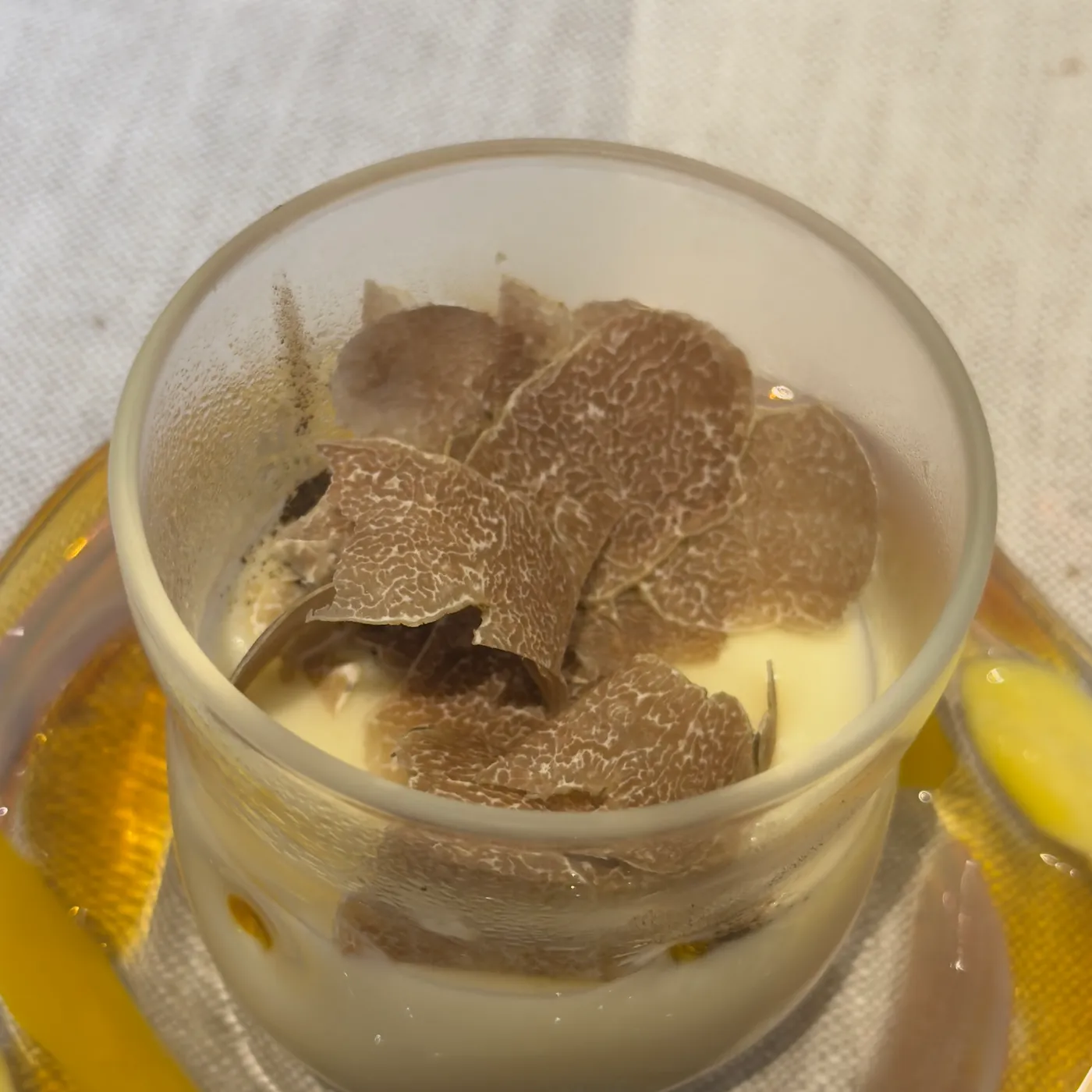
Lapsang Souchong with white truffle.
At the heart of the dish is a poached quail egg, marinated in the smoky tea and surrounded by potato cream. A dusting of the tea reinforces the fragrance before the dish is finished with white truffle. Even the glass vessel has a story. Handmade by Italian artist Massimo Nardone, it represents a potato with little shoots growing from it. Simone also told us that the dish is displayed at the Alba White Truffle Museum. Think about that for a moment. A memory of the fireplaces of Piedmont, a tea from China, a quail egg, potato, white truffle and a glass sculpture. That is Enrico Crippa's imagination at work.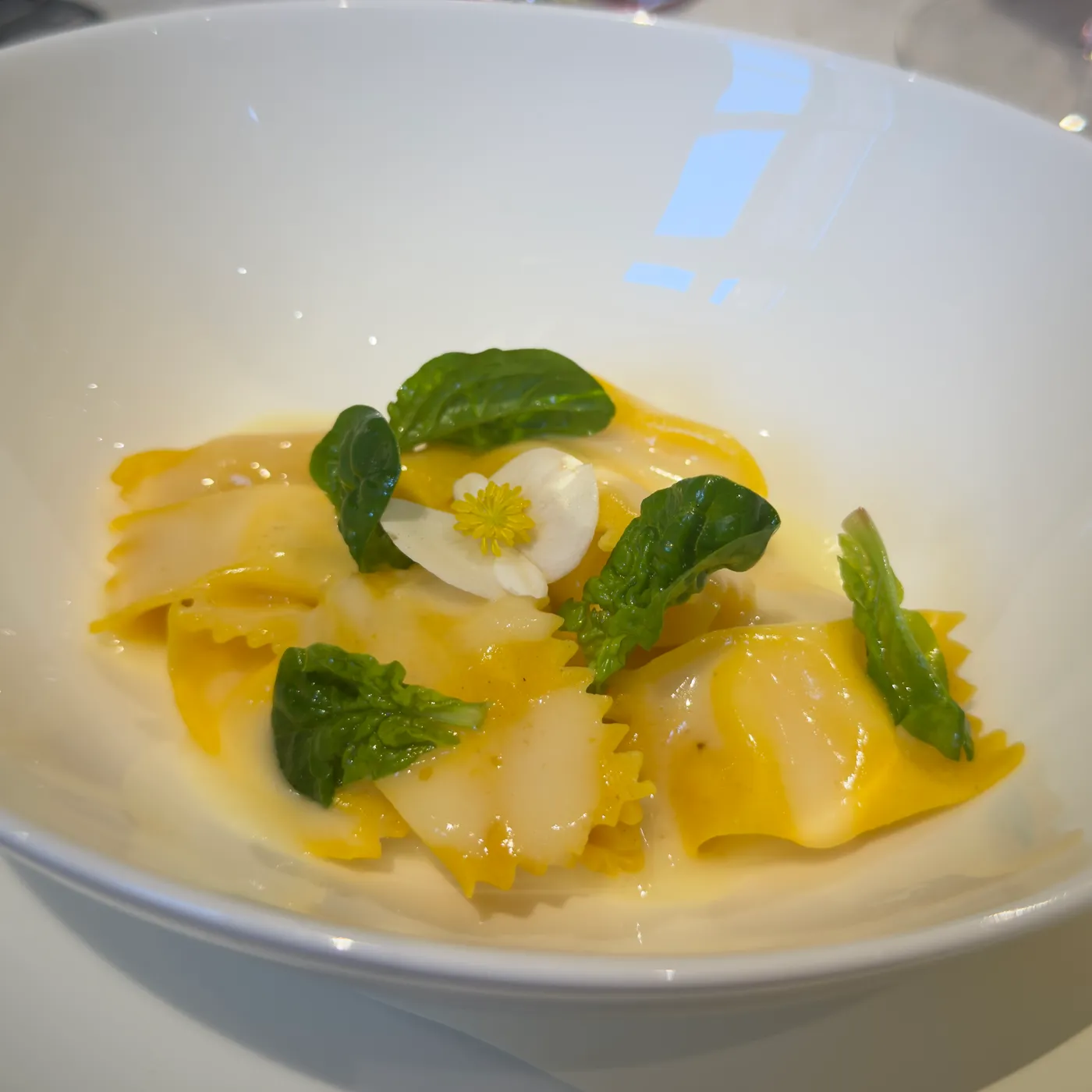
Ravioli del Plin | Fontina Fondue, Butter and Fresh Spinach
Now, something unmistakably Piedmontese. Plin means a little pinch in the local dialect, referring to the movement used to close these tiny ravioli. Traditionally filled with meat, Enrico's version contains a fondue of Fontina cheese. The ravioli are tossed in butter and finished with fresh spinach leaves.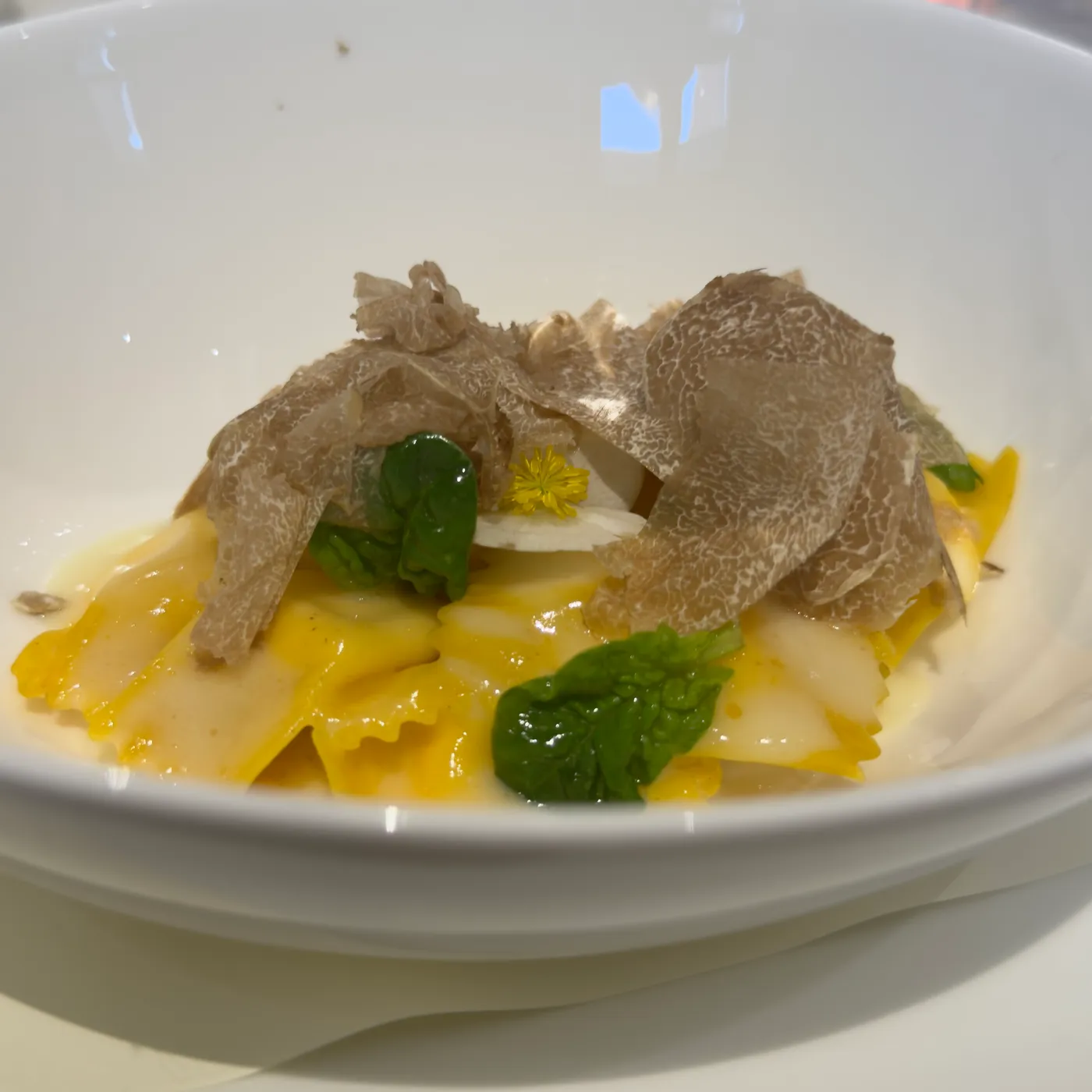
Ravioli del Plin with white truffle.
And then, naturally, another generous shower of white truffle. Tiny parcels of pasta, molten cheese, butter, spinach and the fragrance of Alba's most precious ingredient. Sometimes the most beautiful cooking begins with very familiar things.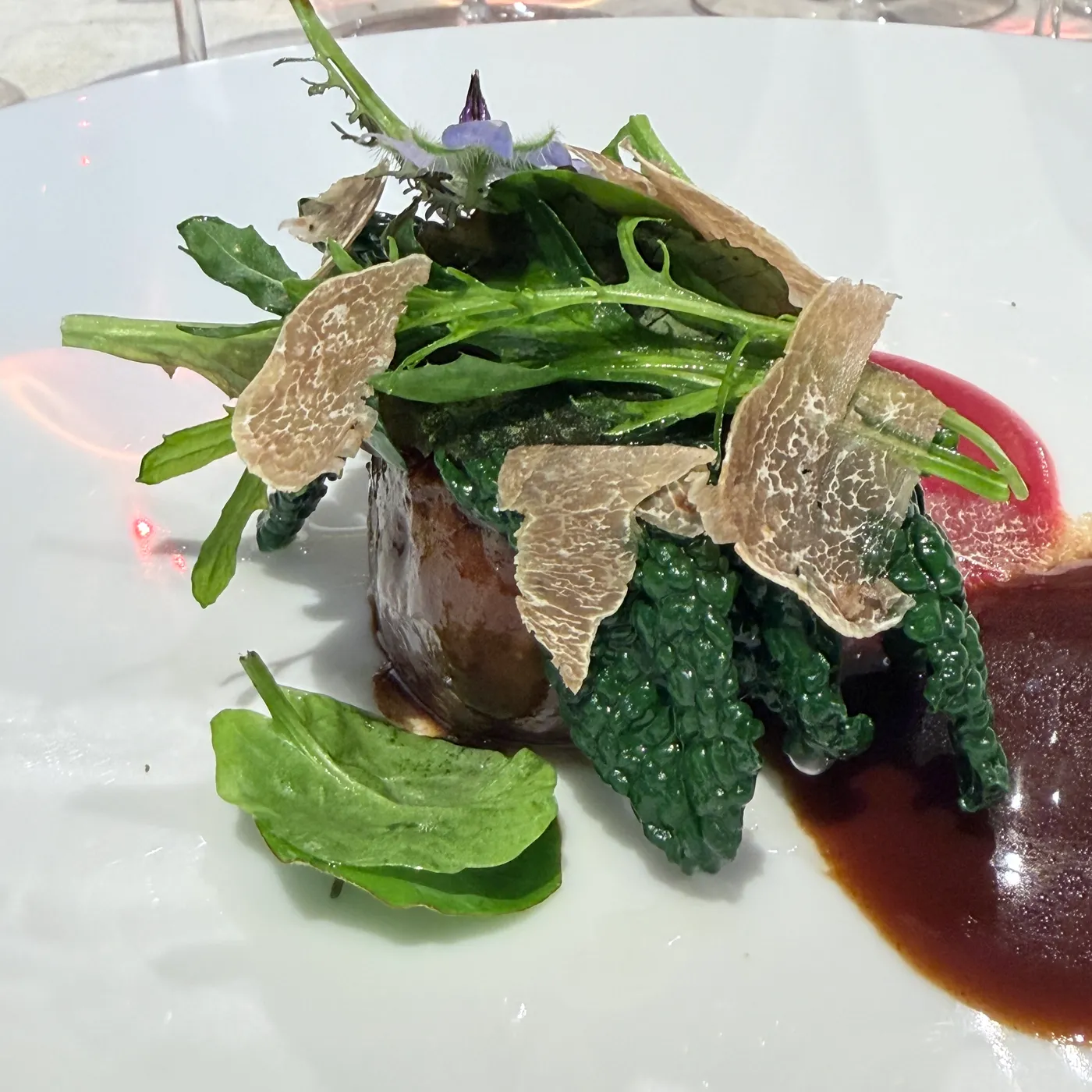
Roe Deer | Embers, Cavolo Nero and a Memory of Borscht
Our main course was roe deer, cooked over the embers and accompanied by cavolo nero from the restaurant's garden. The sauce takes its inspiration from the ingredients of borscht, the traditional Ukrainian stew made with beetroot and beef. It is finished with the cooking juices of the roe deer, while a separate warm broth of beetroot and roe deer is served to sip alongside. It's a fascinating meeting of game, fire, garden vegetables and a culinary reference from another part of Europe. Once again, Enrico manages to make the familiar feel very personal.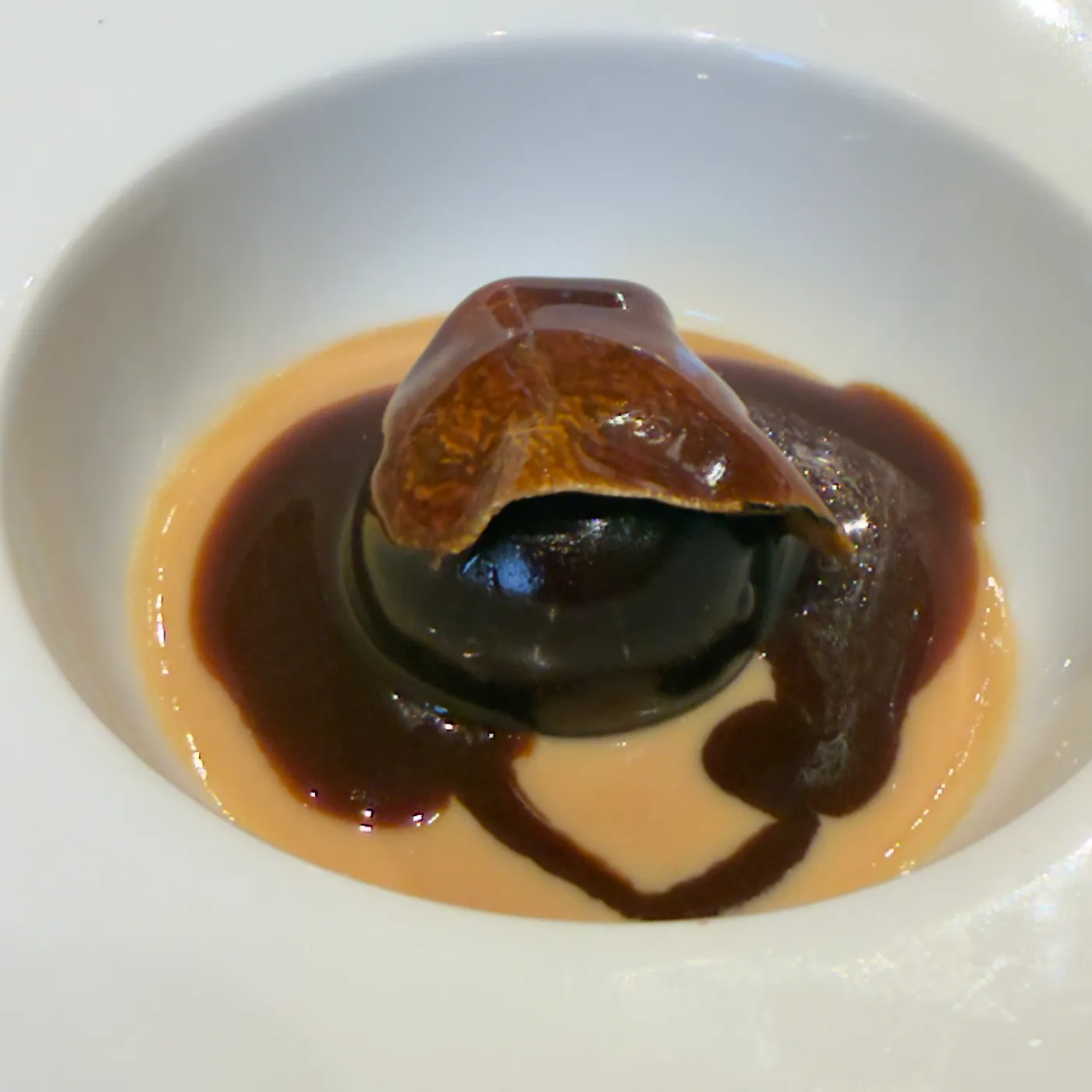
Hare à la Royale | A Lifetime of Learning in One Bite
“One bite,” they told us. One bite? Really? 😂❤️ Inside this beautiful, dark, glazed pearl is a story that began during Enrico's seven years working in France. There, he learned not only the discipline of great restaurant kitchens, but also the depth of traditional French cooking. One of the dishes that stayed with him was Lièvre à la Royale, a preparation he has always loved. Back in Italy, Enrico created his own interpretation. The hare is slowly cooked in red wine with aromatics, foie gras and truffle until the meat becomes meltingly tender. It is then shaped into a little pearl, glazed with its own concentrated cooking juices, placed over a foie gras sauce and finished with white truffle. All that history, all that technique, all those hours of cooking, concentrated into something you could eat in a single bite. And that, my friends, is the magic of Enrico Crippa. A lifetime of learning, expressed in one tiny, extraordinary mouthful.The Sweet Ending
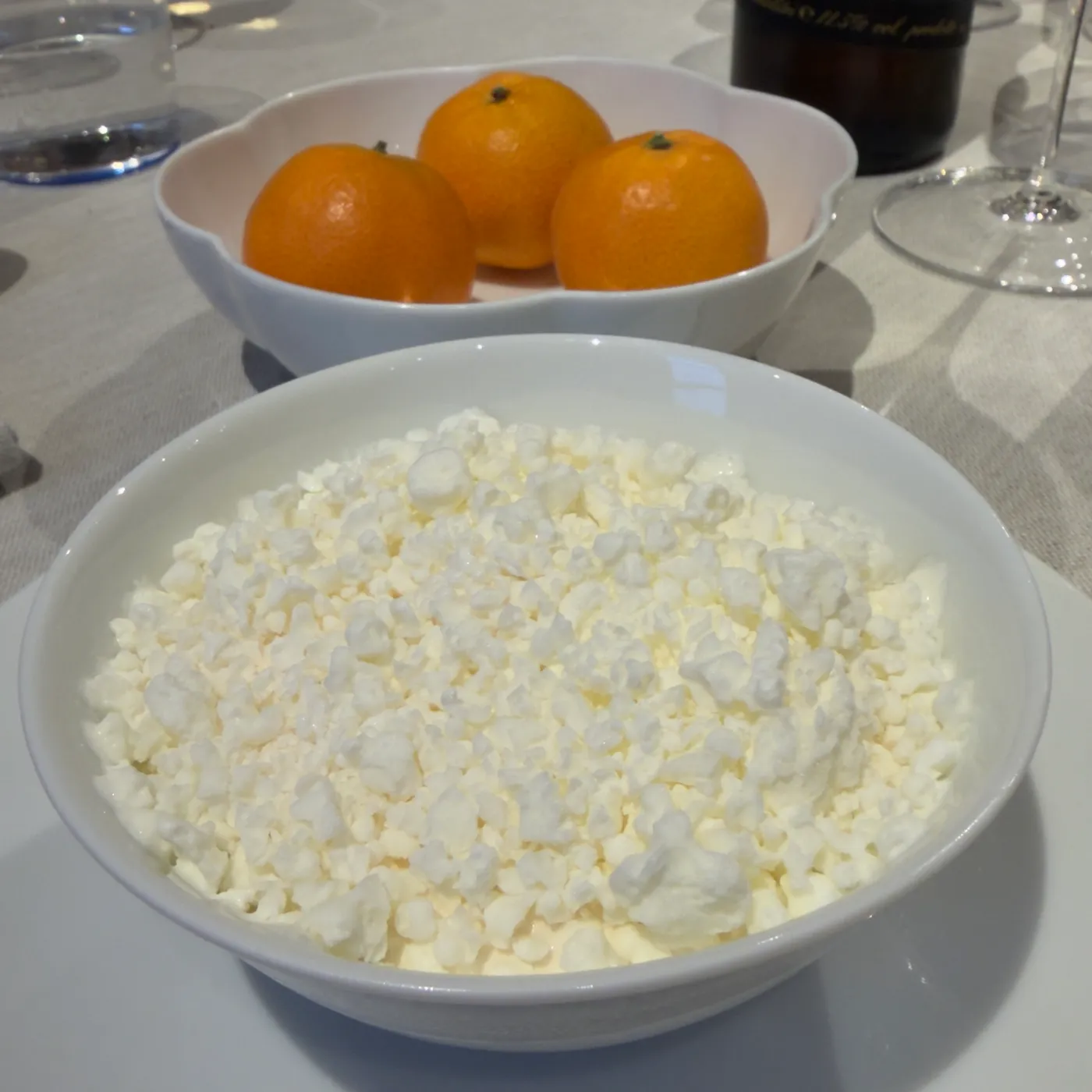
Milk | Created for White Truffle
Enrico created this dessert years ago specifically to accompany white truffle. At its base is a caramel cream, followed by rice cooked in milk, fior di latte gelato and milk frozen with liquid nitrogen. The frozen milk has an extraordinary texture, melting so quickly that it almost disappears on the tongue.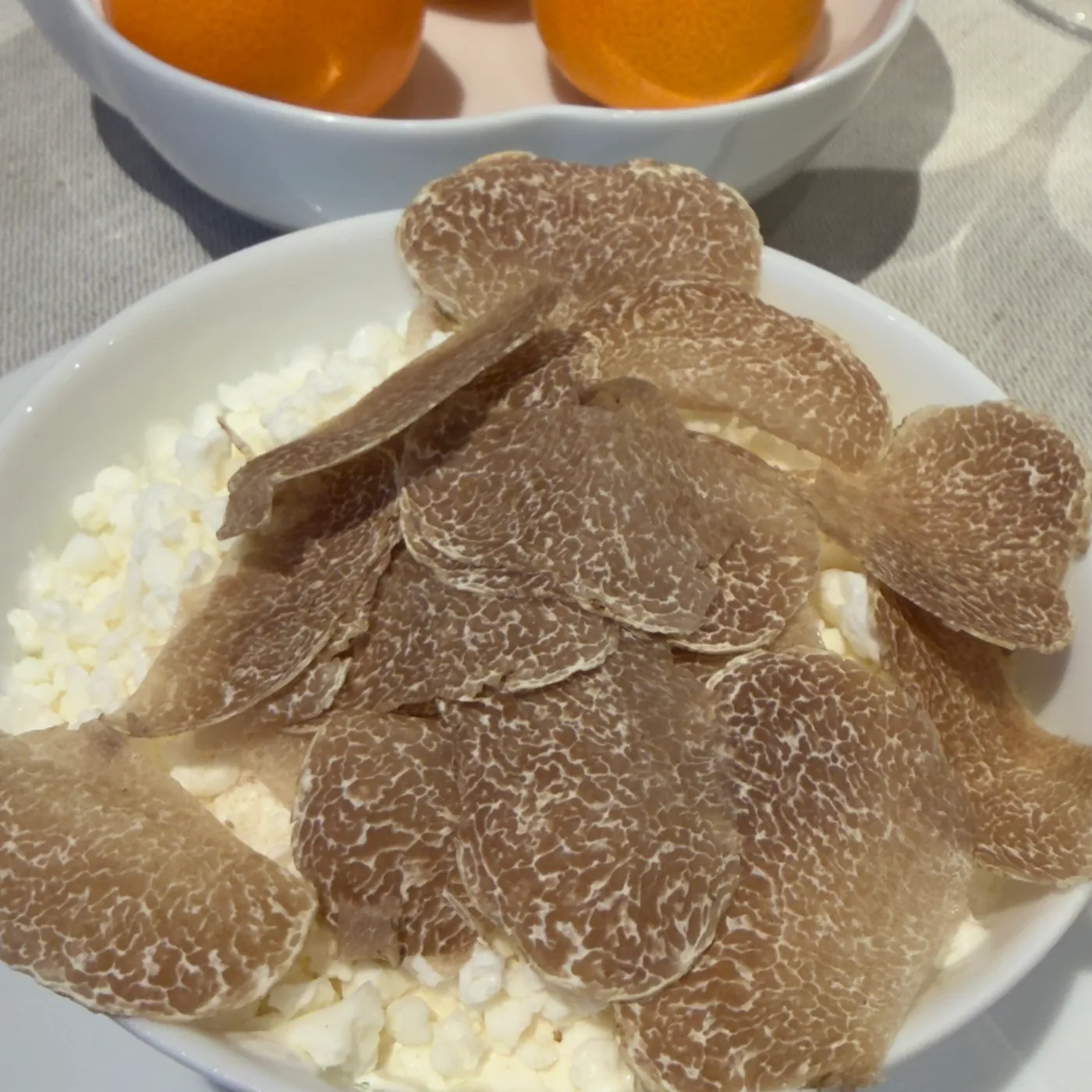
Milk and white truffle.
And then comes the finishing touch: generous shavings of white truffle. The dessert is accompanied by an infusion of spices and amaretto. I love the idea of taking an ingredient as simple and familiar as milk, exploring its different textures, and creating something expressly to complement one of nature's most extraordinary aromas.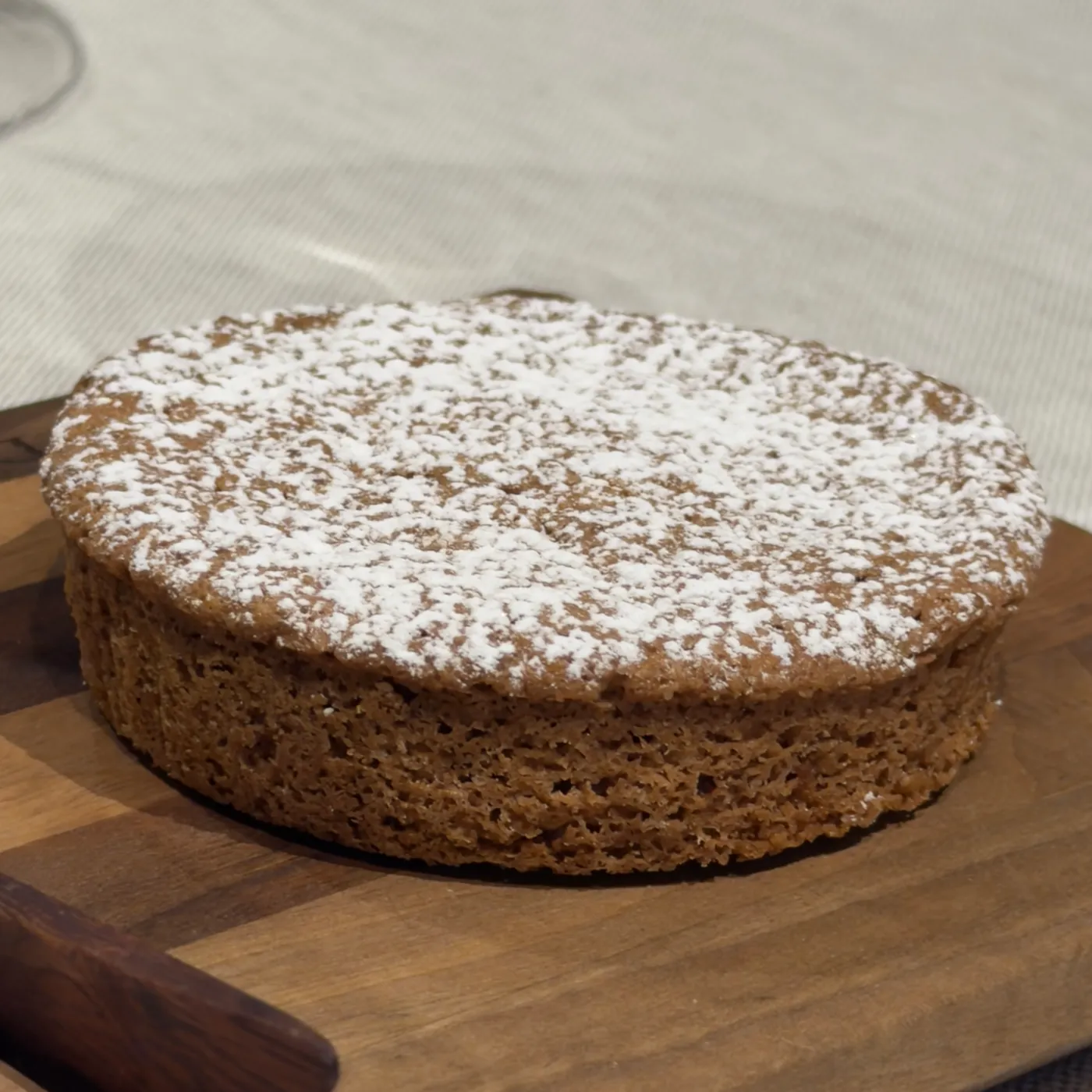
The Little Sweets of Alba
A classic hazelnut cake, an essential part of the culinary landscape of Alba, arrived alongside the final little sweets.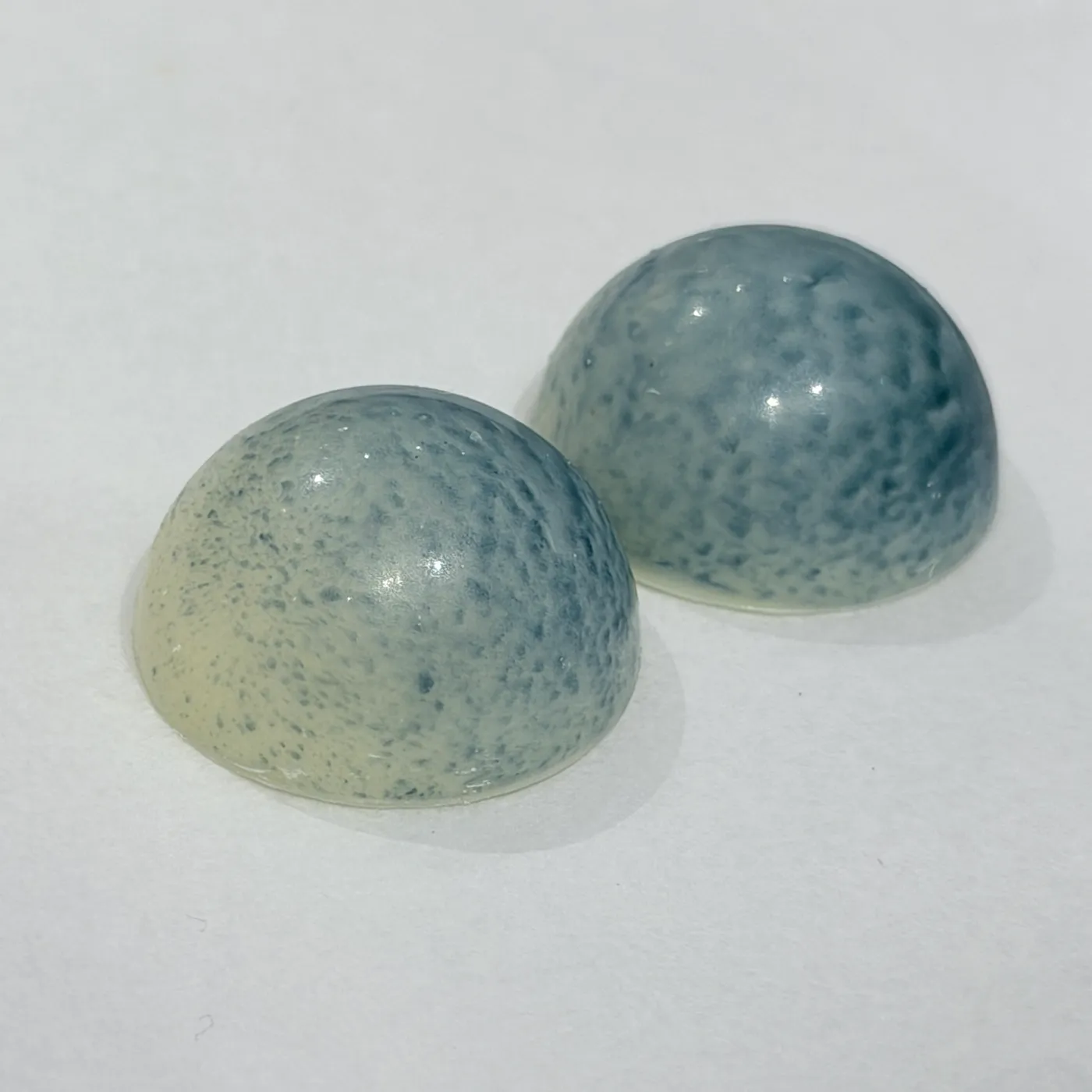
There were also hazelnuts coated in dark chocolate and fresh clementines, a lovely reminder that winter is just around the corner.
And then came one final surprise.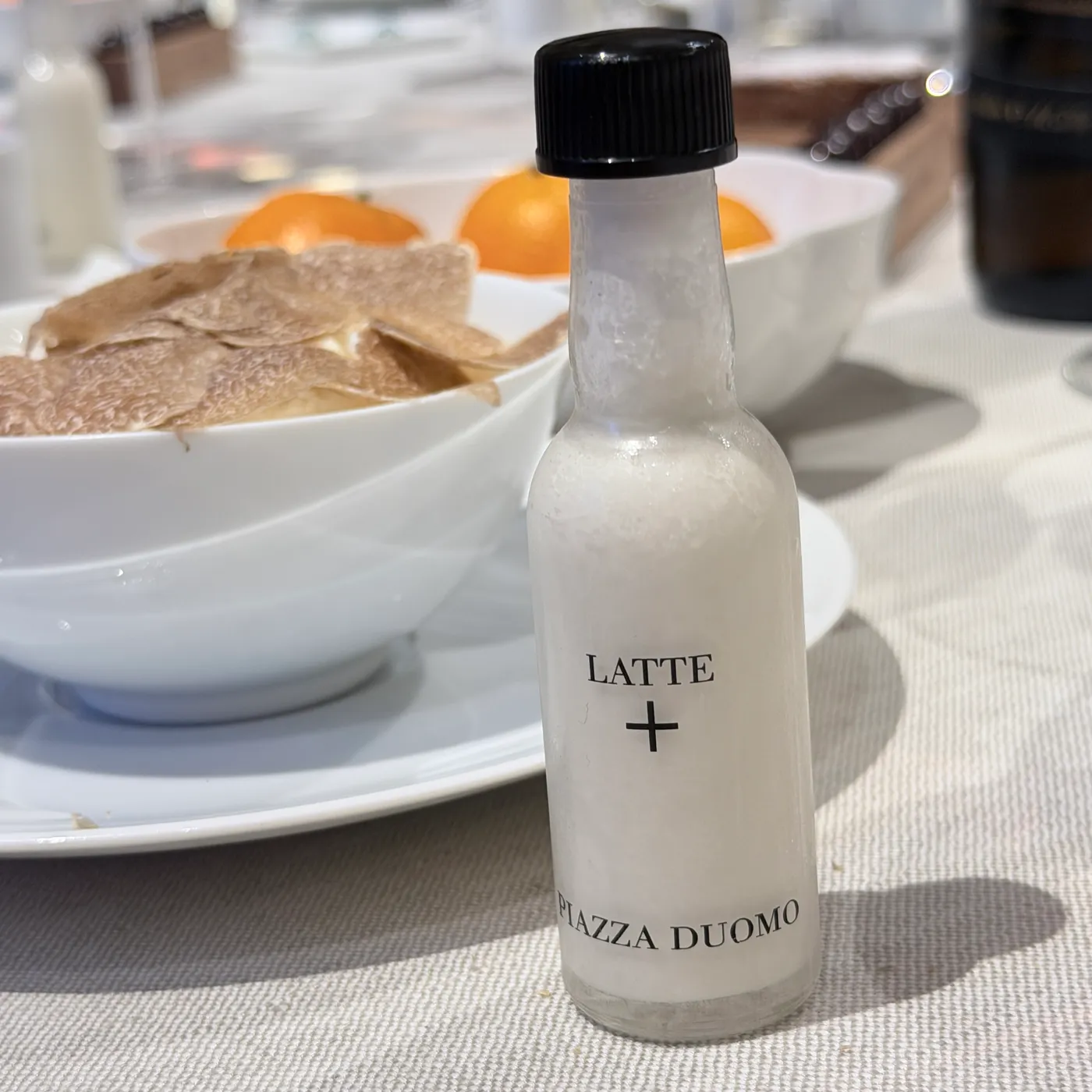
Latte Più | A Little Mischief from Stanley Kubrick
Enrico's Latte Più is a playful reference to the Moloko Plus from Stanley Kubrick's A Clockwork Orange. In the film, the characters drink their peculiar milk concoction before getting into all kinds of trouble. At Piazza Duomo, the version is much more civilized: a cream of milk with Moscato grappa and vanilla. A wonderfully mischievous way to end a lunch in which every dish had something to say.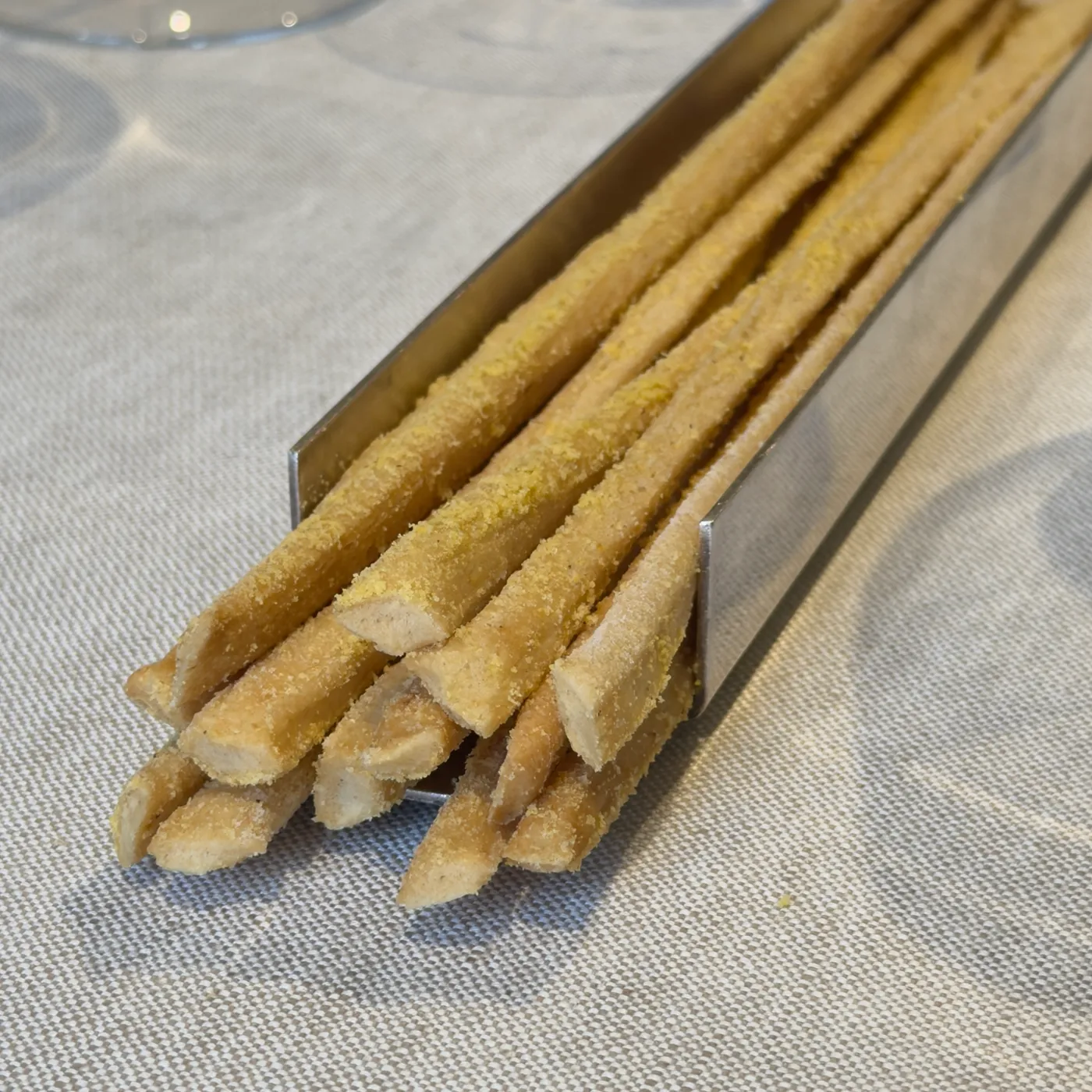
The Bread
Even the bread receives extraordinary attention at Piazza Duomo. Hand-rolled grissini made with cornmeal arrived alongside a selection of breads that connected, once again, to the kitchen's ingredients and garden.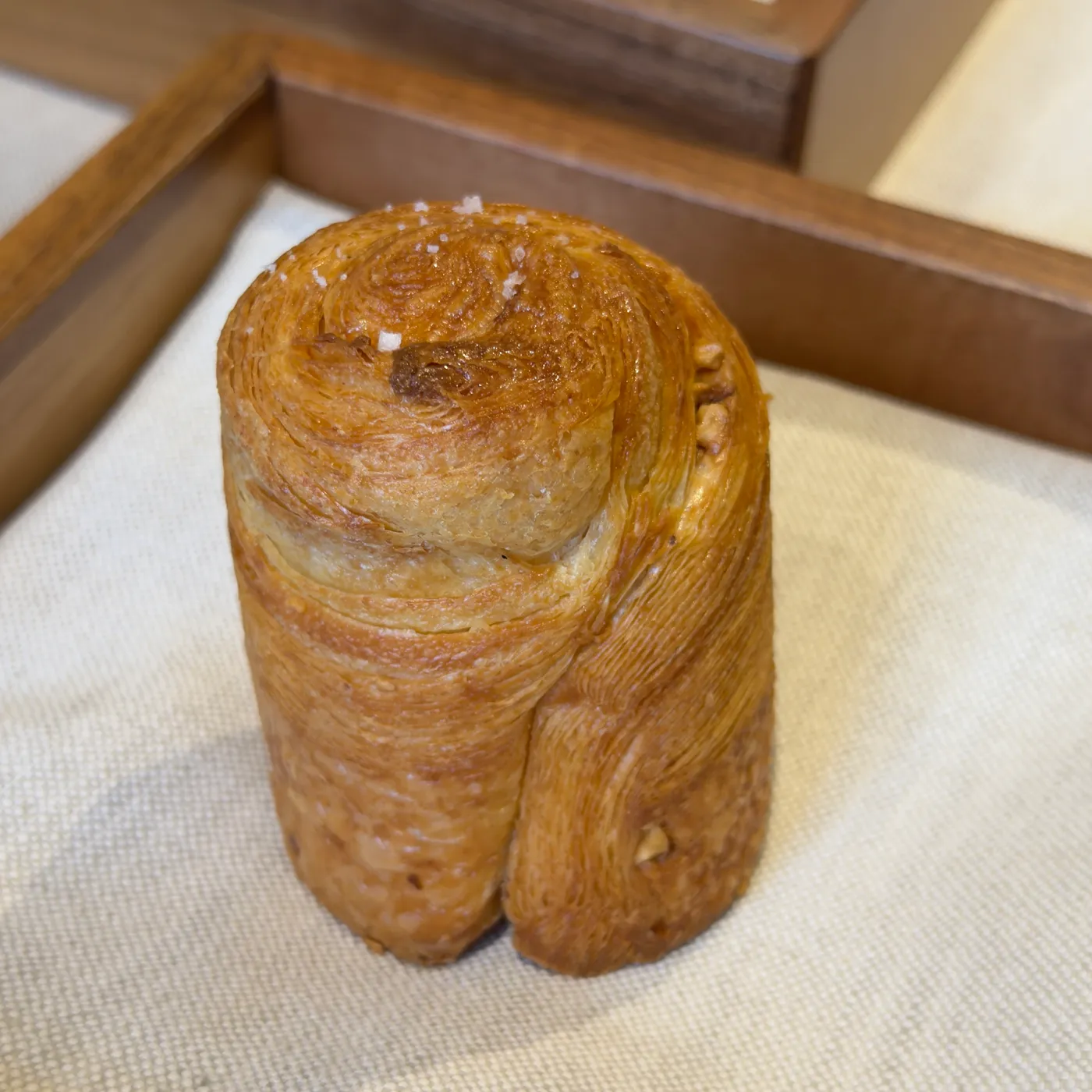
Butter-laminated bread with Alba hazelnuts.
A beautiful laminated bread enriched with butter and Alba hazelnuts, its golden layers almost too lovely to pull apart. Almost. 😂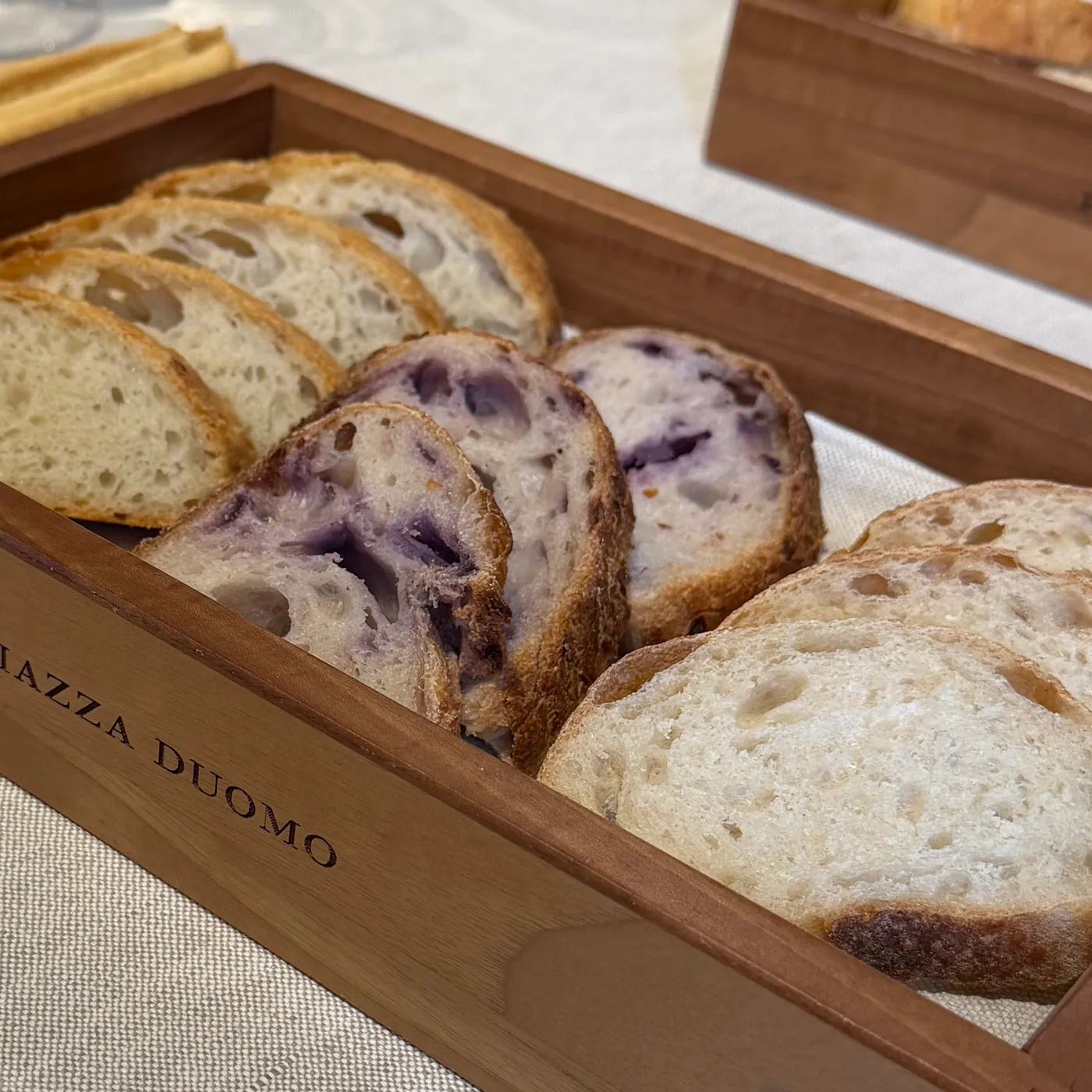
The Piazza Duomo bread selection.
The basket also included white-flour and semolina bread, sourdough with purple cabbage from the garden, and focaccia-style bread incorporating Tropea red onions. Nothing here seems to exist simply to fill space on the table.What we drank
Throughout this remarkable lunch, Alex Roppo guided us through a succession of wines that were as thoughtful as Enrico's menu.
What struck me was how deliberately Alex chose bottles that told stories about Piedmont, its families, its historic grape varieties and the extraordinary ability of some of these wines to age.
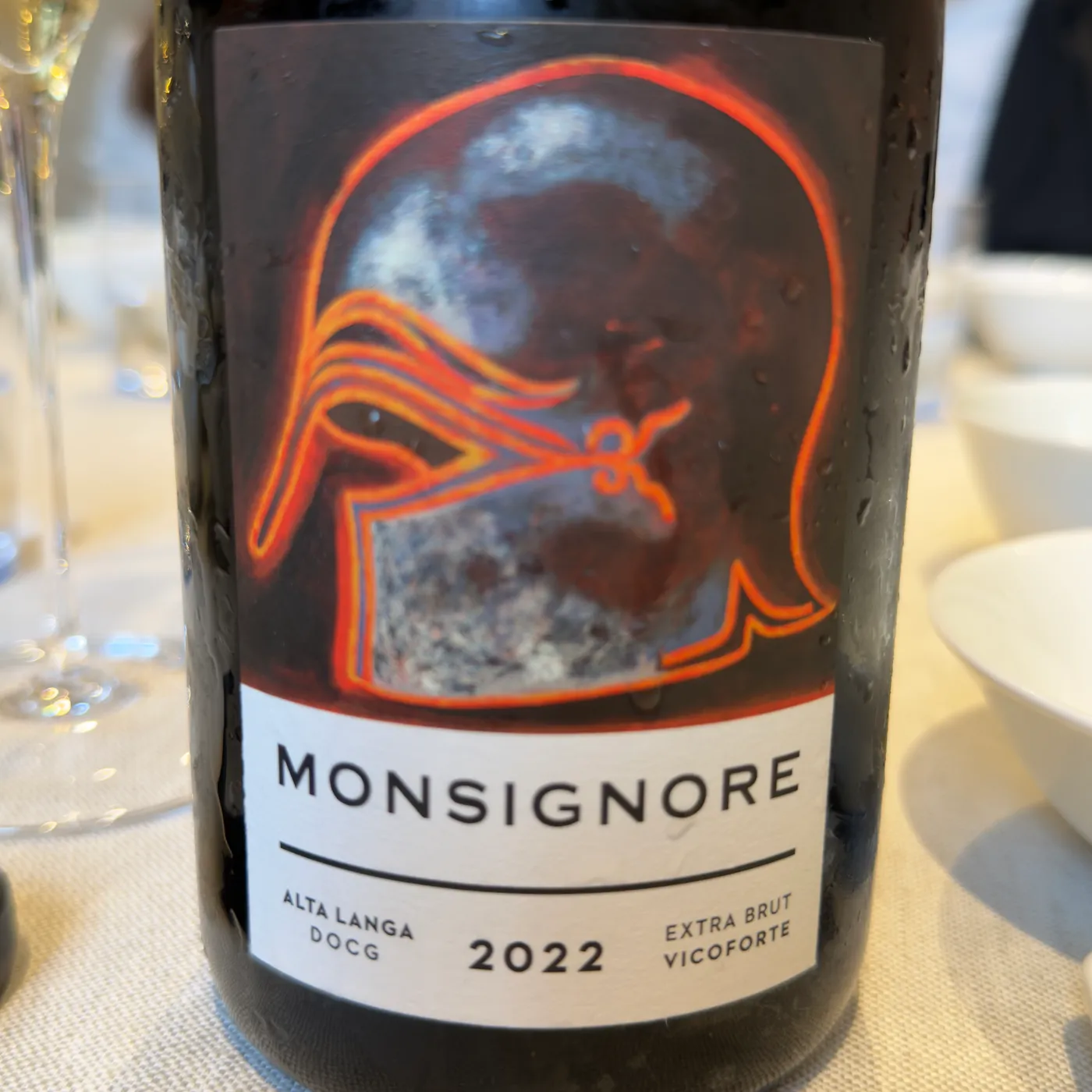
Monsignore Alta Langa Extra Brut 2022 | Vicoforte, Piedmont
We began with a sparkling wine from a small, family-run producer near Mondovì.
Alex described an equal blend of Chardonnay and Pinot Noir, fermented in wood and aged for thirty-six months in bottle.
The label was created by Francesco Clemente, the artist who also painted Piazza Duomo's famous pink dining room.
Even our first glass of wine had a direct connection to the restaurant's artistic identity.
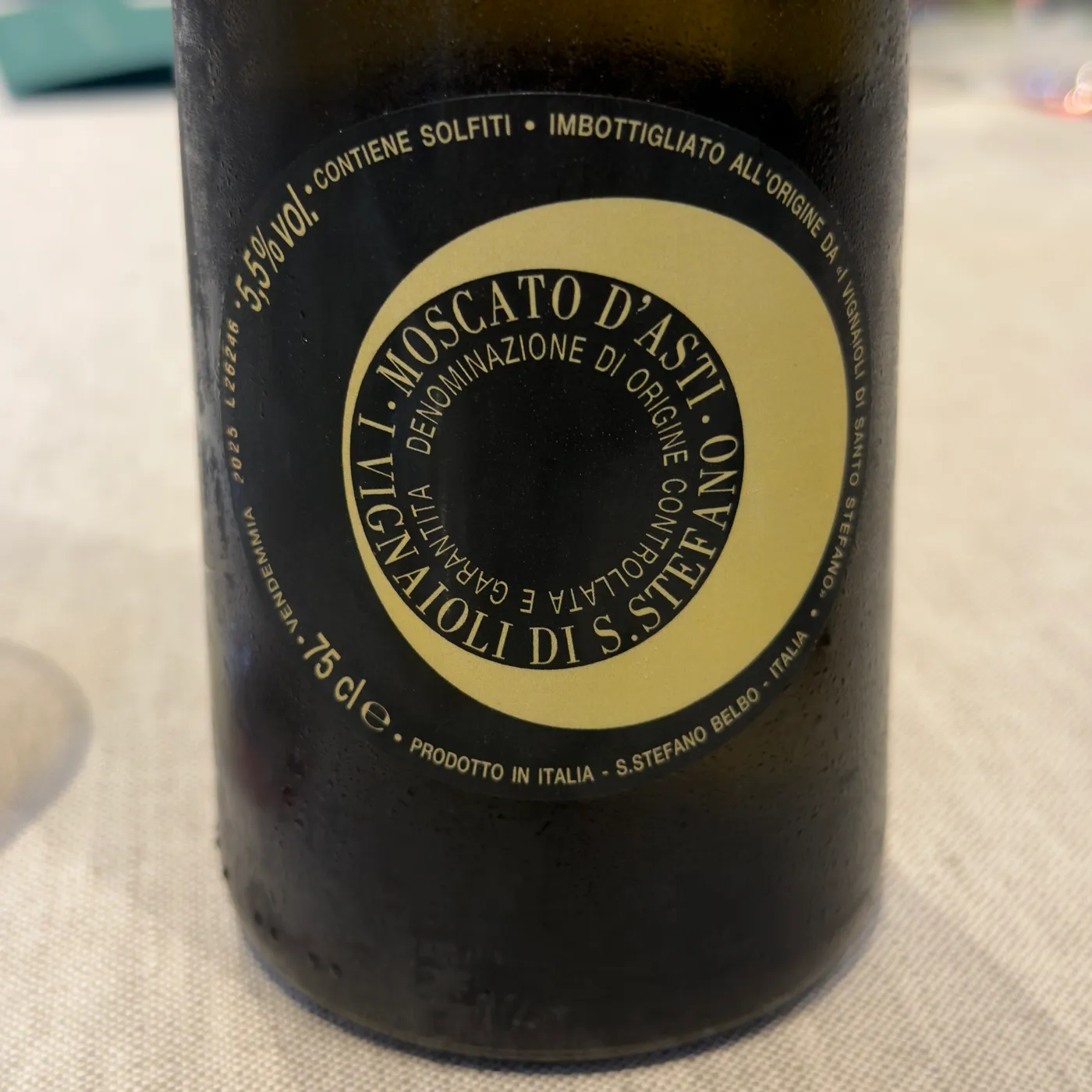
Moscato d'Asti 2025 | I Vignaioli di Santo Stefano
One of my favorite ideas of the entire wine pairing was serving Moscato d'Asti with Enrico's extraordinary garden salad.
Alex explained that the wine's sweetness, gentle bubbles and acidity were intended to refresh the palate when we reached the dressed portion of the salad.
He also wanted to remind us of the great tradition of Moscato d'Asti, which he feels is sometimes overlooked even by serious wine lovers.
Just a small sip, served at exactly the right moment.
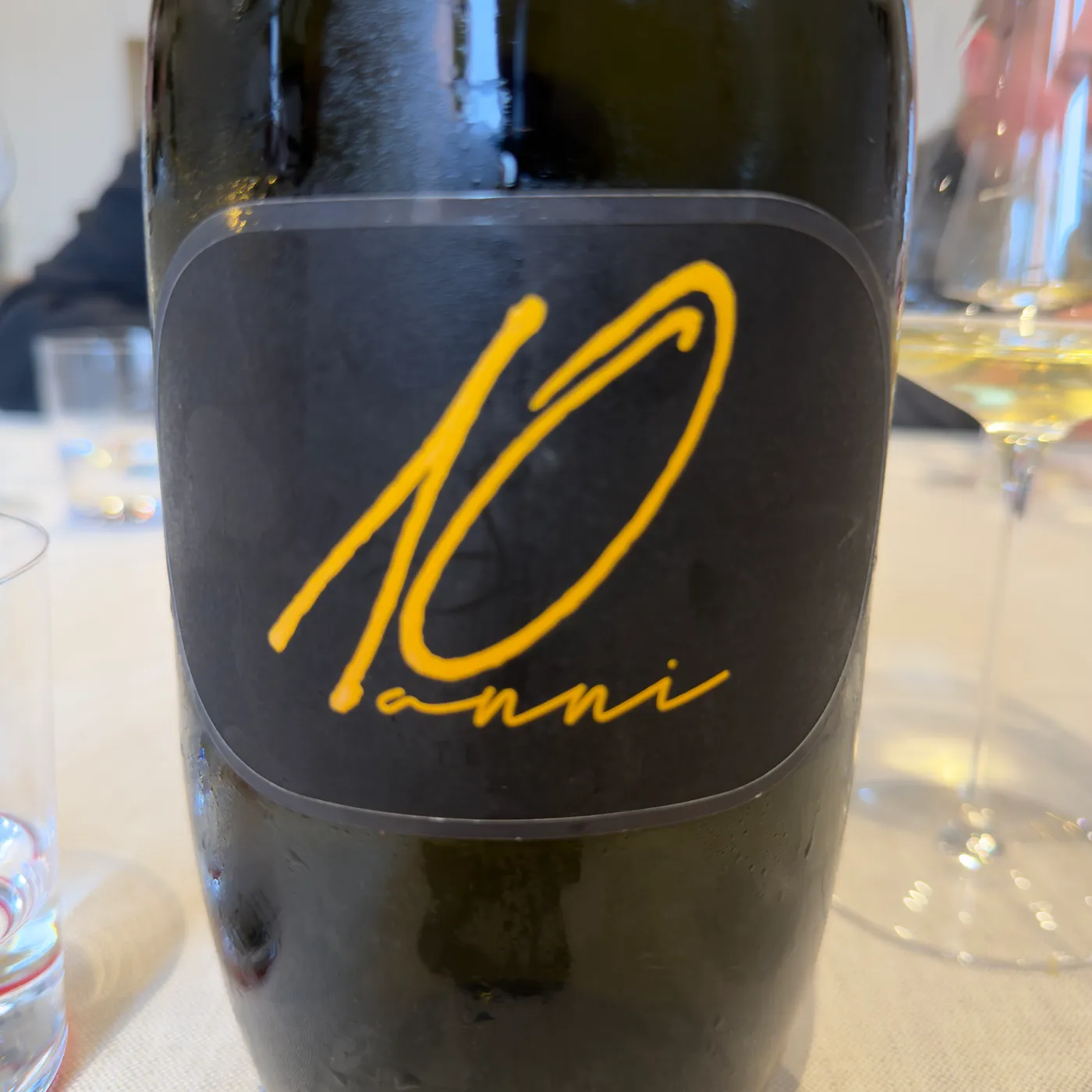
Villa Sparina Gavi “10 Anni” 2011 | Cortese | Magnum
Next came a fifteen-year-old Gavi from Villa Sparina, served from magnum.
Alex described a Cortese wine fermented in concrete and given extended aging in wood, followed by a long period in bottle before release.
His point was to demonstrate that great Piedmontese white wines can possess depth, structure and remarkable longevity.
A fascinating way to move beyond the familiar idea of Gavi as simply a fresh young white.
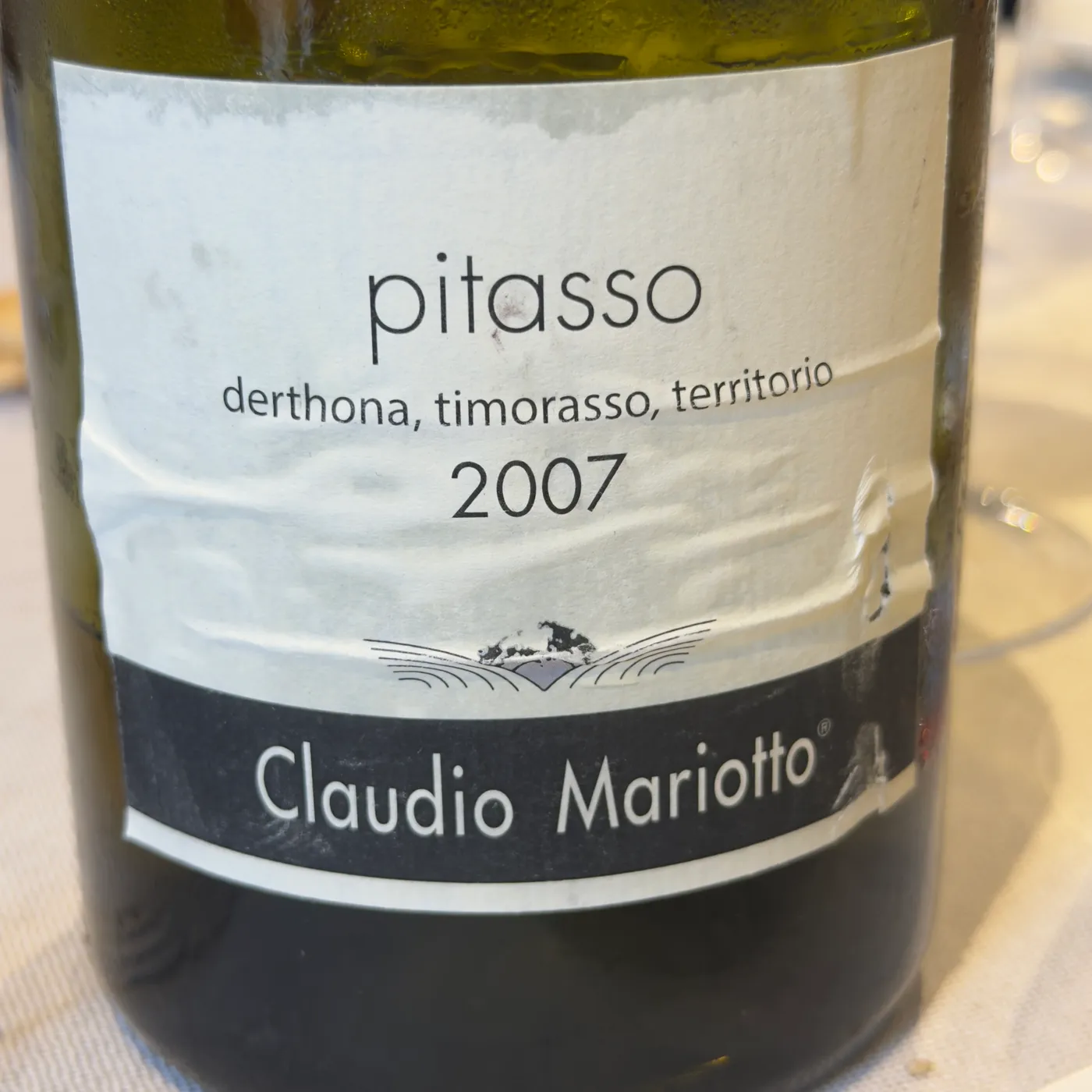
Claudio Mariotto Pitasso 2007 | Derthona Timorasso
Another extraordinary mature white, this time made from Timorasso.
Alex spoke about the revival of this historic Piedmontese grape and the important contributions of producers such as Claudio Mariotto and Valter Massa.
Timorasso is sometimes called the Barolo of white wines because of its structure and ability to age.
This particular 2007 bottle had been requested by Piazza Duomo to demonstrate that evolution, and Alex chose to serve it alongside the cardoon with anchovy sauce.
An inspired pairing between a deeply structured white and a vegetable preparation with enough character to meet it.
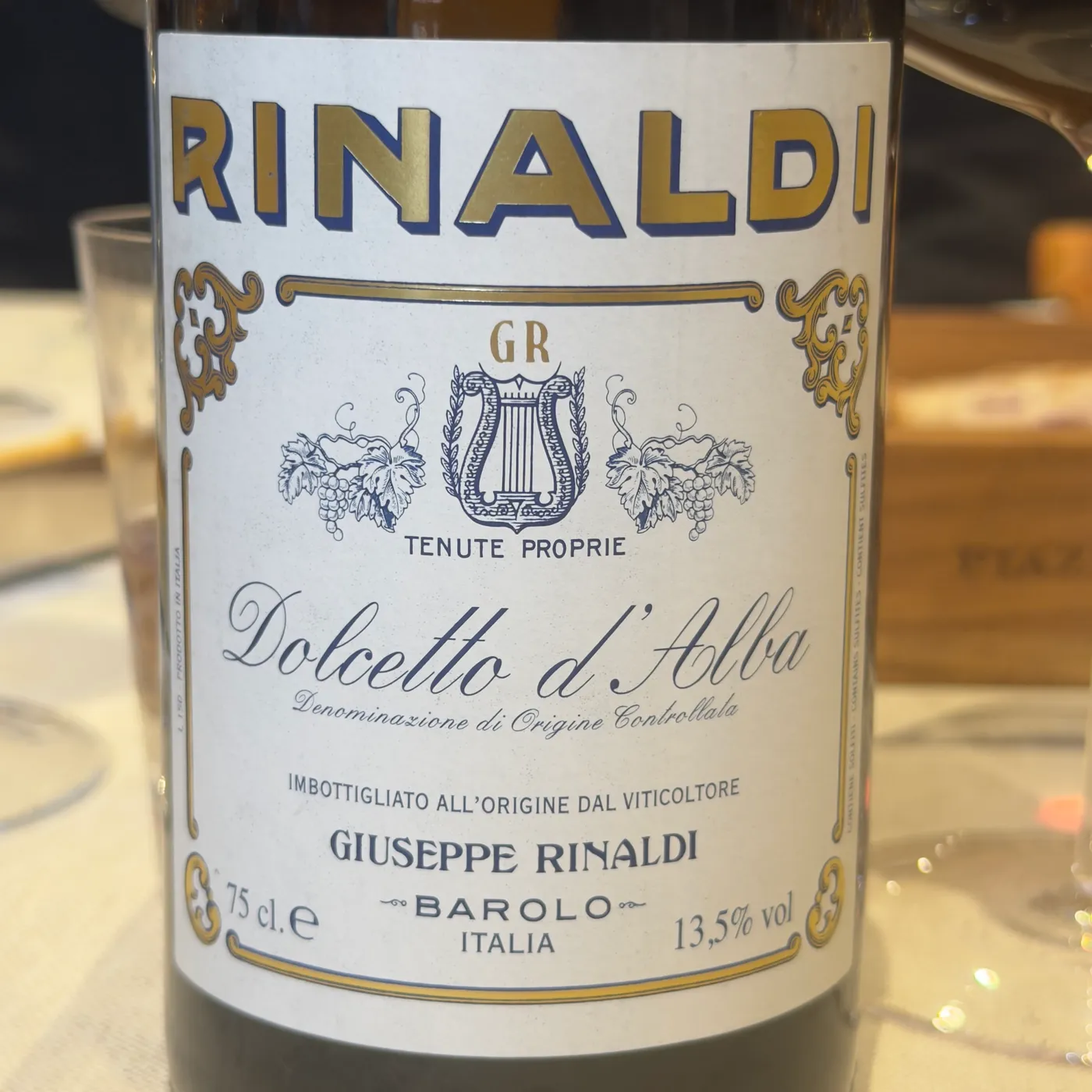
Giuseppe Rinaldi Dolcetto d'Alba 2015 | Piedmont
Before turning to Nebbiolo, Alex wanted us to spend a little time with Dolcetto, a grape he described as a symbol of Piedmontese tradition and conviviality.
Dolcetto is usually associated with freshness and the pleasure of drinking rather than long aging. But this was an eleven-year-old bottle from Giuseppe Rinaldi, a producer Alex considers one of the great interpreters of the Langhe.
He described remarkable freshness, fruit and aromas recalling watermelon and roses.
A reminder that the personality of the producer can make even a supposedly modest grape something very special.
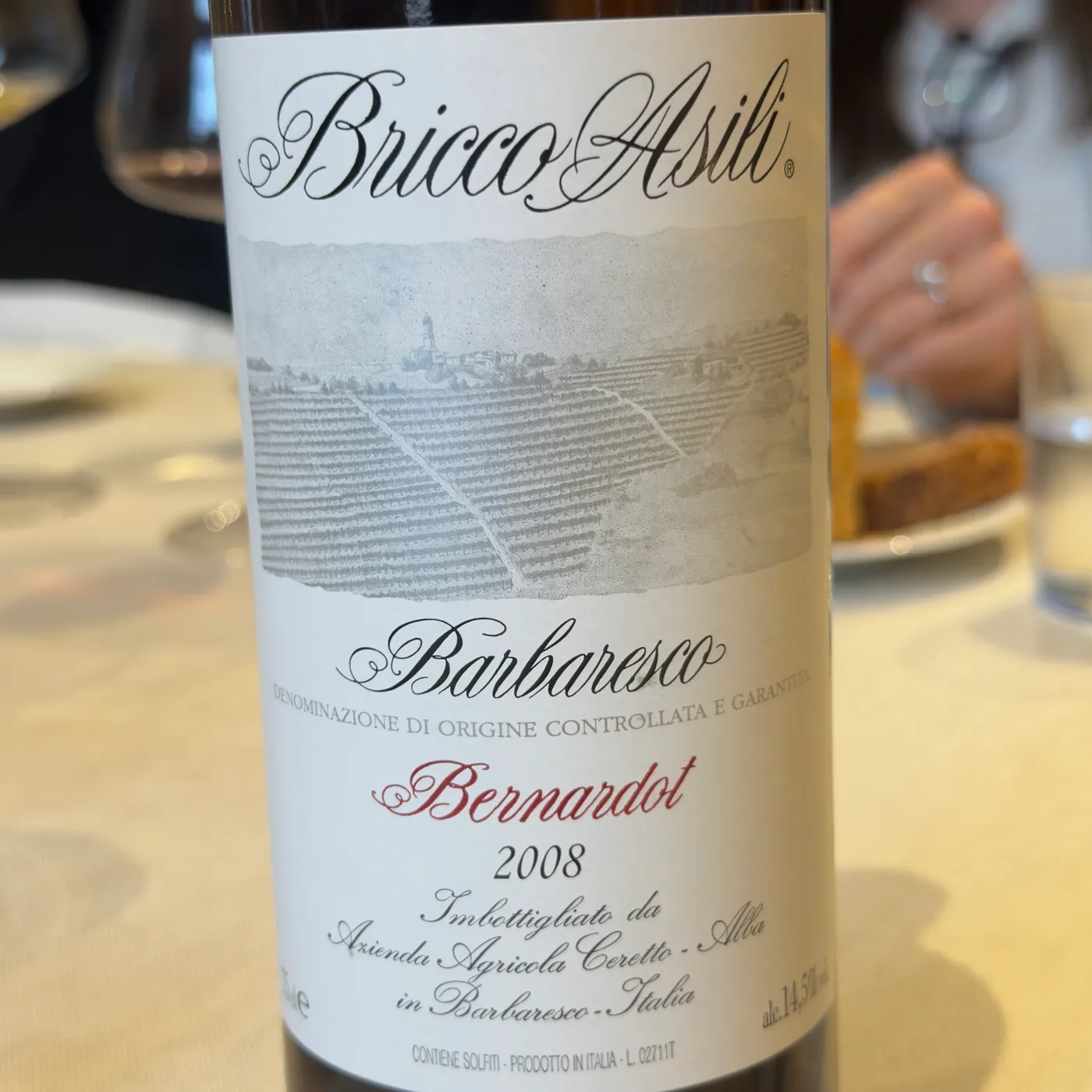
Ceretto Bricco Asili Barbaresco Bernardot 2008 | Piedmont
A mature Barbaresco from the Ceretto family, whose dream and commitment helped bring Piazza Duomo into existence.
There was something especially meaningful about drinking one of the family's own wines in the restaurant Bruno Ceretto had imagined more than twenty years ago.
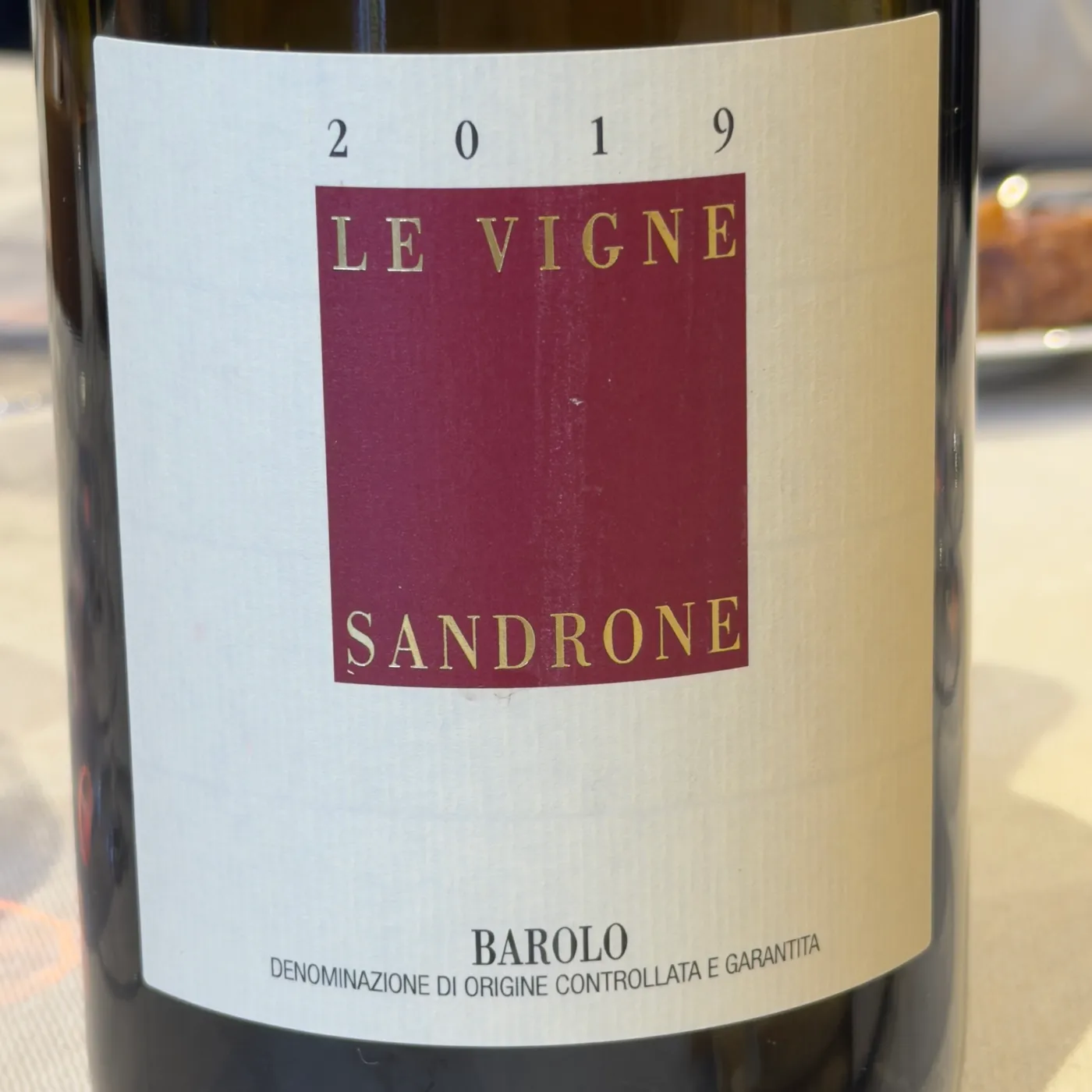
Luciano Sandrone Le Vigne Barolo 2019 | Piedmont
Our final red wine came from Luciano Sandrone, whom Alex described as one of the great pioneers of Barolo.
Le Vigne brings together vineyard parcels from La Morra, Castiglione Falletto, Monforte d'Alba and Serralunga.
Alex emphasized the wine's finesse, elegance, freshness and power. He wanted the 2019 vintage to give us a clear expression of Nebbiolo's character.
A fitting conclusion to our journey through the red wines of Piedmont.
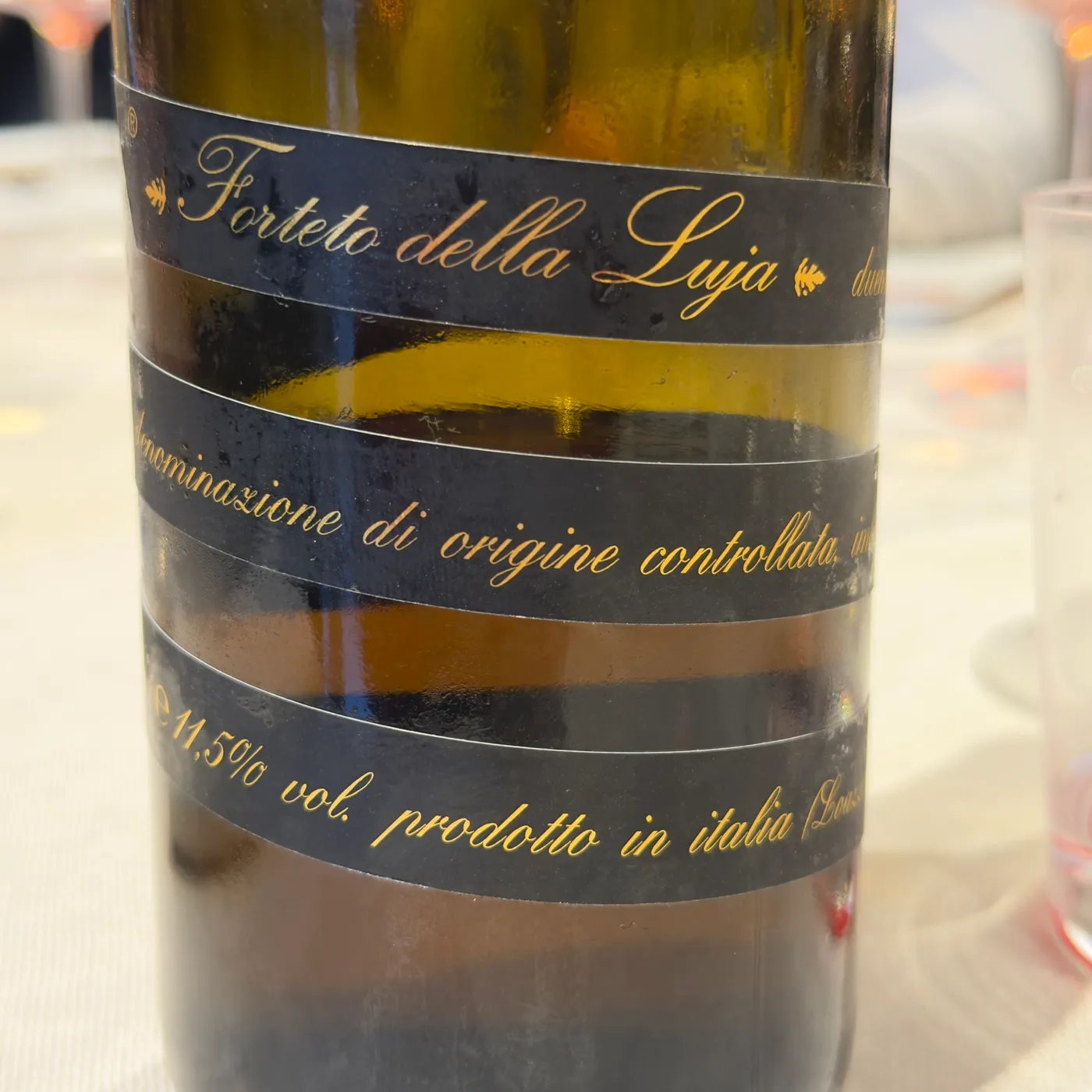
Forteto della Luja Moscato di Loazzolo | Piedmont
And finally, a return to Moscato, but in a very different expression.
Alex introduced this late-harvest wine from Loazzolo, which he described as Italy's smallest DOC.
The grapes are picked late in November, and the wine undergoes aging in different vessels, including amphora, concrete and wood, before further maturation.
He described an almost oxidative character, with considerable complexity, chestnut-honey aromas, sweetness and refreshing acidity.
A wine, in his words, for contemplation, not merely for dessert.
And after a lunch like this, contemplation seemed entirely appropriate.
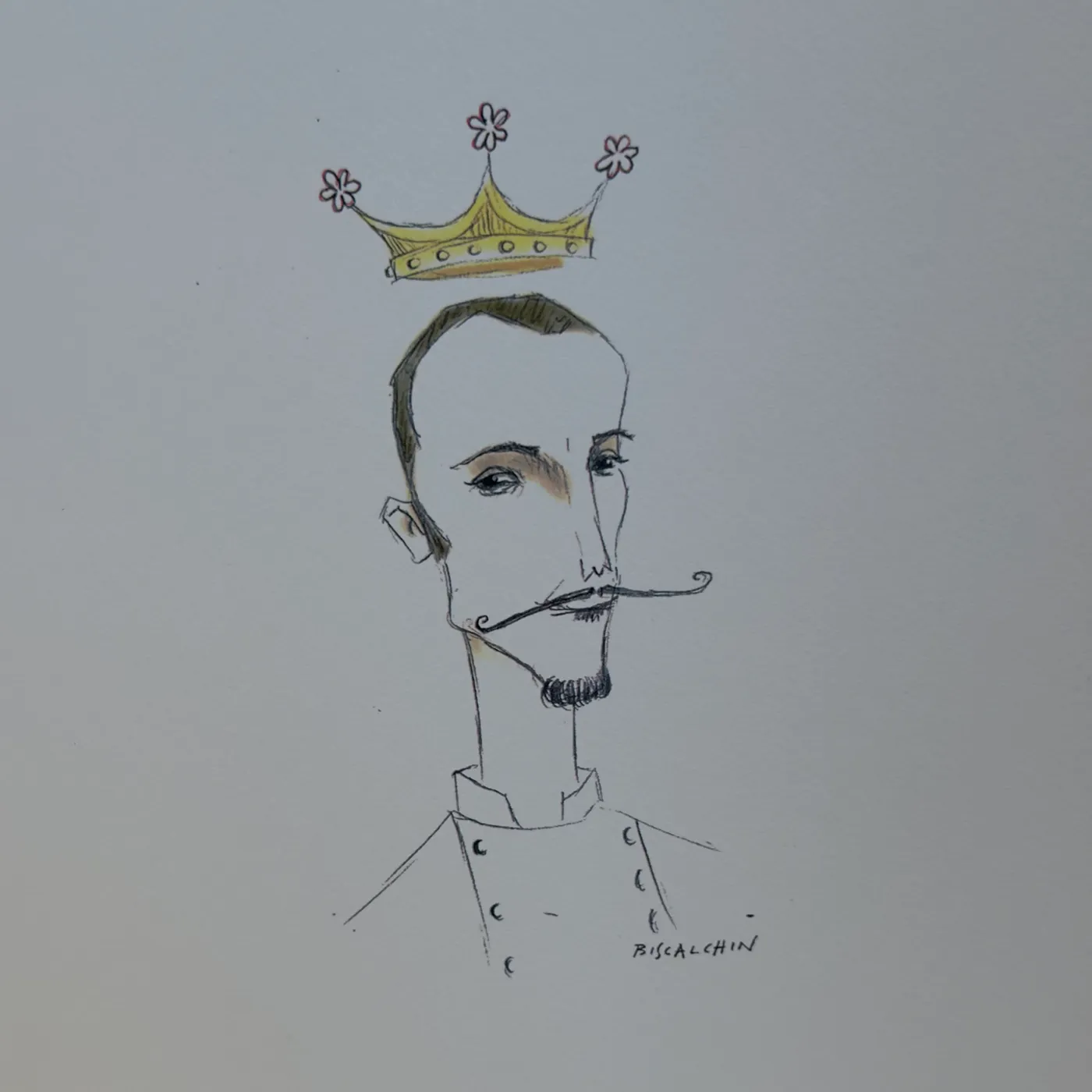
The Two Dreams
Enrico Crippa.
At the end of our lunch, Enrico spoke about his restaurant with a simplicity that I found deeply moving.
He told us that every day is different for him. That he needs to discover something new, to keep creating, to keep responding to the ingredients the land gives him.
And then he said:
“I'm happy that today I've been able to make all of you happy, too.”
I keep thinking about those words.
Enrico is a chef who has spent his entire life pursuing the work he dreamed of as a child. He does it in a restaurant born from another man's dream, in a region whose extraordinary ingredients give him endless reasons to keep exploring.
More than twenty years after Piazza Duomo opened, that curiosity is still there.
You can see it in the garden that never stops growing, in the salad that changes every season, in the memory of a truffle hunter's fireplace transformed into a dish, and in the extraordinary tenderness of a hare cooked according to a French tradition Enrico carried home with him.
And, perhaps most importantly, you can see it in the fact that this man still wants to be in his kitchen every single day.
For years, Piazza Duomo has been my favorite restaurant in Italy. After today's lunch, I was reminded exactly why.
Thank you, Enrico, for making us so happy. Thank you to Simone Dalla Gasperina for telling us the stories behind the food, to Alex Roppo for the remarkable wine journey, and to the entire Piazza Duomo team for another beautiful afternoon.
And thank you to Bruno Ceretto for having that dream in the first place.
Because sometimes, when two dreams come together, something extraordinary happens.
I AM A HUNGRY TOURIST. ❤️