Chez Calvert
Visited Sun, Nov 22, 2026 · Dinner
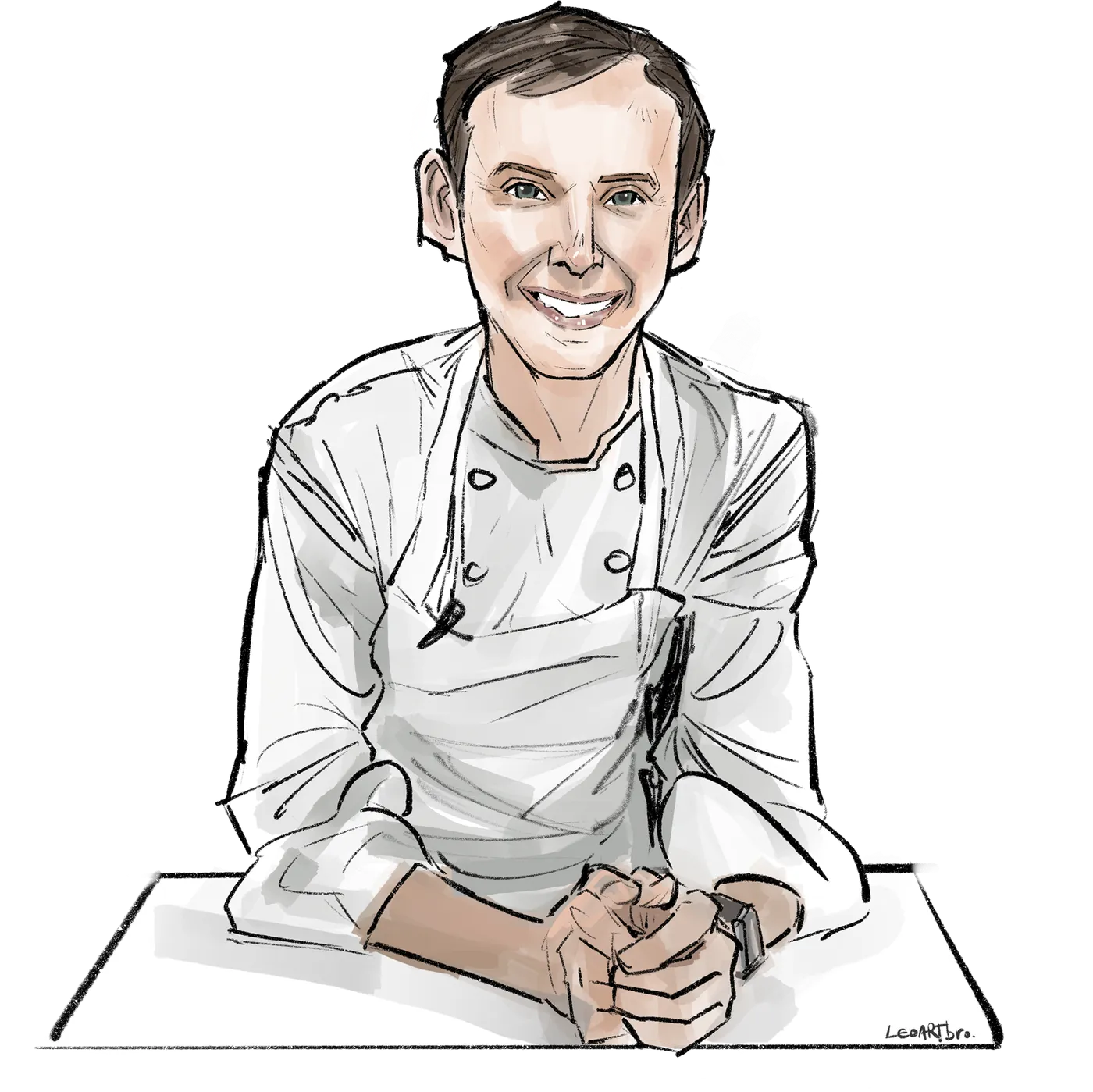
Chez Calvert
A Restaurant of His Own
My first meal at Daniel Calvert’s SÉZANNE was a long lunch in 2021 with Nadya and Takafumi Hamada san, before the restaurant had a single Michelin star. Daniel and I were remembering it during this dinner. Since then, no restaurant has appeared on more of our Tokyo tours than SÉZANNE, and I doubt there are many people who have eaten Daniel’s cooking more often than I have.
I used to tell our guests that although SÉZANNE was called a French restaurant, they could travel the length and breadth of France without finding another restaurant serving food quite like it. The ingredients, the sauces, the combinations, and the way Daniel brought them together made it very much his own cooking. I kept going back, and I kept bringing people.
On September 5, 2024, I posted a photograph of his unagi on Instagram and suggested that if SÉZANNE didn’t receive its third star, Michelin should pack up and leave Japan. I gave them until December. They managed it on October 17, just forty-two days later.
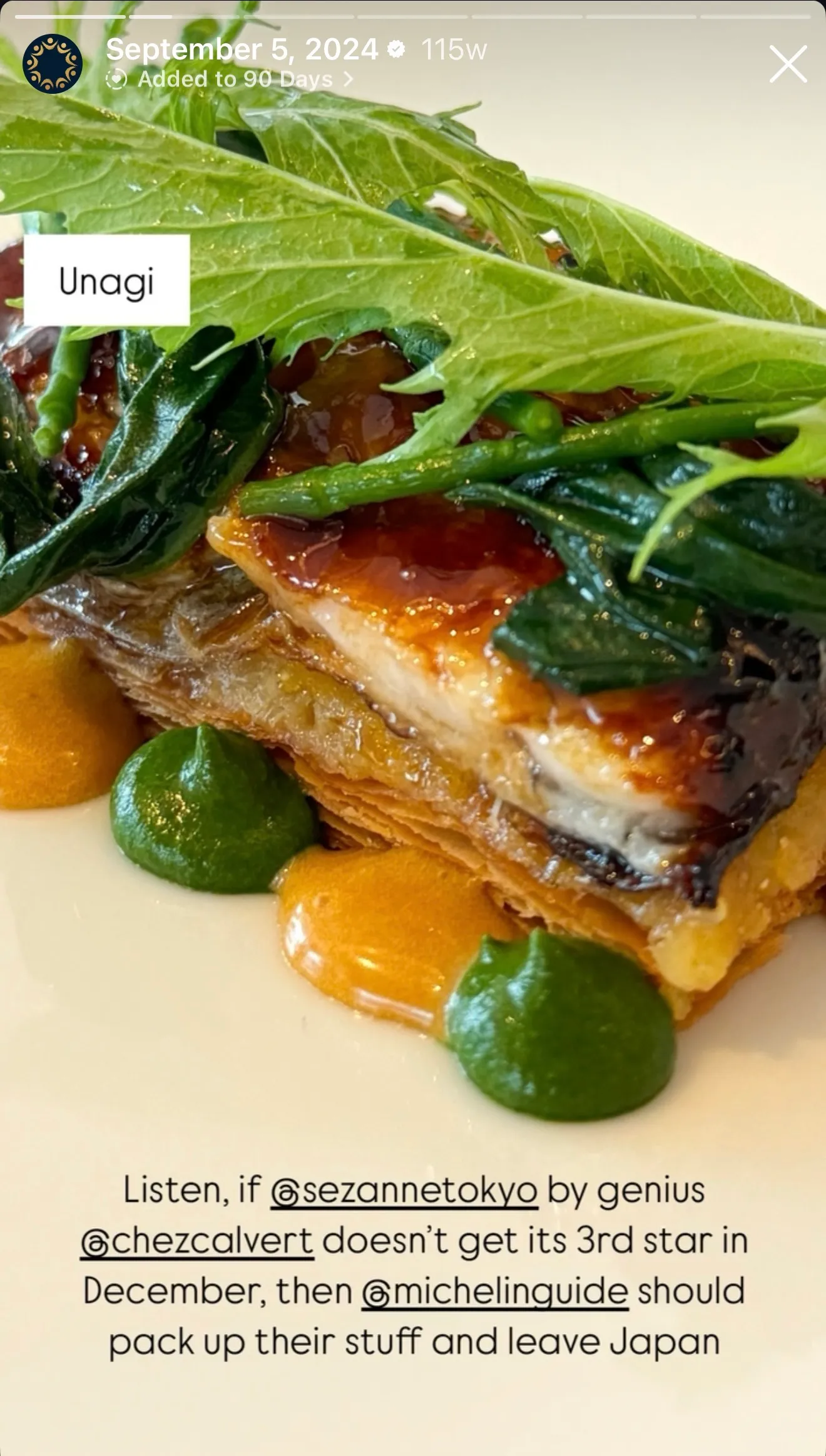
September 5, 2024. Michelin’s announcement came six weeks later.
Now we were visiting Chez Calvert, Daniel’s own restaurant at Azabudai Hills, which opened on October 1. After all those meals at SÉZANNE, I wanted to see what he would do with a place carrying his name, and to hear what being his own boss had changed.
There were familiar dishes, new preparations, and plenty to talk about. The duck was still there, fortunately, and so were the pastries. Daniel had quite a lot to say about both.
What we ate
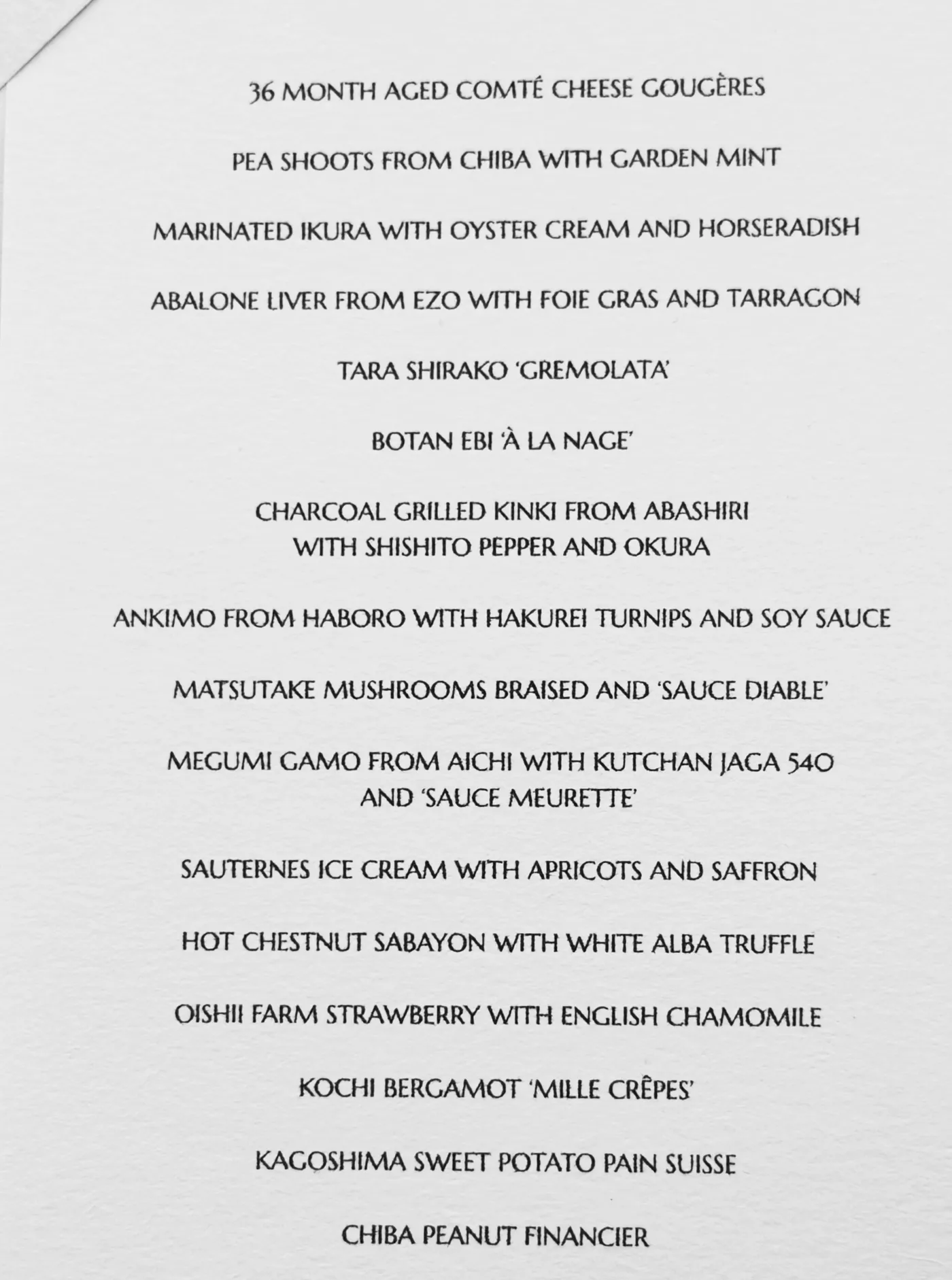
Our menu for Sunday, November 22, 2026.
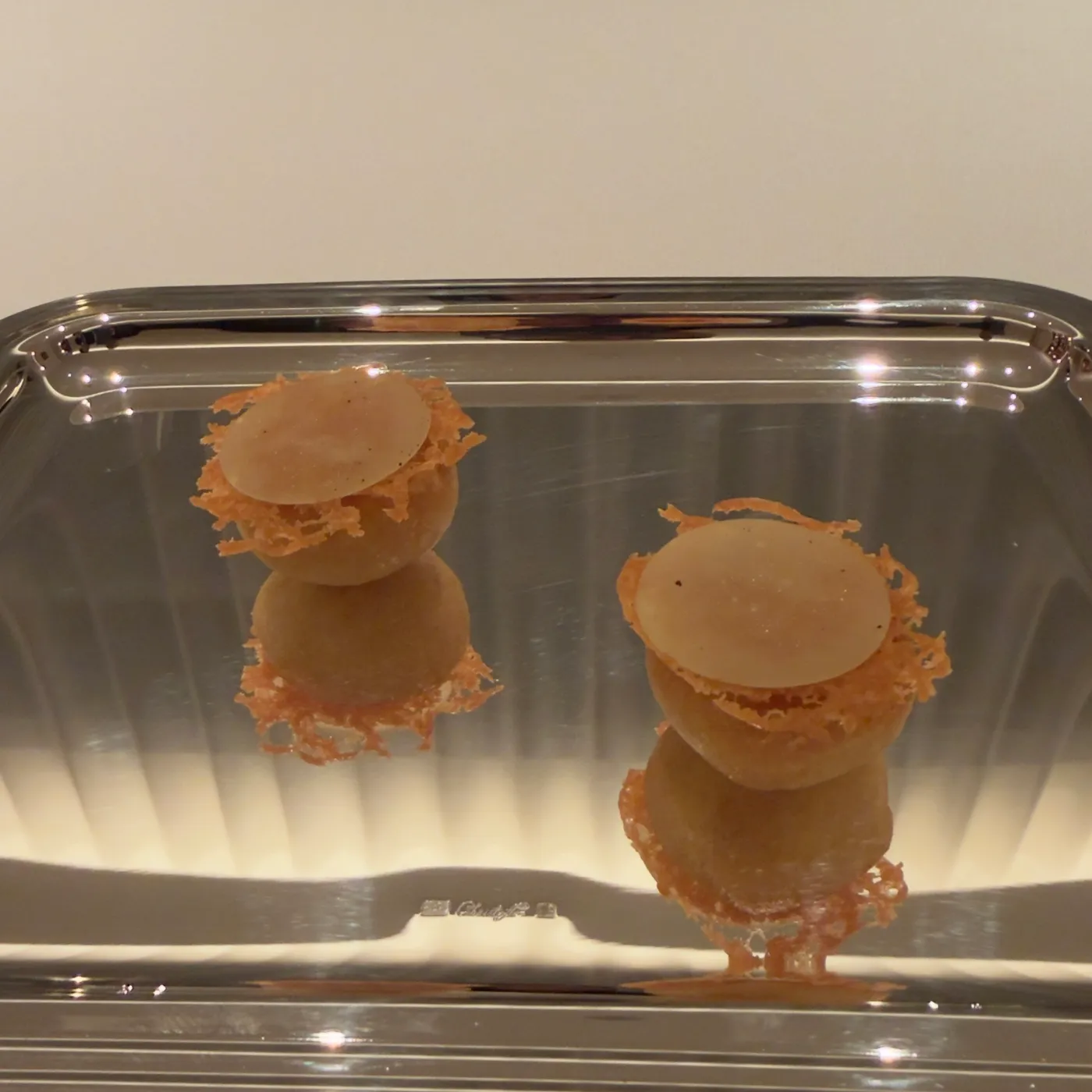
36-Month-Aged Comté Gougères
Hot cheese gougères filled with a creamy Mornay sauce made from Parmesan and 36-month-aged Comté, seasoned with mustard and Tabasco. A delicate, lacy cheese crisp sits beneath the round topping. The filling is intensely savory and creamy, with the mustard and Tabasco providing a sharper edge to the aged cheeses.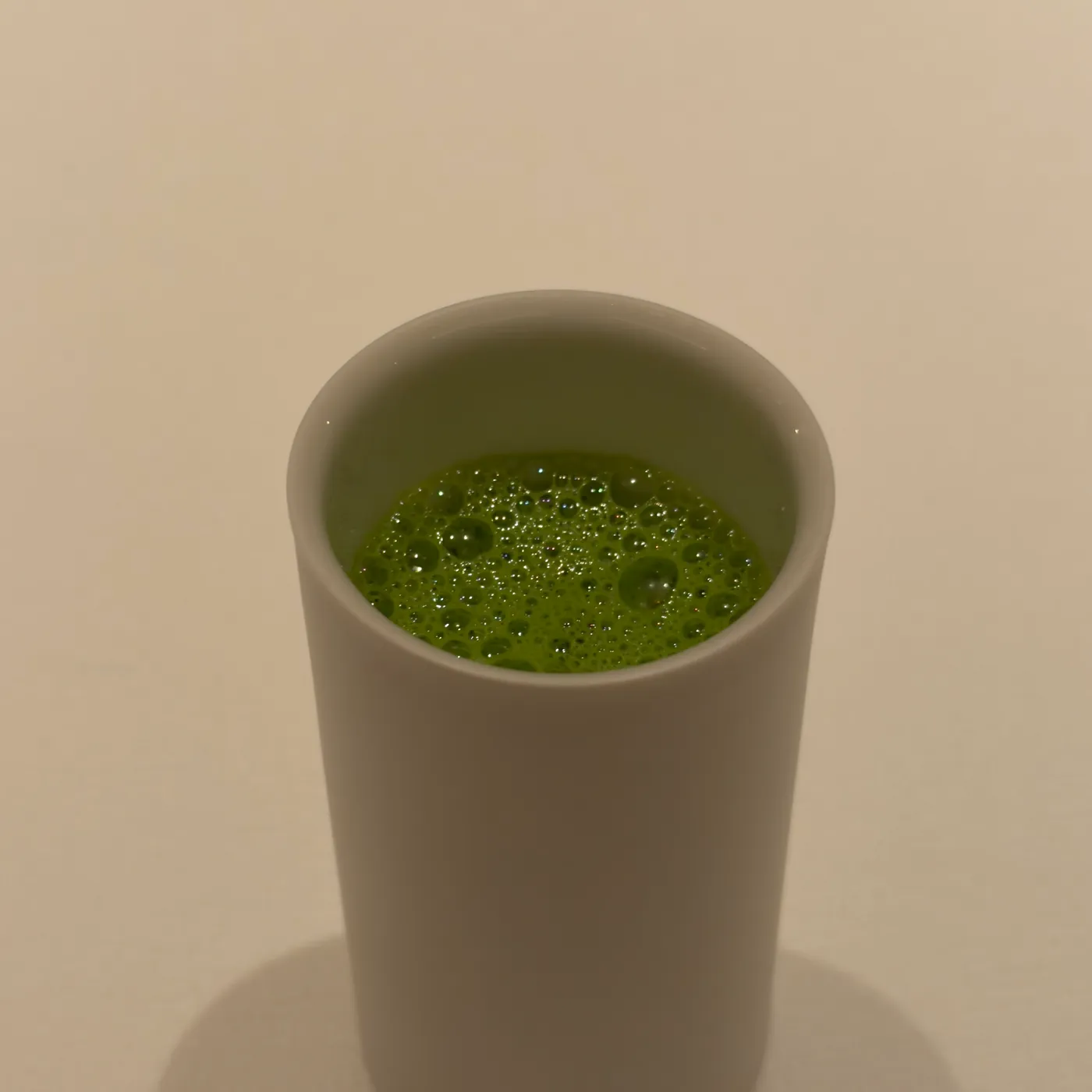
Pea Shoots from Chiba with Garden Mint
A vivid green pea-shoot soup made with scallop stock, a touch of mint, and tarragon oil. The scallop stock gives the soup a seafood base beneath the green flavor of the shoots, while mint and tarragon contribute their different herbal notes. Served in a small cup to drink rather than eat with a spoon.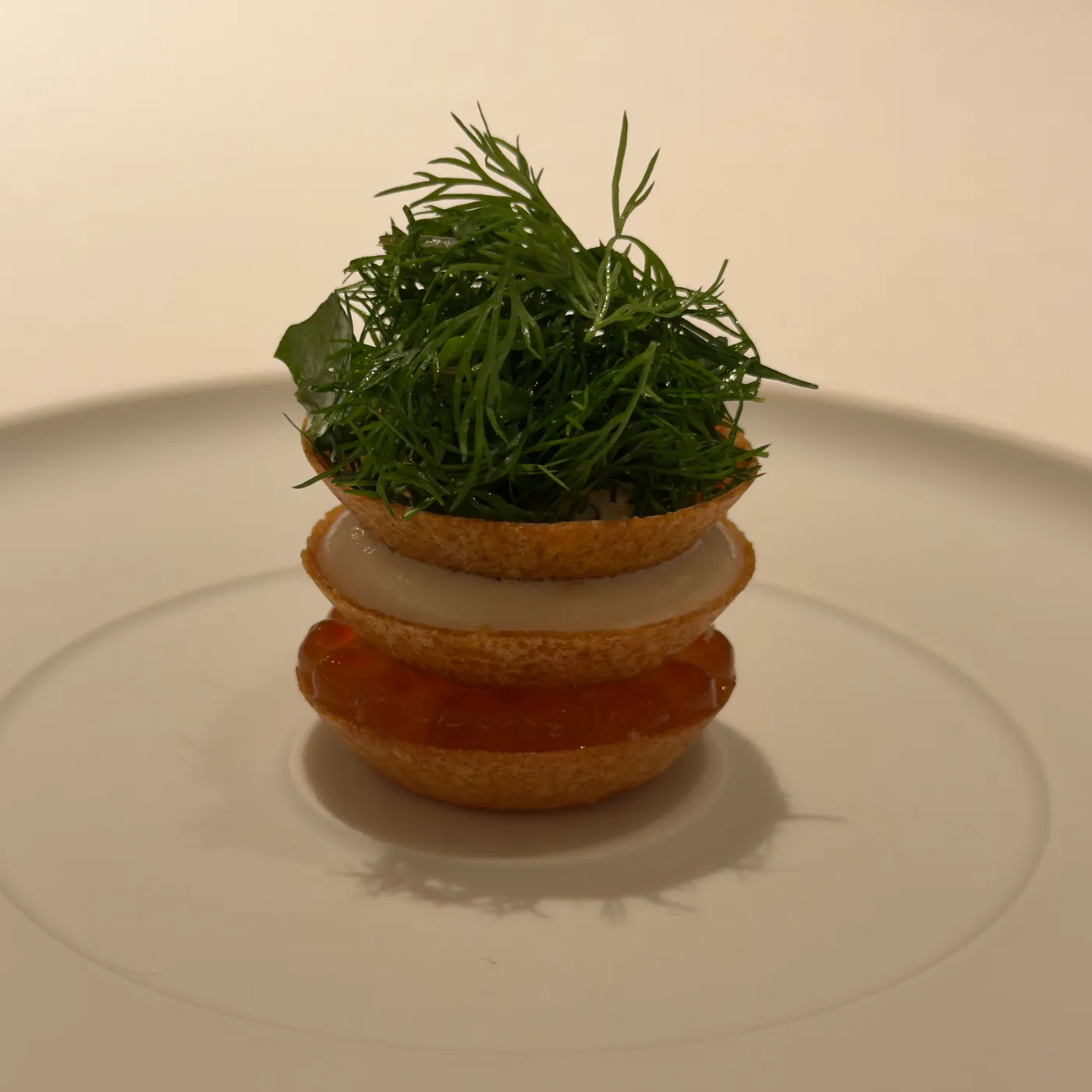
Marinated Ikura with Oyster Cream and Horseradish
Salmon roe marinated in Meyer lemon and katsuo dashi, presented in a stack of three delicate tartlet shells. The ikura occupies the bottom layer, oyster-and-horseradish cream the middle, and a salad of watercress and dill the top. The roe, creamy oyster filling, and fresh herbs bring different textures to the crisp shells. Meyer lemon and horseradish give acidity and heat to a preparation built around the flavors of salmon roe, oyster, and bonito.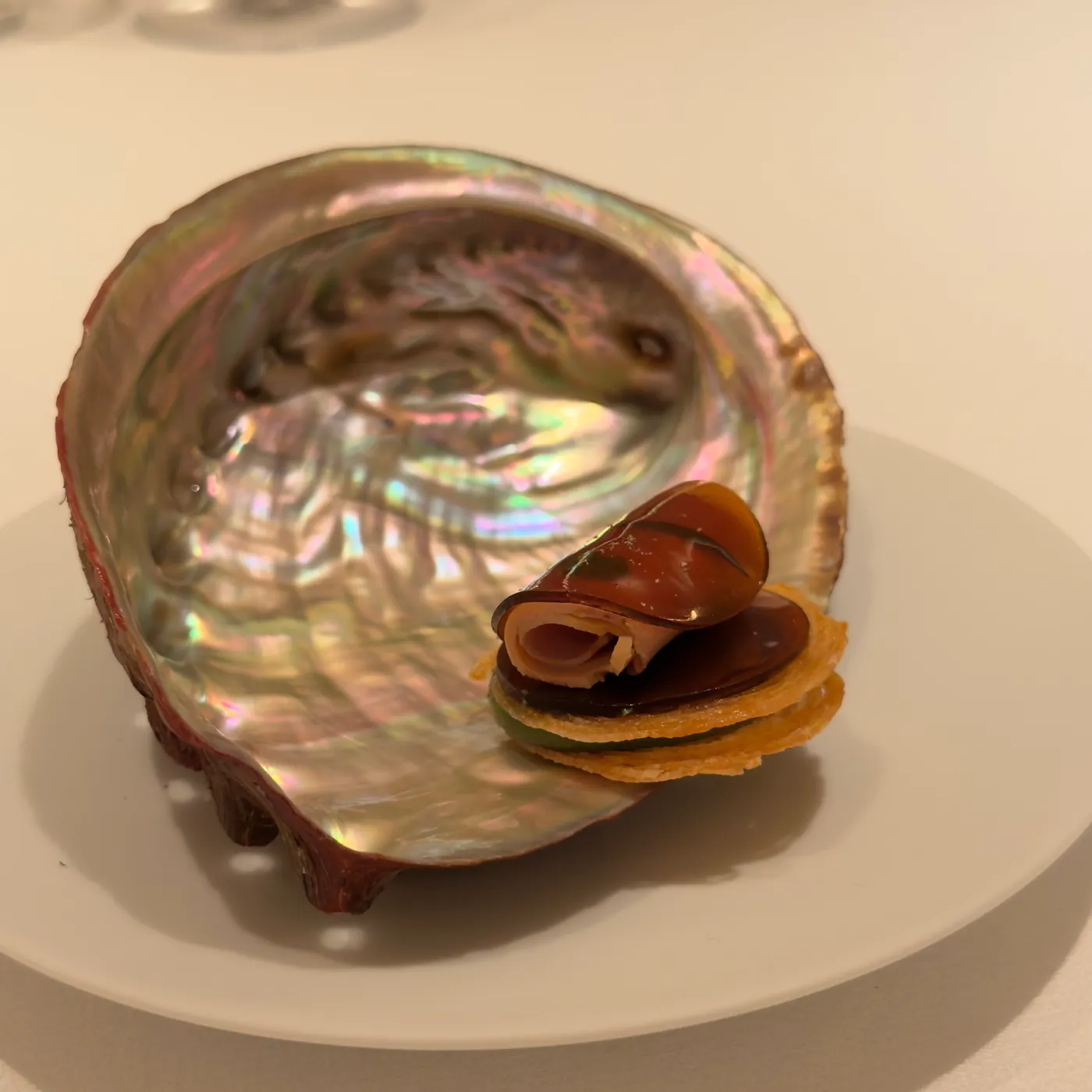
Ezo Abalone Liver with Foie Gras and Tarragon
Abalone from Hokkaido with abalone liver mousse, foie gras, and potato crisps, finished with Madeira-and-port jelly and tarragon. Presented in an abalone shell, with the crisp potato contrasting with the soft mousse and foie gras. The wine jelly adds sweetness to the rich liver components.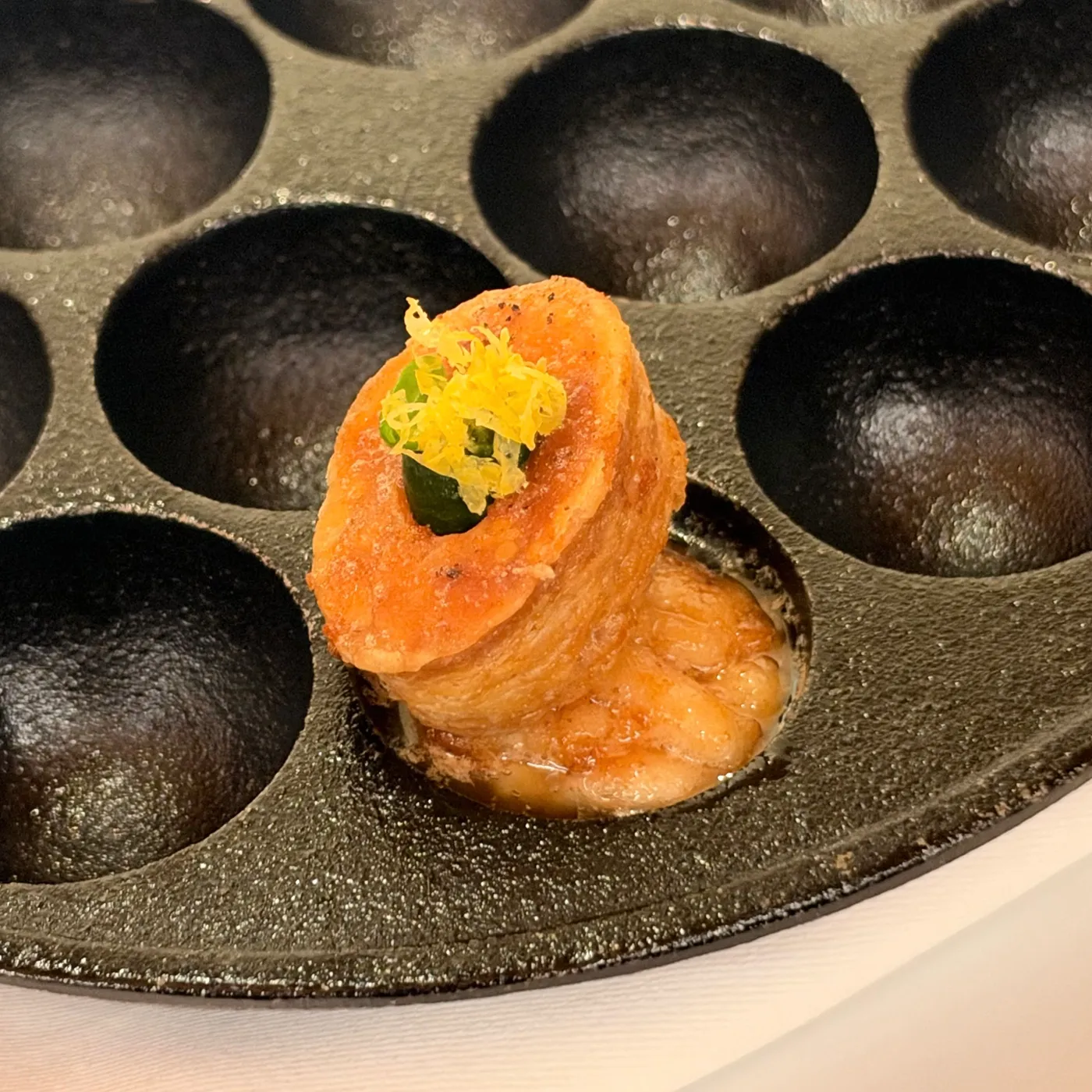
Tara Shirako “Gremolata”
Cod milt sautéed in brown butter and served in an escargot pan beneath a small puff-pastry case filled with gremolata and citrus, including lemon and grapefruit. The pastry brings a flaky crust to the soft shirako, while the citrus and herbs balance the brown butter. An escargot-style preparation built around the creamy texture of cod milt rather than the chew of a snail.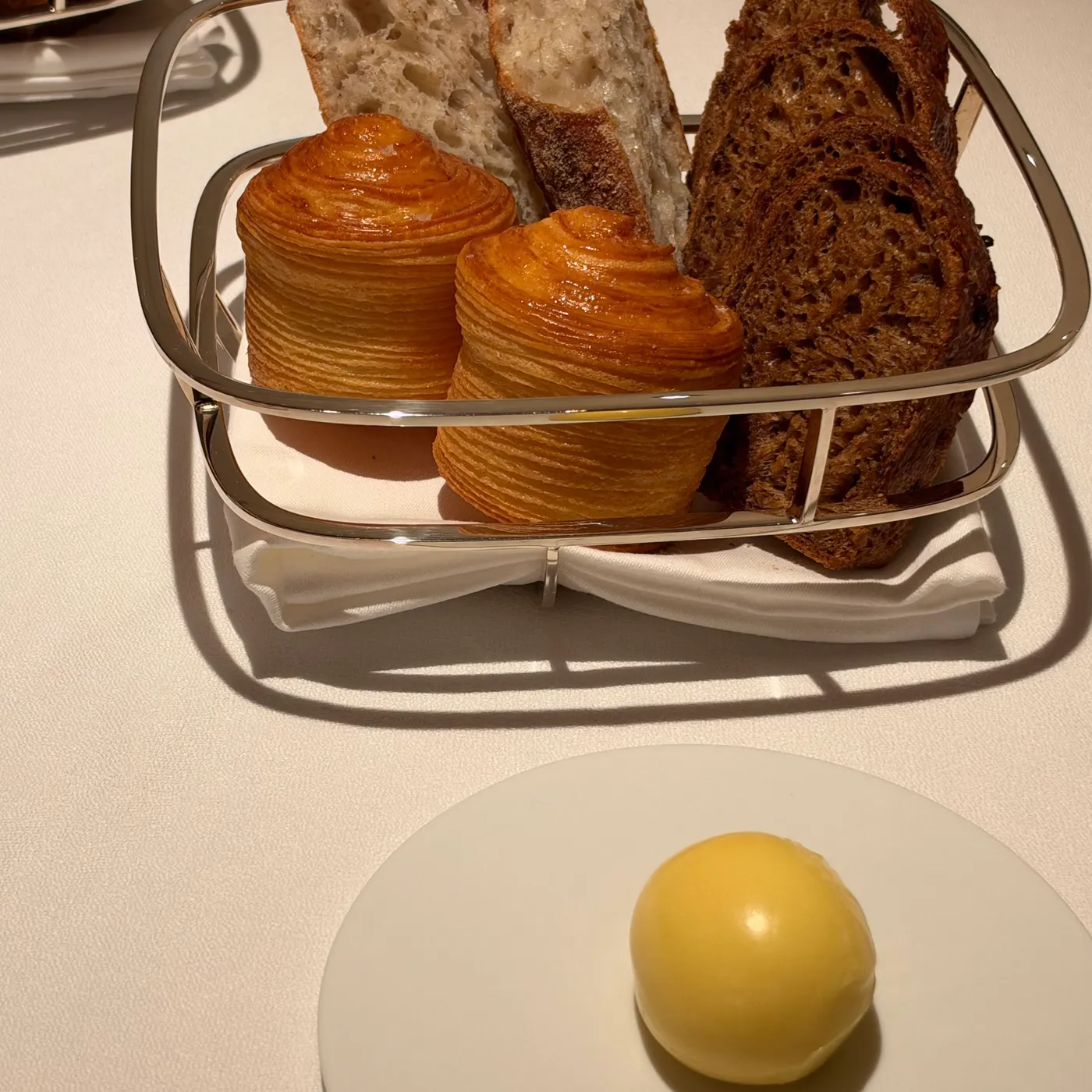
Bread and Bordier Butter
Three breads served with French Bordier butter: a sesame baguette, a loaf made with shoyu moromi, and brioche feuilletée. Moromi is the fermented mash pressed to make soy sauce, giving the second bread an ingredient closely connected to Daniel’s Japanese pantry. The brioche feuilletée is laminated, combining the richness of brioche with a flaky outer crust.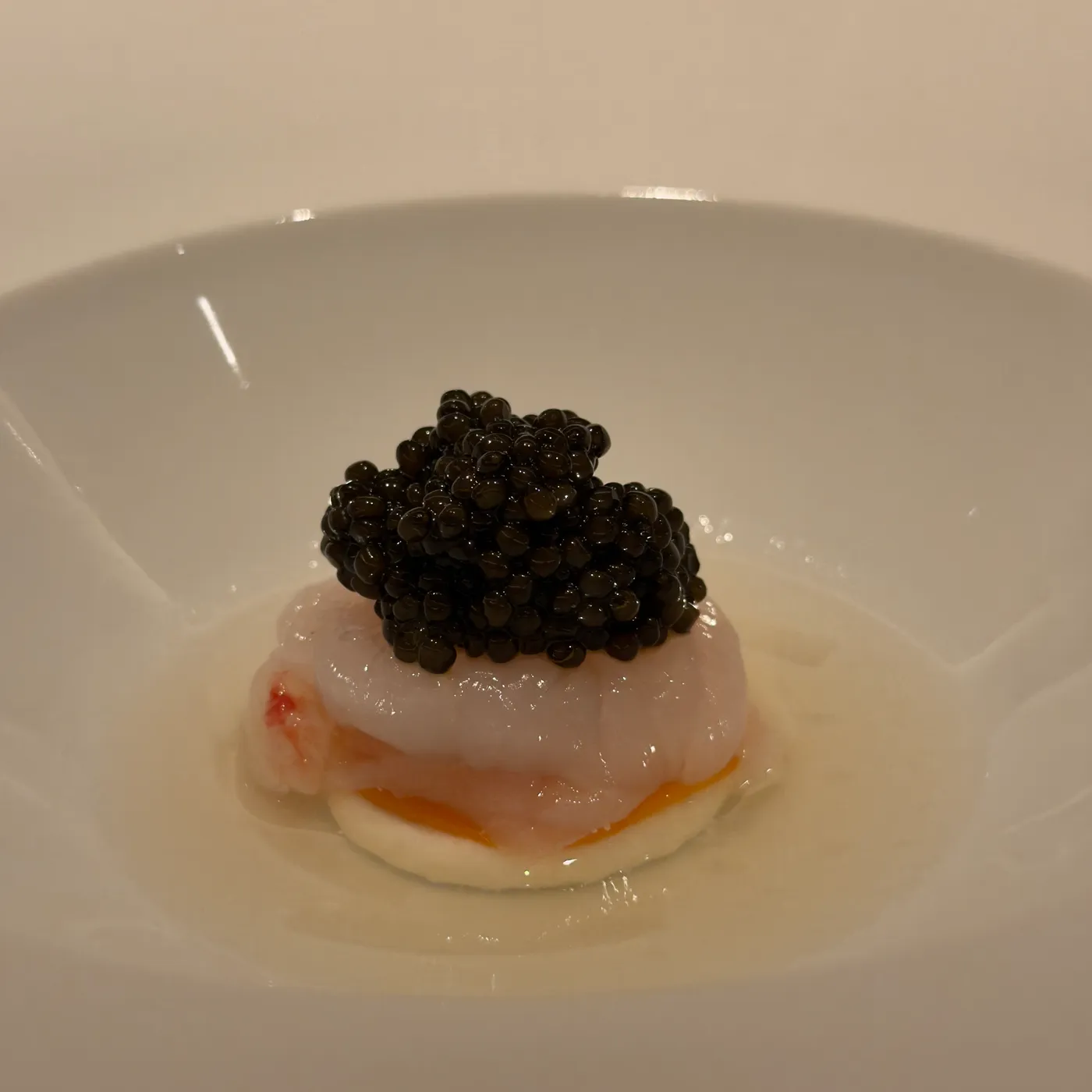
Botan Ebi “À la Nage”
Botan ebi from Mashike, Hokkaido, kept raw and marinated for three hours in a nage of white wine, white-wine vinegar, carrots, and onions. The shrimp rests on a cream made predominantly from shrimp, with only a small amount of dairy cream, and is topped with Oscietra caviar. The three layers are intended to be eaten together: marinated shrimp, shrimp cream, and caviar, with the wine and vinegar providing acidity.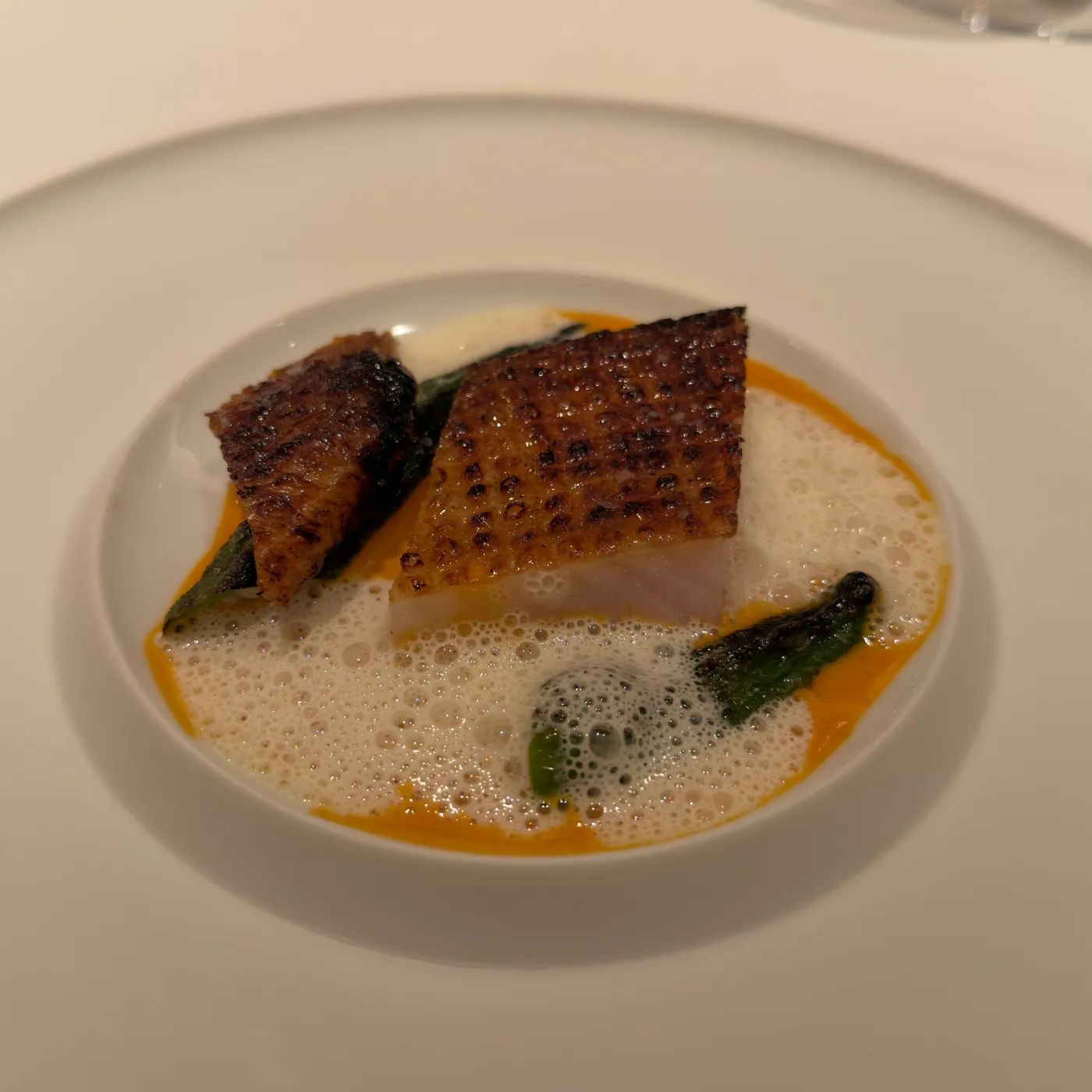
Charcoal-Grilled Kinki from Abashiri with Shishito and Okra
Kinki from Abashiri, charcoal-grilled with its skin on, accompanied by okra and shishito peppers from Niigata Prefecture. Two sauces surround the fish: one made with kinki stock and the other a vin blanc sauce. The darkly browned skin contrasts with the pale flesh beneath it, while the vegetables sit among the sauces rather than as a separate garnish.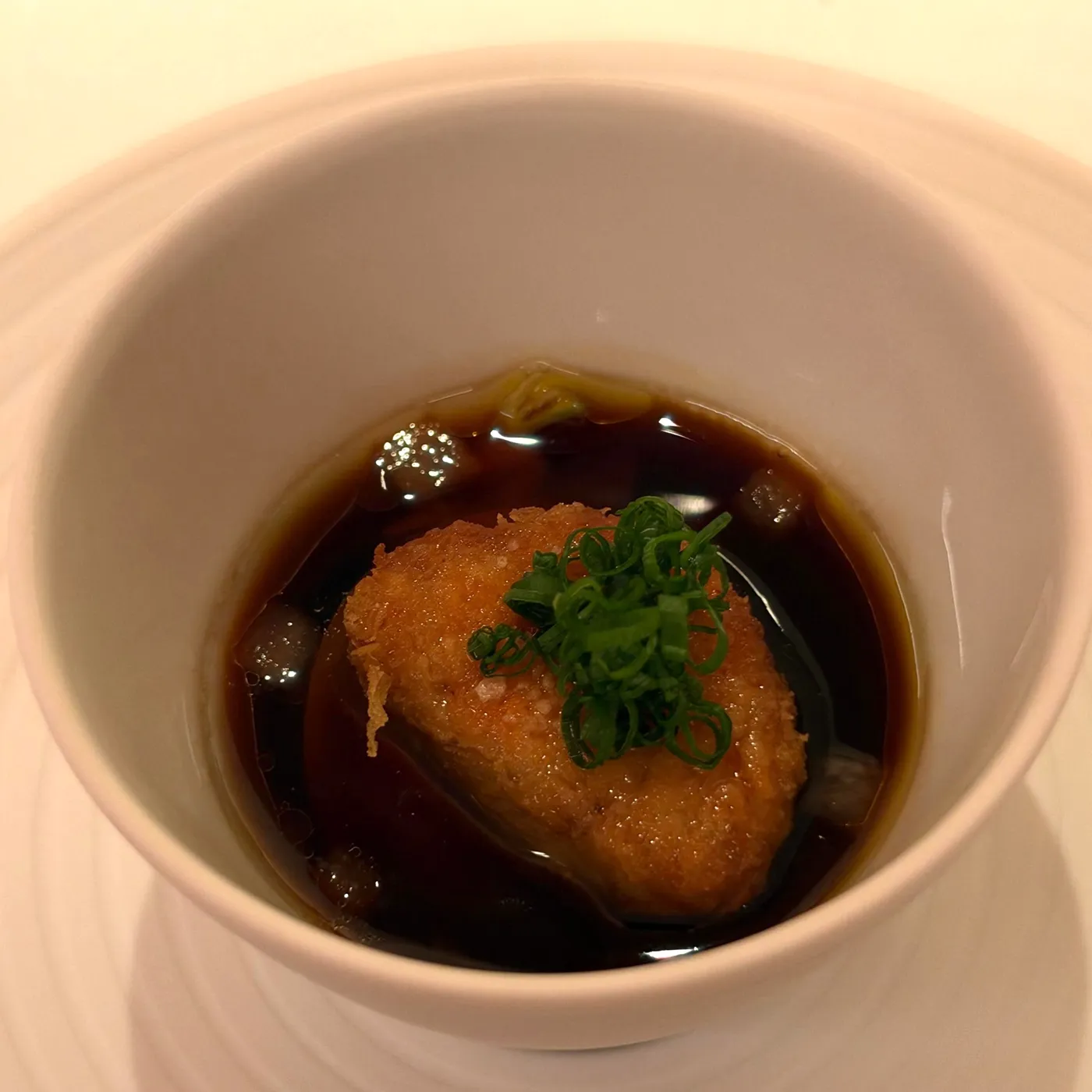
Ankimo from Haboro with Hakurei Turnips and Soy Sauce
Monkfish liver in two preparations: sautéed ankimo over a ravioli filled with ankimo and turnip. The turnip provides a contrasting texture inside the soft liver filling. The broth is made from soy-sauce chicken. The chicken is first marinated in Chinese soy sauce with star anise, cinnamon, and nutmeg, then cooked; its consommé becomes the broth for the dish. A preparation of monkfish liver with the seasoning and aromatic depth of soy-sauce chicken.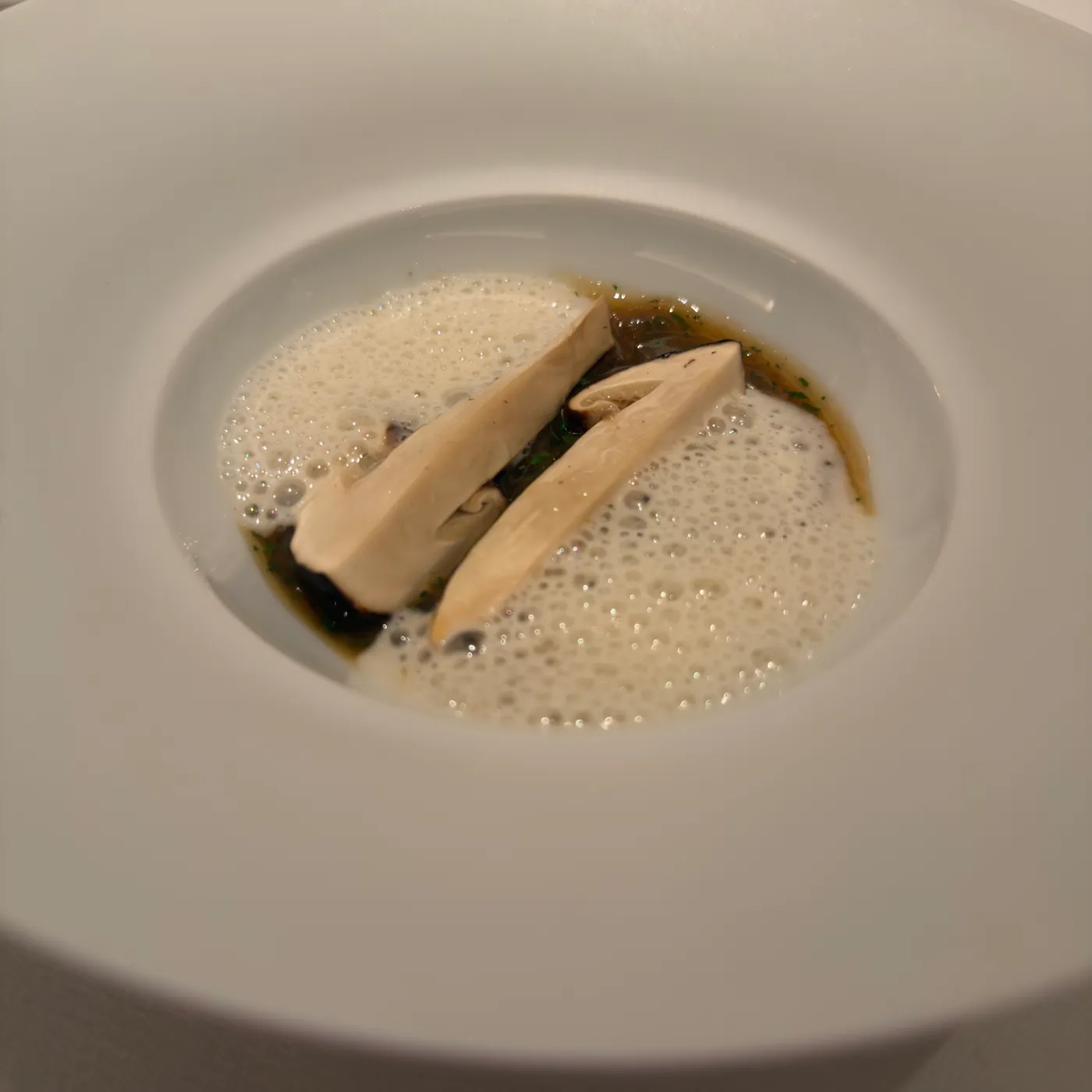
Yunnan Matsutake with Shark’s Fin and Sauce Diable
Matsutake mushrooms from Yunnan, China, served over shark’s fin with a sauce combining French sauce diable and the hot-and-sour flavors of suan la tang. Vinegar supplies the acidity and cayenne pepper the heat. Long slices of matsutake sit over the fin, with the sauce bringing the mushroom and seafood components together. The preparation draws on both French sauce-making and the hot-and-sour combination described at the table.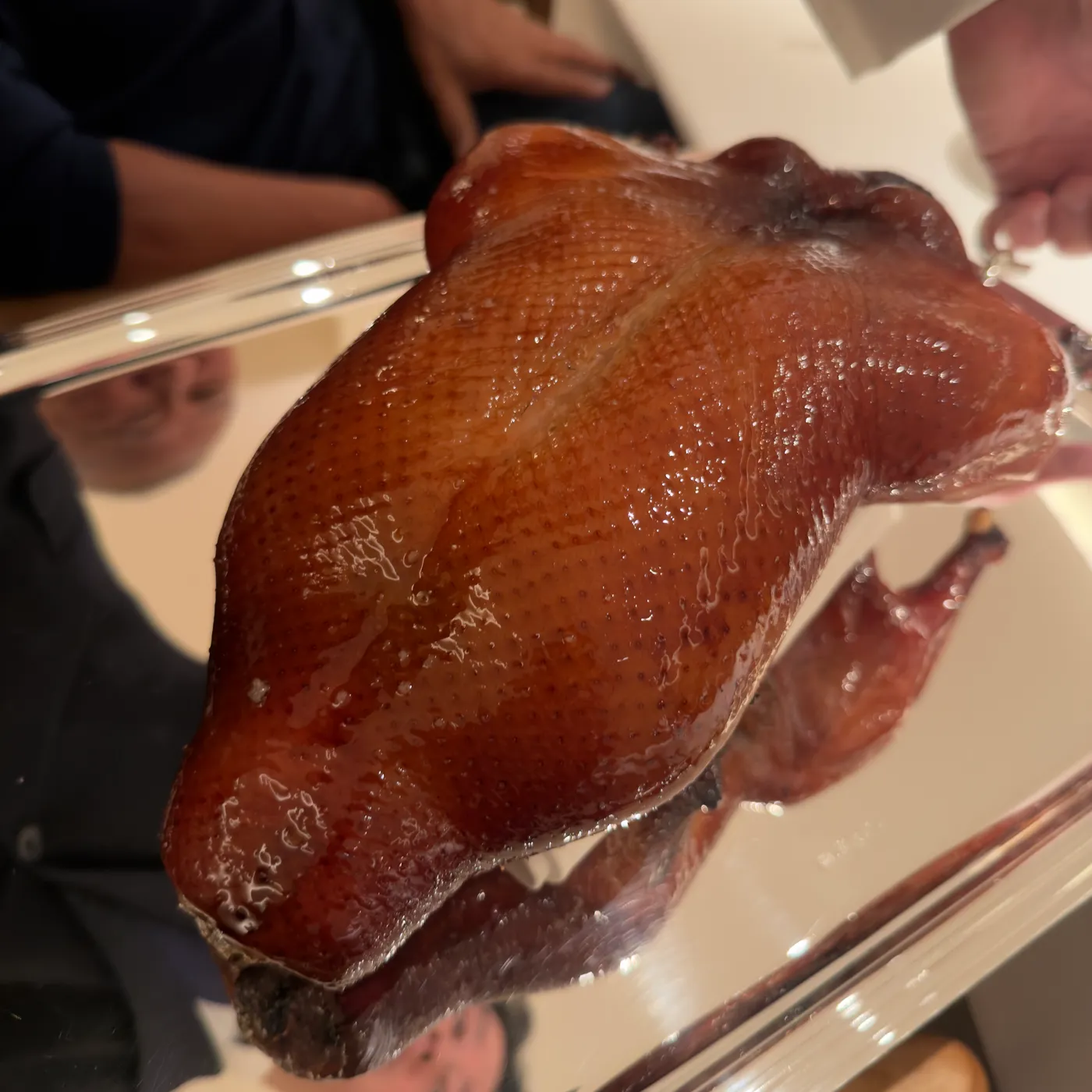
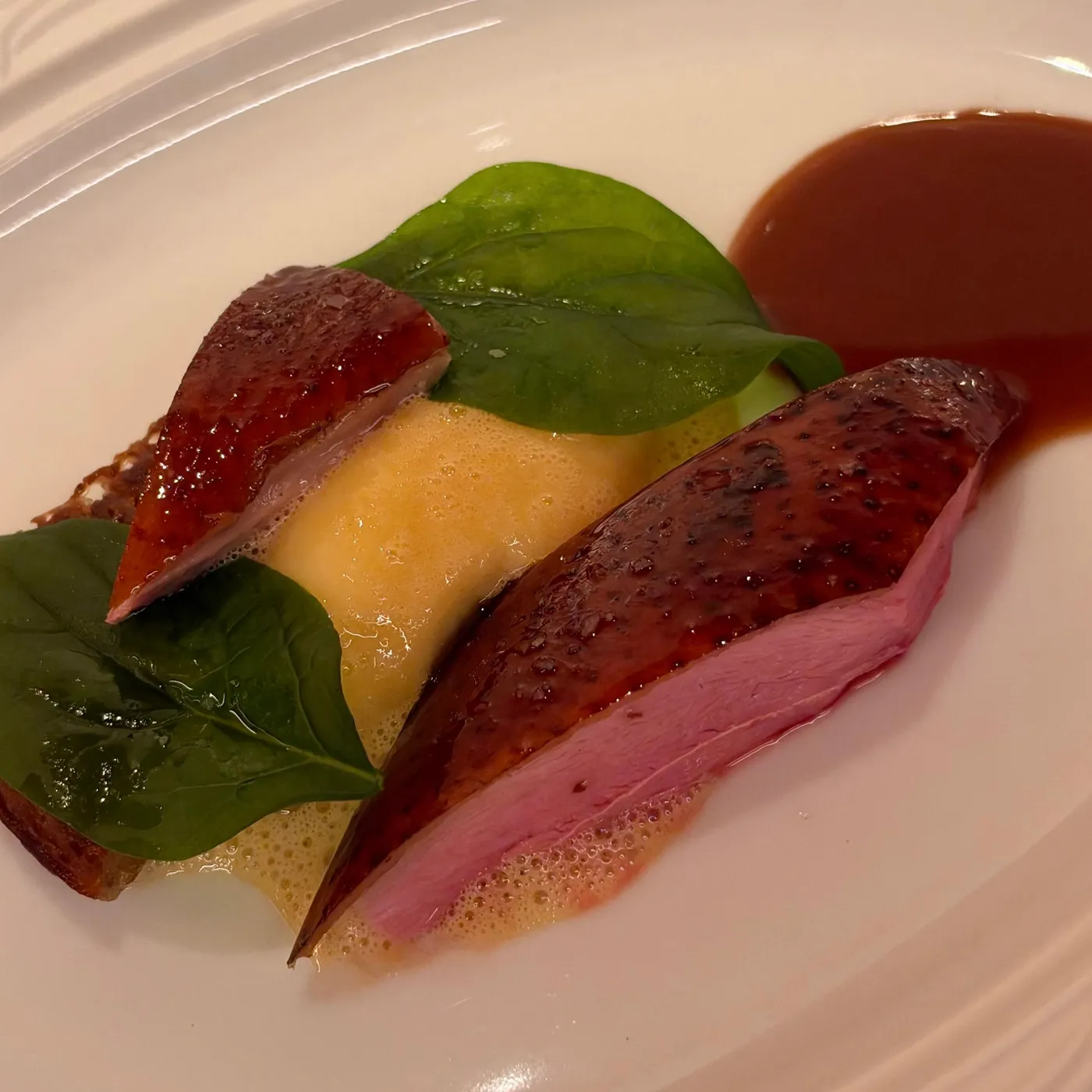
The whole duck, presented before carving.
Megumi Gamo from Aichi with Kutchan Jaga 540 and Sauce Meurette
Megumi duck from Aichi Prefecture, aged at the restaurant for twelve days before cooking. The preparation combines Chinese approaches to duck skin with French cooking of the meat: deeply browned skin over a breast that remains pink when carved. Served with Kutchan Jaga 540 potatoes and sauce meurette. The duck comes from a producer Daniel has worked with for about four years, who supplies birds to the size and proportions he requests. That selection, the aging, and the cooking are all part of the preparation—not simply the final roasting.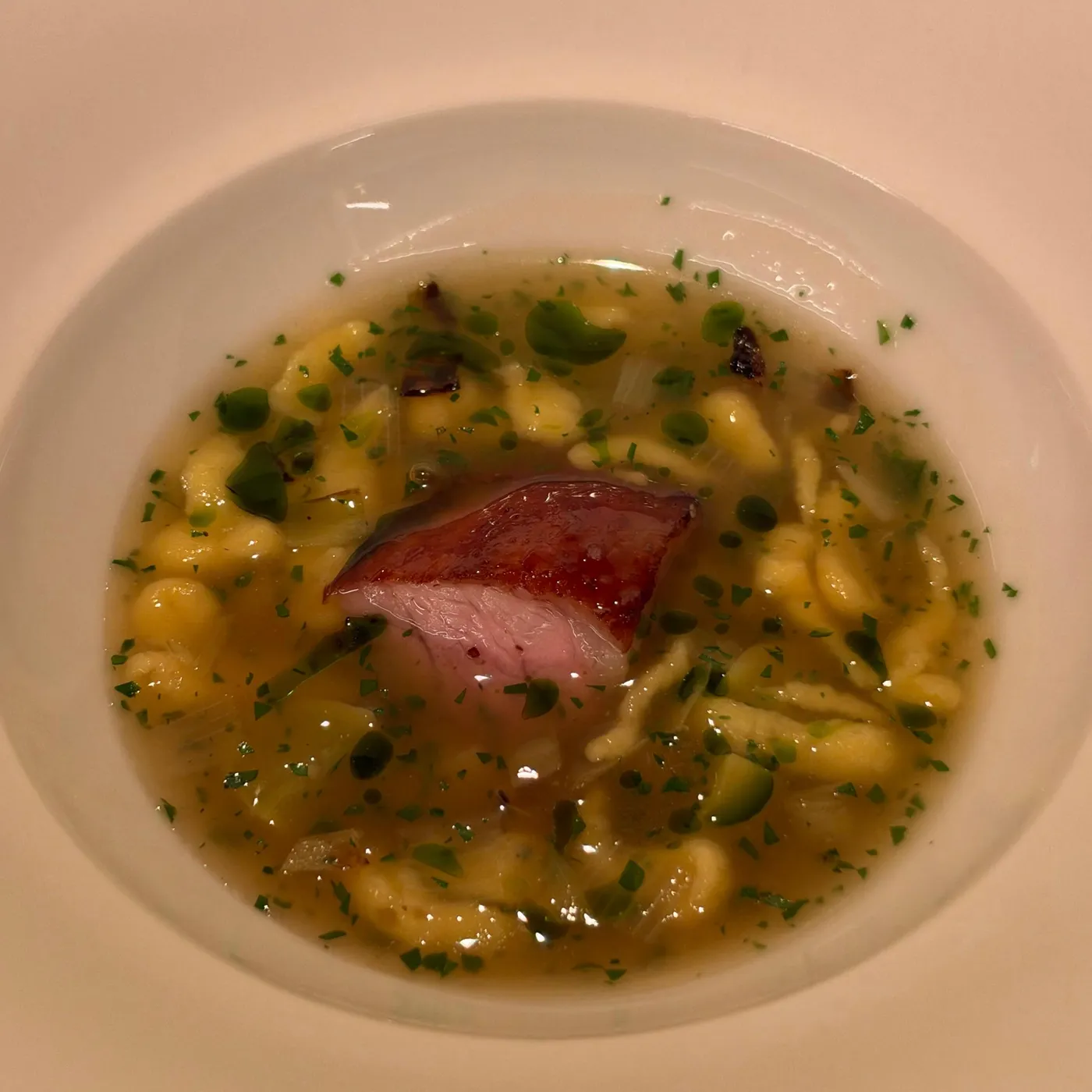
Roasted Duck Thigh with Ginkgo Nuts and Nira
Roasted duck thigh served in duck broth with ginkgo nuts and nira, or garlic chives. The darker thigh meat receives a different treatment from the breast, with broth rather than the meurette sauce and the ginkgo nuts distributed through the accompanying sauce.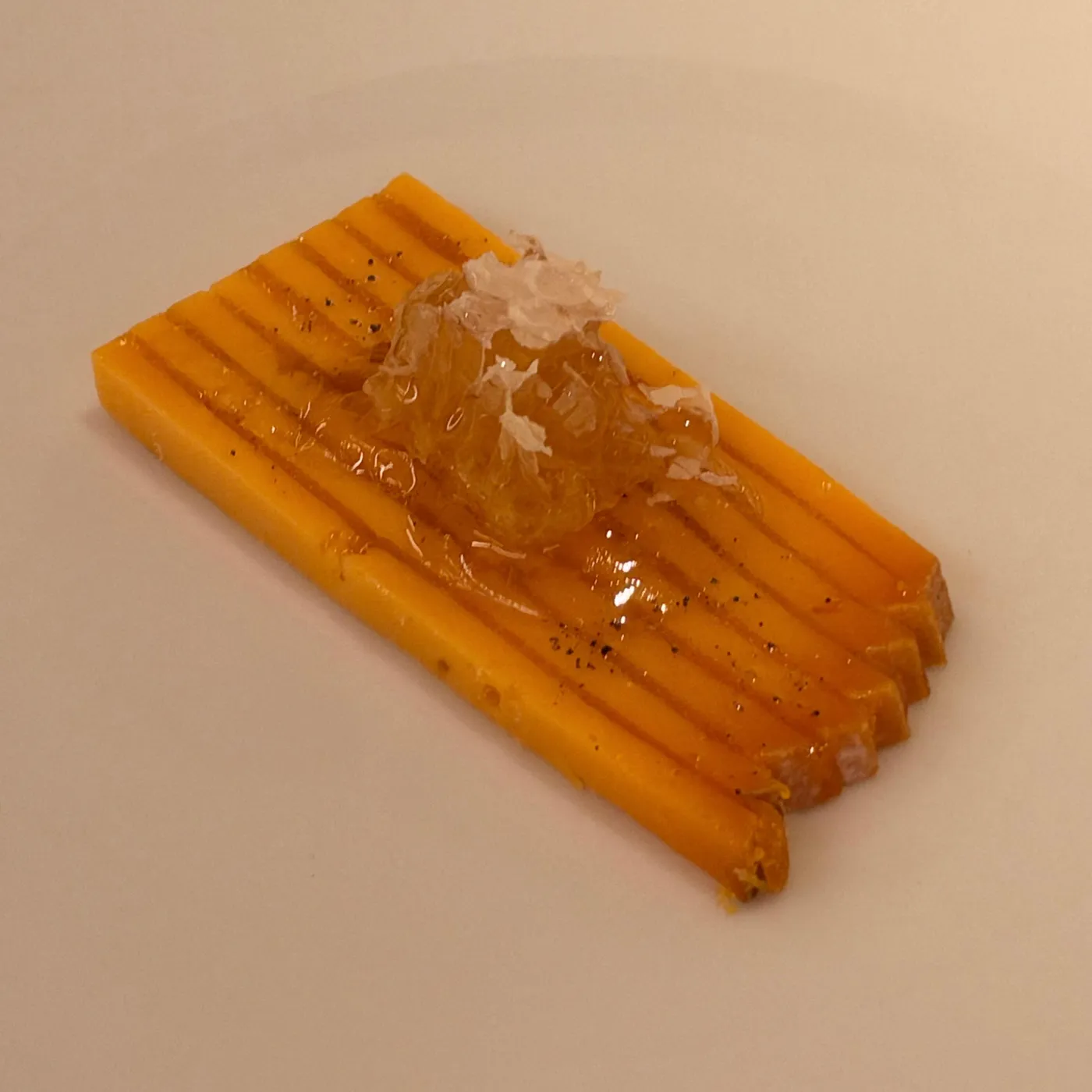
Mimolette, Karasumi
Alternating layers of Mimolette and karasumi, Japanese bottarga, topped with honeycomb from Nagano Prefecture. Served with lavash flavored with venison and pheasant.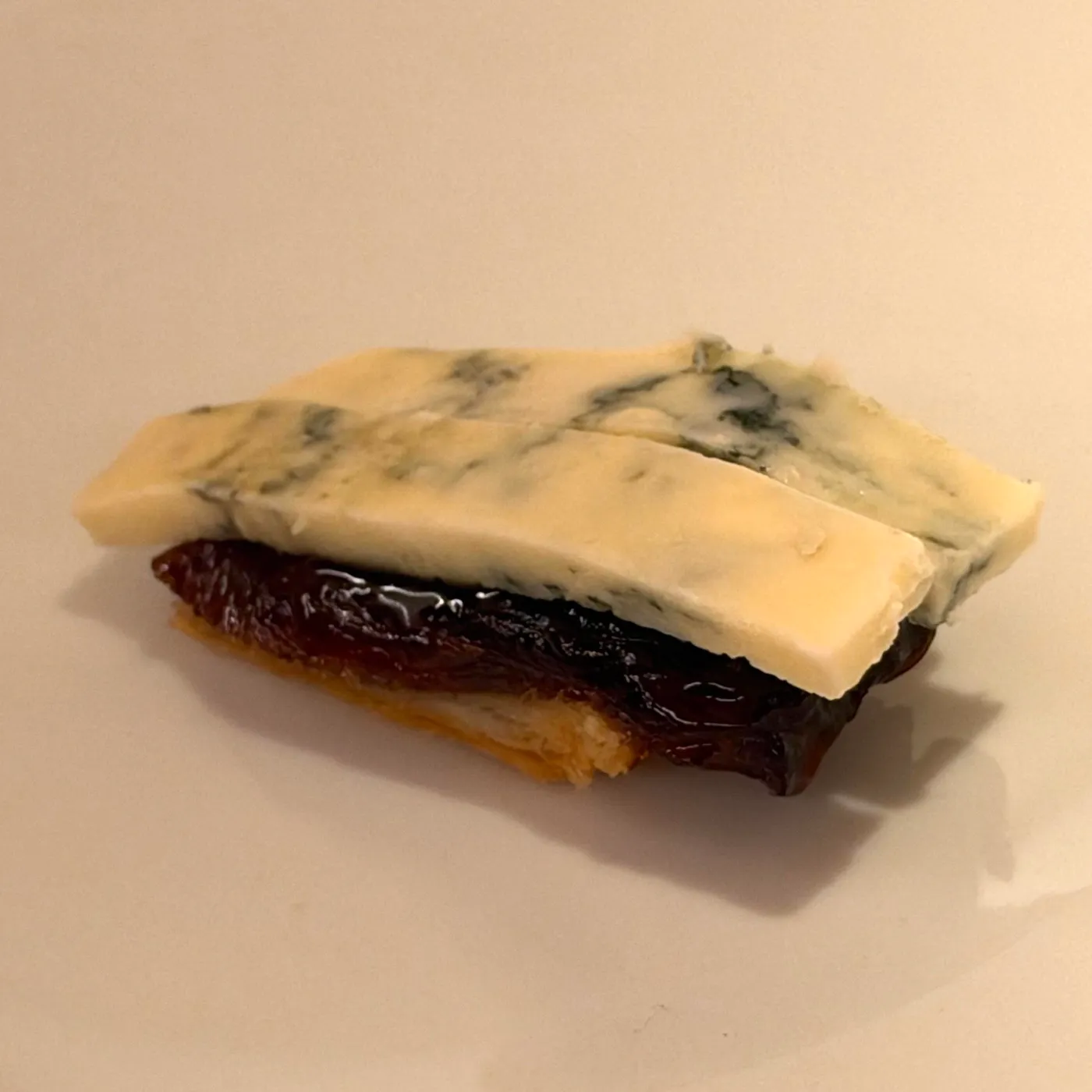
Stichelton
Alongside it, Stichelton, a raw-milk blue cheese from Nottinghamshire, rests on a Japanese ginger tarte Tatin. The pairing takes its cue from blue cheese with dried fruit, using the ginger tart beneath the cheese. Two distinct preparations: Mimolette with bottarga and honey, and blue cheese with ginger and pastry.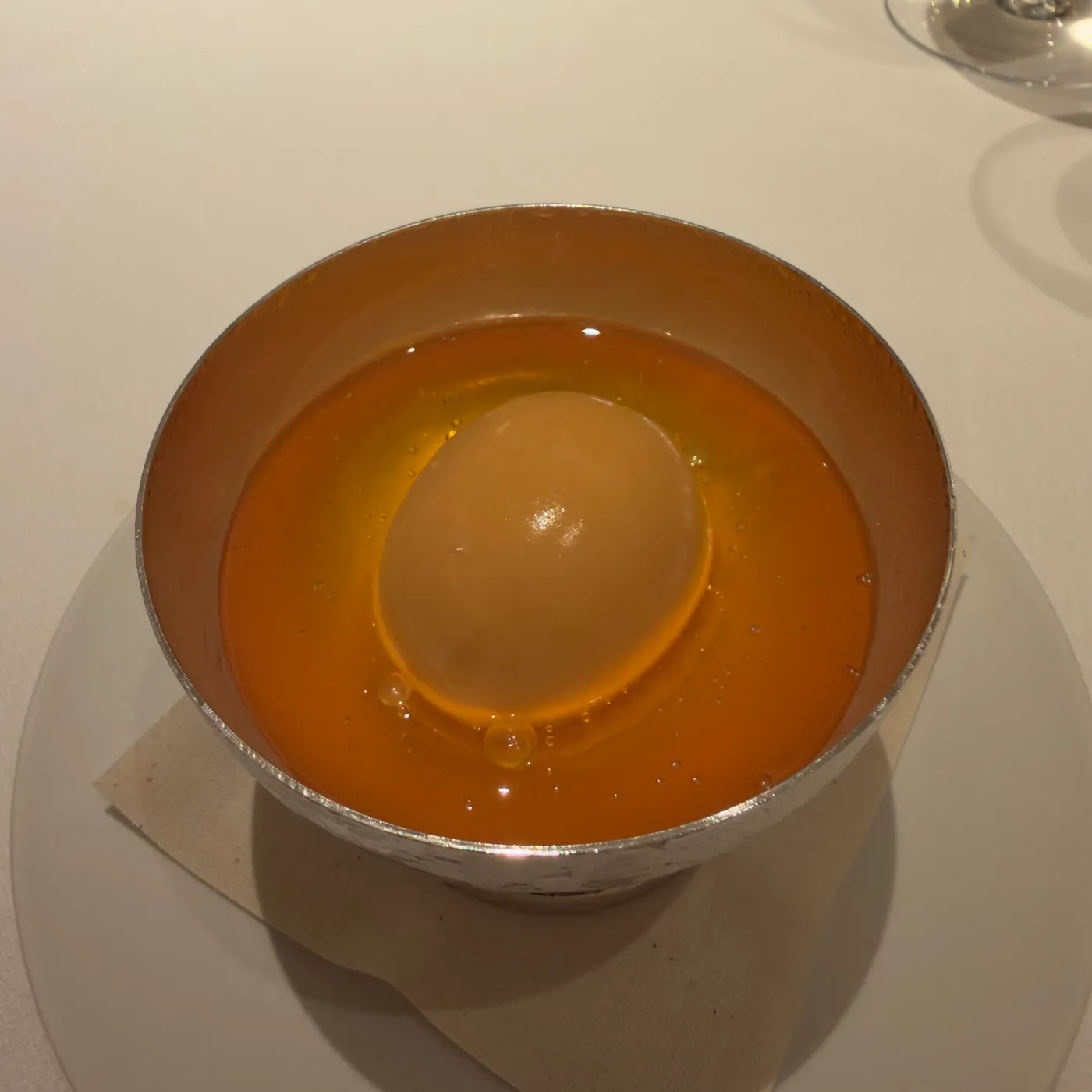
Sauternes Ice Cream with Apricot and Saffron
Ice cream made with Sauternes, served with an apricot-and-saffron sauce. Honey, toffee, and dried-apricot notes from the wine meet the fruit and floral spice of the sauce. The ice cream is churned afresh for every dinner service, at around 6 p.m., ready for the first tables. Its texture is part of the preparation, not something left to a batch made several days earlier.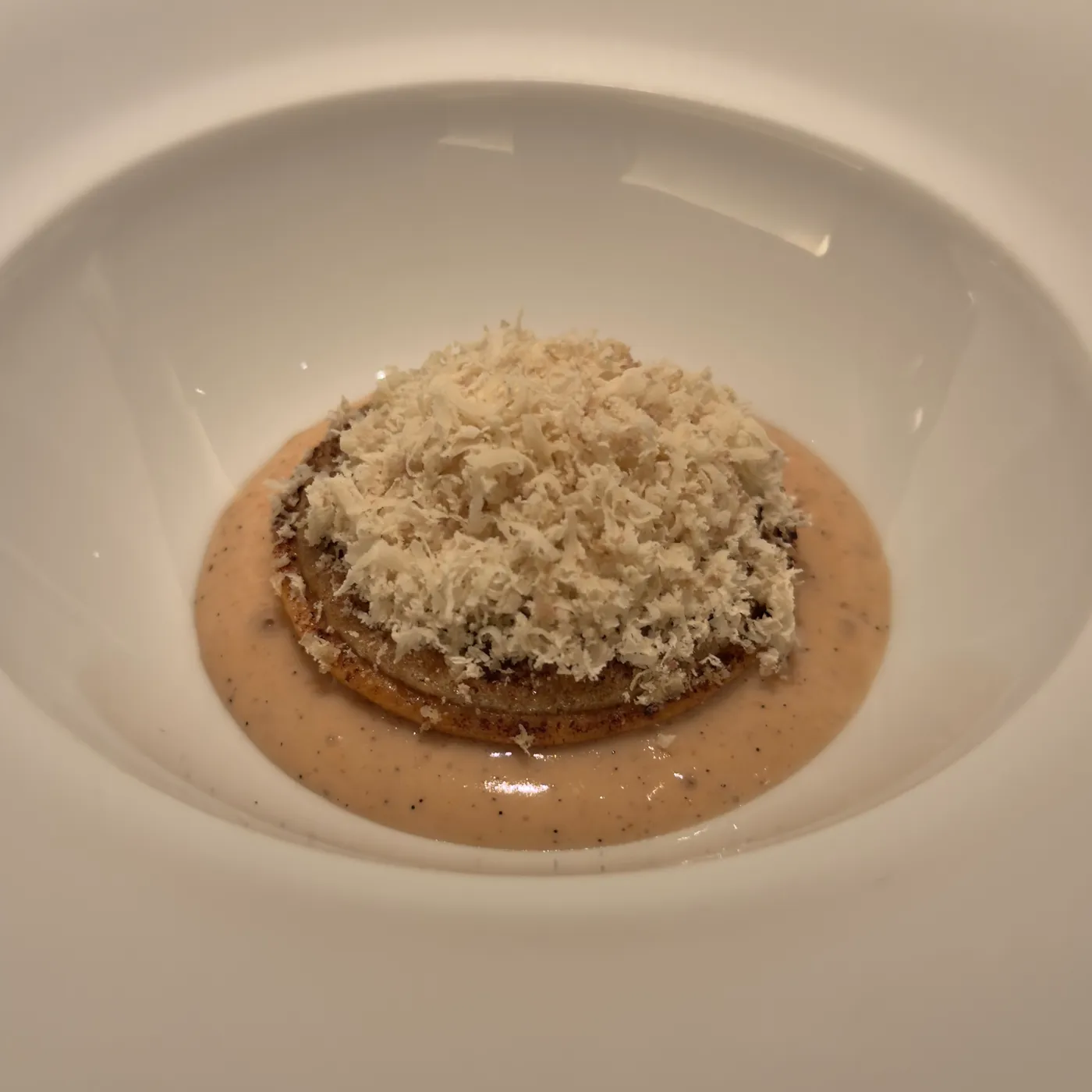
Hot Chestnut Sabayon
An almond tart shell filled with chestnut sabayon, resting on warm chestnut cream. The pastry gives structure to the soft filling, with chestnut appearing both in the sabayon and in the cream beneath it. Finished with fine shavings over the surface.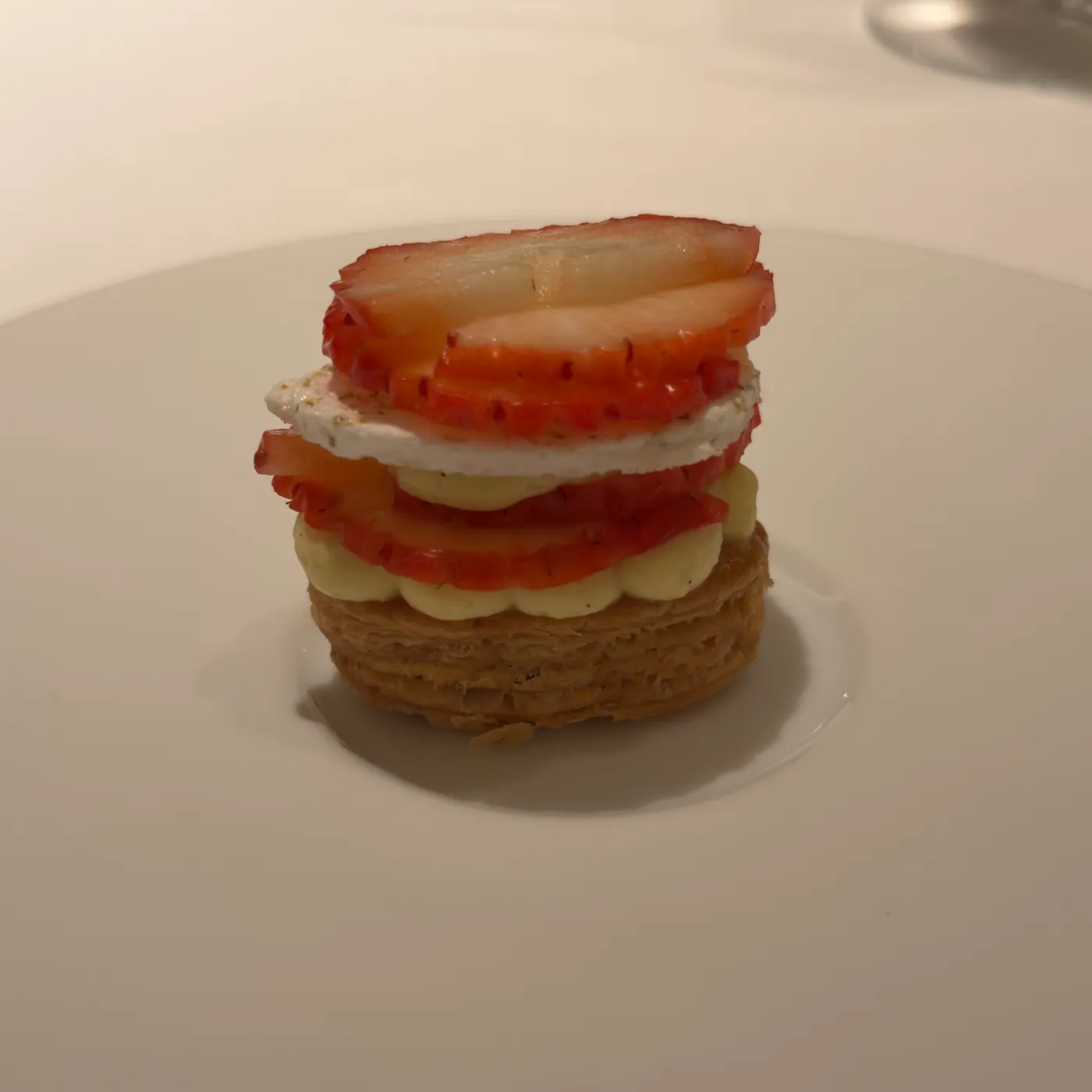
Oishii Farm Strawberries with English Chamomile
Thinly sliced strawberries stacked with chamomile cream and meringue over a flaky pastry base. The cream is piped between the fruit layers, with the meringue adding another texture above the pastry. Fresh strawberries and the floral cream remain the center of the dessert.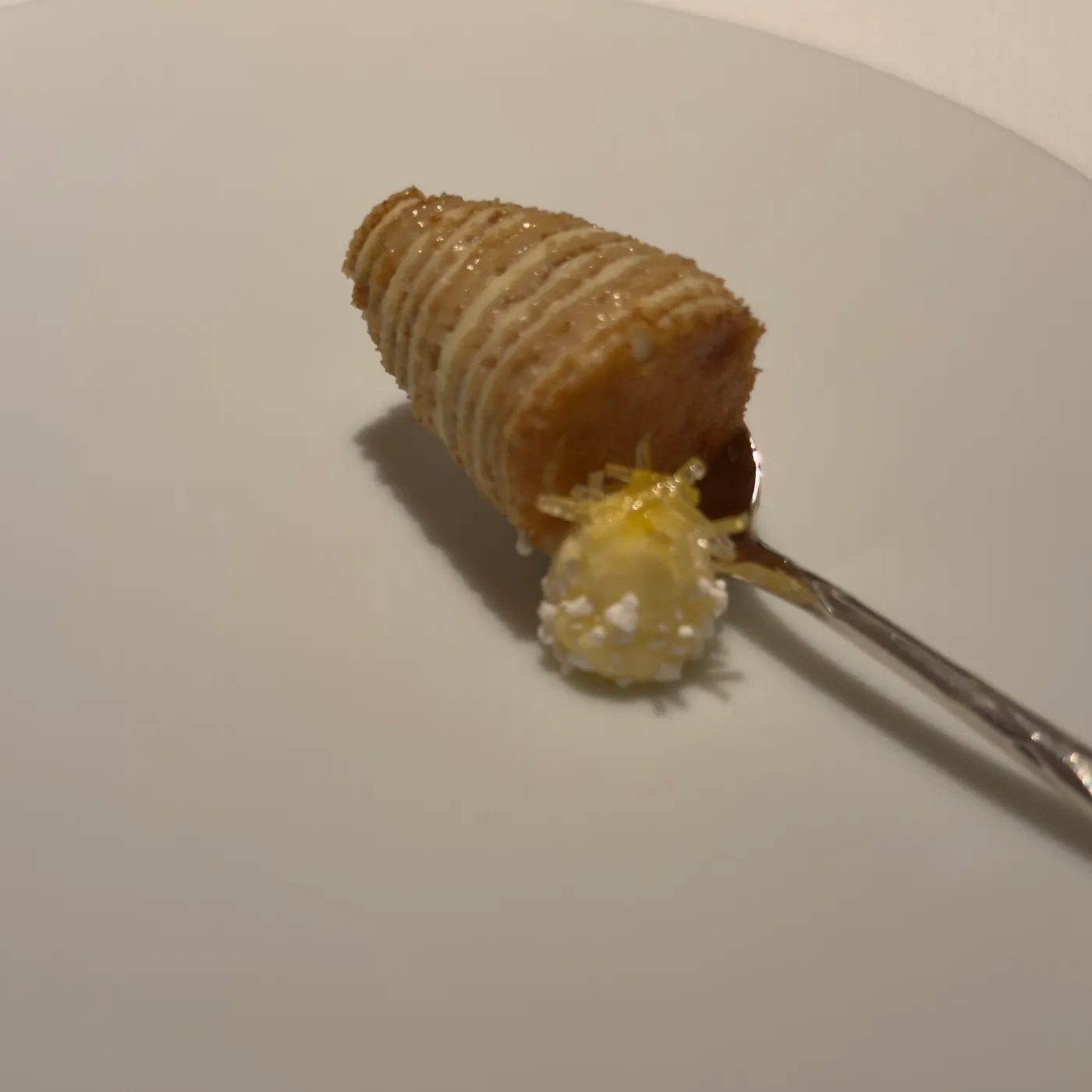
Earl Grey Mille Crêpes
Earl Grey-flavored crêpes layered with cream, rolled into a small portion, and served on a spoon. The thin layers remain visible through the roll, with cream between them and a fine drizzle over the surface.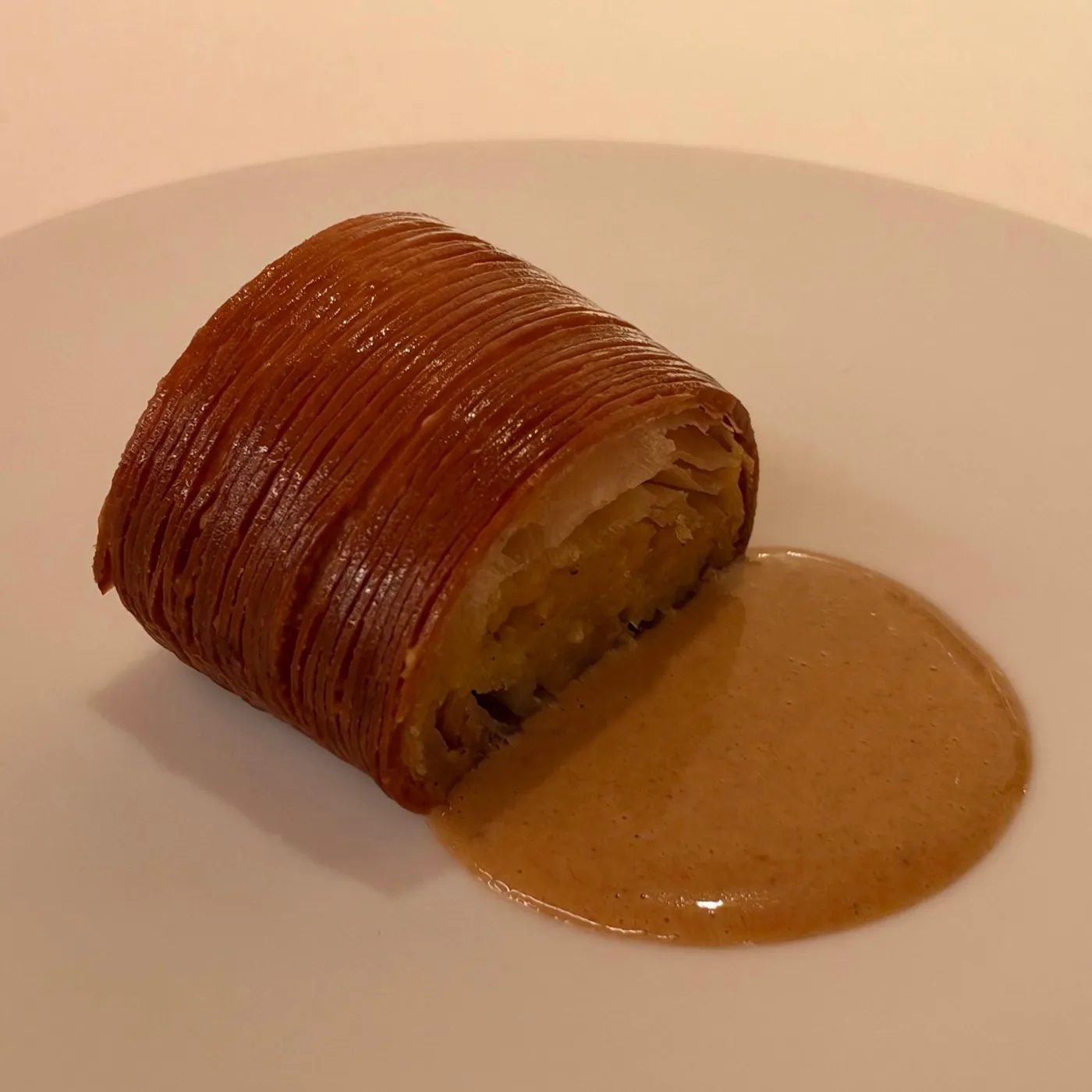
Kagoshima Sweet Potato Pain Suisse
Laminated pastry with a Kagoshima sweet-potato filling of custard-like consistency and an eggnog-style cream containing alcohol. The cut pastry shows the soft filling inside a deeply browned, finely layered crust. Served freshly baked, with the contrast between the exterior and the creamy sweet potato kept intact.Chiba Peanut Financier
A large financier made with peanuts from Chiba Prefecture, baked with crisp edges. The browned border is an important part of the cake, alongside its peanut flavor.What we drank
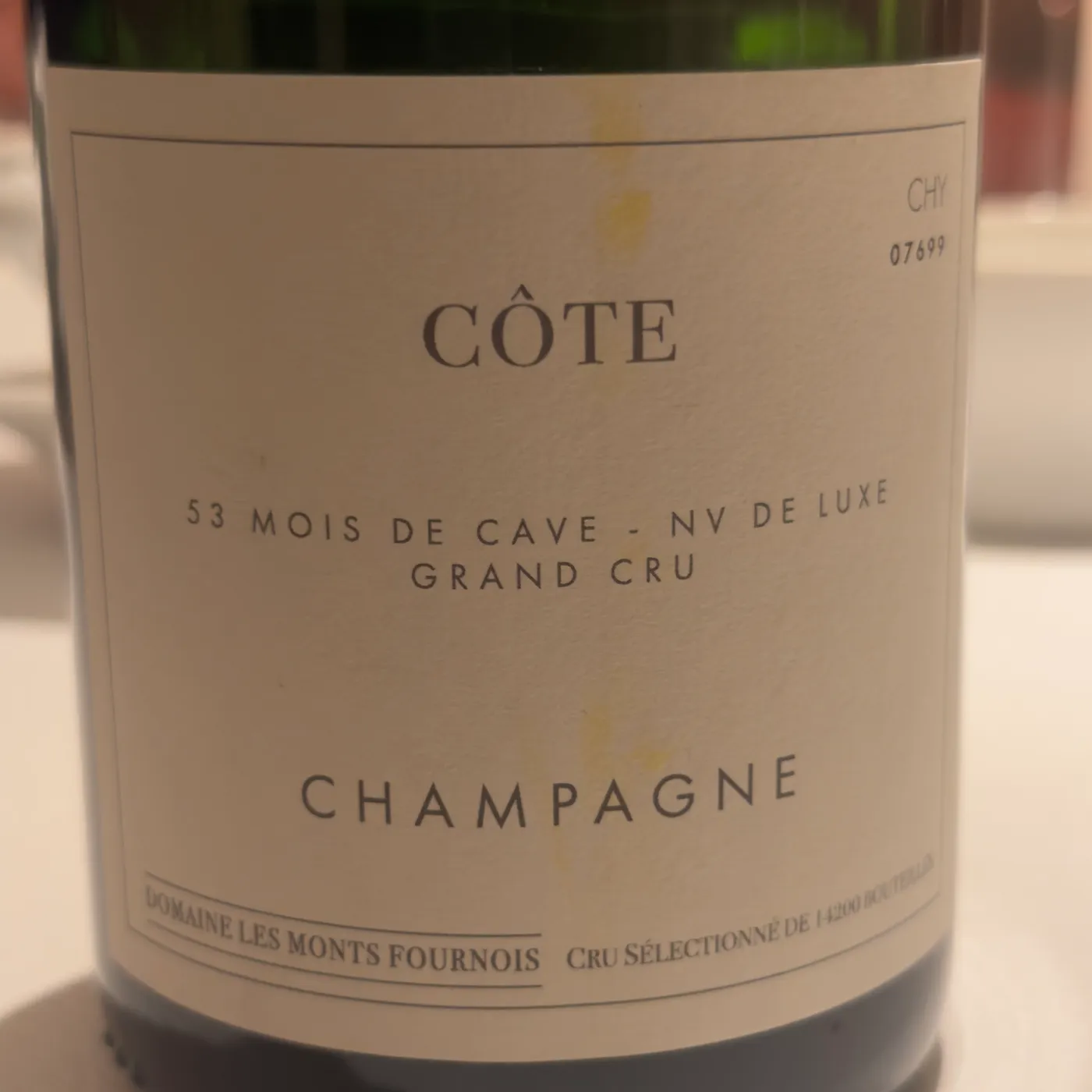
Les Monts Fournois, Côte Chouilly Grand Cru, NV de Luxe
Juliette Alips works with her cousins Raphaël and Vincent Bérêche on Les Monts Fournois. This Chardonnay blanc de blancs from Chouilly spent 53 months in the cellar before disgorgement. We chose it to open dinner, with the freshness and fine bubbles to accompany the aged Comté gougères and seafood preparations.
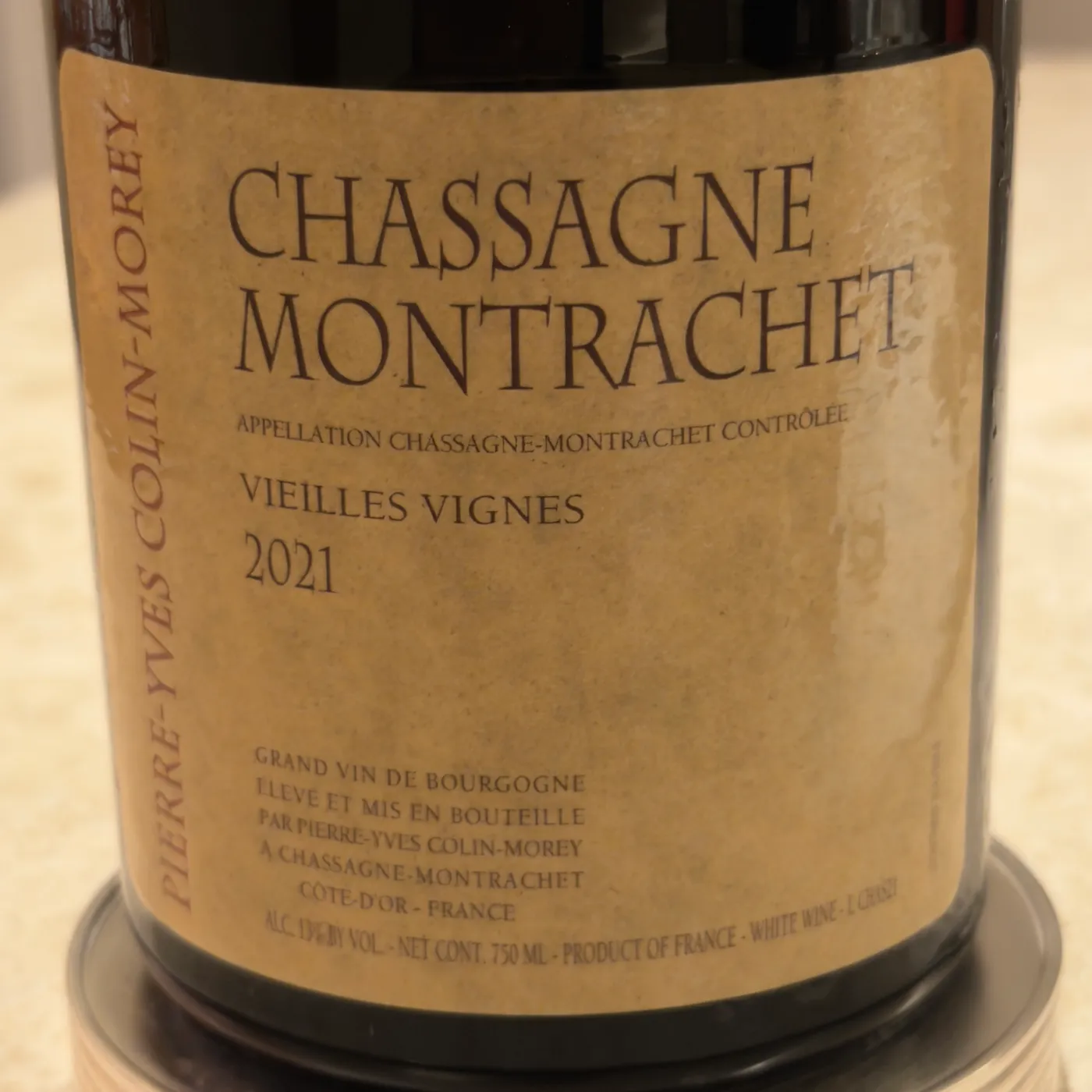
Pierre-Yves Colin-Morey, Chassagne-Montrachet Vieilles Vignes 2021
Old-vine Chardonnay from Chassagne-Montrachet, with the freshness and tension we wanted alongside Daniel’s richer seafood dishes. The cooler 2021 vintage made this an appealing choice for the shirako and ankimo: enough substance for the preparations, without adding excessive weight to the meal.
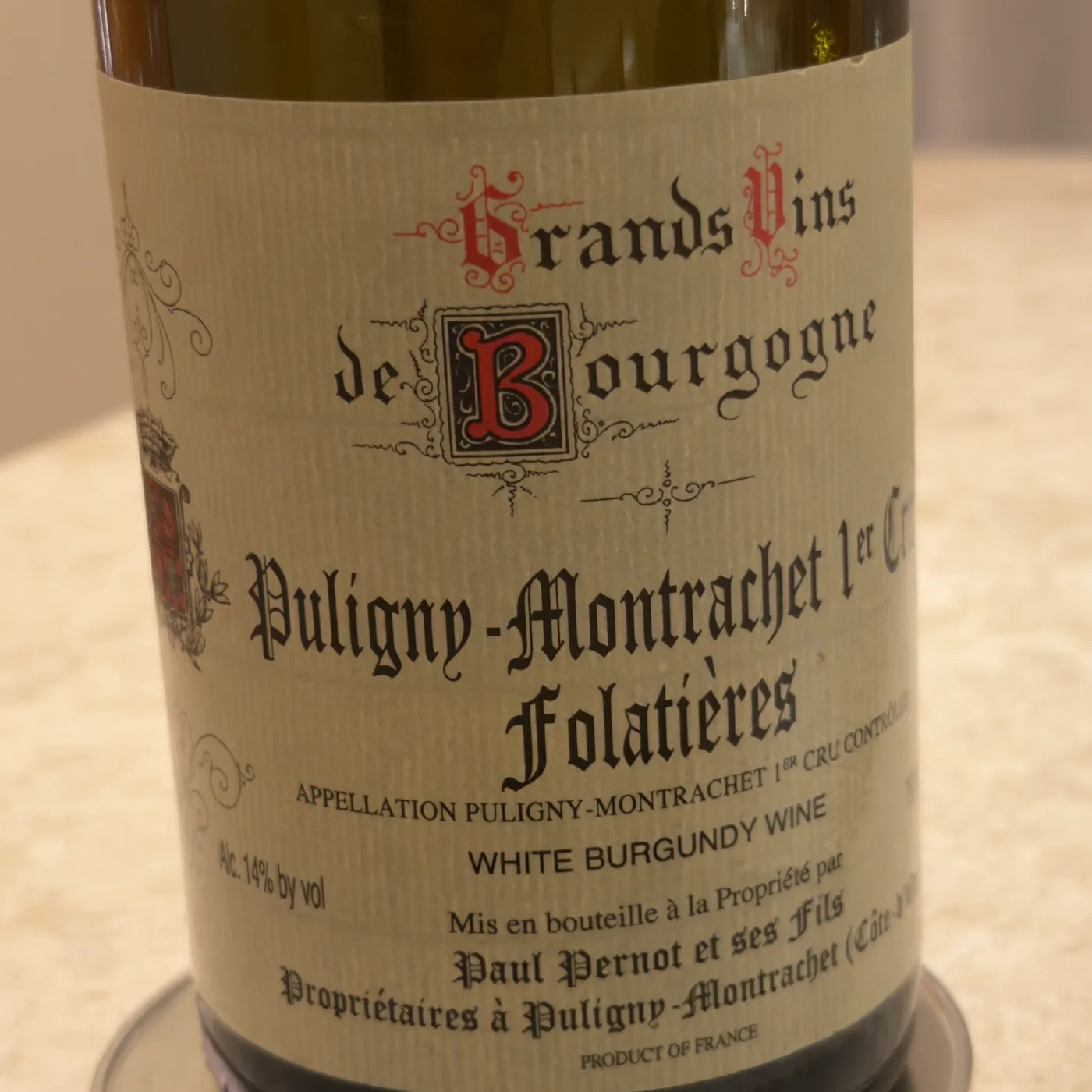
Paul Pernot, Puligny-Montrachet Premier Cru Les Folatières 2023
Les Folatières combines generous Chardonnay fruit with the structure of a Puligny premier cru. The 2023 offers breadth, concentration, and a fresh line of acidity. We selected it with the abalone liver and foie gras, and the charcoal-grilled kinki, in mind—dishes that called for a white with some substance.
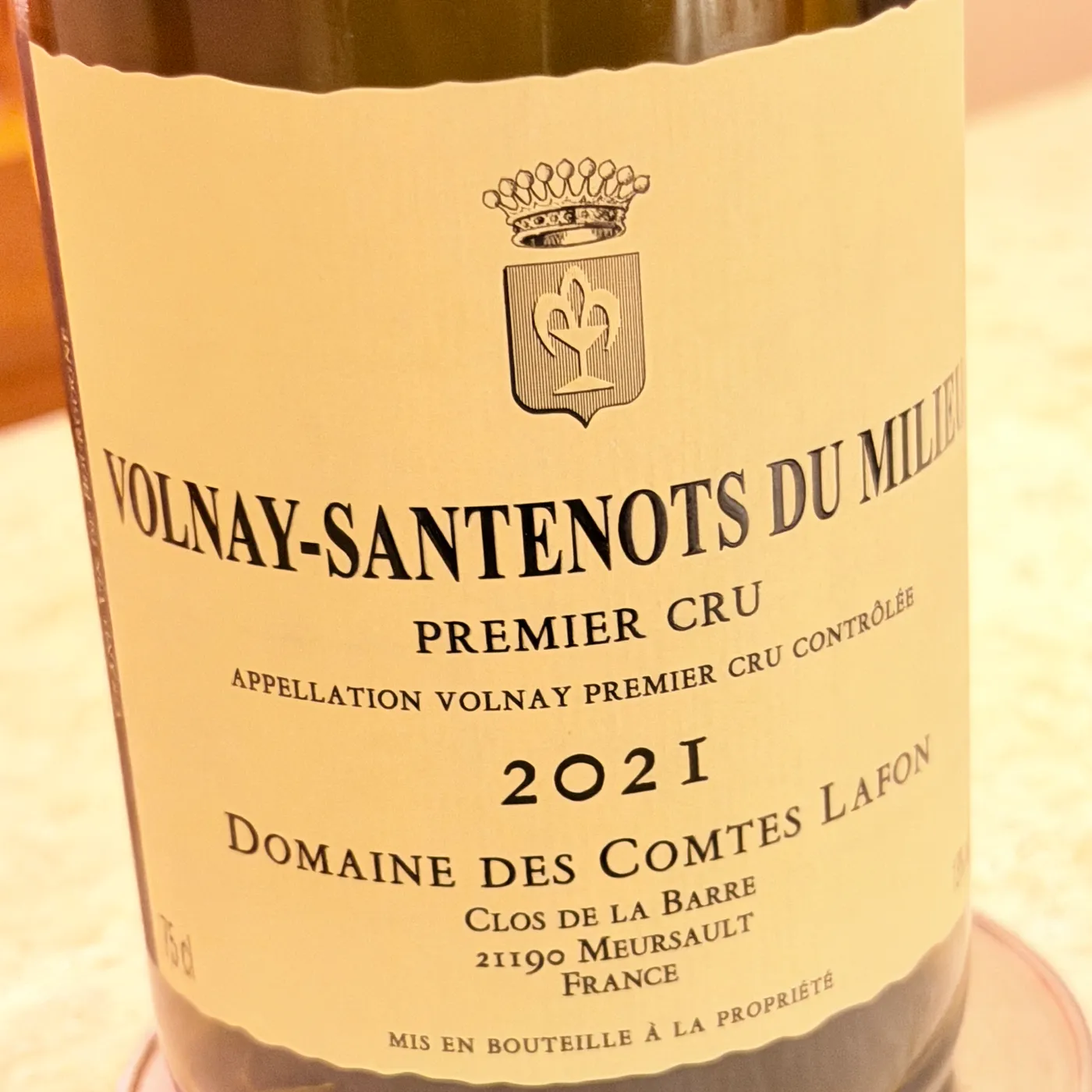
Domaine des Comtes Lafon, Volnay Premier Cru Santenots du Milieu 2021
Although better known for its Meursault whites, Comtes Lafon also makes Pinot Noir from Santenots du Milieu. The vineyard lies in Meursault, but its red wine carries the Volnay appellation. We chose the 2021 for its freshness and finesse with the matsutake and duck, rather than the weight of a more powerful red.
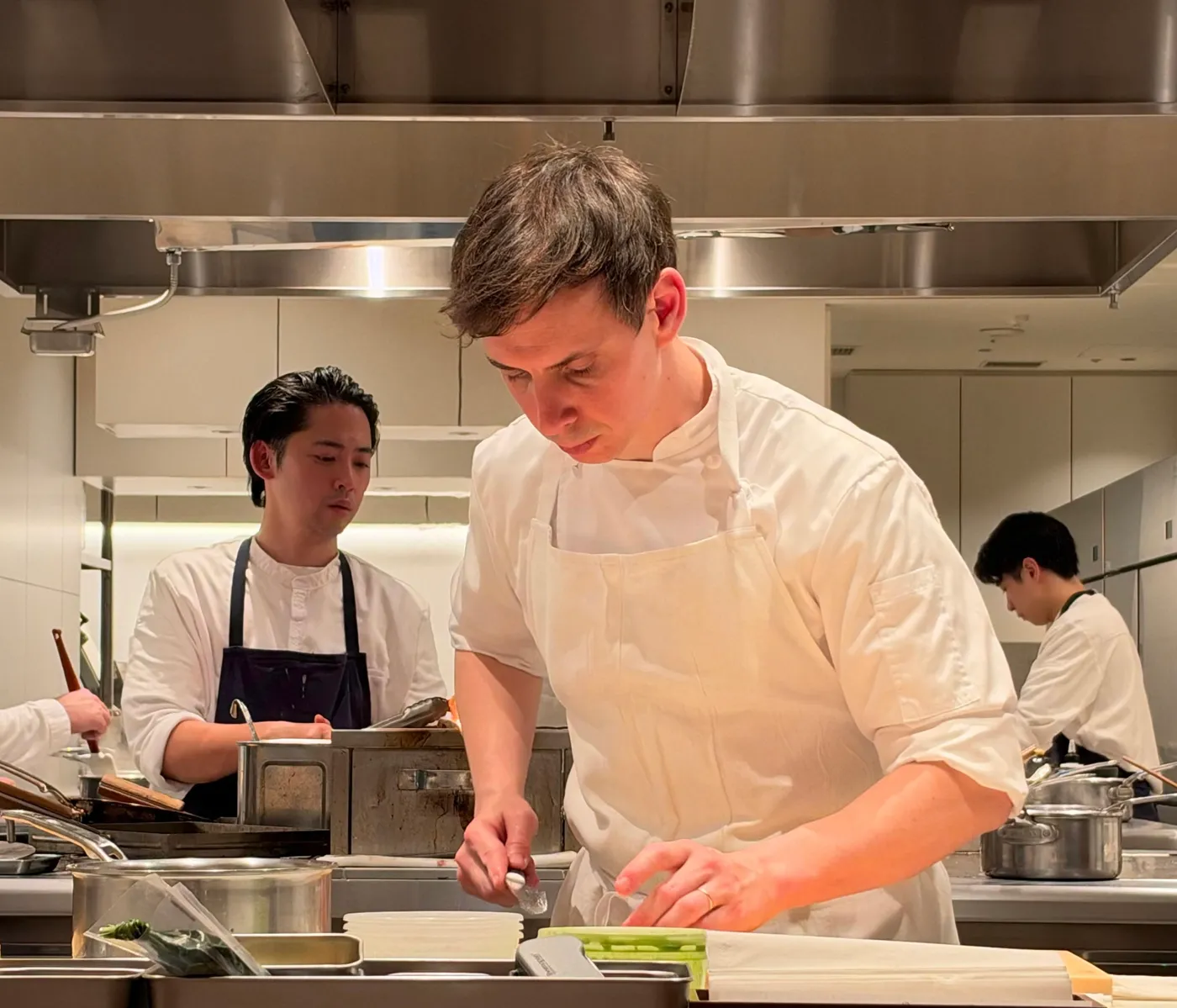
What Changes When It’s Yours
When we got talking about the move, Daniel said something that mattered more than any explanation about a new restaurant concept. He hadn’t wanted to leave SÉZANNE. He loved what he and the team had built, but there was something he couldn’t change: he could work there for years, and it would never be his.
The search began after the third star. He visited this site with his partner, Hayashi-san, saw the garden as he came up in the elevator, and wanted it. The project took about two years and was kept remarkably quiet. Even his team didn’t know about it during its development.
Daniel was involved in everything, working closely with architect John Pawson on how the restaurant should look and, just as importantly, how it should function. The kitchen, the wine cellar, the corridors, the private room: he had thought through where everything needed to go. Seeing the finished place, he told us, he couldn’t imagine having worked with anyone else.
The biggest change in the kitchen is less glamorous than a new address, but far more useful: there is no lunch service. At SÉZANNE, he had to produce the same level of cooking across lunch and dinner. Here, the day is devoted to preparing for one service, with arrivals staggered through the evening. He has more time to focus on the dishes and work as he wants to work. The team came from SÉZANNE too, bringing years of working together rather than having to learn one another’s habits from scratch.
There are limits to his new freedom, though. Daniel would sometimes like to do something different with the main course, but everyone wants the duck. He thinks it is better here because of the time and control he now has. His guests appear to have taken that as a reason to keep ordering it.
I had also asked what Japan had changed about his cooking. His answer was largely about people. Producers contact him, sometimes through Instagram, offering ingredients. He gives them time, asks questions, and finds out what else they have. Other chefs introduce him to their suppliers. One conversation leads to another, and the range of ingredients available to him keeps growing. About half his sourcing, he told us, comes through the market, with the rest through people supplying particular products directly.
Then we got onto pastry. One of our guests wanted to compliment the pastry chef, which produced an unexpected answer: there isn’t one. Daniel’s sous-chef is currently running pastry, and the team making the desserts was trained from the savory kitchen. He wants them to become chefs who can do both.
His idea of dessert after a long dinner is equally straightforward. By then, he said, guests have had enough different flavors and enough to think about. They want something sweet, some fruit, and something comforting. Freshly baked pastry makes more sense to him than an elaborate construction that requires another explanation. After all the desserts I’ve enjoyed at SÉZANNE, it was good to hear how he thinks about them.
We talked about Michelin too, but Daniel isn’t looking around the dining room trying to identify inspectors. He thinks it is easier to do a good job for everyone, every day, than to try to produce one extraordinary meal for a particular guest.
And he wants SÉZANNE to keep doing well. If someone tells him they had a wonderful meal there, he said, he’ll be pleased: he and his team helped build it. He has plenty he wants to achieve at Chez Calvert without wishing anything less for the restaurant he left. As he put it, “There’s enough good energy for everybody.”
I AM A HUNGRY TOURIST. ❤️