Fuunji
Visited Mon, Nov 23, 2026 · Lunch
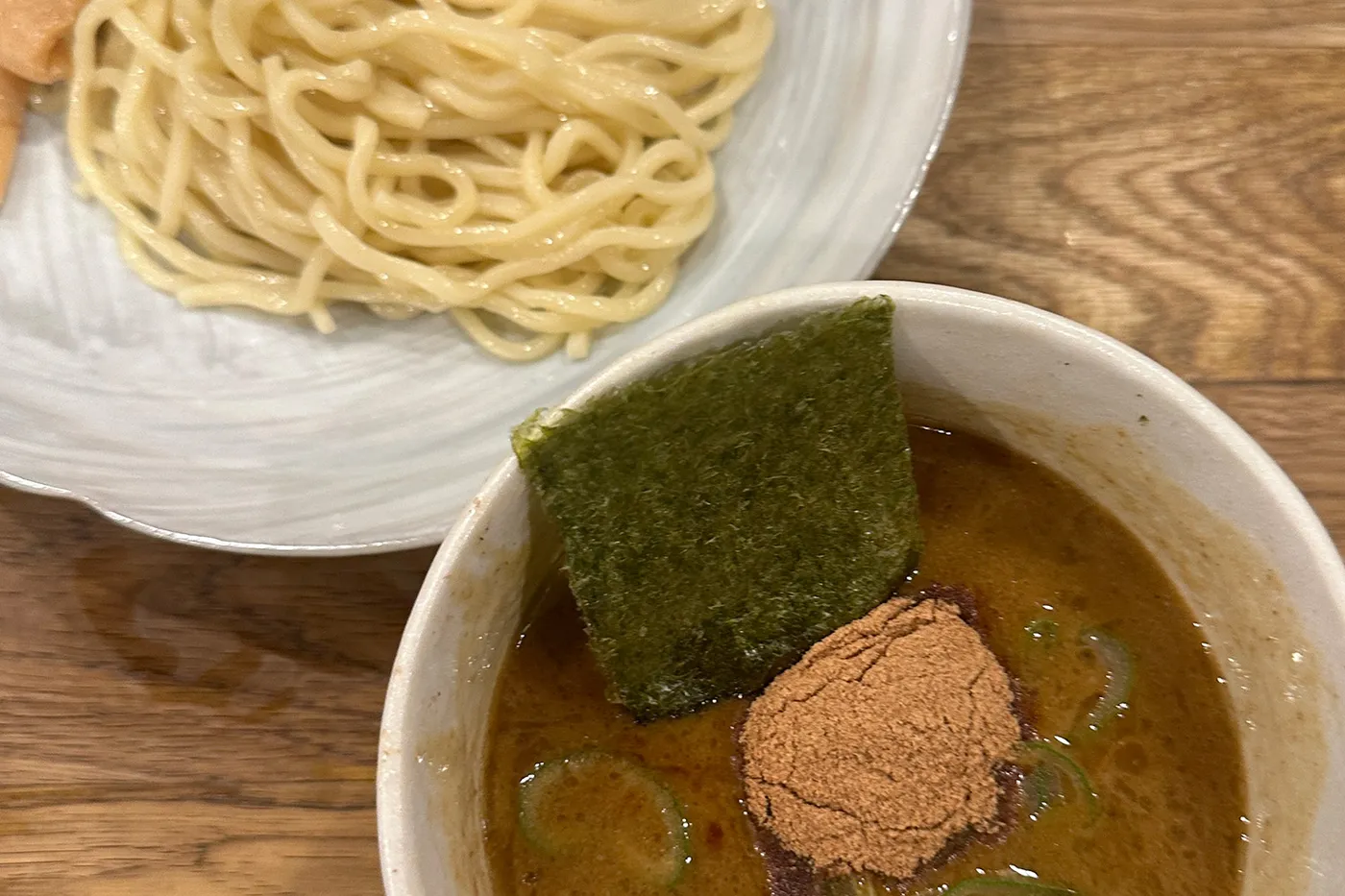
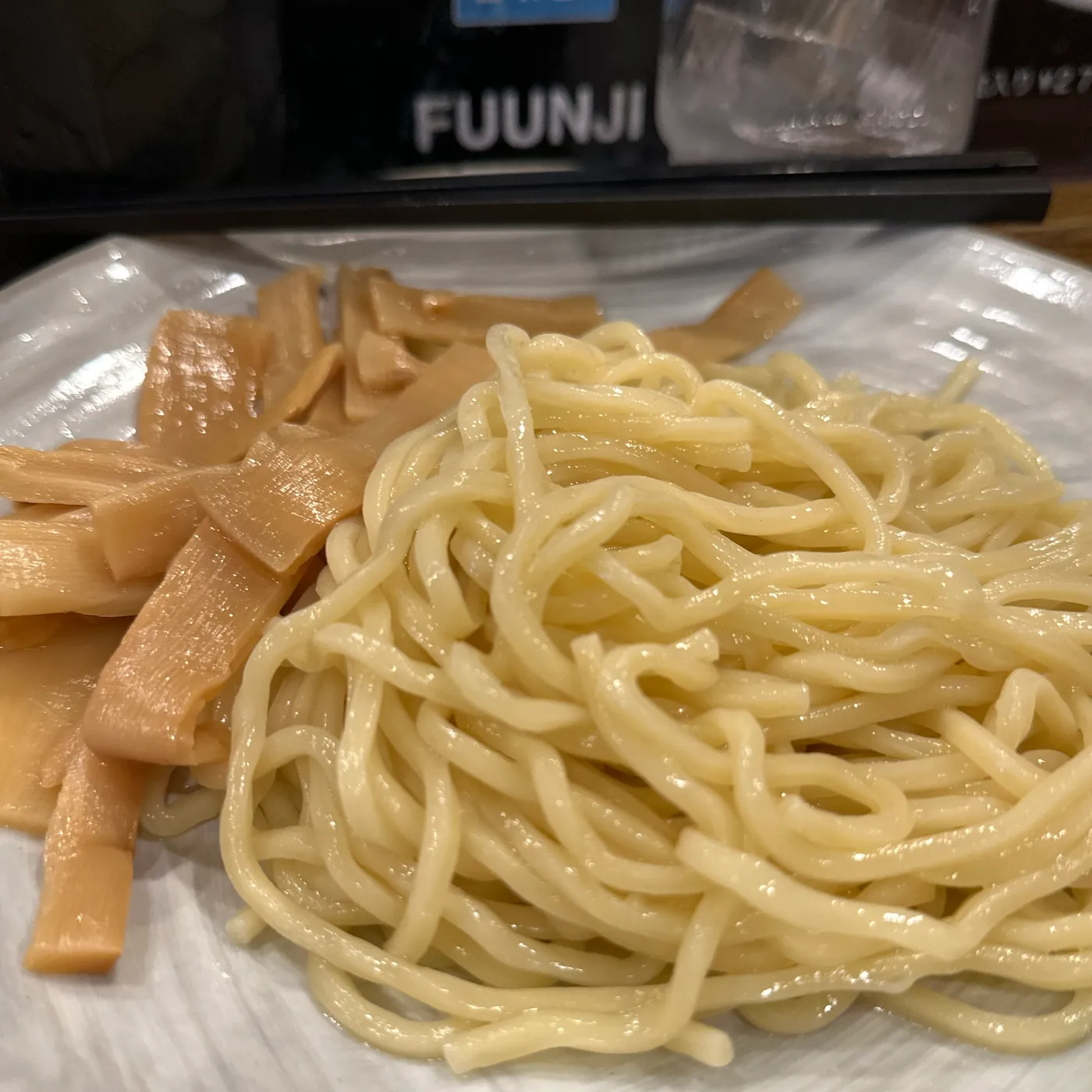
Fuunji's celebrated tsukemen, with glossy noodles served separately from a deeply concentrated chicken-and-seafood dipping broth.
Fuunji — 風雲児
Ten Years, Two Bowls, and the Remarkable Art of Consistency
I've been coming to Fuunji for ten years, and somehow it never stops amazing me. Not simply because the food is so undeniably delicious, although it certainly is, but because of something I find even more impressive: its consistency.
Restaurants change. Chefs come and go, ingredients vary, teams evolve, and the pressures of running a successful business inevitably take their toll. Yet whenever I return to this little ramen shop near Shinjuku Station, I find the same wonderfully satisfying flavors that first brought me here a decade ago.
For me, that kind of consistency is a remarkable achievement.
And Fuunji has survived a particularly significant change. Its founder, Shigeyuki Miyake, was one of the great characters of Tokyo's ramen scene. Watching him work was part of the experience. He had a theatrical presence, an unmistakable personality, and a way of commanding the counter that made the entire operation feel like a performance.
Today, Miyake is no longer the familiar presence I remember behind the counter. In many restaurants, the absence of such a defining personality would change the experience considerably.
At Fuunji, however, something rather wonderful has happened. To my palate, the quality hasn't declined even slightly.
The man may no longer be standing where I remember him, but the food continues to speak the same language.
The Ramen Warrior
Miyake didn't follow the conventional path into ramen. Born in Ehime Prefecture, he worked in entertainment, hosted wedding events, and held positions in Italian restaurants, hotels, and business management before becoming fascinated by the world of ramen.
He began visiting ramen shops extensively, studying what made their food appealing, and eventually decided to create something of his own.
In September 2007, he opened Fuunji in Shinjuku.
His idea was straightforward but ambitious: to create ramen that would appeal not only to devoted enthusiasts but also to people who rarely ate ramen.
I remember him as a remarkable presence behind the counter, handling the noodles with movements that could be almost theatrical. There was energy, confidence, and a certain showmanship to the way he worked. You didn't simply watch someone preparing lunch. You watched a man who seemed to enjoy every moment of the performance.

Shigeyuki Miyake, Fuunji's founder — the Ramen Warrior in action.
Rather than follow the familiar pork-bone-based approach to rich ramen, Miyake developed a deeply flavored chicken paitan broth combined with seafood.
In an interview years later, he explained that he had always tried to protect the original identity of Fuunji. His objective wasn't to reinvent the restaurant every few years, but to preserve the flavor that had made people fall in love with it.
After ten years of returning, I can appreciate that ambition perhaps better than most.
There is something deeply satisfying about a restaurant that understands what makes it special and has the discipline to preserve it, even as the people responsible for preparing the food change.
The Broth: Chicken, Seafood, and Time
The foundation of Fuunji's cooking is a double soup combining rich chicken paitan with seafood dashi.
According to the restaurant's description of its preparation, Japanese whole chickens and chicken bones provide the body of the broth, while ingredients including kombu, bonito flakes, and dried urume sardines contribute the seafood character.
The process takes considerable time. The chicken stock undergoes lengthy cooking, followed by straining and a period of maturation.
The result is a soup with an unmistakable personality. The chicken provides richness, body, and a creamy consistency, while the seafood introduces another dimension of savory depth.
The noodles are also central to the experience. Made specifically for the restaurant using Japanese wheat, they have the substance and texture needed to stand up to such a powerful broth.
The same fundamental combination of chicken, seafood, and noodles takes on two quite different expressions depending on whether you order ramen or tsukemen.
And for years, I was devoted to the less famous of the two.
What we ate
Ramen — らーめん
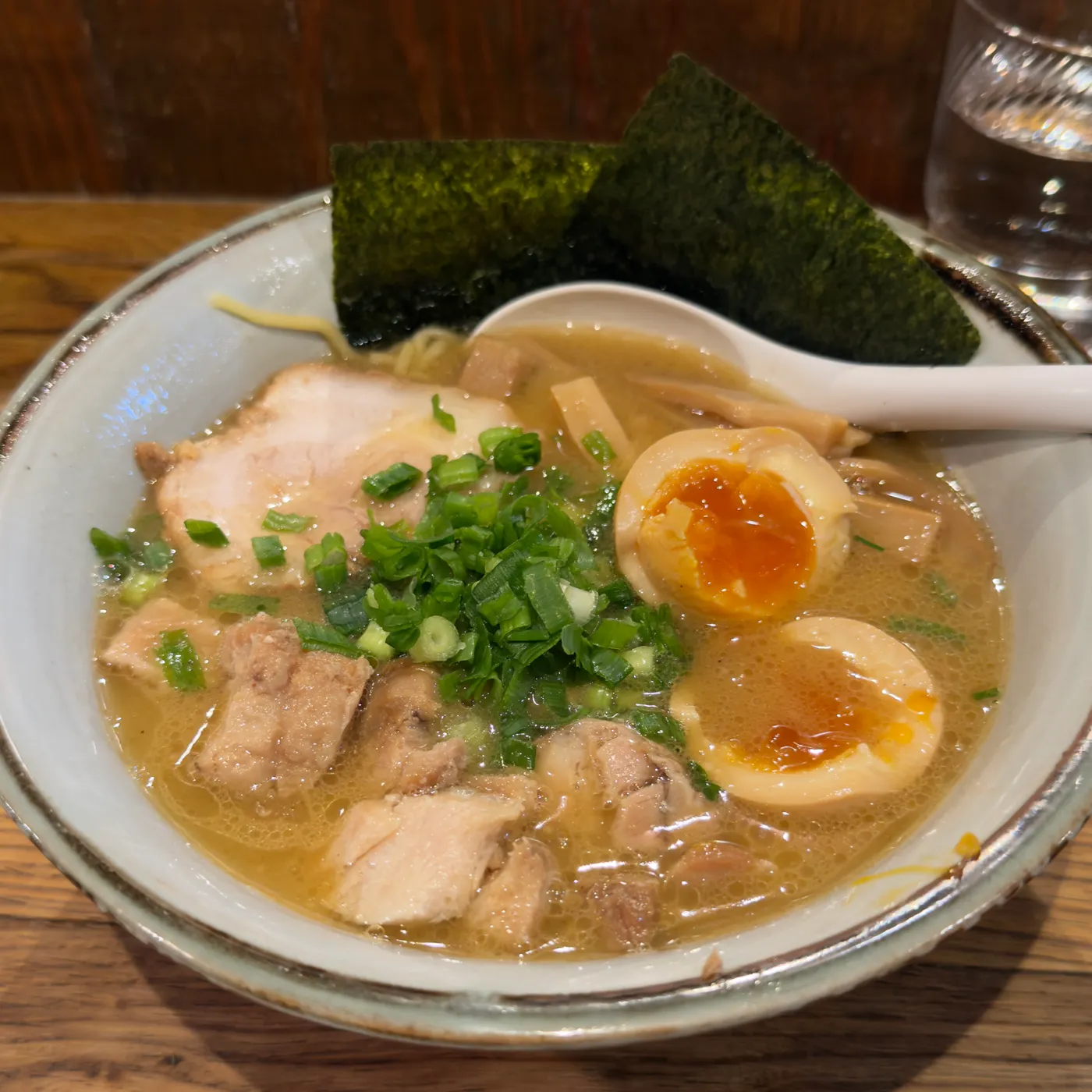
Fuunji's ramen, with its rich chicken-and-seafood broth, meat, seasoned egg, bamboo shoots, scallions, and nori. Although Fuunji is celebrated primarily for its tsukemen, I spent many years returning for its ramen. Here, the noodles are served directly in the hot soup. Rather than dipping each mouthful into a concentrated sauce, the noodles and broth become a single experience. This isn't a light ramen. The soup is rich and substantial, carrying the familiar chicken-and-seafood flavors that define Fuunji, but in a form designed to be enjoyed directly from the bowl. The noodles absorb and carry the broth as you eat, while the toppings provide their own contrasts in texture and flavor. The bowl photographed here includes generous pieces of meat, a seasoned egg, bamboo shoots, chopped green onions, and nori. For years, this was the dish I couldn't resist ordering. There was something about the relationship between the hot broth and the noodles that kept drawing me back. I knew the restaurant was famous for tsukemen, but I was perfectly happy with my ramen. For a long time, I saw no particular reason to change.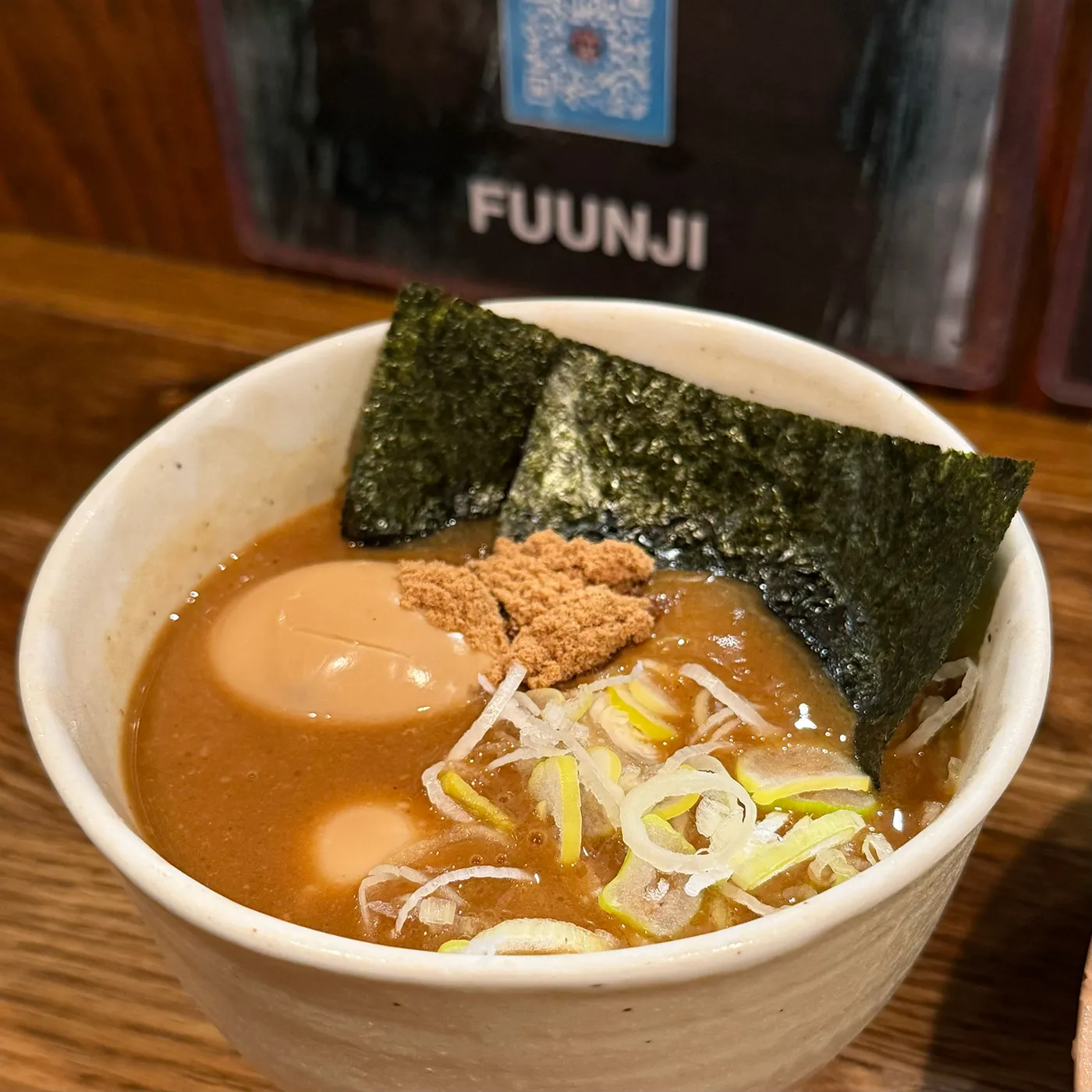
Tsukemen — つけめん
The concentrated dipping broth, topped with powdered dried fish, seasoned egg, sliced scallions, and nori. Fuunji made its reputation on tsukemen, and I have finally joined the devotees. The idea behind tsukemen is simple. Instead of serving the noodles in the soup, the two are presented separately. A plate of noodles arrives alongside a smaller bowl of intensely flavored dipping broth. You pick up a few strands, dip them into the broth, and eat them together. But that separation changes the experience considerably. The noodles become more prominent, their texture easier to appreciate without being constantly immersed in hot liquid. The dipping broth, meanwhile, is more concentrated and designed to coat the noodles rather than serve as a soup to drink directly. Fuunji's version is particularly recognizable for its rich, almost creamy dipping broth and the mound of powdered dried fish added on top. As the powder mixes into the soup, it intensifies the seafood character of the chicken-based broth. There is an unmistakable depth to the combination, with the richness of the chicken balanced by the concentrated savory flavors of the fish. The noodles provide the necessary contrast. Smooth, substantial, and pleasantly chewy, they hold their own against a dipping broth that could easily overwhelm something more delicate. The dish works because neither element is an afterthought. The noodles and the broth are equally important, and the pleasure comes from bringing them together, mouthful by mouthful. For many years, I knew this was the dish that had made Fuunji famous, yet I continued to order the ramen. More recently, something changed. I've become a tsukemen fan. I'm not sure whether my tastes have evolved or whether I've simply learned to appreciate this preparation differently. Whatever the explanation, I now understand its attraction in a way I didn't ten years ago. And today, rather than choose between them, we're having both.