Jigen Do
Visited Mon, Nov 23, 2026 · Dinner
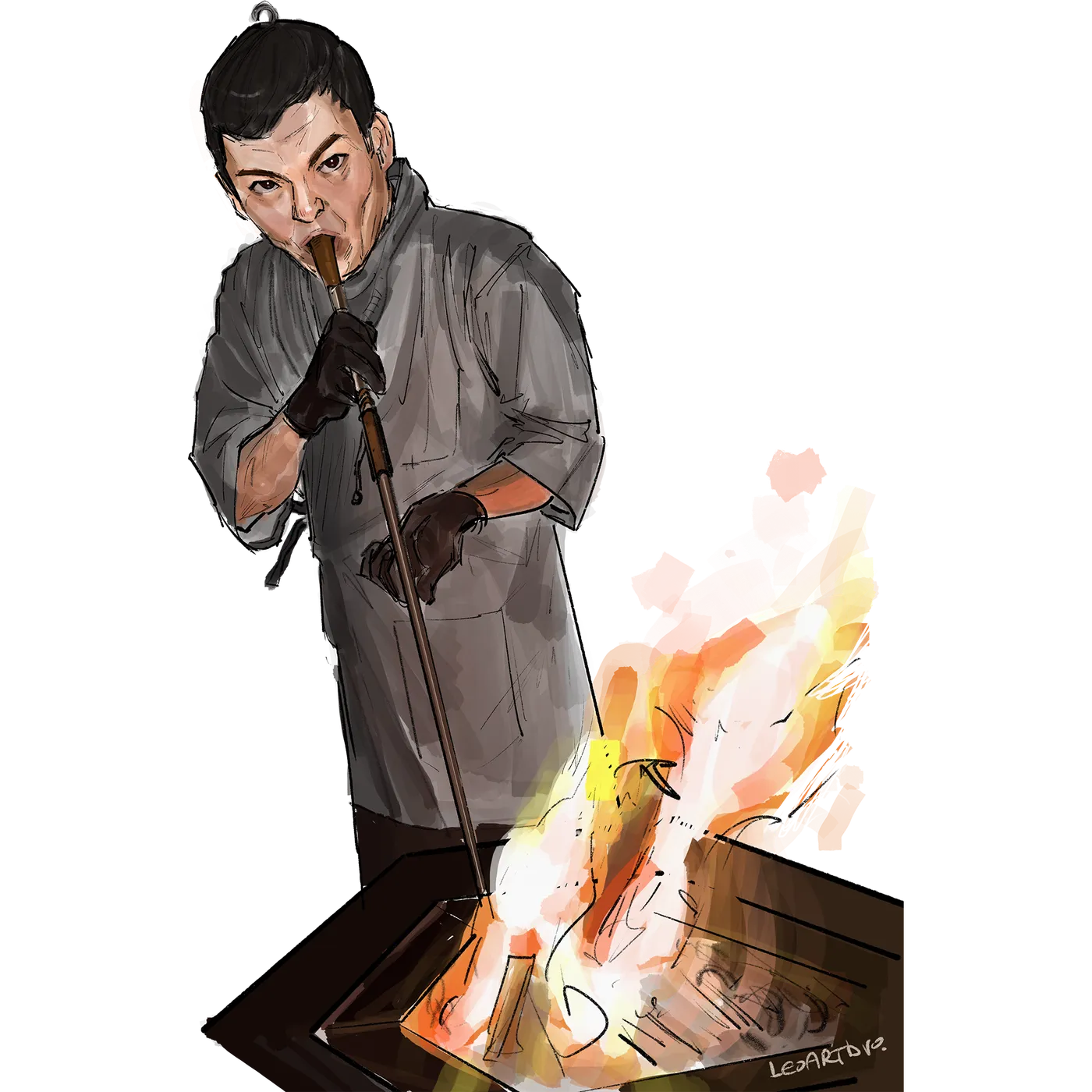
Suetomi at Zigendo — 時限堂
The Magician on Fire
I remember that at first, I didn’t want to eat at Zendokoro Suetomi.
It was early 2023, only a few days after my mind had been completely blown at the original Makitori ShinKobe.
Someone told me I should try the restaurant of the man behind it all and took me across the narrow street from ShinKobe, up to the second floor of a completely nondescript building.
The room was almost spartan.
I looked around and remember thinking, “I don’t want to eat here.”
Then Suetomi san appeared, and the rest, as they say, is history.
The next morning, I posted a video from the meal and gave him a name that has stayed with me ever since.
The Magician on Fire.
A few months later, in June, the news came that Suetomi had closed the restaurant.
I was depressed.
But somehow, I managed to convince him to cook one more meal there for twelve friends on my birthday tour that September.
That night became the last time I tasted anything that came from his blessed hands.
After that, Suetomi kept moving.
New concepts. New restaurants. Places that opened and immediately became impossible to book for years.
But he never really stayed.
He would create something, light the fire, and move on to the next thing.
Japan first.
Then abroad.
A week ago, I was following his posts.
Los Angeles. Vegas. Alba.
Suetomi being Suetomi.
Then two nights ago, he sent me a message and asked if I was planning to join my group at Zigendo.
Yes, I told him.
But I still had no idea whether he would actually be there.
Just in case, I prepared a few questions for him.
The last one was:
“And finally, when will you cook for us again? There’s nothing I miss more than a meal cooked by you, my Magician on Fire.” ❤️
Last night, we walked into Zigendo.
My first question was simple.
“Is Suetomi here?”
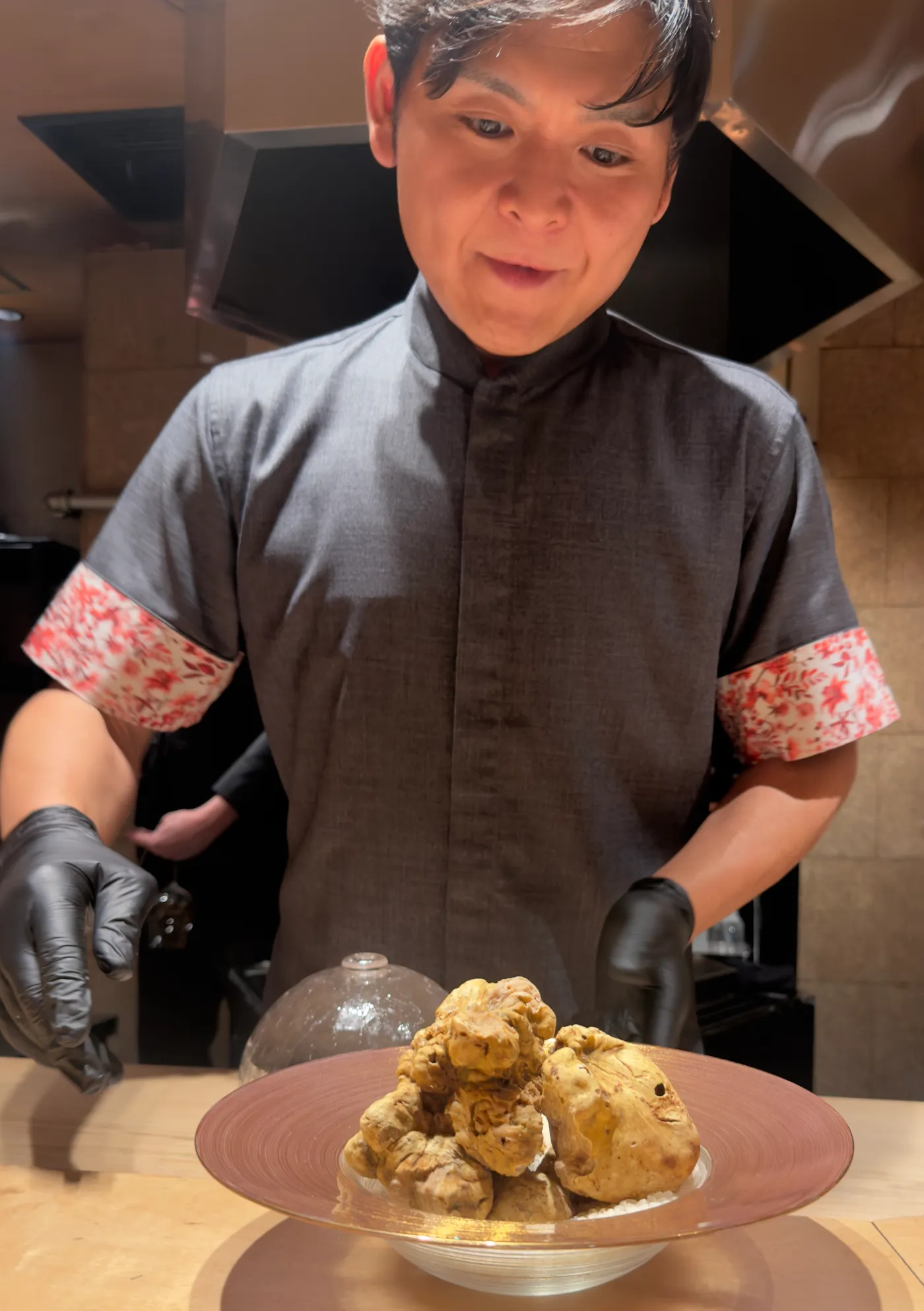
And before anyone could really answer, my friend appeared in front of me carrying a huge bunch of white truffles he had brought back from Alba.
He smiled.
“Today, you are in Zigendo,” he said. “But I will be your cook.”
Sometimes dreams come true in the most unexpected way.
What we ate
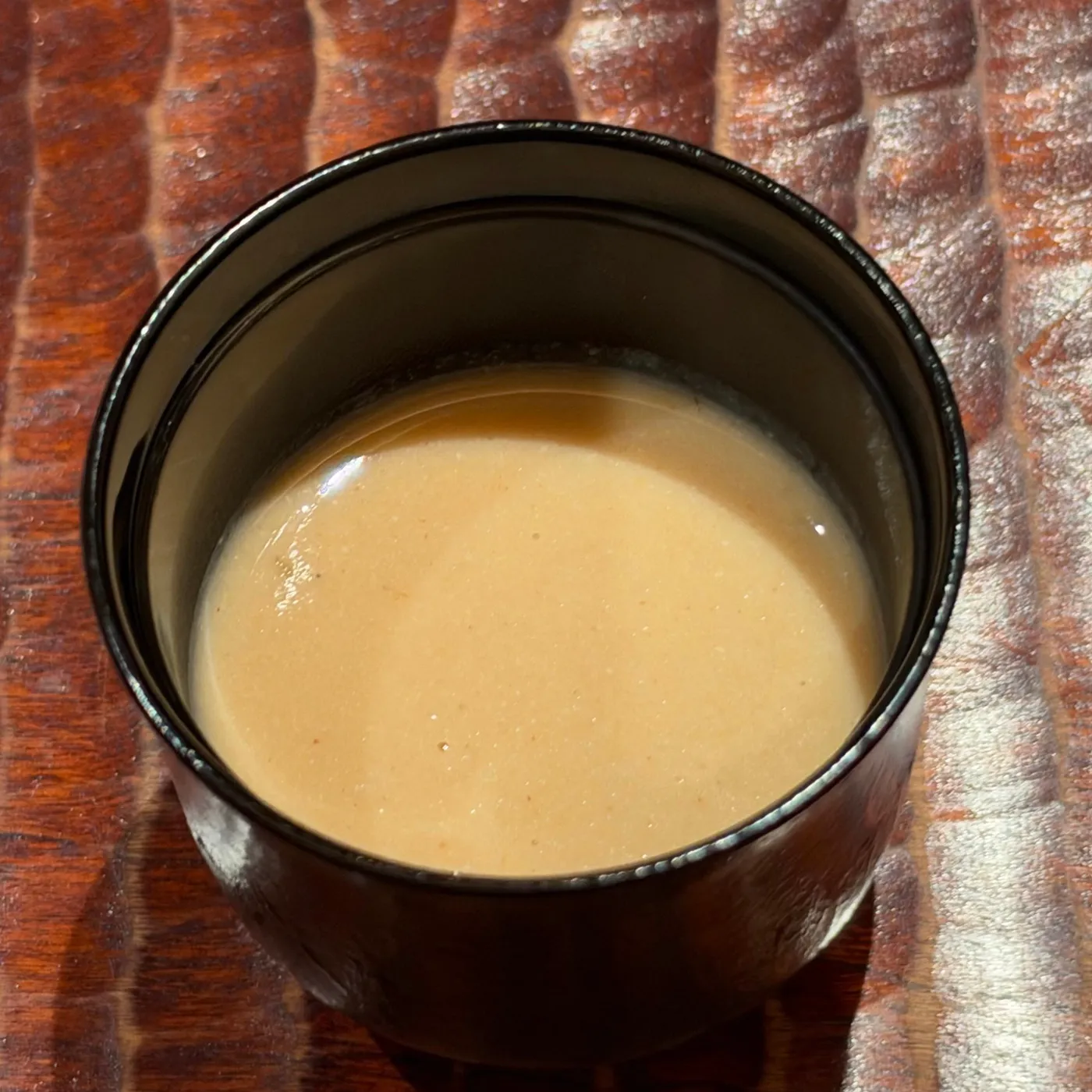
Hokkaido Hairy Crab Soup
北海道産毛蟹のスープ A bisque style soup made from only two ingredients, Hokkaido hairy crab and water. No stock, no cream, not even salt. Everything comes from the crab itself, including that wonderful sweetness kegani is famous for. It was served warm, with absolutely nothing added to interfere with the taste.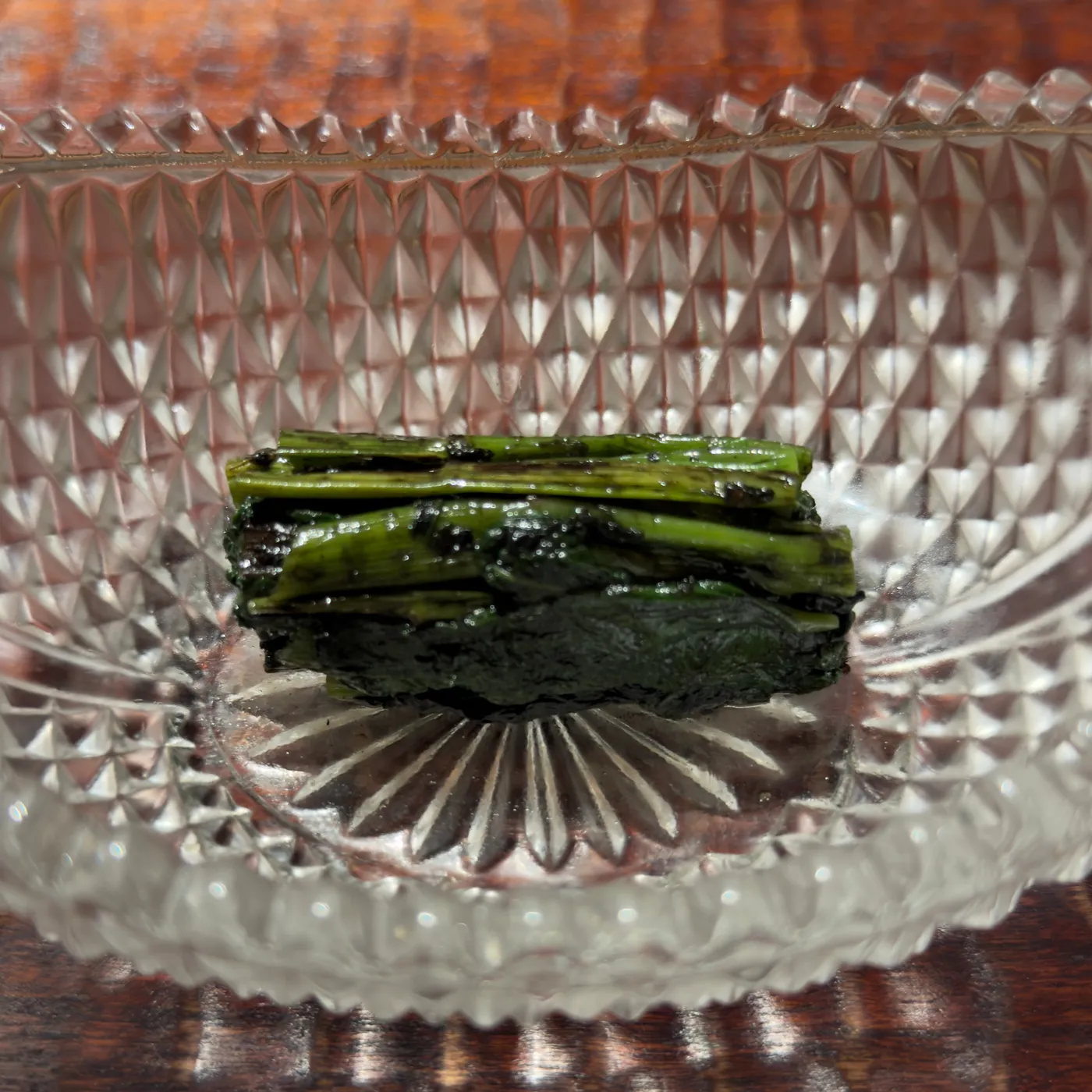
Straw Grilled Water Spinach
空芯菜の藁焼き Water spinach grilled over burning rice straw in the central hearth. The hollow stems absorb the aroma of the straw fire, so the fragrance becomes part of the vegetable itself. This is one of the things I love about the way Suetomi cooks. Straw, charcoal, and firewood are not simply different ways of producing heat. Each one has its own smell, its own character, and its own purpose.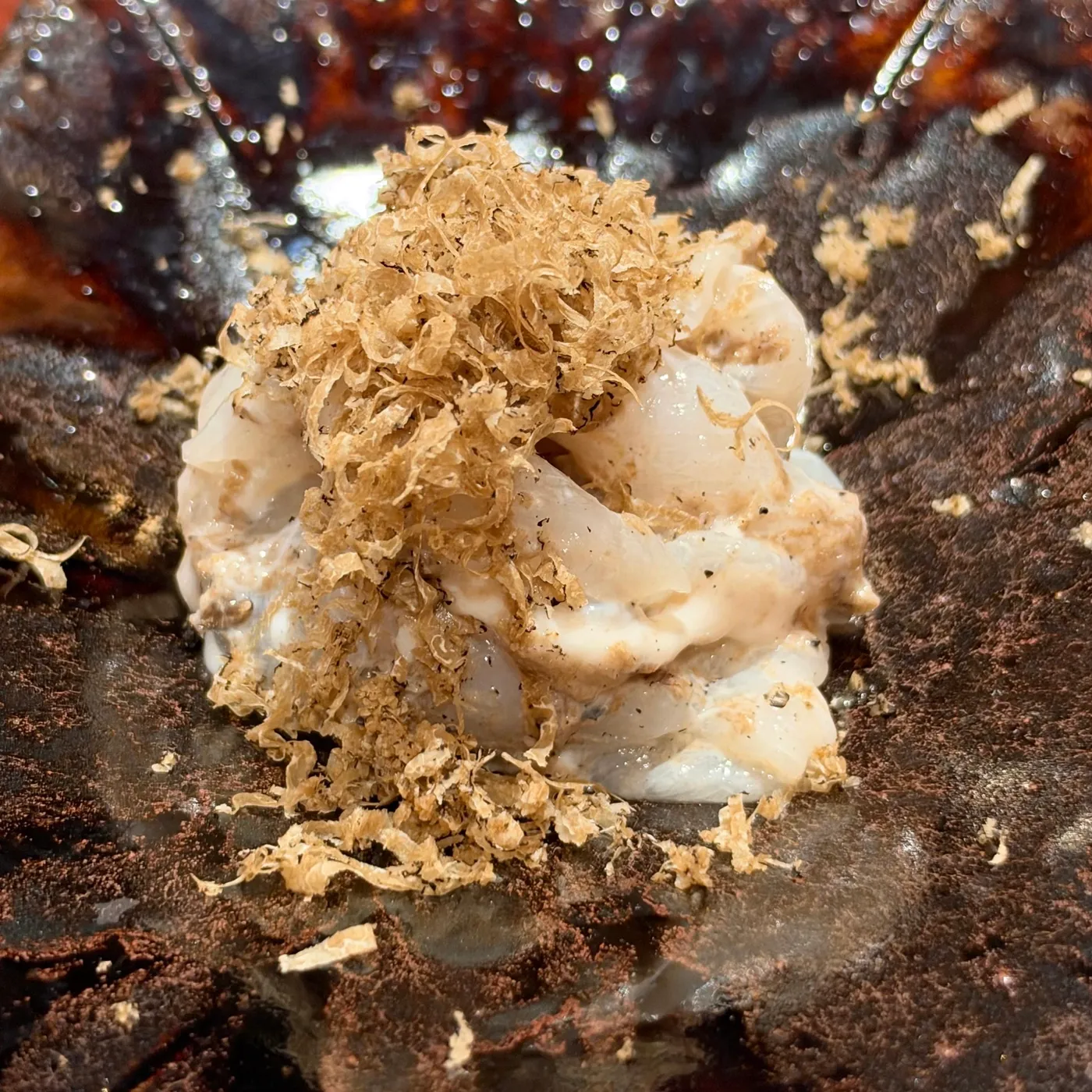
Torafugu with Shirako, Ume, and Black Truffle
とらふぐ、白子と梅、黒トリュフ Tiger pufferfish sliced in the usuzukuri style, although slightly thicker than the traditional paper thin version, and served with a sauce made from shirako and ume. The acidity of the plum cuts beautifully through the richness of the shirako. Then came a very generous amount of black truffle, sliced and shaved over the fish.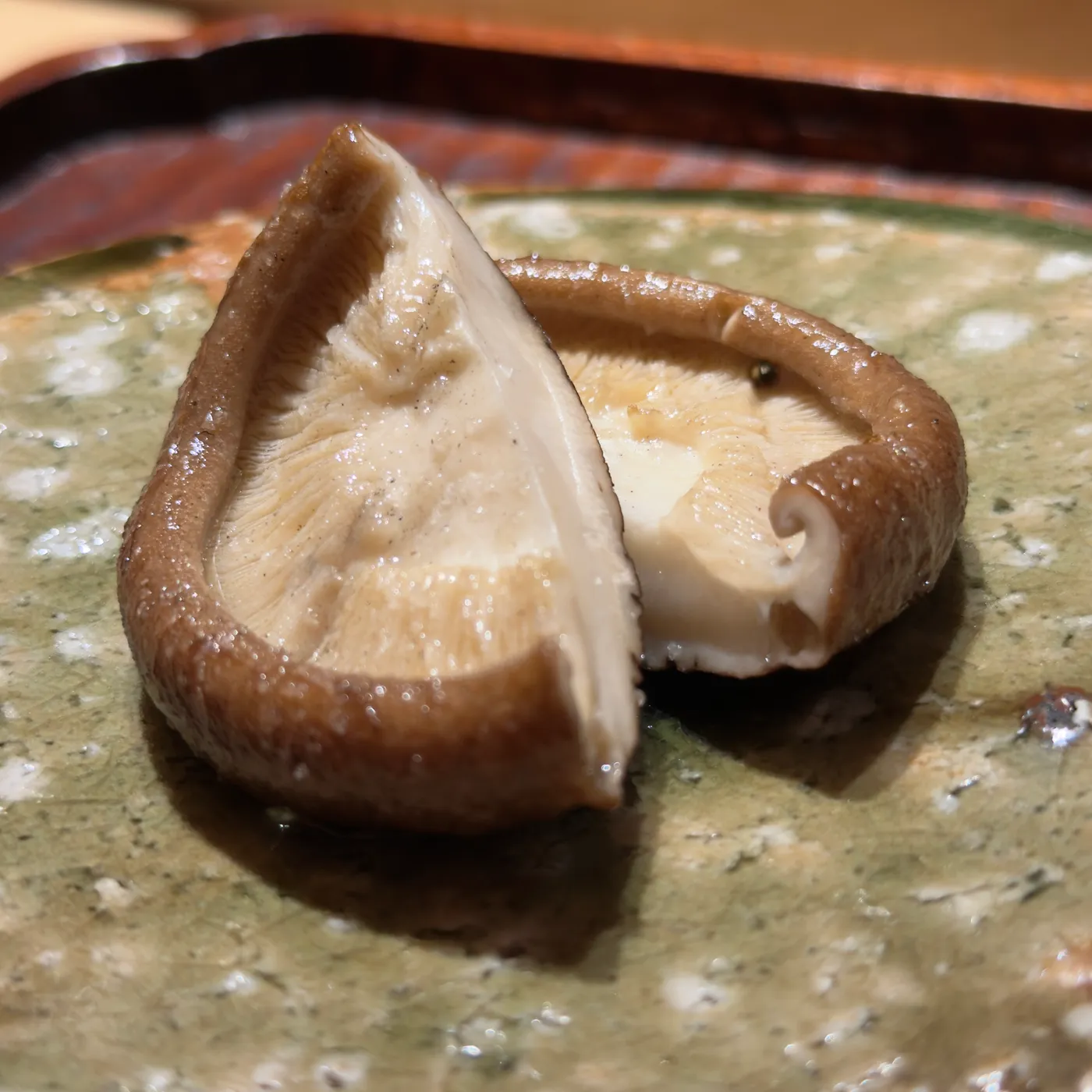
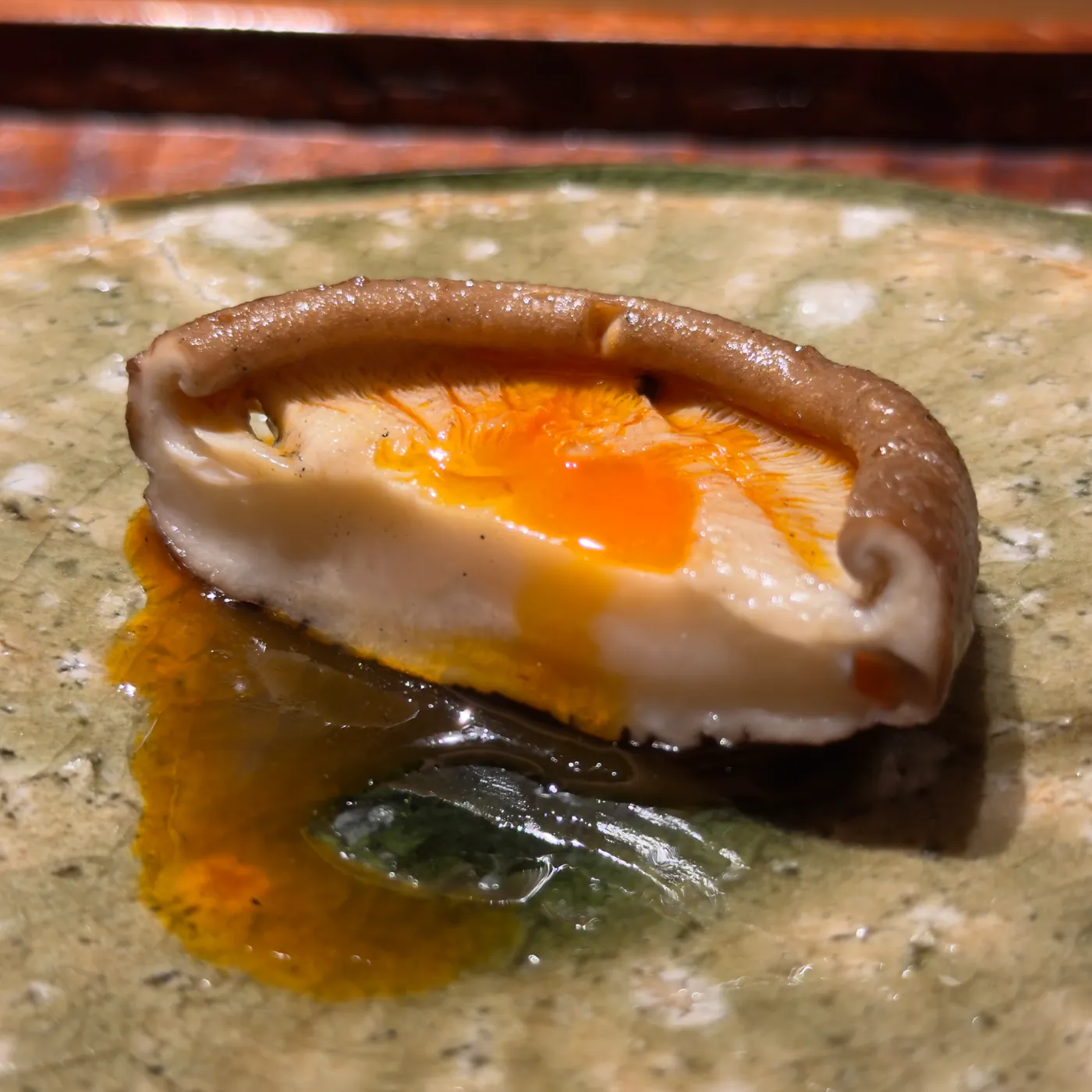
Wood Fired Shiitake
薪焼き椎茸 Shiitake mushrooms cooked over firewood rather than charcoal, allowing the aroma of the wood to penetrate the mushrooms. They were served in two preparations. First, simply with salt, and then with an egg yolk sauce. The first was almost naked. The second added richness, but the smell of the wood remained the main thing.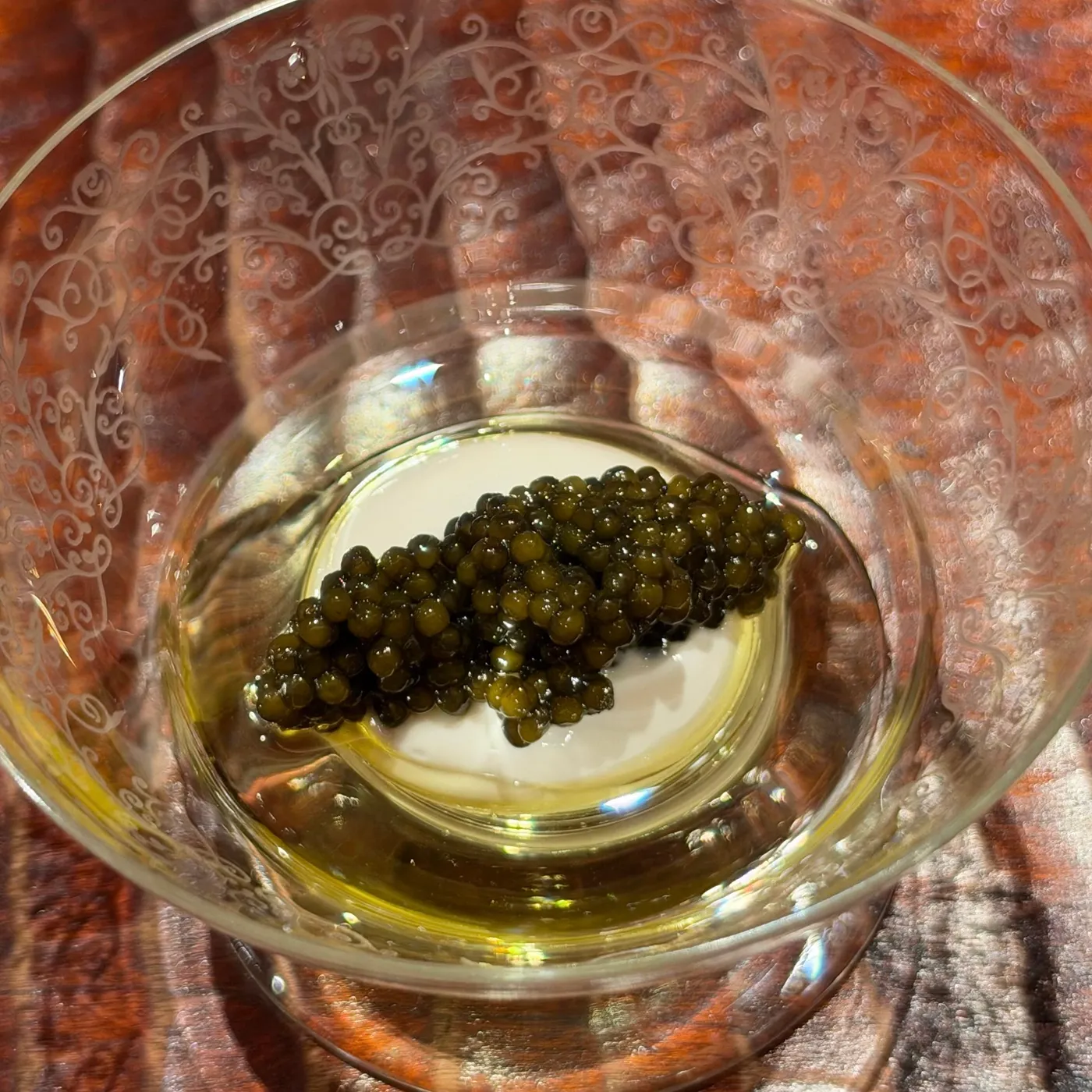
Smoked Tofu and Caviar
燻製豆腐と燻製キャビア Both the tofu and the caviar were smoked, then served with Spanish olive oil. The idea was simple. Tofu, caviar, and olive oil in every bite. Three ingredients, but together they became something much more interesting than any of them alone.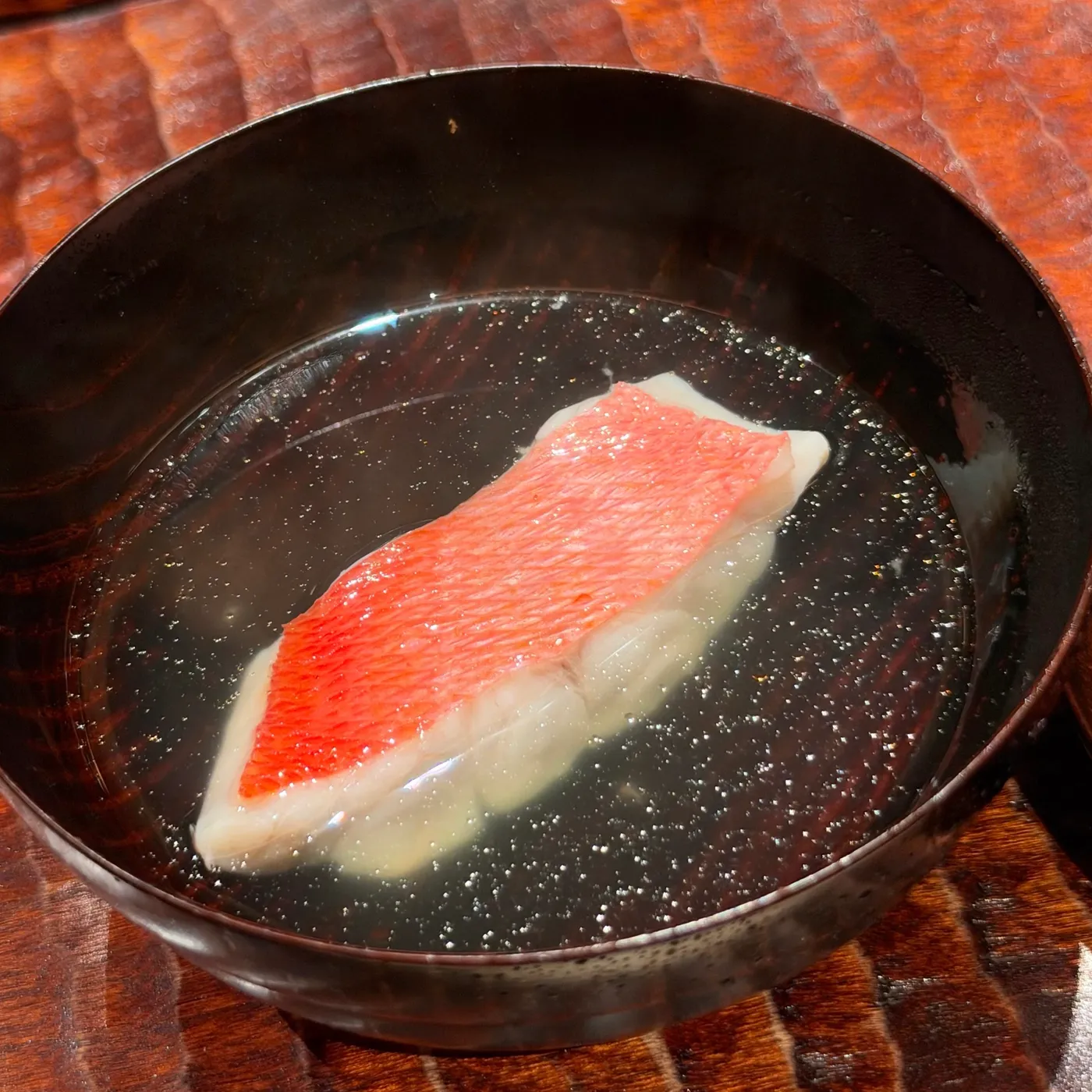
Kinmedai in Aged Kombu Dashi
金目鯛のお椀 Kombu aged for two years was soaked in water for three days without any heat. The result was an incredibly clean dashi, full of sweetness and umami, with a flavor that stayed on the tongue long after swallowing. The kinmedai was simply steamed and placed inside. The funny thing is that although the fish gives the dish its name, the real star was the broth. The fish was almost there to accompany the kombu.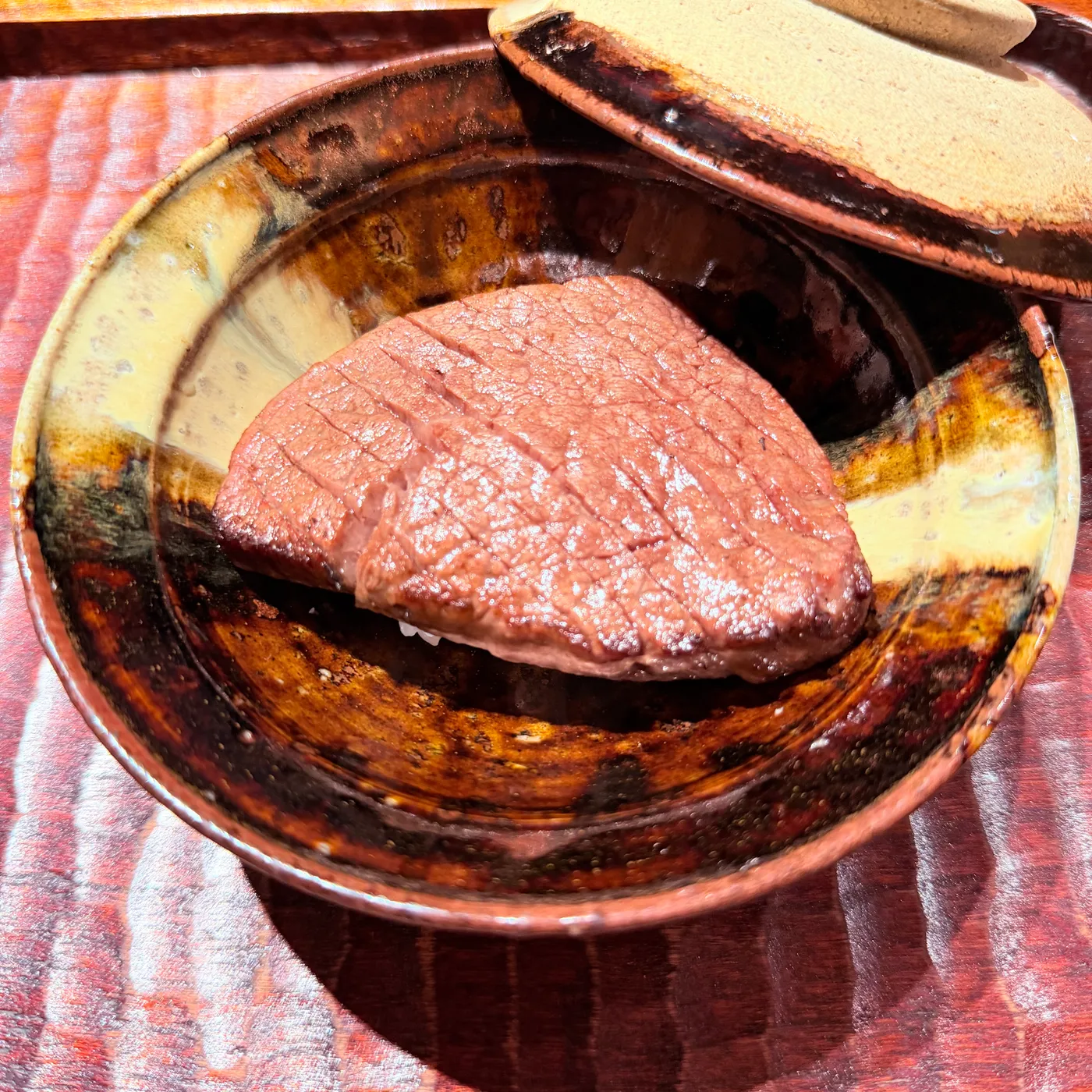
Wagyu Fillet over Glutinous Rice
和牛ヒレの丼 Oatmeal fed Tajima wagyu fillet from Ota, cooked over what Suetomi calls onion fire. Firewood and onions are used together so the sweetness and aroma of the onions pass into the meat. The cooking was slow and gentle, without scorching the surface, leaving the fillet incredibly tender and slightly sweet. Underneath was steamed mochigome mixed with a little onion, so the rice connected back to the aroma of the fire.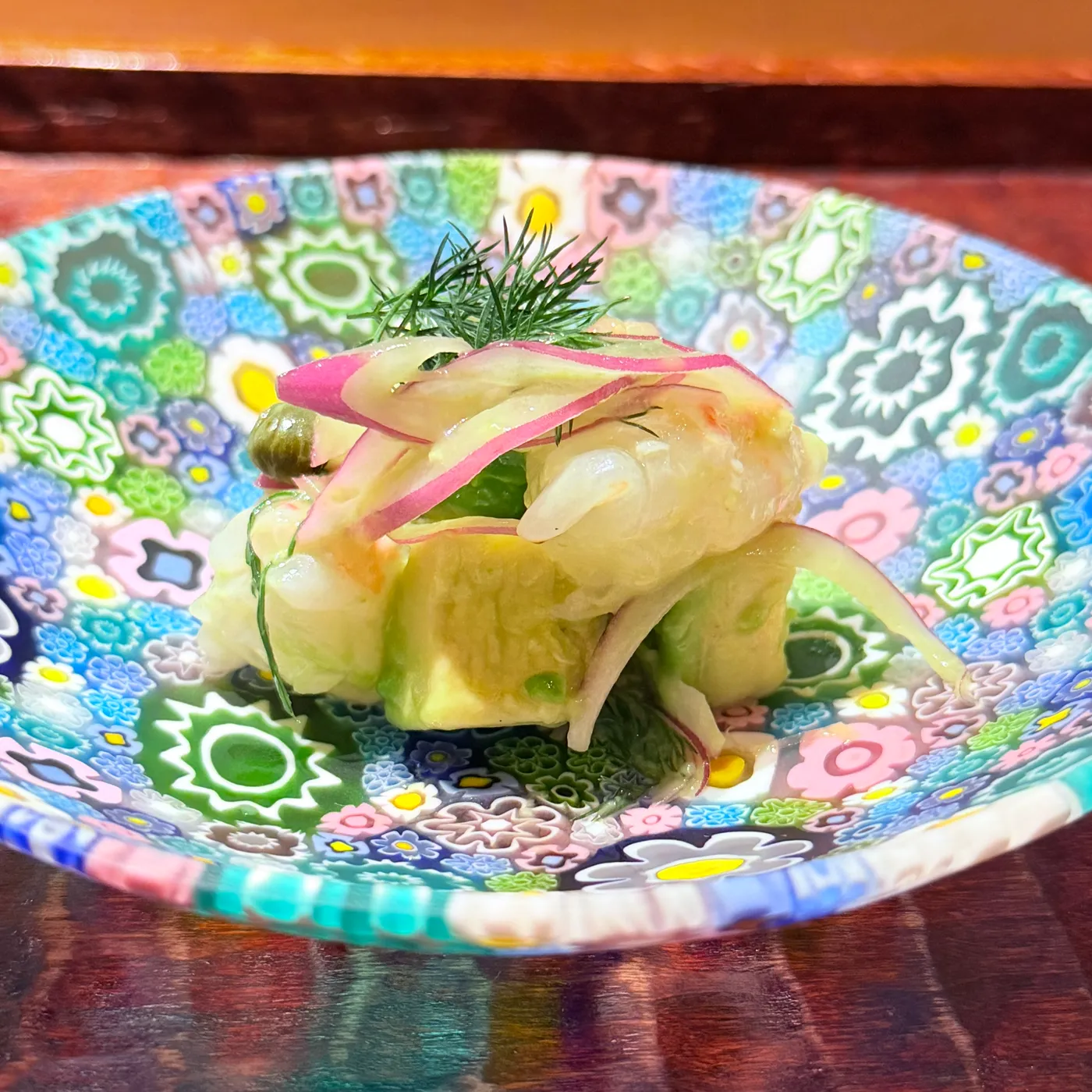
Botan Ebi and Avocado Ceviche
牡丹海老とアボカドのセビーチェ Botan shrimp and avocado in Suetomi’s version of ceviche. The acidity was the key. Bright, sharp, and refreshing, exactly what the sweet shrimp and creamy avocado needed.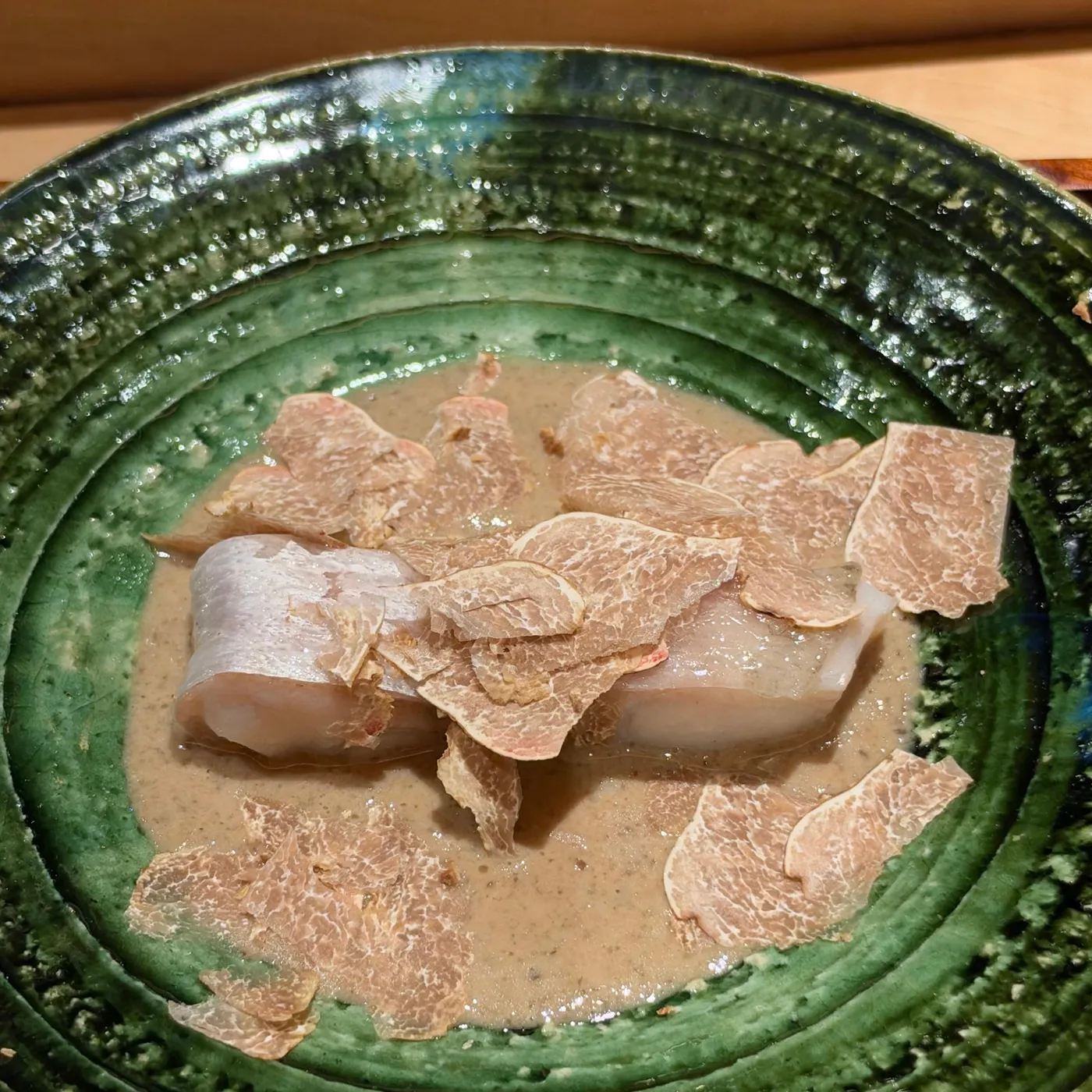
White Amadai with Beurre Blanc and White Truffle
白甘鯛のブールブラン、白トリュフ Shiro amadai, white tilefish, served with beurre blanc. A very French sauce around a very Japanese fish. This is one of Suetomi’s signature combinations, and for this dinner he finished it with white truffle. Not exactly an exercise in restraint :)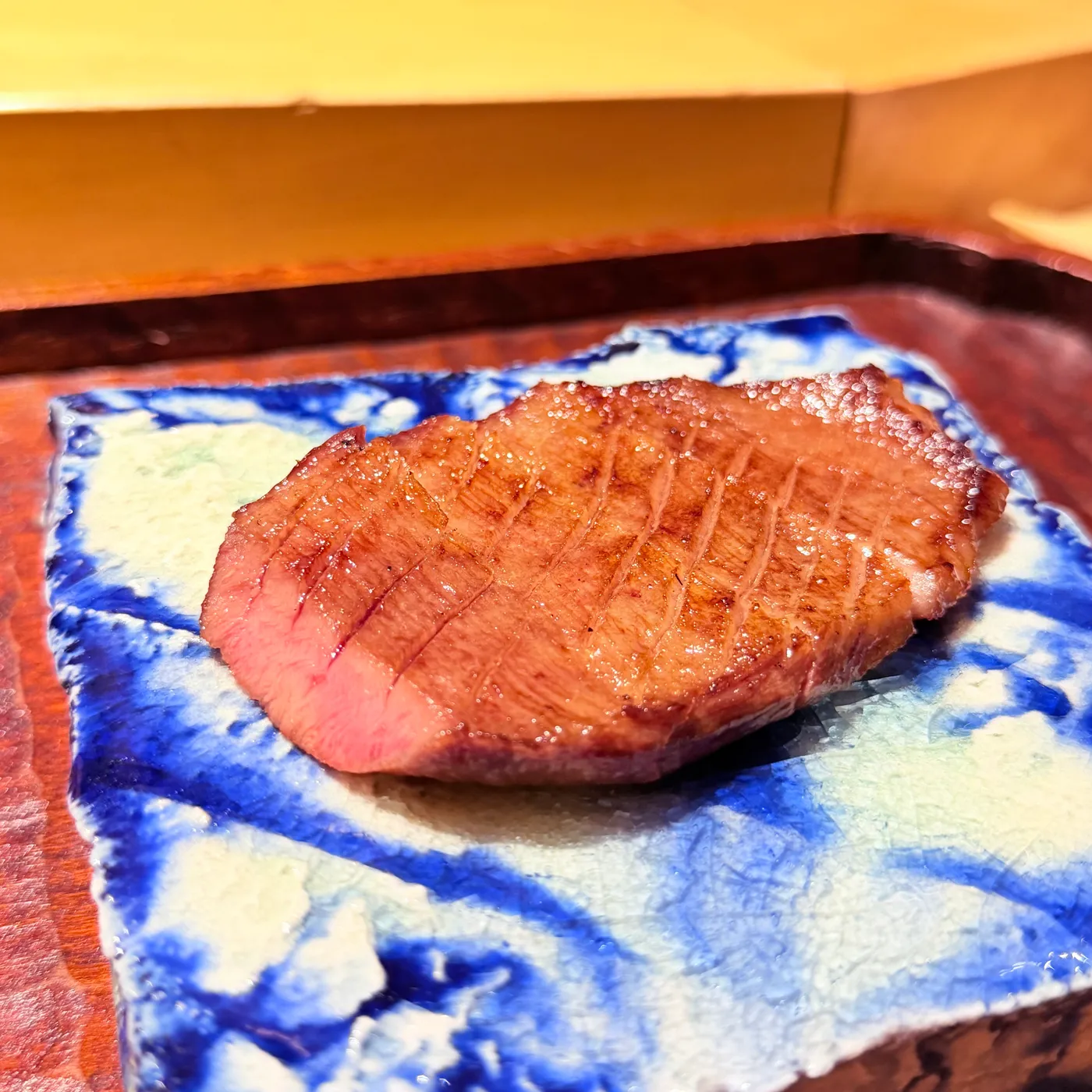
Wagyu Tongue with Whisky Barrel Oak
和牛タン、ウイスキーオーク Wagyu tongue cooked using oak from old whisky barrels. The barrel wood gave the meat a completely different aroma from the onion-scented fillet we had earlier. Again, the fire was not just there to cook the ingredient. It was part of the flavor.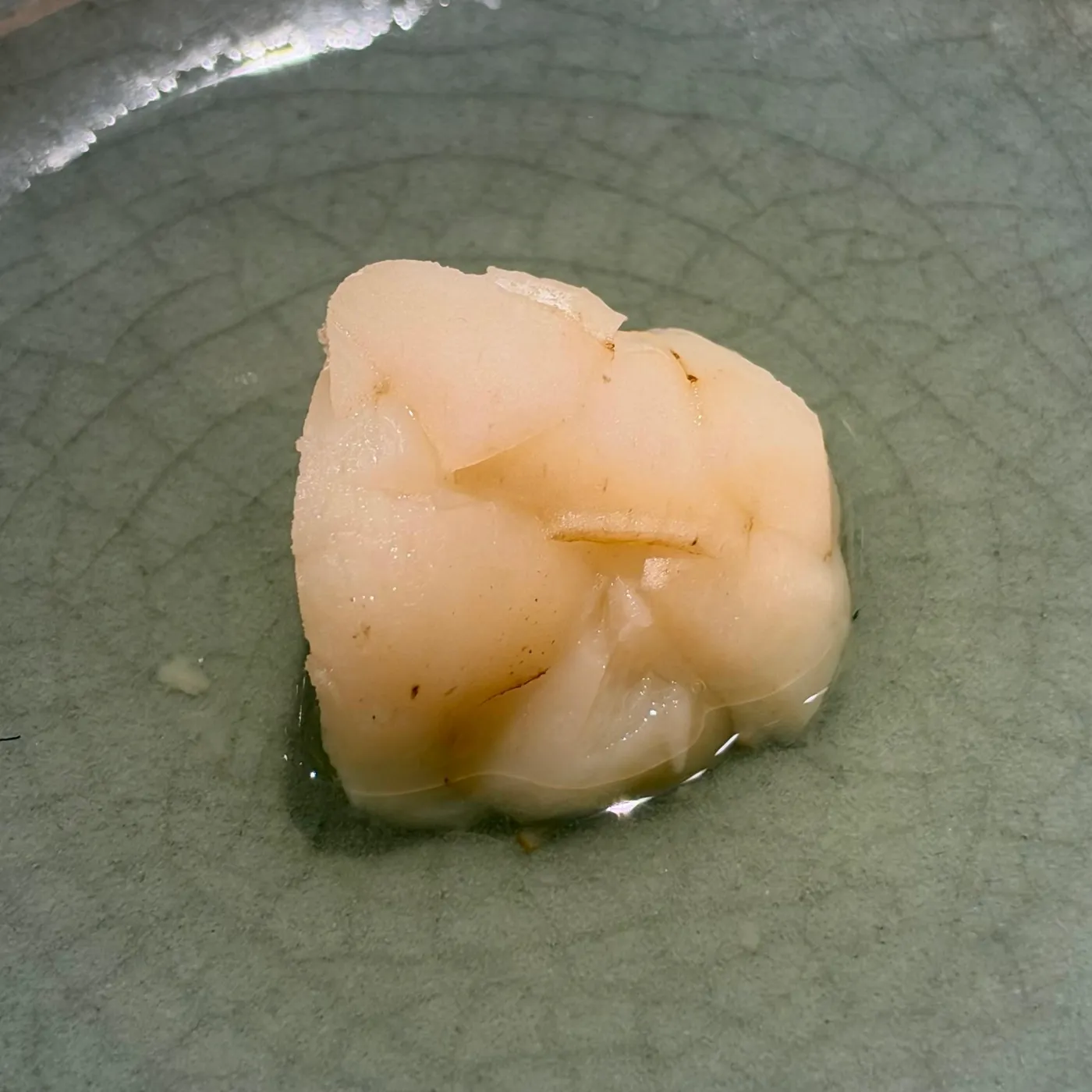
Gekkō Lily Bulb
百合根「月光」 Gekkō means Moonlight. These Hokkaido lily bulbs are aged for two years, then simply steamed and finished with kombu dashi. That was it. No elaborate sauce, no decoration, just the aged lily bulb and the broth. It was one of those dishes that reminded me how little Suetomi needs when the ingredient is good enough.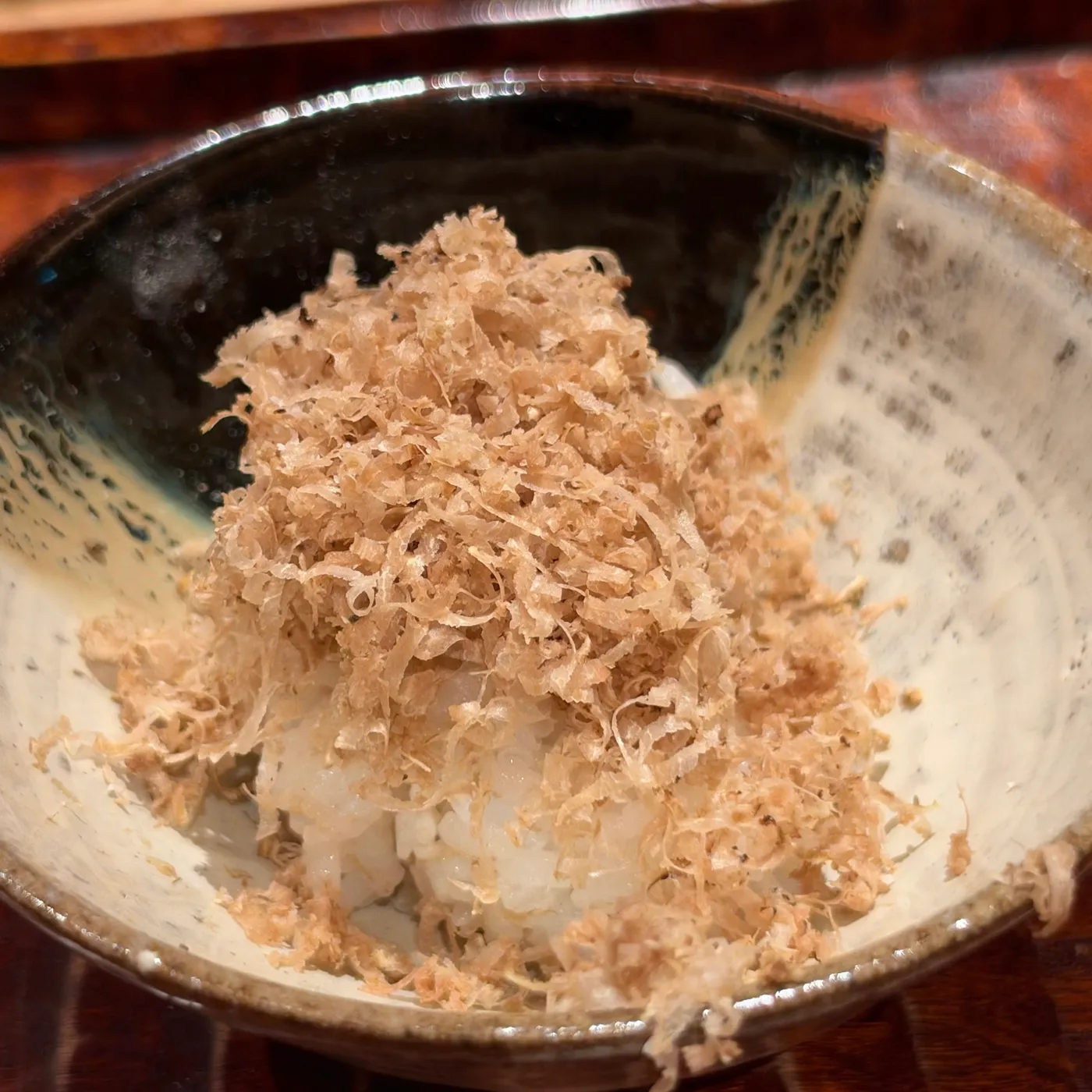
Niigata Rice with Truffle, Then Ginger
新潟米、トリュフと生姜 Rice from Niigata, served in two ways. First with truffle and salt, then with ginger. Same rice, two completely different experiences. One rich and aromatic, the other clean and sharp.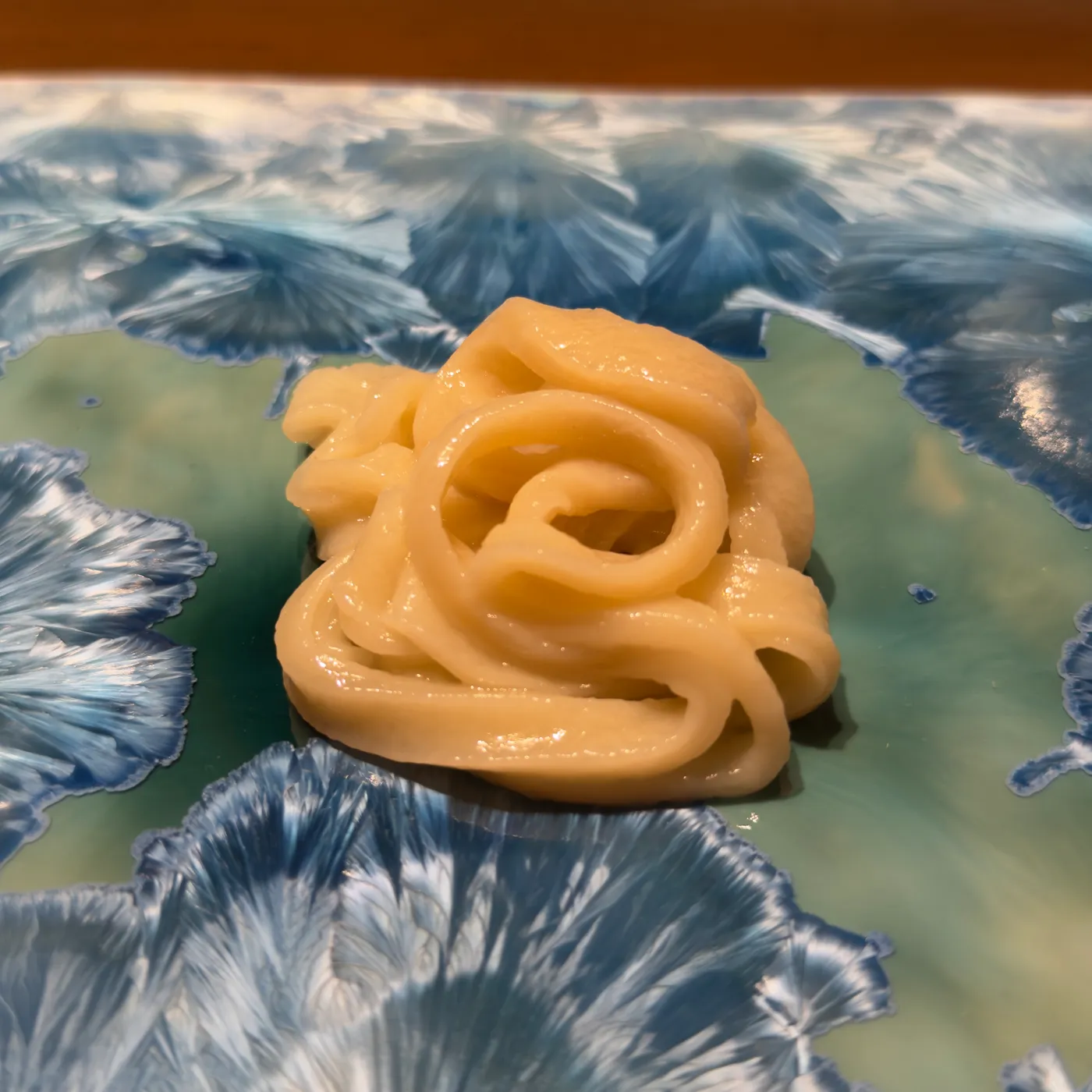
Smoked Udon
燻製うどん Thick Japanese wheat noodles smoked over the wood fire. Here, the smoke was not on something served with the noodles. The noodles themselves carried it, which somehow made the whole dish feel even more direct.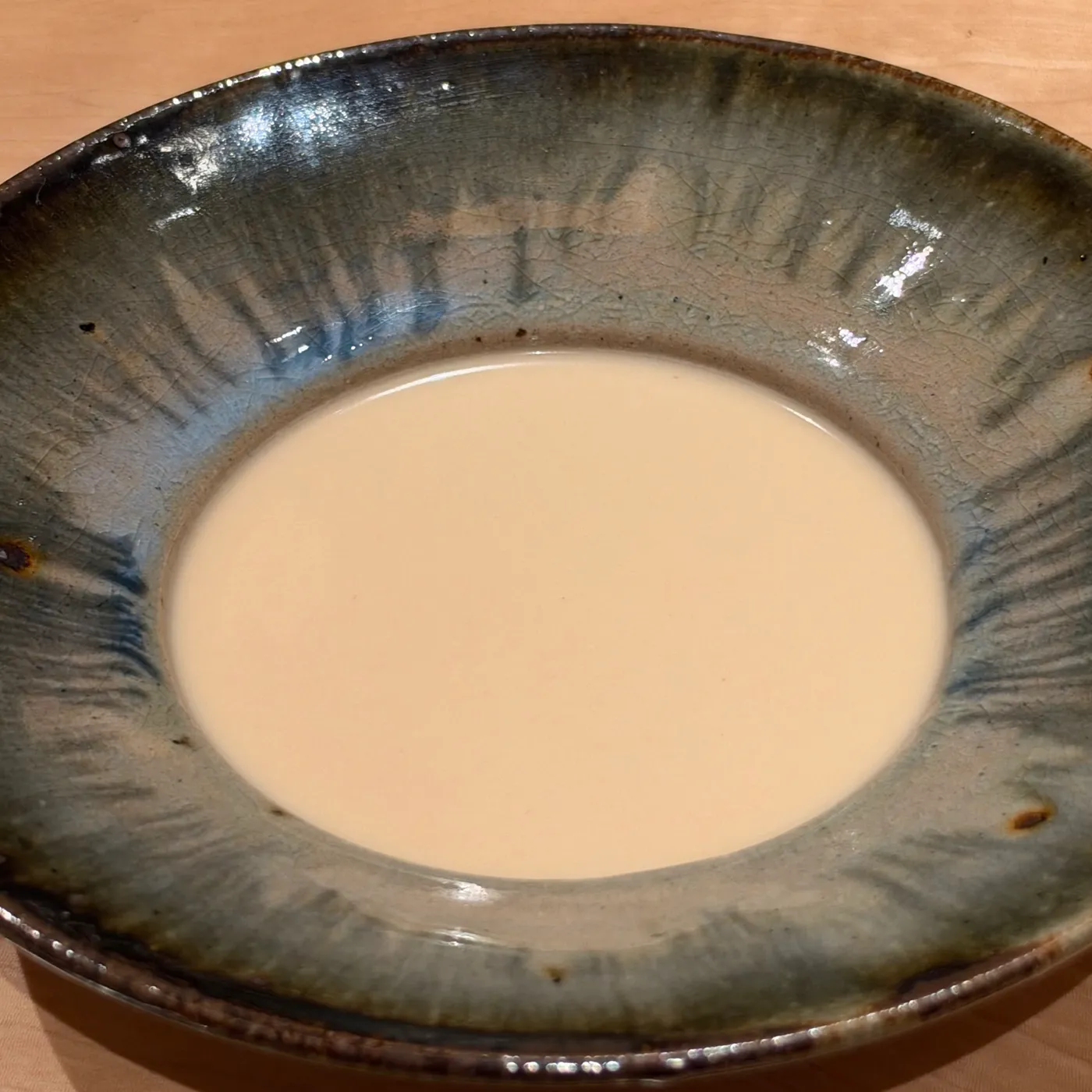
Hazelnut Soup
ヘーゼルナッツのスープ A dessert soup made from water, hazelnuts, and a little sugar. No milk, no cream. And somehow it tasted incredibly rich and sweet, with everything focused on the hazelnuts. Another example of how little he needs when the idea is clear.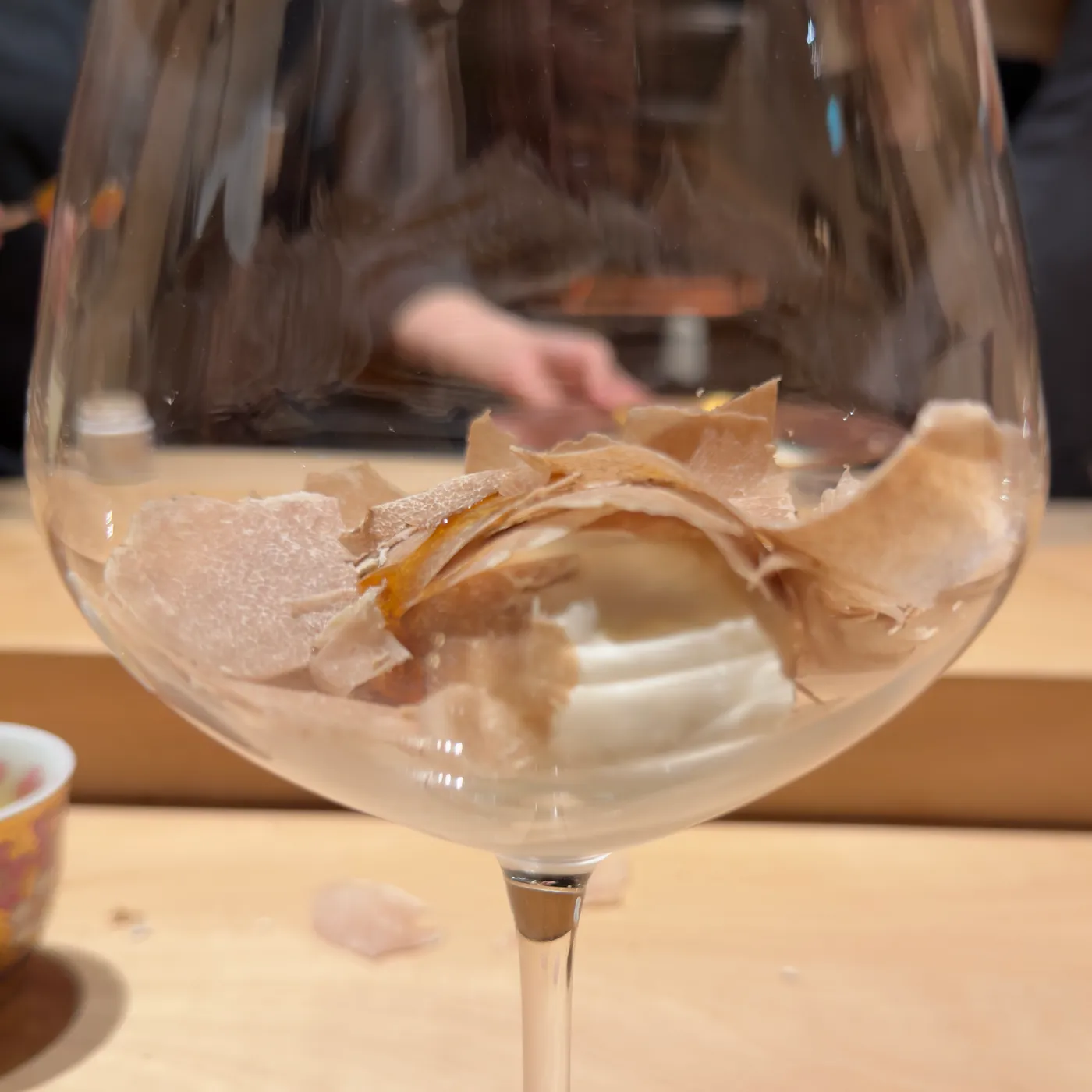
Milk Ice Cream with White Truffle
白トリュフのミルクアイスクリーム Milk ice cream made just before serving and finished with white truffle. Nothing else was needed. The milk was almost deliberately quiet, giving the truffle all the room it needed. A very Suetomi ending.What we drank
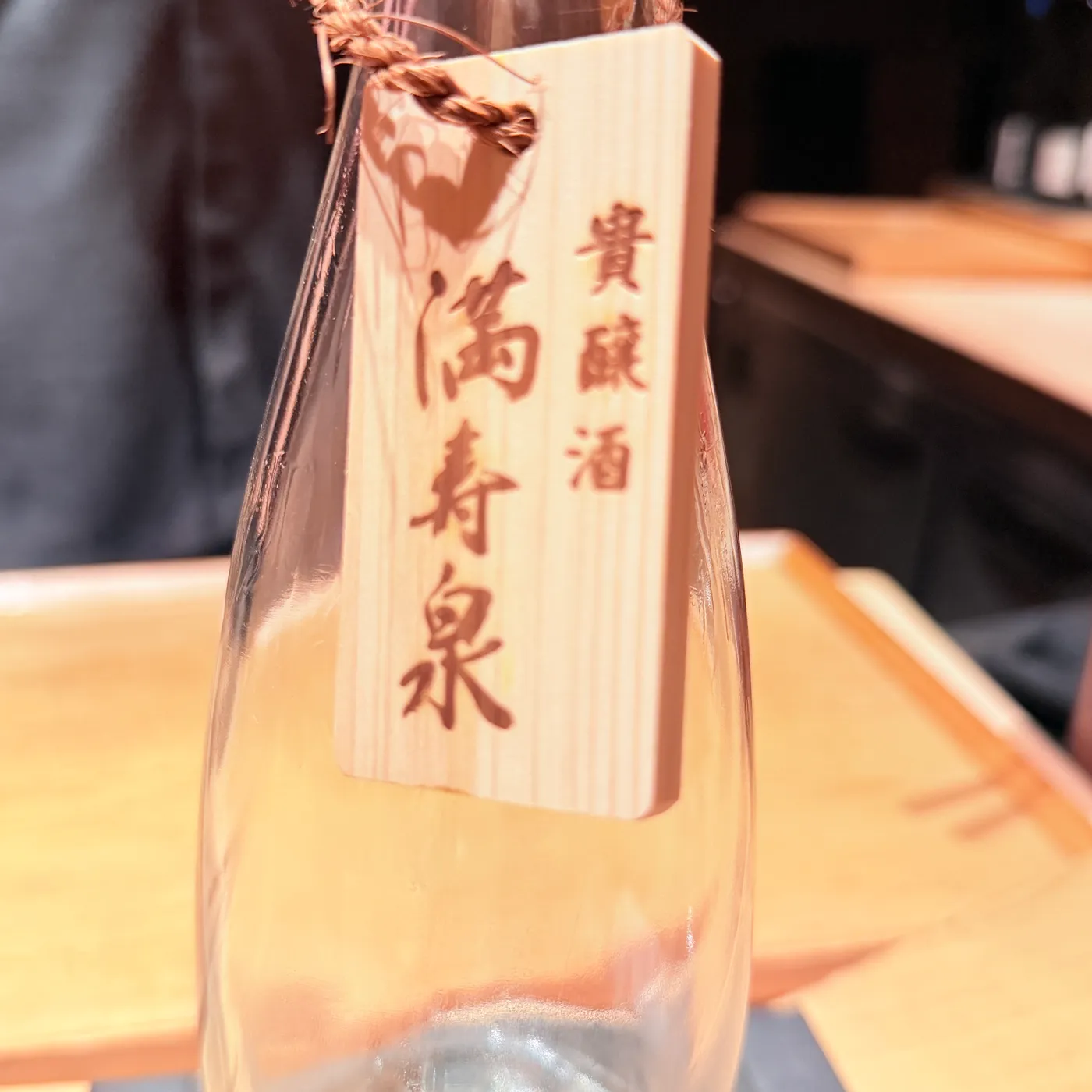
Masuizumi Kijoshu — 満寿泉 貴醸酒
Masuda Shuzo · Toyama Prefecture
What makes this sake interesting is the way it is made. Instead of using only water in the brewing process, Masuda Shuzo replaces some of it with sake. Sake made with sake, essentially. The result is something richer and sweeter than most nihonshu, closer in character to a dessert wine, but with the depth and umami that come from fermented rice.
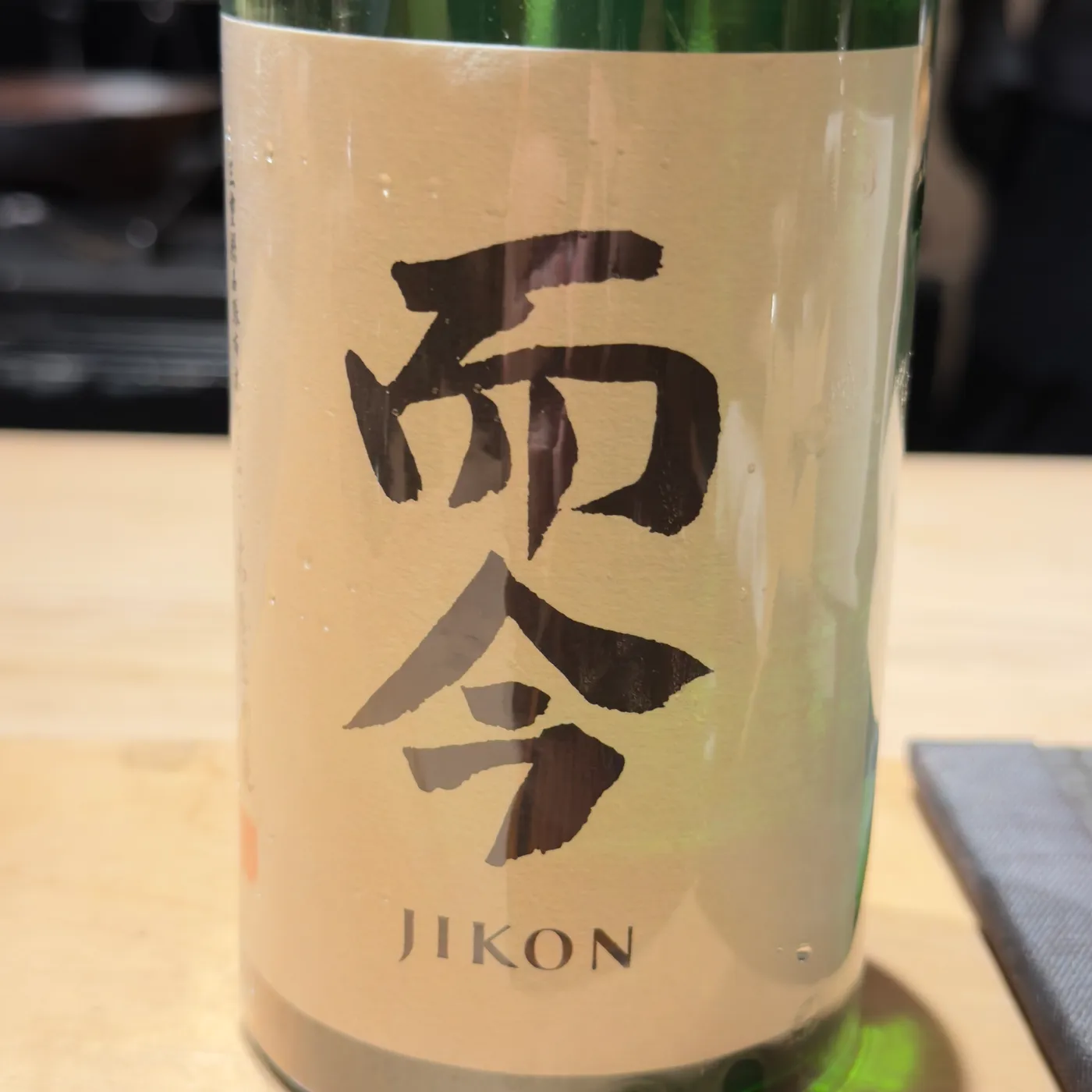
Jikon — 而今
Kiyasho Shuzo · Mie Prefecture
Jikon comes from a small brewery in Nabari, Mie Prefecture, where sixth-generation brewer Tadayoshi Onishi introduced the label in 2005. The name comes from Buddhist philosophy and is about living in the present rather than worrying about the past or the future. The sake is known for its fruit, gentle sweetness and freshness. A rather appropriate name for that night.
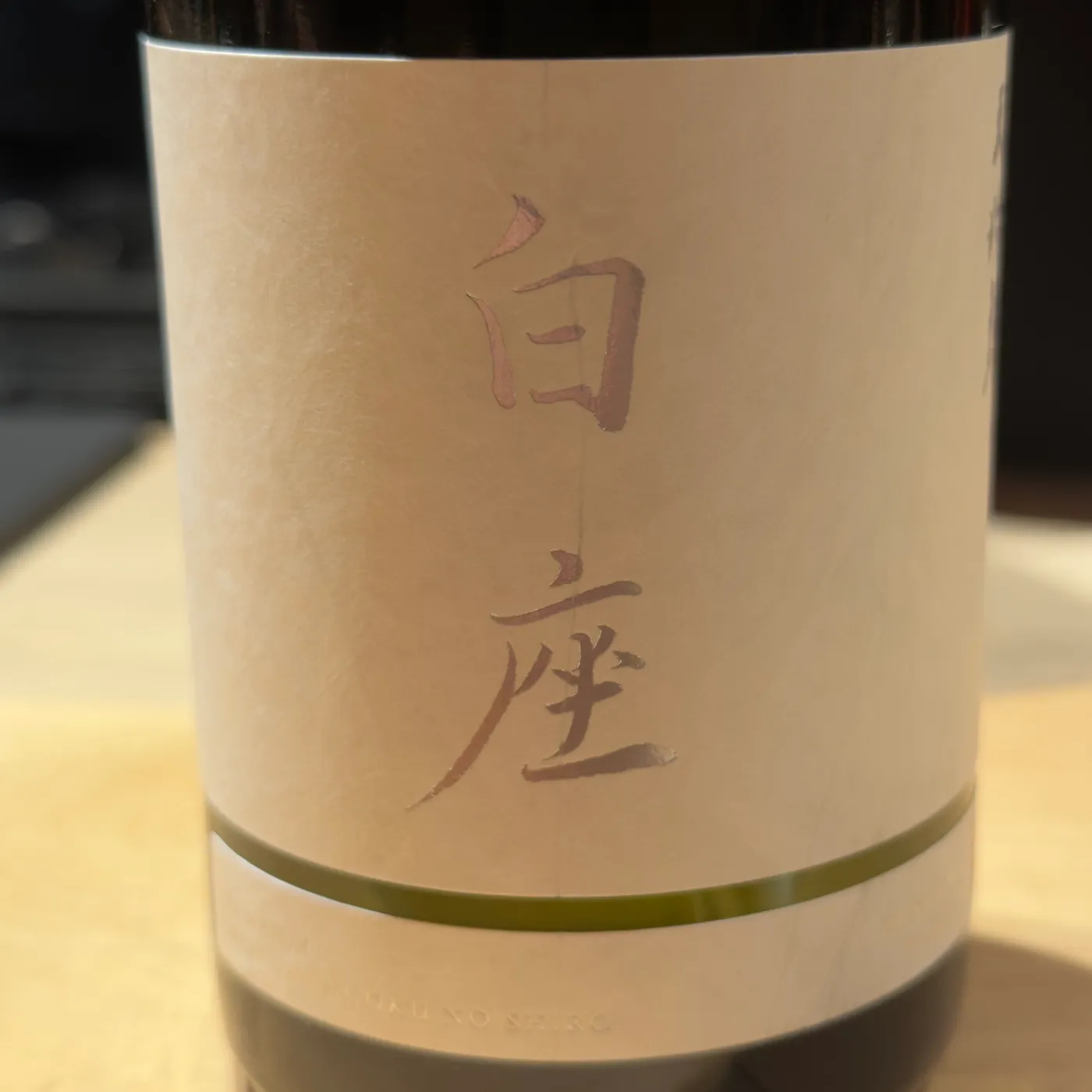
Tengumai Shiroza — 天狗舞 白座
Shata Shuzo · Ishikawa Prefecture
Something quite new from a brewery that has been making sake since 1823. First brewed in 2024 and released in spring 2026, Shiroza is the work of ninth-generation brewer Keiichiro Shata, using local rice and revisiting the traditional Yamahai brewing method. The idea is not to abandon what previous generations did, but to explore how much further it can go.
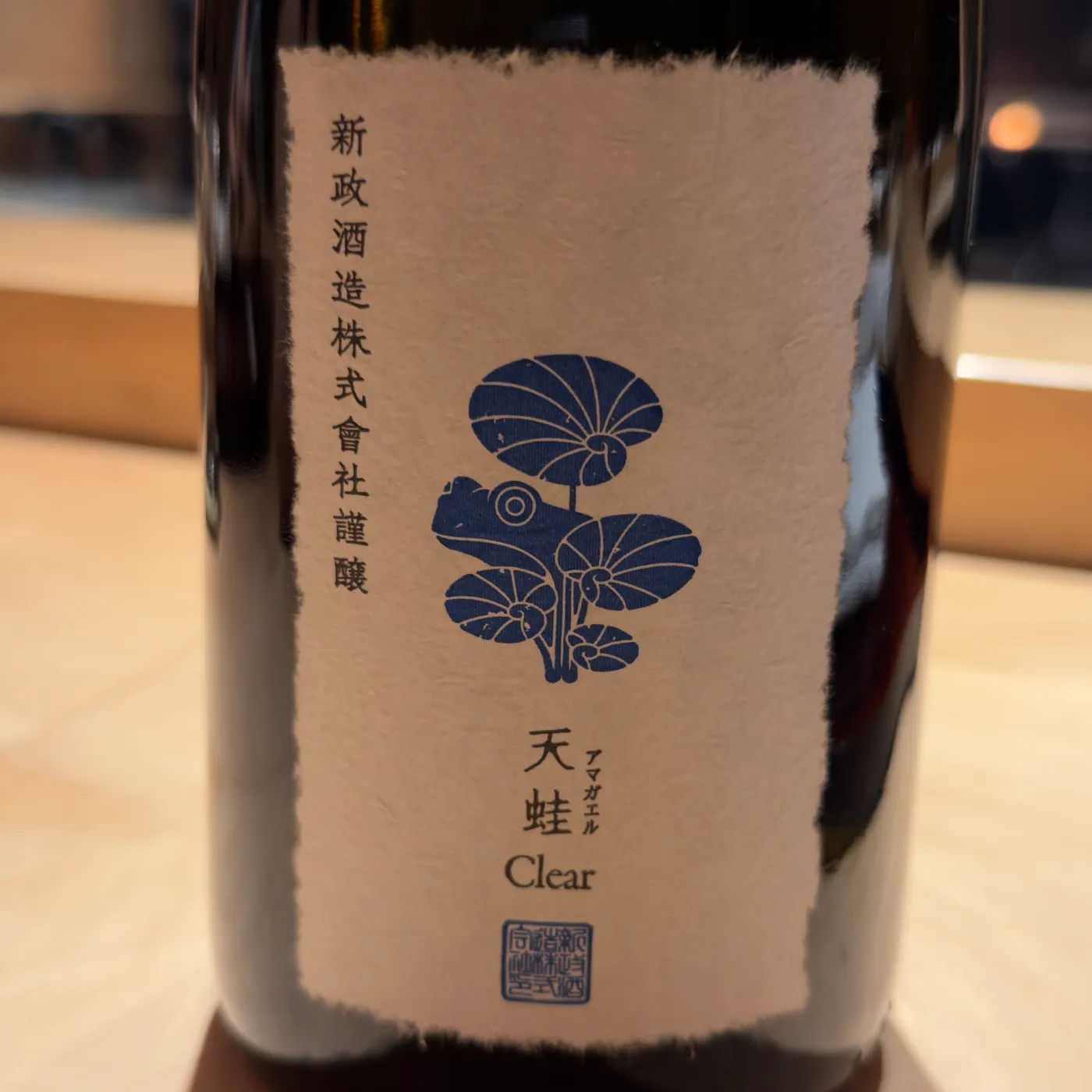
Aramasa Amagaeru Clear — 新政 天蛙 Clear
Aramasa Shuzo · Akita Prefecture
Amagaeru means tree frog. Behind the rather charming label is a sake that takes considerable care to produce. Aramasa uses a second fermentation inside the bottle to create its bubbles naturally, while keeping the alcohol remarkably low. This Clear version is a variation of the original, slightly cloudy Amagaeru. Another example of how much room there still is for experimentation within Japanese sake.
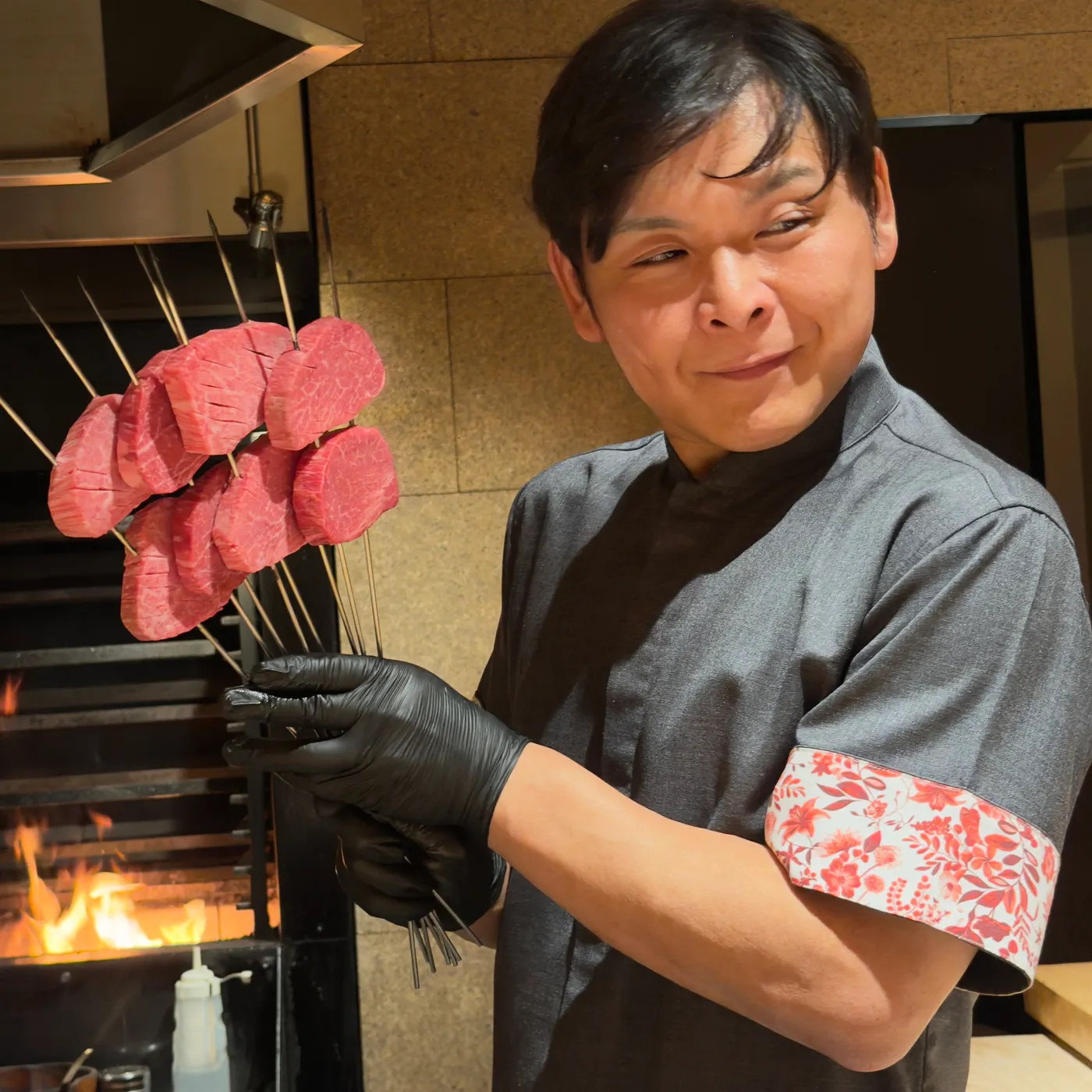
The Man Behind the Fire
The more time I spend with Suetomi, the more I realize that what fascinates me most is not any particular restaurant, dish, or technique.
It is the man.
His mind simply never seems to stop.
I have watched this up close for the last three years. I have eaten with him at places like DiverXO in Madrid and Etxebarri in the Basque Country, and there are moments when you can almost see the wheels turning in his head.
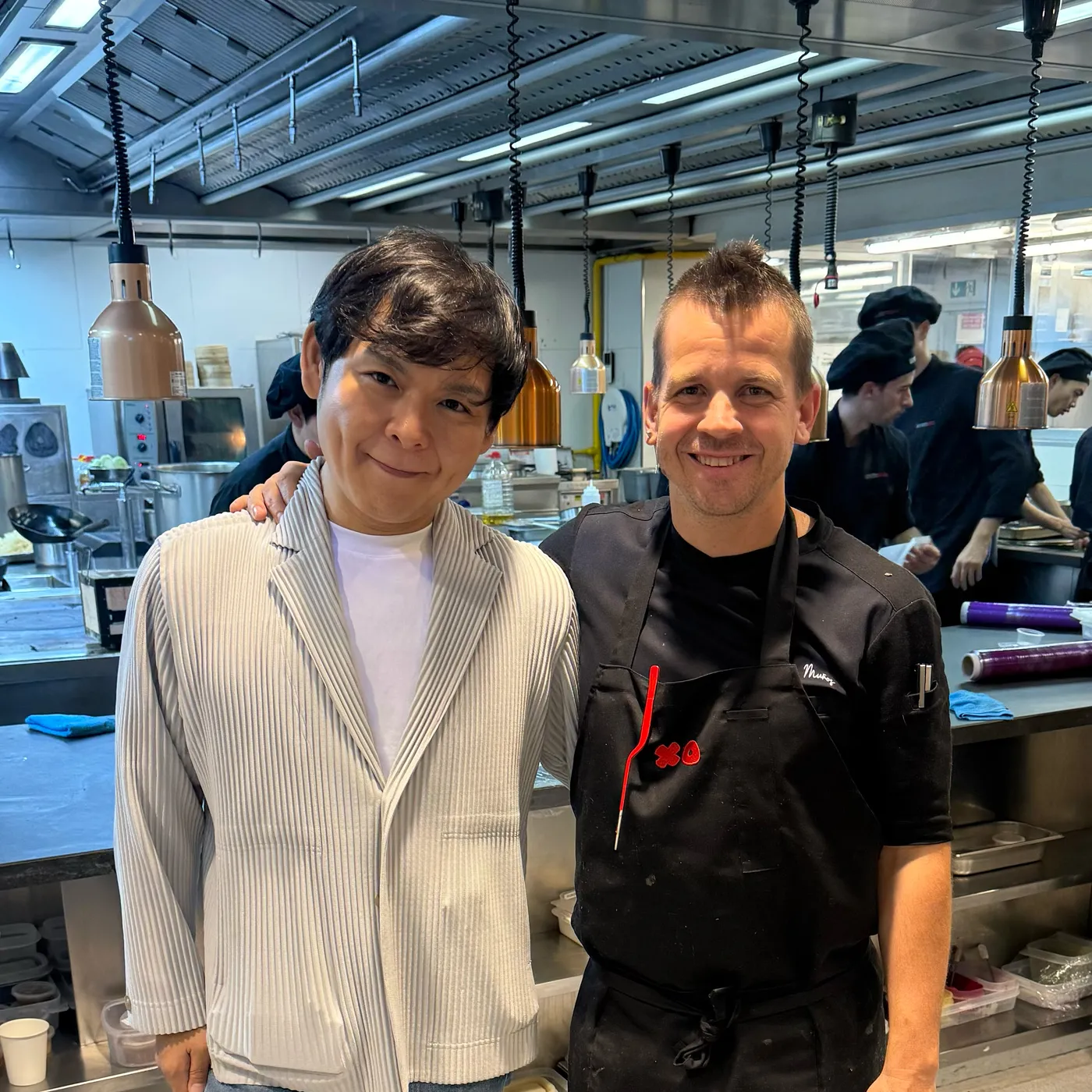
With Dabiz at DiverXO.
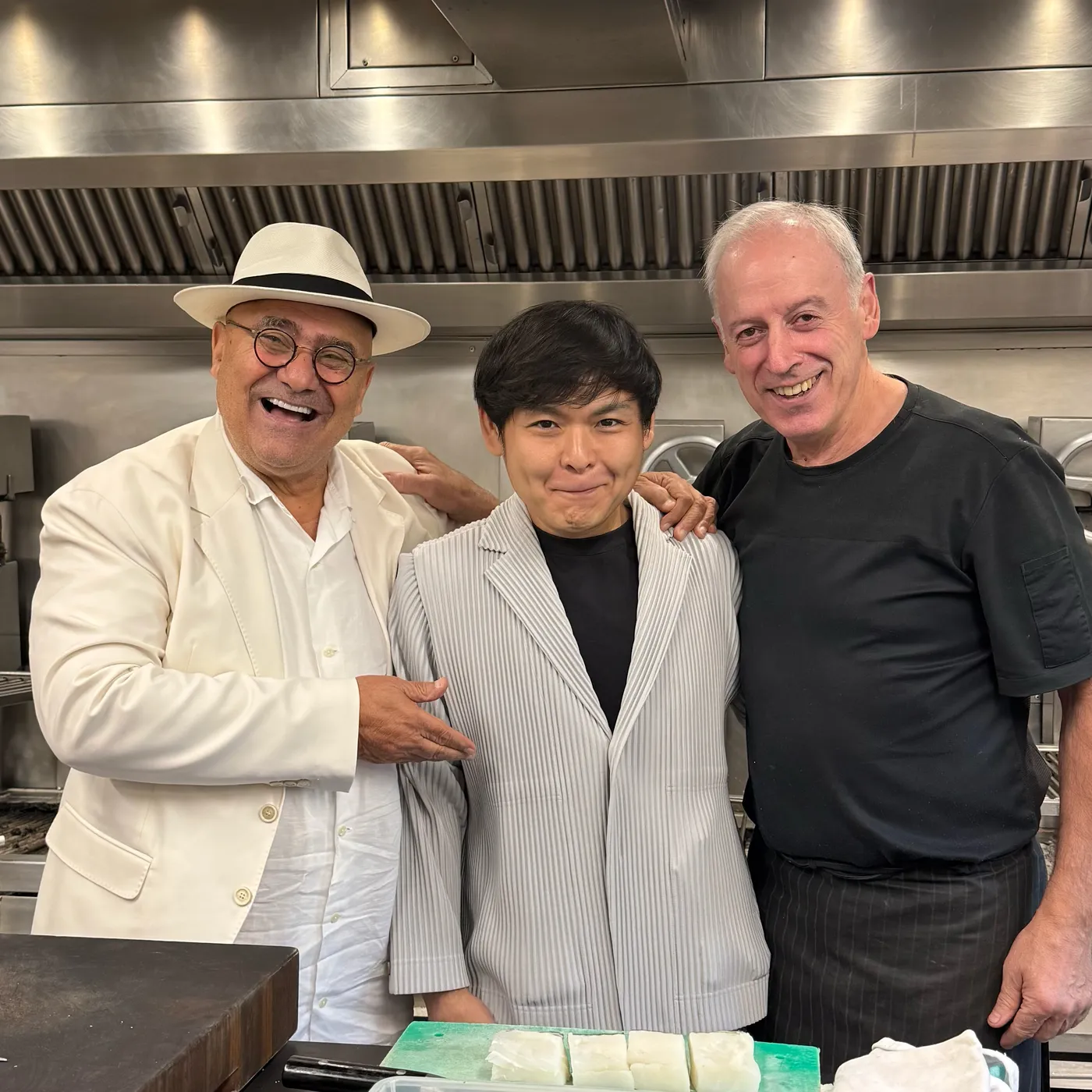
With Bittor at Etxebarri.
He is eating, listening, looking at the fire, watching the room, asking questions, absorbing everything. And then you know that somewhere inside his mind, something new has already started.
I have helped connect him with taco masters in Mexico and döner and kebab specialists in Turkey, and every time it is the same thing.
He wants to know.
He wants to understand why something tastes the way it does, how it is cooked, what makes it different, and what he can learn from it.
There is something almost restless about his curiosity.
He told us that he may try one hundred ideas and find only one or two that are good enough. Maybe three, if he is lucky.
But that does not seem to discourage him at all.
It is almost the opposite.
The failures are simply part of the process.
He keeps trying. Every day.
Another ingredient. Another kind of wood. Another aroma. Another chef. Another country. Another idea.
And perhaps this is what makes Suetomi so interesting to me.
He is not protecting a formula that worked.
He is constantly trying to escape it.
Even when he creates a restaurant that becomes impossible to book, he does not seem particularly interested in standing still and enjoying the success.
He wants to know what comes next.
I still remember walking into that almost spartan room across the street from Makitori ShinKobe and thinking, “I don’t want to eat here.”
Now I spend years trying to get another meal from the man.
Thank you, Suetomi san, for a night I had been looking forward to for a very long time.
Let’s not leave it quite so long before the next one. ❤️
I AM A HUNGRY TOURIST.