Sushi Saito II
Visited Tue, Nov 24, 2026 · Lunch
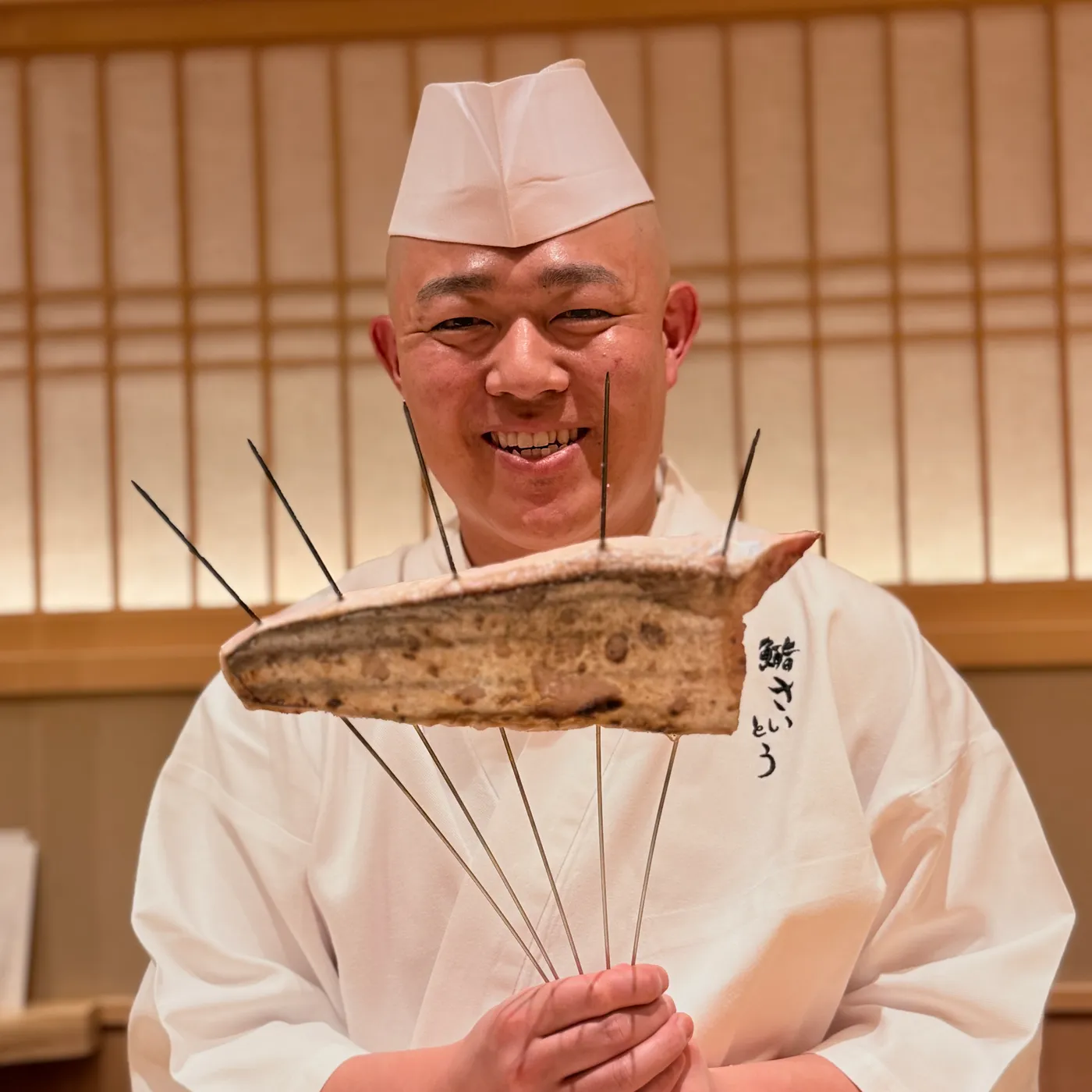
Saito II
My Little Brother
The first time I really noticed Hiroshi Ishikawa, I had come to Sushi Saito to eat with Saito san. Saito wasn’t feeling well, so Hiroshi stepped behind the counter and started the meal in his place.
I remember watching his hands and thinking there was absolutely no question who had taught him. Quick, precise, soft. One, two, three, and boom.
When Saito arrived and took over, the first thing I told him was how impressed I was with his second in command. He laughed, looking very proud, and the next day I wrote to Hiroshi and told him I wanted the whole thing. Not a few pieces before Saito arrived, but a complete omakase from beginning to end.
I later posted a video of him making the three tuna nigiri and a negitoro hand roll, and gave people one piece of advice: follow this young chef and do whatever you can to get a seat at Saito’s second counter.
That was years ago, and somewhere along the way Hiroshi stopped being simply the young chef I was following and became my little brother.
What we ate
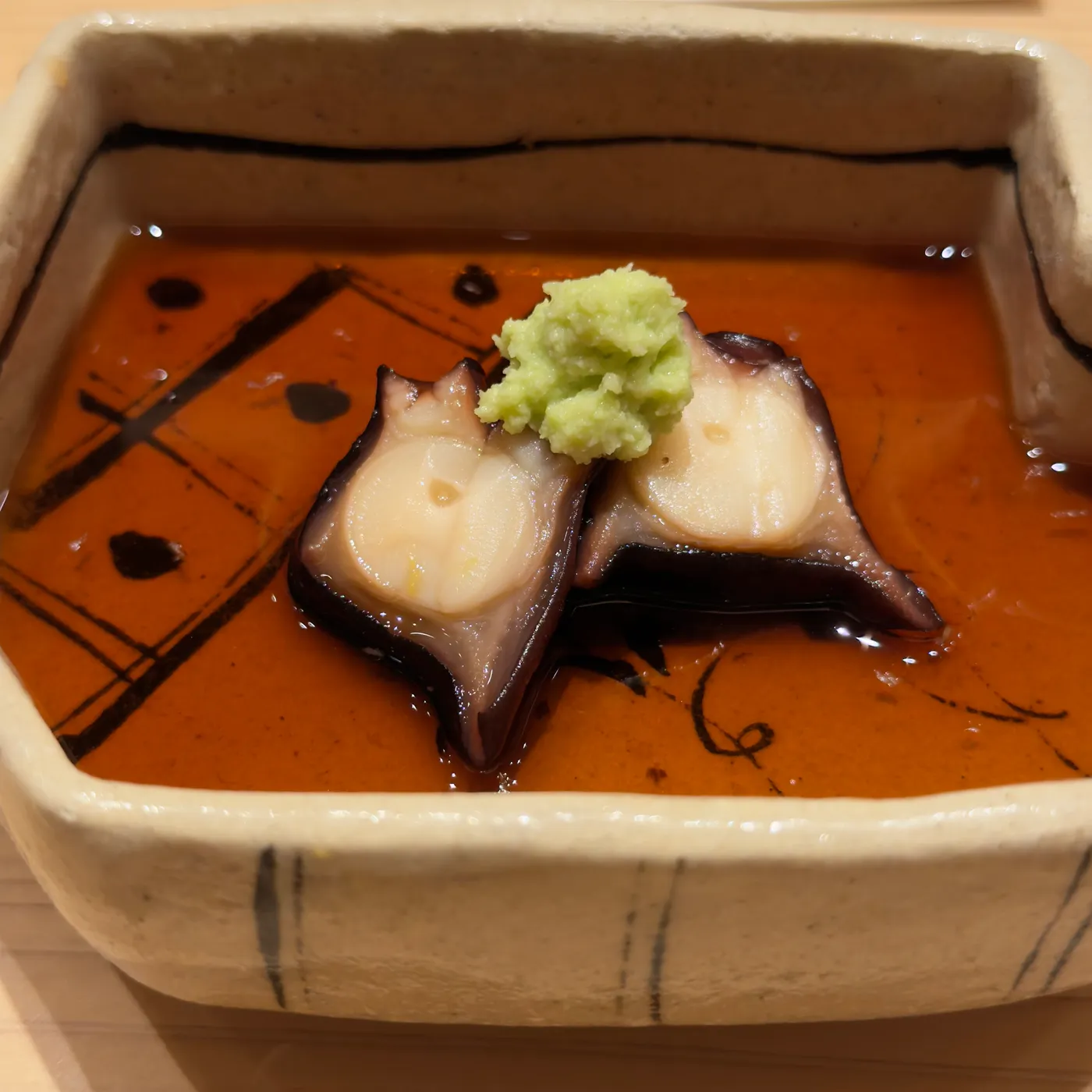
Tako in Soy — 蛸
Thick slices of octopus prepared with soy, tender without losing their bite. Before preparation, the octopus is frozen once to help break down its fibers. The work changes with the condition of each octopus. Repeating exactly the same treatment every day would not produce the same result, so the preparation is adjusted to keep the texture consistent.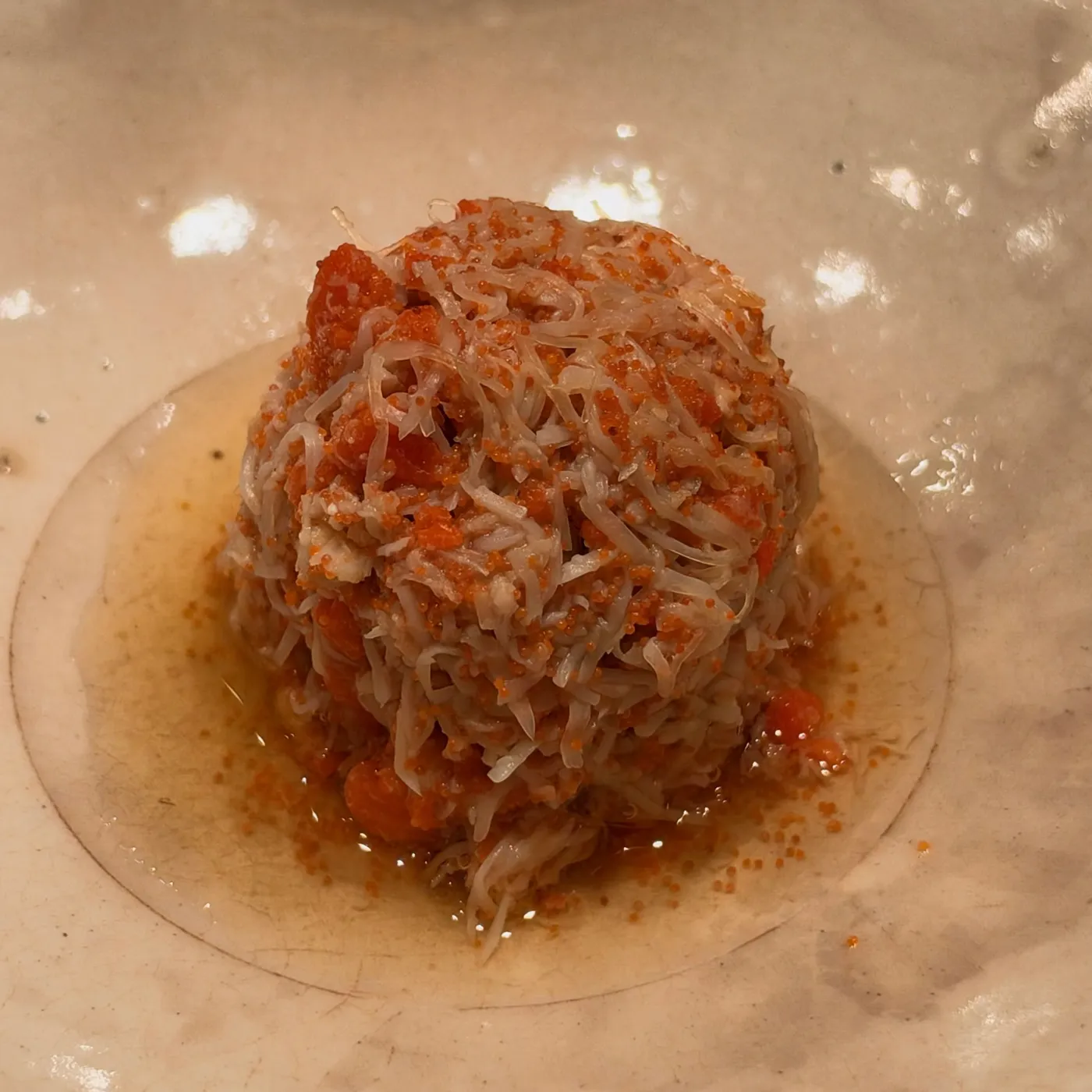
Kōbako-gani — 香箱蟹
Small seasonal snow crab, also called seko-gani, with the meat picked from the shell and gathered into a mound with its roe. Fine strands of white meat and bright orange eggs give the preparation its contrasting textures. Kani-zu, a vinegar dressing, is poured over the crab, adding acidity to the sweet meat rather than covering it with a heavy sauce.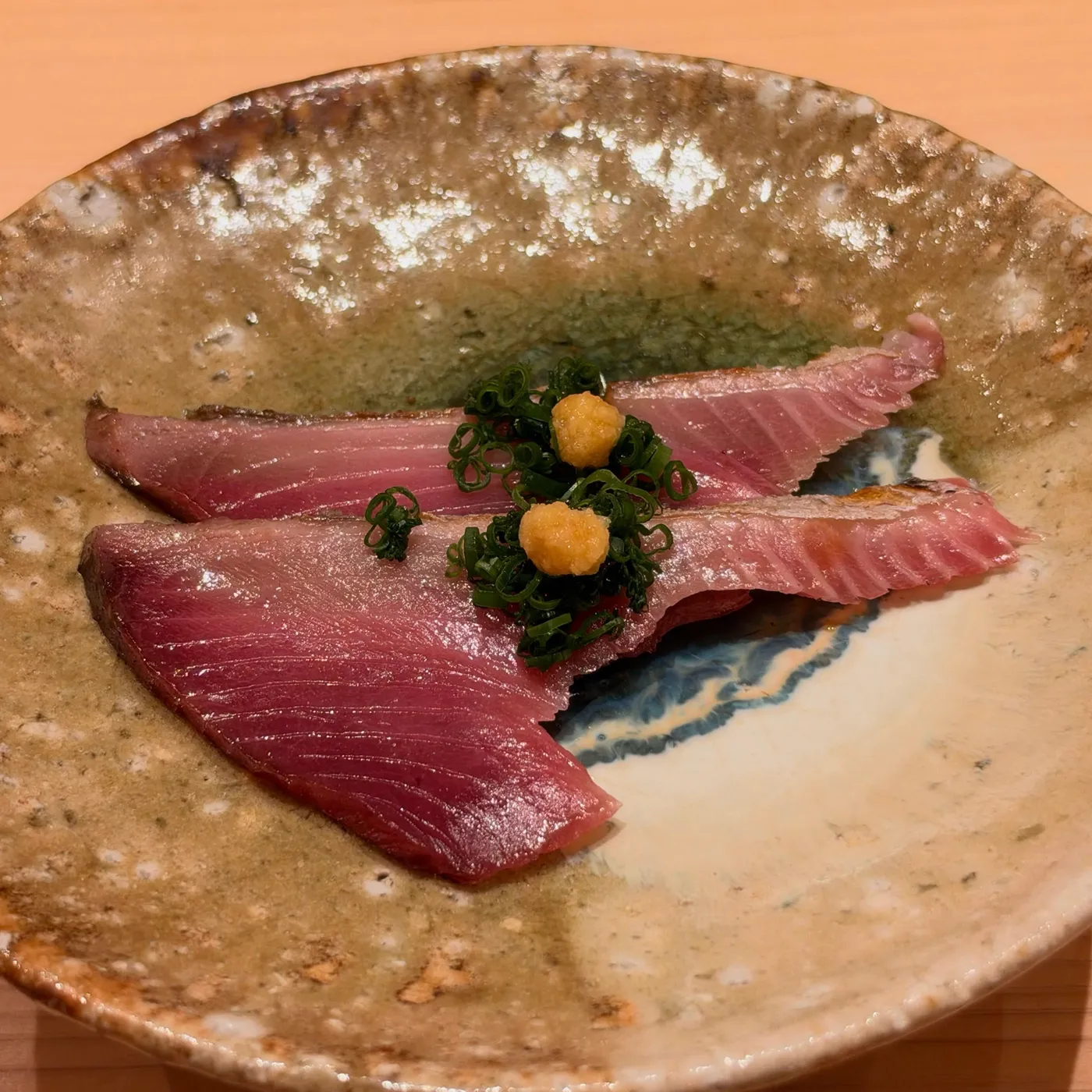
Suma-gatsuo — スマガツオ
Also called yaito-gatsuo, this fish was particularly fatty that day. The skin receives a generous coating of salt before being seared over strong charcoal heat. The slices retain a pink interior beneath the browned edge, with finely sliced green onion on top. The salted, seared skin gives a contrast to the rich flesh rather than cooking the fish all the way through.Ikura over Rice — いくらご飯
Salmon roe marinated for roughly half a day in soy sauce with a pronounced dashi flavor. A generous amount of liquid keeps the eggs loose and separate, the texture preferred at Saito. Served over rice, the large, glossy eggs carry the seasoning in each mouthful. The roe was approaching the end of its season, with the eggs noticeably larger than earlier in the year.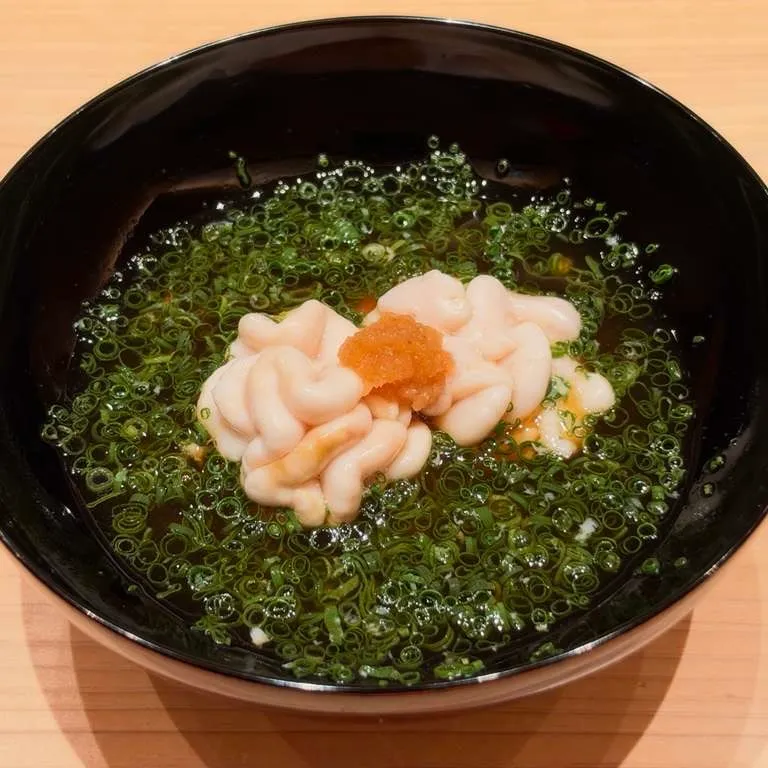
Shirako with Ponzu and Dashi — 白子
Soft lobes of shirako in ponzu and dashi, surrounded by finely sliced green onion. The milt’s creamy texture meets the citrus acidity of the ponzu and the savory depth of the dashi, keeping the preparation light around its rich center.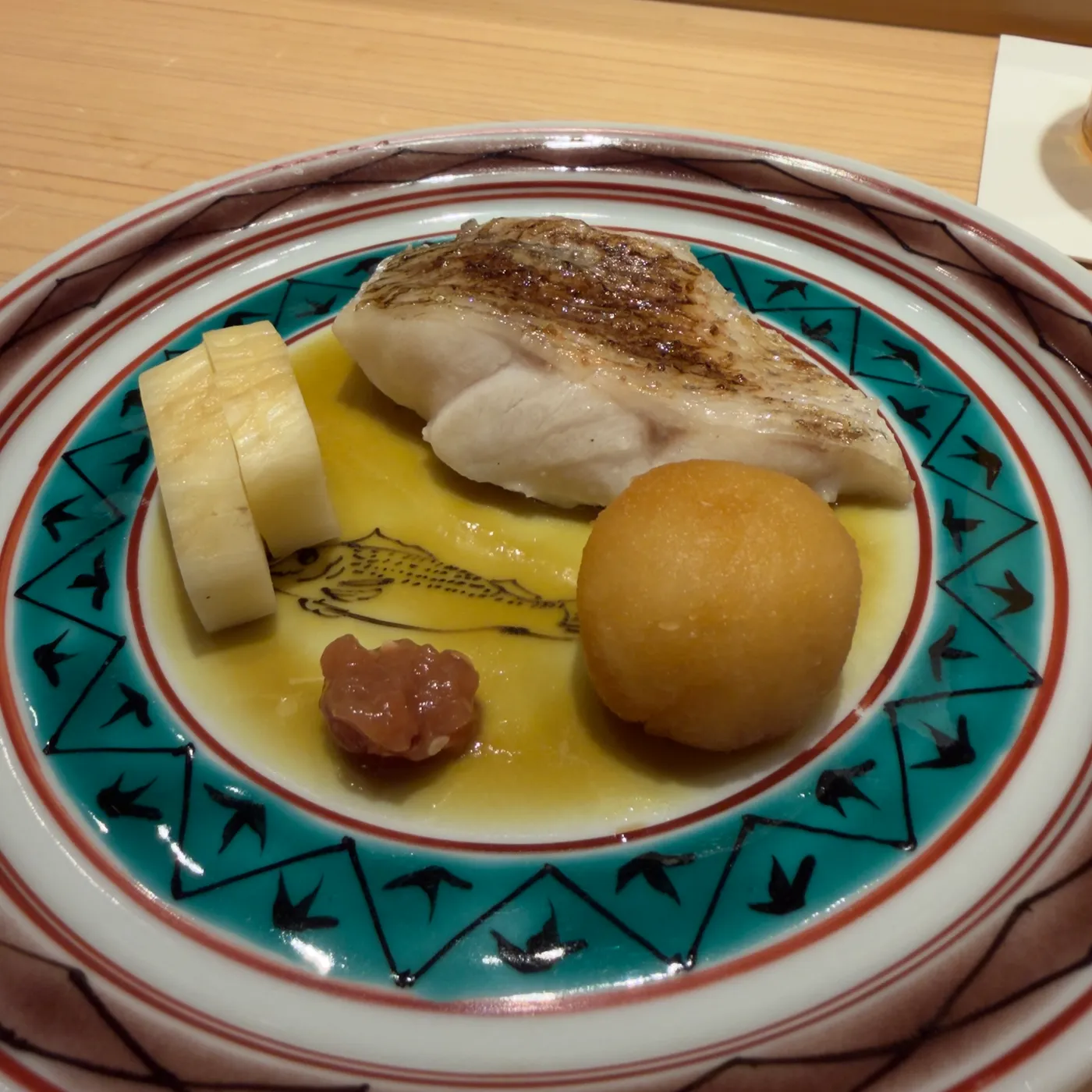
Nodoguro — のどぐろ
Fatty blackthroat seaperch, grilled with its skin on. The browned surface contrasts with moist white flesh, with the fish’s own oils providing much of the richness.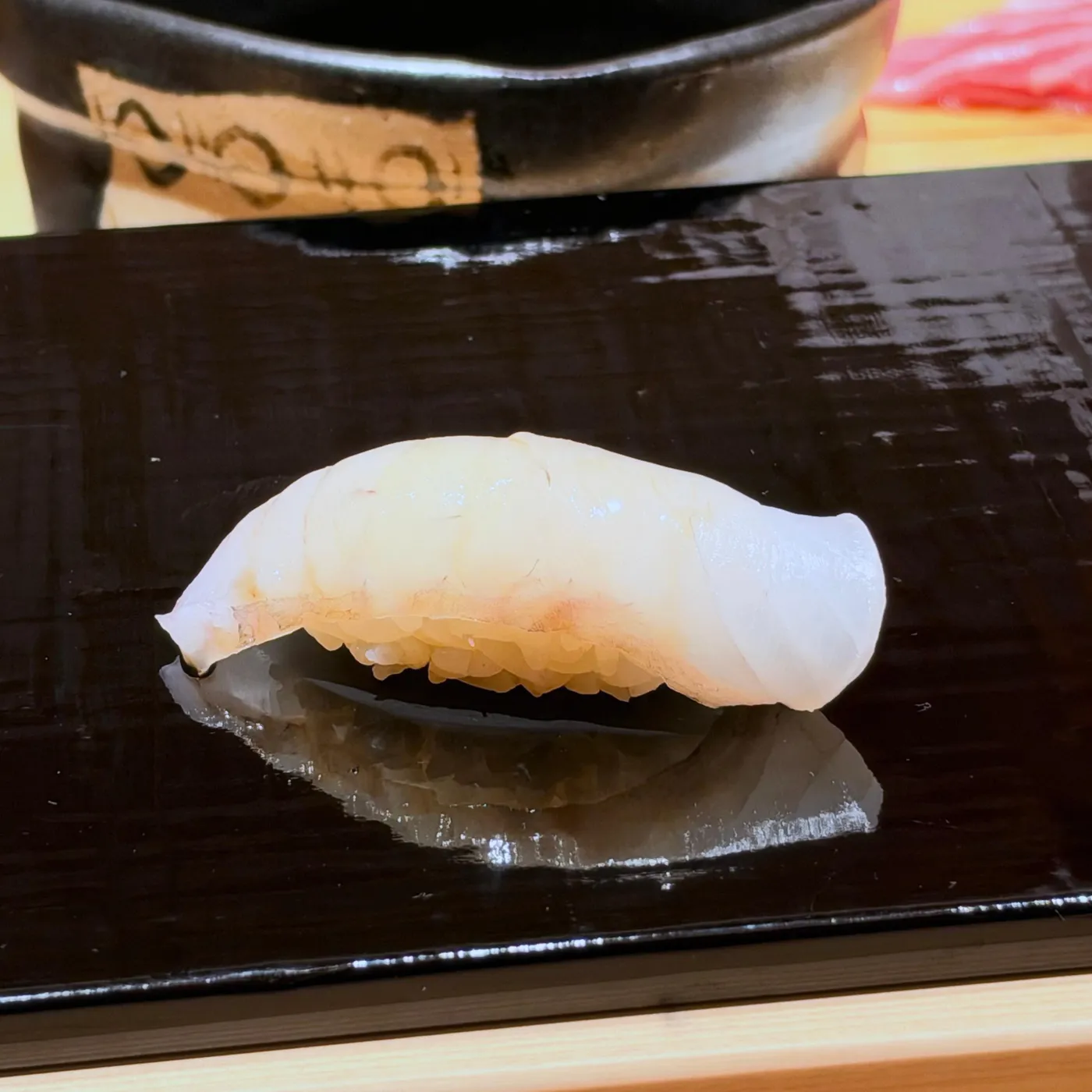
Matsukawa-garei — 松川鰈
Matsukawa-garei given one hour of kombu curing before being shaped over shari. The kelp adds umami to the delicate flatfish without a lengthy cure. The preparation preserves the fish’s supple texture and mild sweetness, with the kombu contributing depth rather than an assertive sauce or topping.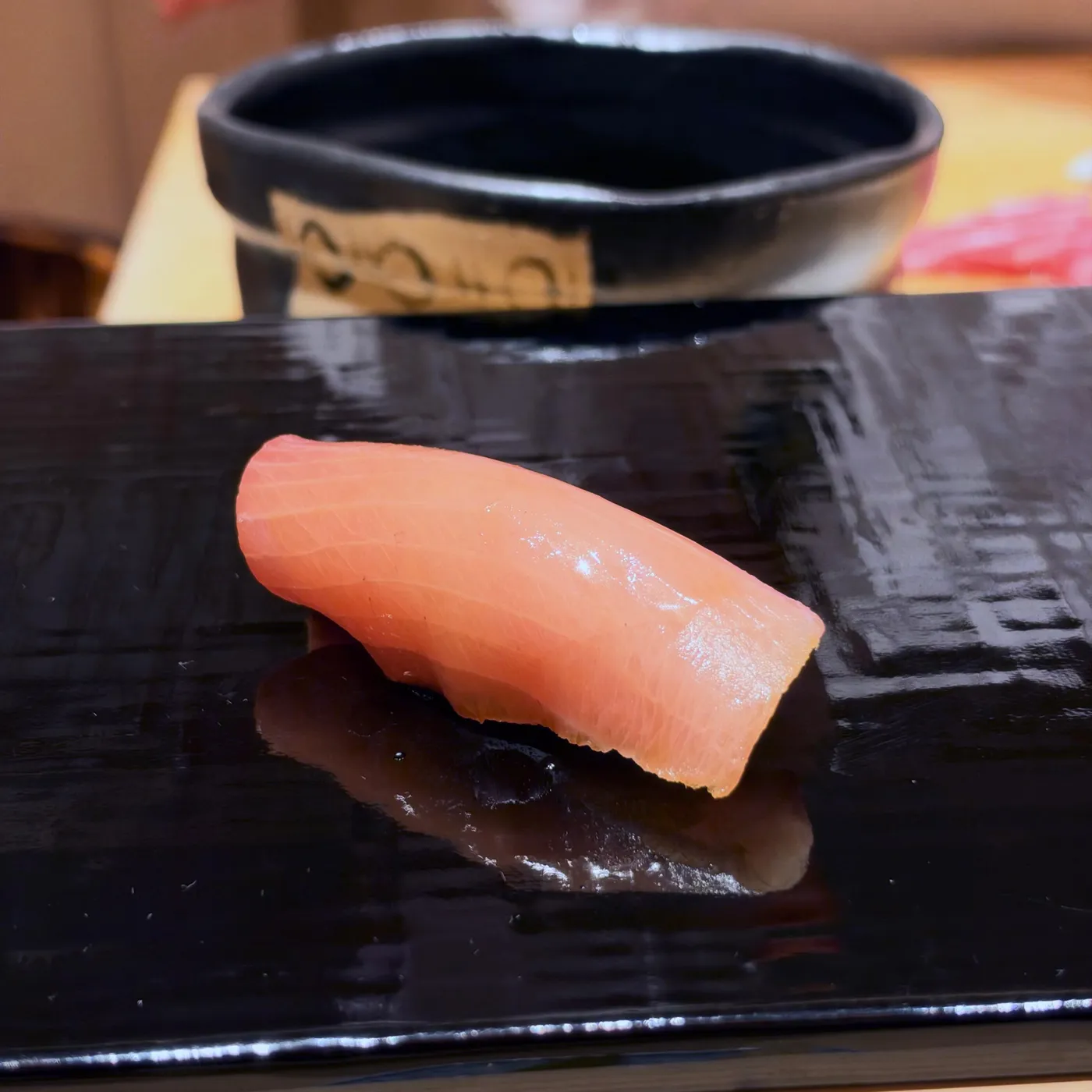
Buri — 鰤
Buri belly, cut into a broad slice and shaped over shari. Only the belly portion is selected for this preparation; the back is not used. The pale, glossy flesh shows the fat running through the slice. The choice of that particular part of the fish is central to the piece.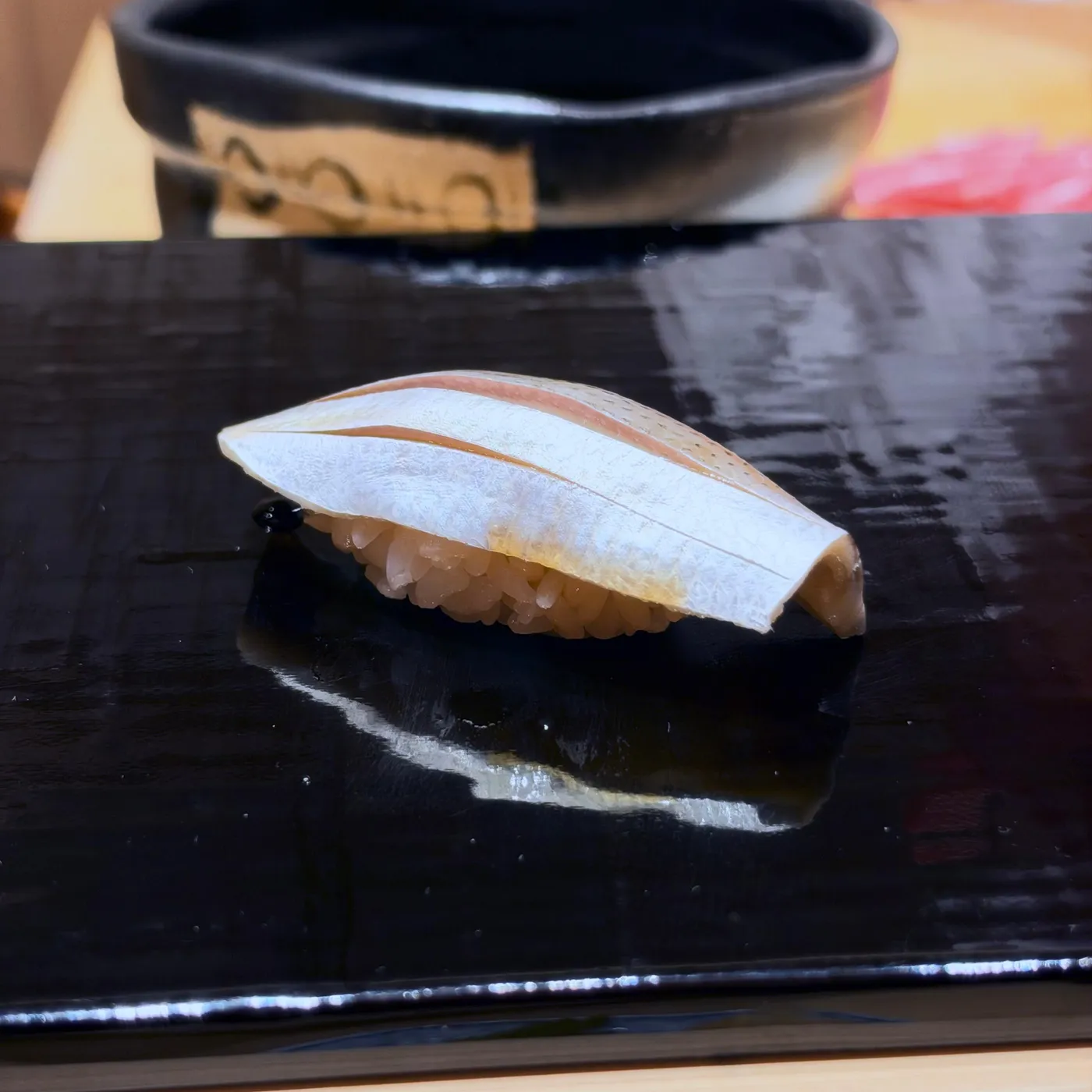
Kohada — 小肌
Gizzard shad cured with salt and vinegar, then allowed to mature before serving. The salt level, acidity, and maturation all have to be judged together. Its preparation concentrates several of the sushi kitchen’s most demanding decisions into one small fish. The cured fillets are layered over shari, balancing the fish’s richness with the sharpness of the vinegar.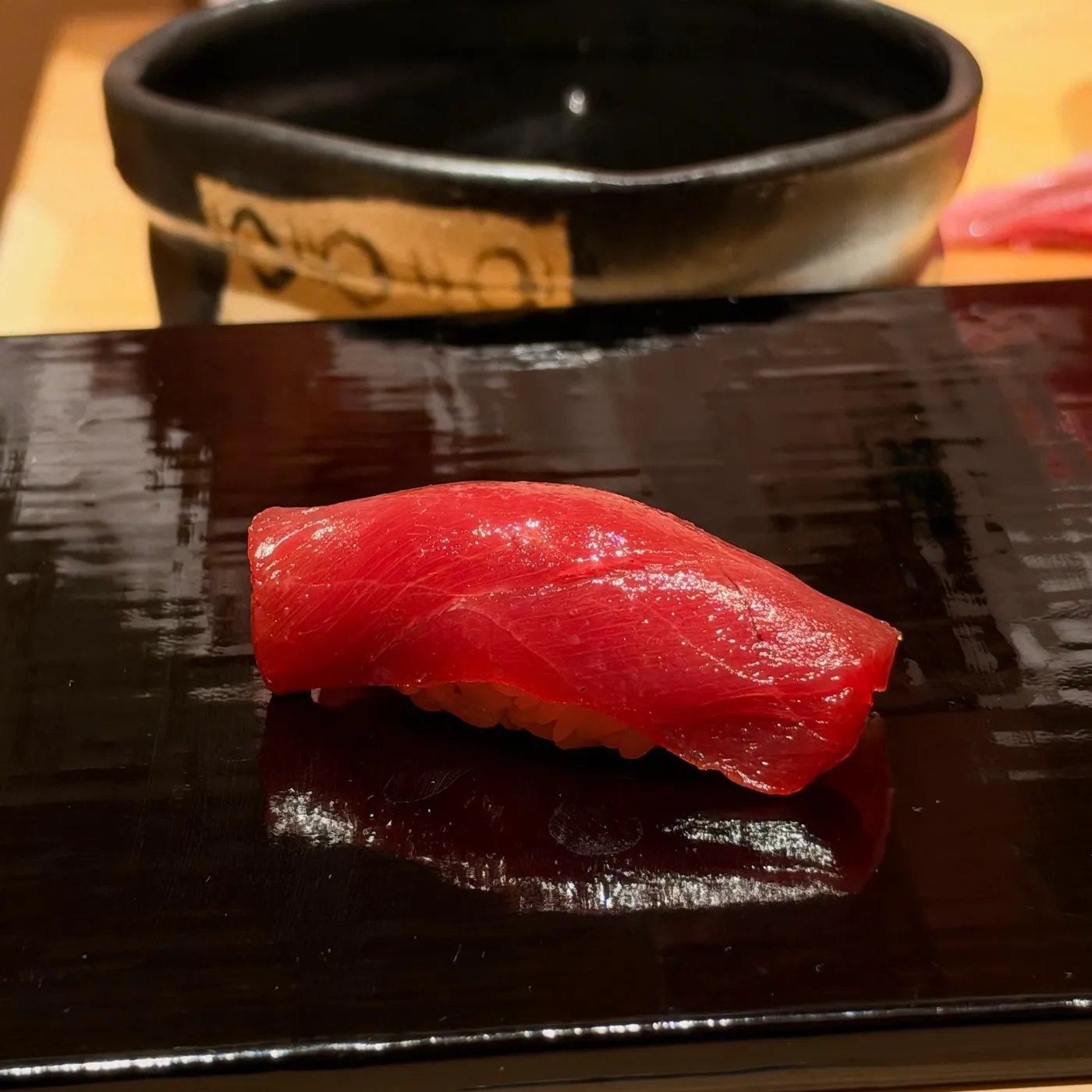
Akami-zuke — 赤身漬け
Lean bluefin tuna from a 170-kilogram fish caught in Hokkaido’s Funka Bay. The akami is marinated for five to ten minutes before being made into nigiri. It is a brief seasoning rather than a long cure, adding savory depth while keeping the lean tuna’s flavor distinct.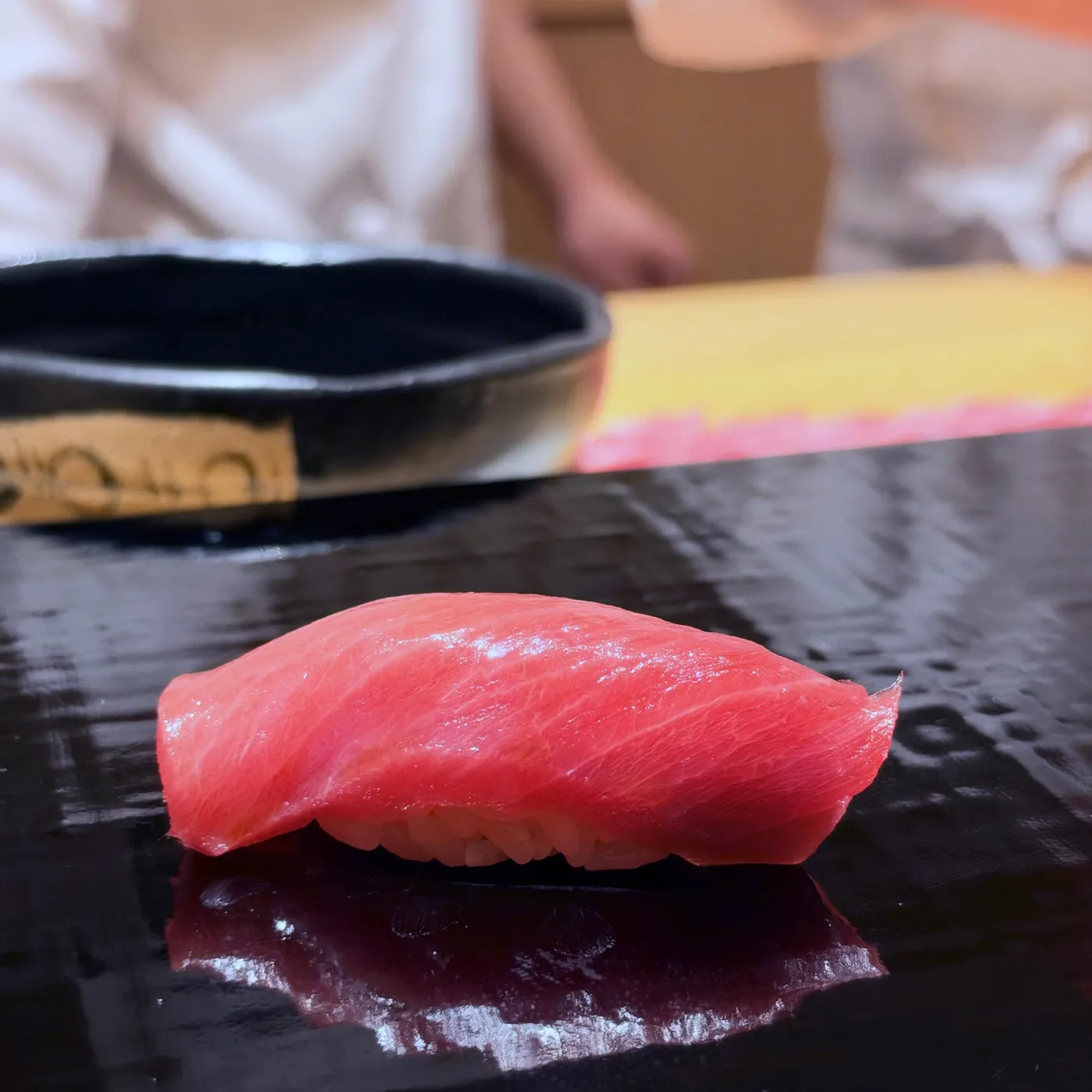
Chutoro — 中トロ
Medium-fatty tuna from the same Funka Bay fish. Fine marbling runs through the pink-red flesh, combining the flavor of the lean meat with the softer texture of the fat. A broad slice rests over the shari, with the grains still visible beneath it.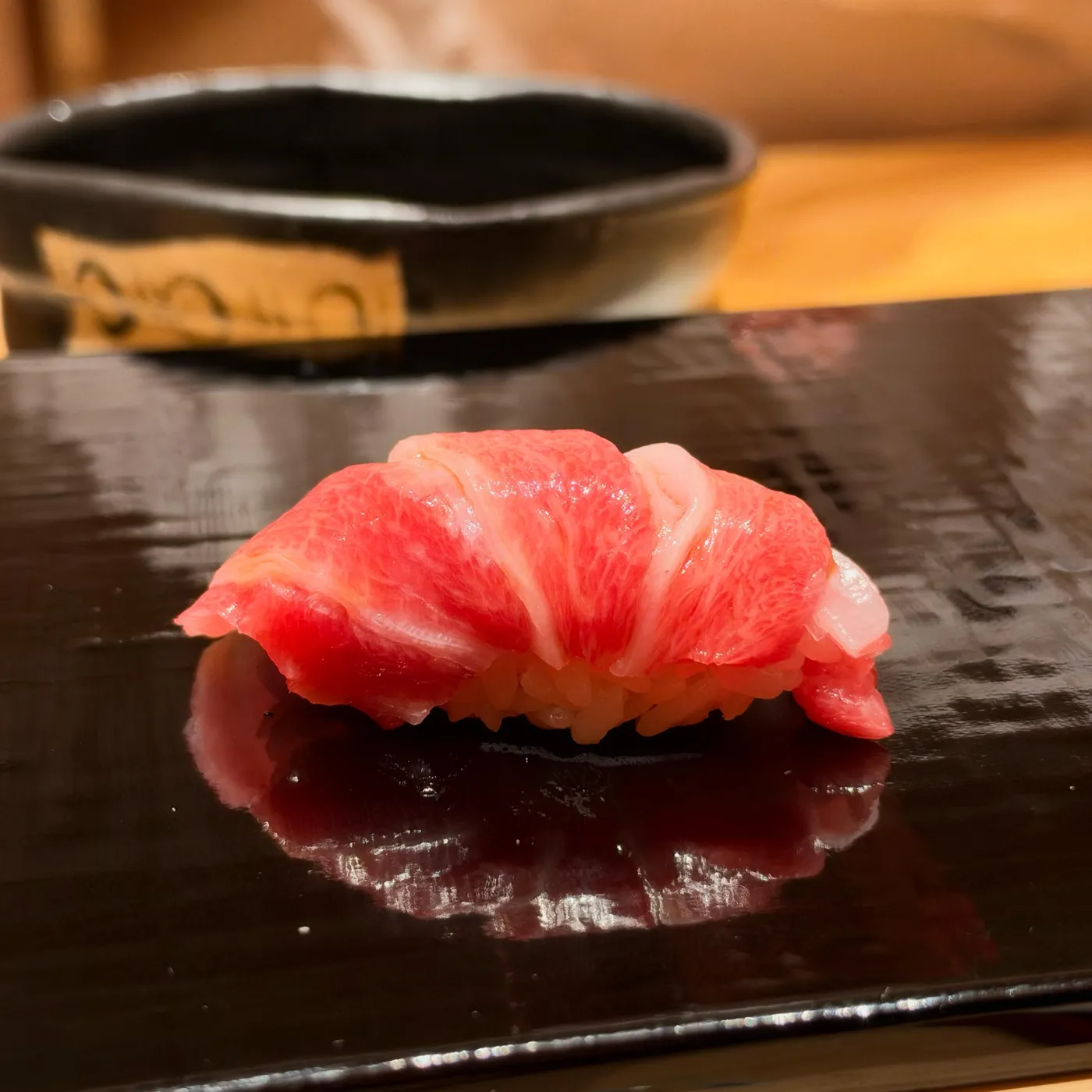
Otoro — 大トロ
Heavily marbled fatty tuna over shari. The pale lines of fat run through the flesh, giving it a melting texture and a much richer character than the lean akami.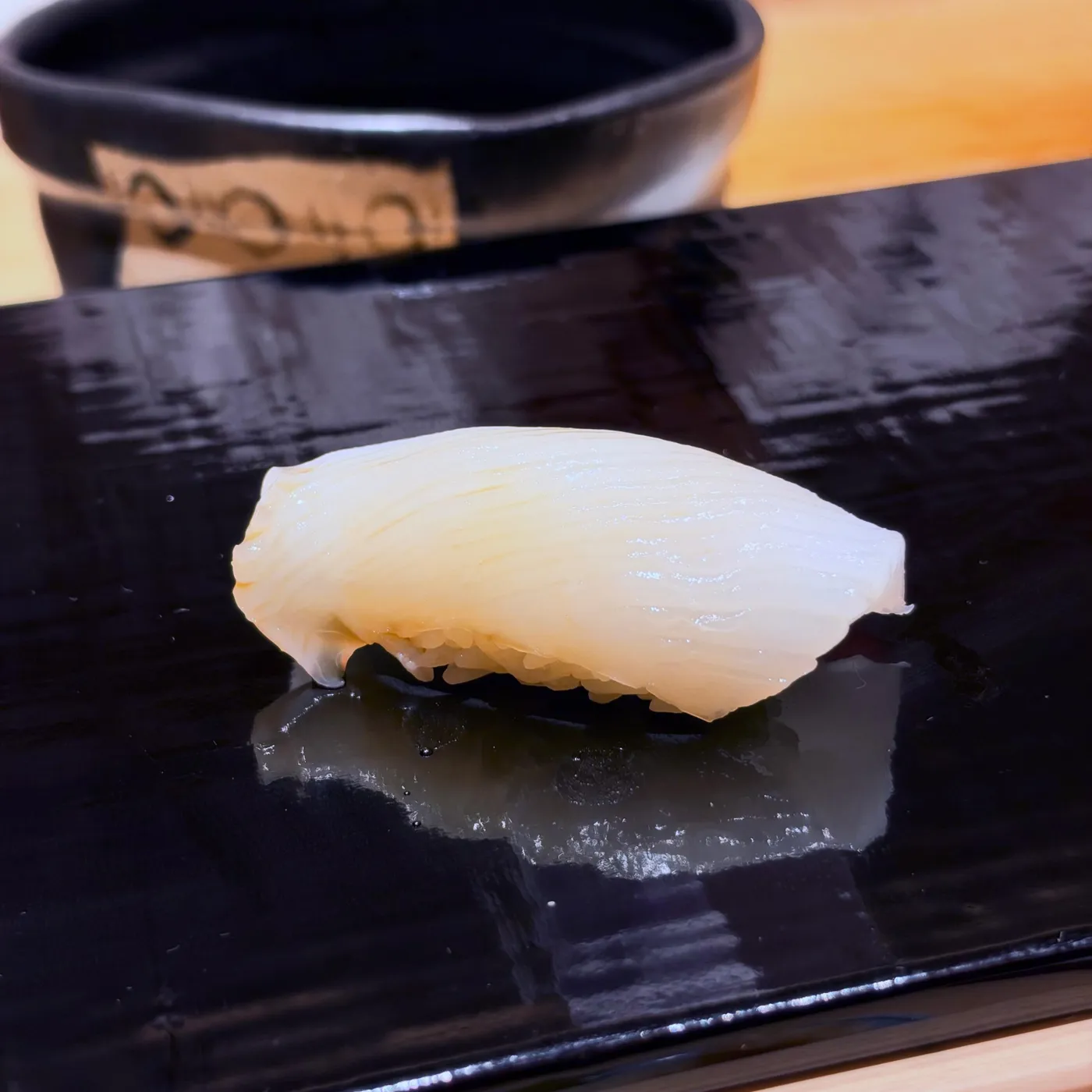
Aori Ika — アオリイカ
Aori squid worked with closely spaced, fine knife cuts before being formed into nigiri. The cuts soften the squid’s texture, making it easier to bite through without removing its characteristic substance. The fine lines remain visible across the white flesh, with the shari tucked beneath it.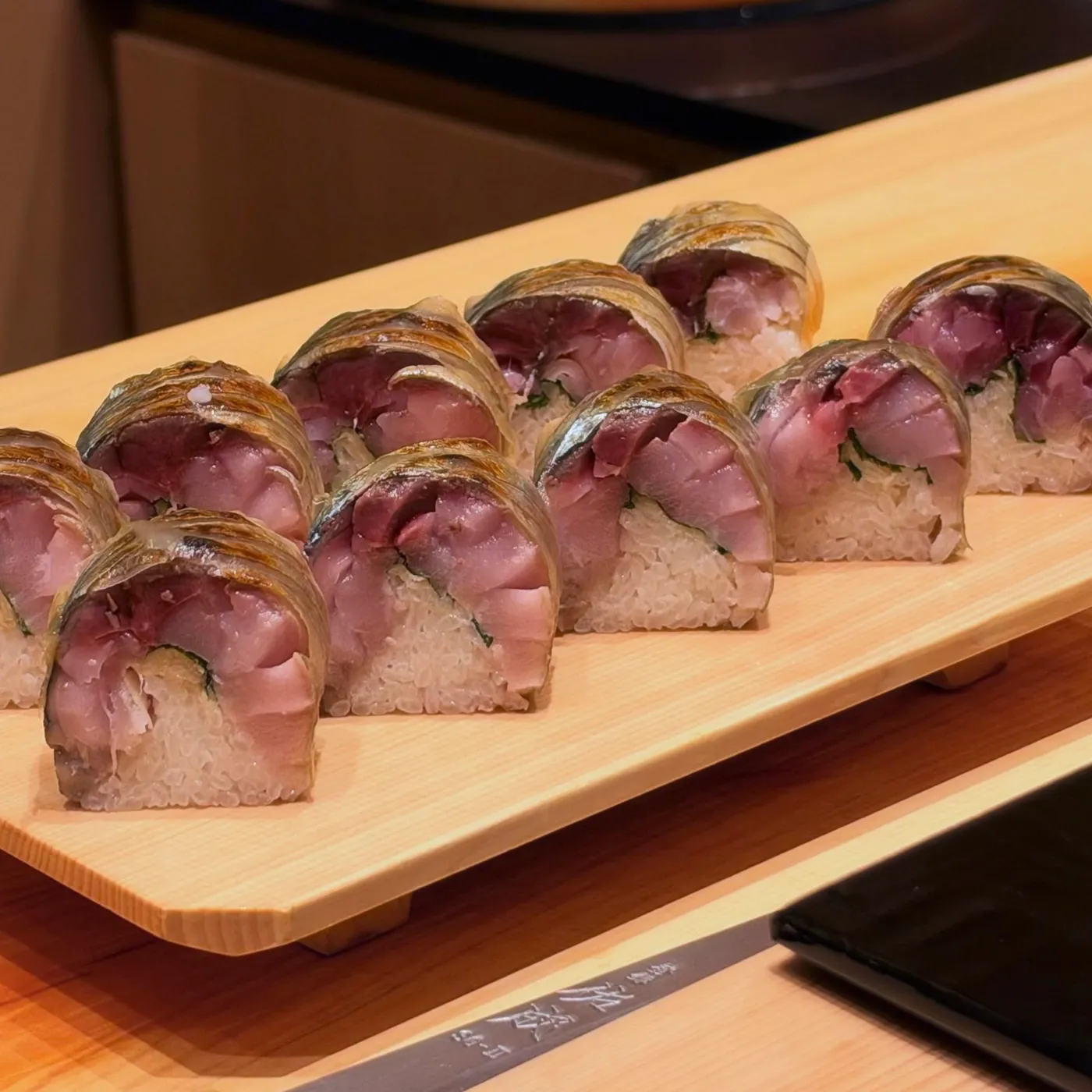
Shime Saba — 〆鯖
Cured mackerel with sushi rice. The acidity of the cure balances the richness of the fish and its natural oils.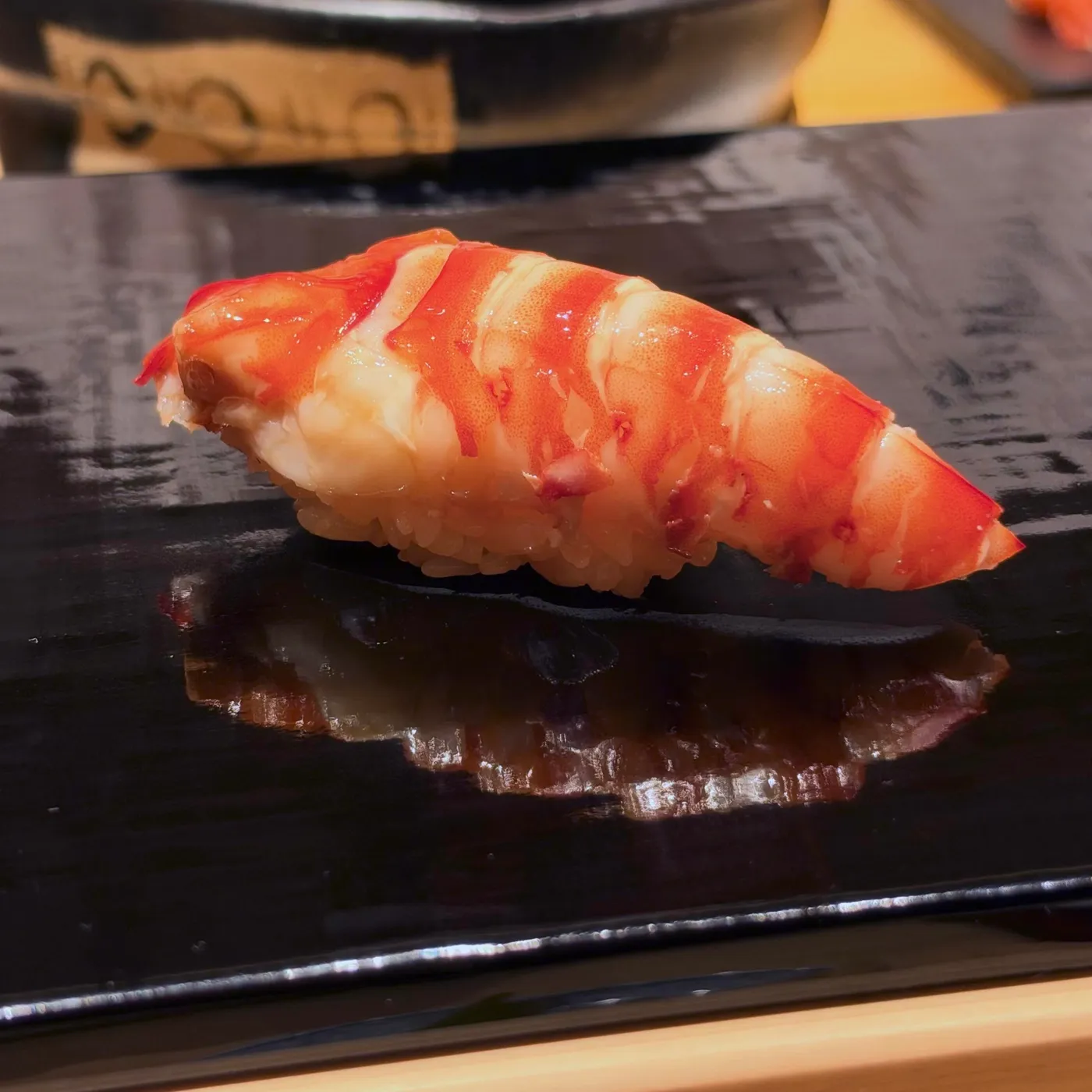
Kuruma Ebi — 車海老
Japanese tiger prawn opened along its length and laid over shari. Sweet flesh with a firm, tender bite, its orange-and-white bands extending across the rice.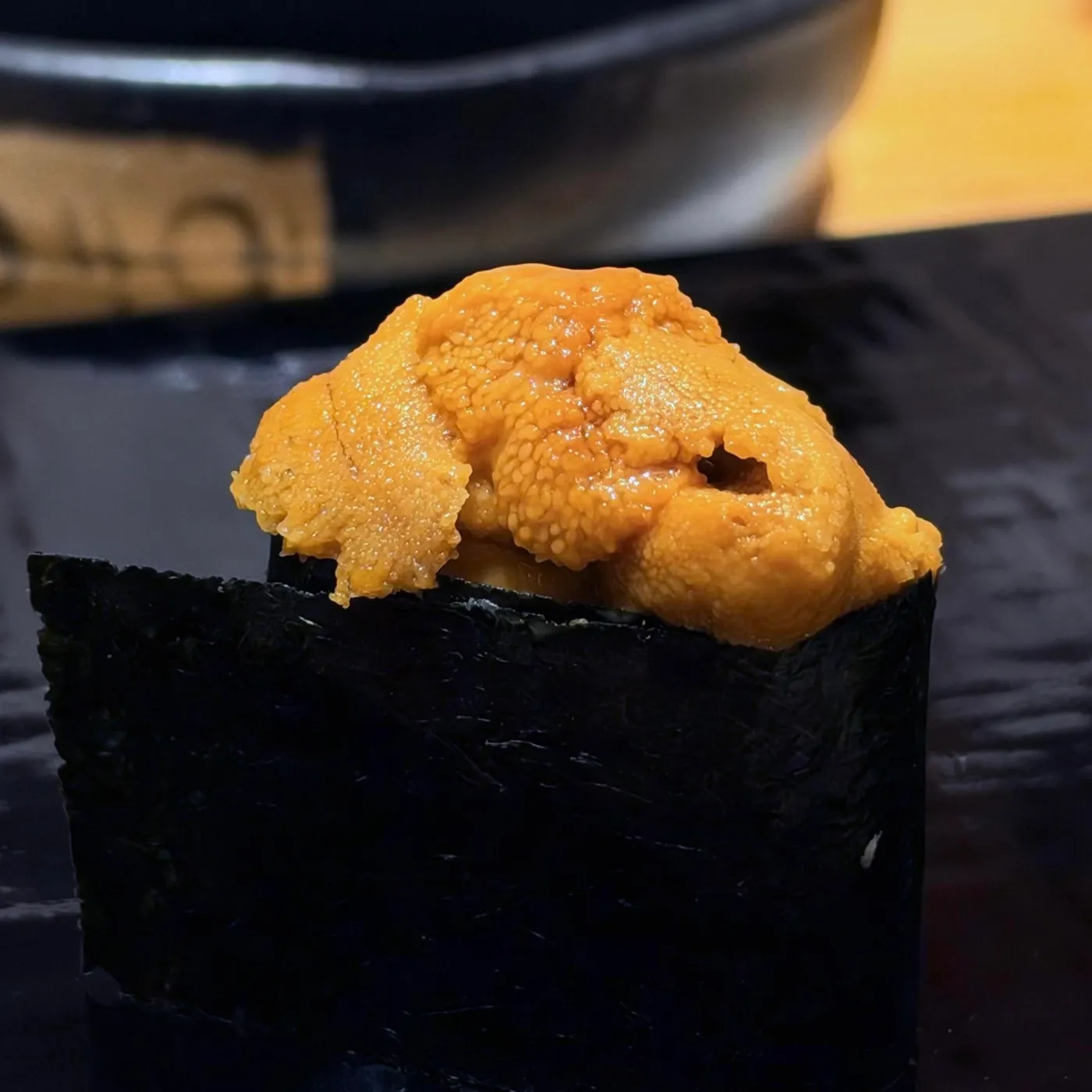
Uni — 雲丹
Sea urchin piled over rice inside a collar of nori. Creamy sweetness and sea flavor, with crisp seaweed around the soft lobes.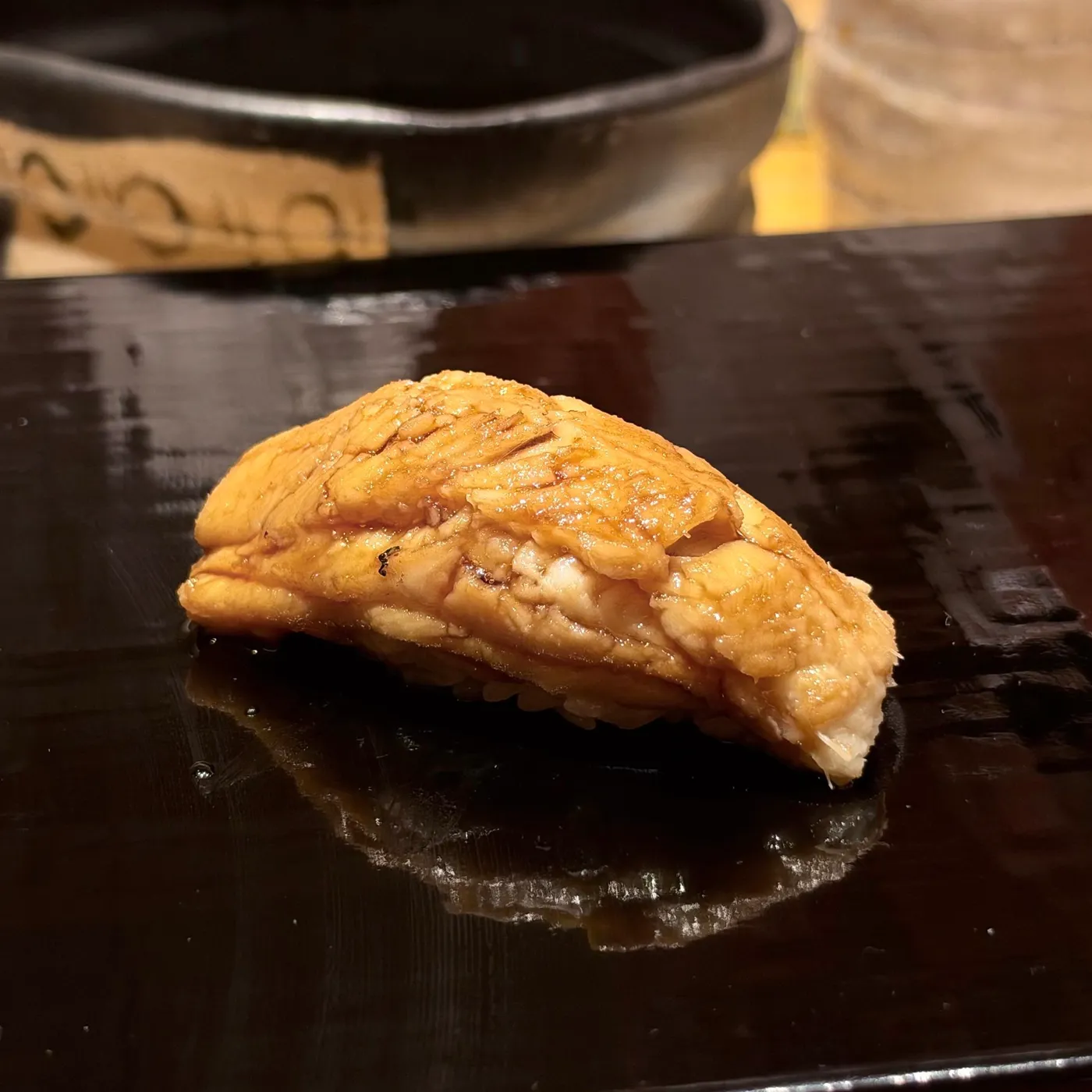
Anago — 穴子
Sea eel gently simmered until soft, then finished with sweet-savory tsume. The tender flesh lies over the shari beneath a glossy coating of sauce.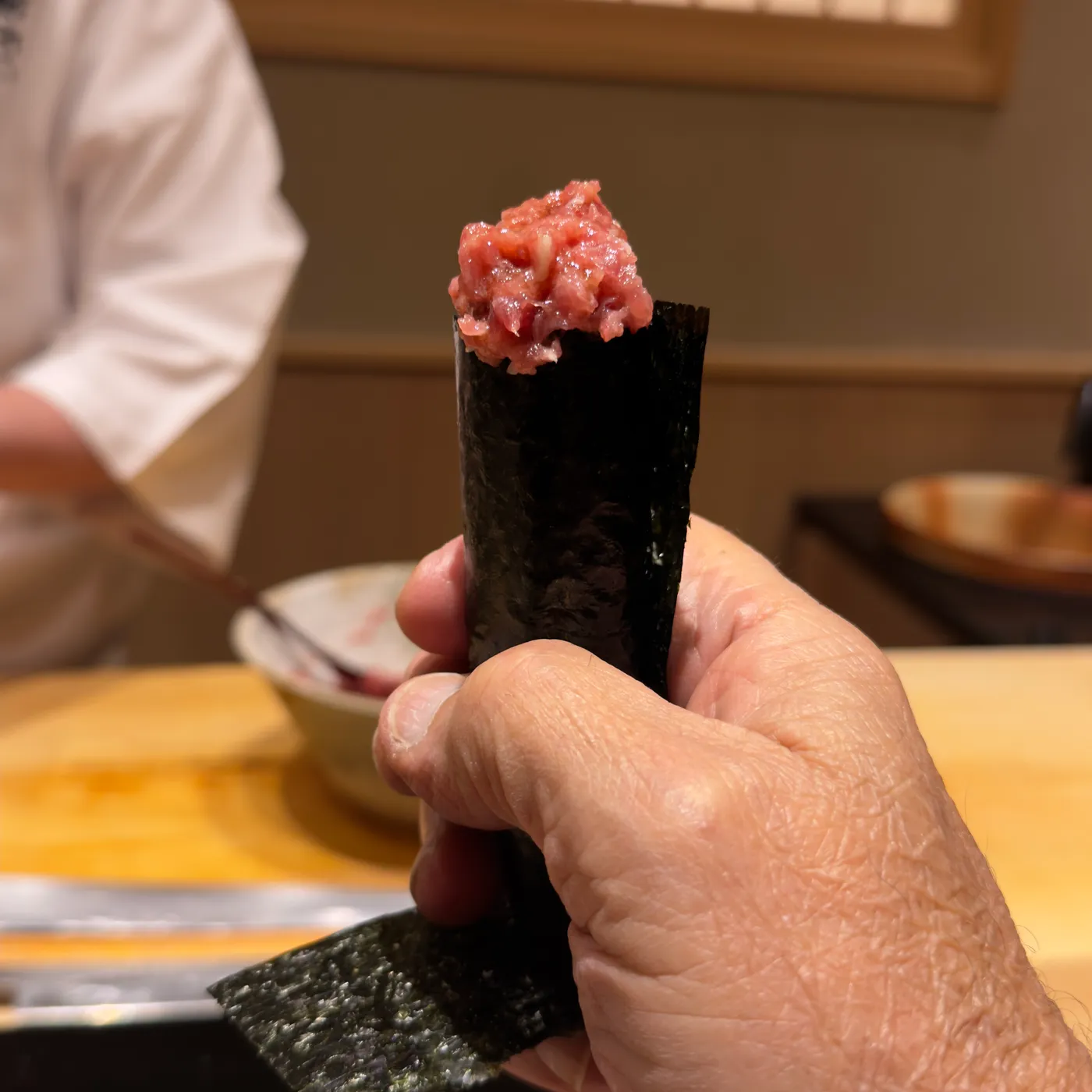
Negitoro Hand Roll — ネギトロ手巻き
Chopped fatty tuna and shari rolled in nori, with another generous spoonful of tuna at the open end. A straight-sided hand roll with a crisp wrapper around the soft filling, handed across the counter ready to eat.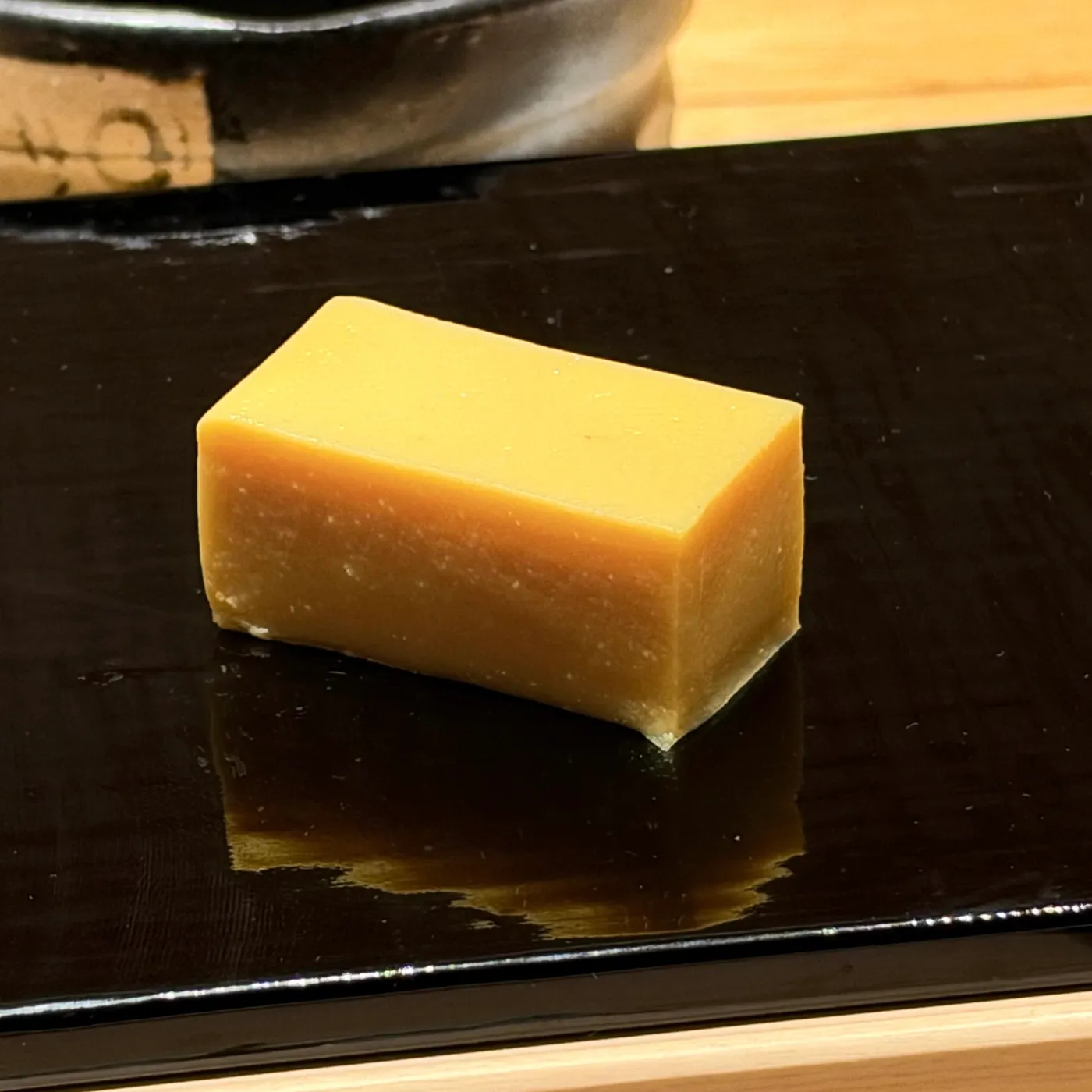
Tamago — 玉子
A smooth, custard-like block of egg, cut into a neat rectangle. Rich and gently sweet, with an even texture throughout.What we drank
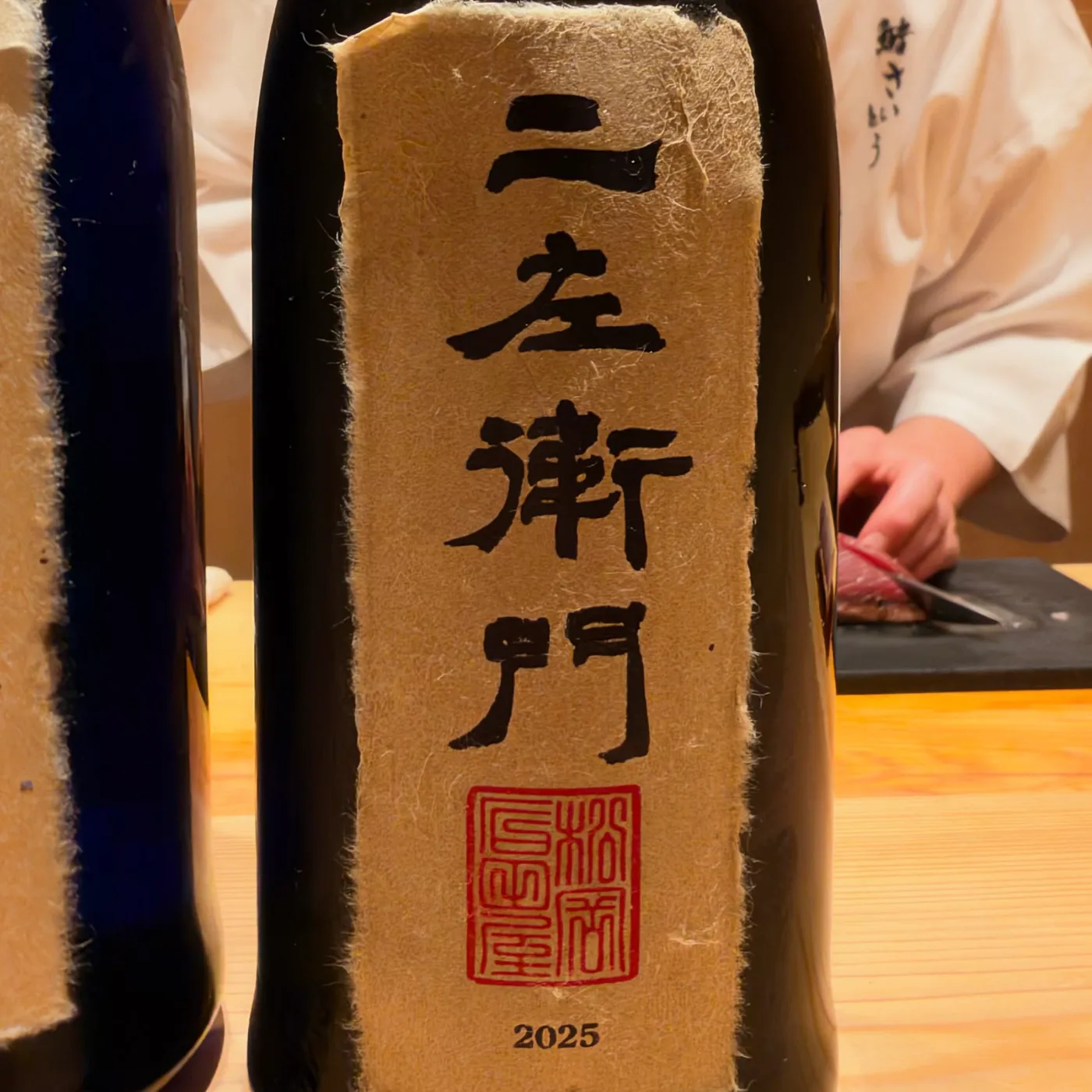
Kokuryu Nizaemon 2025 — 黒龍 二左衛門
Kokuryu Shuzo · Fukui Prefecture
Named after the founder of Kokuryu, a brewery established in 1804, Nizaemon is one of its most prestigious Junmai Daiginjo expressions. Made with Yamadanishiki rice polished to 35%, the sake is collected through gravity dripping and matured at low temperatures. Remarkably refined, with delicate fruit aromas, silky texture and beautifully integrated umami, it exemplifies the understated elegance of Japanese sake.
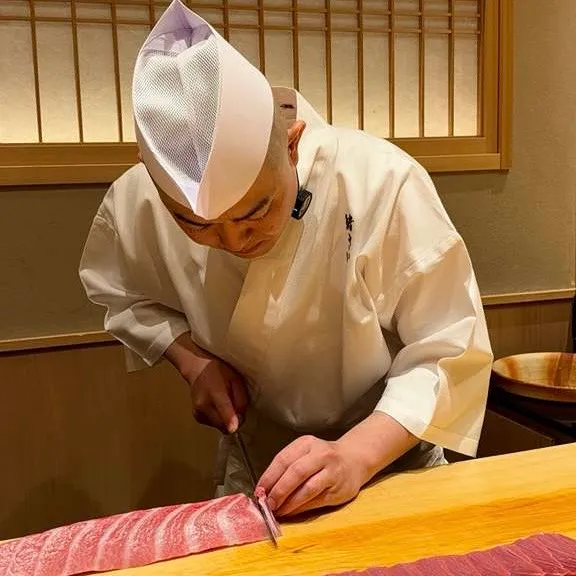
My Little Brother
During lunch, we talked about how he became a sushi chef. Before sushi there was farming, then electrical work, then Tokyo, and finally Saito.
His description of the early years was simple: “Cleaning, cleaning, cleaning, cleaning.” It took about five years before he was allowed to stand in front of guests and serve sushi.
We talked about New York, expensive taxis, expensive hotels, cars, his Lexus, and the Porsche GT3 he would really like to own one day. Naturally, we also discussed salmon skin, because apparently this is what two grown men talk about when one of them is a great sushi chef and the other one has been eating for a living for too long.
I asked for negitoro after the anago, because some traditions should never be abandoned. But Hiroshi had already prepared something I had not asked for.
A special section of tuna called jabara, normally meant for Saito san, was ours that day. Hiroshi told me he had taken it because I was coming.
There was no speech and no big moment. Just a piece of tuna, and somehow, after all these years, it said everything.
There are advantages to having a little brother who makes sushi.
Thank you, Hiroshi. ❤️
I AM A HUNGRY TOURIST.