Sushi Sho Masa
Visited Wed, Nov 25, 2026 · Dinner
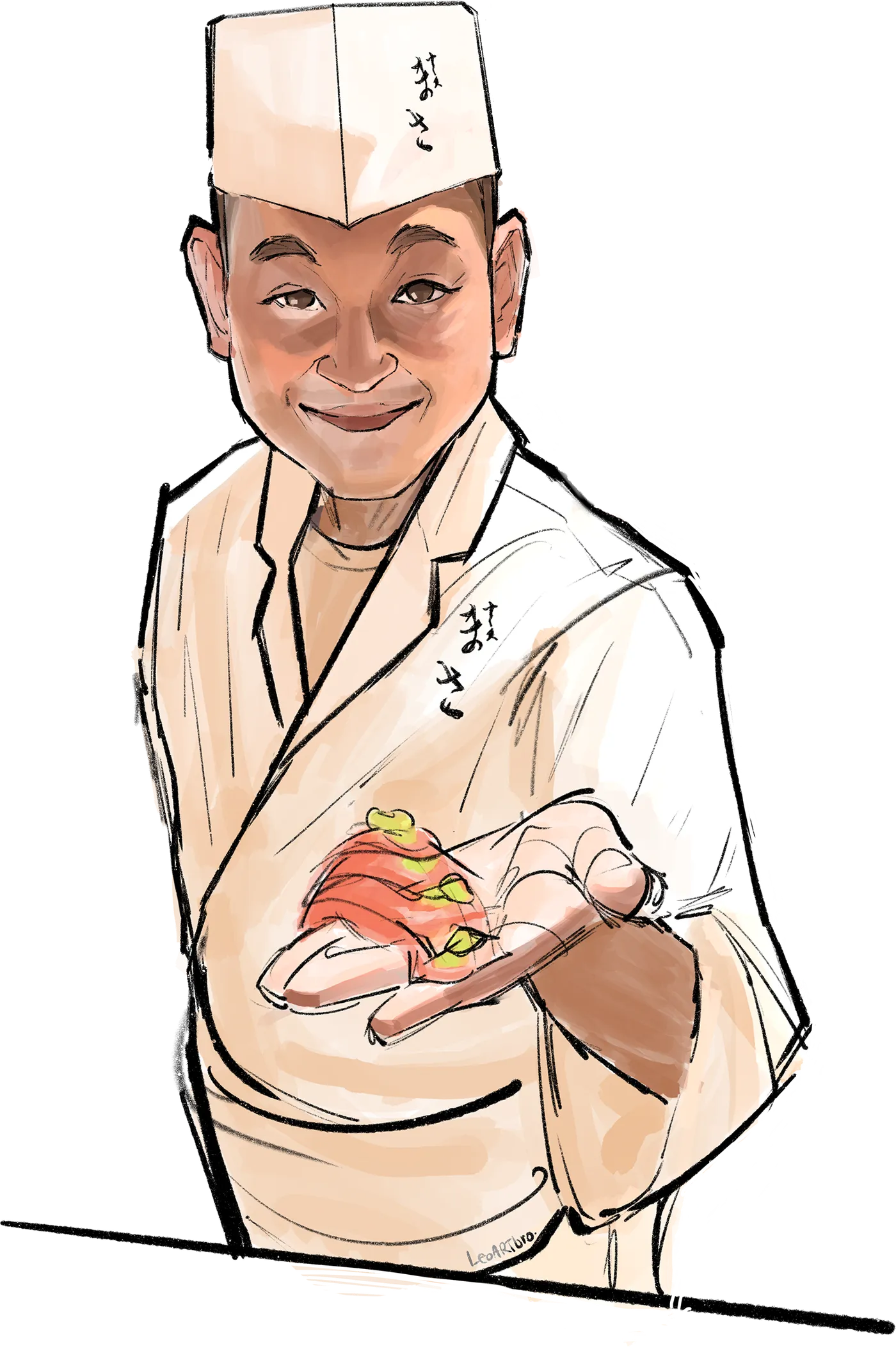
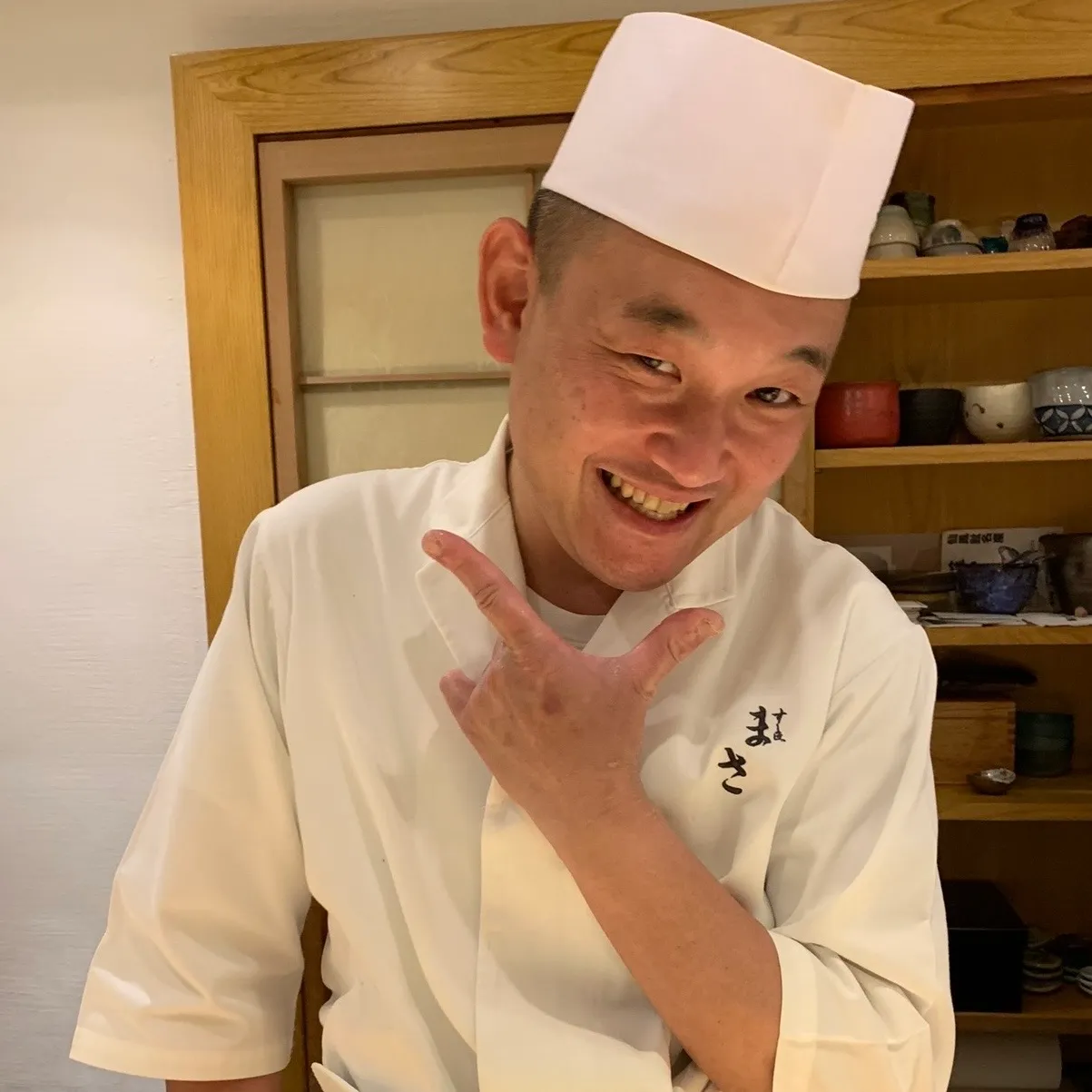
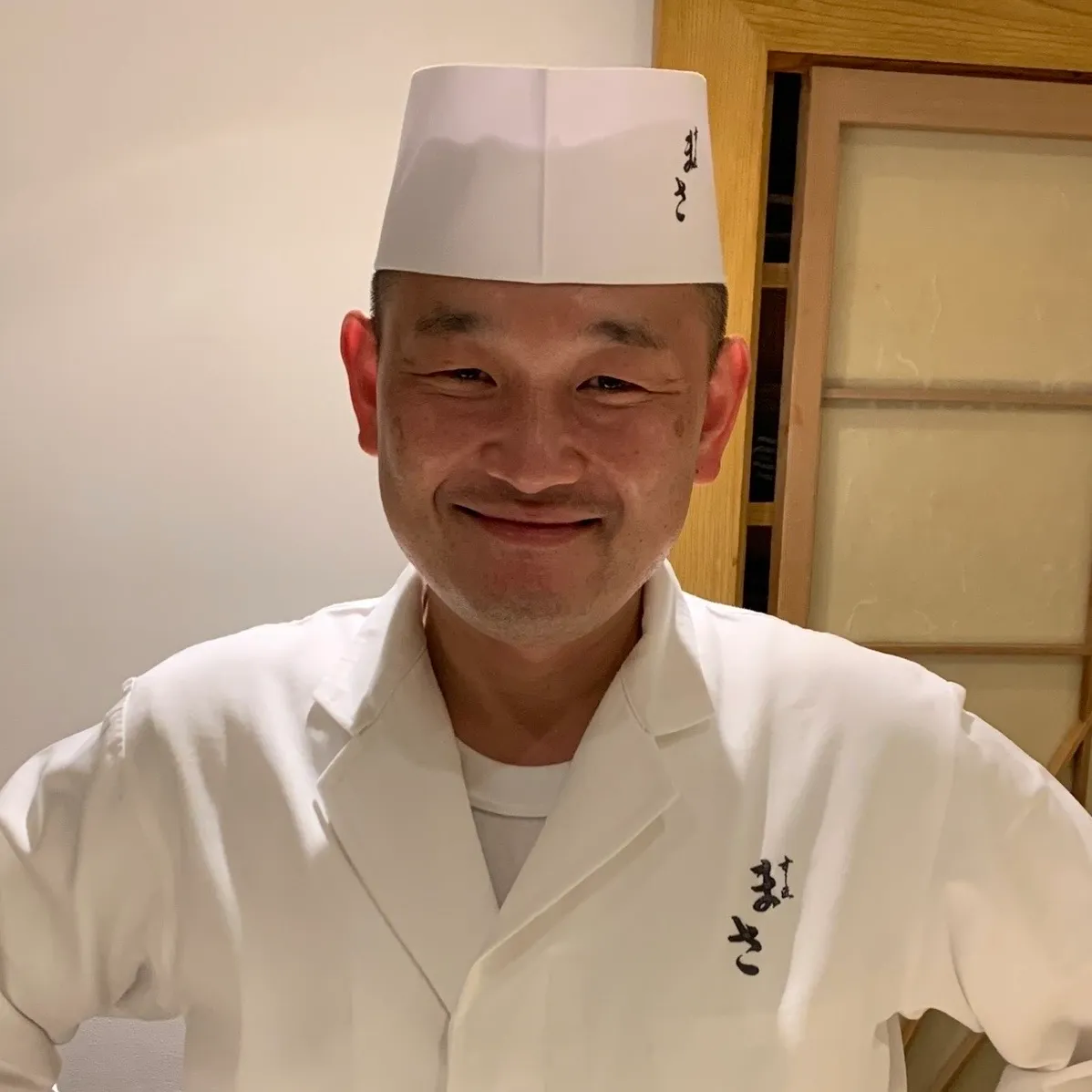
Sushisho Masa — すし匠まさ
The Art of Noticing
There are few sushi restaurants in Tokyo where, after so many visits, I still feel like a student.
Sushisho Masa is one of them.
Just when I think I know a fish, Oka san serves me a part of it that I have never tasted before. Or he serves me the same fish twice, sometimes three times, and makes me wonder how these completely different textures and flavors could possibly come from the same creature.
And then he explains.
Last night, I came to Masa with a few questions that had very little to do with what we were going to eat.
I wanted to know more about Oka san's relationship with his legendary master, Keiji Nakazawa, the man behind the extraordinary family of sushi restaurants that carry the Sushi Sho name.
I wanted to know what Nakazawa had taught him, not about making sushi, but about life.
And I wanted to understand why, after all these years, Oka san is still so fascinated by things that other sushi chefs seem to overlook.
Later in the evening, one of my friends told him that, of all the sushi experiences he had had, this was his favorite.
Oka san thanked him and said something rather simple.
“Of course, it is important that the food is delicious. But I think it is also very important that the meal is enjoyable. Even who you are eating with can make the food taste better.”
I couldn't agree more.
It was one of those evenings when I wasn't sure what I was enjoying more, eating or listening.
Fortunately, at Masa, there is plenty of time for both.
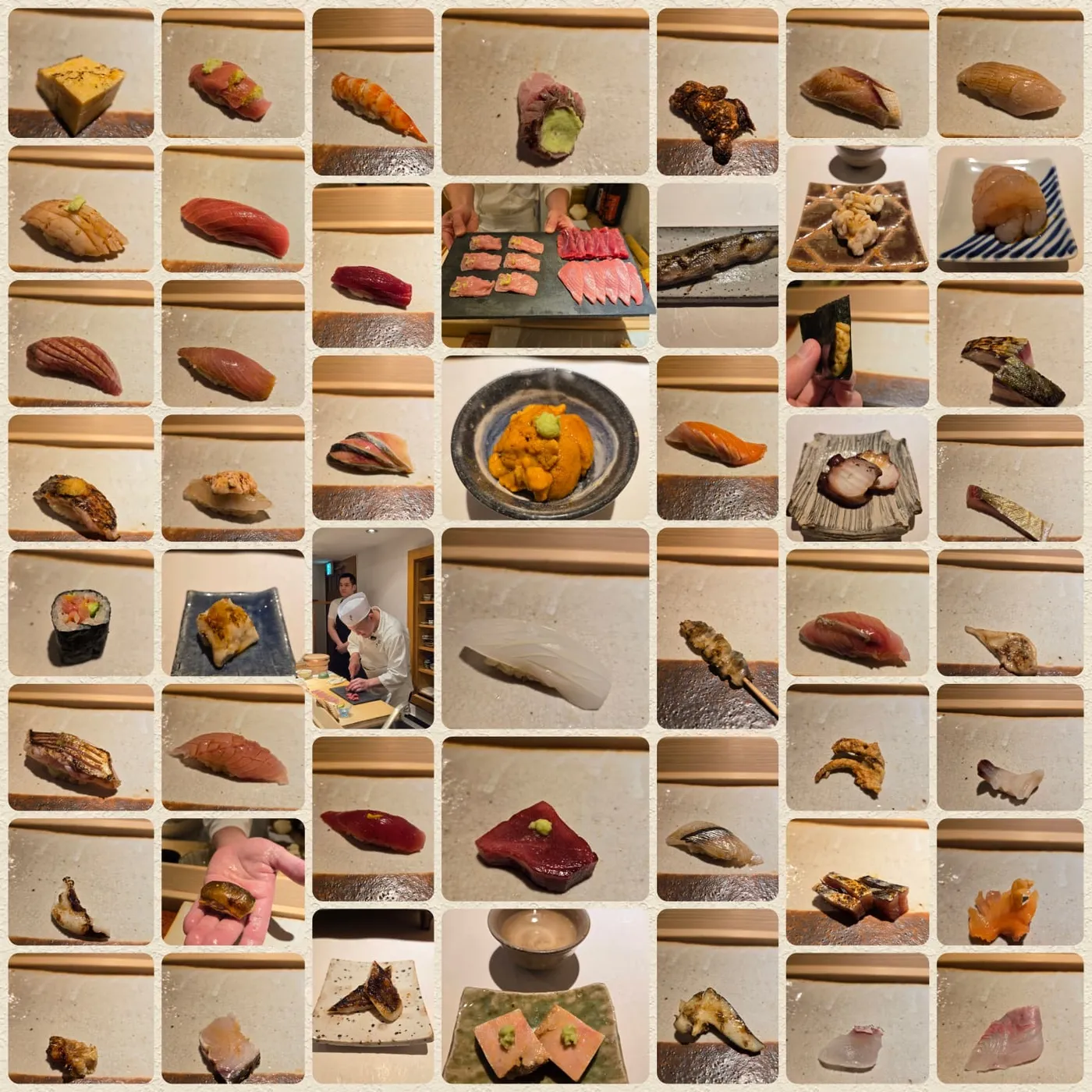
What we ate
Just say when...
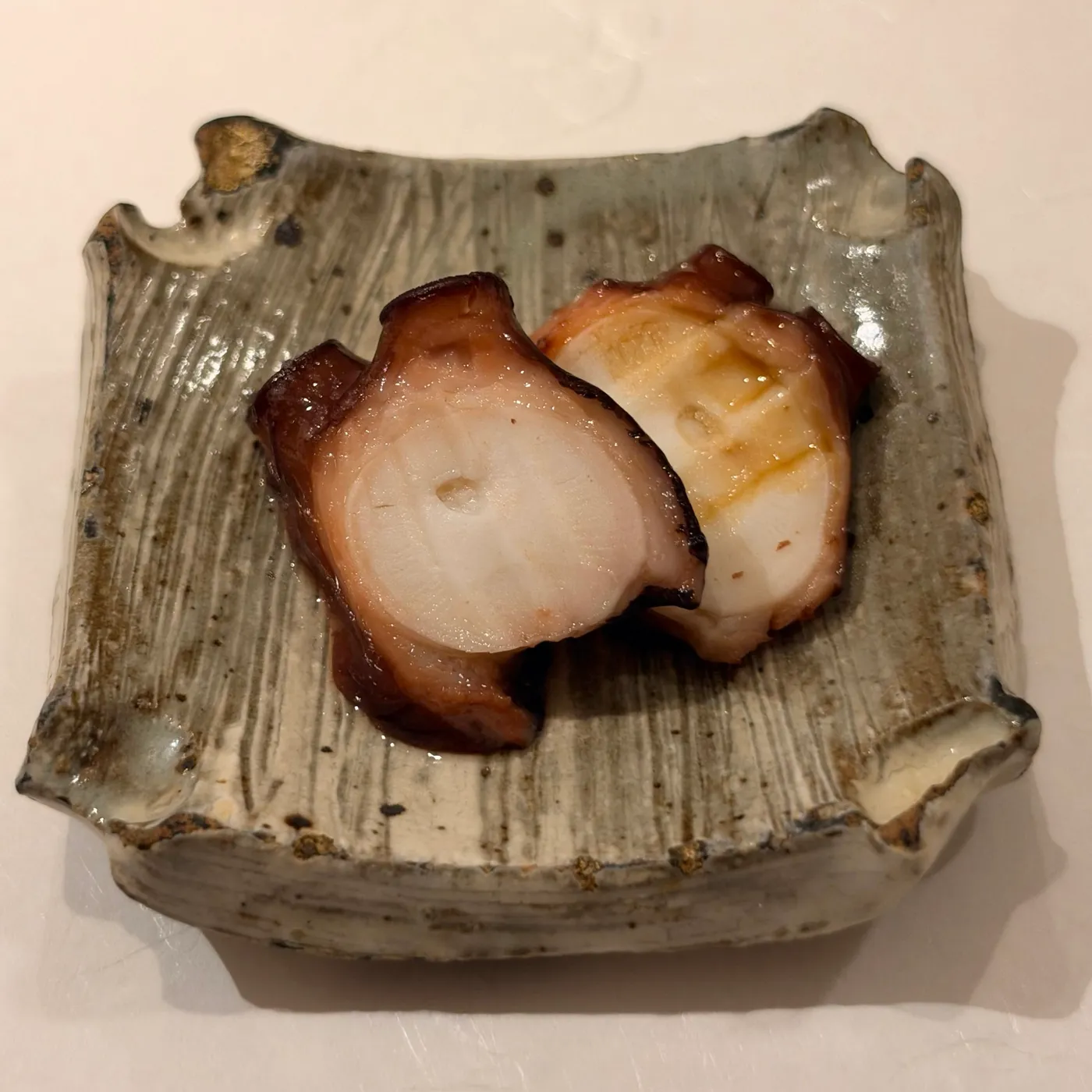
Tako
蛸 Two thick slices of cooked octopus, served as tsumami.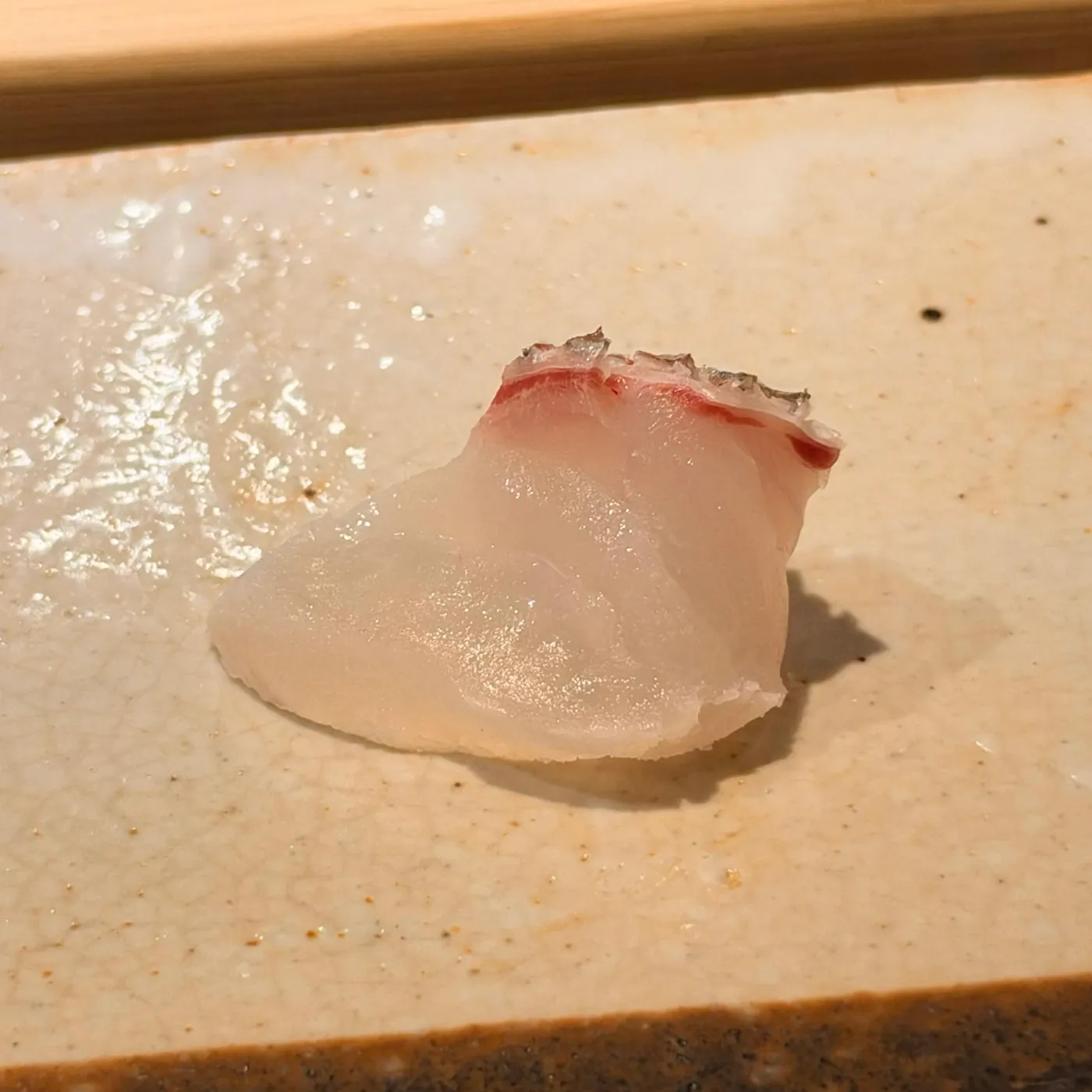
Tai
鯛 Sea bream served as sashimi.Ishidai
石鯛 Striped knifejaw, a white-fleshed fish with a particularly firm, substantial texture. Despite its Japanese name, it is not a sea bream.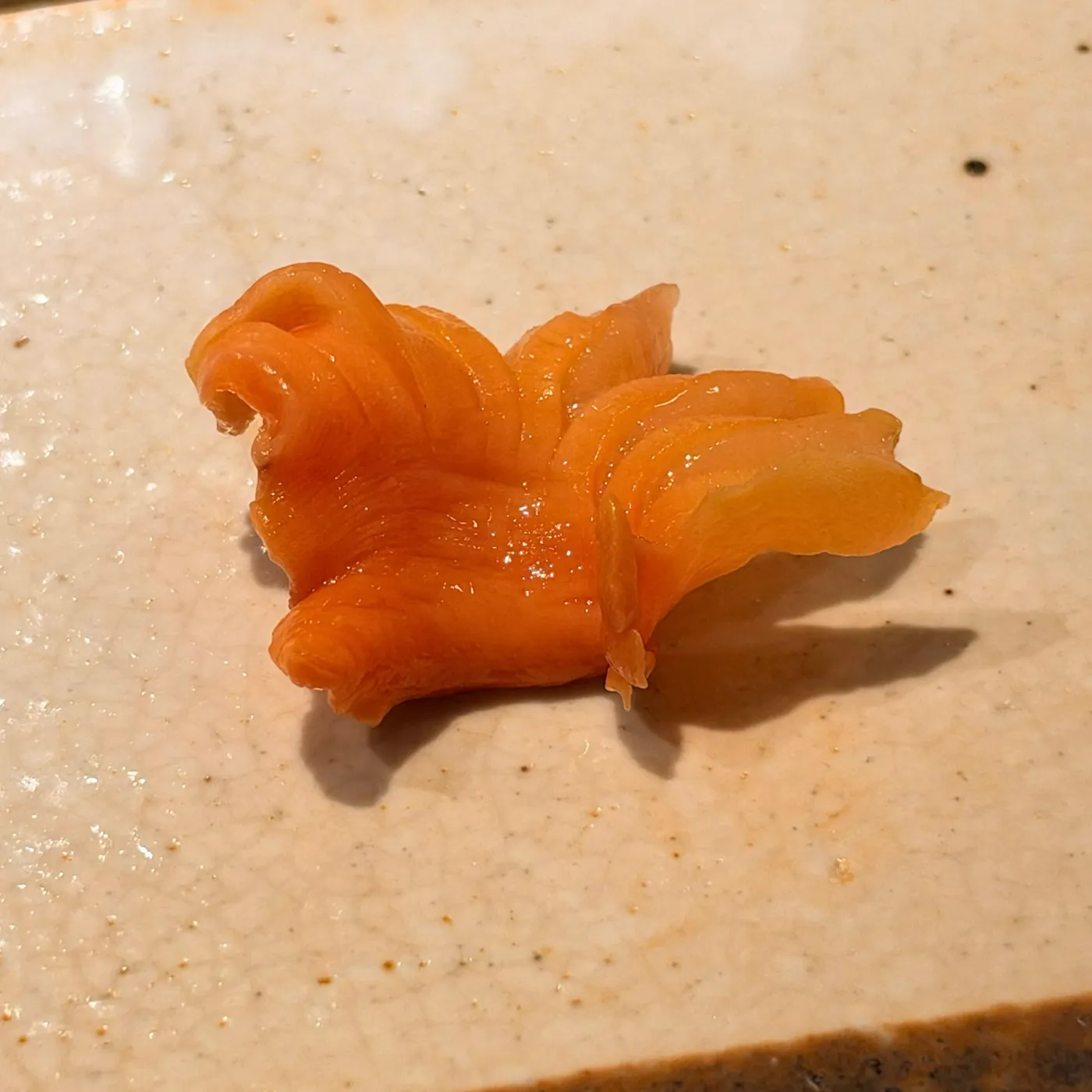
Akagai
赤貝 The sweet, beautifully textured flesh of the ark shell. We would meet another part of the same shellfish much later in the evening.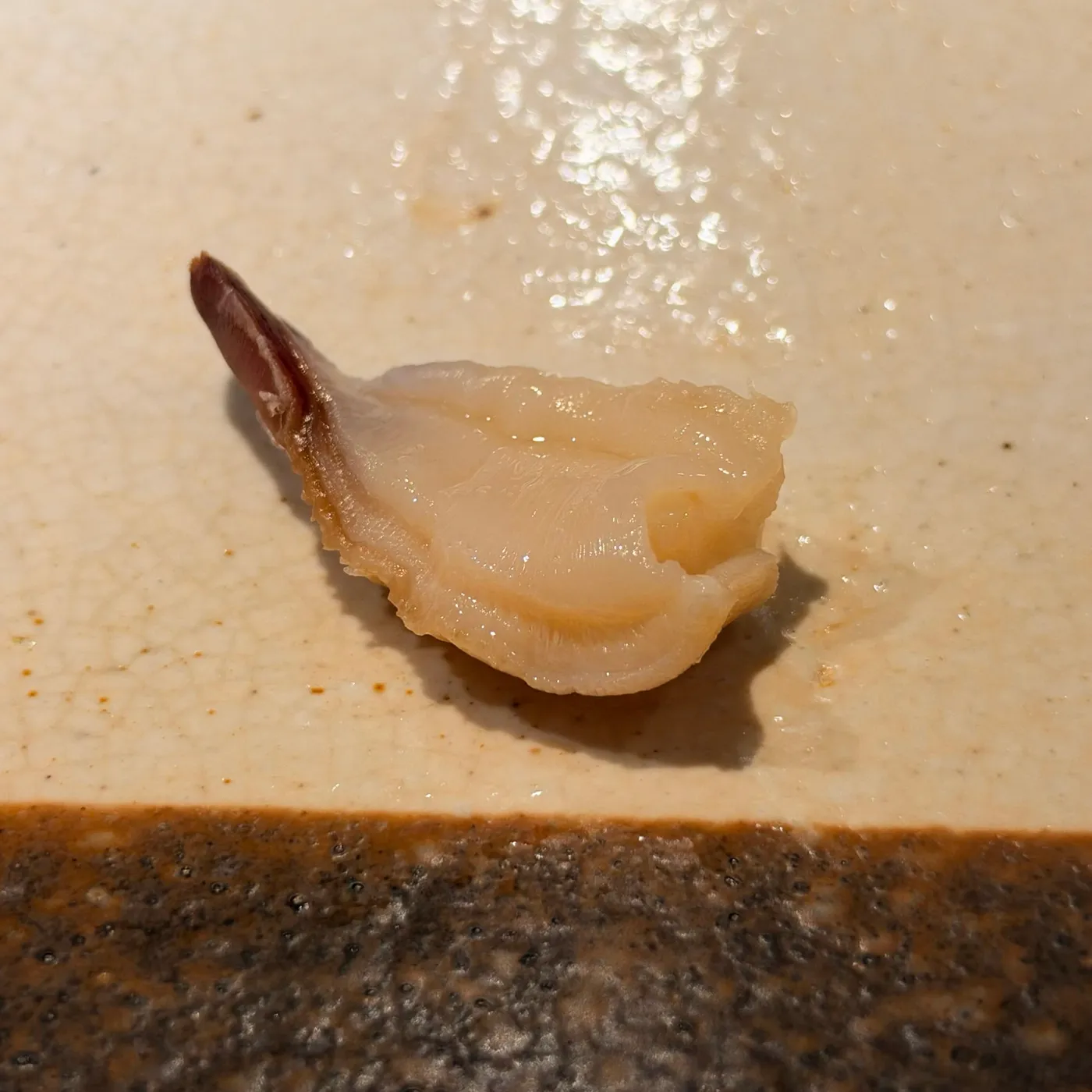
Mirugai
ミル貝 The siphon of the mirugai, the part most commonly encountered at a sushi counter.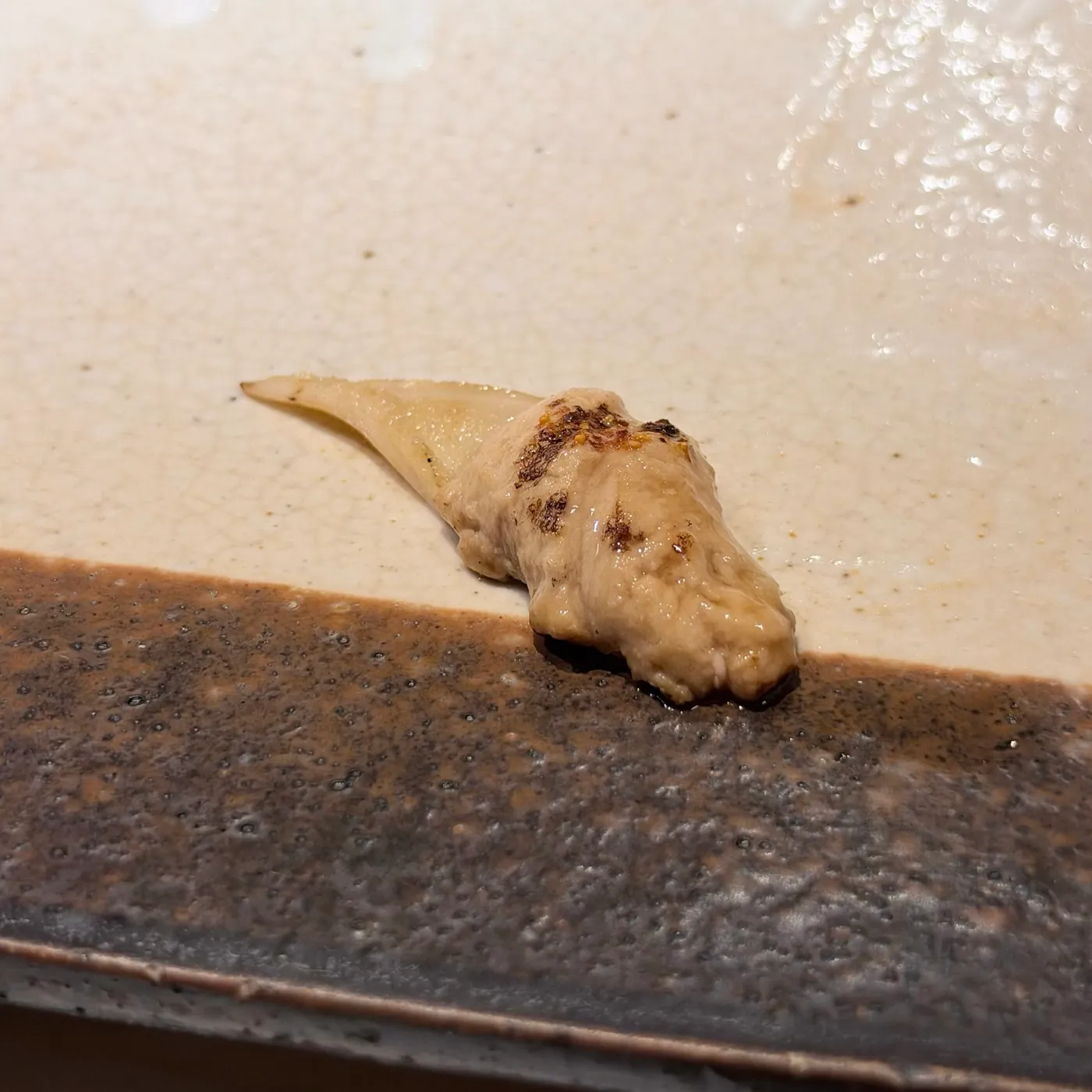
Miru-shita
ミル下 A different part of the same clam, with a completely different texture. We were only a few dishes into the meal, and already Oka san was inviting us to reconsider an ingredient we thought we knew.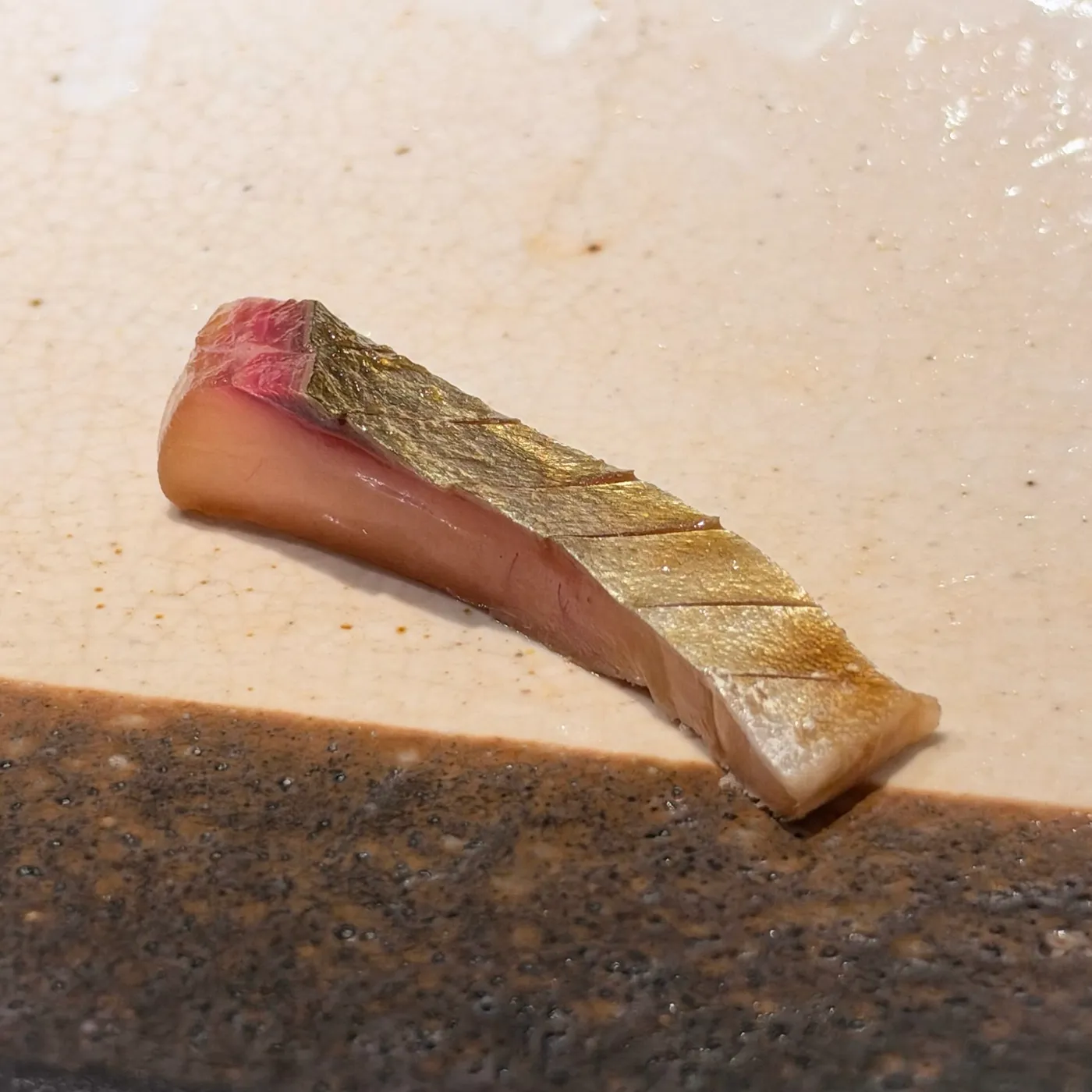
Shima-aji no Shoyu-zuke
縞鯵の醤油漬け Striped jack marinated in soy sauce.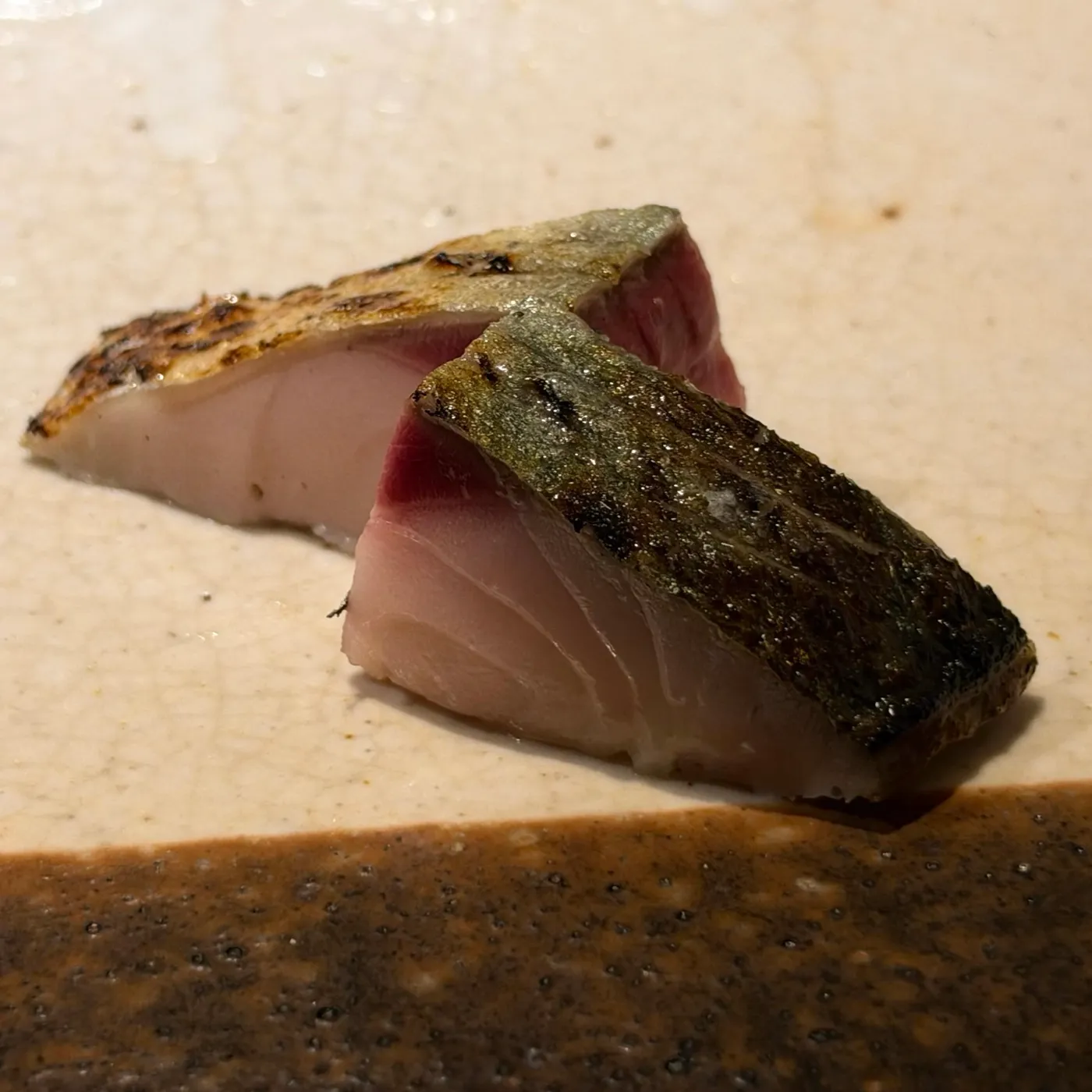
Saba
鯖 Mackerel, first with wasabi alone and then with wasabi and soy sauce. Oka san has been buying his wasabi from the same farm in Shizuoka for approximately seventeen years. He explained that good wasabi should have sweetness and an almost creamy consistency. Some wasabi, he told us, is watery and offers little more than heat. Here, we were given the opportunity to appreciate the wasabi almost as much as the fish.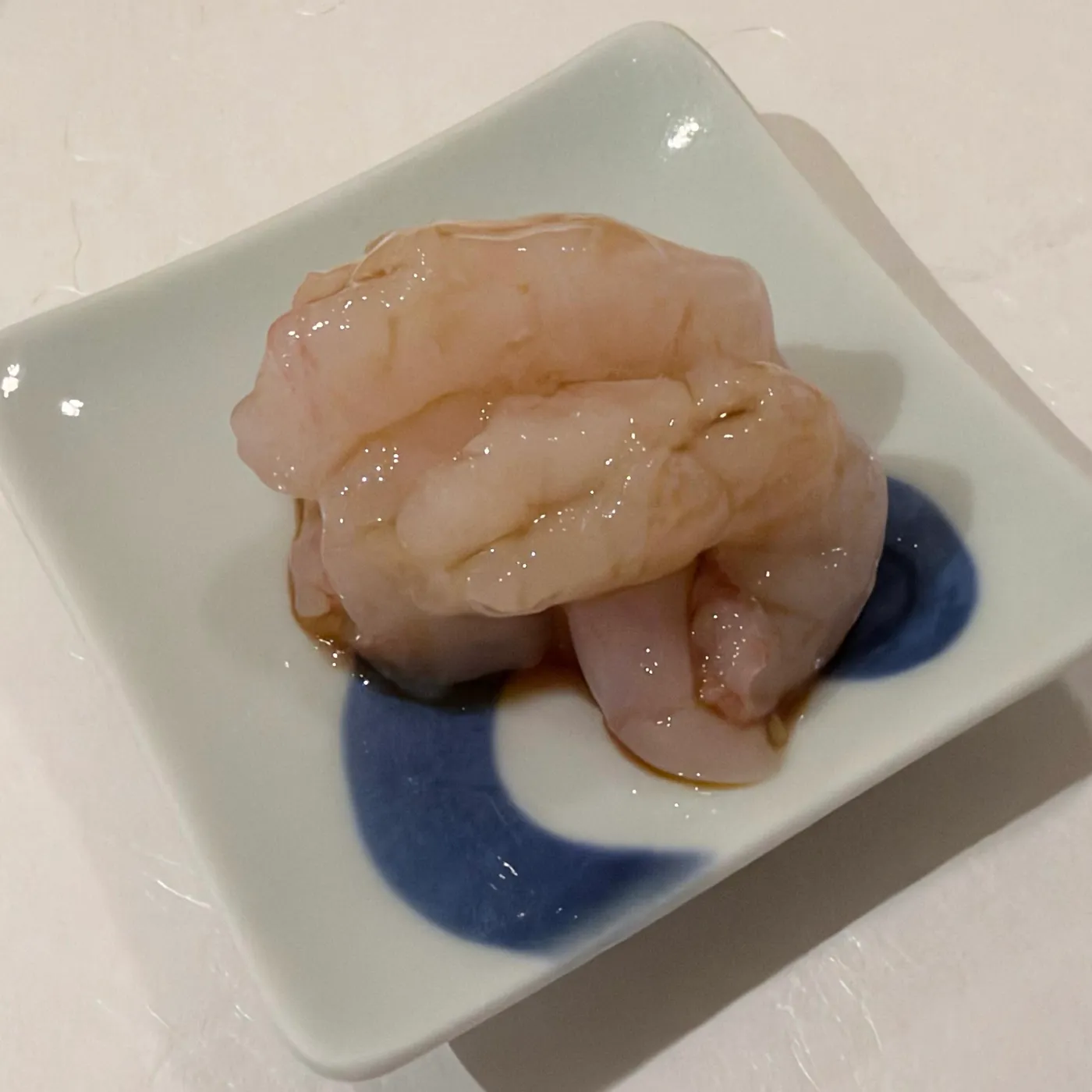
Ama Ebi
甘海老 Sweet shrimp served as sashimi, with their characteristic translucent flesh, silky texture and delicate sweetness.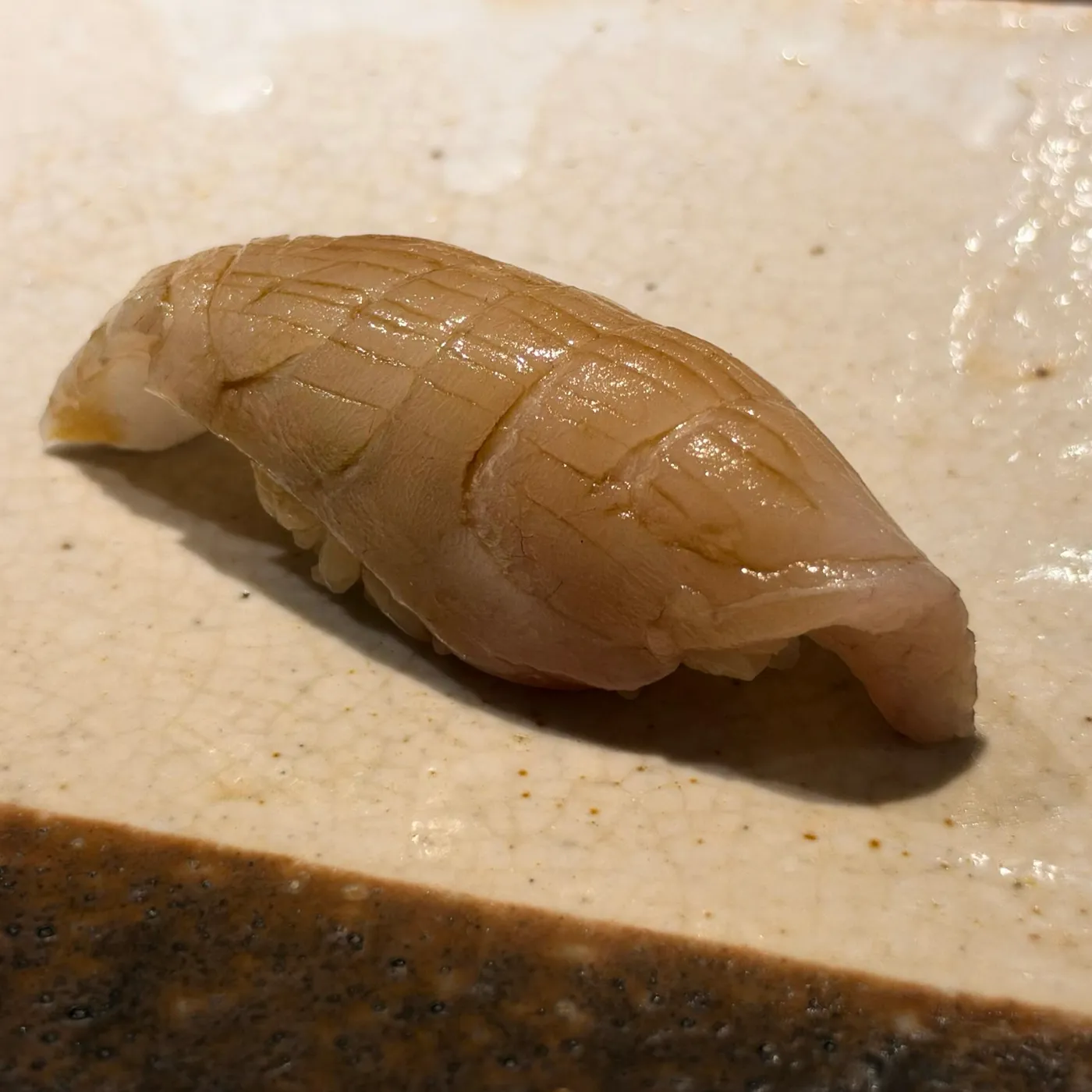
Sawara
鰆 Japanese Spanish mackerel prepared as kombujime and served with wasabi and soy sauce.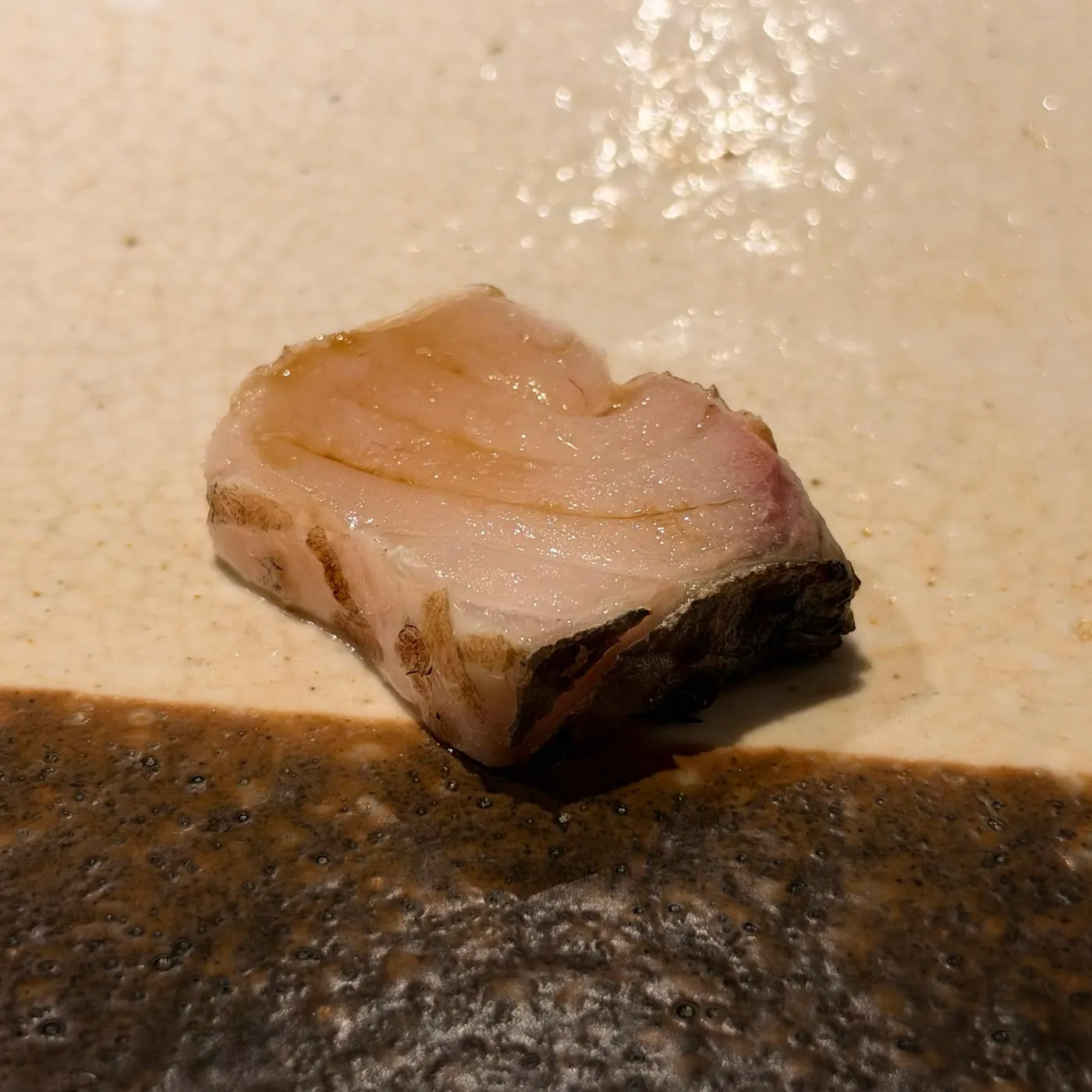
Sawara no Harami
鰆の腹身 The belly of the same sawara, this time with wasabi alone. No soy sauce needed.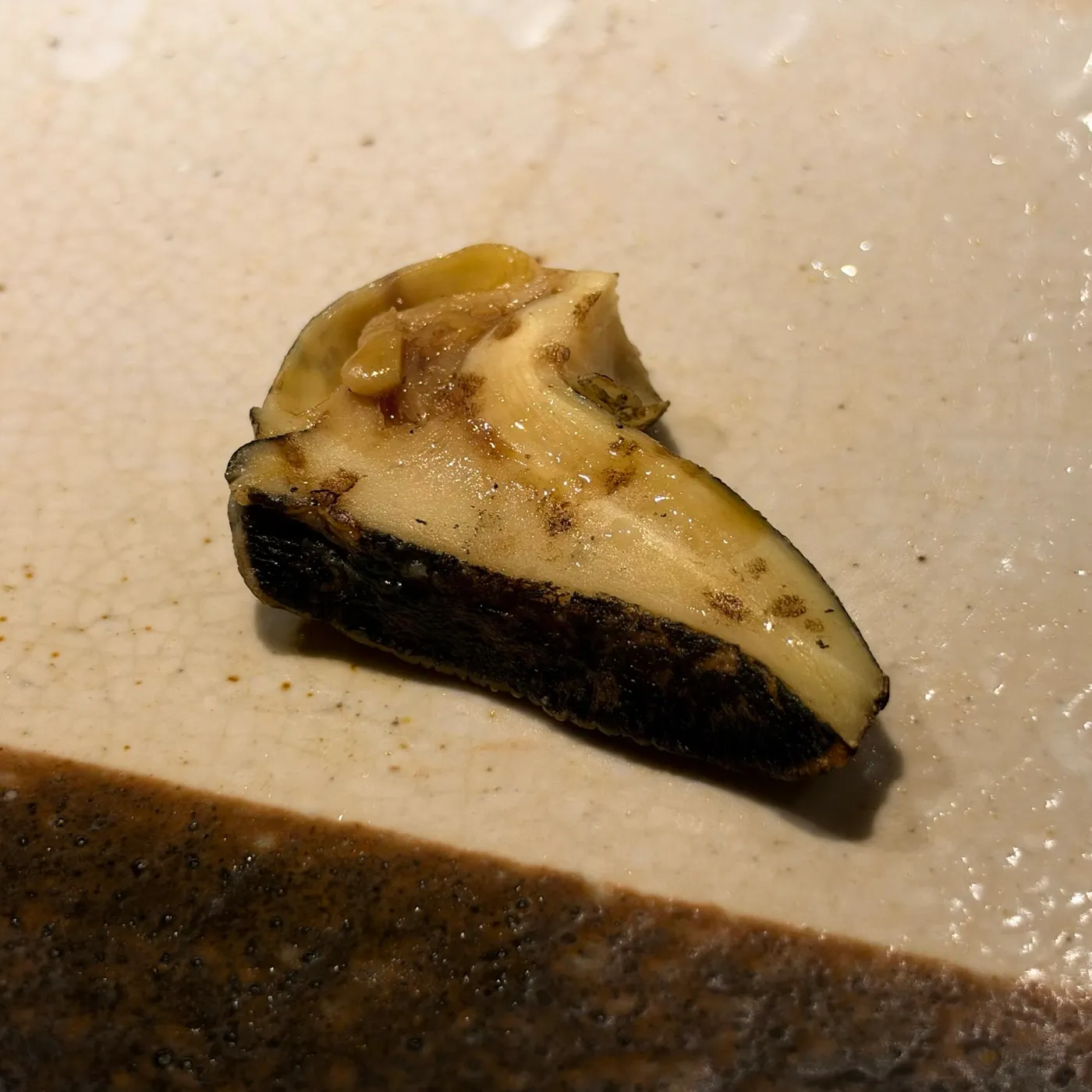
Bero-tsubu
ベロツブ A type of whelk whose Japanese name refers to its resemblance to a tongue. Served with just a little wasabi.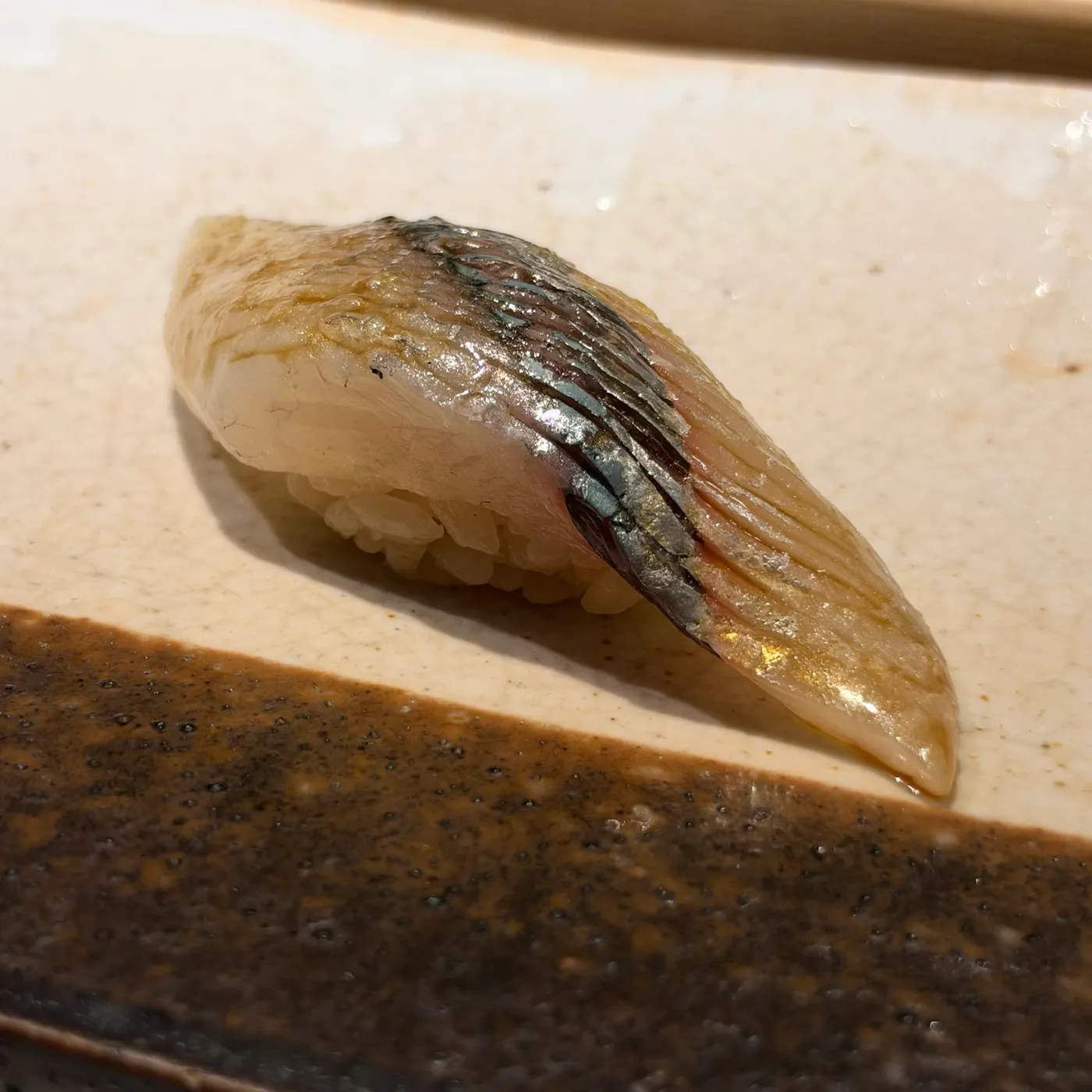
Hoshisayori
ホシサヨリ A large relative of the more familiar sayori, from Kyushu, prepared as kombujime. Oka san explained that although the fish is considerably thicker than ordinary sayori, its flesh remains lean. The fat accumulates around the internal organs rather than in the flesh itself. A much bigger fish, but still very much the taste of sayori.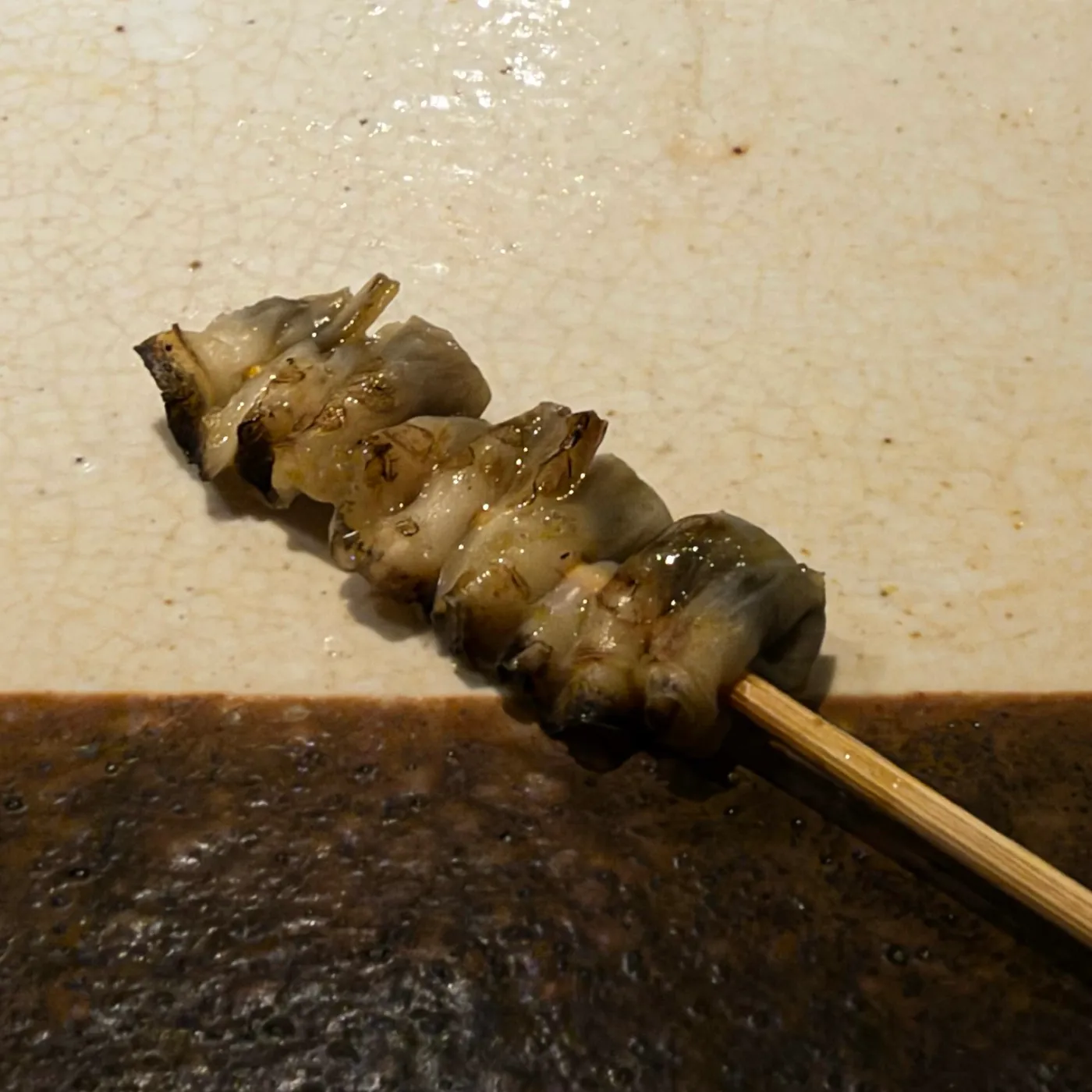
Grilled Tairagai Mantle
平貝のひもの串焼き The skirt of the pen shell, carefully cleaned, skewered and grilled. Most sushi chefs prefer to use the large adductor muscle of the tairagai. Preparing the skirt requires considerably more work, particularly removing its slippery coating. Fortunately for us, Oka san doesn't seem particularly interested in making his life easier :)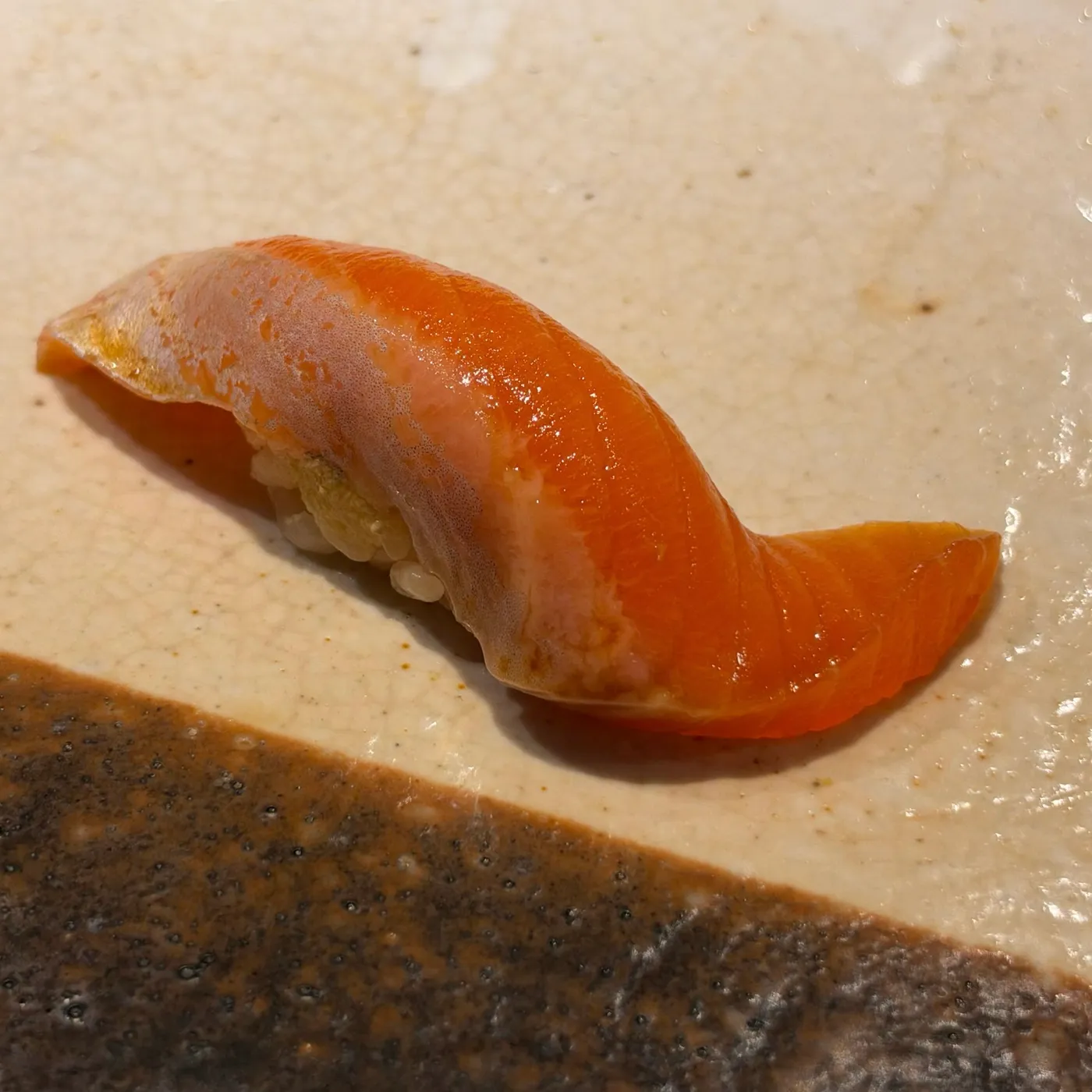
Fujisan Salmon
富士山サーモン A farm-raised salmonid from the Mount Fuji area and, as Oka san explained, a relatively new ingredient for him. Salmon is something I rarely encounter at traditional Edomae sushi counters, which made its appearance here particularly interesting. Little did I know that a few minutes later, this fish would bring back a memory from thirty years ago.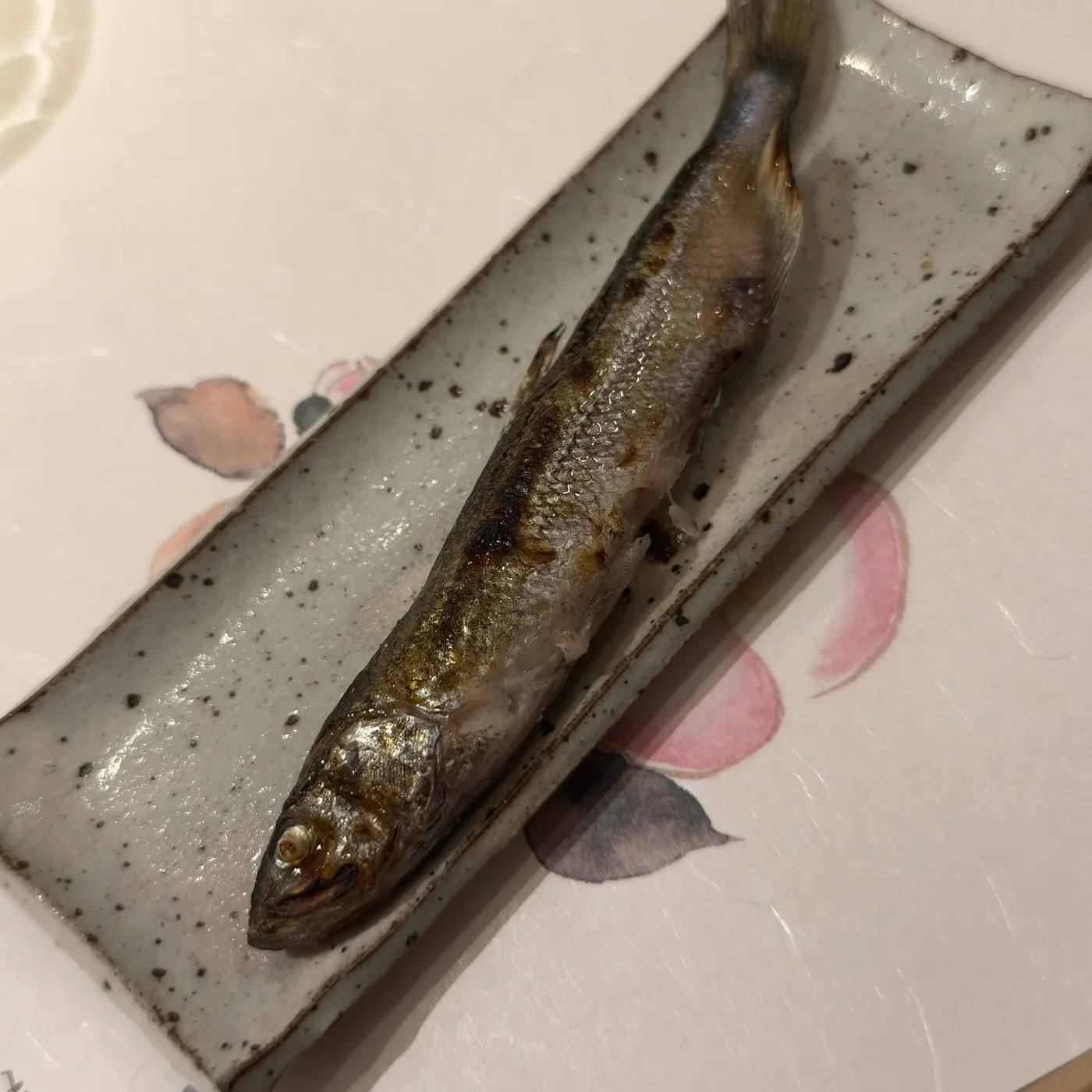
Male Shishamo
雄のししゃも A dried male shishamo, grilled and eaten whole, from head to tail. Oka san explained that by this time of year, he prefers the males. As the females develop their roe, their flesh becomes increasingly dry, while the males remain juicy.Grilled Fujisan Salmon Skin
富士山サーモンの皮焼き I told Oka san that thirty years ago I used to love eating salmon skin, something I rarely encounter in sushi restaurants anymore. A little later, this appeared. The skin was grilled rather than fried, with a little of the flesh still attached. One of my friends suggested that Oka san could open an entire restaurant serving nothing but this.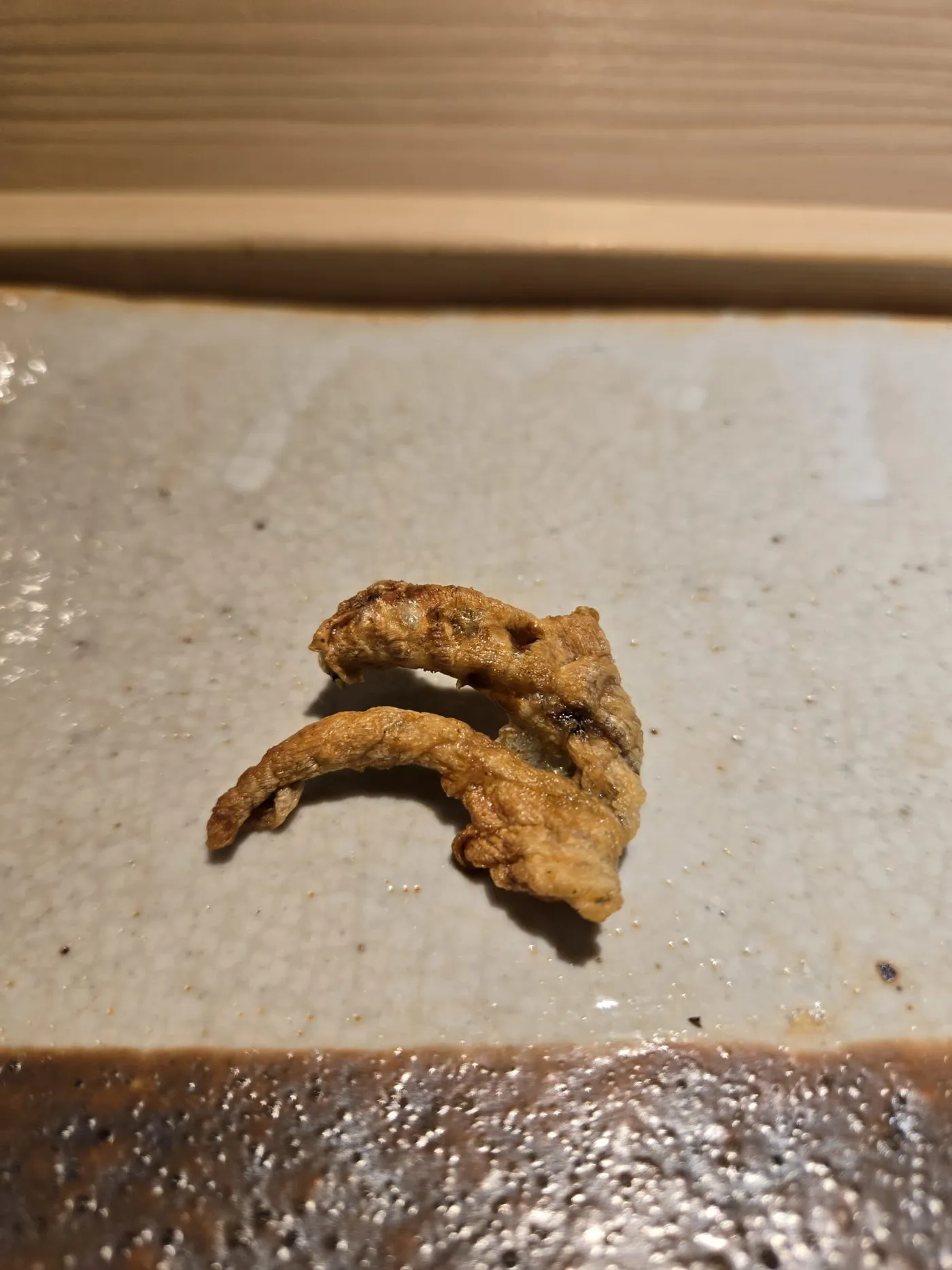
Kawahagi no Usukawa
カワハギの薄皮 Not the tough outer skin of the filefish, but the thin membrane underneath it, carefully removed with a knife and served crisp. Another part of a familiar fish that most of us rarely get to taste.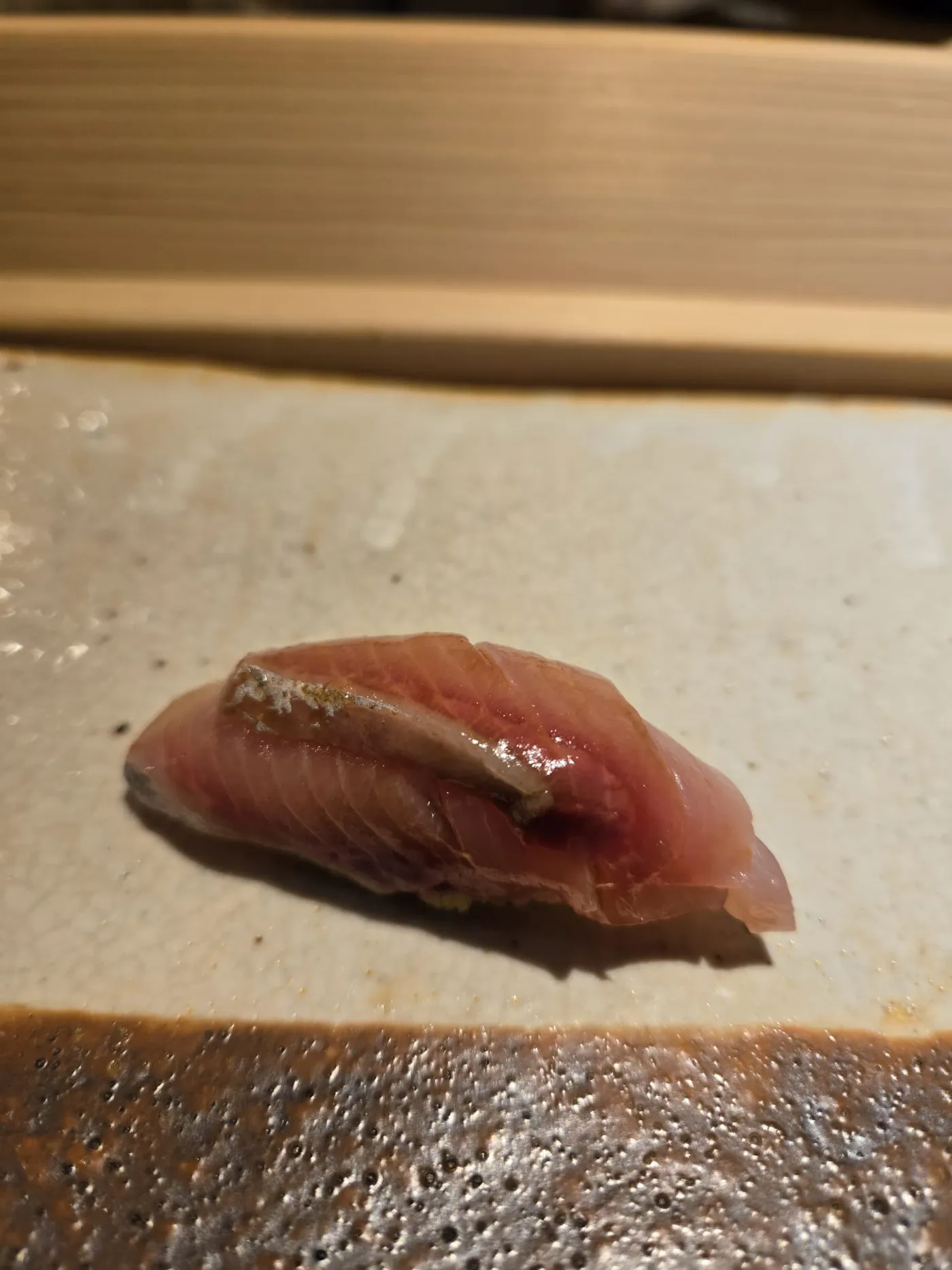
Six-Day-Aged Kanpachi
六日間熟成カンパチ Amberjack aged for six days, still retaining a firm, satisfying texture.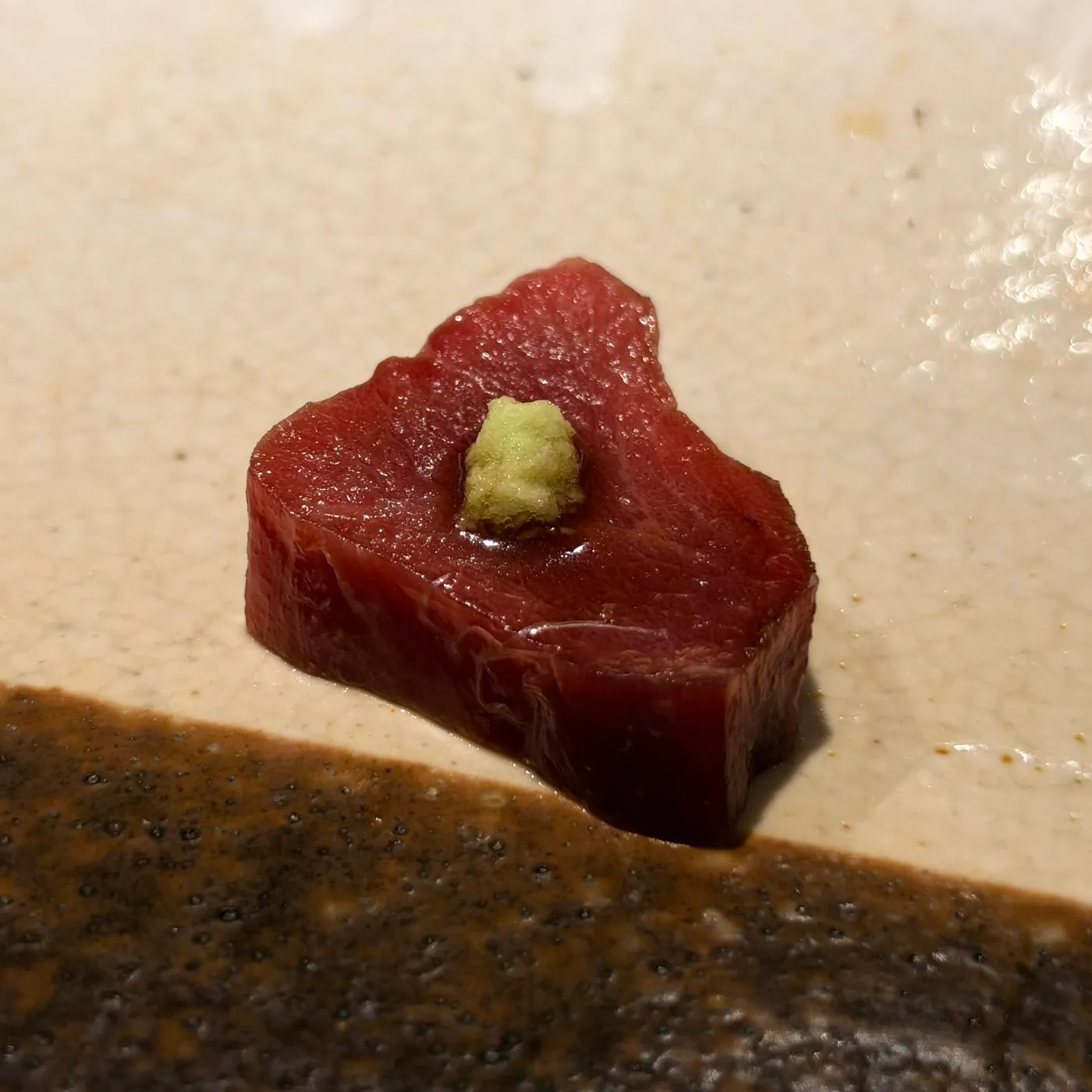
Maguro no Enpitsu
鮪の鉛筆 Enpitsu means pencil. Oka san explained that this particular cut of tuna has a firm core, hence its rather amusing name. It has a considerably firmer texture than toro and a remarkably concentrated tuna flavor. Our fish was a 147-kilogram tuna from Shiogama in Miyagi Prefecture. From this particular cut, there were only enough for approximately twelve portions.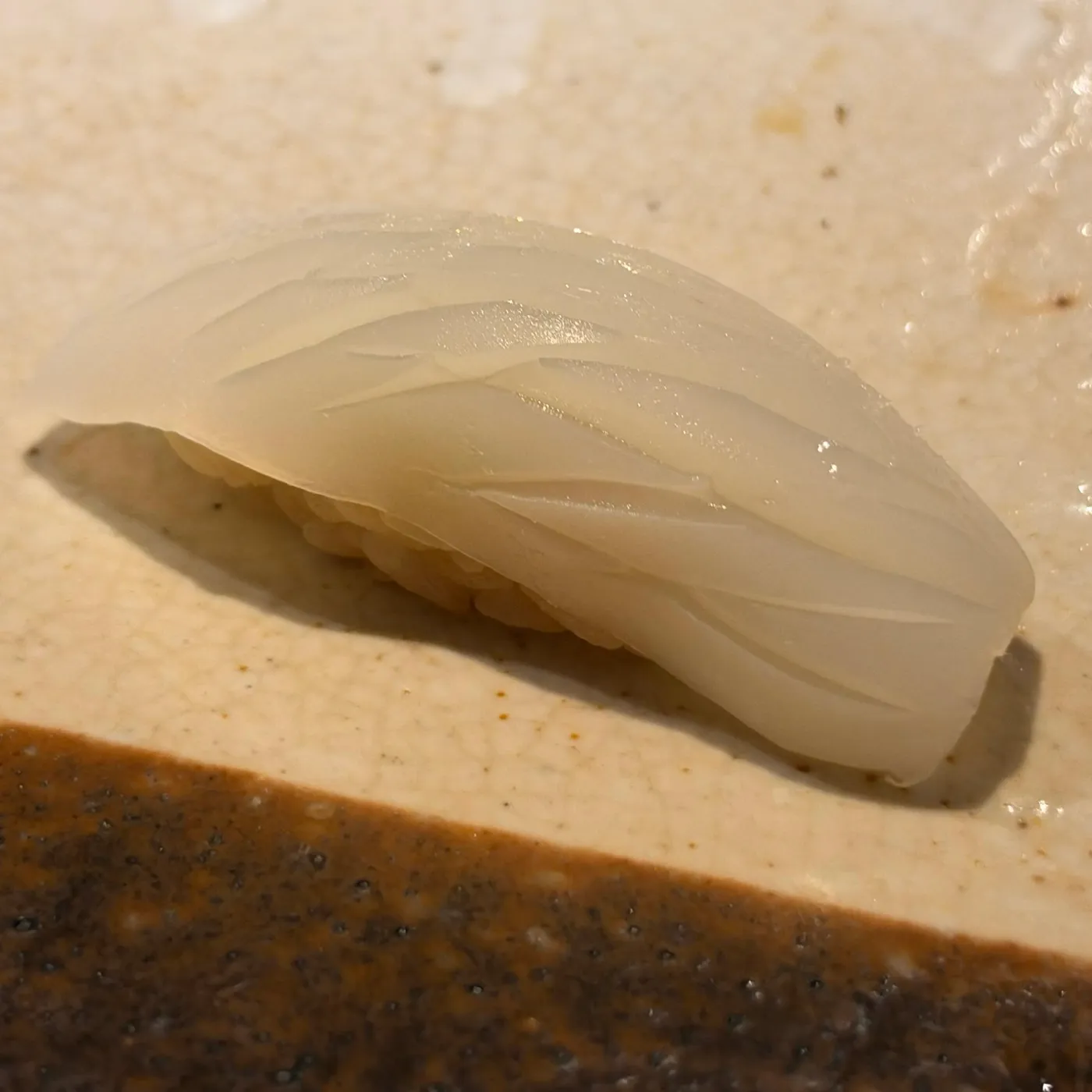
Five-Day-Aged Sumi-ika
五日間熟成スミイカ A large cuttlefish aged for five days. Oka san explained that freshly prepared cuttlefish of this size would be too firm. After cleaning and removing the skin, the flesh is wrapped in paper and rested for four to six days, depending on the fish. The wonderful thing about the result is that the surface retains its slightly crisp texture while the inside becomes softer and sweeter. Served simply with salt.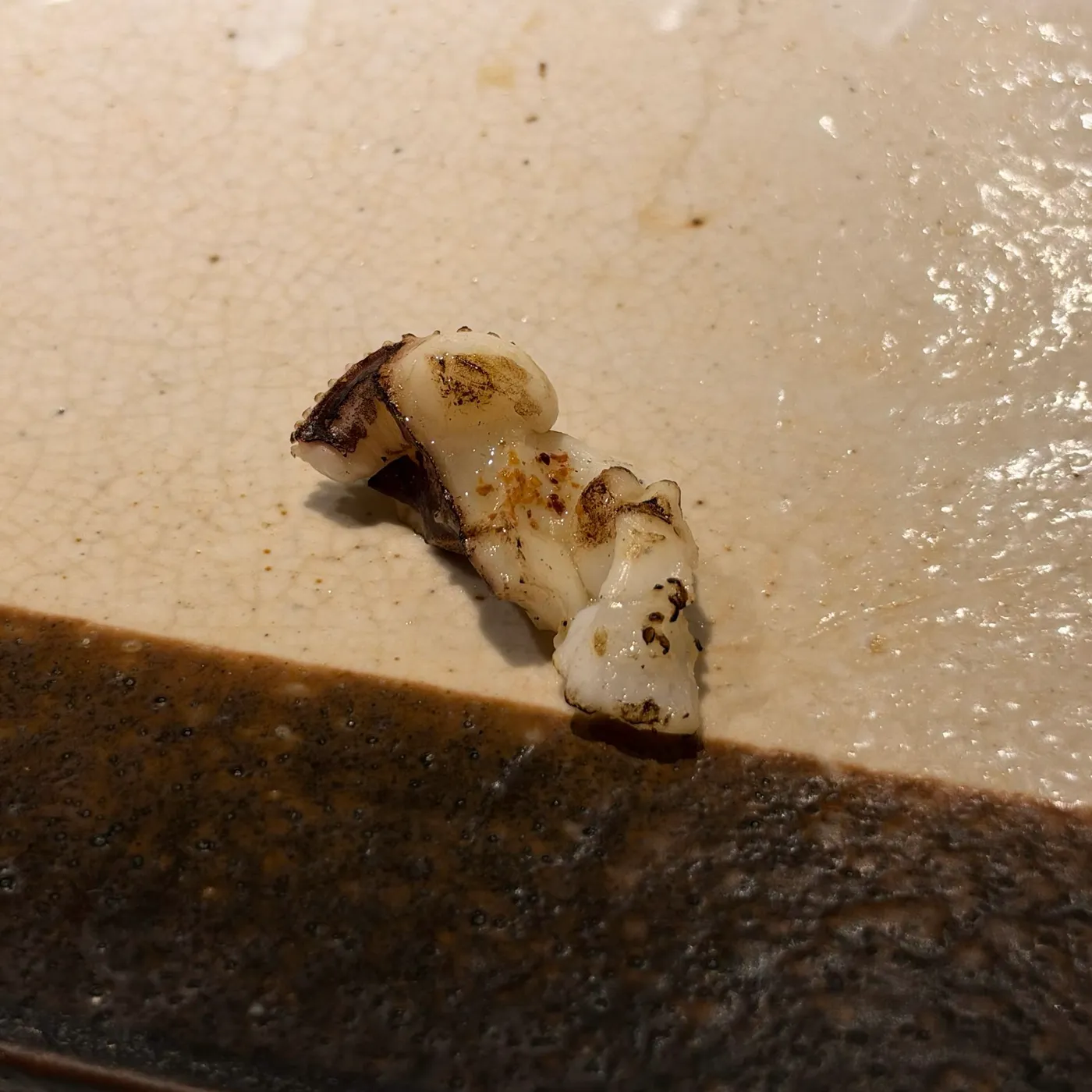
Grilled Sumi-ika Tentacles
スミイカの下足焼き The tentacles of the cuttlefish, grilled. Same creature, a completely different experience.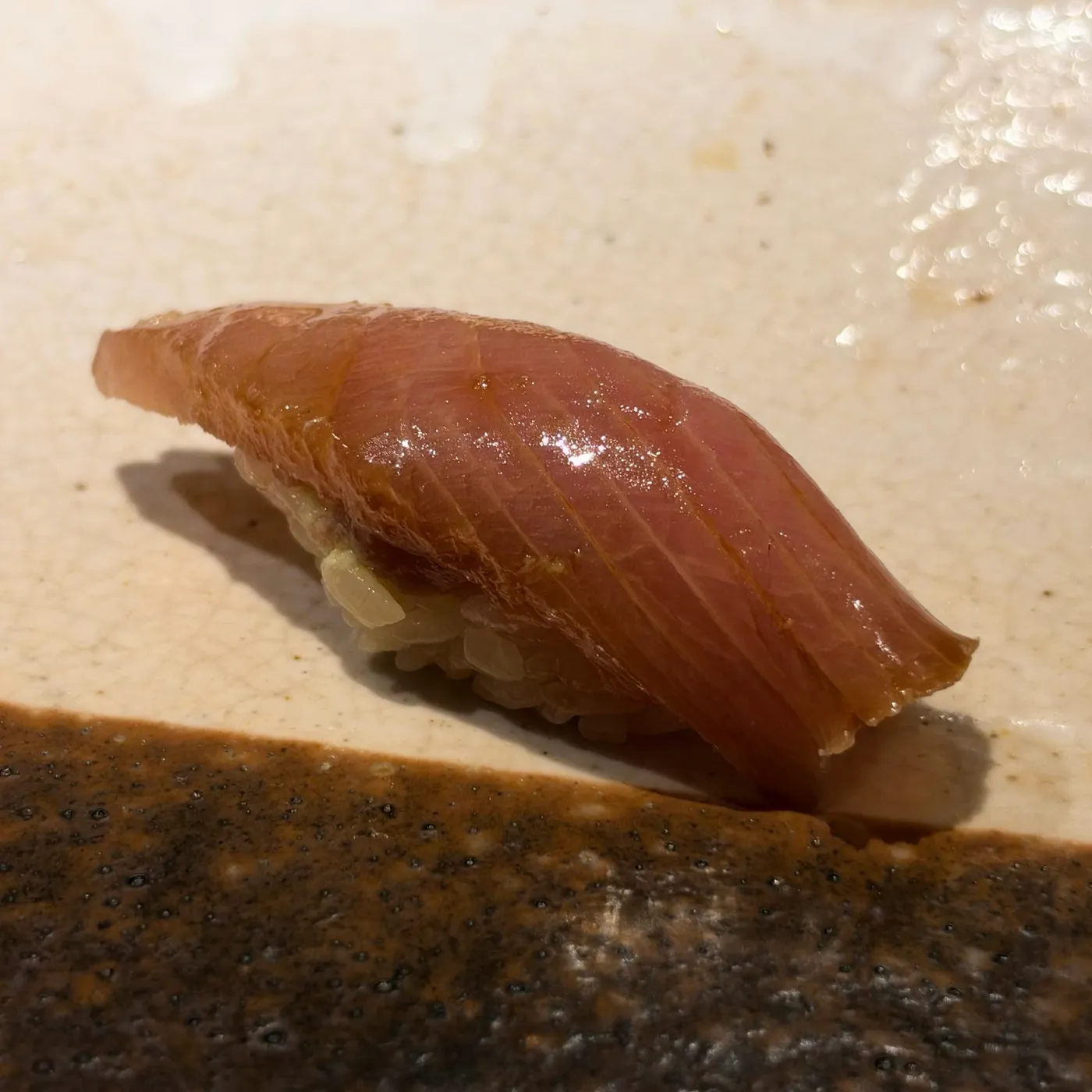
Buri no Akami
鰤の赤身 The lean flesh of wild yellowtail. Oka san explained that it is precisely the relatively low fat content that makes this part so interesting. Without the sweetness of the fat, you can better appreciate the actual taste of the fish. He applies the same principle when selecting his tuna.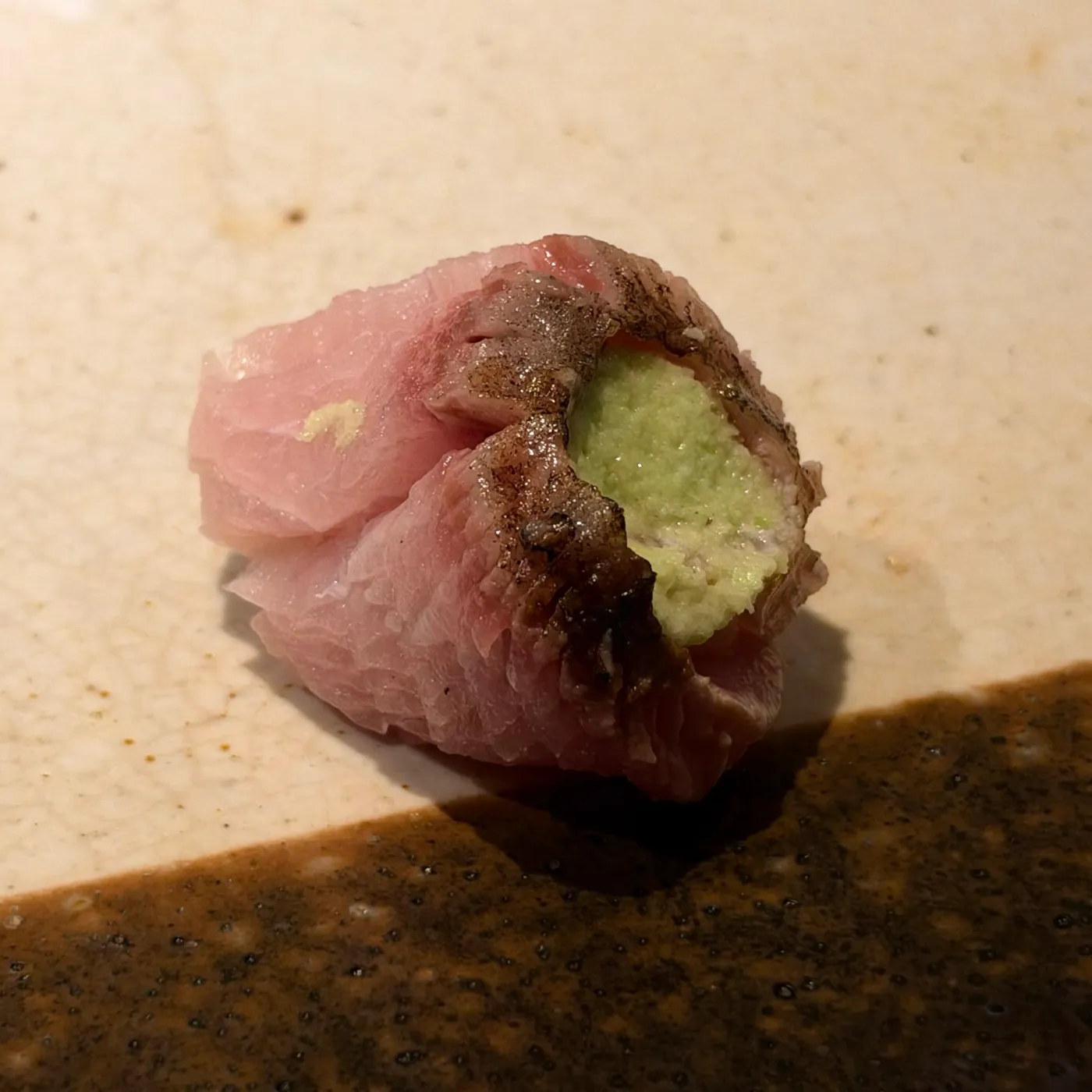
Buri no Chutoro with Wasabi
鰤の中トロのわさび巻き The fattier part of the same yellowtail, wrapped around a very generous amount of freshly grated wasabi and eaten with soy sauce. What happens in the mouth is quite interesting. The wasabi cuts through the richness of the fish, while the fat softens the heat of the wasabi, allowing its natural sweetness to emerge.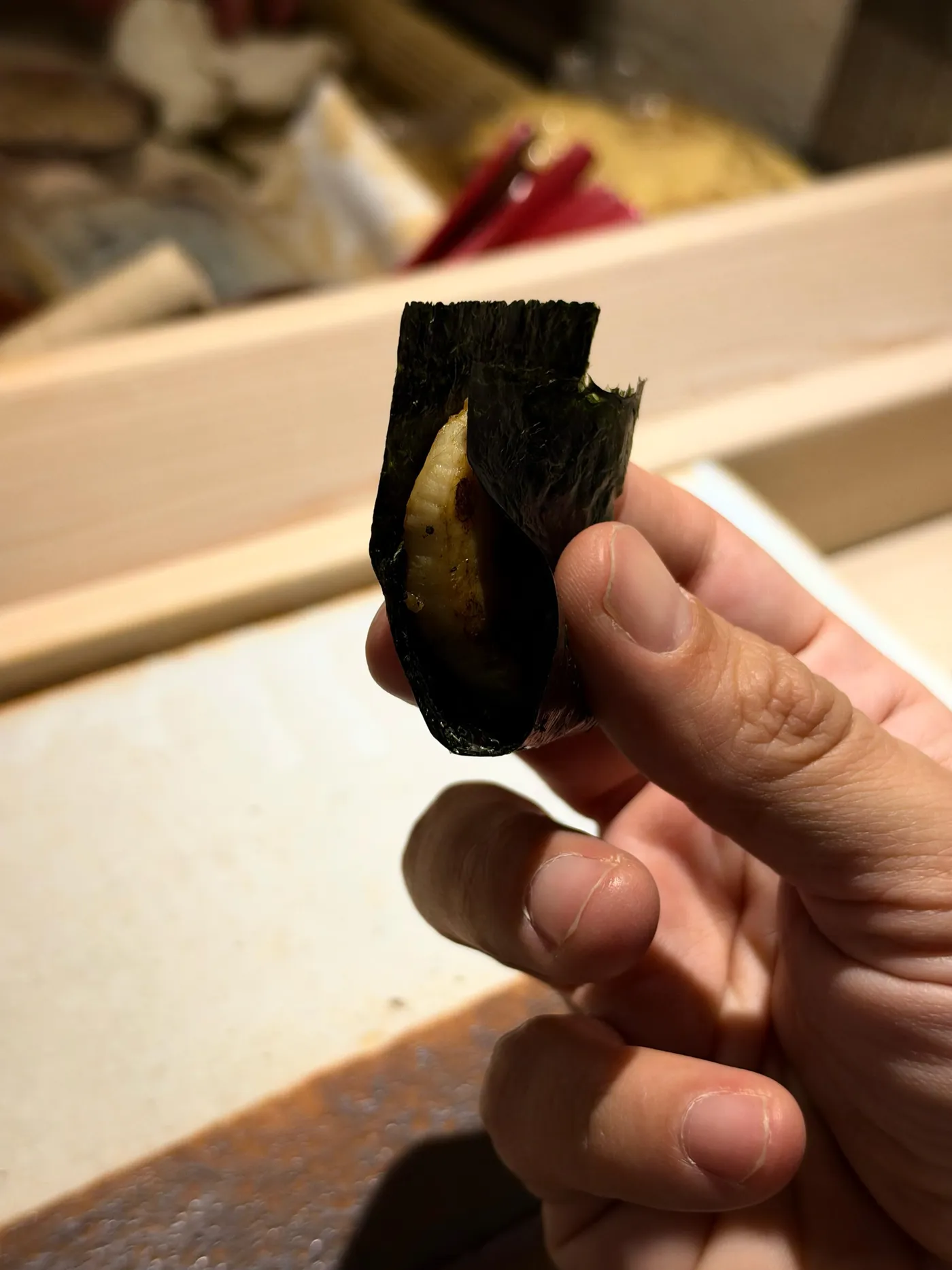
Tairagai
平貝 The large adductor muscle of the pen shell whose skirt we had eaten earlier.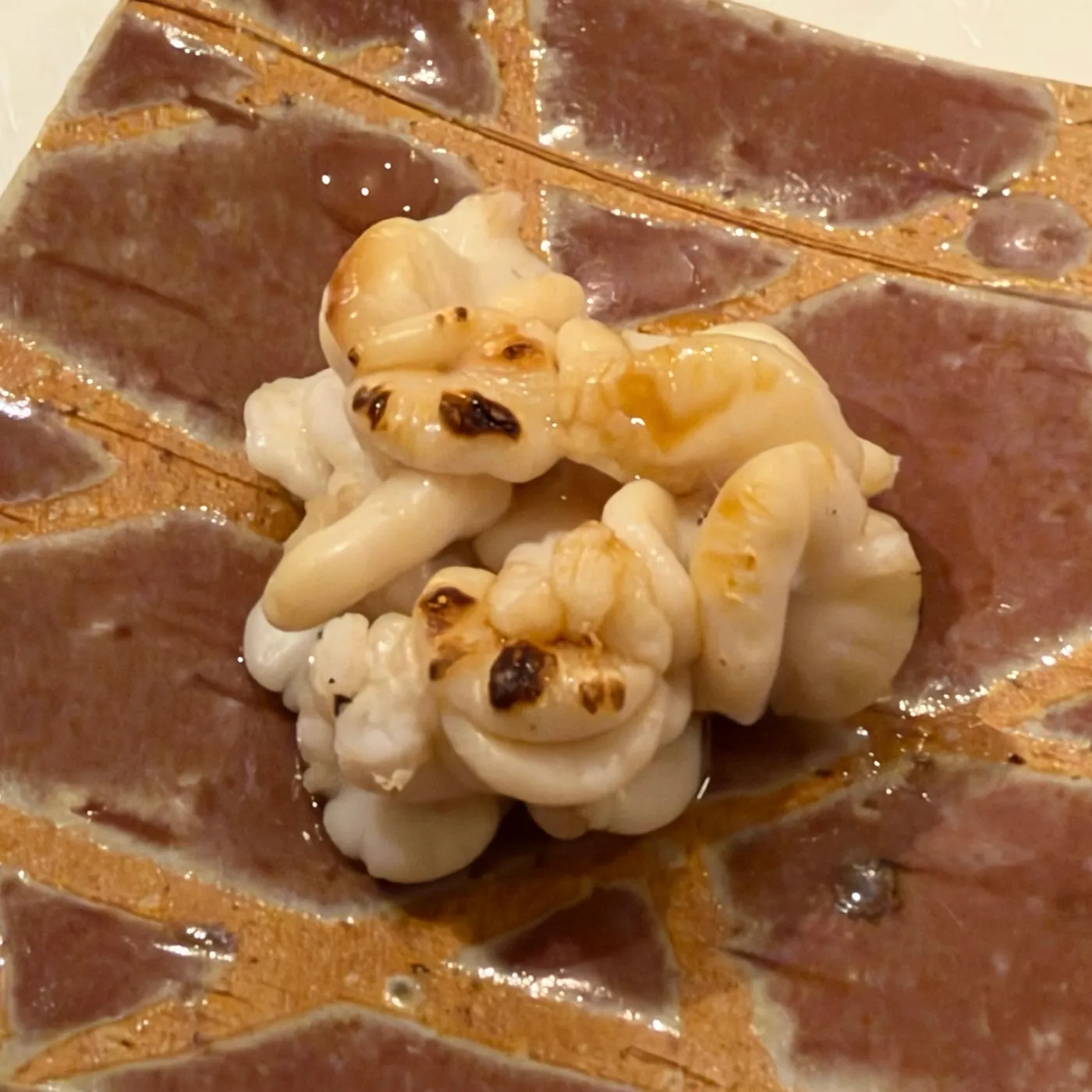
Shirako with Warm Ten'on Sake
鱈の白子と天穏の燗酒 Lightly grilled cod milt, paired with warm, cloudy Ten'on sake from Shimane Prefecture. Oka san's instructions were quite specific. First, a bite of shirako, followed immediately by a sip of warm sake. One of my friends had eaten shirako five times before and had never particularly enjoyed it. This time he did. Another little victory for Oka san. :)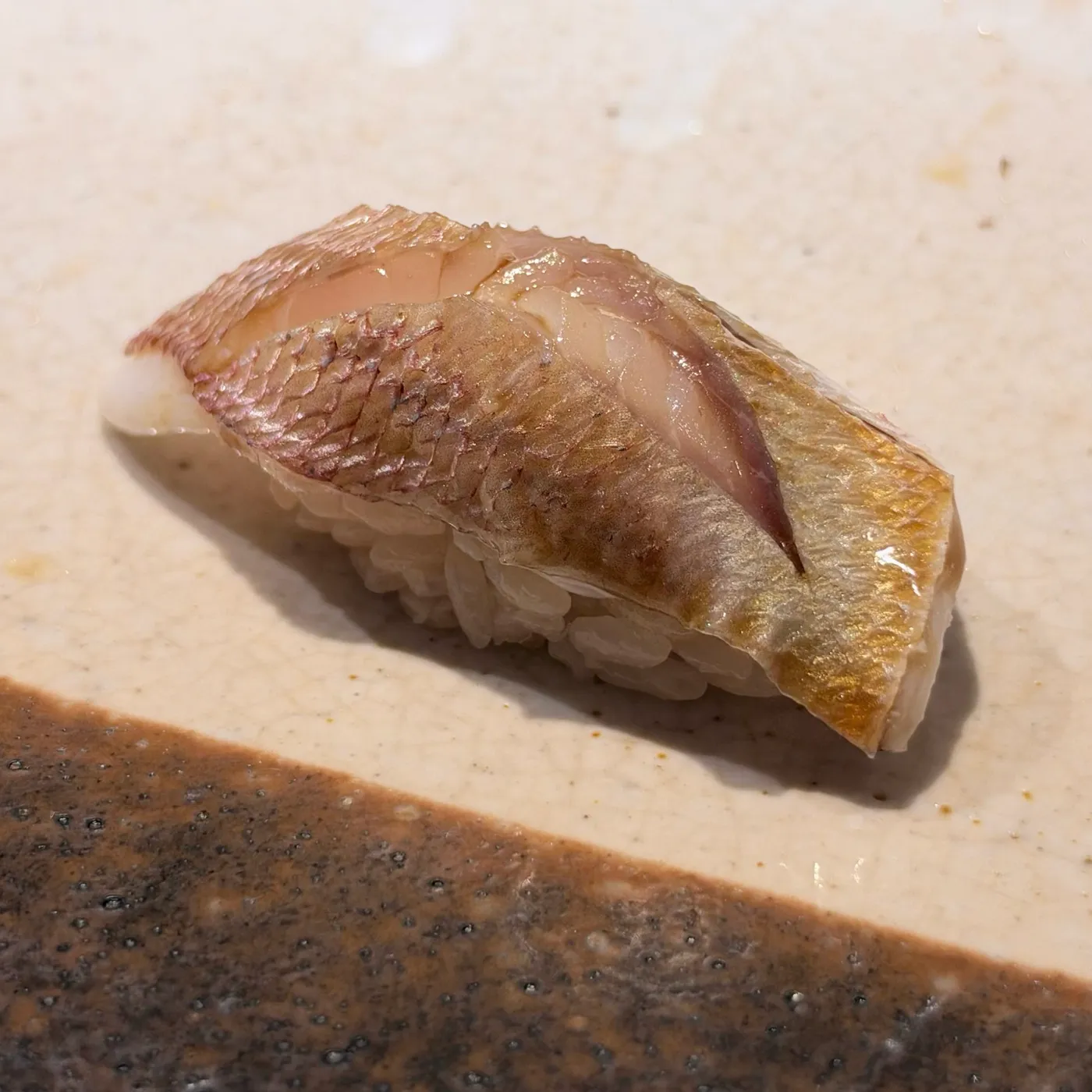
Kasugo with Umeboshi
春子の梅干し添え A small, particularly tender sea bream, with only the skin briefly blanched before the fish is cured with salt and vinegar. A little umeboshi is tucked inside, adding the wonderful acidity of the pickled Japanese ume.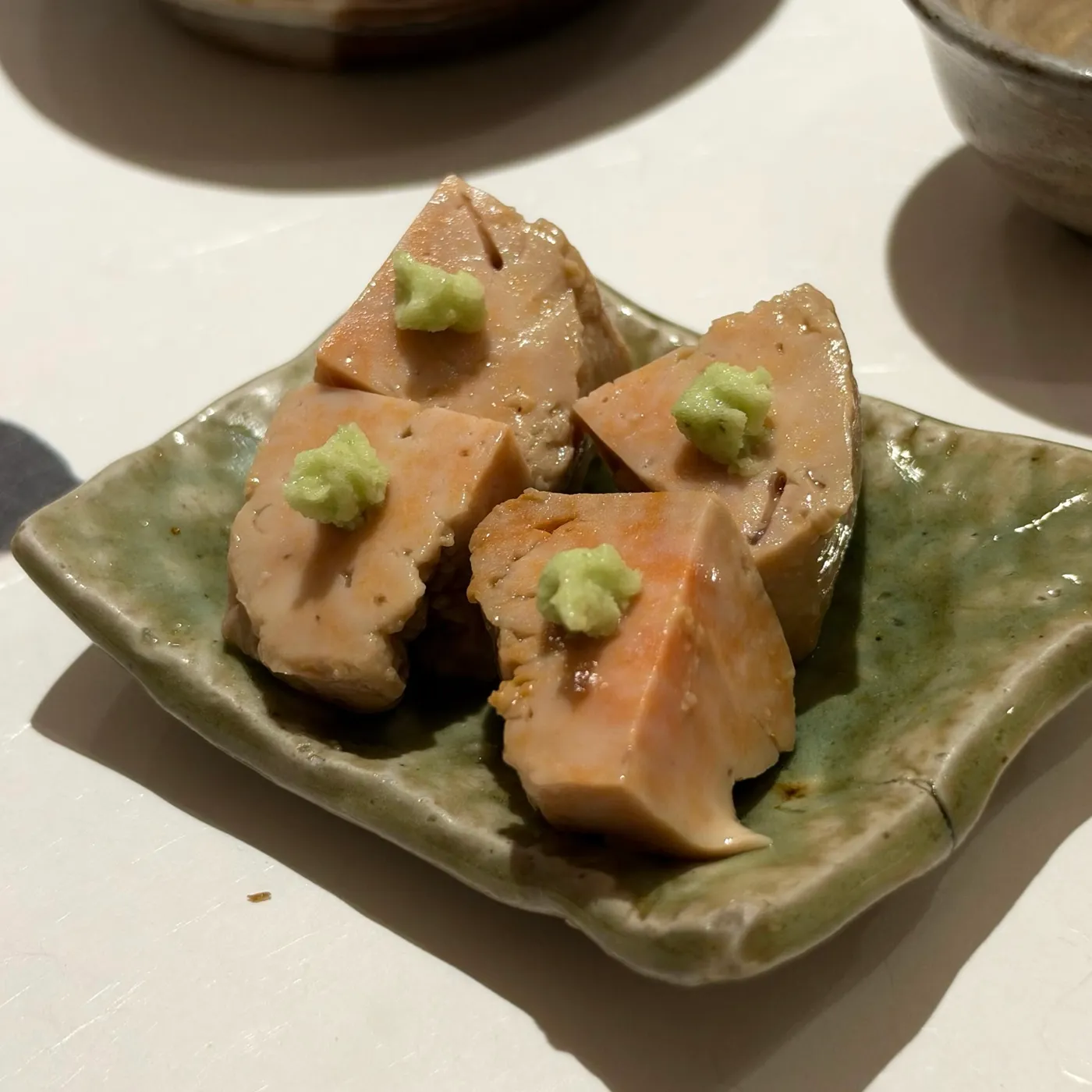
Ankimo with Warm Sake
あん肝と燗酒 Four pieces of monkfish liver, each topped with a little wasabi, accompanied by warm sake from Chiba Prefecture. A bite of ankimo, a sip of sake, and repeat. The acidity of the sake provides a lovely counterpoint to the richness of the liver. What I didn't yet know was that this particular pairing would become one of the most memorable subjects of my conversation with Oka san that evening. More about that later.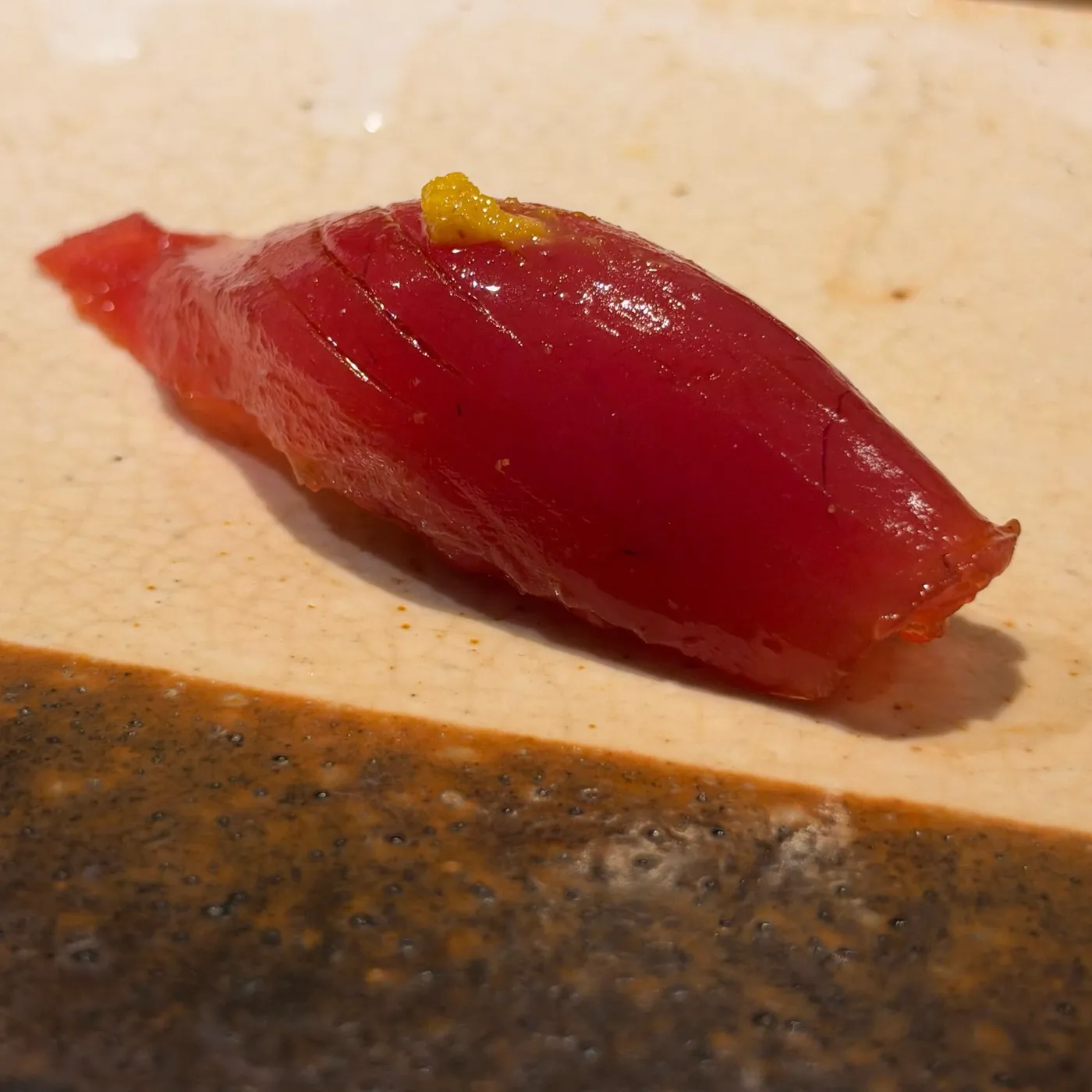
Katsuo no Akami with Karashi
鰹の赤身、辛子添え The soft inner flesh of the bonito, served with Japanese mustard. The first of three different parts of the katsuo we would eat that evening.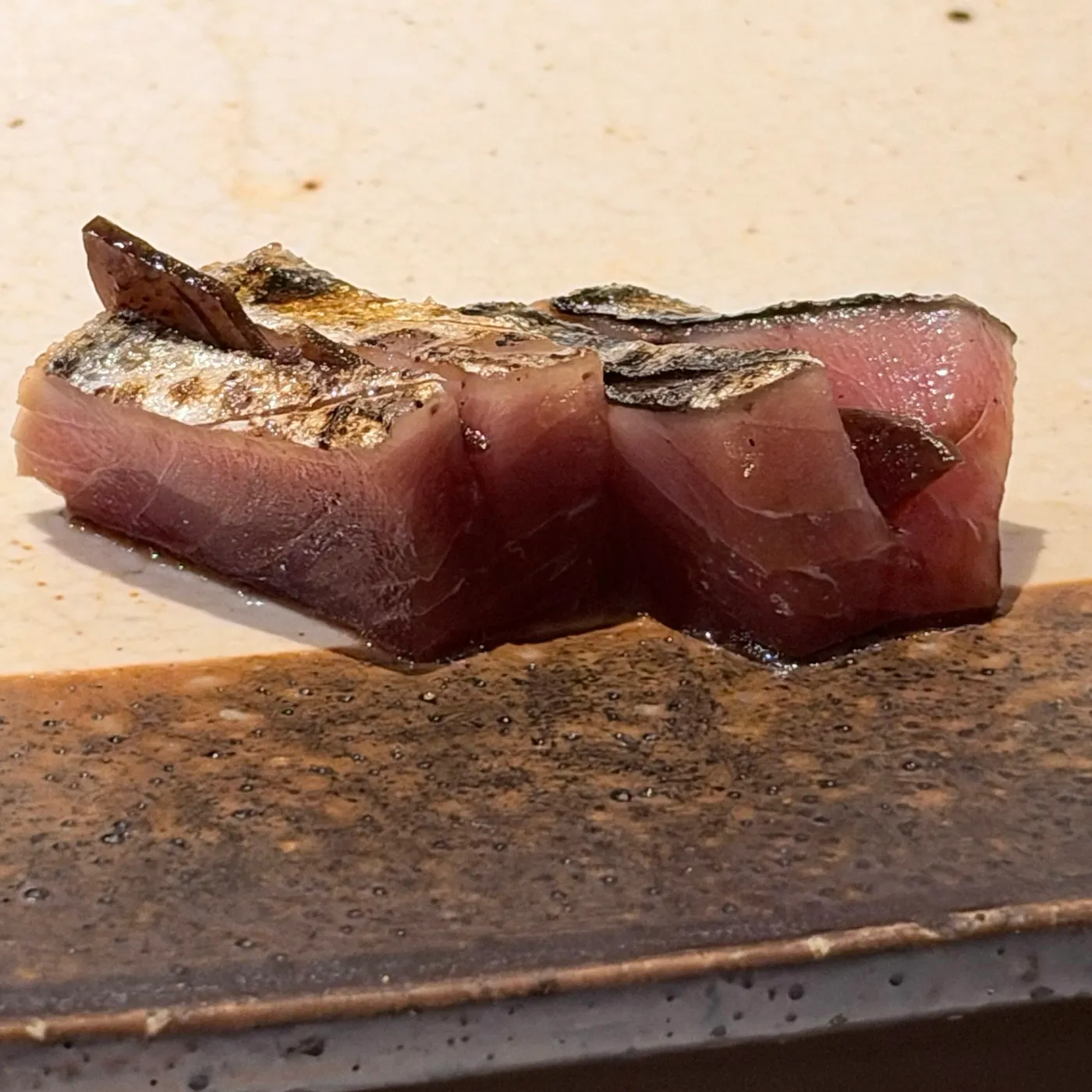
Katsuo with Soy-Marinated Garlic
鰹の外側、にんにくの醤油漬け添え The firmer outer flesh of the same bonito, with thin slices of garlic tucked between the pieces. The garlic had been marinated in soy sauce for at least a month. The idea is to enjoy the flavor of the garlic without its sharpness lingering in the mouth.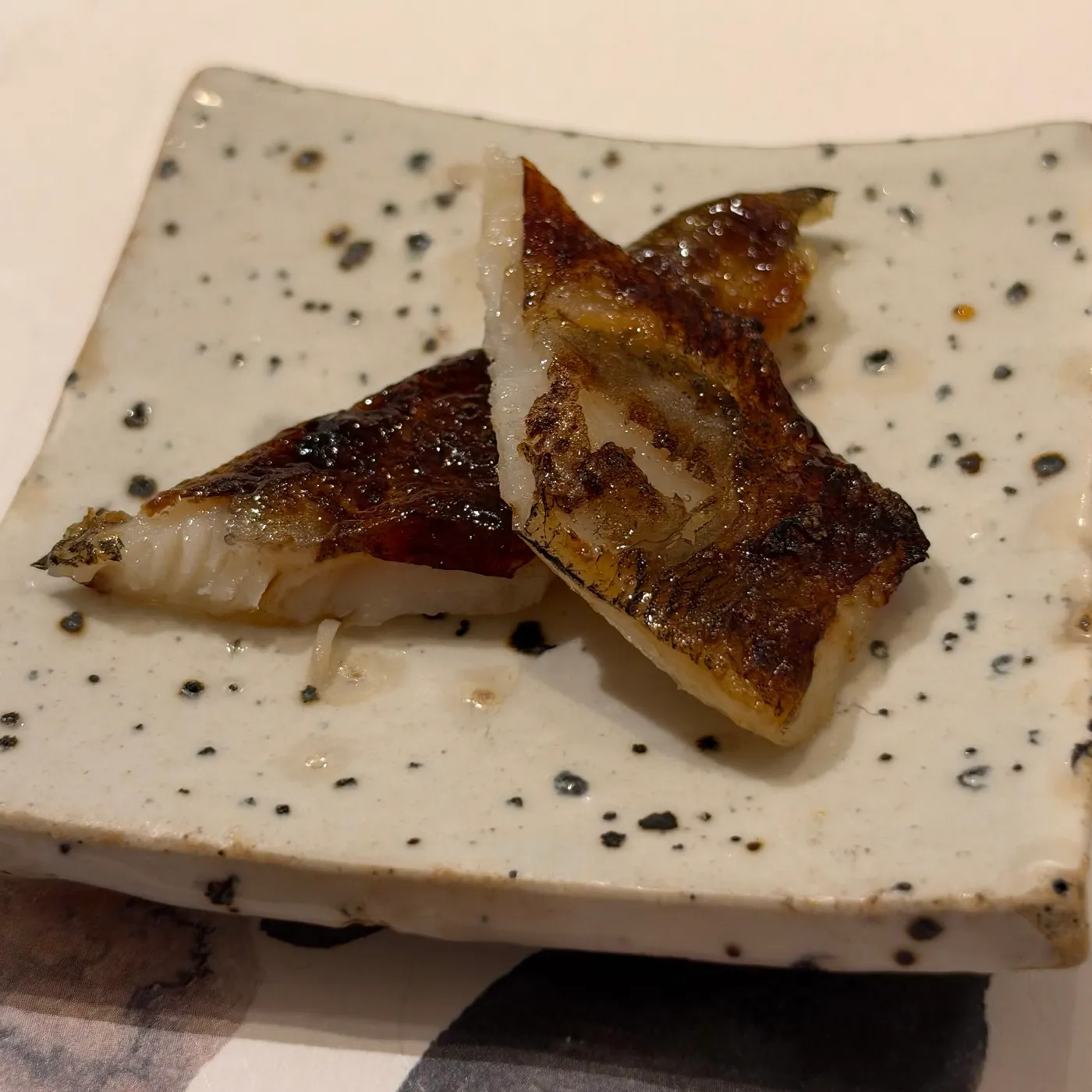
Mehikari
メヒカリ Grilled mehikari, a small, naturally oily deep-water fish. One of those less celebrated Japanese fish that Oka san particularly enjoys working with.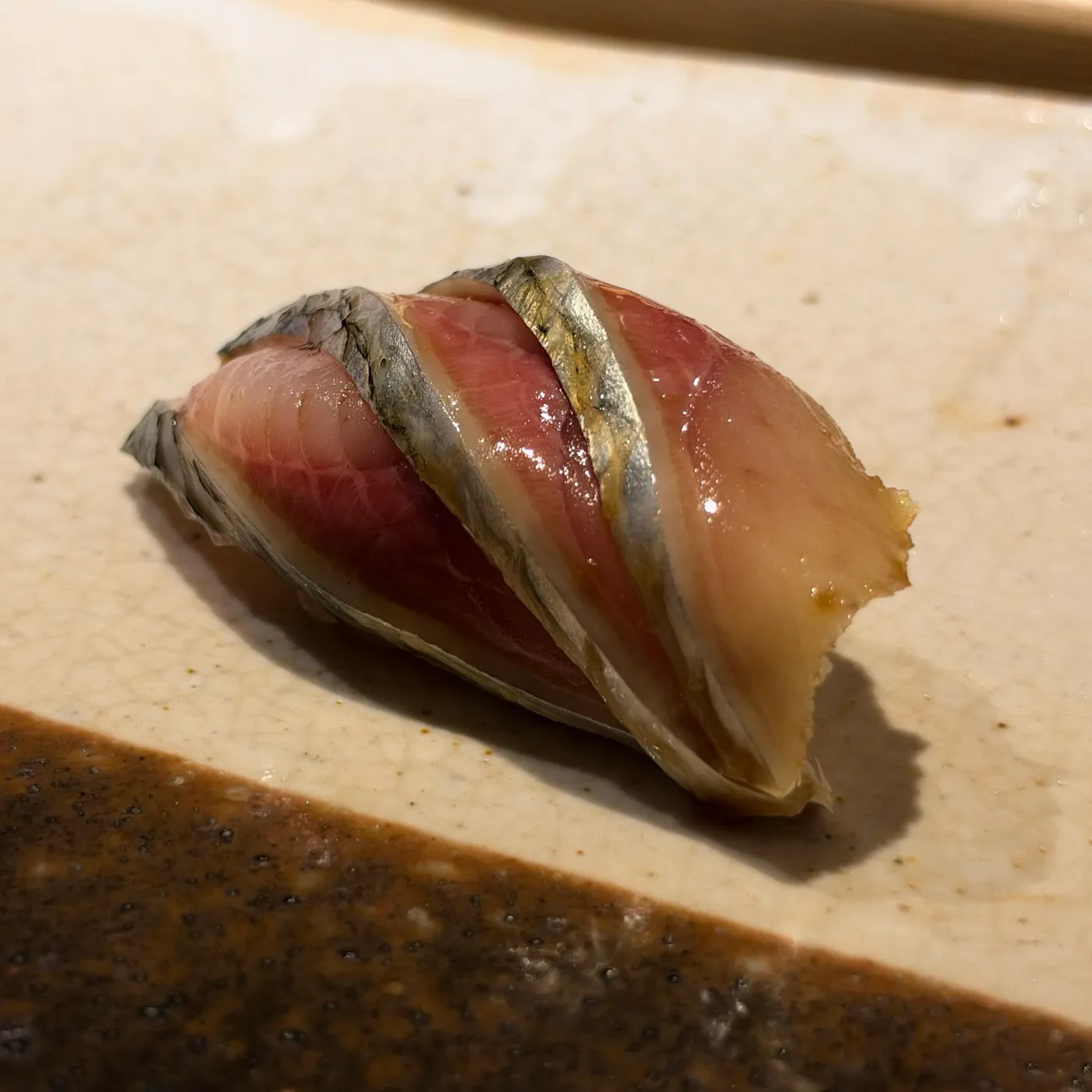
Nishin no Sujime
鰊の酢締め Vinegar-cured herring. Oka san mentioned nishin, together with kohada, when we asked him which fish required the most painstaking work to remove the fine bones.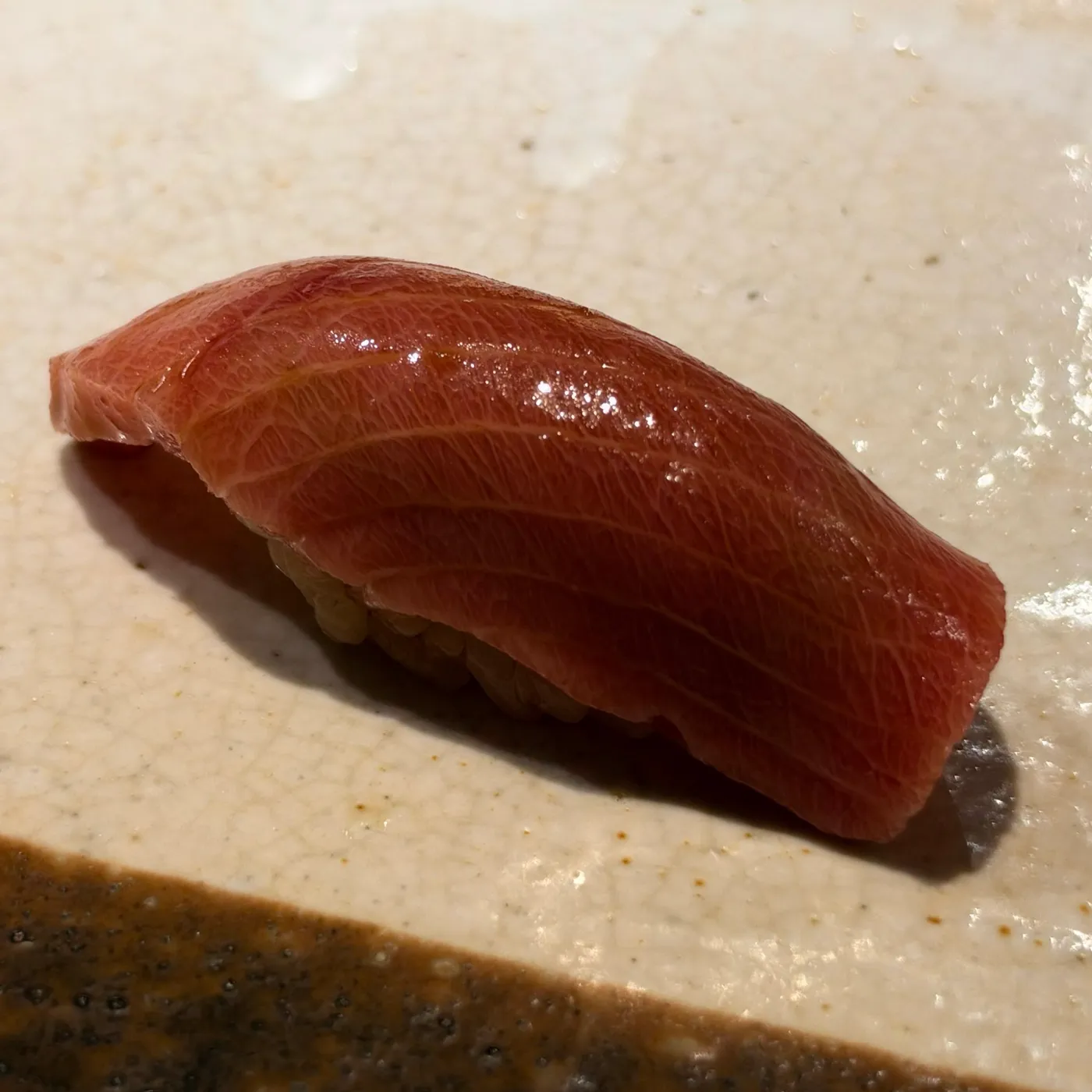
Setoro
背トロ Medium-fatty tuna from the back of the fish, rather than the belly.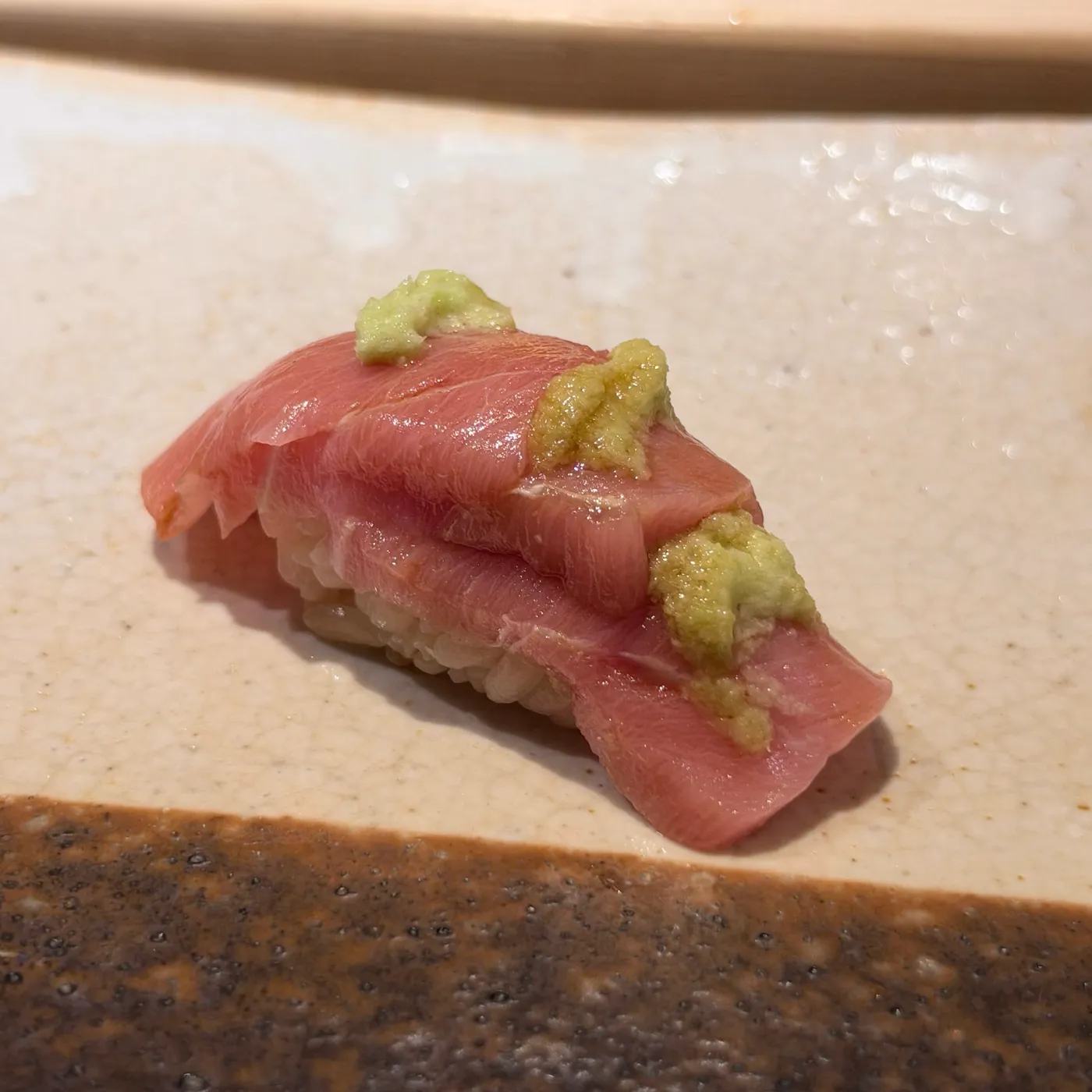
Toro-feuille
トロフィーユ Oka san's tuna mille-feuille. Thin layers of otoro with wasabi between them, bringing the richness of the tuna and the sweetness and heat of the wasabi together throughout the bite.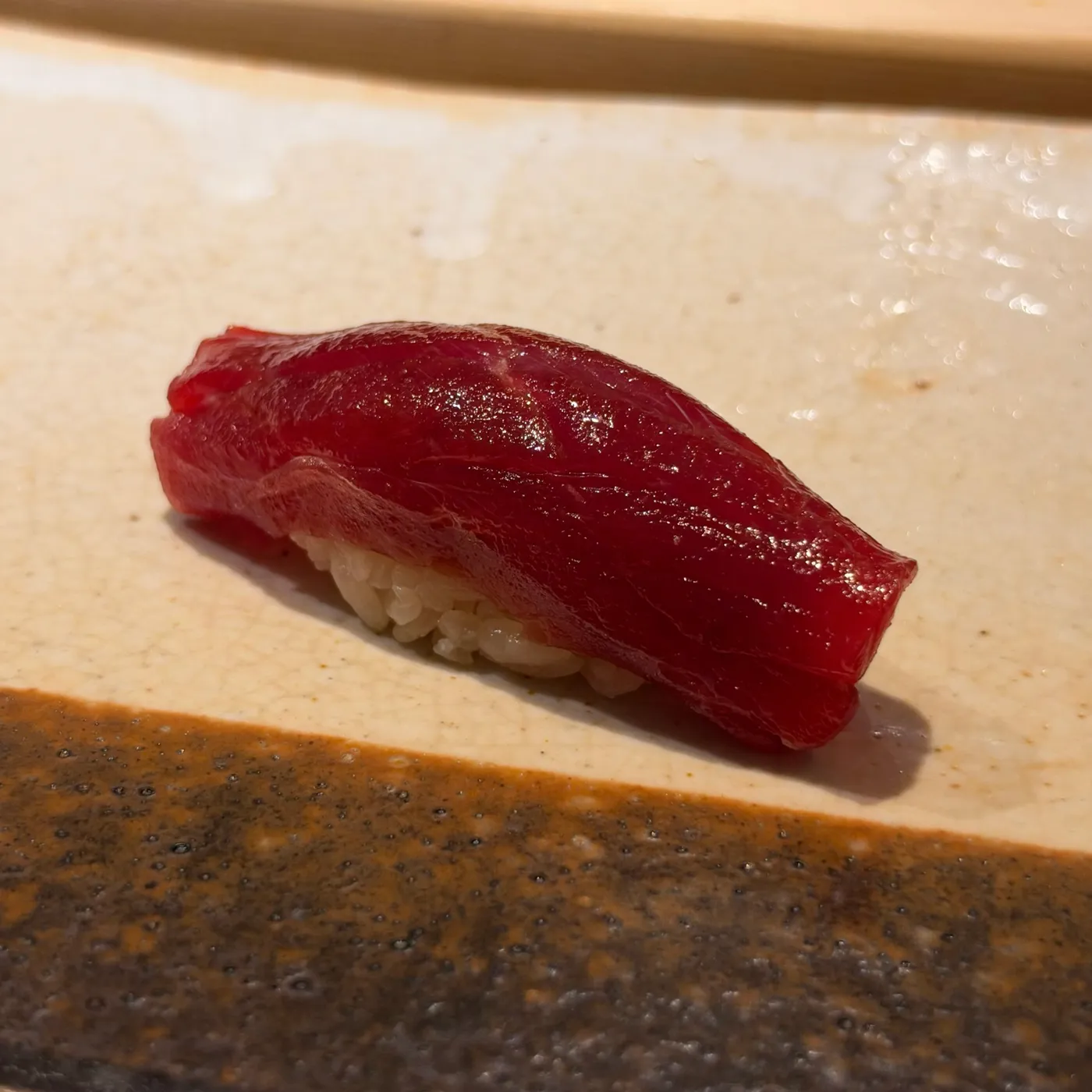
Akami Zuke
鮪の赤身漬け Lean tuna marinated in soy sauce. Unlike many sushi chefs, Oka san prefers to serve his akami after the fatty cuts of tuna. He explained that if the akami is served first, its qualities can easily be forgotten once the richer toro arrives. By serving it last, he wants us to leave the tuna sequence appreciating the flavor of the tuna itself.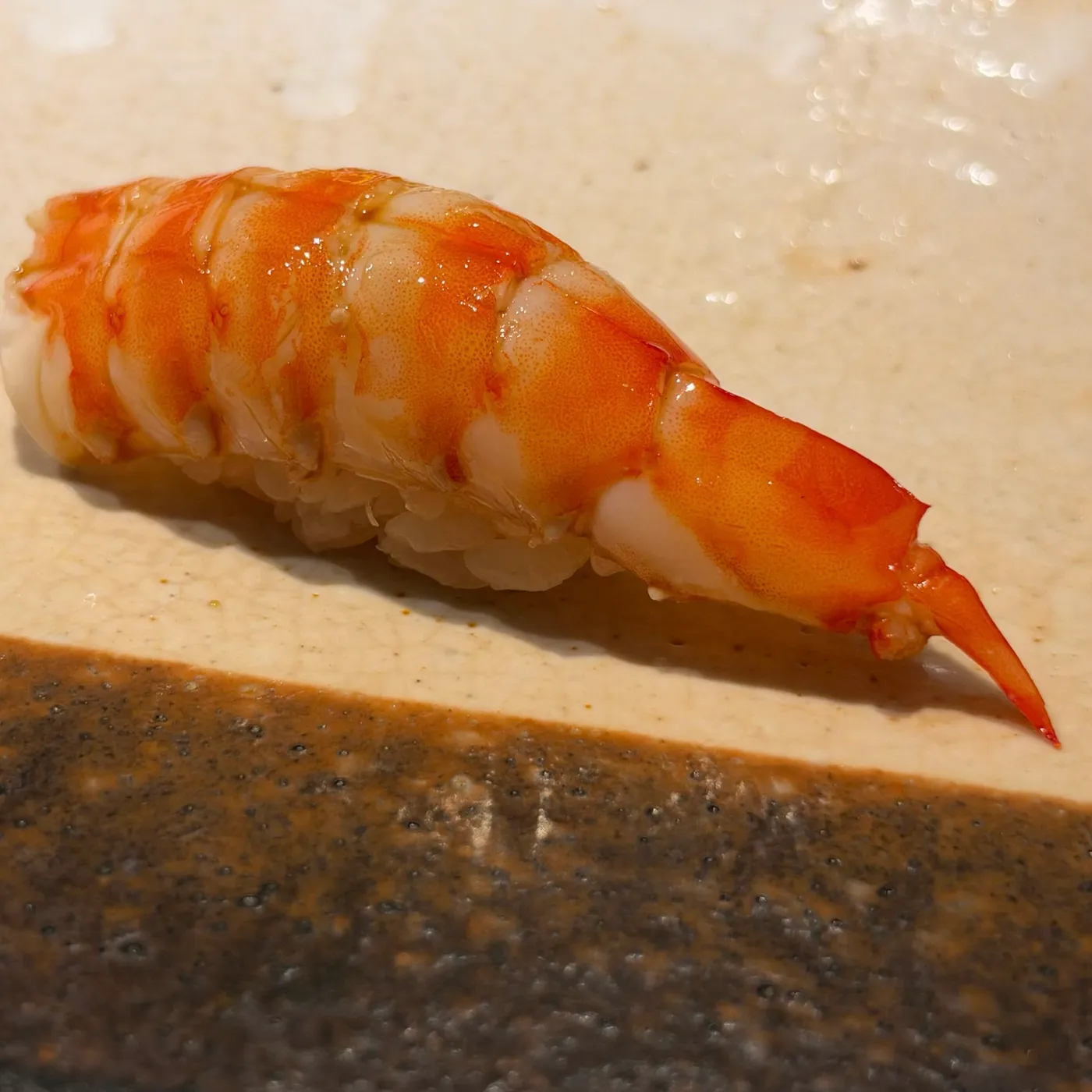
Half-Cooked Kuruma Ebi
半生の車海老 Kuruma prawn boiled for approximately forty seconds and then briefly touched to a hot grill. Just enough cooking to bring out the sweetness of the prawn, while retaining its soft center and adding a little aroma from the grill.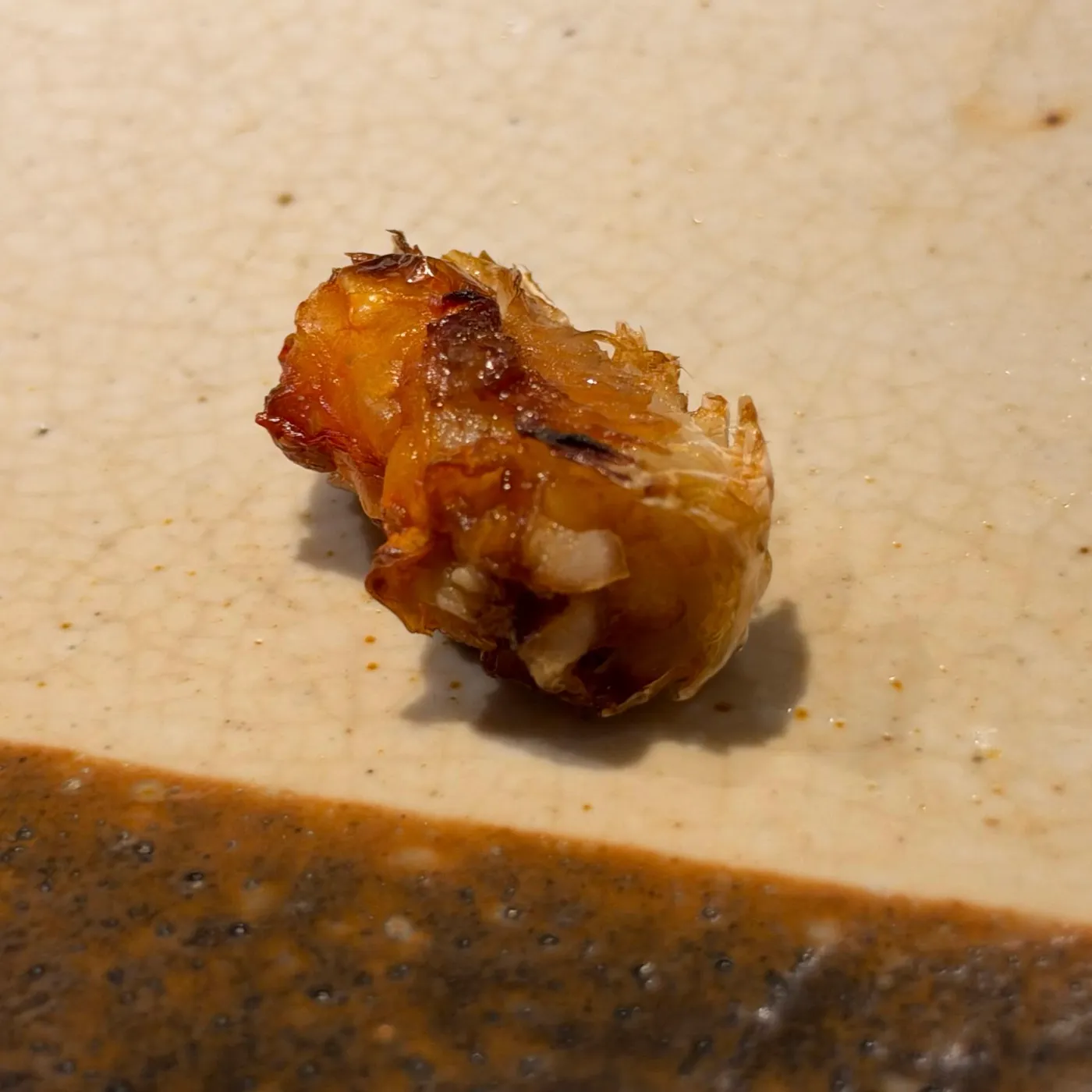
Kuruma Ebi Head
車海老の頭 The head of the same prawn, served with rock salt. One bite, and chew slowly.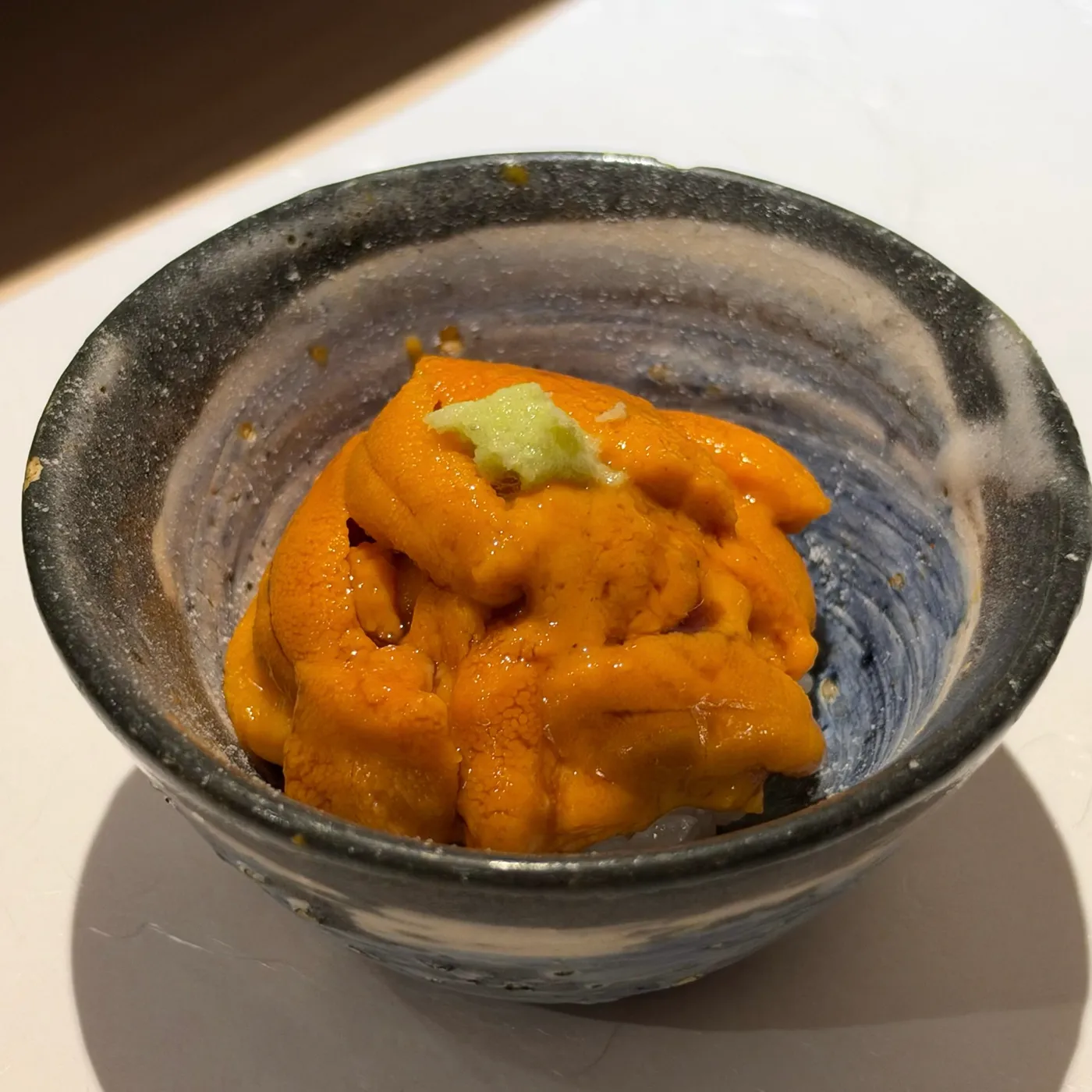
Uni from Nemuro
根室産の雲丹 A generous serving of sea urchin from Nemuro in eastern Hokkaido, served in a small bowl over a little shari and topped with wasabi. Oka san explained that even sea urchin of the same species, from the same general area, can differ considerably depending on the supplier. Knowing the name of the region printed on the wooden box is apparently only part of knowing your uni.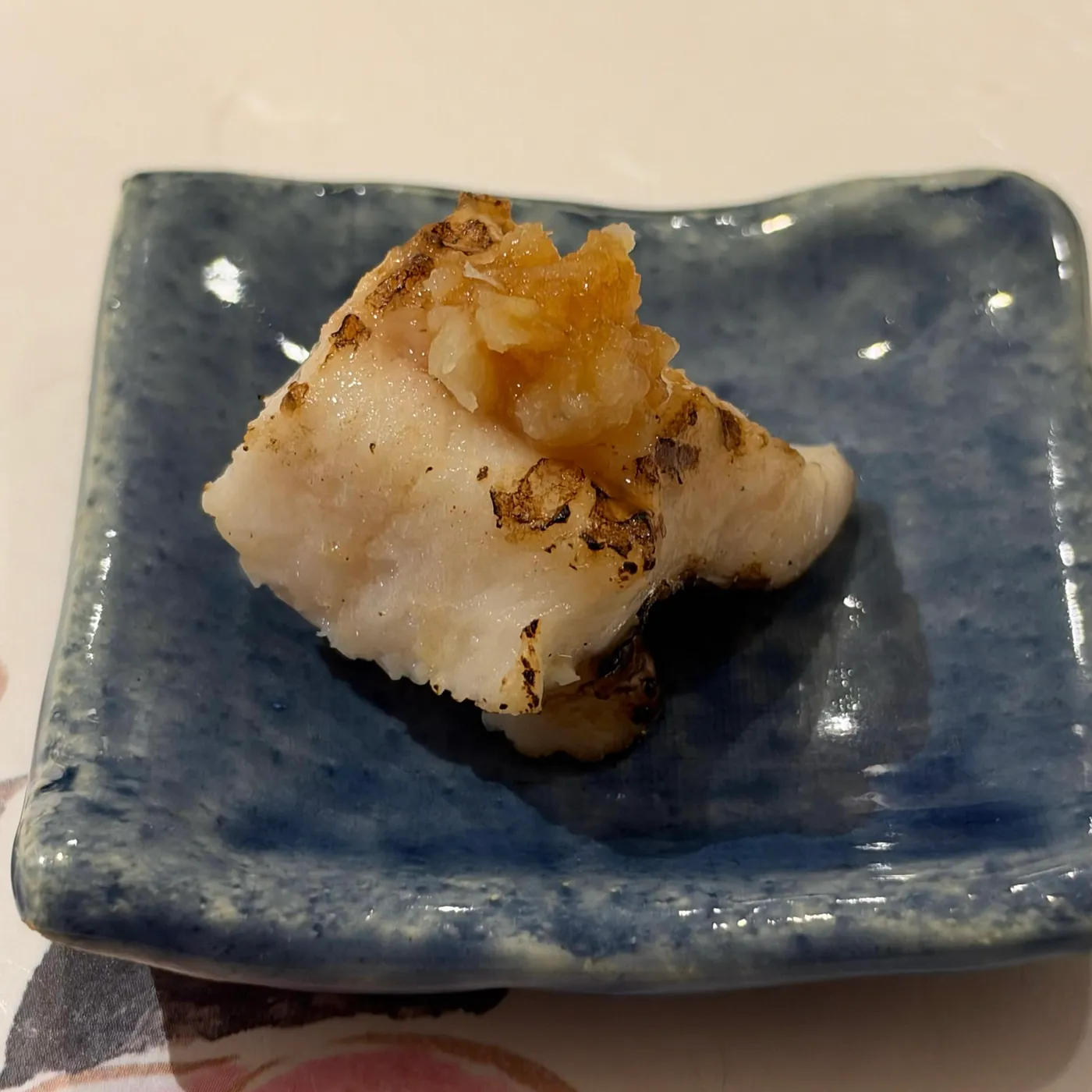
Anago Shirayaki
穴子の白焼き Conger eel grilled directly from raw, without first simmering it. Crisp on the outside, juicy inside, and served with wasabi and grated daikon.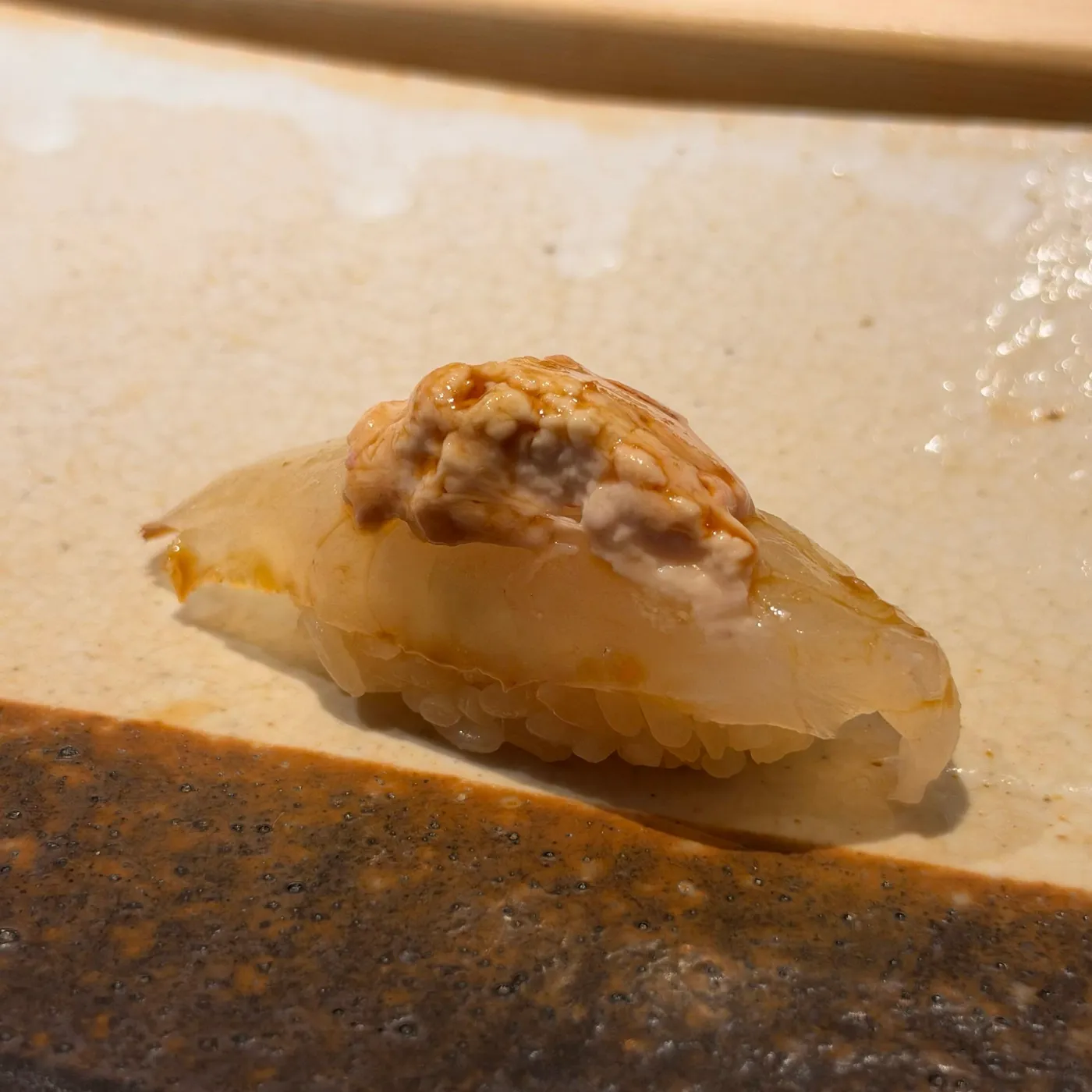
Kawahagi with Its Liver
カワハギの肝のせ The flesh of the filefish topped with its own fresh liver. Earlier we had eaten the thin inner skin. Now came the flesh and the wonderfully rich liver.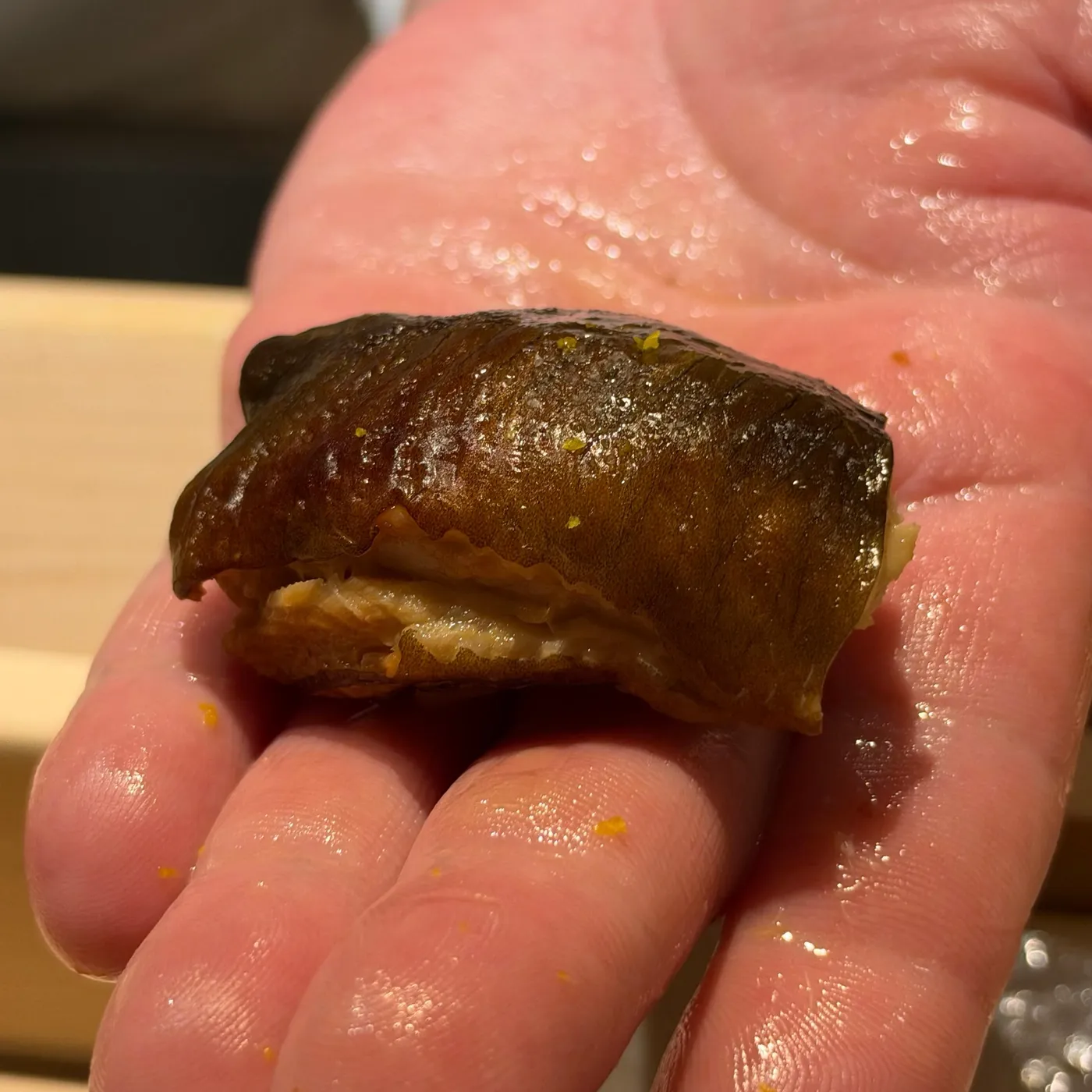
Anago with Salt
穴子の塩握り The second preparation of the anago. This time the eel was simmered until beautifully soft, with its fine bones individually removed. Oka san told us that since we usually eat anago with tsume, he wanted us to experience it with just salt. One of my friends had never eaten anago this way before and told us that he actually preferred it.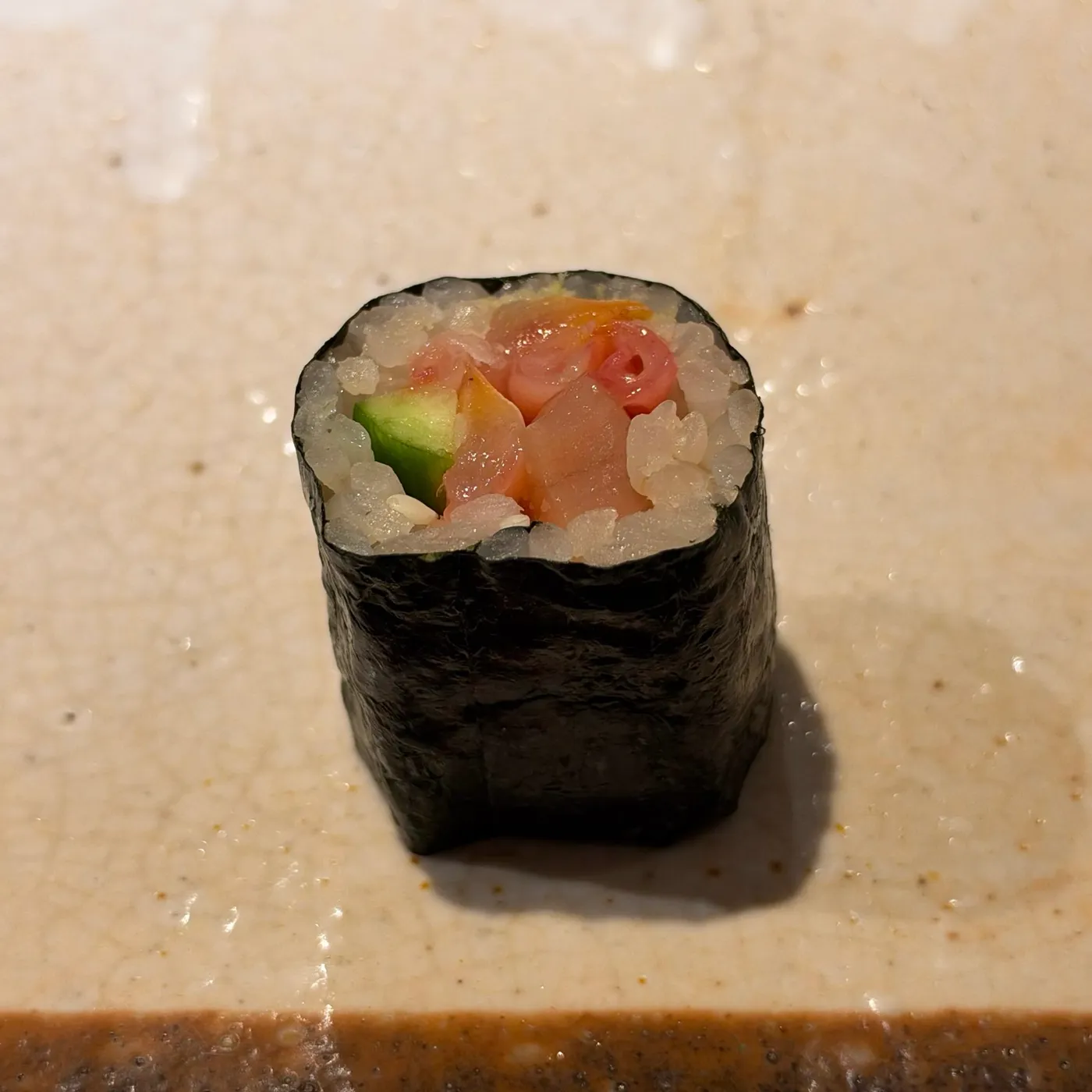
Himo-kyu Maki
ひもきゅう巻き The mantle of the akagai rolled with cucumber. Another part of the ark shell we had eaten near the beginning of the meal.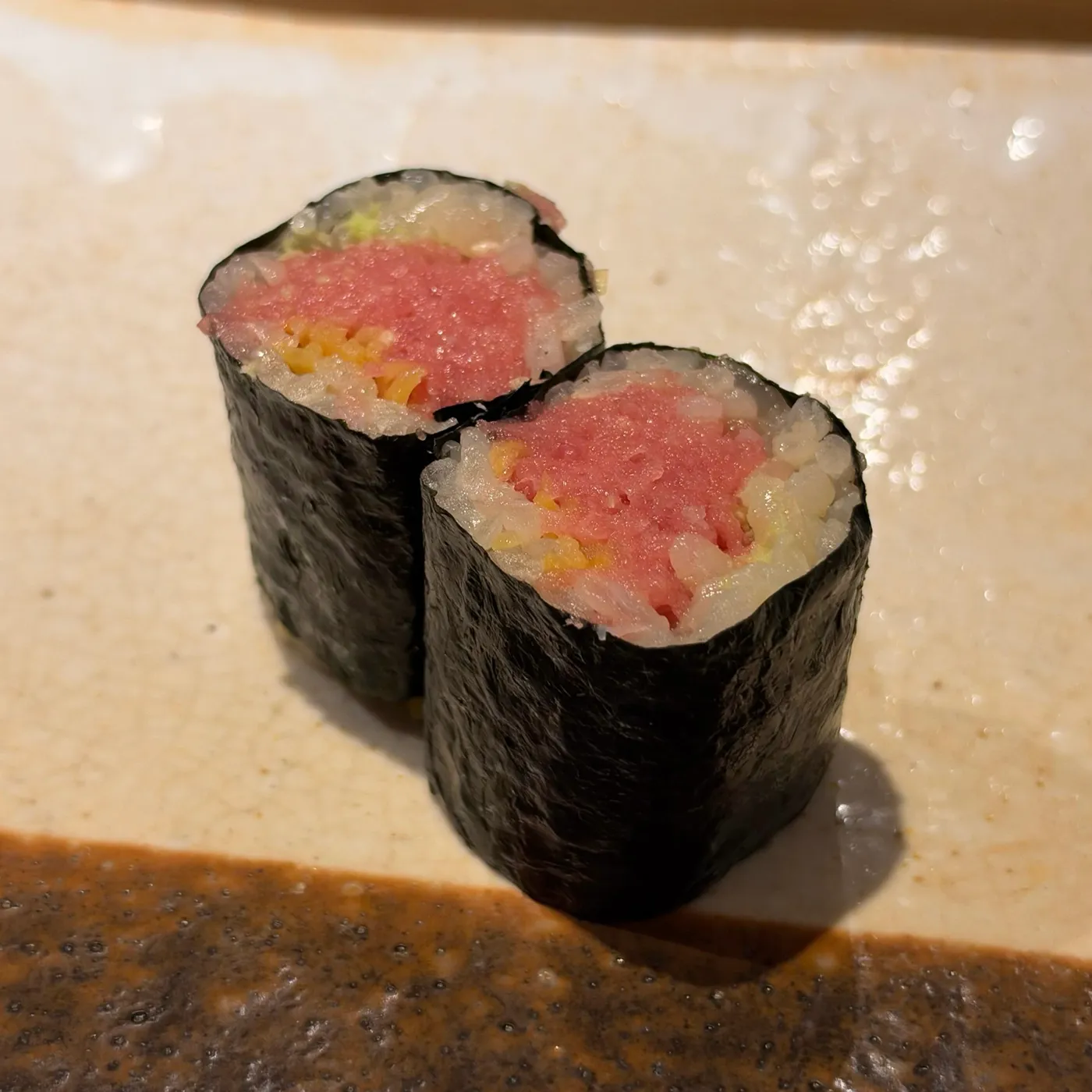
Torotaku Maki
とろたく巻き Fatty tuna and pickled daikon.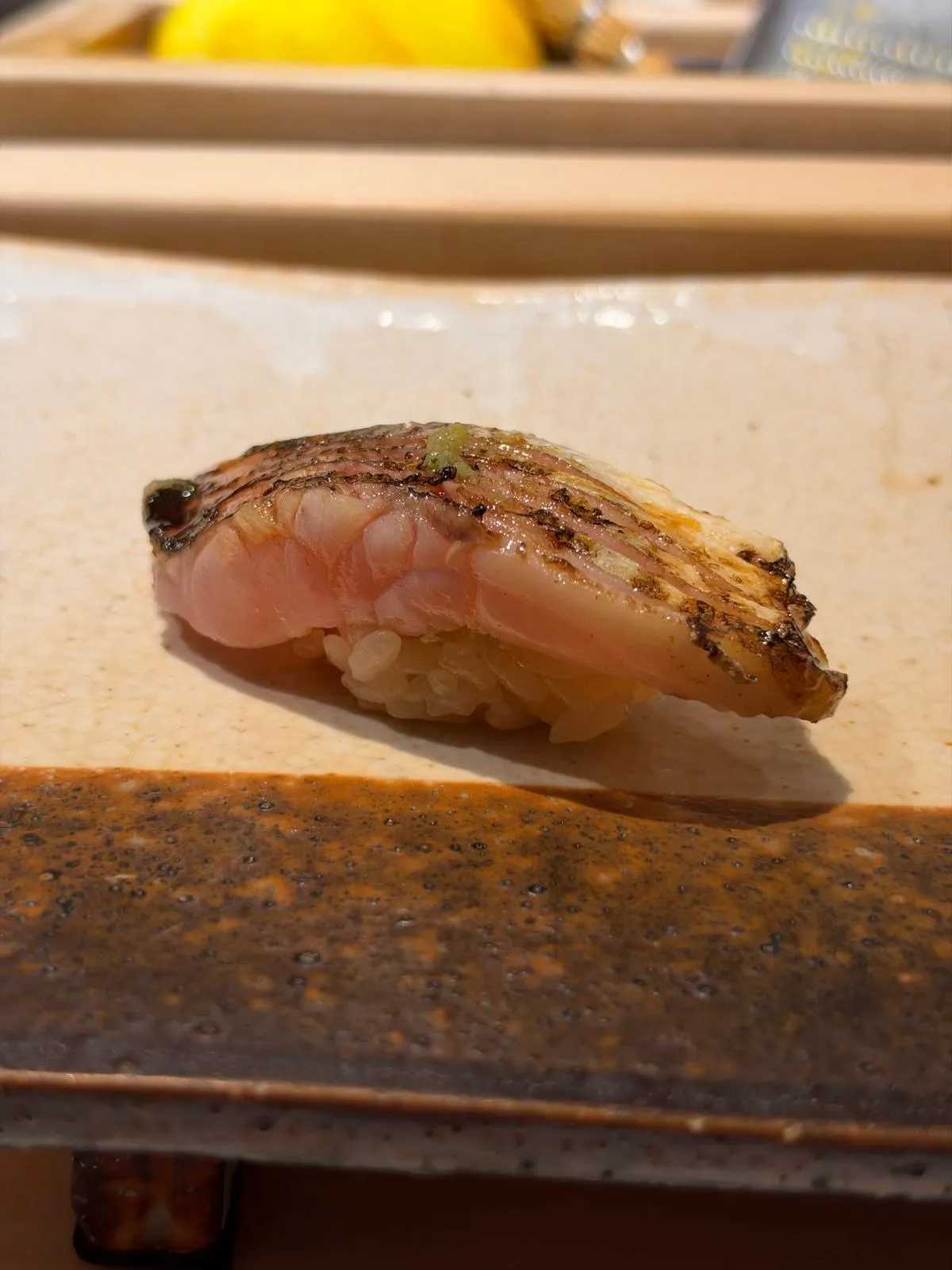
Kamasu
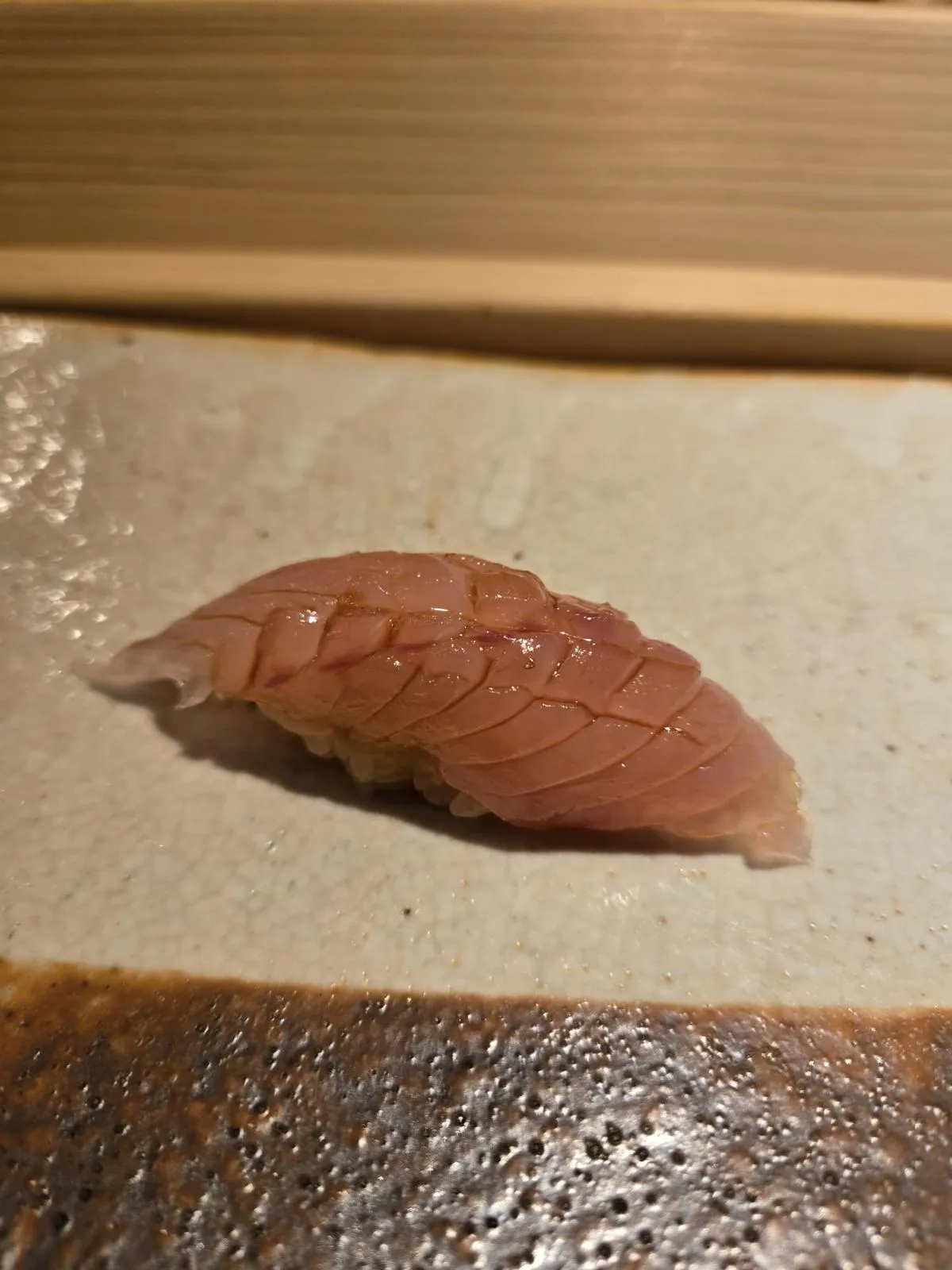
Mutsu
ムツ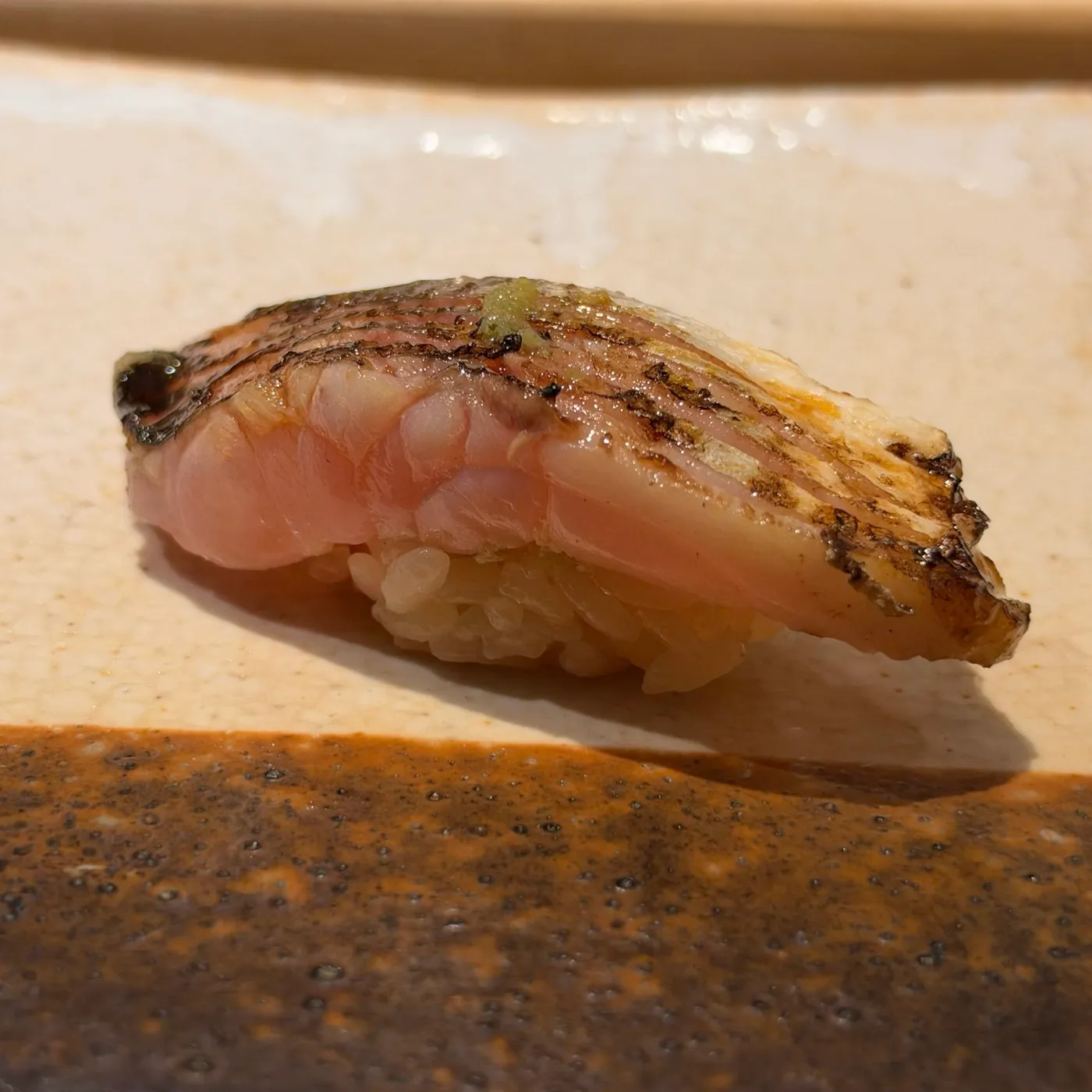
Kamasu with Yuzu Kosho
カマスの柚子胡椒添え Japanese barracuda topped with a little yuzu kosho.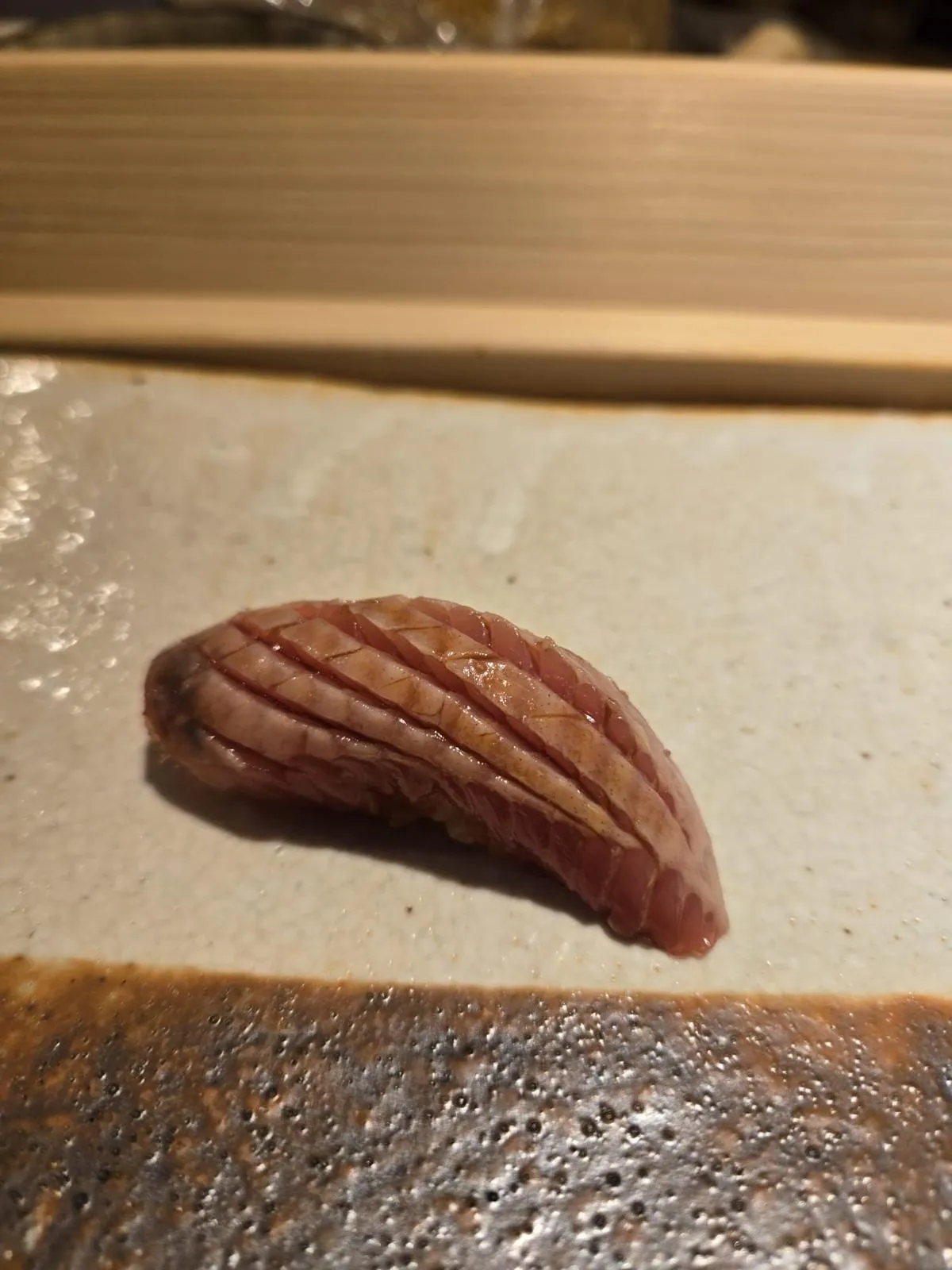
Katsuo no Harami
鰹の腹身 The belly of the bonito. After the lean inner flesh with mustard and the firmer outer flesh with soy-marinated garlic, we were given yet another opportunity to appreciate the same fish.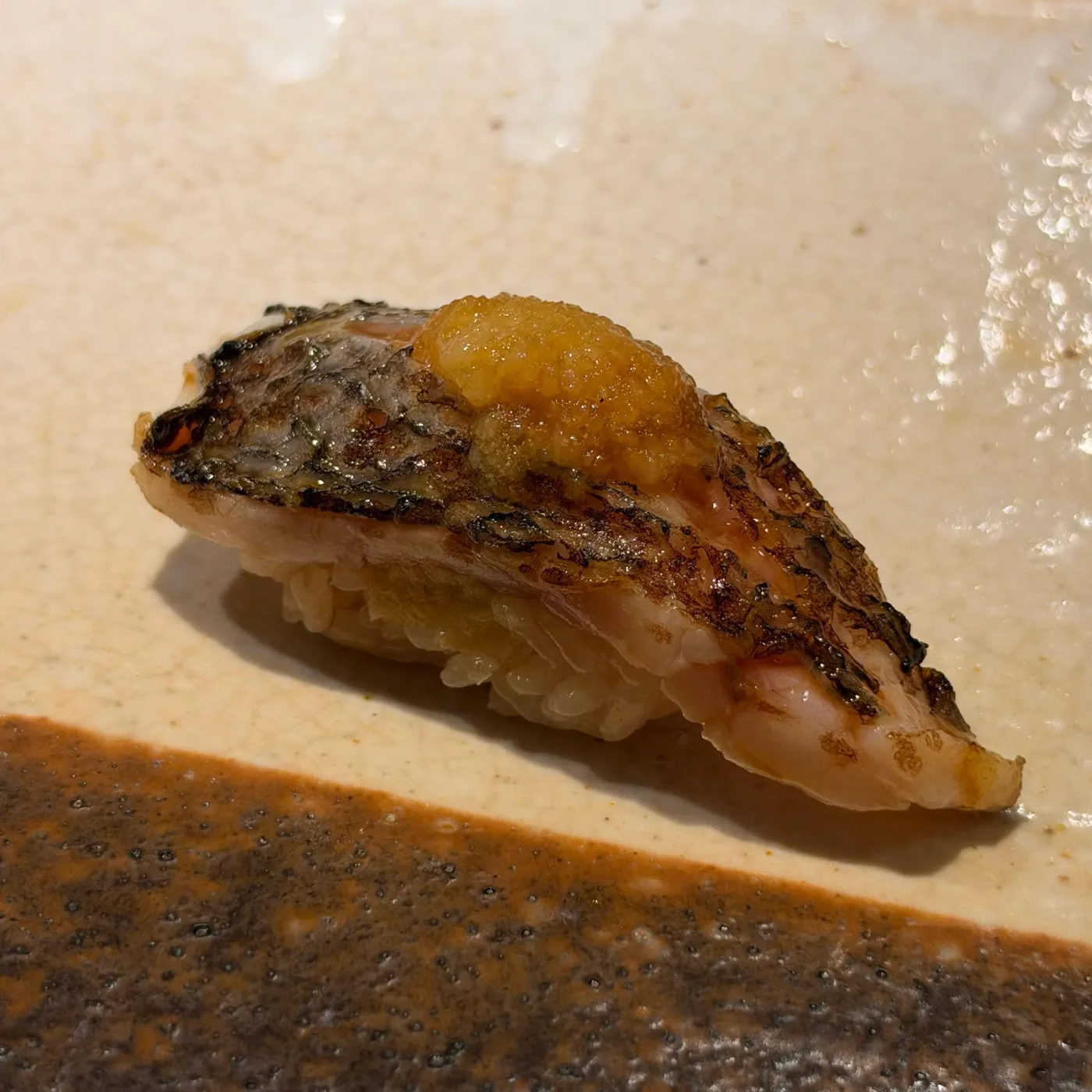
Grilled Kuromutsu Skin
黒むつの皮焼き The skin-side portion of the kuromutsu, grilled with some of the flesh still attached. The skin becomes beautifully crisp while the flesh underneath remains juicy.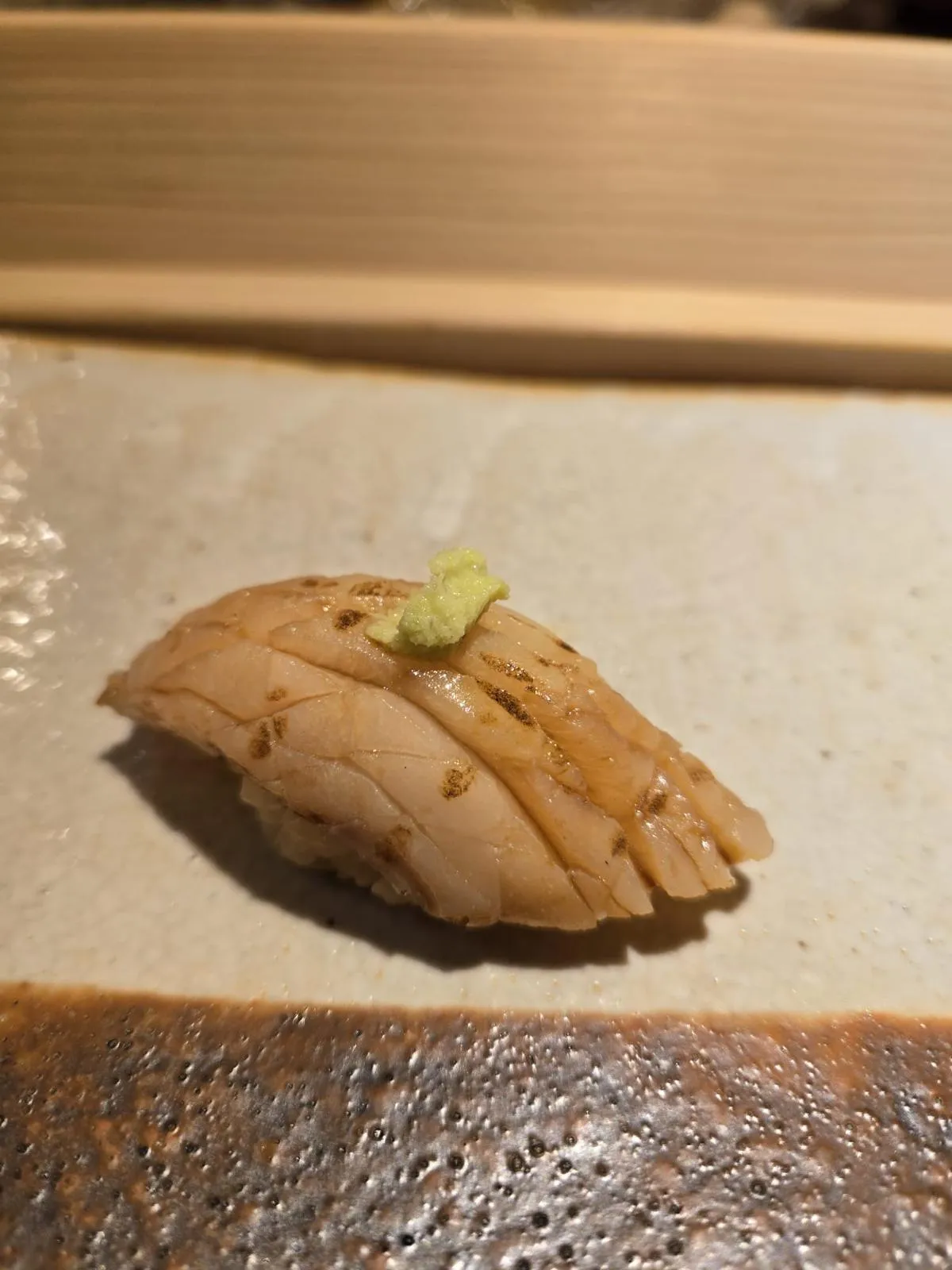
Aburabozu
アブラボウズ Giant skilfish, a large deep-water fish with exceptionally fatty white flesh. Its Japanese name reflects its remarkable oil content, and its richness has earned it comparisons with toro. It is not nearly as familiar internationally as nodoguro or kinmedai. Precisely the sort of fish I enjoy discovering at Masa.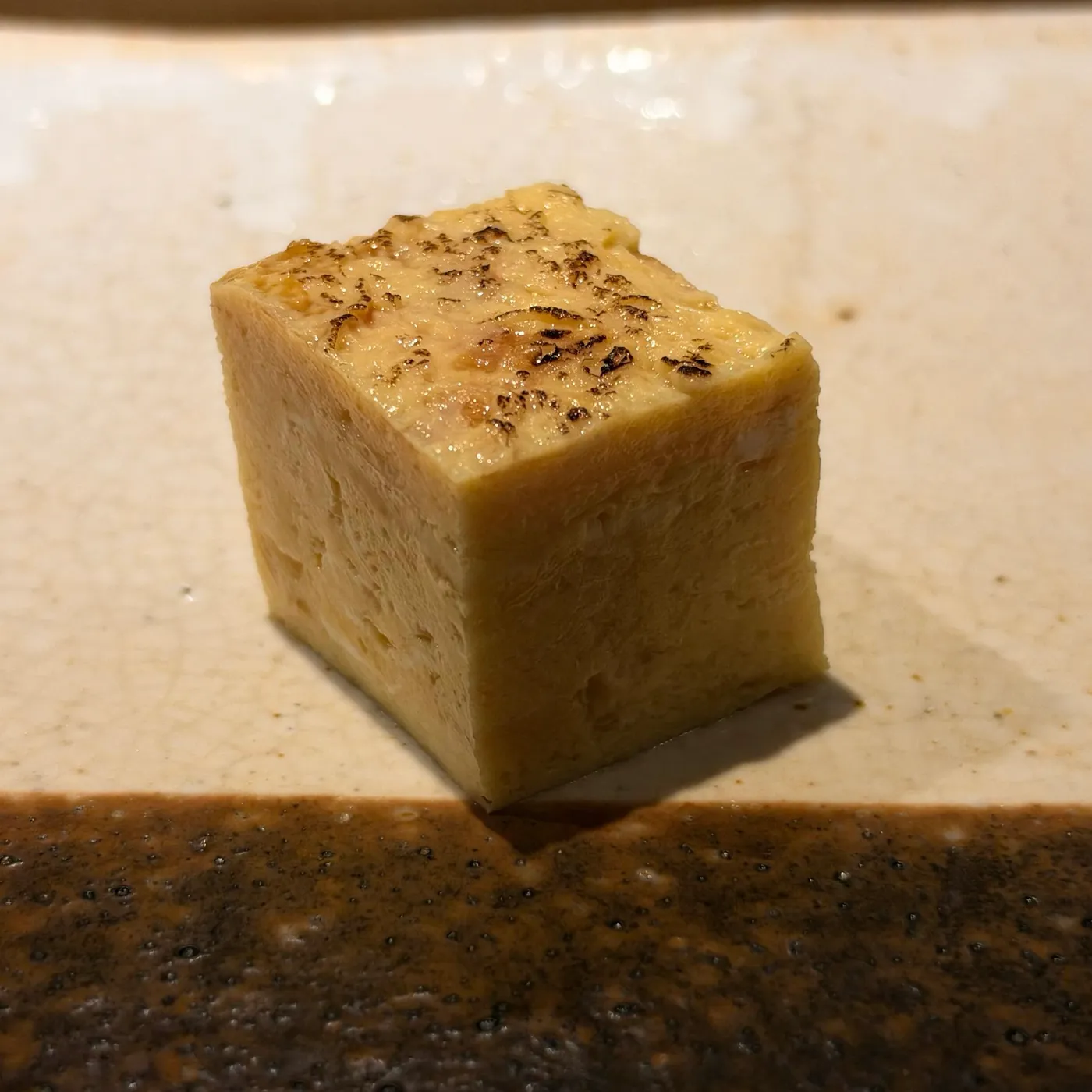
Tamago
玉子 Tamagoyaki.What we drank
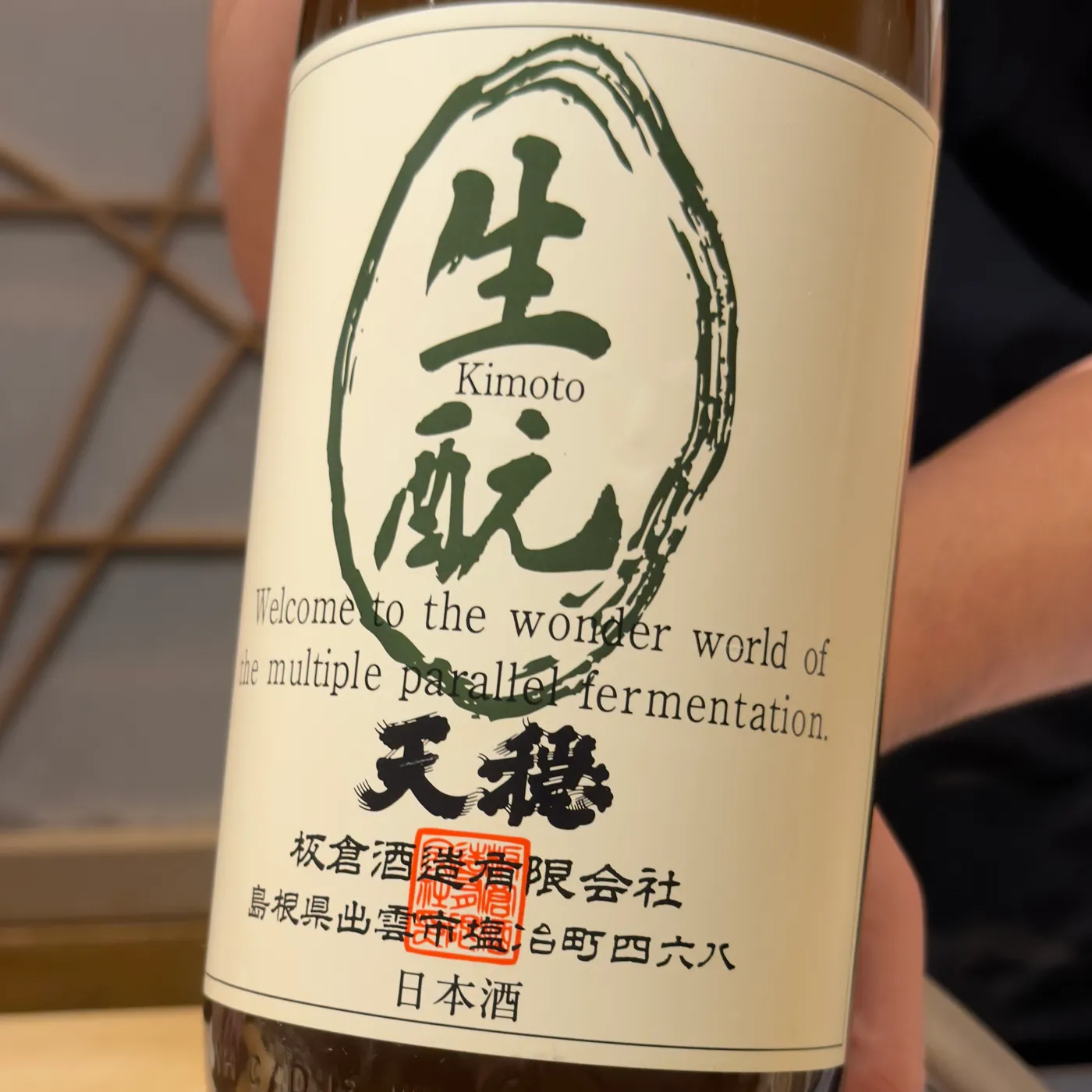
Ten'on Kimoto — 天穏 生酛
Itakura Shuzo · Shimane Prefecture
Brewed in Izumo using the traditional kimoto method, Ten'on embraces the slow, natural development of lactic acidity in the yeast starter, producing sake with depth, gentle acidity and a wonderful savory character. At Masa, we drank it warm, immediately after eating the shirako. The temperature of the sake and the creamy richness of the shirako made this a particularly interesting pairing.
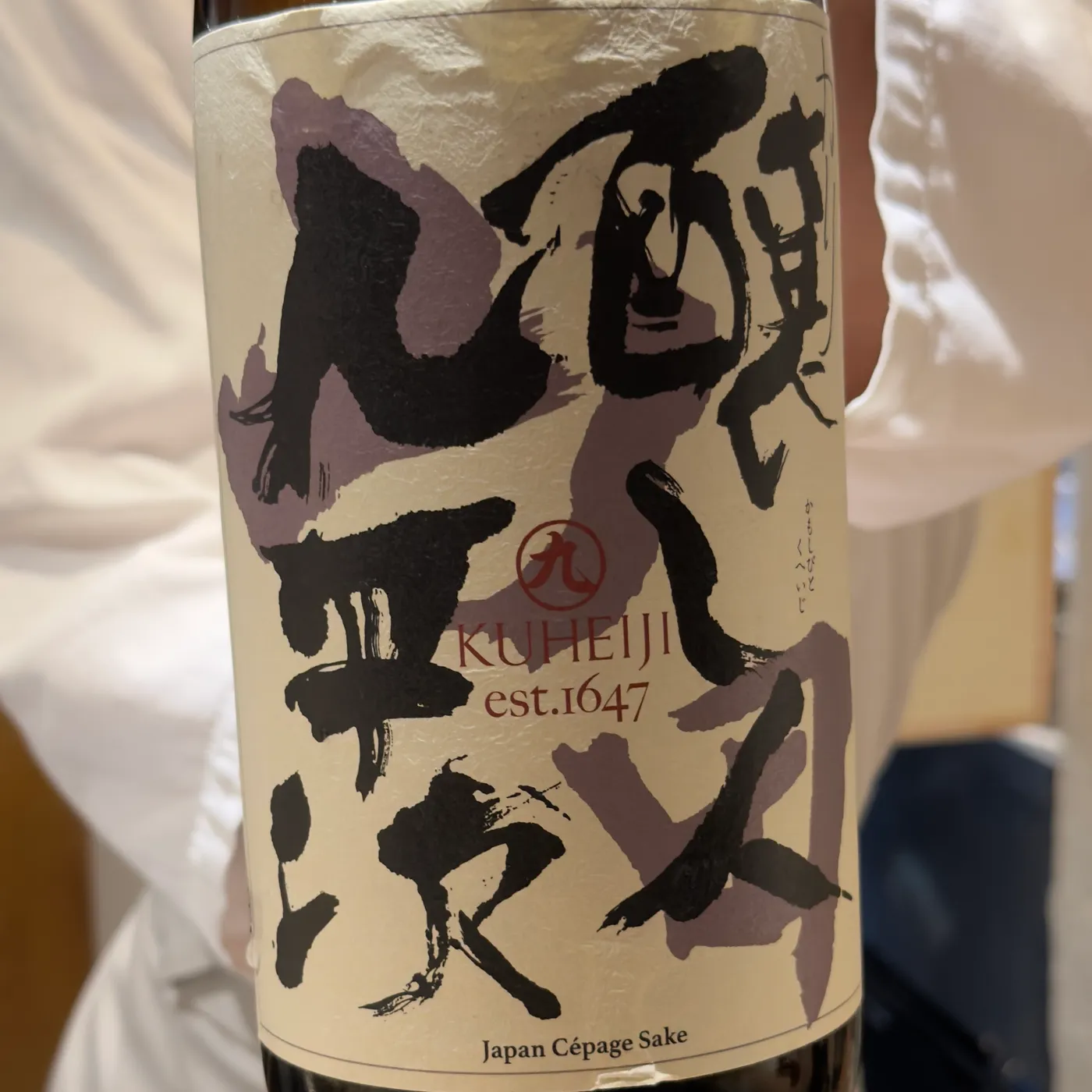
Kamoshibito Kuheiji — 醸し人九平次
Banjo Jozo · Aichi Prefecture
With roots dating back to 1647, Kuheiji has become one of the most interesting bridges between Japanese sake and the world of fine wine. Its philosophy places particular importance on rice varieties, their origins and growing conditions. Elegance, freshness and beautifully integrated acidity are hallmarks of Kuheiji, making its sake a particularly versatile companion throughout a long and varied sushi meal.
The Art of Noticing
Of all the questions I asked Oka san last night, there was one whose answer I kept thinking about long after we left the restaurant.
What was the most important thing Nakazawa san had taught him about life?
“My master always told me that opportunities are everywhere. What matters is whether you notice them or not. Those who notice them are the ones who can seize them.”
The Japanese word he kept using was 気づく (kizuku).
To notice.
He spoke about noticing what a customer might be thinking, what they might be feeling, and how simply being conscious of these things in our everyday lives can gradually make us better human beings.
“A person must continue growing until the day they die,” he told us.
And then, speaking about Nakazawa san, he added:
“My master is still growing even today. That's what makes him such an extraordinary person.”
I started thinking about everything we had eaten that evening.
The different parts of the buri. The inner and outer cuts of the katsuo. The skin of the kawahagi. The skirt of the tairagai, which takes so much work to clean that many chefs prefer to use only the muscle.
I asked Oka san about his fascination with deep-sea fish.
“I particularly love deep-sea fish,” he said. “I feel there are so many whose qualities are still not sufficiently appreciated.”
There it was again.
Noticing.
Sometimes it is a fish that other chefs don't pay much attention to. Sometimes it is a part of a very familiar fish that nobody seems particularly interested in serving.
And sometimes it is simply discovering that something you have been doing for years could be done a little better.
We also spoke about Nakazawa in the early days, long before he became the internationally celebrated sushi master we know today.
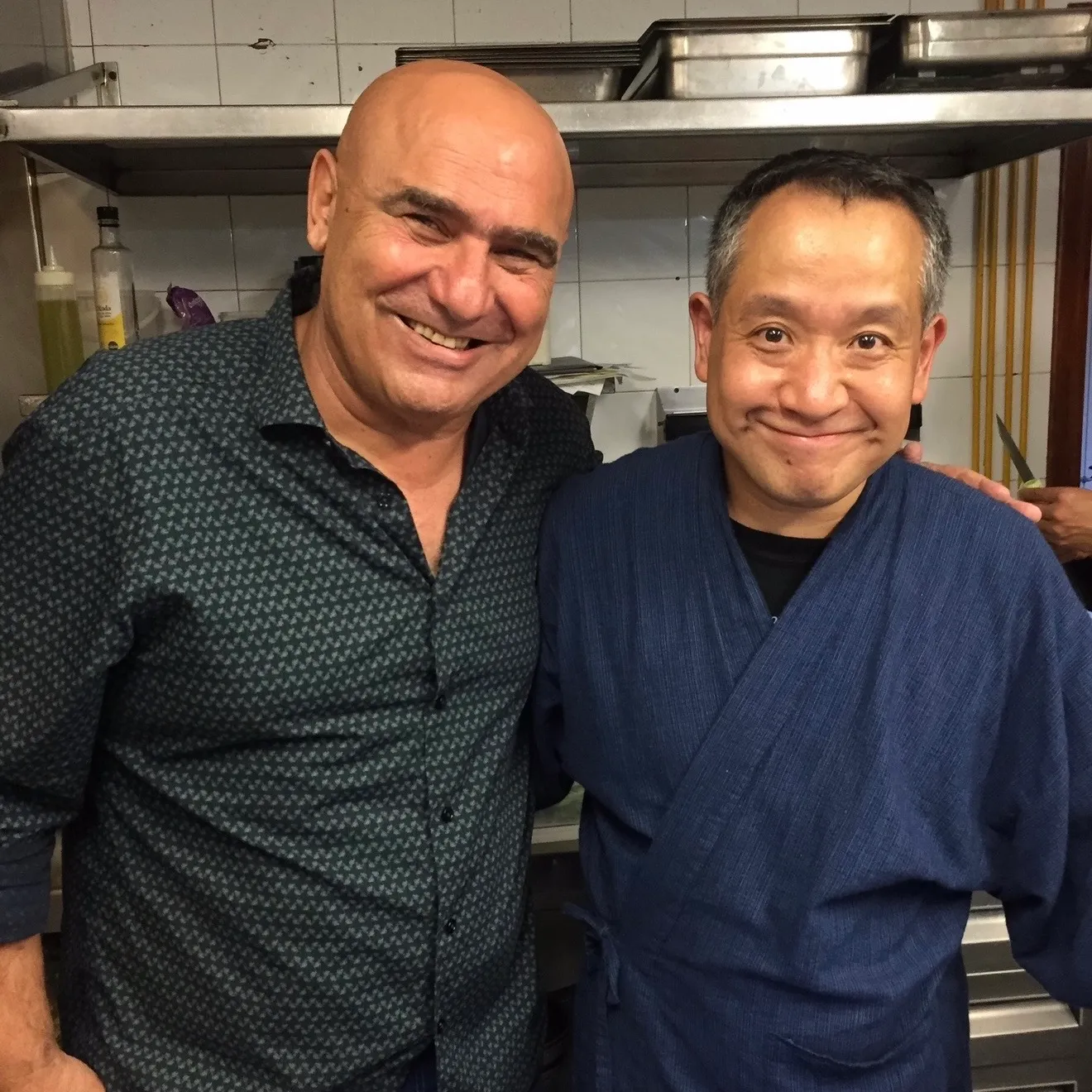
First encounter with a sushi god, Ibiza 2016.
His master was much more mischievous in those days, he told us. He never imagined that Nakazawa would become quite the extraordinary figure he is today, although even then, there was no doubt about his determination to become number one.
I love hearing these stories.
We tend to meet great chefs after they have become great chefs. We rarely get to know the young men they once were.
And here was someone who had been there.
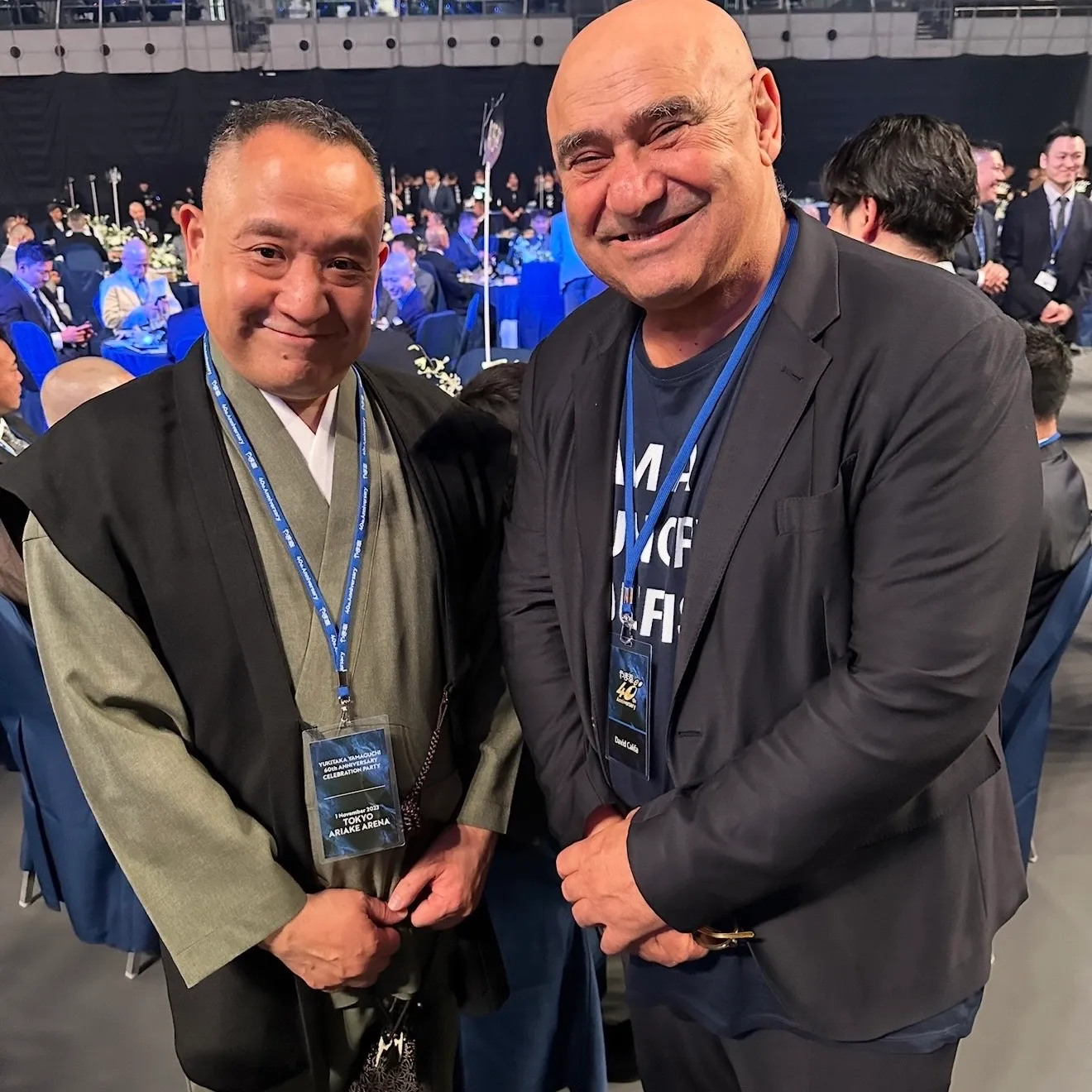
Celebrating the King of Tuna's 60th birthday, Tokyo 2023.
Toward the end of the evening, I asked Oka san one last question about his master.
If Nakazawa san were to walk into Sushisho Masa tonight, what would Oka most want to serve him?
He thought about it for a moment.
Then came the answer.
Ankimo.
Not because Nakazawa doesn't know how to prepare ankimo. Anyone familiar with Nakazawa's sushi knows how much he loves it.
What Oka san wanted his master to experience was the pairing of ankimo and sake that he and his team had developed at Masa.
During the quieter days of COVID, they had more time to go out and taste different sake. One particular discovery eventually led to the pairing we enjoyed last night.
And now, after all these years, Oka san has something new he wants his master to taste.
I found that incredibly touching.
Here is a man who has his own wonderful restaurant, his own distinctive style, and people who travel from all over the world to eat his sushi.
And yet, there is still something he wants to show his teacher.
Perhaps that is what Nakazawa meant when he told him that a person must continue growing until the day they die.
Thank you, Oka san, for another wonderful evening, for your patience, and for everything you taught us.
I came to eat sushi.
I left thinking about life. ❤️
I AM A HUNGRY TOURIST.