Motoyoshi
Visited Thu, Nov 26, 2026 · Dinner
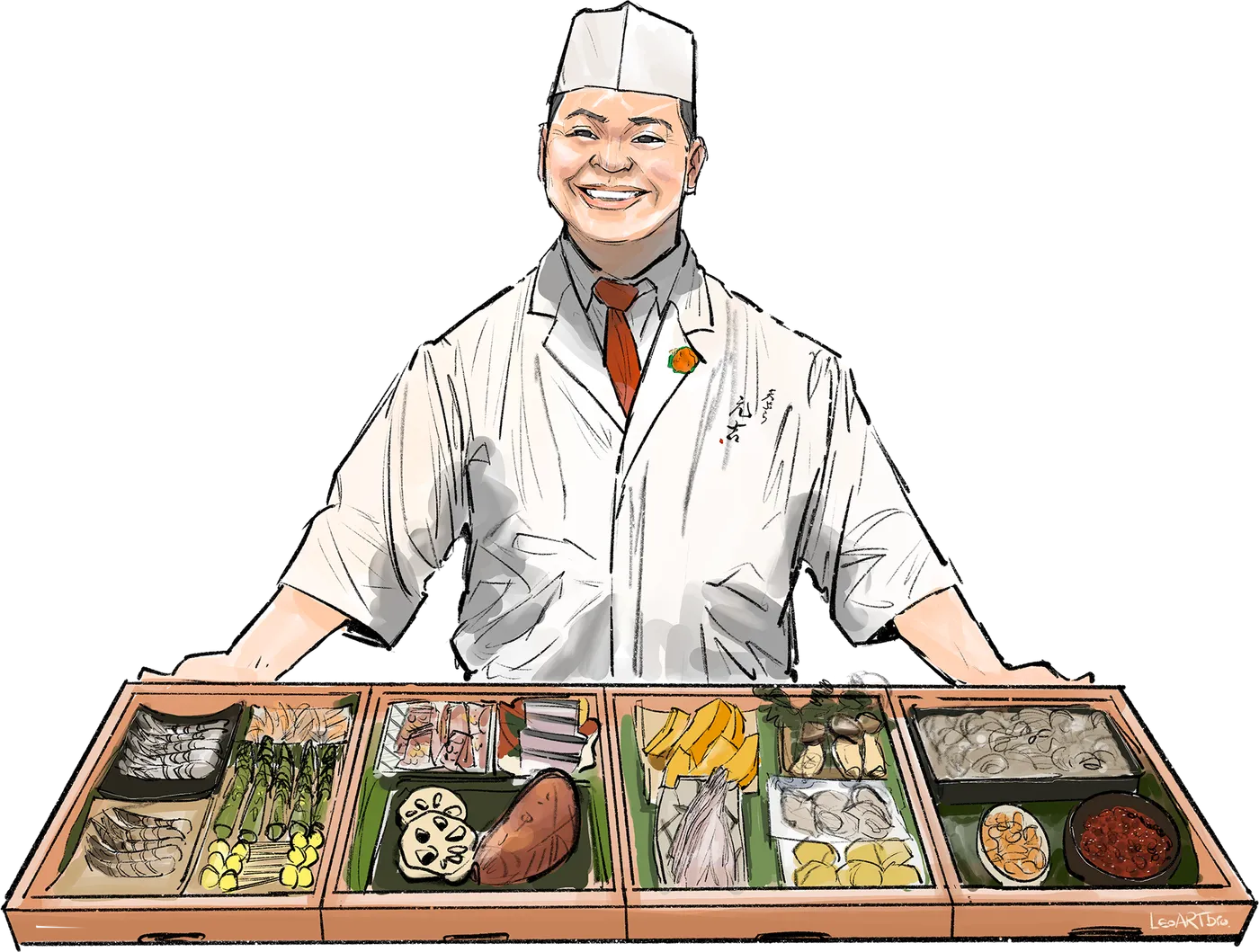
Tempura Motoyoshi — 天ぷら元吉
The Happiness That Follows You Home
There are many things I love about Motoyoshi san, and not all of them have to do with tempura. In fact, I sometimes wonder what he would have become had he not decided to spend his life standing in front of a pot of hot oil. An artist? A designer? Perhaps a florist? Last night, I finally had the opportunity to ask him.
But before we get to that, let me show you my chopsticks.
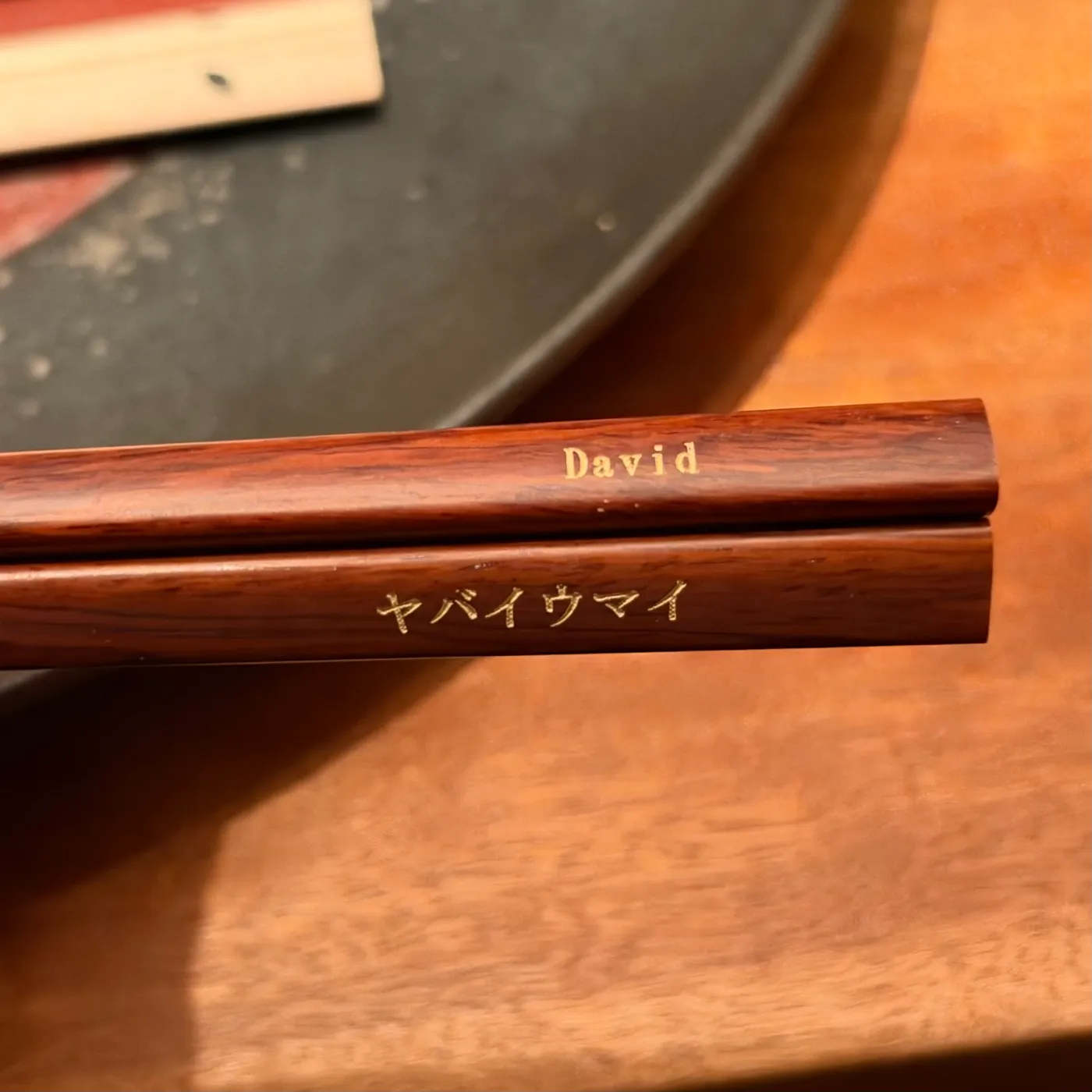
Yes, I have my very own chopsticks at Motoyoshi, with my name and two of my favorite Japanese words engraved on them: ヤバイウマイ — Yabai Umai — insanely delicious. If you have ever eaten with me in Japan, you have probably heard me say those words more than once. :)
Motoyoshi san has a wonderful sense of humor, but what has always fascinated me about him is his extraordinary aesthetic sensibility. I have been fortunate enough to visit his restaurant during the cherry blossom season, when he transforms the space into a little world of sakura. Last night, it was autumn.
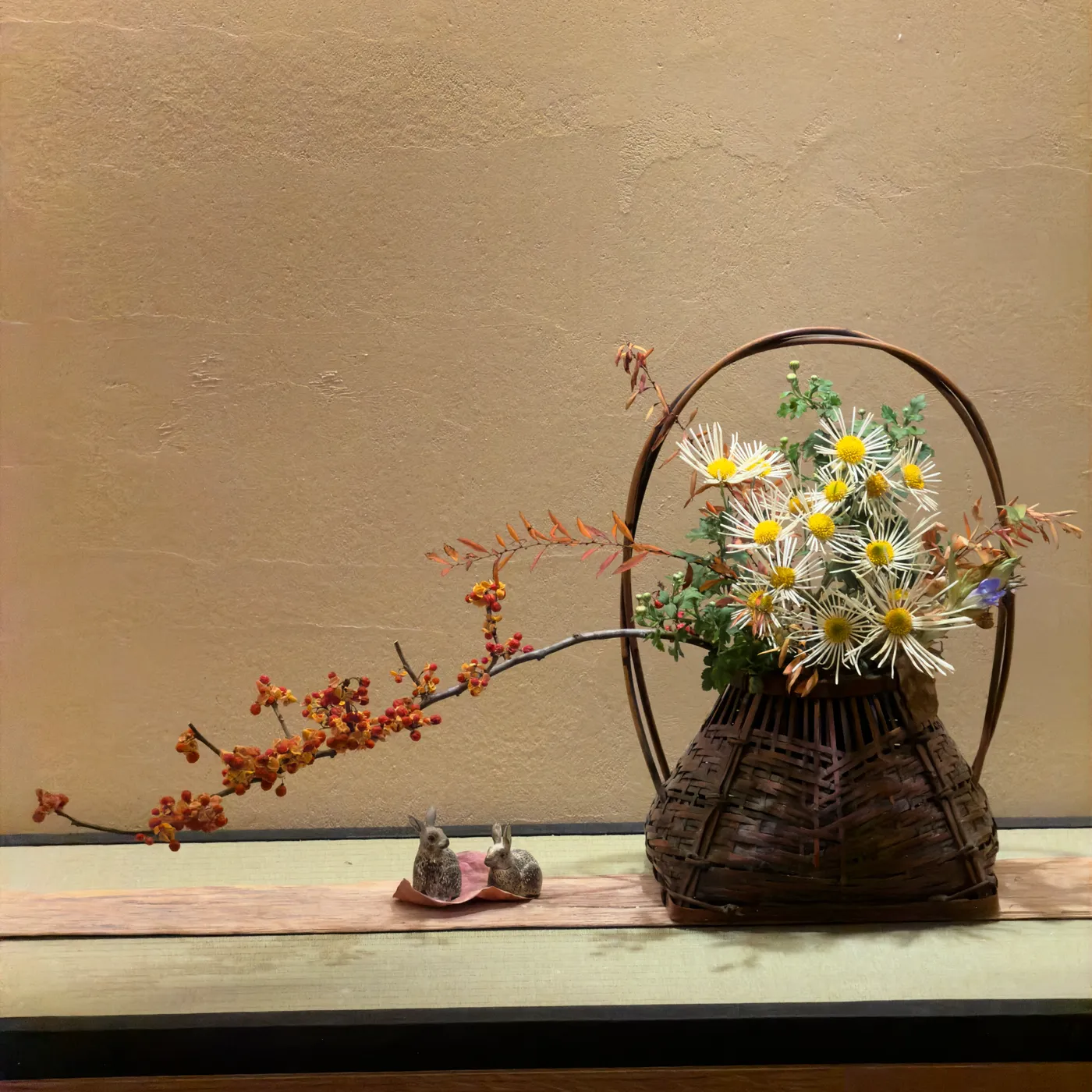
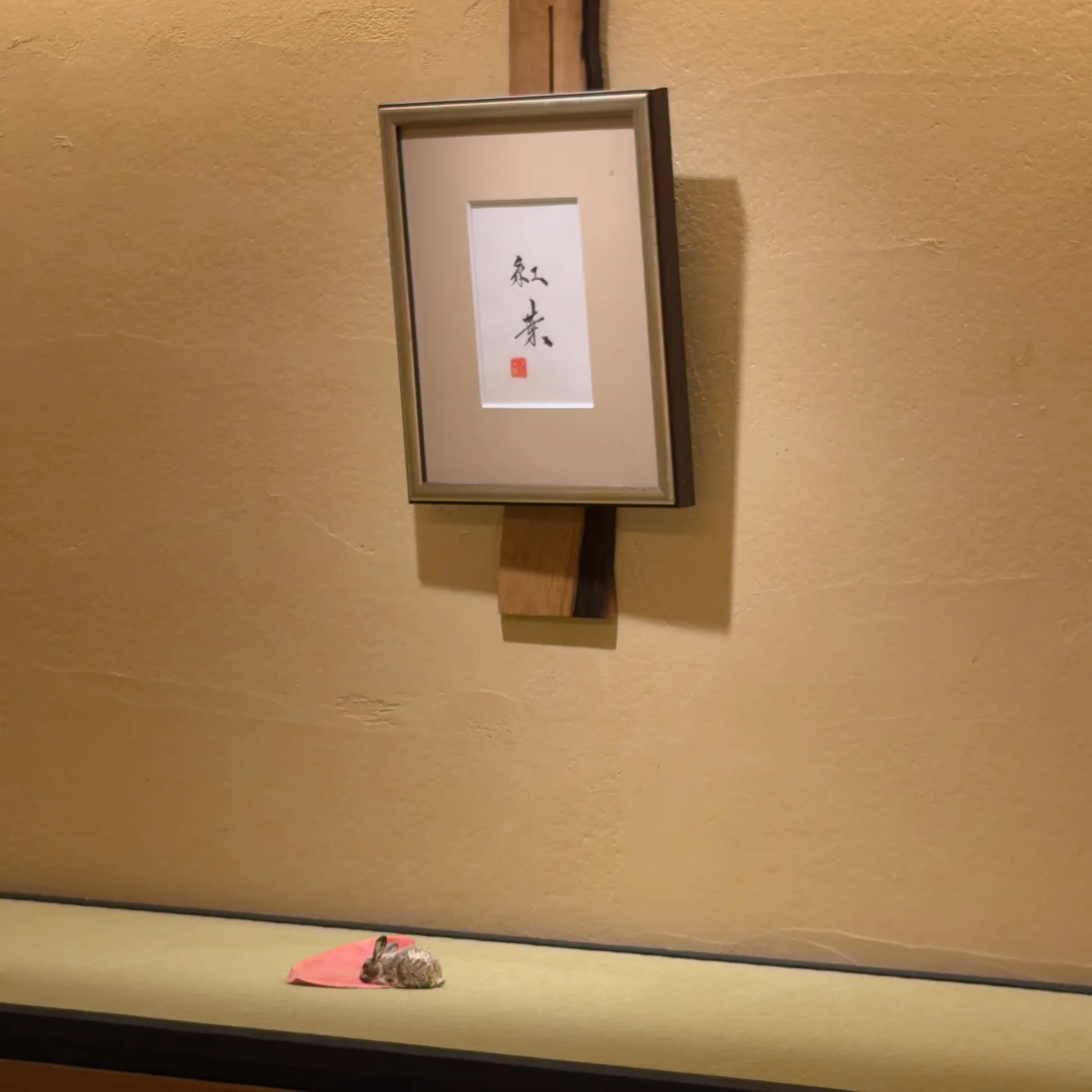
The flower arrangement, the calligraphy, the little rabbits resting beside autumn leaves. What makes all this particularly interesting is that Motoyoshi san does his own flower arrangements and calligraphy. He also conceives some of the ceramics on which he serves his food.
And then there is another side to him. Here is a man who has spent years studying the science of tempura, experimenting with flour, water, oil and temperature, developing his own equipment and even obtaining patents for some of his cooking techniques. Yet one of his most celebrated creations came about simply because his wife asked him to make her something delicious.
I have always been intrigued by these seemingly different sides of Motoyoshi san's personality, and I wanted to understand a little more about the man behind the tempura.
Just six days before our dinner, on November 20, Motoyoshi san celebrated the twentieth anniversary of his restaurant. It seemed a particularly appropriate occasion to ask him about the people, experiences and ideas that have shaped the beautiful little world he has created.
Between pieces of tempura and after the other guests had left, he generously gave me the opportunity to do so.
But before I tell you what I discovered, let me show you what we ate.
What we ate
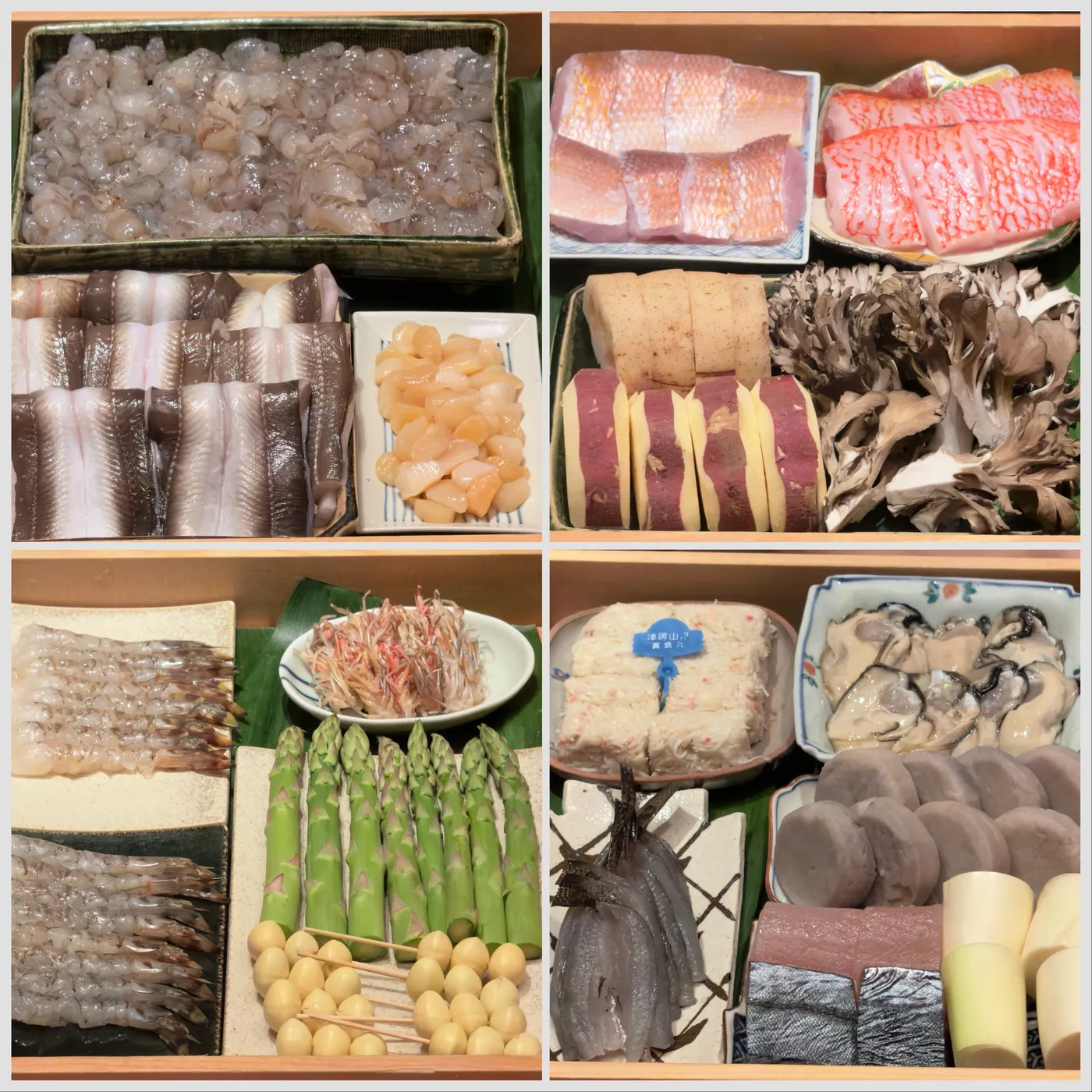
Even before Motoyoshi san begins cooking, there is already something beautiful about the way he presents his ingredients.
霜月献立 — The November Menu
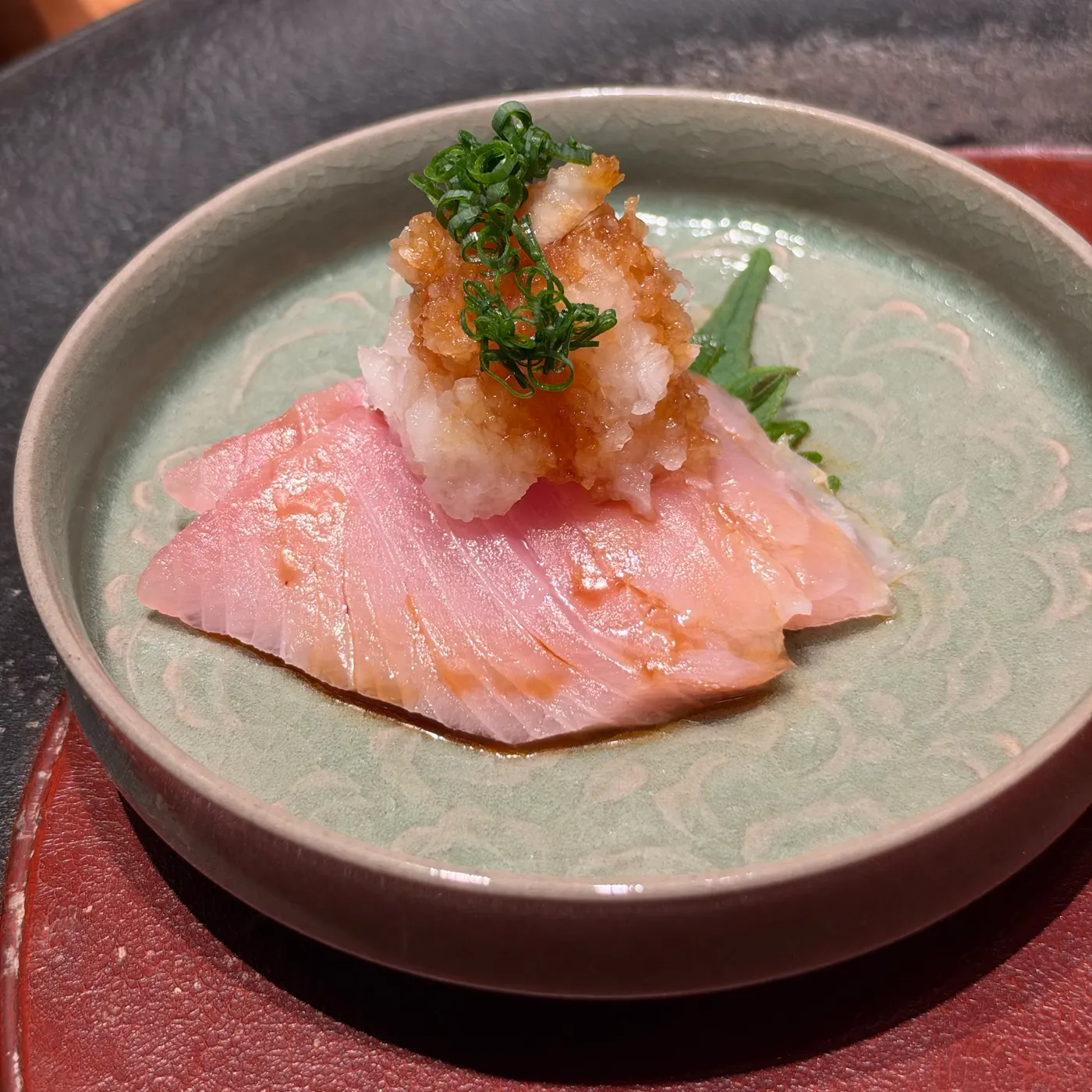
Buri Sashimi — ぶりのお造り
Beautiful slices of autumn yellowtail, served with grated daikon, finely sliced green onions and a shiso leaf. A refreshing beginning to our evening of tempura.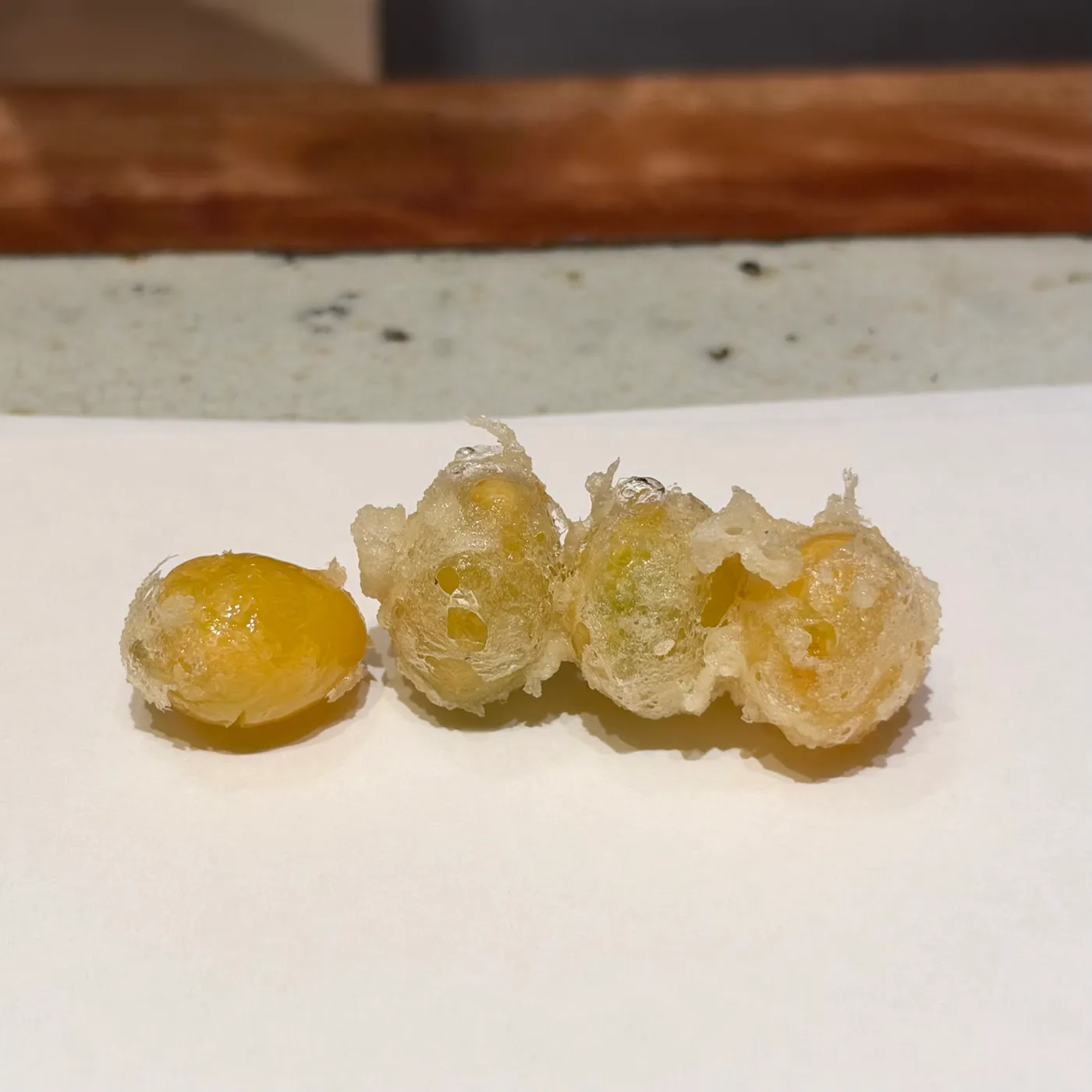
Ginnan — 銀杏
Ginkgo nuts, one of the little pleasures of autumn in Japan. An almost transparent coating of batter allows their golden color to remain visible, providing a delicate crispness around the slightly chewy nuts.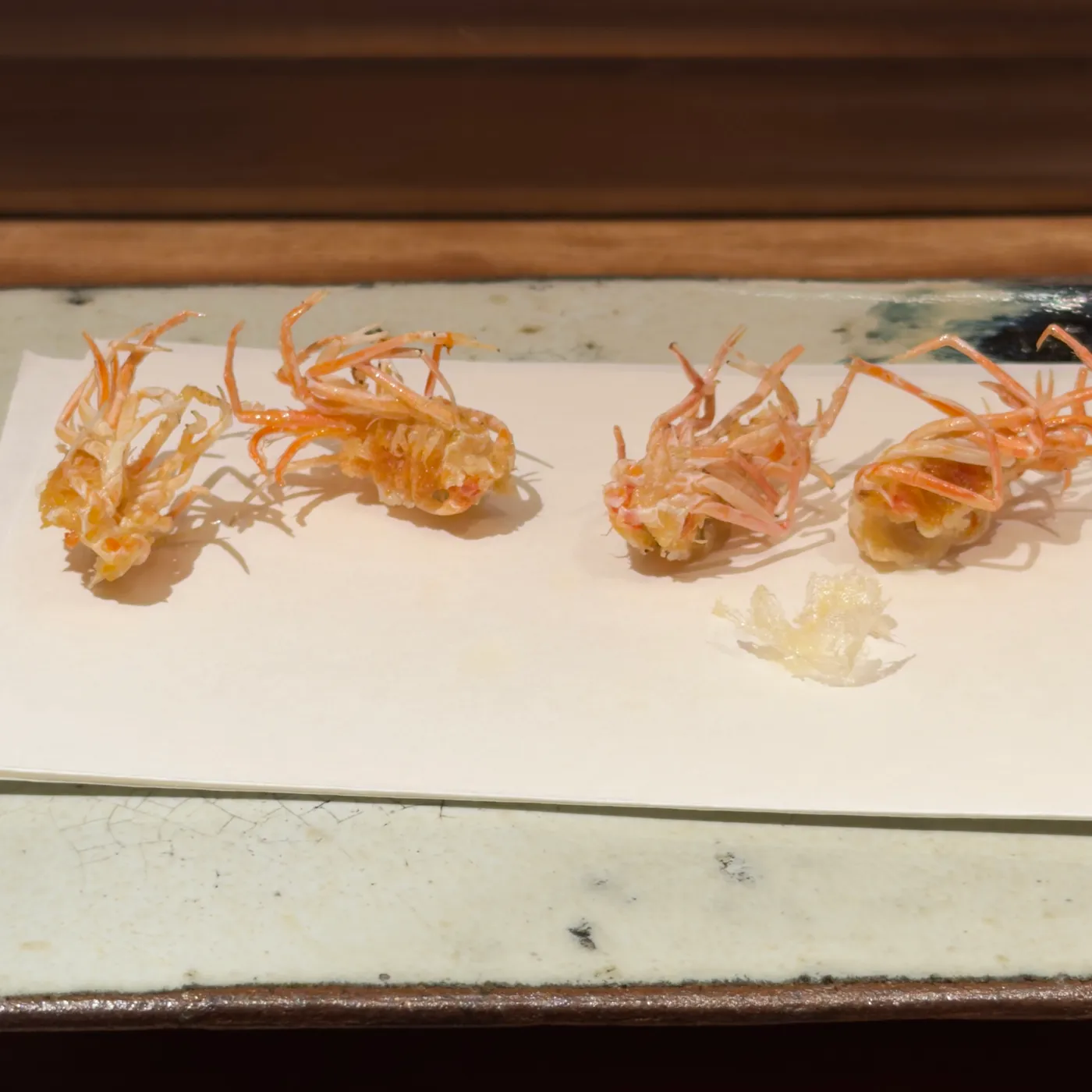
Ebi Ashi — 海老足
The legs of the shrimp, fried until wonderfully crisp. Their delicate, almost sculptural appearance is particularly beautiful. These are among the little things I always look forward to at a tempura counter.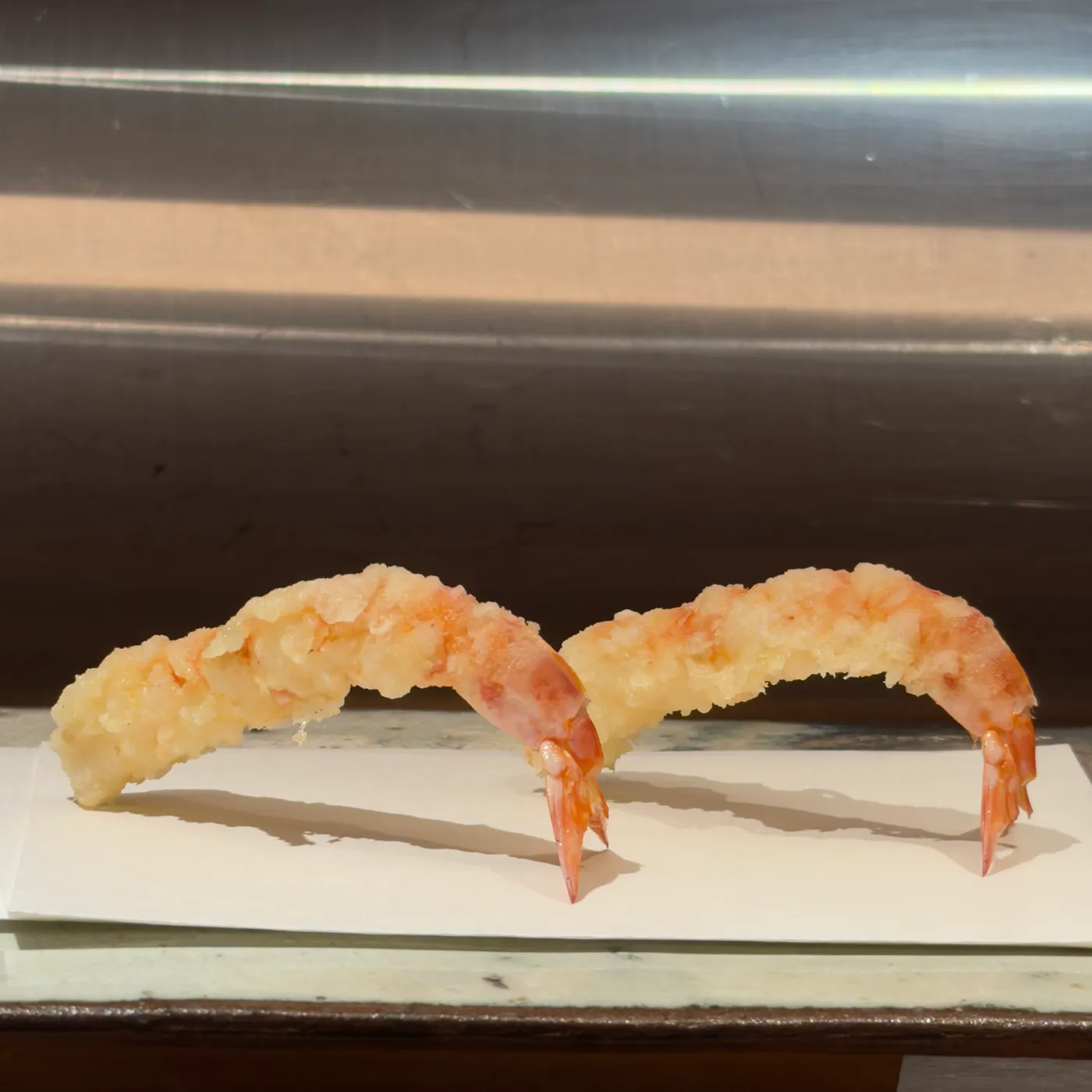
Ebi with Thin Batter — 海老薄衣
The first of two shrimp preparations, this one with a relatively thin coating of batter that allows us to concentrate on the sweetness and texture of the shrimp itself. I particularly love the way Motoyoshi san presents them, standing like little bridges on their tails.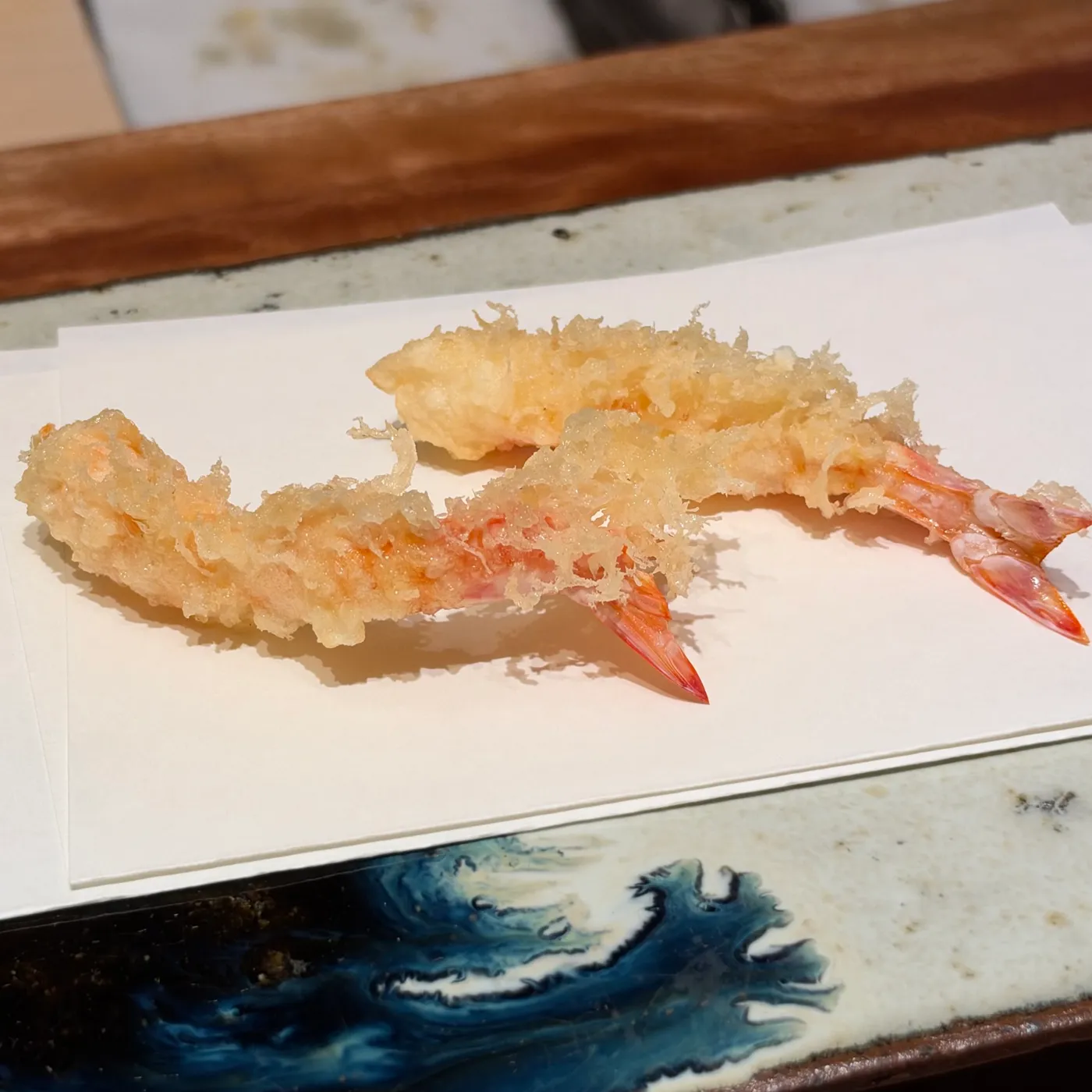
Ebi with Thick Batter — 海老厚衣
The same ingredient, dressed differently. A more generous coating of batter changes the balance between the crisp exterior and the flesh inside. Motoyoshi san thinks of batter as clothing, choosing the appropriate garment for each ingredient. These two consecutive preparations are a particularly enjoyable demonstration of how much difference that choice can make.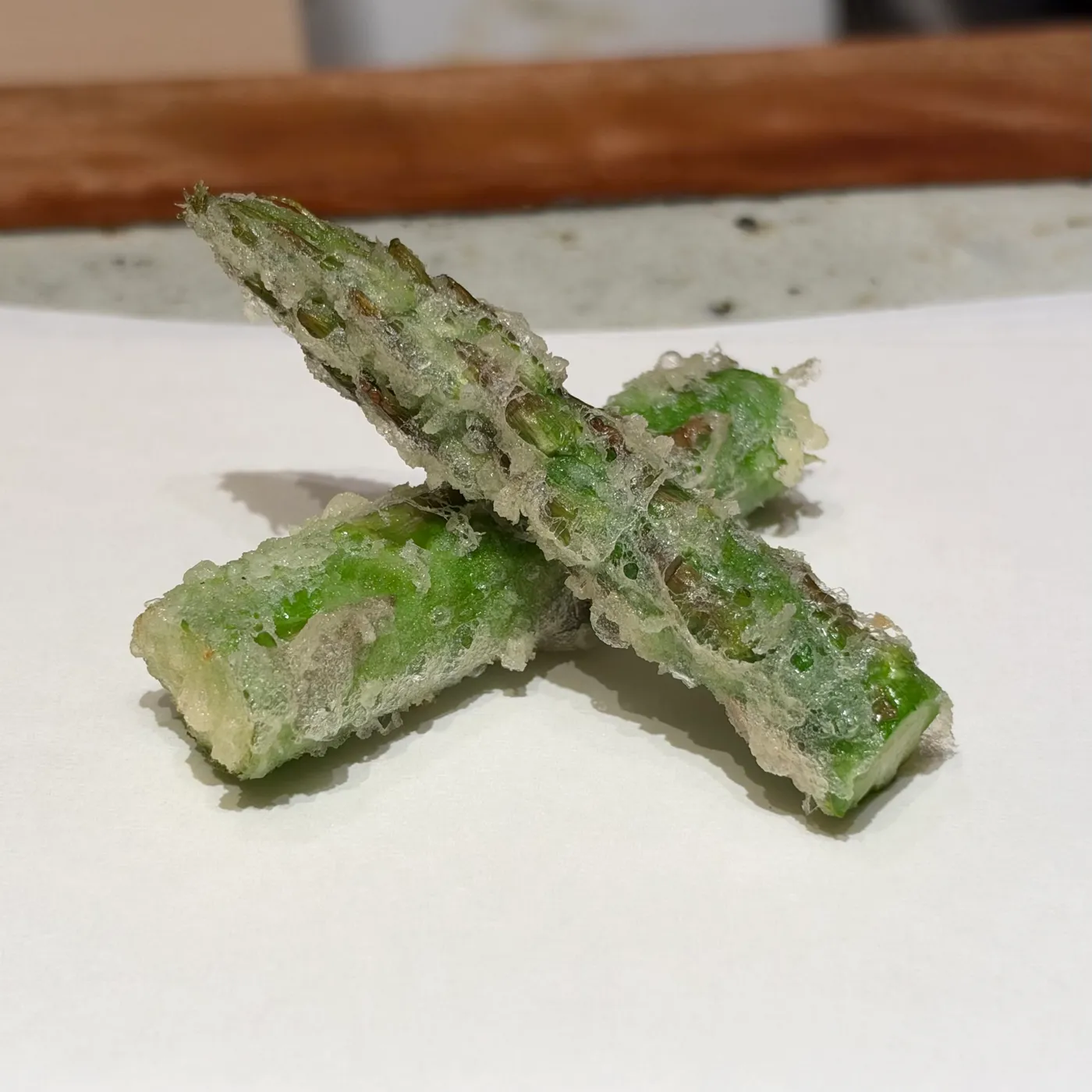
Asparagus — アスパラガス
Two sections of a thick green asparagus spear, covered in a remarkably delicate, translucent batter. The vibrant green of the vegetable remains clearly visible beneath its thin coating.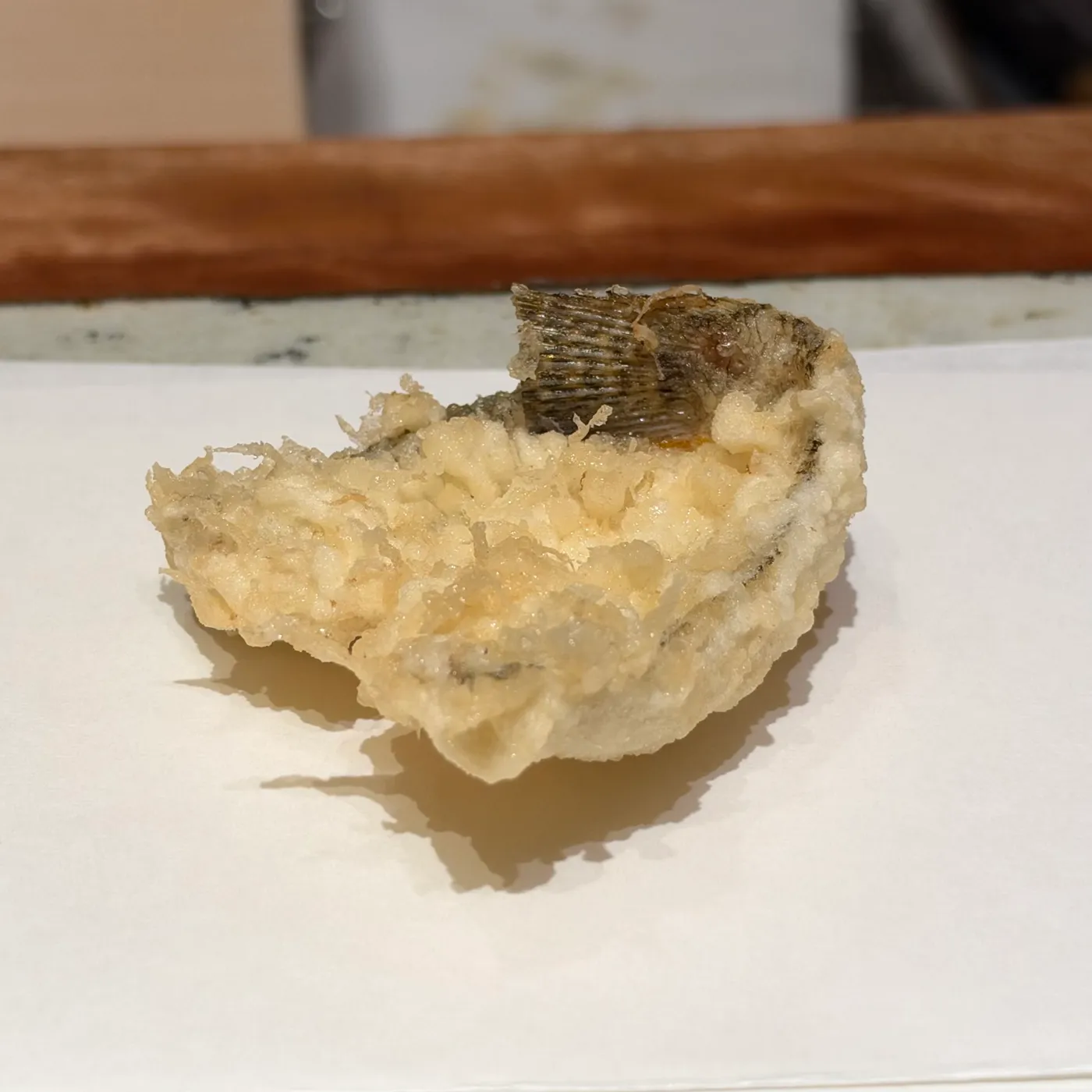
Haze — はぜ
Goby, one of the classic ingredients of traditional Edomae tempura. The little fish is opened out and fried with its tail intact, its delicate white flesh surrounded by a light, crisp coating.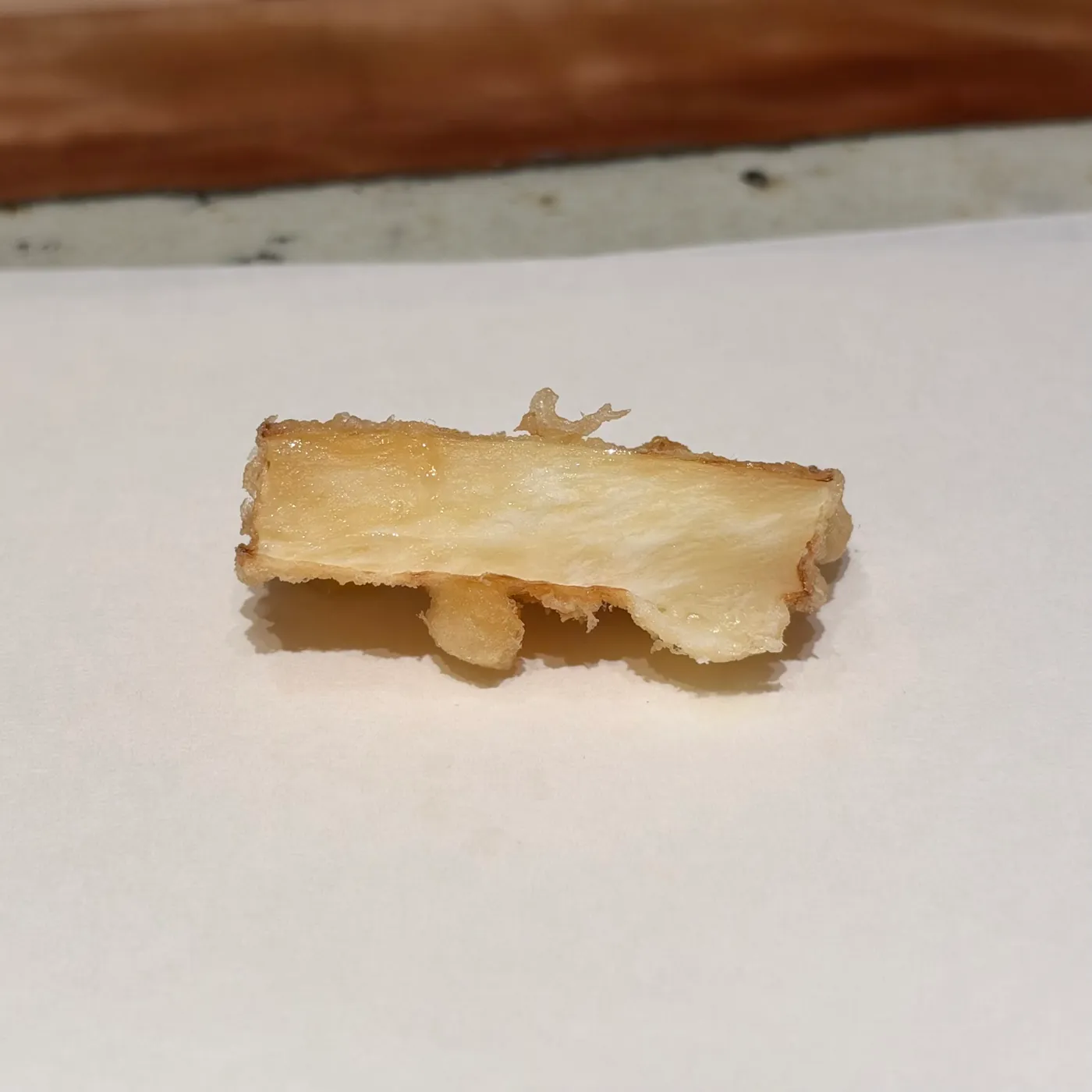
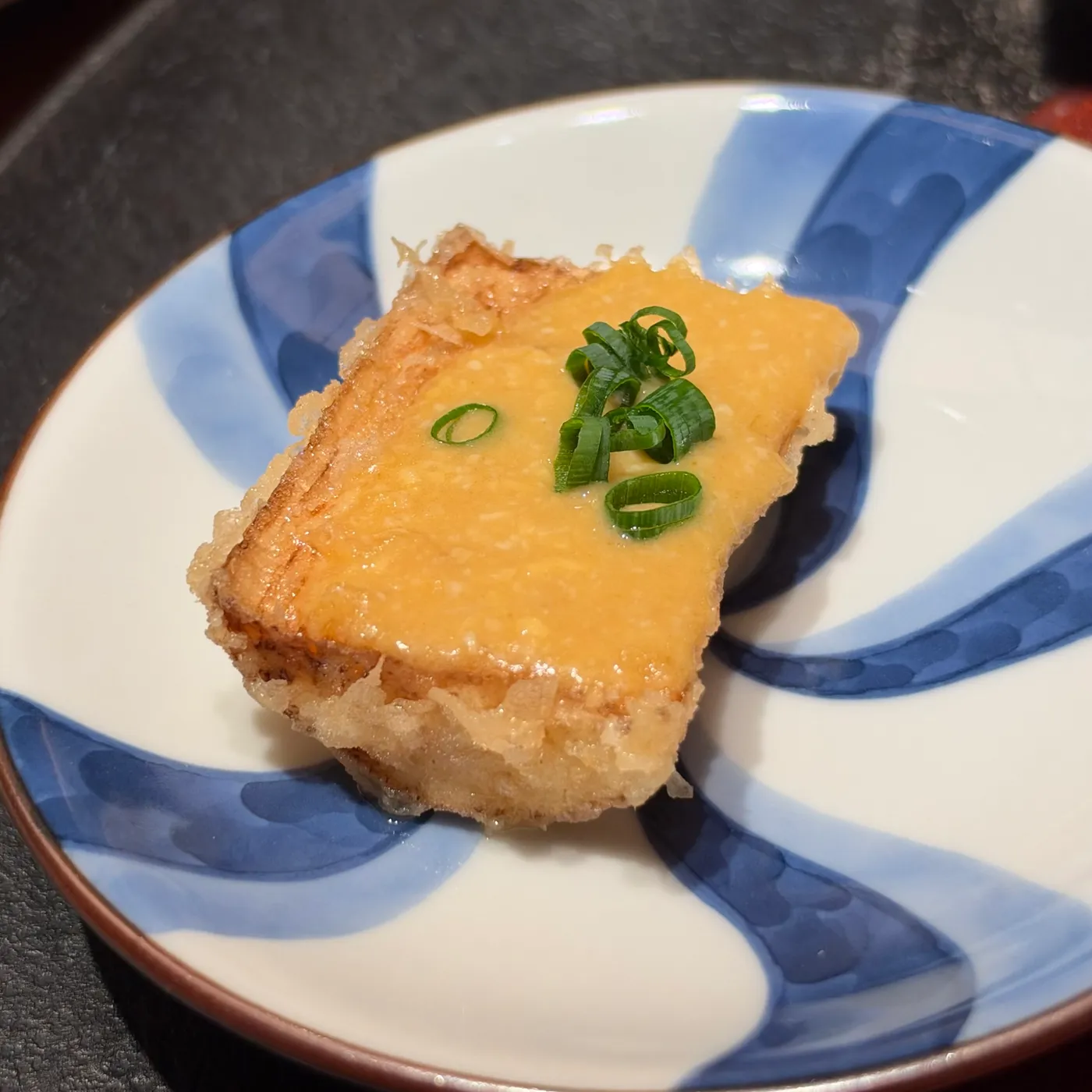
Makomodake — まこもだけ
Taiwanese water bamboo, presented in two different ways. The first allows us to appreciate the vegetable itself, while the second introduces a sauce made with salted duck egg. Motoyoshi san explained that the inspiration came from a Taiwanese preparation known as 金沙, or Golden Sand, in which ingredients such as water bamboo or squid are coated with salted egg yolk. When cooked, the yolk develops a slightly grainy texture reminiscent of golden sand. Having spent time in Taiwan over the past three years, he wanted to introduce something of its culinary culture to his Tokyo counter. Rather than reproducing the original preparation, he transformed the salted egg into a sauce for his tempura. Later that evening, he told me that he considers tempura a cooking method rather than a cuisine confined to one particular tradition. By changing the accompanying sauces, he believes it can express the culinary cultures of different countries. This was a particularly interesting example.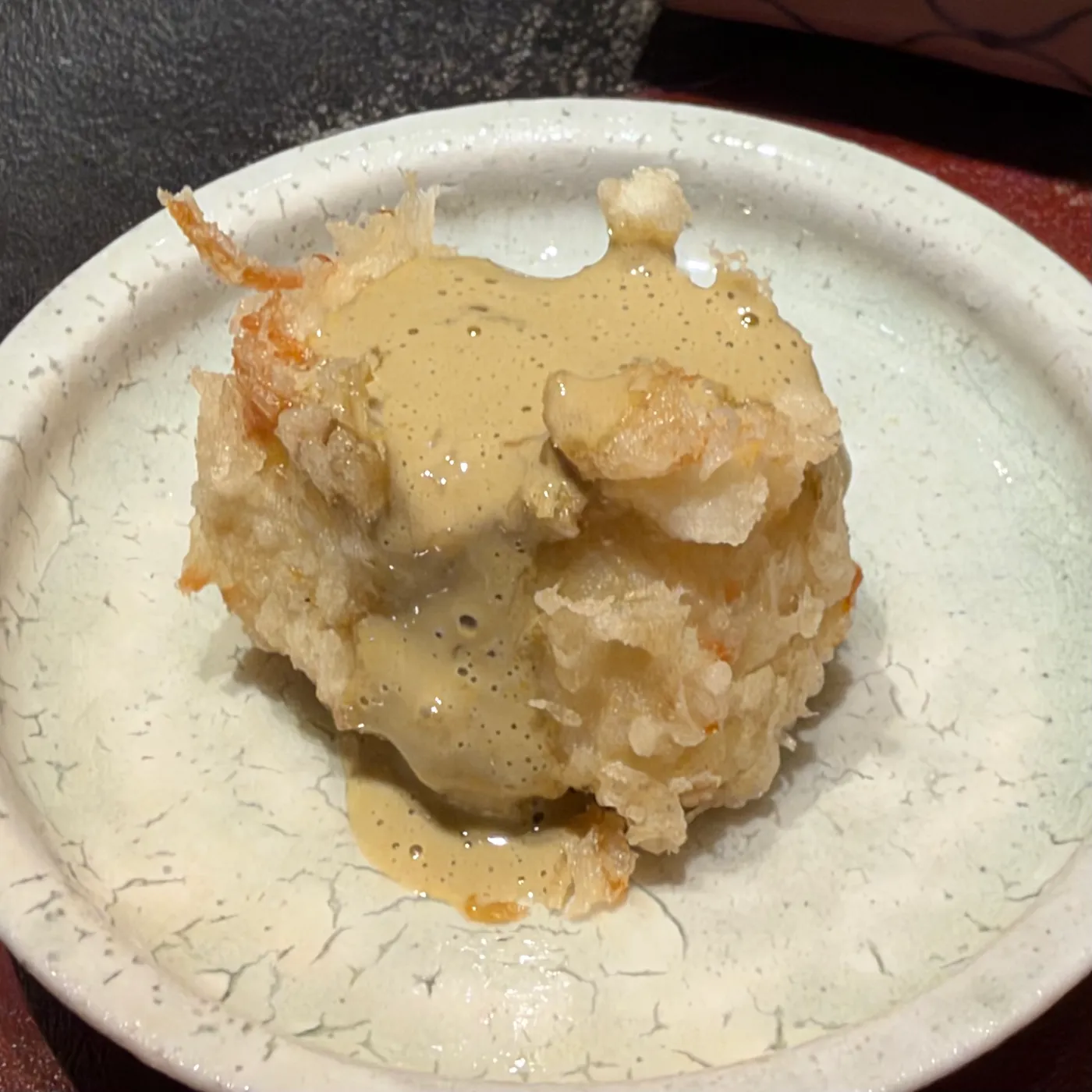
Matsubagani — 松葉ガニ
Snow crab from Tsuiyama in Hyogo Prefecture, on the Sea of Japan coast. The crab meat is gathered into a generous portion, fried in tempura batter and finished with a creamy sauce.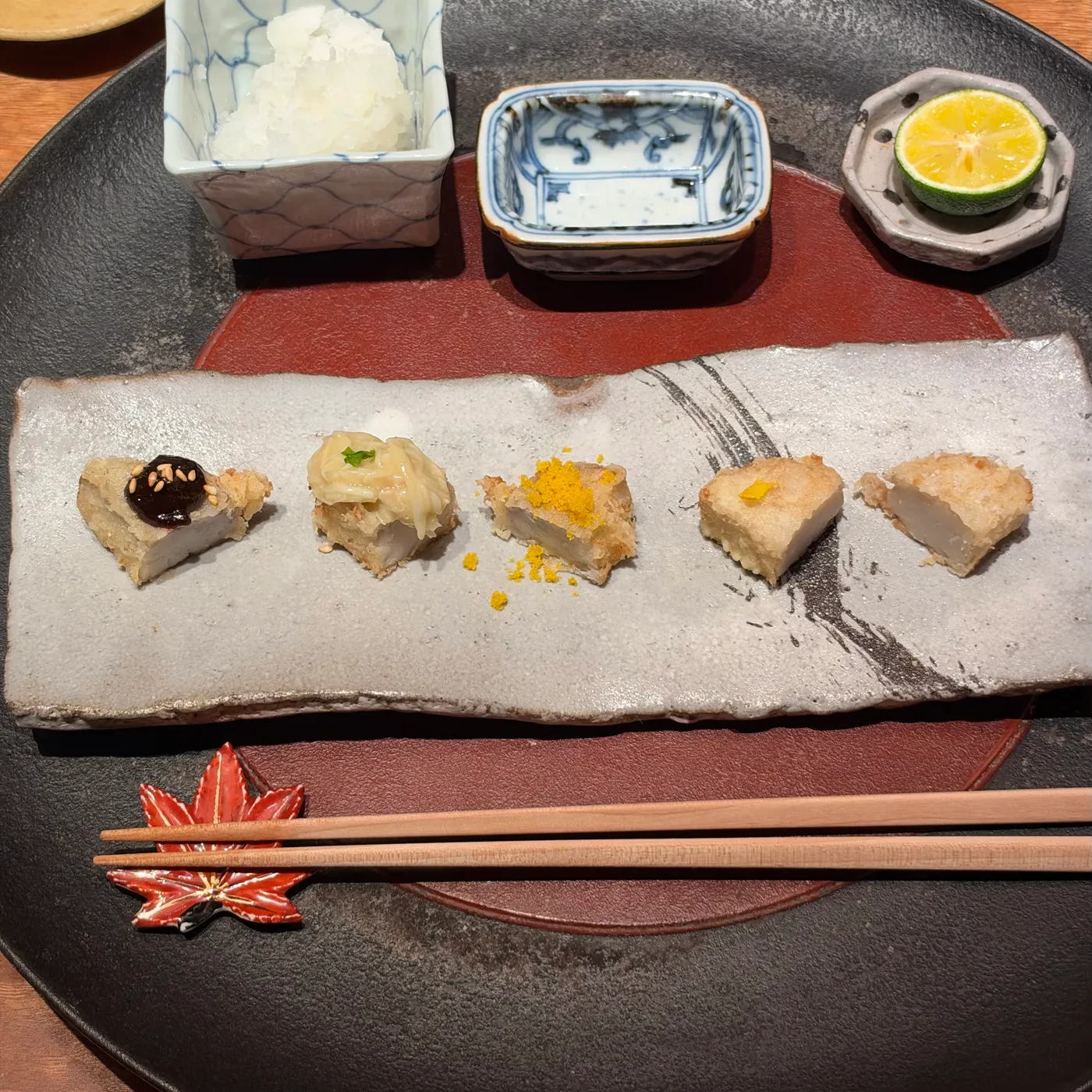
Ebi-imo — 海老芋
A variety of taro particularly associated with Kyoto, named for its resemblance to a shrimp. Motoyoshi san explained that its texture is less sticky than that of ordinary satoimo. He normally serves it with four different accompaniments, but last night we had five. From right to left: salt, yuzu, karasumi (cured mullet roe), a thickened crab sauce and dengaku miso. I particularly enjoy this kind of preparation. Five pieces of the same vegetable allow us to discover how dramatically our perception of an ingredient can change depending on what accompanies it.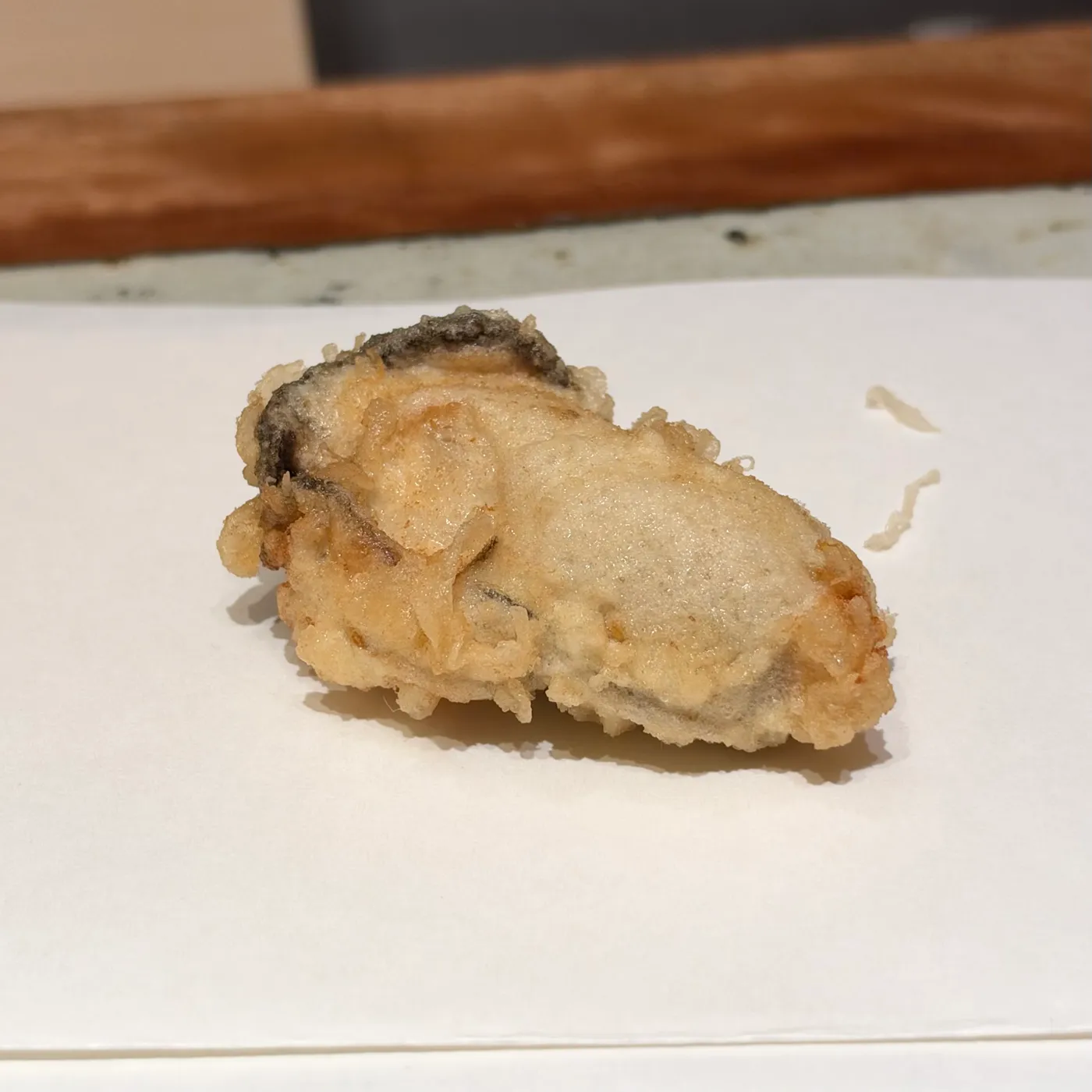
Kaki — 牡蠣
An oyster from Seattle, served with sudachi and salt. Motoyoshi san particularly appreciates the flavor of oysters from this part of the United States. He gave us a fascinating explanation of the difference between oyster tempura and kaki fry, the Japanese preparation in which oysters are coated with breadcrumbs. With kaki fry, more of the juiciness remains inside the oyster. With tempura, some of the oyster's juices migrate into the batter, concentrating its flavor in the coating itself. He compared the particularly flavorful, crisp surface to a senbei, a Japanese rice cracker. I had never really thought about the batter of oyster tempura as something that acquires its own flavor from the oyster during cooking.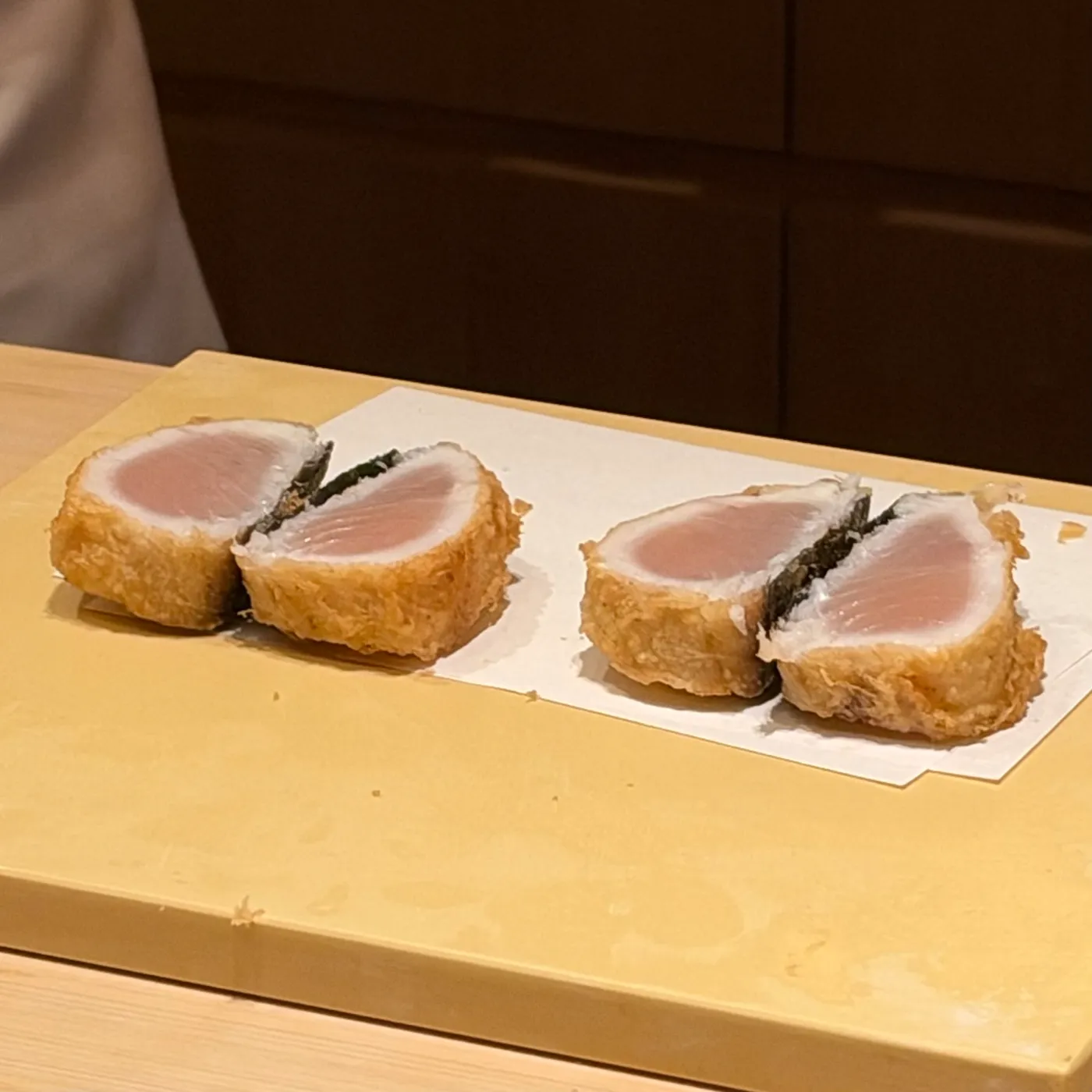
Sawara — 鰆
Japanese Spanish mackerel, fried to achieve a beautifully golden exterior while keeping the center pink and translucent. Motoyoshi san suggested enjoying it with citrus and salt, and also offered a preparation with soy sauce. We had an interesting conversation about the seasonality of fish. Traditionally, certain fish were considered seasonal when they approached the coast to spawn and became easier to catch. Modern fishing methods, he explained, allow fishermen to reach them farther offshore, including at times when their flesh is particularly delicious. The traditional fishing season and the season of optimal flavor are not necessarily the same.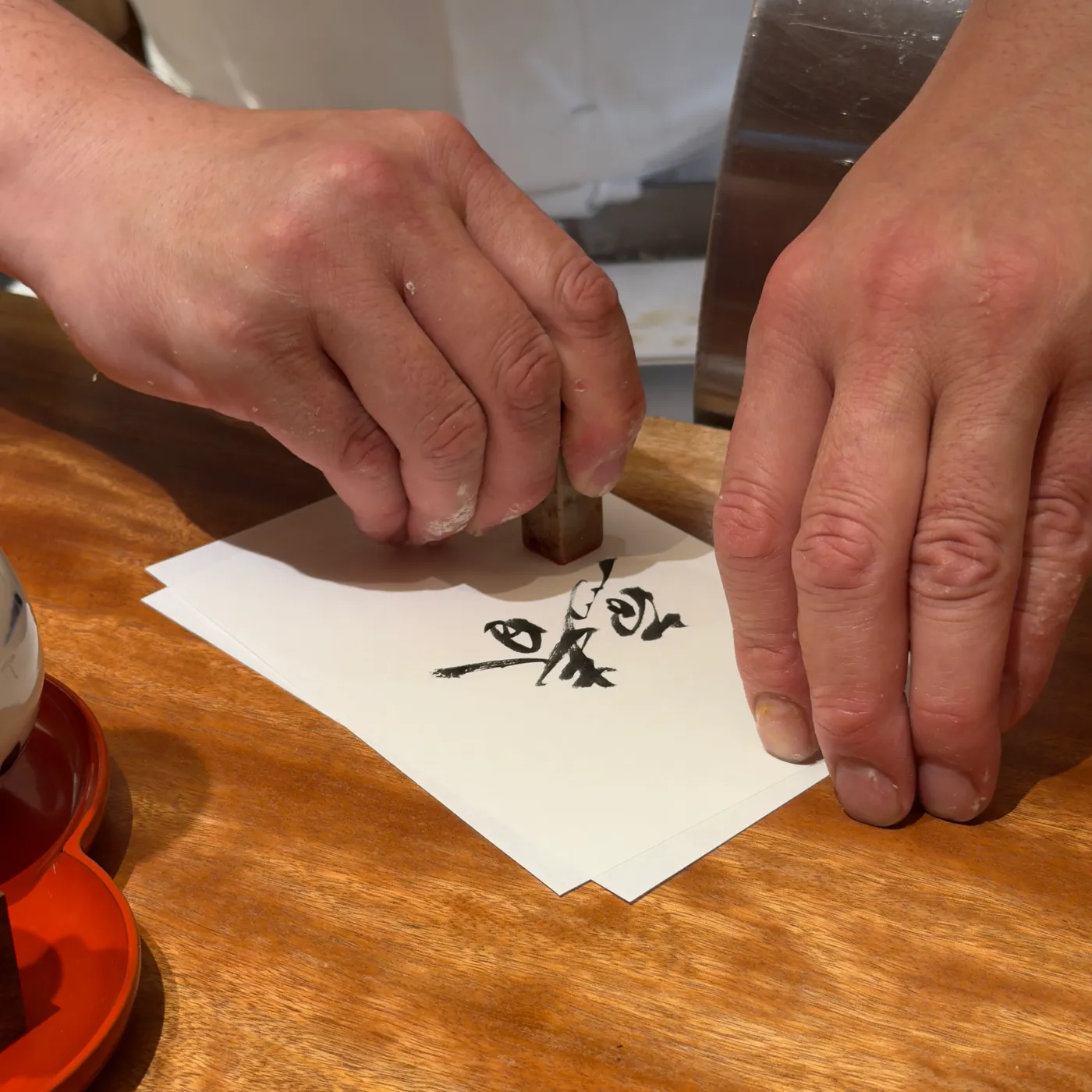
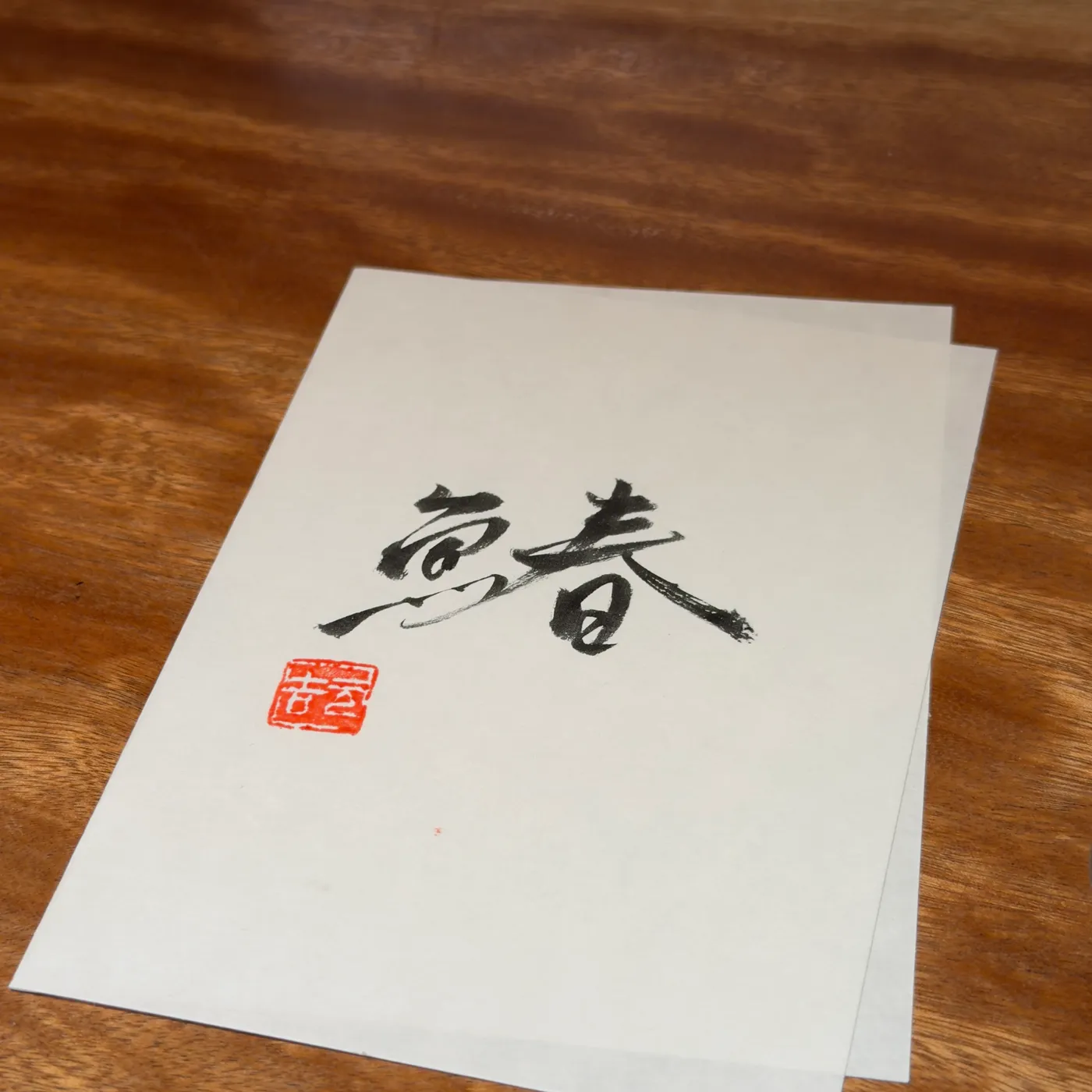
While we were enjoying the sawara, Motoyoshi san took a brush and a piece of paper and, as casually as if he were writing a shopping list, produced this beautiful calligraphy of the Japanese character 鰆. Notice the traces of flour still on his fingers as he applies his personal seal. I wasn't sure which I admired more, his work with the brush or his work with the fish. :)
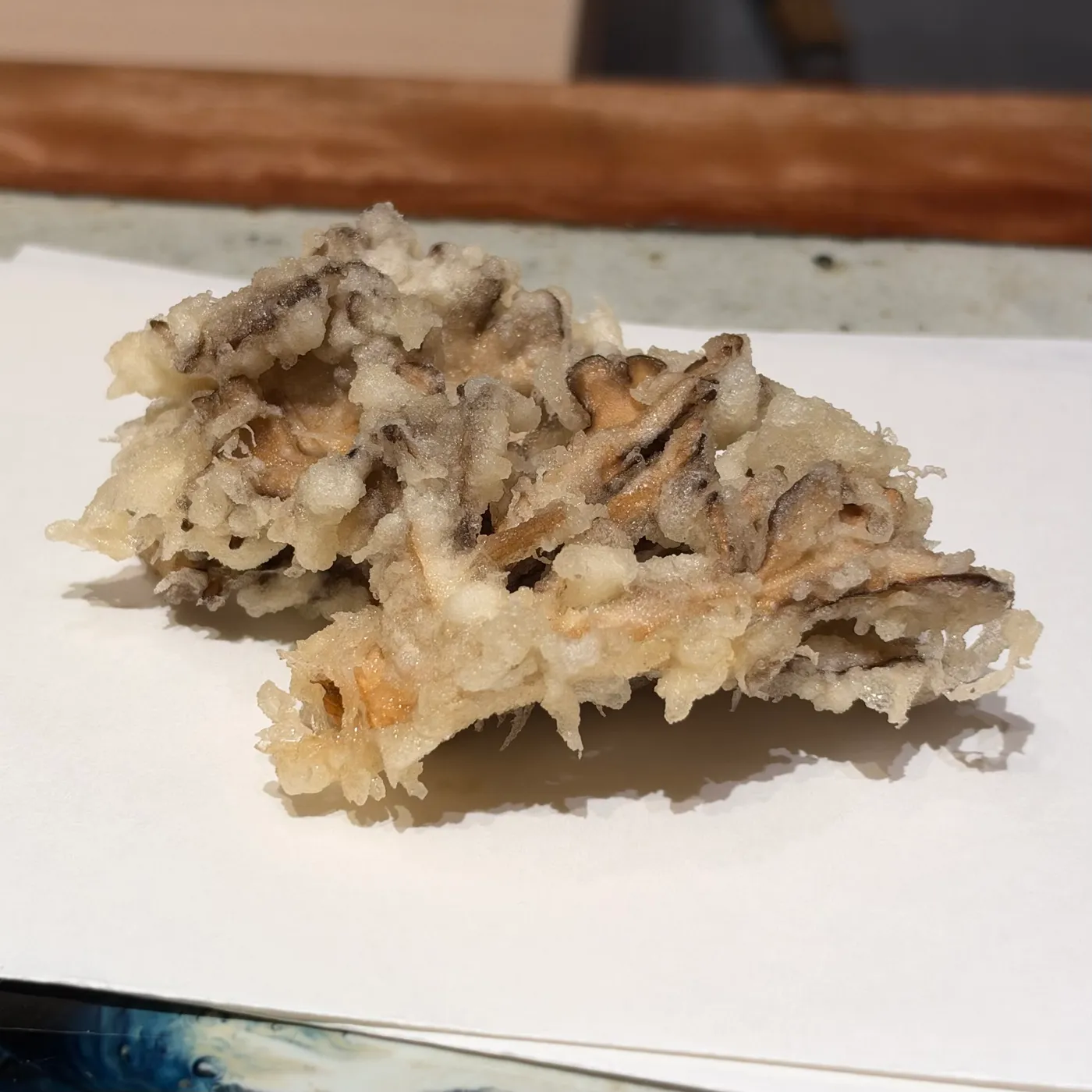
Maitake — 舞茸
The wonderfully irregular structure of the maitake mushroom lends itself particularly well to tempura. The batter finds its way between the little folds and branches, creating a contrast between the crisp edges and the more substantial flesh of the mushroom. I asked for a double portion. Anyone who knows how much I love mushrooms will hardly be surprised. :)Kinki — きんき
Kinki, or broadbanded thornyhead, is a particularly rich and fatty fish. Motoyoshi san explained that when prepared as conventional tempura, its considerable fat content can give the finished dish an excessively oily character. His solution is to introduce steam into the cooking process, using a technique that produces a more aromatic coating reminiscent of grilled fish. He presented the kinki with two different accompaniments, inspired by two classic Japanese ways of preparing fish. The first was a sauce made from the fish's own liver, evoking nitsuke, fish simmered in a seasoned sauce. The second was grated daikon with sudachi and soy sauce, inspired by shioyaki, salt-grilled fish. I found the idea particularly interesting. Rather than simply turning kinki into tempura, he was using tempura to reinterpret two familiar expressions of Japanese cooking.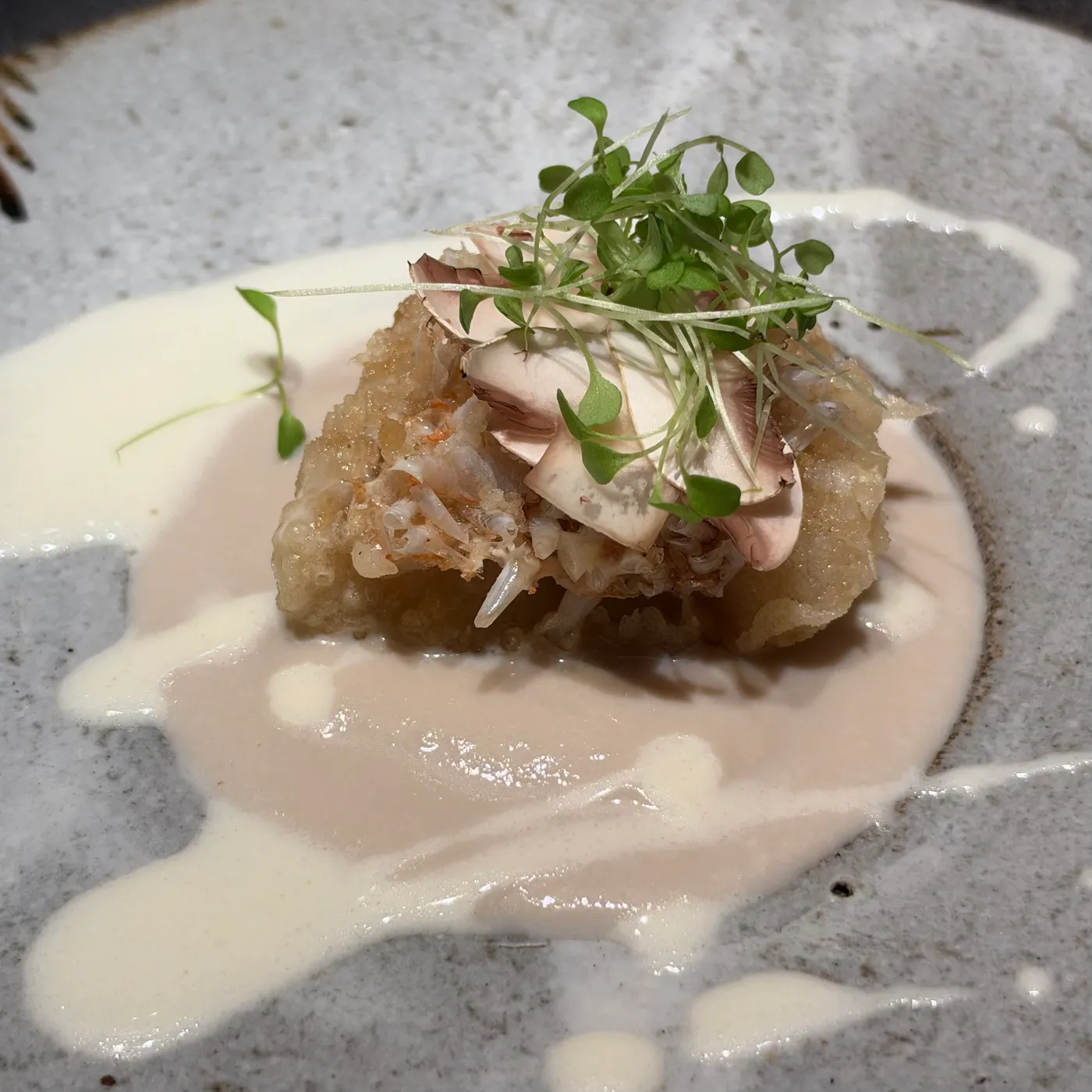
Amadai with Mushroom Sauce — 甘鯛 マッシュルーム
Tilefish, with its beautifully crisp scales, served over a mushroom sauce and surrounded by another sauce made with white wine, butter and cream. The fish is topped with lightly torched slices of mushroom and selvatico, a variety of wild rocket. There is something decidedly French about this preparation, particularly in the combination of white wine, butter and cream. Like the Taiwanese-inspired makomodake, it demonstrates Motoyoshi san's fascination with the possibilities of tempura beyond the boundaries of traditional Japanese cooking.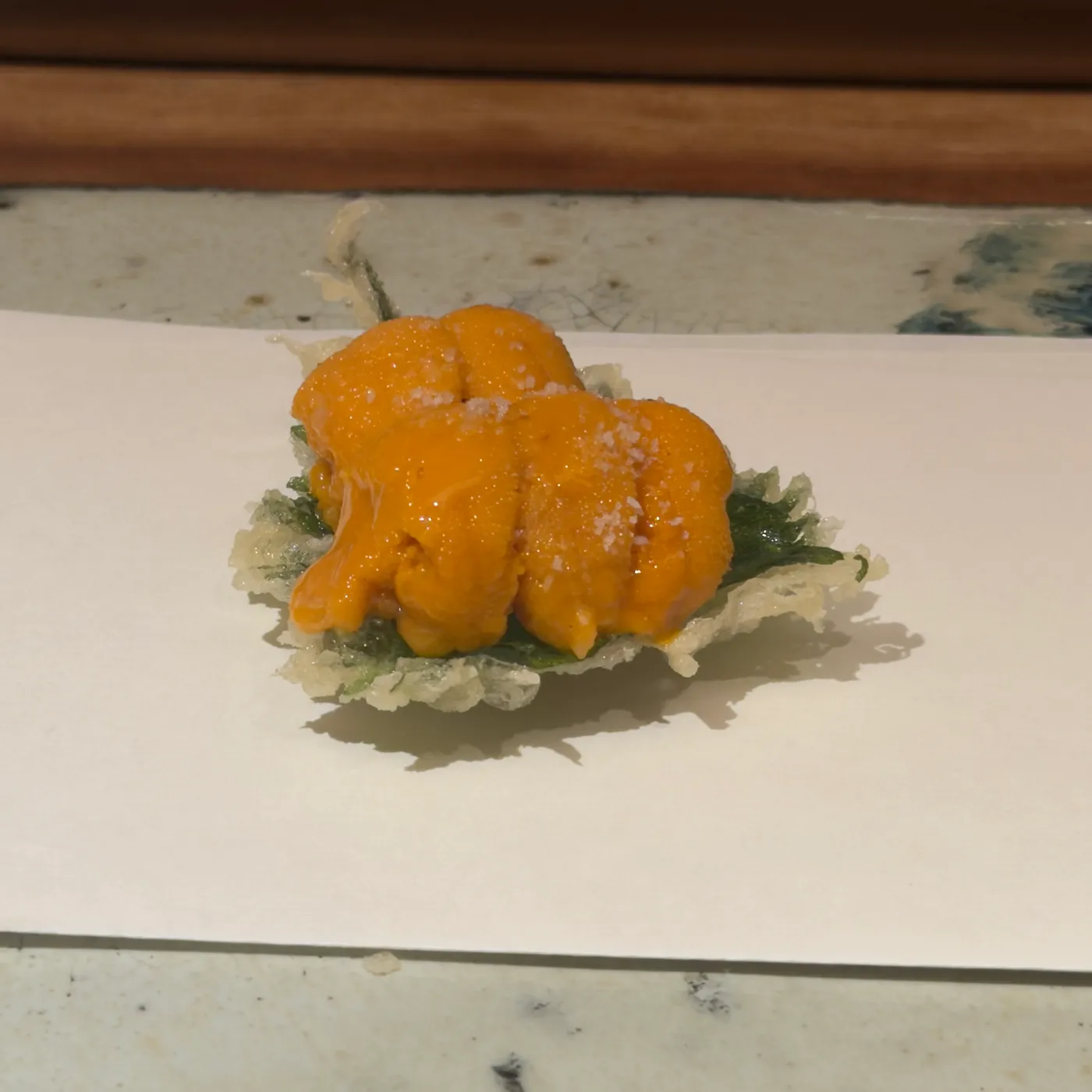
Uni on Shiso Leaf — 大葉うにのせ
One of Motoyoshi san's signature dishes and one that I always look forward to. A crisp shiso leaf topped with a generous amount of sea urchin and a little salt. The uni comes from Hamanaka in eastern Hokkaido. Interestingly, it is farmed rather than wild. Motoyoshi san explained that the sea urchins are kept in cages and fed carefully selected kombu. Sea urchins are omnivorous, and what they eat has a considerable influence on their flavor. By controlling their diet, the producers can achieve a particularly clean taste. But there is another reason why I love this dish. Years ago, Motoyoshi san told me how it came about, and last night I asked him to tell me the story again. His wife had asked him to make her some delicious shiso tempura. This was what he created in response to her request. Then he described the dish using a rather wonderful Japanese expression: 「二人の愛の結晶」— the fruit of our love. Something the two of them created together, he told me, has become the signature dish of his restaurant. Now, how can you not love this man? ❤️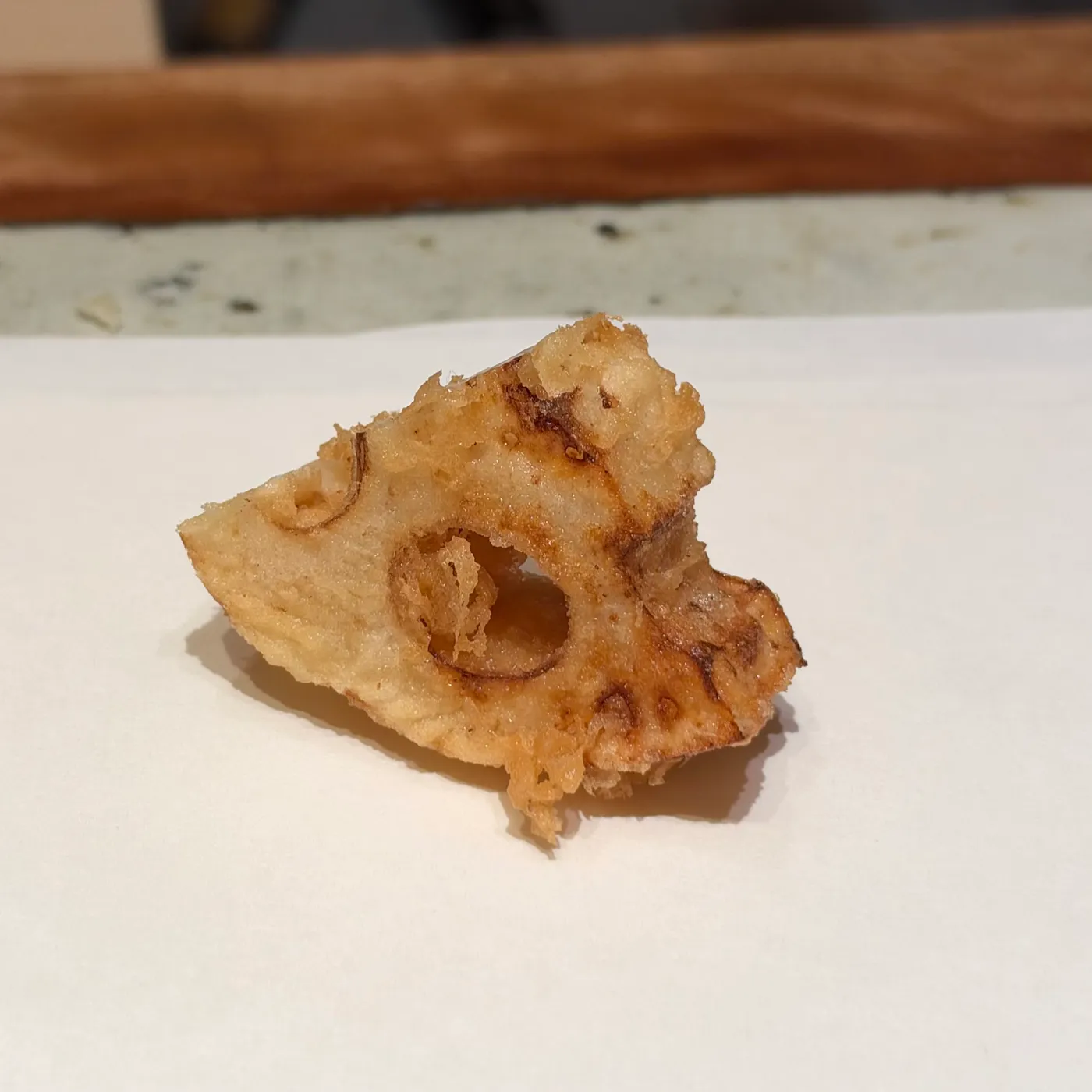
Renkon — 蓮根
A thick section of lotus root, fried until golden. Its distinctive structure provides plenty of edges for the batter to become crisp while retaining the characteristic firmness of the vegetable itself. Motoyoshi san suggested enjoying it with either salt or soy sauce.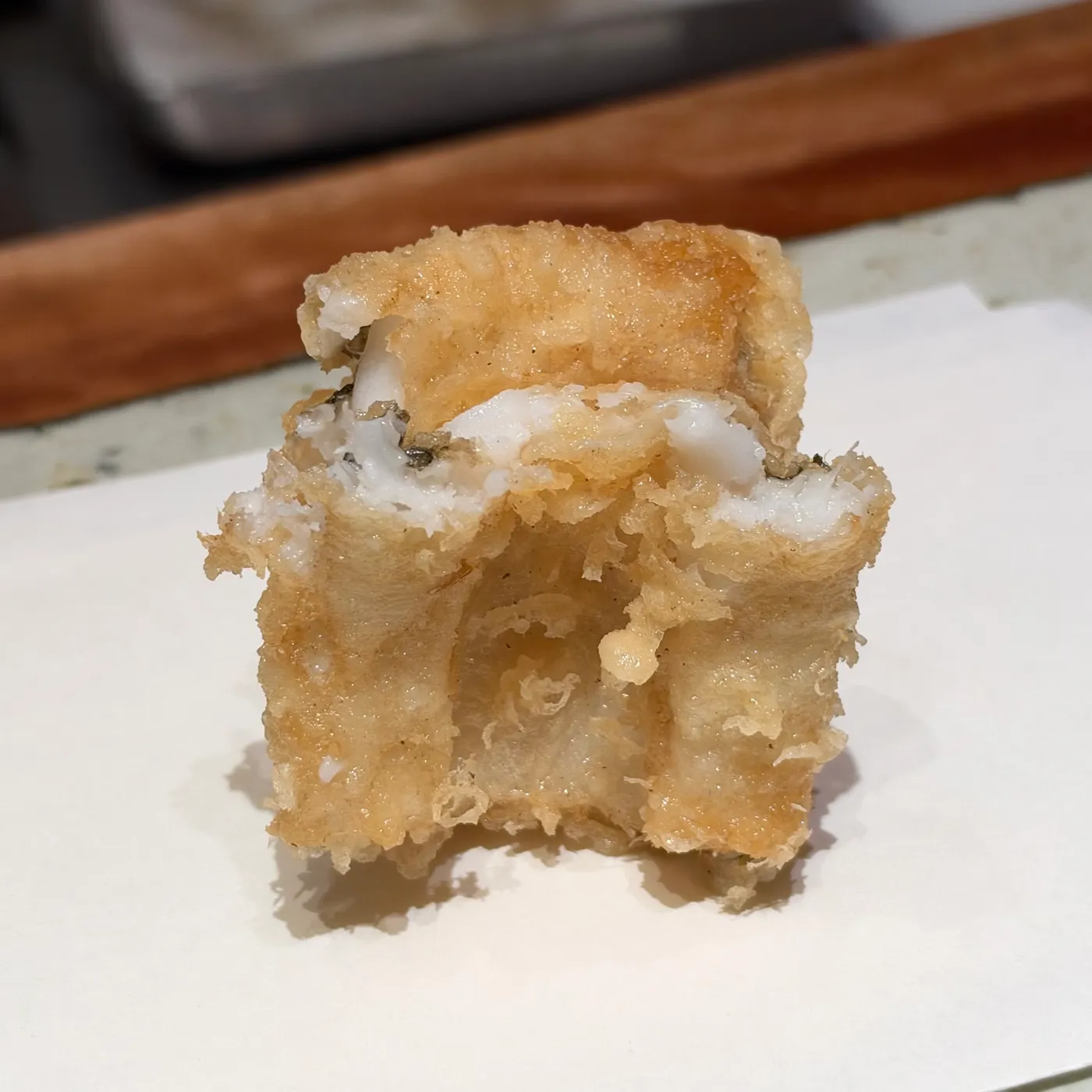
Anago — 穴子
Conger eel, another of the great classics of Edomae tempura. A generous piece, cut to reveal the soft white flesh beneath its golden coating. The contrast between the delicate flesh of the eel and its crisp exterior is one of the great pleasures of anago tempura.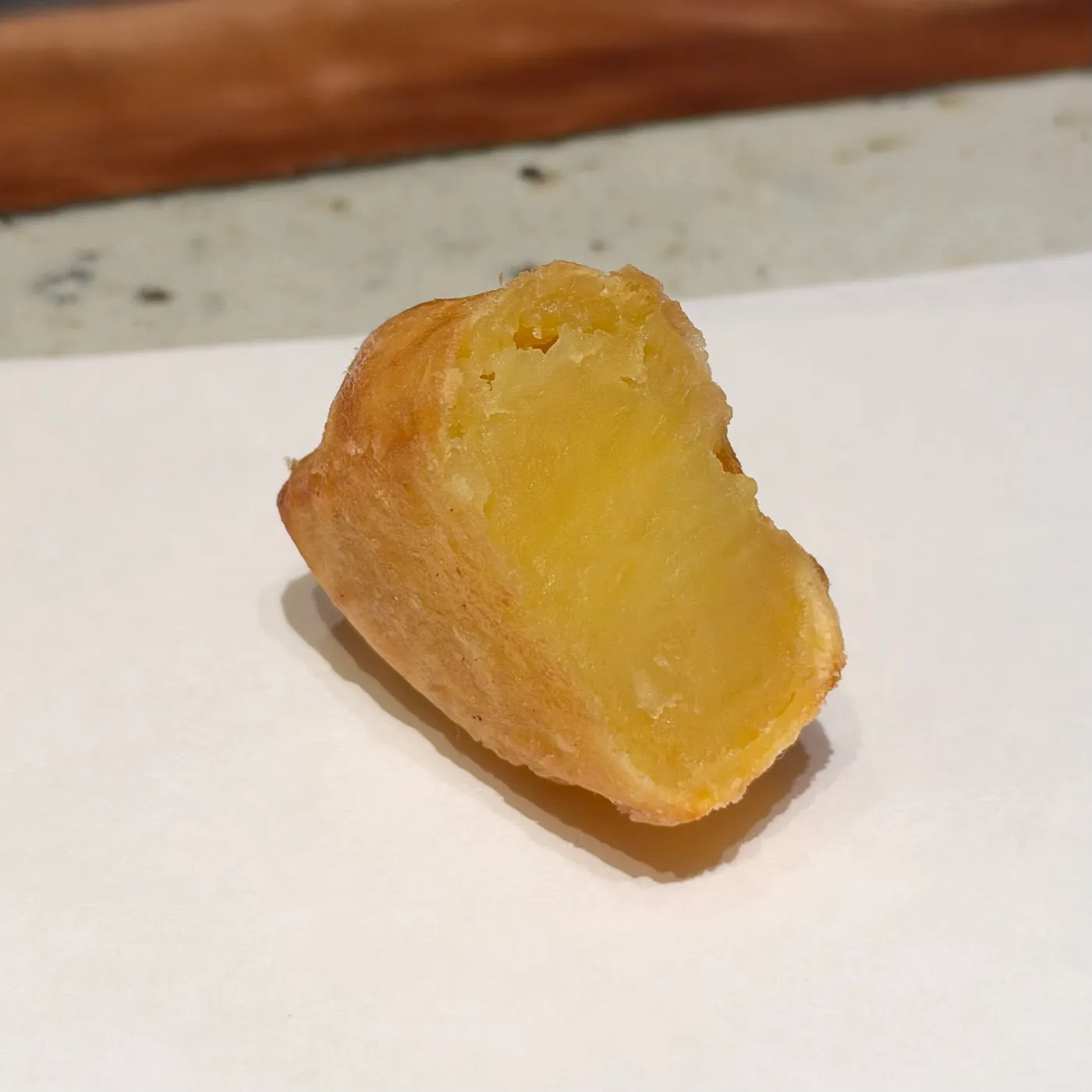
Marujū — 丸十
There are two particularly interesting stories behind Motoyoshi san's sweet potato tempura, one historical and the other scientific. The first concerns its name. Motoyoshi san explained that the family crest of the Shimazu clan, which ruled the former Satsuma domain, consists of the character 十, meaning ten, enclosed within a circle. Because of the historical association between sweet potatoes and Satsuma, marujū became a traditional culinary name for the vegetable, particularly among tempura chefs. The second story concerns the way he cooks it. The sweet potato begins its journey at the very beginning of the meal and is served near the end, approximately an hour and a half later. Motoyoshi san first fries it in a thin coating of batter. He then wraps it in cooking paper, which acts as a second, artificial protective coating during further cooking. Without that protection, he explained, the original thin batter would become excessively dark. Once the sweet potato is cooked through, he keeps it warm at a temperature similar to that used for roasted sweet potatoes. He holds a patent for this particular method. The result is a beautifully golden sweet potato with a soft, dense interior, served simply with salt. An hour and a half of cooking and holding, years of experimentation and a patented technique, all devoted to bringing out the deliciousness of a sweet potato.Tendon — 天丼
Motoyoshi san prepares his tendon with small shrimp and kobashira, the little adductor muscles of the aoyagi clam, served over rice and finished with a little yuzu. A lovely way to conclude the savory part of our meal.Pear and Milk Ice Cream — 洋梨・ミルクアイス
Pear accompanied by milk ice cream, a simple and refreshing conclusion to our November menu.The Happiness That Follows You Home
When I asked Motoyoshi san who had most influenced his artistic sensibility, I was expecting him to mention a famous artist, a ceramicist or perhaps a Japanese designer. His answer took me completely by surprise. It was the owner of a flower shop. Shortly after Motoyoshi san opened his restaurant twenty years ago, the florist came to eat there. At the time, Motoyoshi san was employing a professional to arrange the flowers in his restaurant. The florist looked around and told him that something didn't quite feel right. Everything about the restaurant was young and new, but the flowers looked as though they had been arranged by an experienced professional. There was an imbalance between the two. He then gave Motoyoshi san a piece of advice that would have an enormous influence on the restaurant he was to create. “Even if you're not particularly good at it, do everything yourself. That way, the restaurant will come together as one.” And that is precisely what Motoyoshi san did. He began arranging his own flowers, writing his own calligraphy and drawing his own pictures. “Perhaps, if I hadn't met that person, this restaurant wouldn't exist as it does today,” he told me. I thought about the beautiful little autumn flower arrangement I had photographed earlier in the evening, and about the extraordinary cherry blossom displays I had enjoyed here in previous years. I had always wondered how his fascination with flowers had begun, and here was the answer. Interestingly, the original idea of bringing cherry blossoms into the restaurant was a rather practical one. During sakura season, people go out to enjoy hanami, the Japanese tradition of viewing cherry blossoms. Motoyoshi san thought that if he could offer his guests the opportunity to enjoy hanami inside his restaurant, they might come to eat there instead. As he became more accomplished at arranging flowers, the number of branches increased and his displays became increasingly ambitious. This is what the restaurant looks like during cherry blossom season. And yes, every single one of those blossoms is real.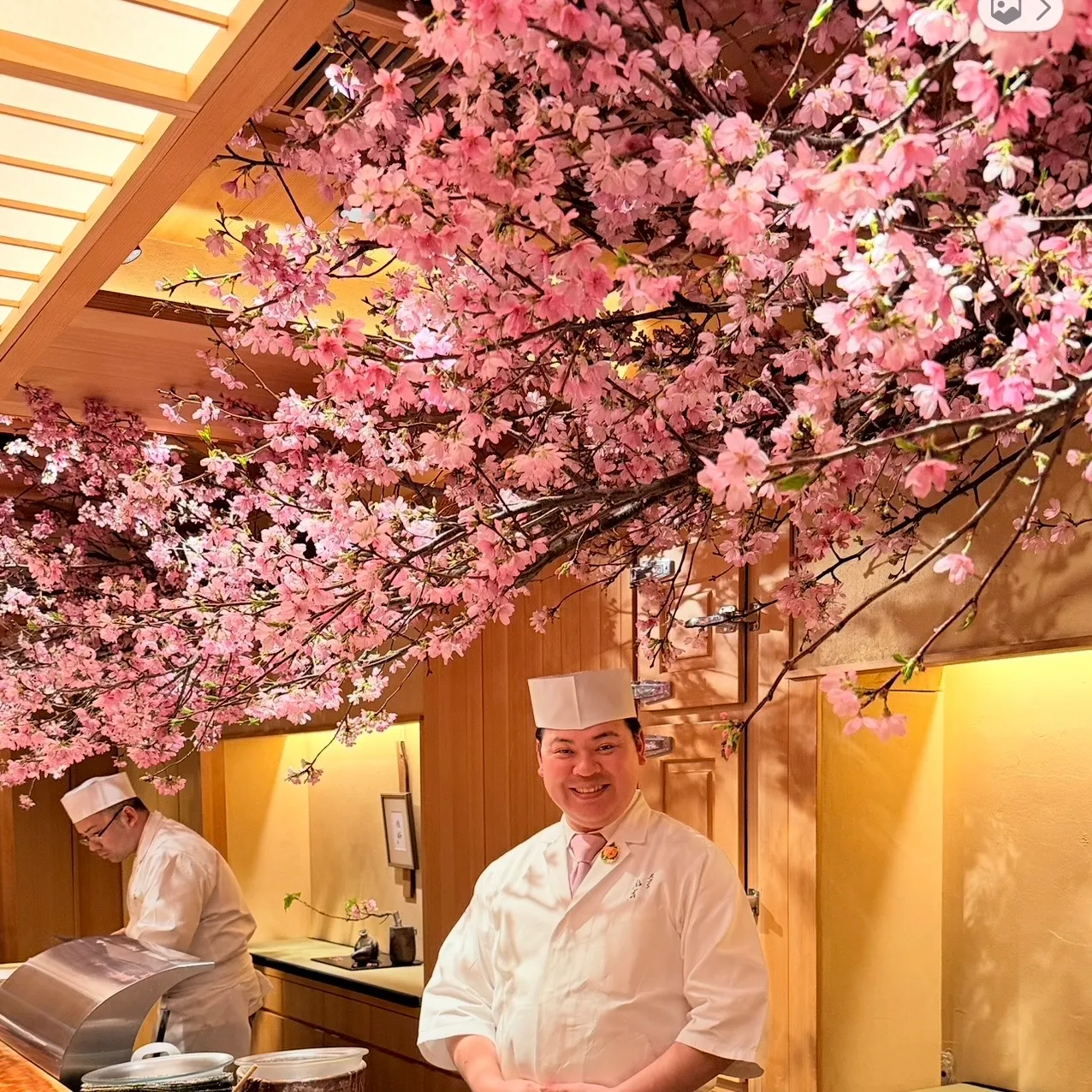
Hanami at Tempura Motoyoshi.
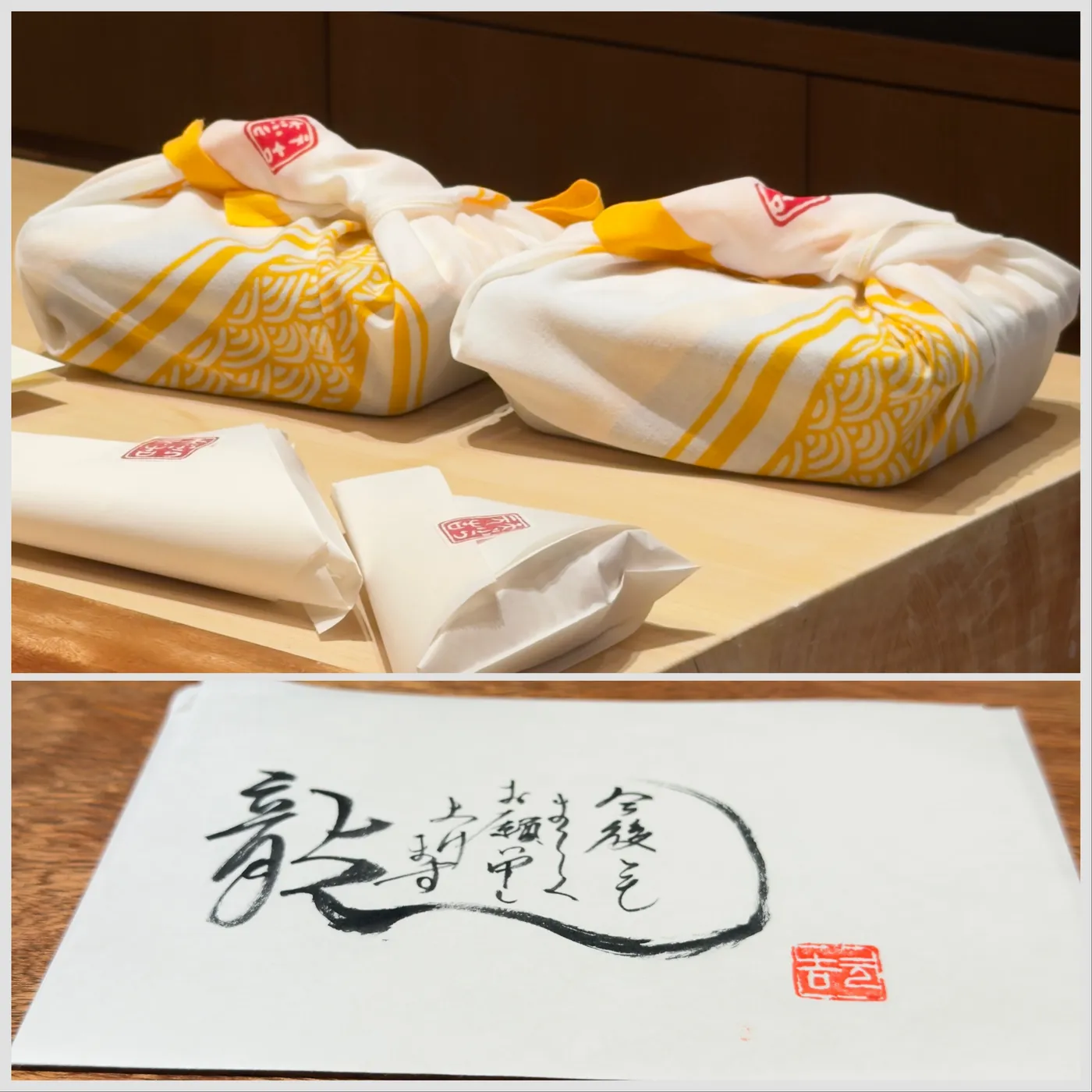
Once again, he told me, had he not met that florist, he probably wouldn't be doing any of this. I was also curious to know what Motoyoshi san finds beautiful outside the world of gastronomy. I asked him if he had recently seen something that had particularly moved him. He thought about it for a moment and told me about a beautiful sky he had seen at an airport. He explained that he is particularly drawn to things that have not been altered by human hands. The natural shape of a branch, a fleeting moment in nature, or a little sunlight falling on something and illuminating it in a particularly beautiful way. I found it rather interesting that a man who spends so much of his time creating beautiful things finds such pleasure in things that nobody has created. When I asked him what he would have liked to become had he not become a tempura chef, there was very little hesitation. He would have liked to become a designer. I think he would have been a very good one. Actually, I think he already is. Toward the end of our meal, we were given an oshibori unlike any other I have encountered in Japan. Even something as ordinary as a hand towel had not escaped Motoyoshi san's imagination. Motoyoshi san once told me a wonderful little story about the food stalls of Edo-period Japan. According to the story, people would wipe their hands on the noren, the traditional Japanese entrance curtain, after finishing their meal. Apparently, the dirtier the noren, the more popular the establishment. Since he would rather his customers didn't wipe their hands on his actual noren, Motoyoshi san designed an oshibori in the shape of a miniature one. When he explained it again last night, he told me that by allowing his guests to experience this old custom in a playful way, he hopes that a little piece of Japanese culture might continue to live on. I love the fact that he puts this much thought into something we use for perhaps thirty seconds at the end of a meal. My son and daughter-in-law were supposed to join us for dinner last night, but unfortunately, neither was feeling well. Motoyoshi san prepared two tendon for them to take home, and this is how he presented them. This is not Uber Eats. :)