Suzutashiki
Visited Mon, Nov 16, 2026 · Dinner
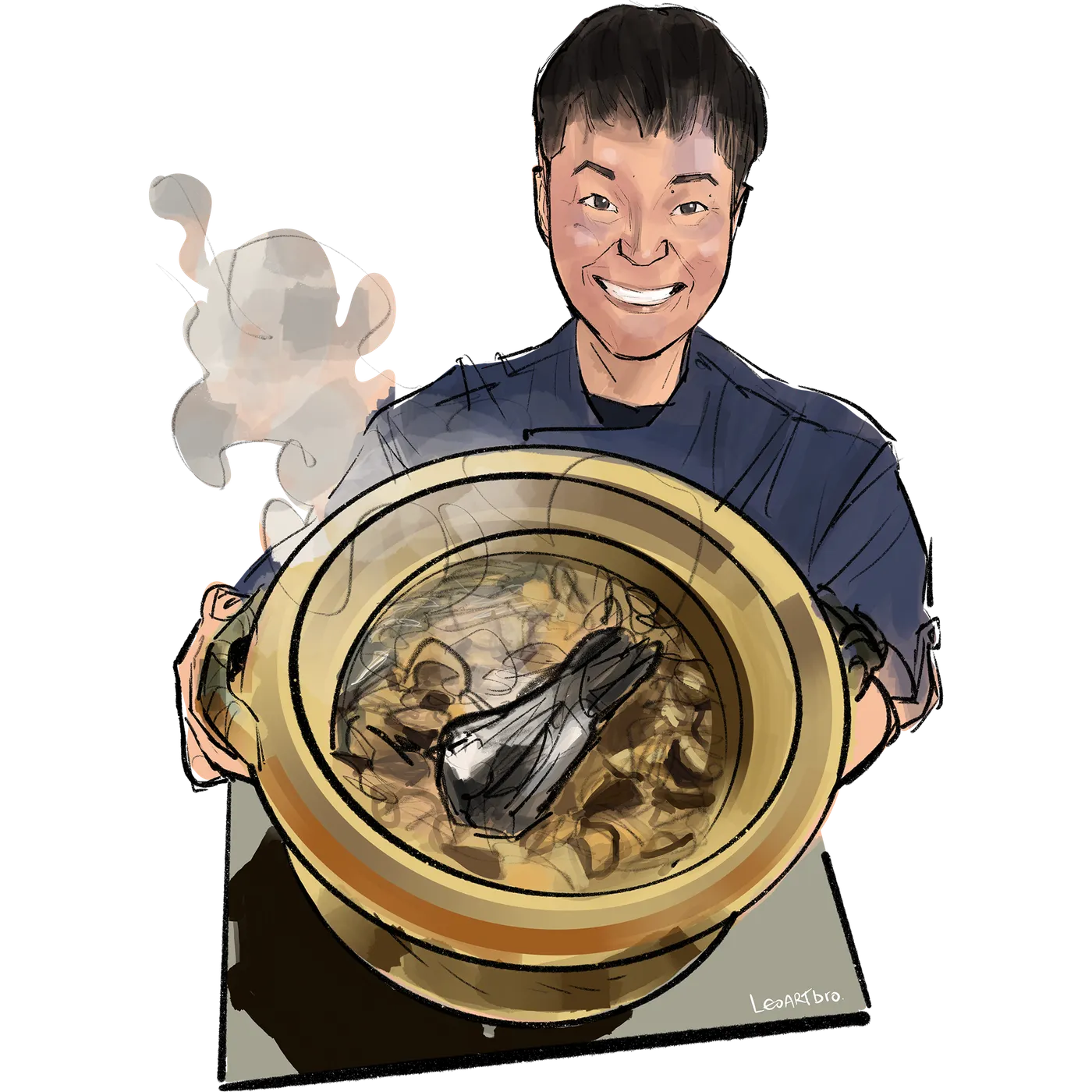
Suzutashiki — 鈴田式
Beyond the Fire
I have always thought of Suetomi-san as the Magician of Fire. His remarkable ability to use fire as something more than a source of heat has fascinated me for years, and Suzutashiki is one of the most interesting expressions of that world.
Returning to Suzutashiki this November, just six weeks after our previous visit, I wanted to understand more about the man who actually stands behind its cooking: chef Hideto Tashiro. How had he developed his approach to wood fire? What had he learned from Suetomi, and how had his own ideas evolved?
Fortunately, Tashiro was generous enough to spend time talking to us.
The first surprise was that Suzutashiki wasn't originally intended to be a wood-fire Japanese restaurant. The initial idea was to create a meat kappo restaurant. Tashiro, who had imagined eventually opening a small counter restaurant of his own, was invited to join the project before its direction had been fully established.
For nearly six months before opening, he and Suetomi experimented with dishes and techniques. Gradually, their plans shifted toward combining wood-fire cooking with Japanese cuisine.
At first, Tashiro was skeptical. He worried that the smell of burning wood might interfere with the natural flavors and fragrances of Japanese ingredients. But through experimentation, he began discovering situations in which fire could contribute something valuable.
Another surprise concerned his relationship with Suetomi. Although they developed the concept together, Tashiro explained that they had never actually worked side by side in the same kitchen.
What influenced him most was Suetomi's curiosity about ingredients.
Suetomi travels to Alba to experience truffle hunting, goes digging for bamboo shoots in spring, and makes a point of understanding where ingredients come from and the environments in which they grow. For Tashiro, that determination to look beyond the finished ingredient has been deeply influential.
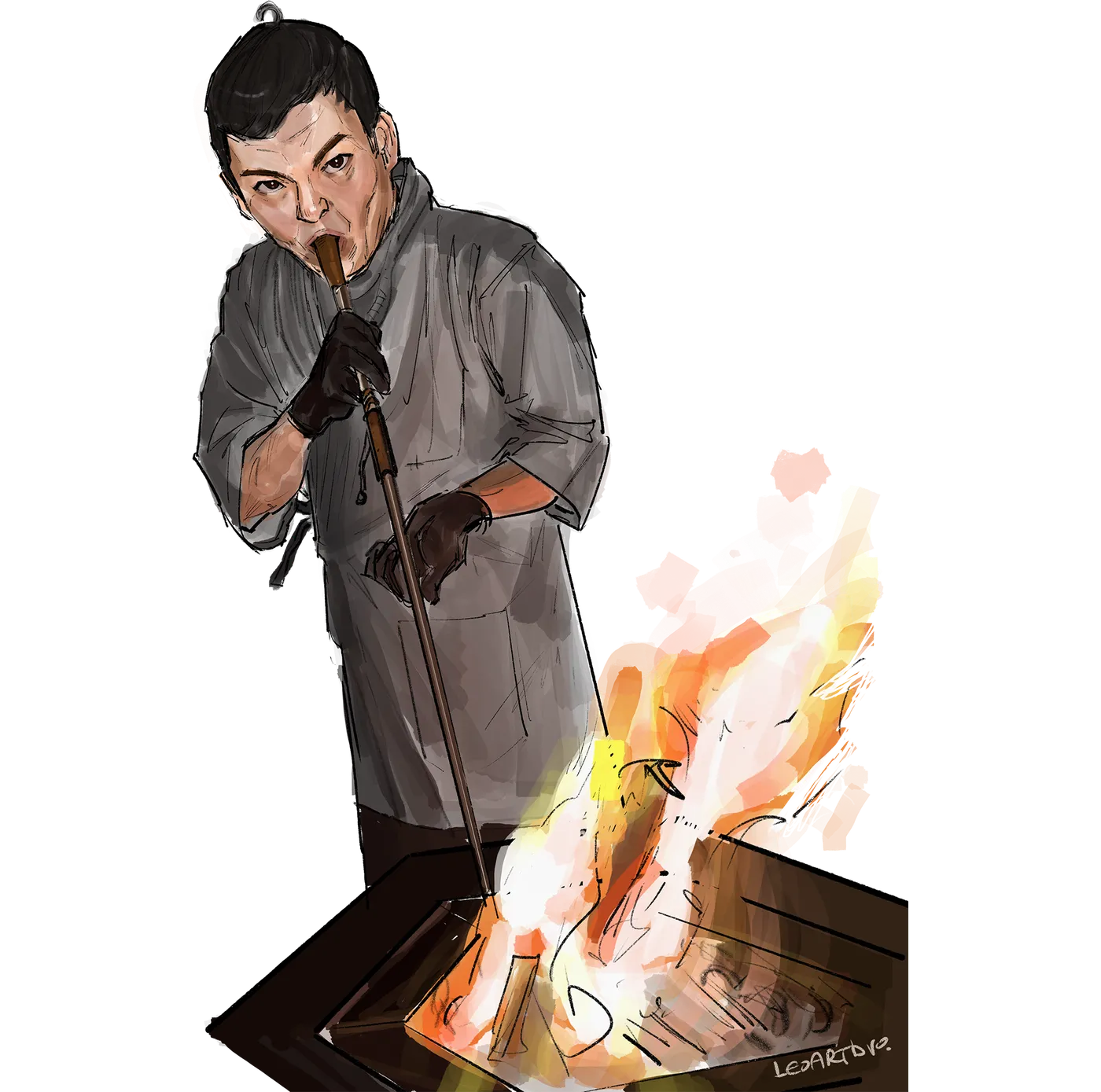
Suetomi-san, the Magician of Fire.
But perhaps the most interesting revelation was how much Tashiro's thinking about fire has changed.
In the beginning, he concentrated on using wood and allowing its smoke to perfume ingredients. With experience, he realized that wood fire isn't necessarily the best heat source for everything.
Today, he treats it as one option among several. He described cooking meat with charcoal on one surface while using wood smoke on the other, choosing the combination according to the result he wants.
His broader culinary training is equally important. Western techniques have strongly influenced how he prepares stocks and approaches ingredients, but he deliberately limits the number of components on each plate. His aim is to bring out the best characteristics of each ingredient without unnecessary complication.
And then he offered a thought that may be the most revealing of all.
For him, truly delicious cooking isn't simply something that tastes good in the moment. It's something you remember years later, when you suddenly find yourself thinking, "That dish was really good."
He said that's the kind of food he hopes to create.
I couldn't imagine a more fitting thought to carry into a project called What We Ate.
What we ate
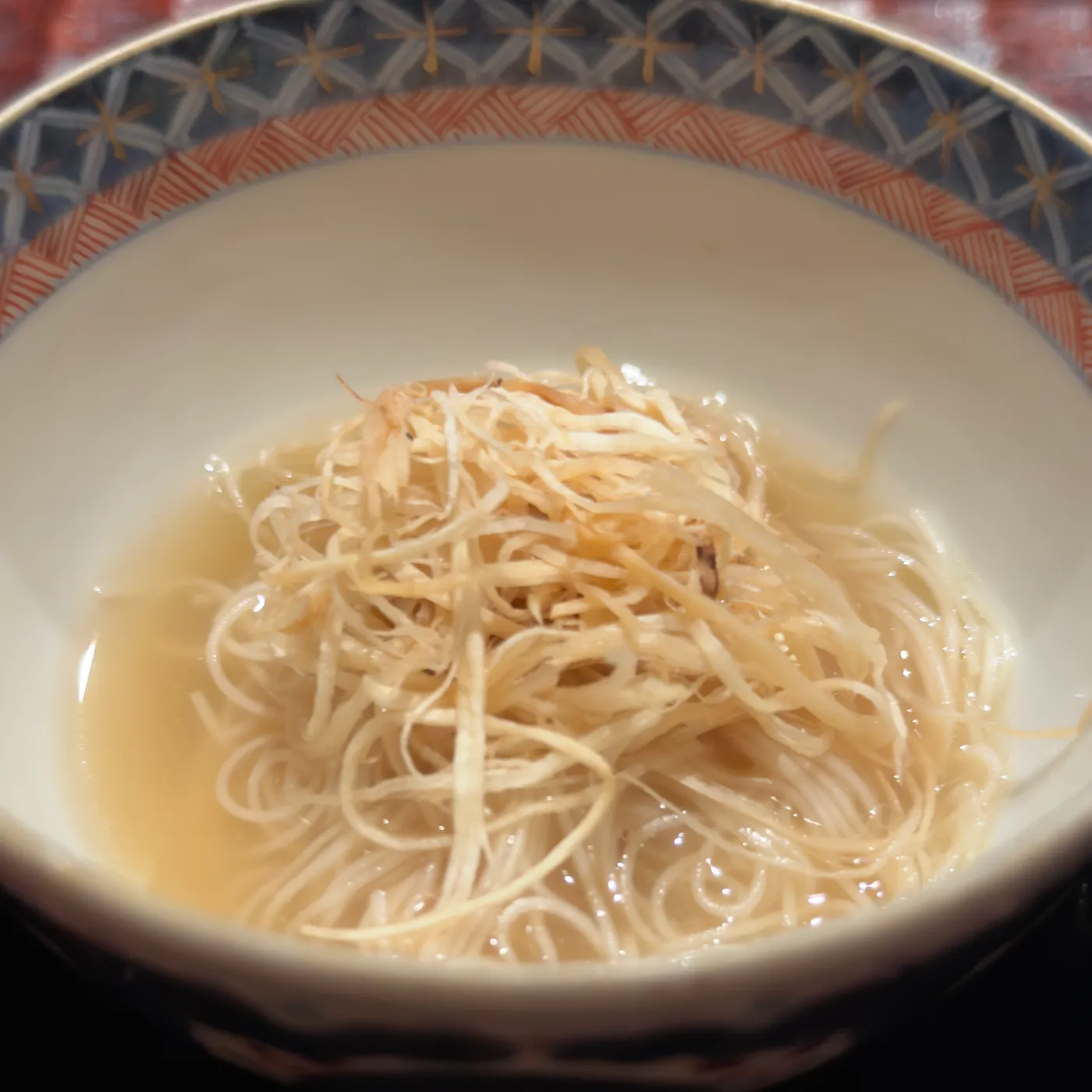
Matsutake Nyūmen with Pheasant Broth
Our meal began with nyūmen, fine somen noodles served in a warm broth made from a whole pheasant, its meat carefully picked from the bird. Fresh matsutake mushrooms had been torn by hand into fine strands and placed over the noodles. We were asked to mix everything lightly before eating, bringing together the delicate noodles, the pheasant broth, and the fragrance of the raw mushrooms. Matsutake is one of Japan's most evocative autumn ingredients, appreciated particularly for its distinctive aroma. Here, rather than being grilled or cooked into the broth, the mushroom was served raw, allowing its fragrance to become part of the experience as the ingredients were combined.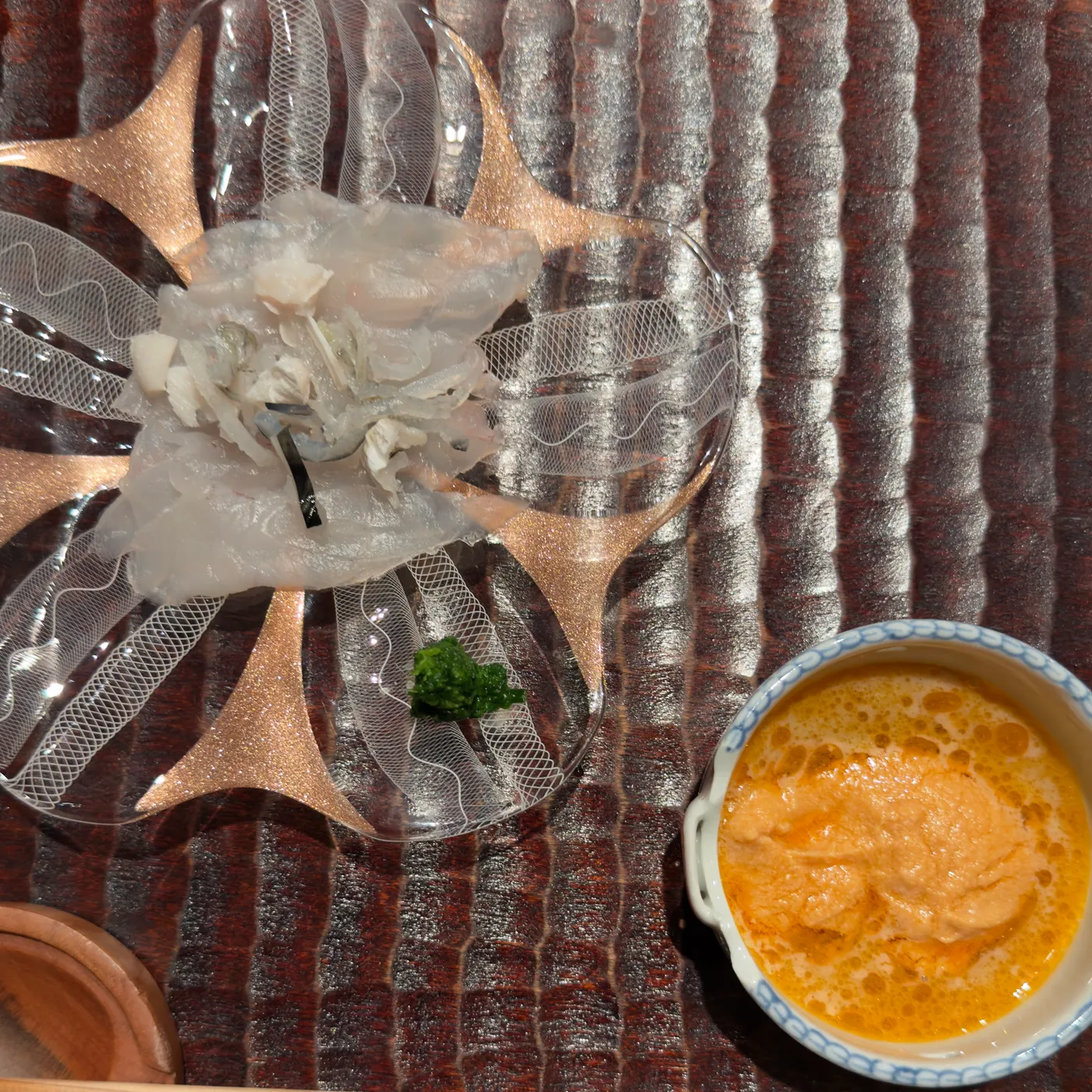
Wild Tiger Pufferfish from Ehime
Wild torafugu from Ehime was served as sashimi, accompanied by the fish's skin and tōtōmi, a particular section of its skin. Alongside was a mixture of grated green onion and ginger. The dipping sauce was particularly interesting: steamed ankimo from Yoichi in Hokkaido, passed through a sieve and combined with ponzu. The rich, creamy liver provided a contrast to the acidity of the ponzu and the delicacy of the fugu. This was a preparation in which several different parts of the fish, together with a carefully considered accompaniment, created an experience quite different from conventional sashimi.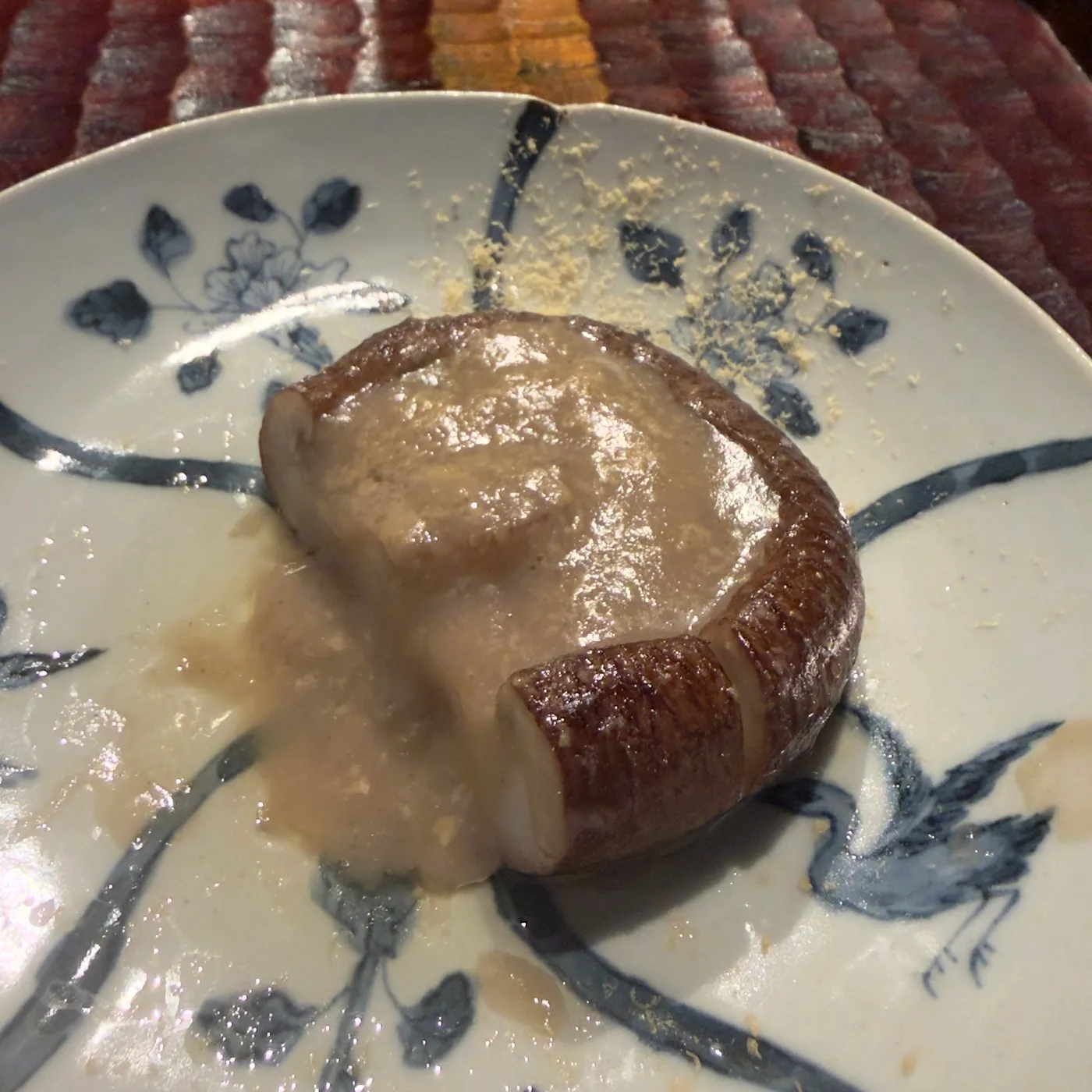
Wood-Smoked Shiitake from Tokushima
This was a dish I remembered from our previous visit. Shiitake mushrooms from Tokushima were roasted and smoked over wood fire, accompanied by a sauce made from fermented shiitake and so, an old Japanese preparation of milk slowly reduced until concentrated. Tashiro explained that the original version of this dish had been much simpler: shiitake grilled over wood and served with salt. After the restaurant moved to a larger kitchen, he gained the space to experiment with fermentation and other techniques. The resulting preparation combines the flavor of the grilled mushroom with the deeper savory character of fermented shiitake, while the concentrated milk brings another dimension. What makes this dish particularly interesting is that its development mirrors Tashiro's own changing approach to cooking. Wood fire remains important, but it no longer has to do all the work.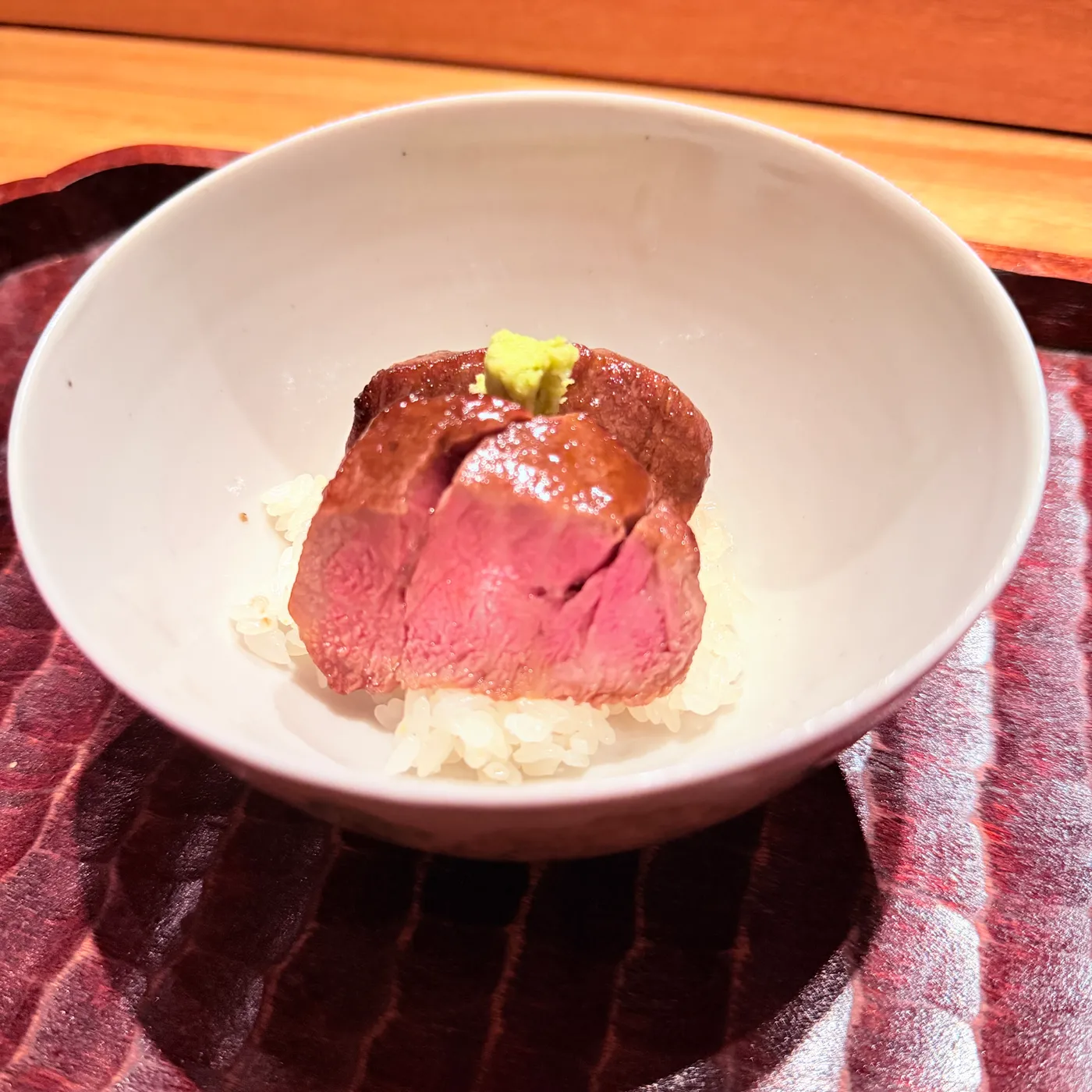
Aged Wagyu Fillet with Glutinous Rice
Aged Japanese black wagyu fillet was served over glutinous rice in a preparation described as iimushi, or steamed rice. The sauce combined roasted onion, black garlic, and a soy sauce made using meat. We were encouraged to eat the substantial pieces of beef in generous bites rather than divide them into smaller portions. The meat's pink interior and browned exterior made the different stages of cooking visible, while the glutinous rice provided a contrasting texture. Earlier, Tashiro had explained that he sometimes uses charcoal to cook one surface of a piece of meat while exposing the other to wood smoke. It was a particularly interesting insight into his approach to cooking, in which the choice of heat source is guided by the ingredient rather than the other way around.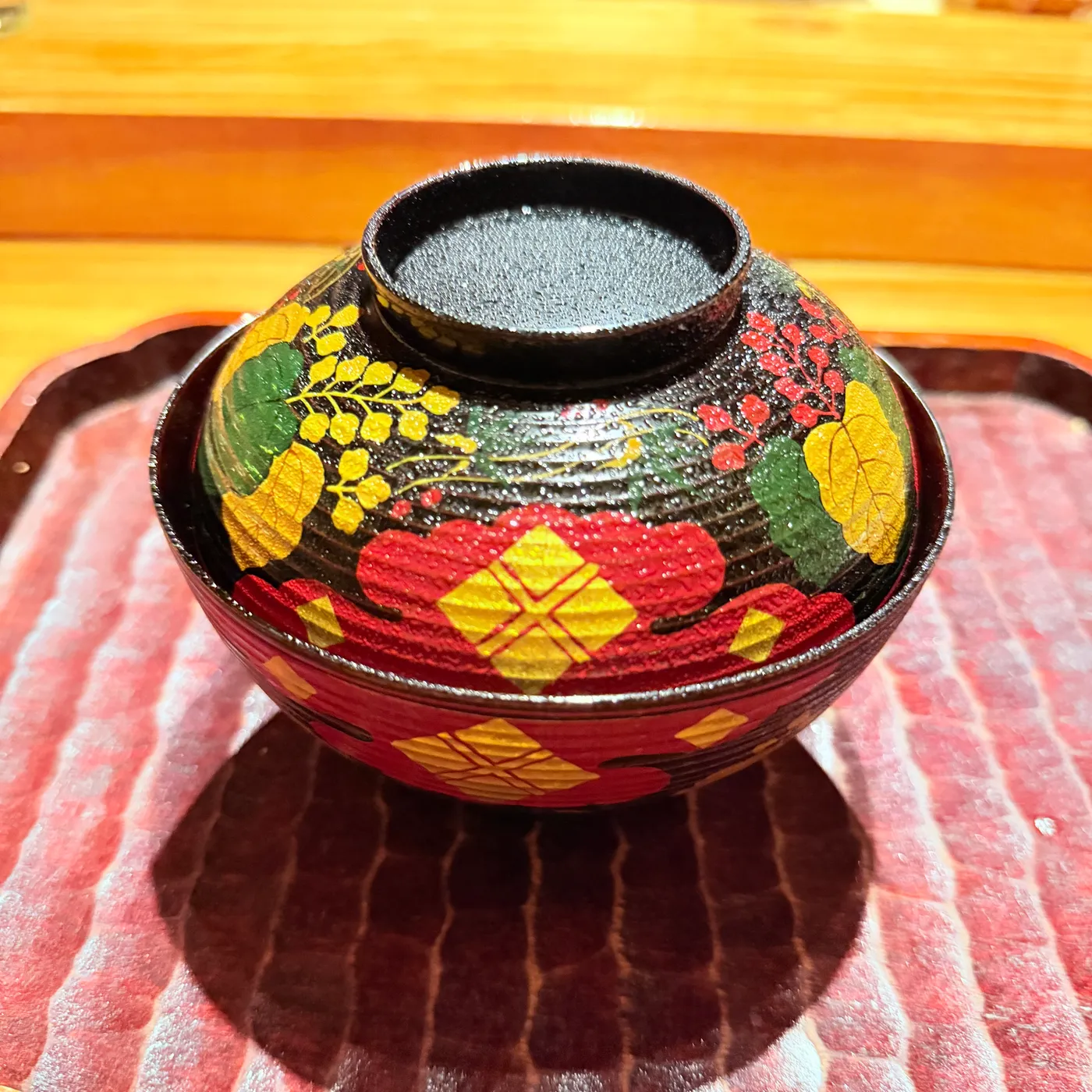
Zuwai Crab Shinjo in Dashi
The covered soup bowl, before opening.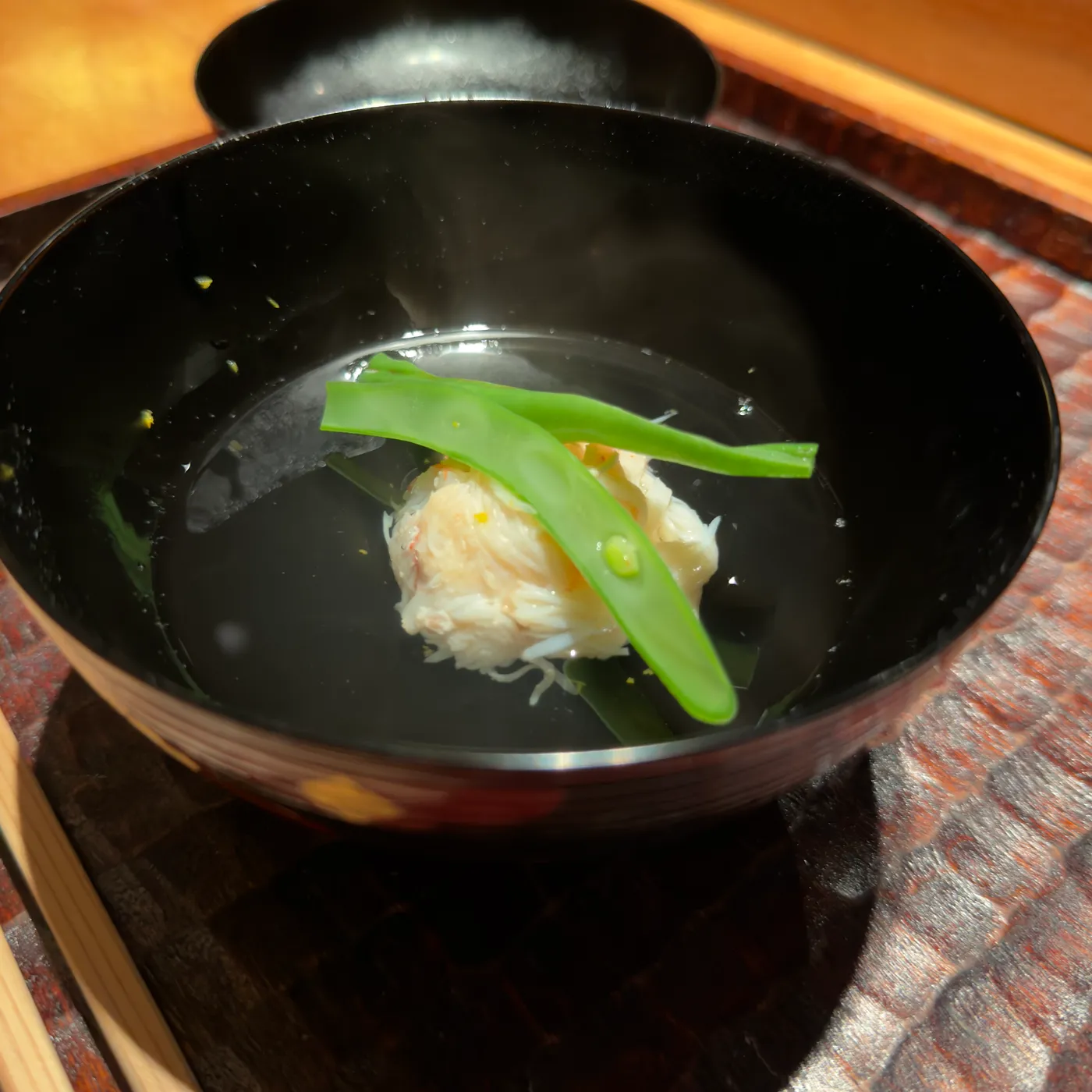
Snow crab shinjo in dashi, finished with green beans.
The next preparation was an owan, a traditional Japanese soup course, containing shinjo made from snow crab that had been shown to us earlier. What made this version unusual was its composition. Rather than mixing the crab with fish paste or another binding ingredient, the kitchen made the shinjo entirely from crab meat that had been passed through a sieve. The soup was prepared using kombu that had been aged since 2012, together with freshly shaved katsuobushi. Green beans from Ichirō Farm in Aichi completed the bowl. The aged kombu was a particularly striking detail. More than a decade of storage had become part of the foundation of a dish whose appearance was otherwise wonderfully restrained.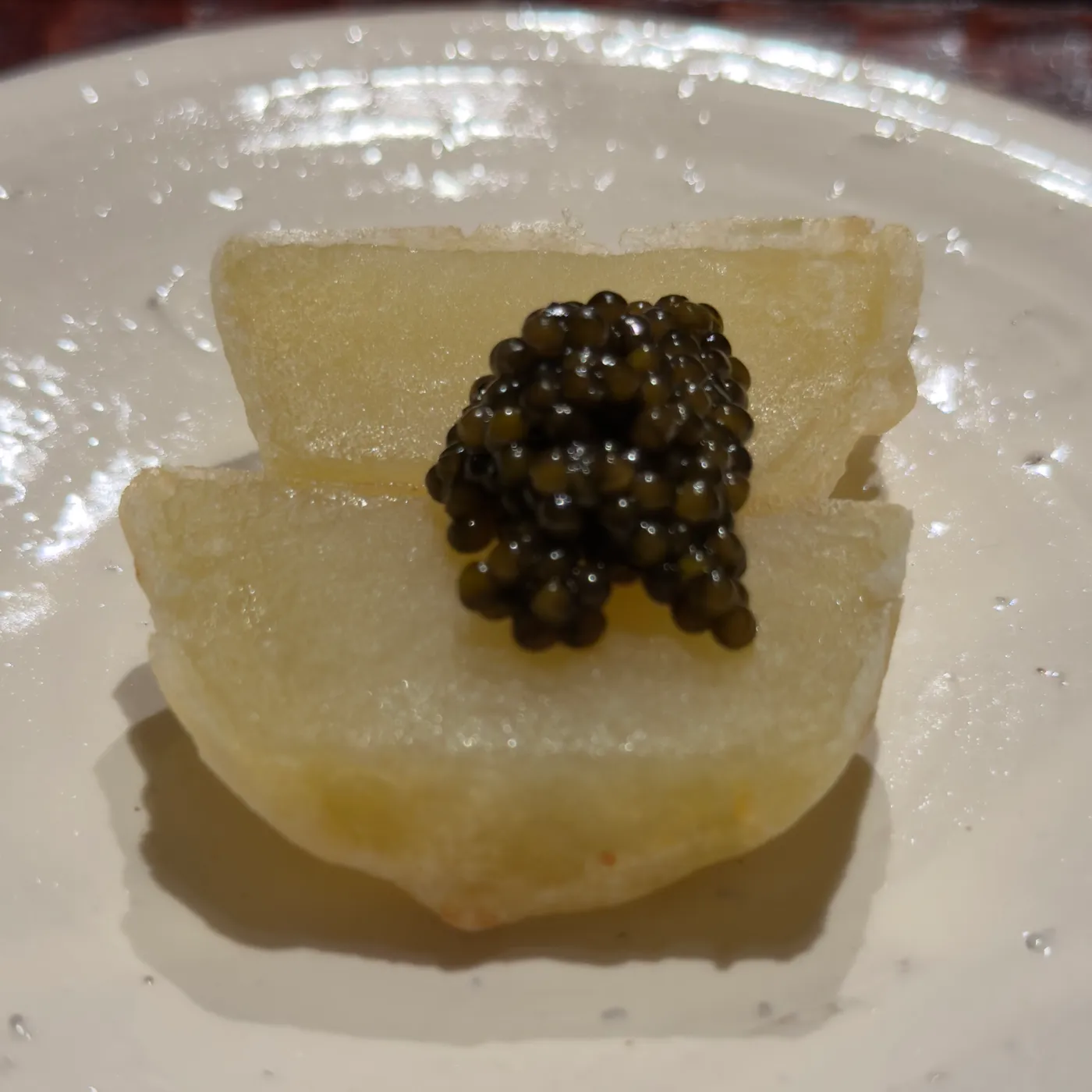
Two-Year-Overwintered Hokkaido Potato with Smoked Caviar
Hokkaido potatoes that had been stored through two winters were prepared as a fried course. The kitchen explained that the long storage had allowed some of the potatoes' starch to convert into sugars, increasing their natural sweetness. The potato was topped with smoked caviar, whose salinity was intended to balance that sweetness. A crisp potato preparation accompanied by a generous portion of caviar might seem like an unusual combination, but its logic was straightforward: the sweetness developed through aging and the saltiness of the smoked roe. It was a good example of Tashiro's preference for concentrating a dish around a small number of ingredients, each contributing something distinct.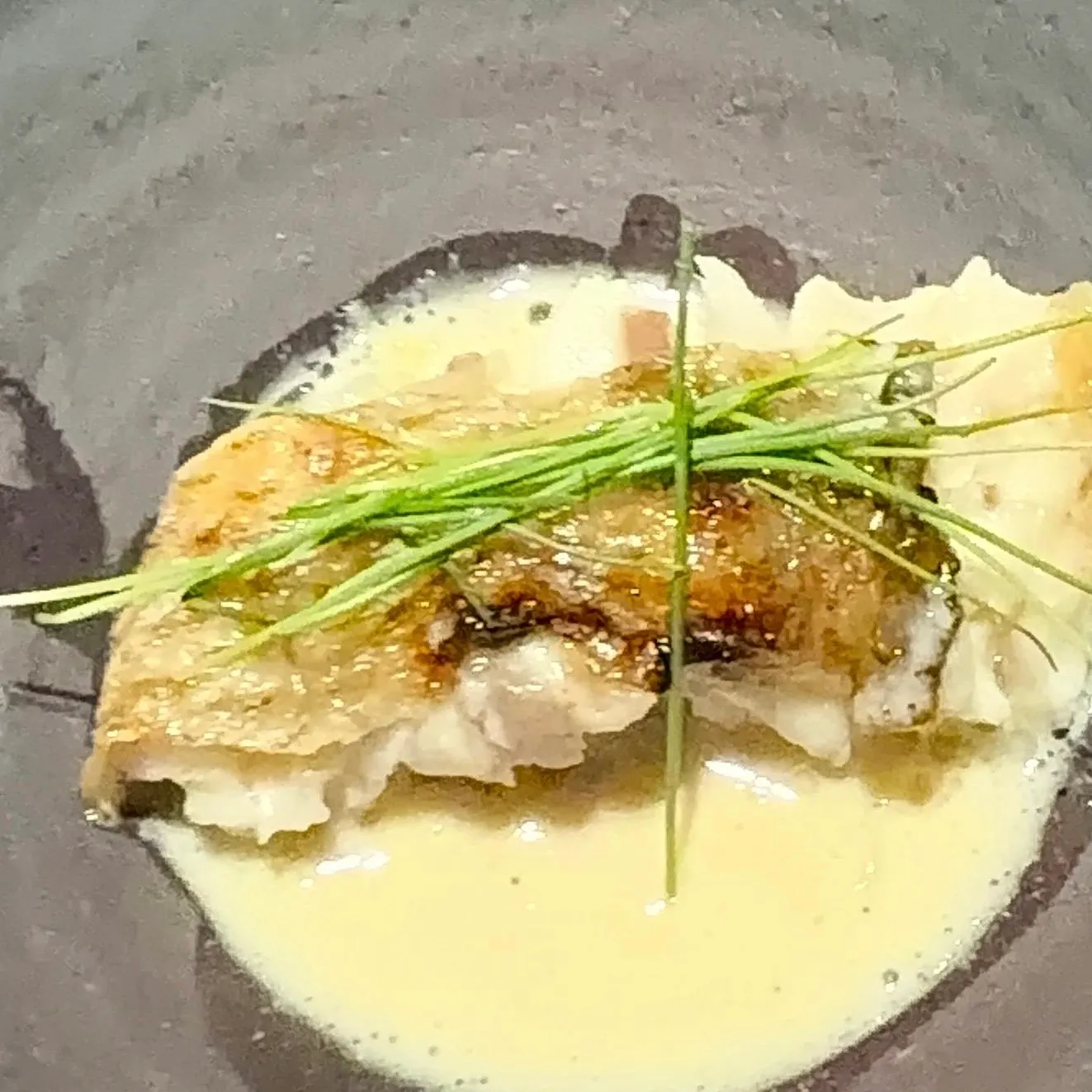
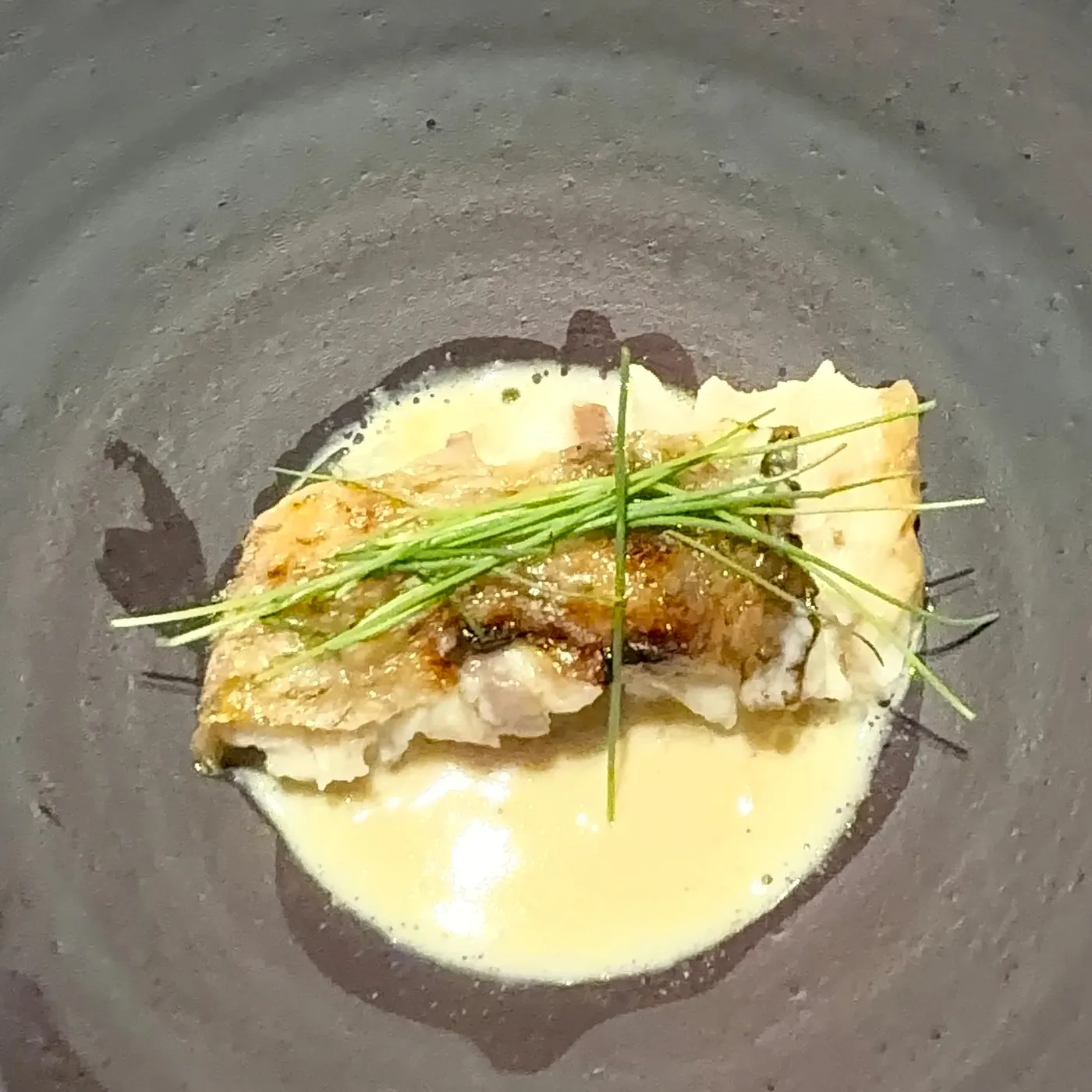
Nodoguro from Tsushima
Two views of the wood-grilled nodoguro and its sauce. Nodoguro, the richly flavored blackthroat seaperch, came from Tsushima. The flesh was cooked over wood fire, while the skin was finished over charcoal. It was a direct illustration of Tashiro's evolving approach to heat: choosing different methods for different parts of the same ingredient. The sauce was made from emulsified fish stock combined with fish sauce and white balsamic vinegar. We were encouraged to use a spoon to enjoy the sauce together with the fish. The combination of wood fire and charcoal, together with the emulsified sauce, demonstrated how Tashiro incorporates techniques from different culinary traditions into a preparation that remains focused on the fish itself.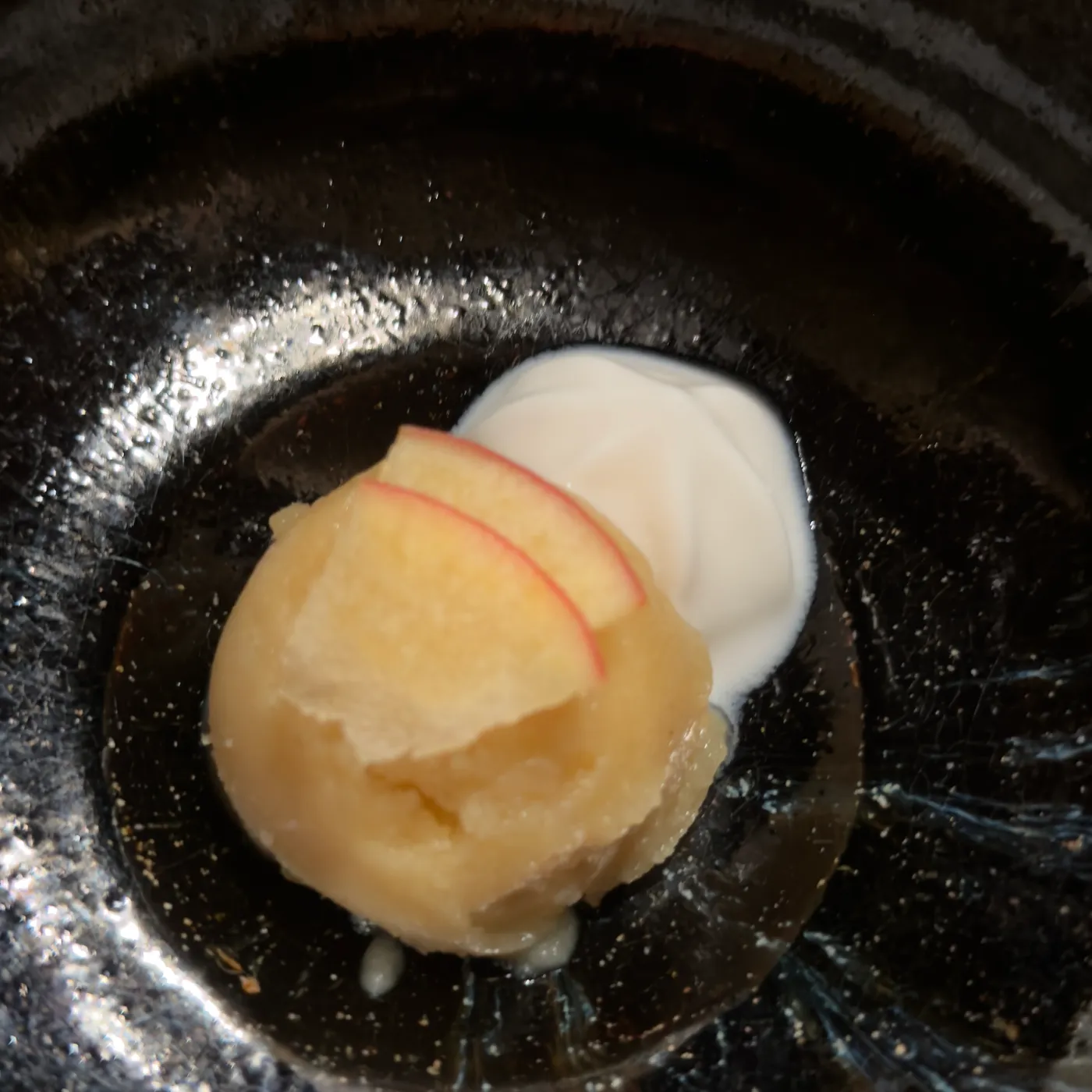
Baked Apple Sorbet with Kuromoji
A refreshing interlude followed, made from apples grown in Nagano. The apples had first been baked before being transformed into sorbet, with pickled apple added on top. Alongside was a delicate foam made from kuromoji, an aromatic Japanese tree whose fragrance can suggest citrus. The combination brought together different expressions of the same fruit: the deeper flavor developed through baking, the brightness of pickling, and the refreshing quality of the frozen sorbet. The kuromoji contributed an additional aromatic element.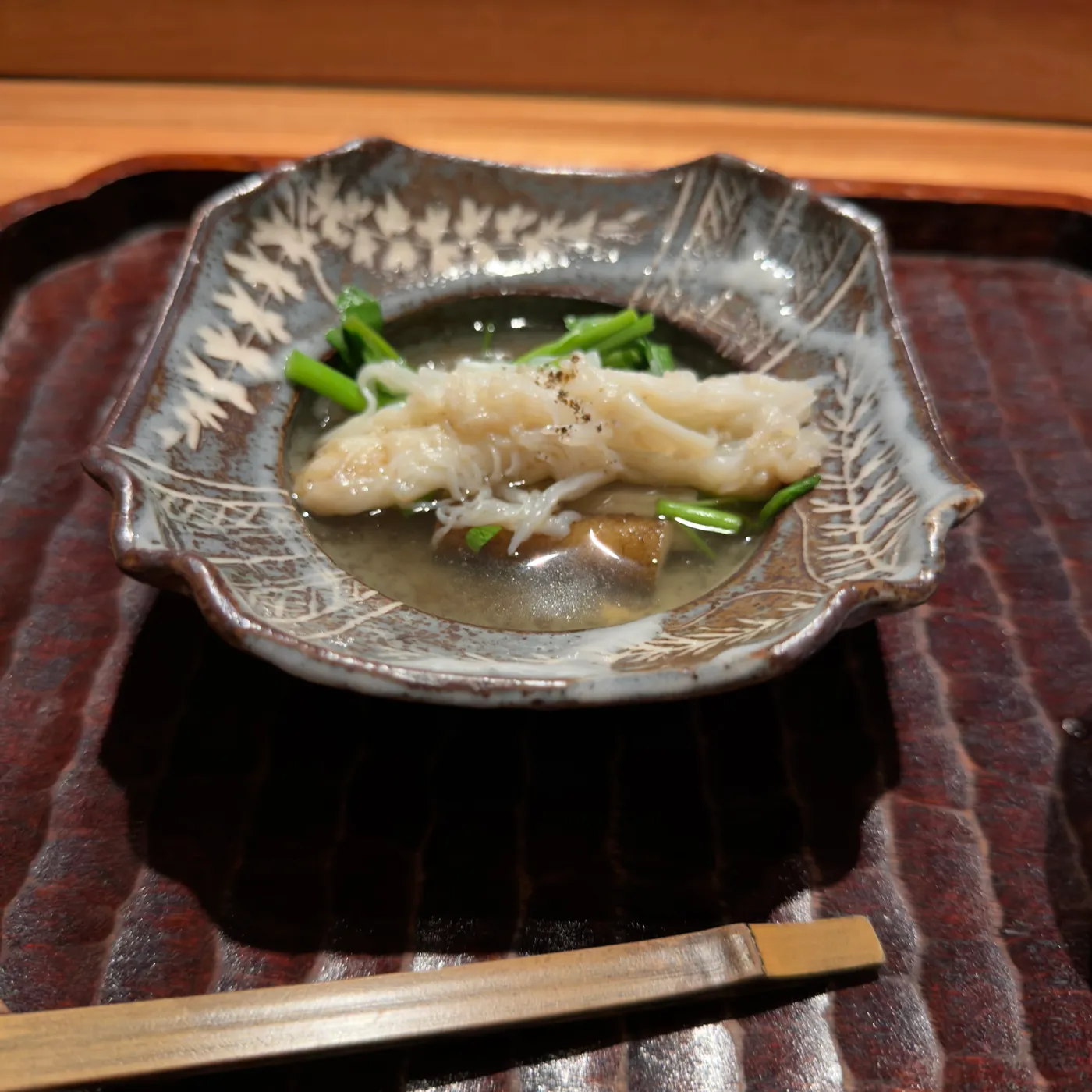
Echizen Crab Yaki-Shabu
Echizen crab, shown to us earlier in the meal, returned in a preparation of yaki-shabu, lightly roasted over wood fire. It was accompanied by seri, a Japanese water herb, and confit Wada gobō, a variety of burdock. The broth was made from pheasant, and a little black shichimi was added for seasoning. Crab miso was served separately, allowing each guest to add it according to preference. The preparation brought together the natural sweetness of the crab, the aroma of the wood fire, the richness of its own miso, and the earthy character of the vegetables. It was also an opportunity to appreciate how the same ingredient can take on a different character depending on the cooking method and its accompaniments.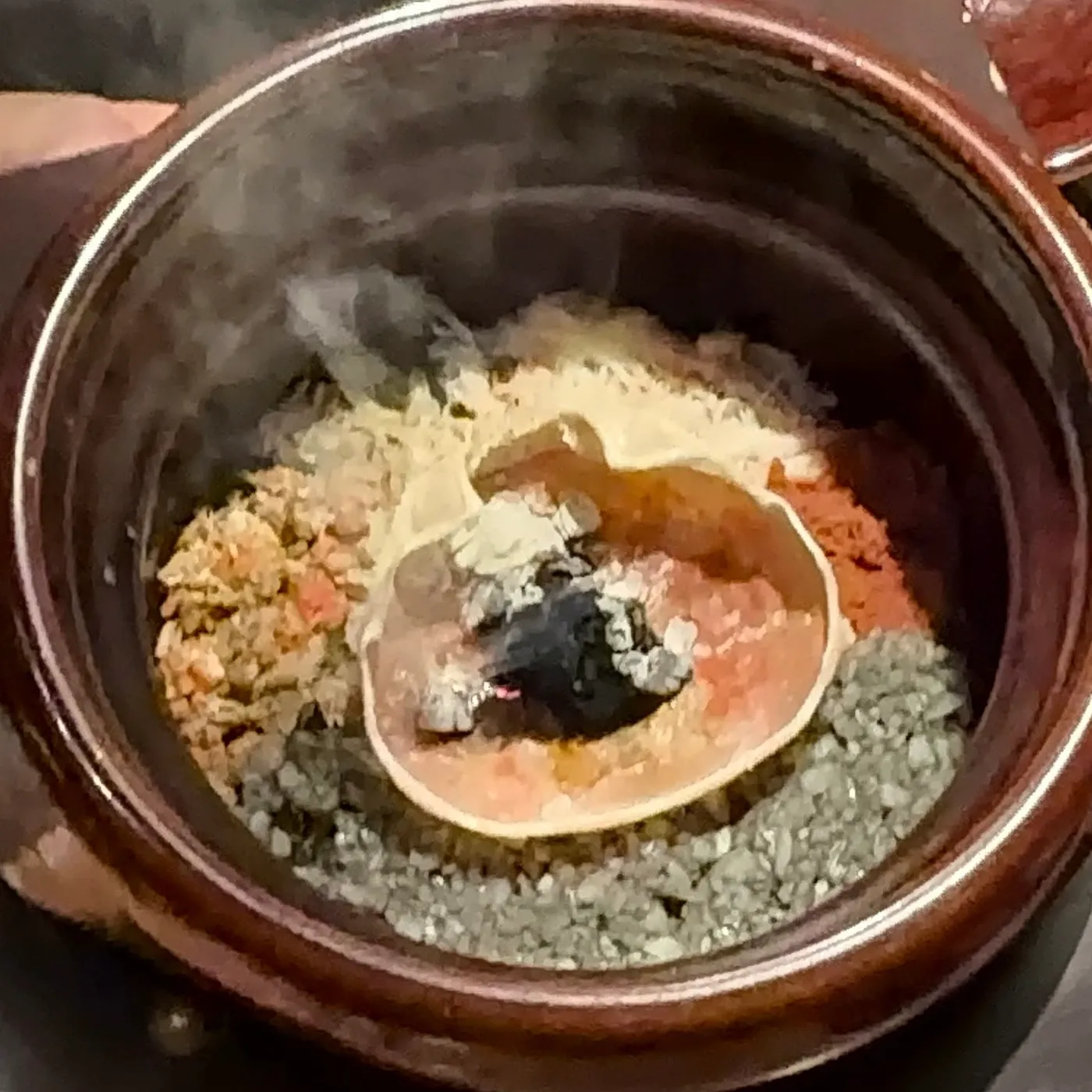
Clay-Pot Rice with Sekogani, Squid Ink, and Awaji Island Onion
The rice preparation before mixing.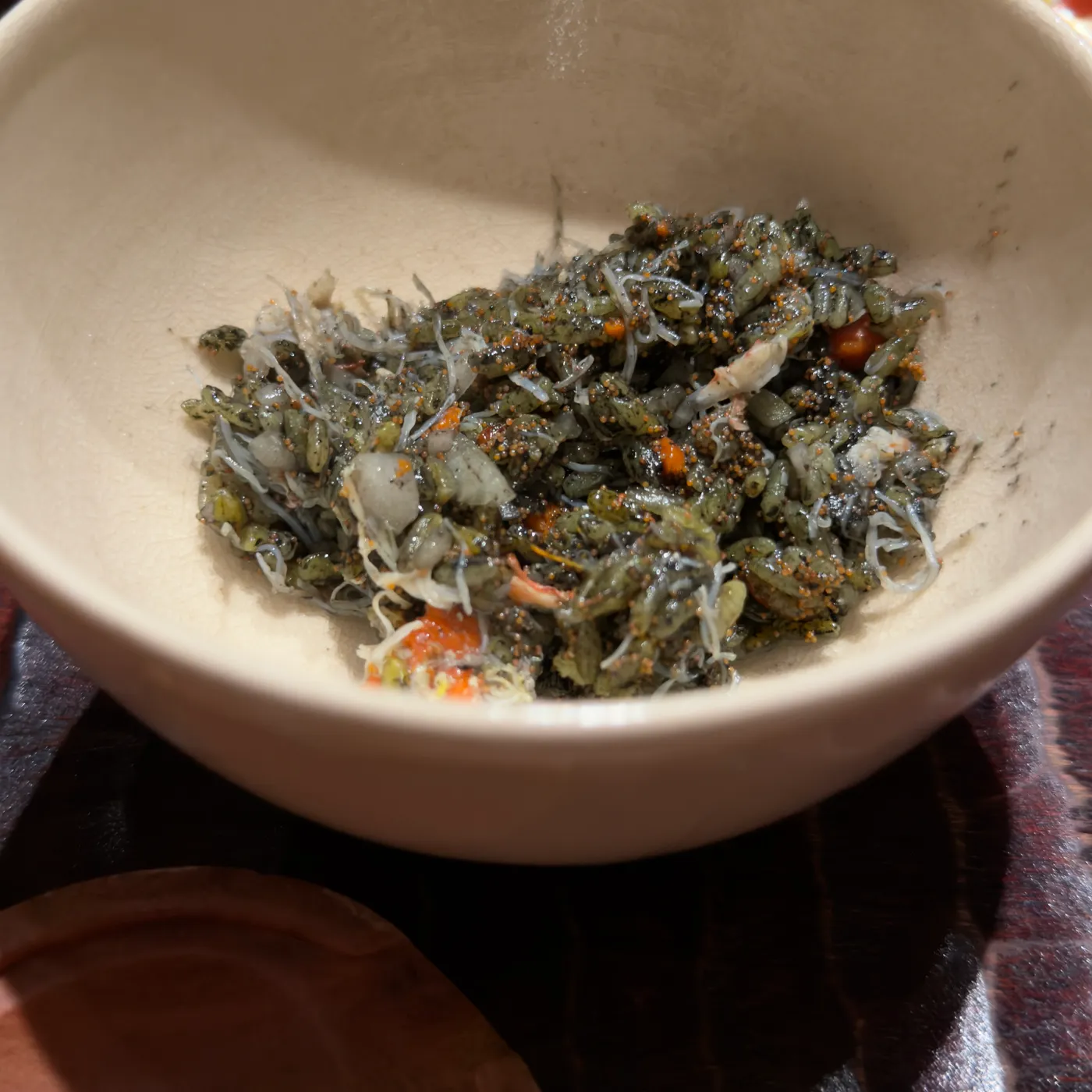
The rice after the ingredients had been combined.
Another crab preparation appeared in the rice course. Wood-roasted onions from Awaji Island were combined with sekogani, the female snow crab, and squid ink. The rice was finished with smoke to add a final aromatic element. This was an unusual combination in which the sweetness of onion and crab met the deeper marine character of squid ink, with wood smoke contributing its own fragrance. The two photographs show the dish at different stages, before and after the ingredients were mixed.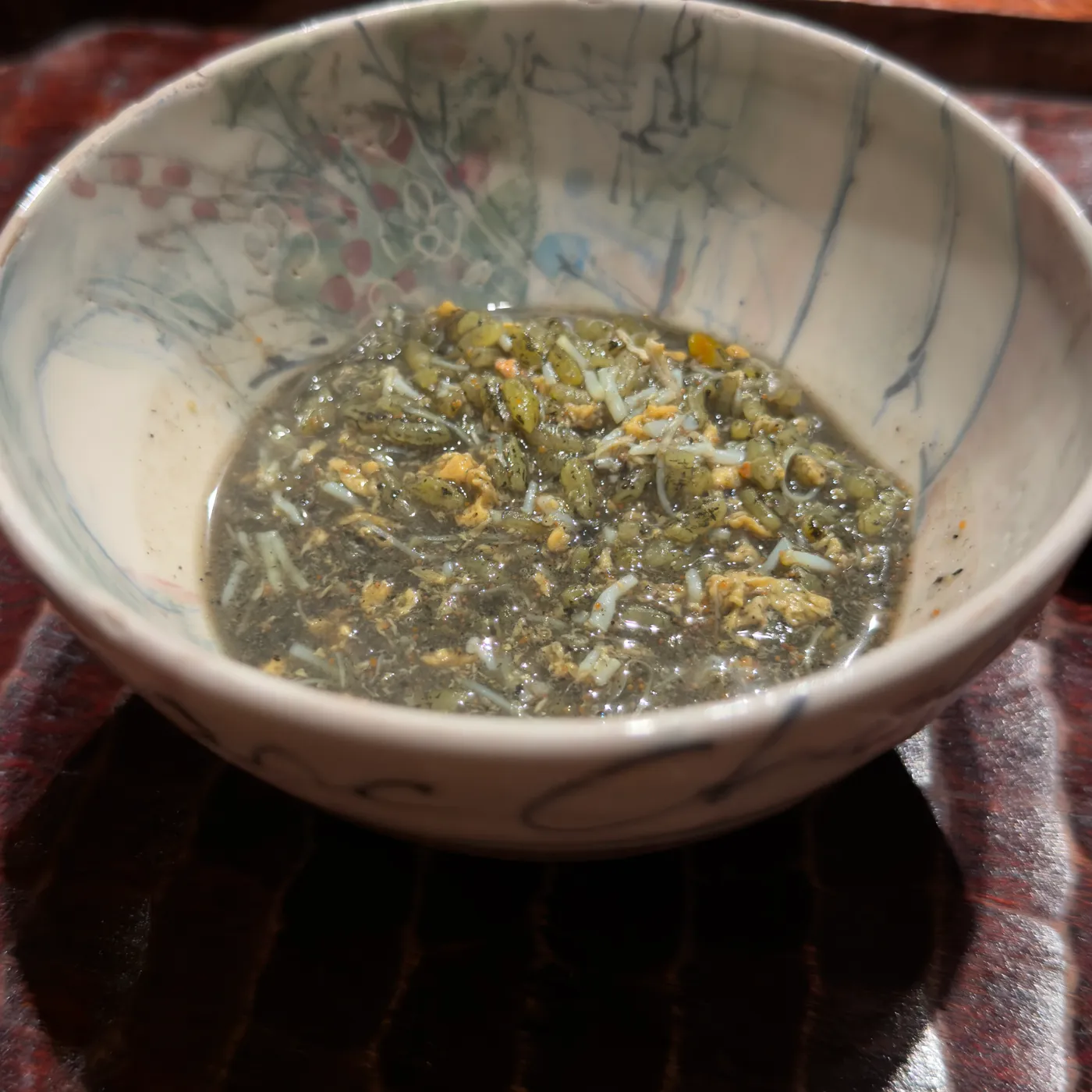
Fugu Zosui
The rice course continued in another form, this time as zosui. The kitchen combined previously prepared rice with fugu broth to create a hot, comforting rice soup. We were warned to be careful because it was served extremely hot. It was another expression of the fugu that had appeared earlier as sashimi, now represented through its broth.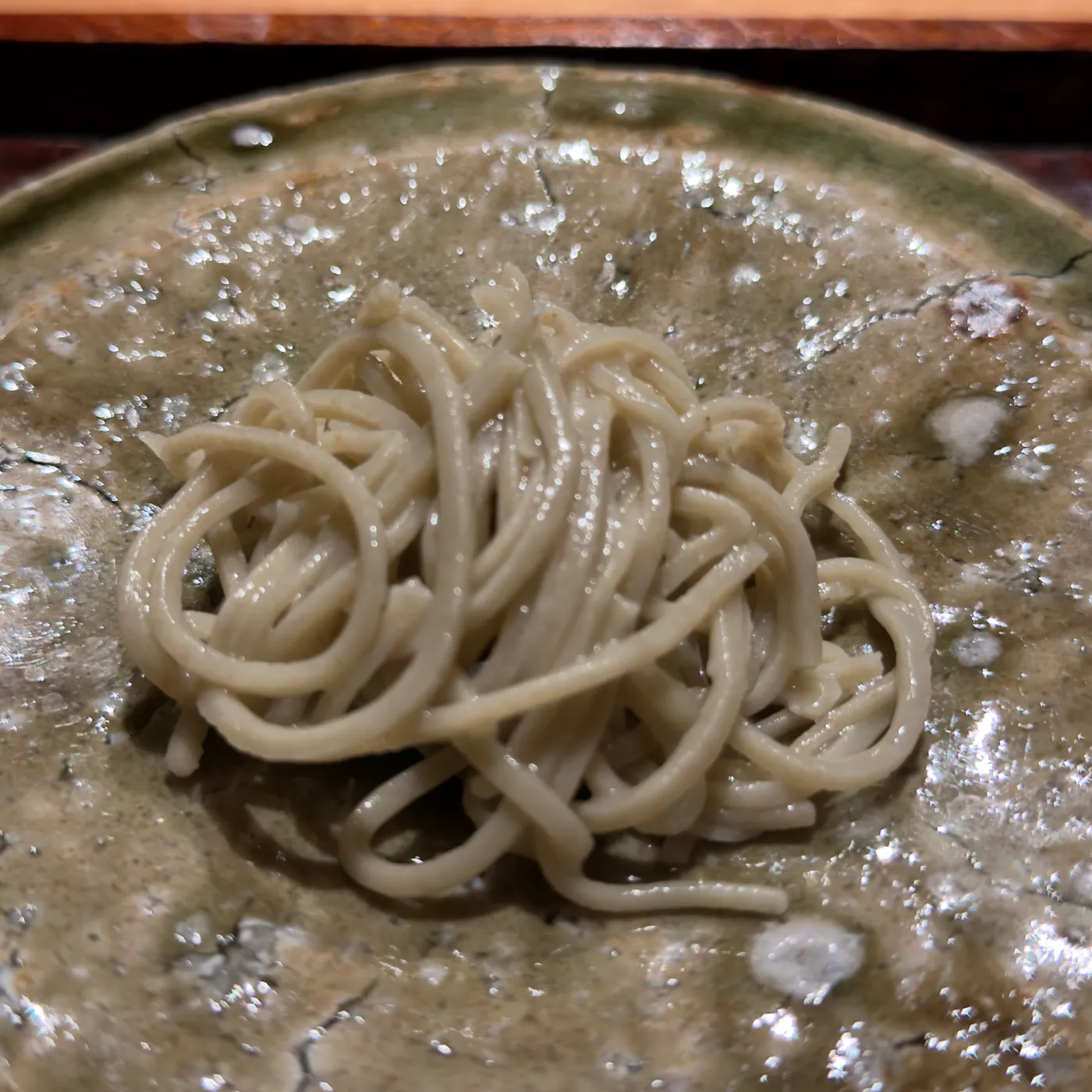
House-Made Juwari Soba
The restaurant's house-made juwari soba, prepared entirely from buckwheat, was served already seasoned as shio soba. There was no need for a separate dipping sauce. We were simply asked to enjoy the noodles as they were. The preparation allowed the flavor and texture of buckwheat to remain at the center of the dish. After a meal involving wood fire, fermentation, rich sauces, and several different preparations of seafood, the simplicity of the soba offered a distinct change of pace.Desserts and Tea
Smoked Sheep's Milk Ice Cream
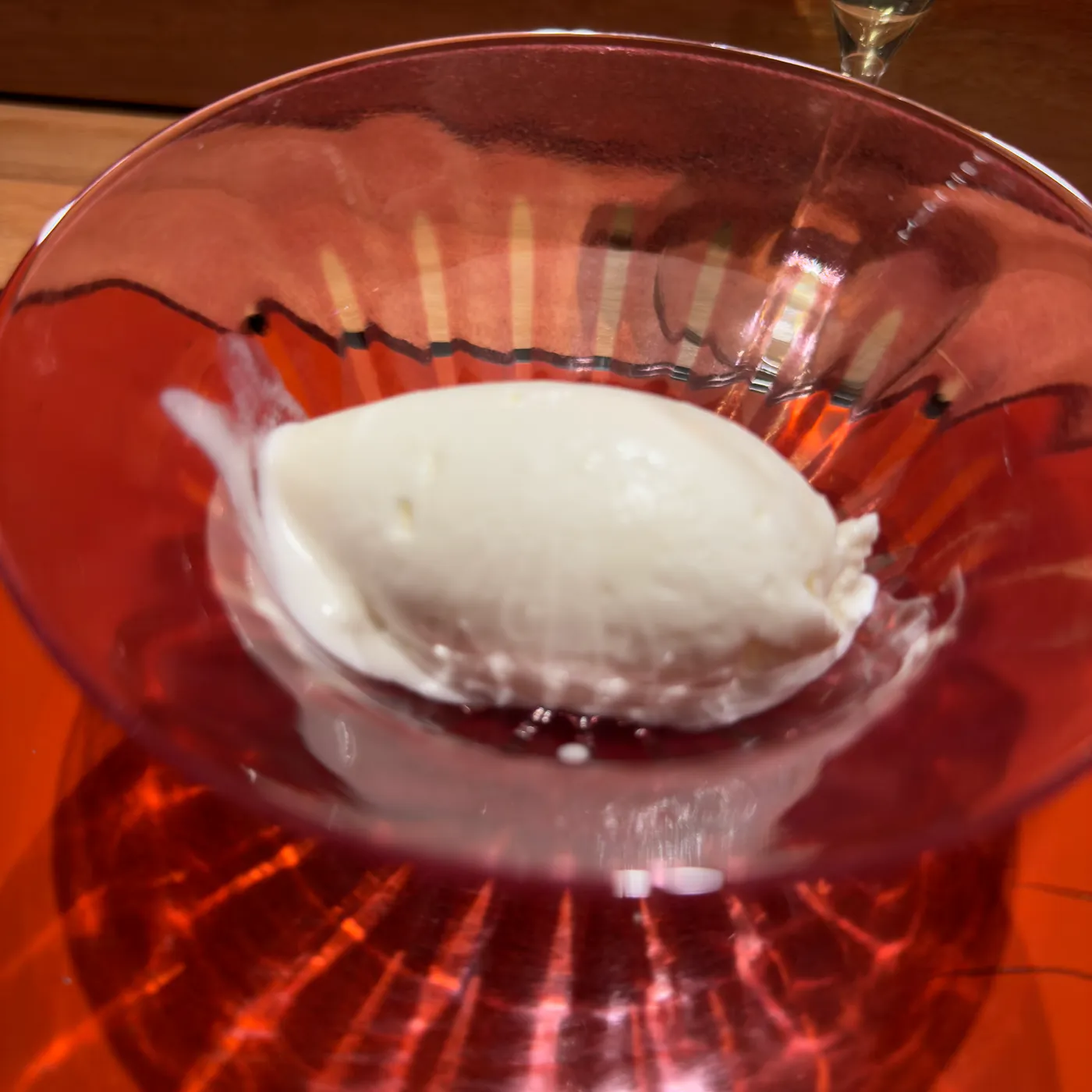
Freshly made ice cream was prepared using sheep's milk from Matsuyama Farm in Hokkaido. The milk was smoked, introducing an aromatic element to the dairy-based dessert. The kitchen also offered whisky to pour over the ice cream at any point during eating, allowing the flavor to change as the dessert progressed. The whisky was optional, leaving each guest to decide whether to introduce that additional dimension.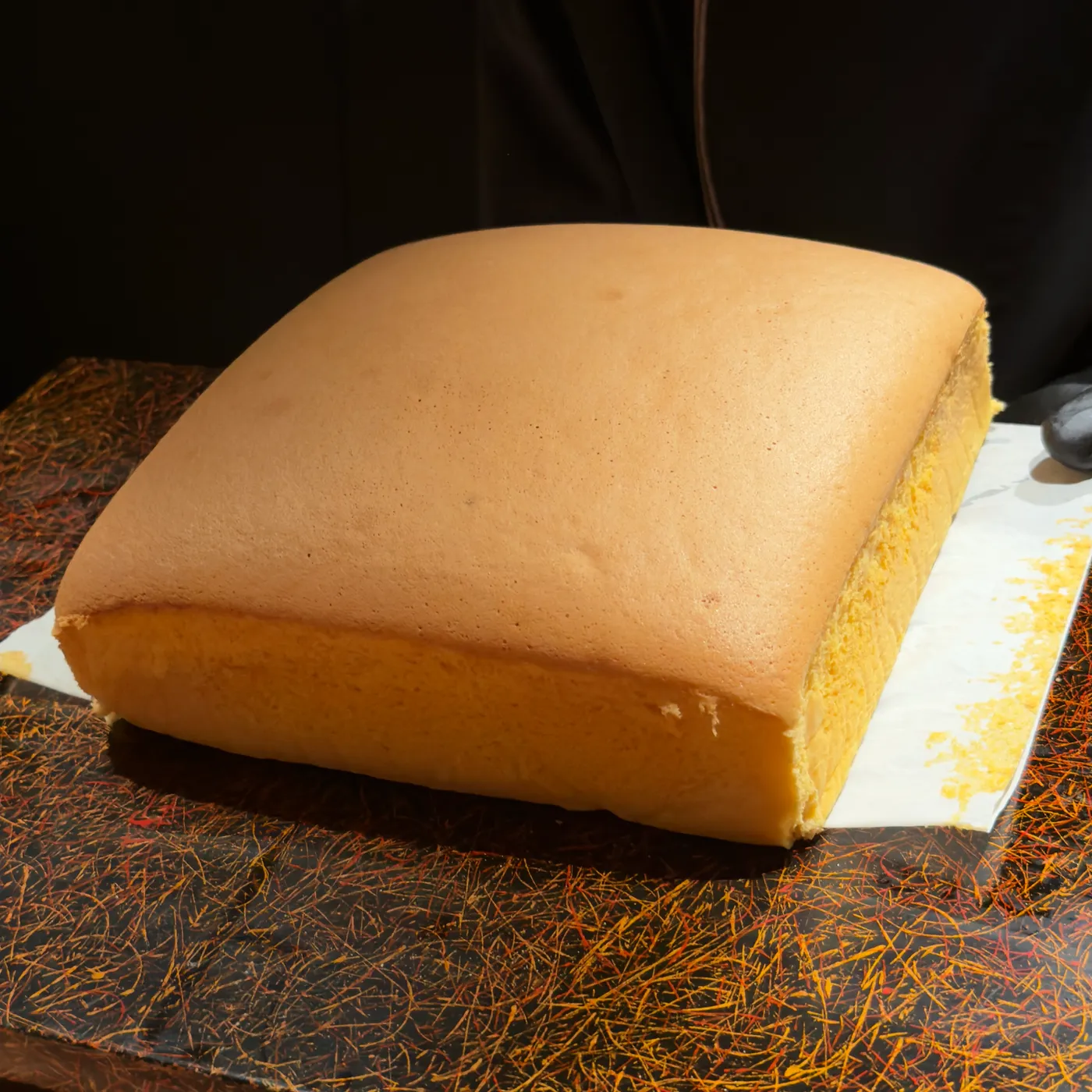
Taiwanese Castella with Truffle-Infused Syrup
Taiwanese-style castella cake was served with two possible accompaniments. We were encouraged to taste the cake plain first, then add either coarse zarame sugar or a syrup infused with truffle, according to preference. The different additions offered ways of changing the cake's sweetness and aroma without altering the preparation itself. Like several dishes throughout the evening, it allowed the guest to experience an ingredient in its simplest form before introducing additional flavors.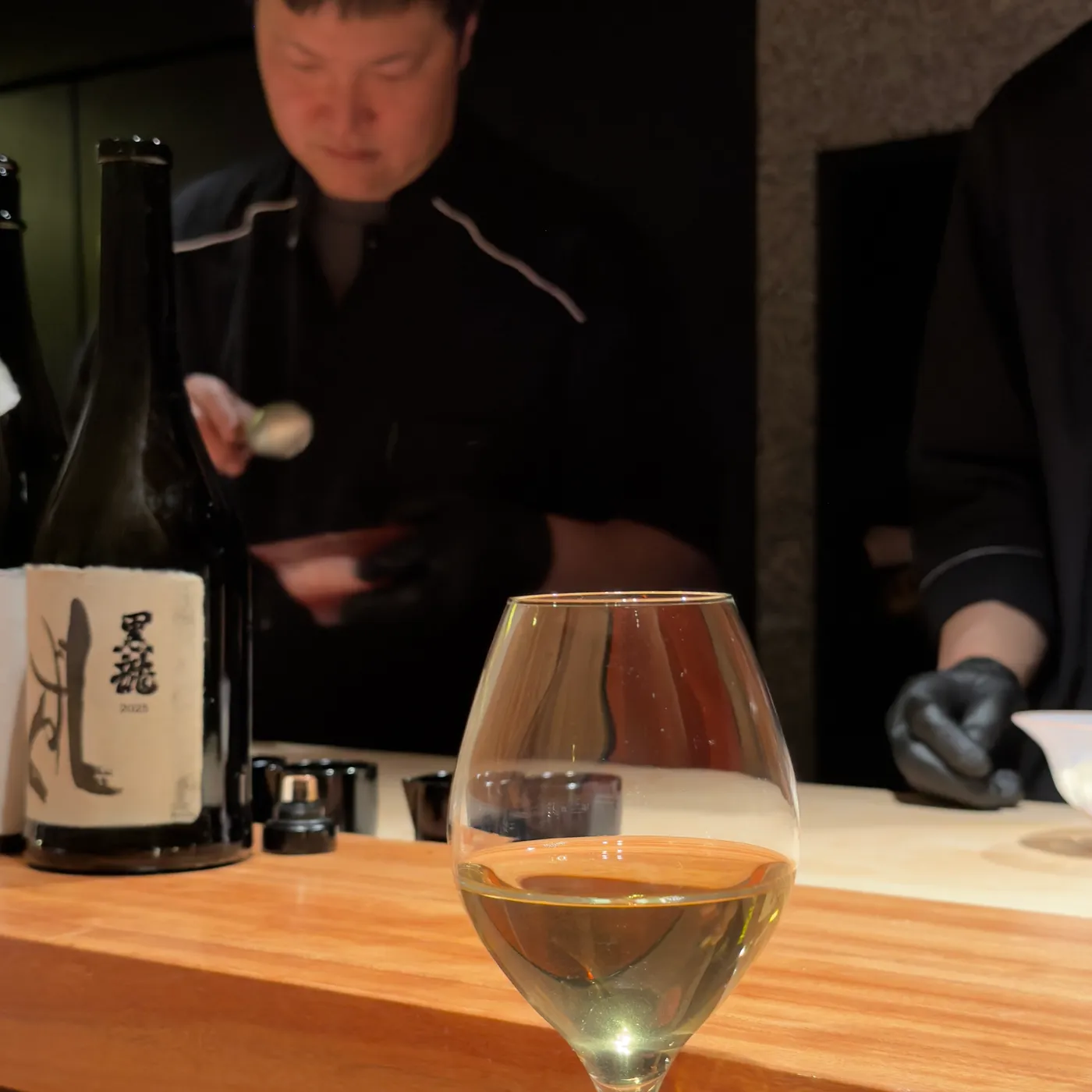
Taiwanese Oolong Tea
The tea served with dessert was introduced as Taiwanese Dong Ding oolong, described as a Jinxuan tea. Its fragrance was said to suggest almond, milk, and kinmokusei, the sweetly aromatic osmanthus flower. It brought a gentle, fragrant conclusion to the meal.What we drank
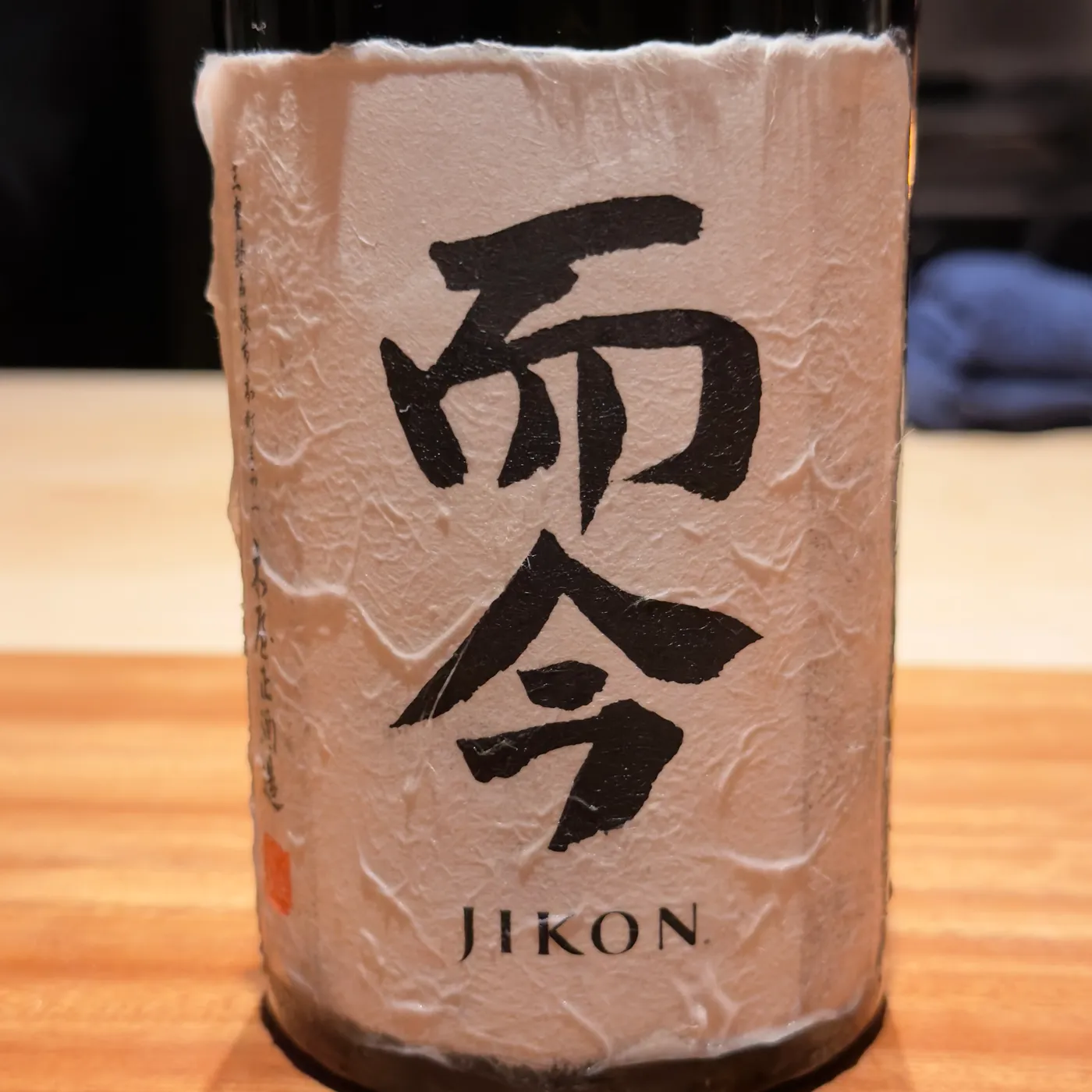
Jikon — 而今
Among the sake photographed during the meal was Jikon, a Japanese sake whose name can be understood as referring to the present moment.
The bottle is preserved here as part of our record of the drinks accompanying dinner.
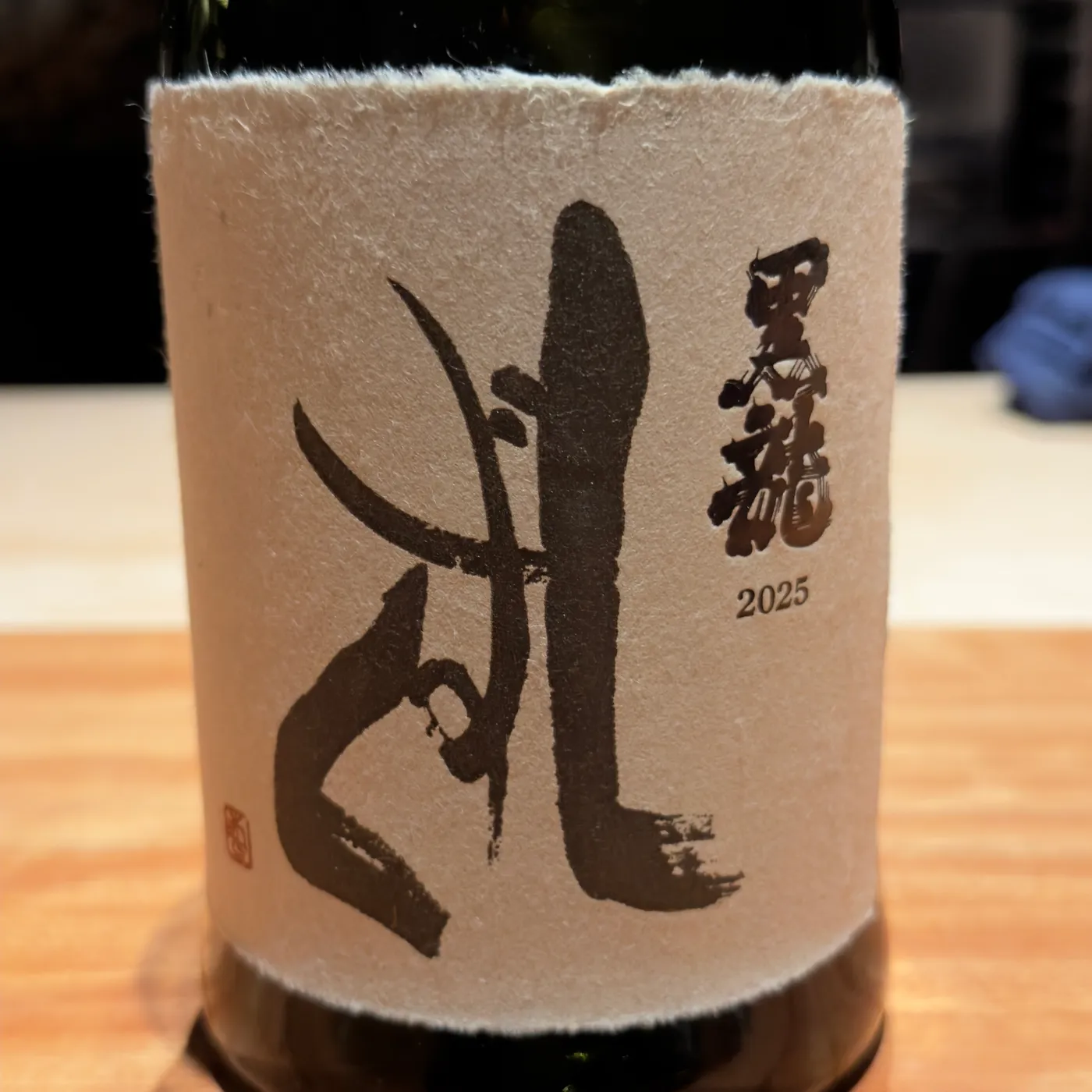
Additional Japanese Sake
A second sake bottle was also photographed during dinner.
Its exact identity and details should be confirmed from the original label before publication.
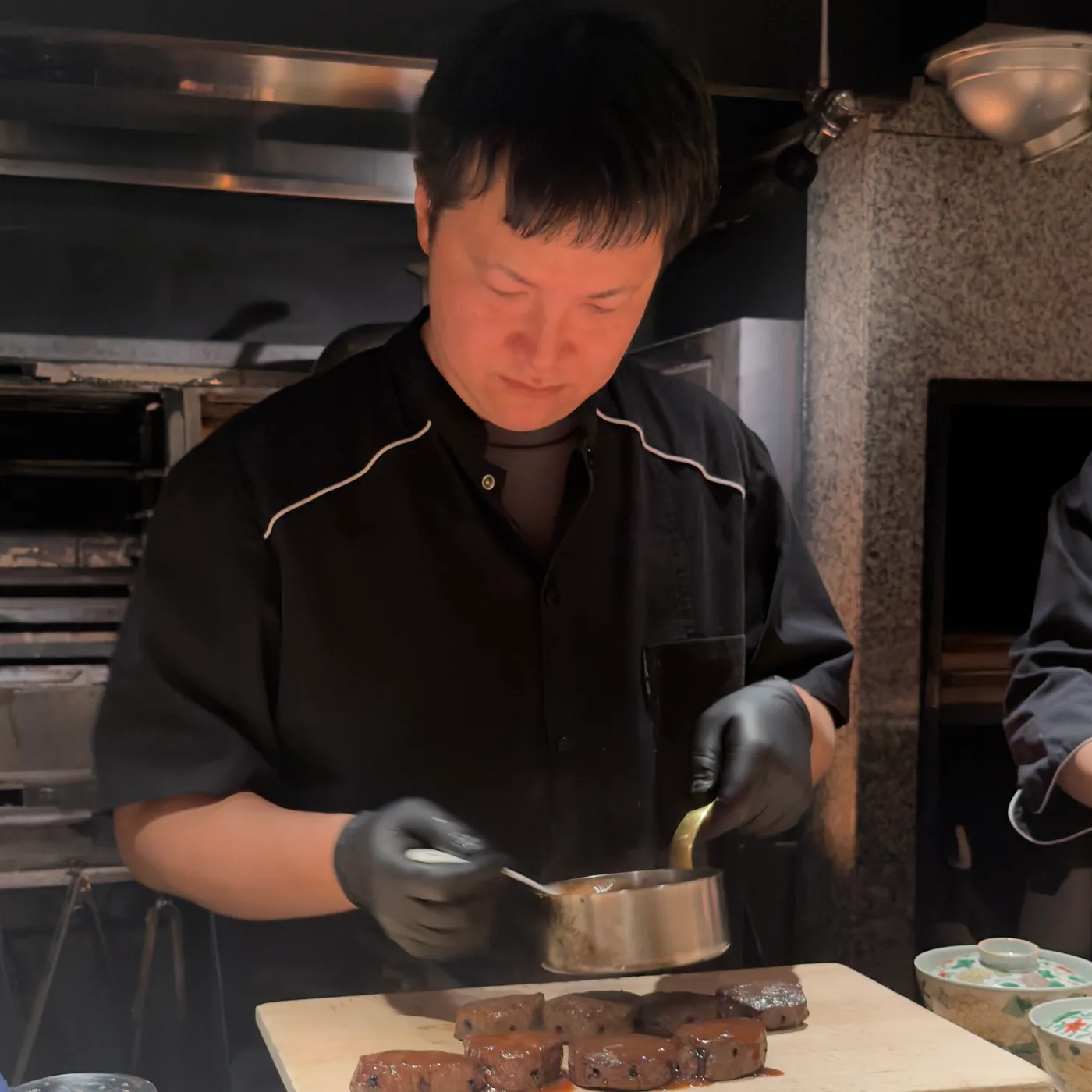
What Remains Beyond the Fire
Tashiro-san at work during our November dinner.
What interested me most about this return to Suzutashiki was discovering how much Tashiro's thinking has evolved. The chef who once wondered whether the aroma of burning wood might interfere with Japanese ingredients now sees fire as one of several tools available to him. He has learned when to use it, when to combine it with other methods, and, just as importantly, when another approach might serve an ingredient better. His conversation helped me understand the decisions behind the food in a way that a menu alone never could.
And I keep returning to his definition of truly delicious cooking: something that stays with us long after the meal has ended. Perhaps years later, a particular flavor, aroma, or memory will suddenly return, and we'll remember how much we enjoyed that dish. That is exactly what I hope What We Ate can preserve—not only the food, but also the people, knowledge, and conversations that made the experience meaningful.
I AM A HUNGRY TOURIST. ❤️