Arai
Visited Tue, Nov 17, 2026
Sushi Arai — 鮨あらい
My Sushi Happy Place
I've been coming to Sushi Arai for almost nine years, and I still get excited every time I know I'm going back.
I've visited countless sushi counters throughout Japan, but there's something about being at Arai-san's counter in Ginza that makes me particularly happy. Of course, his sushi has a great deal to do with it. Some of the most memorable tuna I've ever eaten has been here, and just thinking about his chutoro is enough to make me hungry.
But the pleasure goes well beyond the food. Arai-san is warm, generous, wonderfully funny, and full of life. He takes his work extremely seriously without making his guests feel that they need to sit in reverential silence. We can appreciate the sushi, talk, laugh, and enjoy ourselves. I love that about him.
Arai's father was also a sushi chef, and he grew up wanting to follow the same profession. He trained for eight years at Kyubey and another six at Sushisho before opening his own restaurant in Ginza in 2015, when he was thirty-three.
I discovered him when the restaurant was still young, and I've had the pleasure of returning many times since. One might think that after so many visits, I would know his cooking inside out. Yet there always seems to be something new to discover.
This time, it was an unusual comparison between two different cuts of chutoro, a fascinating explanation about wild scallops from Hokkaido, and a rather unexpected preparation of shirako.
I had hoped to spend more time talking with Arai-san about his life, his teachers, and his thoughts about sushi. Unfortunately, the restaurant was busy throughout our two seatings, at noon and again at 8:30 in the evening. We managed only a few short conversations while he worked, but they contained some wonderful details.
And, as usual, there was plenty of laughter.
We'll find another opportunity for the longer conversation. Meanwhile, here is what we ate.
What we ate
Otsumami — The Opening Dishes
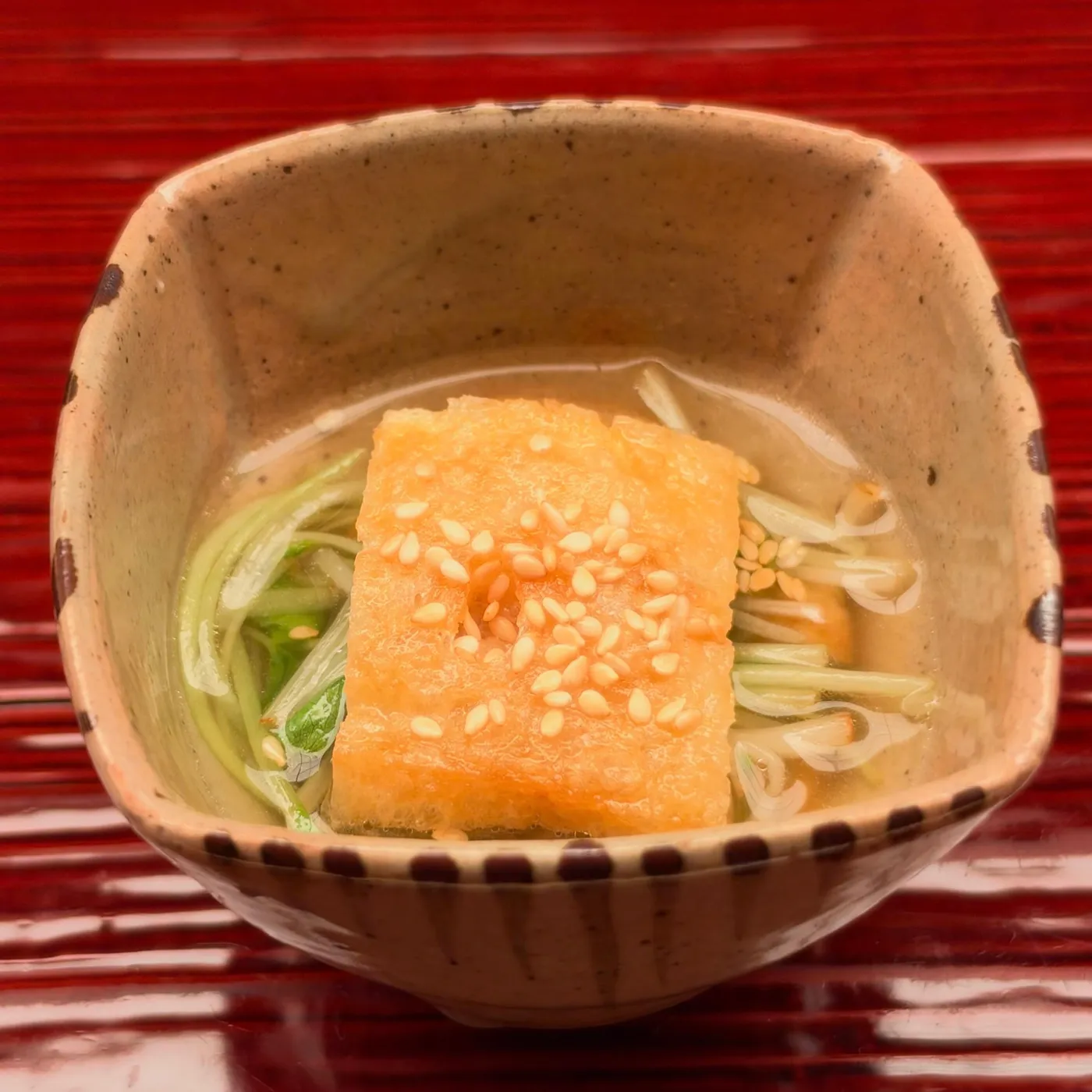
Mitsuba and Aburaage in Dashi
We began with mitsuba, a fragrant Japanese herb, and aburaage, thin fried tofu, simply simmered in dashi. When I asked Arai-san what we were eating, he explained the ingredients and preparation without any ceremony. It was a gentle beginning, with the aroma of the mitsuba and the flavor of the broth providing everything the dish needed.
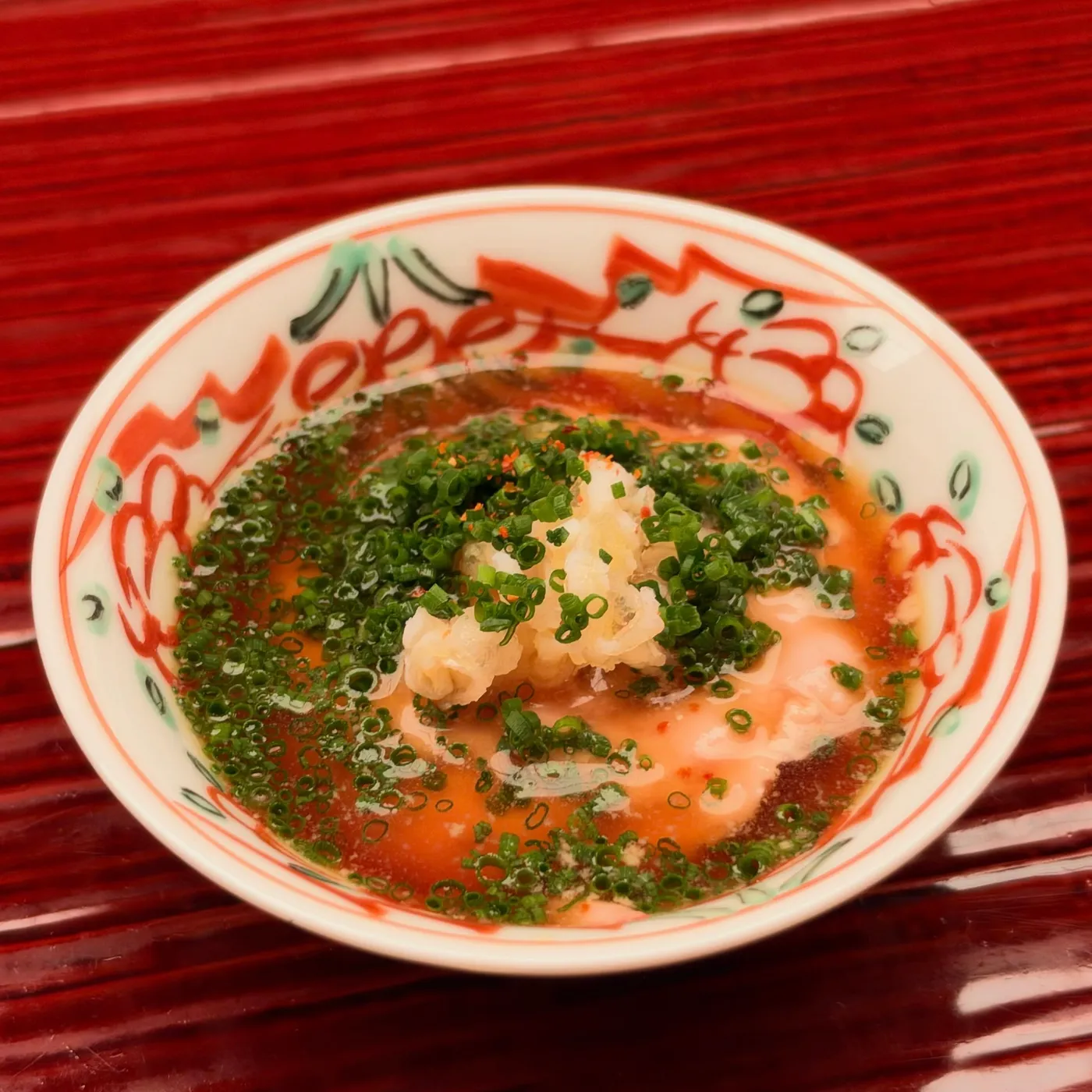
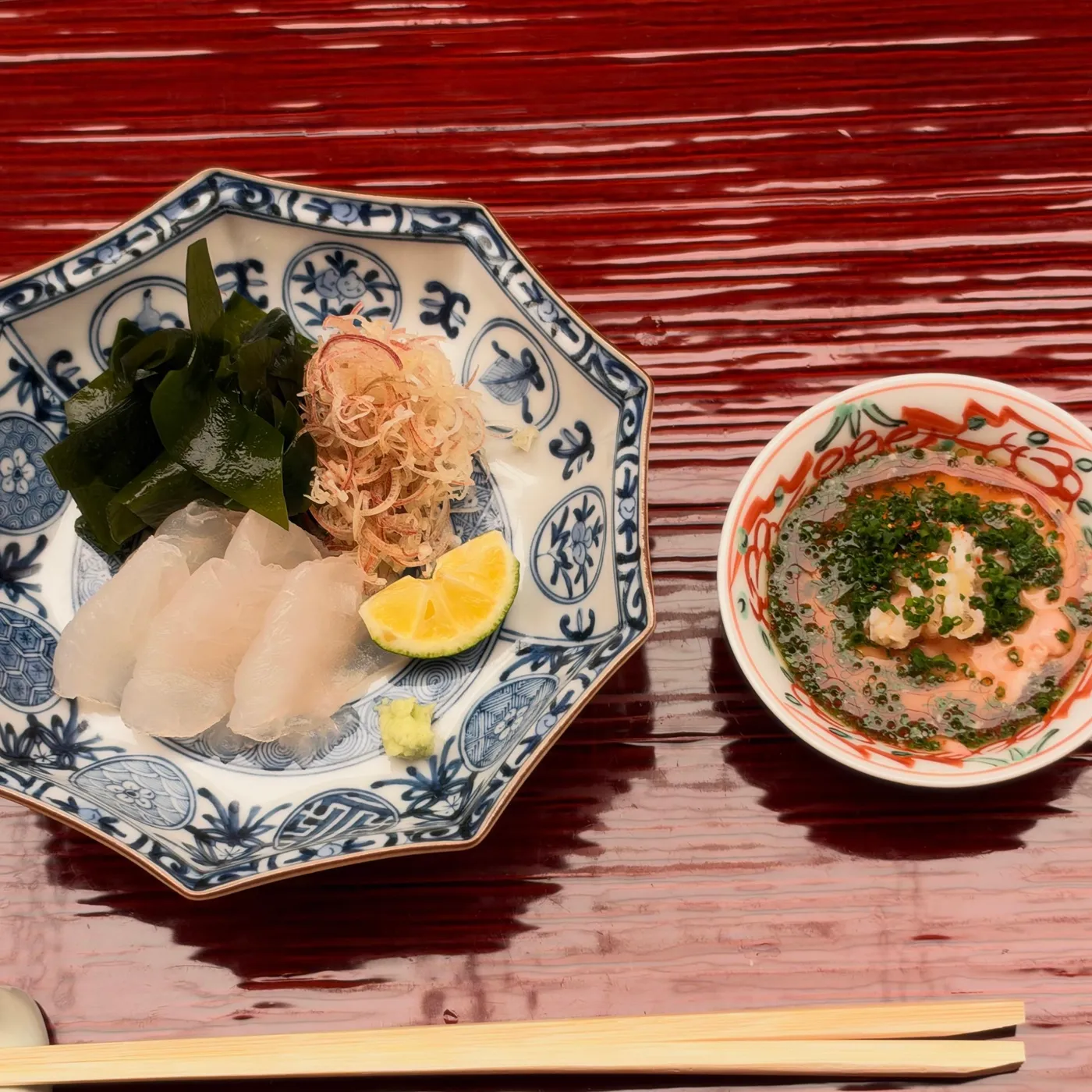
Wild Kawahagi from Hiroshima with Liver Ponzu
Next came wild kawahagi, or filefish, from Hiroshima, served as thinly sliced sashimi with a rich liver-ponzu dipping sauce. Kawahagi is particularly prized during the colder months, when its liver becomes exceptionally rich. Arai-san encouraged us to mix the sauce thoroughly and dip the fish generously. The delicate white flesh, creamy liver, and acidity of the ponzu worked beautifully together. It's one of those seasonal Japanese preparations that I always look forward to encountering.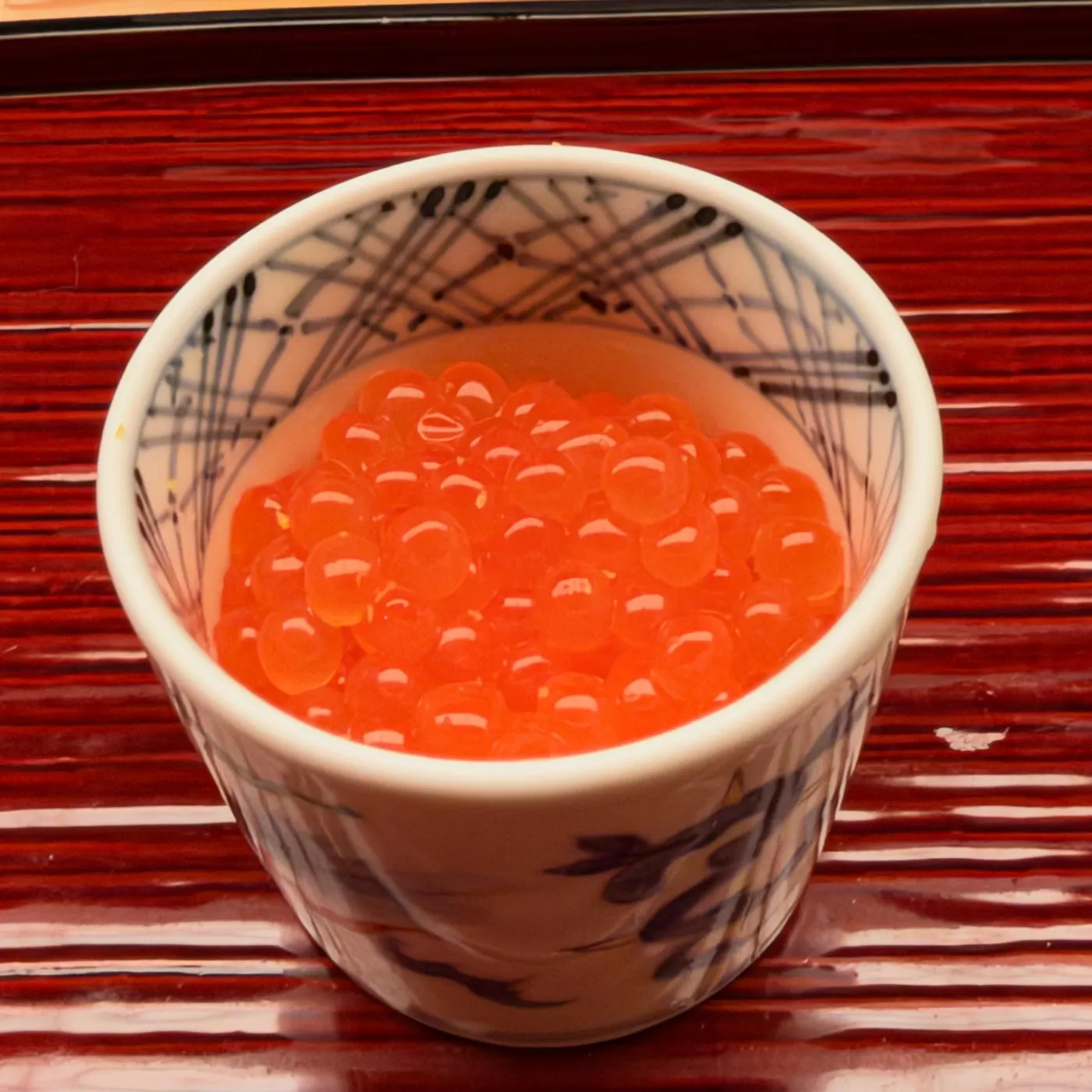
Ikura from Sanriku
The salmon roe came from Iwate, on the Sanriku coast. Arai-san mentioned that the season had been early this year and was already approaching its end. That's part of the excitement of eating in Japan: an ingredient might be available one week and almost impossible to find the next. I was happy we hadn't missed it.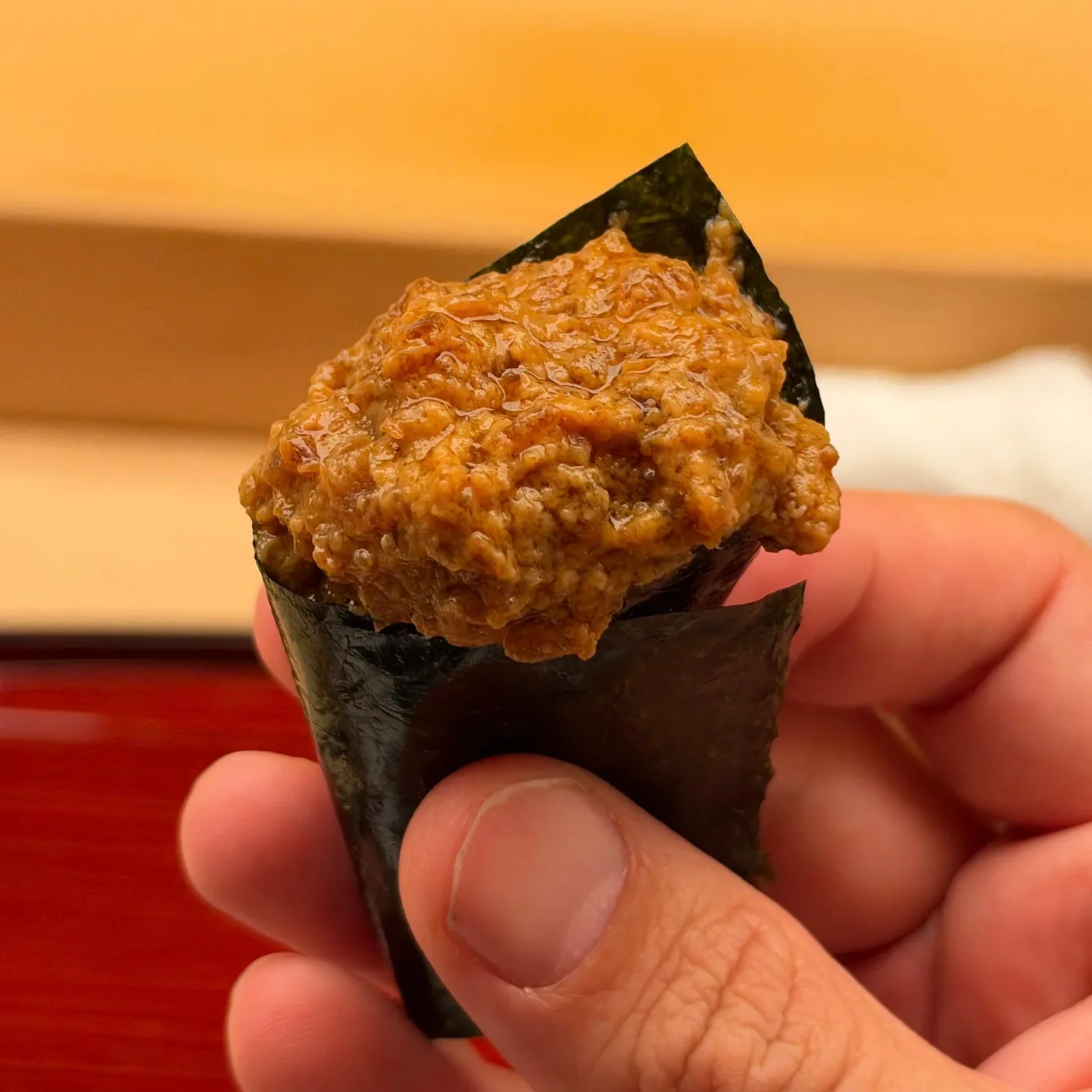
Ankimo — Monkfish Liver
Arai-san's ankimo is one of the preparations I've remembered from earlier visits. I particularly enjoy its rich, creamy texture and the way he serves it with nori. This time, I tried asking how he had come up with the idea. He started telling us about a trip to Los Angeles, where difficulties explaining Japanese food in English apparently led to an improvised preparation involving mashing, mixing, and wrapping ingredients. Unfortunately, we couldn't follow the entire story before service moved on. There was plenty of laughter, though, and I've made a mental note to ask him to tell it again when we have more time.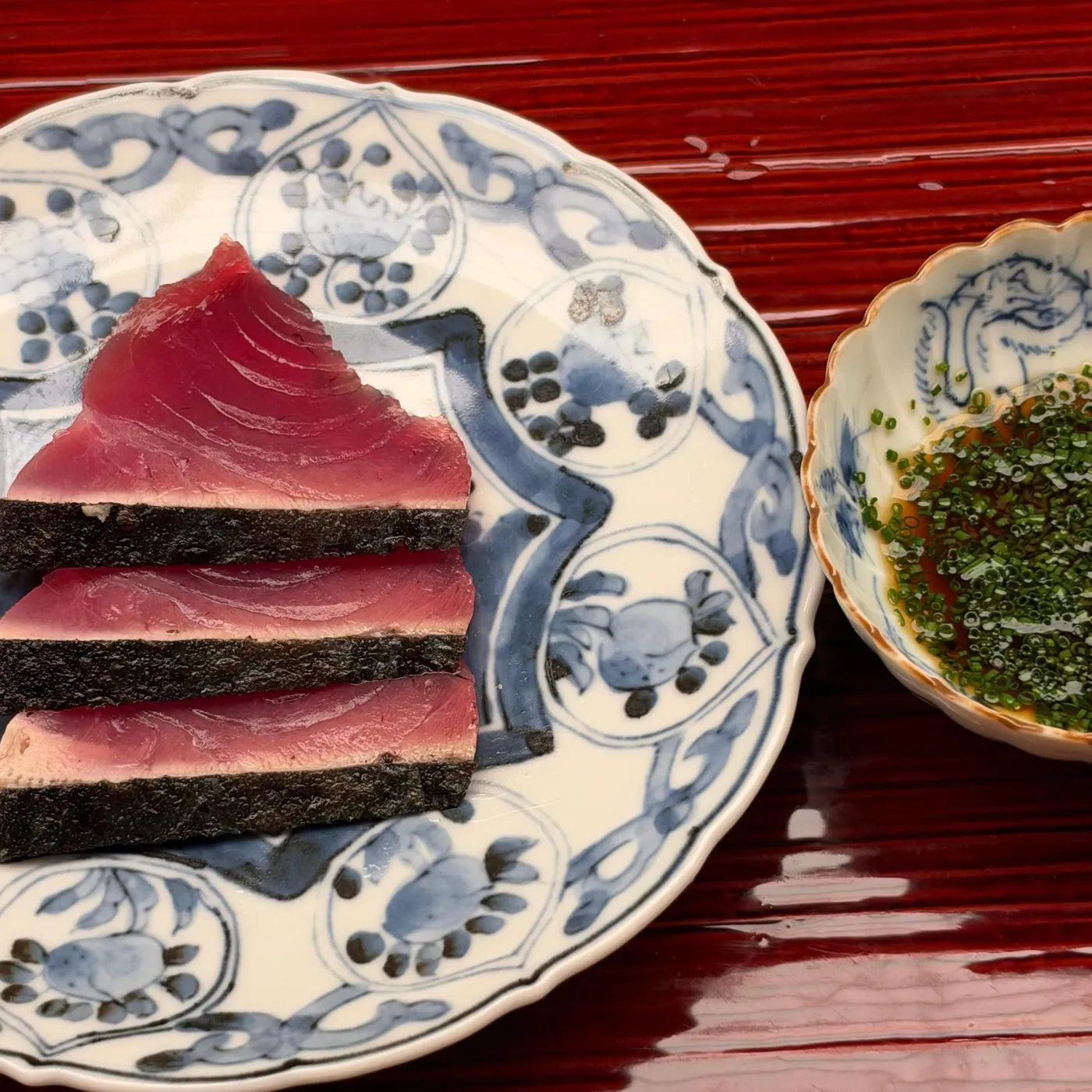
Katsuo Shio Tataki from Kesennuma
The bonito came from Kesennuma, in Miyagi Prefecture. Arai-san prepared it as shio tataki, seasoning the fish with salt and briefly searing the skin until wonderfully crisp. He served it simply with ginger soy sauce. He was particularly enthusiastic about the skin, repeatedly telling us in English, "Crispy skin!" It was exactly what he wanted us to notice. The contrast between the crisp surface and the fish beneath it was the whole point of the preparation.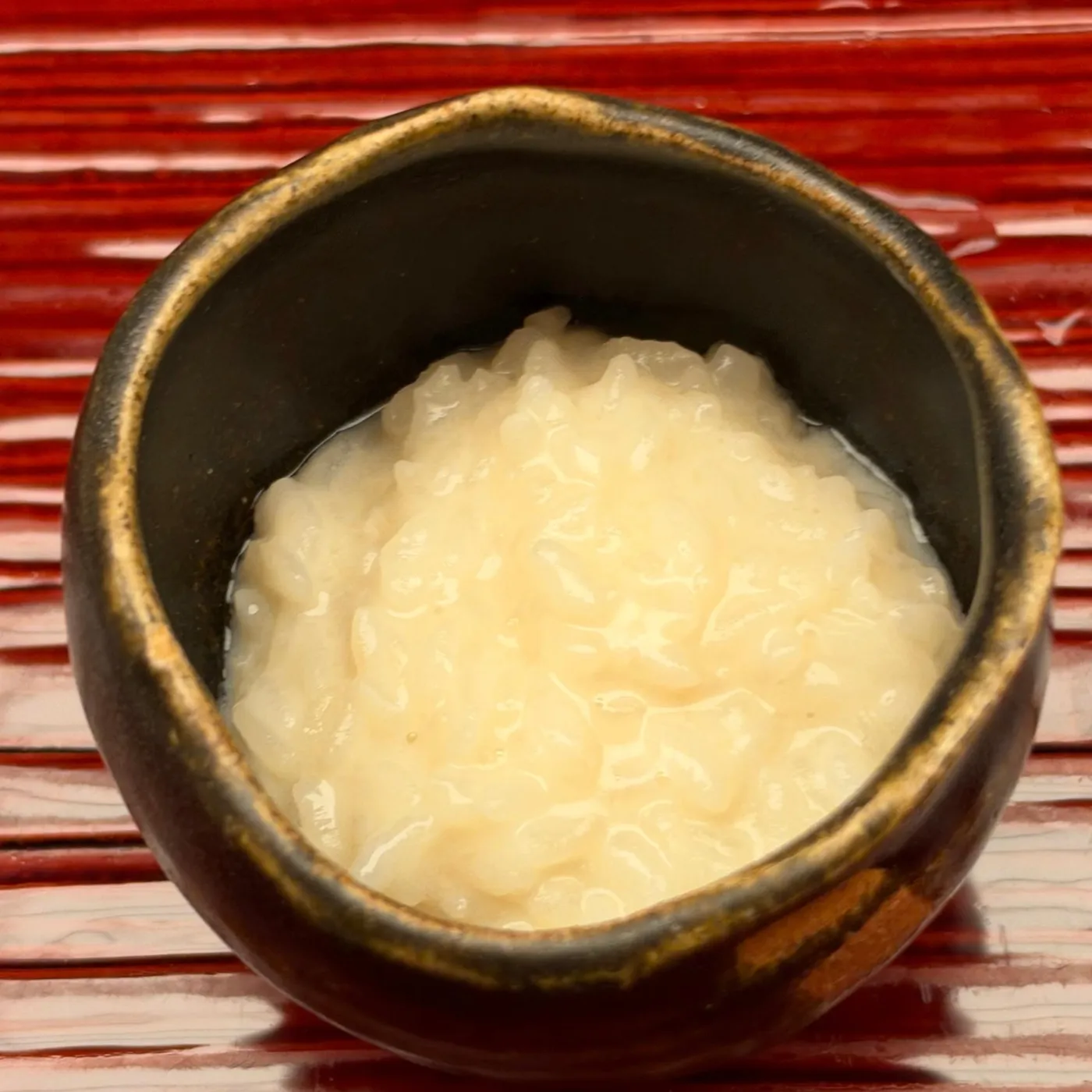
Shirako Risotto
One of the more unusual dishes was a risotto made with the milt of Pacific cod, known in Japanese as madara no shirako. Arai-san explained that he passed the shirako through a sieve, combined it with dashi and rice, and finished by emulsifying everything with oil. The shirako itself provided much of the creamy richness. It was an interesting way to approach an ingredient that appears in so many different forms in Japanese cooking. And Arai-san made absolutely sure we understood that it was extremely hot!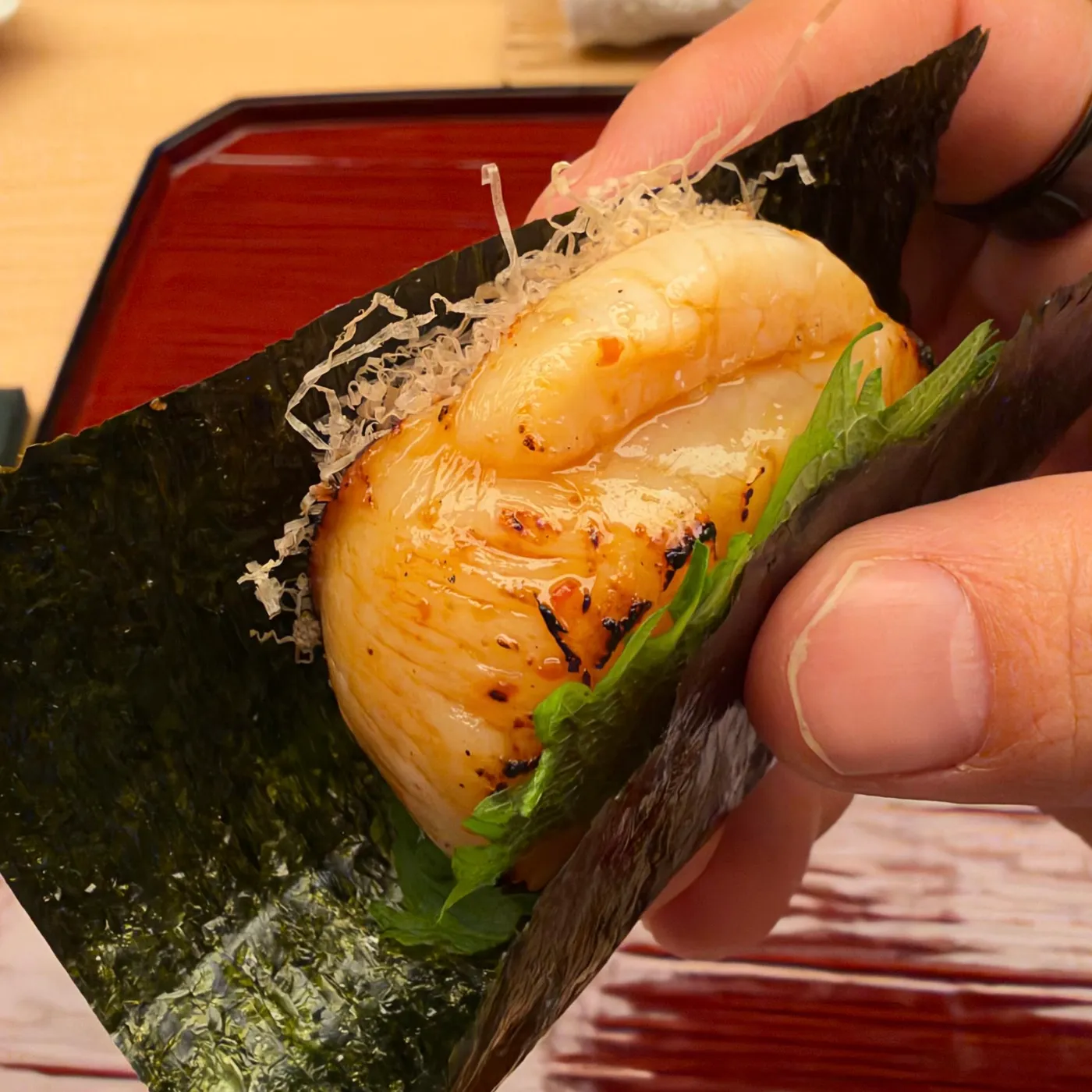
Wild Notsuke Scallop Isobeyaki
This course came with one of my favorite explanations of the evening. The scallop was from Notsuke, on the eastern coast of Hokkaido. Arai-san explained that, unlike scallops cultivated on suspended ropes, those from Notsuke are allowed to move around on the seabed. He believes this gives their muscles a firmer, more substantial texture. The scallop was prepared as isobeyaki, wrapped in nori with shiso and finely shaved magurobushi, or dried tuna flakes. I particularly appreciated hearing about how the scallop had lived before arriving in his kitchen. Those details help us understand why a chef chooses a particular ingredient, rather than simply being told that it's excellent.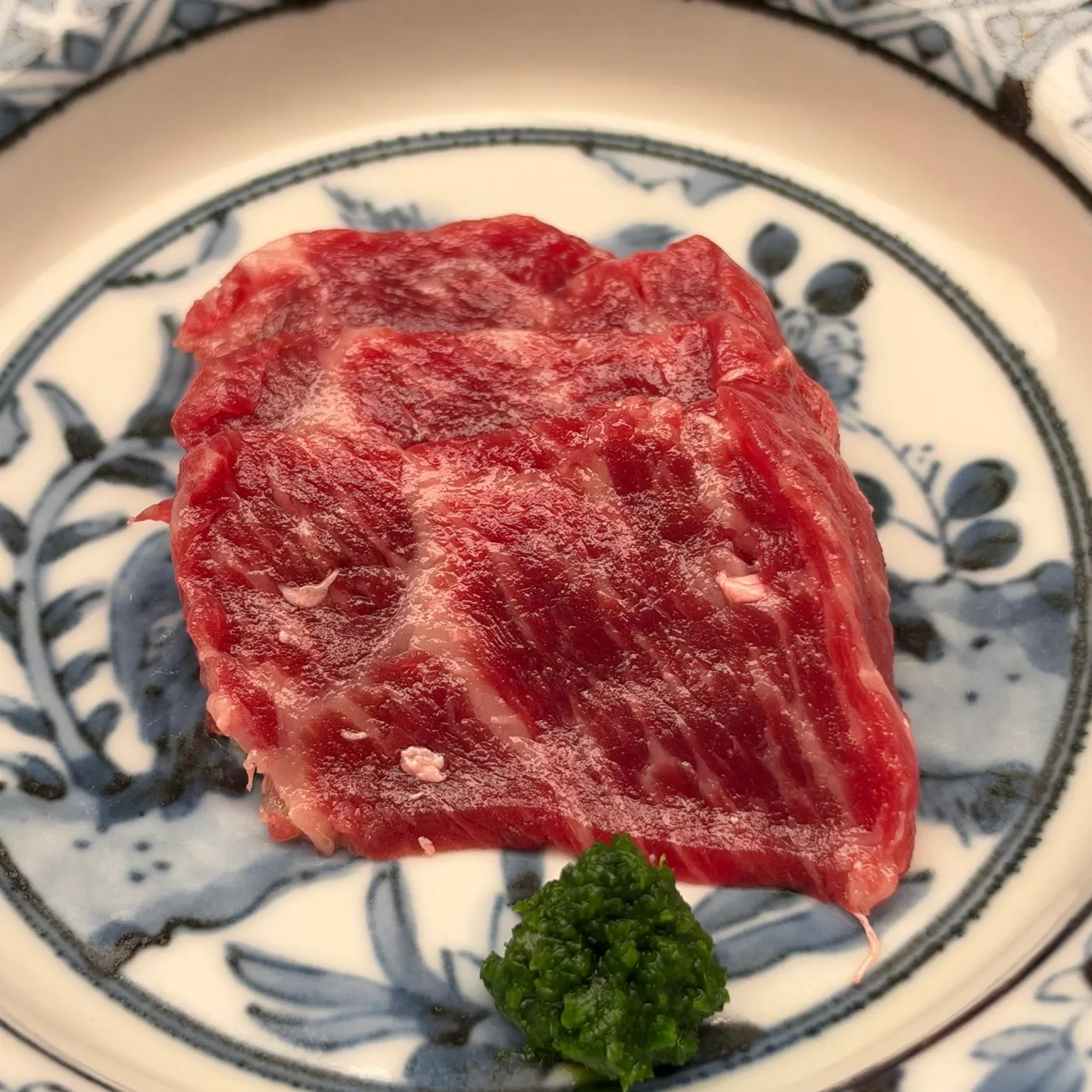
Kujira — Whale
Next came kujira, whale meat, served in thin slices with a green condiment. Whale has a long culinary history in parts of Japan, although its consumption remains controversial internationally. Here, I want to record it as part of the meal we were served. The precise composition of the green condiment still needs to be confirmed.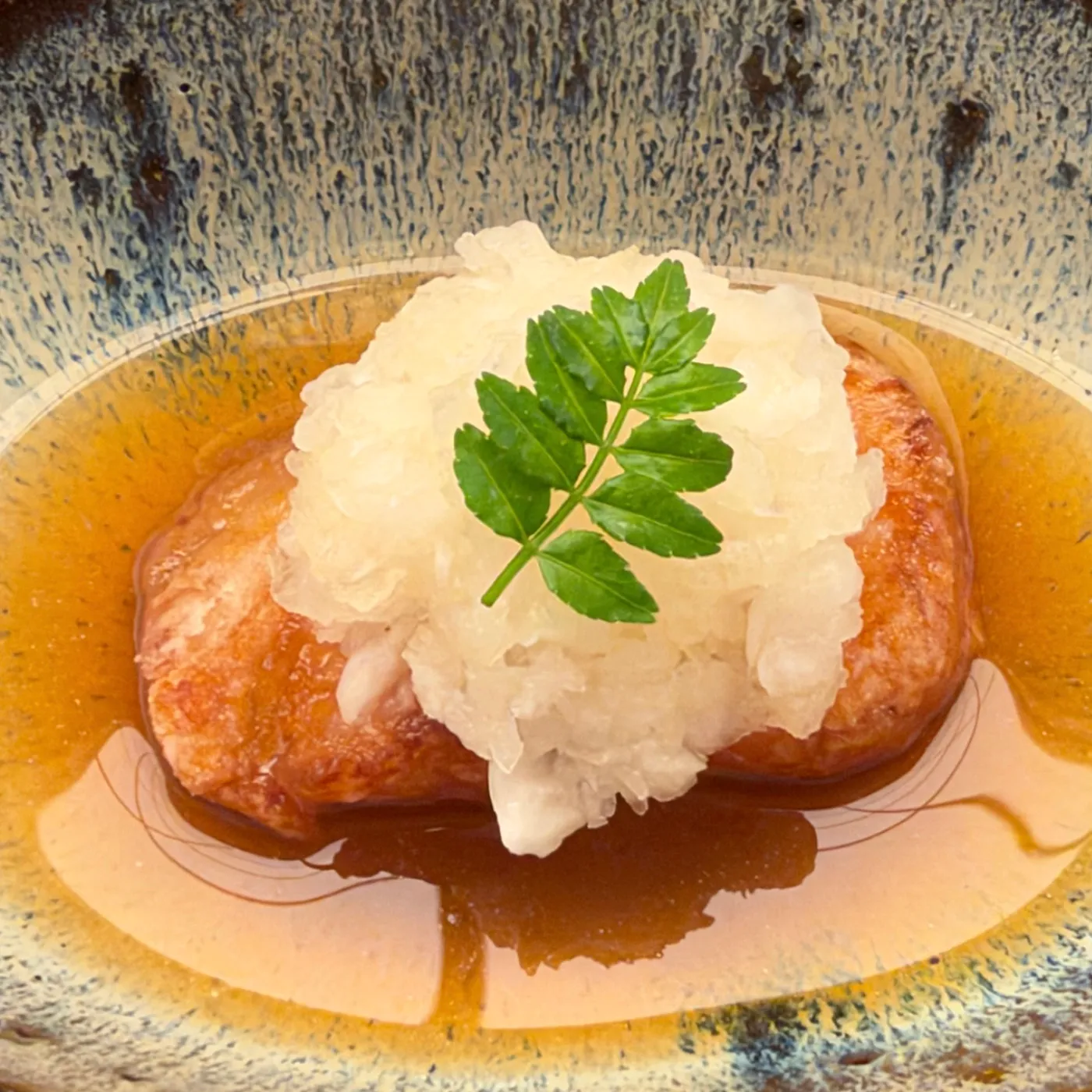
Fried Kue with Dashi, Daikon, and Kinome
Our final otsumami was kue, a prized grouper, fried and served in warm dashi. On top were finely diced daikon and a leaf of kinome, the young leaf of the Japanese sanshō pepper tree. The fried fish, delicate broth, daikon, and the fresh, almost citrus-like fragrance of kinome made a lovely combination, bringing the opening courses to a close before Arai-san began preparing the nigiri.The Nigiri
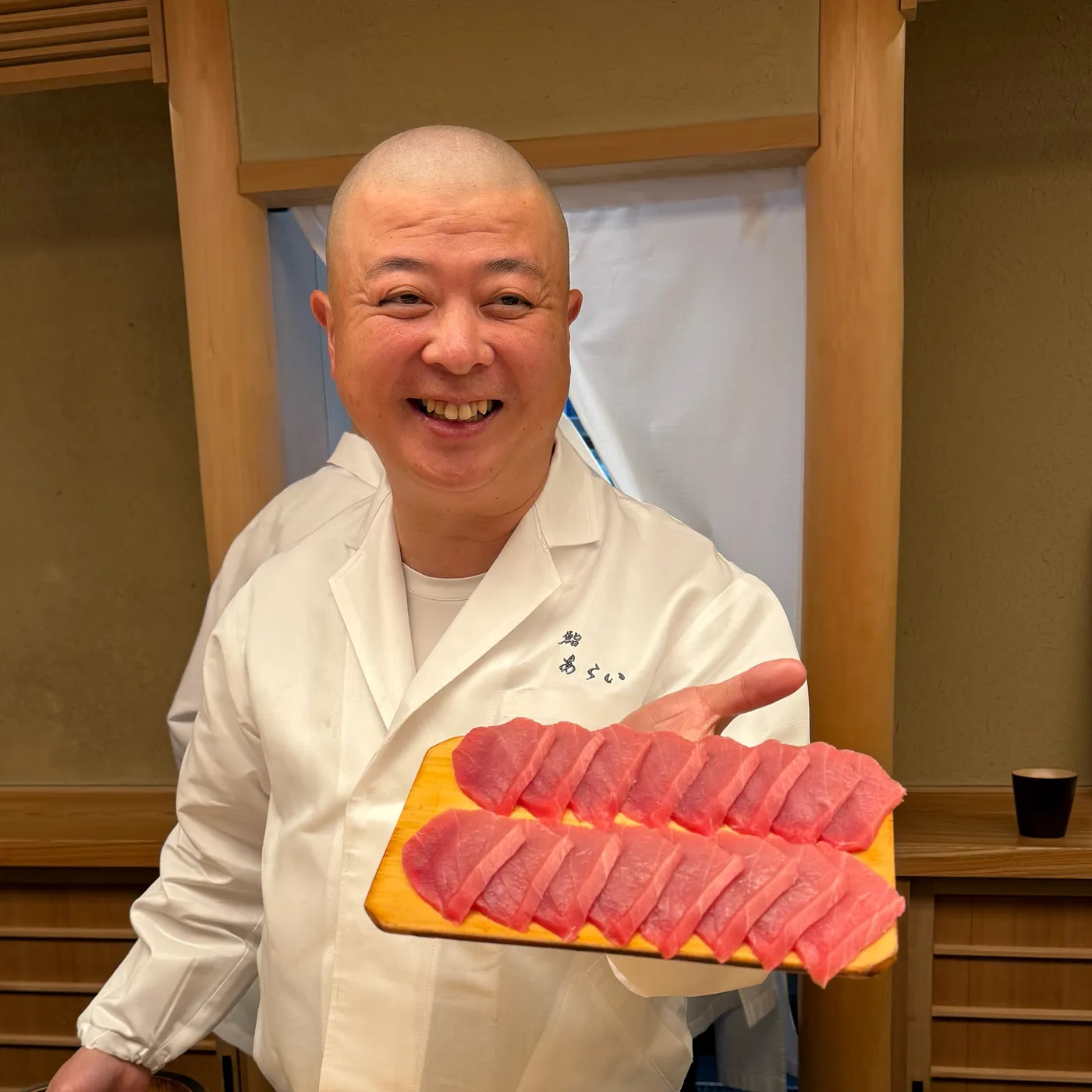
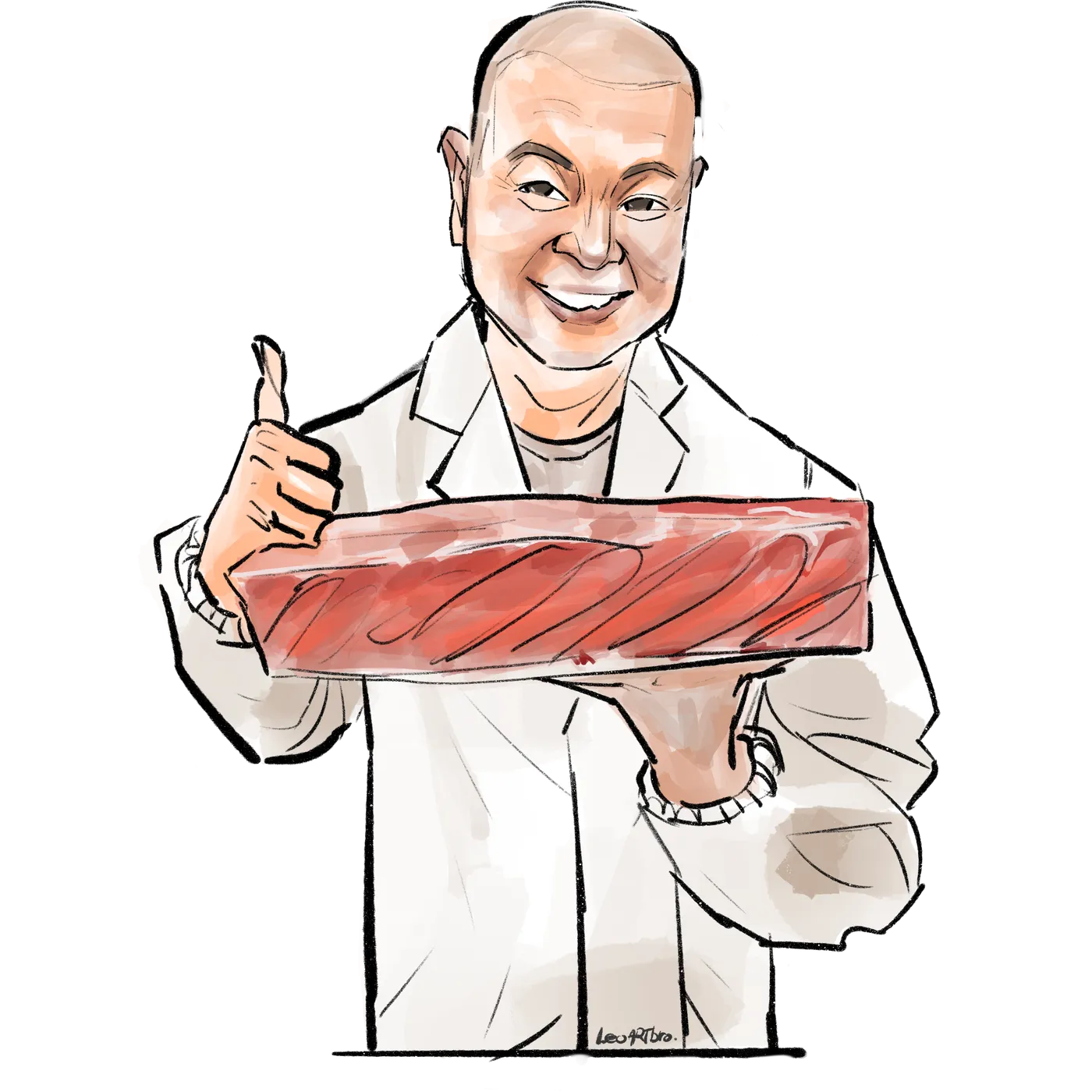
Arai-san with the day's beautiful tuna. No matter how many times I visit, his tuna remains one of my greatest pleasures.
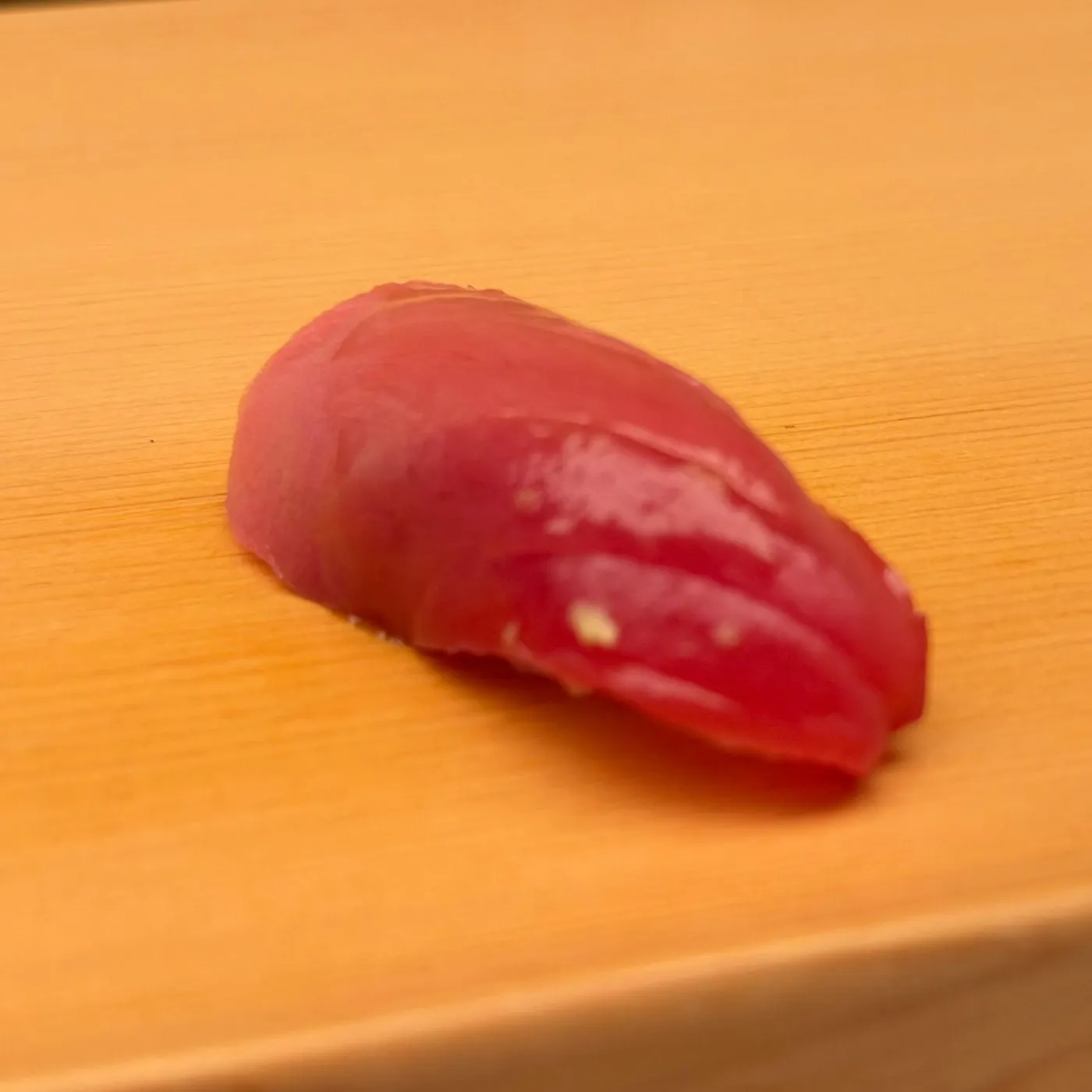
Chutoro — From the Belly
The first nigiri was chutoro from the belly of the tuna. Anyone who knows me well understands how much I love Arai-san's chutoro. The combination of fat, flavor, texture, and rice has given me some unforgettable moments over the years. But this time, he had something particularly interesting planned. Instead of moving immediately to another fish, he served a second chutoro from a different part of the tuna.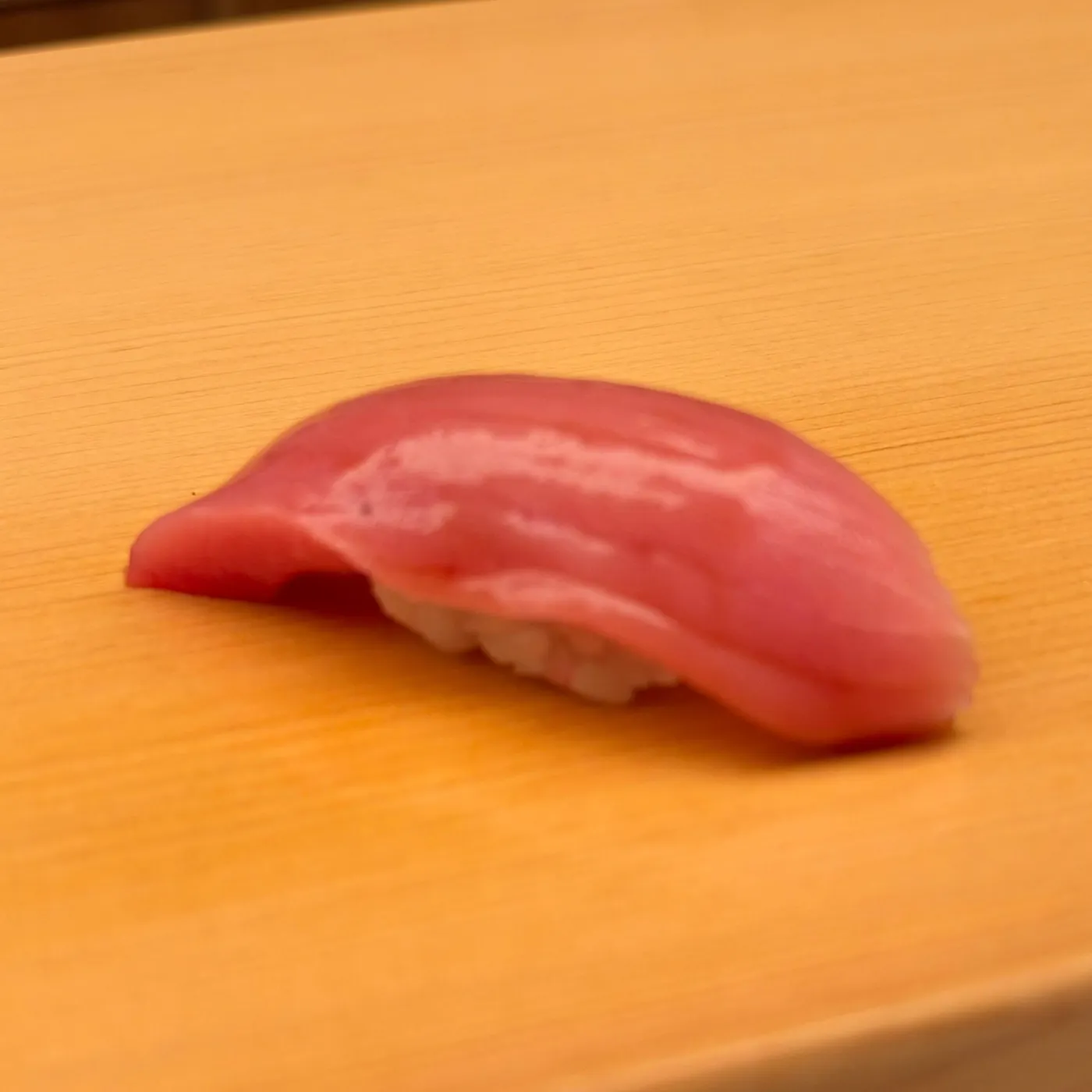
Wakaremi — Chutoro from the Back
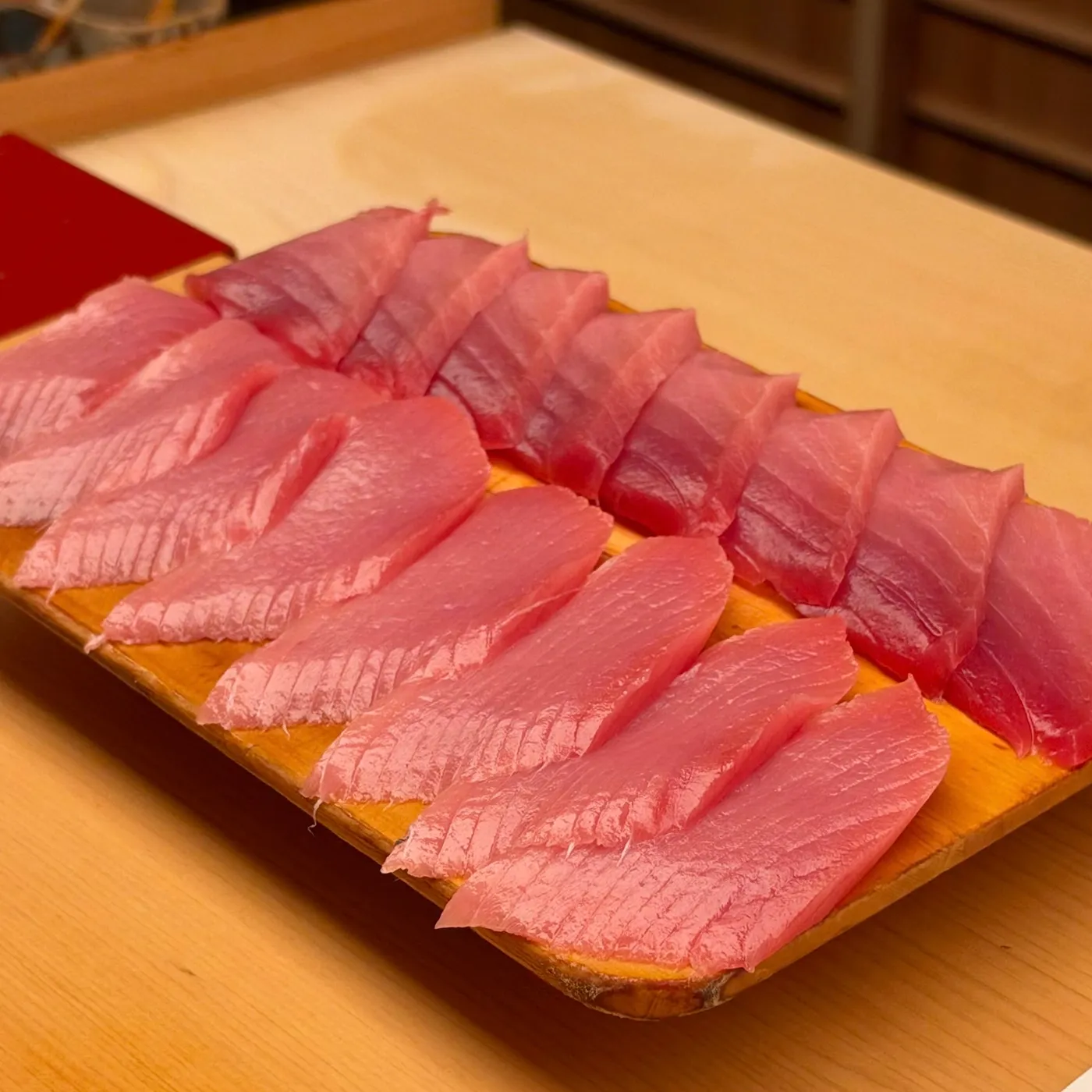
The two cuts Arai-san showed us: wakaremi from the back on the left, and belly-side chutoro on the right. The first piece had come from the belly, while the second came from the back. Arai-san explained the distinction very simply. Both were chutoro, yet their texture and distribution of fat were different because they came from different parts of the fish. I understand the second piece to be wakaremi, a relatively rare back-side cut. Its precise terminology is something I'd still like to confirm with him. At one point, I asked why he loved chutoro so much. His reaction was wonderfully spontaneous. He thought about it, suggested that perhaps chutoro was simply more delicious, then seemed to question whether he really had a particular preference. Finally, laughing a little at himself, he conceded that perhaps he did love chutoro after all. That's Arai-san. Even a conversation about tuna can become entertaining.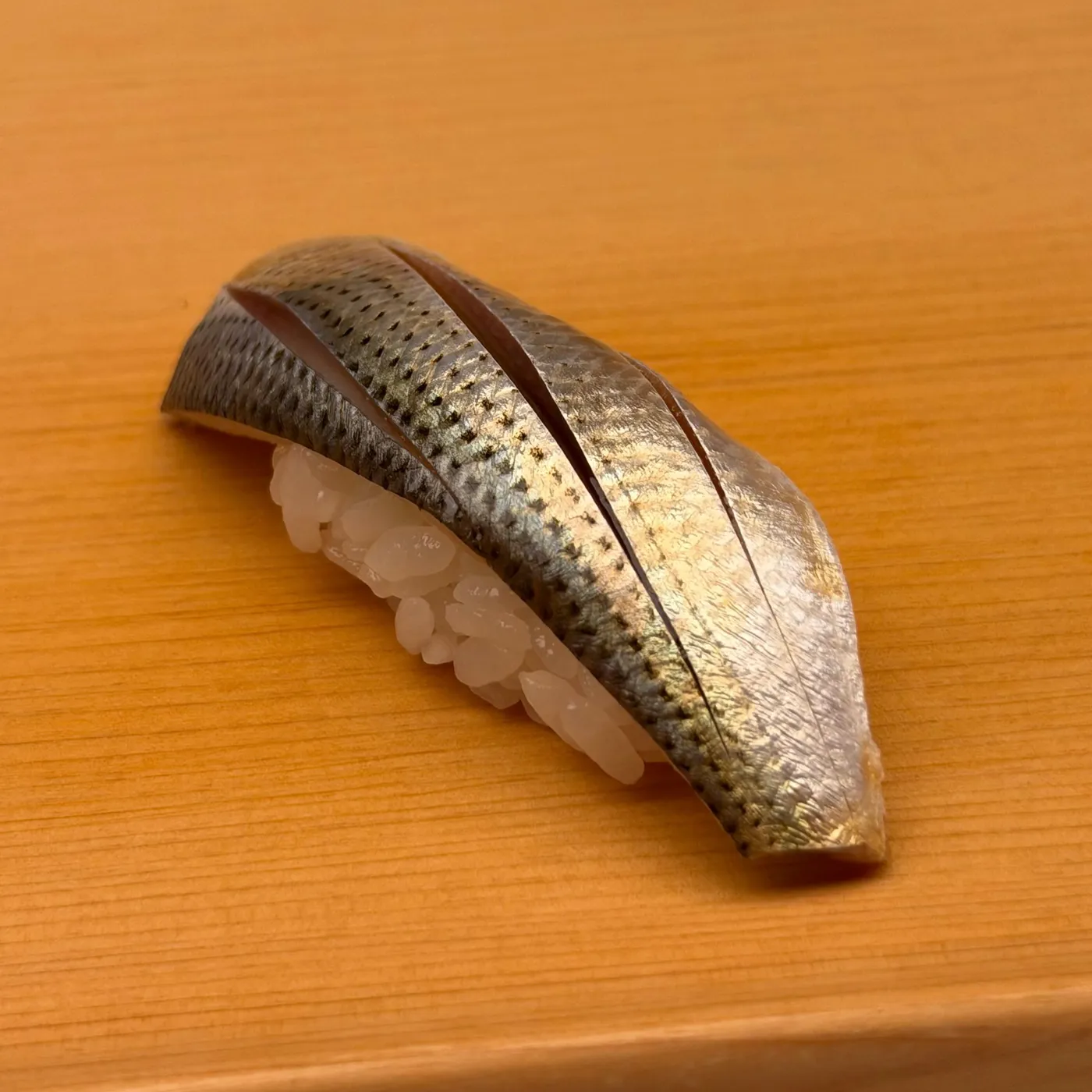
Kohada from Amakusa
The kohada came from Amakusa. Arai-san explained that he had salted and cured it, then allowed it to rest before serving. Kohada is one of the great classics of Edomae sushi, where the chef's decisions about salting, curing, and resting are central to the finished piece. Its beautiful silver skin may be the first thing you notice, but much of the work lies beneath it.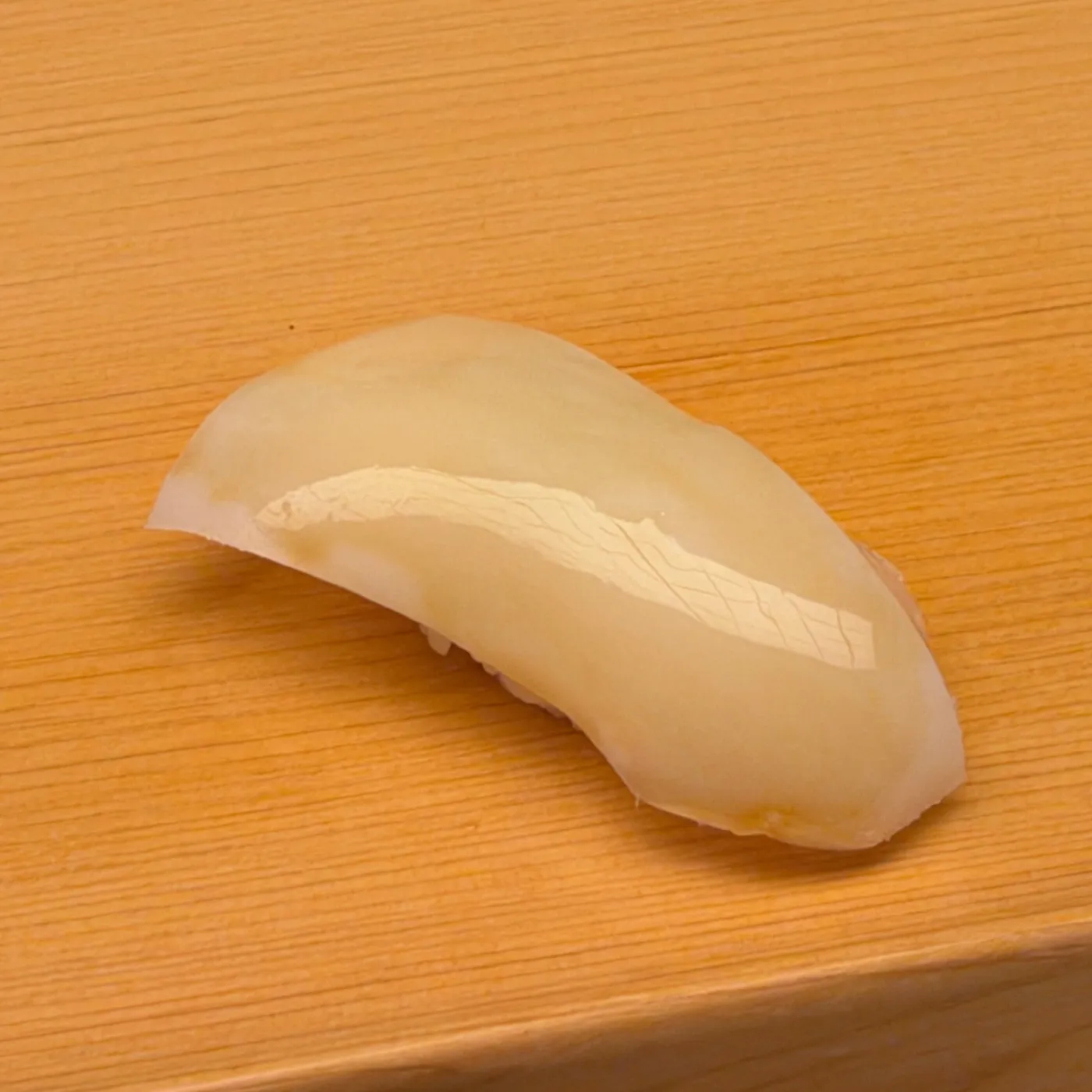
Sumi-Ika — Cuttlefish
The sumi-ika had been carefully scored with a series of fine knife cuts. The scoring changes the texture of the cuttlefish and the way it combines with the rice. It's an apparently simple piece of sushi in which the precision of the knife work makes all the difference.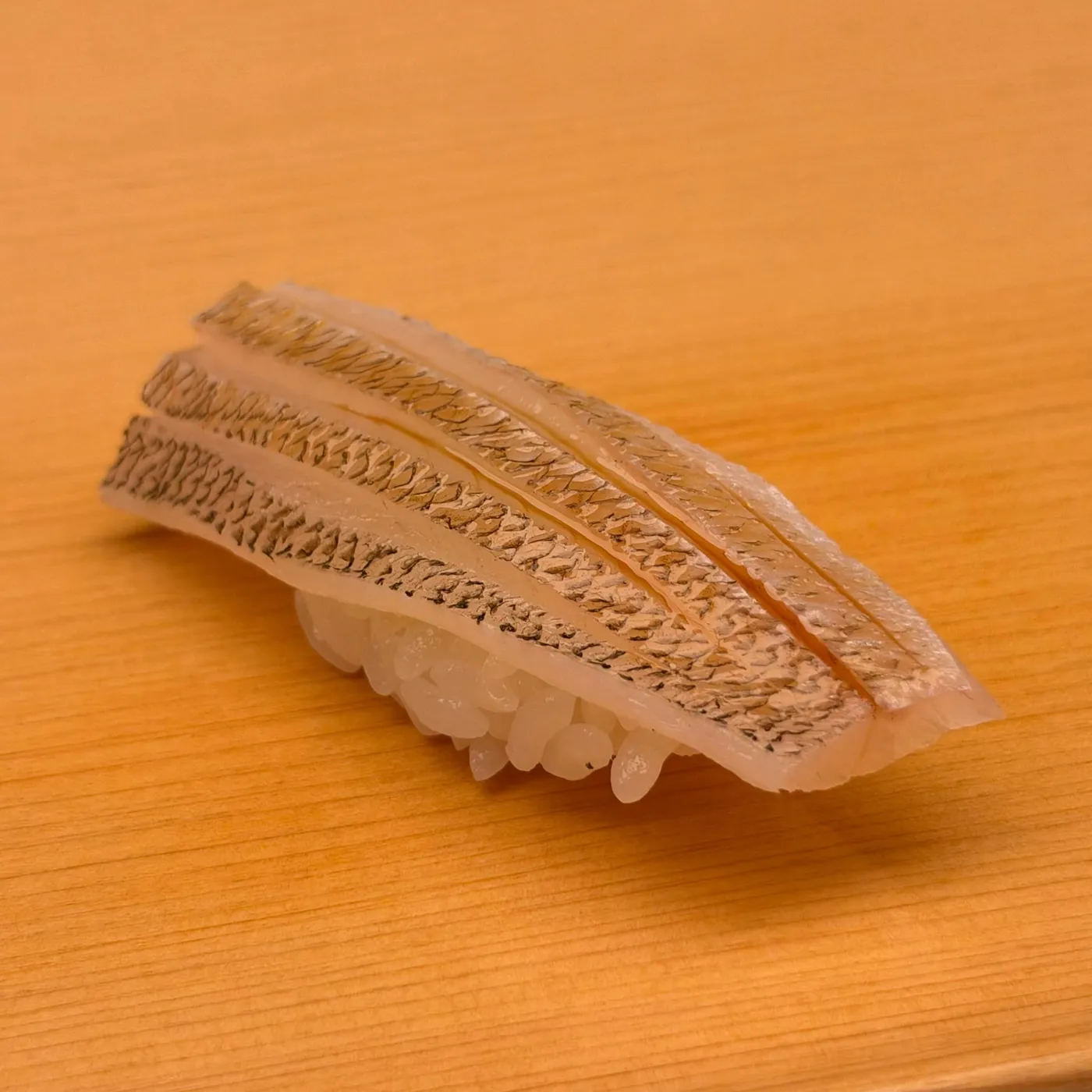
Kisu — Japanese Whiting
Kisu is a delicate white fish, familiar to many visitors from Japanese tempura restaurants but equally interesting as sushi. Its arrival also produced one of the evening's funniest moments. When Arai-san said "kisu," someone thought he'd said "kiss." "Kisu. Kisu. Kiss me," he repeated, laughing. That's another reason I love his counter. Even identifying a fish can turn into a joke.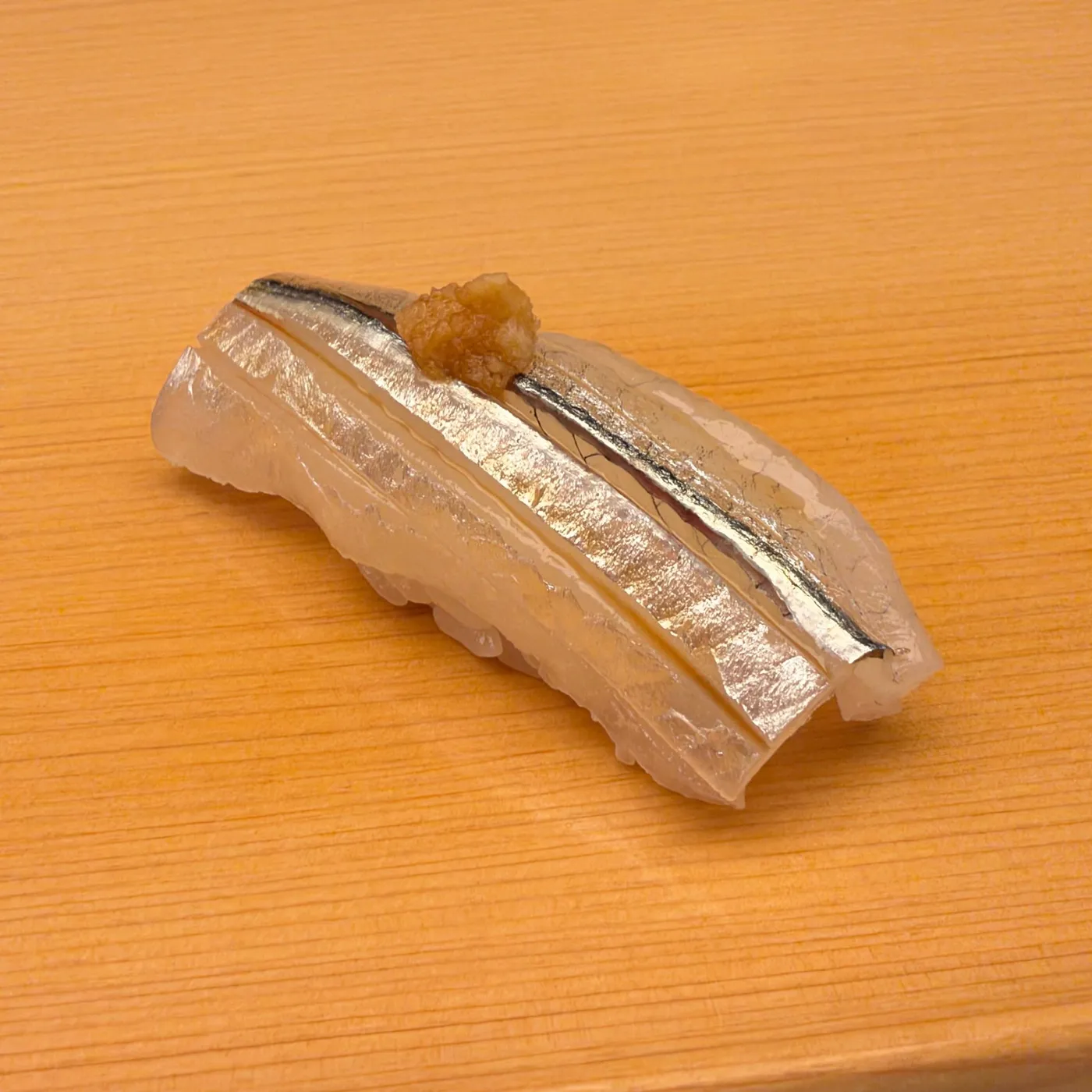
Sayori — Japanese Halfbeak
Sayori is a particularly elegant-looking fish, with translucent flesh and a distinctive strip of silver skin. Its delicate flavor and texture reward careful preparation, and this piece was finished with a small garnish that complemented the fish without overwhelming it.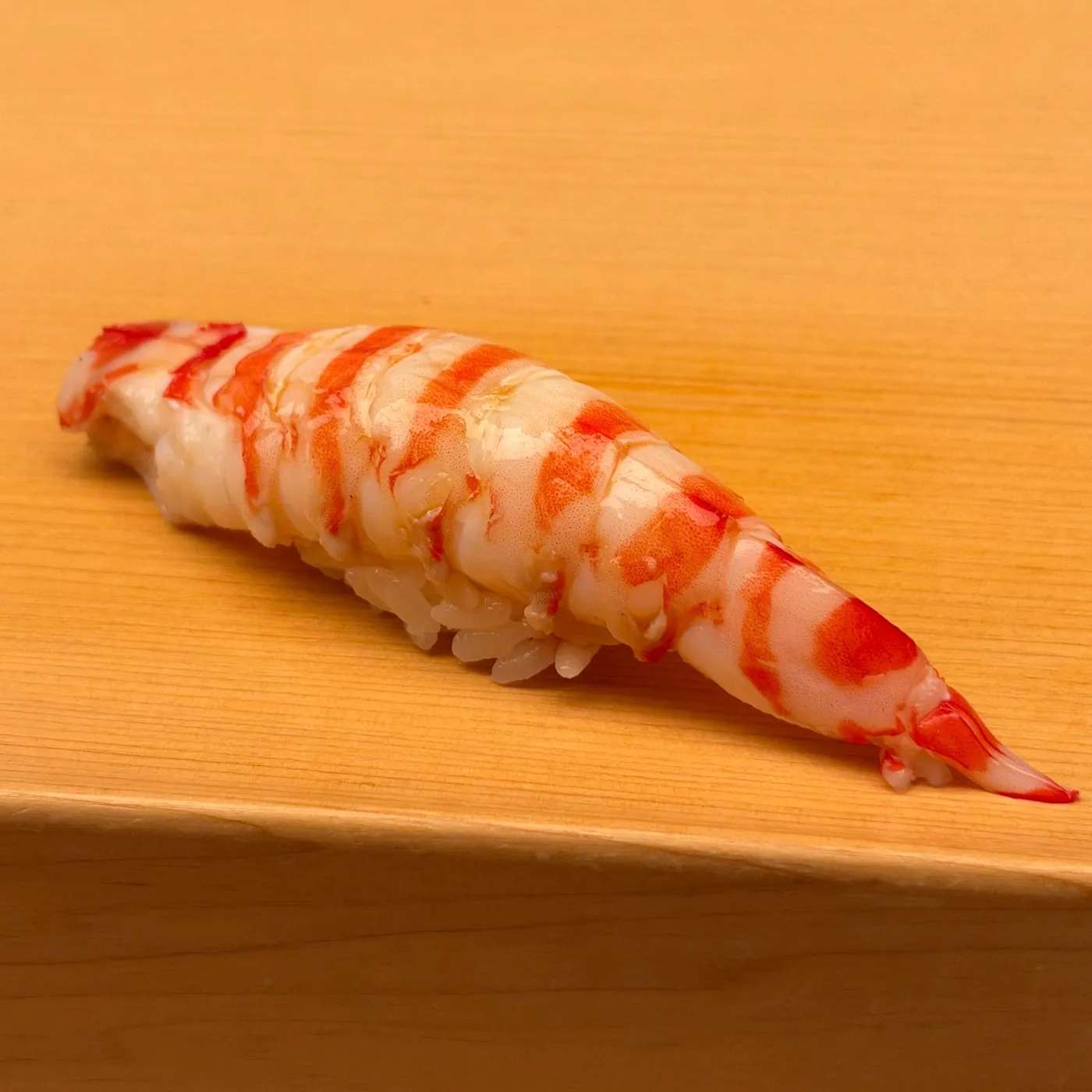
Kuruma Ebi — Japanese Tiger Prawn
The kuruma ebi was beautifully opened and arranged over the rice, showing its characteristic red-and-white pattern. A classic Edomae ingredient, kuruma ebi depends on precise cooking to preserve its sweetness and texture.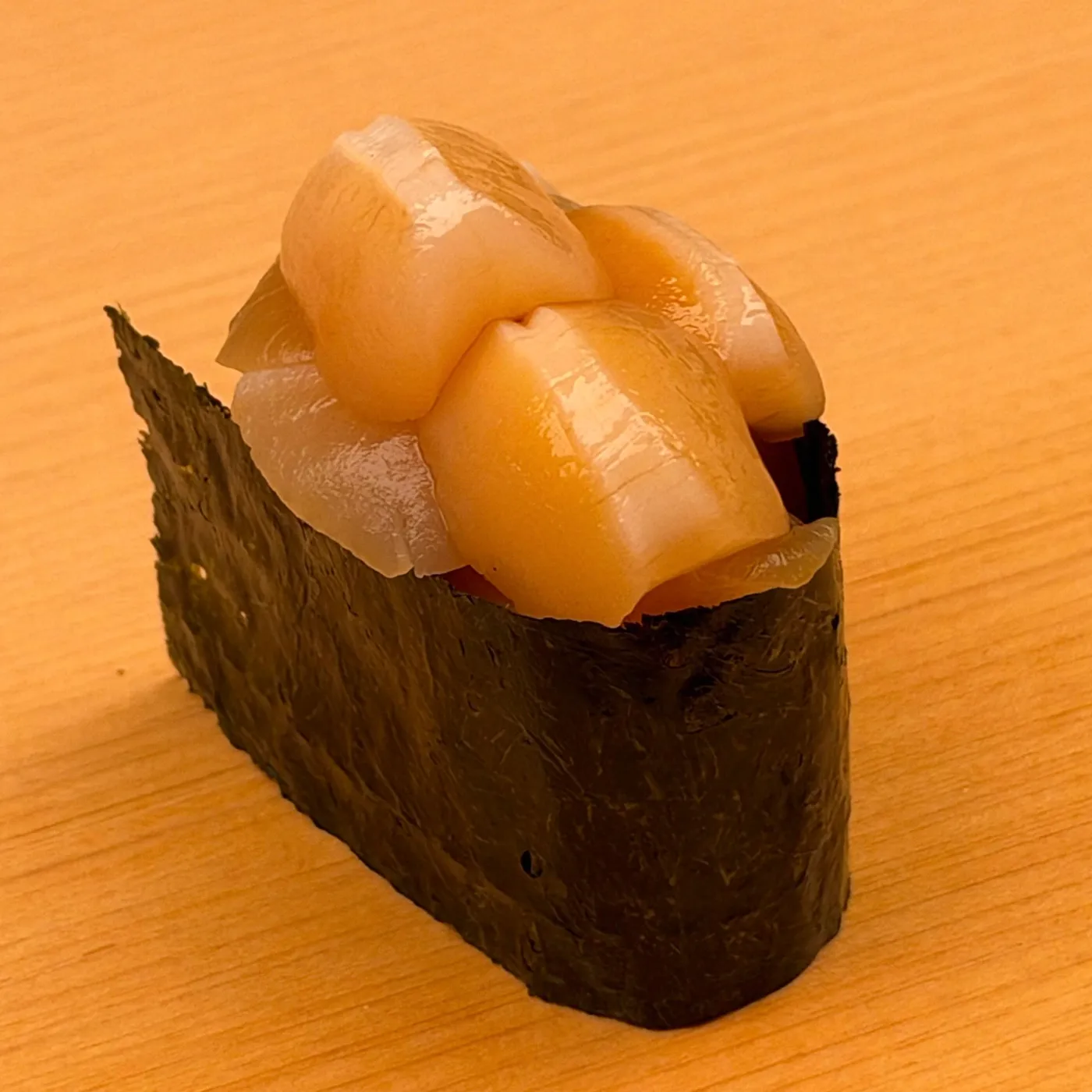
Kobashira — Clam Adductor Muscle
Kobashira are small adductor muscles from clams, appreciated for their delicate sweetness and distinctive texture. Arai-san confirmed the name in Japanese, and they were served in a gunkan, surrounded by nori. It's another example of how much specialized culinary knowledge lies behind the apparently simple progression of a sushi meal.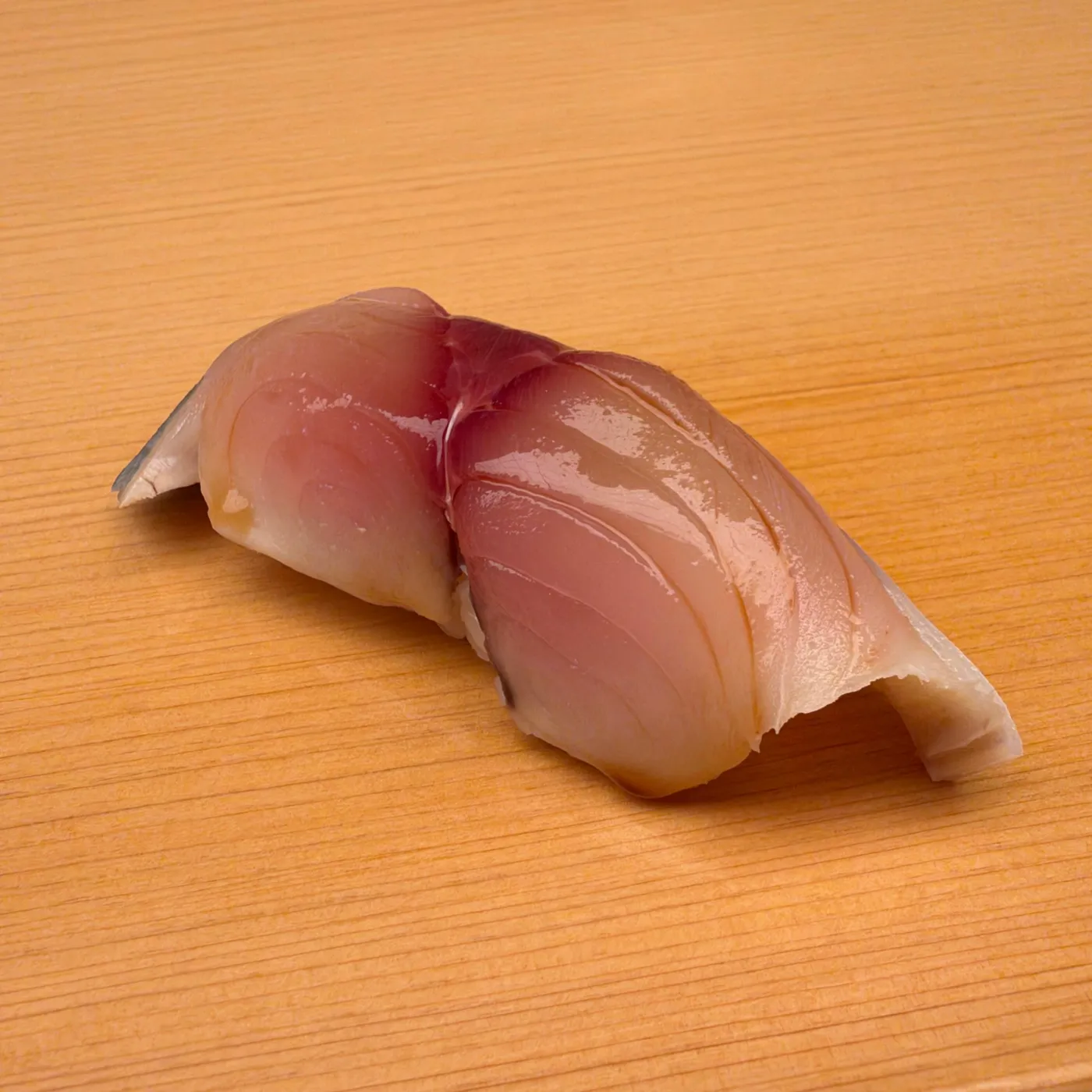
Saba — Mackerel
Next came saba, mackerel, one of the important fish in traditional Edomae sushi. Its rich flavor calls for careful handling, and the balance between the fish's natural character and the chef's preparation can vary considerably. The exact treatment used for this particular piece remains to be confirmed.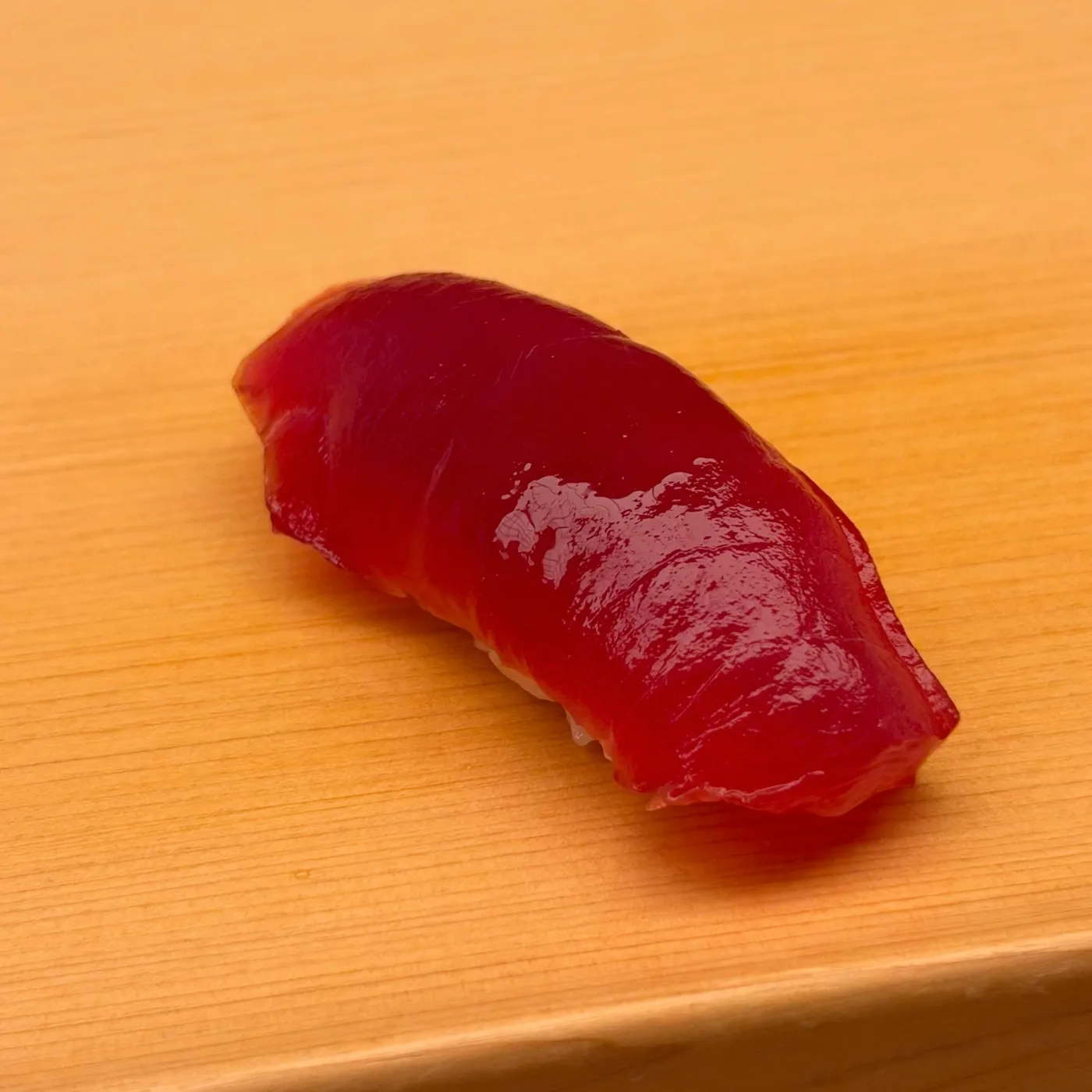
Akami — Lean Tuna
We returned to tuna with akami, the lean red meat. After the richer chutoro served earlier, akami offered another expression of the same fish, with the flavor of the flesh taking precedence over the richness of the fat. That's one of the things I love about tuna: even within a single fish, there can be remarkably different experiences.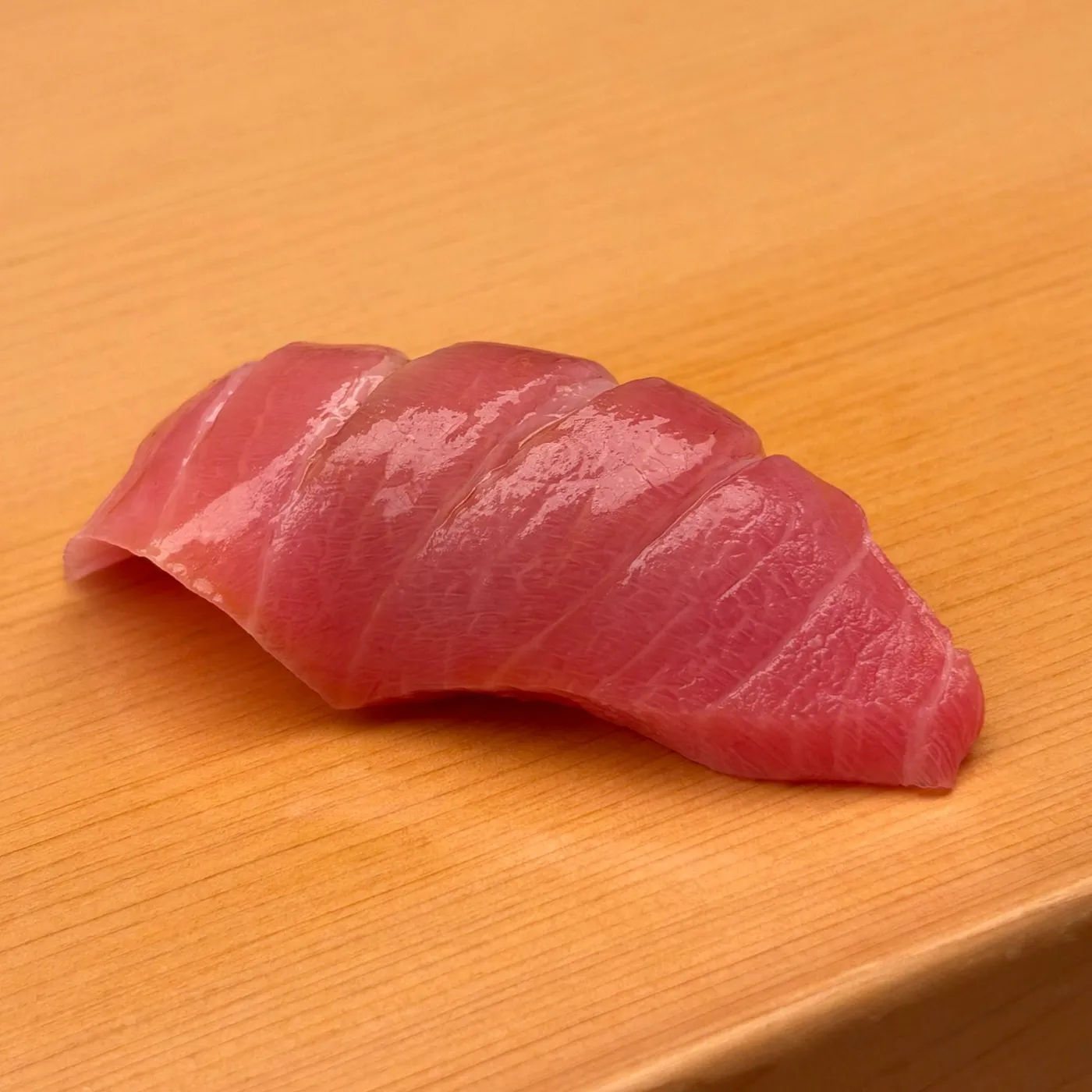
Ōtoro — Fatty Tuna
Then came ōtoro, the richest and most generously marbled of the tuna cuts we enjoyed. Its texture is unmistakable, but the pleasure of good ōtoro isn't simply about the amount of fat. The relationship between fish and rice is just as important. I've been eating Arai-san's tuna for almost nine years, and this remains one of the reasons I look forward to every return visit.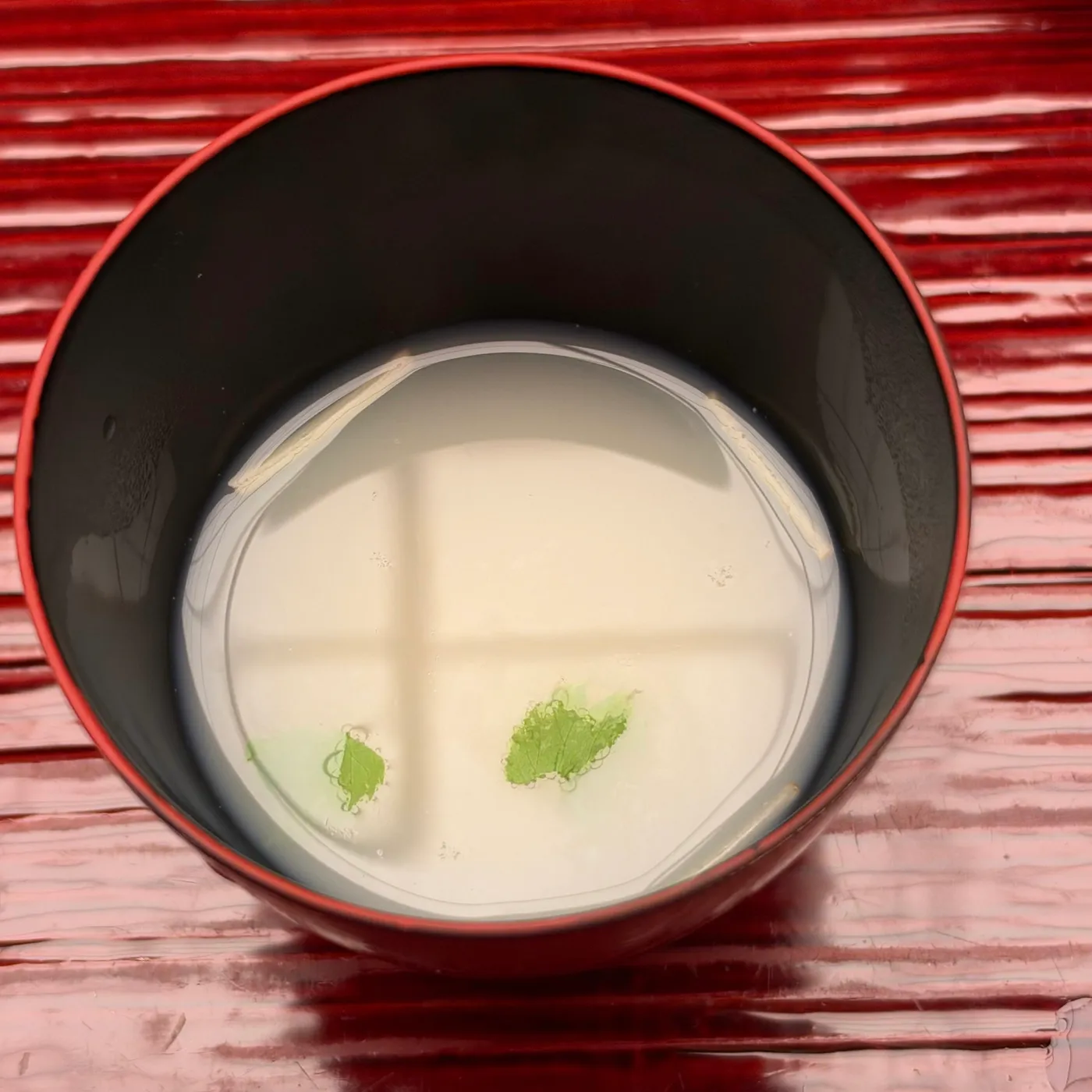
Clam Soup
A clear clam soup followed, providing a welcome change of pace after the tuna. The precise species of clam remains to be confirmed, but the gentle broth offered a different expression of the seafood served at the counter.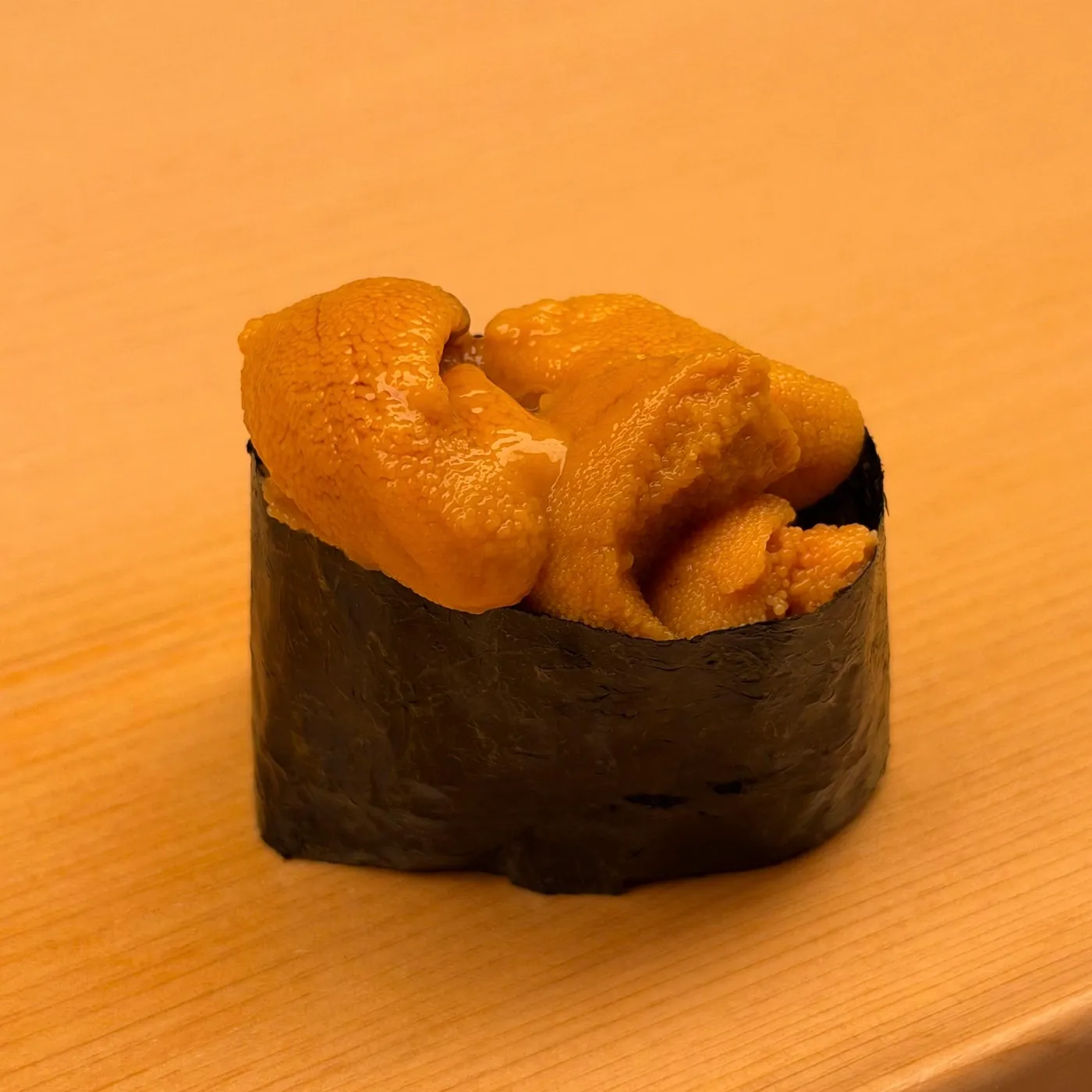
Uni Gunkan
The uni was served generously in a gunkan, with the orange lobes of sea urchin resting on rice and held together by nori. When the ingredient is this good, there's little reason to complicate the preparation.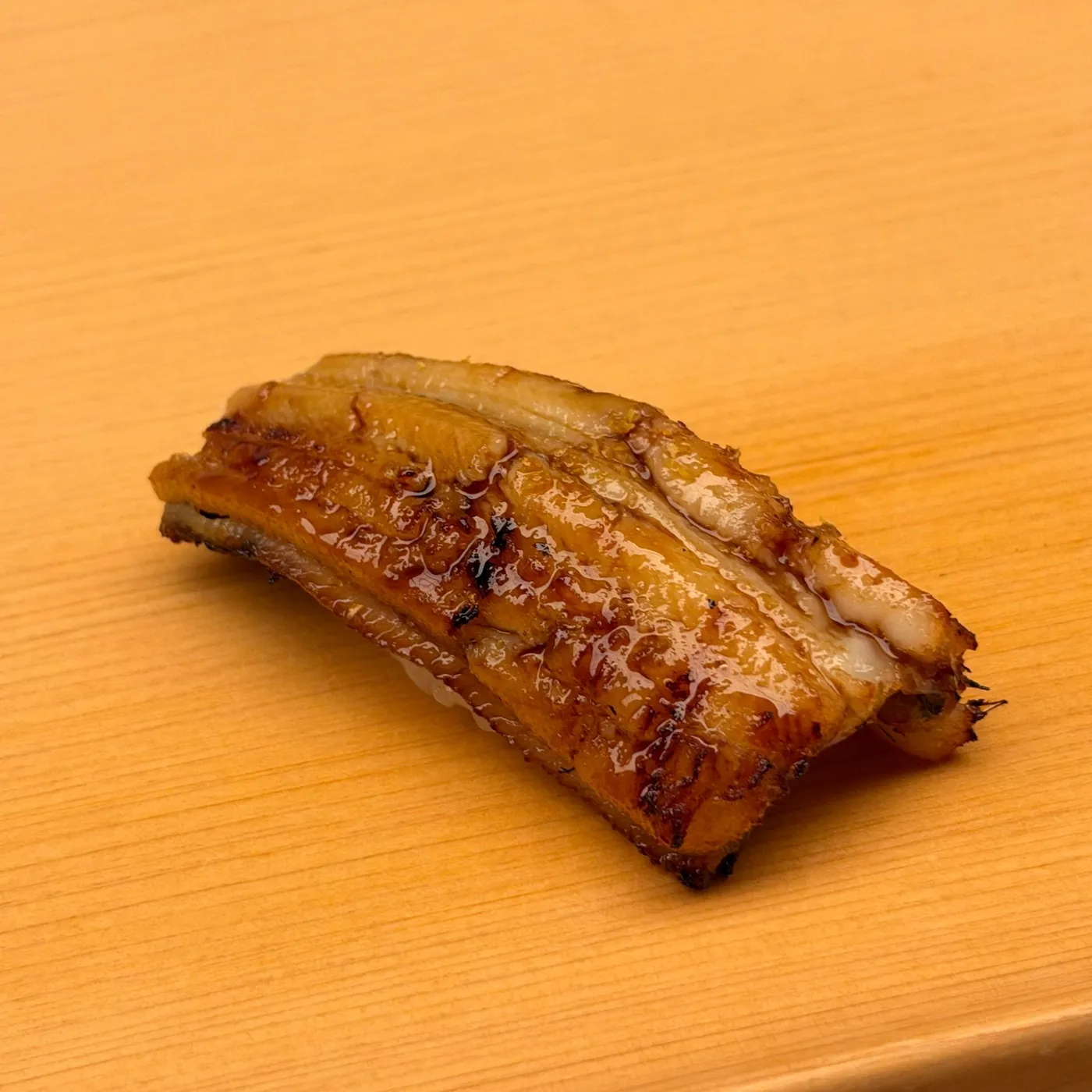
Anago — Sea Eel
The anago was cooked until tender and finished with a glossy sauce. Its soft texture and seasoned flavor provided a lovely contrast to the raw fish that had made up much of the nigiri progression. This is another classic Edomae preparation in which cooking plays just as important a role as shaping the finished piece.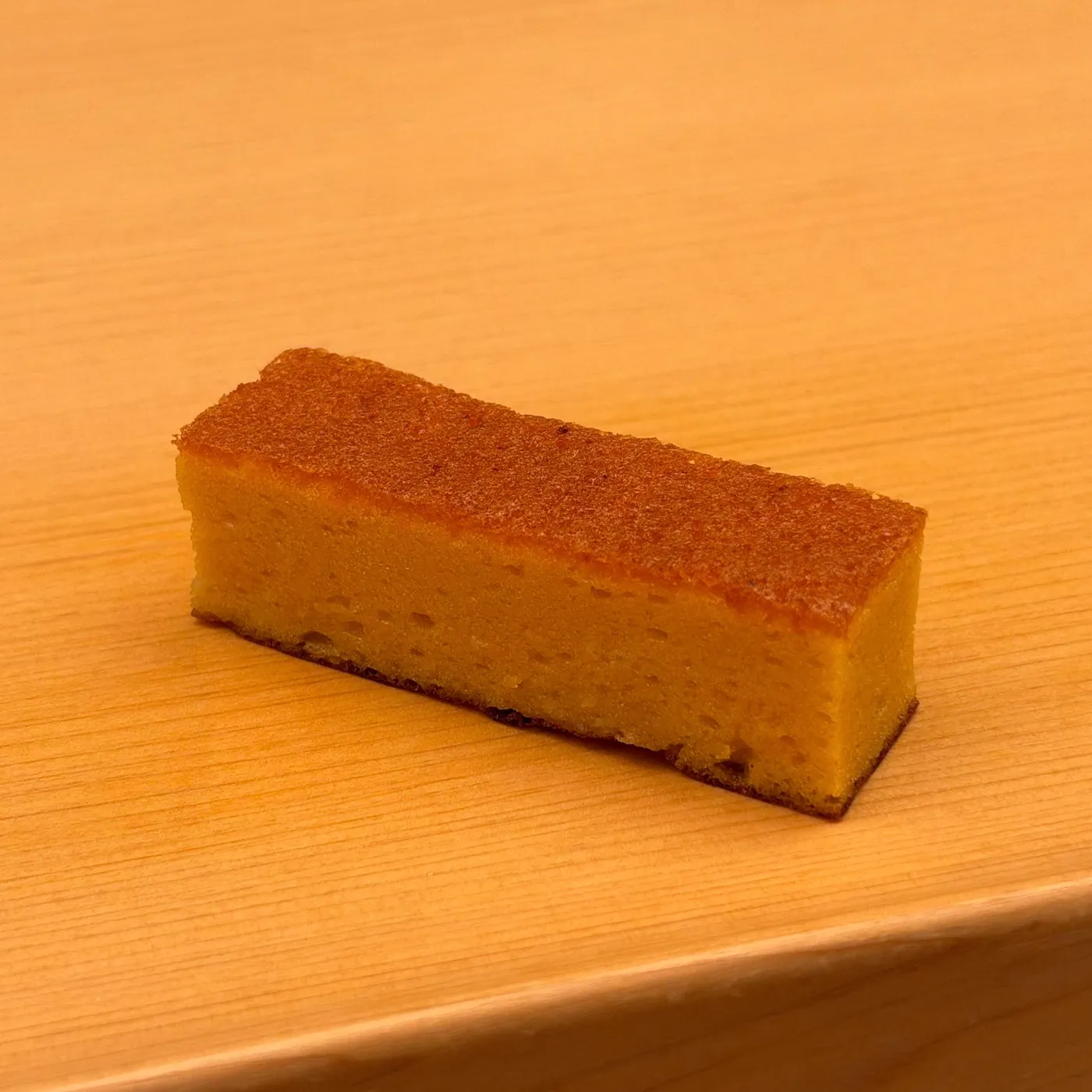
Tamago
We finished with tamago. A simple, satisfying conclusion to the meal, and another reminder that a sushi chef's abilities extend well beyond handling fish and rice.What we drank
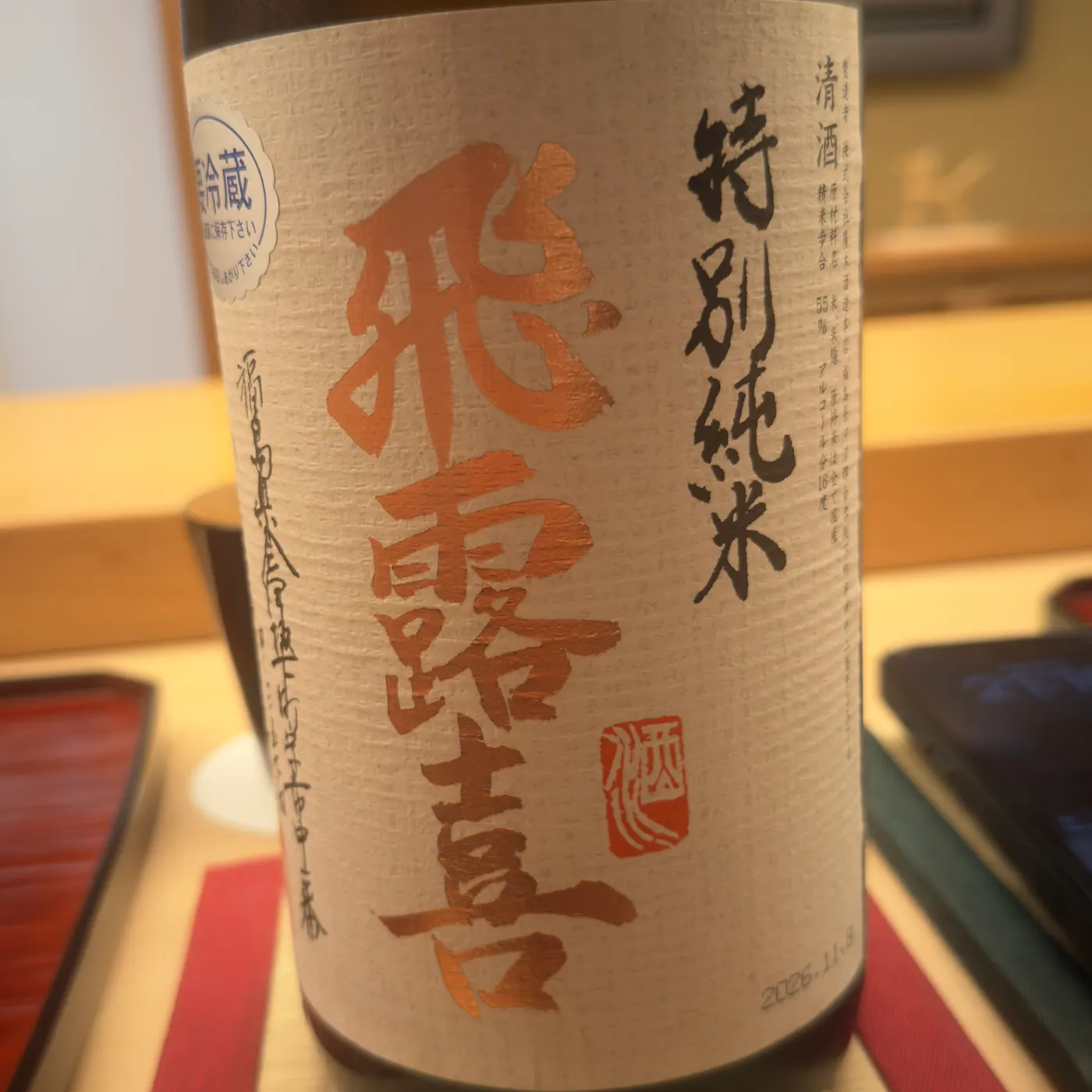
Hiroki — 飛露喜
Tokubetsu Junmai — Fukushima Prefecture
A balanced sake whose restrained character makes it particularly well suited to food.
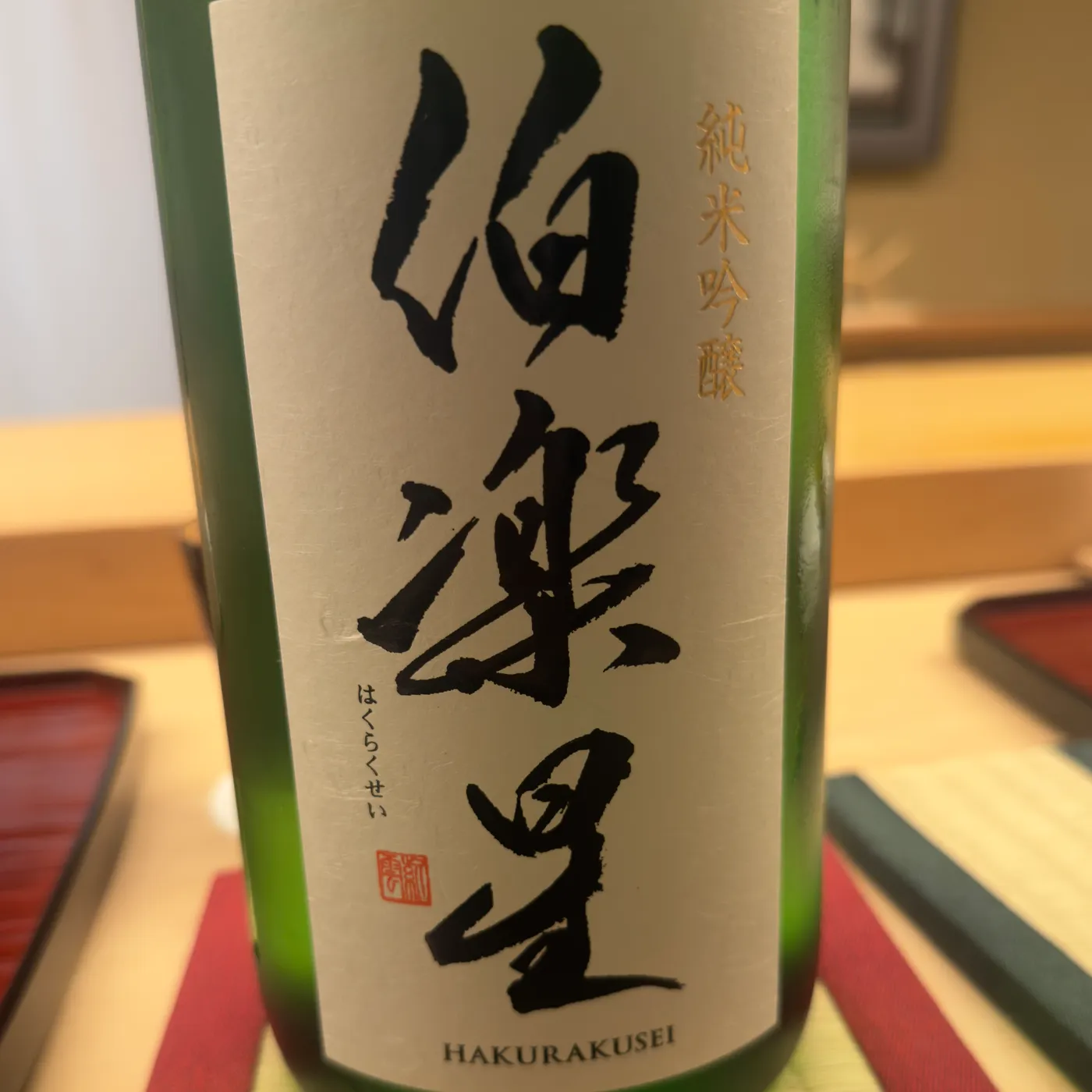
Hakurakusei — 伯楽星
Junmai Ginjo — Miyagi Prefecture
An elegant sake produced with the relationship between sake and food very much in mind.
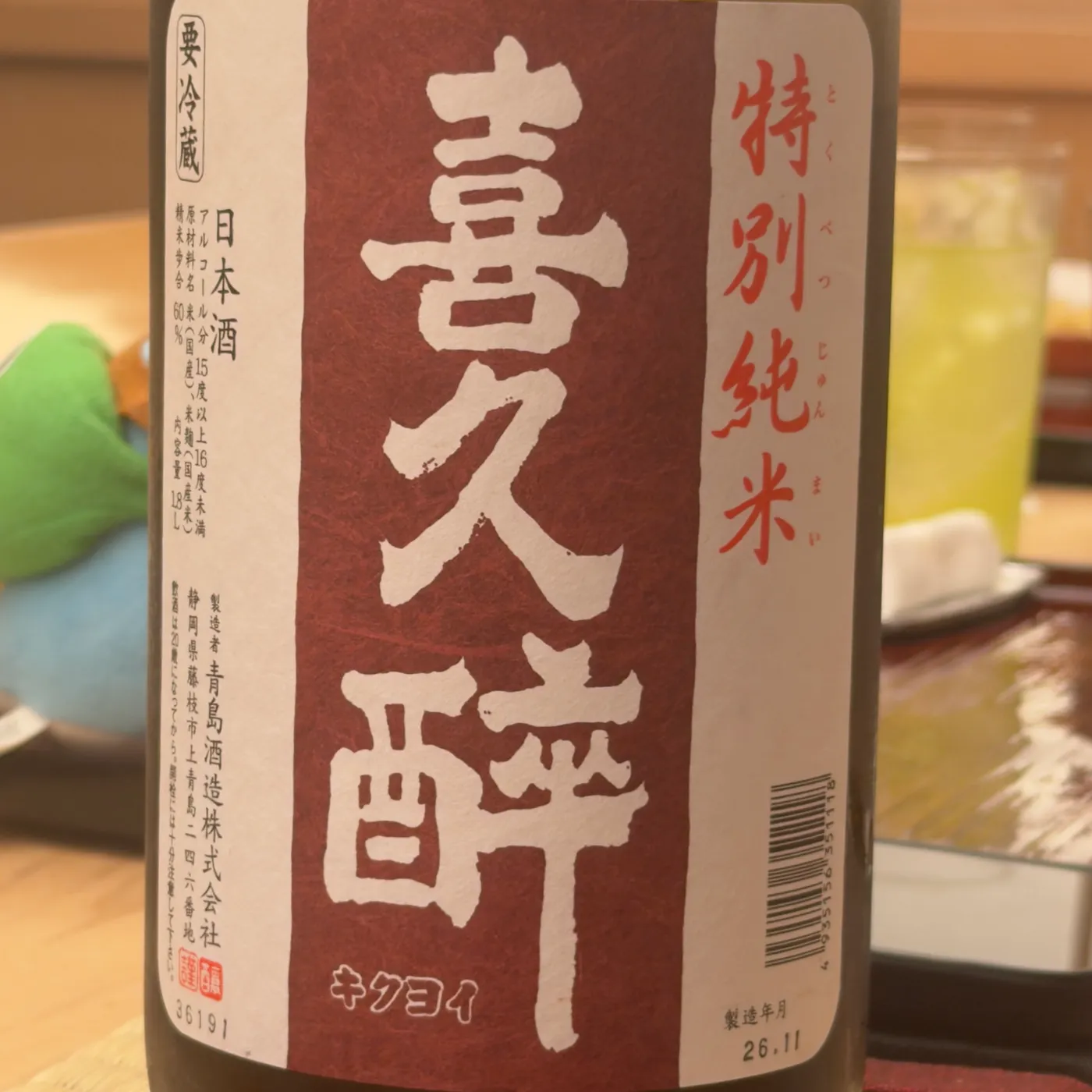
Kikuyoi — 喜久酔
Tokubetsu Junmai — Shizuoka Prefecture
A clean, approachable sake that accompanies Japanese cooking without demanding too much attention.
The Pleasure of Coming Back
After almost nine years, I still look forward to every visit to Arai-san's counter. I love his sushi, especially the tuna, but I also love his warmth, his humor, the energy of the room, and the way he makes everyone feel welcome. Those things have become as much a part of my memories of Sushi Arai as the food itself.
This time, we learned a little more about his ingredients, from the way the wild scallops of Notsuke grow to his unusual shirako risotto and the differences between the cuts of tuna he served us. There's still so much I'd like to ask him, particularly about the people and experiences that have shaped his cooking. I'm looking forward to finding a quiet moment for that conversation. After all these years, I'm sure there are many more stories waiting to be told.
I AM A HUNGRY TOURIST. ❤️