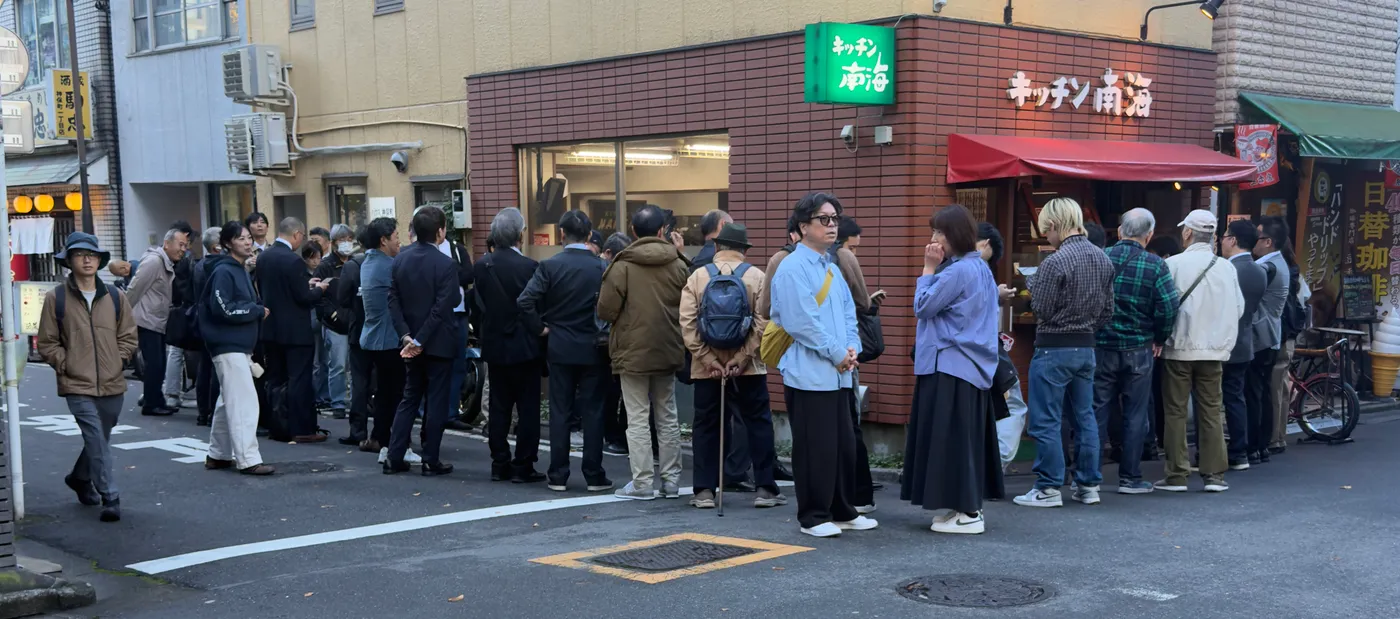
Kitchen Nankai
Visited Wed, Nov 18, 2026 · Lunch
What we ate
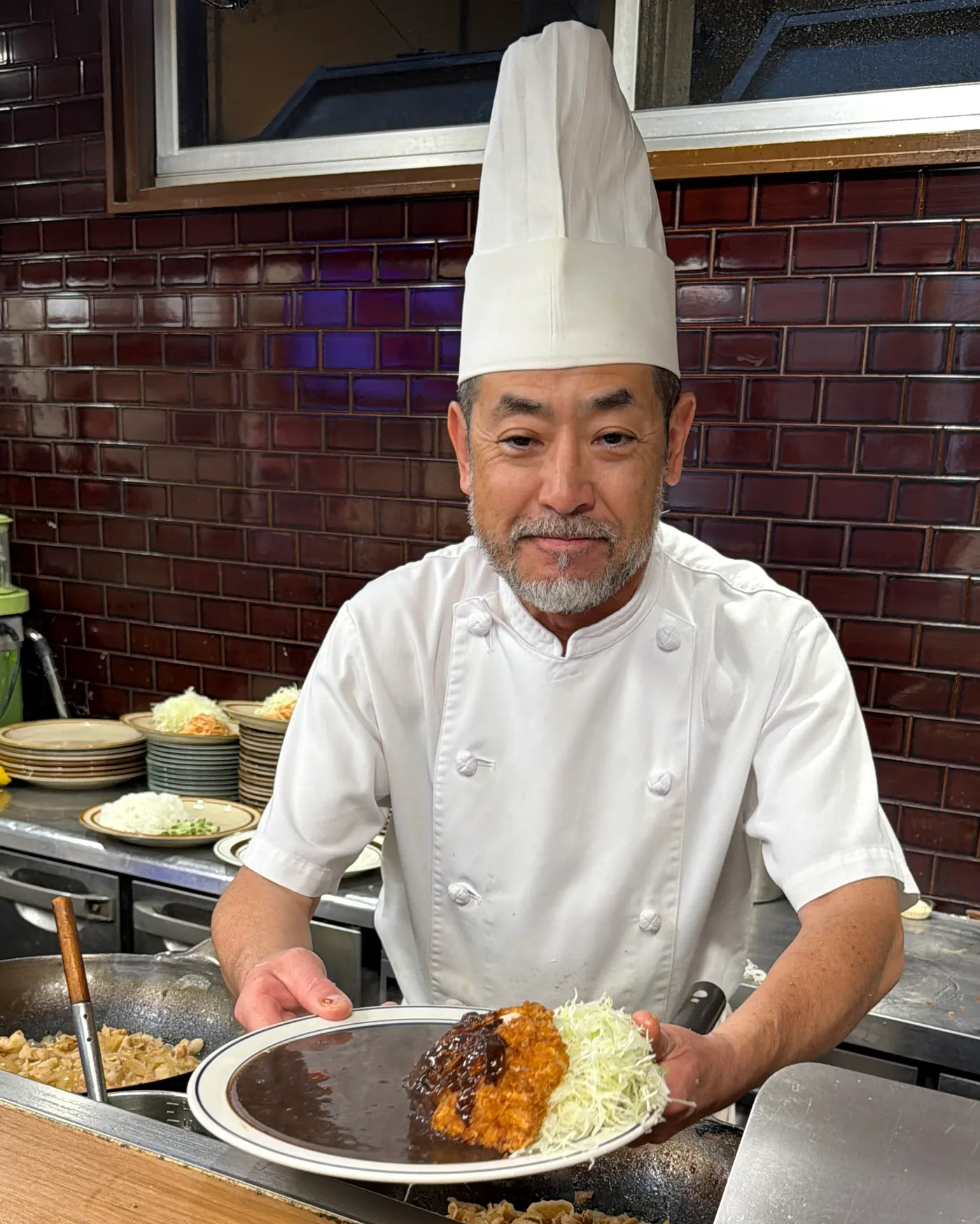
Kitchen Nankai — キッチン南海
The Black Curry That Refused to Disappear I have a serious weakness for Japanese curry rice, or kare raisu, and Kitchen Nankai in Jimbocho makes one of my favorite versions. This is a place that needs little introduction to the locals. Generations of students, booksellers, publishers, and office workers have come here for its famous black katsu curry: a generous plate of rice, freshly fried pork cutlet, dark curry sauce, and finely shredded cabbage. The sauce is so dark it's almost black, the tonkatsu arrives hot from the fryer, and the whole thing is served on a simple white plate with a blue rim. Nothing fancy, just wonderful comfort food. What I hadn't appreciated until I began researching the restaurant was how much of old Tokyo is wrapped up in this one dish.It Started with His Mother's Curry
The story begins with Shigeru Nanzan, who opened a small curry shop in Iidabashi in 1960. Nanzan loved curry but disliked the floury taste of the version his mother made. So he began experimenting, roasting flour and curry powder more thoroughly to eliminate that raw-flour flavor. As the mixture darkened, he gradually developed the recipe that would make his restaurant famous. He had no formal culinary training. He simply wanted curry that tasted better to him. I rather like the idea that a Tokyo institution began with a young man trying to improve his mother's cooking. In 1966, Nanzan moved the business to Jimbocho, Tokyo's celebrated neighborhood of secondhand bookstores and universities. The restaurant's name came from his favorite baseball team, the Nankai Hawks, whose green colors also inspired its signage.Curry for the Mahjong Players
Jimbocho in the 1960s and 1970s was full of students, many spending their free time playing mahjong. Nanzan realized that curry rice was ideal for them: filling, inexpensive, and easy to eat with a spoon without interrupting the game. He began delivering curry to mahjong parlors, eventually operating several shops around the neighborhood. Workers carried stacks of plates through the streets on bicycles fitted with metal delivery boxes. I love imagining those old Tokyo streets, the students absorbed in mahjong, and bicycles arriving with curry to keep everyone fed. Over time, Kitchen Nankai became a neighborhood institution. Students graduated, found jobs, and continued returning for the curry they remembered from their university days.The Black Katsu Curry
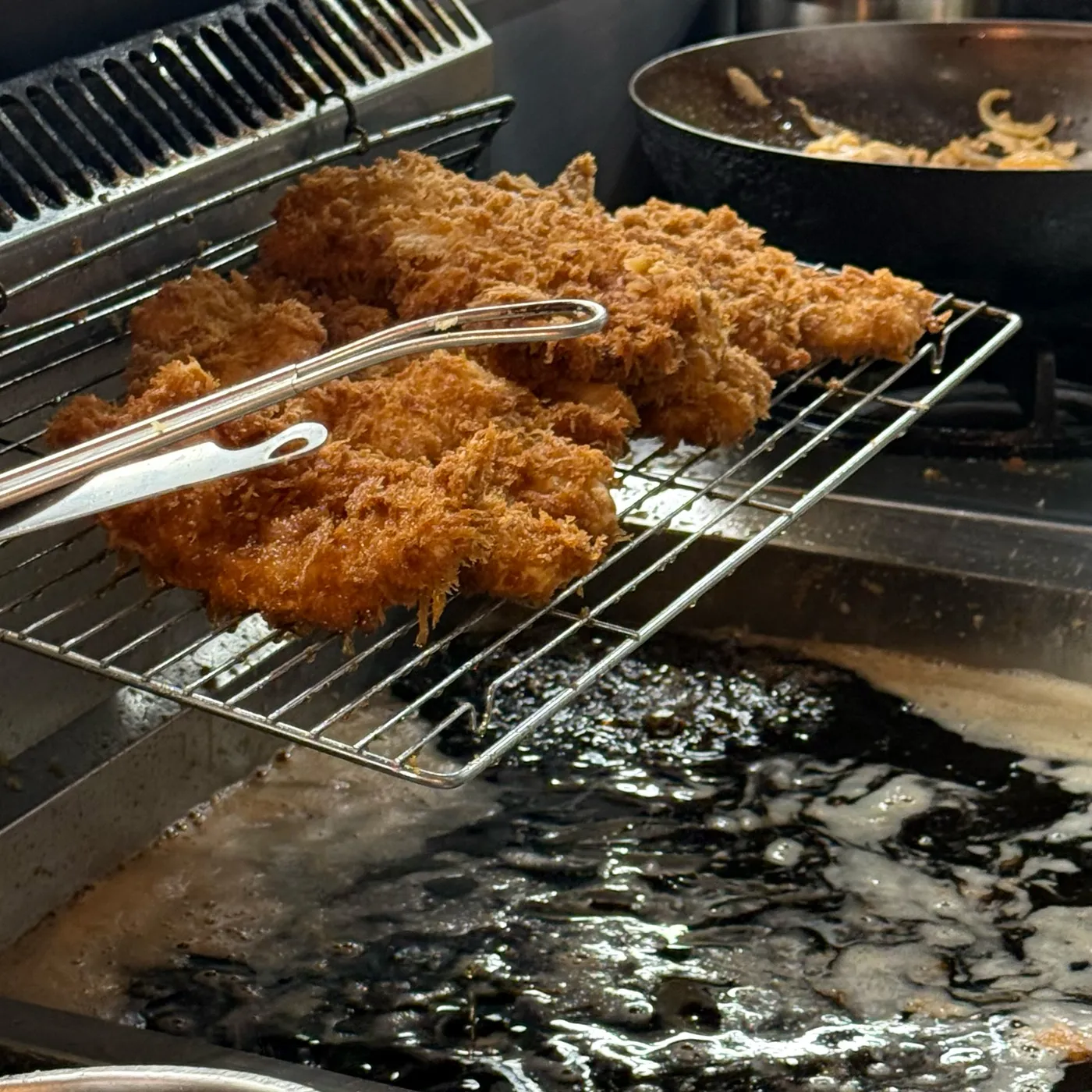
Freshly fried tonkatsu draining above the fryer.
The curry takes considerable time to prepare. Flour and spices are roasted until deeply browned, then cooked with onions and pork. Long simmering and resting allow the ingredients to break down and the flavors to develop. Despite its almost black appearance, the sauce is surprisingly fluid, spreading easily across the rice and cutlet. The pork is pounded relatively thin, coated in breadcrumbs, and fried until golden. It's sliced over the rice before the dark curry is ladled generously across the plate. Alongside sits a mountain of shredded cabbage, whose freshness and crunch provide a welcome contrast to the rich sauce and crispy pork. The cutlet is tender enough to eat with a spoon, which brings us right back to those mahjong players who helped make the restaurant famous.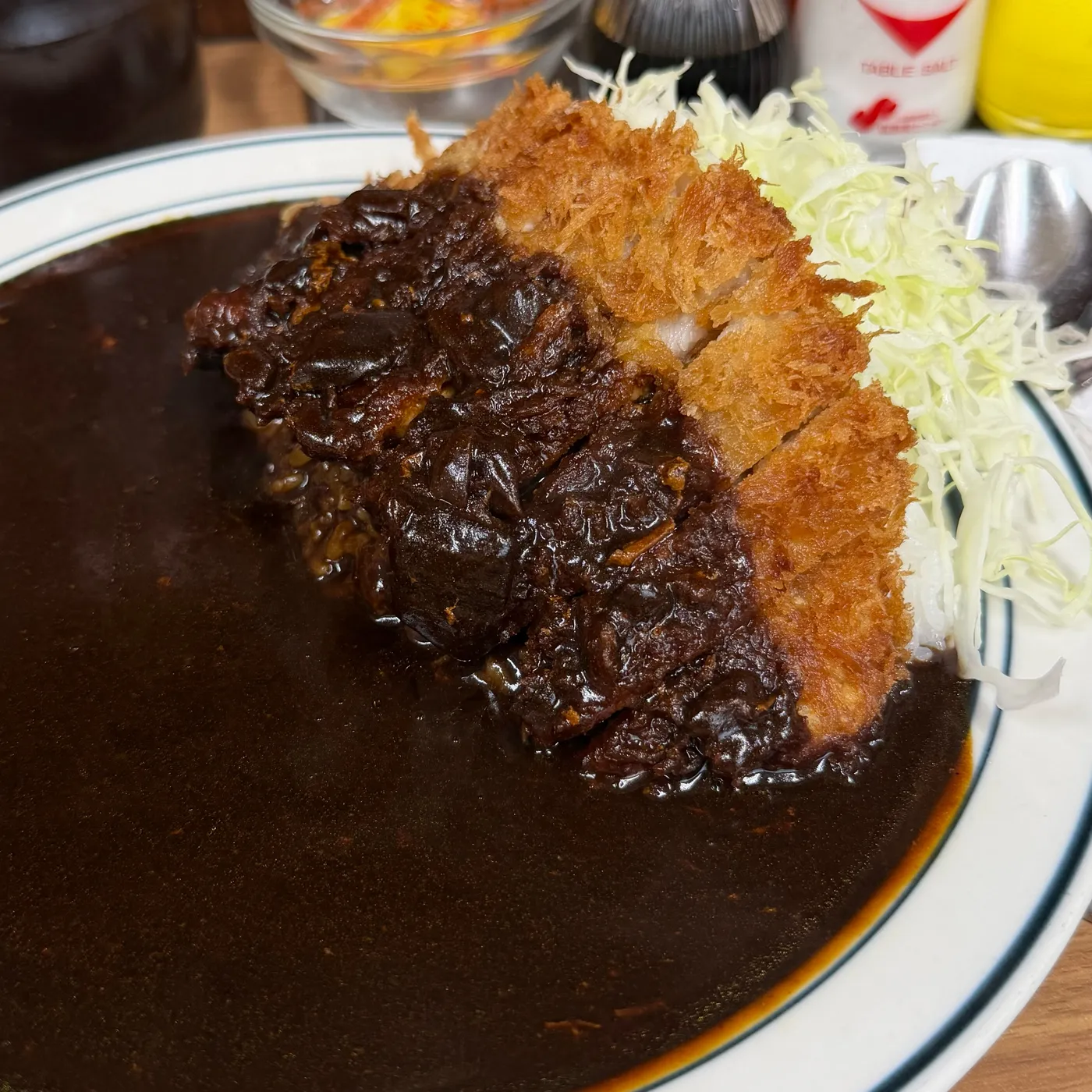
Kitchen Nankai's black katsu curry. Exactly what I came for.
The Curry That Survived
In June 2020, the original Kitchen Nankai closed after more than half a century in Jimbocho. Its aging building and the end of the lease meant the familiar restaurant could no longer continue. Fortunately, the founder's nephew, Tomoaki Nakajo, had other plans. He had grown up around the restaurant and worked there for decades, including more than twenty years as head chef. For him, the curry wasn't merely a recipe. It was his family's food. On July 29, 2020, just over a month after the original closed, Nakajo opened a new Kitchen Nankai a short walk away, determined to preserve the familiar taste. I find that particularly satisfying. Restaurants are constantly reinventing themselves, but sometimes the greatest favor you can do your customers is to keep making the food they've loved for years.