Yakiniku Jumbo
Visited Thu, Nov 19, 2026 · Dinner
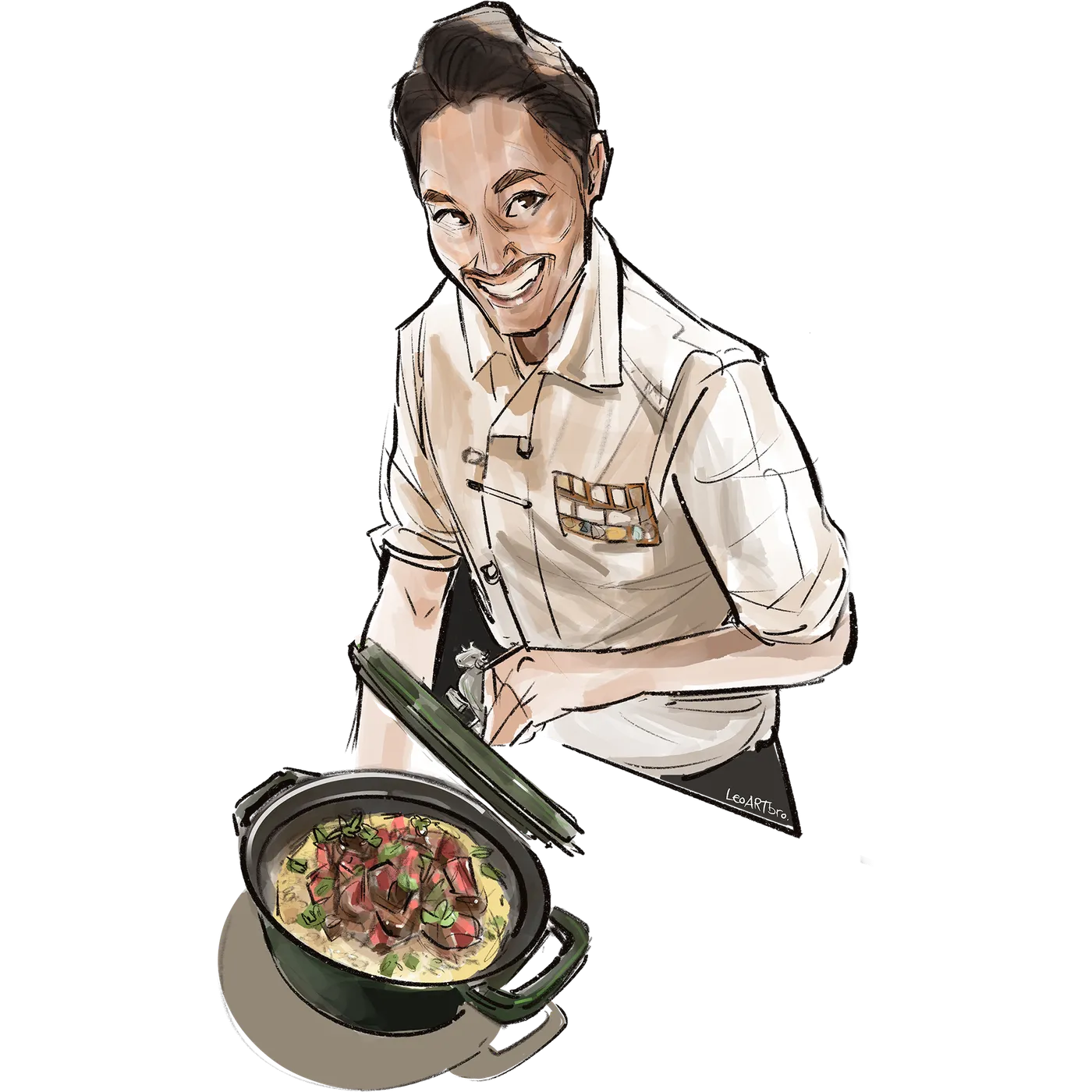
Yakiniku Jumbo — 焼肉ジャンボ
He Had Me at Hello
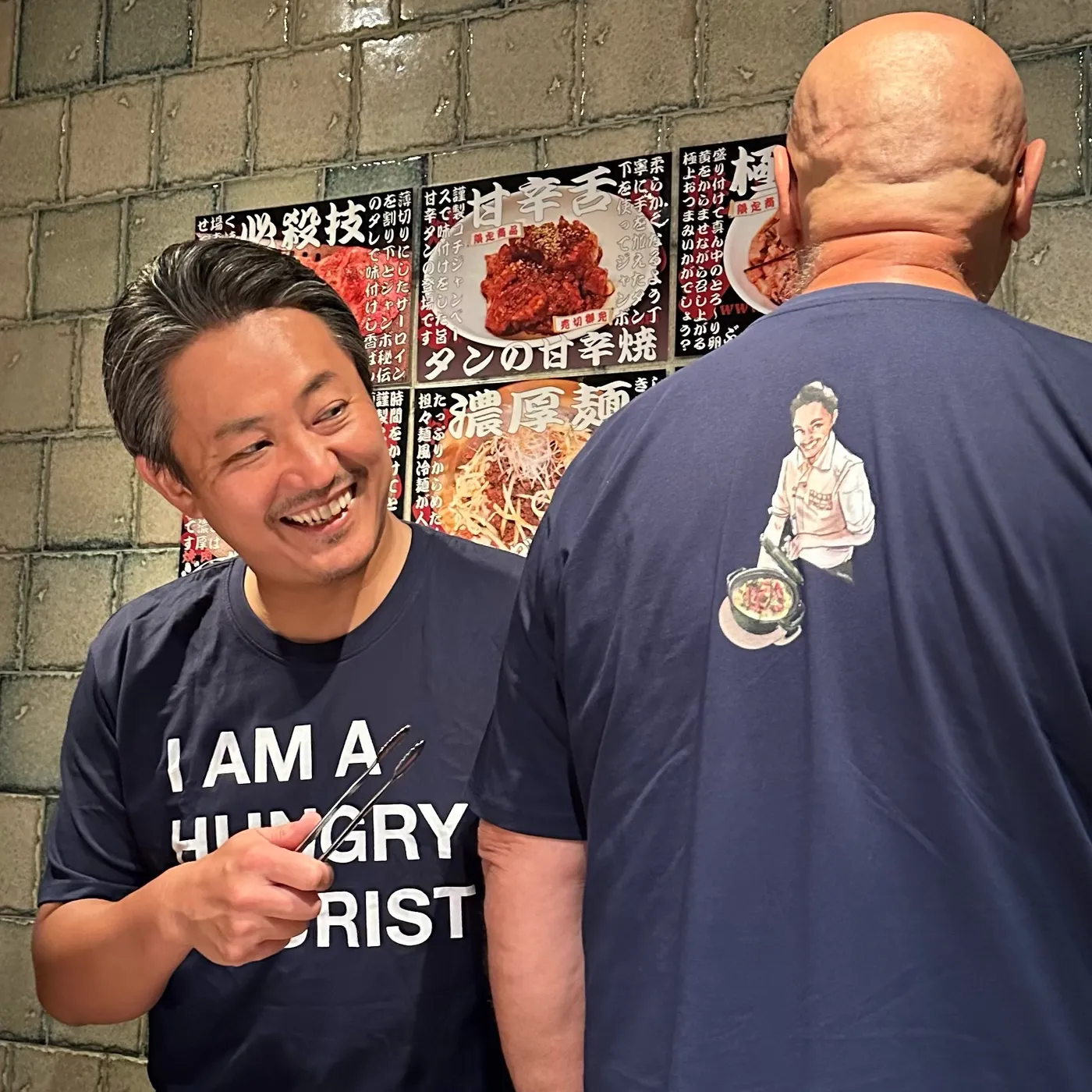
I first met Nambara-san on January 11, 2018, in a small private room in the basement of Yakiniku Jumbo, his family’s Japanese barbecue restaurant in Tokyo. Good-looking, talented, and humble, he had me at hello. Since then, I’ve returned with groups and on my own more times than I can count. Nambara-san has always been the same: kind, hospitable, and very good at making us happy by cooking top-quality wagyu in front of us.
For this November dinner, Konno-san was the chef cooking and looking after our table. I’d asked her to explain the food in Japanese while I recorded, and she gave us plenty to listen to between mouthfuls. I also spoke with Nambara-san about his family and the restaurant, including a customer whose eating habits had earned him a permanent place on Jumbo’s menu.
What we ate
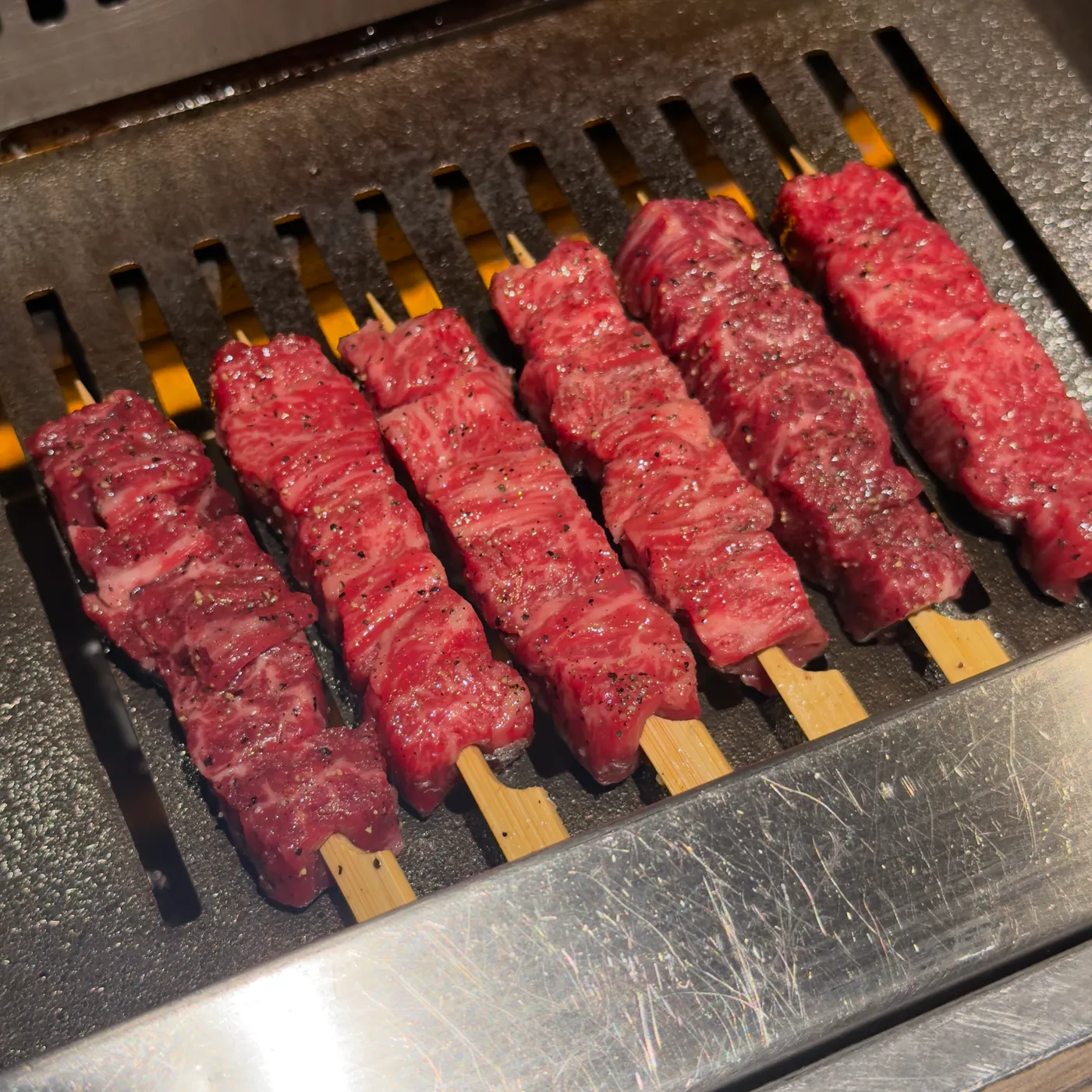
Harami Skewers — ハラミの串
Skirt steak threaded onto skewers and grilled, with browned edges, a juicy interior, and the pronounced beef flavor of harami. Its looser texture gives it a different character from the finely marbled cuts. Salt keeps the seasoning light; Jumbo’s tare adds another layer of flavor. The recommended approach is to try the salt-seasoned meat first, then the sauce.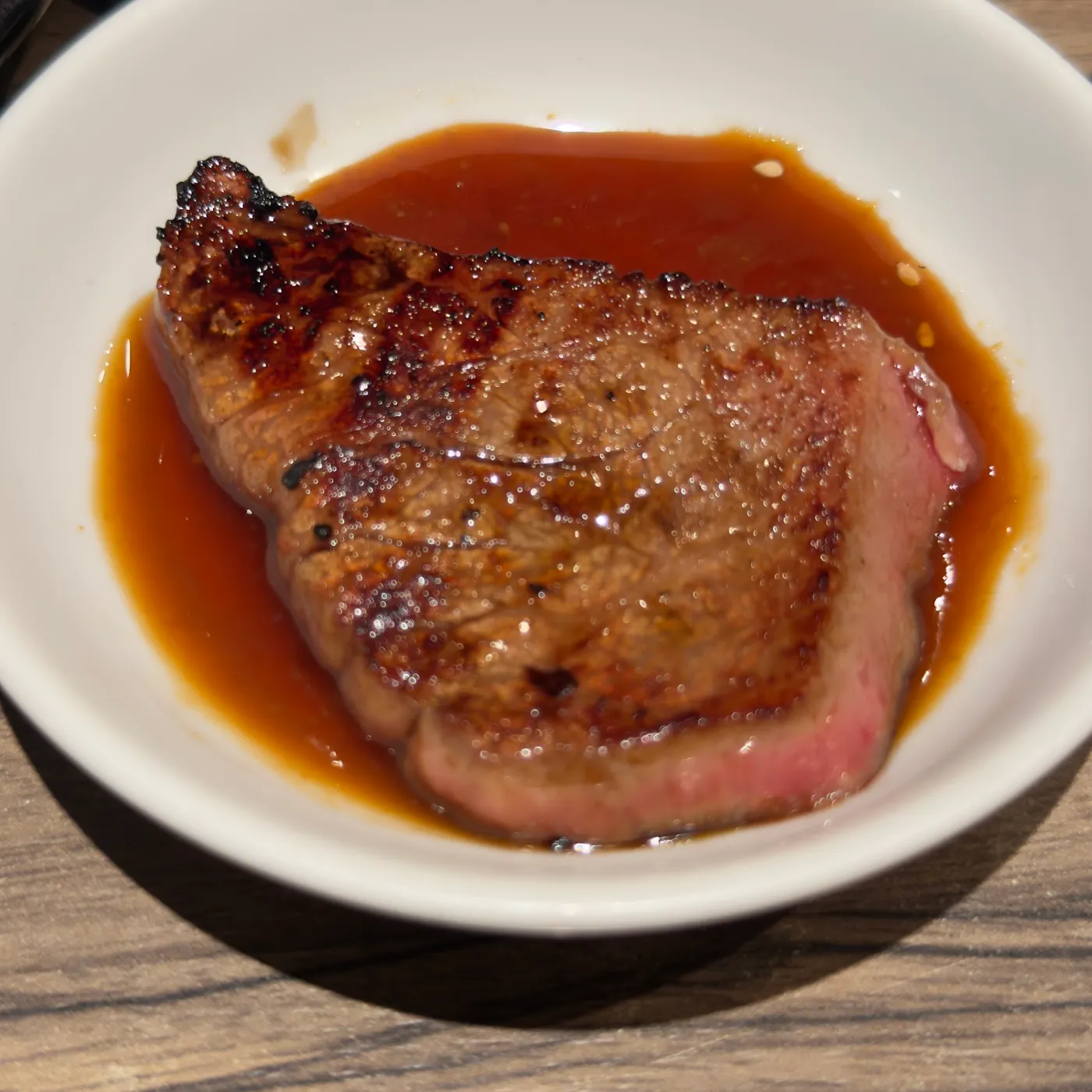
Kainomi — カイノミ
Kainomi selected from the section immediately beside the fillet. Jumbo distinguishes this portion from the belly-side selection described under the same name, using the tender meat adjacent to the fillet for grilling.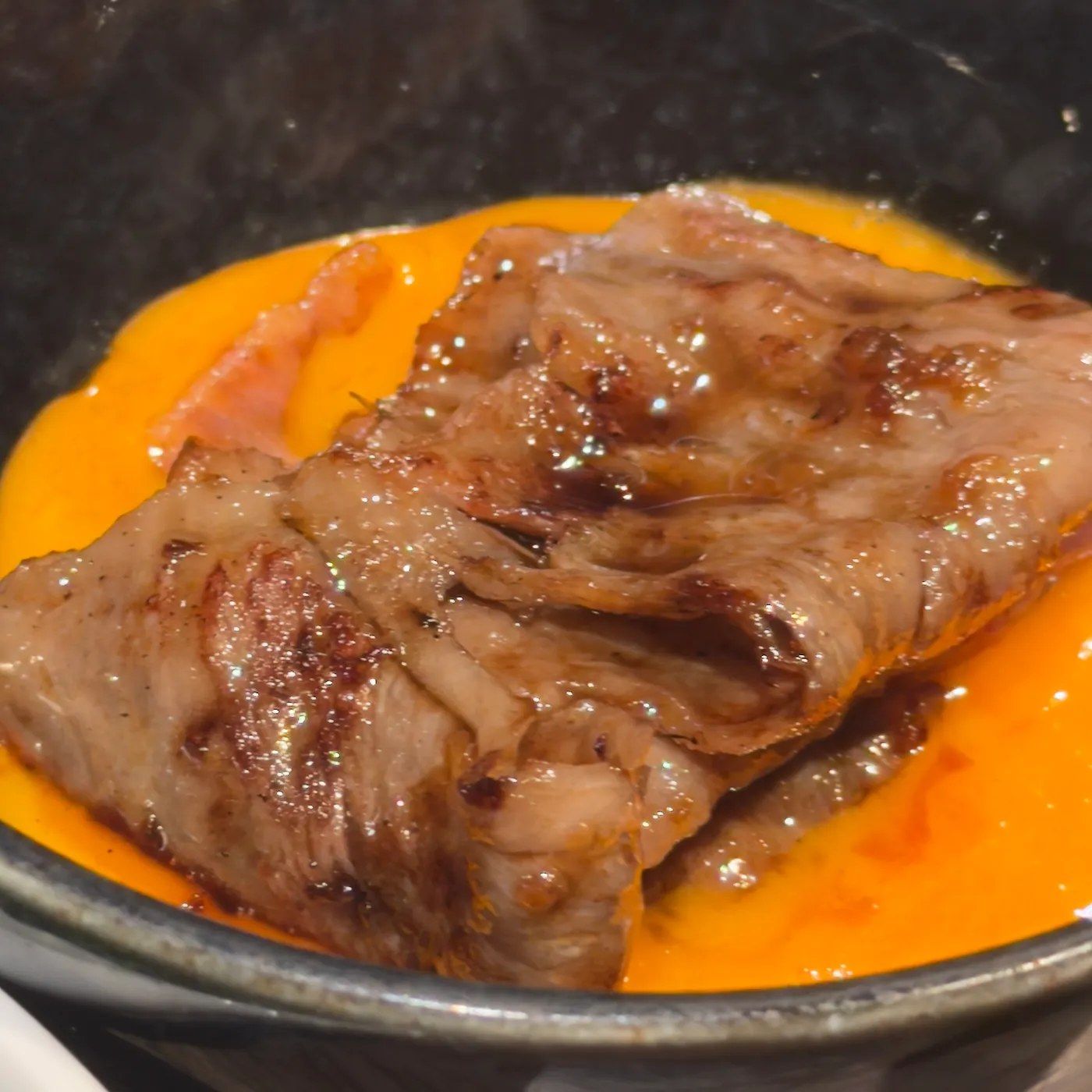
Noharayaki — 野原焼き
Paper-thin wagyu sirloin seasoned with a combination of kombu-and-bonito dashi and Jumbo’s tare. The marbling softens almost immediately over the grill, leaving delicate, silky slices that are dipped generously into raw egg. The egg coats the hot beef, bringing richness to the savory-sweet seasoning: the flavors of sukiyaki, with the meat cooked directly over the fire. Jumbo’s signature preparation takes its name from Nohara-san, the regular customer whose habit of eating grilled loin with raw egg inspired it.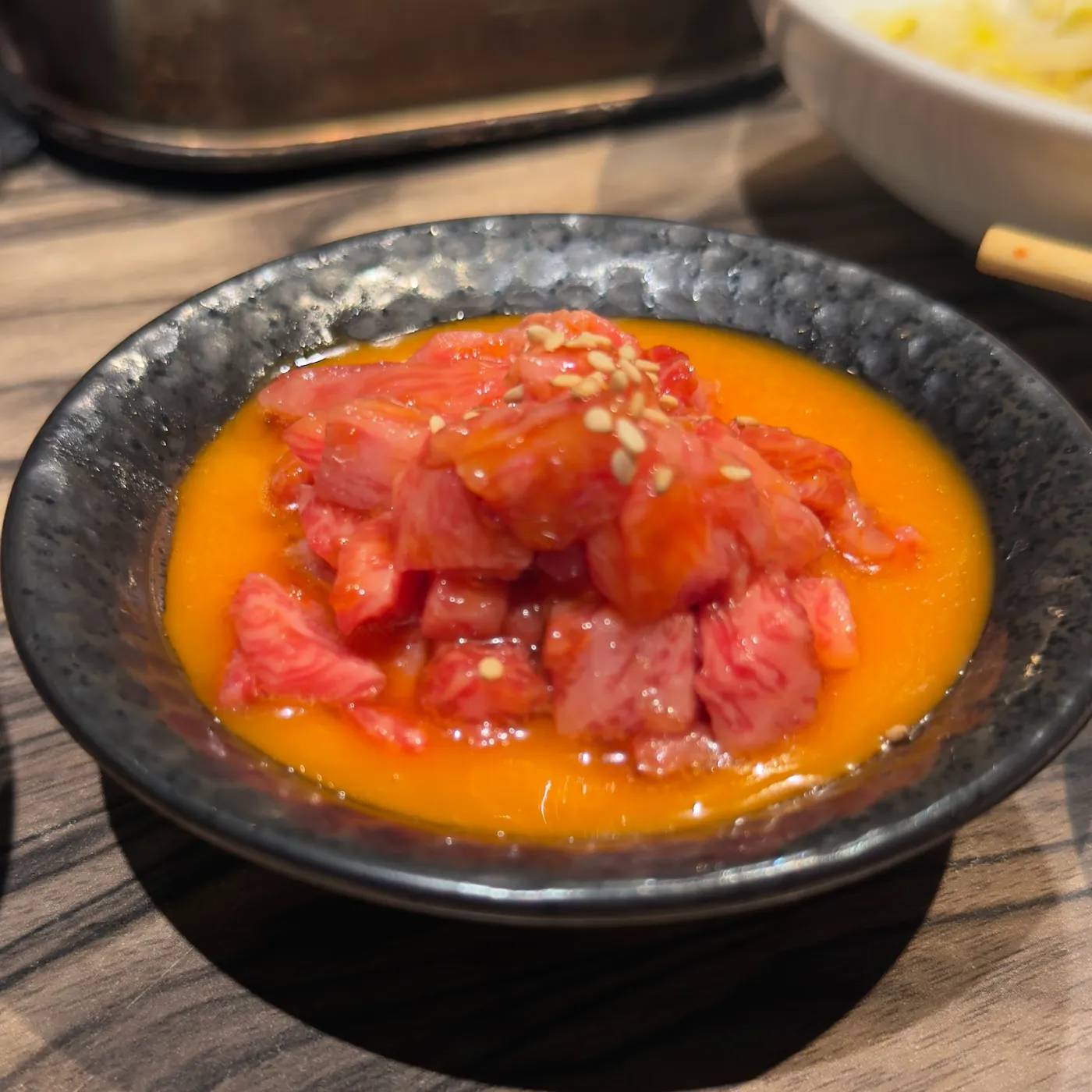
Yukhoe — ユッケ
Finely cut raw ichibo dressed in a sweet tare and finished with sesame. The meat has a soft, silky texture, with the seasoning coating rather than cooking it. Served with Korean nori to eat either on its own or wrapped in the crisp seaweed, adding a savory crunch to the raw beef.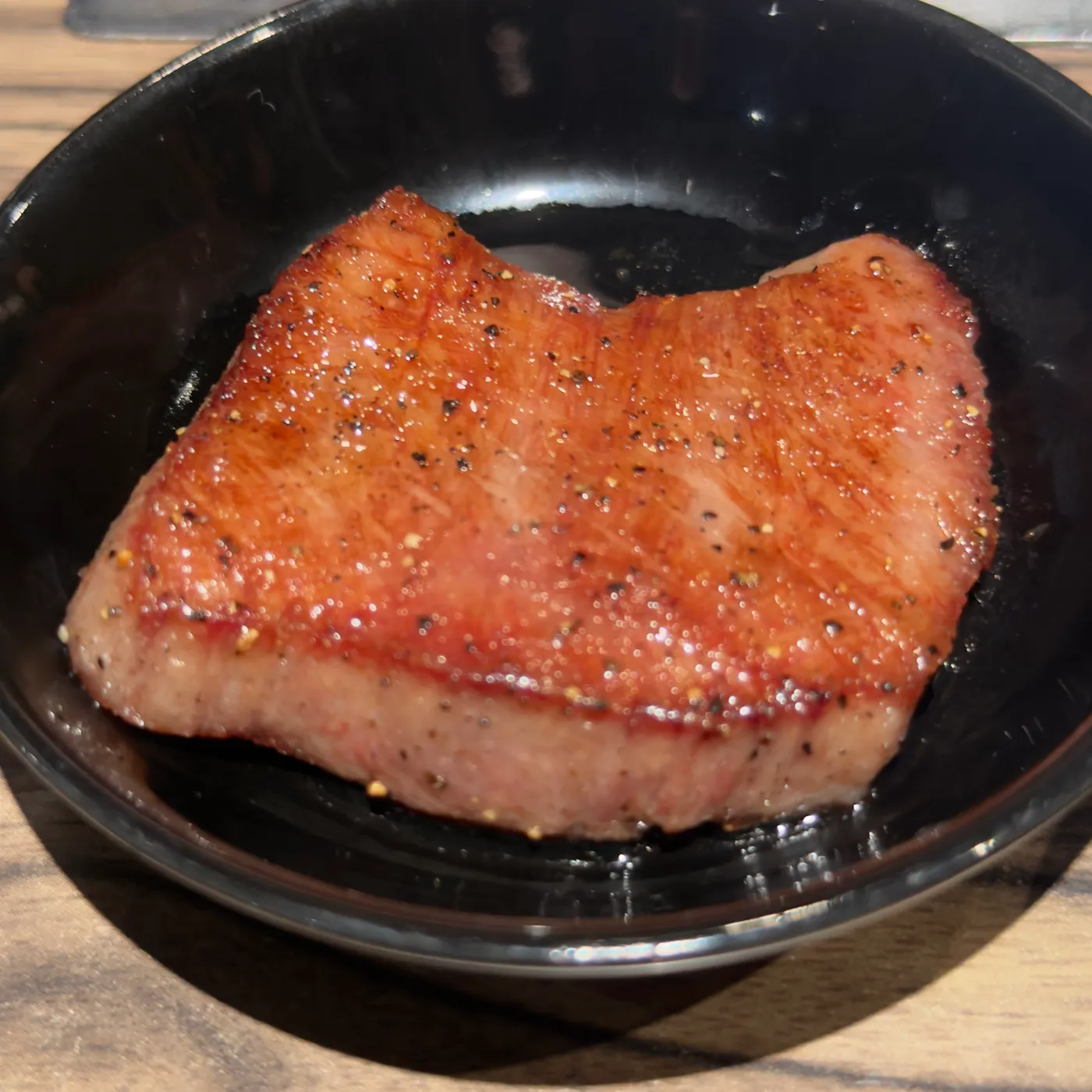
Jōtan — Beef Tongue
Thick-cut beef from the root of the tongue, the tender, fatty portion used for Jumbo’s jōtan. The surface is seared brown while the interior stays juicy, retaining tongue’s characteristic bite without becoming tough. The thickness allows a contrast between the grilled exterior and the softer meat within.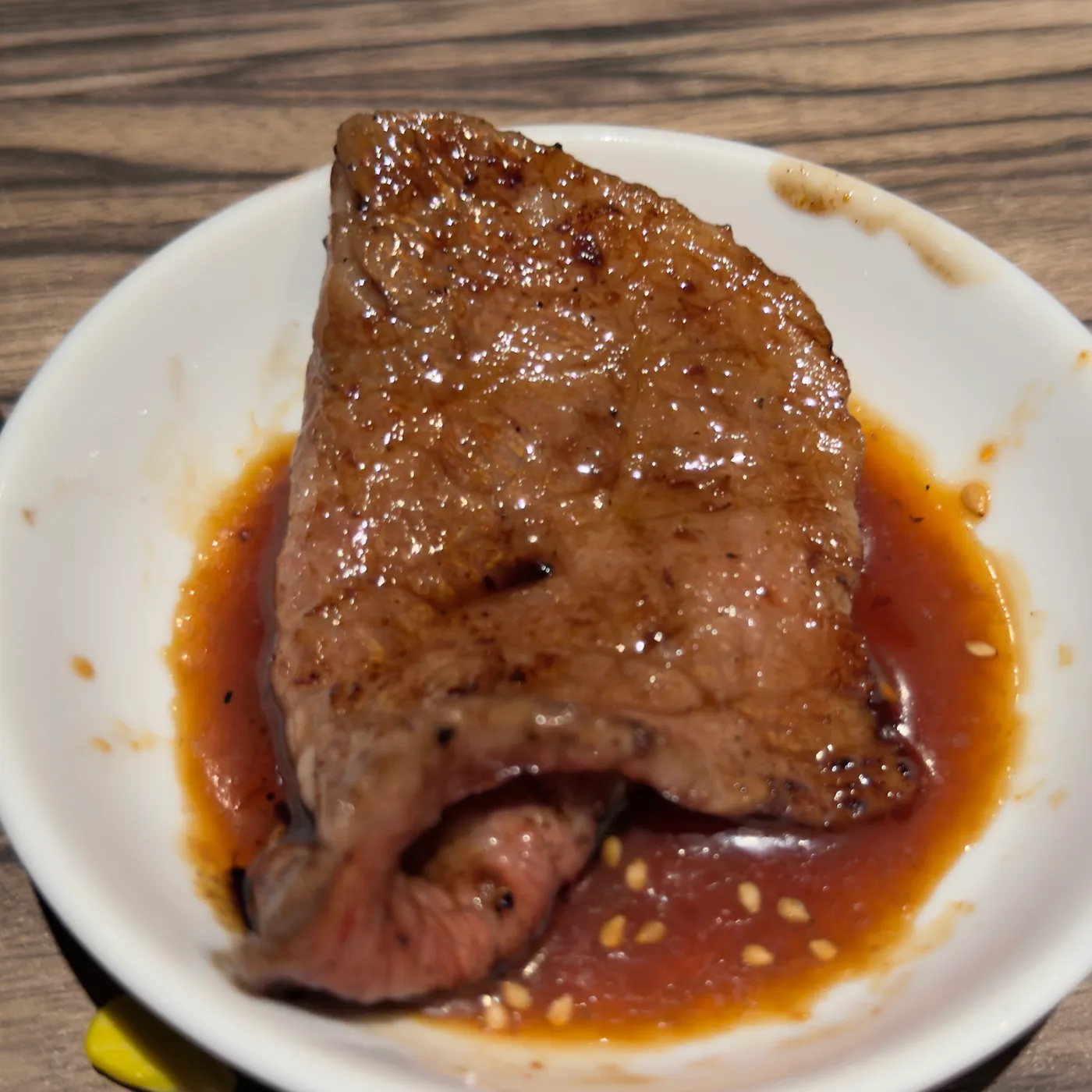
Rump — ランプ
Lean wagyu from the hindquarter, tender without relying on the abundant marbling of the richer cuts. Grilled and served with tare, which coats the meat with savory sweetness while leaving the lean beef at the center of the preparation.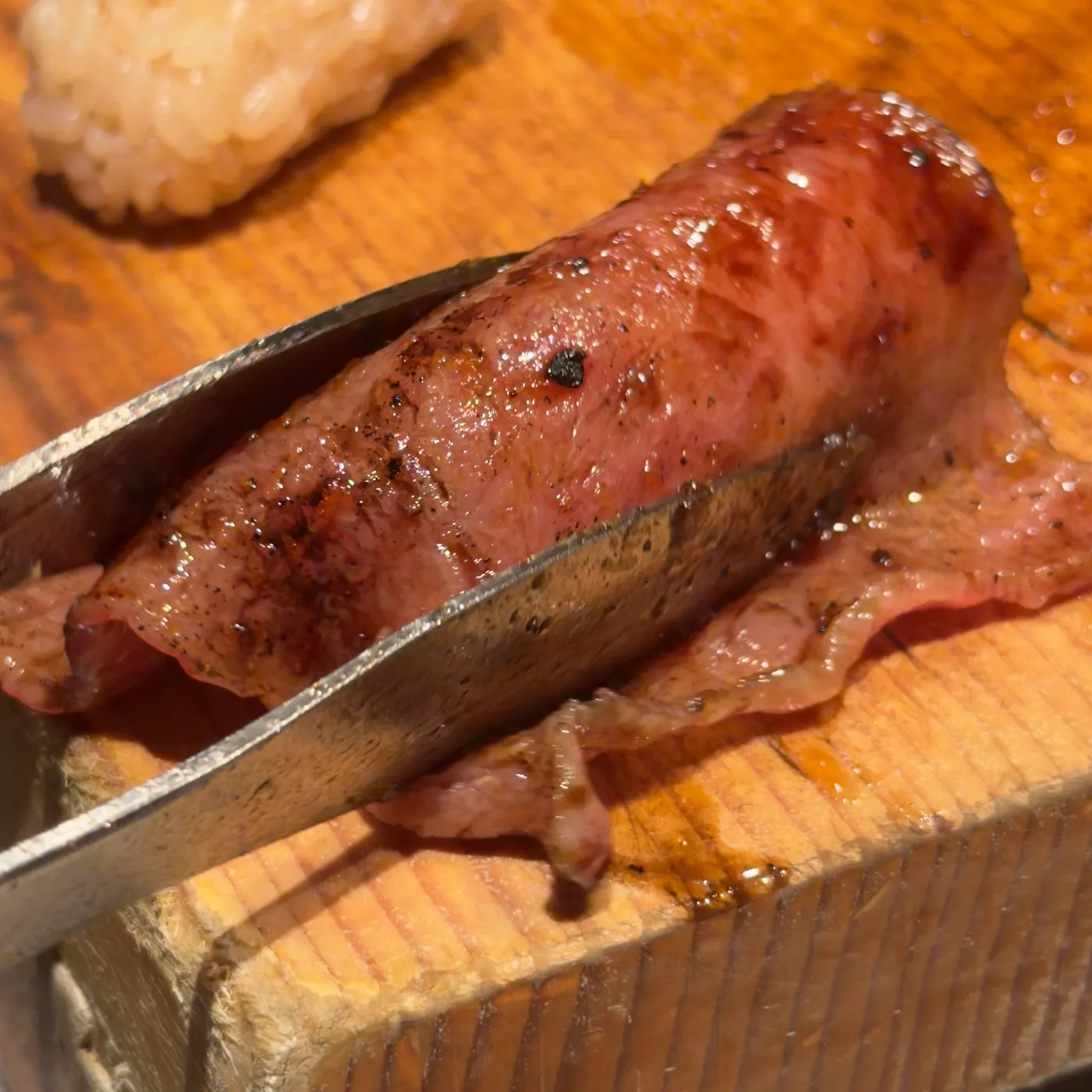
Ichibo Nigiri — イチボの握り
Ichibo seared on one side and kept rare, shaped over rice cooked with genmaicha, roasted brown-rice tea. The beef and tare both contribute sweetness; cooking the rice with tea is intended to moderate the sweetness of the white rice beneath them. Lightly grilled beef, sweet-savory sauce, and tea-cooked rice are brought together in a single piece.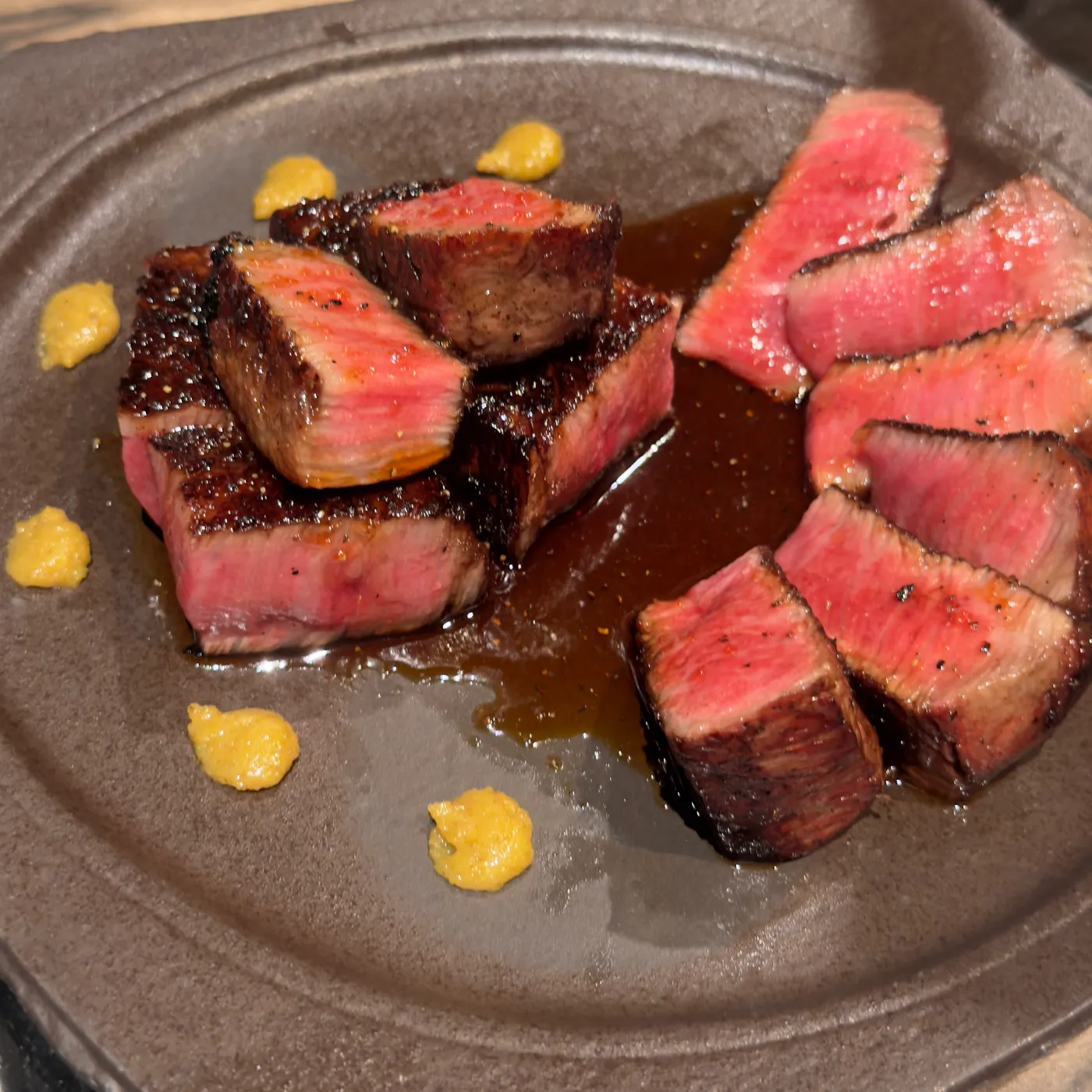
Chateaubriand — シャトーブリアン
A thick piece of wagyu fillet with a balance of lean meat and marbling. Its preparation takes almost an hour: grilling from every side, controlling the distance from the heat, and resting between turns. The exterior develops a dark crust while the center remains pink. Sliced into generous pieces, the beef combines that browned surface with a tender, juicy interior. Served with Jumbo’s family tare, inherited from Nambara-san’s grandmother and preserved since she opened her yakiniku restaurant in 1966. The sauce is an essential part of the preparation, accompanying the fillet rather than replacing its flavor with truffles, caviar, or another luxury ingredient.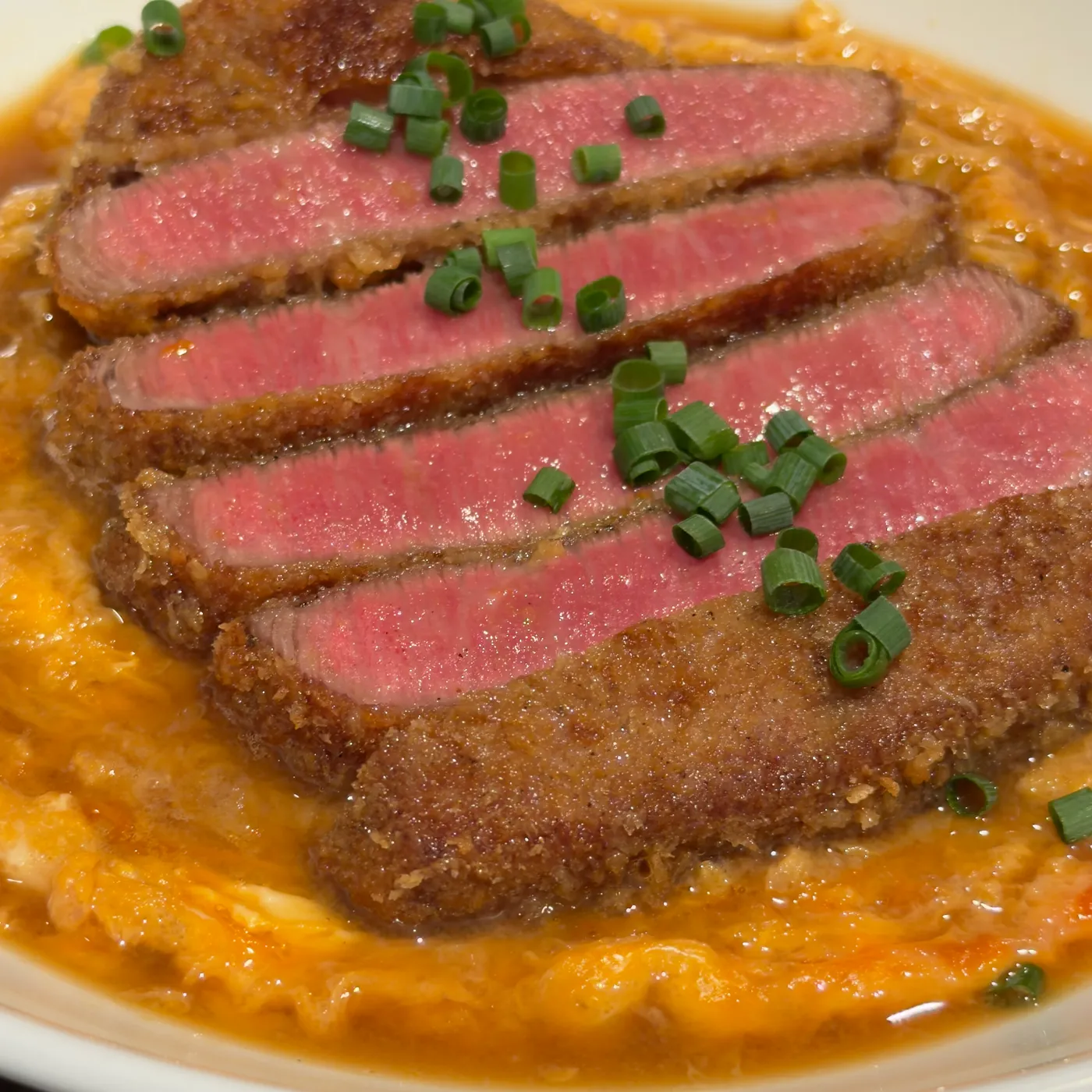
Hirekatsu — Chateaubriand Cutlet
Chateaubriand enclosed in a delicate, crisp coating, fried, and sliced to reveal a pink center. Served over softly cooked egg with tare, bringing together the crunch of the crust, tender beef, and silky egg. The same cut as the grilled Chateaubriand, but with an entirely different combination of textures.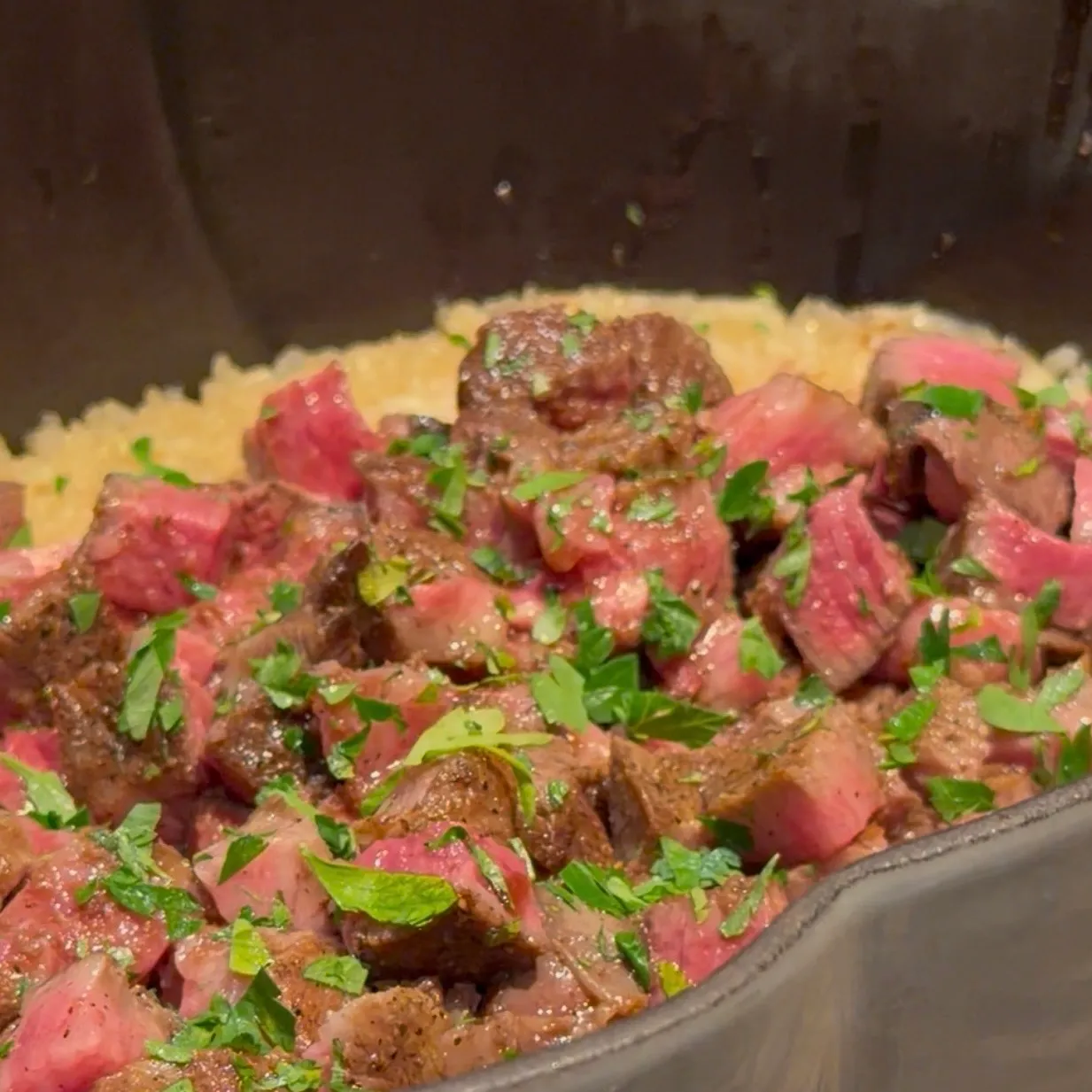
Ushigohan — 牛ご飯
Beef fillet with rice cooked in a bouillon made from chicken and vegetables. The fat and drippings released during grilling are used with soy sauce, red wine, garlic, and butter to season the preparation, carrying the flavor of the beef through the rice. A rich, savory takikomi gohan with a risotto-like character, topped with pieces of fillet and finished with fried onions. The onions add the final contrast to the tender meat and broth-enriched rice.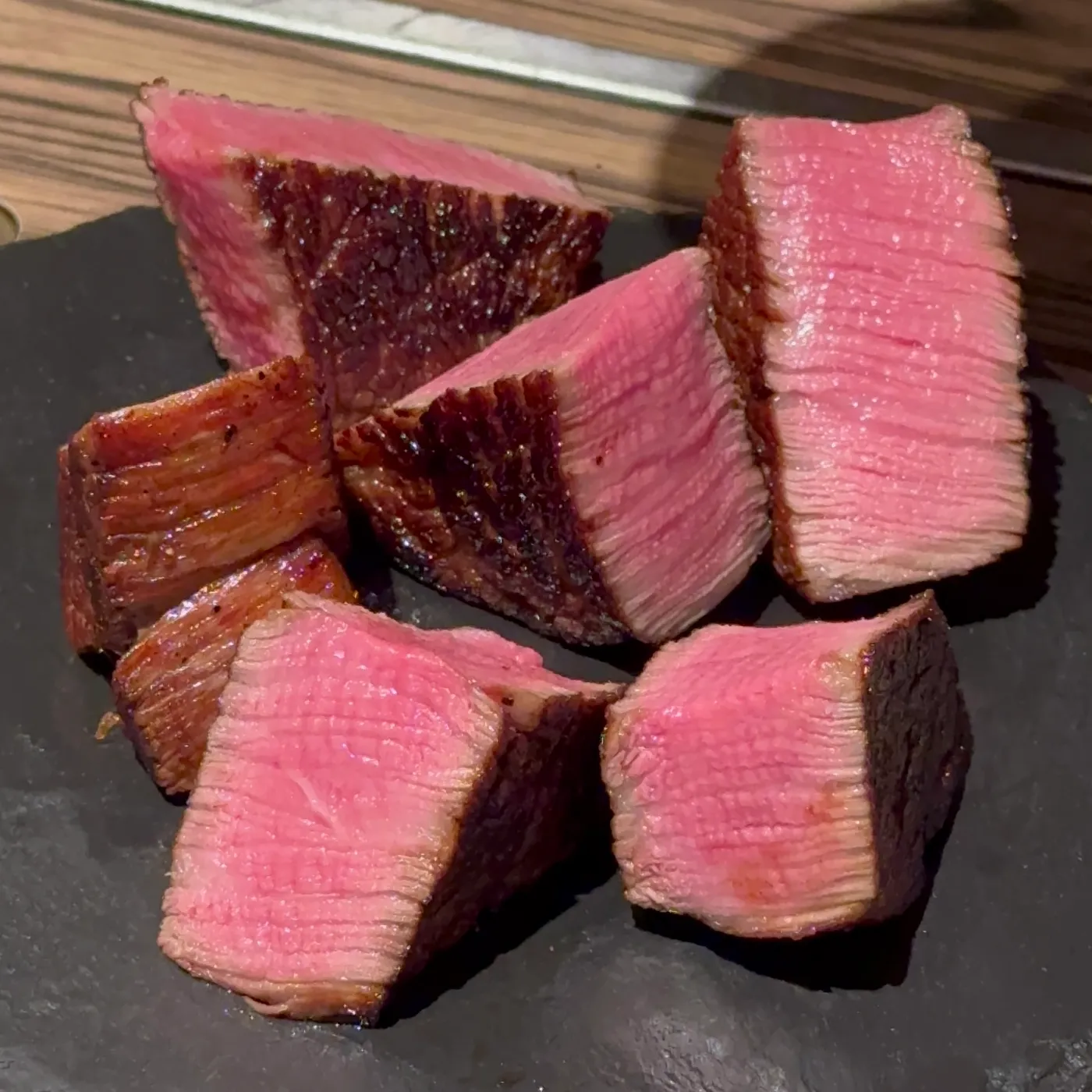
More Than Just Wagyu
After dinner, I spent some time talking with Nambara-san about his family, his restaurant, and the extraordinary group of sushi chefs he calls his friends. He told me that taking over Jumbo hadn't originally been part of his plan. He used to help at the restaurant occasionally, but the more time he spent with the customers, the more he began to understand what the place meant to them. Eventually, he decided that something this special deserved to continue. His father had taught him an important lesson. Even when business was difficult, he refused to compromise on the quality of the beef. He loved cooking, he loved his customers, and he understood that their trust was worth far more than whatever money he might save by buying cheaper ingredients. And then there was his grandmother, who opened the family's yakiniku restaurant in 1966. Her tare is still part of Jumbo's cooking today, while the memory of her wonderful salt-simmered chicken inspired Nambara-san to develop the salt-seasoned preparations we enjoy alongside the traditional sauce. I find that beautiful. Three generations, each leaving something of themselves in the food.