Etxebarri
Fri, Oct 23, 2026

Etxebarri
Inside Bittor’s Kitchen
In ten years of coming to Etxebarri, I have never once seen Bittor Arginzoniz in the dining room.
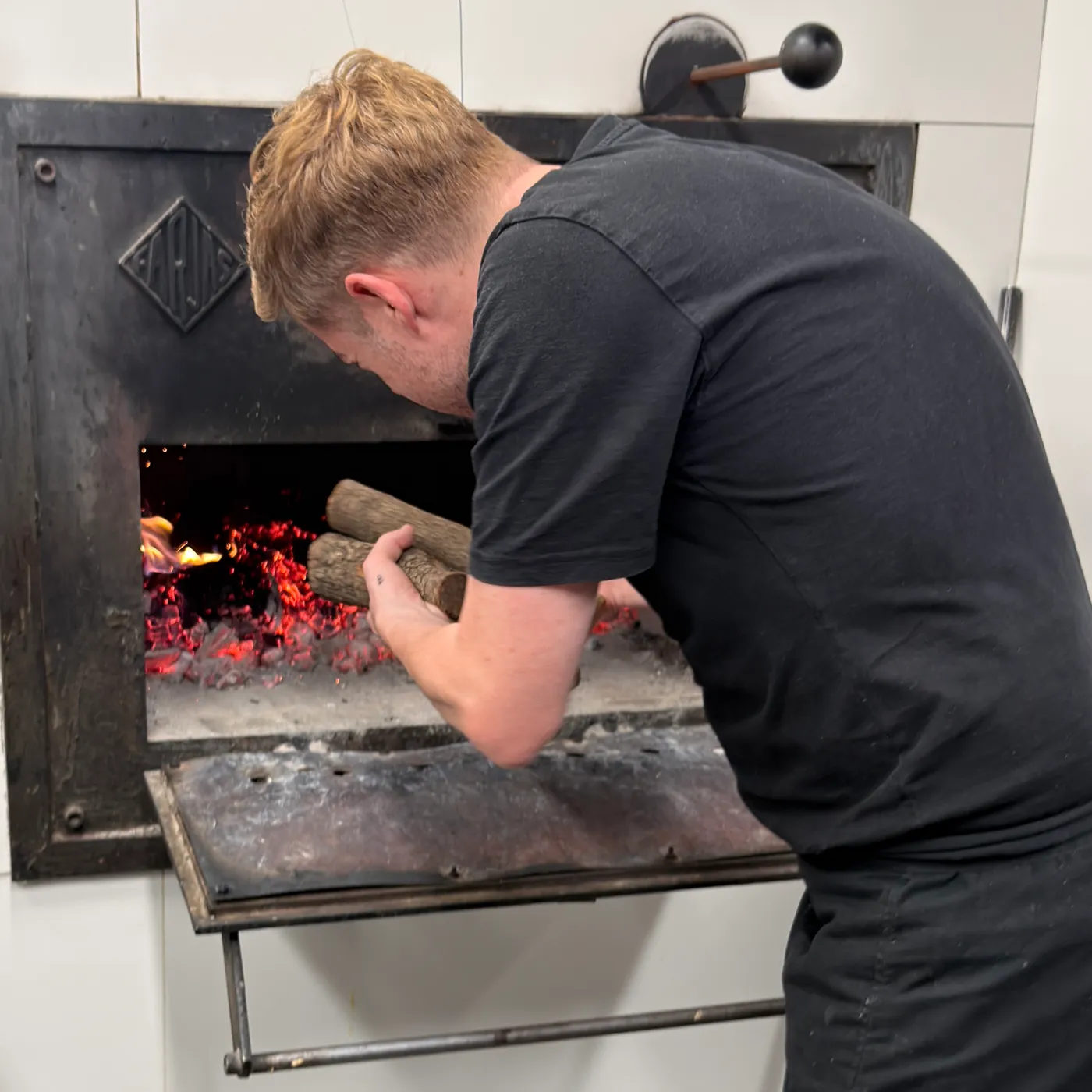
His place is the tiny kitchen. It is his protected paradise. Wood burns down to embers in an oven, then the embers are moved to the grills. There, he does the work that keeps bringing us back, usually in almost complete silence.
Diners naturally want to visit him. But Bittor is protective of that space and does not generally encourage kitchen visits during service.
That is why being allowed to spend about half of this meal there meant so much to me.
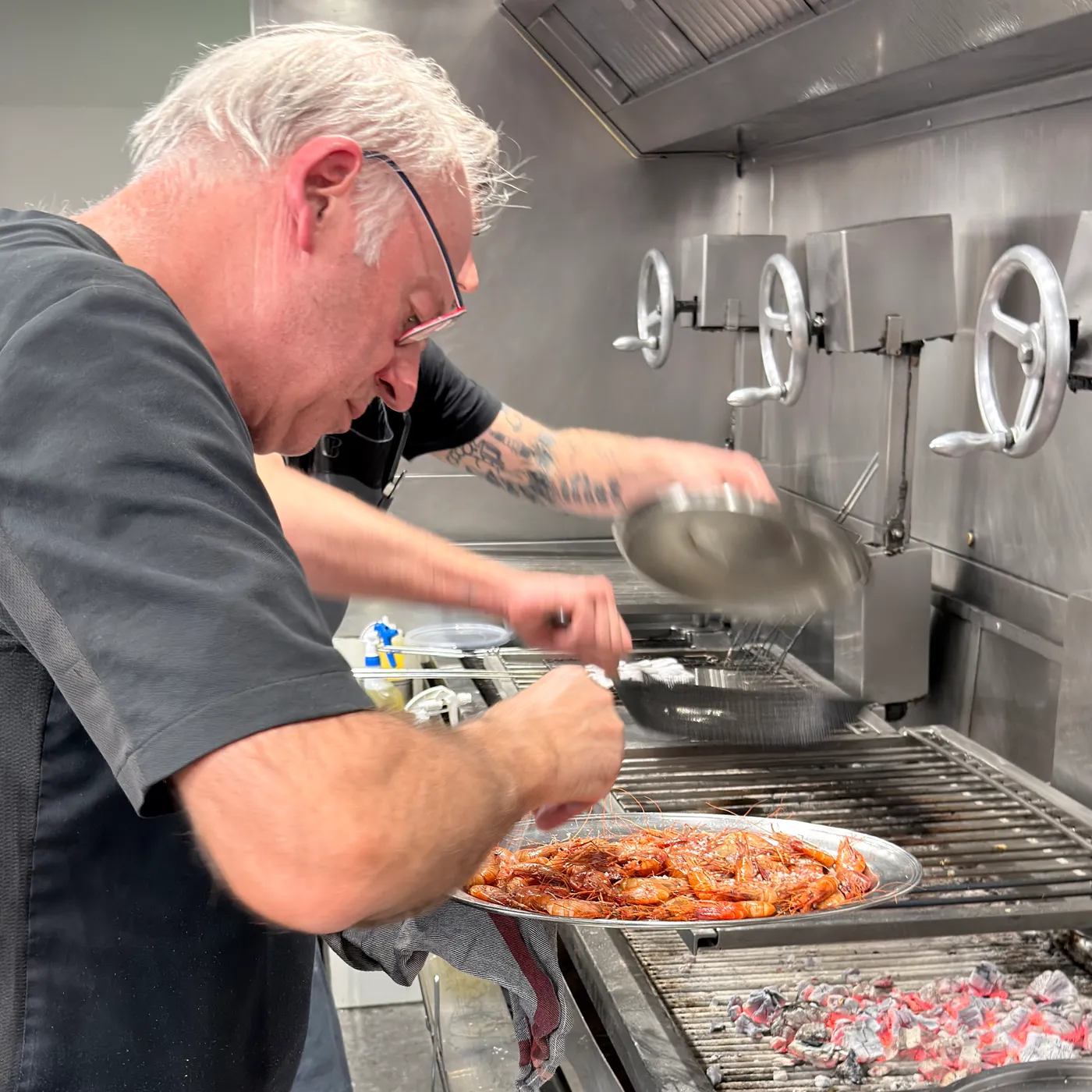
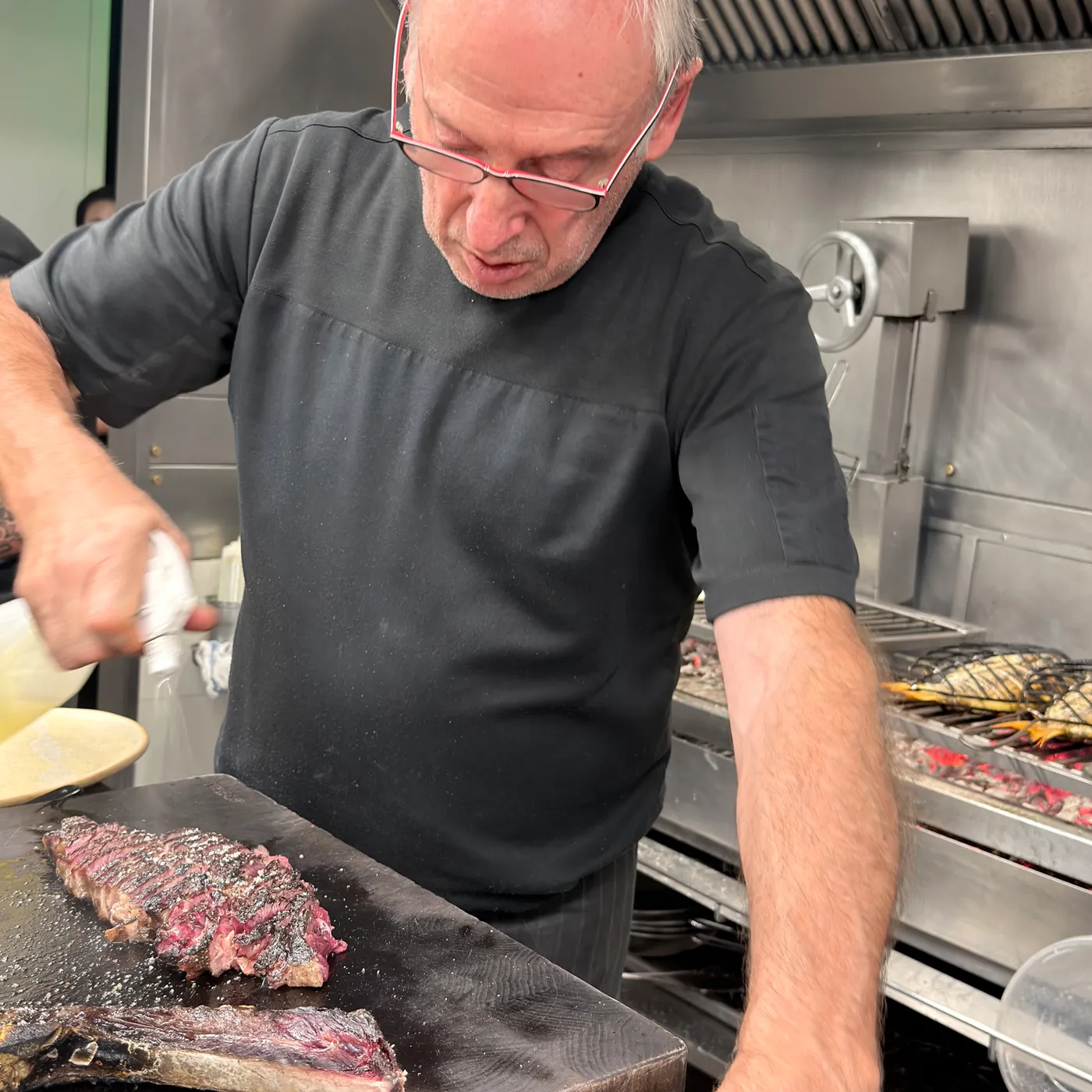
I stood beside Bittor as he cooked, with Héctor Gran and Oliver Frank Jennings working alongside him. They answered my questions about the dishes while cooking for a full restaurant.
We talked about the buffalo milk brought down that morning and the mozzarella he shapes just before service. About the six months it takes to cure the anchovies, and how he gently warms and smokes the caviar over vine shoots. Details I would never have understood from a photograph alone.
Much of what follows comes from my conversation with Bittor and his chefs. Alongside the dishes we ate, I wanted to preserve their explanations of what goes into them and why he does things the way he does.
After ten years at the table, I felt very fortunate to spend this much time on the other side.
What we ate
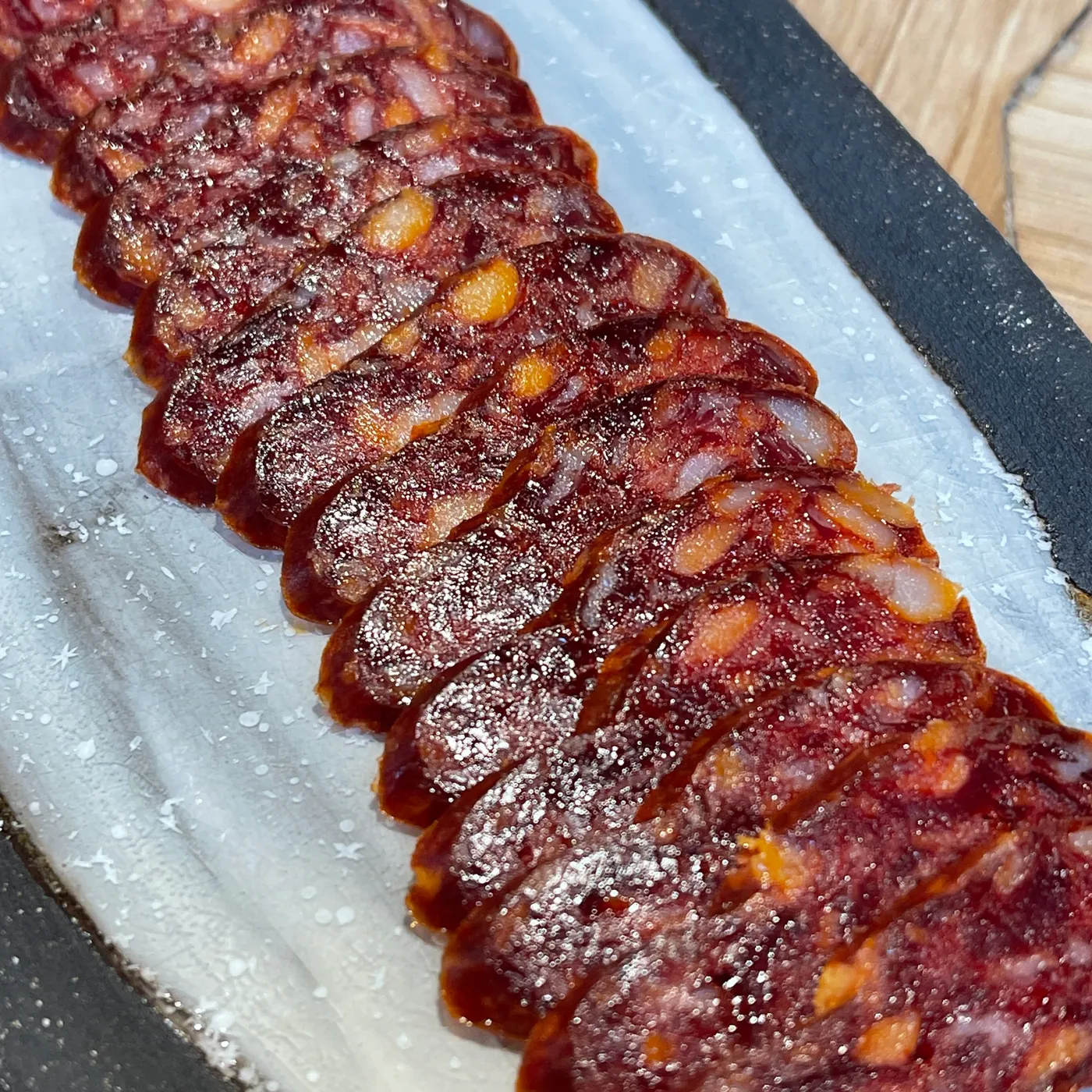
House-made Joselito chorizo
Bittor told me what goes into his chorizo: two cuts of Joselito pork, presa and secreto, seasoned with pimiento choricero grown in the restaurant’s own garden, garlic, and salt.
Making it is a winter job. He watches the moon’s phases and the weather, choosing the coldest days at the beginning of the season because warmth can interfere with the curing.
Those thin slices at the start of lunch carry work that began months before we sat down.
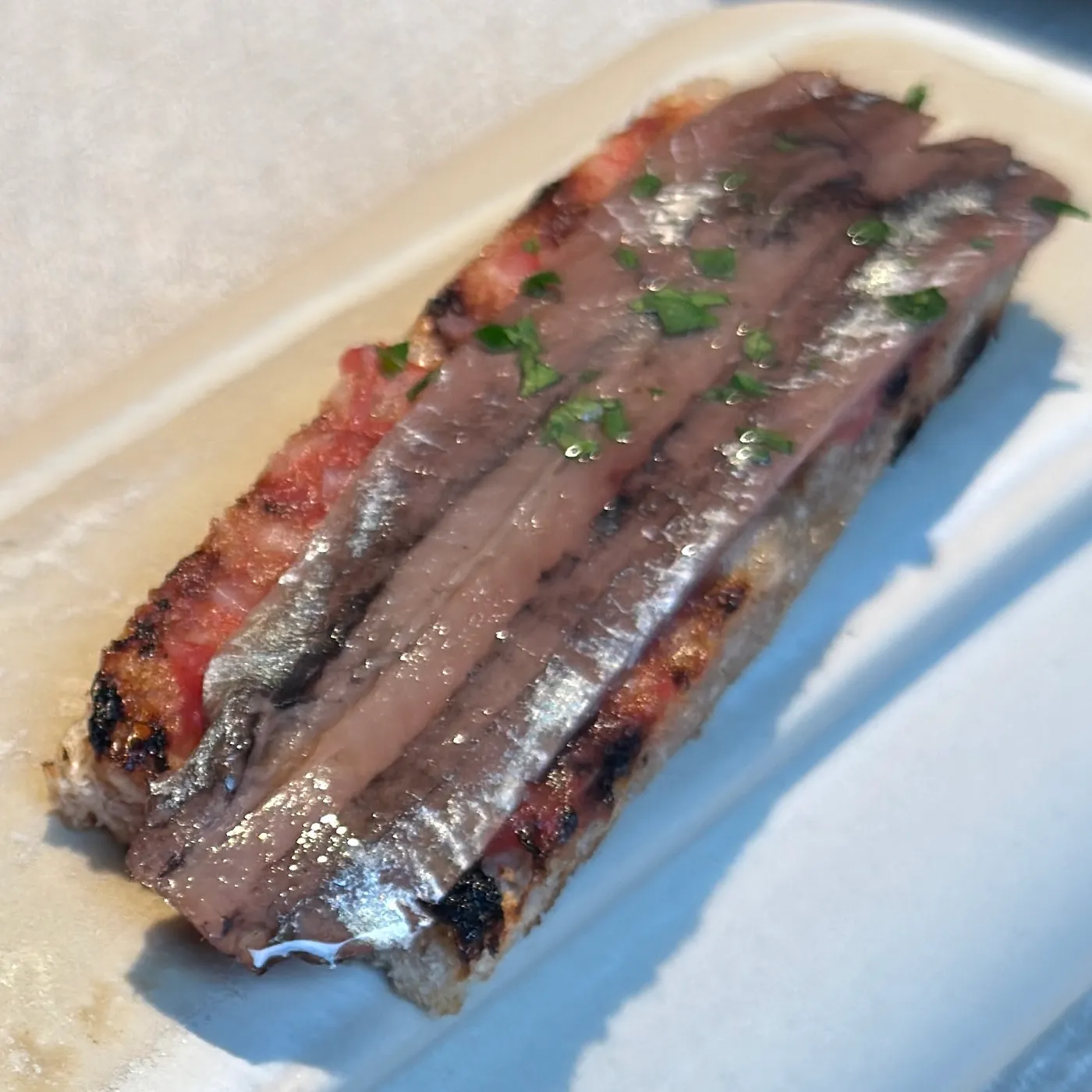
House-cured anchovy on sourdough toast with tomato and onion
Bittor selects the anchovies in spring, usually around April. He explained that he wants them large and carrying roe.
Their heads and guts are removed before they are packed into barrels with salt. They remain there for approximately six months before being ready for the restaurant.
The finished anchovy comes on toasted sourdough baked at Etxebarri, with tomato and onion.
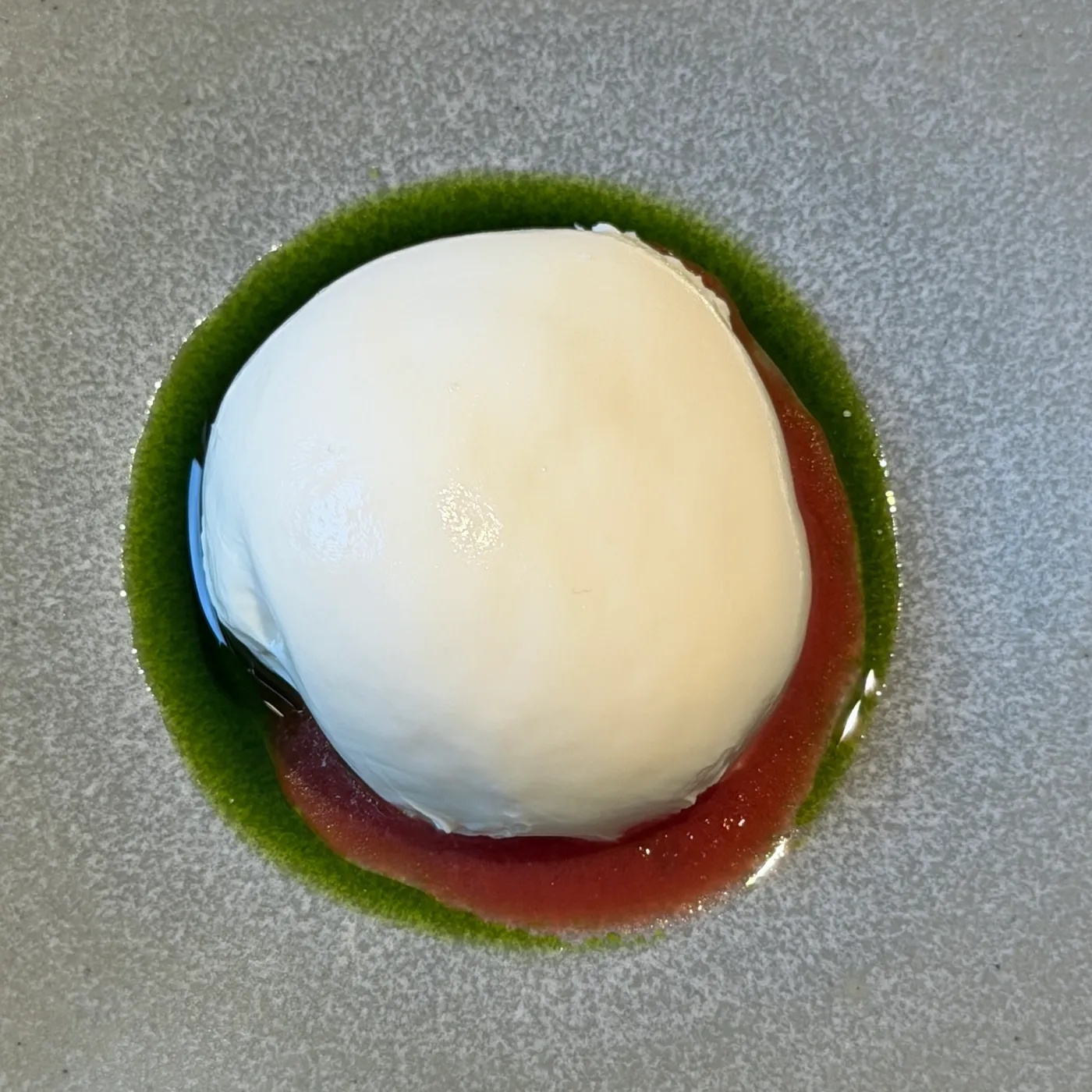
Fresh buffalo mozzarella
The mozzarella begins with milk from Bittor’s own buffaloes, milked that morning and brought down from the farm early in the day.
It is strained and pasteurized before cultures and rennet are added. Making the cheese takes around two to three hours. The whey is drained, salted, and kept as the liquid in which the finished mozzarella balls rest.
Bittor told me he shapes the balls himself at around 11:30 each day, just before service. By the time ours reached the table, the milk had become cheese only a short time earlier.
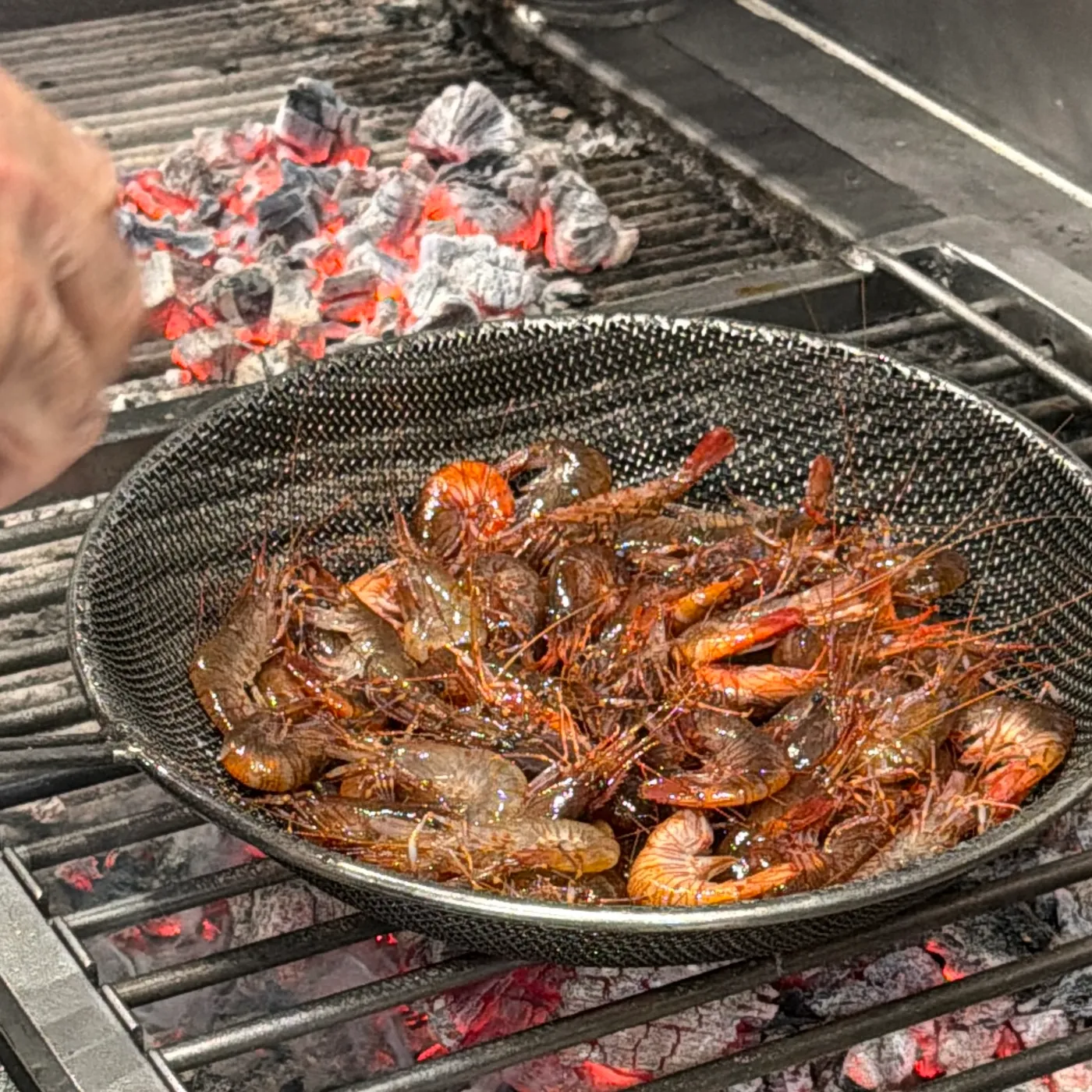
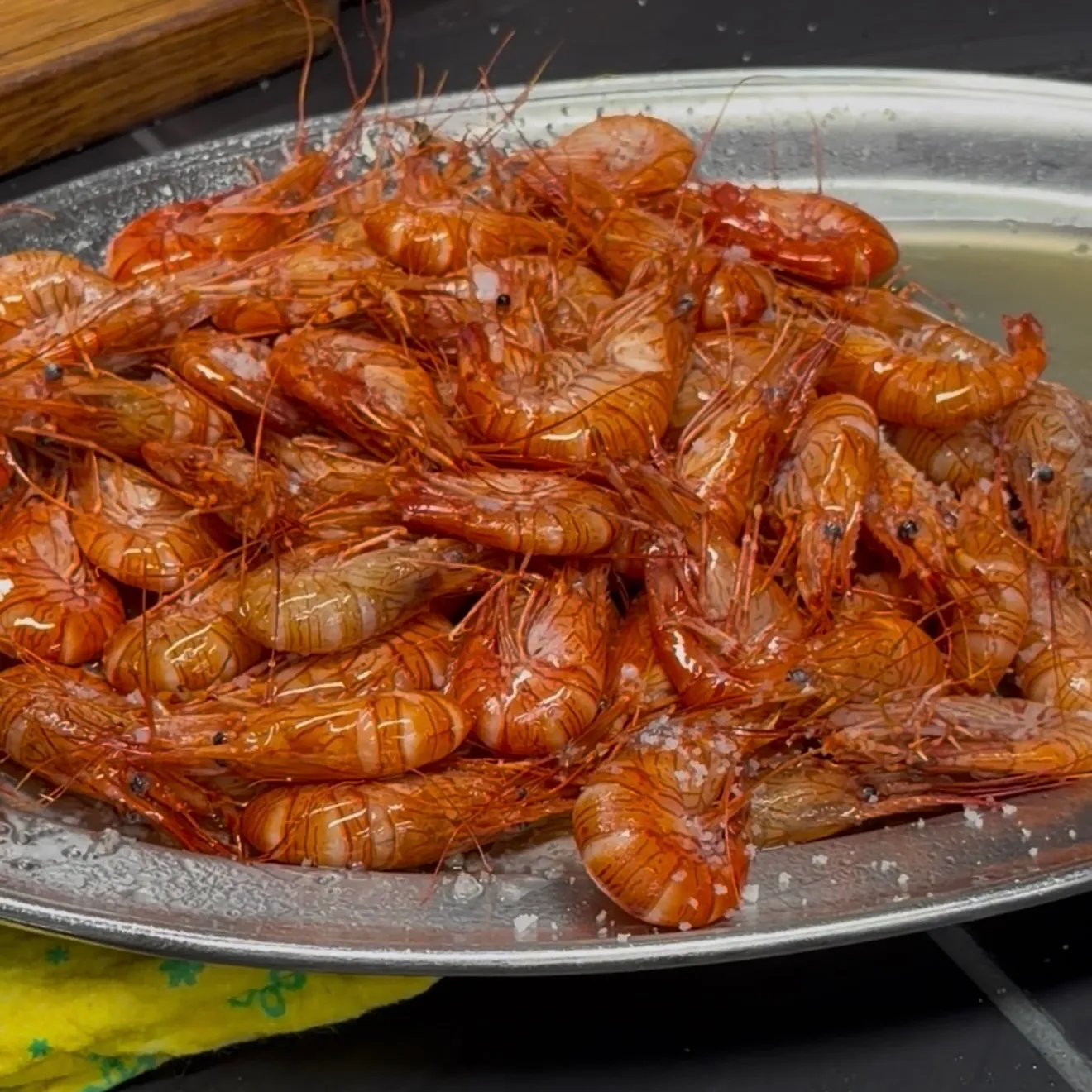
Camarones with chili oil and coarse salt
Finding these camarones is difficult, Bittor explained. He works with two suppliers in Galicia and Cantabria, looking for large, dark specimens rather than small, translucent ones.
They are kept alive in holding tanks until cooking. Even with those suppliers, he can obtain them for only about two or three months of the year.
They are tossed in a covered pan over high heat, then finished with chili oil and coarse salt.
Grilled Palamós red prawns
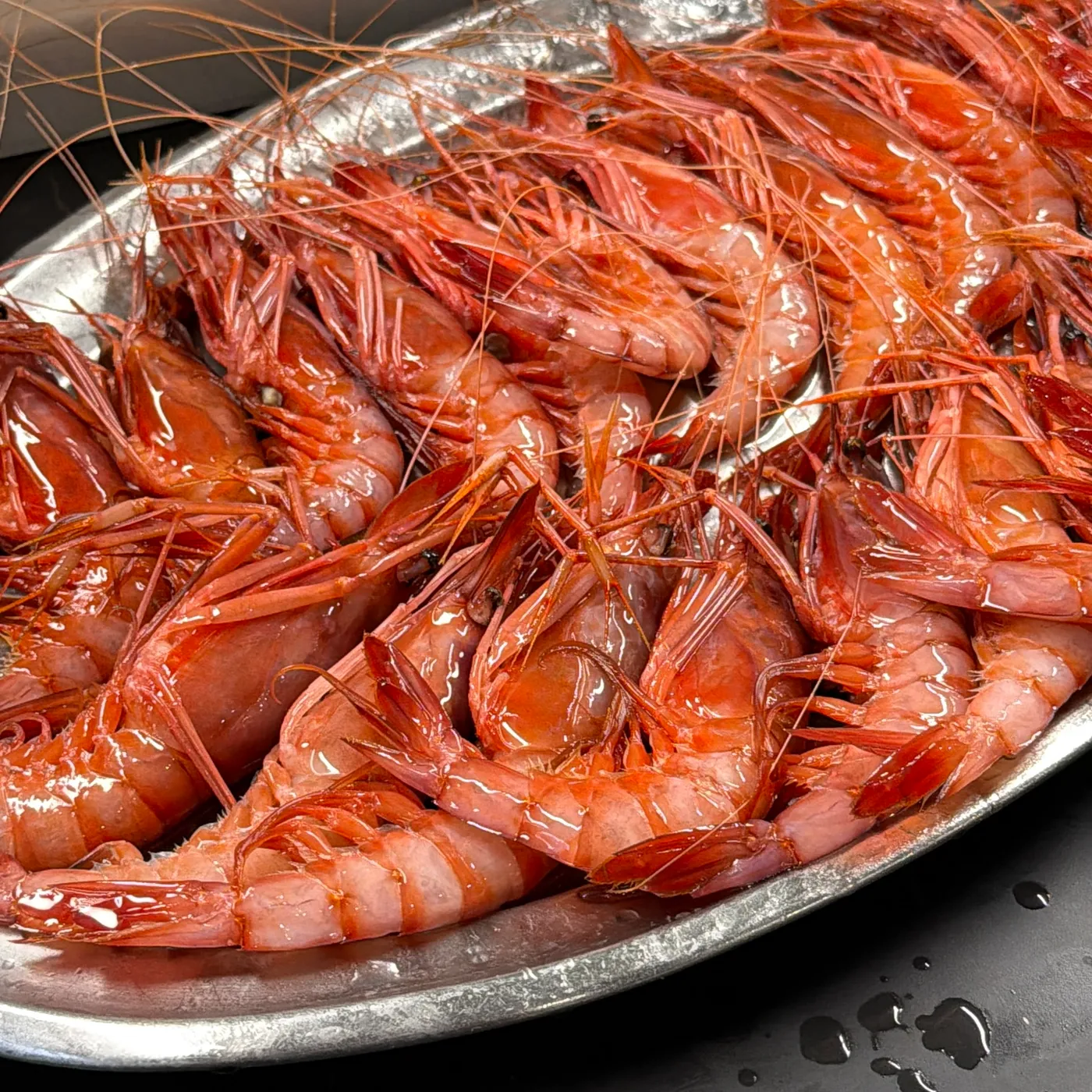
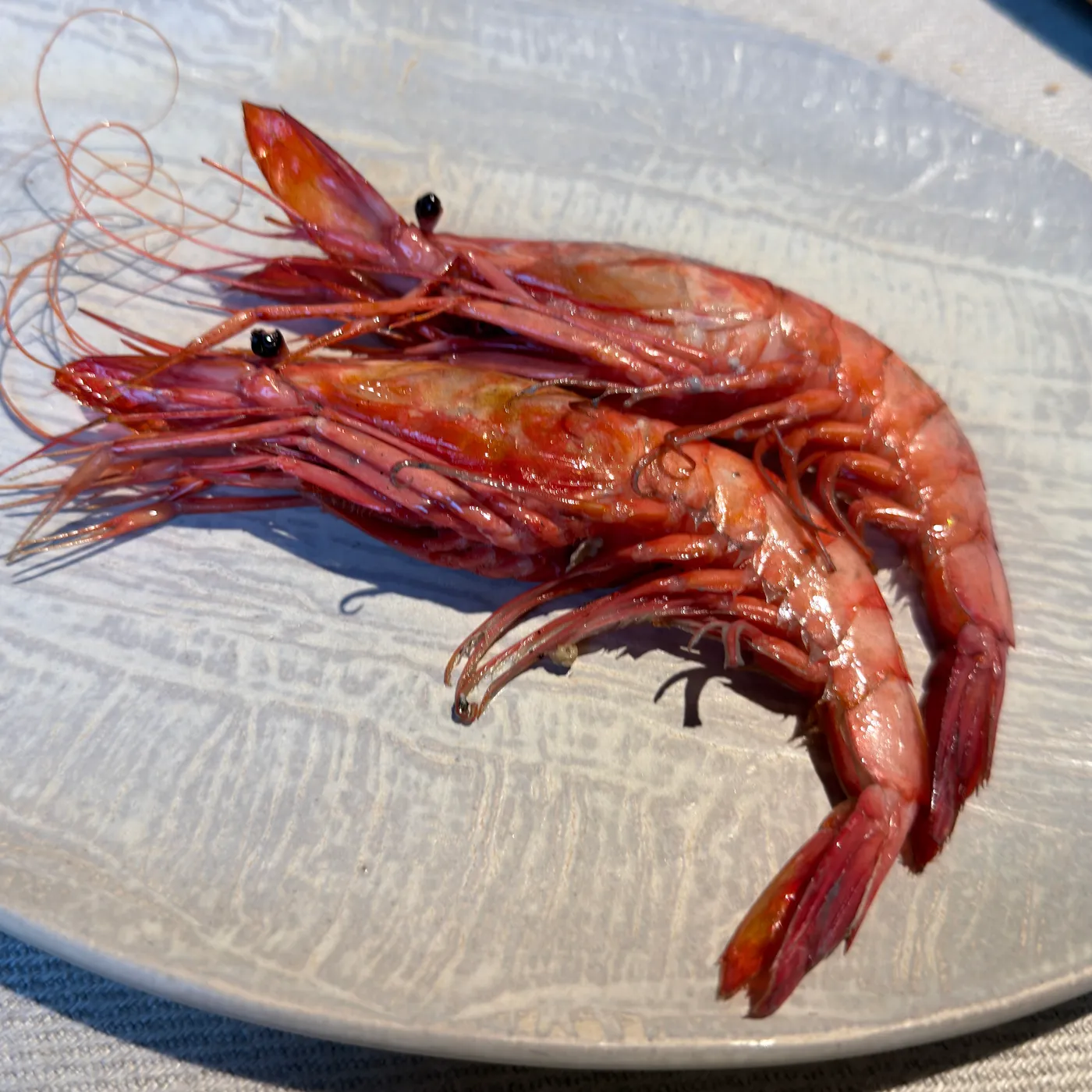
The red prawns arrive fresh from Palamós every day. Bittor explained that they travel in seawater and ice, without preservatives.
For the cooking, he uses medium-low embers and allows approximately three to four minutes on each side.
Galician coquinas with Thai jasmine rice and salsa verde
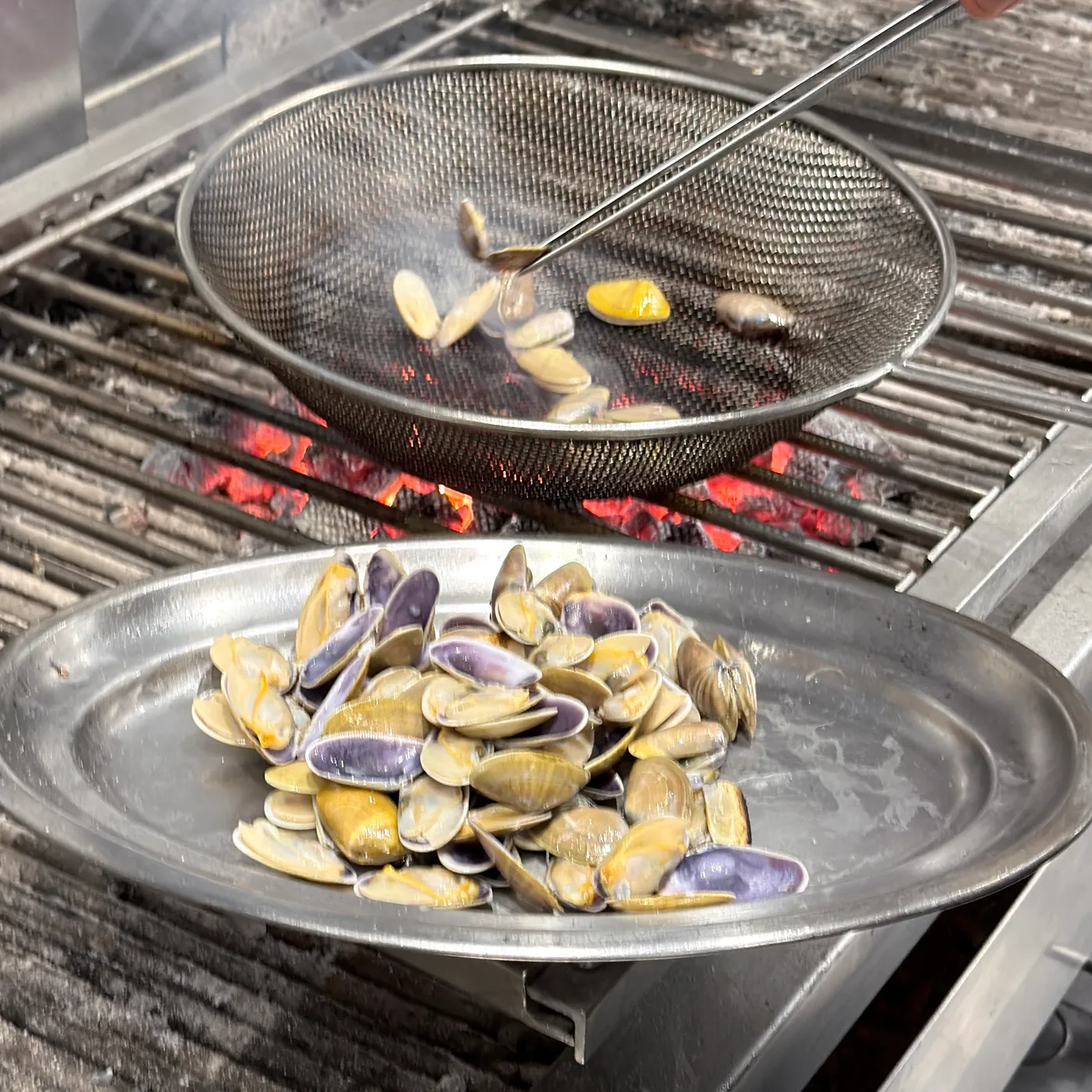
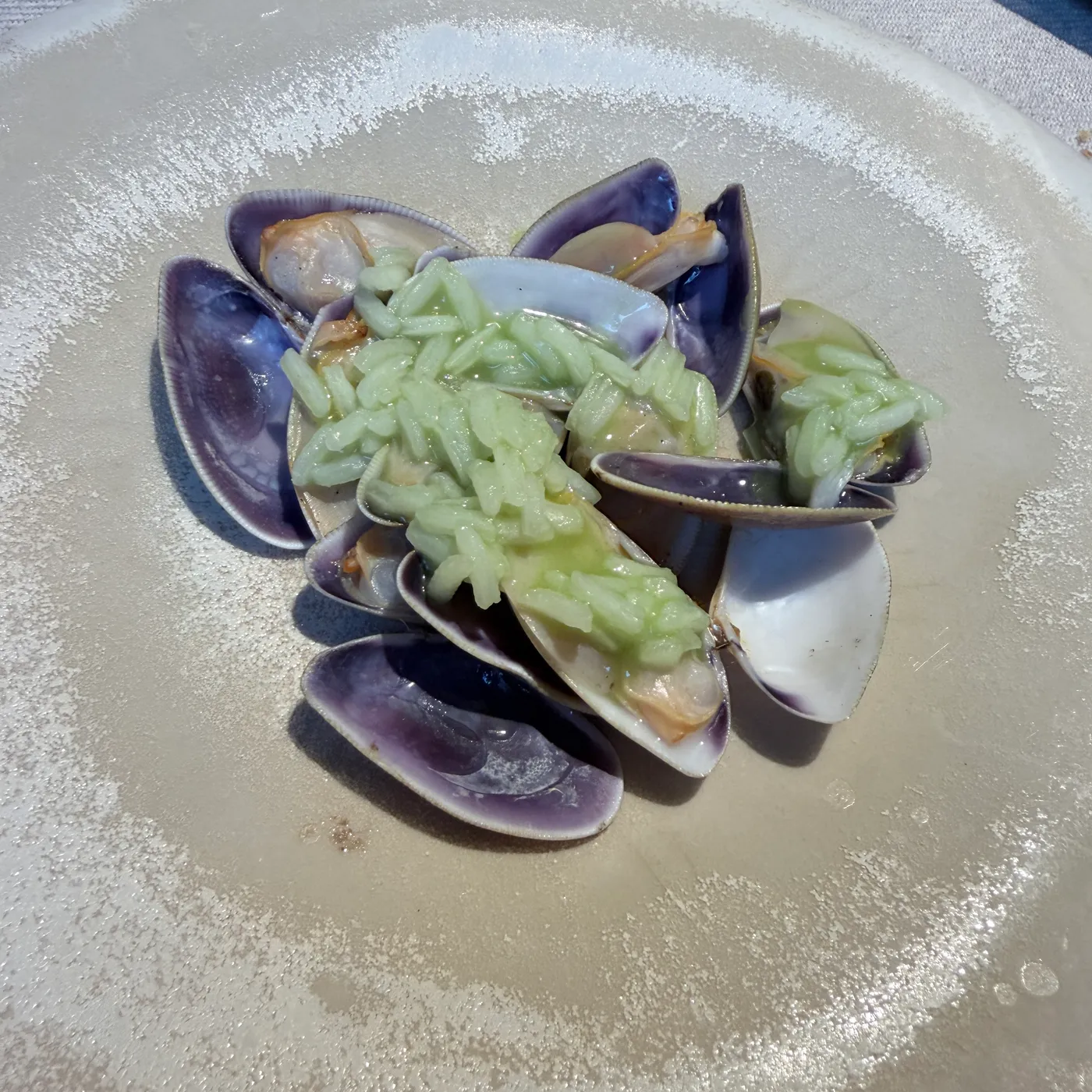
The coquinas come directly from Galicia, arriving the day after they are gathered. Bittor asks for the largest available.
He told me there are only a few days each year when he manages to get them. Their appearance on the menu depends on what the gatherers can supply.
They cook over the embers and come with jasmine rice from Thailand and a little salsa verde, the rice nestled among the open shells.
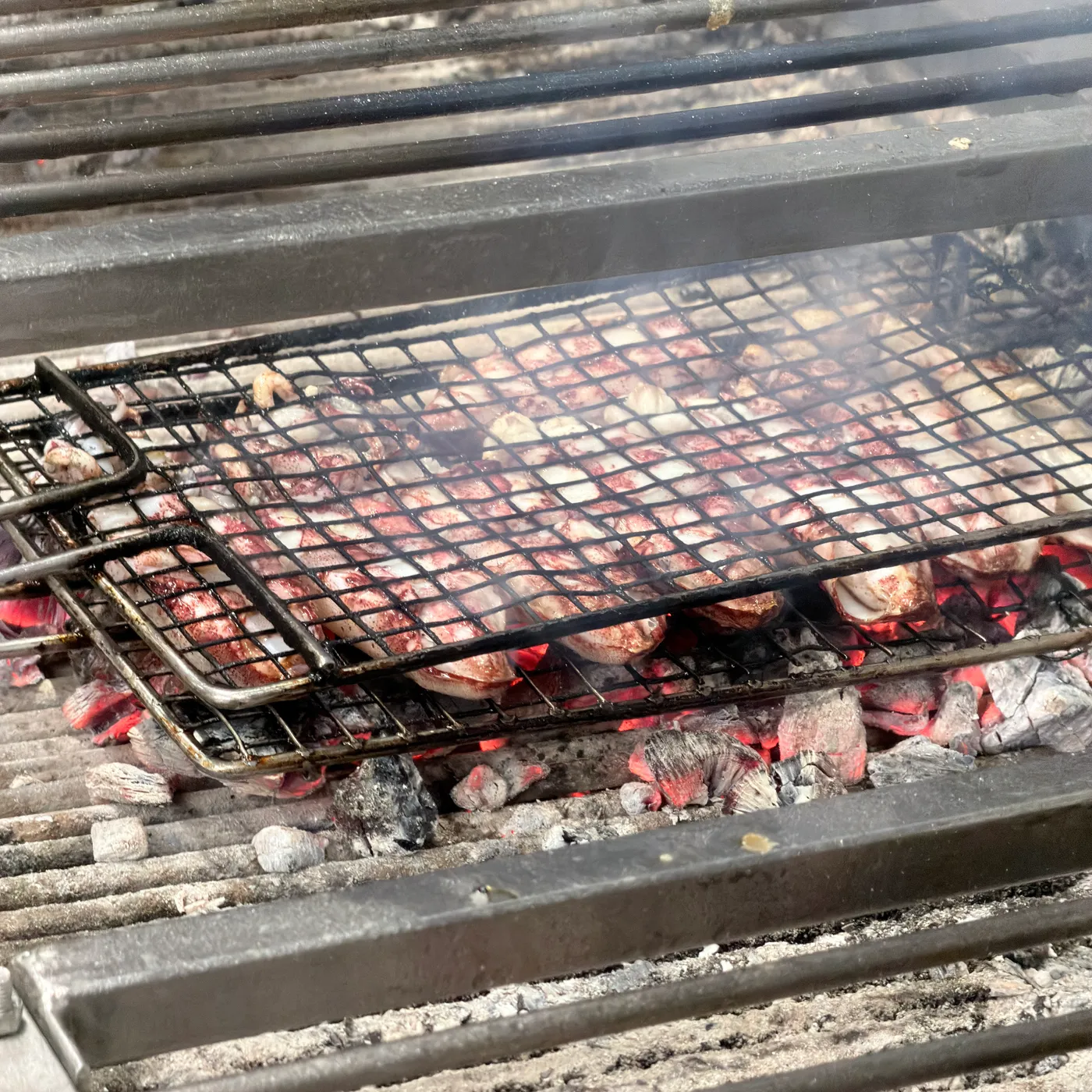
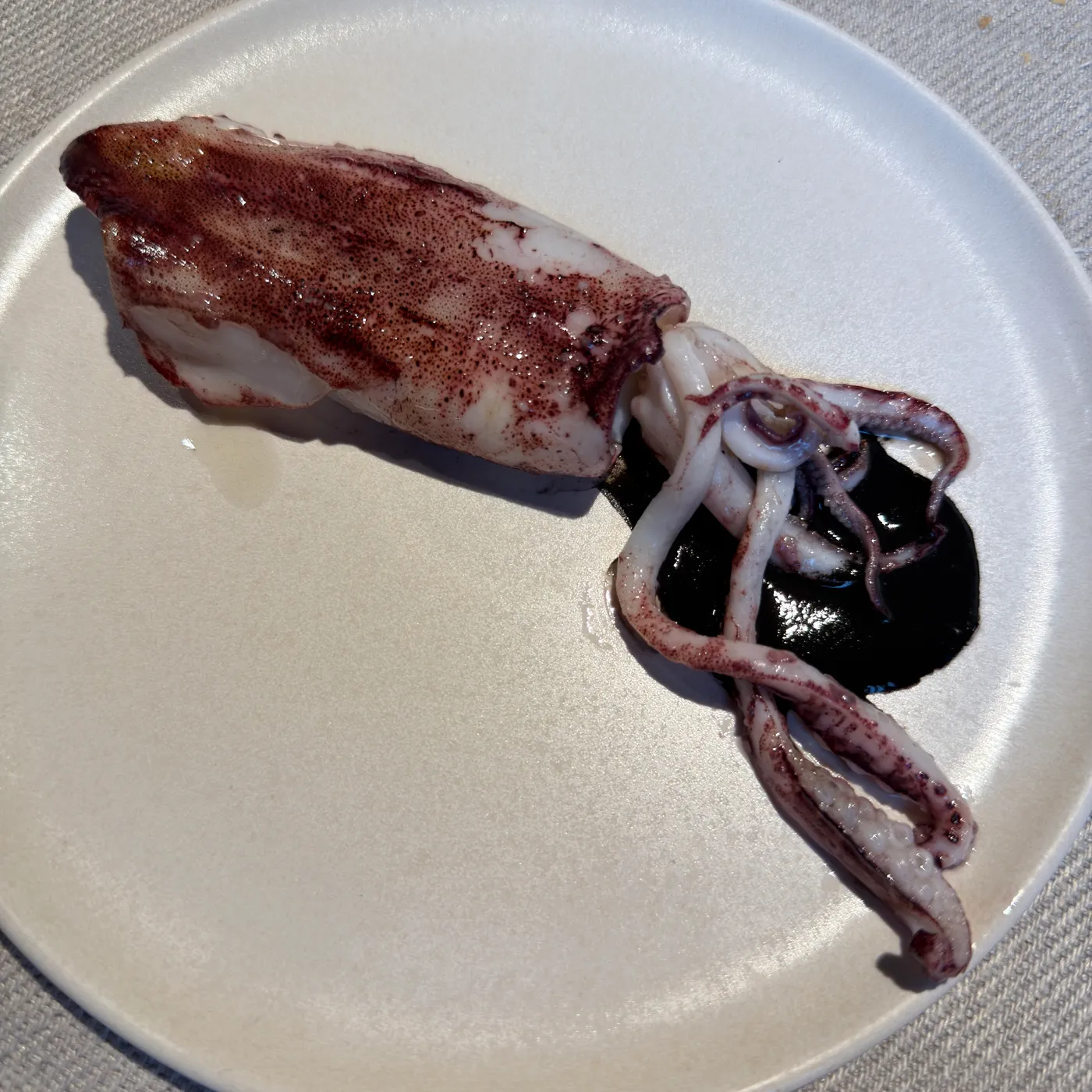
Chipirones stuffed with caramelized onion, with Basque squid ink sauce
Bittor explained that the chipirones are caught individually on hooks during the night and early morning, with lights used to attract them to the boats.
Their season runs roughly through summer and fall. They begin small and grow as the season progresses. He prefers the smallest possible specimens for their tenderness.
The stuffing is slowly cooked, caramelized onion, with a little apple cider added to the preparation. After grilling, the chipirones are served with a traditional Basque squid ink sauce made from onion, garlic, green pepper, squid ink, and squid stock.
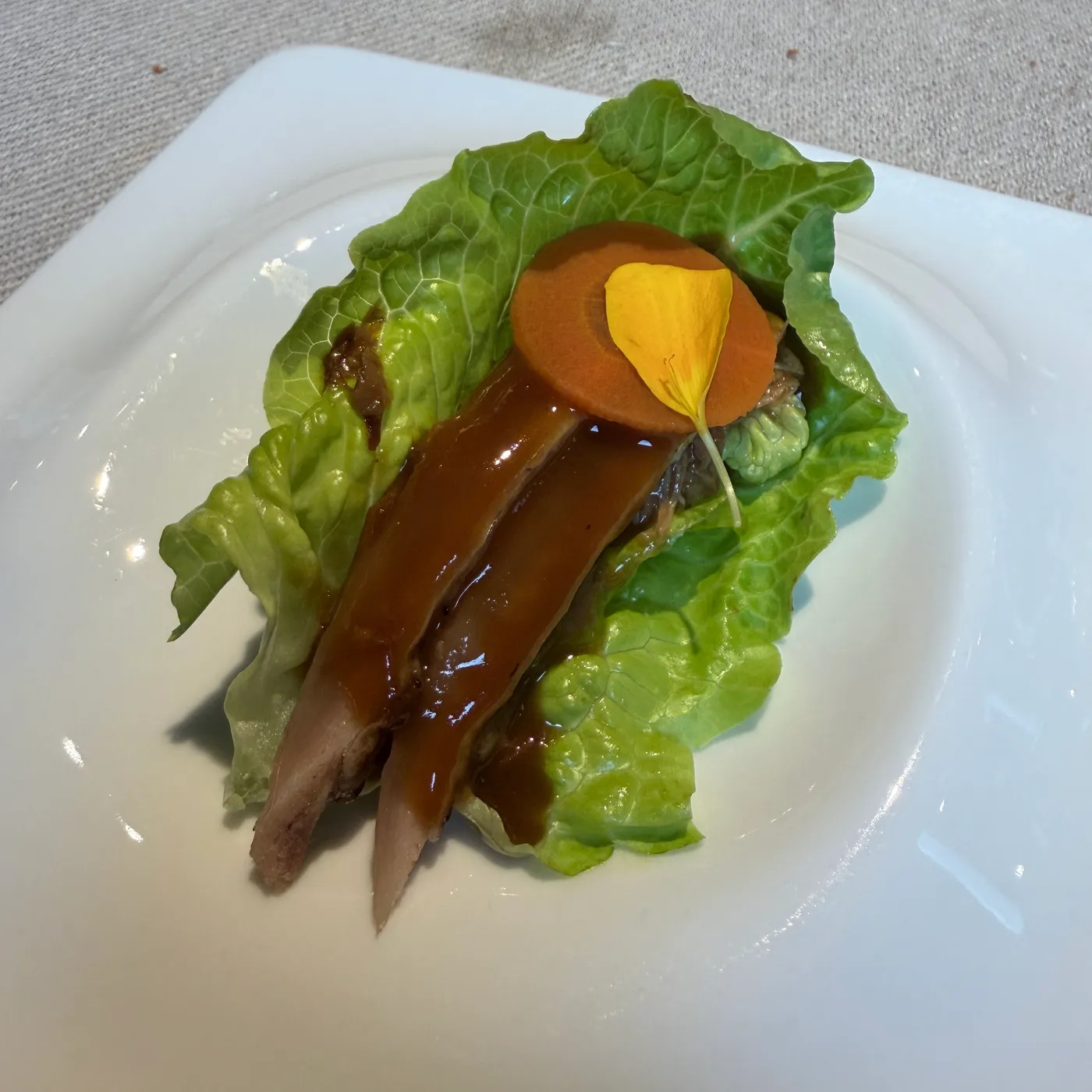
Wild partridge with escabeche in a lettuce leaf
Bittor serves wild partridge from Castilla y León. He wants the younger, more tender birds available at the beginning of the season, so he serves the dish for only a short time.
Our visit fell on the last day he was serving it.
It came in a lettuce leaf with a little escabeche. Bittor explained its place in the meal: something fresh before moving on to the kokotxas and the other fish courses.
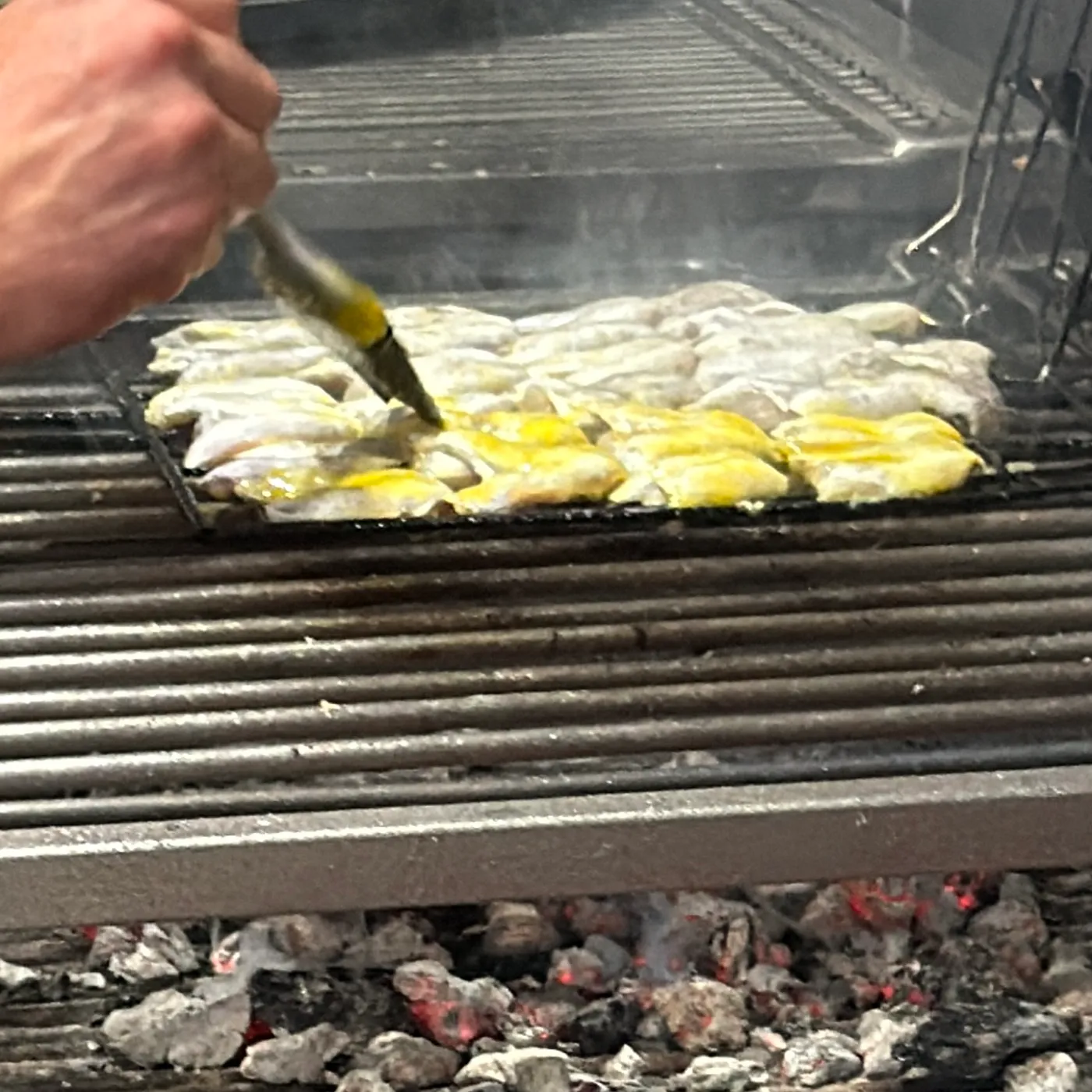
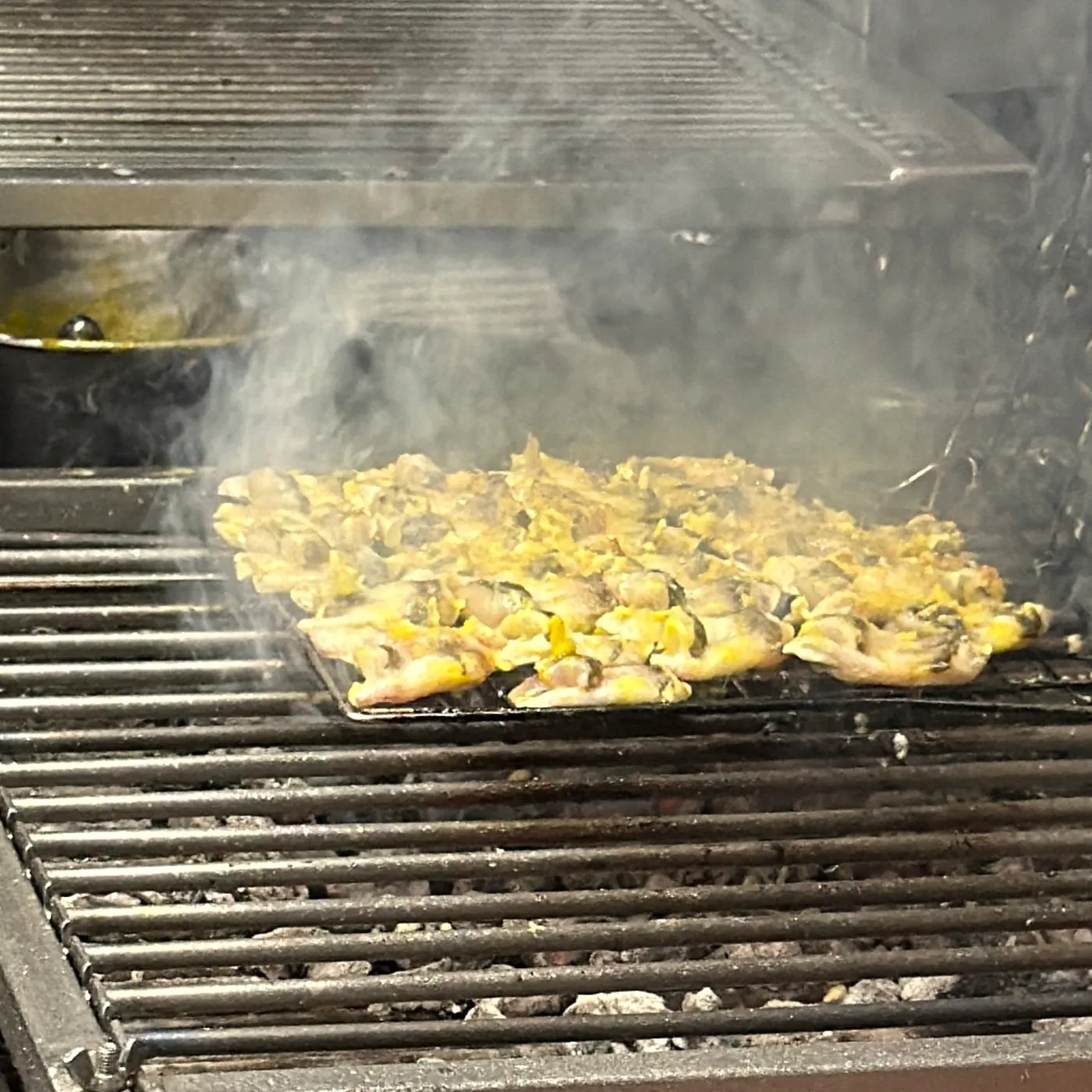
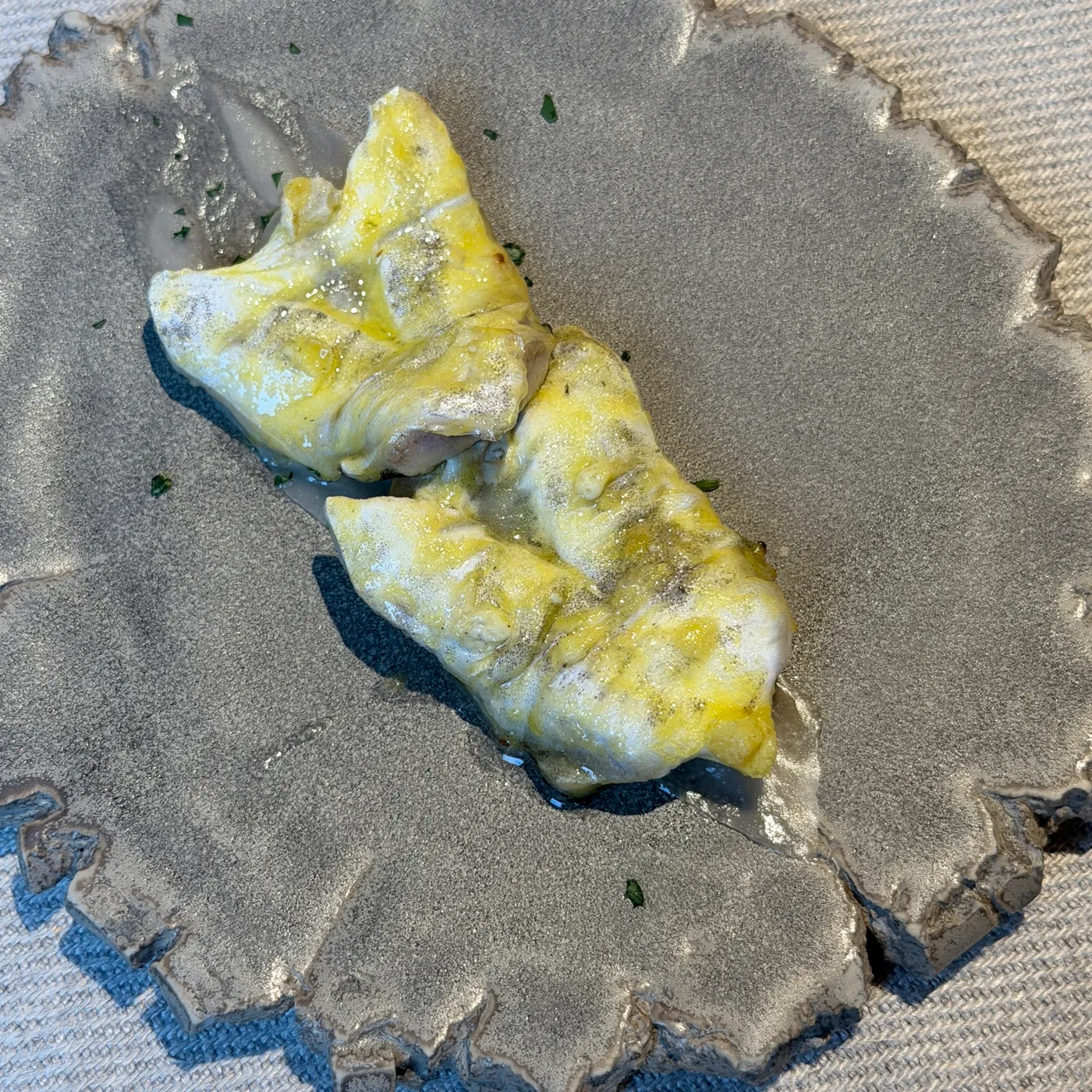
Grilled hake kokotxas with egg yolk and a salsa verde crisp
These kokotxas, the small cuts from beneath the hake’s jaw, come from the Cantabrian Sea, supplied by fishermen around Gipuzkoa, near Zarautz and San Sebastián.
Bittor told me that hake kokotxas are less consistently available than cod kokotxas. He often manages to obtain them, but had none the week before our visit.
His version adapts the familiar idea of a coated kokotxa to the grill. The fish is brushed with egg yolk and oil before cooking over the embers, where the coating sets in the heat.
A crisp made from salsa verde sits underneath the finished kokotxas.
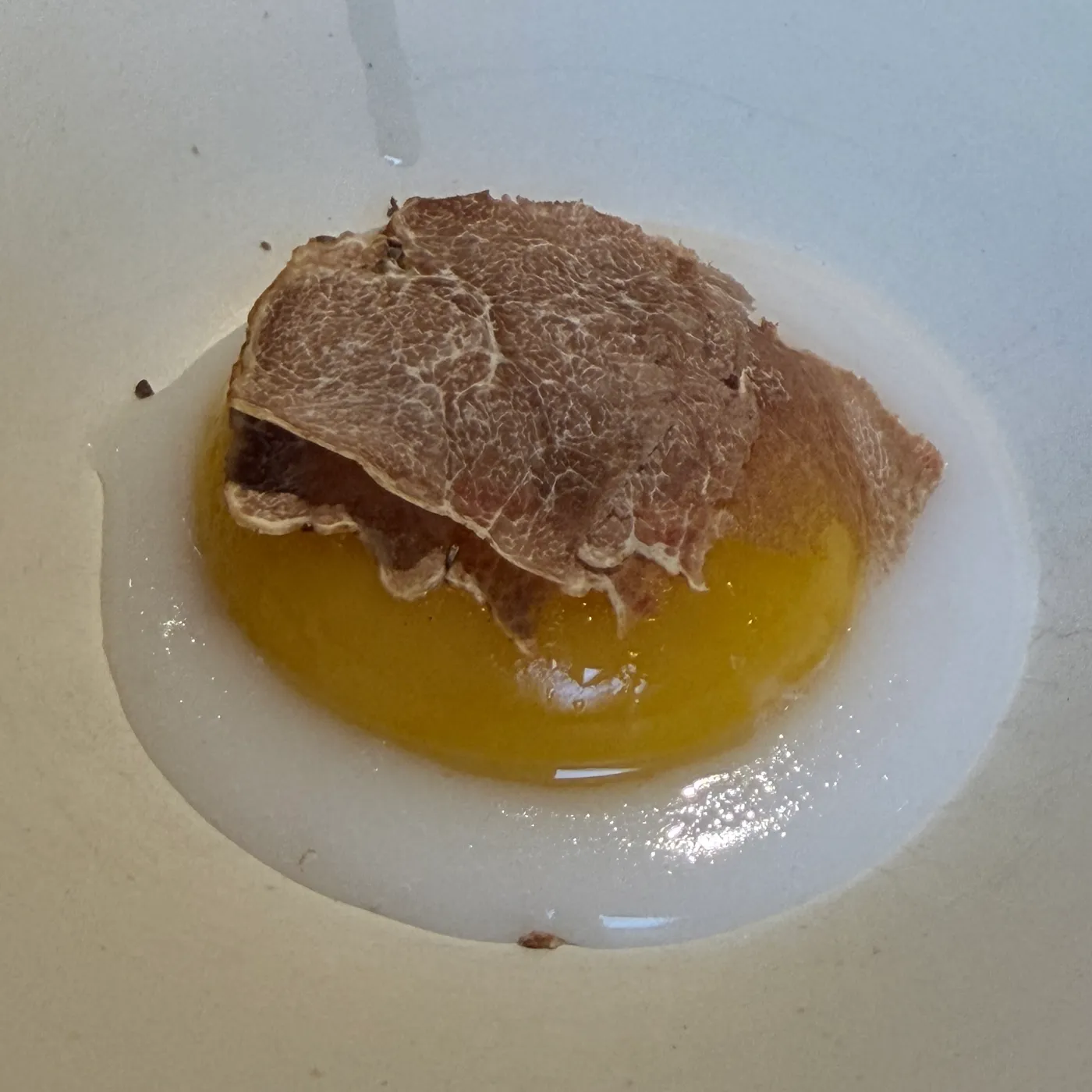
Smoked egg yolk with rice cream and Alba white truffle
Bittor told me the egg yolk dish has been at Etxebarri for around six or seven years. Before that, he served a scrambled egg preparation.
He described the problem he wanted to solve: cooking a yolk without breaking it, at a low temperature, while giving it the aroma of the embers. His method involves tea infusers and warm oil, with the yolk now receiving a brief smoke inside the oven.
The smoking oven is kept at approximately 80 to 90°C. The yolk receives around two minutes of smoke before arriving warm at the table.
It rests on a cream of rice and white truffle, with thin slices of Alba white truffle above. The truffles arrive weekly, directly from La Morra, and the season continues through December.
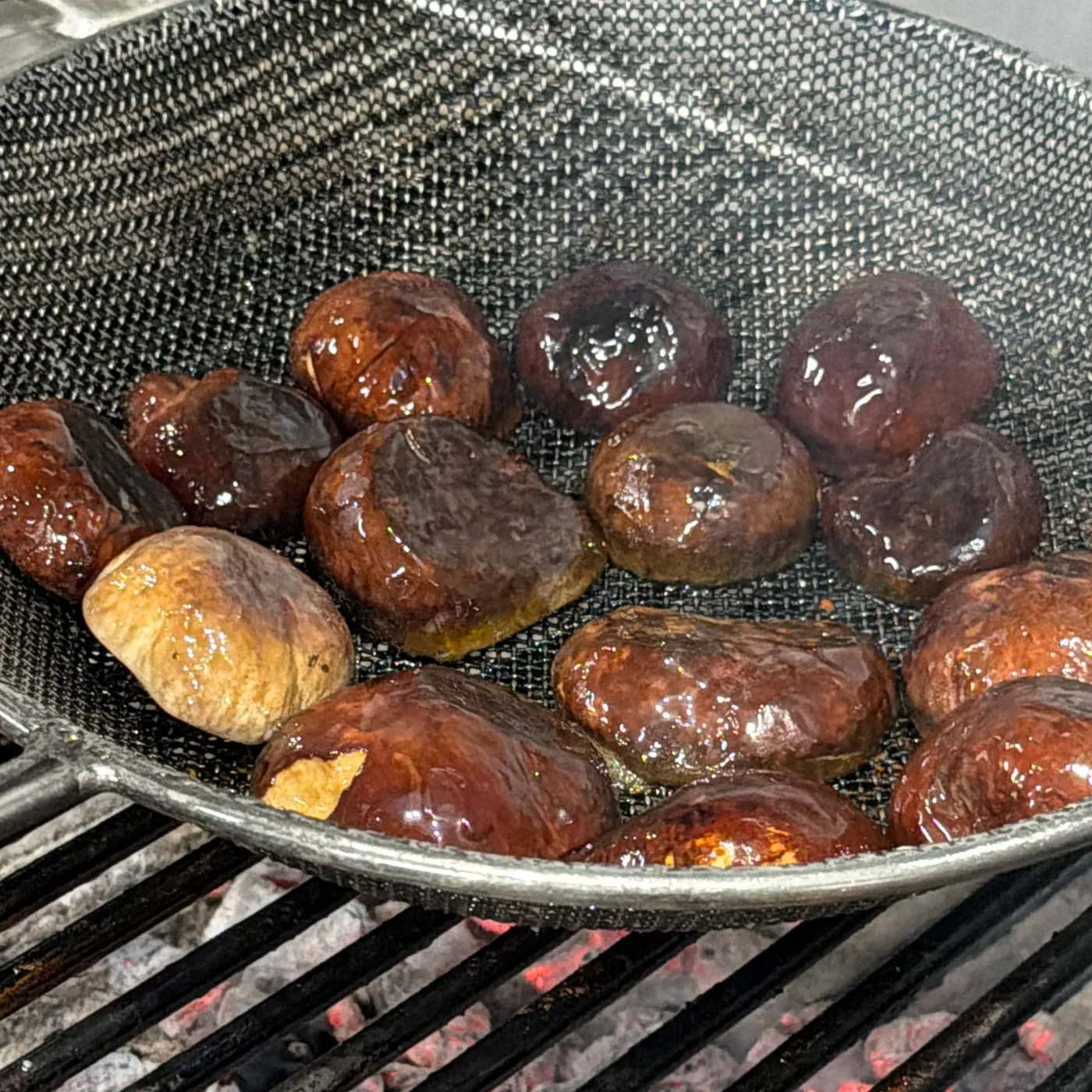
Wild mushrooms with eggplant
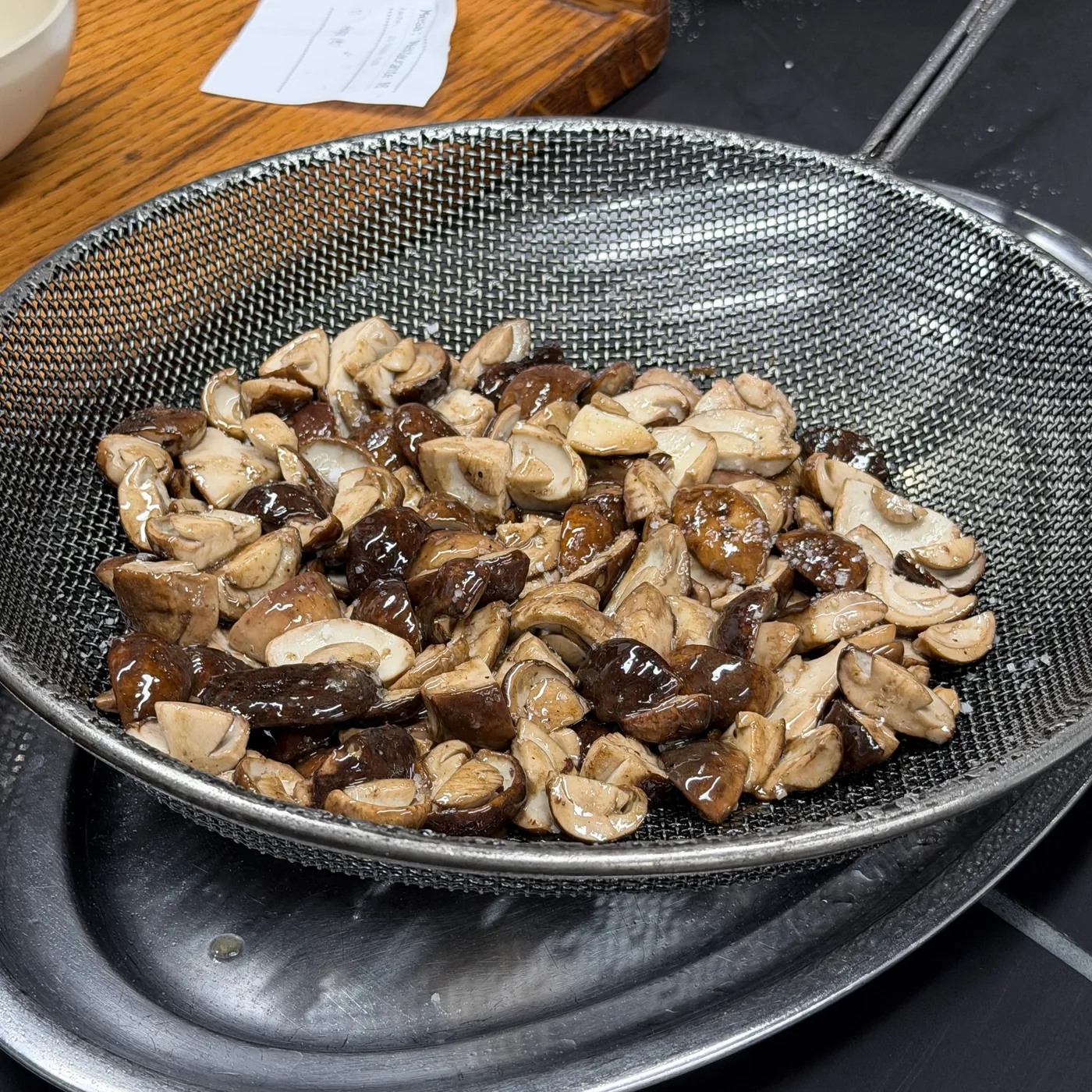
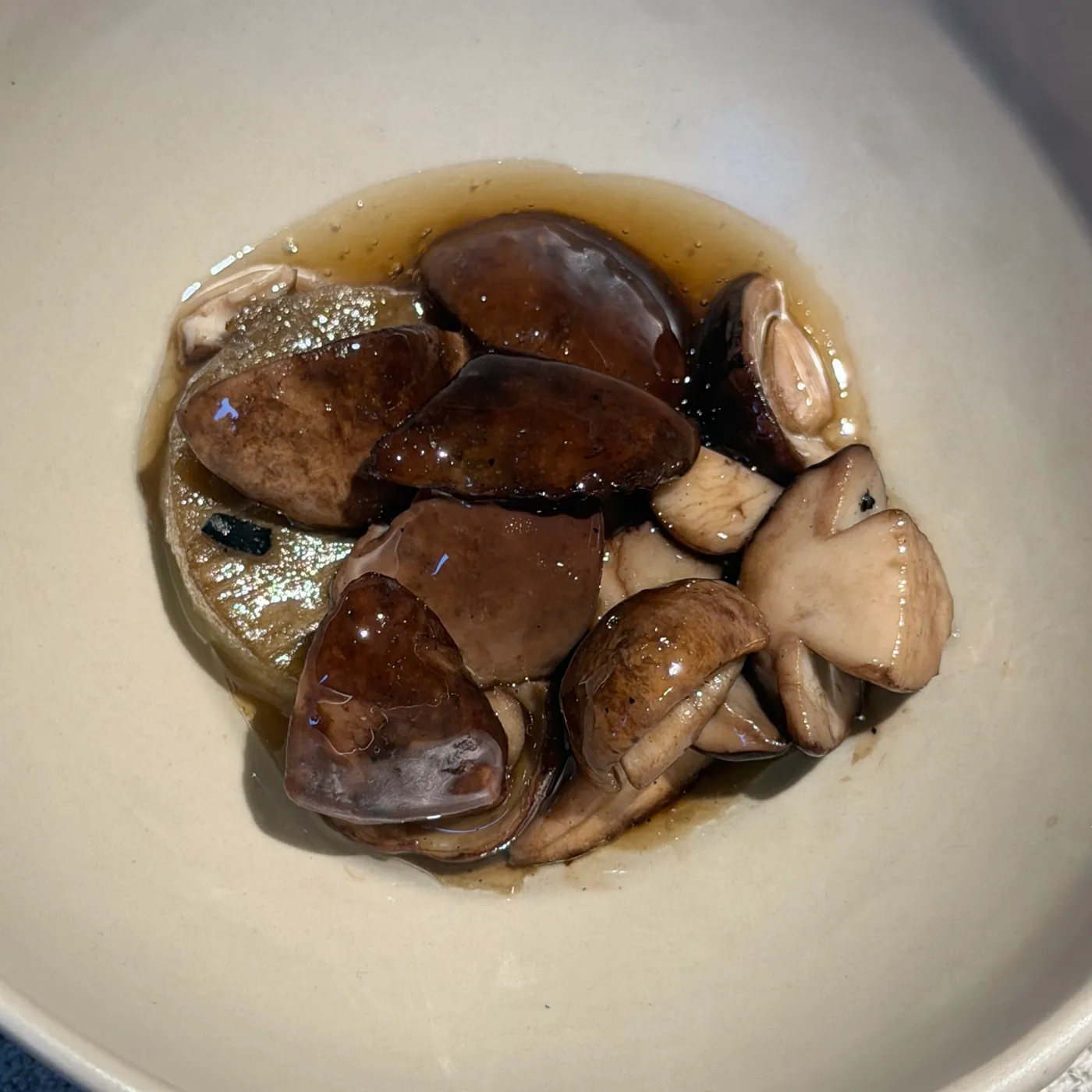
Bittor told me the mushrooms come from local gatherers who search the woods around Anboto and Urkiola, on either side of the mountain. Depending on what they find, they come from oak or pine forests.
He described a method he has been using recently: cooking the caps whole, with the stems removed and the undersides cleaned. A little sunflower oil, medium-low embers, and a lid allow them to cook gently while taking on some smoke. They need approximately two minutes on each side.
As he put it, it is almost like confiting, but over the embers.
Mushrooms with eggplant, he told me, are a longstanding dish at Etxebarri. They are served over eggplant and finished with a reduction of the mushrooms’ own juices.
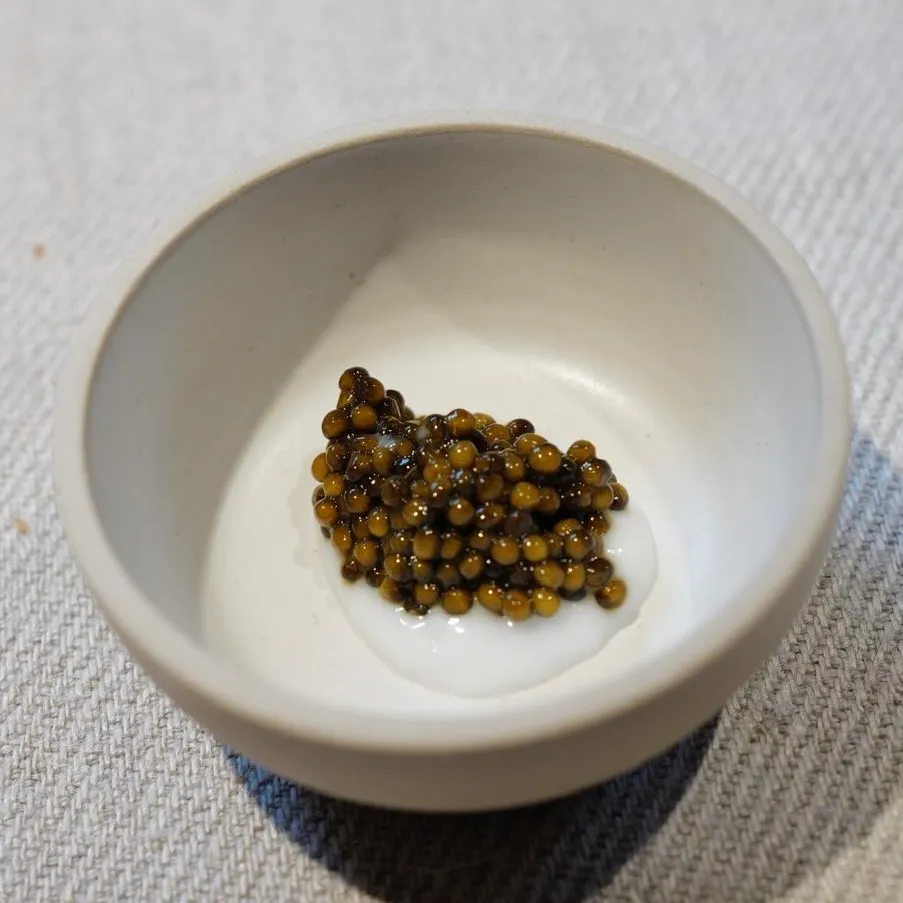
Caviar smoked over vine shoots
For years, I’ve been saying that Bittor is the only person who can improve on the natural taste of caviar.
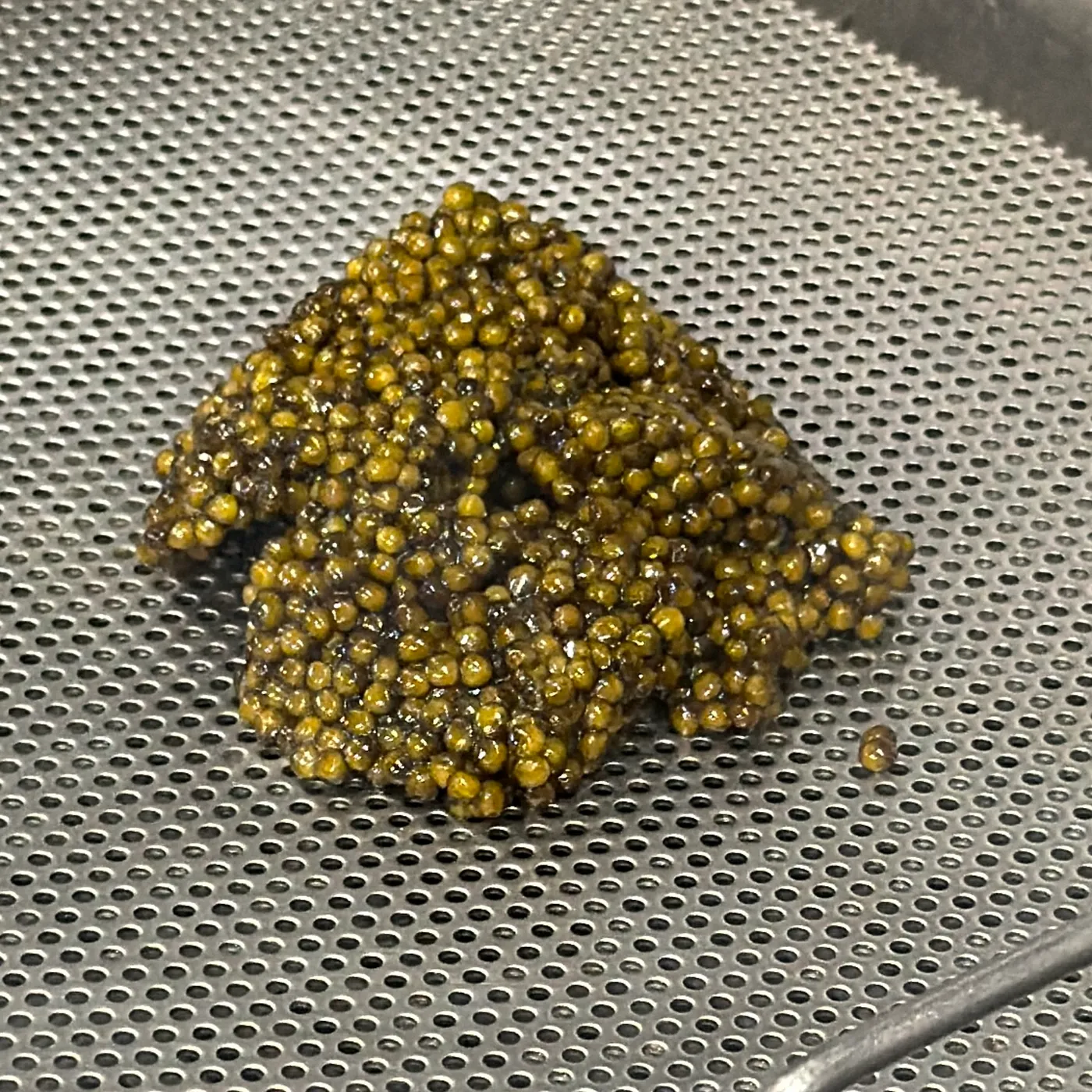
The caviar, Bittor explained, arrives weekly from Germany. He orders it with as little salt as possible and without preservatives, and the supplier sends whichever variety is at its best that week. He looks for large pearls that can tolerate gentle warming and still burst in the mouth.
He prefers tins of around half a kilo because, he told me, he notices a metallic taste more readily with smaller tins. He is also particularly sensitive to the flavor of preservatives.
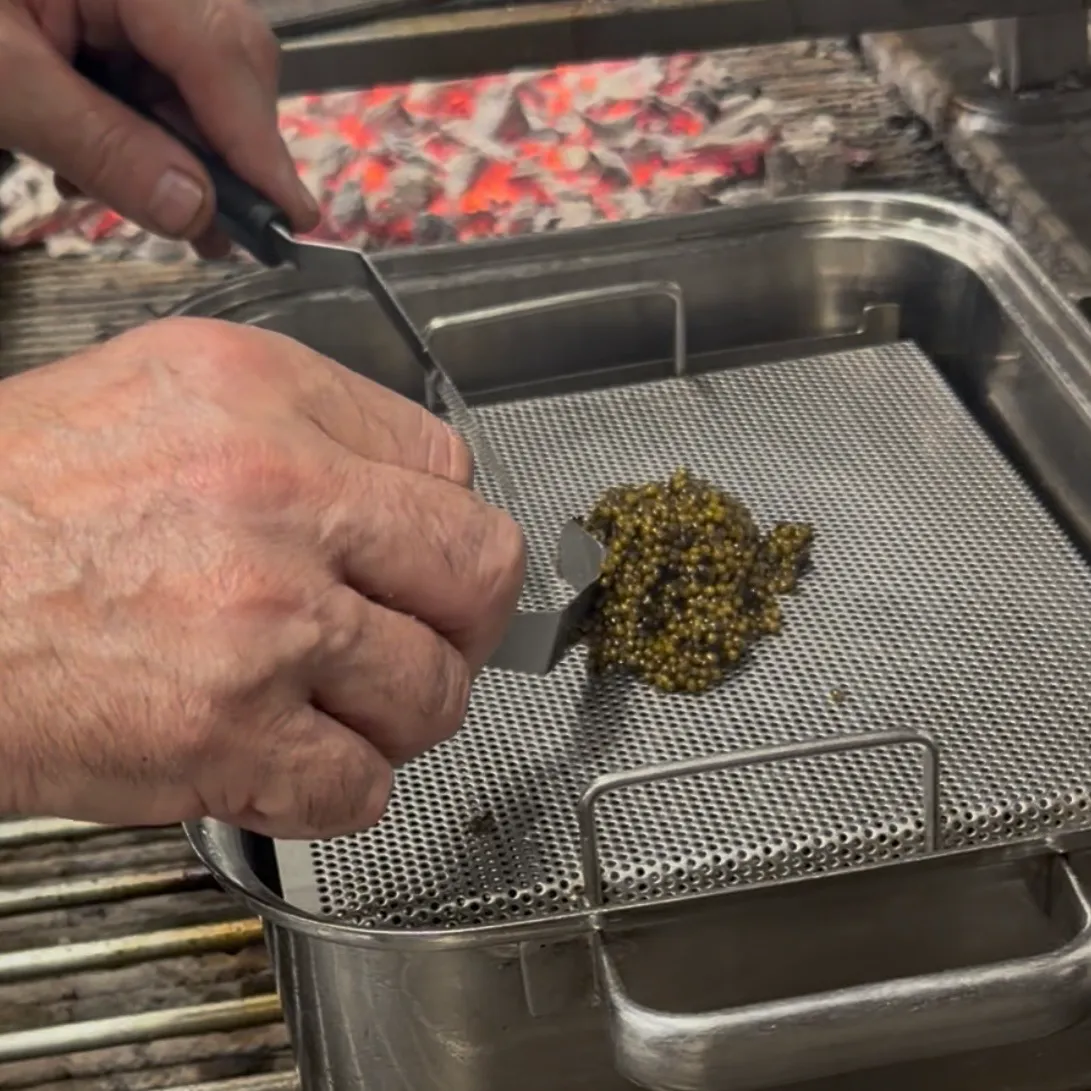
For the smoking, the caviar rests on a perforated rack above seaweed inside a special pot. A little ember and pieces of vine shoot beneath it produce the smoke, which enters the pot while the caviar warms gently. The process takes around eight to ten minutes, with the pot’s thermometer reading approximately 60 to 70°C.
Halfway through, the pearls are turned and redistributed with two spatulas so that the smoking is even.
Cantabrian besugo with garlic-and-chili refrito
For besugo, Bittor works principally with a boat fishing the Cantabrian Sea around Santoña. He told me another boat along the coast supplies fish when available.
He prefers plump specimens weighing approximately one to one and a half kilograms.
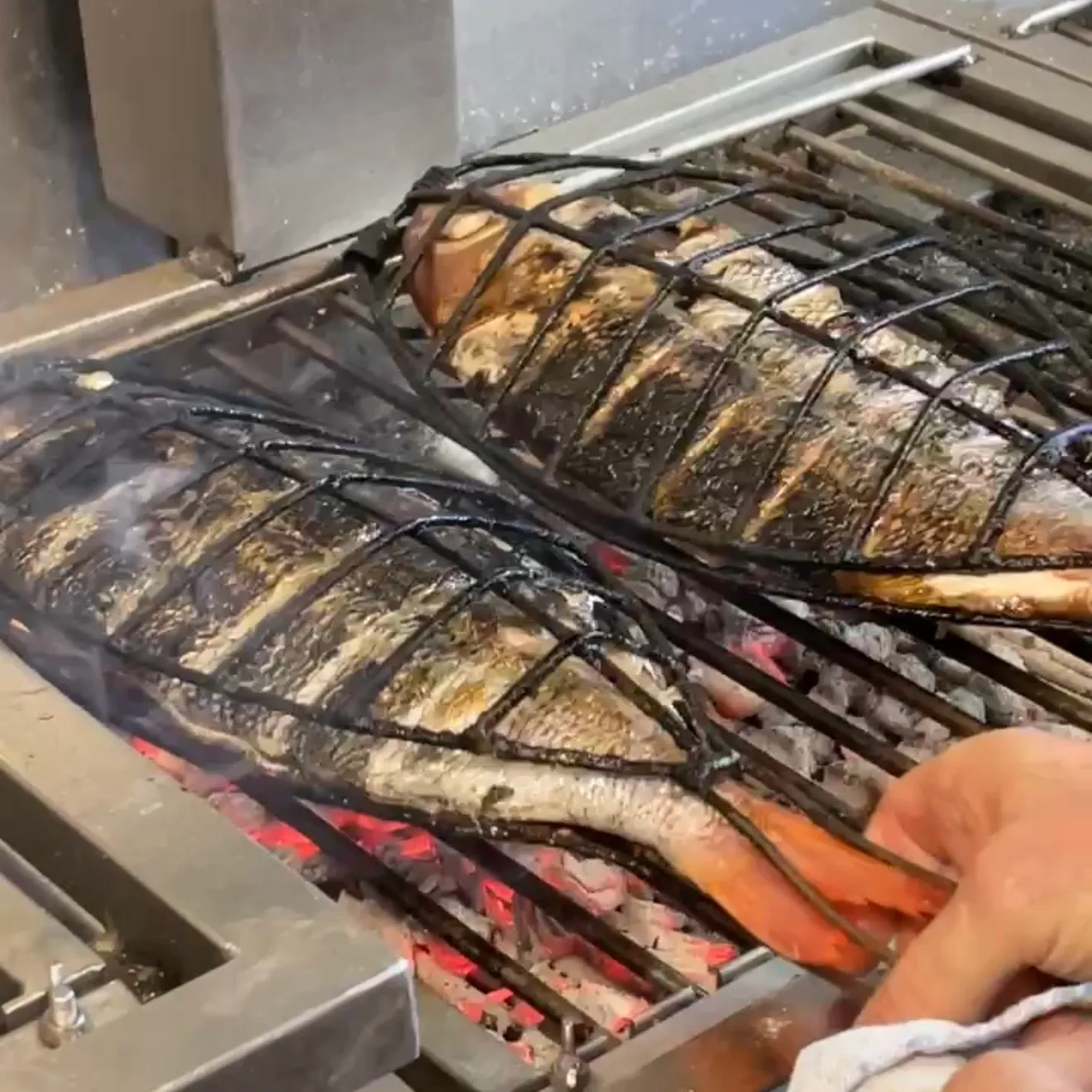
The fish cooks whole over medium embers for around five to six minutes on each side. Only afterward is it opened like a butterfly and deboned.
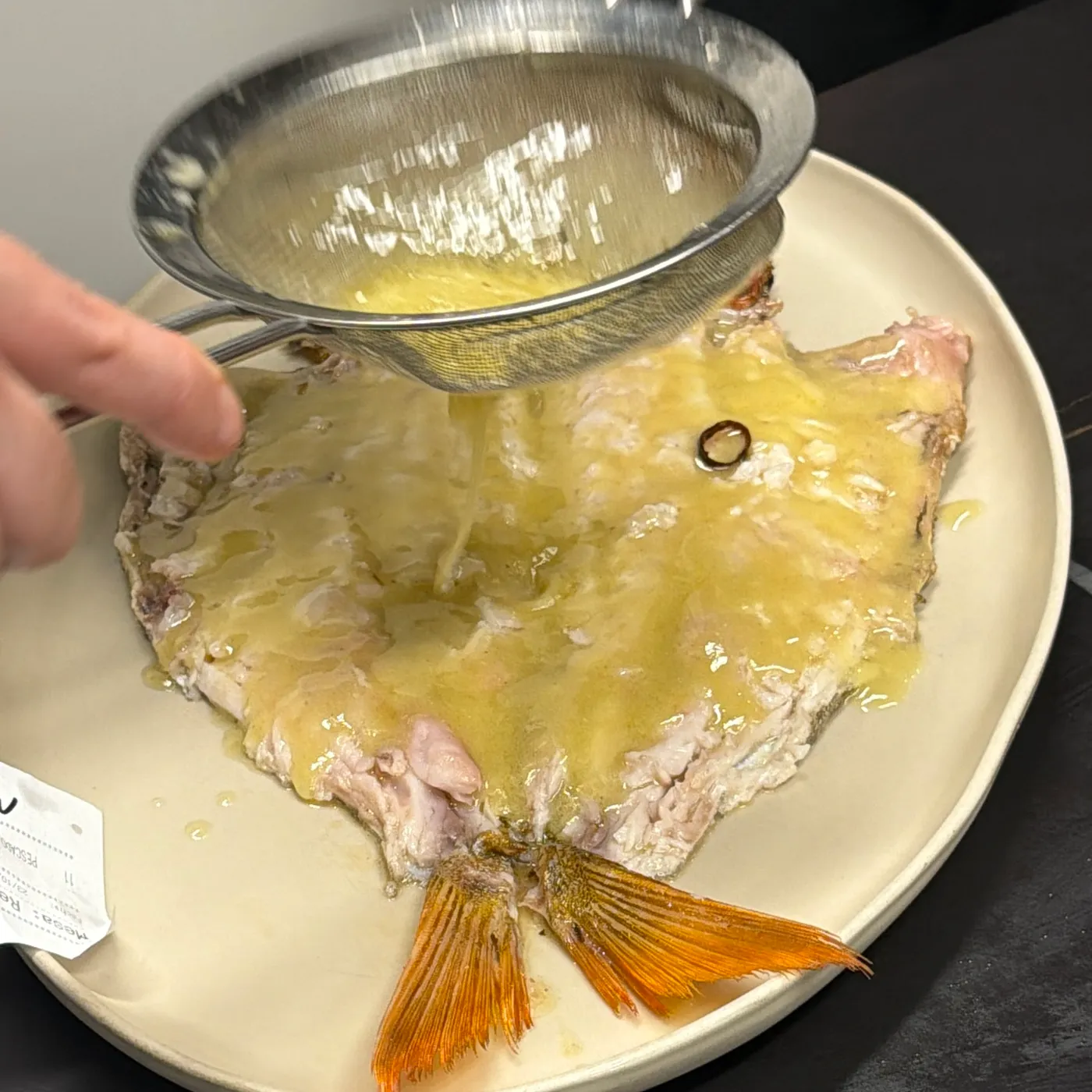
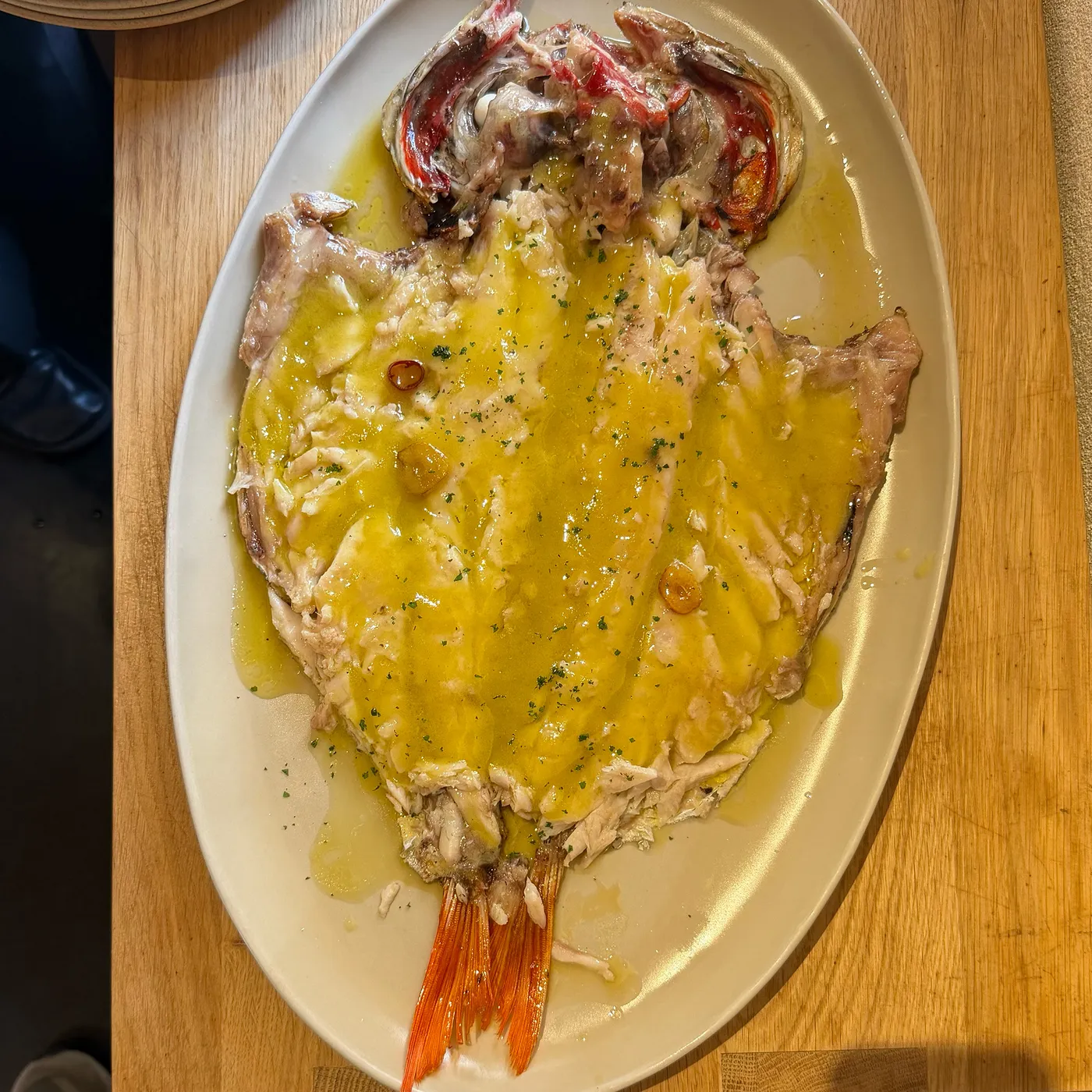
A garlic-and-chili refrito is added, then its oil is strained and emulsified with the fish’s own juices before being poured back over the flesh. A little parsley finishes the dish.
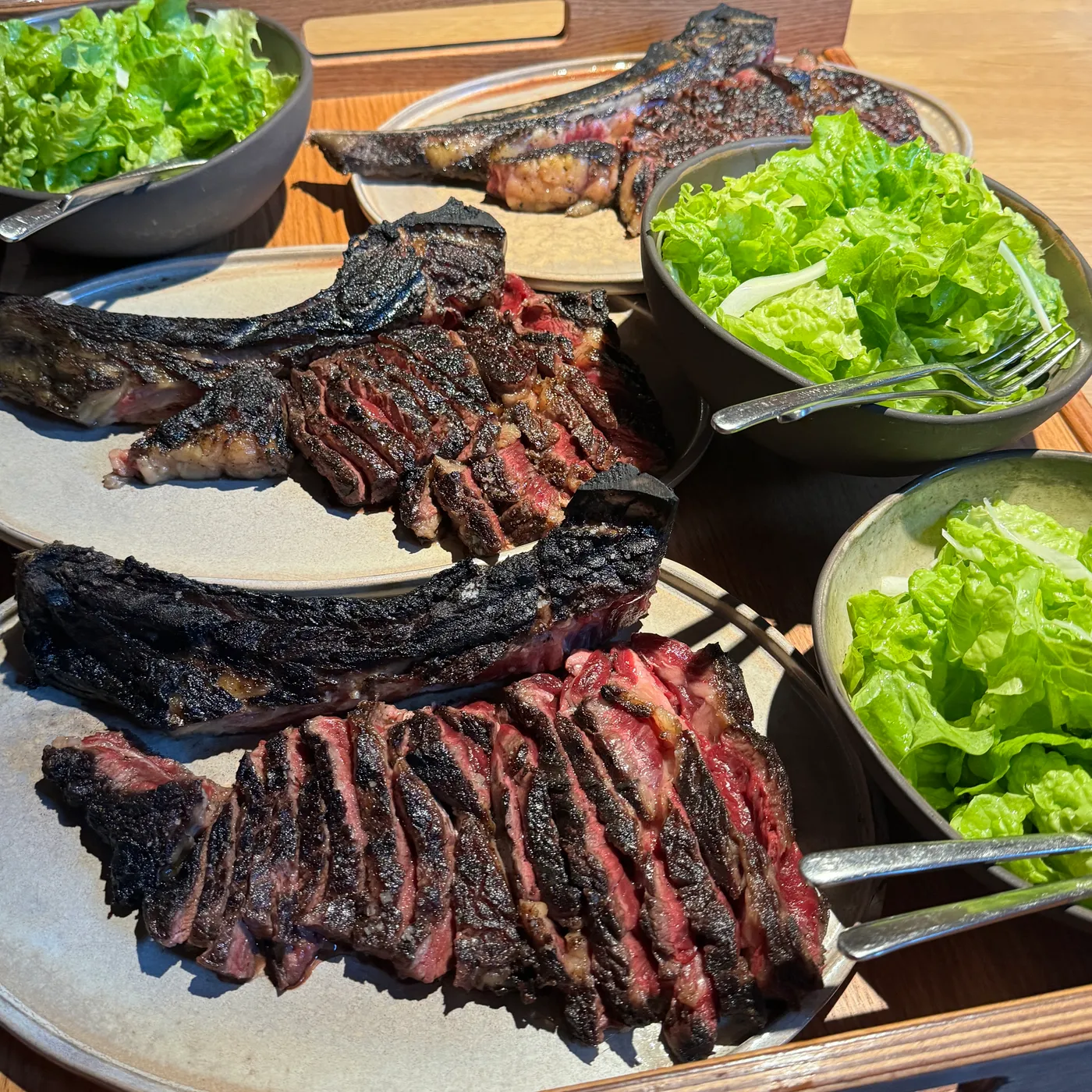
Rubia Gallega txuletón
Bittor gets the beef from Cárnicas Luismi. He explained that the chops arrive weekly, already aged for approximately 28 to 30 days in dedicated maturation chambers.
He examines the pieces himself and selects those he wants to cook. His preference is for Rubia Gallega cattle around eight or nine years old.
He cooks the txuletón over strong embers and an open flame, around three to four minutes on each side, adjusted for its thickness and size. He salts the raw side first, then turns it and salts the other side.
The meat is sliced and served with the bone on the platter, with bowls of lettuce and onion alongside.
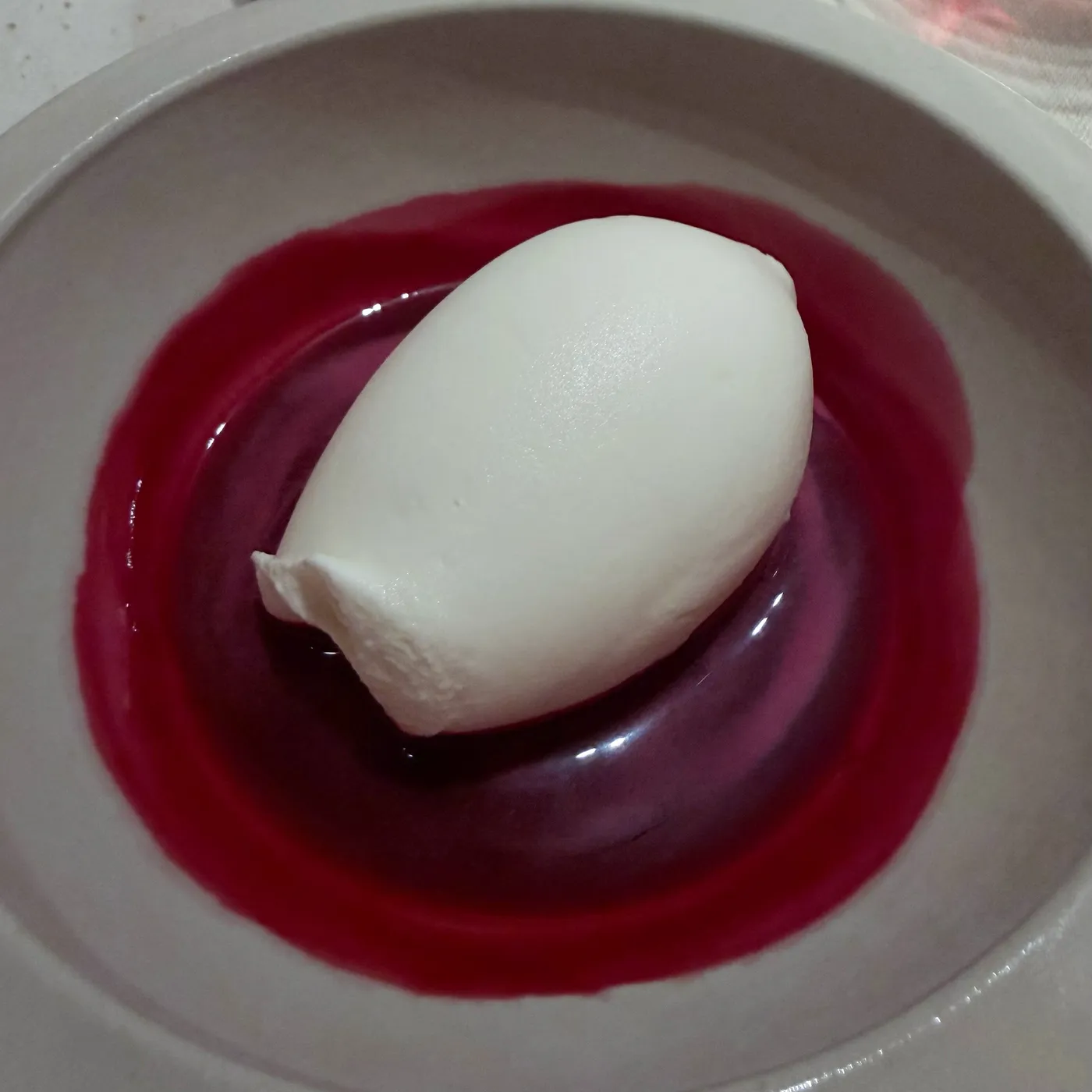
Smoked-milk ice cream with beet juice
Dessert began with Etxebarri’s smoked-milk ice cream. The milk is slowly reduced before becoming ice cream, concentrating its flavor and natural sweetness.
It arrived surrounded by deep red beet juice.
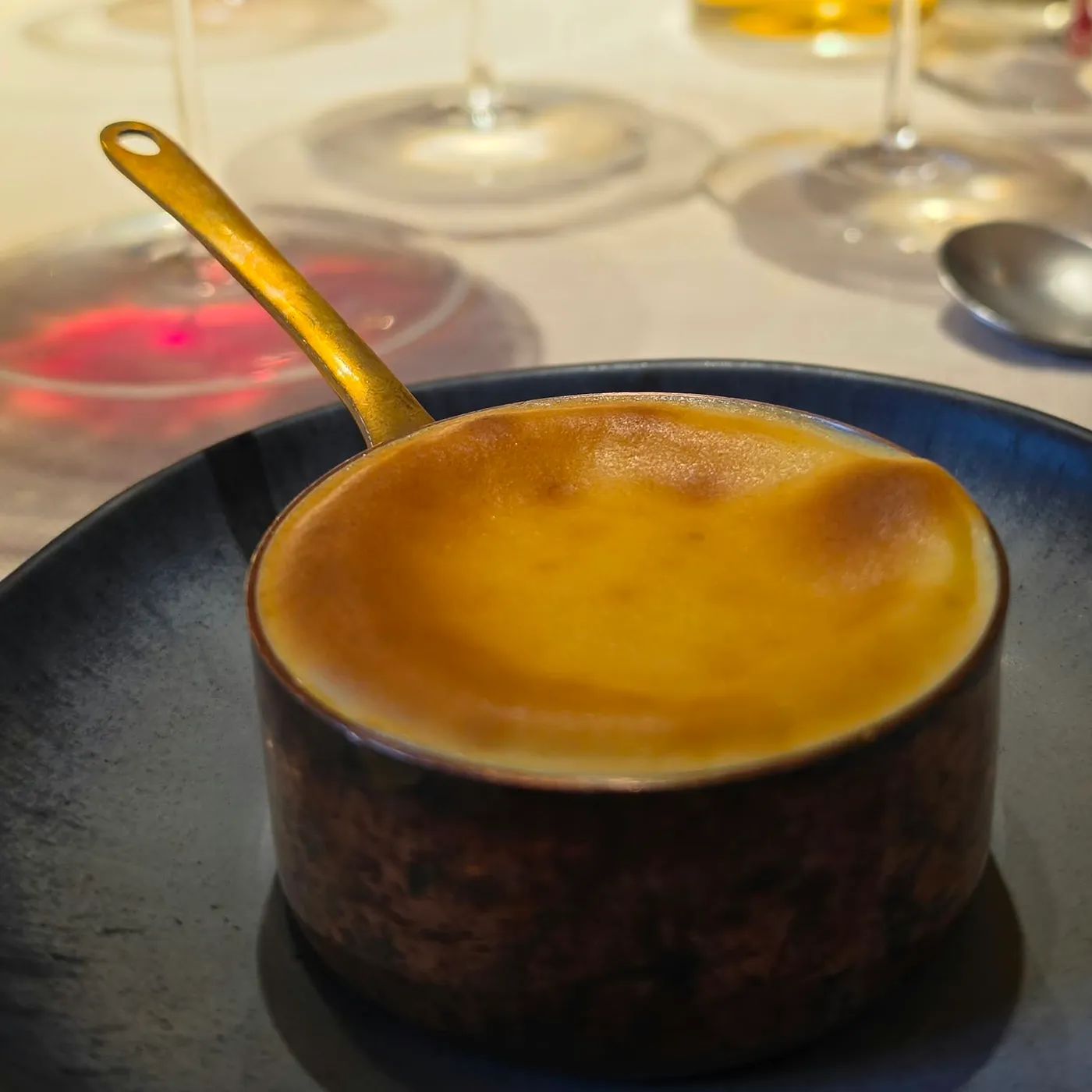
White chocolate soufflé
The white chocolate soufflé arrived warm in an individual copper pan, its risen surface gently browned. After the ice cream, we moved from cold to warm.
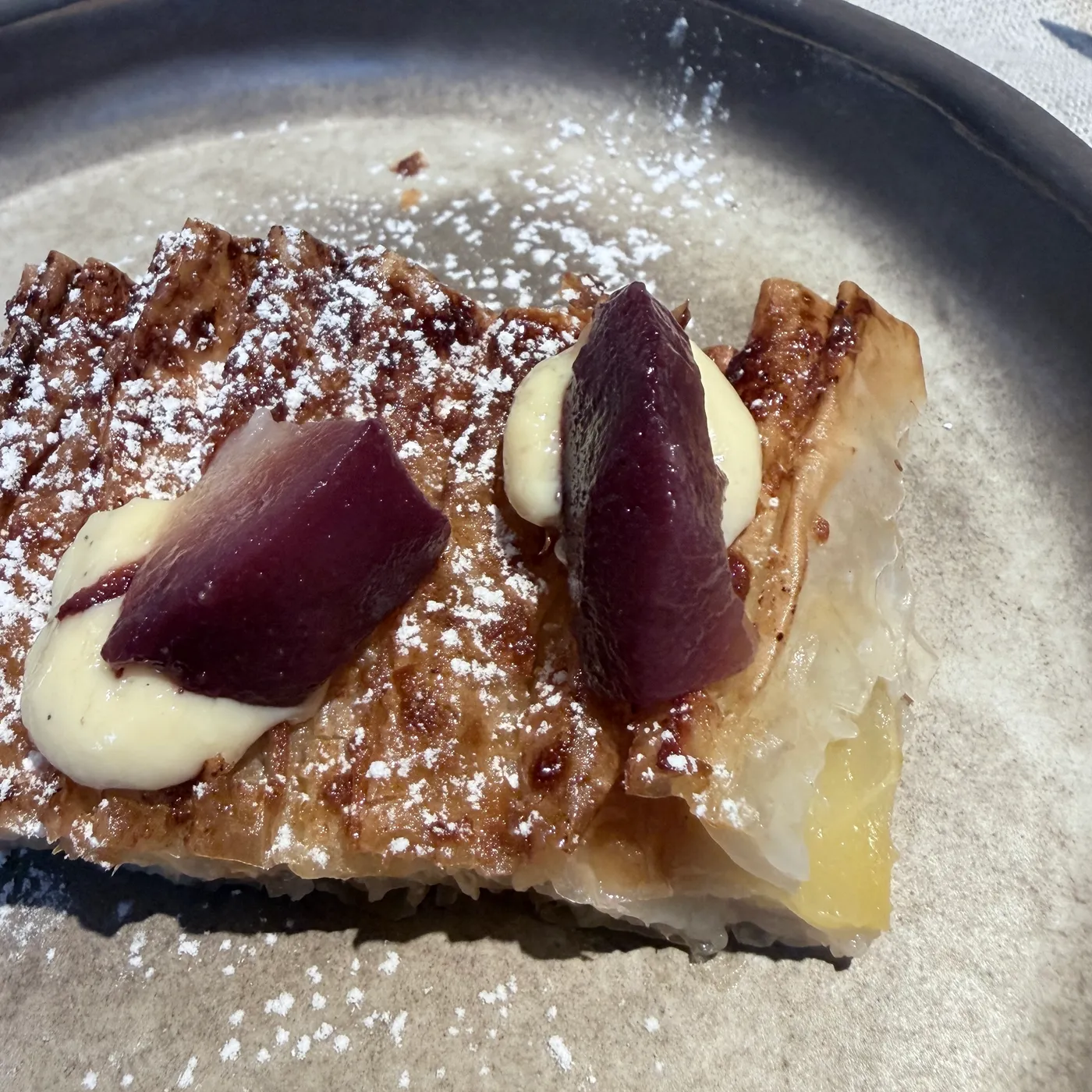
Pear tart
The pear tart came as a rectangle of folded pastry, topped with dark red pieces of pear and small spoonfuls of cream. Powdered sugar was dusted over its golden ridges.
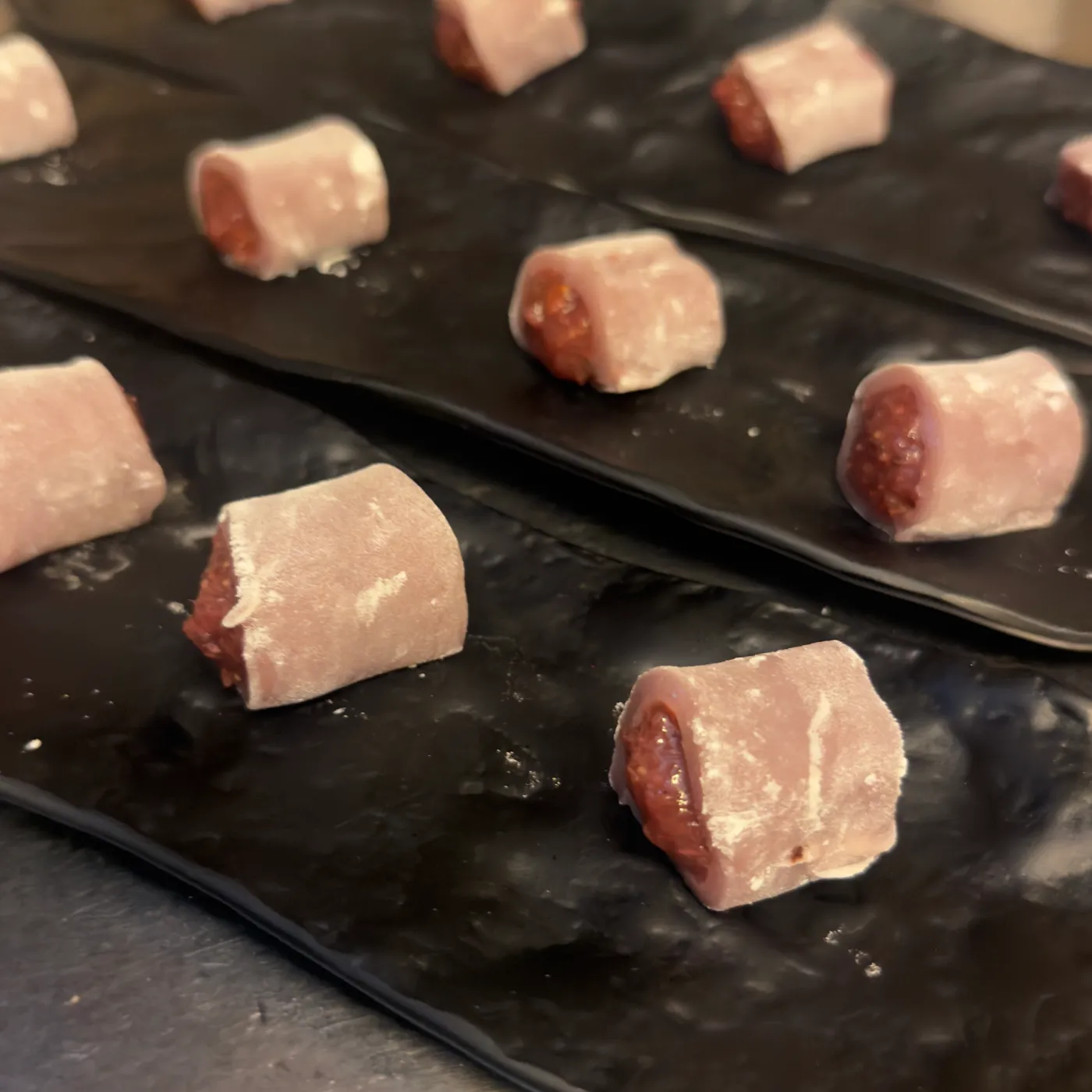
Mochi
Small pieces of mochi closed the meal, their soft rice-dough wrappers surrounding the filling. A few final bites at the end of our long lunch.
What we drank
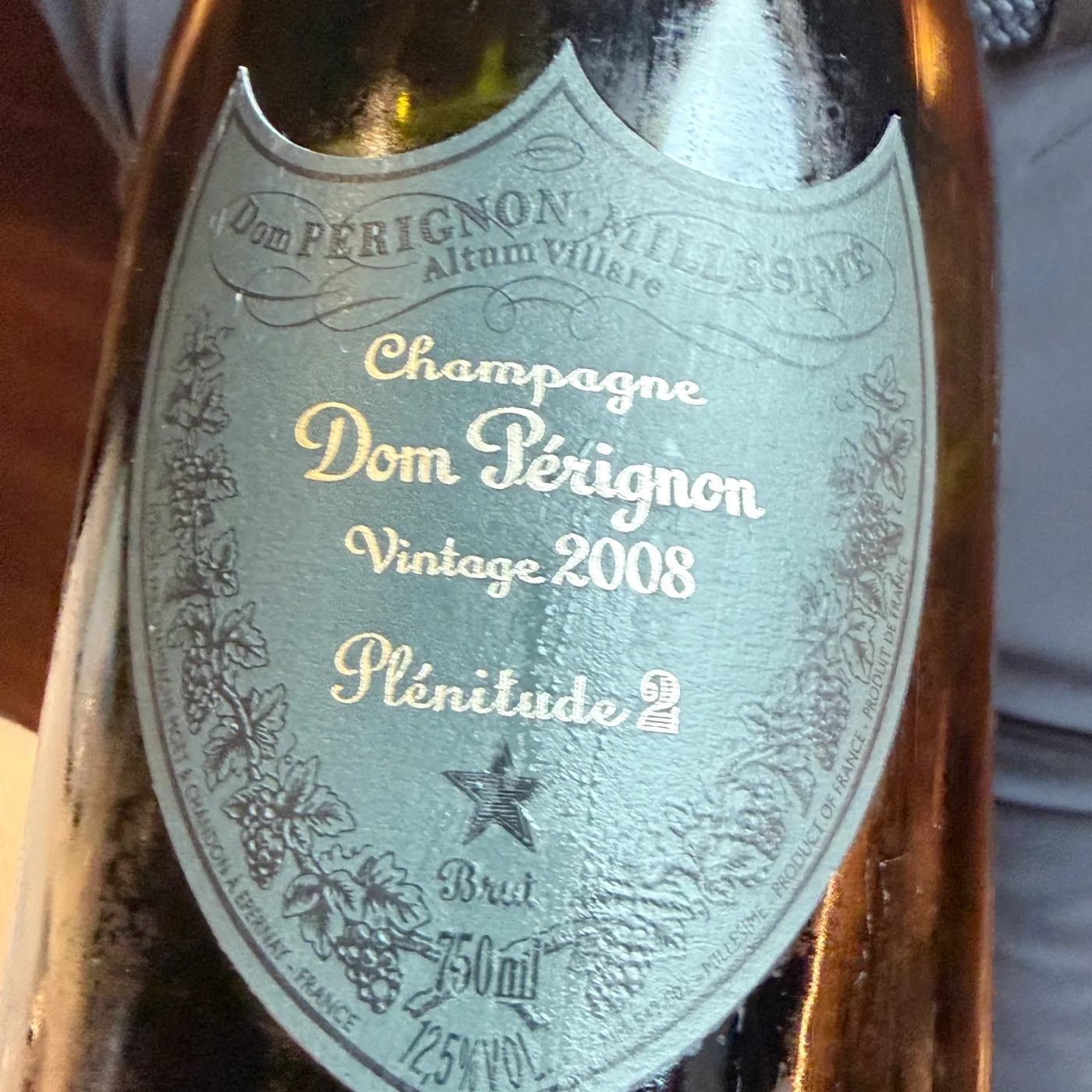
Dom Pérignon, Plénitude 2 2008
Plénitude 2 is a later release of Dom Pérignon, kept on its lees for additional aging before disgorgement. Our bottle was the 2008, made from Chardonnay and Pinot Noir. It is a different release from the original 2008, not simply a bottle of that first release kept longer in a cellar.
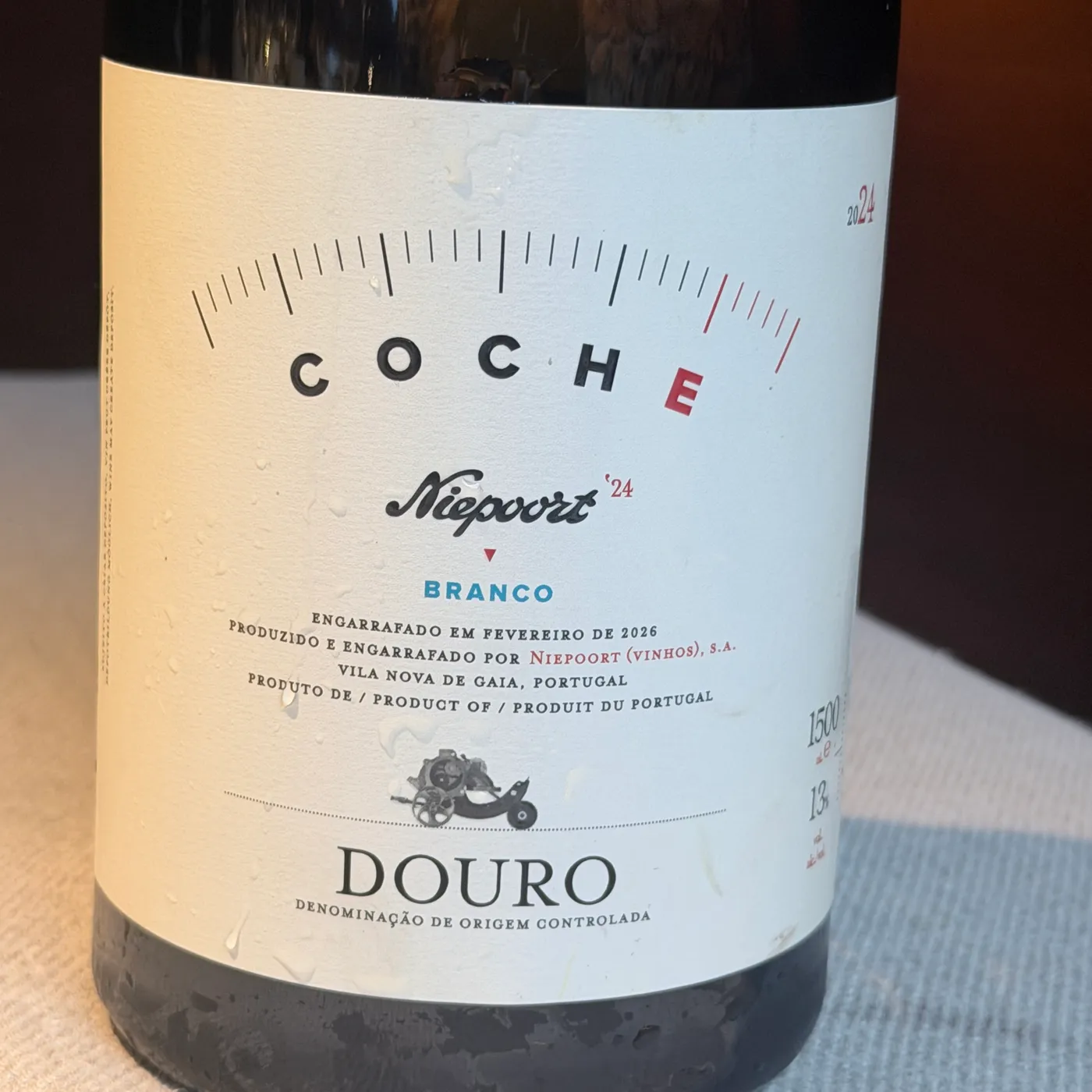
Niepoort, Coche Branco 2024, Magnum
Coche is Niepoort’s white from old, high-altitude vineyards in the Douro. It is made from local grapes, including Rabigato, Códega do Larinho, and Arinto, and fermented and aged in French oak. We drank the 2024 from a magnum.
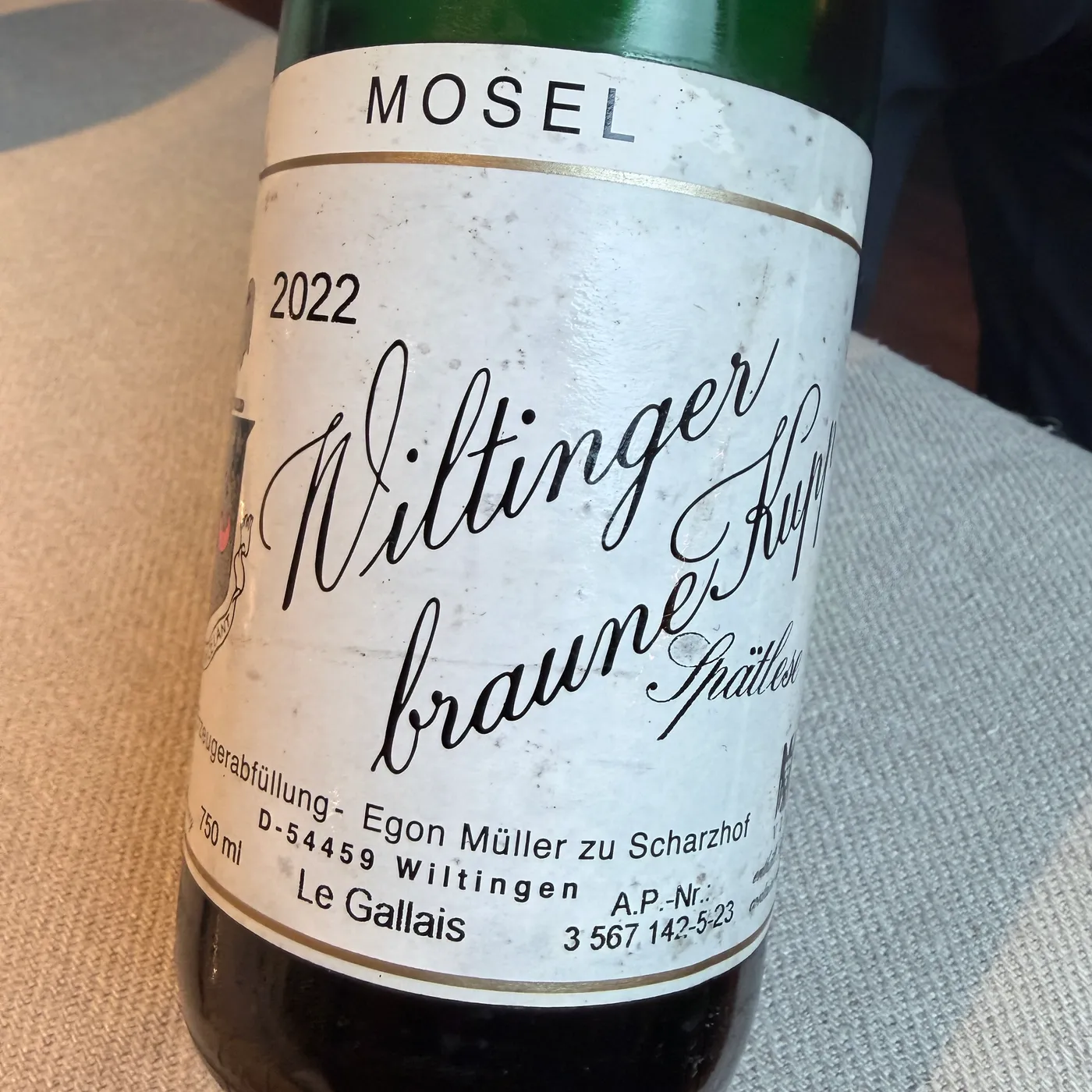
Le Gallais / Egon Müller, Wiltinger Braune Kupp Spätlese 2022
This 2022 Riesling comes from Wiltinger Braune Kupp, one of the Saar’s warmer vineyard sites. Spätlese means late harvest. Egon Müller describes this vineyard’s Spätlese wines generally as fuller-bodied and more exotic in character.
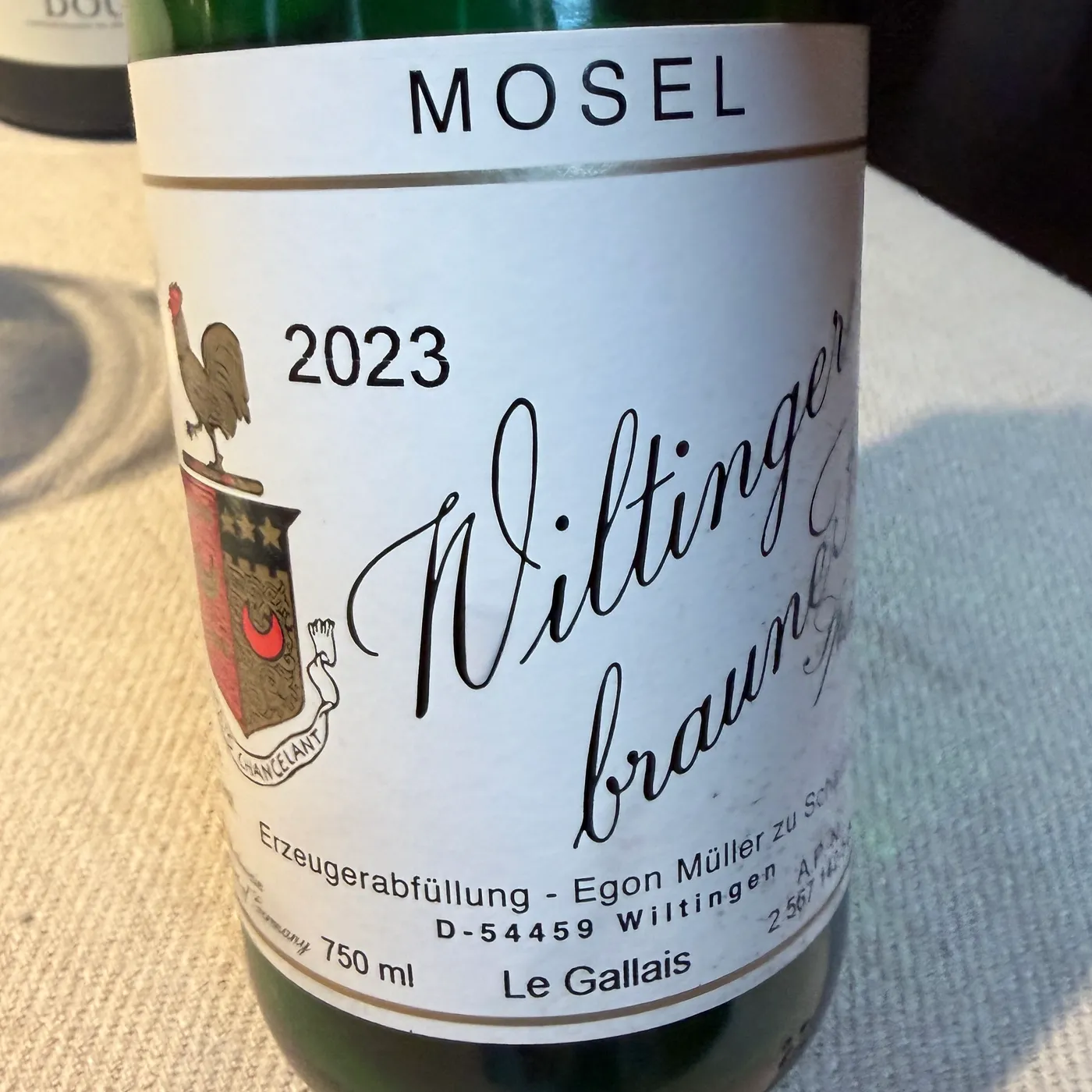
Le Gallais / Egon Müller, Wiltinger Braune Kupp 2023
We also drank the 2023 Wiltinger Braune Kupp from Le Gallais / Egon Müller. It comes from the same Saar hillside as the 2022, where iron-rich slate gives the vineyard its name.
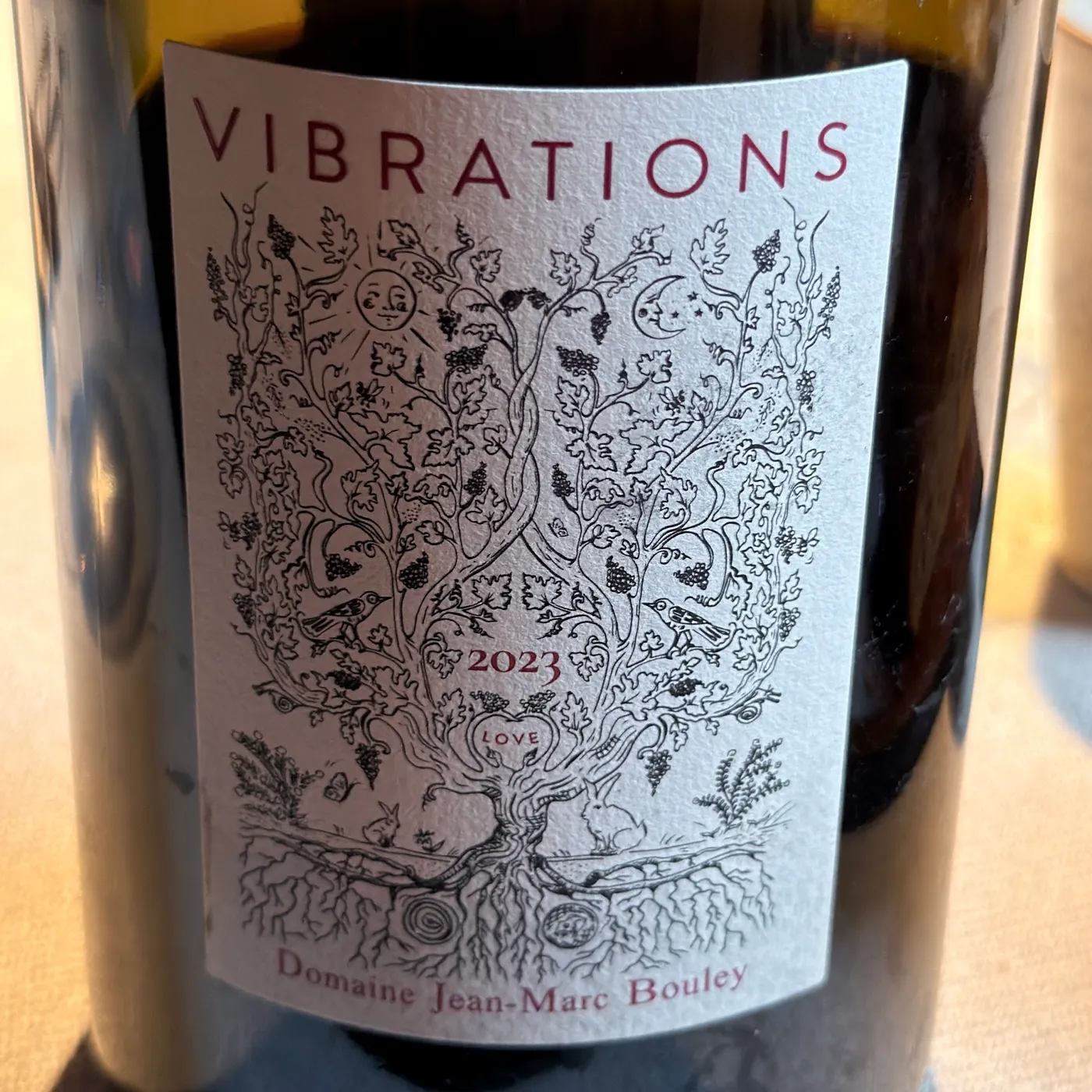
Domaine Jean-Marc Bouley, Vibrations 2023
Vibrations is Pinot Noir from the Hautes-Côtes de Beaune, in the hills above Burgundy’s Côte de Beaune. Thomas Bouley makes it at his family’s Volnay estate. The cuvée comes from a small vineyard parcel of less than one hectare.
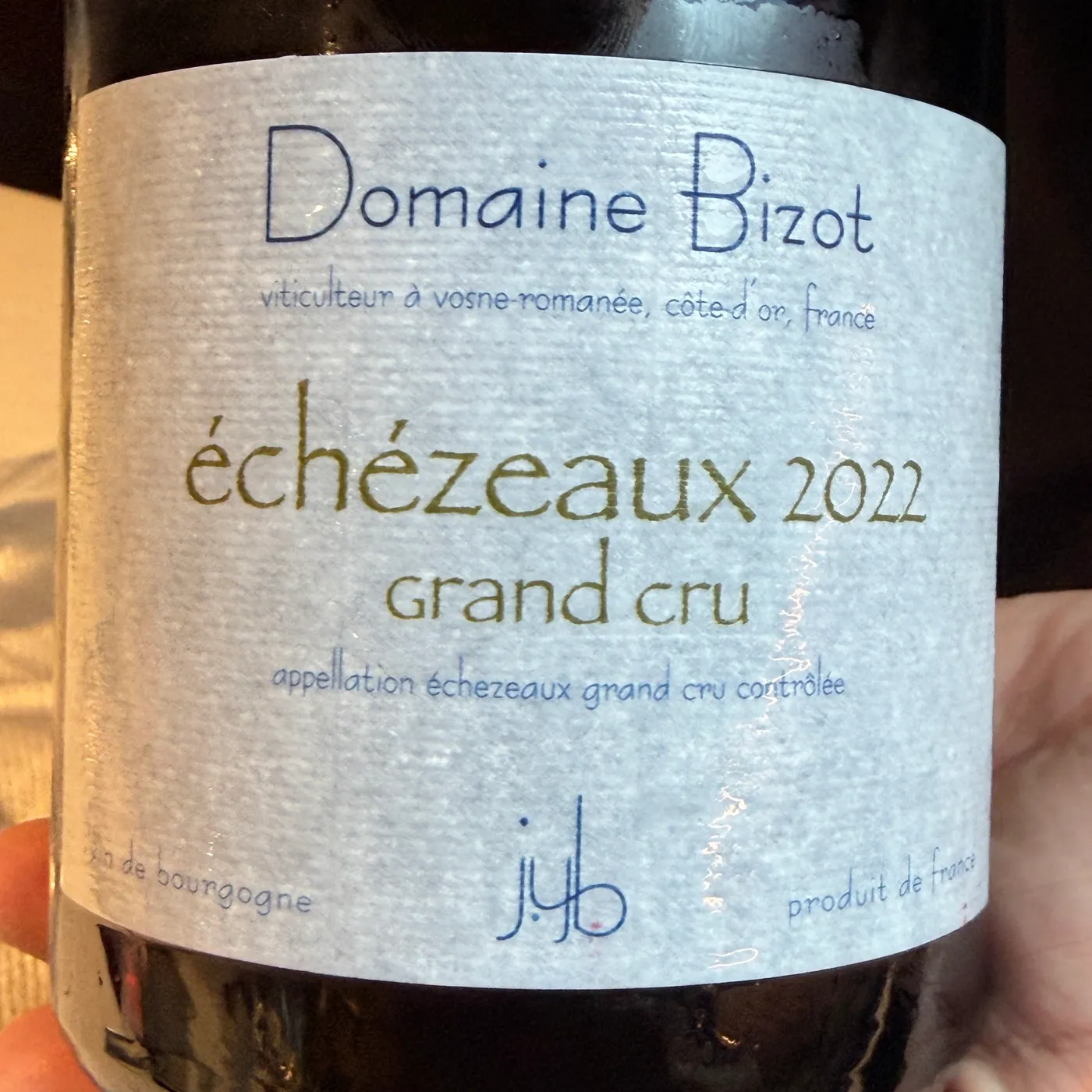
Domaine Bizot, Échezeaux Grand Cru 2022
Our final wine was Domaine Bizot’s 2022 Échezeaux Grand Cru, a Pinot Noir from Burgundy’s Côte de Nuits. Jean-Yves Bizot works from his domaine in Vosne-Romanée, with an approach centered on hand harvesting and restrained intervention in the cellar.