Elkano
Sat, Oct 24, 2026
Best Ever Lunch at Elkano
This was my best lunch at Elkano, and Aitor Arregi had a great deal to do with it.
I don’t know anyone who understands the anatomy of fish, and the different flavors and textures of each part, as deeply as Aitor. He shared so much of that knowledge with us during this meal. I learned a great deal, including how much there still is to learn about something as familiar as eating a fish.
His explanations followed the fish from the sea to the grill and then to the family table. What had it been eating? What changes with the season? Why does one piece feel fatty and another more fibrous? Which parts should you pick up with your hands?
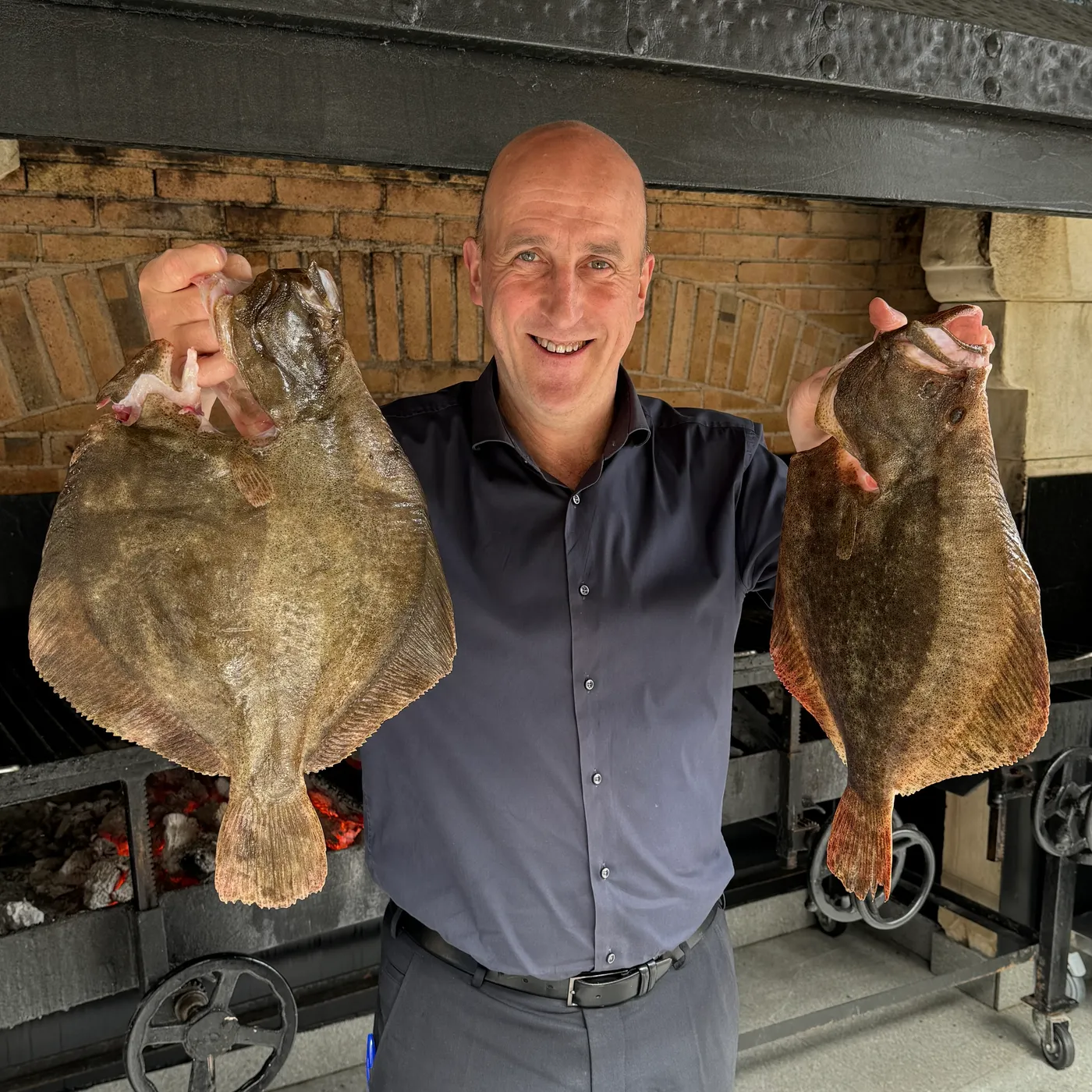
Aitor Arregi explains who gets the head.
Elkano began in 1964, when Aitor’s father, Pedro Arregi, turned the family’s grocery shop into a bar with his friend Agustín Manterola. Pedro’s mother, Joxepa Oyartzabal, cooked. A grill stood outside, where fishermen could cook their share of the catch. Joxepa made fish soup and other dishes in the kitchen. Later, Mari Jose Artano, Aitor’s mother, took charge of the dining room and helped carry Joxepa’s cooking forward. Family history.
Pedro became a pioneer of fish grilling, including turbot cooked whole. Aitor returned to the family restaurant in 2002 after more than a decade as a professional footballer, learning alongside his father. The knowledge he shares today has its roots in that family and in the fishermen of Getaria.
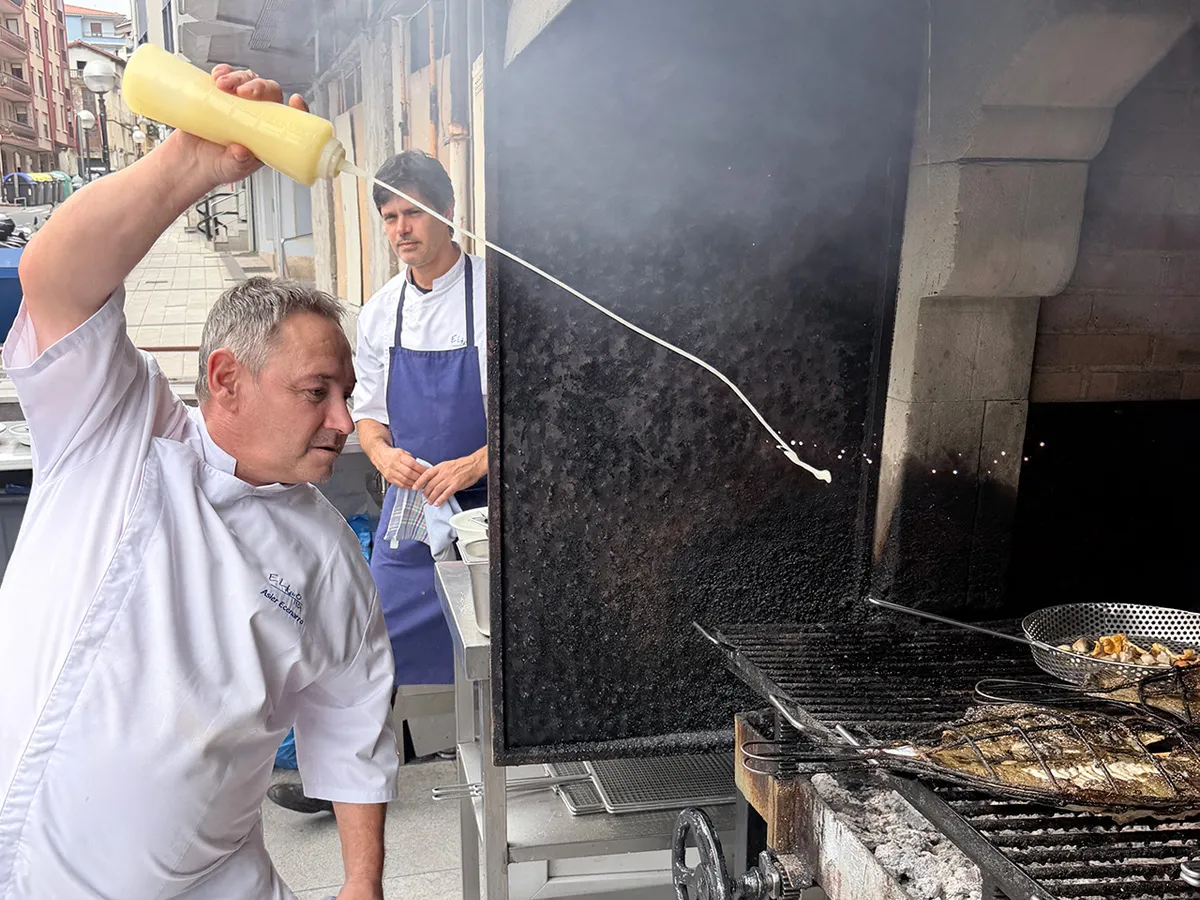
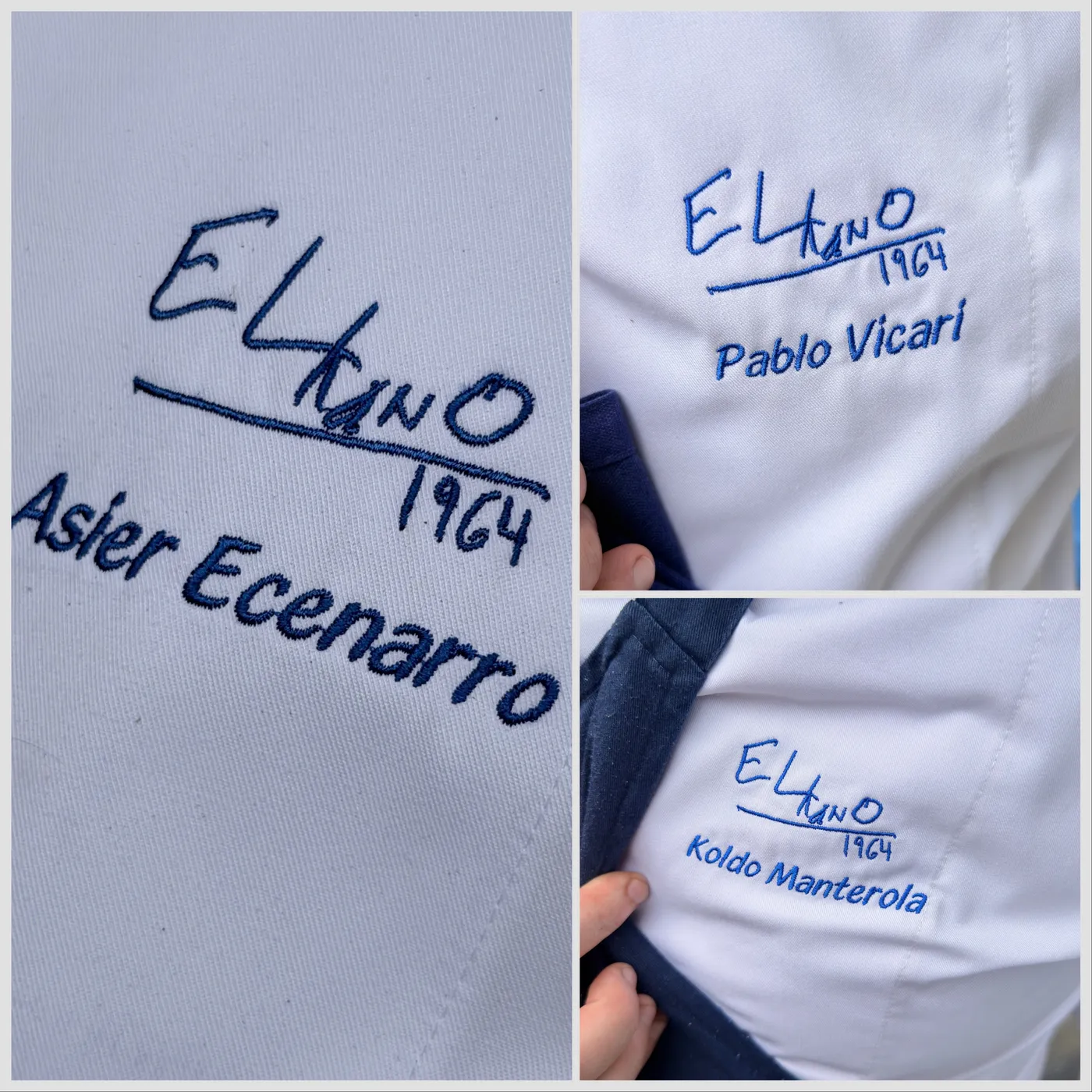
At the grill is Asier Ezenarro Bordagarai, a fisherman and turbot grilling master who grew up with Aitor. He still goes fishing in the mornings before coming to Elkano to grill. Aitor explained why that matters: Asier understands the fish he puts over the fire. He watches its skin and the way it responds to the heat, reading signs that come from years of knowing the animal in the water as well as on the grill.
Koldo Manterola looks after the txuletas, and Pablo Vicari is chef de cuisine. Their work gives Aitor plenty to explain, but he also takes us beyond the cooking.
Aitor’s 3 Masters
The part I particularly loved was his description of how a Basque family shares a turbot.
In the tradition he described, the children receive the central flesh, the straightforward pieces that are easy to eat. The parents get the thinner meat around the bones. Those pieces ask for a little work: pick them up, use your fingers, suck the bones.
The grandparents get the head.
That is where Aitor finds some of the most tender and varied parts of the fish, with gelatin, different textures, and little pieces worth searching for. The cheek could be a reward for whoever had behaved especially well.
There was a hierarchy at the table. A child eating the central flesh could dream of the day when the grandparents’ portion would be theirs.
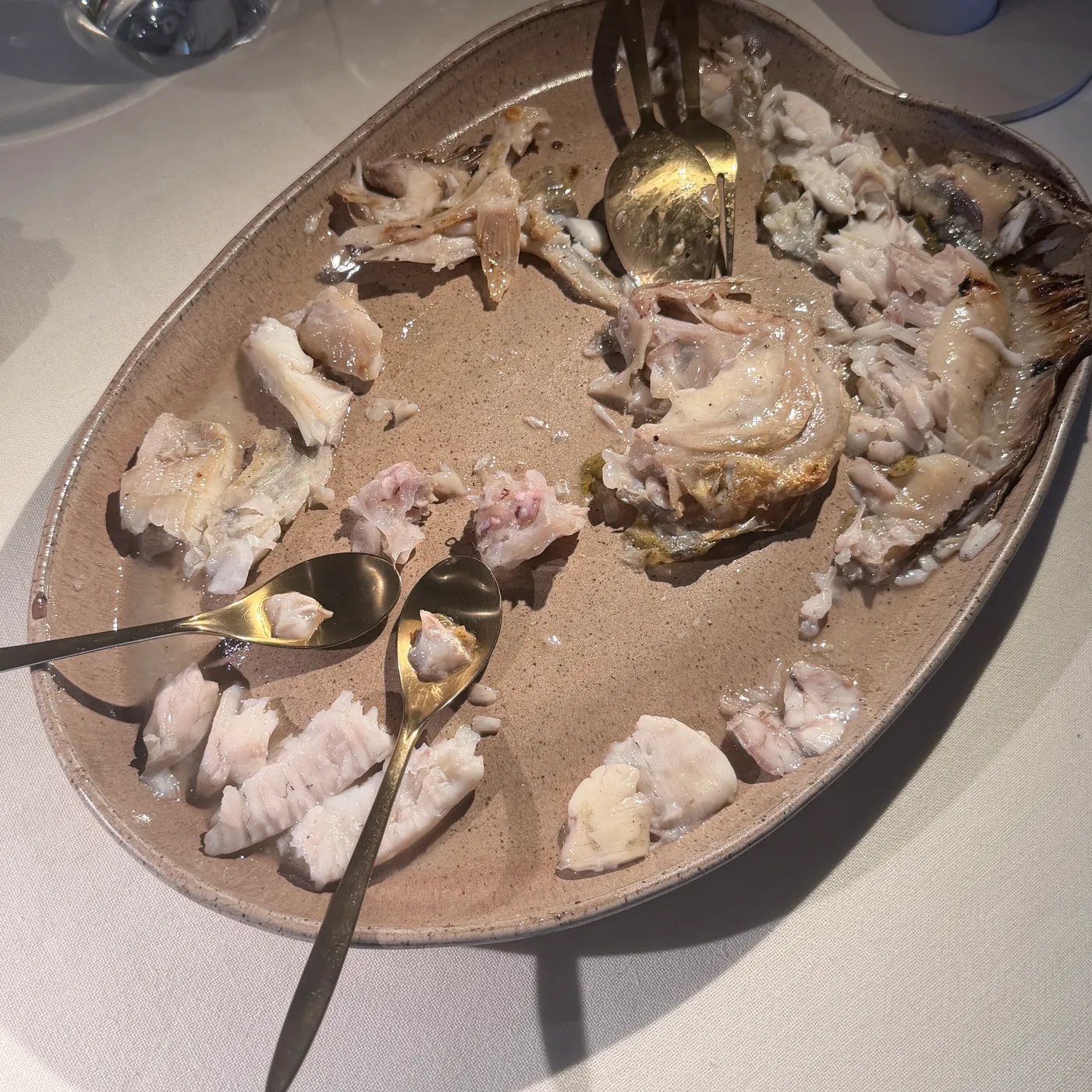
You need to live a full lifetime to appreciate the best parts.
I loved that. It made me want to pay closer attention to every part of the fish, and to leave as little behind as possible.
Here is what we ate, with the explanations that made this lunch so rewarding.
What we ate
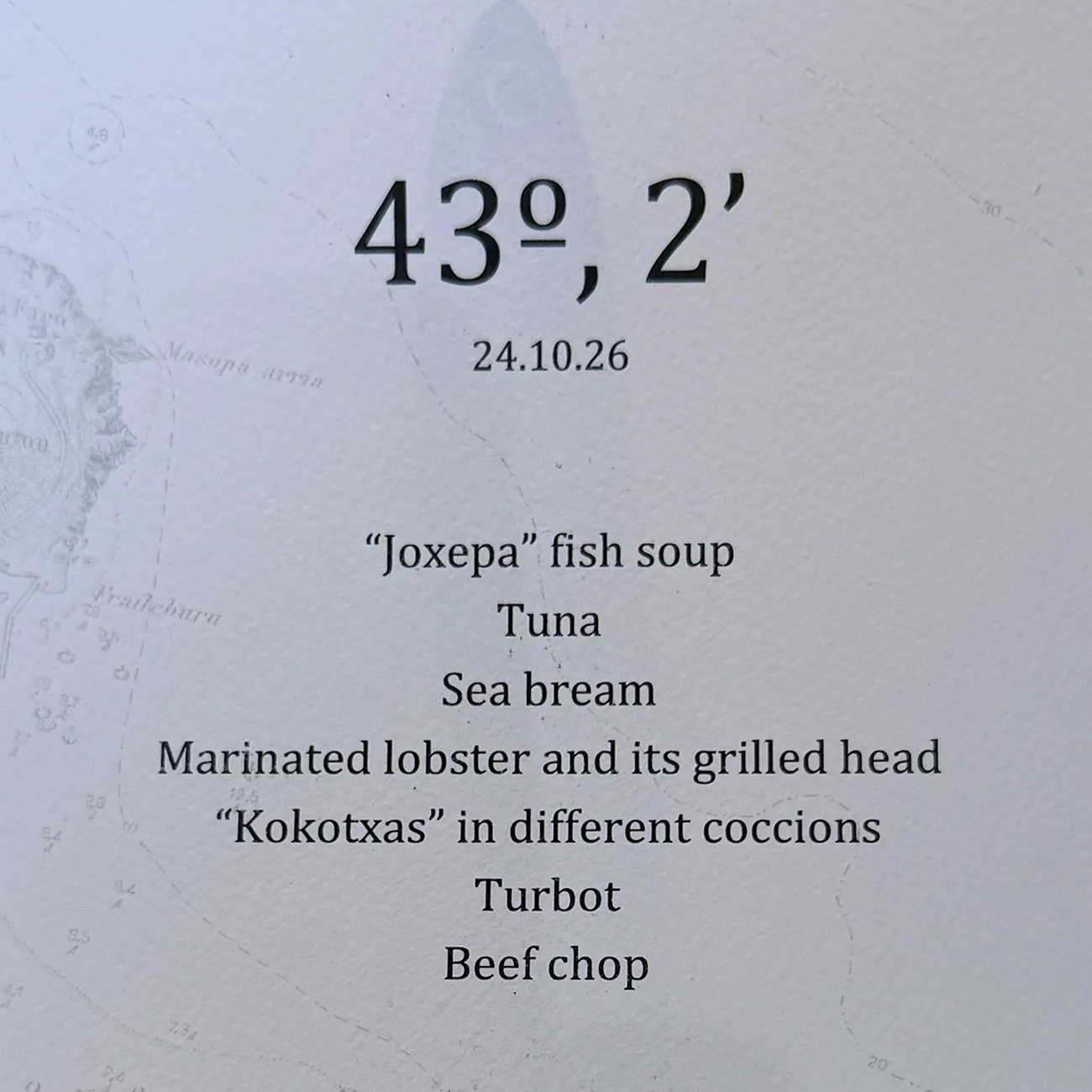
Our Menu Today
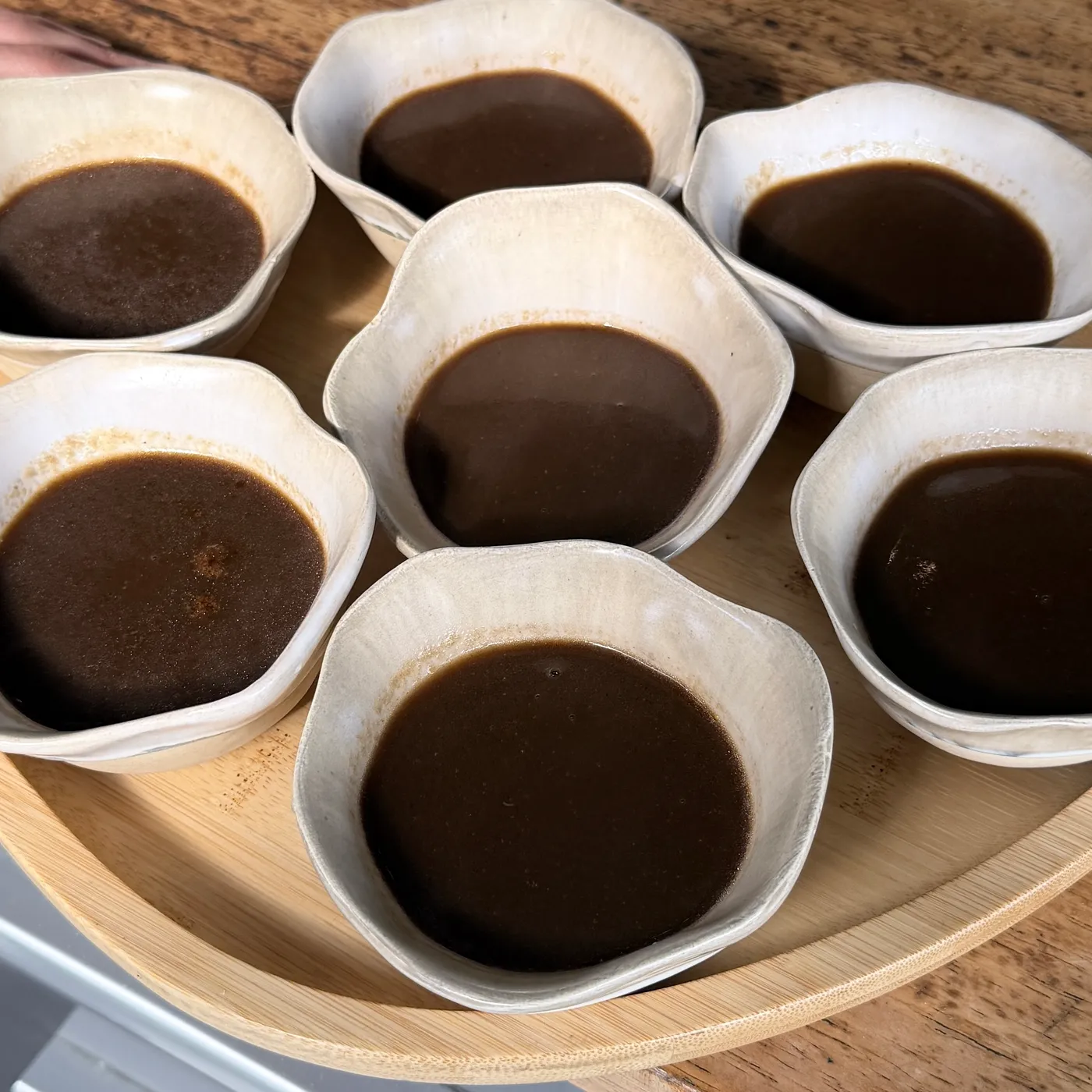
Joxepa Fish Soup
Our lunch began with a soup bearing Joxepa’s name, and with an explanation of the fish soup made in local homes roughly a century ago.
The starting point was the parts of the catch that had little value: hake heads and monkfish, forming a white-fish base. Onions were cooked slowly for hours, and bread went into the soup.
That connection matters in a meal where we would spend so much time considering the head of a fish. The soup and the prized turbot portions come from the same habit of looking carefully at what an animal offers, including the pieces that might otherwise be overlooked.
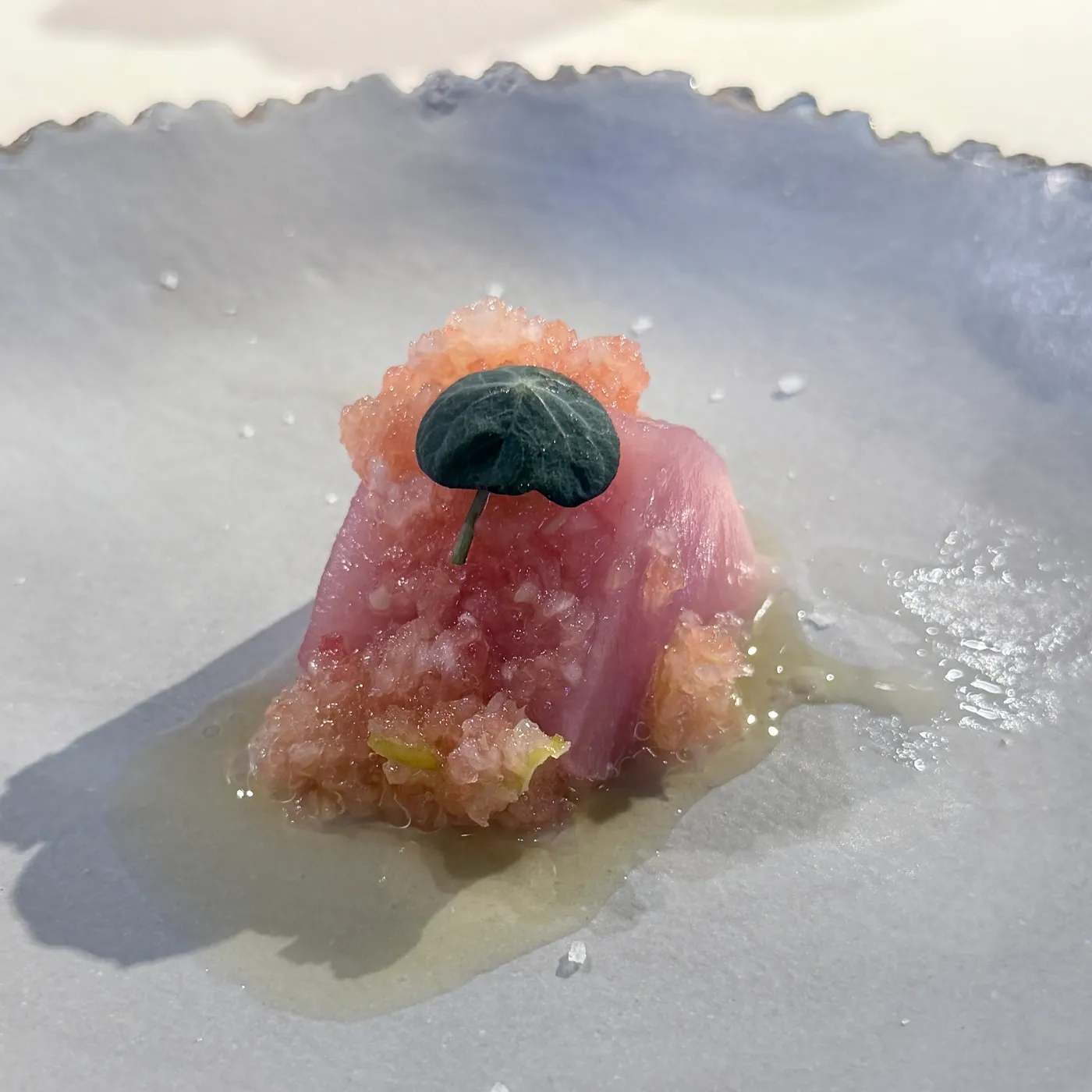
Tuna
The tuna was served raw, sliced and dressed with vinaigrette.
Aitor explained that the local fishermen catch it with rods, and that October brings fish with more fat. The decision to serve it this way began with its condition at this particular time of year.
It was an early example of something he kept returning to: the name of a fish tells you only part of what you need to know. The season helps explain what is on the plate.
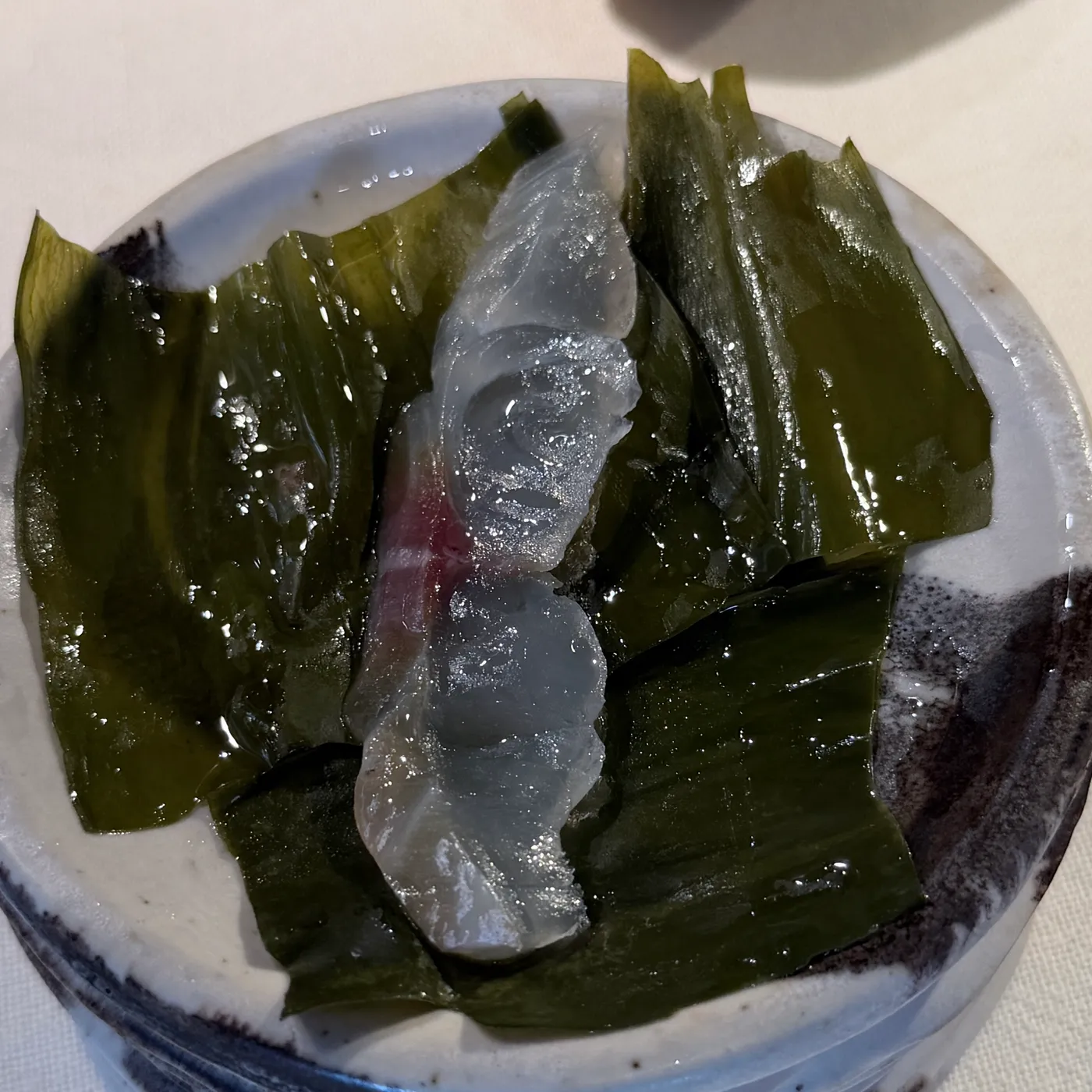
Sea Bream
The sea bream was also sliced for us to eat raw.
Aitor described it as another fish arriving in these waters with more fat in October. Both raw preparations belonged to the same seasonal moment, giving us a chance to consider two different fish before moving on to the cooked dishes.
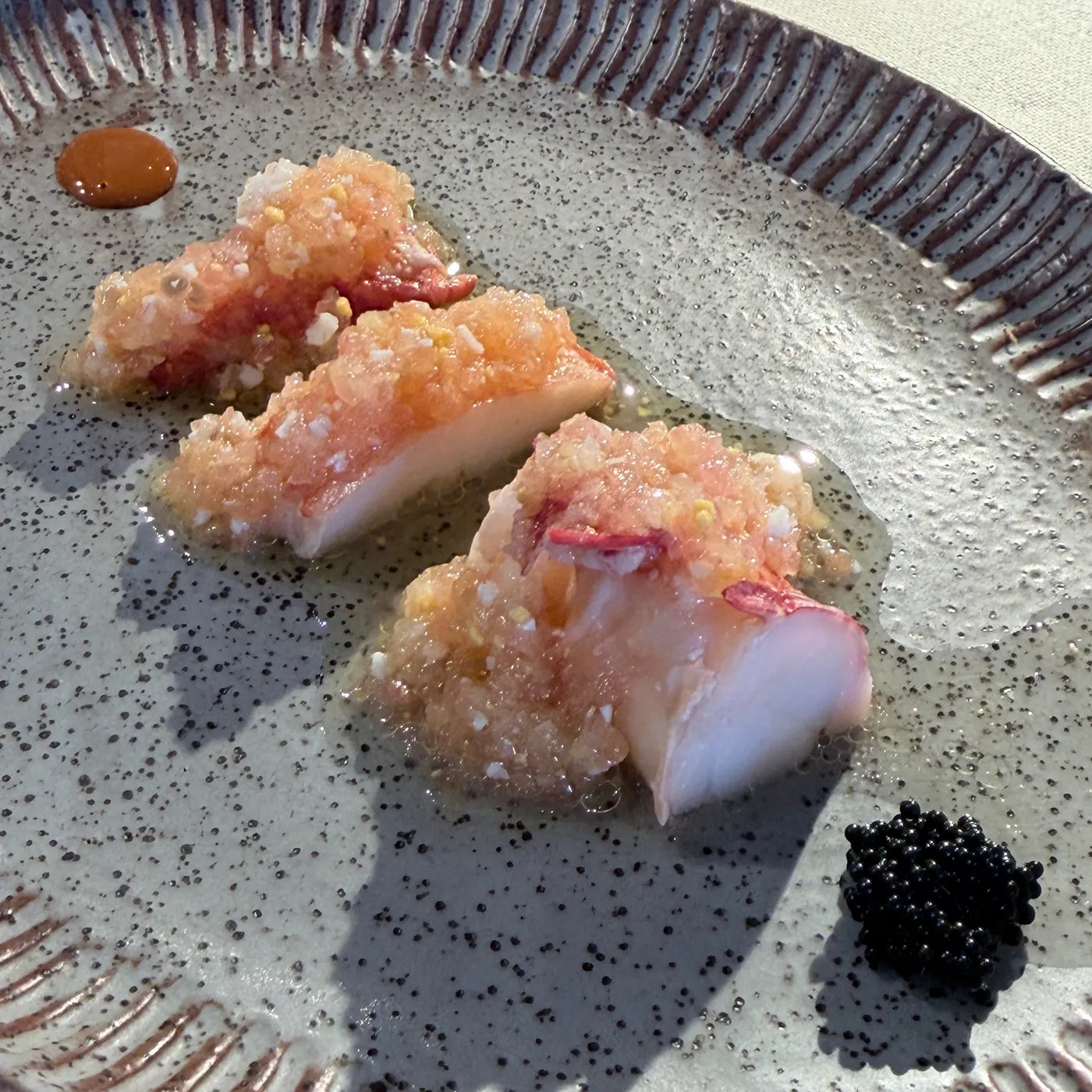
Marinated Lobster and Its Grilled Head
With the lobster, Aitor asked us to pay attention to different muscles within the same animal.
The meat was served with vinaigrette, with the leg, knuckle, and claw presented as distinct pieces. Calling all of it lobster is accurate, of course, but it misses the differences he wanted us to notice.
The head received its own preparation. It was split and grilled with the heat coming through the shell, rather than directed at the roe. The aim was to warm the contents gently and keep the fat.
Aitor explained that taking the roe too far makes it red, fibrous, and dry. Here, he wanted it lightly cooked, soft and rich, with the roe and fat coming together.
The same lobster needed different treatment from one part to another. That was becoming a very useful way to think about lunch.
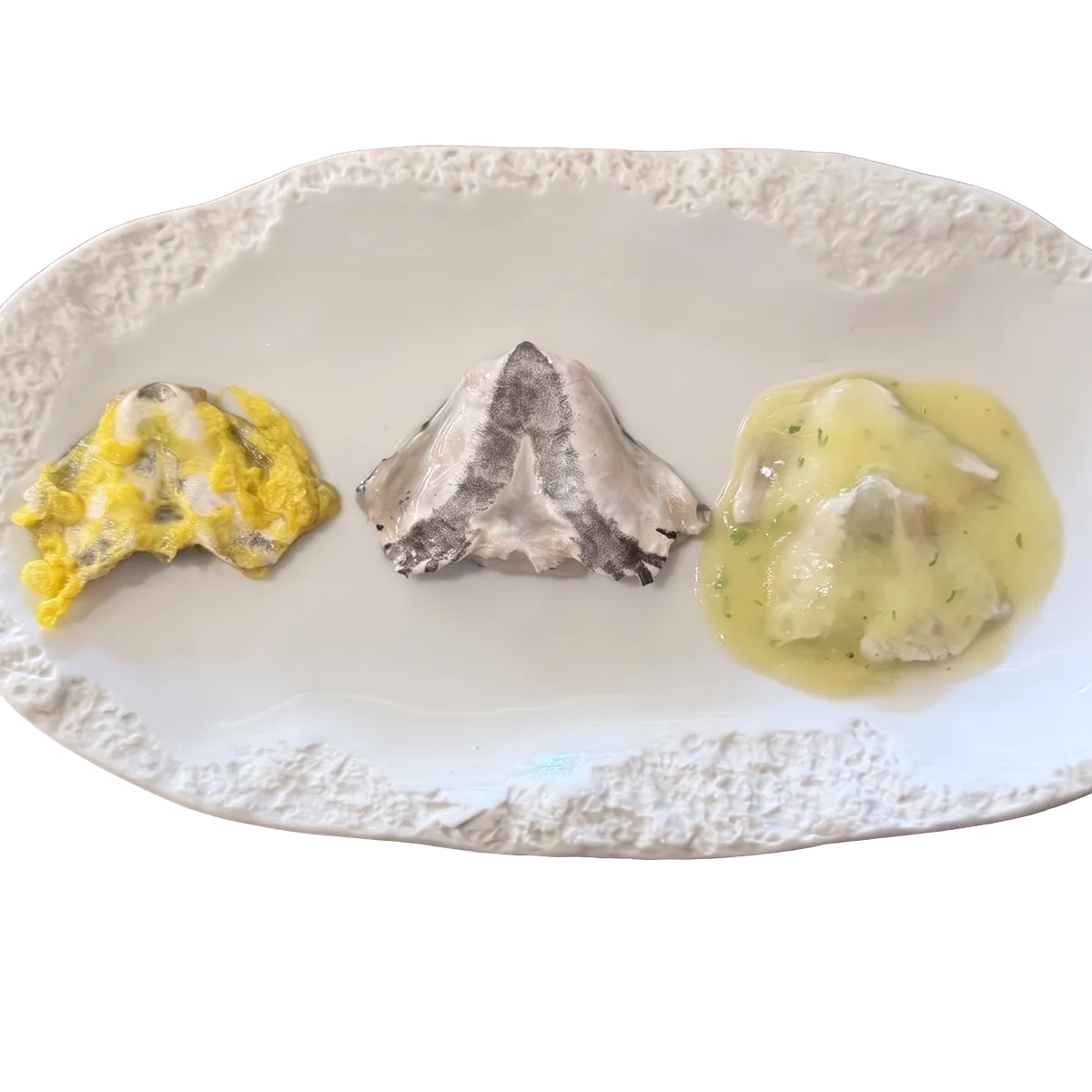
Hake Kokotxas, Three Ways
Kokotxas are the small jowls beneath the fish’s head. Aitor began their story on the fishing boats.
On the way back to port, fishermen would remove these pieces from hake heads and take them home. The heads were low-valued material for soup, but the fishermen knew which little part was worth keeping.
At home, their mothers cooked kokotxas al pil-pil or in salsa verde. Aitor also described the egg-coated preparation that became popular in the 1980s.
Our plate brought together three ways of cooking the same cut. One was grilled bare, with no oil or egg. Another was coated in egg and oil. The third was prepared al pil-pil.
It gave us a direct comparison: the same part of the same fish, changed by the cooking. Aitor’s history of the dish made the comparison more interesting, connecting what was on our plate to the fishermen who had brought these pieces home.
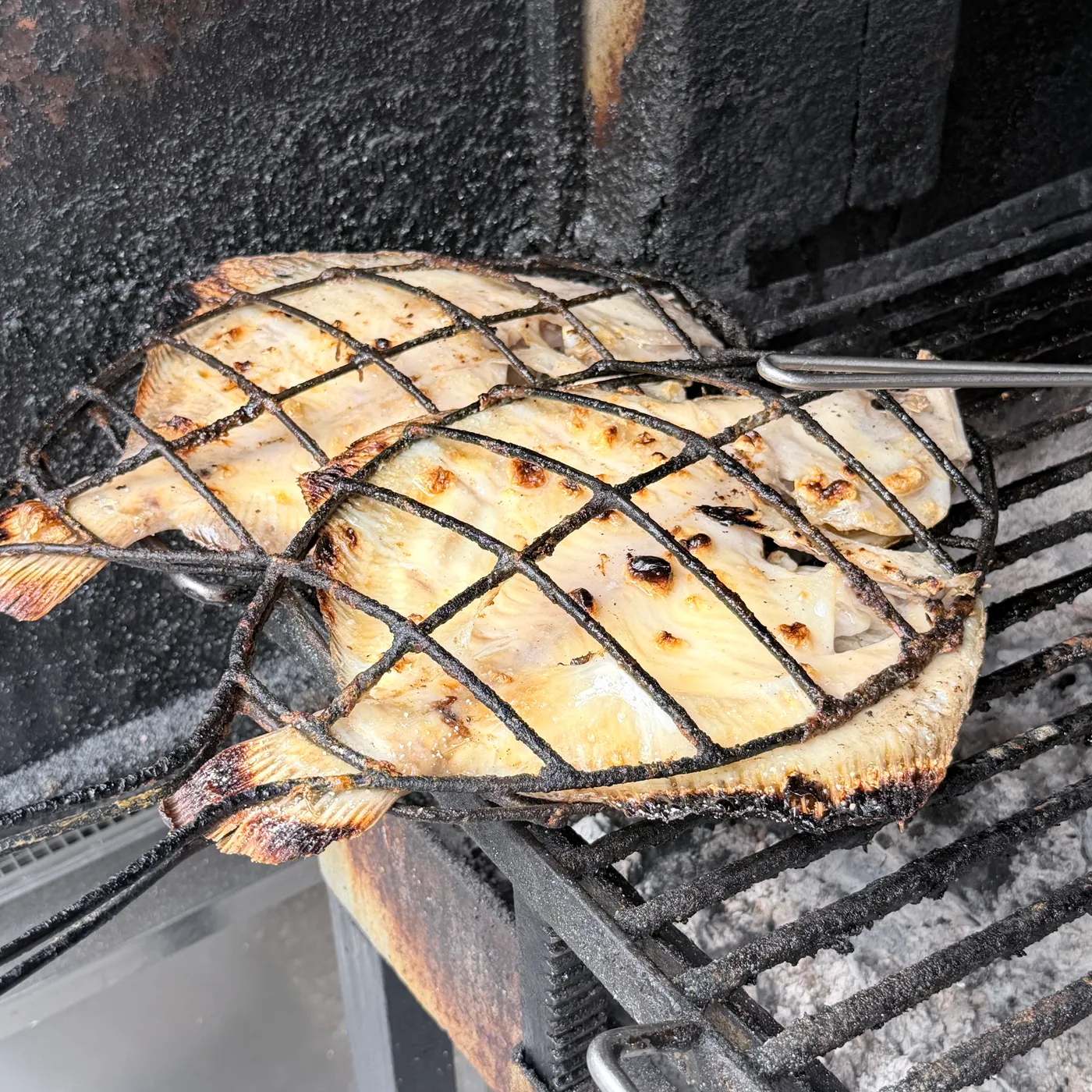
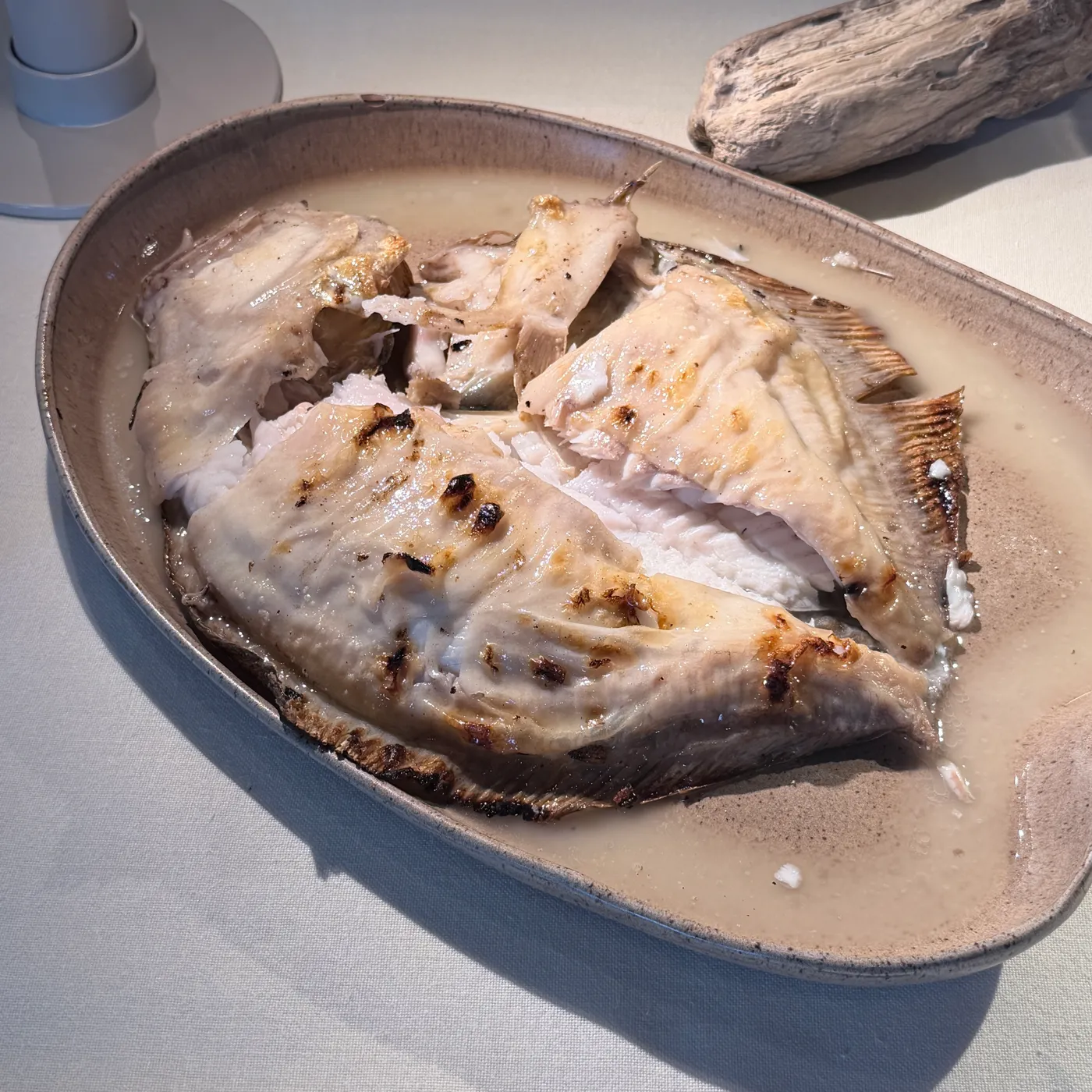
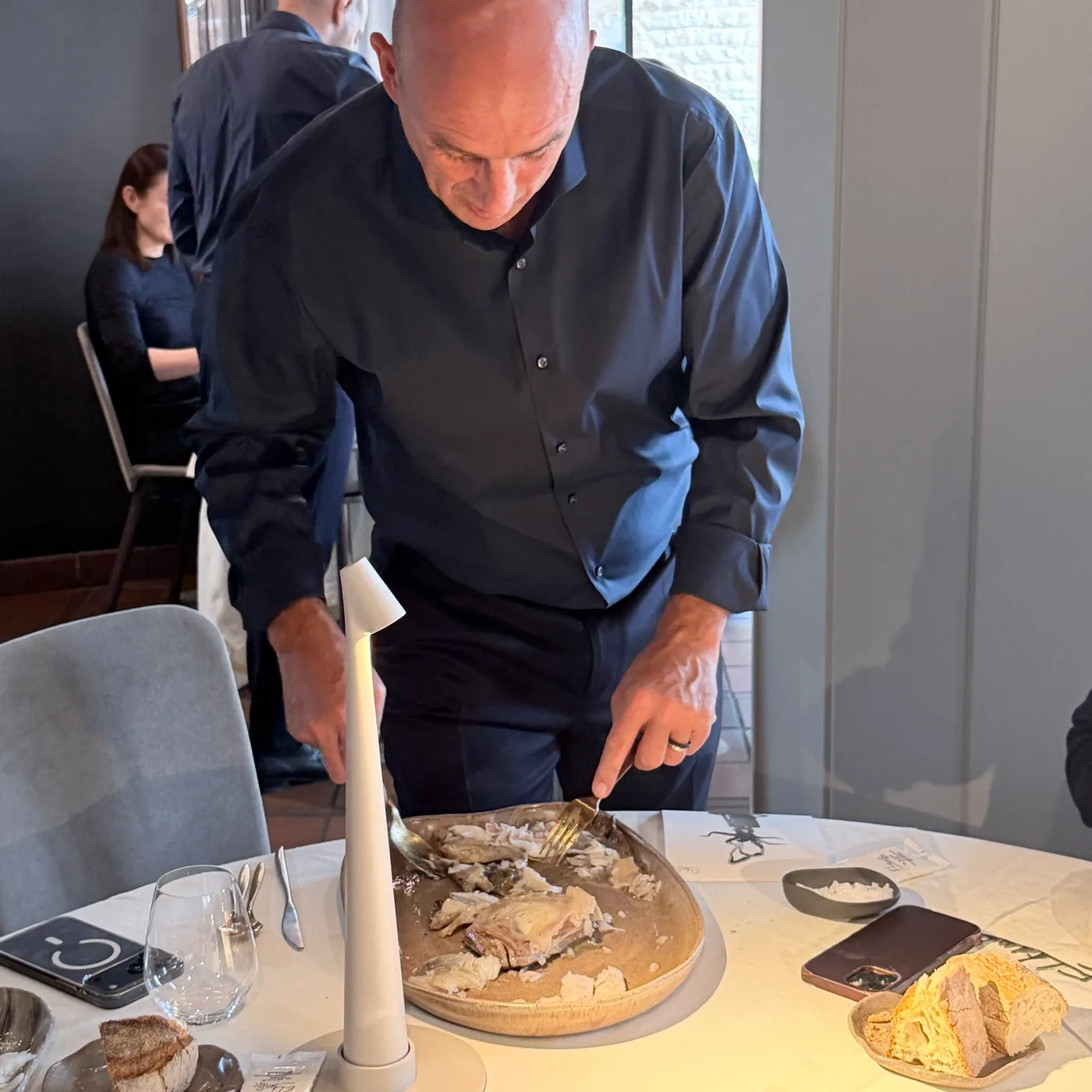
Turbot
We had two turbots, caught the previous day. I asked whether they had come in that morning, and Aitor corrected me. It had been a windy week, with difficult conditions at sea.
That detail was worth keeping. The fish on the table depended on someone being able to go out and catch it.
In Getaria, Aitor told us, turbot is called erremona. He described its diet through the seasons: mackerel in winter, anchovies in spring, sardines in summer, and horse mackerel, or chicharro, in autumn. In his account, those oily fish help explain the fat and character of the local turbot.
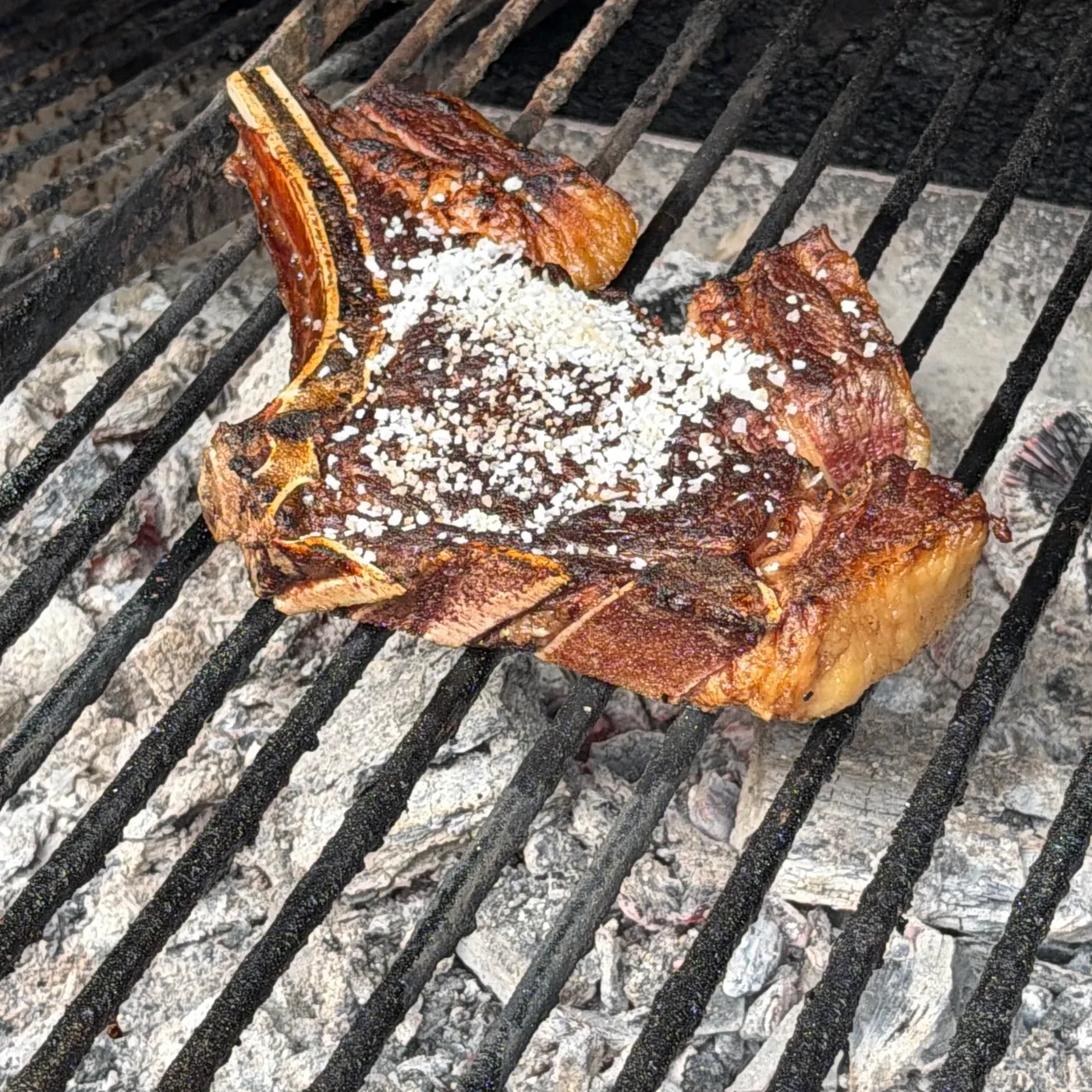
When I asked Asier about grilling it, his explanation was short: salt, the house dressing, a lively fire, and the whole fish held at medium height. Around twenty minutes for these fish.
Then I asked about the dressing, the one called Holy Water.
Asier sent me to Aitor.
Aitor’s answer was olive oil, something acidic, and nothing else. That was as far as the explanation went.
The turbot was grilled whole, with its skin on. Aitor drew our attention to the difference between the pale underside, which caramelizes, and the dark upper skin, which responds differently. The central flesh was served with both, so we could eat them together.
Then came the less straightforward pieces, the ones behind his story about the family table.
Around the bones, there is meat to find with your fingers. Near the head, the textures change again. Aitor described the cheek, the gelatin, the pieces to gnaw on, and the more fibrous meat around the neck. A piece with less fat can seem drier, he explained, even when the difference is in the cut rather than the cooking.
Aitor gave us reasons to linger over parts of the fish that are easy to pass by. After hearing his explanation, it would have felt a shame to leave them unexplored.
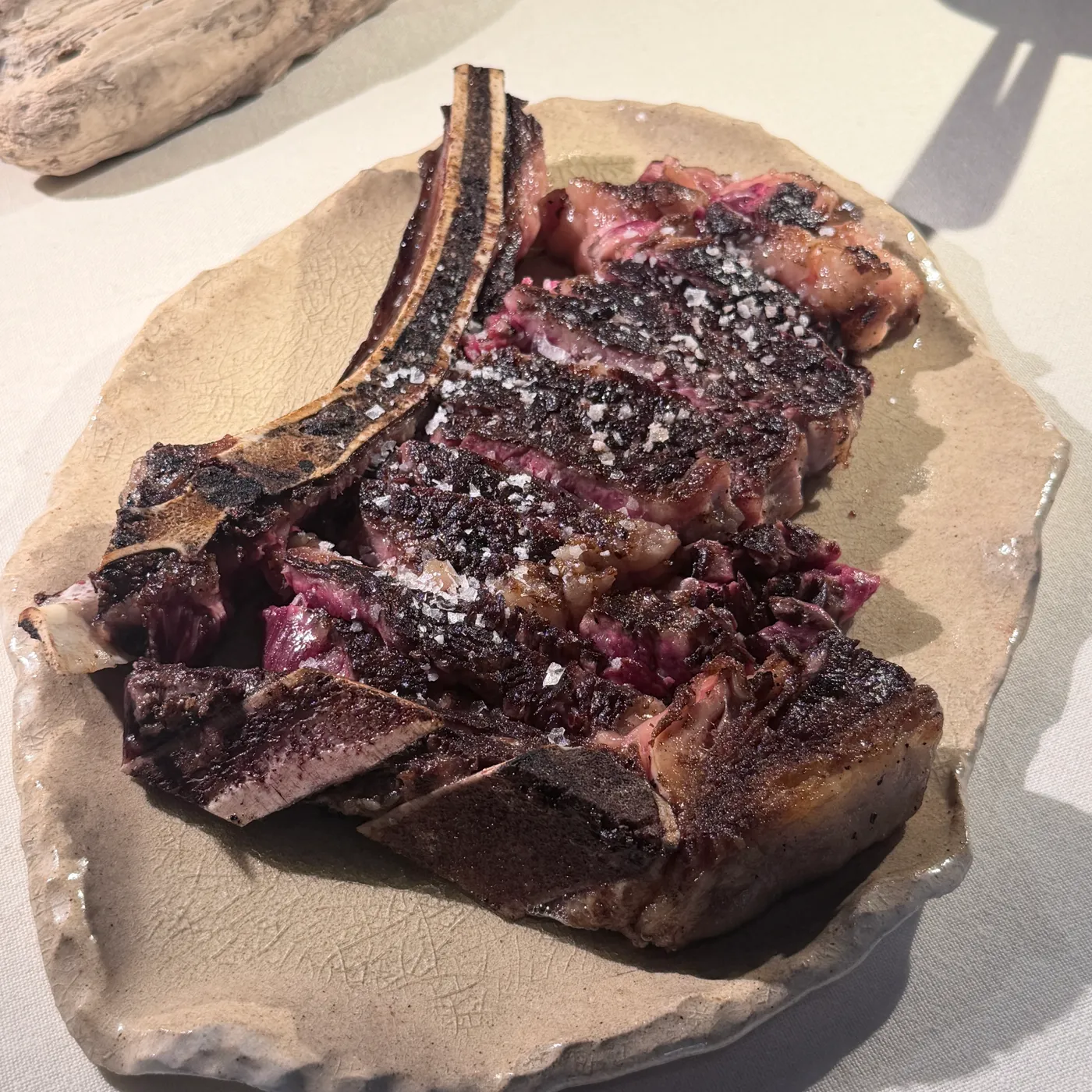
Rubia Gallega Beef Chop
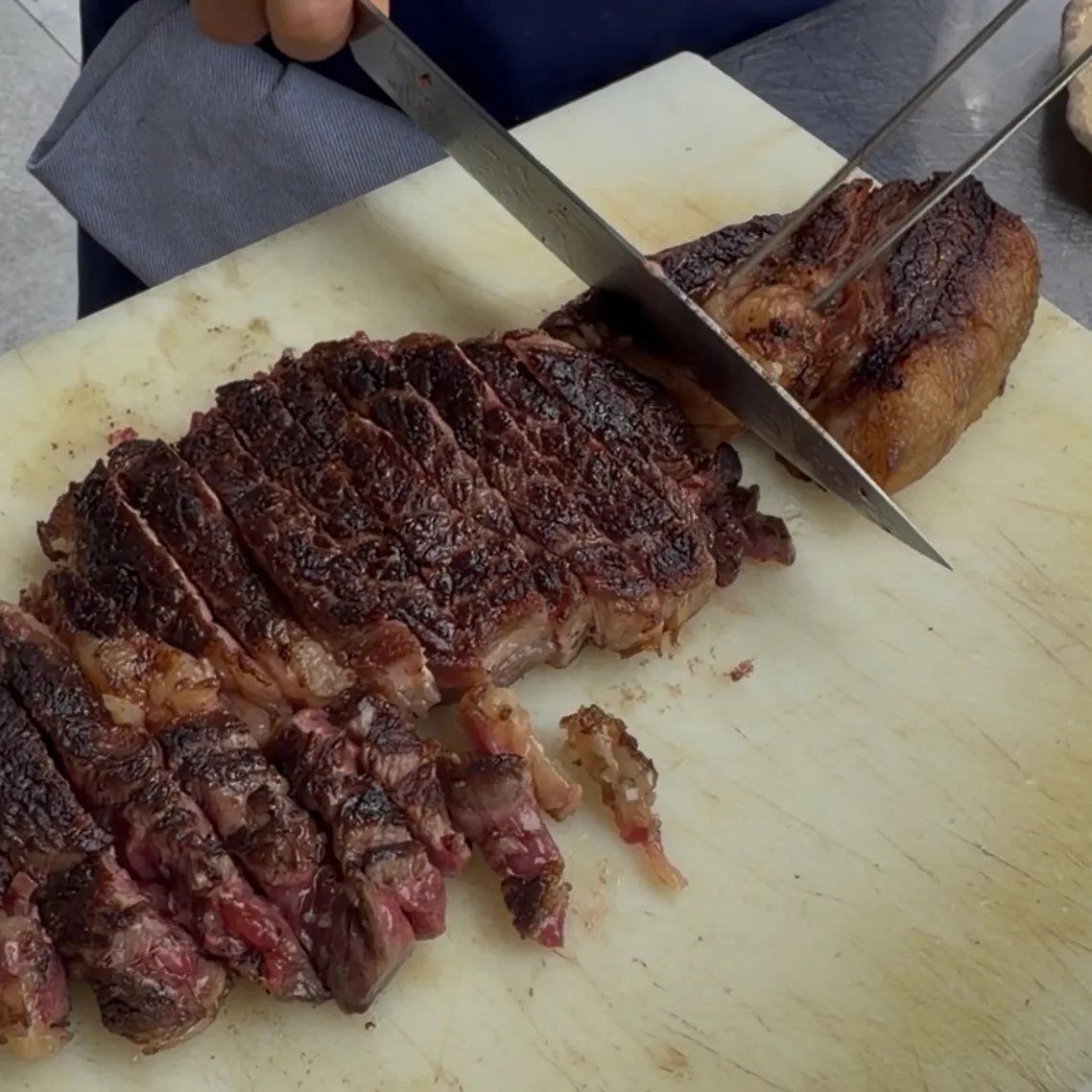
The beef came from a Rubia Gallega cow and was aged for forty days. The cut was lomo alto, grilled under Koldo Manterola’s care.
The restaurant works with Luismi on the selection of its meat. The explanation that accompanied the chop was plain: buy well, handle it carefully, brown it properly, and avoid spoiling what has been selected.
That also recalls Pedro’s advice about buying good ingredients and not spoiling them. By this point in the meal, there had been plenty of evidence of how much knowledge and attention that simple instruction requires. Pedro’s legacy.
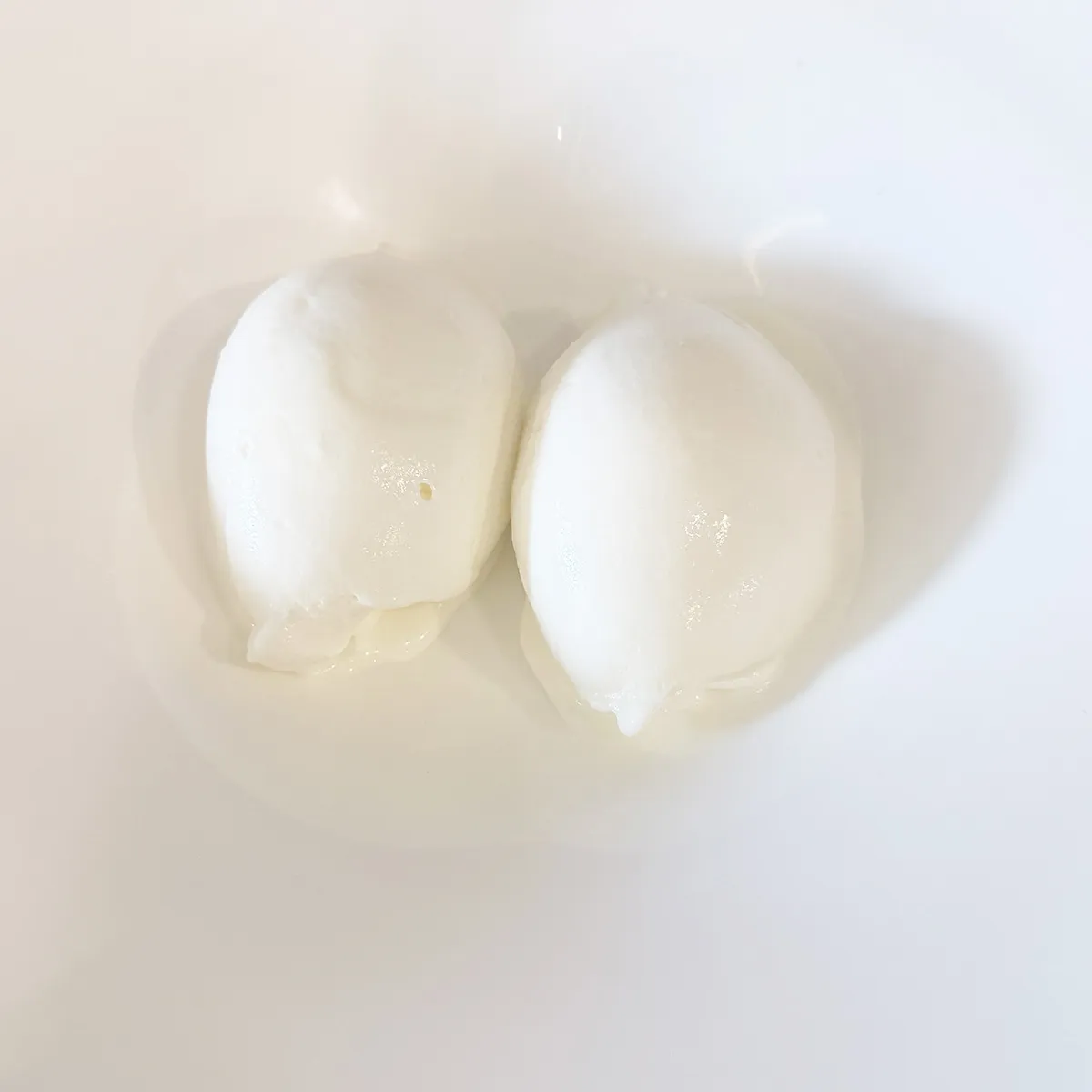
Fresh-Cheese Ice Cream
The ice cream was made with fresh cow’s milk and fresh cheese from that day.
The milk was reduced a little to concentrate its natural sweetness, with practically no added sugar. At service, the mixture went through a Carpigiani machine to give it an airy, creamy texture.
The explanation was as direct as the preparation: fresh milk, fresh cheese, and careful attention to the texture when it reached the table.
I came away from this lunch knowing much more than when I arrived. Thank you, Aitor, Asier, Koldo, and Pablo, for sharing so generously.
And next time I eat a whole fish, I will be thinking about the grandparents.
What we drank
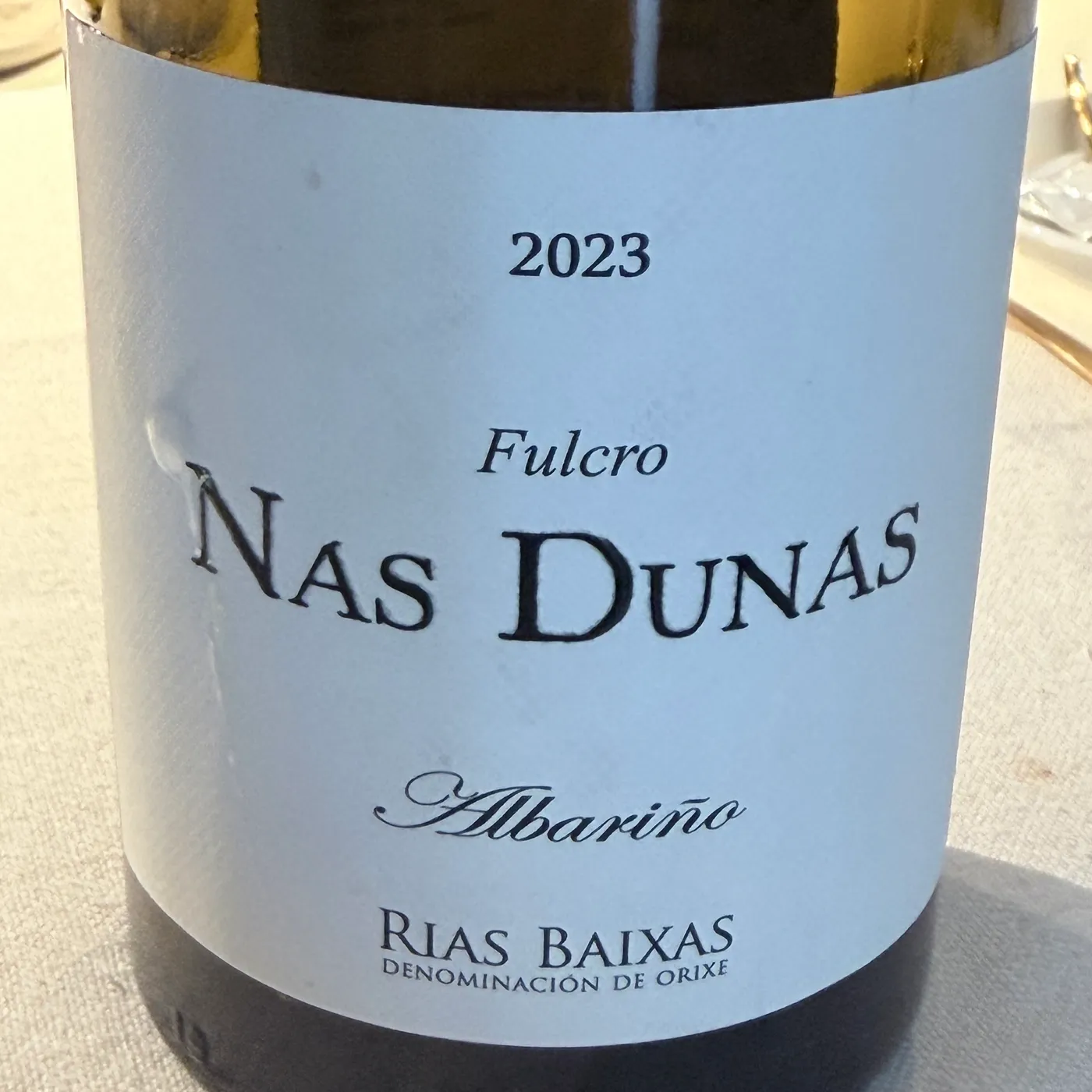
Fulcro, Nas Dunas 2023
Manuel “Chicho” Moldes makes Nas Dunas from Albariño grown in a small coastal vineyard in Arra, within Galicia’s Rías Baixas. The vines stand on quartz sand with some schist, close to the Atlantic. Fermentation uses native yeasts, followed by eleven months on the lees in used French oak barrels. Malolactic fermentation is avoided, preserving the wine’s natural acidity and freshness.
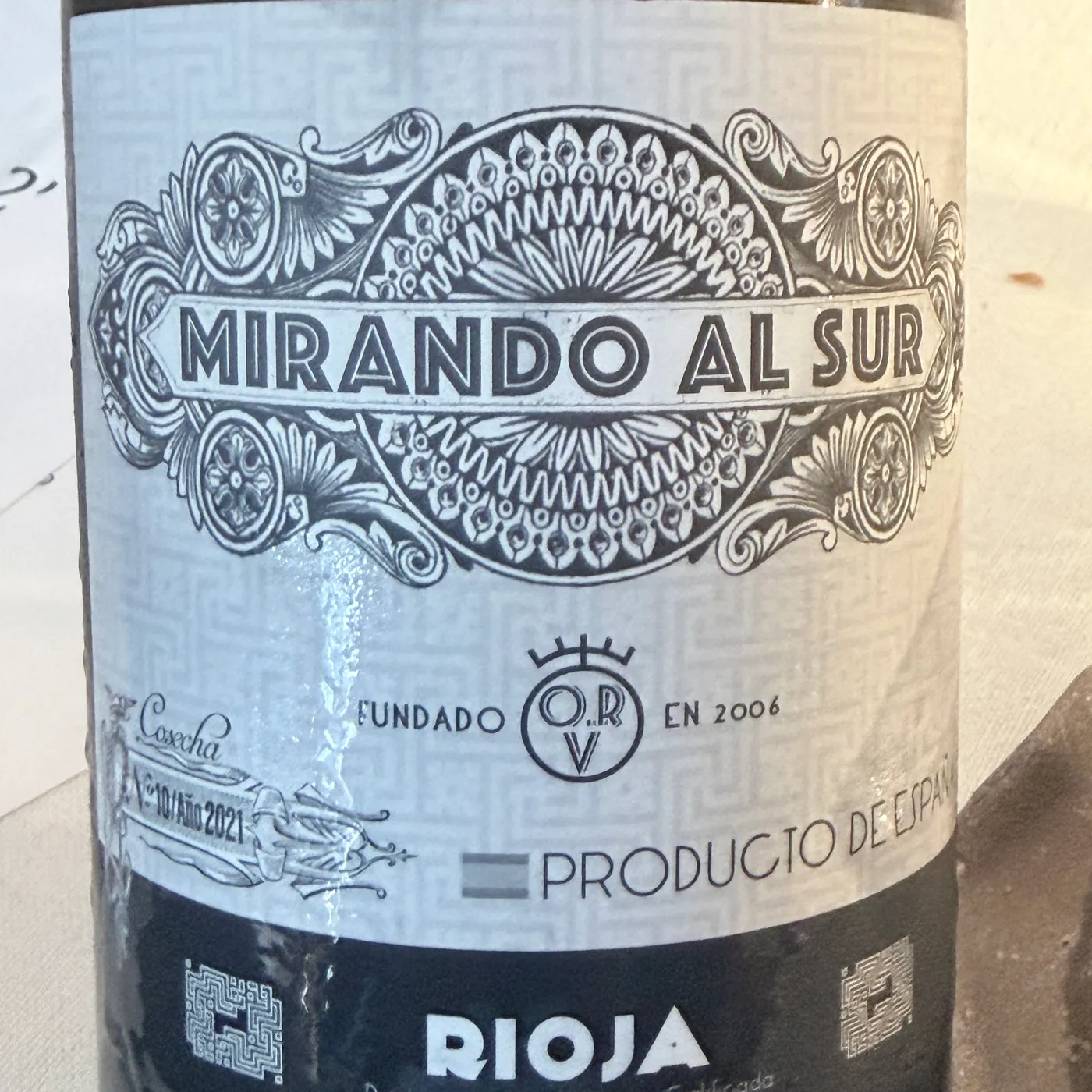
Olivier Rivière, Mirando al Sur 2021
Olivier Rivière makes this white Rioja from old Viura vines near Labastida, in Rioja Alavesa. Its name means “looking south,” a reference to its unusual aging: after fermentation in oak, the wine spends time in casks previously used for Fino and Amontillado sherry. That connection brings another tradition into Rioja, giving this white a character distinct from conventional barrel aging.
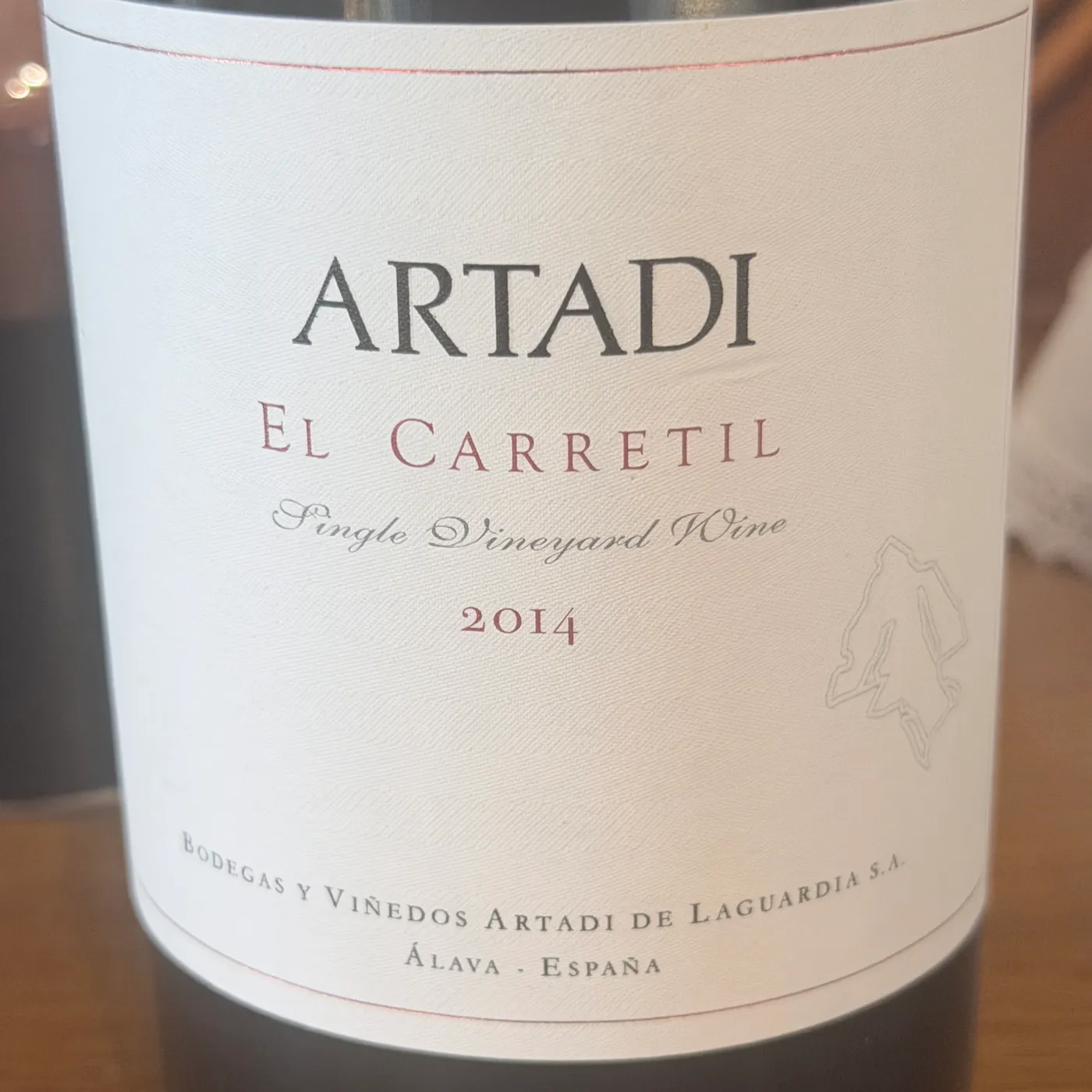
Artadi, El Carretil 2014
El Carretil is Artadi’s Tempranillo from a single vineyard in Laguardia, in Rioja Alavesa. Its vines grow at 500 meters on poor clay soils rich in limestone. The 2014 spent twelve months in new French oak. Artadi describes the vintage as fine and delicate, with fresh fruit, while the vineyard contributes the structure and depth associated with this particular site.