Osteria Vini E Vecchi Sapori
Visited Thu, Nov 5, 2026 · Dinner
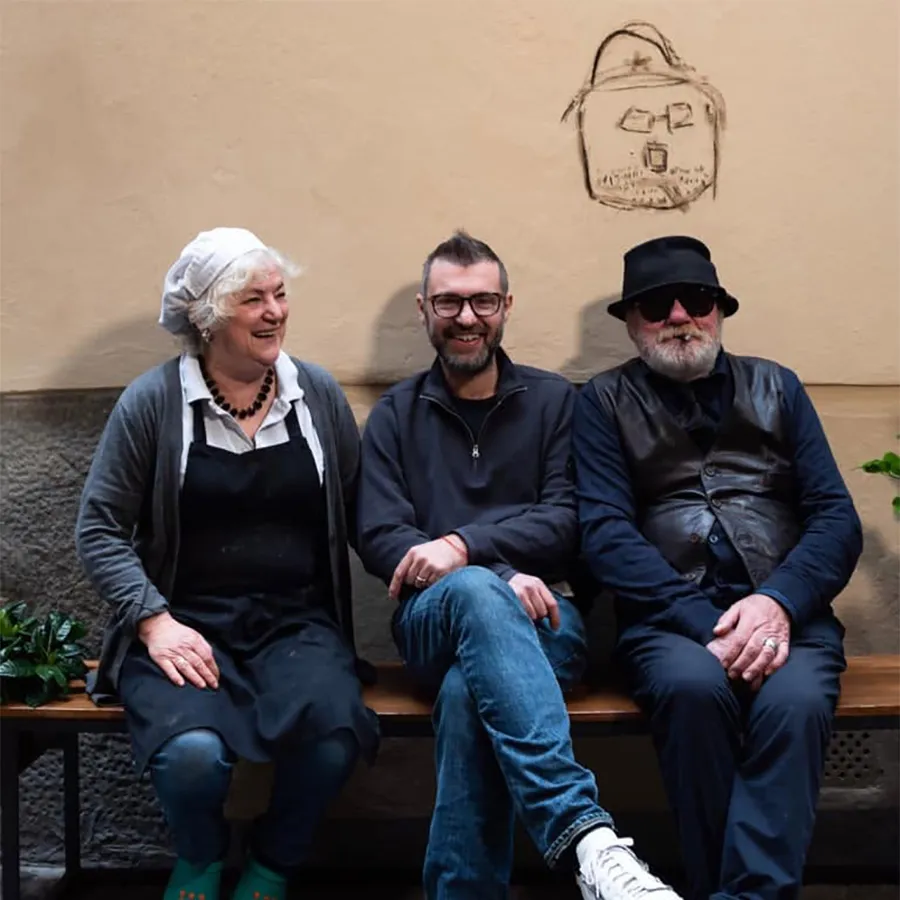
Vini e Vecchi Sapori | The People Behind the Magic
Vini e Vecchi Sapori
Fifteen Years of Coming Home to Florence
Whenever I start planning a trip to Florence, one of my very first thoughts is Vini e Vecchi Sapori.
I've been coming here for more than fifteen years, and this little trattoria has never once disappointed me.
Not once.
There is something about certain restaurants that gets under your skin. You know exactly what awaits you, and yet the thought of returning makes you just as happy as it did the first time.
For me, Vini e Vecchi Sapori is one of those places.
It isn't fancy. And that is precisely why I love it.
It's small, noisy, crowded, generous, and completely real. The sort of place where the tables are close together, where the room is full of conversation, and where the food arrives without unnecessary ceremony.
The menu changes with the day, but the cooking remains firmly rooted in Florence and Tuscany. Here, the pleasure comes from dishes that have belonged to family tables and trattorias for generations.
This is the Italy I love.
Give me a great plate of pappardelle, a bowl of peposo, something wonderful from the kitchen, a good bottle of wine, and people I love around the table.
What else could I possibly need?
And there is a family behind all of this.
Chef Gianluca Camillotto shared the story of Vini e Vecchi Sapori with me, along with the explanations of the dishes we ate.
According to Gianluca, the restaurant began in 2005 with the Mazzanti family: Tommaso and his parents, Mario and Rosanna.
The family was already deeply involved in Florentine hospitality, with roots in restaurant cooking going back to the 1960s and the historic Trattoria Angelino.
Vini e Vecchi Sapori began as a tiny restaurant with fifteen seats.
Over the years it grew, but Gianluca spoke about something far more important than the number of tables.
Rosanna is still in the kitchen.
After two decades, she continues to prepare the dishes that helped make the restaurant what it is today.
Mario remains closely involved with the wine cellar.
And the recipes, particularly those developed by Rosanna, have become part of the restaurant's identity.
Gianluca spoke about the paccheri, the ravioli, and the pappardelle with duck almost as if he were introducing members of the family.
I loved that.
Because when you've been returning to a restaurant for fifteen years, the food becomes something more than dinner.
It becomes a collection of memories.
And I couldn't have imagined a better place to begin our White Truffle Road Trip through northern Italy.
Tonight, we begin in Florence.
And, as far as I'm concerned, we're beginning exactly where we should.
What we ate
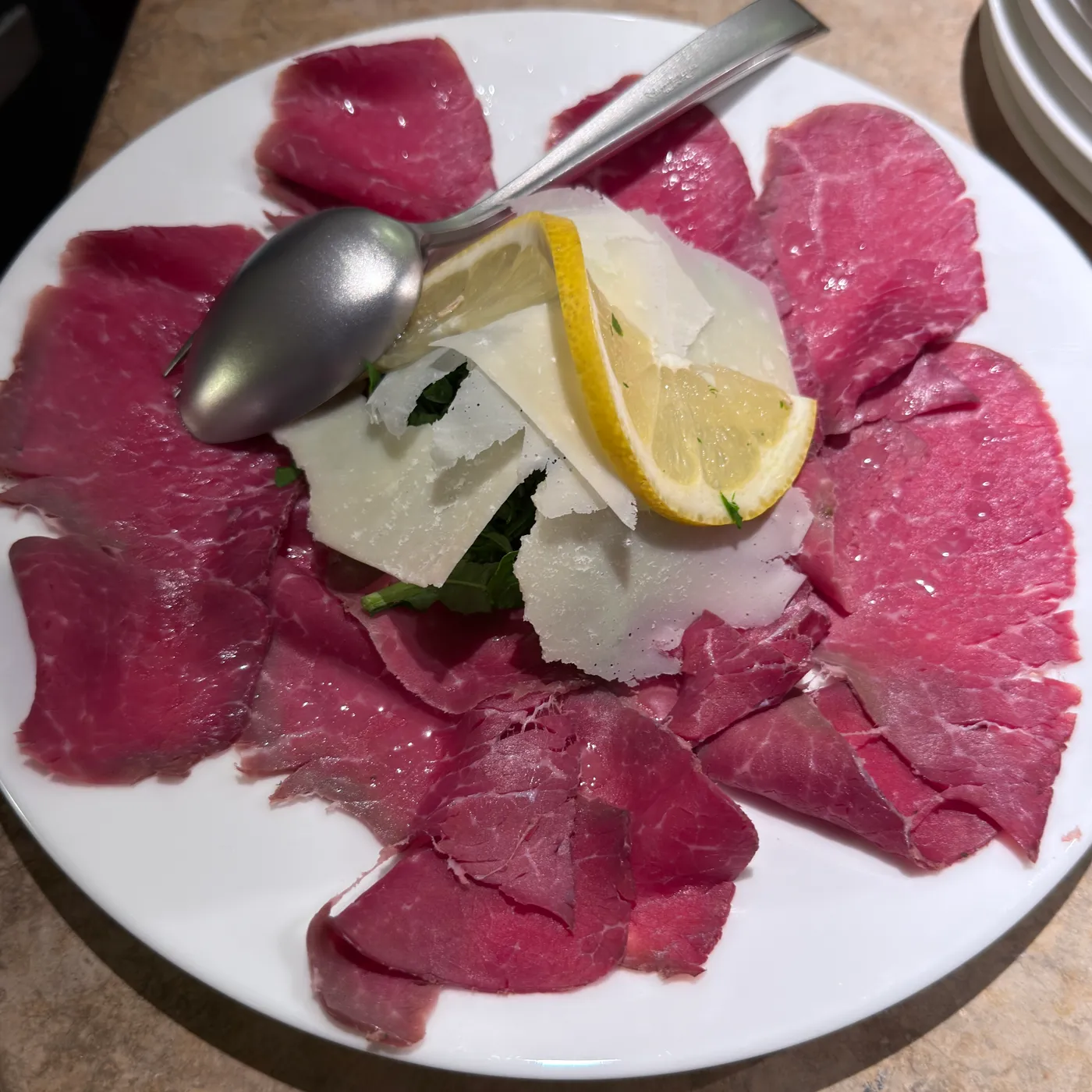
Carpaccio di Angus | Marinated Angus Beef Carpaccio
We began with the restaurant's Angus carpaccio, thin slices of deeply colored beef arranged around a generous center of arugula and Parmigiano Reggiano. Gianluca explained that the Angus beef is seasoned and marinated for at least a month before being served. The Parmigiano Reggiano is aged for twenty-four months. On the plate, the thinly sliced beef surrounds the greens, with large shavings of cheese and fresh lemon. A straightforward combination, built around the character of the meat, the sharpness of the arugula, and the aged cheese. Exactly the kind of beginning that tells me I'm back in a Tuscan trattoria.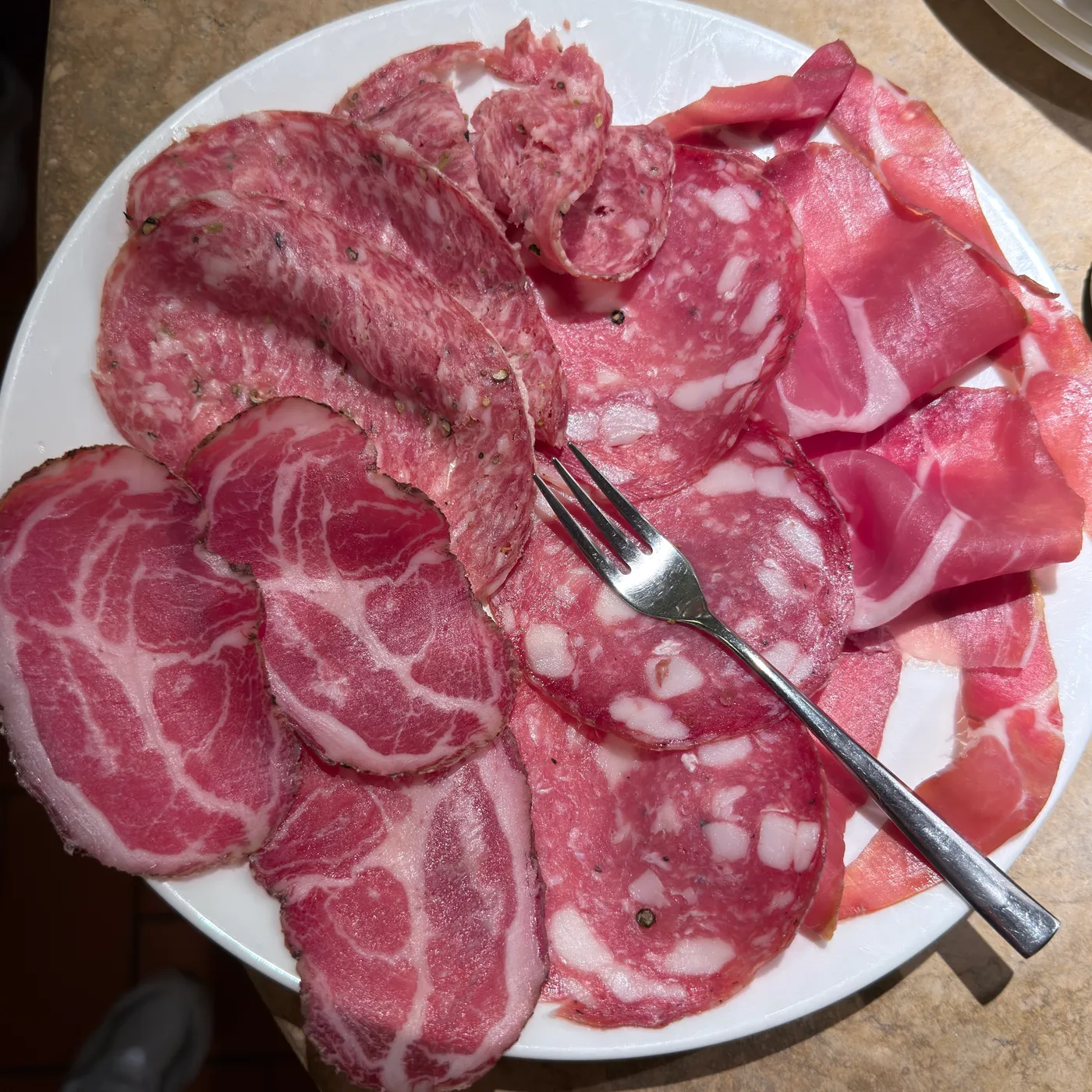
Affettato Misto Toscano | Mixed Tuscan Cured Meats
A generous plate of Tuscan cured meats, gathered from producers in the countryside and hills around Tuscany. Gianluca described four preparations: finocchiona, the fennel-scented Tuscan salami; salame toscano; aged prosciutto crudo; and coppa. They arrive together, each with its own texture, marbling, seasoning, and character. This is one of the great pleasures of eating in Tuscany. You can begin a meal with a plate of carefully chosen salumi and a glass of wine, and already feel that the evening is going in the right direction.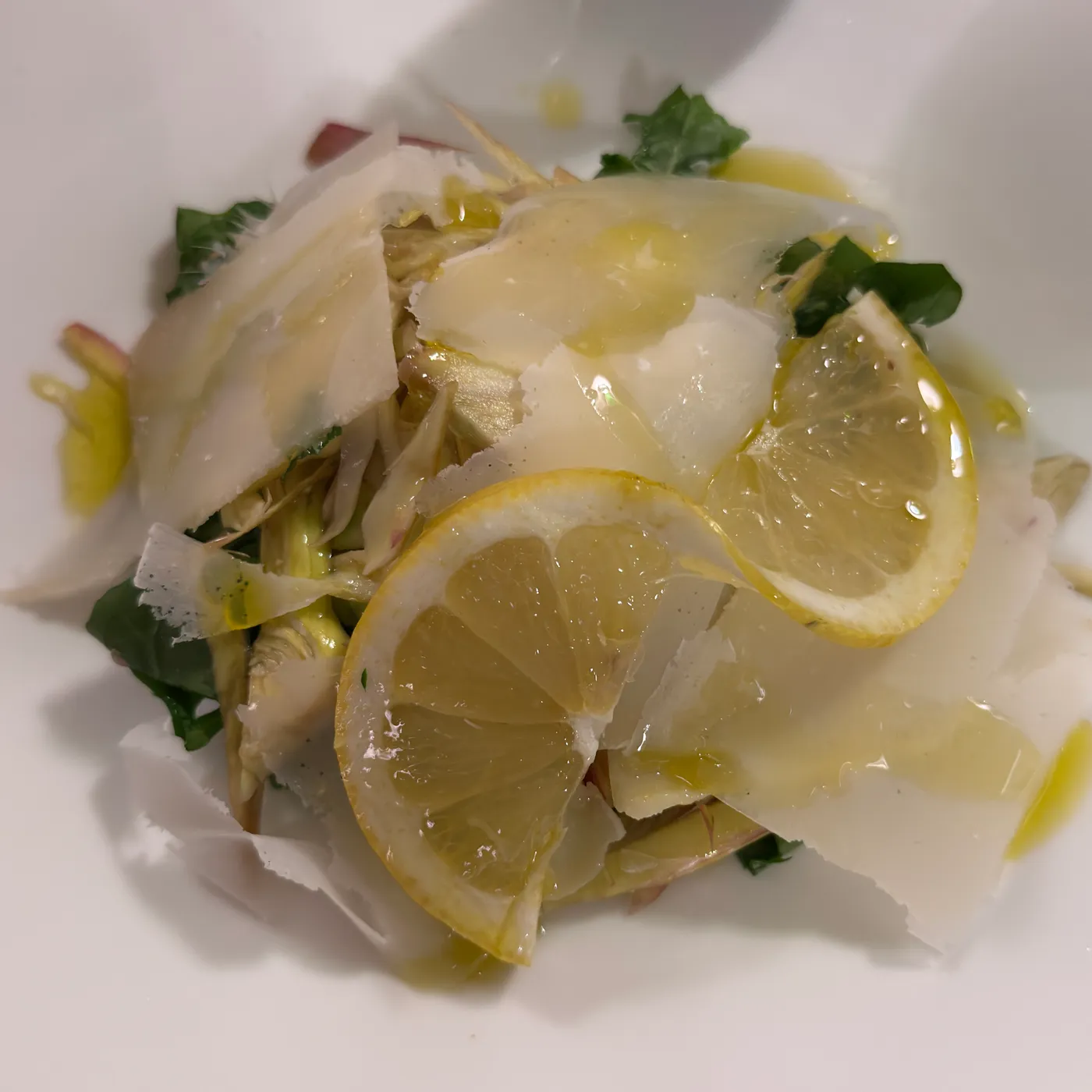
Carciofi Crudi con Rucola e Parmigiano | Fresh Artichoke Salad
November marks the beginning of artichoke season, and Gianluca was particularly happy to have them on the menu. The restaurant serves them thinly sliced, over a bed of arugula, with shavings of Parmigiano Reggiano. In our plate, the artichokes are accompanied by fresh lemon and olive oil. There's no need to disguise the ingredient or turn it into something complicated. Just the distinct character of fresh artichokes, the peppery greens, the cheese, and the brightness of lemon. A lovely expression of the season.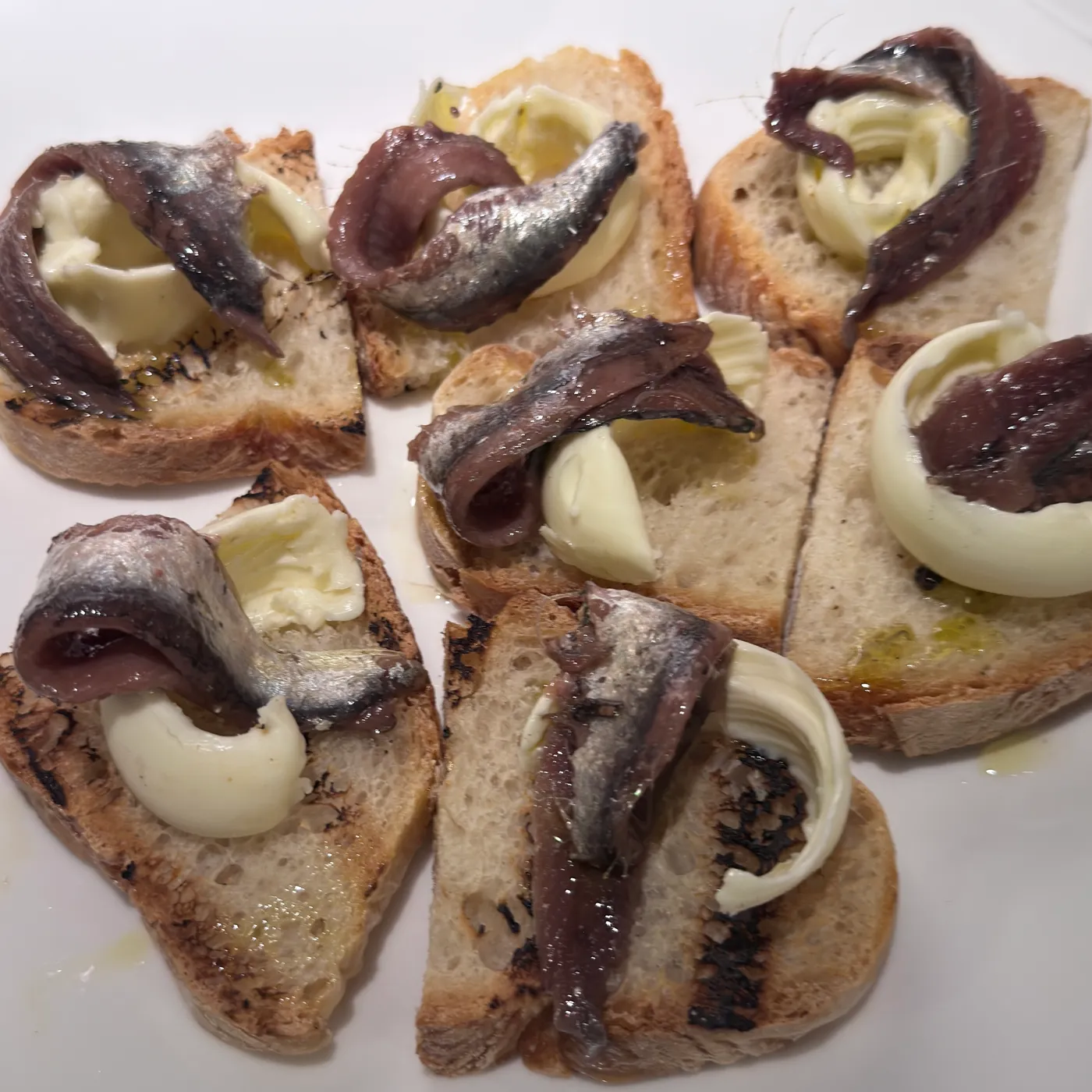
Acciughe del Cantabrico con Burro Francese | Cantabrian Anchovies with French Butter
Even in the middle of Florence, Gianluca makes room for one of the great products of the Cantabrian Sea. Beautiful anchovies, laid over toasted bread with generous curls of carefully selected French butter. He considers these anchovies an essential part of the restaurant's offerings. The plate is almost disarmingly simple. Toasted bread, butter, and anchovies. The richness of the butter meets the concentrated salinity of the cured fish, while the bread provides the crunch. Three elements. Nothing unnecessary. And a very good reason to order another glass of wine.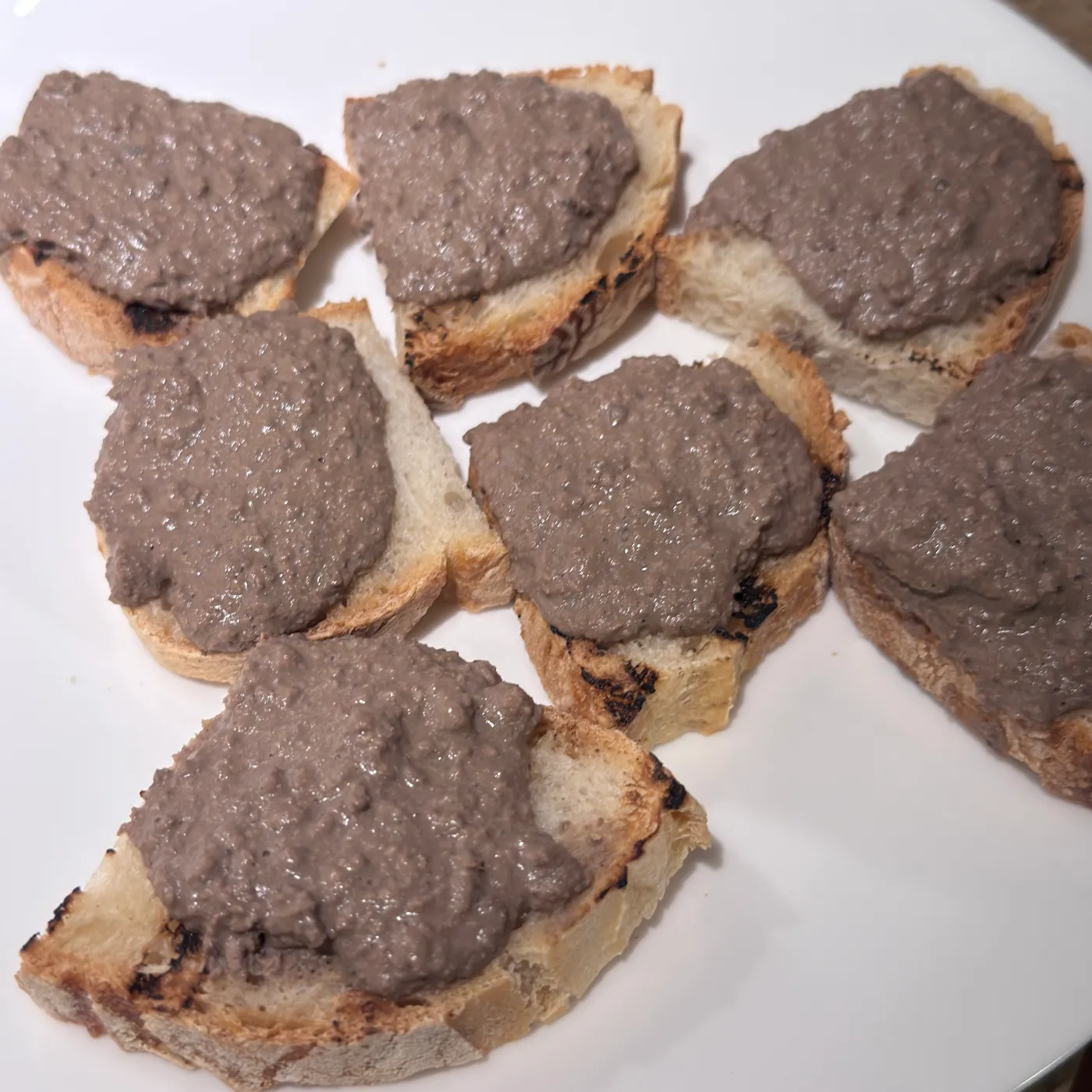
Crostini Toscani ai Fegatini | Traditional Tuscan Liver Crostini
Gianluca described this as one of the essential ways to begin a proper Tuscan meal. Crostini topped with fegatini, the traditional Tuscan liver preparation. The toasted bread carries a generous layer of dark, savory pâté, served without decoration or unnecessary additions. There is something deeply familiar about this kind of cooking. These are the dishes that belong to the old language of Tuscan trattorias, where flavor matters much more than presentation. A few slices of bread and a preparation handed down through the local cooking tradition. Exactly where I want to be.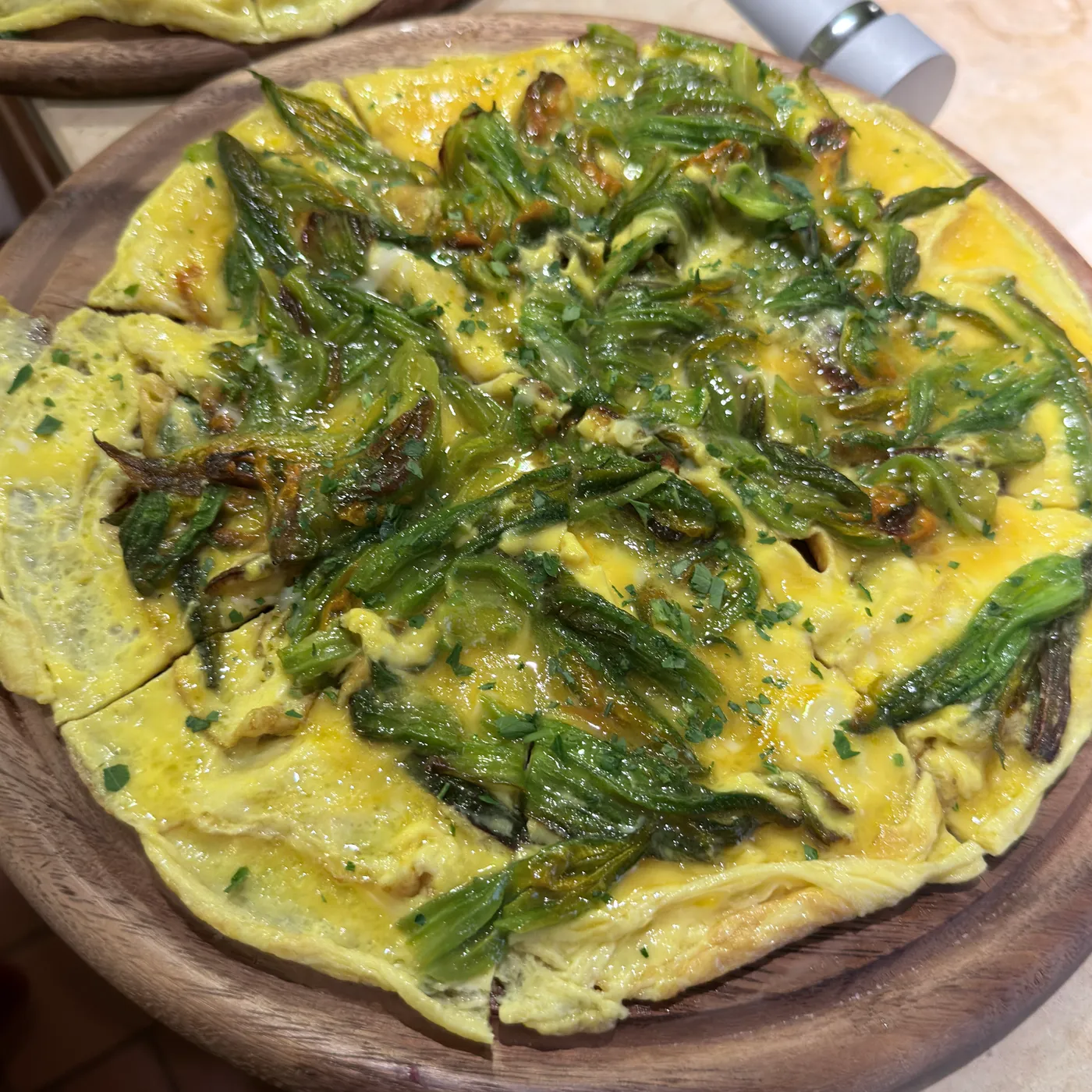
Tortino ai Fiori di Zucca | Zucchini Flower Tortino
A simple preparation of eggs and zucchini flowers, which Gianluca described with particular affection. The flowers are sautéed in oil and combined with the eggs to create a soft, golden tortino. Ours arrived on a wooden platter, the flowers spread across the surface, their green stems and delicate petals still clearly visible. It's an uncomplicated dish, built from two familiar ingredients. And that is very much the point. Great trattoria cooking doesn't require elaborate techniques or expensive ingredients to make something worth remembering. Sometimes eggs and zucchini flowers are enough.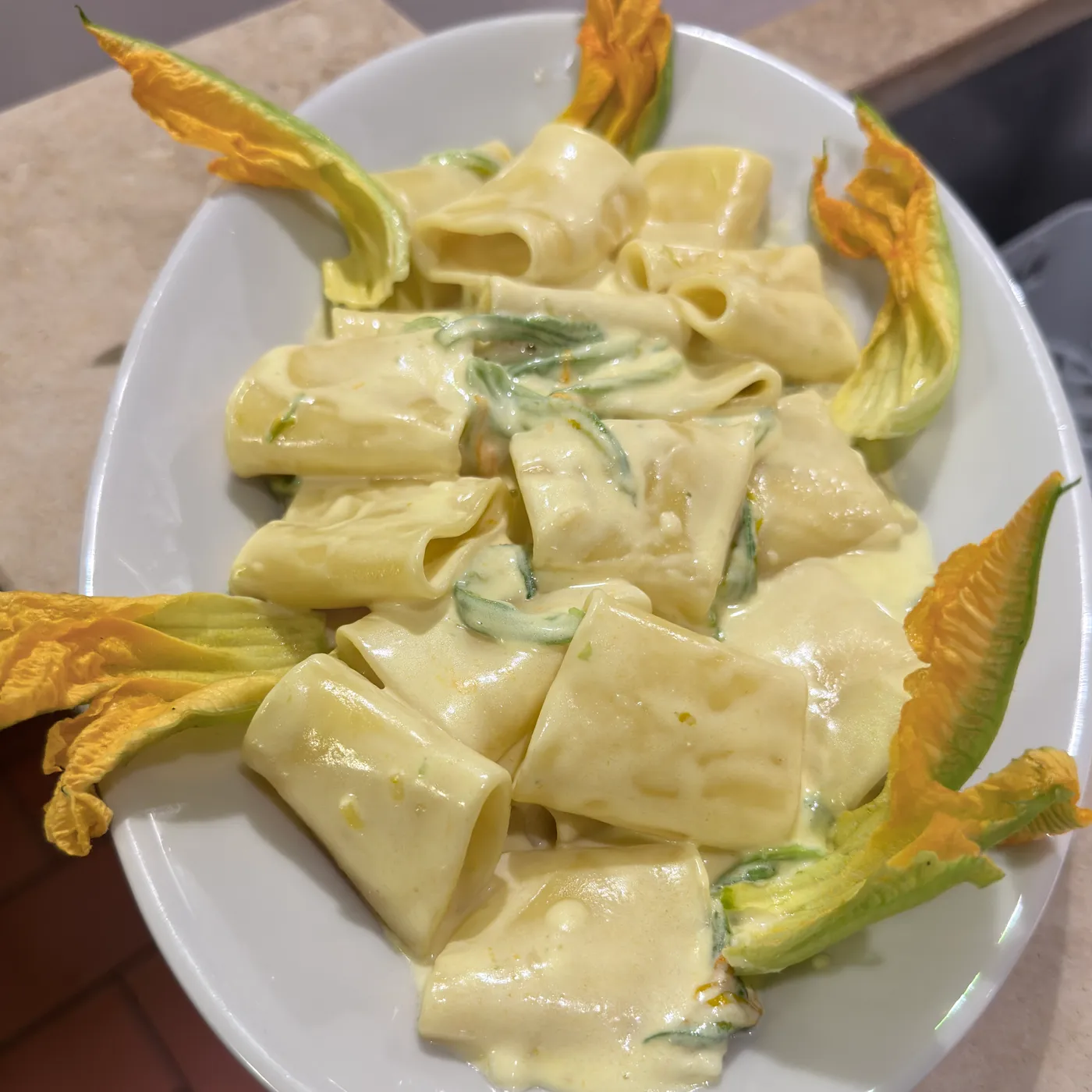
Paccheri ai Fiori di Zucca, Mascarpone e Zafferano
If there is one dish that carries the history of Vini e Vecchi Sapori in its sauce, this may be it. Gianluca called these paccheri one of the restaurant's icons, a dish with which Rosanna helped build its foundations. Large tubes of pasta are coated in a rich, pale golden sauce of mascarpone and saffron, with zucchini flowers bringing their delicate character to the preparation. The flowers are also placed around the plate. It's generous, creamy, and wonderfully direct. A plate of pasta that needs no complicated explanation, except perhaps that it has helped bring people back to this little restaurant for years.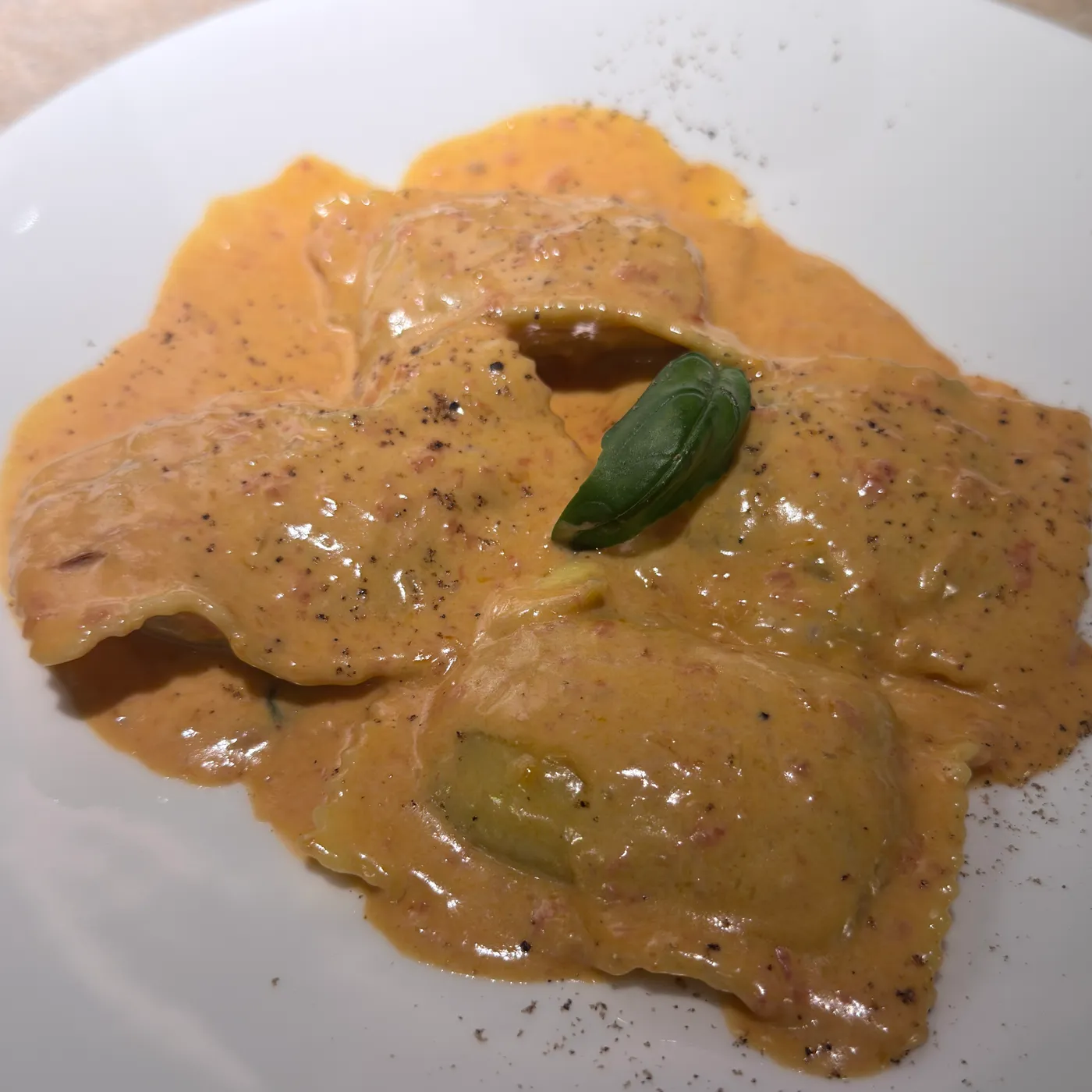
Ravioli Ricotta e Spinaci in Salsa Rosé
Another of the dishes Gianluca described as fundamental to the restaurant's identity. Ravioli filled with ricotta and spinach, served in a rich rosé sauce. The pasta arrives in broad, soft parcels, generously coated with the creamy, tomato-colored sauce and finished with a basil leaf. Gianluca spoke about these ravioli as another of the preparations that helped establish Vini e Vecchi Sapori. There is nothing fashionable about this plate. And I mean that as a compliment. It's the sort of pasta that reminds you why people keep returning to the same trattoria, year after year.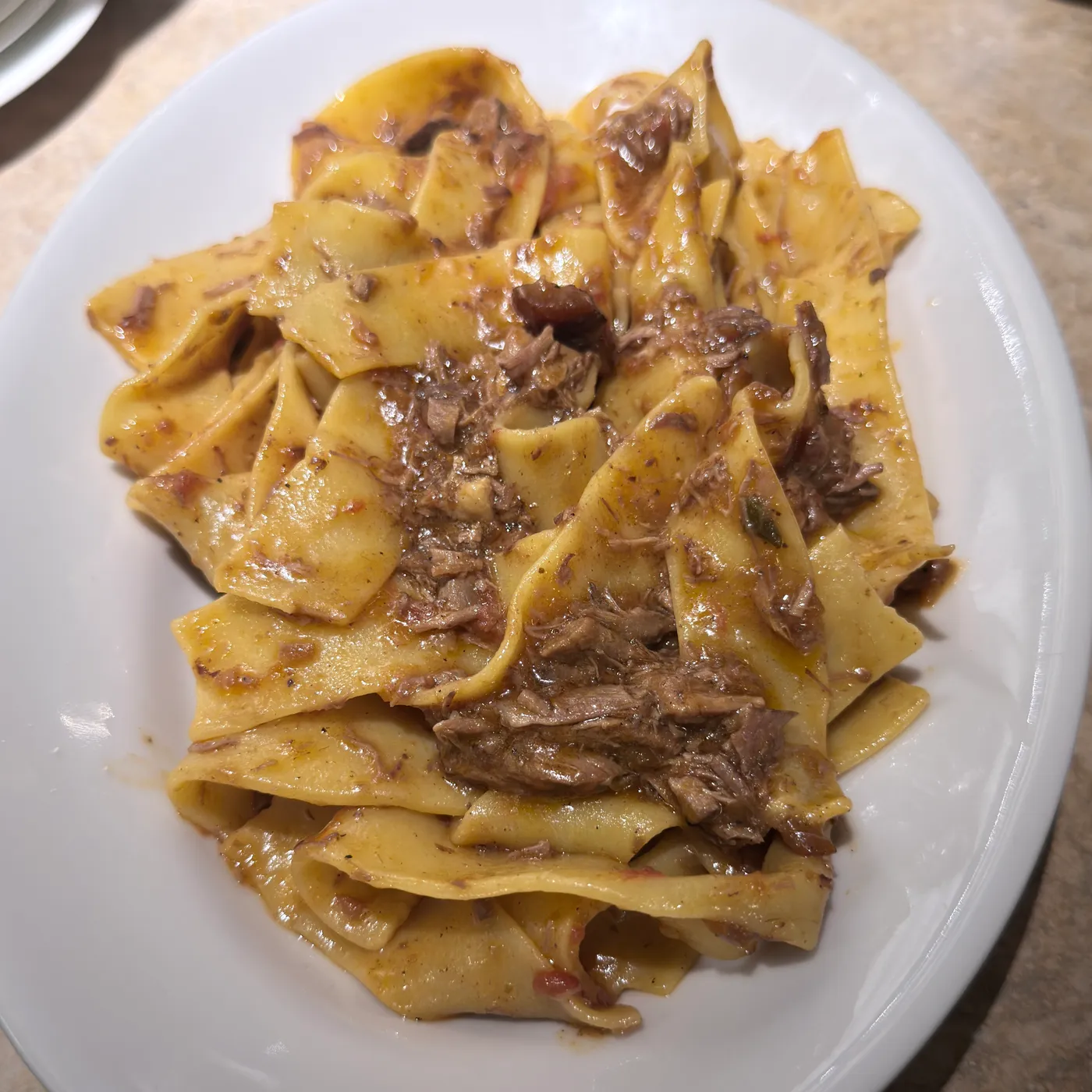
Pappardelle all'Anatra | Pappardelle with Duck Ragù
Ah, the pappardelle with duck. Gianluca called them legendary. Another dish created by Rosanna, and another that helped define the restaurant's cooking. Broad ribbons of pappardelle are folded through a rich duck ragù, with pieces of meat clinging to the pasta and the sauce coating every ribbon. This is the kind of food I dream about when I think of coming back to Florence. Not because it's complicated. Because it knows exactly what it wants to be. A generous plate of pasta, a deeply savory sauce, and a recipe that has become part of a family's restaurant history. For me, that is a very beautiful thing.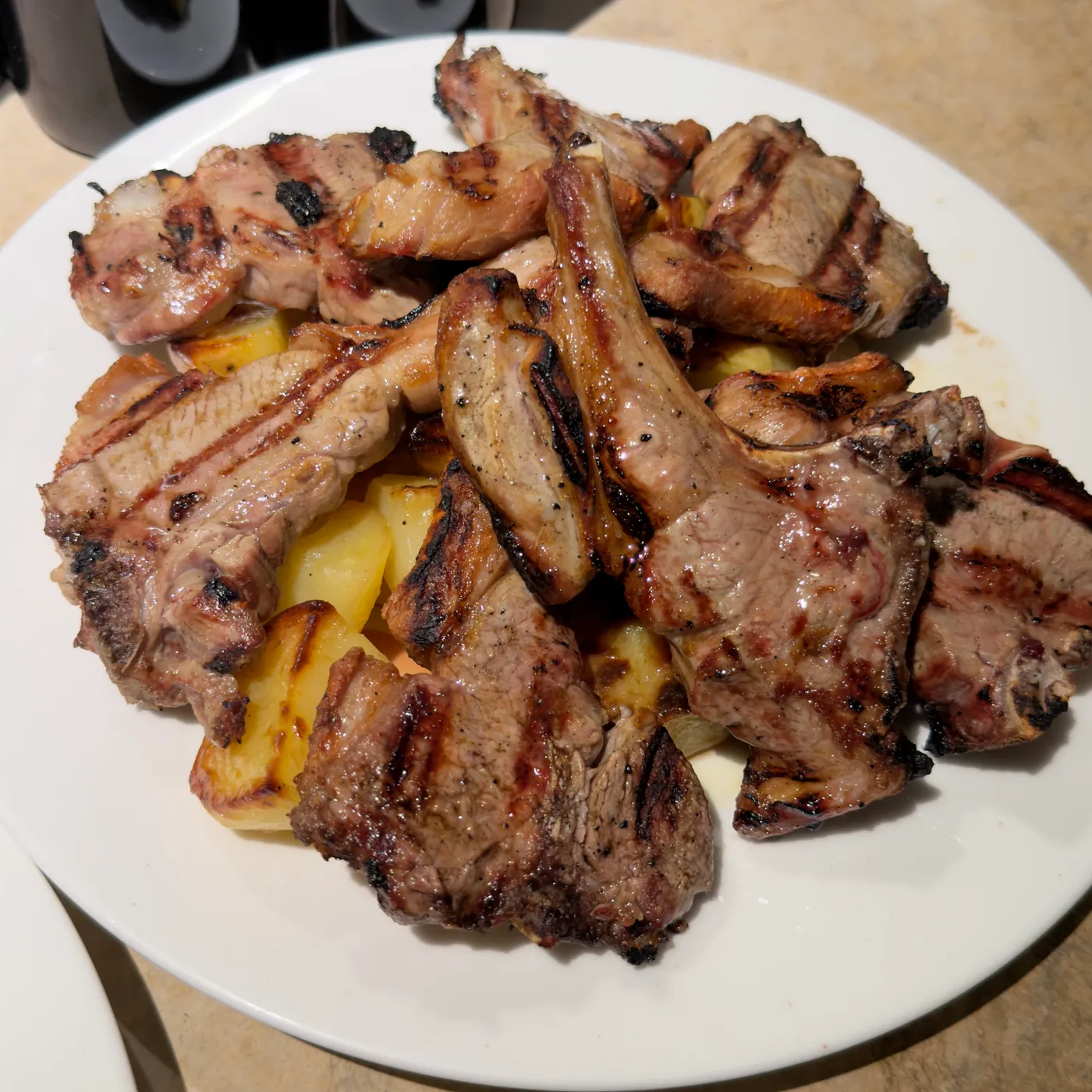
Costolette d'Agnello allo Scottadito | Tuscan Lamb Chops
A magnificent platter of lamb chops, cooked in the Tuscan scottadito style. The name refers to the pleasure of eating the chops while they are still so hot they can burn your fingers. Gianluca emphasized the character of the Tuscan lamb, including its fat and slightly bitter notes. Our chops arrived with beautifully browned edges and grilled potatoes underneath. This is food that invites you to forget the knife and fork for a moment. Pick up a chop, enjoy the meat around the bone, and don't worry about getting your fingers dirty. That's part of the pleasure.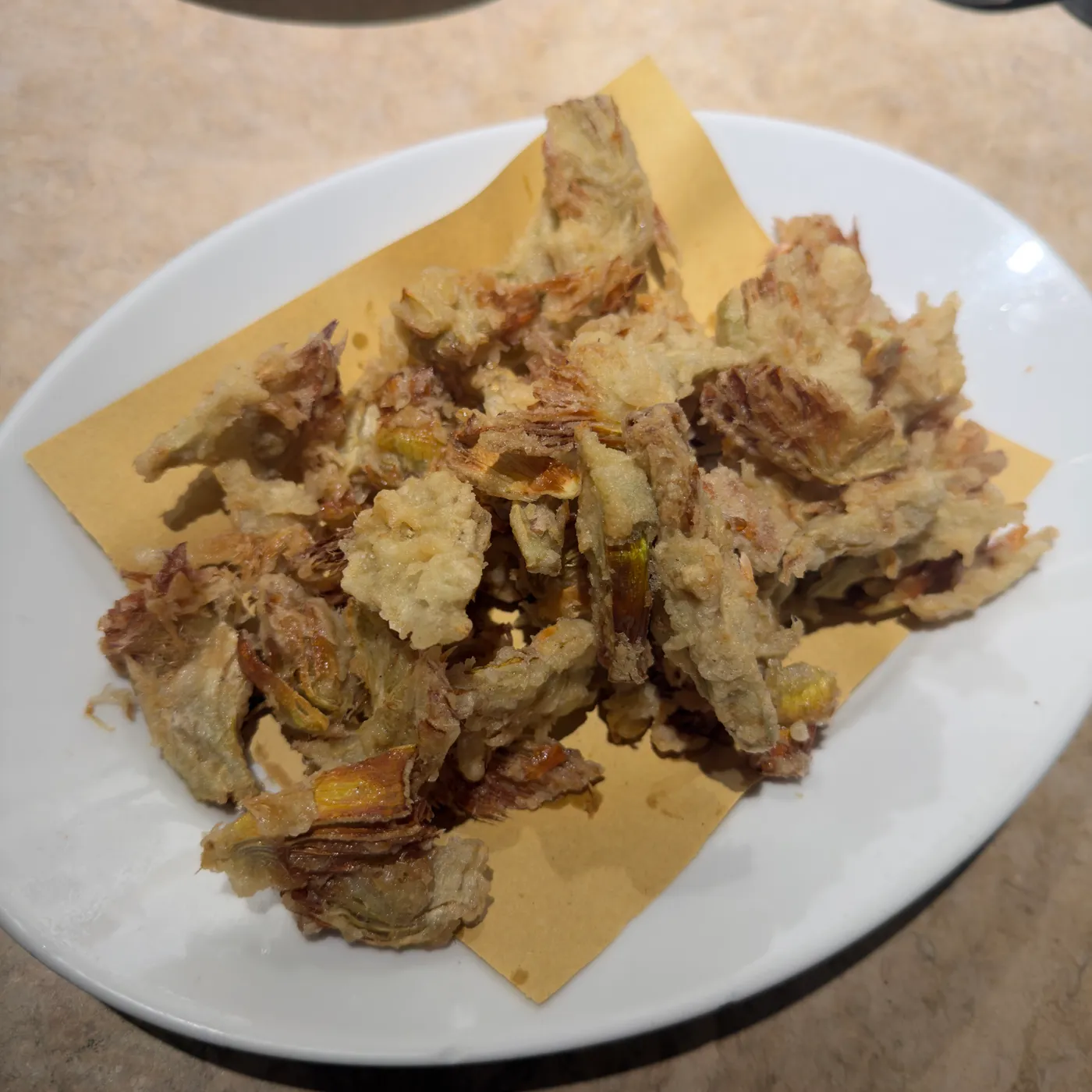
Carciofi Fritti | Fried Artichokes
Another appearance for the season's artichokes, this time prepared in an entirely different way. Gianluca explained the batter: 00 flour, semolina, brandy, and raw egg. The artichokes are coated and fried, arriving in a generous pile of irregular, golden pieces on a sheet of paper. The delicate artichoke is transformed by the crisp coating, while the vegetable remains recognizable beneath it. This is one of those dishes that belongs in the middle of the table. Everyone takes a piece. Then another. And somehow the plate becomes empty much sooner than expected.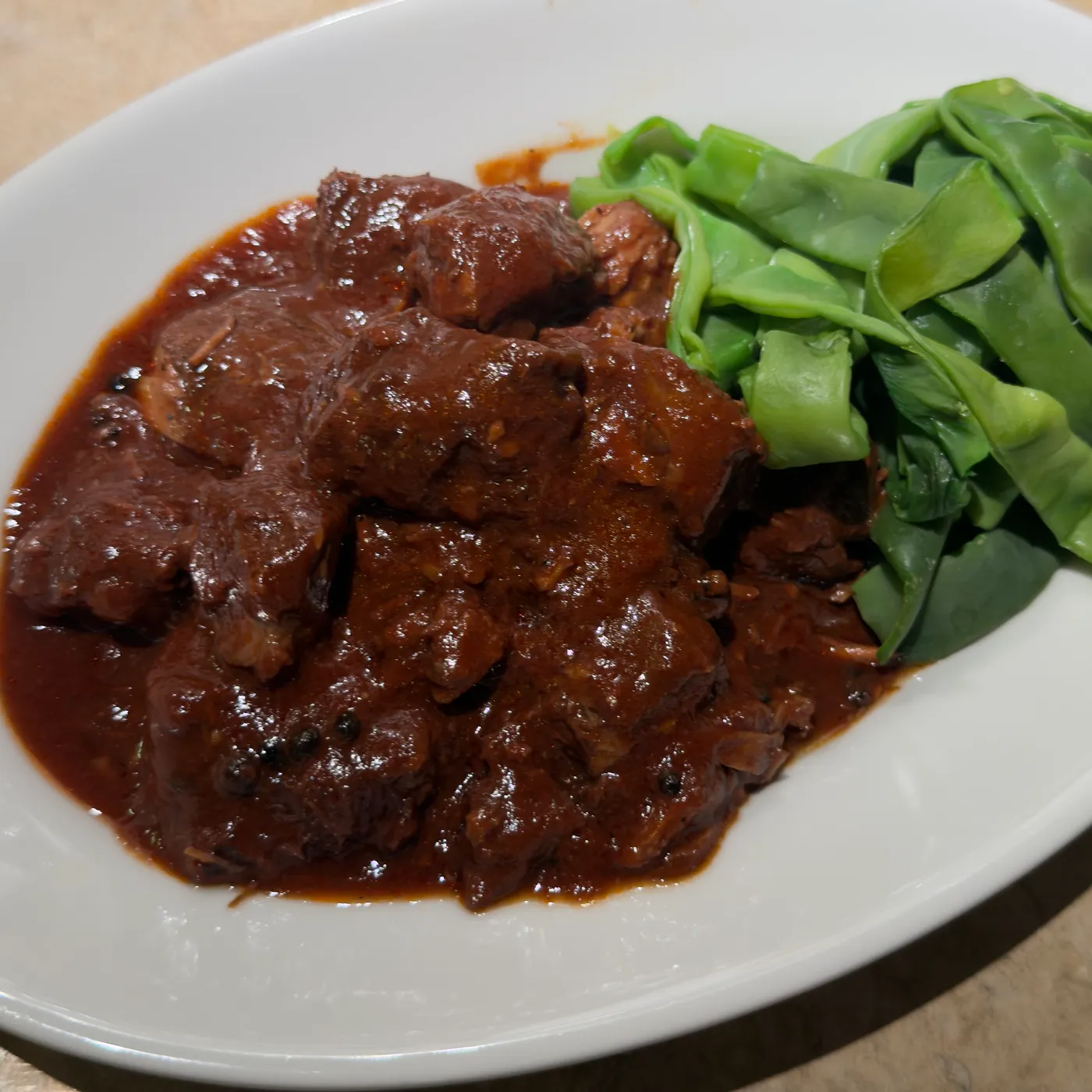
Peposo all'Imprunetana | Traditional Tuscan Peppered Beef Stew
Few dishes capture the deeply comforting side of Tuscan cooking quite like peposo. Gianluca described it as another of the restaurant's icons, a preparation that has been part of its identity over the years. Ours arrived in a rich, dark, intensely peppery sauce, with tender pieces of beef and a generous serving of boiled taccole, the broad, flat green beans. The pepper is central to the dish, giving the stew its unmistakable character. This is the kind of cooking that asks for time, patience, and a very good appetite. A bowl of Tuscan tradition that needs absolutely no reinvention.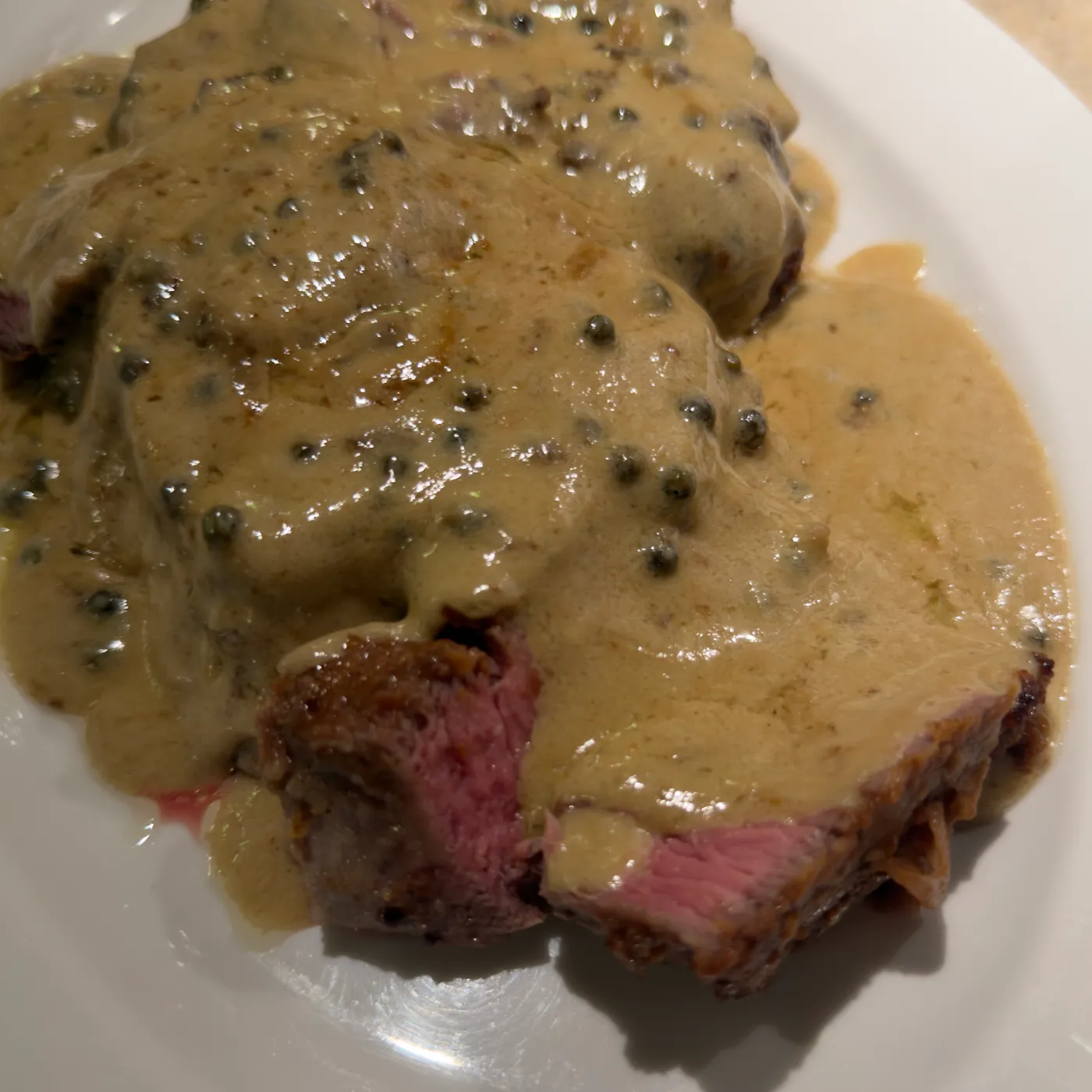
Filetto al Pepe Verde | Beef Fillet with Green Peppercorn Sauce
Gianluca introduced this dish with a wonderful description. It's one of those plates that, when you eat it, makes you feel as though you might faint from pleasure. That's his assessment, and I love his enthusiasm. The restaurant's classic fillet with green peppercorns arrives sliced, its pink interior covered in a generous, creamy sauce scattered with whole green peppercorns. It's a familiar preparation, served with the generosity that defines this trattoria. No elaborate arrangement. Just a substantial piece of beef and plenty of sauce.Desserts
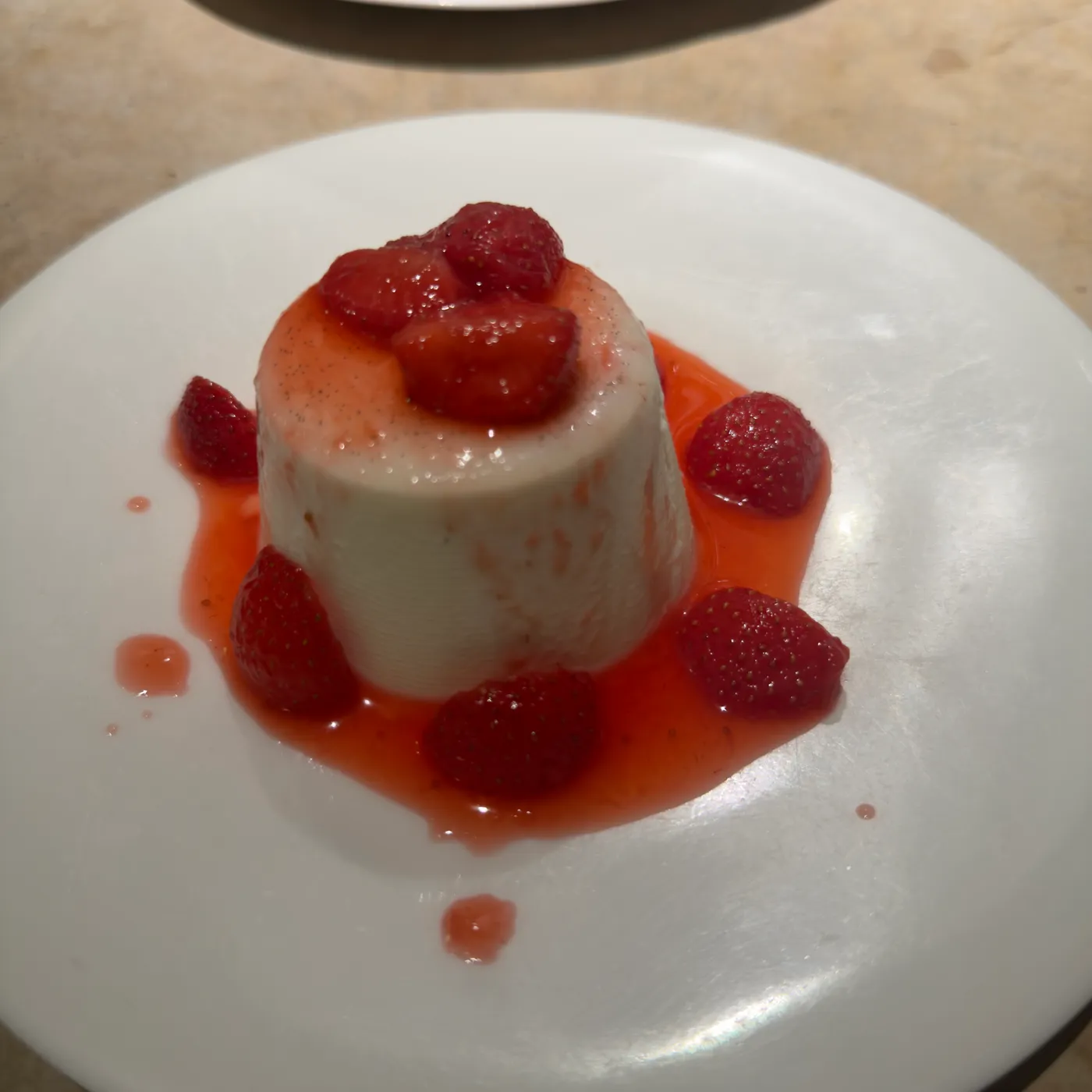
Panna Cotta della Mamma | Rosanna's Panna Cotta
Gianluca told me that Rosanna comes in every morning to prepare the restaurant's desserts. The panna cotta is one of them. Ours arrived as a pale, delicate molded cream, surrounded by strawberries and their bright red sauce. The contrast between the creamy dessert and the fruit gives the plate its simple appeal. There is something especially lovely about finishing a meal with a dessert made in the same kitchen by the person whose cooking helped build the restaurant. No grand finale. Just panna cotta, made by Rosanna.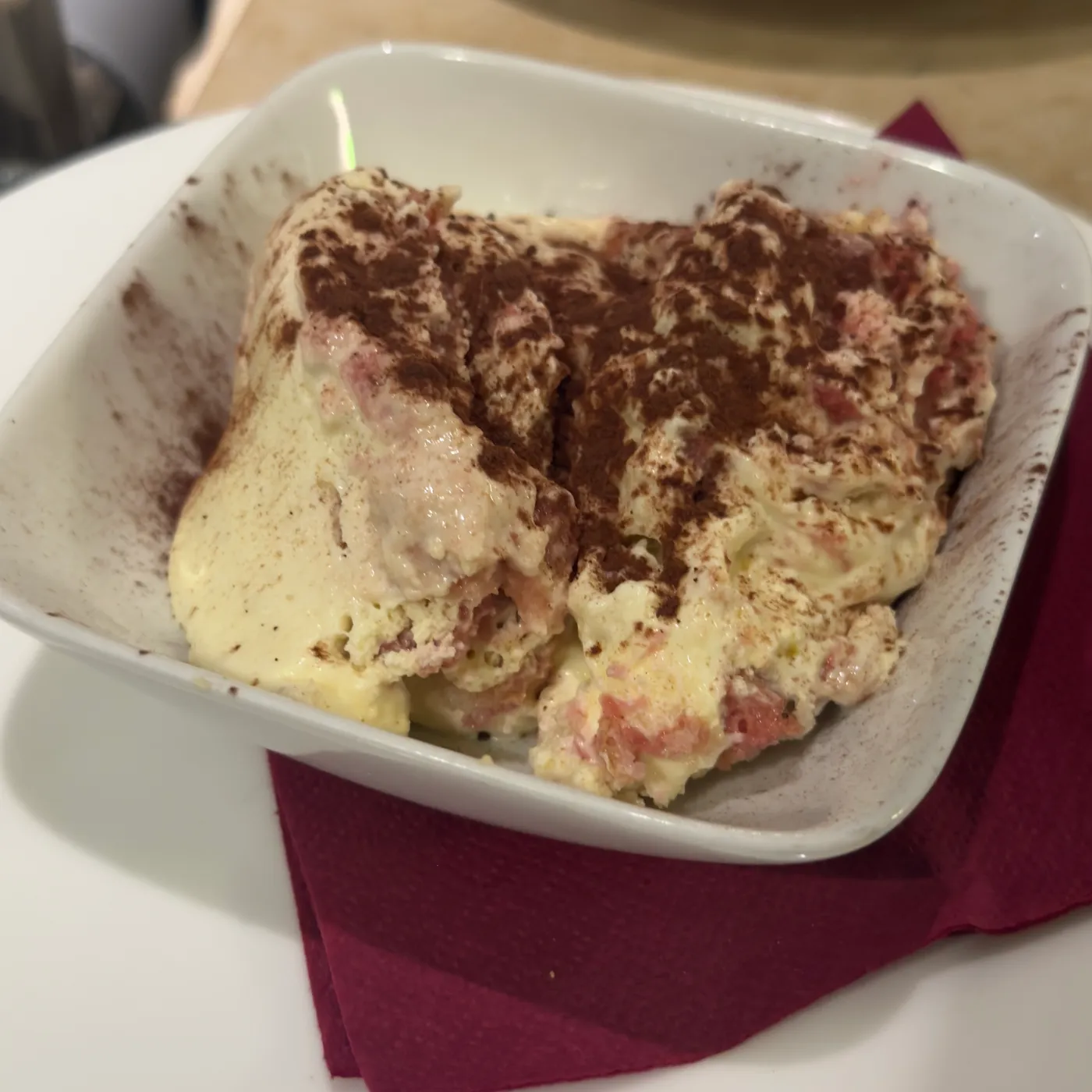
Tiramisù ai Lamponi | Raspberry Tiramisu
Another dessert Gianluca identified as part of the history of Vini e Vecchi Sapori. Raspberry tiramisu. He explained that this was one of the preparations that helped the restaurant establish its identity. Ours arrived in a small white dish, with generous layers of pale cream, raspberry-colored fruit running through the dessert, and cocoa dusted over the top. The raspberries bring a fruit element to the richness of the cream. It's a familiar Italian dessert, interpreted in the style of this particular kitchen. And like so much else here, it comes with a family story.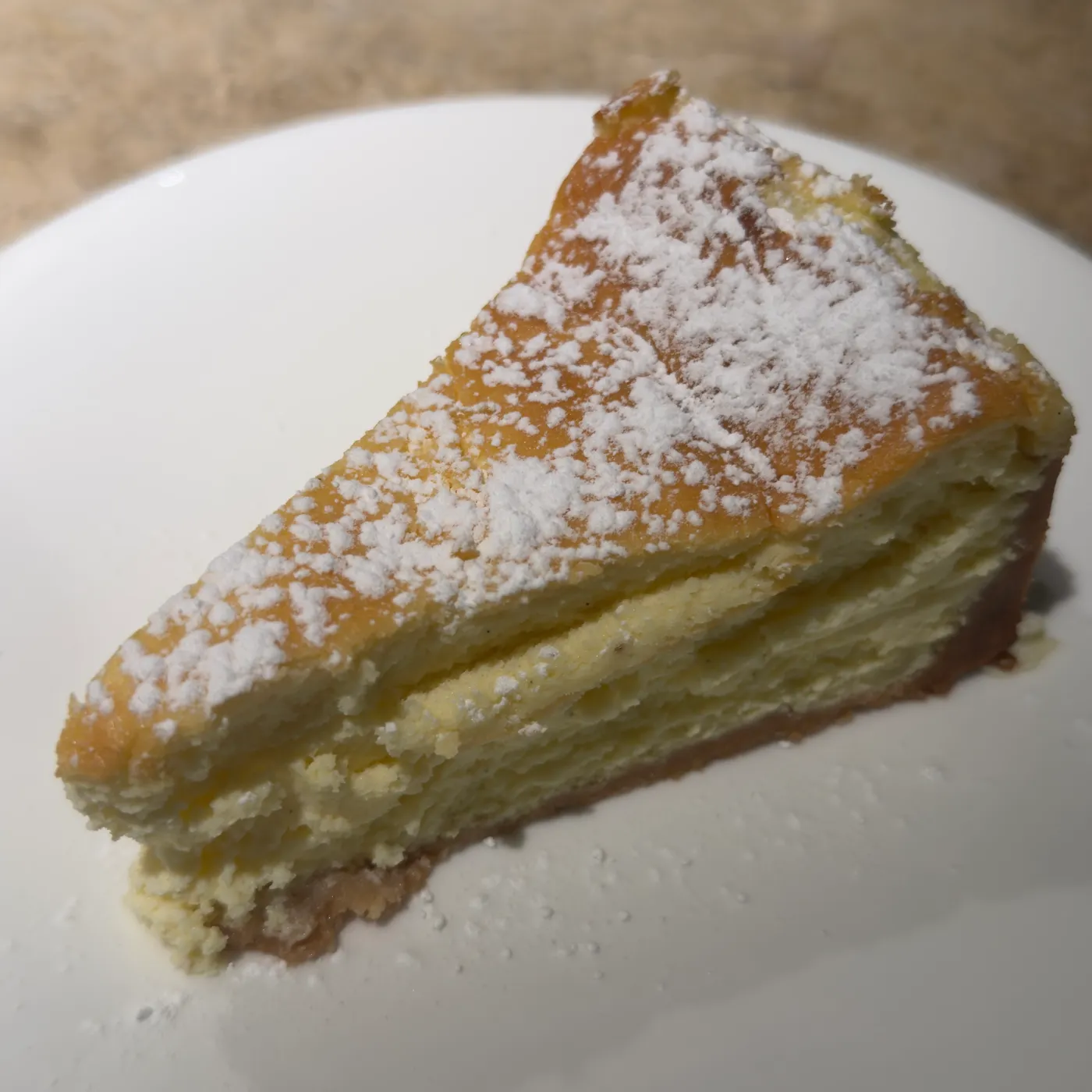
Cheesecake della Mamma | Rosanna's Cheesecake
And finally, Rosanna's cheesecake. A generous triangular slice, with a golden top, a pale creamy interior, a biscuit base, and a dusting of powdered sugar. Gianluca described it as another of the desserts made in the kitchen to finish a meal at Vini e Vecchi Sapori. After the salumi, the artichokes, the pasta, the meats, and all those comforting Tuscan preparations, we ended with something equally straightforward. A piece of cheesecake. Made by the same family that has been feeding people here for two decades. I can't think of a more appropriate way to finish our first dinner in Florence.What we drank
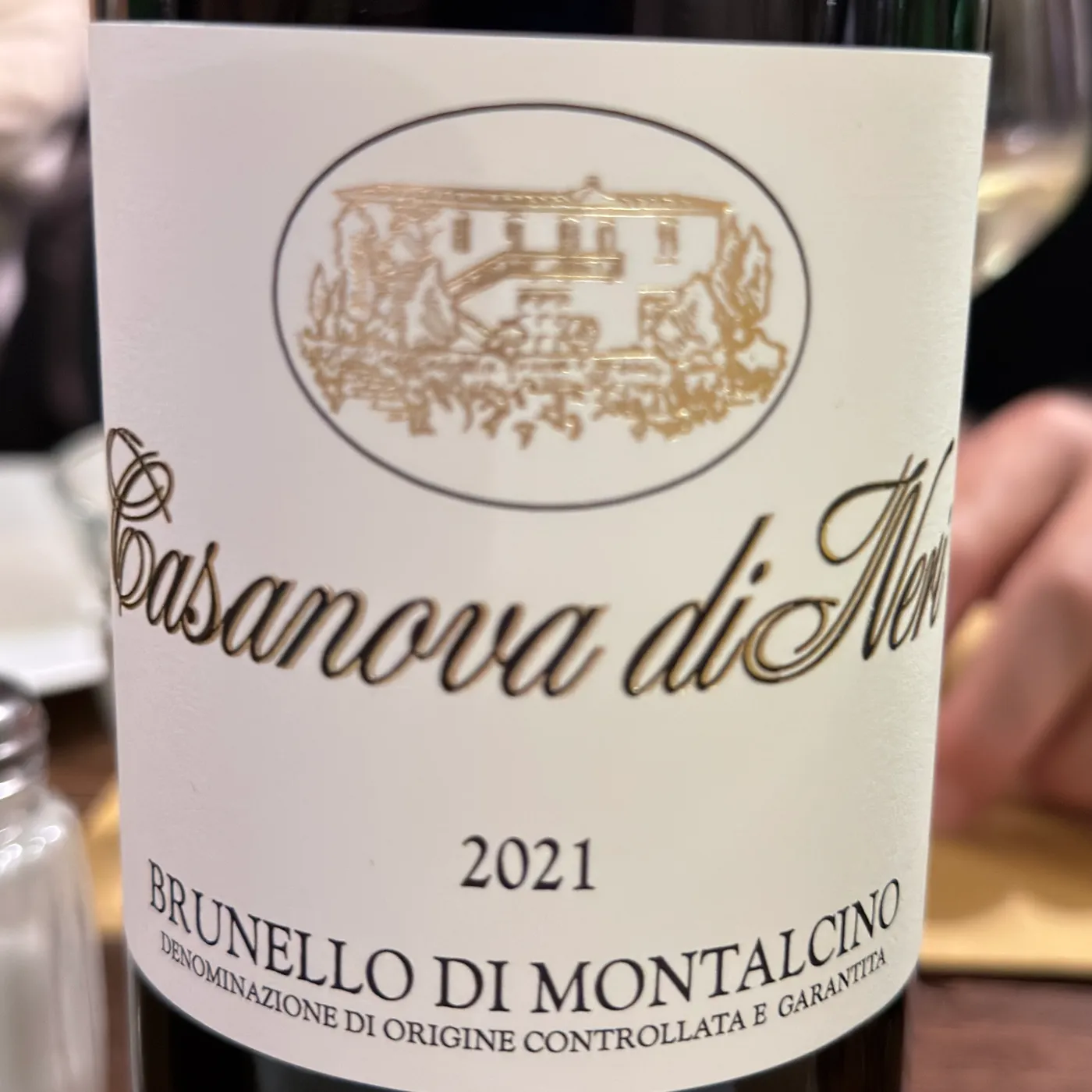
Casanova di Neri Brunello di Montalcino 2021 | Tuscany
Casanova di Neri's classic Brunello is made entirely from Sangiovese, harvested by hand in Montalcino and fermented with indigenous yeasts.
The 2021 vintage brings aromas of small red berries, bay leaf, sage, and juniper.
Juicy yet structured, with elegant tannins and a long, spicy finish, it expresses the balance between freshness and depth that defines this wine.
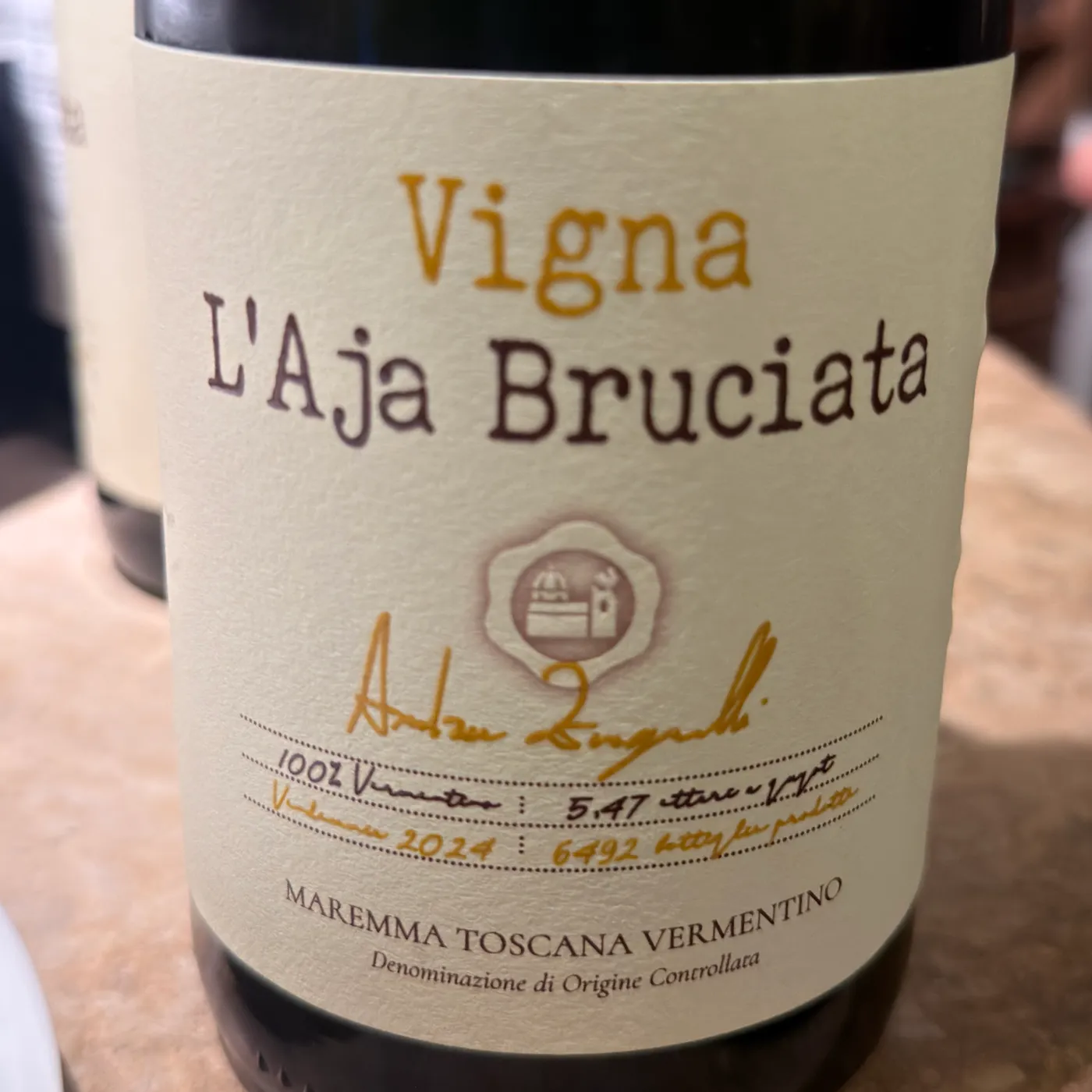
Vigna L'Aja Bruciata Vermentino 2024 | Rocca delle Macìe, Maremma Toscana
Produced from 100% Vermentino grown at the Casa Maria estate in coastal Tuscany, Vigna L'Aja Bruciata is Andrea Zingarelli's ambitious interpretation of the variety.
Fermented at controlled temperatures and matured in concrete with regular lees stirring, the wine combines delicate floral and fruit aromas with savory freshness, rounded texture, and an elegant, harmonious finish.