Uno di Questi Giorni
Visited Sat, Nov 7, 2026 · Dinner
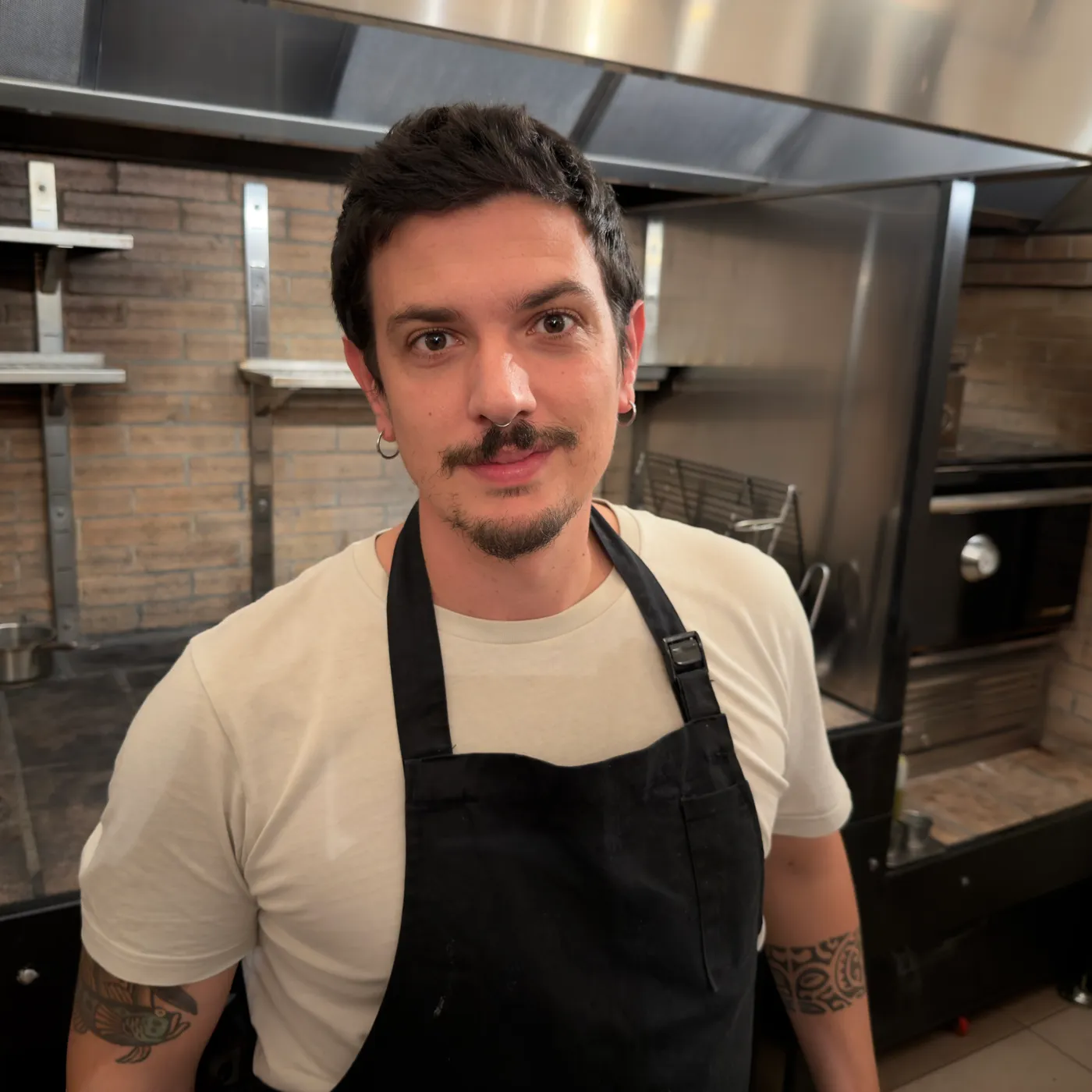
Lorenzo Vecchia | The soul of an osteria. The precision of fine dining. Fire at the heart of it all.
Uno di Questi Giorni
The Soul of an Osteria. Fire at the Heart of It All.
There is something I love about chefs who have spent years learning the rules of fine dining, only to discover that what they really want is the freedom to cook without all the formality. Not without discipline, ambition, or technique, but without the ceremony that sometimes comes between a chef and the people sitting at the table.
That is the story Lorenzo Vecchia told me during our dinner at Uno di Questi Giorni in Bologna, and I found it fascinating. Lorenzo spent years working in important Michelin-starred kitchens, including restaurants with two and three stars. At twenty-four, he opened his first restaurant in Milan, pursuing the dream of fine dining. But after a while, something changed. He grew tired of that world, not of the cooking itself, but of the life around it.
He moved to Bologna, where he wanted to create something with the same standards, dedication, and ambition, but accessible to more people. Together with partners and colleagues who had followed similar paths through demanding professional kitchens, he opened Ahimè, something between an osteria and a trattoria. The idea was modern cooking without the rigid structure of a formal fine-dining restaurant.
It worked. Ahimè received a Michelin Green Star and a Bib Gourmand and, perhaps more importantly, became a restaurant where people were happy to come and happy to return. Five years later, Lorenzo opened Uno di Questi Giorni, a slightly more sophisticated restaurant that retains the same spirit: lively, direct, unpretentious, and still deeply serious about food.
The Fire That Doesn't Want to Be Noticed
The biggest difference between Ahimè and Uno di Questi Giorni, Lorenzo explained, is the kitchen. At Ahimè, he had two small induction burners and very little space. Here, he has an enormous kitchen built around live embers. The grill is its beating heart, and almost everything passes through it.
But then Lorenzo said something I found particularly interesting. He doesn't necessarily want you to taste the fire. The fire is his principal cooking tool, but it shouldn't dominate every dish. That distinction matters, because cooking over fire isn't the same thing as making everything taste smoky. It means understanding what fire can do to an ingredient and knowing when to let that ingredient speak for itself.
That's the philosophy behind the dinner Lorenzo prepared for our Hungry Tourists. What I particularly like about his cooking is that he seems completely comfortable moving between worlds. A humble Italian family dish can sit beside an elaborate preparation of raw meat. A Jerusalem artichoke risotto can become an exercise in acidity and bitterness. And a beautiful sweetbread can arrive with the confidence of something that doesn't need a complicated explanation.
When I asked Lorenzo which two dishes someone should absolutely try, he chose the risotto and the sweetbread. For him, they best express what he is trying to achieve at Uno di Questi Giorni. But he also warned me not to become too attached to a particular risotto, because he changes it constantly, sometimes every week and sometimes whenever he wakes up with a new idea.
"I get bored very easily," he told me. I loved that. Because the ambition here isn't to repeat a formula forever. It's to keep cooking, tasting, questioning, and changing. And tonight, we had the pleasure of following him through that process.
What we ate
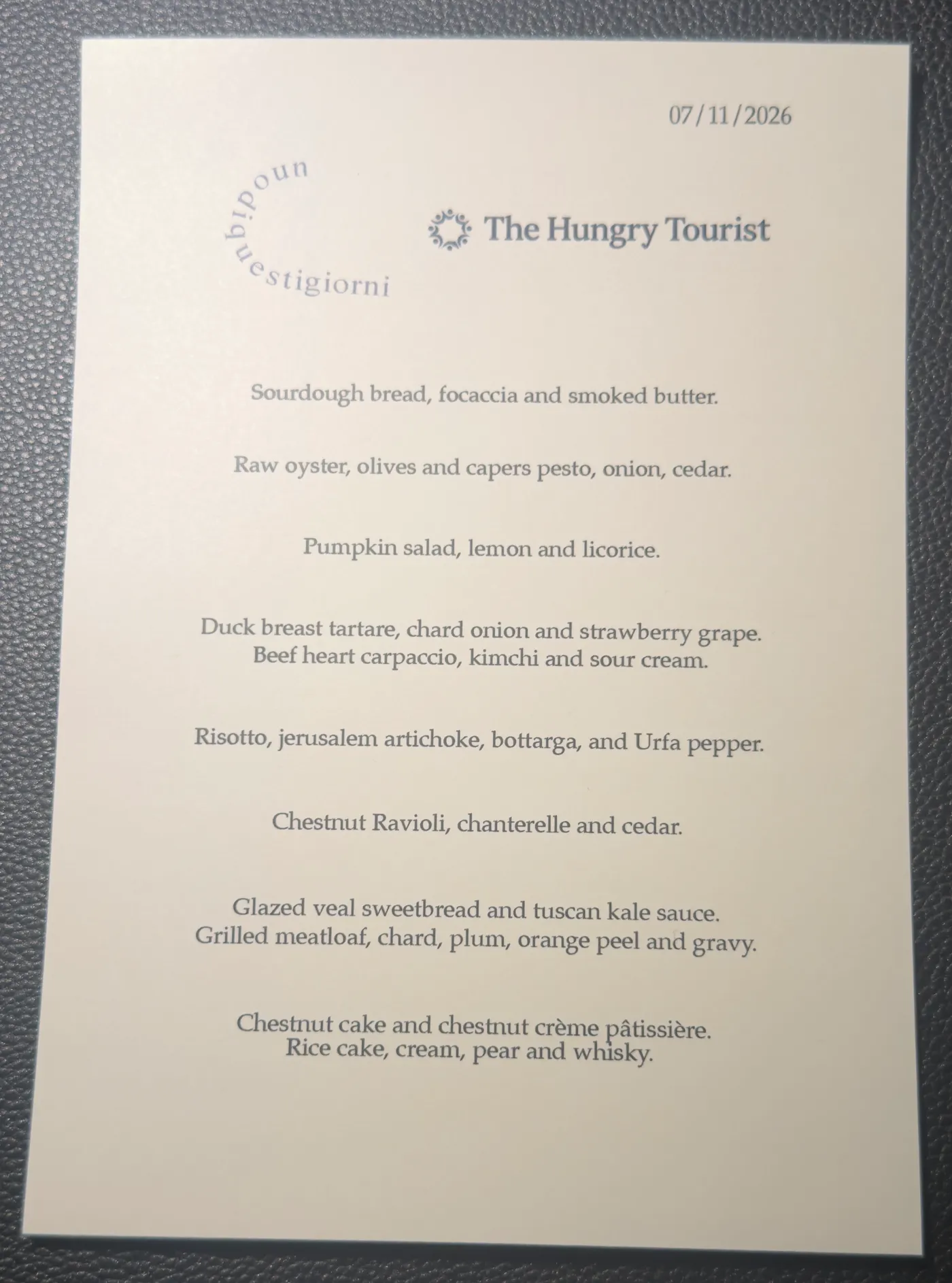
Our menu
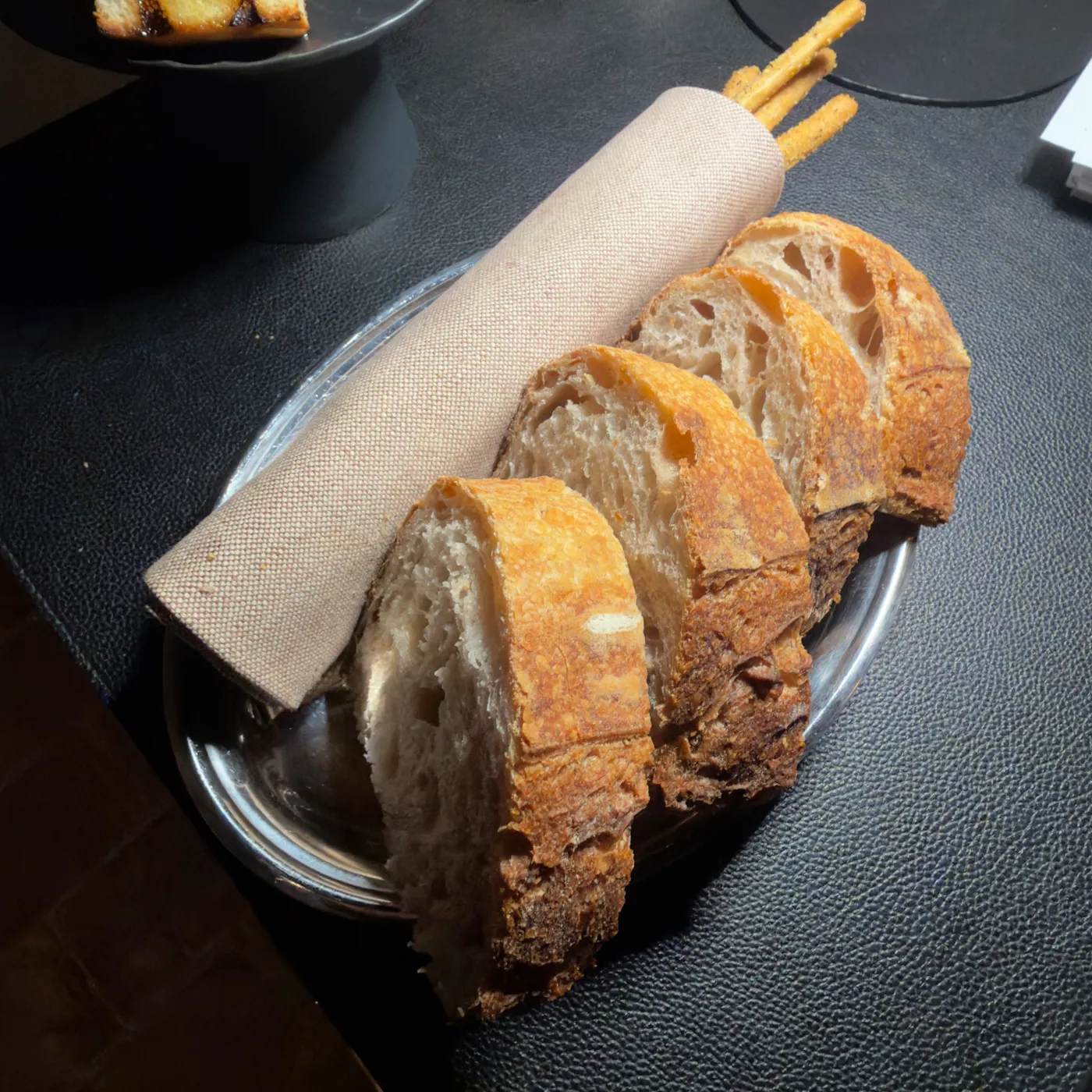
Pane a Lievitazione Naturale, Focaccia e Grissini | Sourdough Bread, Focaccia and Breadsticks
I want to begin with the bread, because the bread was extraordinary. All three preparations. And because they tell us something important about the way Lorenzo thinks. Bread is one of those things restaurants too often treat as an afterthought, something to put on the table before the meal begins. But Lorenzo gives it a place on the menu, so I asked him why. He explained that when they first opened Ahimè, they made all their own bread. But as the restaurant became busier, the kitchen could no longer produce enough to supply everyone. Rather than compromise, they began working with a baker outside Bologna called Bread by Madre. That baker now makes their sourdough loaves. Lorenzo described the bread as extraordinary and explained that the baker's approach to responsible production and ingredient quality is closely aligned with their own. Meanwhile, the kitchen continues to make its grissini, focaccia, schiacciata, crackers, and other baked preparations. I like that arrangement. There is no insistence on making everything in-house simply for the sake of saying so. Instead, Lorenzo works with someone he deeply respects, while the kitchen concentrates on the preparations it particularly enjoys making. Our bread arrived beautifully crusted, with an open, airy crumb. The toasted focaccia had a golden surface, with those lovely dark marks from the heat. Together with the breadsticks and smoked butter, it was a wonderful beginning. I was so impressed that I asked Lorenzo to tell me the story, and I'm very glad I did.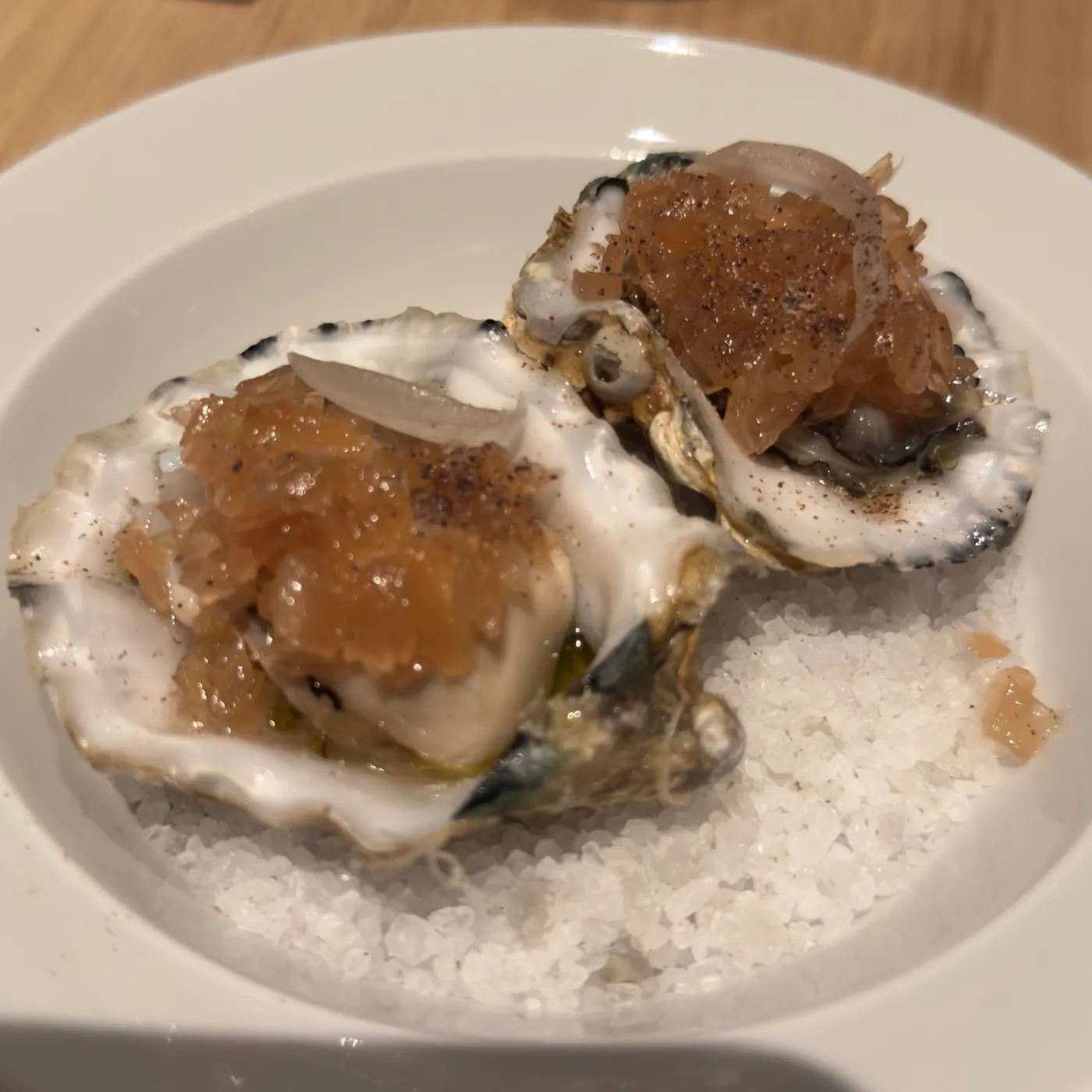
Ostrica del Delta del Po | Raw Oyster with Olive and Caper Pesto, Onion and Citron
Next came an ingredient Lorenzo has worked with for years: an oyster from the Po Delta. The River Po reaches the Adriatic Sea between Emilia-Romagna and Veneto, and it is here that these oysters are produced. Lorenzo explained that the oysters are finished in their shells, developing generous, fleshy bodies while retaining an elegant flavor. He has served them since the days of Ahimè, and they have remained a constant presence in his cooking for approximately six years. But the preparation never stays the same. Every week or two, the kitchen changes the accompaniments, the seasoning, or the presentation. Sometimes the oysters are simply served raw. Tonight's version came with an olive-and-caper preparation, onion, and citron. What interests Lorenzo is the versatility of the ingredient. It allows him to keep exploring new combinations while remaining faithful to a product he believes strongly represents his cooking. Keep the product, keep questioning what you can do with it, and never assume that because you've cooked something successfully once, there is nothing more to discover. Our sommelier, Riccardo Chakachas, accompanied the oyster with Cherubini LV Rosé Nature. A thoughtful beginning to the meal.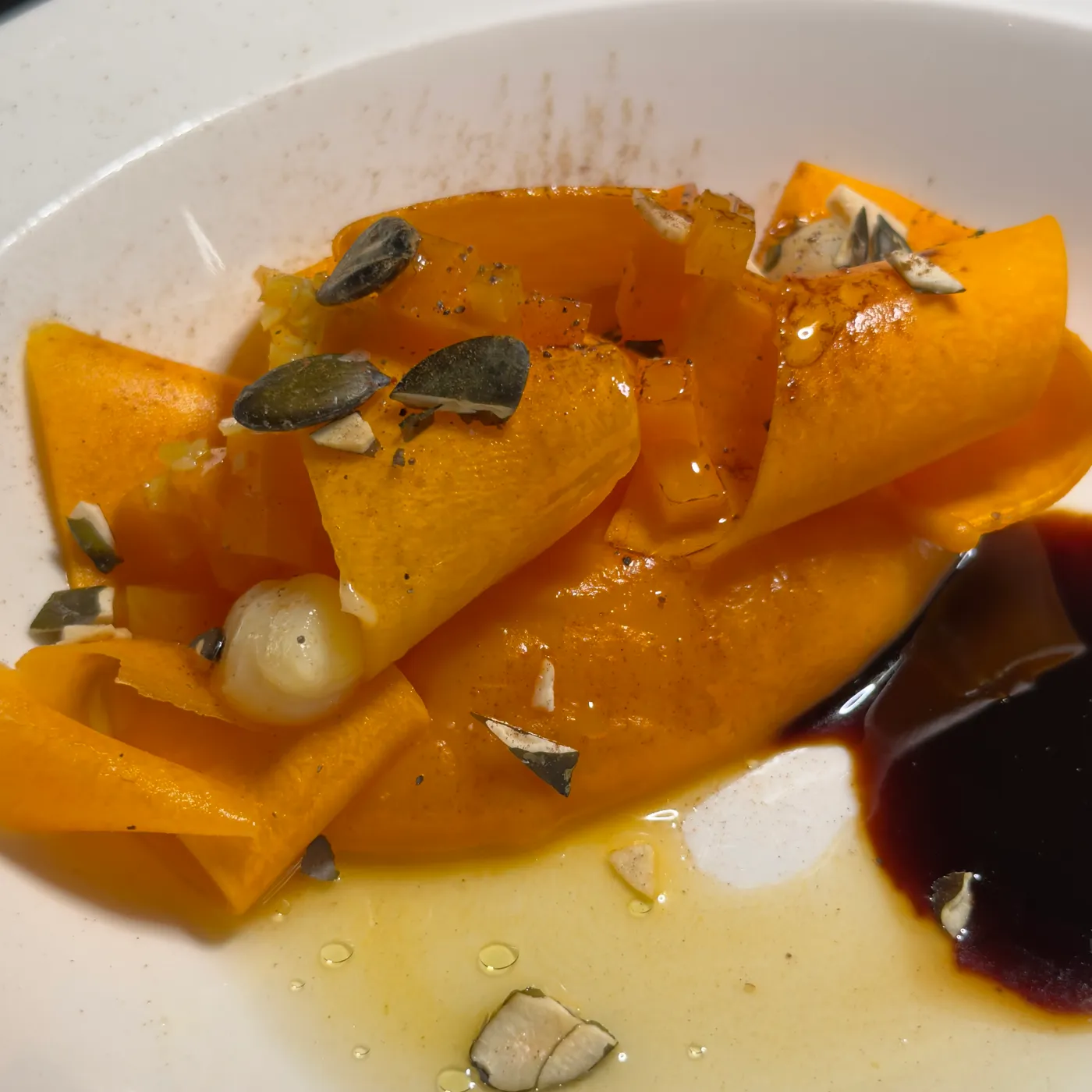
Insalata di Zucca, Limone e Liquirizia | Pumpkin Salad with Lemon and Licorice
Lorenzo wanted to create a salad that was fresh but not ordinary, so he started working with pumpkin. Not simply roasting it or turning it into a purée, but exploring the different things that could happen to the ingredient: raw, cooked, marinated, smoked, brined, and cooked in fat. All those different preparations of pumpkin come together in one dish. Then comes lemon, bringing pronounced acidity, and licorice, adding an aromatic quality that Lorenzo struggled to describe. He used the word "balsamic," but immediately admitted that it wasn't quite right. It was simply the closest word he could find. I love that small moment of hesitation, because food doesn't always fit neatly into tasting vocabulary. Sometimes a flavor is difficult to explain, and sometimes the best thing is to taste it yourself. Our pumpkin salad arrived in vivid orange ribbons, with little pieces of pumpkin, seeds, and contrasting textures. A salad, yes, but not remotely a conventional one.Due Interpretazioni di Carne Cruda | Two Expressions of Raw Meat
Two preparations served together as one course. Lorenzo explained that one of the early courses in his tasting menus is almost always dedicated to raw meat, but there is one rule: it must never be predictable. Tonight, he gave us two interpretations, each using a very different approach to the ingredient.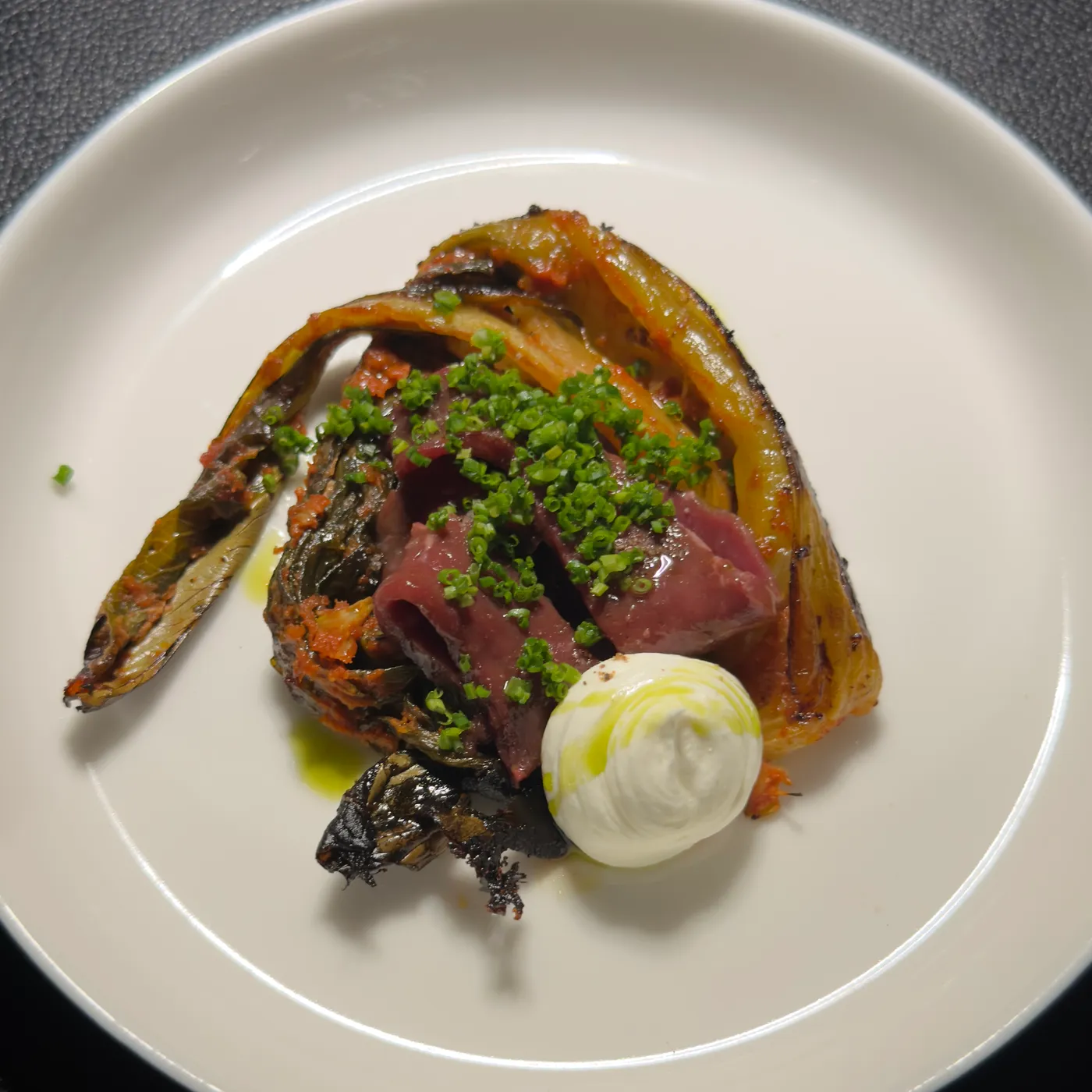
Cuore di Manzo, Kimchi alla Brace e Panna Acida | Beef Heart Carpaccio with Charred Kimchi and Sour Cream
The beef heart is extremely fresh and sliced at the moment of service. It is served with kimchi cooked over the embers and sour cream, bringing together the direct character of the raw heart, the seasoning of the kimchi, and the richness and acidity of sour cream. The fire is present through the kimchi, not through the meat. Exactly the distinction Lorenzo made when explaining his cooking philosophy.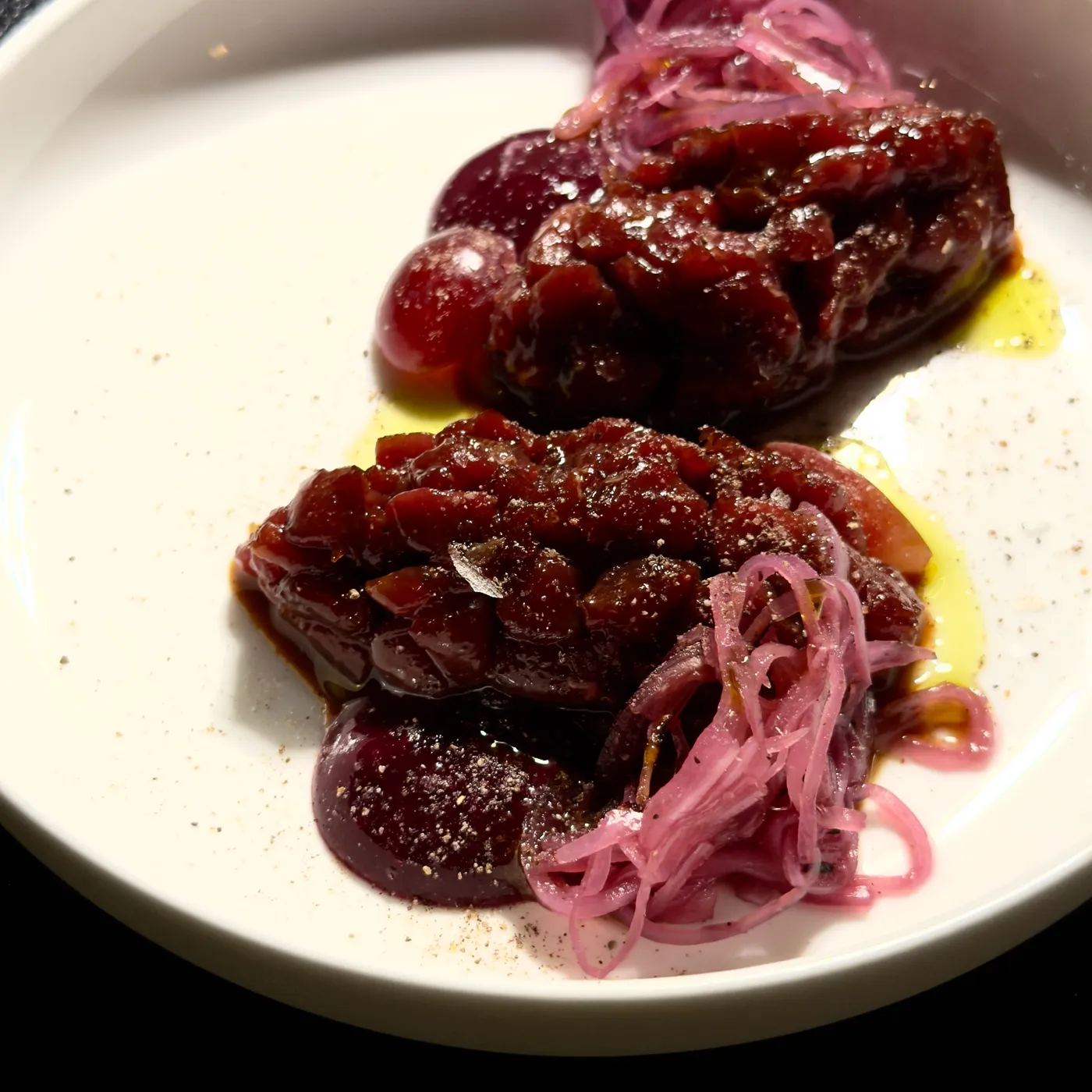
Tartare di Petto d'Anatra, Uva Fragola e Cipolla Arrostita | Aged Duck Breast Tartare with Strawberry Grape and Roasted Onion
The second preparation uses duck breast aged for a month and a half, served as a tartare with strawberry grape and thin strands of onion roasted directly over the coals. Where the beef heart is extremely fresh, accompanied by kimchi and sour cream, the duck brings an entirely different character through aging, fruit, and roasted onion. Two very different interpretations, served together as a single course. And a wonderful example of Lorenzo's determination never to make raw meat feel routine.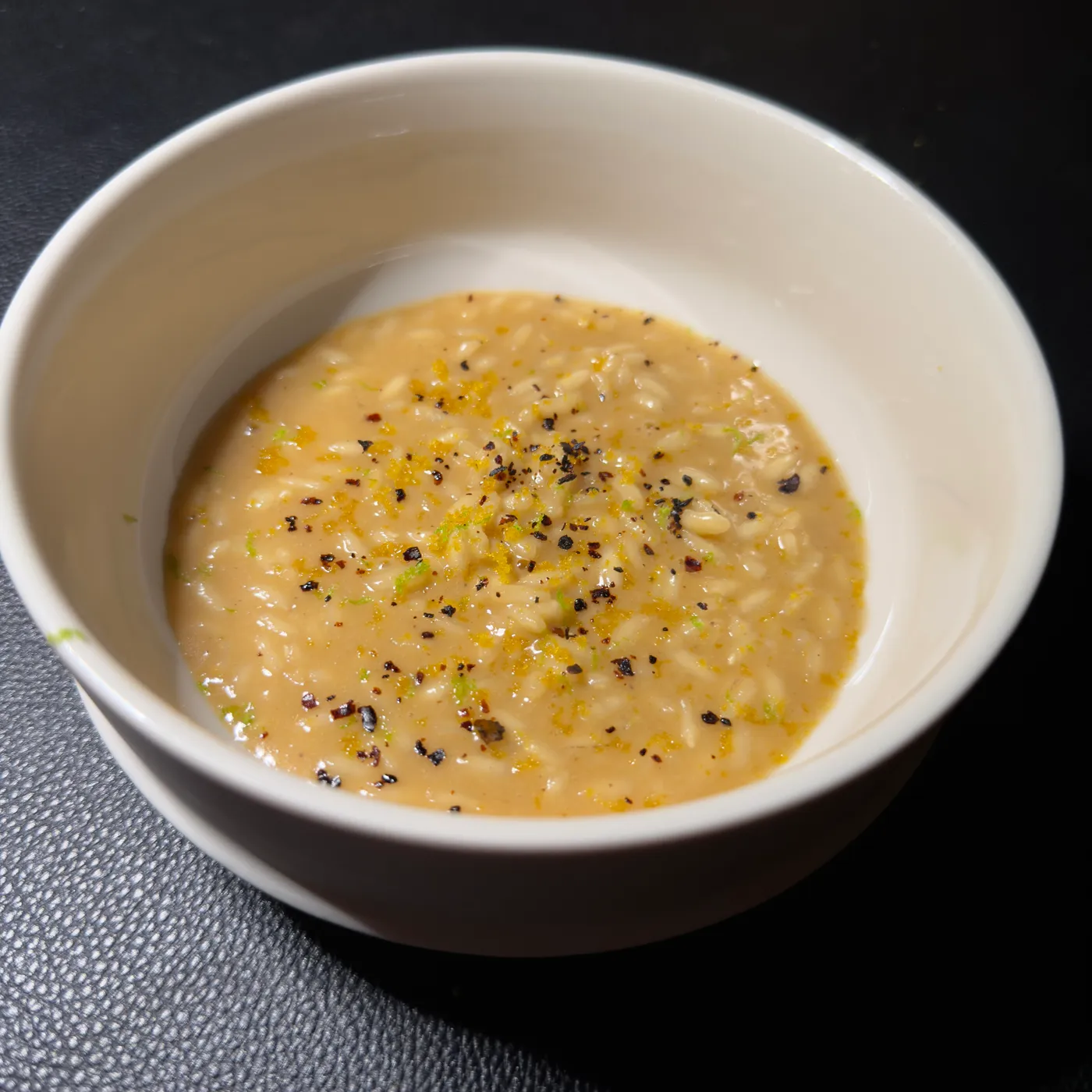
Risotto al Topinambur, Bottarga di Muggine e Bergamotto | Jerusalem Artichoke Risotto with Grey Mullet Bottarga and Bergamot
Now this is a dish with a wonderful story, because according to Lorenzo, it happened almost by accident. One day he became determined to make a risotto with Jerusalem artichokes. He worked on the recipe and the result was good, but he felt something was missing. Then he remembered the bottarga he was using in another preparation, so he added it and tasted the risotto again. Better, but still not quite complete. The following day, his greengrocer arrived with an unexpected gift: a whole crate of bergamots. Lorenzo tried the combination, and suddenly everything came together. The finished risotto is made with Jerusalem artichoke, finished with butter and a Jerusalem artichoke reduction, and completed with fresh bergamot and grey mullet bottarga. It combines the roundness of the risotto and Jerusalem artichoke with the distinctive salinity of the bottarga and the aromatic acidity of bergamot. What I particularly love is the way it developed. Not from a grand concept, but through cooking, tasting, trying something, realizing it wasn't quite right, and then receiving a crate of bergamots. Lorenzo considers this one of the two dishes that best express his approach to cooking. And he likes this particular version enough that it might remain on the menu longer than his risottos usually do. But don't count on it. He gets bored easily, and tomorrow morning he might have another idea. Riccardo selected Frank Cornelissen's Munjebel 2020 from the volcanic slopes of Etna to accompany this dish.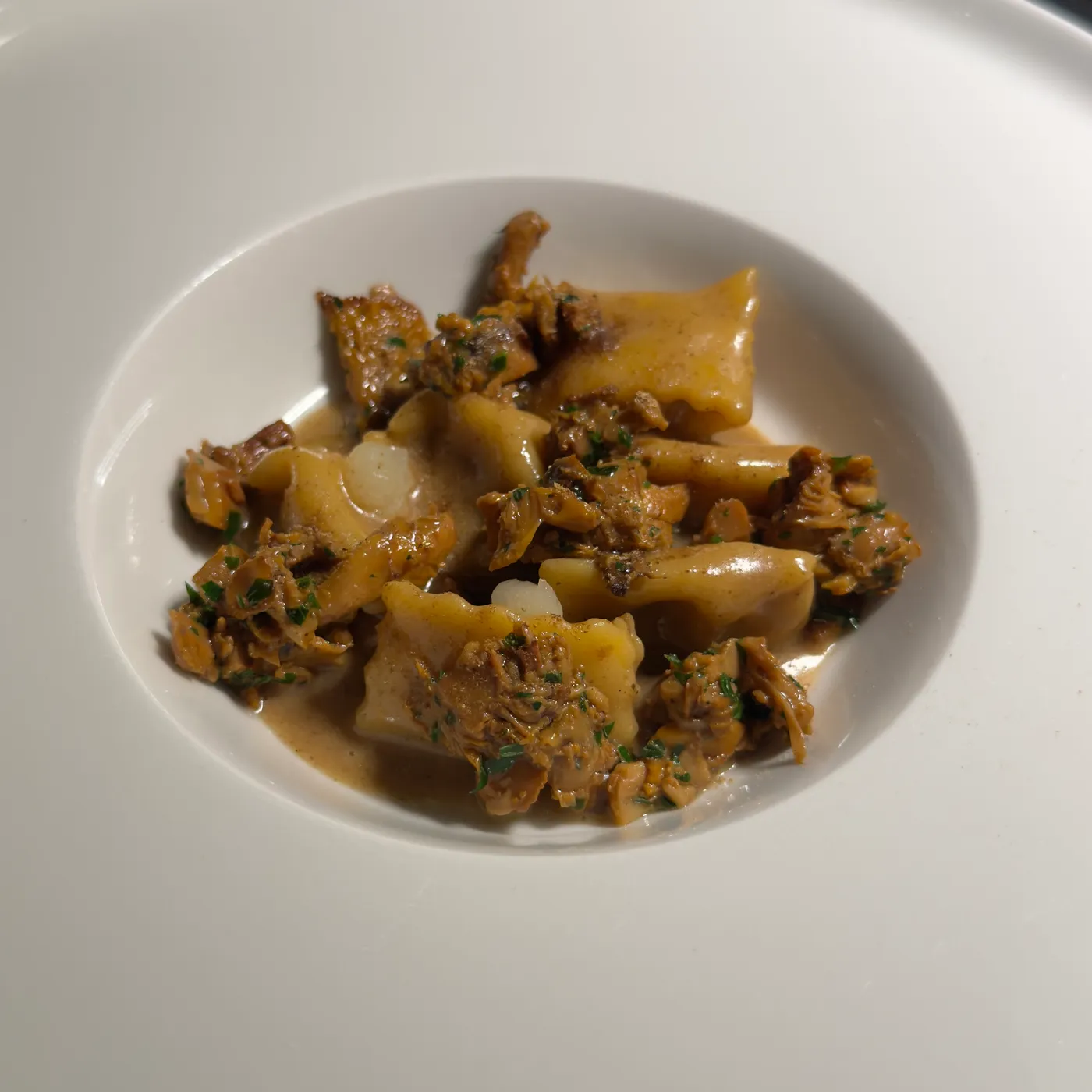
Raviolo di Castagne, Finferli e Cedro | Chestnut Ravioli with Chanterelles and Citron
Autumn is everywhere in this dish. The idea, Lorenzo explained, began very simply: use seasonal ingredients, then introduce something less expected. In this case, citron. Inside the ravioli is a filling made almost entirely from chestnuts, blended with a little cream and nutmeg. The ravioli are finished with butter and porcini, then accompanied by a ragù of sautéed chanterelles, porcini powder, and a citron preserve made with very little sugar. Lorenzo was interested in introducing an unusual citrus character to a dish built around chestnuts and mushrooms. The citron isn't there to turn the ravioli into a sweet preparation, but to bring another aromatic dimension to ingredients that already have strong autumn associations. The finished plate arrived with substantial pieces of pasta, chanterelles, and a rich, glossy sauce. An interesting combination of familiar seasonal ingredients and a less conventional citrus element.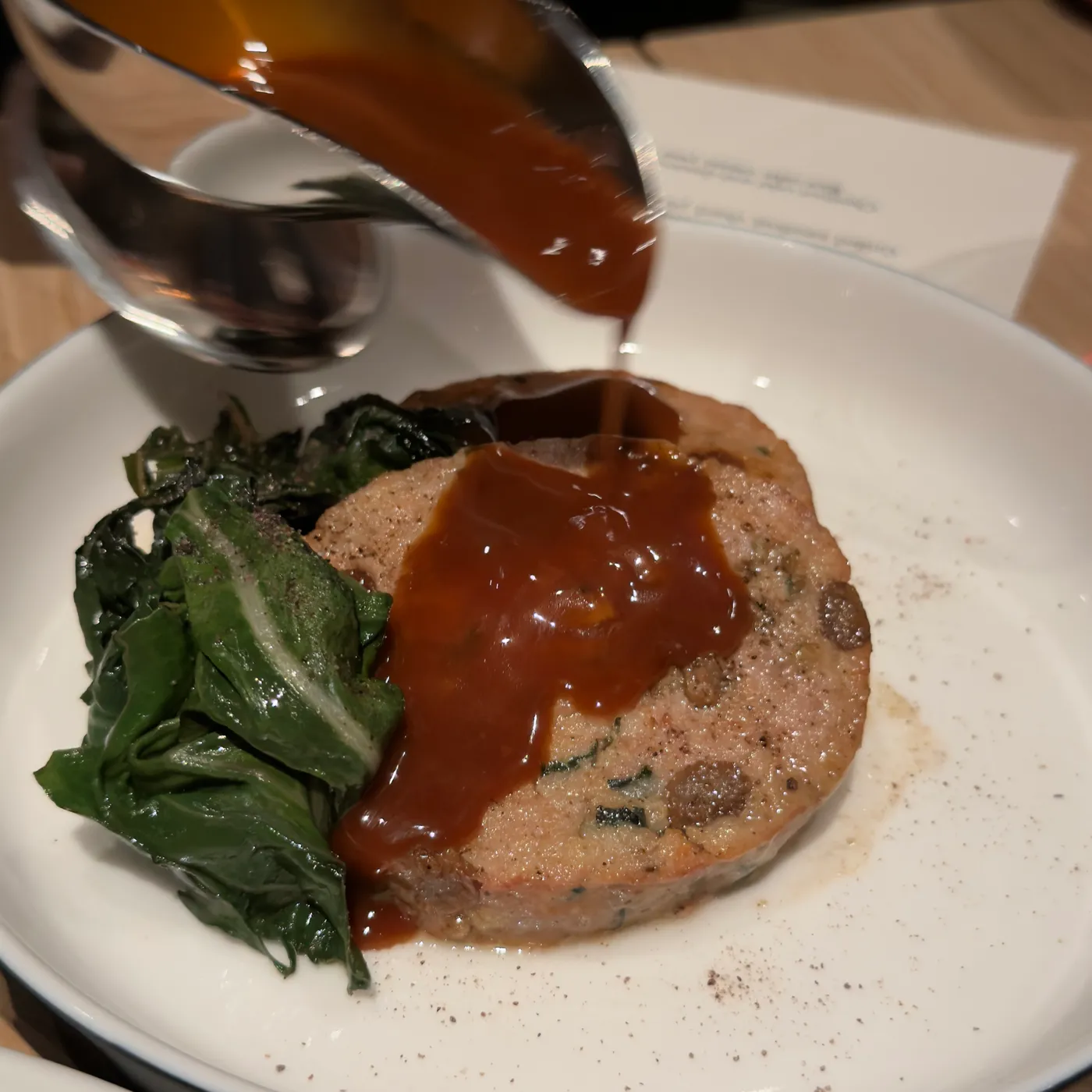
Polpettone alla Brace | Italian Meatloaf with Chard, Plum, Orange Peel and Gravy
Then Lorenzo turned to one of the most familiar dishes of Italian family cooking: polpettone, or meatloaf. A preparation made from ground meat, traditionally associated with home cooking and economical family meals, rather than something people consider particularly sophisticated. And that's exactly why Lorenzo wanted to work with it. He wanted to give the dish a more elegant character without losing the generosity and pleasure that make it so familiar. The result arrived with chard and a rich gravy, the menu also identifying plum and orange peel as part of the preparation. A familiar Italian dish, brought into the language of Lorenzo's restaurant. The idea wasn't to disguise its origins, but to show that everyday cooking deserves just as much care and thought as a more prestigious ingredient.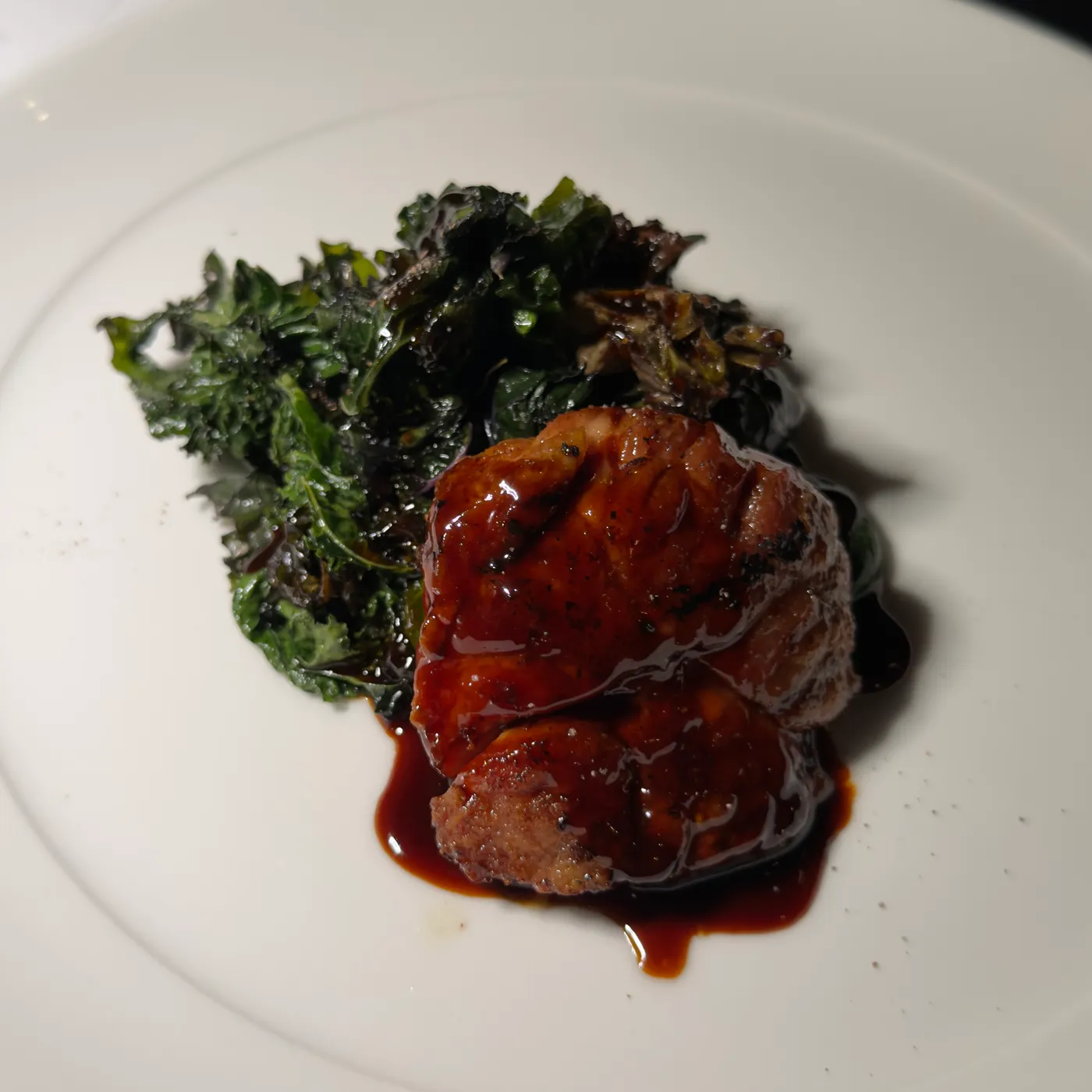
Animella di Vitello Glassata al Limone e Miele di Acacia | Glazed Veal Sweetbread with Lemon, Acacia Honey and Tuscan Kale
And now, Lorenzo's favorite dish on the current menu: the sweetbread. When I asked which dishes best expressed his cooking, he named the risotto and the sweetbread. And he was particularly enthusiastic about this one, not, he insisted, because of his own skill, but because the product itself is so good. I love that answer. The sweetbread is glazed with lemon and acacia honey. It is served with a cream of cavolo nero, the dark Tuscan kale, and curly kale that has been smoked and finished in butter. Lorenzo describes the preparation as very simple: beautiful sweetbread, a glossy glaze, and greens prepared in different ways. Enough complexity to make the dish interesting, without losing sight of the ingredient. The fire is there. The technique is there. But the sweetbread remains the reason for the dish. And in many ways, that brings us back to Lorenzo's original philosophy: the kitchen is built around fire, but fire must never get in the way of the food.Desserts
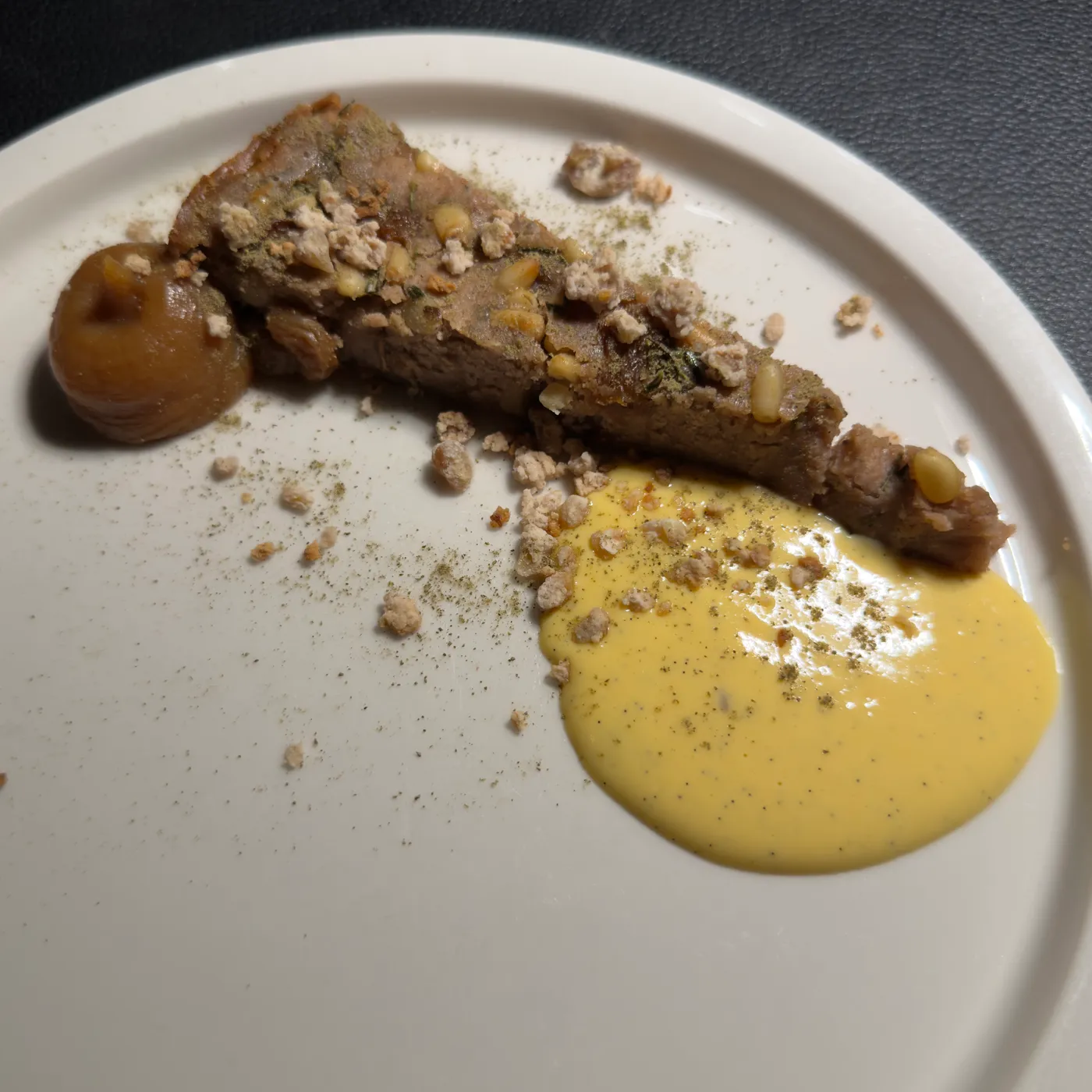
Torta di Castagne con Crema Pasticciera di Castagne | Chestnut Cake with Chestnut Crème Pâtissière
Our first dessert continued the autumn theme: chestnut cake with chestnut crème pâtissière. The plated preparation brought together the cake, a pale cream, and a smooth chestnut element, with contrasting textures across the plate. After the pumpkin, Jerusalem artichokes, mushrooms, and chestnut ravioli, it felt entirely appropriate to finish with another expression of the season. The printed menu identifies chestnut cake and chestnut crème pâtissière, without specifying additional ingredients or preparation techniques.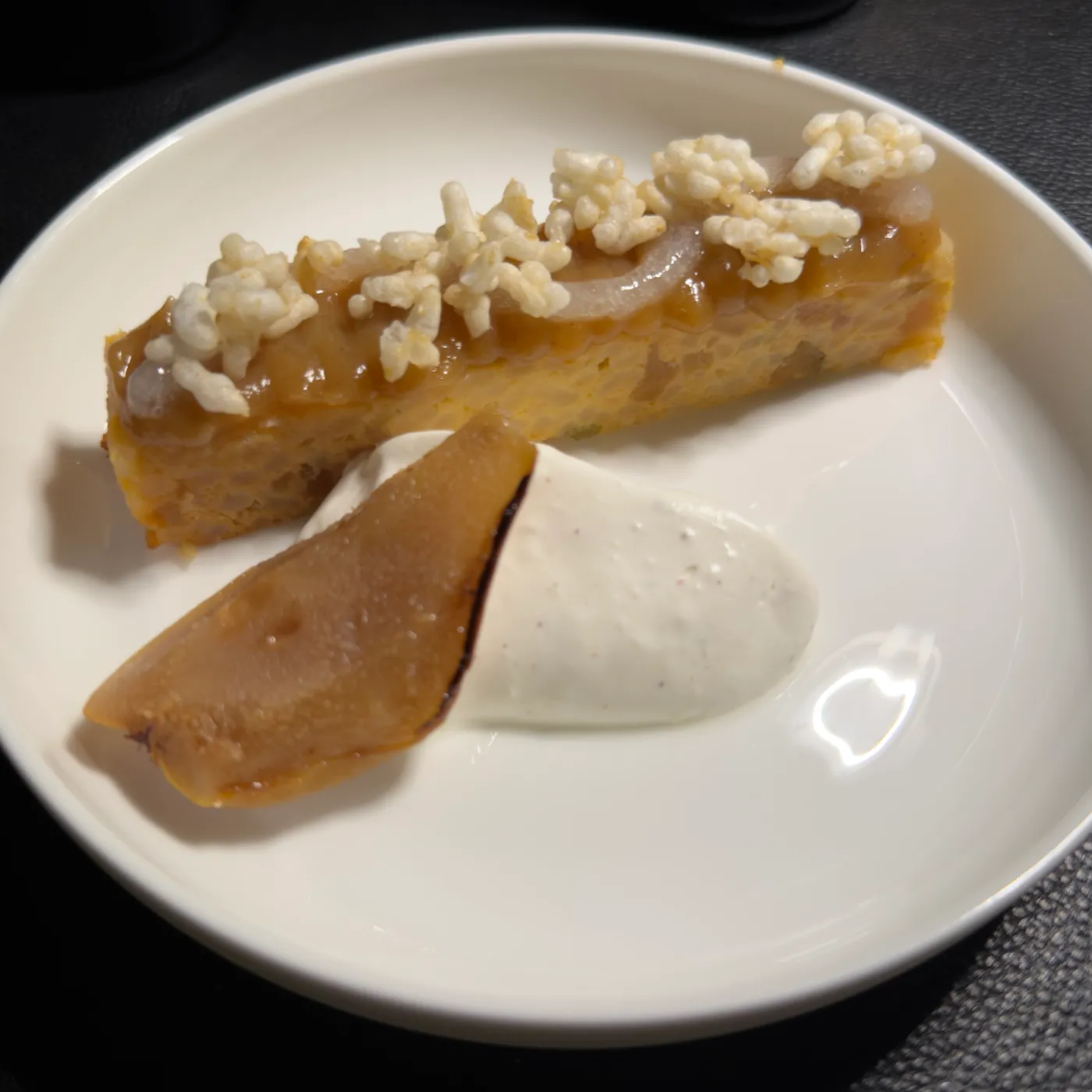
Torta di Riso, Crema, Pera e Whisky | Rice Cake with Cream, Pear and Whisky
The second dessert was rice cake with cream, pear, and whisky. The dish arrived with a slice of cake, a preparation of pear, and a pale cream. A different kind of ending from the chestnut dessert, and a gentle conclusion to a dinner that had moved through vegetables, raw meats, risotto, pasta, live fire, and some exceptionally interesting wines. The printed menu describes the principal ingredients without specifying the individual preparation methods.A Final Thought
When I asked Lorenzo which two dishes a visitor should absolutely try, he didn't hesitate. The risotto and the sweetbread. For him, they express what he is trying to achieve at Uno di Questi Giorni, and after listening to his story, I understand why. This is a chef who spent years pursuing the discipline and precision of fine dining. Then he decided he wanted to keep the cooking and leave some of the formality behind. He didn't lose his ambition. He changed the kind of restaurant he wanted to create. And here in Bologna, he has given himself an enormous kitchen, a fire that sits at its heart, and the freedom to keep changing his mind. I love that the bread matters. That a local oyster can stay on the menu for years while its preparation changes constantly. That a risotto can be transformed by an unexpected crate of bergamots. That an everyday Italian meatloaf can receive as much thought as a beautiful sweetbread. And that the chef who created all of it might wake up tomorrow and decide to change the menu again. The soul of an osteria. The precision of fine dining. Fire at the heart of it all. Thank you, Lorenzo, for sharing your kitchen, your food, and the thinking behind it. And thank you, Riccardo, for guiding us through a remarkable selection of wines. Another dinner worth remembering. Another story worth keeping. I AM A HUNGRY TOURIST.What we drank
Seven wines selected during the dinner, with explanations and pairing choices from sommelier Riccardo Chakachas, supplemented by wine background where available. These descriptions are not presented as my personal tasting notes.
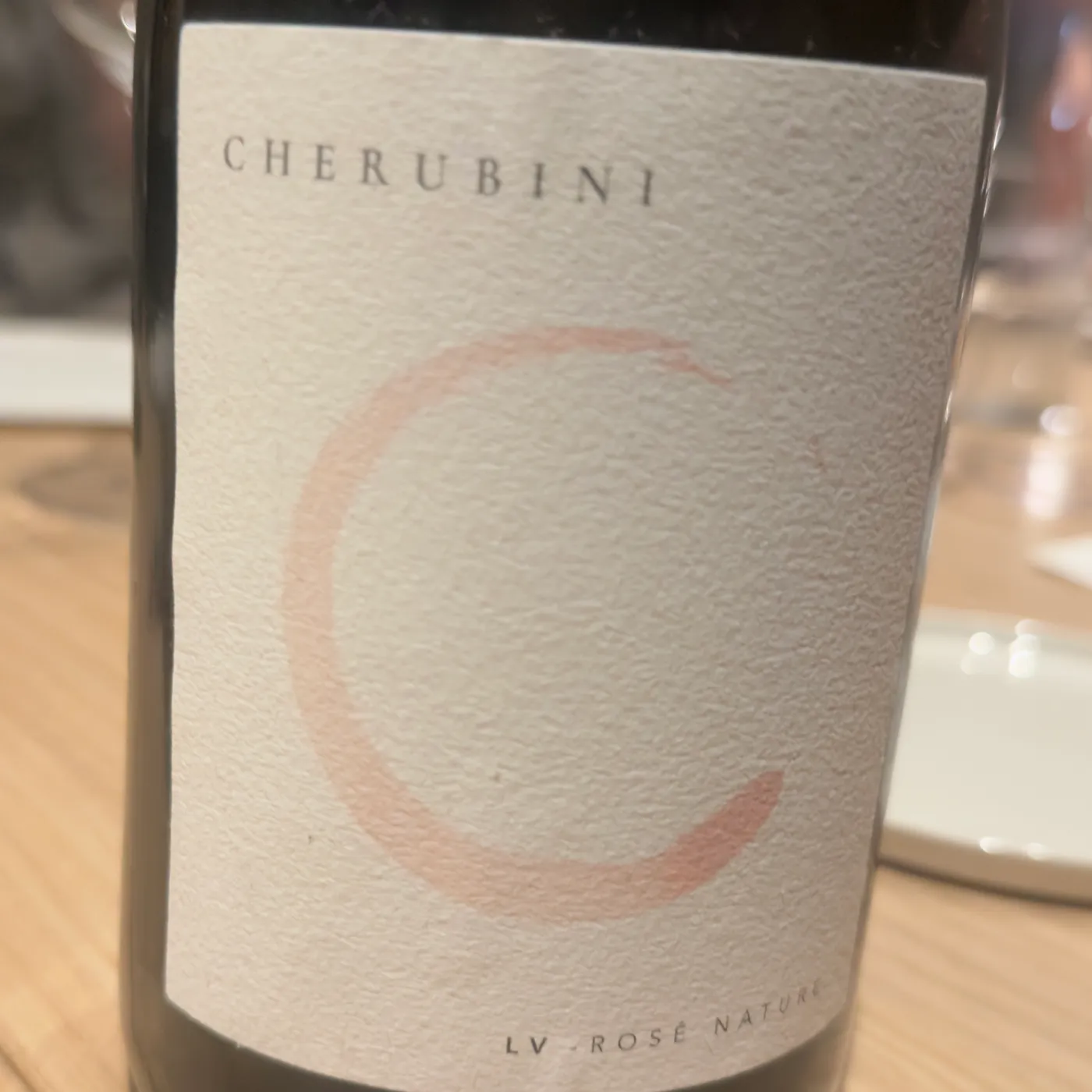
Cherubini LV Rosé Nature 2018 | Lombardy
Produced by Mattia Corbellini in the hills outside Brescia, this zero-dosage sparkling rosé is made from old-vine Pinot Nero. Brief skin contact, spontaneous fermentation, and extended aging on the lees contribute delicate red-fruit aromas, fine bubbles, and mineral freshness.
Disgorged in March 2024, according to Riccardo, the bottle accompanied our raw Po Delta oyster with olive-and-caper pesto, onion, and citron.
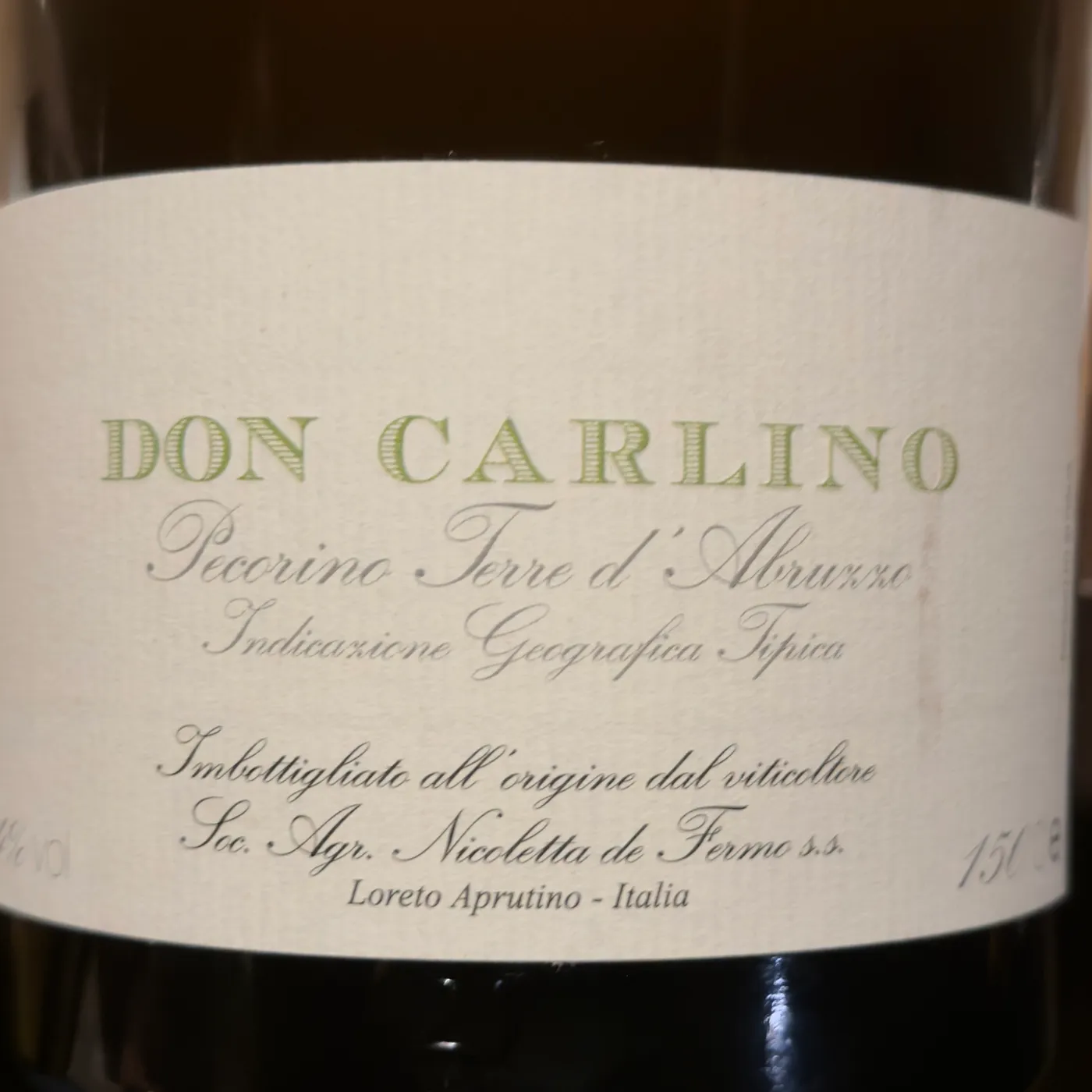
De Fermo Don Carlino Pecorino | Abruzzo
Don Carlino is a Pecorino from Nicoletta de Fermo's estate in Loreto Aprutino, where the family also produces olive oil. Spontaneously fermented, the wine combines yellow-fruit and herbal notes with lively acidity and pronounced minerality.
Riccardo explained that he chose it partly for its mineral character alongside the sweetness and richness of the accompanying food. He also liked the connection with the olive oil producer. The vintage was not confirmed from the photograph.
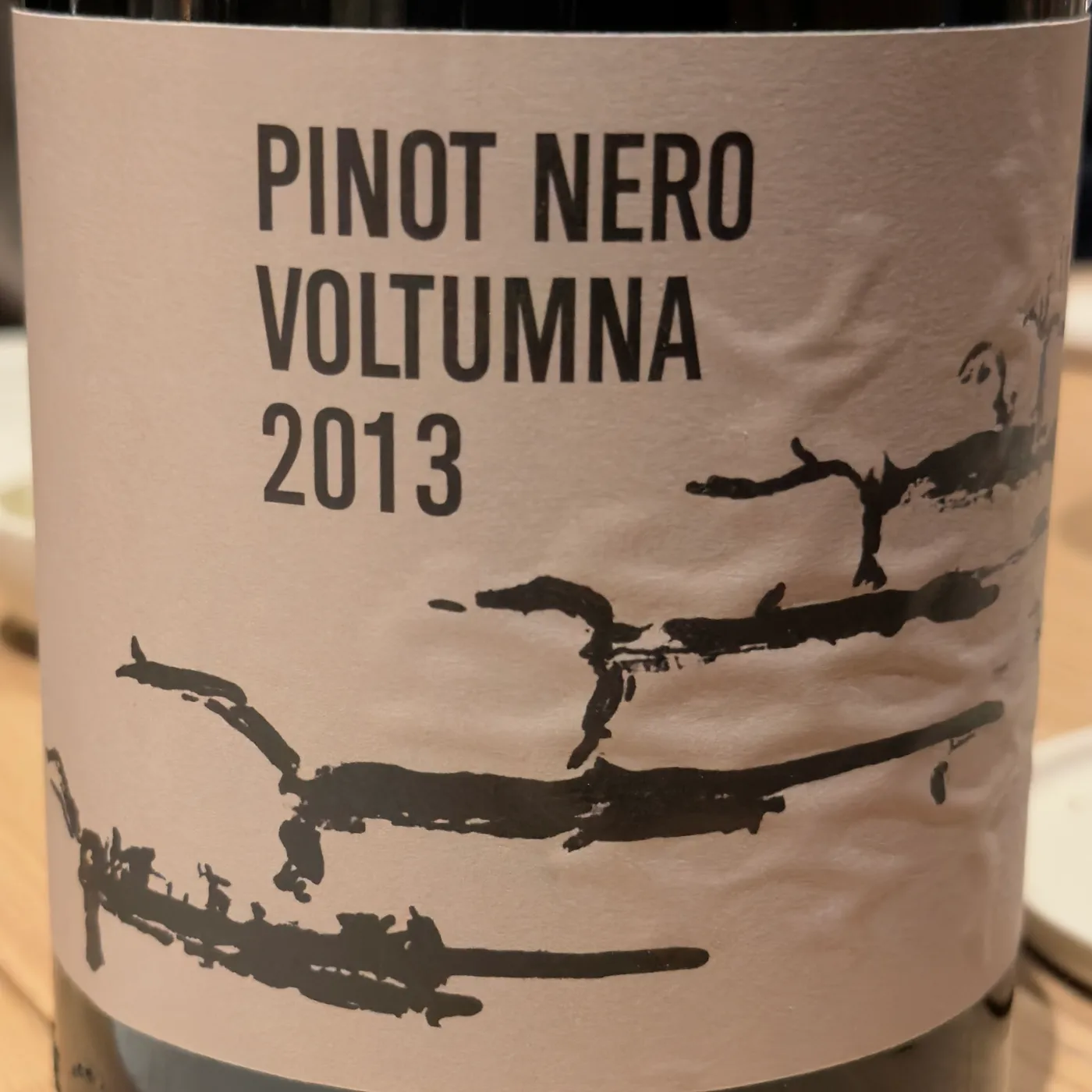
Voltumna Pinot Nero 2013 | Tuscany
From an old vineyard in the Mugello hills, this Pinot Nero comes from the Voltumna estate. Riccardo described spontaneous fermentation in old wood and a wine of elegance, silky texture, richness, and generous fruit.
He also told us that the bottle came from a very small private reserve, with approximately one hundred bottles produced. That production figure is Riccardo's account and has not been independently verified.
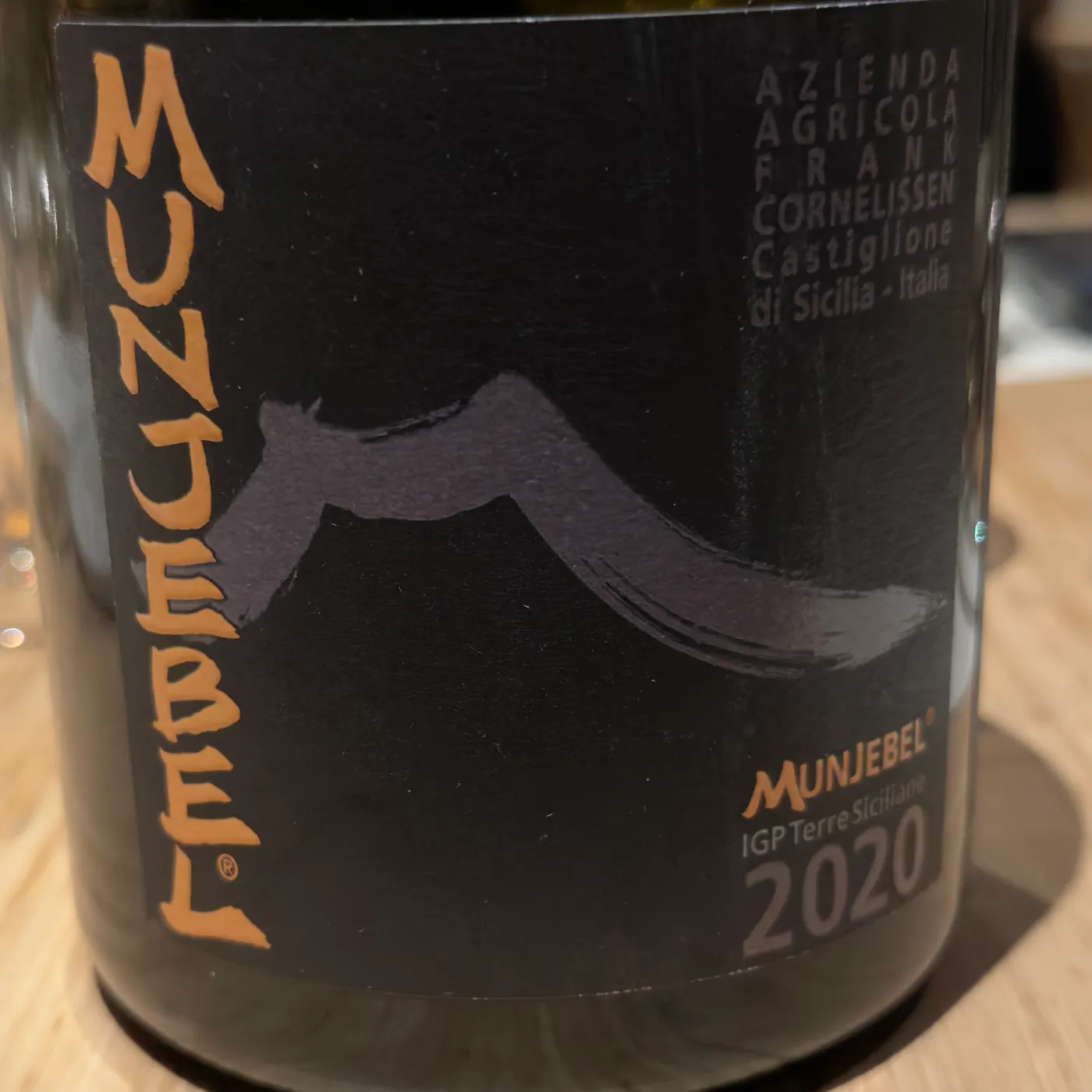
Frank Cornelissen Munjebel 2020 | Sicily
From the volcanic slopes of Mount Etna, Munjebel is made from Carricante and Grecanico Dorato. Fermentation with indigenous yeasts and skin contact give the wine an aromatic and textural character that extends beyond a conventional crisp white.
Riccardo selected it for the creamy Jerusalem artichoke risotto, looking for a contrast to the richness of the dish and the slightly bitter character of the bottarga.
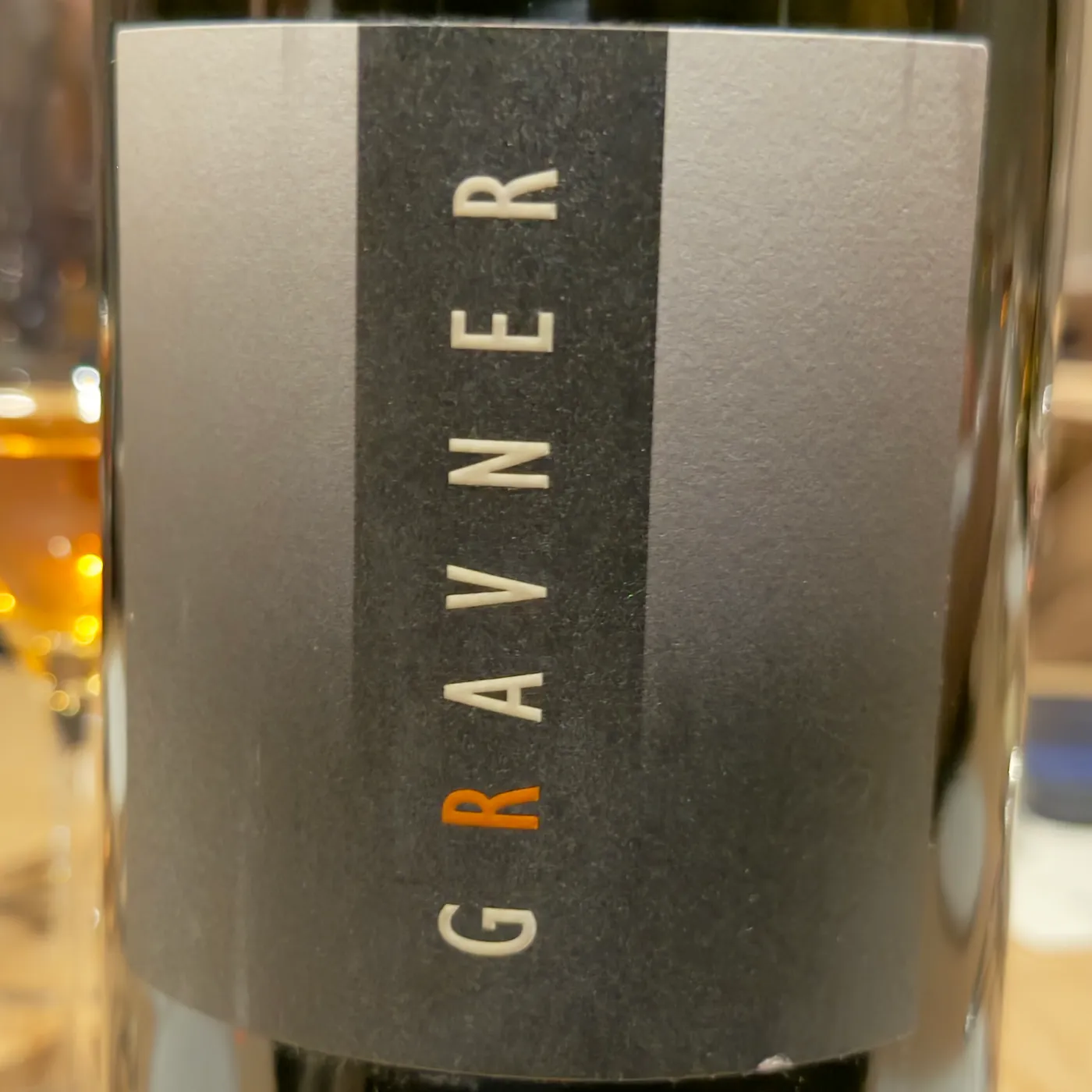
Gravner Ribolla 2003 | Venezia Giulia
A magnum of Gravner Ribolla 2003 from Oslavia, near Gorizia. Josko Gravner's approach to Ribolla is associated with prolonged skin contact, patient maturation, and a distinctive interpretation of the grape.
This bottle came from the 2003 vintage, served more than two decades later. The wine's identity, vintage, region, and magnum format are confirmed by the supplied label photographs. No specific tasting impression or food pairing was recorded for this bottle.
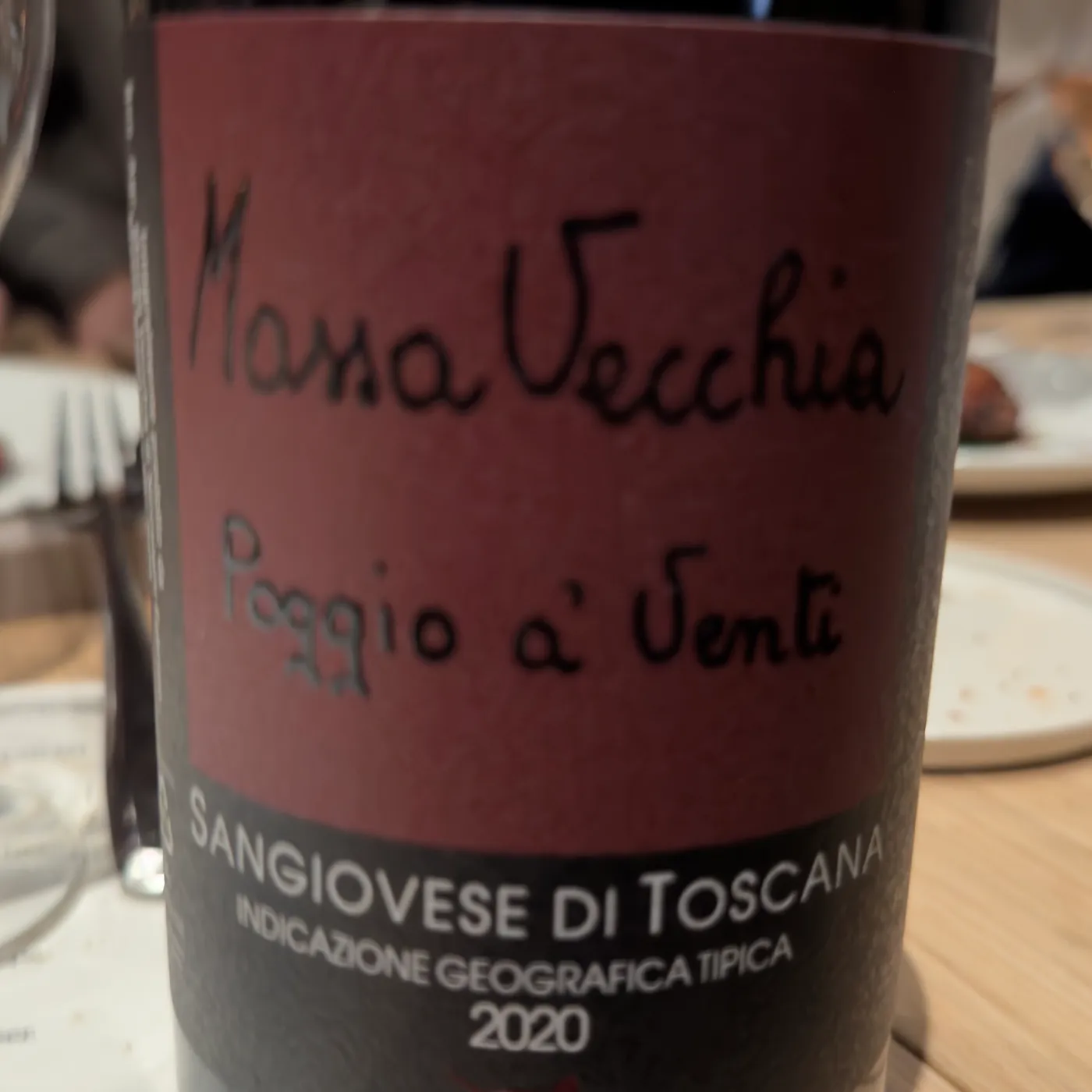
Massa Vecchia Poggio a' Venti Sangiovese 2020 | Tuscany
From a single vineyard in Tuscany's Alta Maremma, Poggio a' Venti is made from Sangiovese. Spontaneous fermentation and maturation in older wood contribute to a wine with fruit, herbal and earthy notes, lively acidity, and fine tannins.
Riccardo chose it for our final savory dishes, explaining that its elegance and complexity offered a counterpoint to their richness and fat.
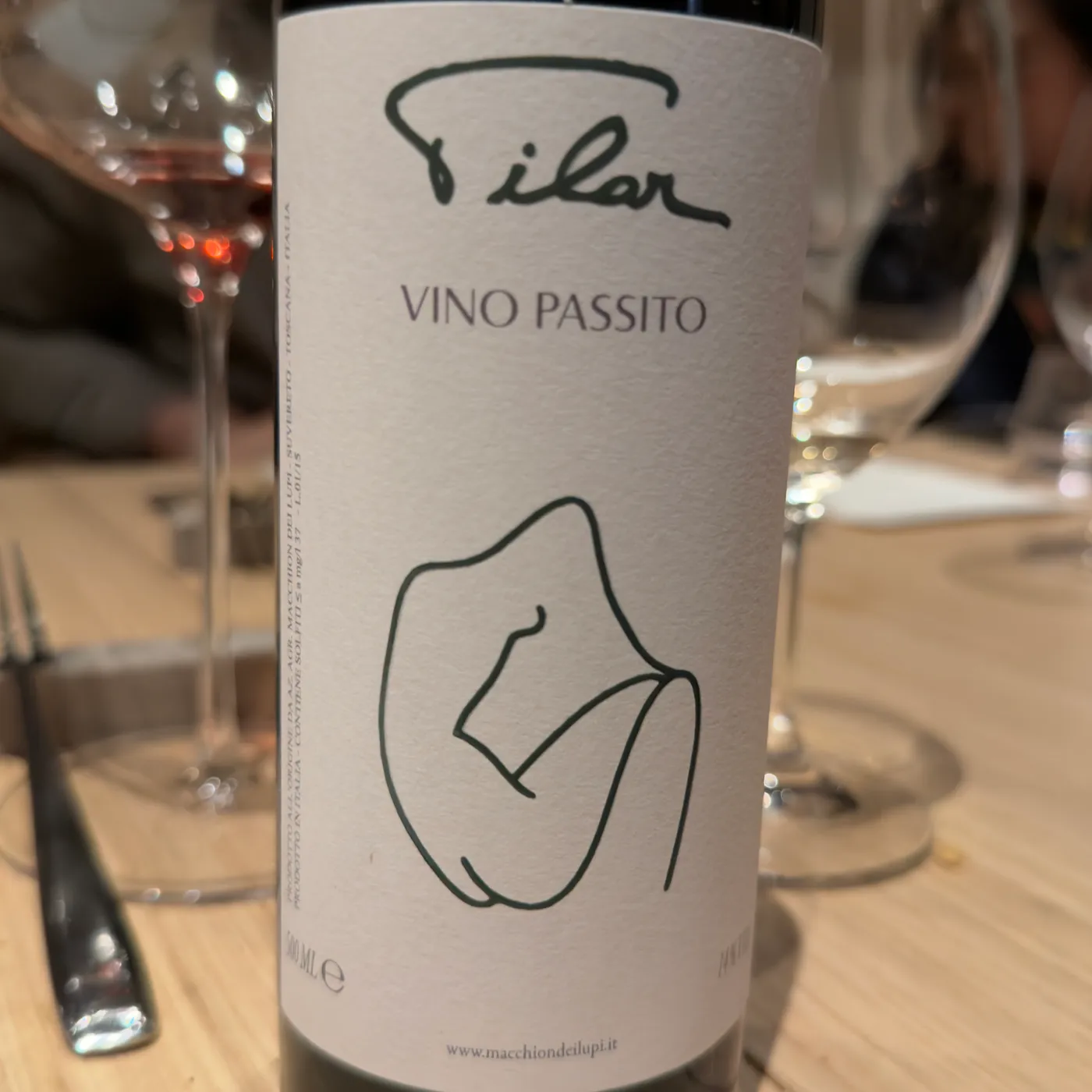
Macchion dei Lupi Pilar Vino Passito | Tuscany
Pilar is a passito from Macchion dei Lupi in Suvereto, Tuscany. Riccardo described grapes from an old vineyard, left to ripen until November and then dried on racks to concentrate their sugars before winemaking. He identified the variety as Merlot.
The wine accompanied the conclusion of our dinner, although no explicit pairing explanation was supplied. The label does not establish the vintage, and available descriptions differ on the grape variety, so those details remain unconfirmed.