Alkimia
Tue, Oct 20, 2026
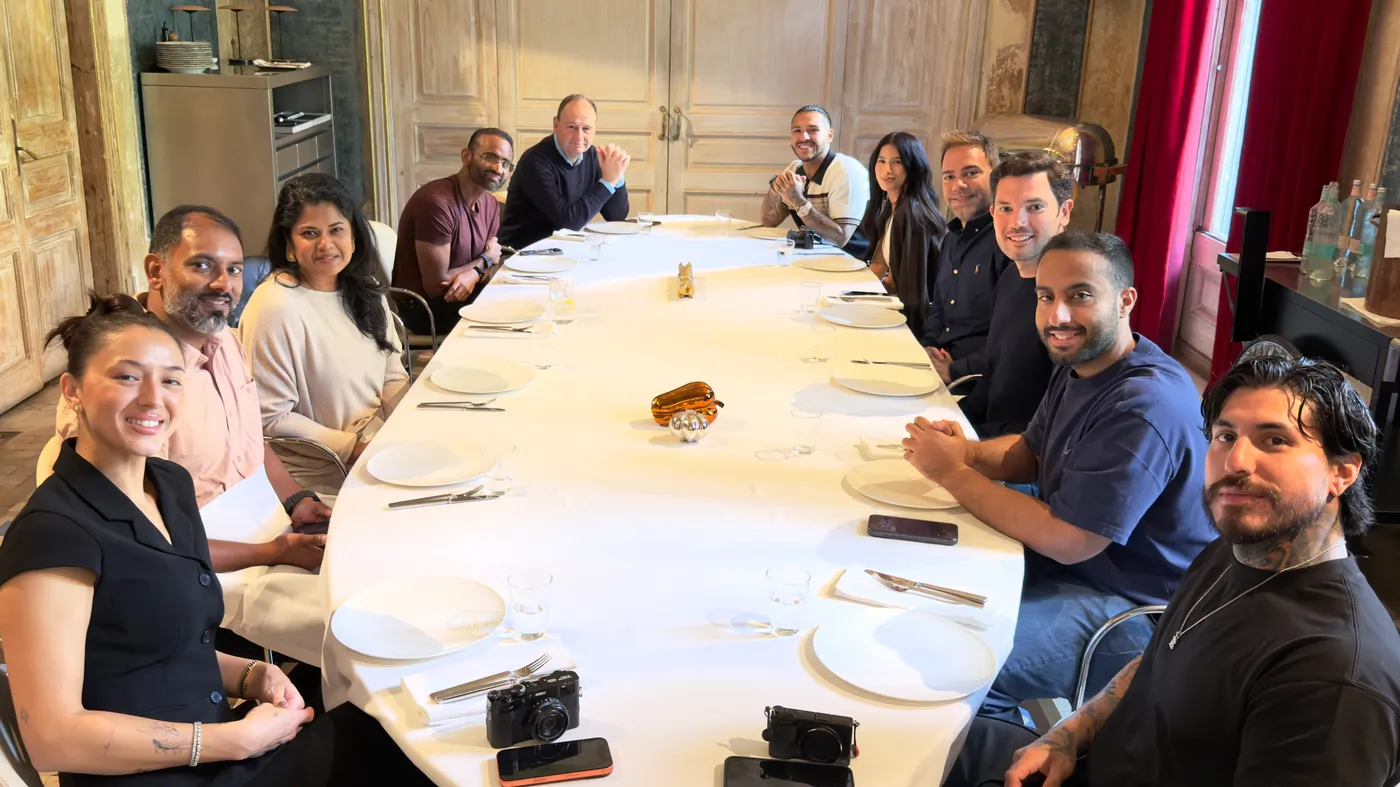
Alkimia, Barcelona
Two or three years ago, around the same time I asked Oriol, I asked Jordi Vilà whether he would set aside his tasting menu for us and cook a Catalan meal he would make for his family and best friends. Dishes in the middle of the table, everyone sharing.
I had him at hello, and we’ve never looked back.
Jordi and Sònia Profitós opened Alkimia in 2002. It earned its Michelin star in 2004 and later moved to the first floor of Barcelona’s Moritz brewery. His cooking explores Catalan tradition, keeping its recipes alive while finding new ways to prepare them.
For this lunch, we gathered around the big oval table at Alkimia’s gorgeous private room for that family meal. Here is what we shared.
What we ate
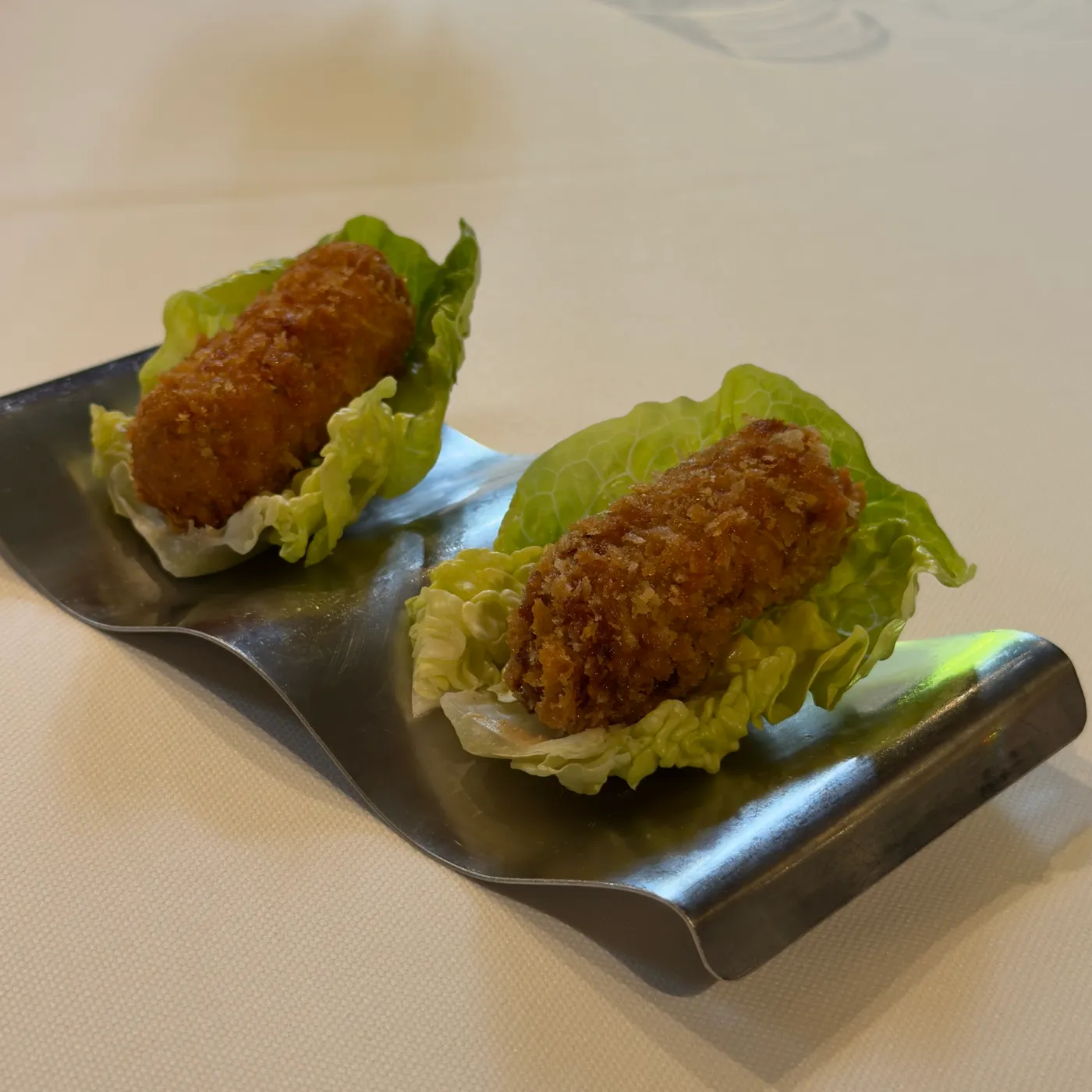
Croqueta de Rostit — Roast Chicken Croquette
The filling began as a traditional Catalan chicken rostit, a preparation somewhere between roasting and slow stewing. The chicken was deboned, shredded and chopped by hand to keep its meaty texture. Coarse dried breadcrumbs formed the crisp shell, a coating Jordi has used since 2008.
Each croquette sat in a lettuce leaf, with anchovy butter tucked between the two. The leaf brought freshness; the butter brought the sea into the roast chicken. A small example of mar i muntanya, the Catalan tradition of bringing seafood and meat together.
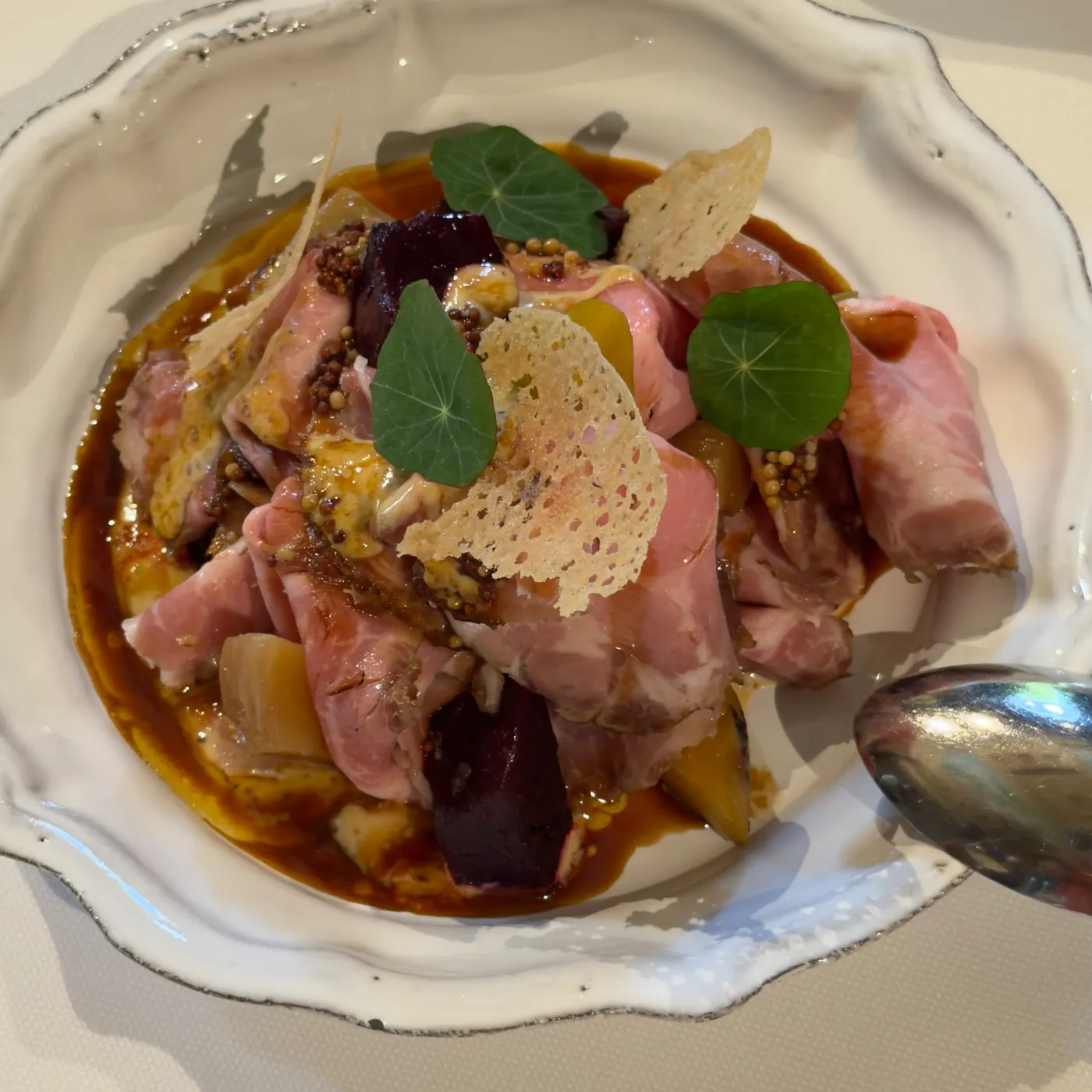
Rosbic — Cold Roast Pork with Pickled Vegetables
The name is a little joke: English roast beef becomes “rosbic,” a nod to Vic and its pork tradition. Jordi replaced the beef with pork, marinated with rosemary, thyme and vi ranci, a traditional aged Catalan wine, before roasting.
Once cold, the meat was sliced thinly and dressed with vegetables pickled in the kitchen. A vinaigrette containing mustard kept a familiar connection to roast beef. Its sharpness, together with the pickles, brought contrast to the pork—a dish built around the flavours of a roast, but served cold for us to share.
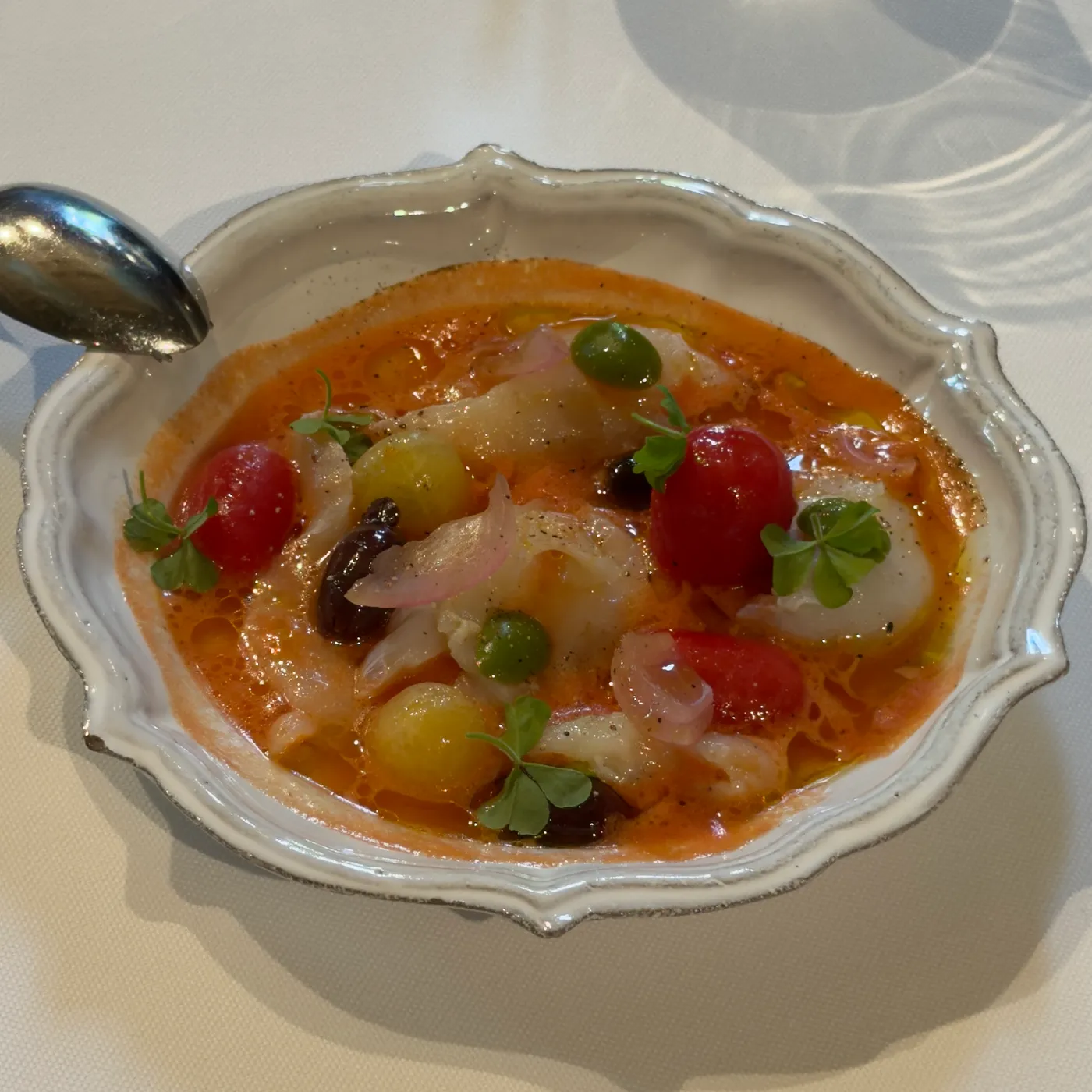
Esqueixada — Salt Cod, Tomato and Onion
Salt cod is preserved and dried, then desalted and rehydrated in water. Jordi calls this “the resurrection”: bringing the fish back to edible life. Here, its salinity met the sweetness and freshness of tomatoes in a traditional Catalan salad.
The onion had its own preparation, called al cop de puny. It was literally broken with a fist to help release its water, then dressed with vinegar and salt. That gave it a fresh, juicy crunch alongside the cod. For Jordi, this old recipe remains a thoroughly modern way of preparing fish.
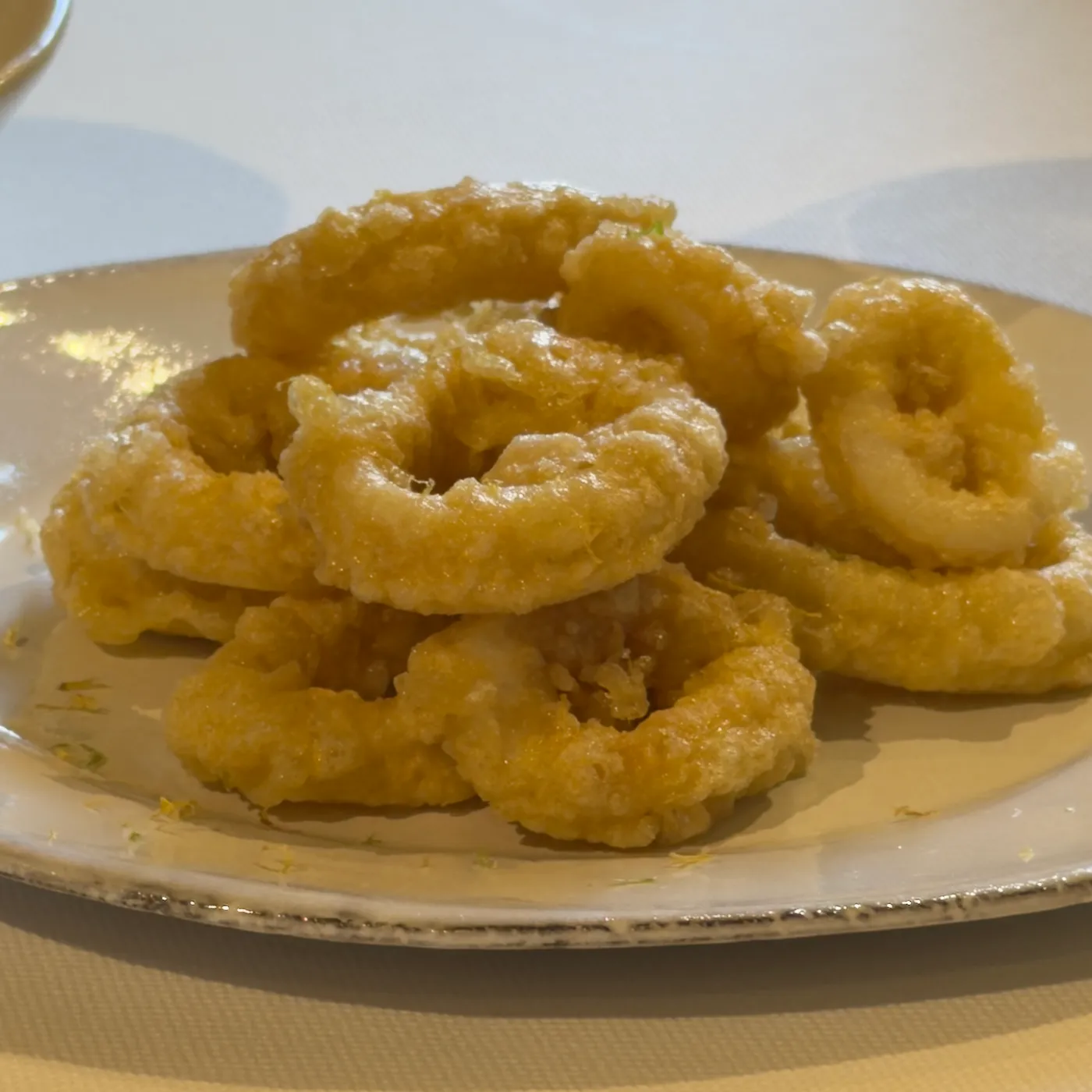
Calamars a la Romana — Battered Squid
Jordi put these on the menu because he had found it increasingly difficult to find calamars a la romana made as he remembered eating them at home. His answer was straightforward: good squid, batter prepared at the last moment and frying in virgin olive oil.
The rings arrived with a golden, crisp coating and mayonnaise alongside, everything prepared to order. With such a familiar dish, the difference came down to the squid itself, the freshly made batter and the timing of the frying.
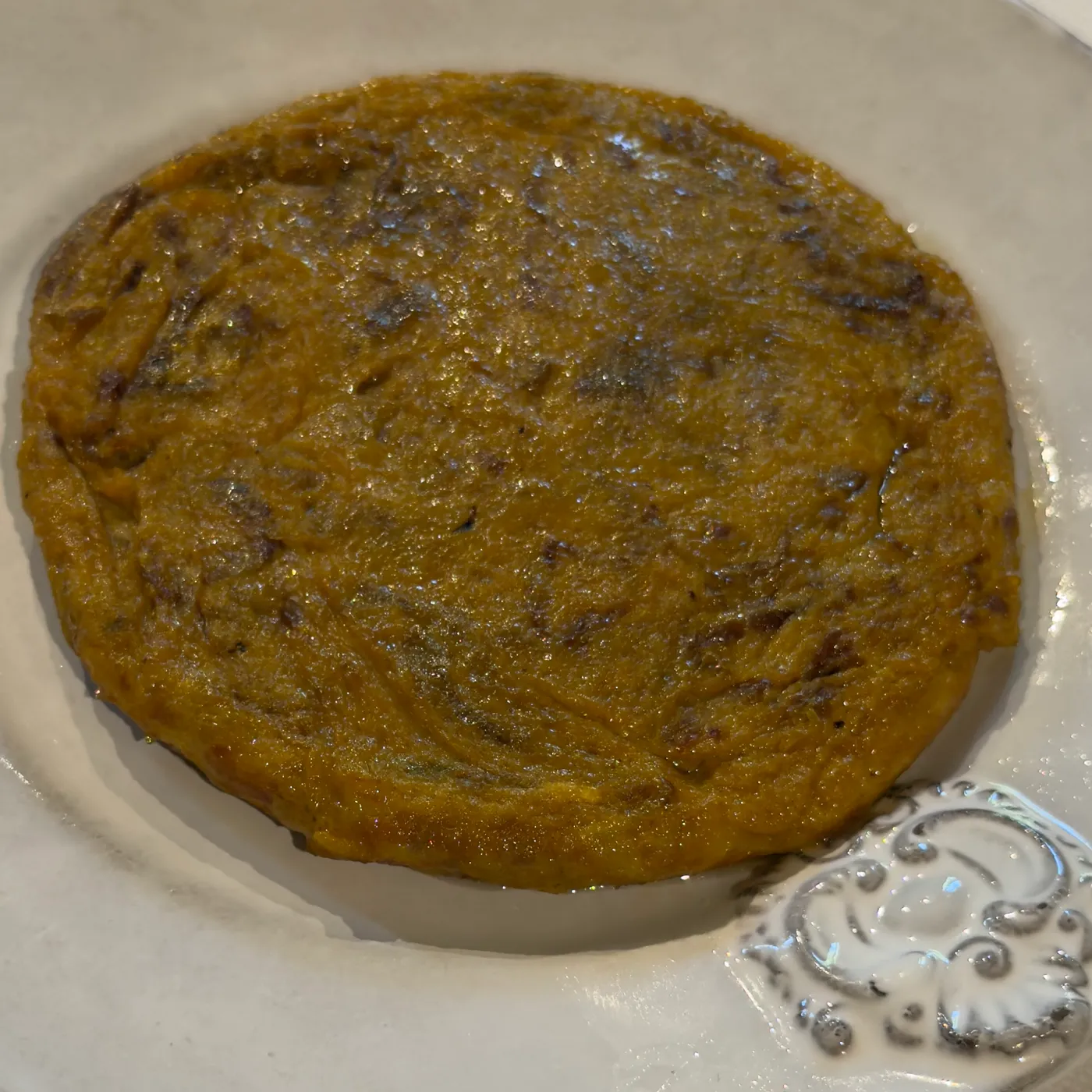
Truita de Ceba — Figueres Onion Omelette
The sweet Figueres onions were cooked gently for nine or ten hours, until deeply browned and their sweetness concentrated. The omelette itself was then made to order, with the long-cooked onion keeping the egg soft and juicy.
Truita de ceba is particularly associated with the Girona area. It brings together eggs and onions, with the character of the dish depending on that patient cooking beforehand. By the time the omelette reached our table, the onions had already spent most of the day on the stove.
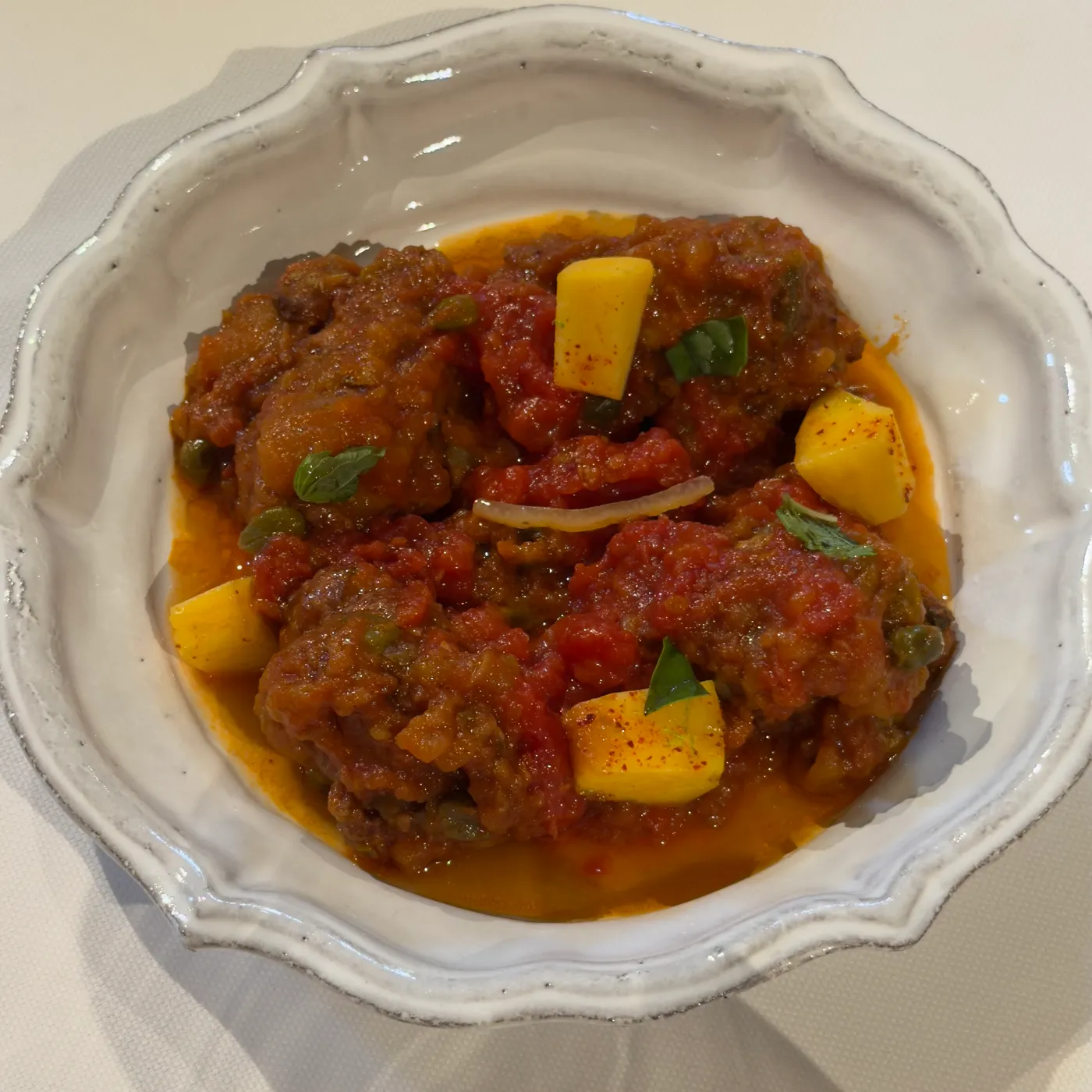
Mandonguilles amb Bonítol — Bonito Fish Balls
Bonito took the place of meat in these mandonguilles, served with tomato and capers. The dish drew on the resourceful cooking of Mediterranean fishing communities, with a particular nod towards Sicily.
For Jordi, the sea connects these kitchens. Catalan coastal cooking can have more in common with the seafood dishes of Sicily or Sardinia than with food from the Catalan mountains. Two hundred kilometres inland can create a greater difference than two thousand kilometres across the water. These fish balls were his way of expressing that connection.
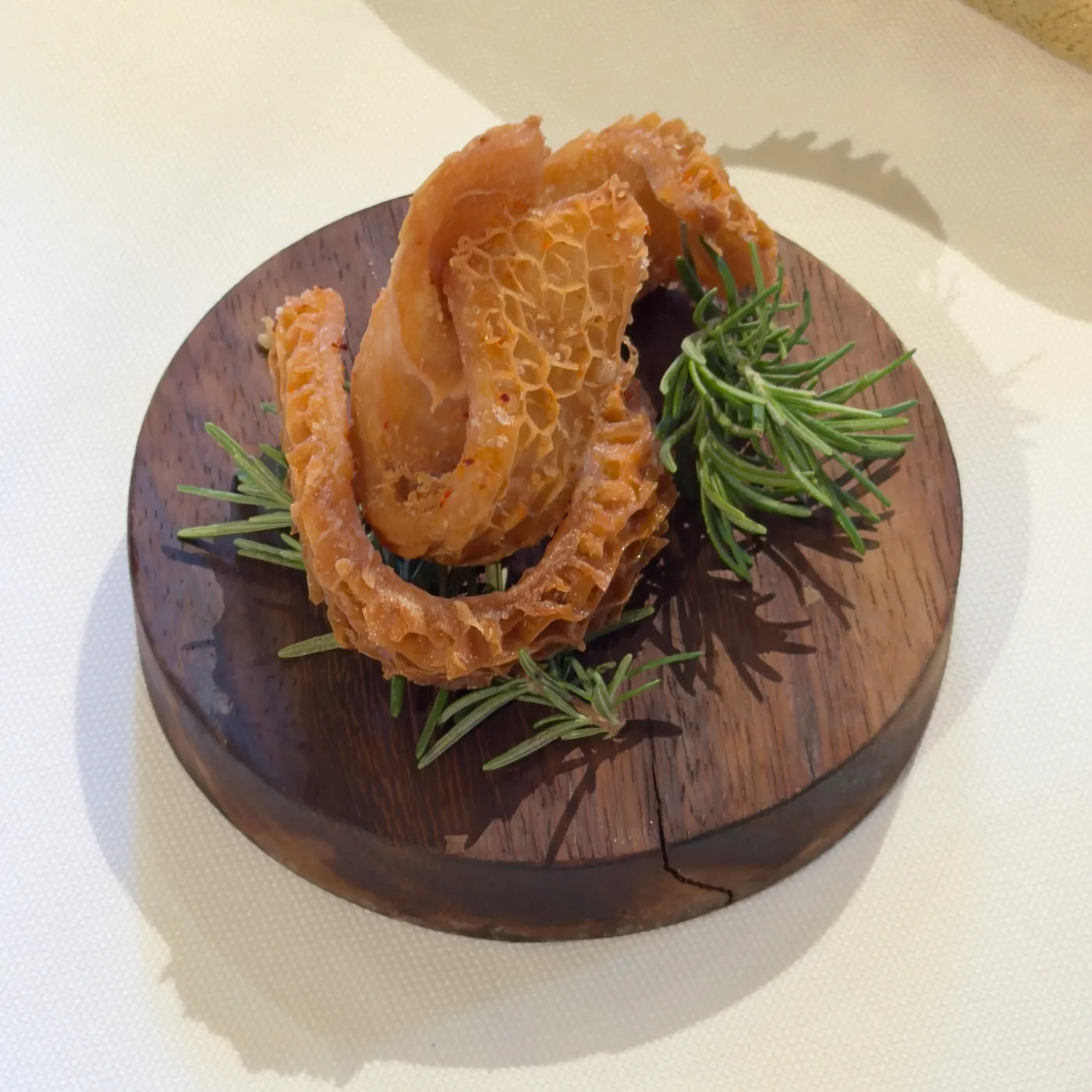
Trippa Rossi — Crisp Fried Tripe
Jordi tasted fried tripe at Trippa, Diego Rossi’s restaurant in Milan, and brought the idea back to his own kitchen. He named it after the cook whose preparation he had borrowed.
The strips of tripe were fried until golden and crisp, their honeycomb structure still visible, and served on a wooden board with rosemary. The name carries an acknowledgement: whenever Jordi copies a dish, he gives it the name of the person he learned it from. In this case, the credit belongs to Diego Rossi.
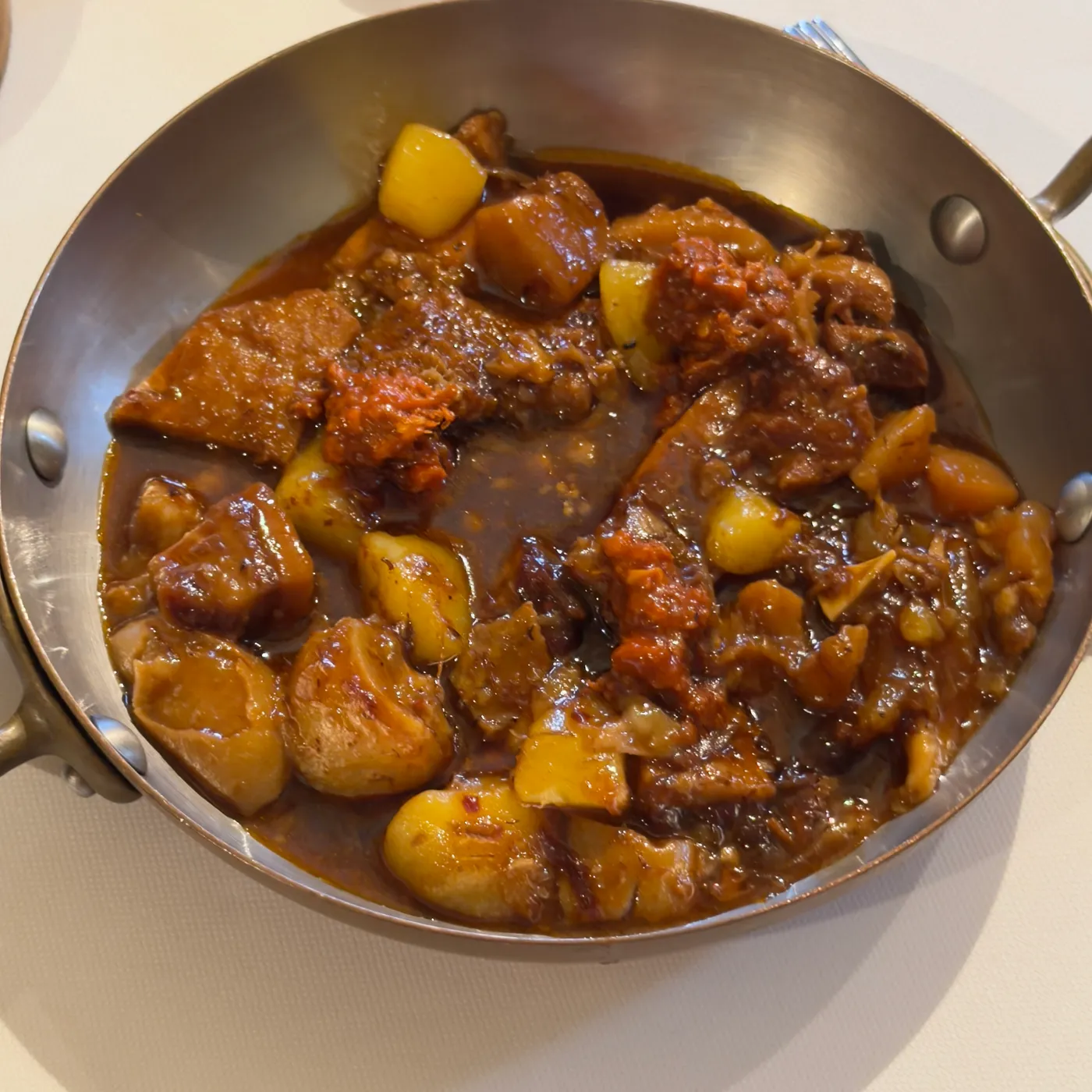
Callos a la Catalana — Tripe Stew with Sobrassada and Allioli
Tripe returned in a different form, cooked into a stew with potatoes and Mallorcan-style sobrassada. Ñora peppers helped give the sauce its Catalan character, moving away from the paprika, chorizo and ham associated with Madrid-style callos.
The finishing touch was a spoonful of allioli, stirred through just before serving. It became part of the sauce, bringing garlic into the stew rather than sitting alongside it as a condiment. After the crisp fried tripe, we had the same ingredient in a saucy preparation, brought to the middle of the table for sharing.
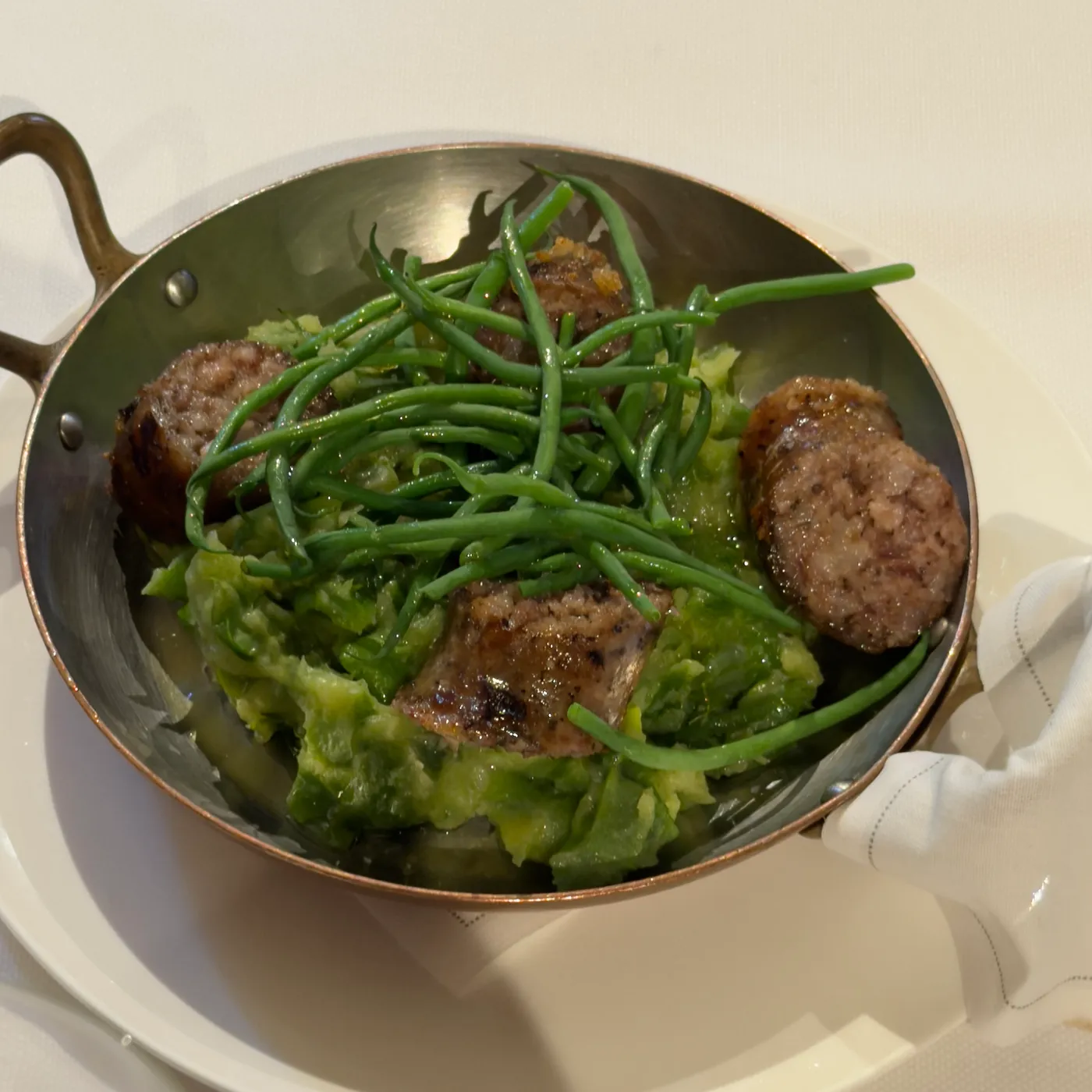
Mongeta Verda amb Patata — Green Beans and Potato
The cooked beans and potatoes were tossed with olive oil, allowing the softened potato to form an emulsion that coated the vegetables. This was the dish Jordi chose to explain his traditional cooking: familiar ingredients, with careful attention to their texture, aroma and the moment they reach the table.
Our pan was topped with mongeta del cuc, a delicate seasonal bean grown organically by Xavier Carbó. Browned pieces of sausage sat among the vegetables. The rustic appearance was deliberate, keeping the attention on the beans, potatoes and their olive-oil coating.
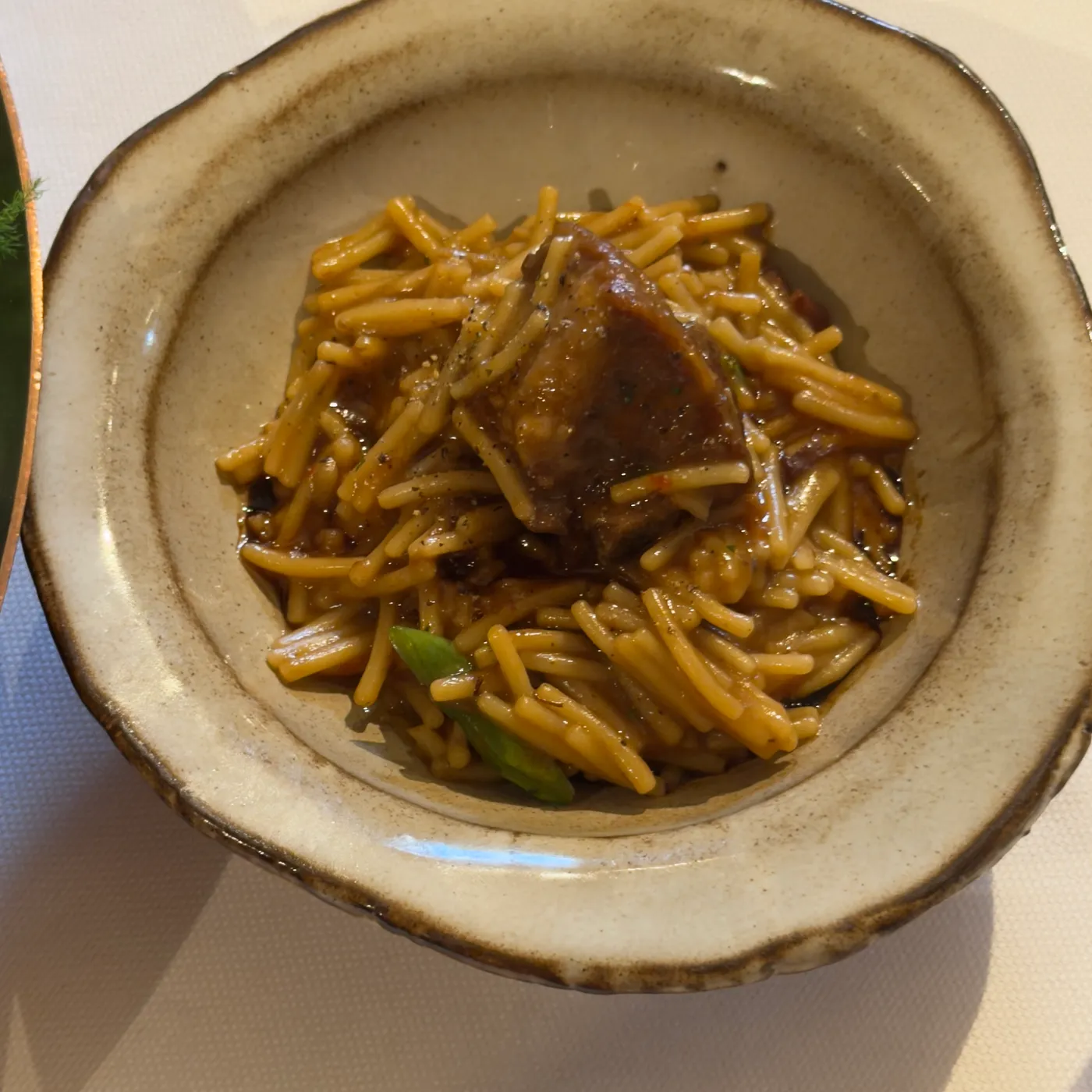
Fideus a la Cassola — Casserole Noodles with Pork Rib
Jordi described the cassola as a place where ingredients become friends. A pork rib and an onion begin by speaking different languages. After hours together, the onion softens, the meat becomes tender and their flavours merge. The noodles are then added to absorb those flavours.
Fideus a la cassola belongs to a long Catalan tradition, with versions changing from village to village according to what people had available. Our bowl held short noodles coated in the cooking juices, with a piece of pork rib resting on top.
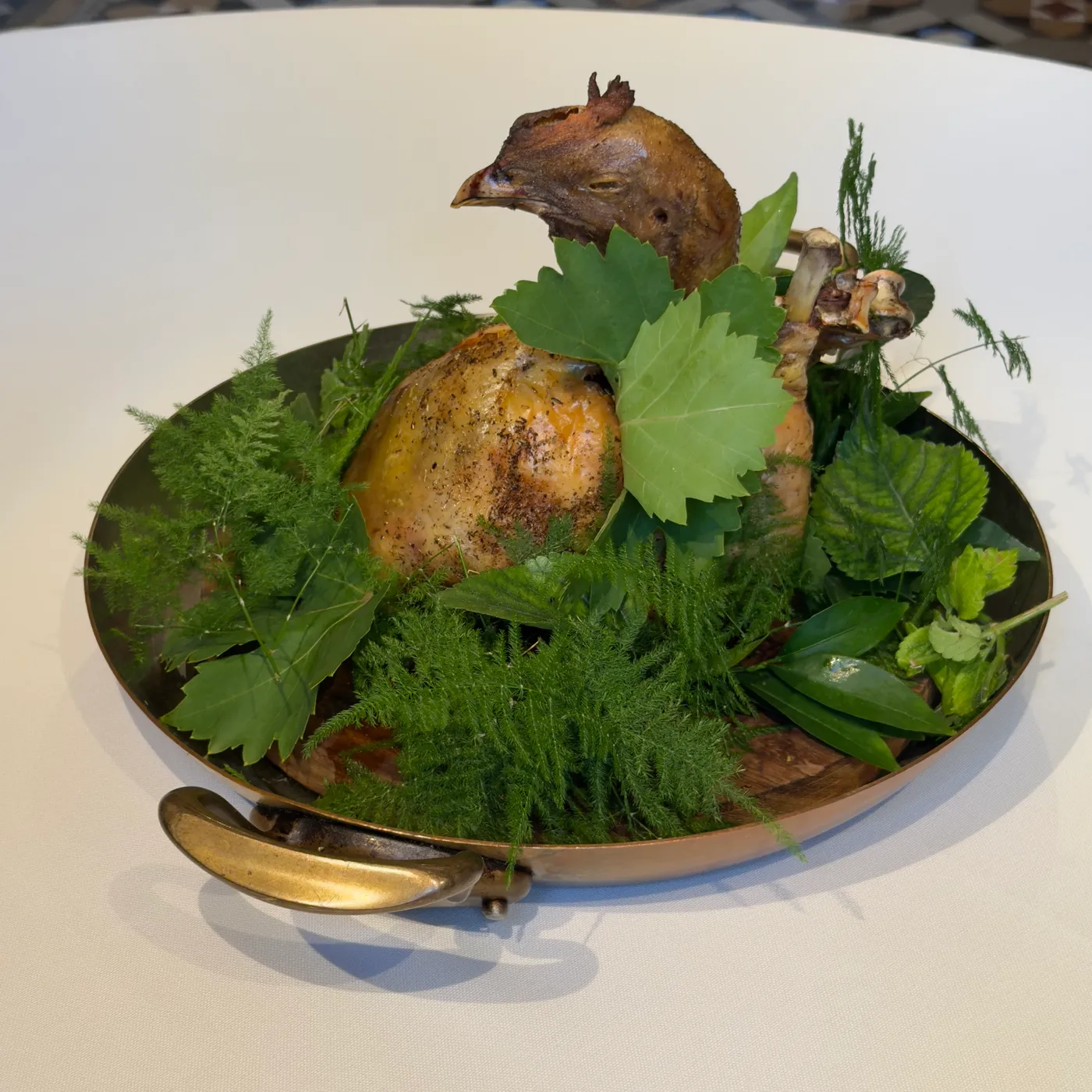
Pollastre Cubista — The Whole-Bird Presentation
The name “cubist chicken” comes from the way the bird is presented, its head and neck upright among the leaves. Jordi saw a resemblance to the dragons of Catalan celebrations and the eagle of La Patum.
The organic farm chicken was seasoned two or three days before cooking with salt, pepper, thyme, rosemary and sage, giving the seasoning time to penetrate. It was then roasted over brandy and a little water, without basting. Leaving its thick skin untouched allowed it to dry and become crisp during roasting.
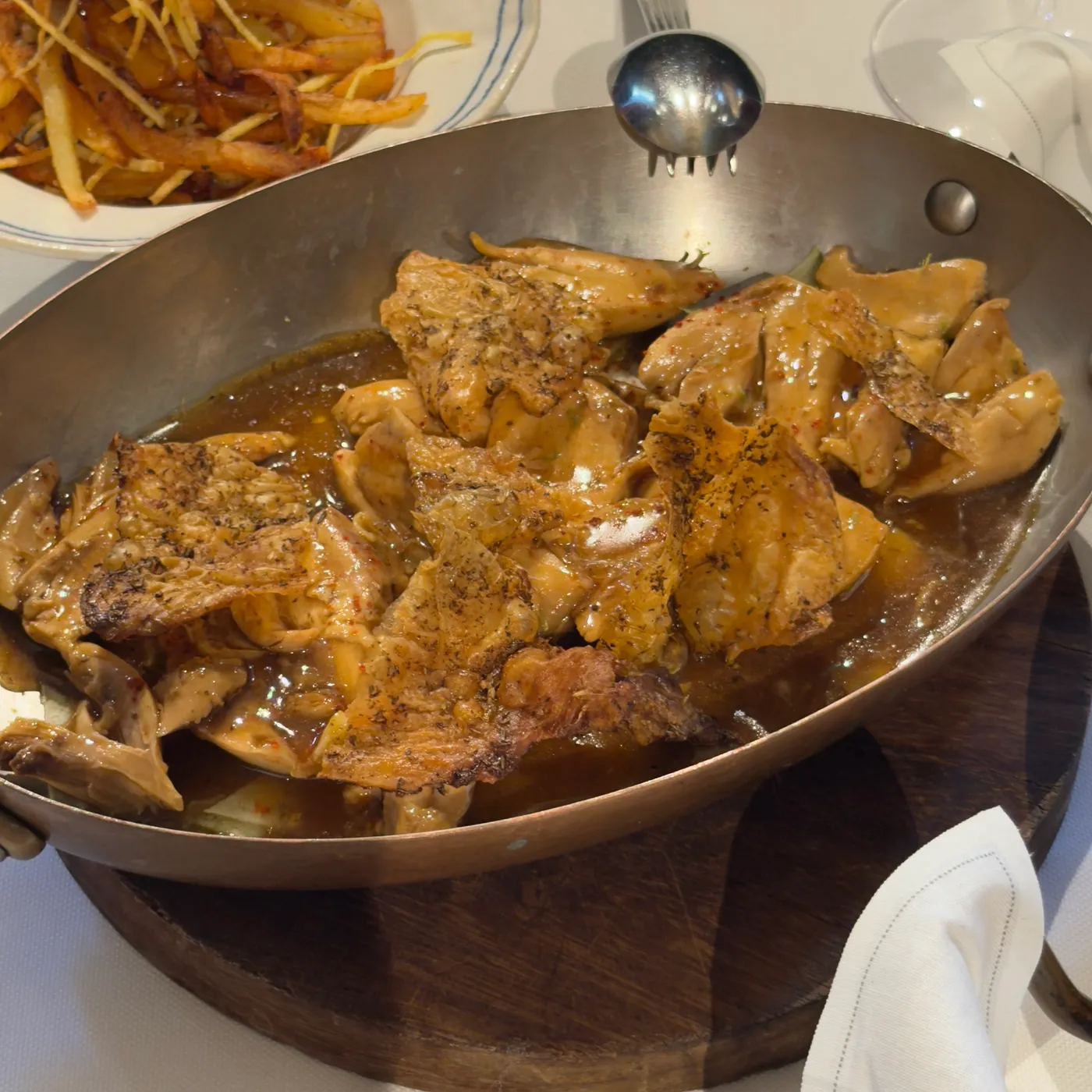
Pollastre Cubista — Carved Chicken and Crisp Skin
For serving, the roasted chicken was deboned and its skin separated from the meat. The skin went back into the oven for a second roasting, becoming crisp as a biscuit, while the meat remained tender.
The brandy, water and chicken juices left in the roasting pan were reduced into the sauce. Everything came together in a large pan for sharing: pieces of chicken in their roasting juices, with broad sheets of crisp, herb-speckled skin laid over them. Separating the two allowed each to keep its own texture.
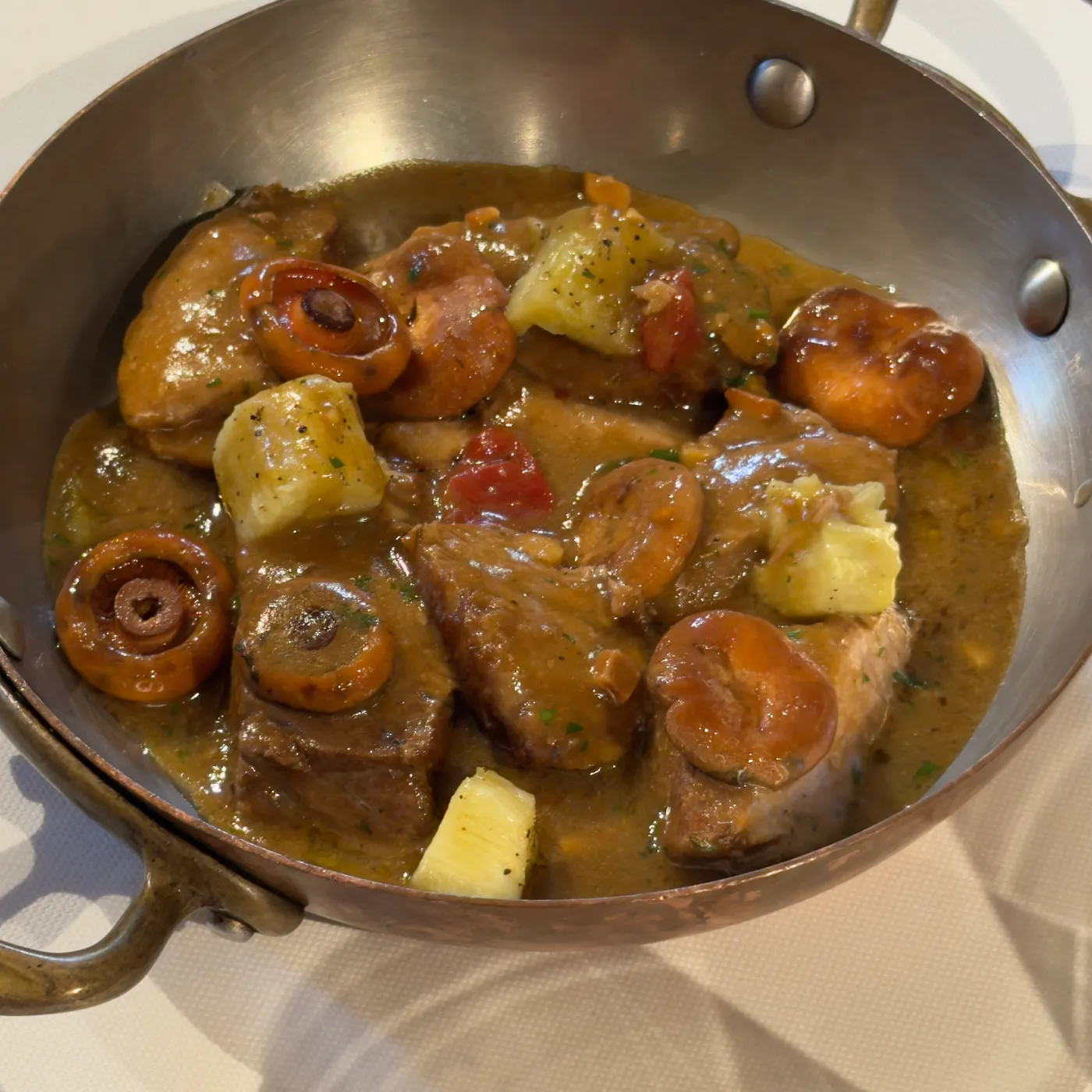
Fricandó de Ventresca de Tonyina — Tuna Belly and Mushroom Stew
Fricandó is traditionally a veal stew with mushrooms, finished with a picada, a pounded seasoning paste. Here, tuna belly took the place of the meat. Jordi chose it because, to him, tuna is the fish that comes closest to meat in character.
The mushrooms kept the woodland side of the dish, while ember-roasted aubergine brought a little smoke. Sweet-and-sour beetroot provided contrast alongside the rich sauce, doing the same job that a pickled piparra pepper might do beside a meat stew: refreshing the palate between bites.
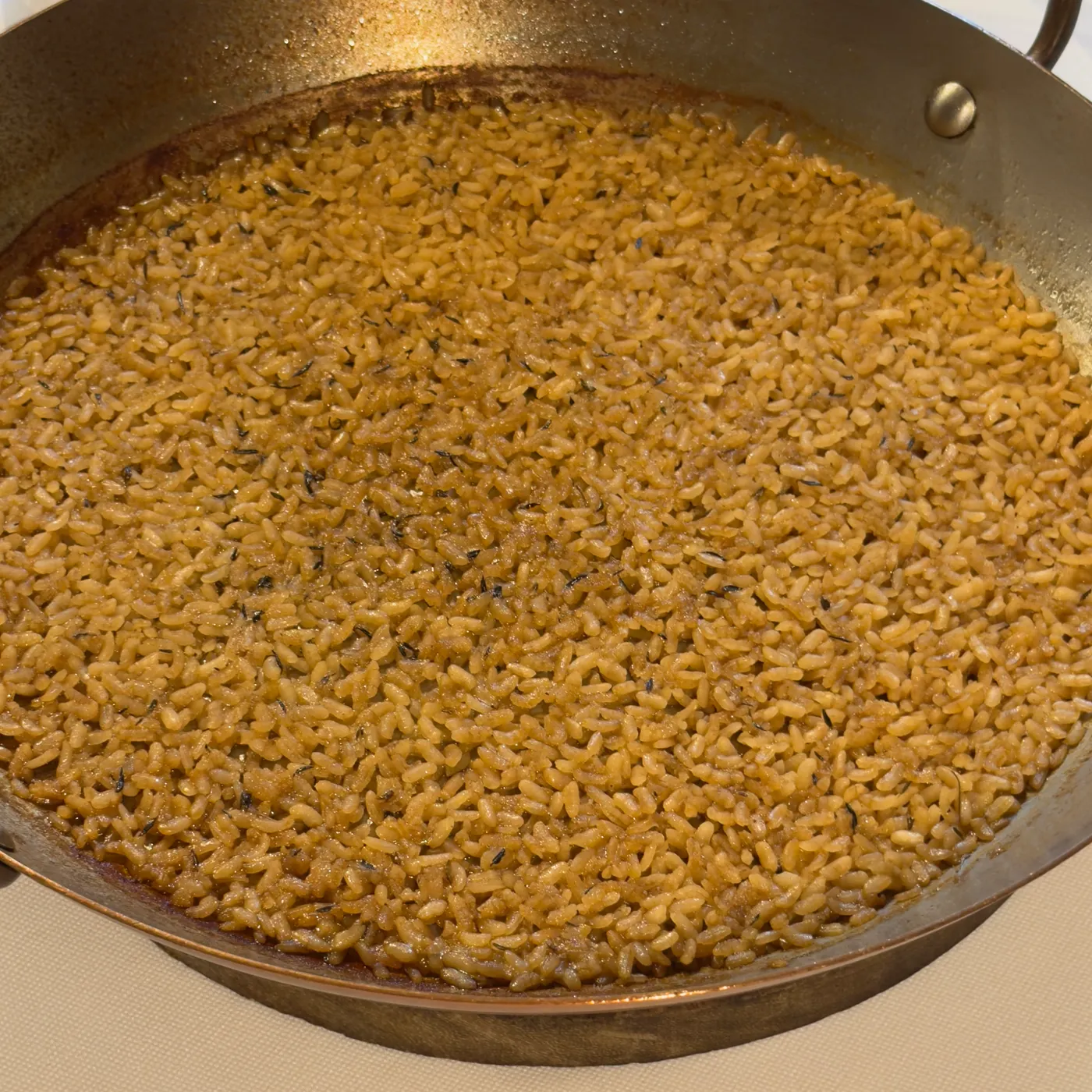
Arròs — Rice with Garlic, Ginger and Thyme
The rice served with our cubist chicken began with chopped garlic, ginger and thyme. White wine was added and allowed to reduce before the stock went in, together with just a few drops of fat from the chicken roast.
Jordi’s starting point was a pilaf he had enjoyed for its simplicity. He adapted that idea into something between pilaf and paella. Our pan held a thin, golden layer of rice, with small flecks of thyme visible between the grains.
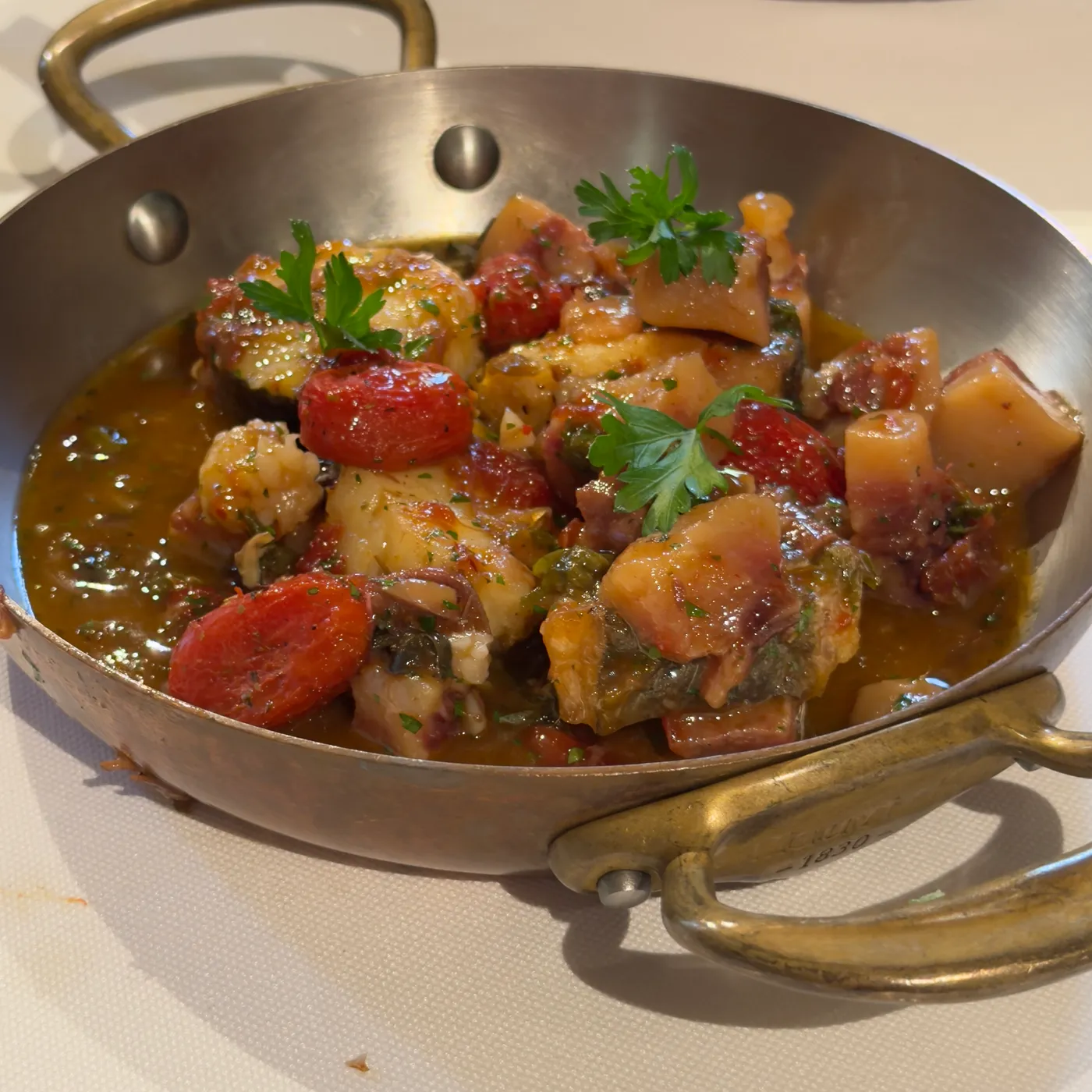
Bacallà amb Capipota — Salt Cod with Beef Head and Foot
Icelandic salt cod was paired with capipota, a traditional preparation of beef head and foot. Both belong to the cooking of Catalan markets and esmorzars de forquilla, the substantial breakfasts eaten with a knife and fork.
Jordi brought together two ways of serving capipota: a hot stew and a version dressed with vinaigrette. Here, the cod and gelatinous meat shared a warm sauce finished with deeply browned butter and vinegar. The butter brought depth, while the vinegar gave the dish acidity to balance its richness.
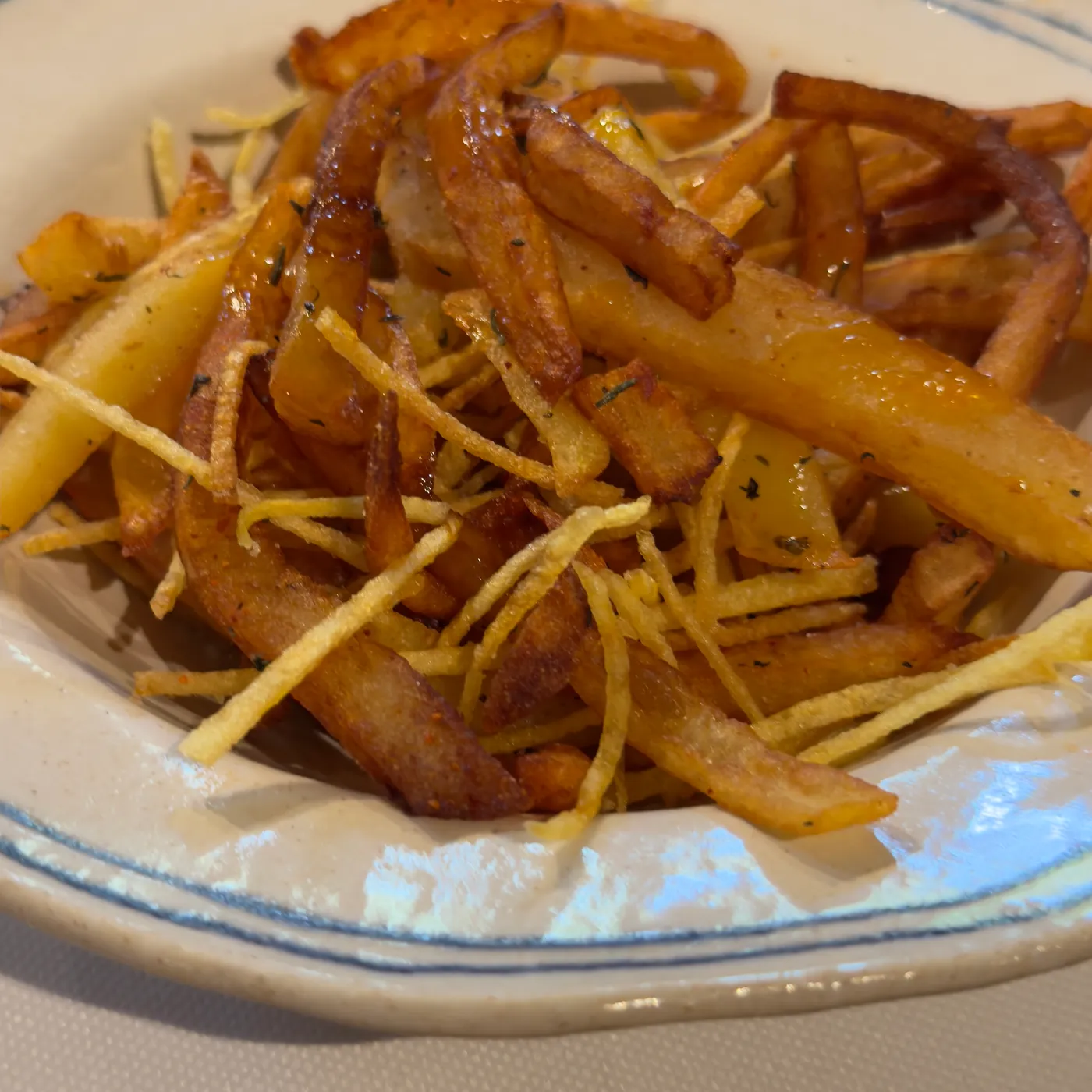
Patates Fregides — Potatoes in Two Cuts
Alongside the cubist chicken came potatoes in two cuts: thick, irregular pieces browned at the edges, tangled with fine, golden shoestring fries. Flecks of herbs were scattered through them.
They arrived separately from the roast, piled together on a plate for everyone to share alongside the chicken and its roasting juices.
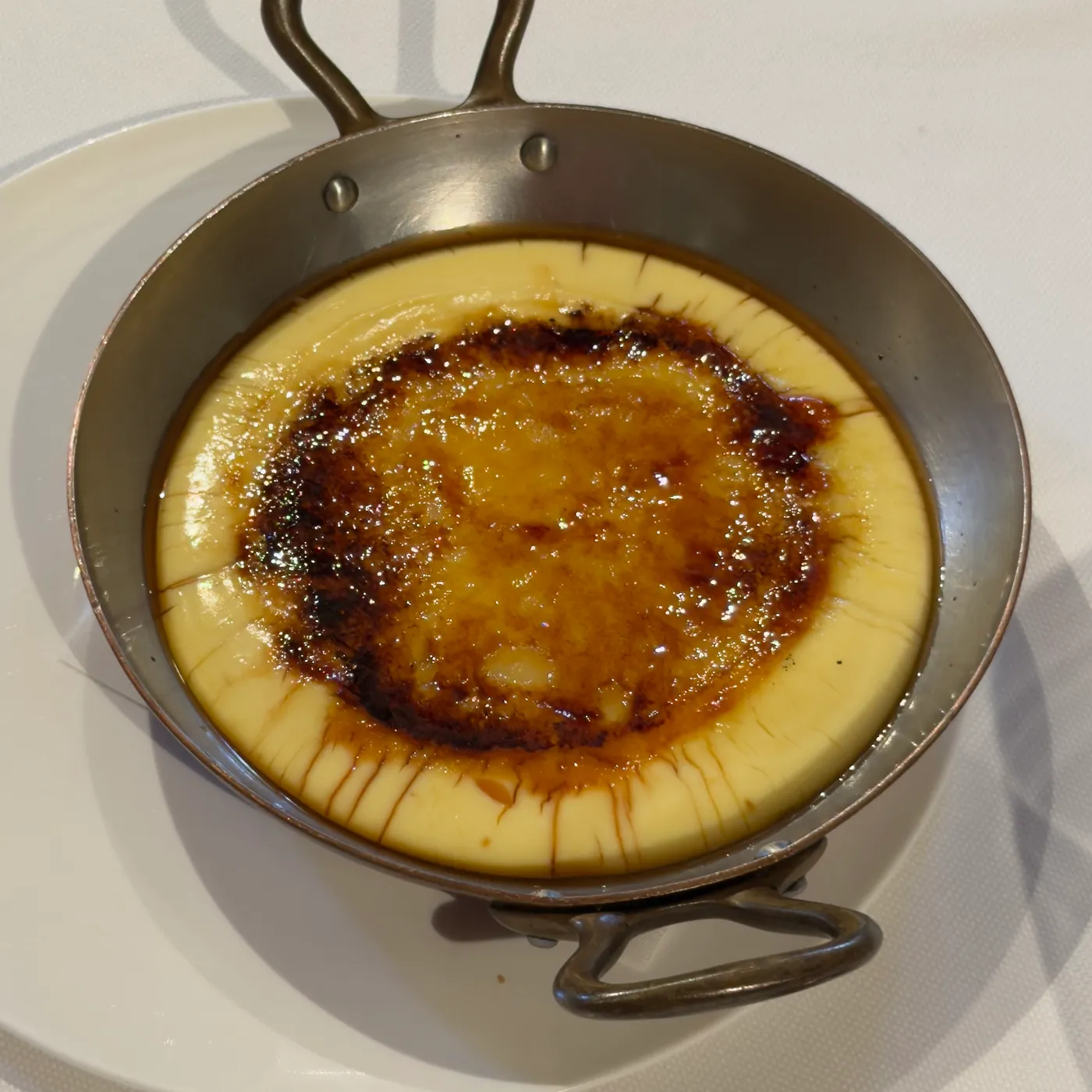
Crema Catalana — Caramelised Catalan Custard
The custard began with good eggs and milk, scented with cinnamon from Francesc Colell. Jordi singled out that cinnamon for its clean fragrance and sweetness.
His other insistence was on the caramel: it should be taken quite dark, without going too far. The resulting bitterness gives a counterpoint to the sweet custard underneath. Our crema catalana arrived in a broad, shallow pan for sharing, with a deeply caramelised sugar crust across the centre and pale yellow custard visible around it.
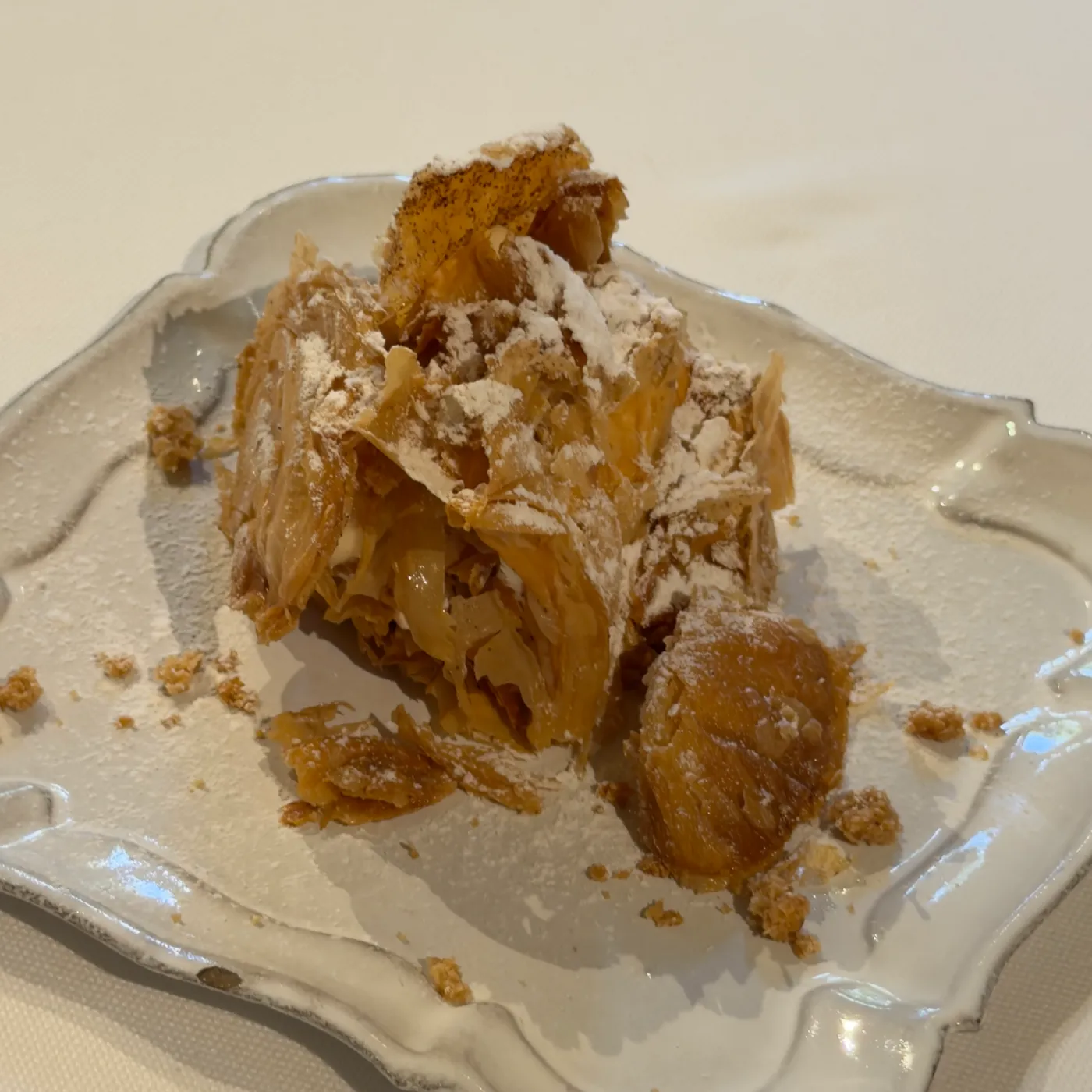
Coca de Llardons — Crackling Mille-Feuille with Cream
The kitchen made both the pork cracklings, or llardons, and the puff pastry. Once baked, the pastry was separated sheet by sheet, and each sheet returned to the oven to caramelise individually.
Those crisp layers were then rebuilt into a mille-feuille with cream and a little custard between them. A crumble made from the house cracklings was scattered over and around the pastry, followed by a mixture of spices, cinnamon and icing sugar. The familiar flavours of coca de llardons, with each pastry sheet given its own second baking.
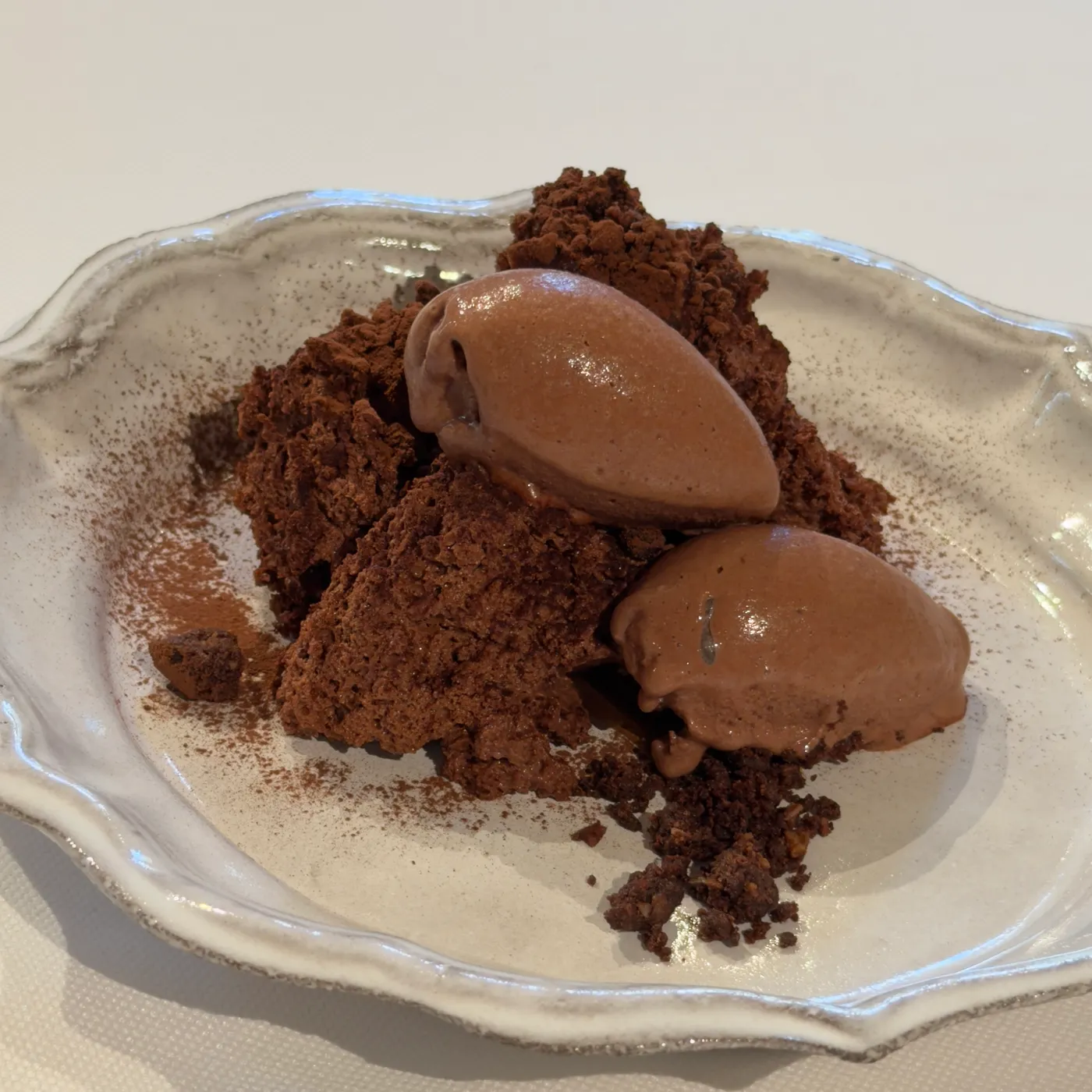
Xocolata — Chocolate in Different Textures
Chocolate appeared in several forms, with mousse at the centre of the dish. The emphasis was on its freshness and consistency, allowing the different chocolates to show their own character.
Our plate held rough, broken pieces and crumbs beneath two smooth chocolate quenelles. The different textures carried the dessert, keeping the attention on the chocolate itself.
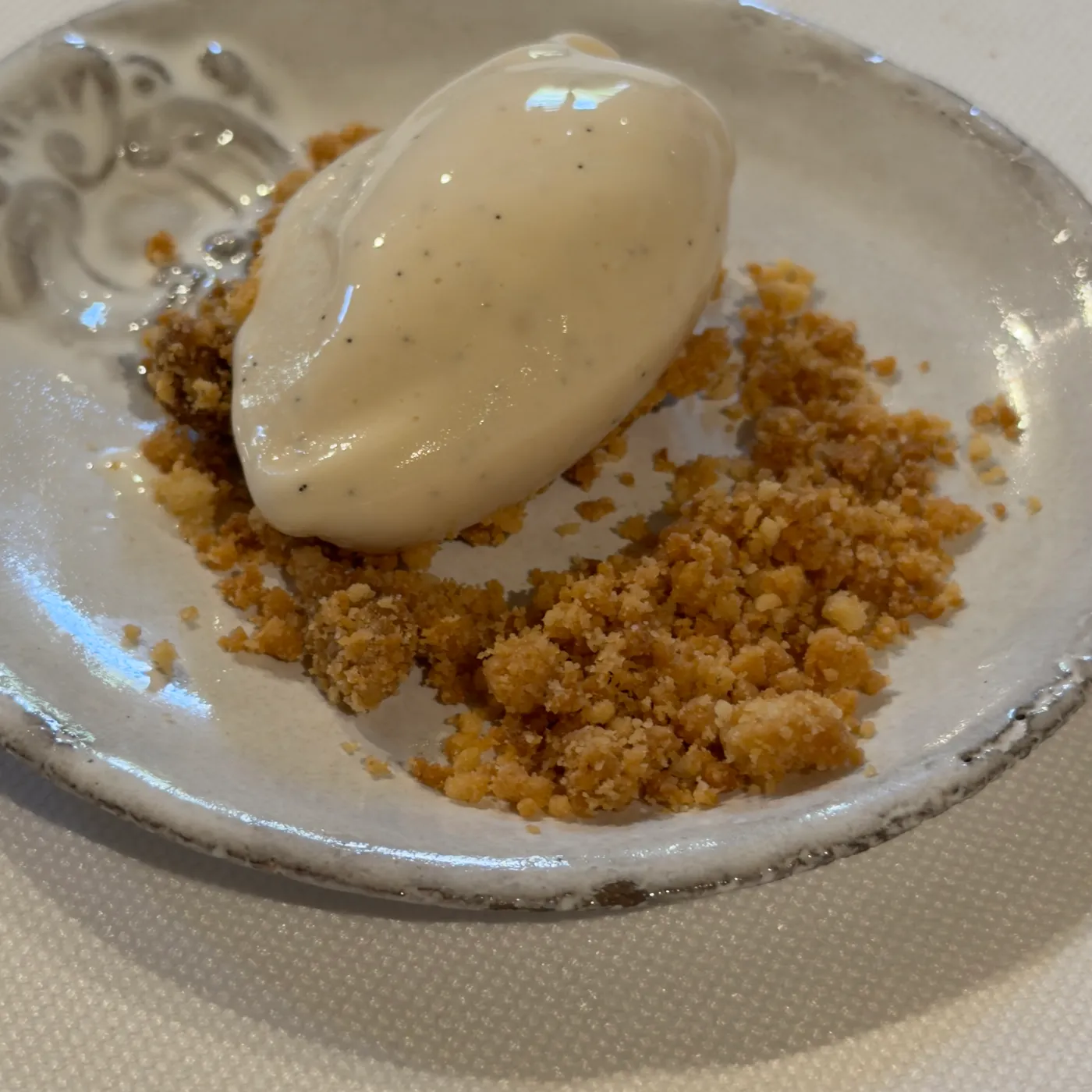
Gelat amb Crumble — Ice Cream with Crumble
A single pale quenelle of ice cream, dotted with tiny dark flecks, rested on golden crumble. The crumbs were scattered loosely across the plate, leaving the smooth scoop and its coarse, crumbly accompaniment separate until brought together on the spoon.
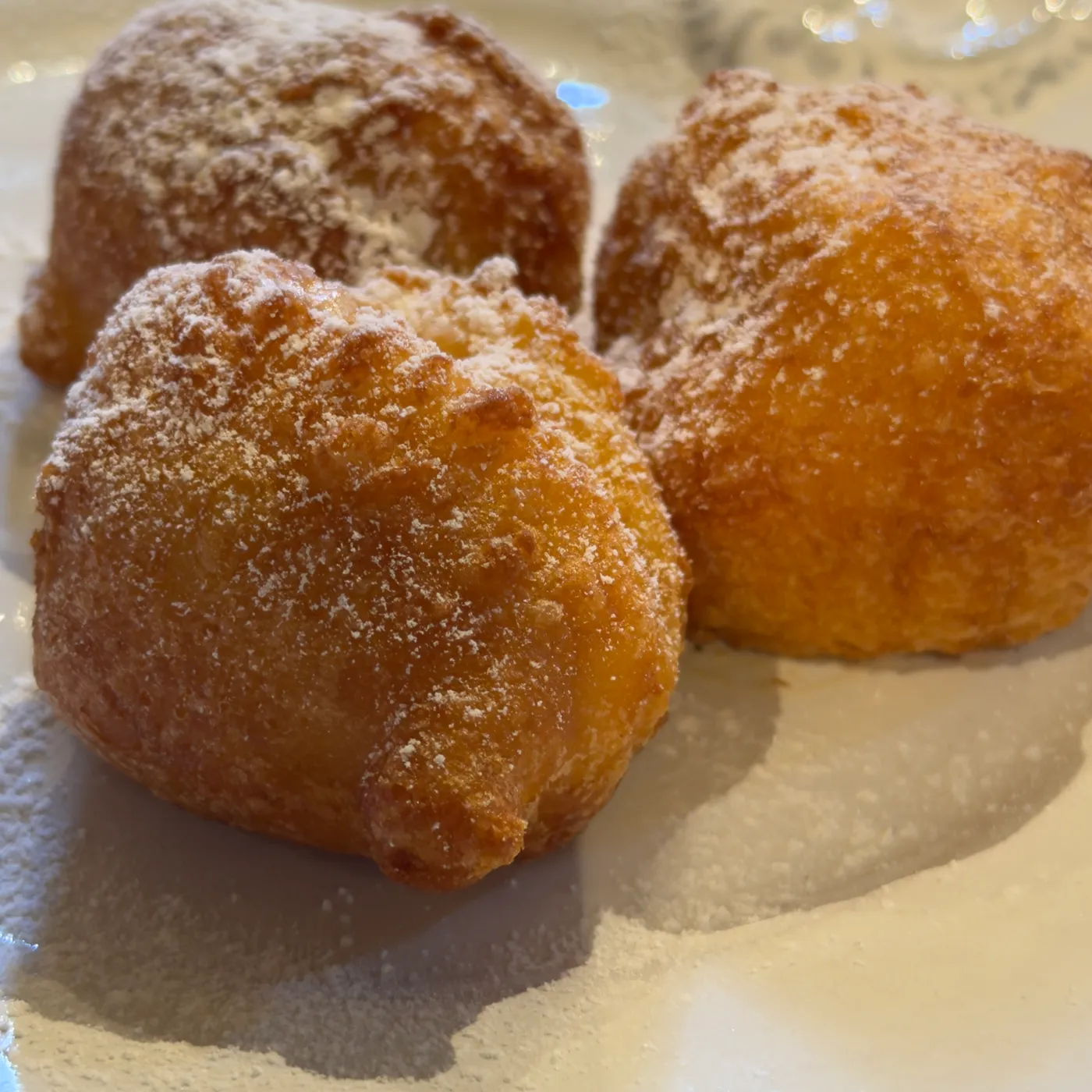
Bunyols de Vent — Cream-Filled Wind Fritters
Bunyols de vent means “wind fritters”: dough that swells as it fries, creating an airy interior. For Jordi, they illustrate an essential part of pastry-making—the ability to hold air inside a mixture.
The fritters were filled with a little cream while still warm, allowing the filling to loosen inside. The kitchen aimed to bring them to the table with a contrast of temperatures between fritter and filling. They arrived golden and puffed, their irregular surfaces dusted with icing sugar.
What we drank
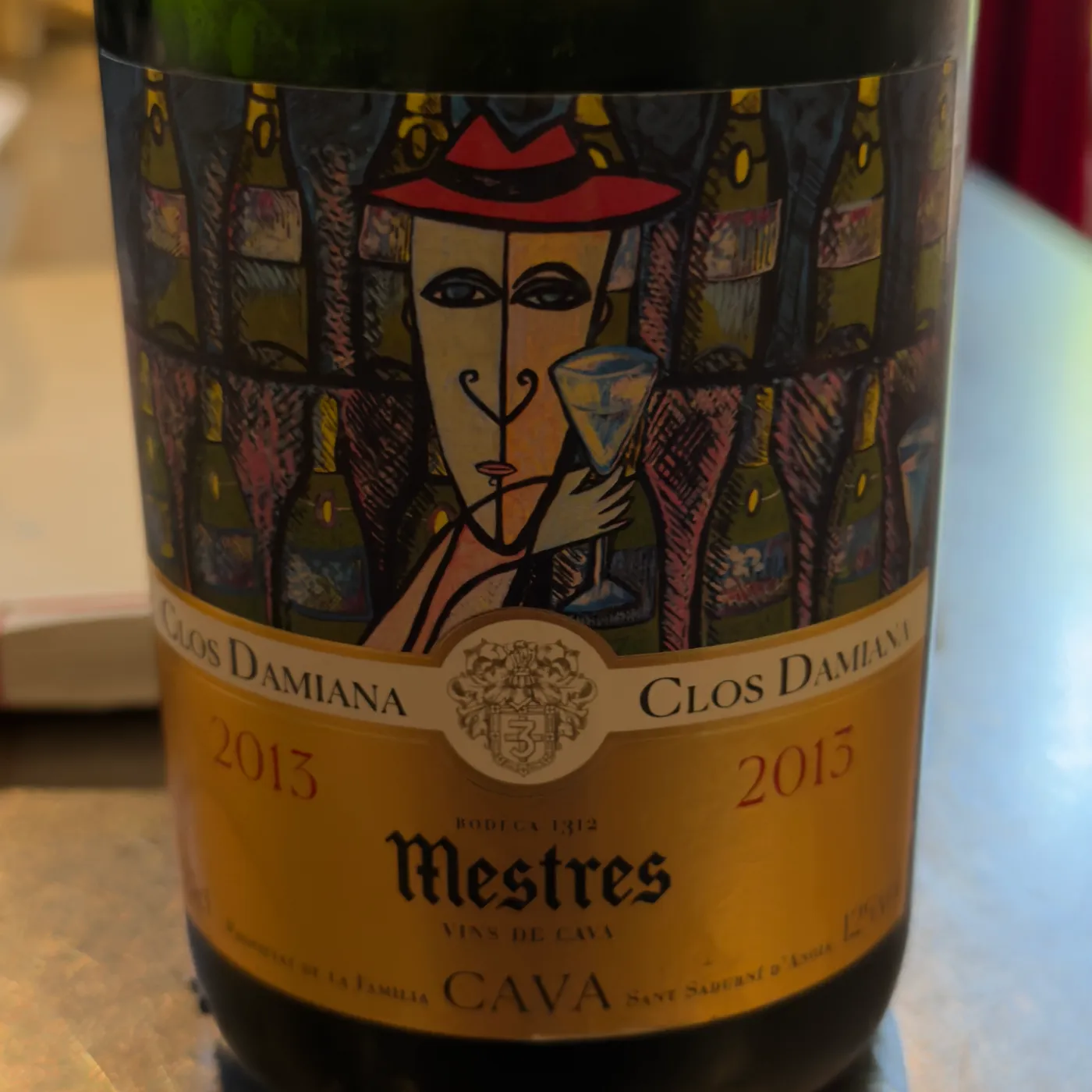
Mestres Clos Damiana — Cava
We began with Clos Damiana from Mestres in Sant Sadurní d’Anoia, a family whose connection with wine dates to 1312. Long ageing defines this cava: the base wine spends time in wood before its second fermentation and extended rest in bottle, allowing the lees to shape its texture and complexity.
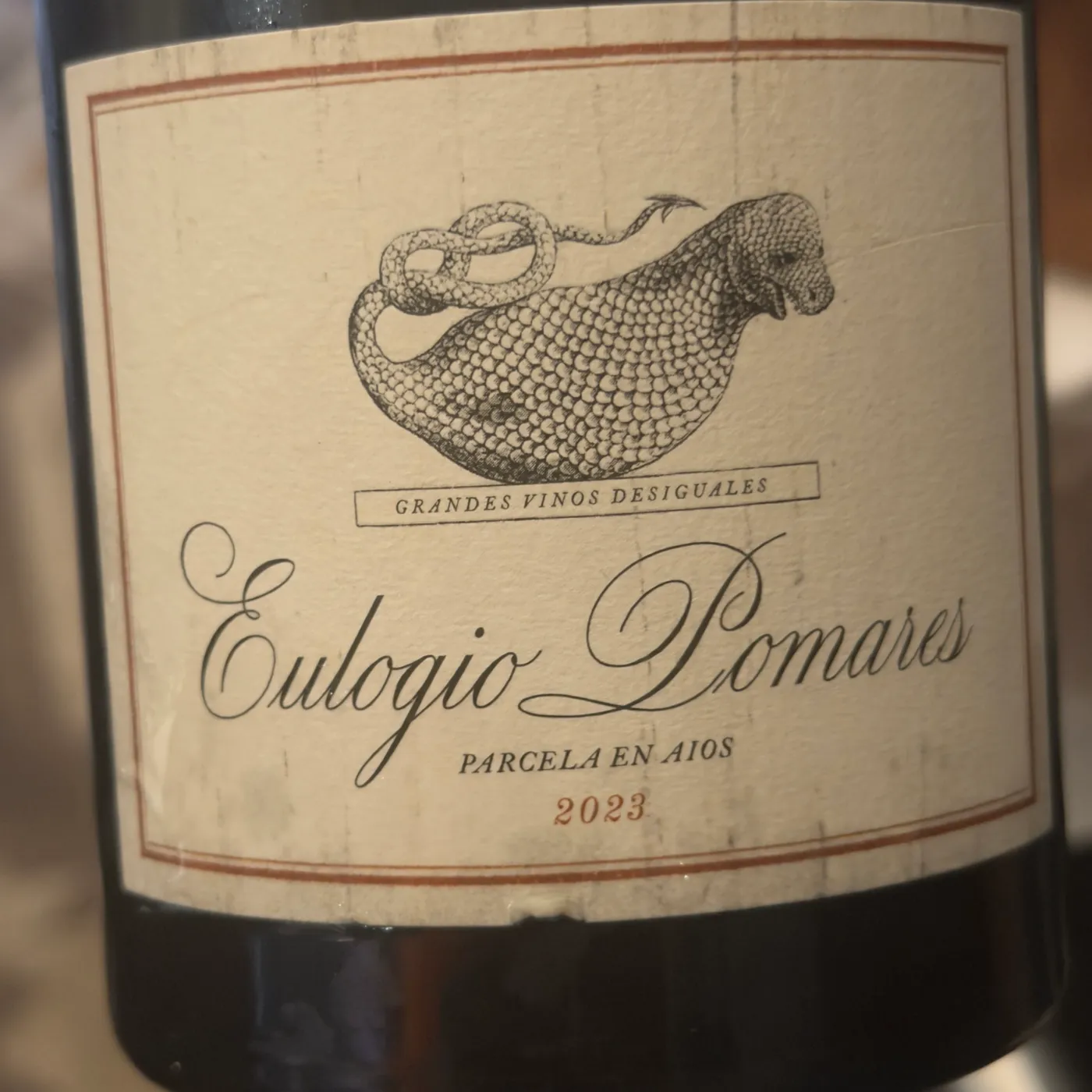
Eulogio Pomares Parcela en Aios 2023 — Albariño
Eulogio Pomares knew the beach at Aios long before he began making wine nearby. This Albariño comes from vines on weathered schist close to the Atlantic cliffs at Sanxenxo. Aged for eight months in French oak, the 2023 reflects his wish to recover a more structured, traditional style of Albariño.
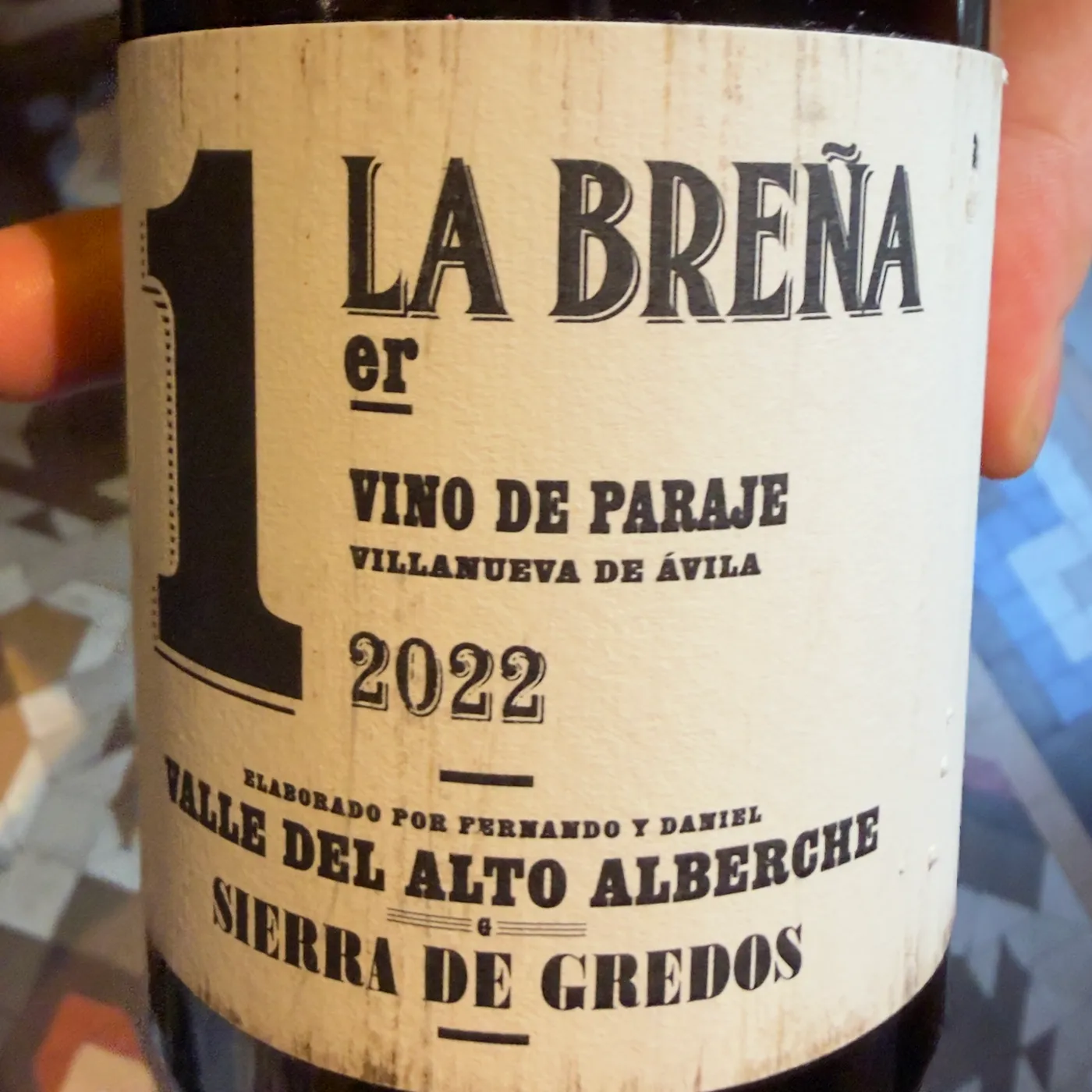
Comando G La Breña 1er 2022 — Garnacha
Our red was Garnacha from Fernando García and Dani Landi’s Comando G, in Villanueva de Ávila in the Sierra de Gredos. La Breña 1er draws on the site and nearby vineyards. Old vines grow at altitude on granitic soils, with gentle winemaking intended to preserve the character of their origins.