Diverxo
Thu, Oct 22, 2026
DiverXO
I really don’t know how many times I have visited DiverXO. Many. On so many of those visits, I left thinking, “That was the best meal I’ve ever had here.” Today was no exception.
Dabiz Muñoz opened DiverXO in Madrid in 2007. He remains the only chef named the world’s best by The Best Chef Awards for three consecutive years: 2021, 2022, and 2023.
But what I admire most is his refusal to play safe. Too many three-star restaurants seem to play defense, afraid of losing a star. Dabiz keeps taking risks. His restless temperament and seemingly endless creativity keep producing new dishes and entirely new menus. His cooking moves between Spain and Asia, often within the same mouthful. Three Michelin stars haven’t persuaded him to stand still.
For the first time, he also talked me through the thinking behind every dish in today’s meal.
What we ate
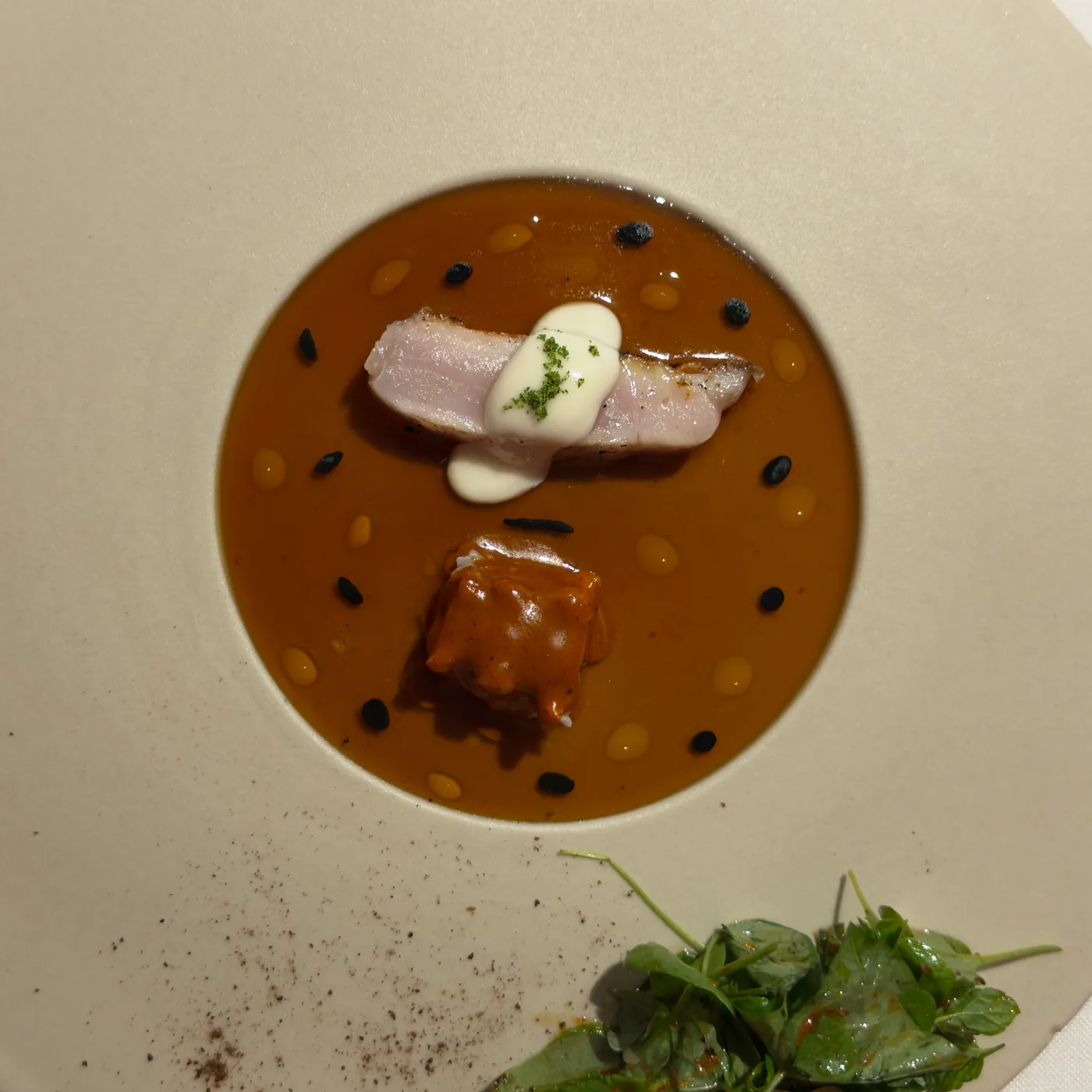
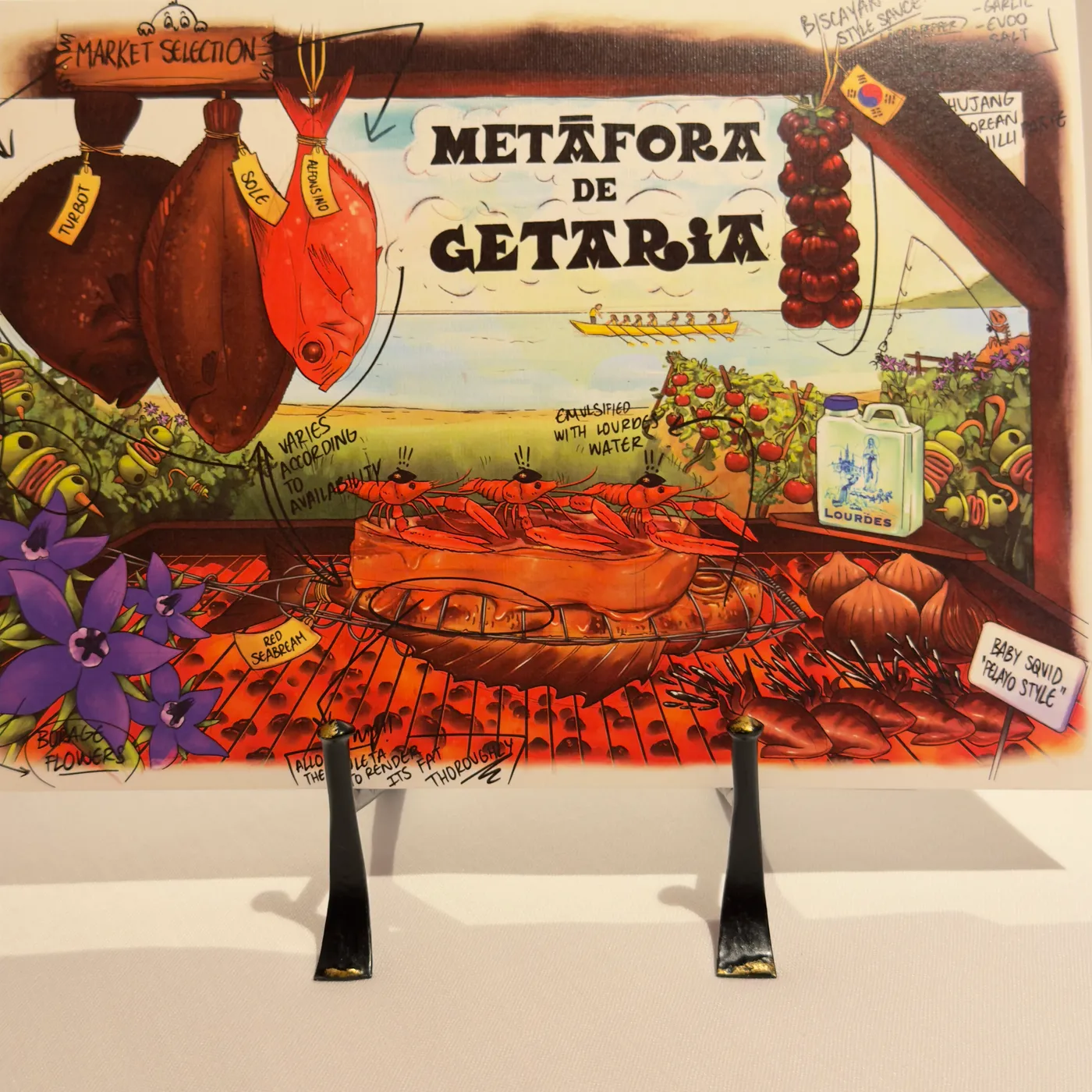
Metáfora de Getaria
Lunch began on the Basque coast, at least in Dabiz’s imagination. A consommé of baby squid and deeply caramelized onion recalled chipirones a lo Pelayo. Cantabrian langoustine met the embers and a Biscayan sauce of choricero peppers. Beside it, virrey, or alfonsino, was cooked gently on its skin until crisp, then dressed with an emulsion of its own bones, like a pil-pil. Nam prik pao and a Thai-dressed herb salad took the seasonings further east. The server suggested the salad between bites of fish, shellfish, and concentrated squid broth, to freshen the palate.
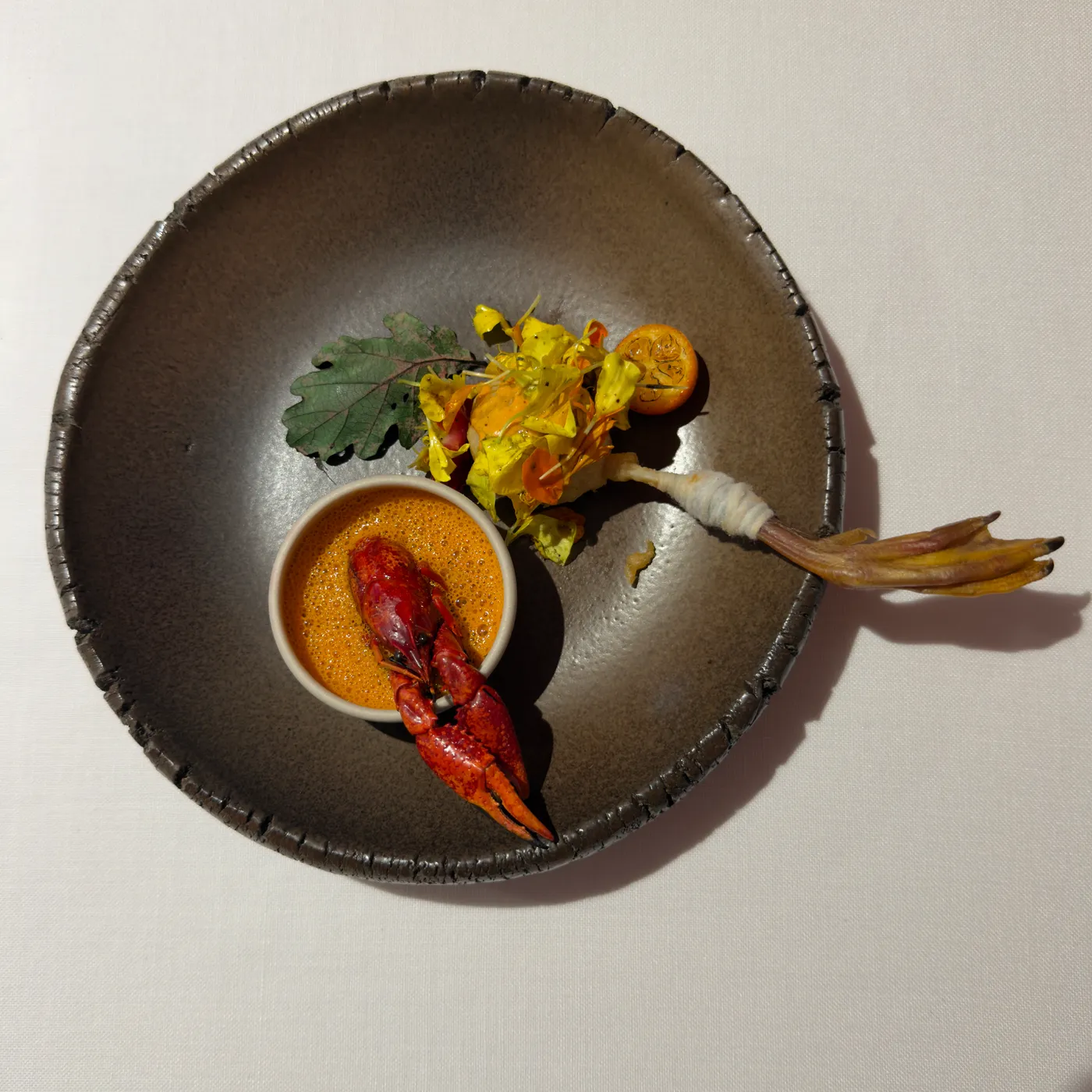
Wild duck nugget and crayfish chupe
Dabiz described the landscape before the food: Pyrenean rivers where wild ducks come to drink, and crayfish live beneath the surface. His duck became a hand-chopped, spiced nugget, fried in tempura and presented on its own foot. Alongside came a crayfish chupe, a rich, creamy soup that carried the other half of that landscape. Flowers and a squeeze of calamondin brought fragrance and acidity. We were encouraged to move between the crisp duck and the chupe, sipping the juices from the shell rather than eating it. A riverbank became an unexpected surf and turf.
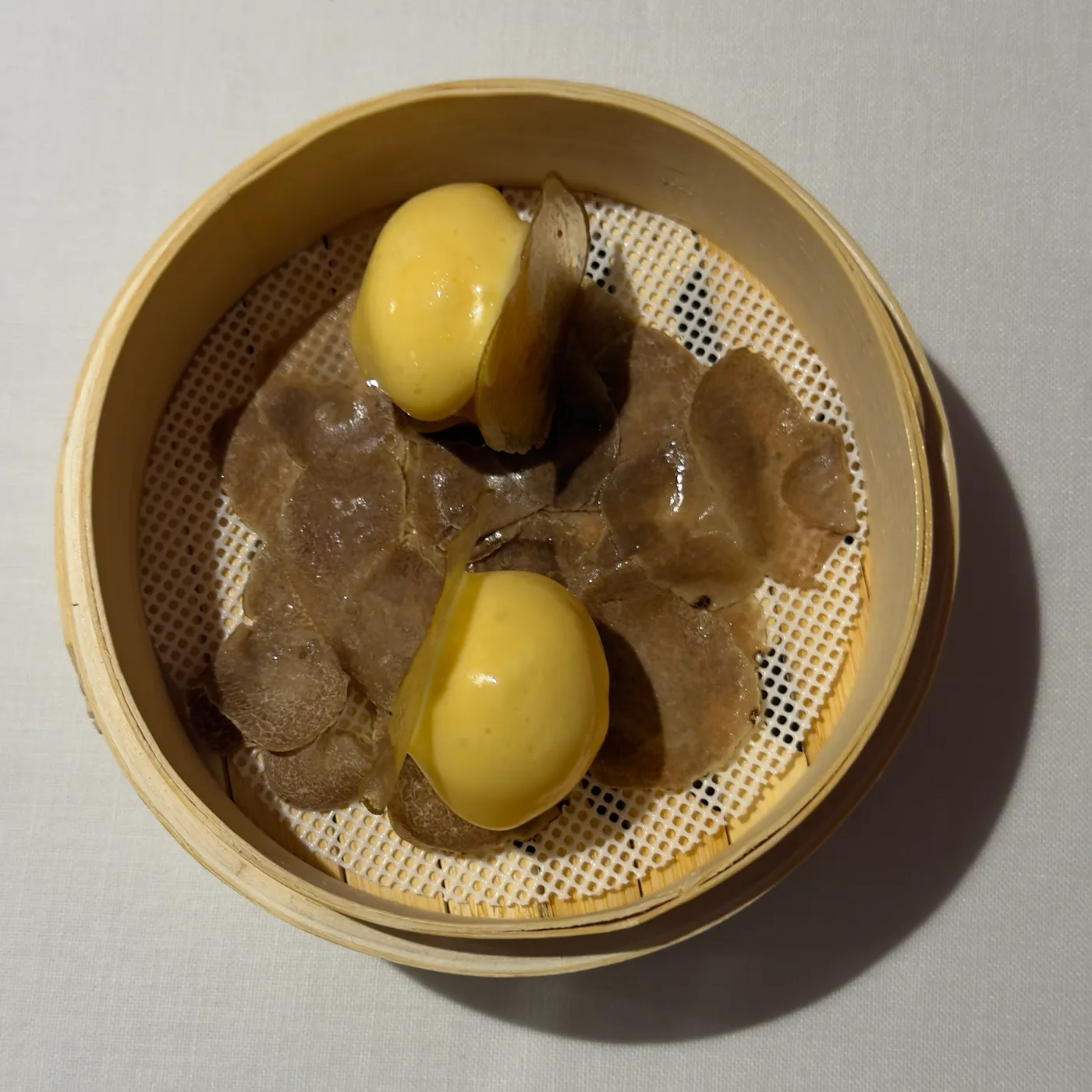
Steamed tortilla de Betanzos with white truffle
The runny center of a Galician tortilla, rebuilt inside a dumpling. Potato and onion formed the filling, with a hot tortilla foam recalling the barely set egg that makes a Betanzos omelet so particular. White truffle, among the season's first, was warmed briefly in the steamer. Dabiz’s instructions were wonderfully direct: eat the dumpling promptly, in one bite, then pick up the remaining truffle with your hands. The bamboo basket belonged to dim sum; the memory inside it belonged to Galicia.
Palamós red prawn: steam and embers
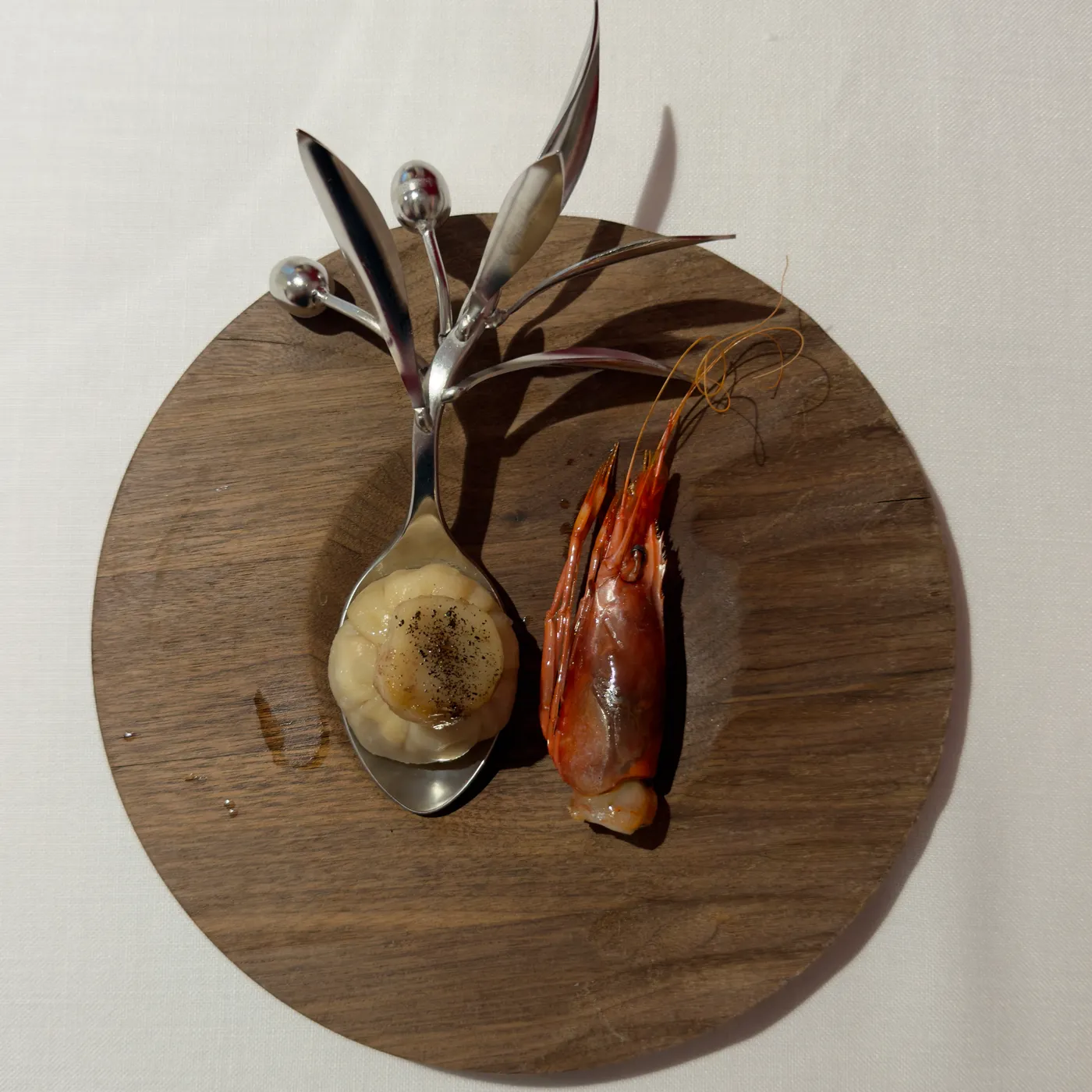
Two ways of getting everything from a red prawn. Its flesh and a consommé made from the shells filled a xiaolongbao, topped with bone marrow and scented with Lapsang Souchong. The dumpling was meant to be eaten whole with the spoon, letting the liquid burst in the mouth. The head had spent twelve to fifteen minutes well above gentle embers, gathering charcoal flavor without losing its juices. Dabiz recommended the dumpling first, then picking up the head and sucking it clean. Allspice, myoga, and miso added detail, but the prawn provided both substance and broth.
Palo Cortado shrimp and Korean blue crab
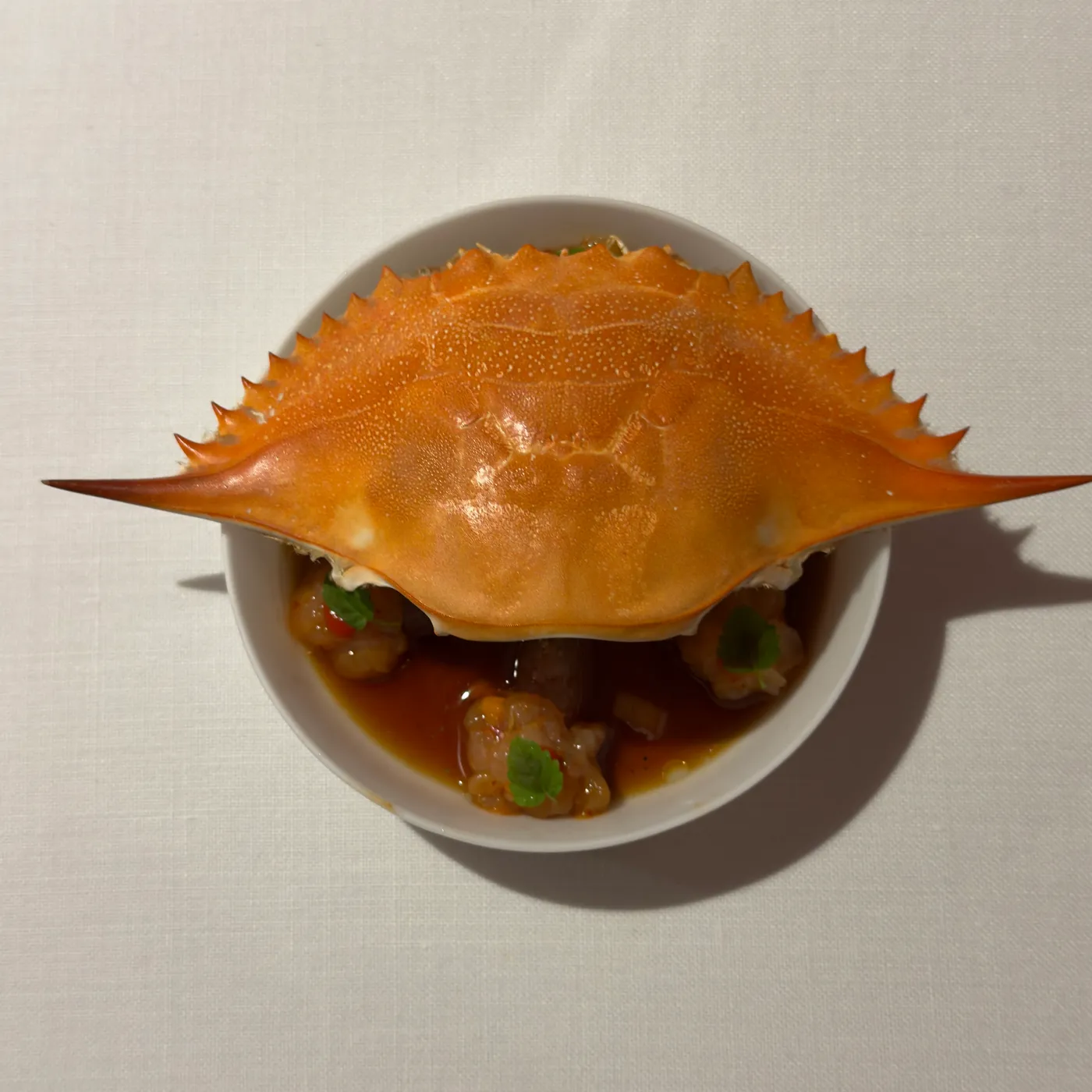
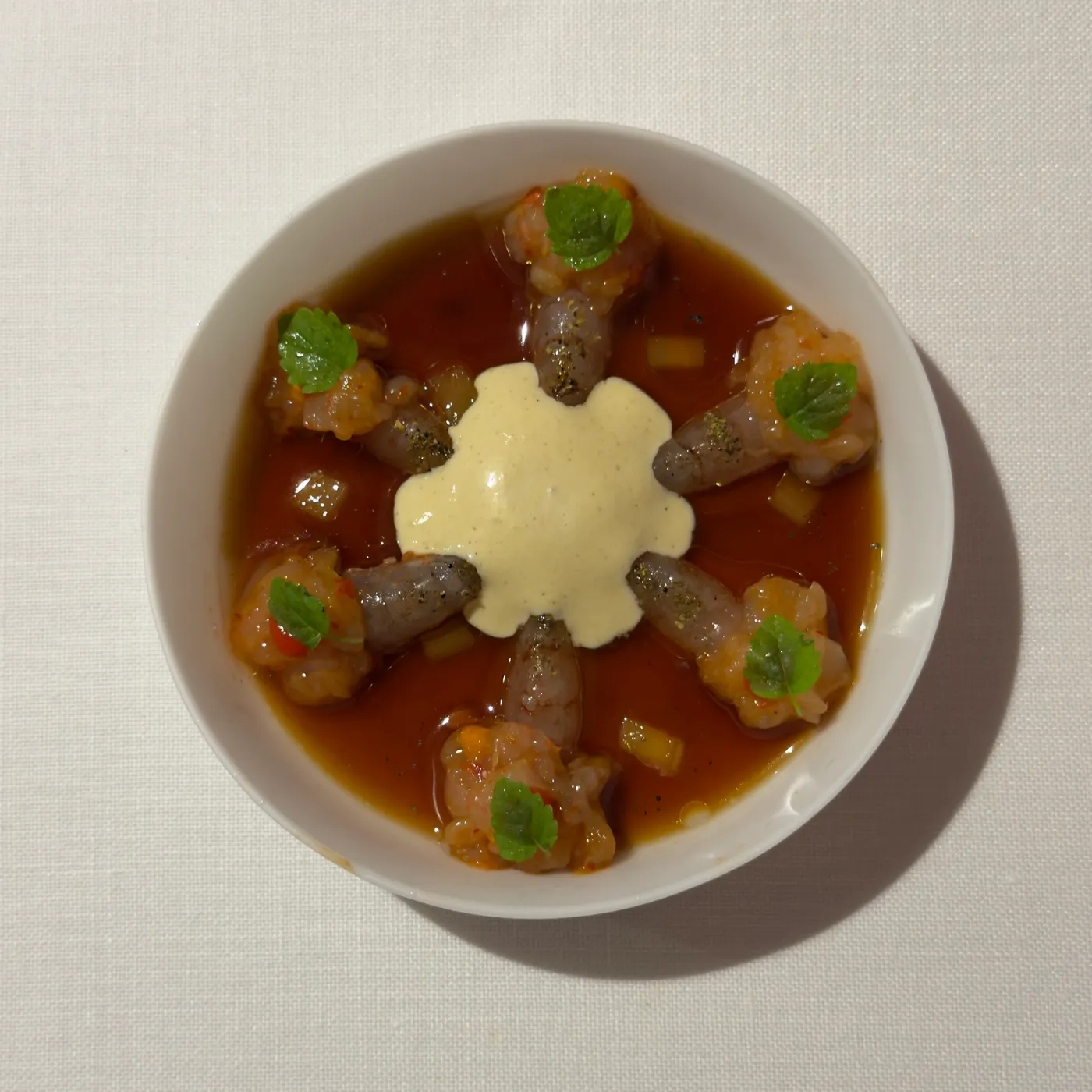
The crab shell arrived as a lid, hiding Galician shrimp “drunk” in Palo Cortado and blue crab prepared in the style of yangnyeom gejang. The shrimp and crab were marinated separately, their seasonings becoming part of the sauce. Chili and garlic met the wine’s savory depth; a finish of hot oil released the aromas. In the center sat a warm, gyoza-flavored mayonnaise. Green Sichuan pepper added a citrus perfume, while pickled celery brought another sharp note. The advice was to gather a little of everything in the same spoonful, rather than dismantle the dish into separate tastes.
Fish maw, Dong Po pork and a spring roll
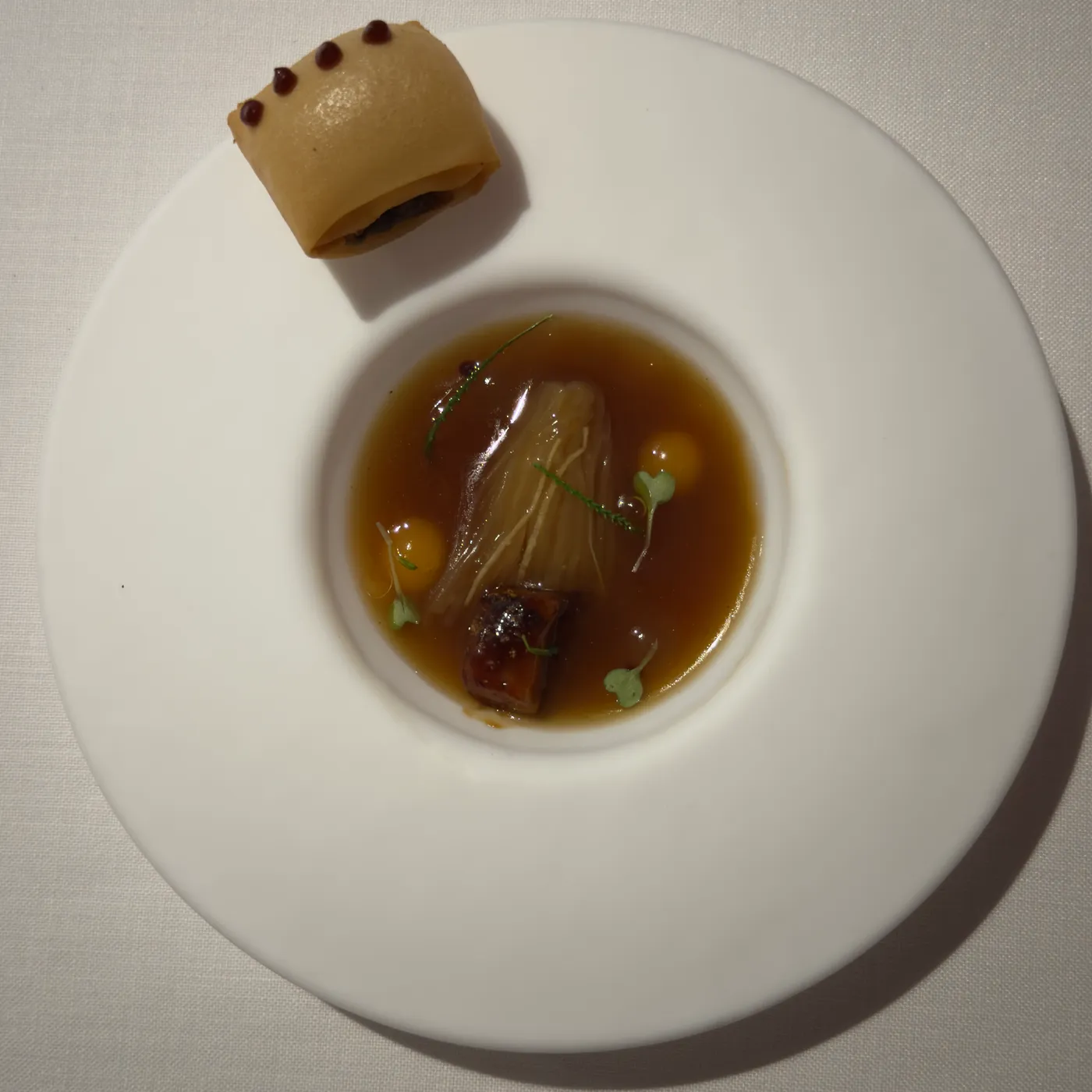
Fish maw is the swim bladder, prized in Chinese cooking for its gelatinous texture and ability to absorb a broth. Here, grouper’s swim bladder was cooked three times in hen stock, then joined by Dong Po-style pork belly and little spheres flavored with shiitake and chistorra. A spring roll rested on the rim, filled with pickled vegetables and fermented crab paste. We began with the broth and its rich, yielding pieces, then finished with the roll in our hands. Its crisp wrapper and sharp filling provided a very different last mouthful.
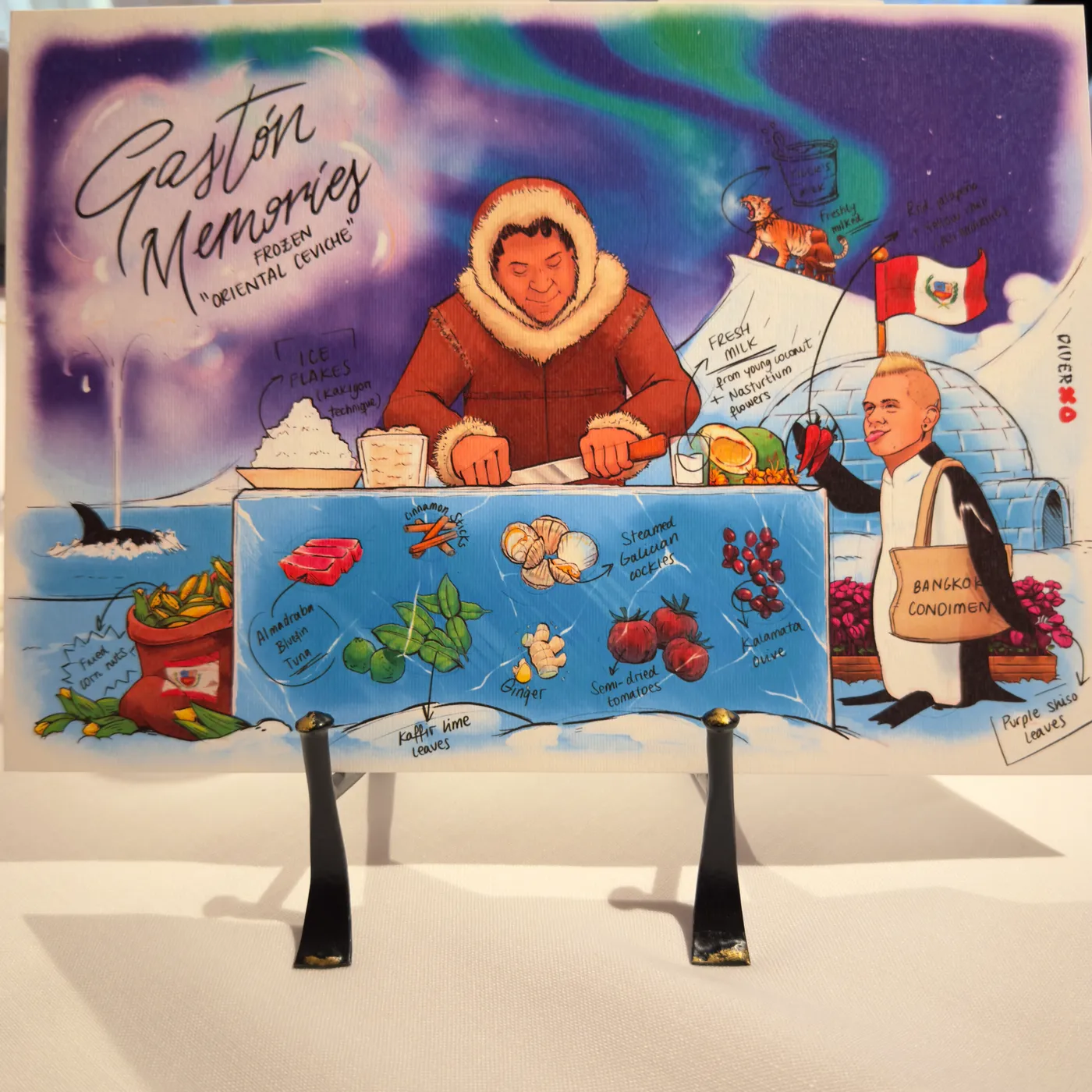
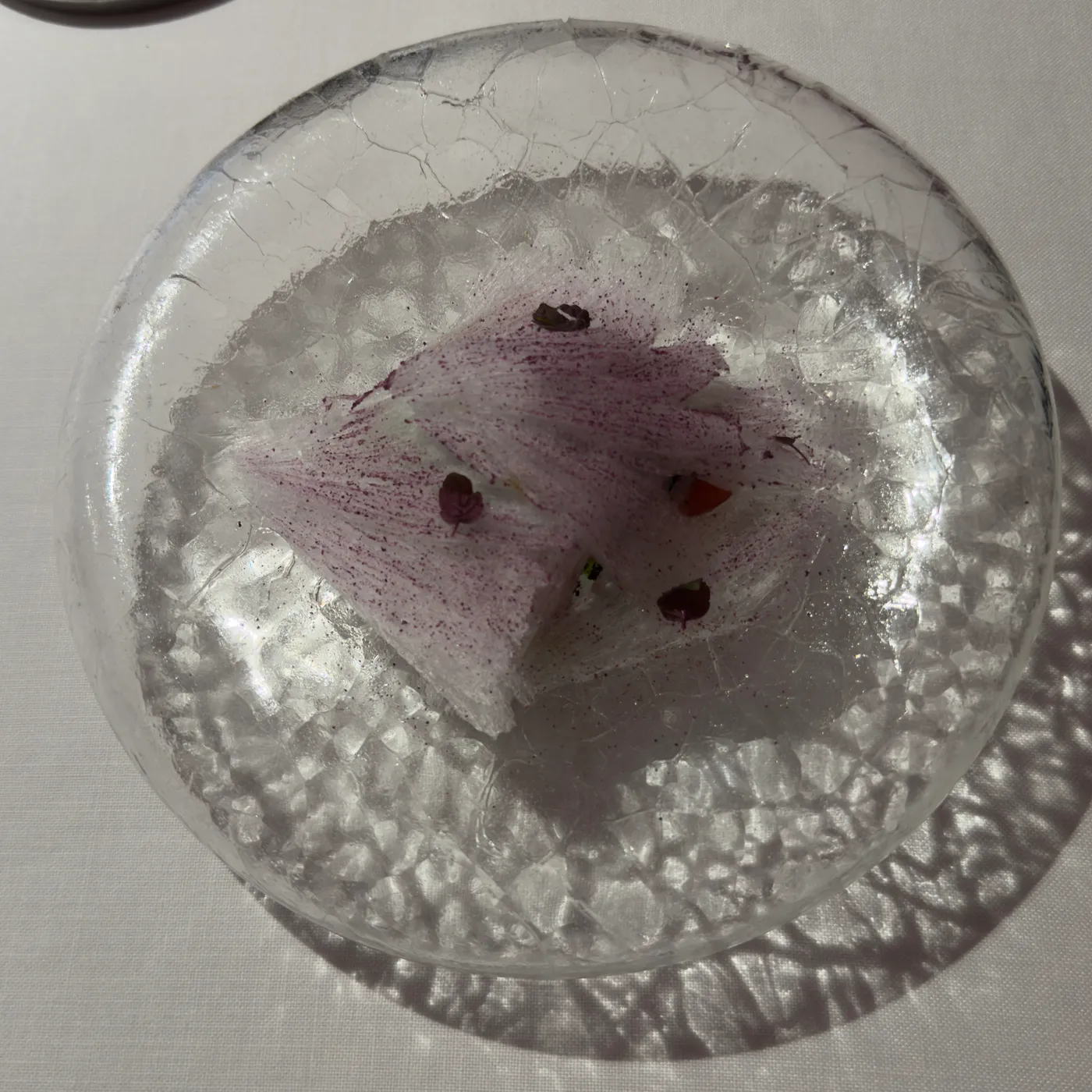
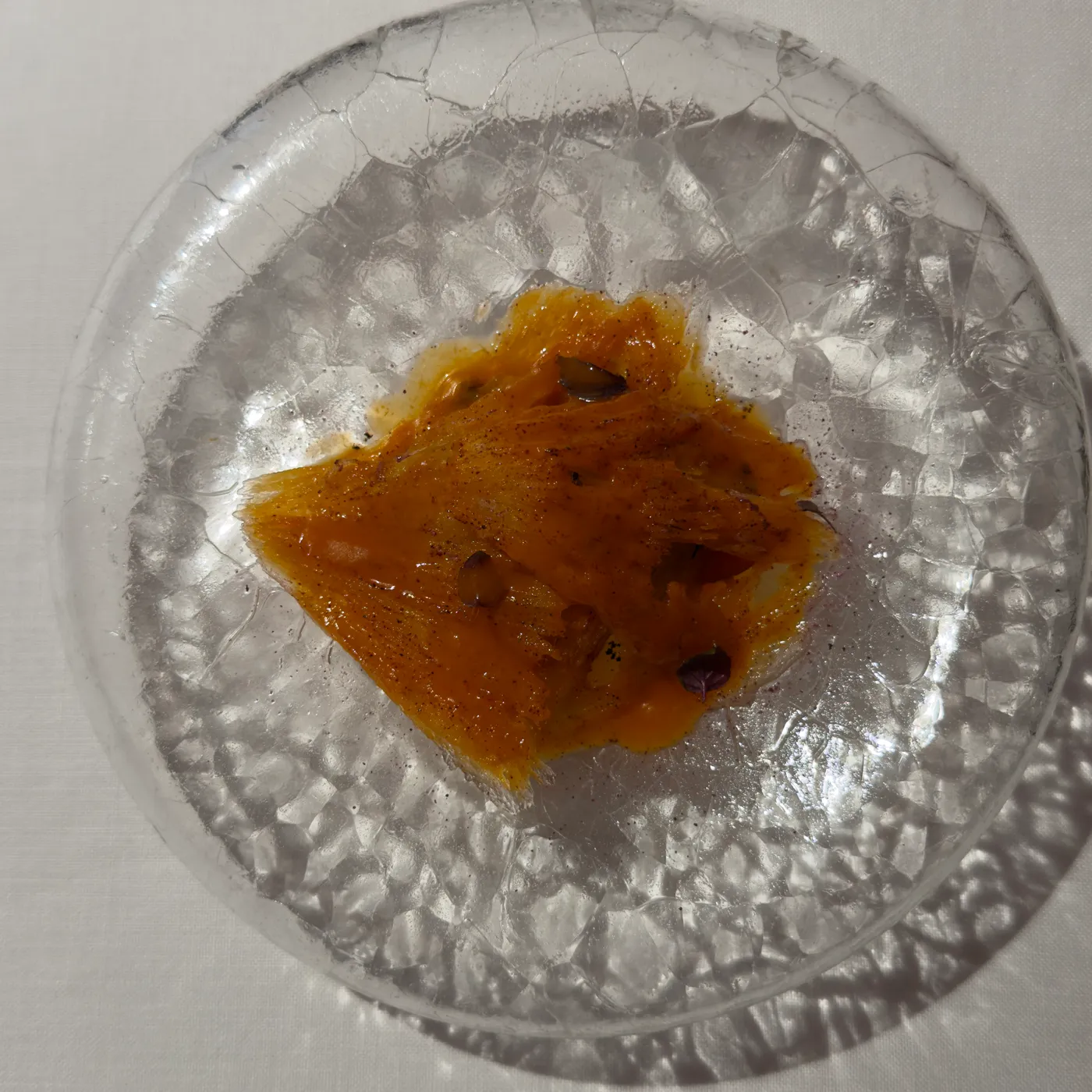
Gastón Memories: frozen oriental ceviche
A mound of kakigōri-style ice concealed tuna and Galician cockles, with Kalamata olives and semi-dried tomatoes underneath. Leche de tigre supplied the Peruvian foundation, with coconut, ginger, and makrut lime among the Asian accents shown on the card. The important instruction was to leave the ice alone. We ate from the bottom upward, bringing the fish and dressing through the flakes without stirring them into a slush. That way, the ice kept its delicate texture until it reached the mouth. A ceviche that depended on how we used the spoon as much as what was in the bowl.
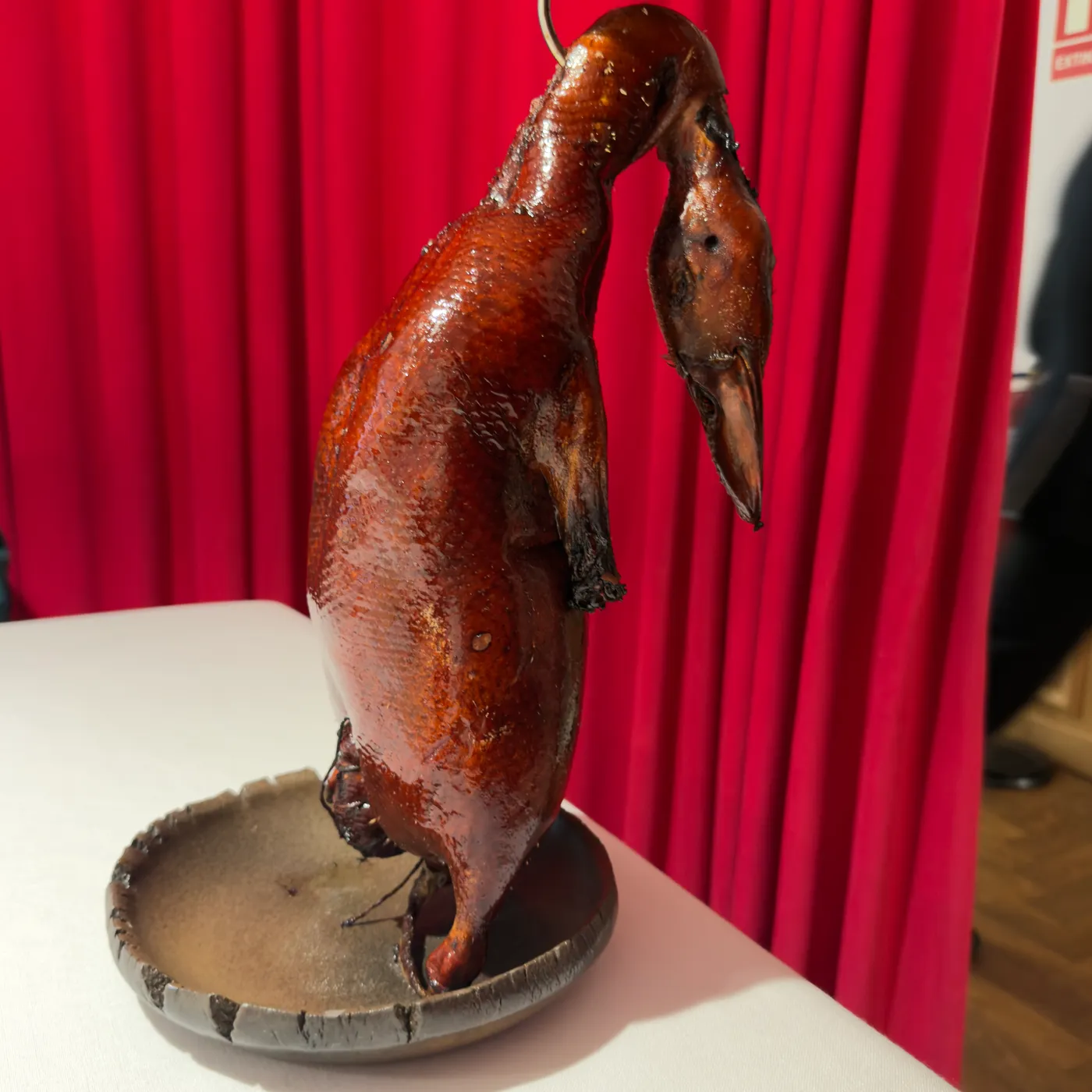
Peking duck in two parts
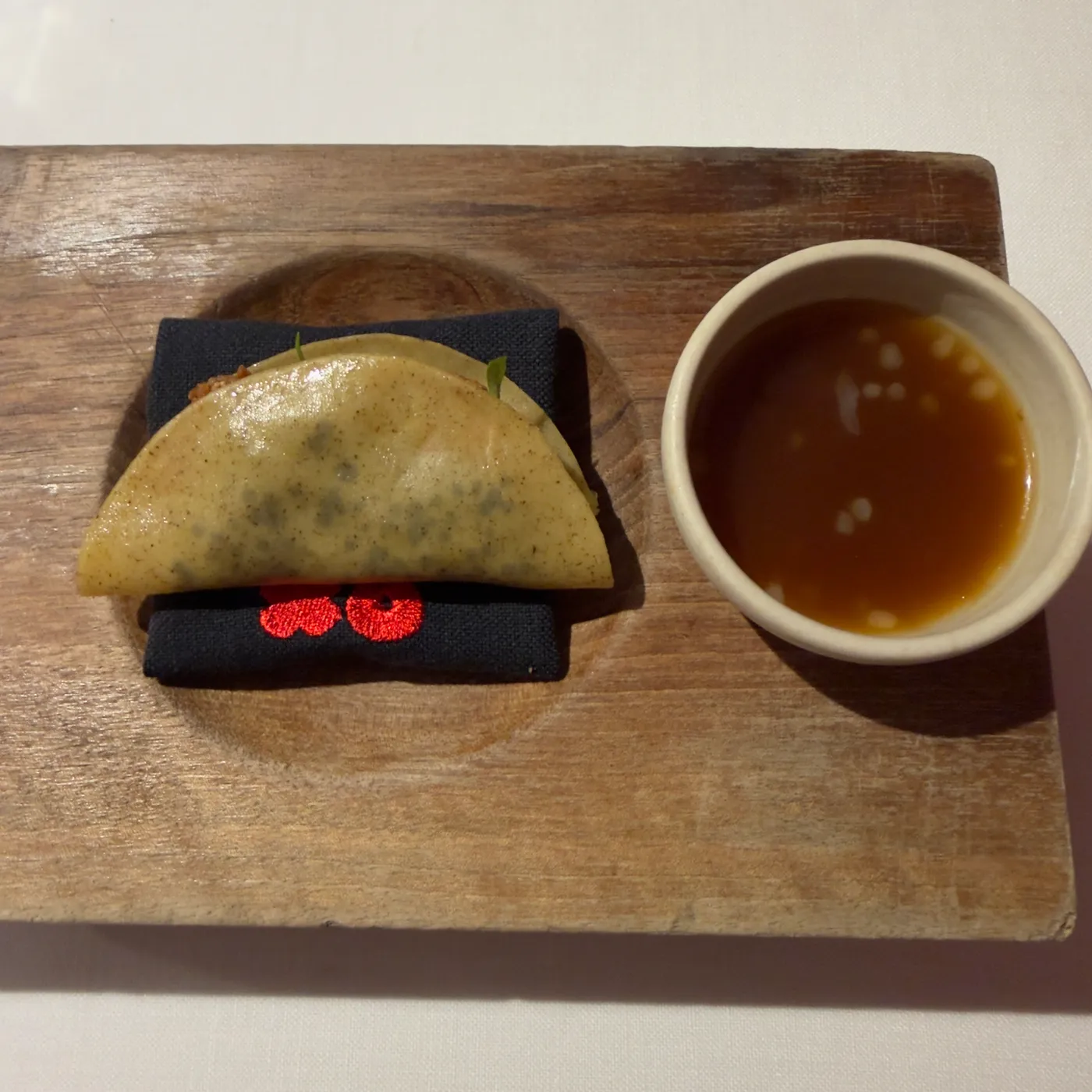
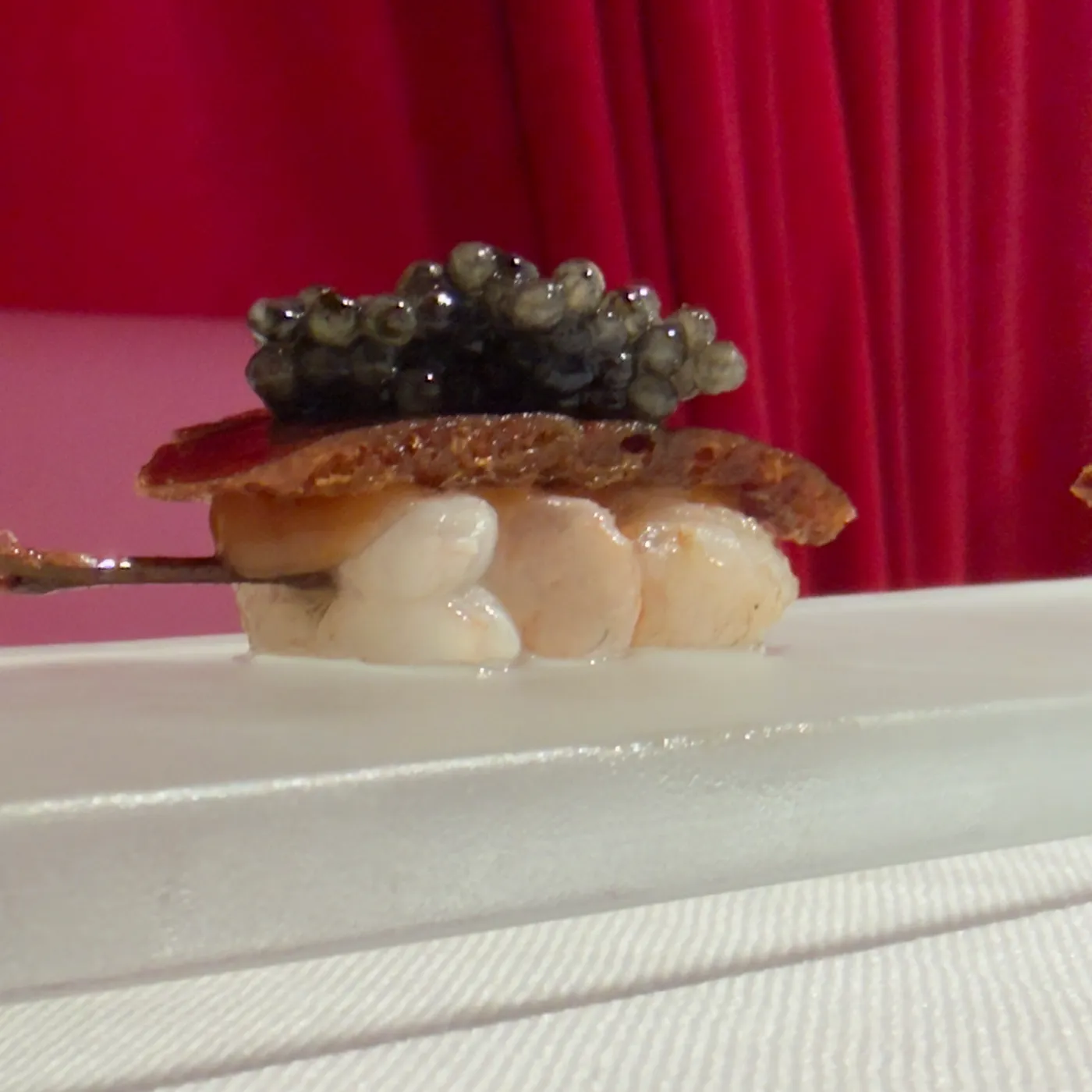
The lacquered duck appeared whole before returning in two quite different bites. A steamed crêpe held crisp, puffed duck tongues, homemade hoisin, pickled cucumber, and caviar warmed over charcoal. A cup of consommé used the bones, with Chinese spices and jellyfish. Then came a skewer of gently warmed quisquilla from Motril, guava miso, more charcoal-roasted caviar and a sheet of puffed duck skin. Dabiz compared that skin to a torrezno: expanded and brittle, then disappearing as we ate it. The crêpe carried the familiar idea of Peking duck. The shrimp skewer took its lacquered skin somewhere much less familiar.
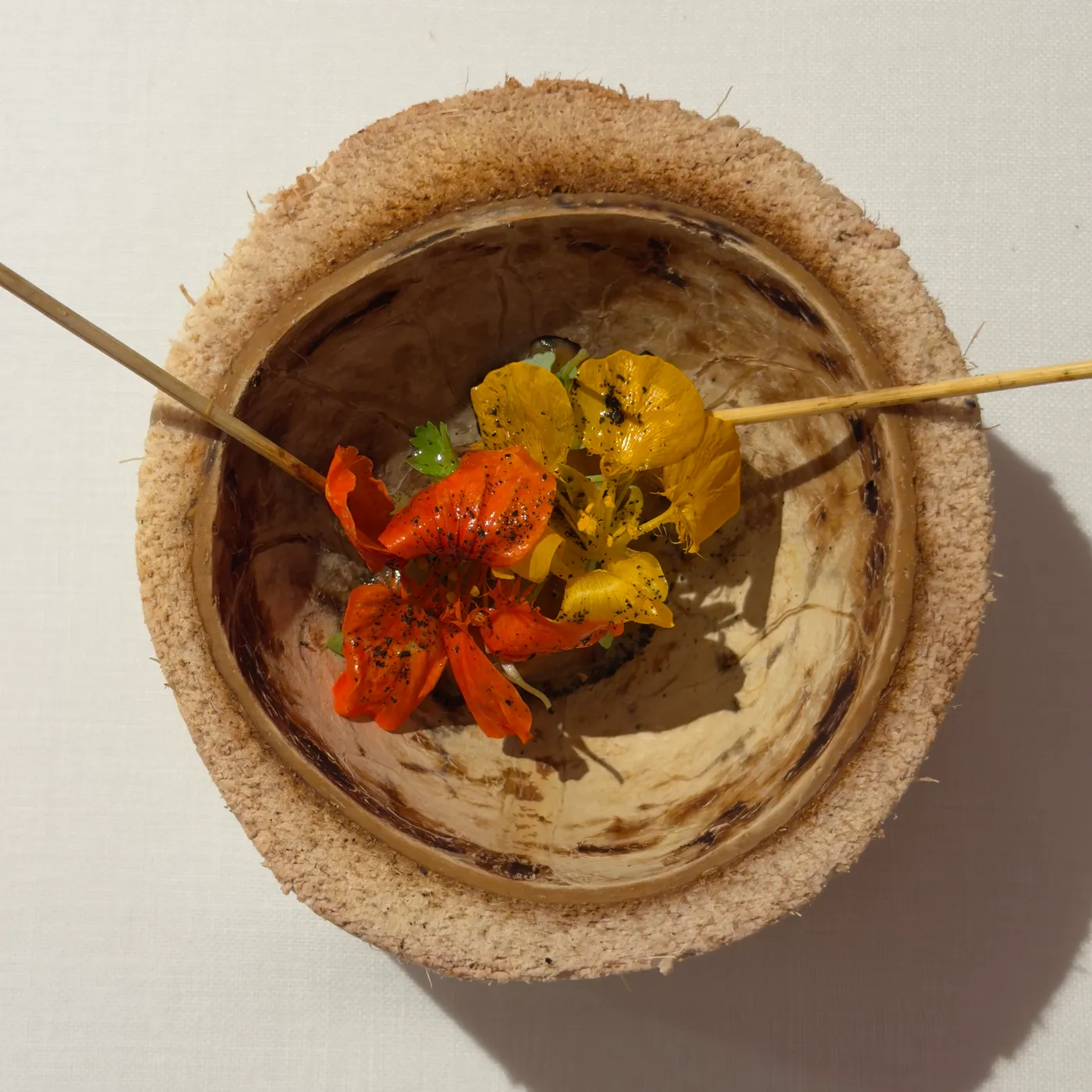
This is not a pad Thai
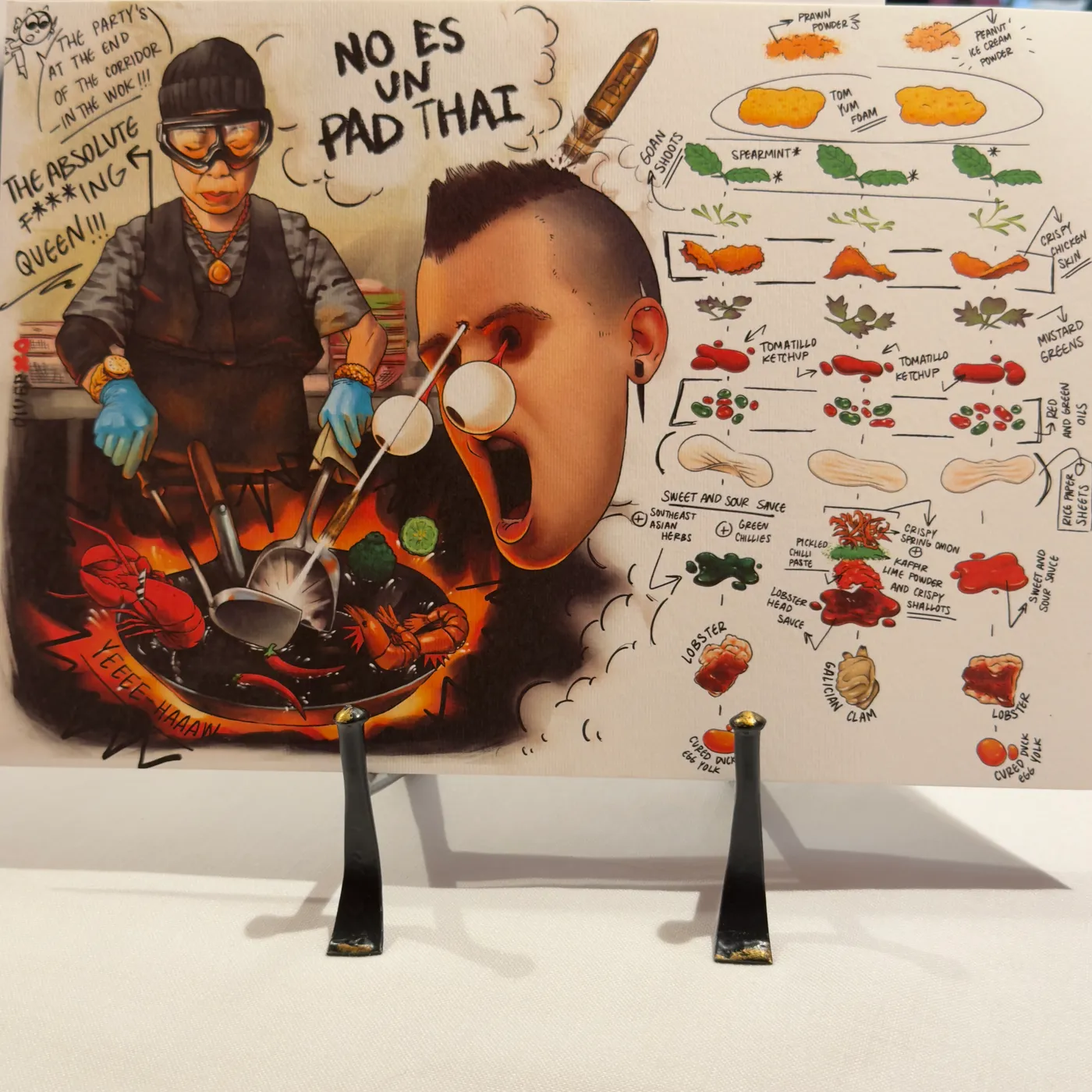
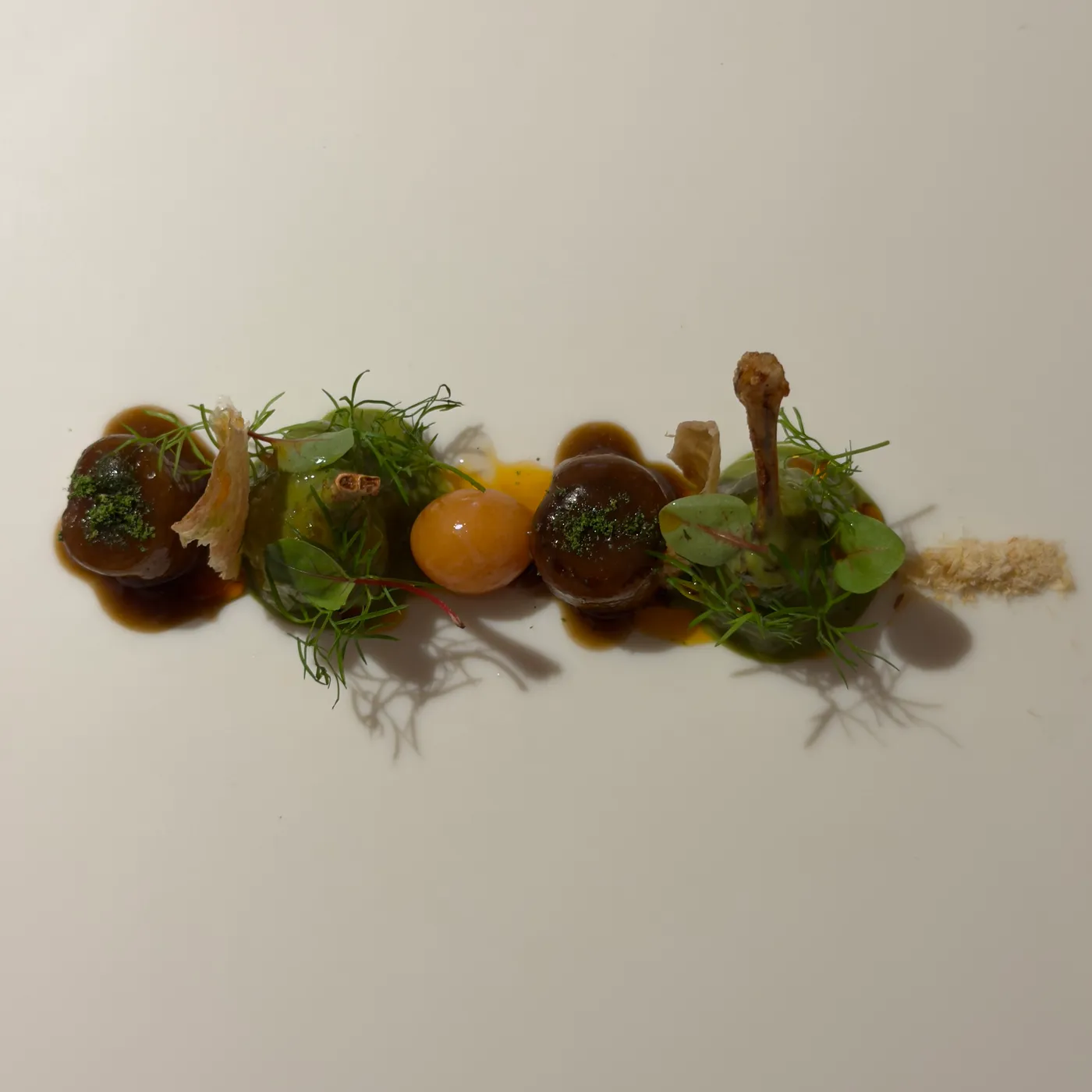
The noodles were rolled sheets of steamed rice, cheong fun, finished in the wok with tamarind and roast-chicken sauce. Around them came crisp chicken skin, frog legs dressed with a Thai green sauce, and a roasted embryonic egg yolk. Coconut arrived separately in two forms: frozen powder and skewers of young coconut flesh grilled yakitori-style. Their satay was made with kikos, Spanish fried corn, rather than peanuts. We could alternate between the warm, savory plate and the coconut as we pleased. The title was fair warning: recognize the idea of pad Thai, then let go of the expected recipe.
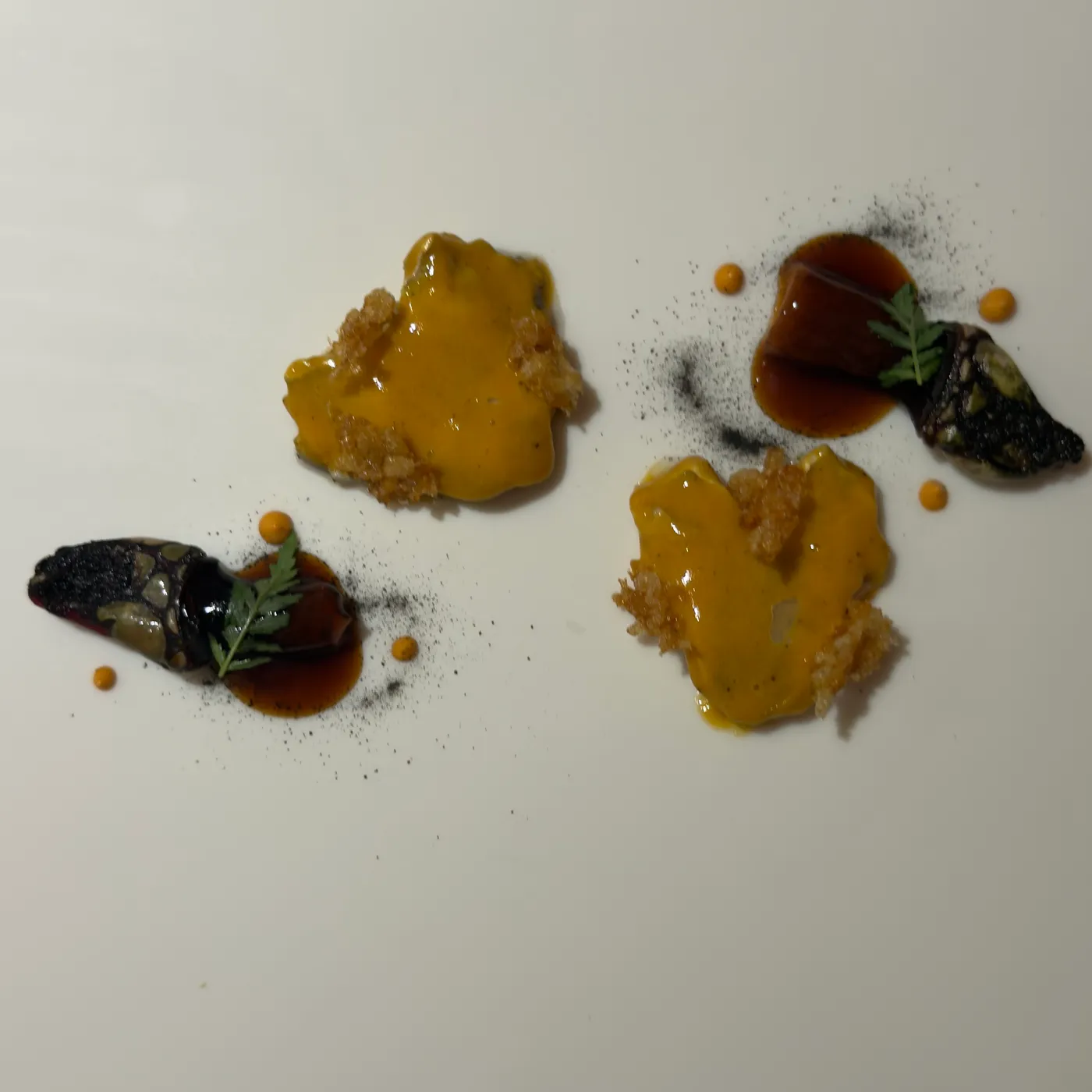
Hake kokotxas, salted duck yolk and percebes
The duck egg was shown to us before the dish arrived. Its yolk had been salt-cured, dried, and powdered, then worked gently in a wok with paprika oil until it became a creamy coating. Dabiz used that emulsion to confit hake kokotxas, the tender throat pieces. Galician percebes were briefly fried in olive oil rather than boiled, and their stock joined wok-cooked vegetables in a reduced chop suey jus. Crisp fried egg white supplied the edges of a familiar fried egg. A Chinese way of preserving yolks had become the starting point for a completely different treatment of Basque seafood.
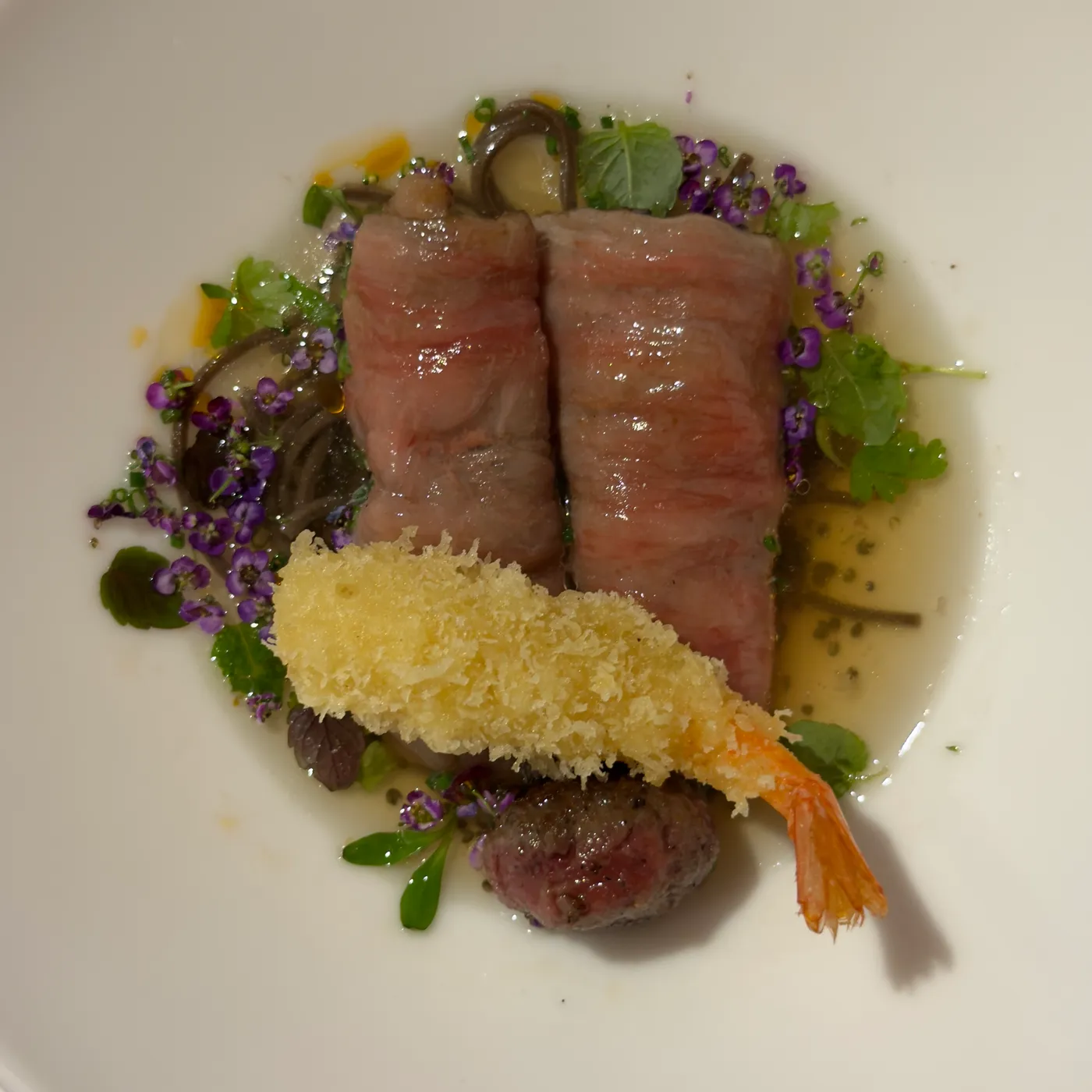
Bún Chả Kagoshima
Homemade buckwheat soba sat in a lightly acidulated consommé of charcoal-grilled tomatoes. The tomatoes were grilled, blended, frozen, and slowly strained, leaving a clear broth with their smoky flavor. Kagoshima wagyu, grilled on one side, lay alongside a small charcoal-grilled burger of Galician blonde beef and marrow. A Huelva white prawn in tempura crossed the bowl. Beneath it were pickled Japanese cucumber, chili oil, and tonburi, the tiny seeds sometimes called mountain caviar. Ten aromatic herbs, including shiso, mint, and bronze fennel, kept the beef and prawn company. There was a great deal going on in that bowl.
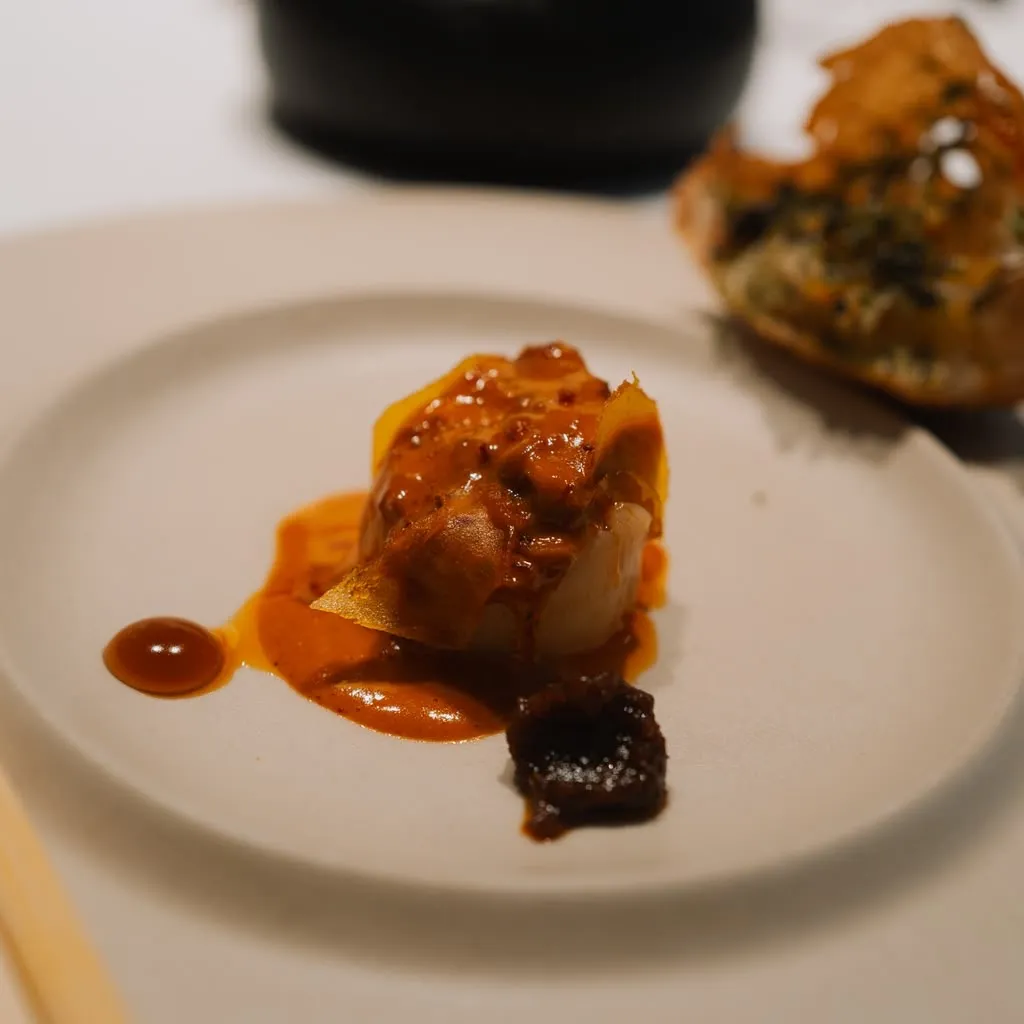
Salsa XO: Cantonese and Iberian
XO sauce has occupied Dabiz for almost twenty years, and this was a chance to taste the conversation between its Cantonese origins and his Iberian interpretation. A Galician scallop was cooked with wine and soy, dried like conpoy, then rehydrated to a soft, mousse-like texture. Hen and white-prawn velouté, reduced Manzanilla, black garlic, and parsley helped build the Iberian version. The Cantonese sauce retained dried seafood, Jinhua ham, and Shaoxing wine. We began with the scallop, then spooned the traditional XO onto crisp pizza bread and ate it with our hands. Two different routes to a deeply savory mouthful.
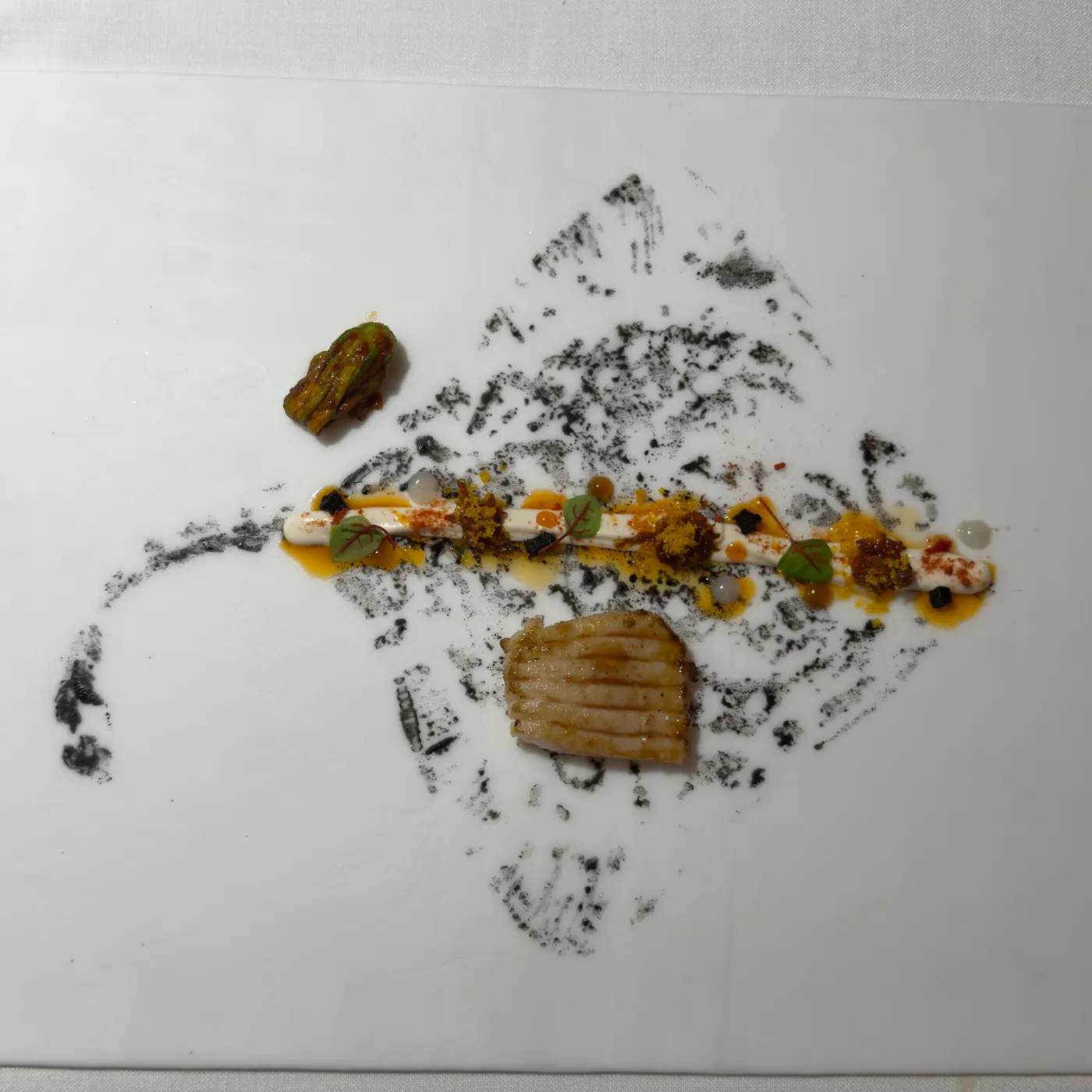
Iberian XO and stingray
For the next Iberian XO, Dabiz replaced the Chinese ingredients with Mediterranean ones. Jabugo ham, bottarga, pimentón de la Vera, and black garlic built the seasoning. Stingray was cooked in banana leaf with hare garum, then served beside a line of those concentrated flavors and a pumpkin flower. The method allowed us to taste the fish against different combinations of the sauce’s ingredients. After the scallop and the Cantonese version, this was a further step into Dabiz’s own XO, with cured ham and fish roe supplying much of its savory depth.
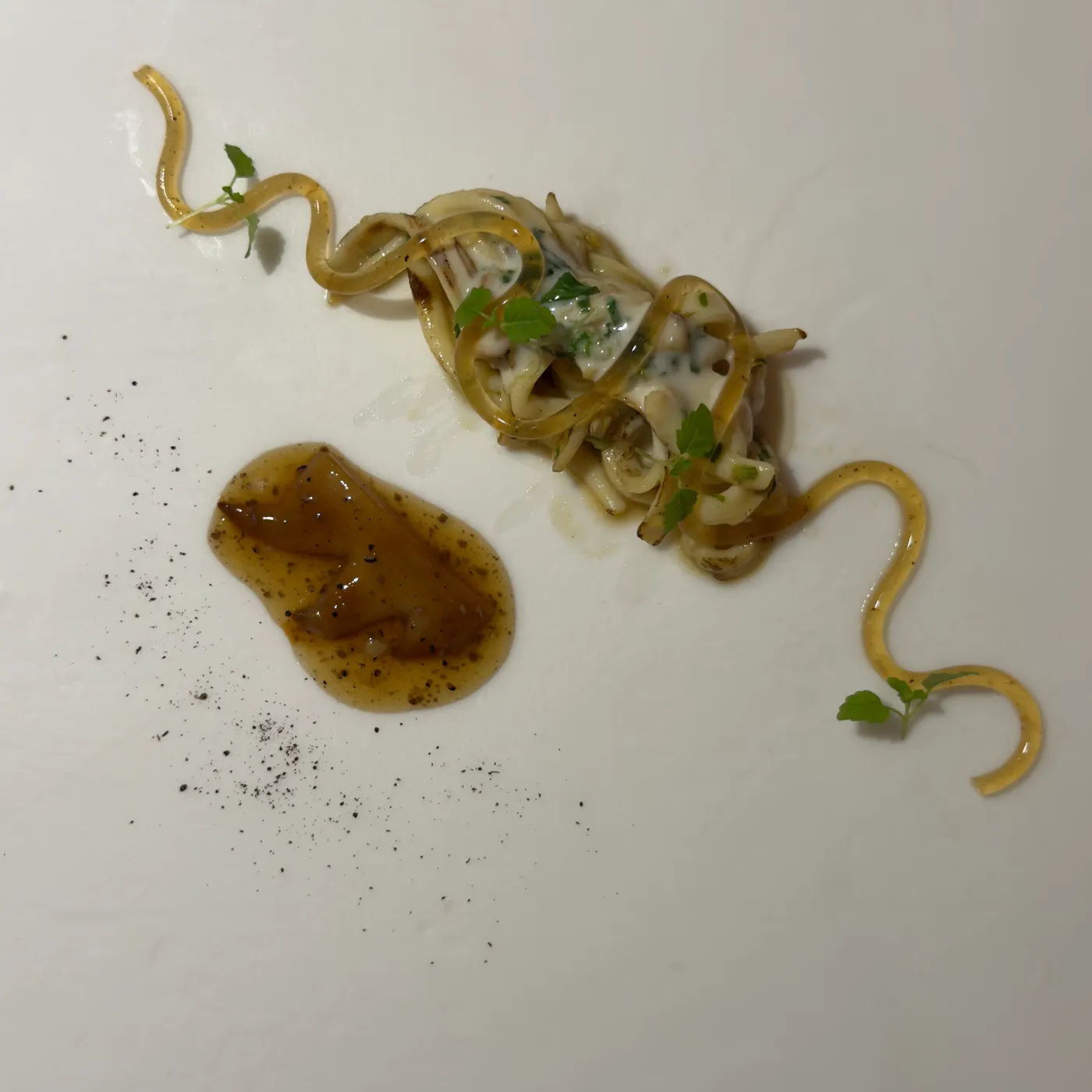
Chicken yakisoba, with espardeñas for noodles
These noodles were espardeñas, the prized inner meat of sea cucumbers, cooked to resemble yakisoba. They came with chicken and a Cantonese-style mushroom sauce. DiverXO had a wok made with holes in its base so it could work over embers rather than a gas flame. The explanation at the table separated the two effects: the seared character of the iron and the smoke from the charcoal. Both reached the espardeñas, giving these seafood “noodles” the flavor of a wok dish cooked over a barbecue.
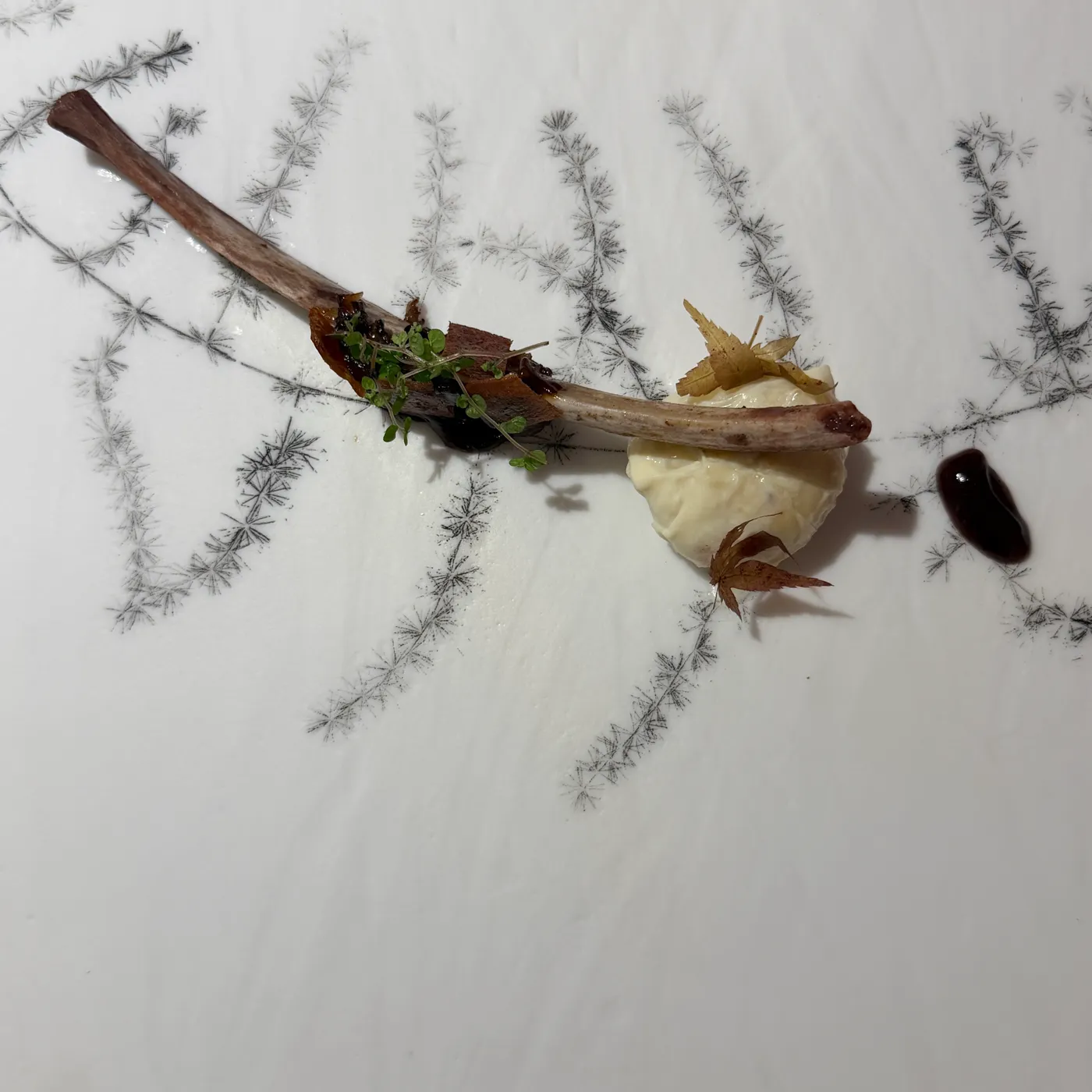
Wild boar char siu and mushroom bao
Dabiz’s char siu used a rib from a female wild boar, marinated, slowly cooked, and finished over charcoal with a caramelized barbecue glaze. Crisp suckling-pig skin added crunch. Alongside came a steamed bao filled with stewed mushrooms and fermented black-bean paste, with milk skin adding a soft layer.
The card laid out the long preparation in detail. Dabiz kept the eating instructions simple: everything with your hands, in no particular order. We could move between the sticky meat, crisp skin, and soft bun as we pleased.
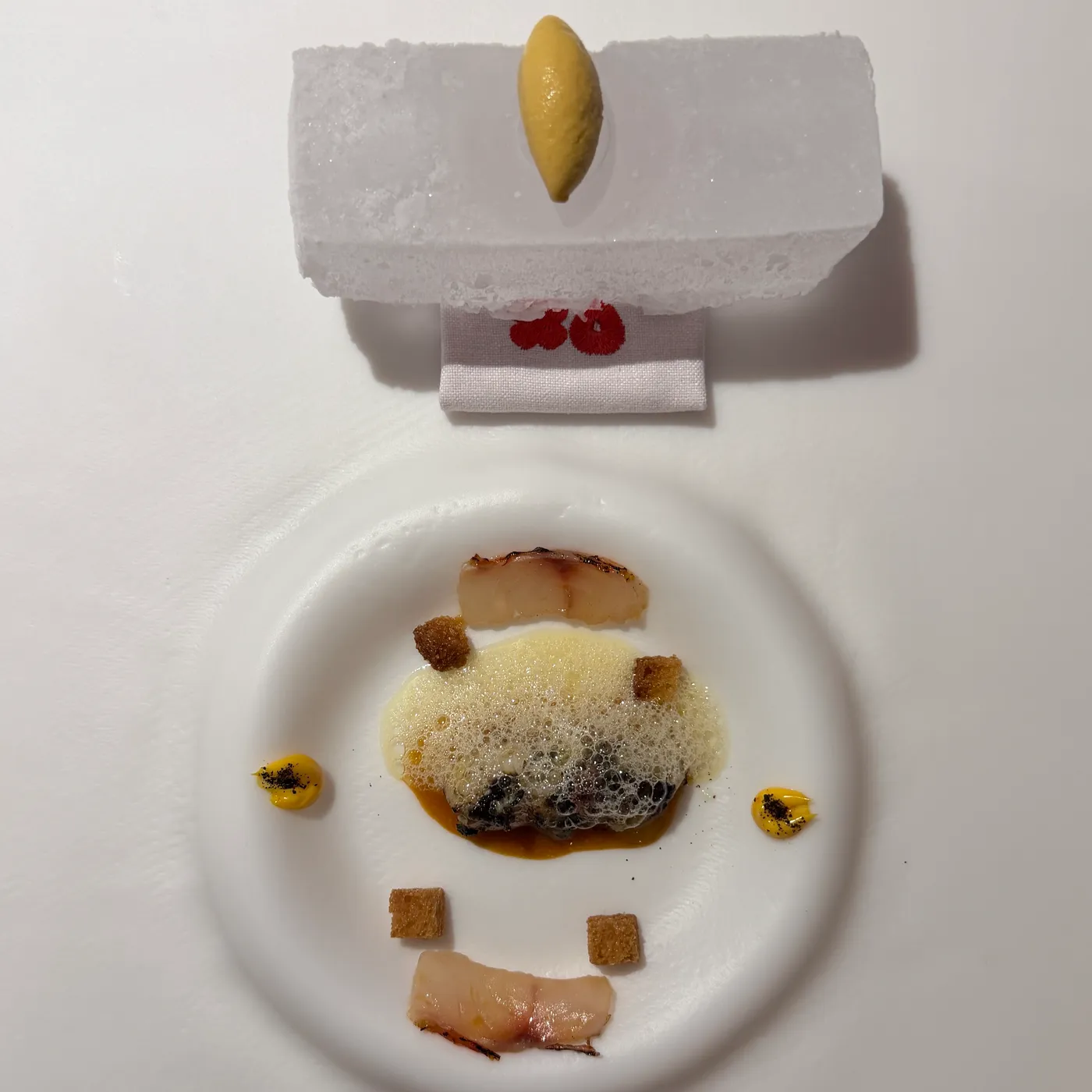
Suquet-sudado: hot fish, frozen stew
Catalan suquet met the Peruvian idea of sudado. Red mullet and baby cuttlefish came with yellow chili, a fish-bone sauce and brown-butter foam. At the sides sat saffron alioli with Iranian black lemon, while cubes of toasted brioche added crunch. Above the plate, on a block of ice, rested a frozen version of the suquet’s sofrito with ají limo kimchi. The instruction was to alternate between warm fish and frozen stew without letting them touch on the plate. The meeting happened in the mouth, where each temperature changed how the next spoonful tasted.
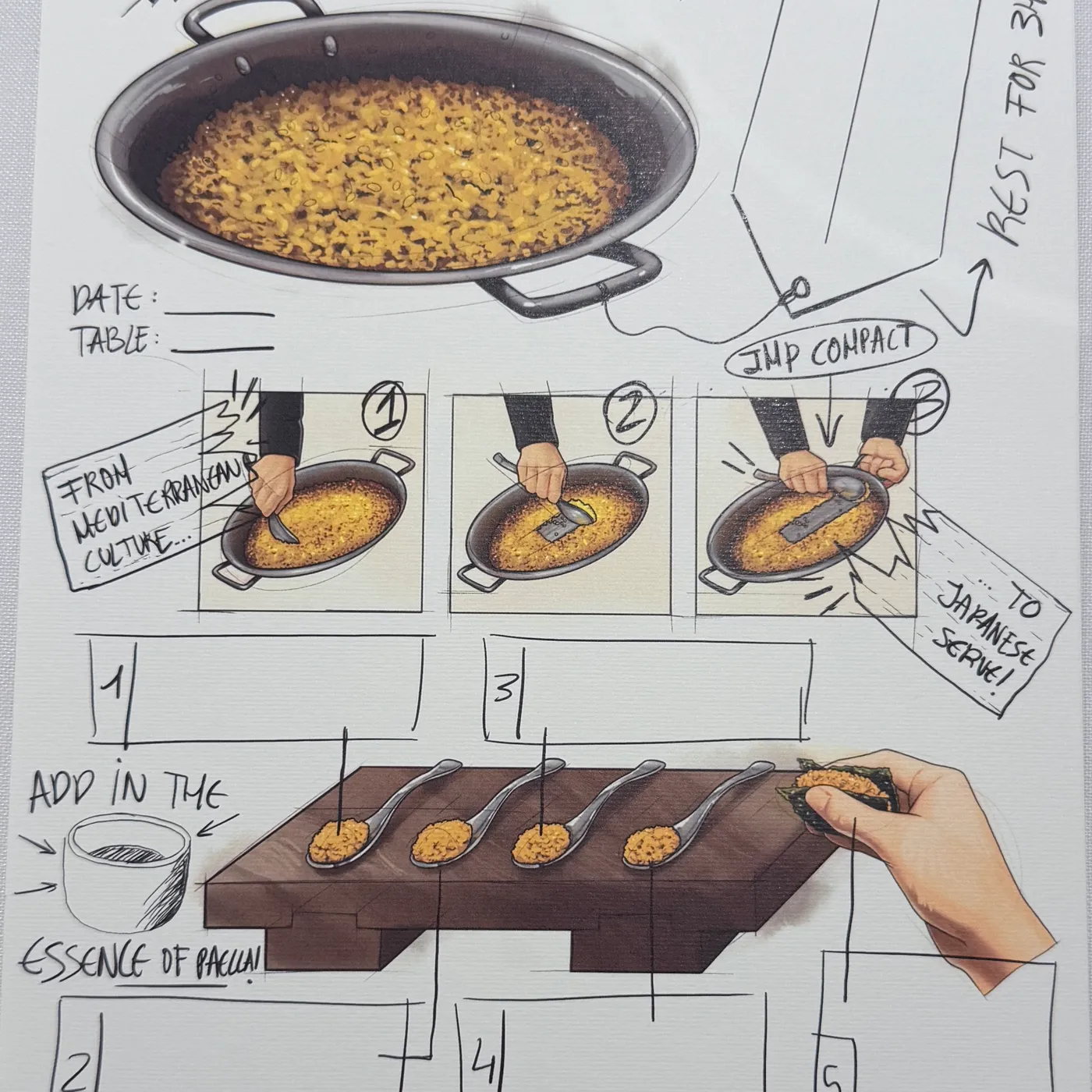
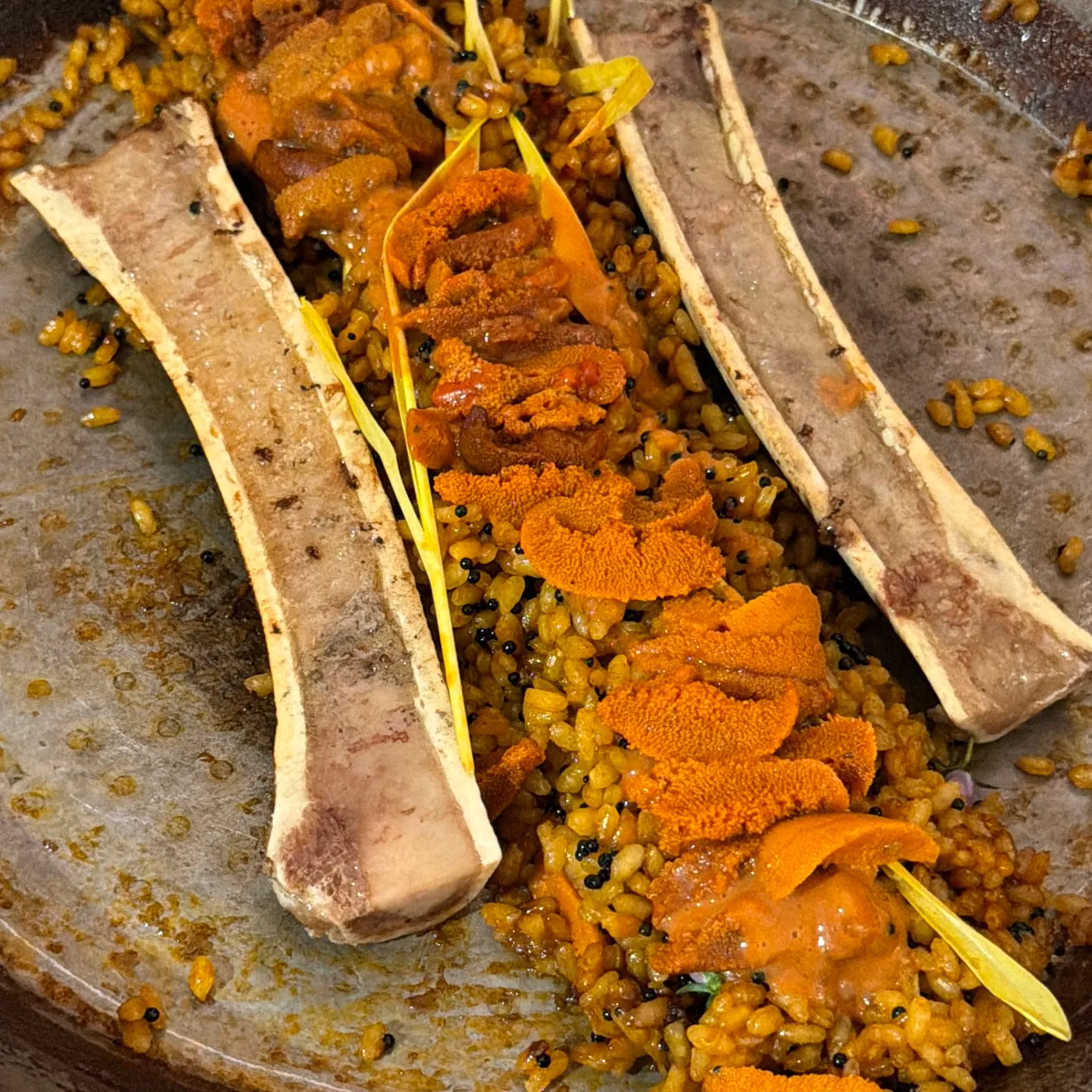
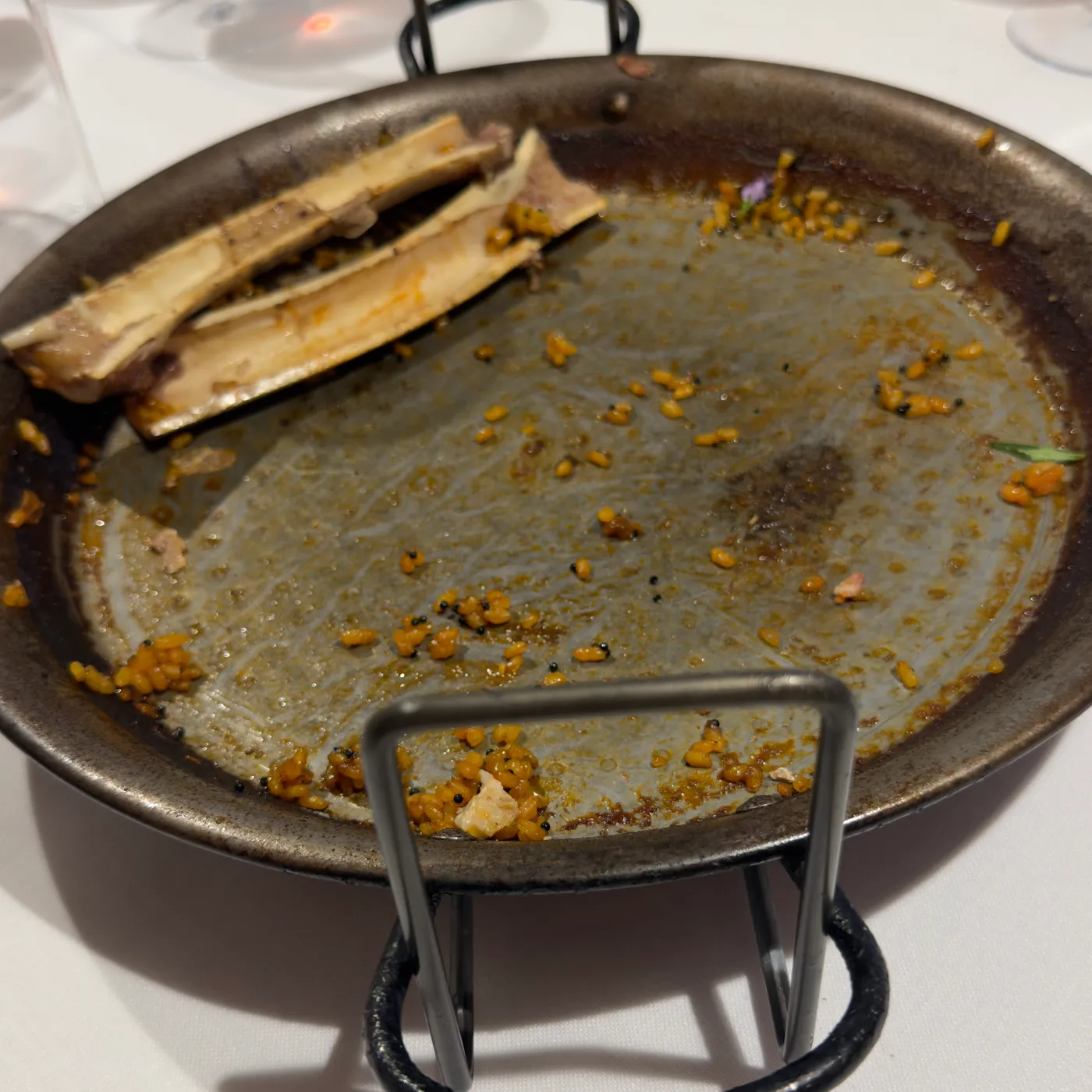
Dabiz’s paella-nigiri: sea urchin, deer marrow and white truffle
Dabiz finished the paella for us, explaining why its Koshihikari rice had been cooked an hour ahead: he wanted the texture of sushi rice, carrying the flavor of a paella. The stock combined sea urchin and deer. He gathered the rice into the center, added sea urchin, roasted deer marrow and generous shavings of white truffle. Between spoonfuls came a citrus salad of baby peas, briefly sautéed in the wok. He was particular about those peas: they were not guisantes lágrima, which were out of season. Mediterranean rice cooking, Japanese attention to the grain, and Dabiz standing there making the reasoning tangible. The photograph records what remained.
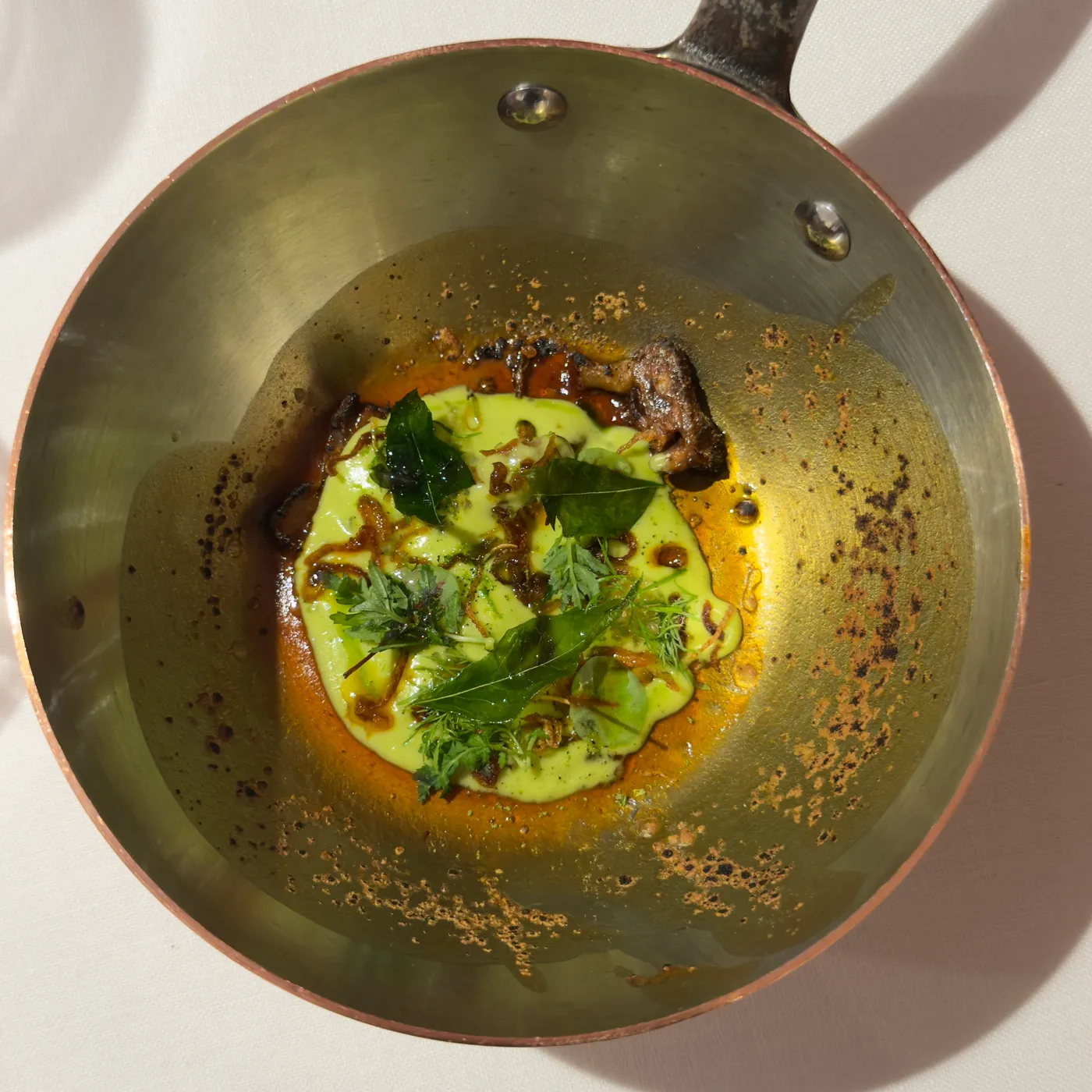
The bottom of the pot: partridge green curry
Dabiz ended the savory courses with what he considers the best part of a stew: the concentrated layer left at the bottom of the pot after long cooking, lightly caramelized and full of flavor. Here, it was a green curry with partridge, with aromas of aged whiskey and bergamot. It arrived in a little copper pan, giving us access to the part usually saved for whoever gets to the kitchen first. The server’s advice was simple: scrape the bottom. There was more flavor down there.
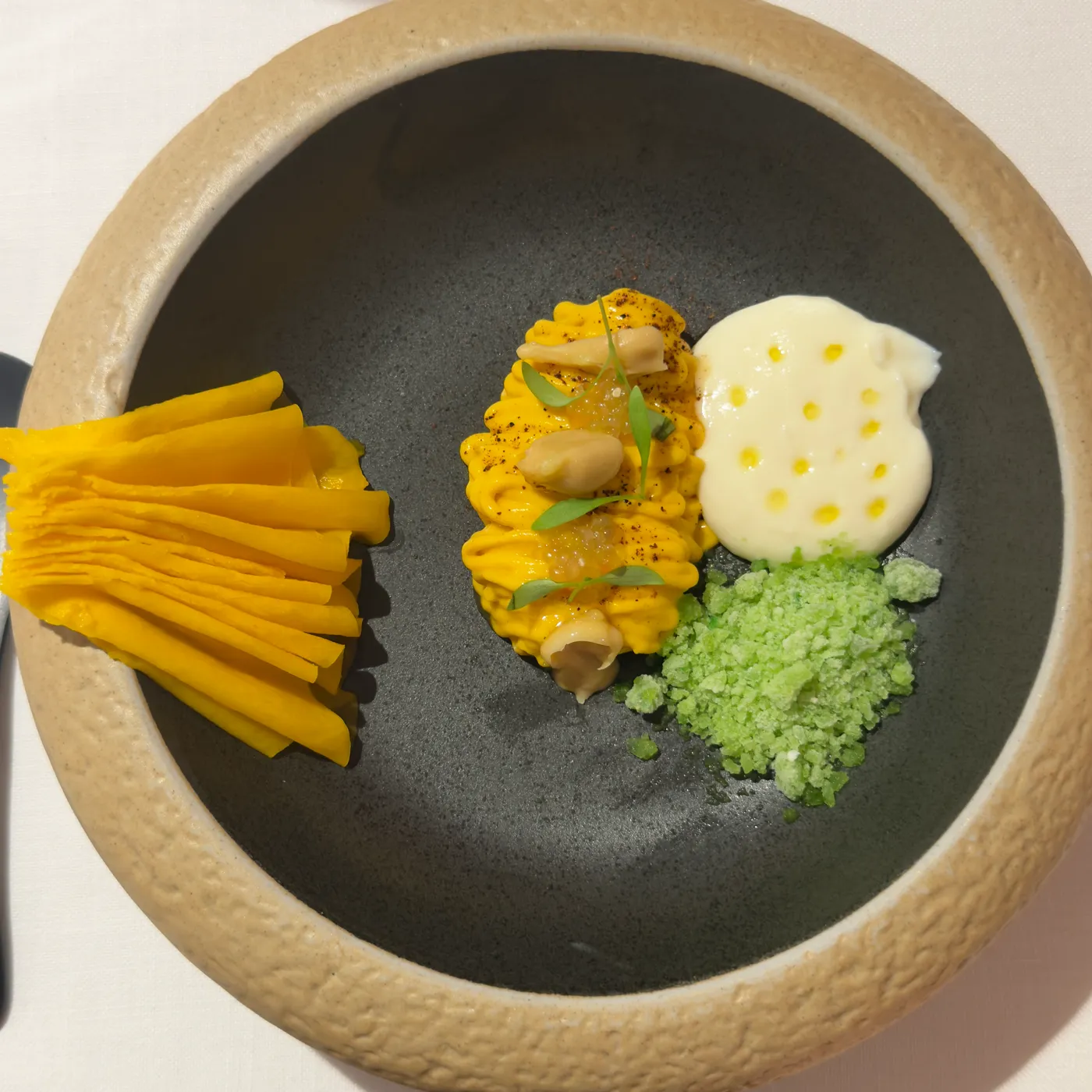
XO mango sticky rice
Alphonso mango came with mango-and-chili whipped cream, while the rice pudding was cooked like risotto and sharpened with rice vinegar. A frozen powder of spicy pesto herbs brought a green, cold contrast to the fruit and cream. Indonesian peanut bonbons and crisp mango kakigōri completed the plate. Mango and rice still made the dish easy to recognize, even as acidity, chili, and herbs interrupted the expected sweetness. After the green curry, there was no abrupt change of direction just because we had reached dessert.
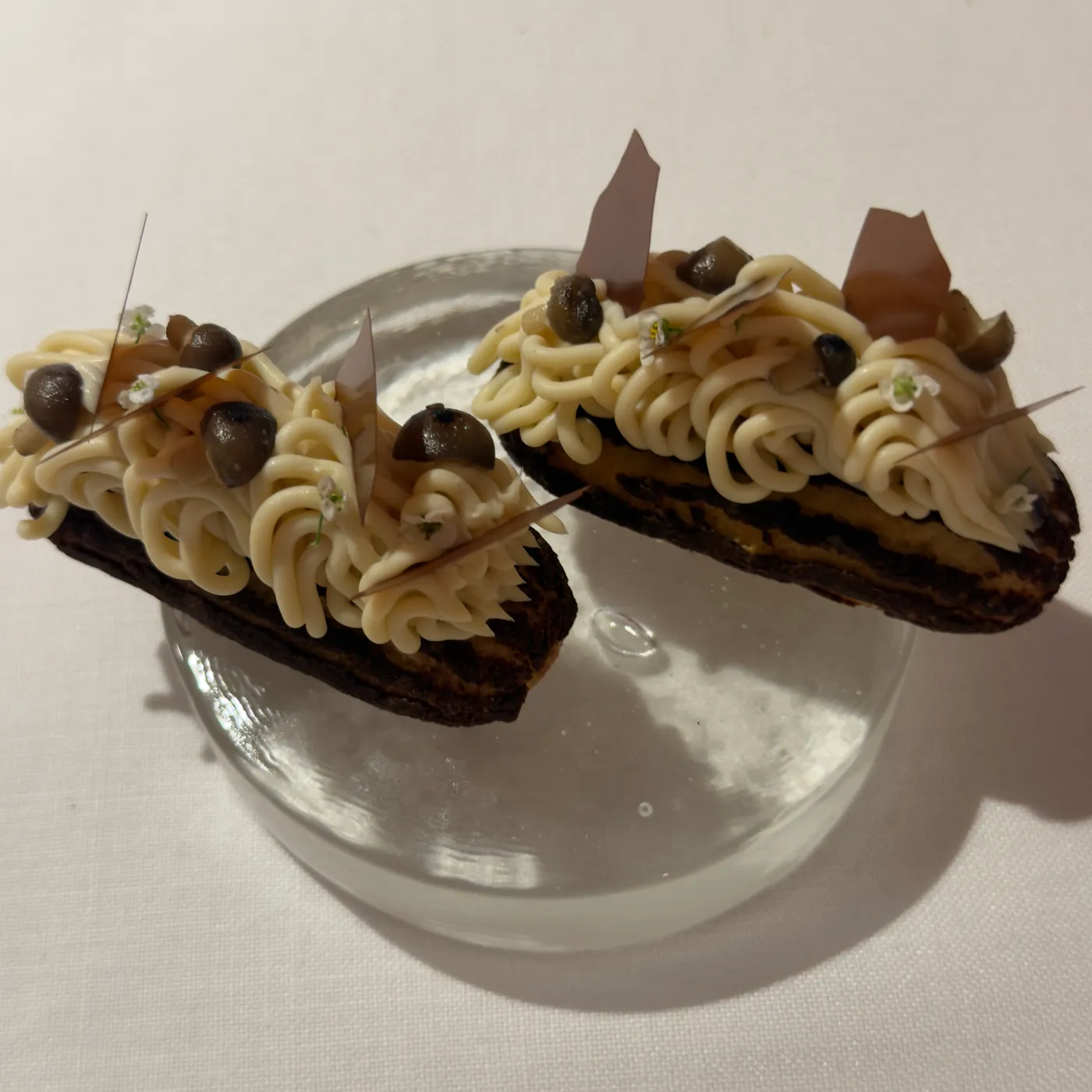
Éclair de los Bosques
Shiitake and shimeji mushrooms flavored the namelaka, a very smooth cream, inside this éclair. Hazelnut-and-chocolate ganache and Chinese five-spice salted caramel filled out the sweeter side, with ponzu bringing a citrus edge and butter rounding it out. The little mushrooms on top announced the filling before we took a bite. They were there for their flavor, alongside the chocolate and hazelnut, rather than simply as a clever decoration.
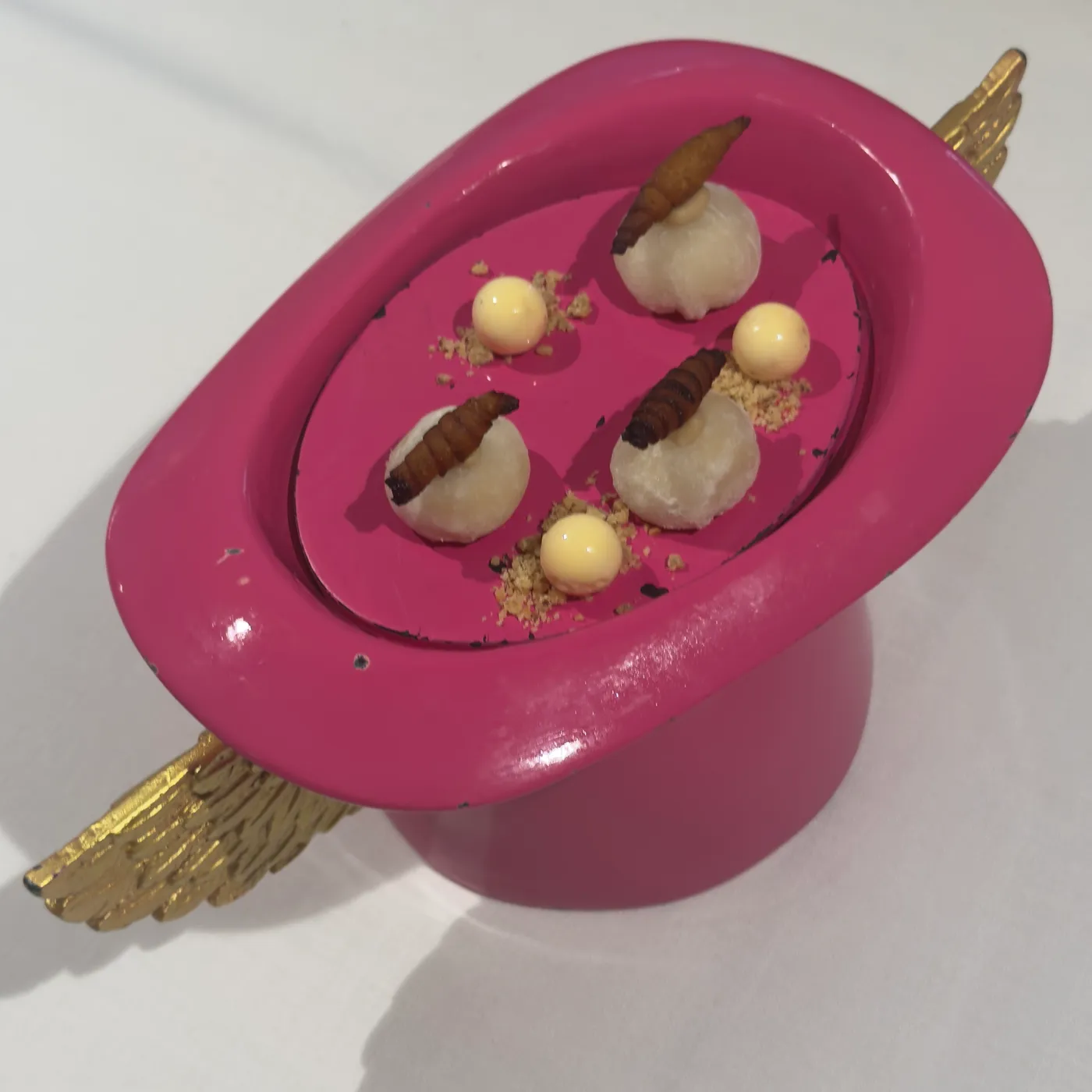
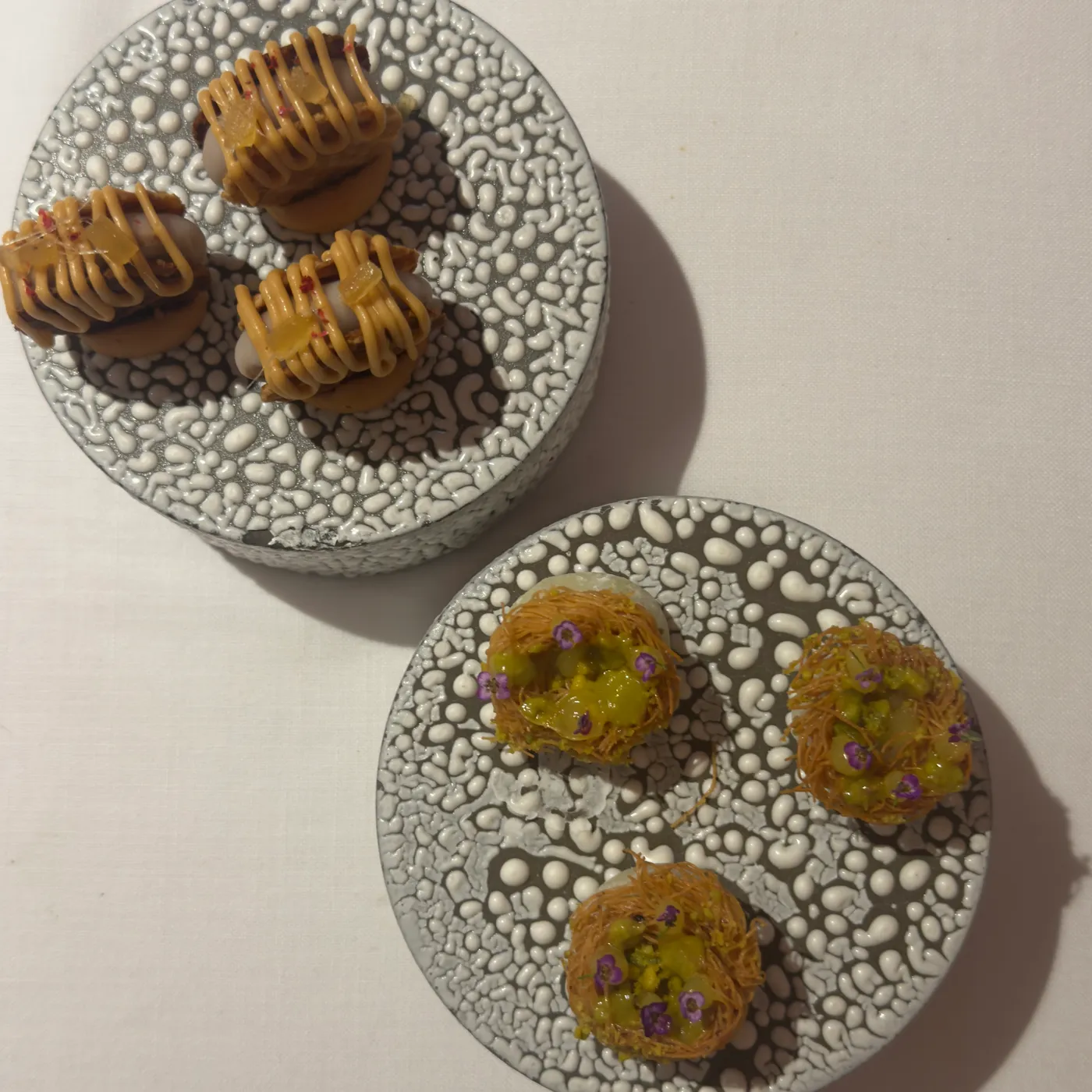
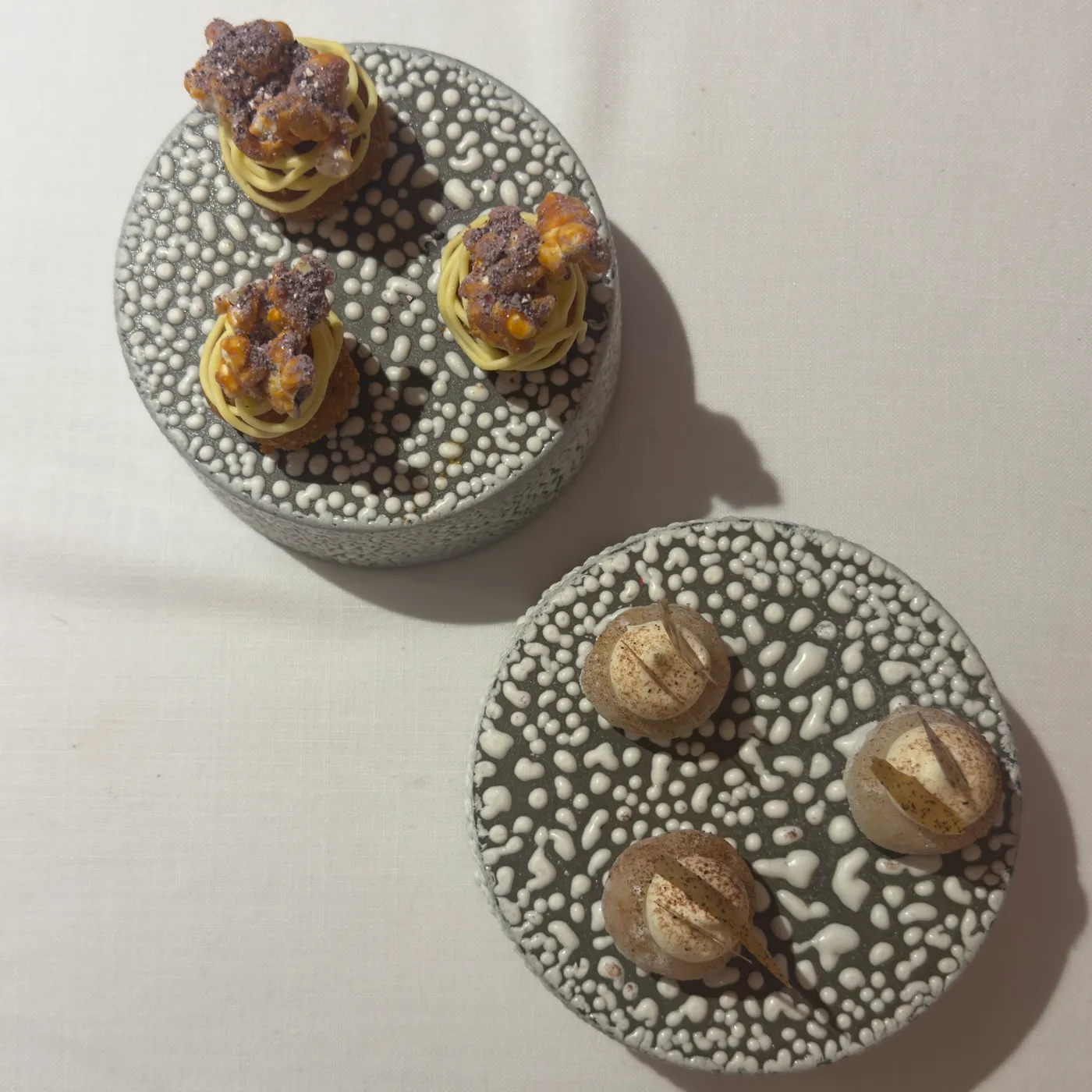
Japanese bonbons
Five final bites, each with its own small itinerary. Cookies dunked in milk met croissant and toasted-butter parfait. Sweet corn and vanilla came with tangerine ganache, Thai chili and crunchy popcorn. Baklava became a pistachio mochi with butter-baked kataifi, lemon and saffron. Tiramisu brought together El Naranjal coffee, white chocolate, and mascarpone. A waffle bonbon held gianduja, salted caramel, and confit ginger. The card called them bonbons in soul, Japanese in technique. Even here, at the very end, there was enough detail to make us stop and work out what we were eating.
What we drank
With Tomás Ucha
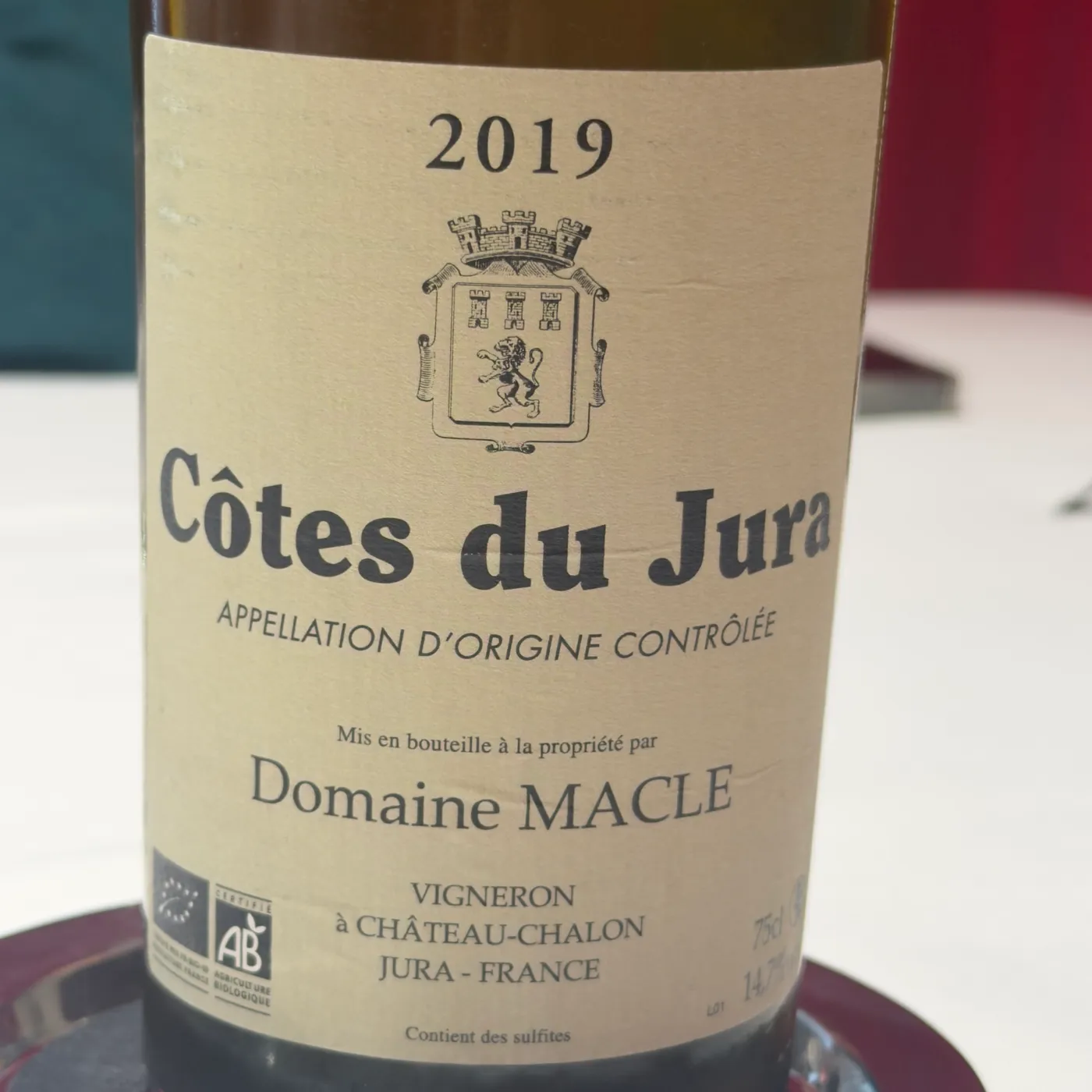
Domaine Macle, Côtes du Jura 2019
Chardonnay and Savagnin aged beneath a veil of yeast, bringing the Jura’s nutty, savory character without losing its acidity. Tomás described it as a “baby Vin Jaune.” That combination of oxidative depth and freshness gave it room to work with smoke, rich seafood, and the menu’s more insistent sauces.
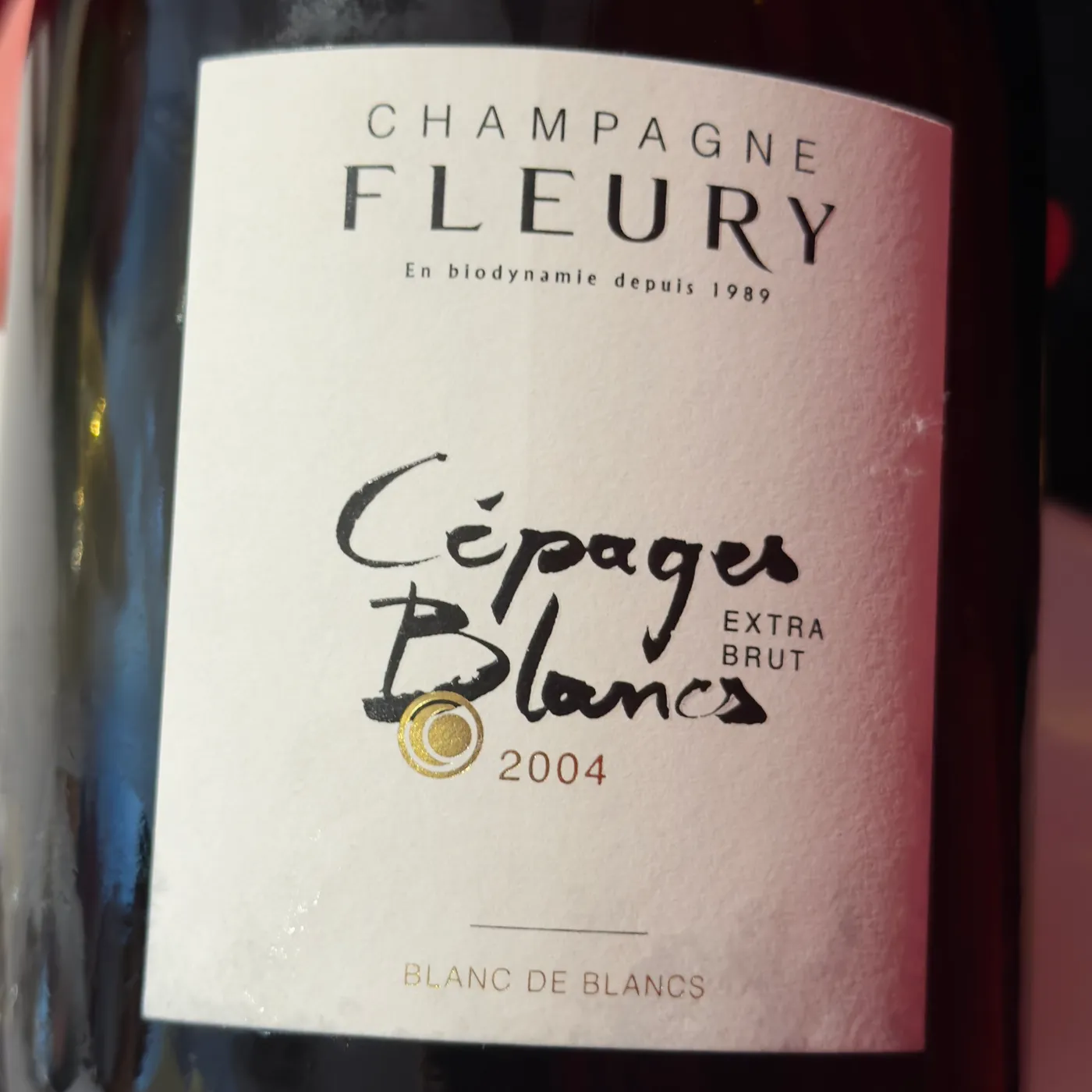
Champagne Fleury, Cépages Blancs Extra Brut 2004
A mature blanc de blancs from Fleury, whose label records biodynamic farming since 1989. Tomás valued the way its developed, savory depth could meet smoke and umami, while the acidity kept rich textures in check. More than twenty years after the vintage, this was Champagne being treated as a wine for the table.
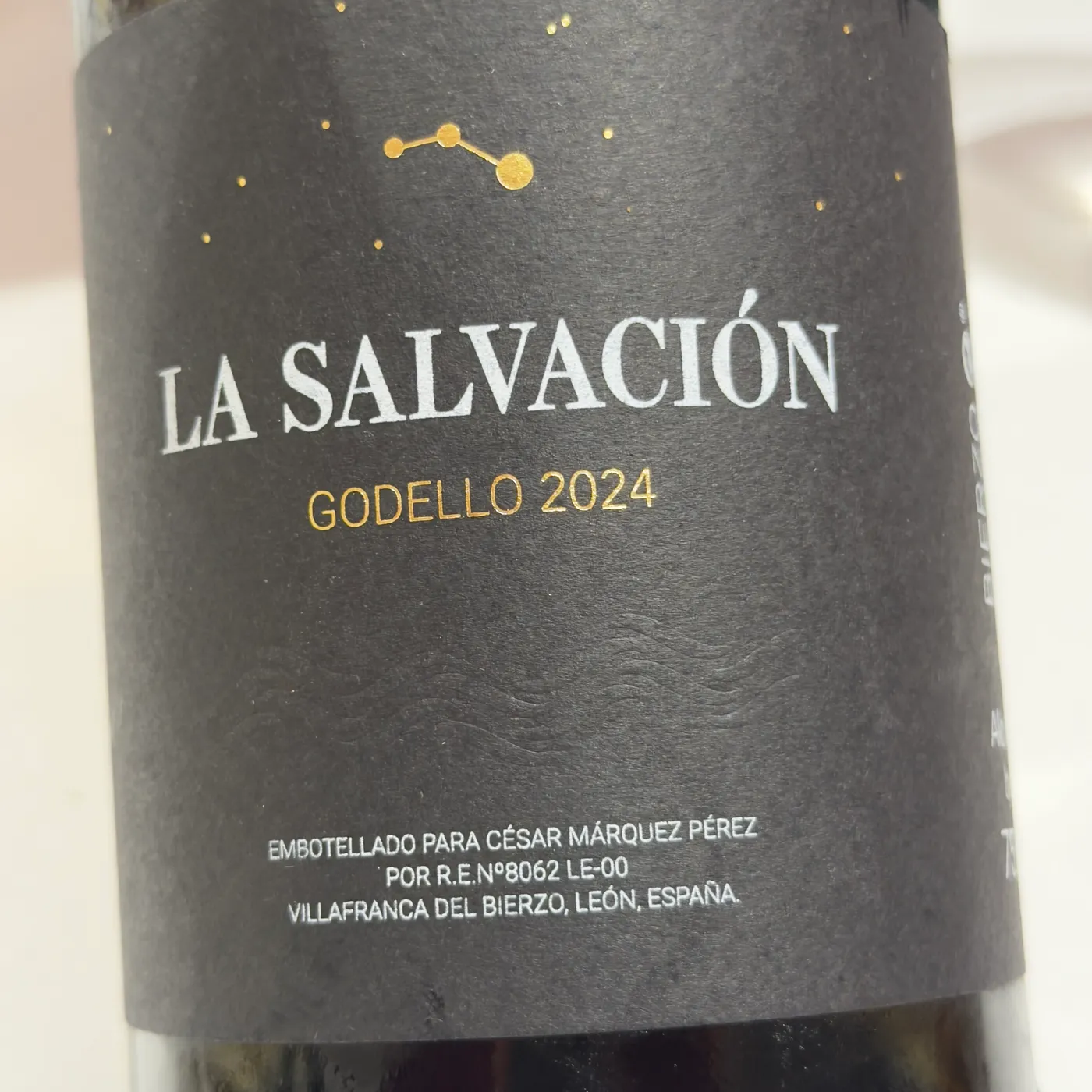
César Márquez, La Salvación 2024
Old-vine Godello from Bierzo, made by César Márquez, Raúl Pérez’s nephew. Tomás’s explanation centered on its acidity and saline character: the wine could do some of the work a squeeze of lime does in food. Its purpose here was to bring freshness to rich textures while keeping enough substance of its own.
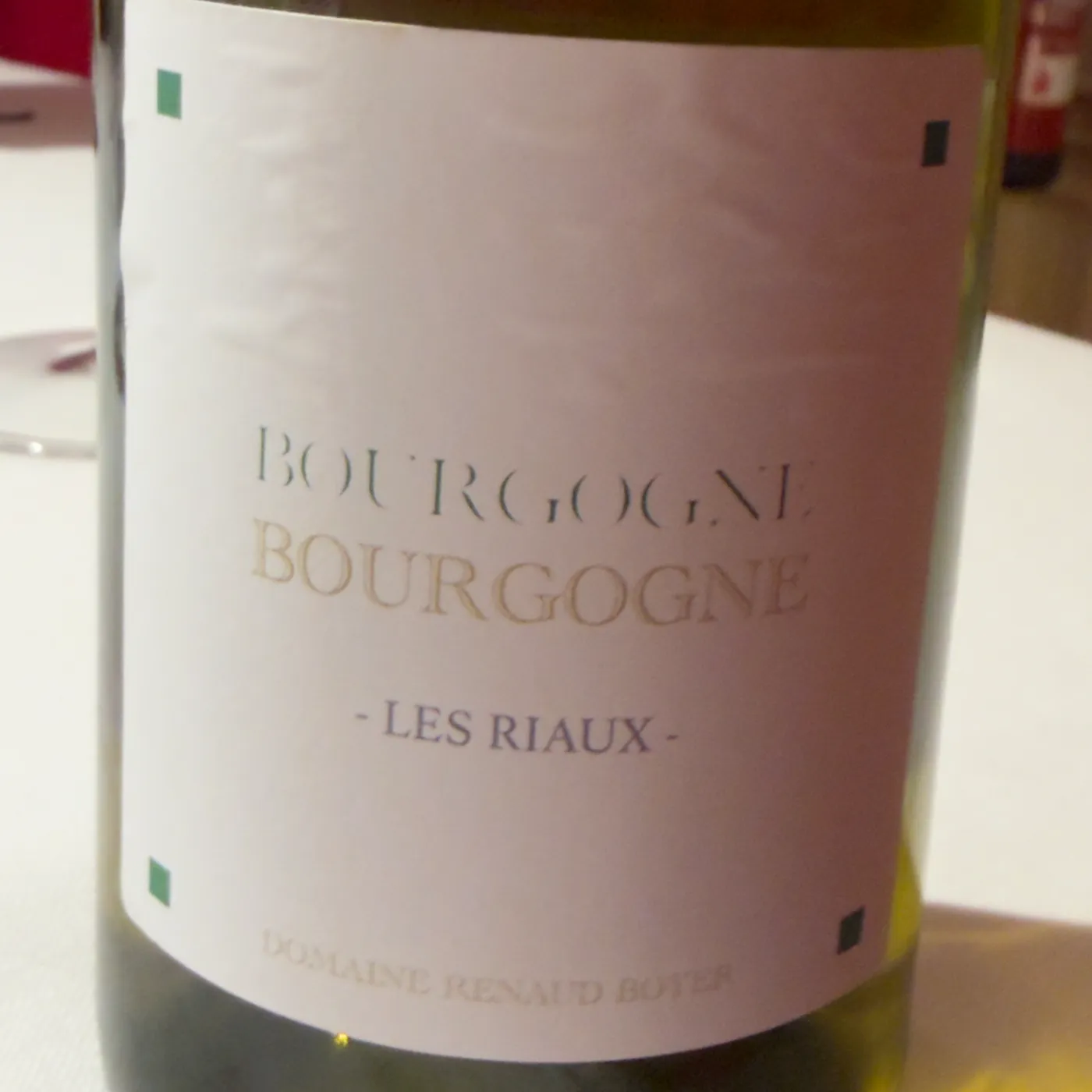
Renaud Boyer, Bourgogne Les Riaux
Renaud Boyer’s Chardonnay from Burgundy, made with spontaneous fermentation and no added sulfur. Les Riaux carries the regional Bourgogne appellation. Boyer releases his wines when he considers them ready, giving the cellar its own timetable rather than rushing each vintage to market.
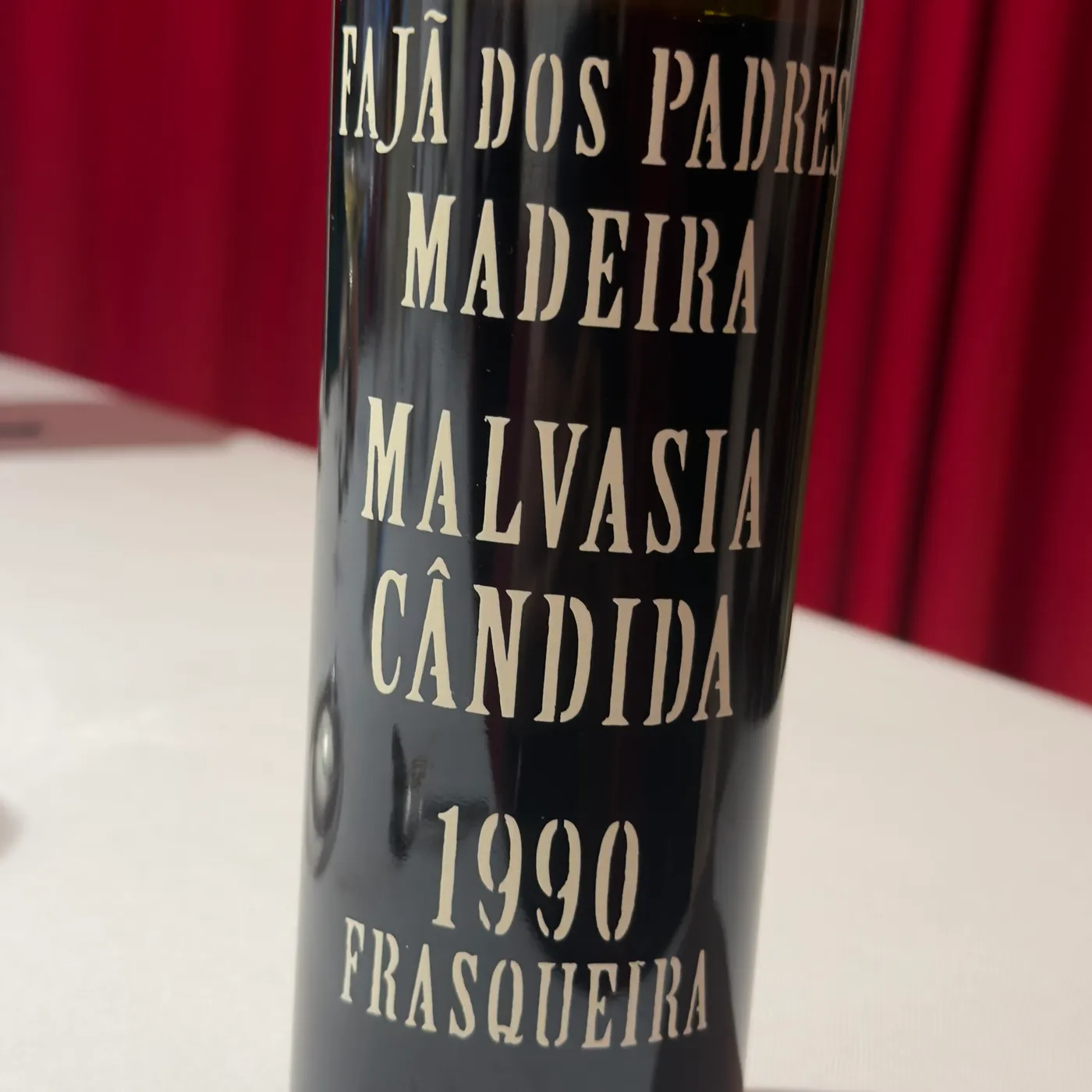
Barbeito, Malvasia Cândida Frasqueira 1990, Fajã dos Padres
Malvasia Cândida from Fajã dos Padres, beneath Madeira’s sea cliffs. The 1990 spent decades in old wood before a bottling of just 360 numbered bottles in 2017. Caramelized orange and coffee accompanied its sweetness, held in place by marked acidity. A very different way of meeting the food’s intensity.
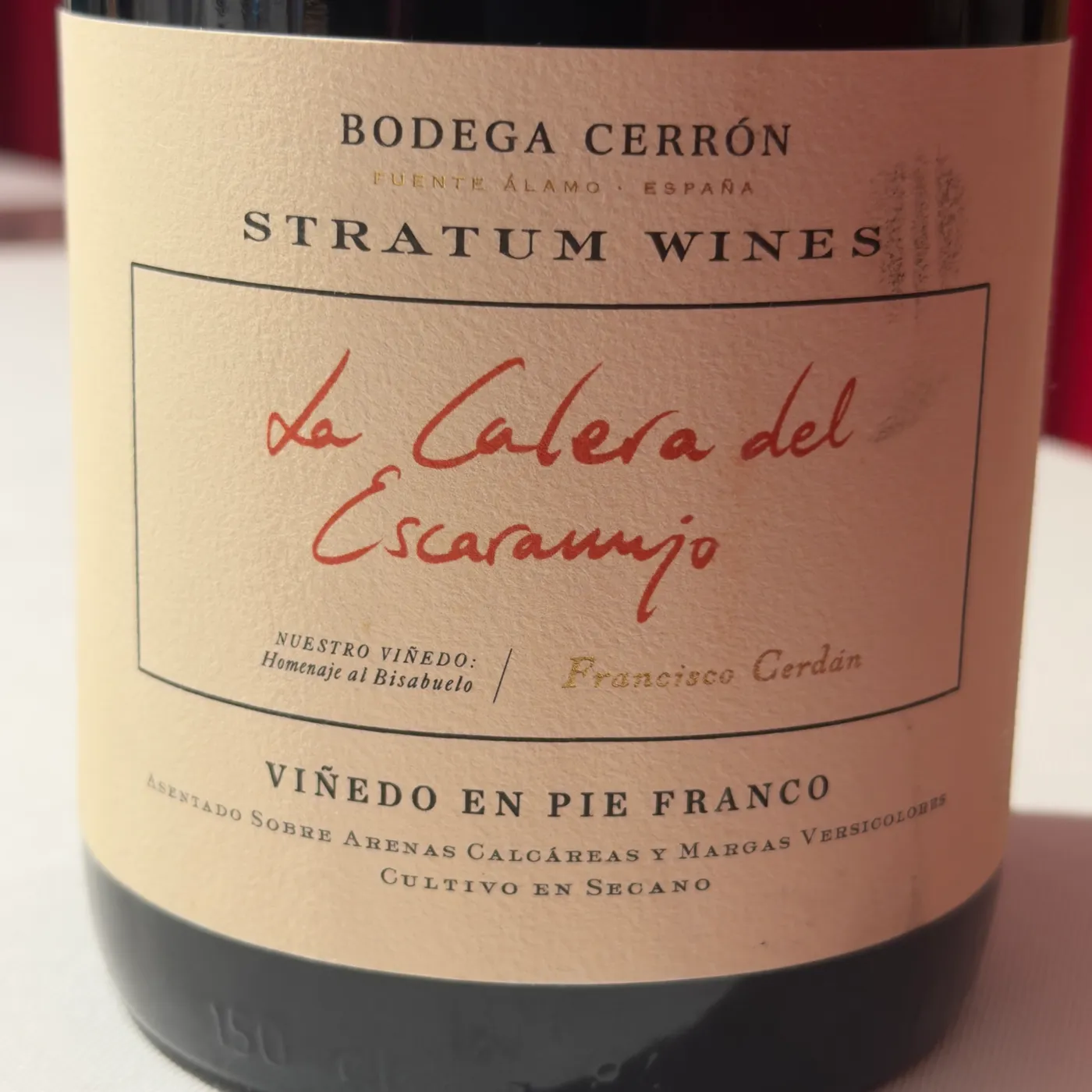
Bodega Cerrón, La Calera del Escaramujo 2024
Monastrell from high-altitude limestone vineyards in Jumilla. Tomás presented it as a challenge to the idea that this grape must produce a heavy, jammy red. Here the emphasis was on freshness, fine tannins, and a saline finish. It supplied structure for the food without relying on sheer weight.
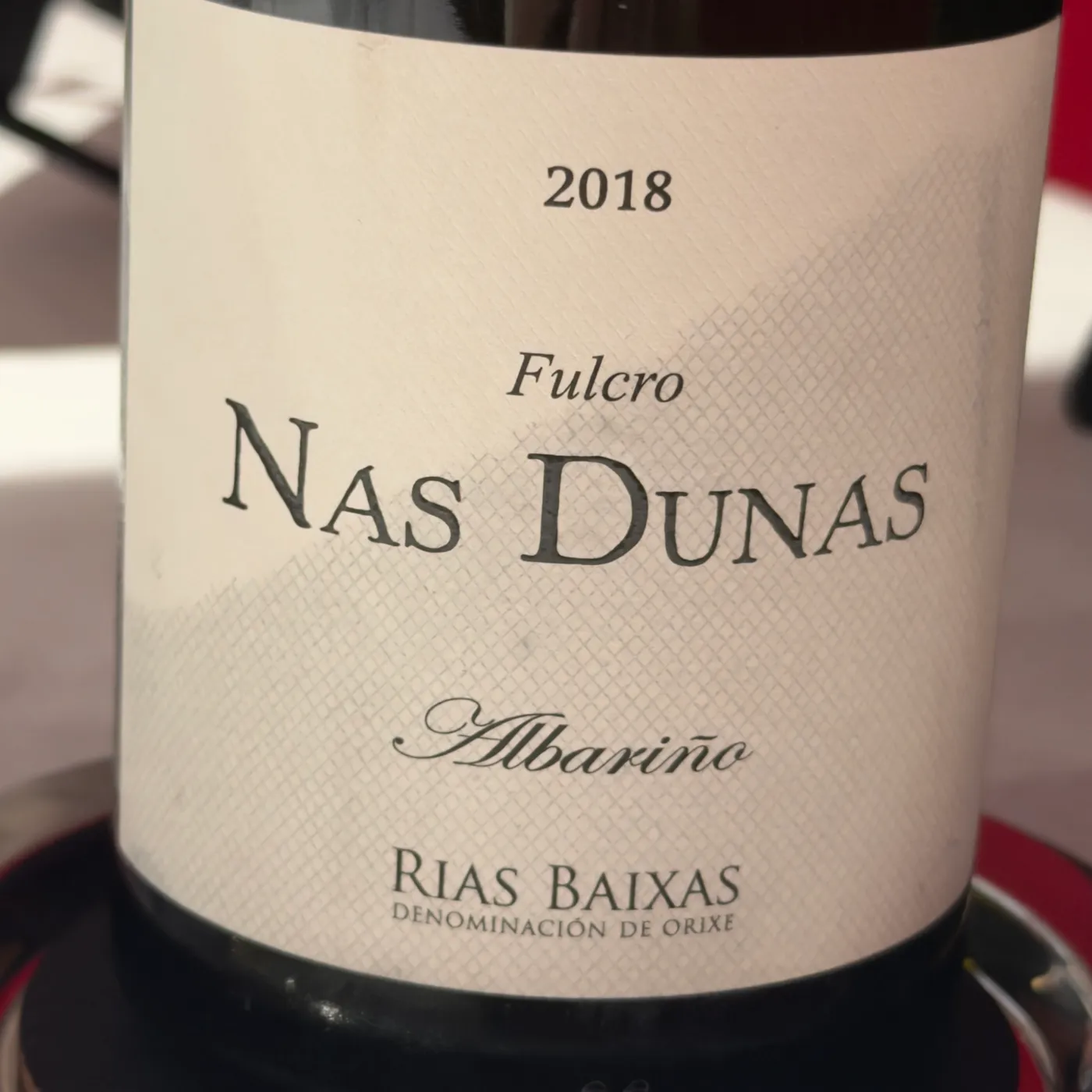
Fulcro, Nas Dunas 2018
Manuel Moldes’s Albariño from Rías Baixas, given time in large oak and then bottle. Tomás described a mature white whose creamy texture still carried a distinctly Atlantic freshness. Its acidity and briny character mattered as much as its age: enough presence for the food, with a clean line through the richer mouthfuls.
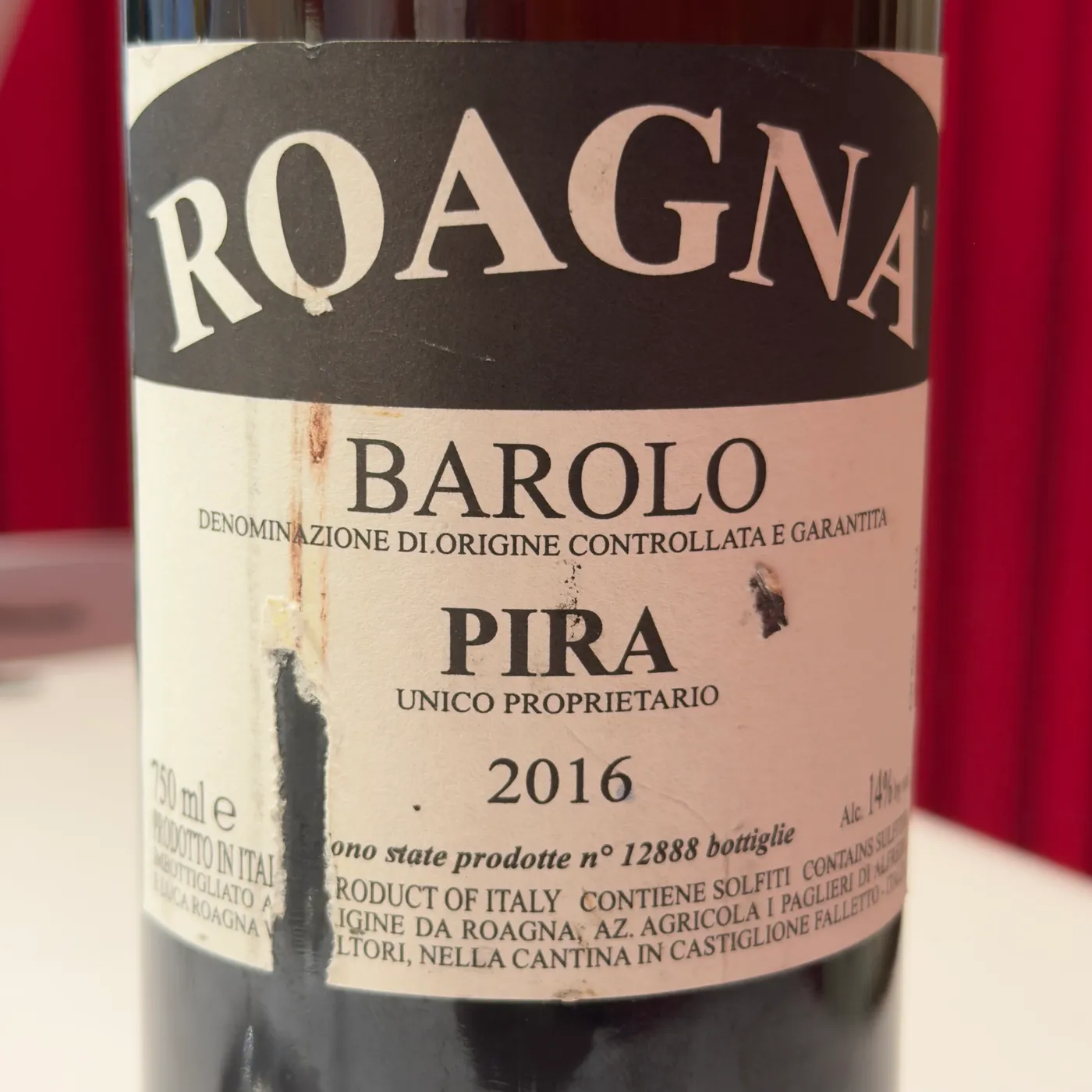
Roagna, Barolo Pira 2016
Nebbiolo from Roagna’s Pira vineyard in Castiglione Falletto. Long maceration and patient aging in old wood build perfume, savory depth, and firm, fine tannins. In Tomás’s selection, it offered a different kind of structure alongside the menu’s rich broths, game, and charcoal, with acidity doing as much work as the tannins.
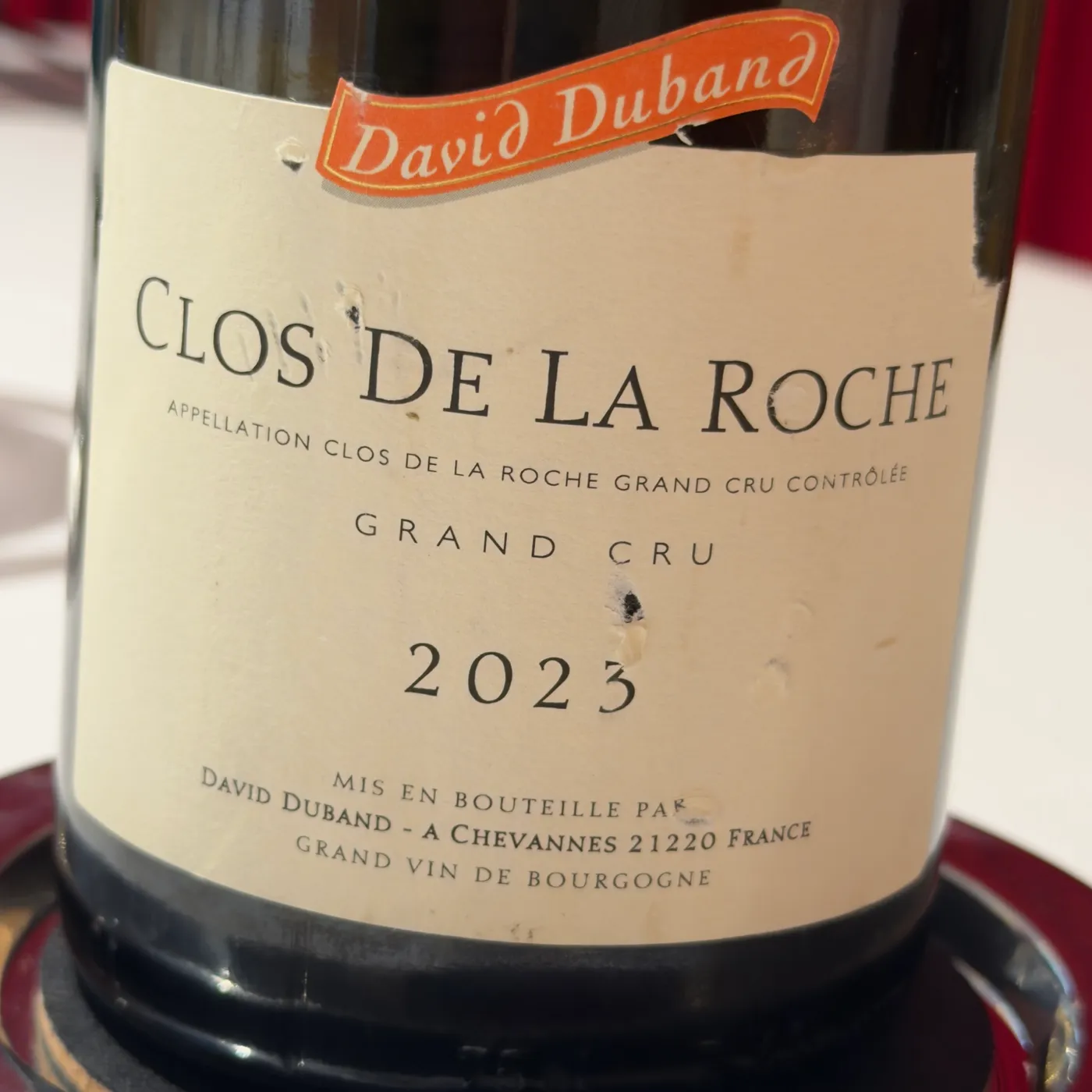
David Duband, Clos de la Roche Grand Cru 2023
Pinot Noir from Clos de la Roche in Morey-Saint-Denis. Tomás emphasized its perfume and fine tannins, which allowed it to accompany rich, savory cooking without overwhelming the delicate details. A grand cru chosen for what it could do at the table as much as for the name on its label.
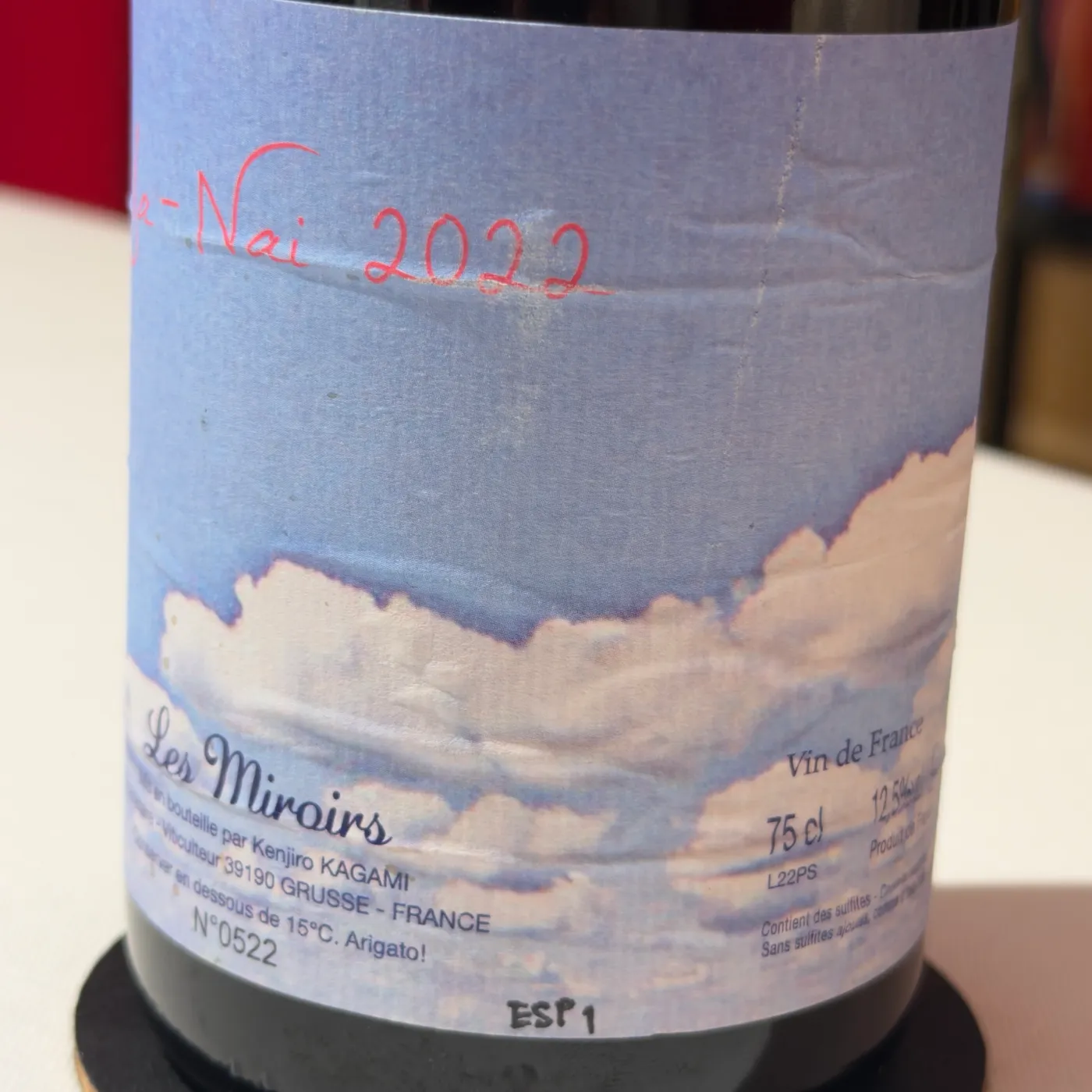
Domaine des Miroirs, Ja-Naï 2022
Poulsard from the Jura, with the 2022 vintage bringing extra depth while retaining a light, silky texture. Tomás’s notes picked out blood orange and an iodine-like savoriness. The wine’s appeal in this company was its combination of freshness and flavor, able to stay lively alongside umami without relying on weight or oak.
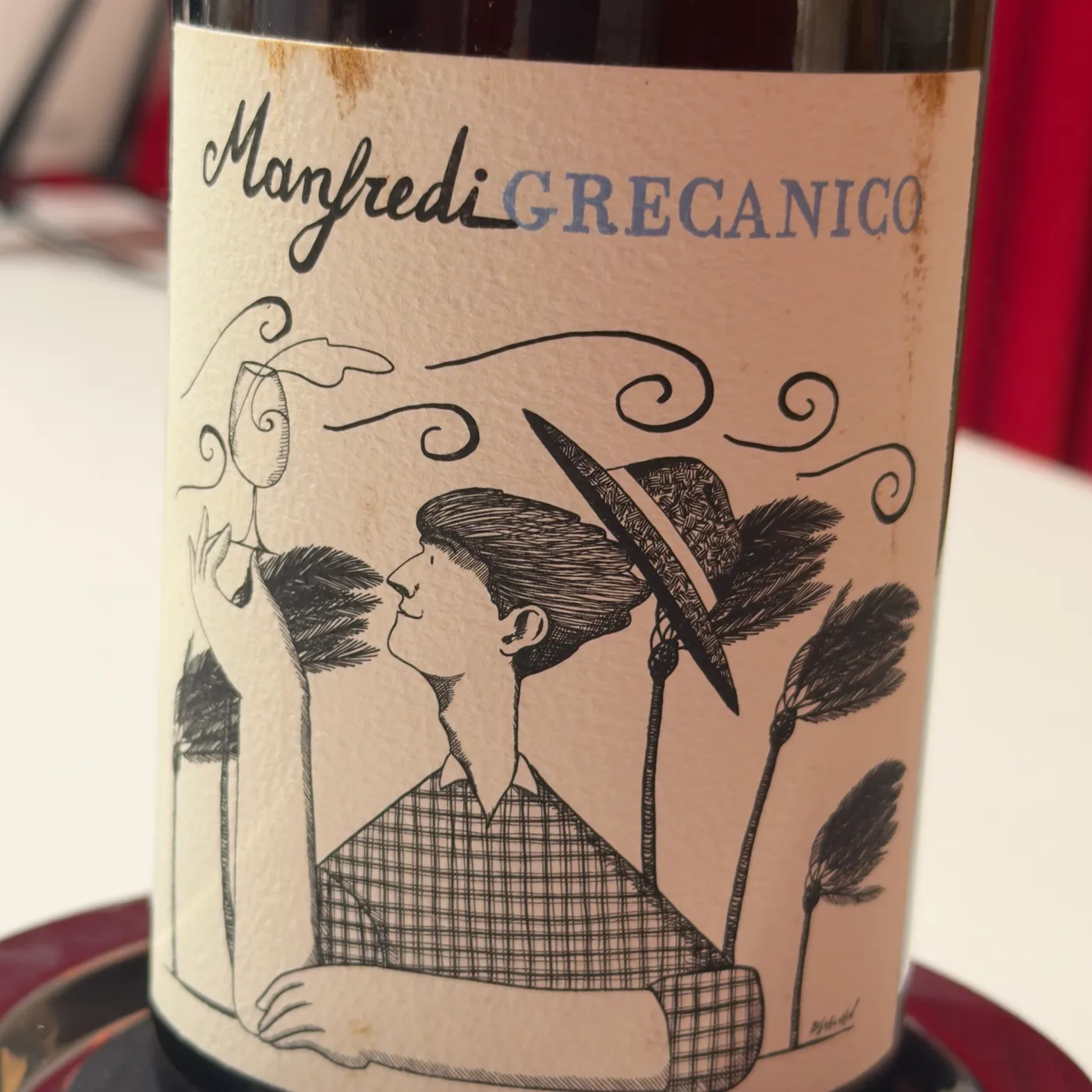
Manfredi Franco, Grecanico
Manfredi Franco left a legal career to make wine in his native Marsala. His Grecanico brought Sicily into the selection through citrus peel, Mediterranean herbs, and an almond-like grip. Tomás focused on its texture, a useful partner for gelatinous seafood and deeply savory sauces, with freshness beneath the more tactile character.
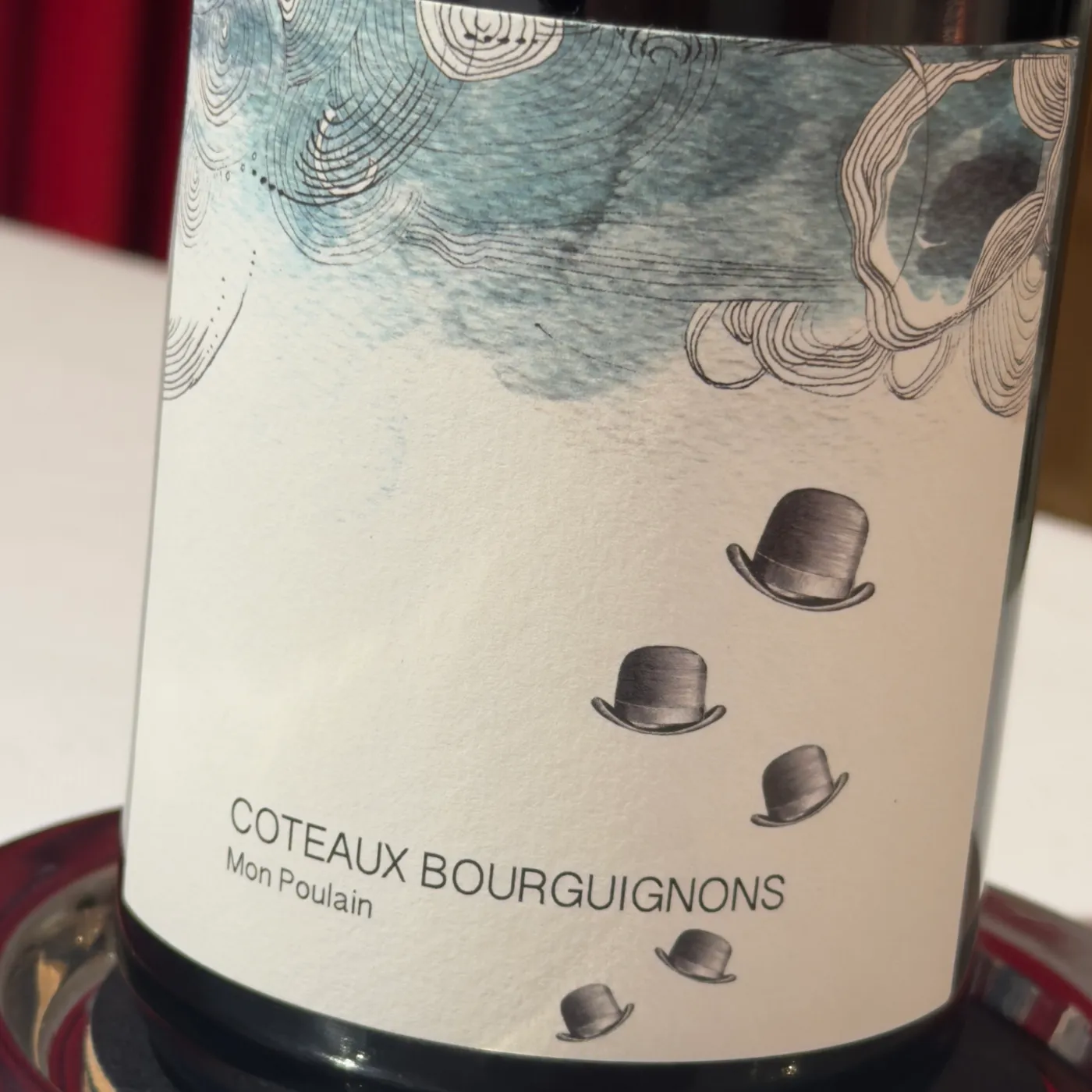
Les Horées, Coteaux Bourguignons Mon Poulain
Catharina Sadde was a chef before becoming a winemaker. Her Mon Poulain combines Gamay and Pinot Noir under the Coteaux Bourguignons appellation. It is the more immediately approachable side of Les Horées, a small Burgundy cellar where she works with both her own vineyards and carefully sourced fruit.
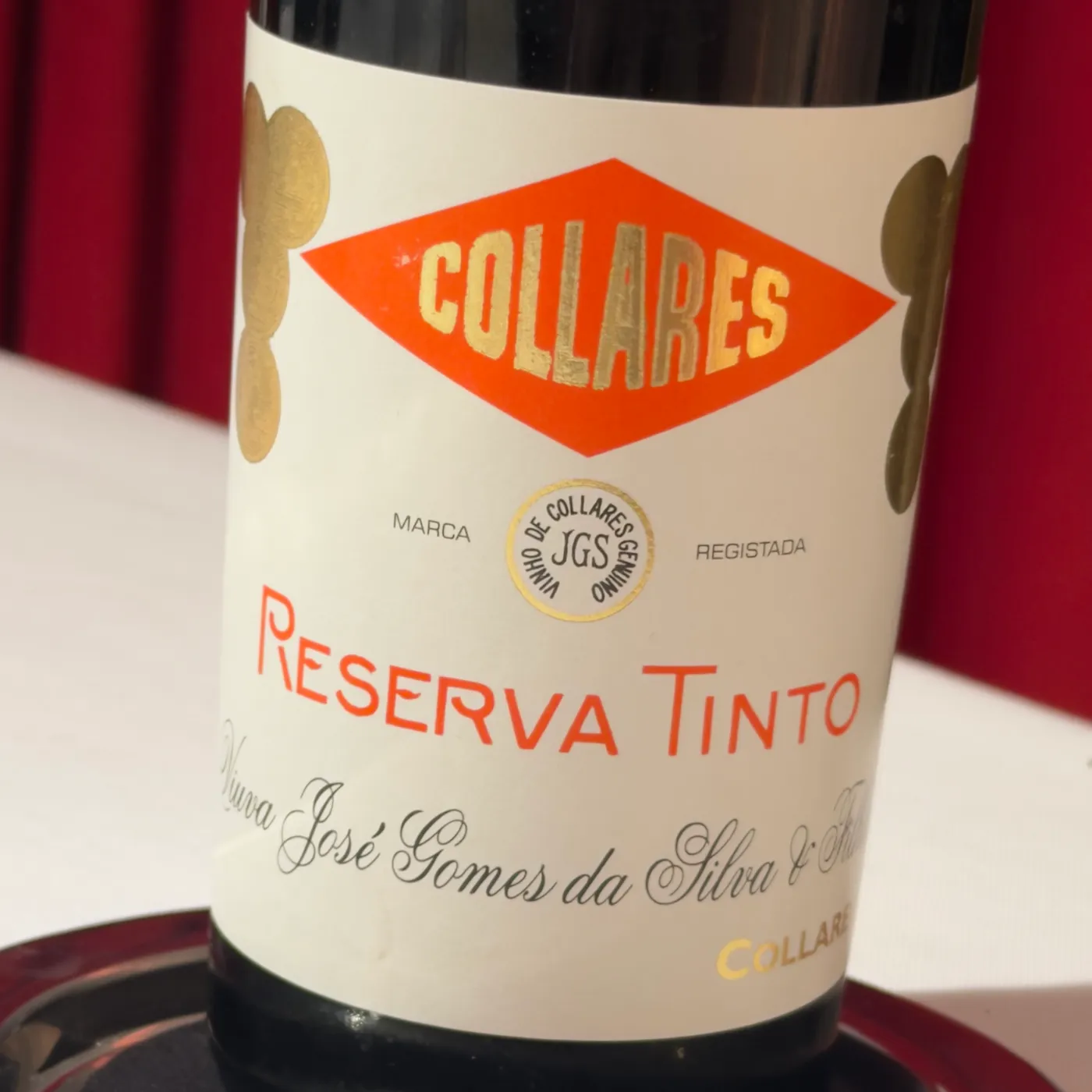
Adega Viúva Gomes, Colares Tinto 1965
Ramisco from ungrafted vines rooted in the sands of Colares, close to the Atlantic at Sintra. This 1965 had passed through long aging in wood and bottle, yet Tomás’s point was its continuing freshness. More than sixty years old, it brought a very different sense of time to a meal occupied with constant reinvention.
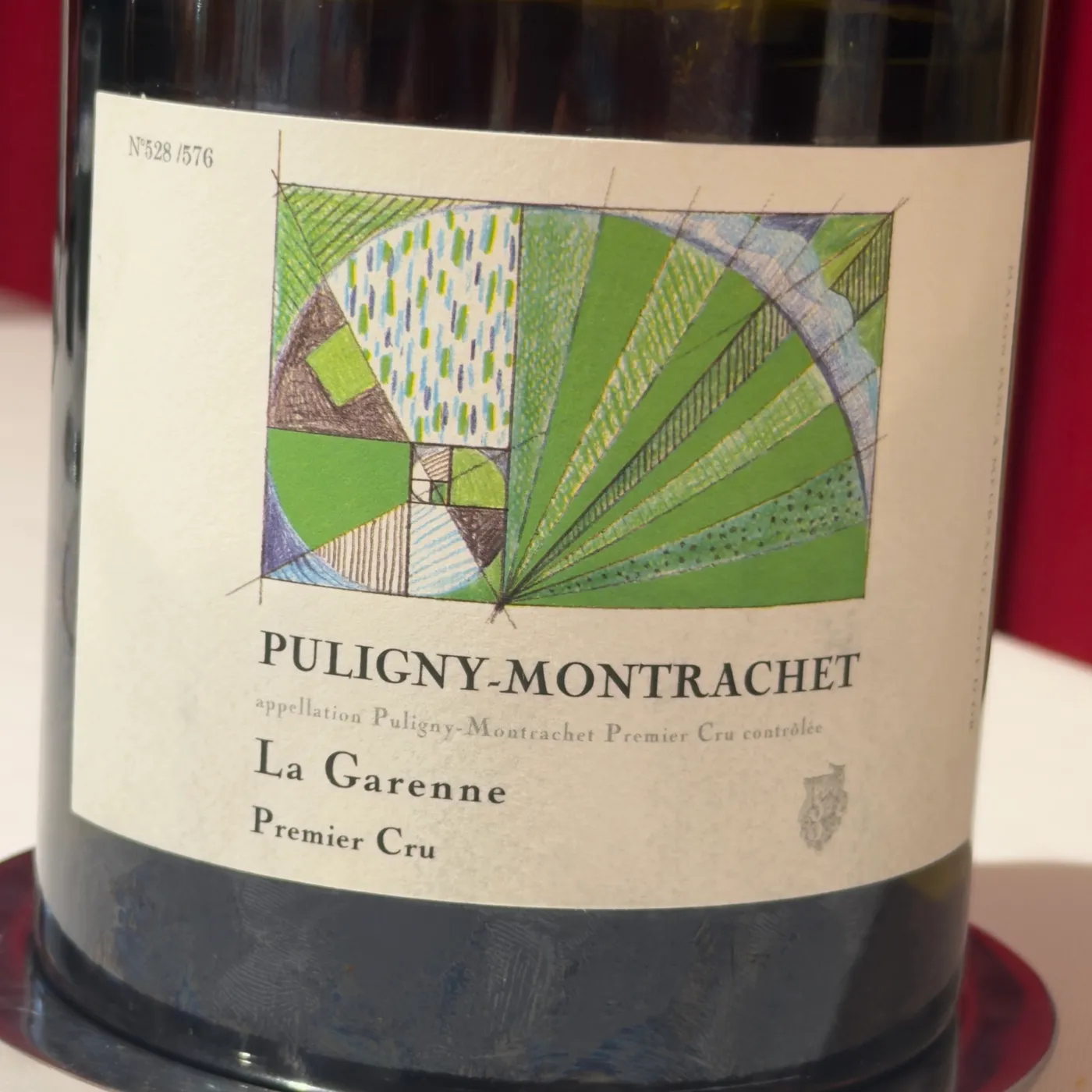
Maison Fang, Puligny-Montrachet Premier Cru La Garenne
Ming Fang’s Chardonnay from La Garenne, a premier cru on the higher slopes of Puligny-Montrachet. Tomás described almond blossom, citrus, and a chalky character. His notes stressed restraint and precision, a useful contrast to some of the more exuberant flavors coming from the kitchen.
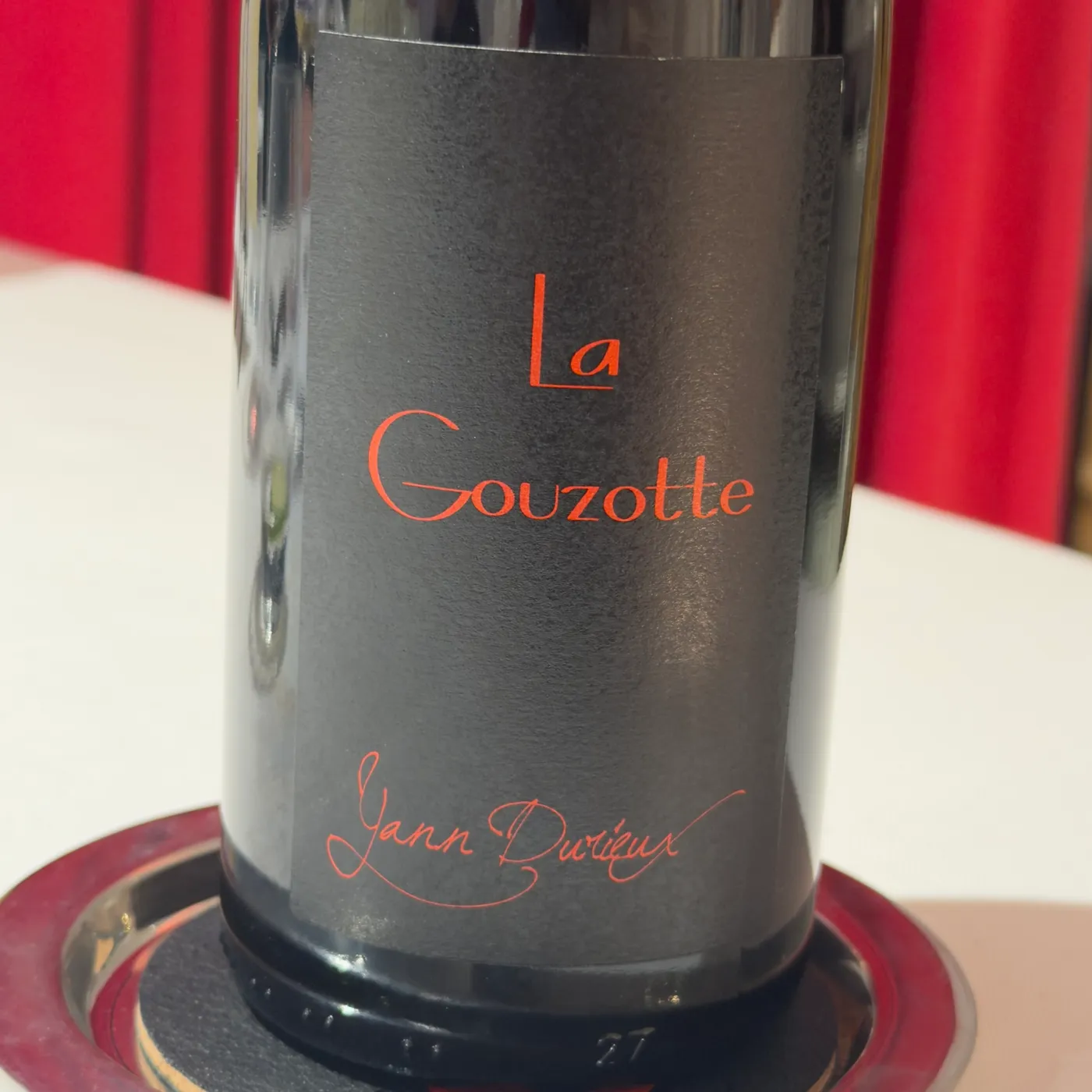
Yann Durieux, La Gouzotte 2018
Pinot Noir from Yann Durieux’s Recrue des Sens, grown in the Hautes-Côtes de Nuits and made with whole bunches and no added sulfur. Tomás found wild strawberry and savory mushroom notes in the 2018, with enough concentration for the food but an energetic acidity. A more untamed expression of Burgundy.
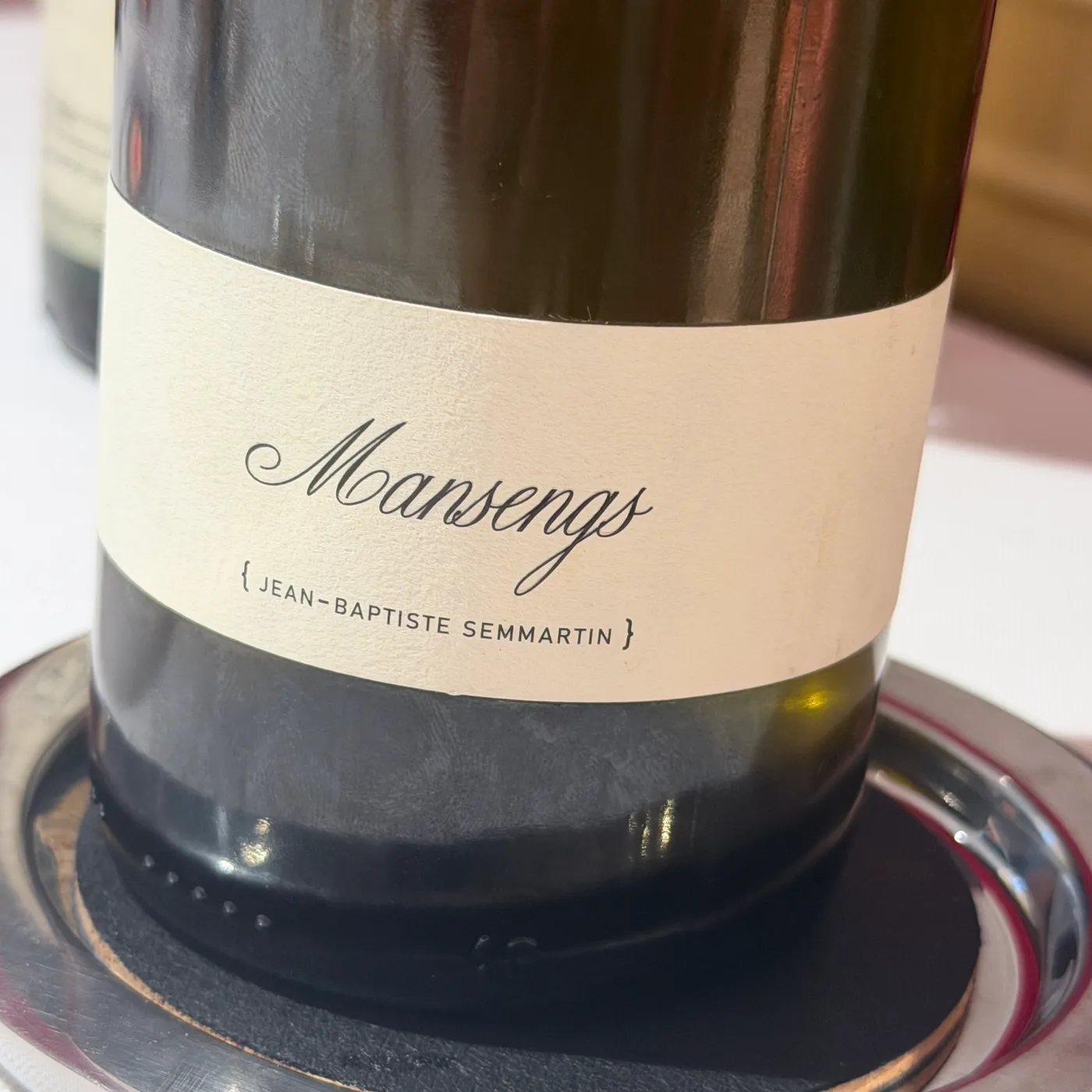
Jean-Baptiste Semmartin, Mansengs
Gros and Petit Manseng from Jean-Baptiste Semmartin, working in the Pyrenean foothills around Jurançon. Tomás described quince, ginger, and candied citrus, with a firm acidic line beneath the ripe fruit. The contrast between that generous fruit and its sharp finish explained why it belonged in this company.
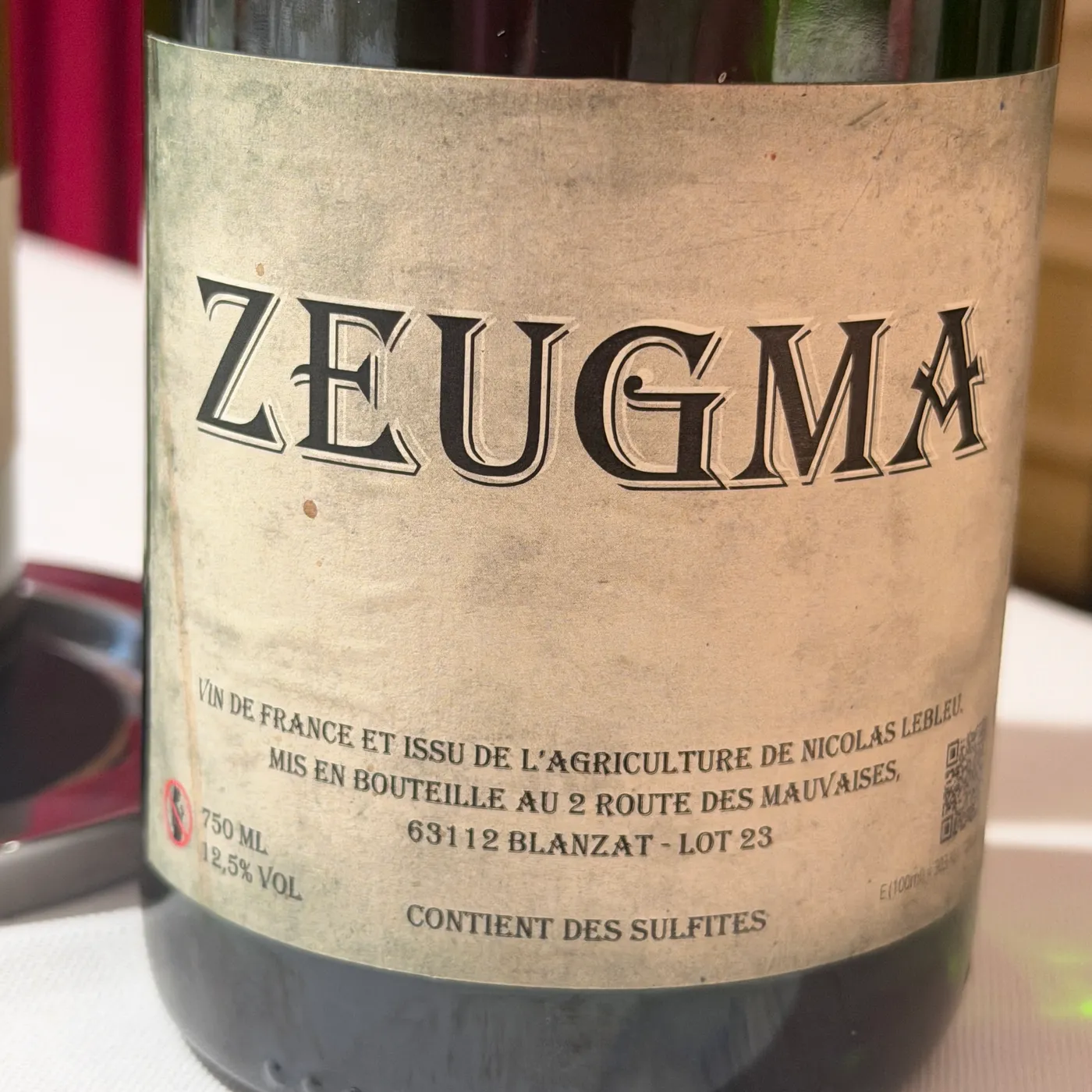
Nicolas Lebleu, Zeugma
An Auvergne red from Nicolas Lebleu, made with spontaneous fermentation and no added sulfur. Tomás’s description picked out peppery fruit, blood orange, and smoky, mineral notes. One of the smaller projects in the selection, with a savory side to its fruit that connected it to the cooking.
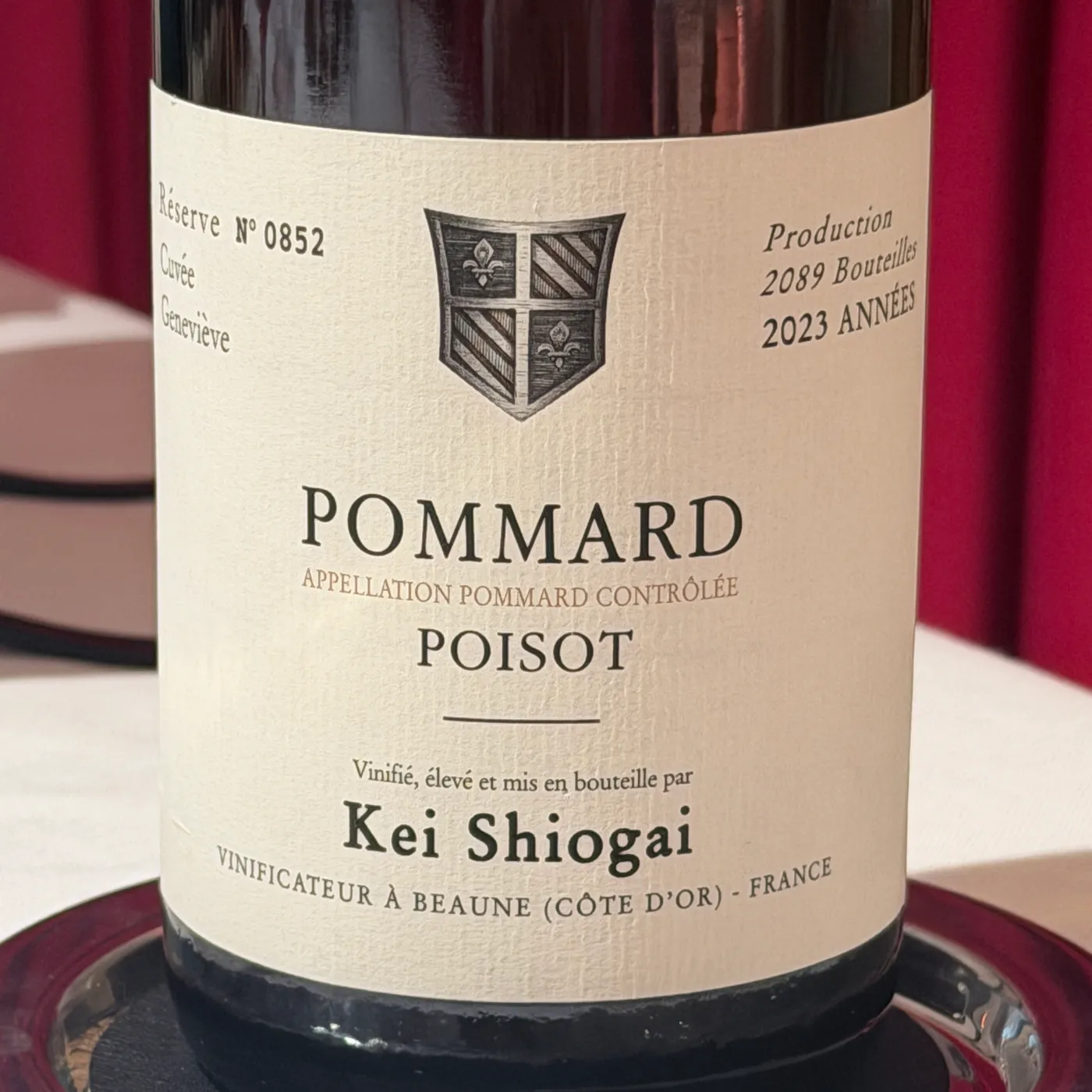
Kei Shiogai, Pommard Poisot 2023
Kei Shiogai’s 2023 Pommard came from Poisot, with just 2,089 bottles recorded on the label. This Cuvée Geneviève was made and bottled in Beaune. A young Burgundy beside wines with decades behind them, part of a selection that left room for both.
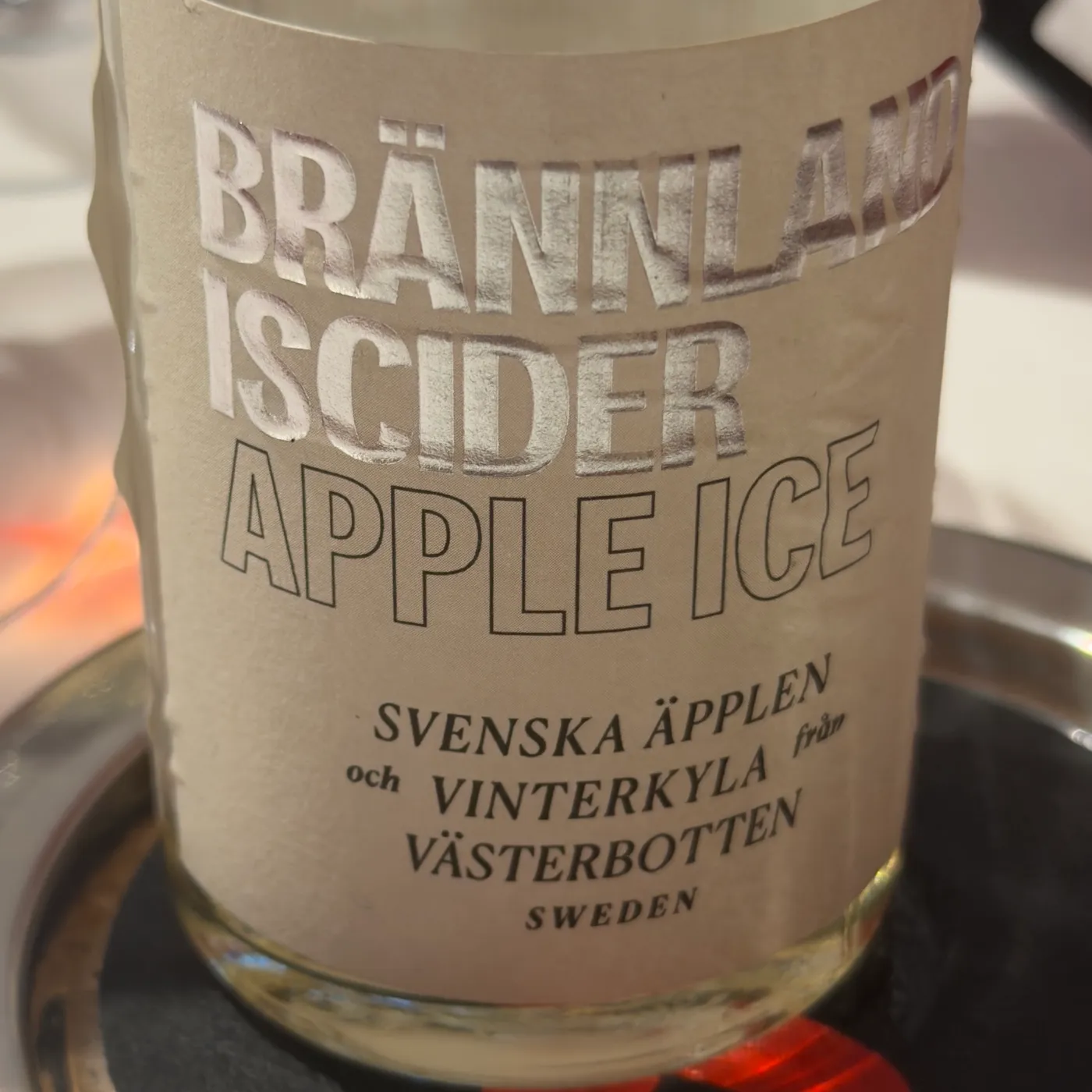
Brännland Iscider
Swedish apples, concentrated by natural winter cold before fermentation. Brännland’s ice cider brought a different fruit to the end of the meal. Tomás emphasized the balance between generous sweetness and unusually high acidity, with orchard-fruit and almond notes. The cold that shaped it supplied the concentration without taking away its freshness.