Casa Julian
Sat, Oct 24, 2026
Casa Julián de Tolosa: The Last Dinner of the Tour
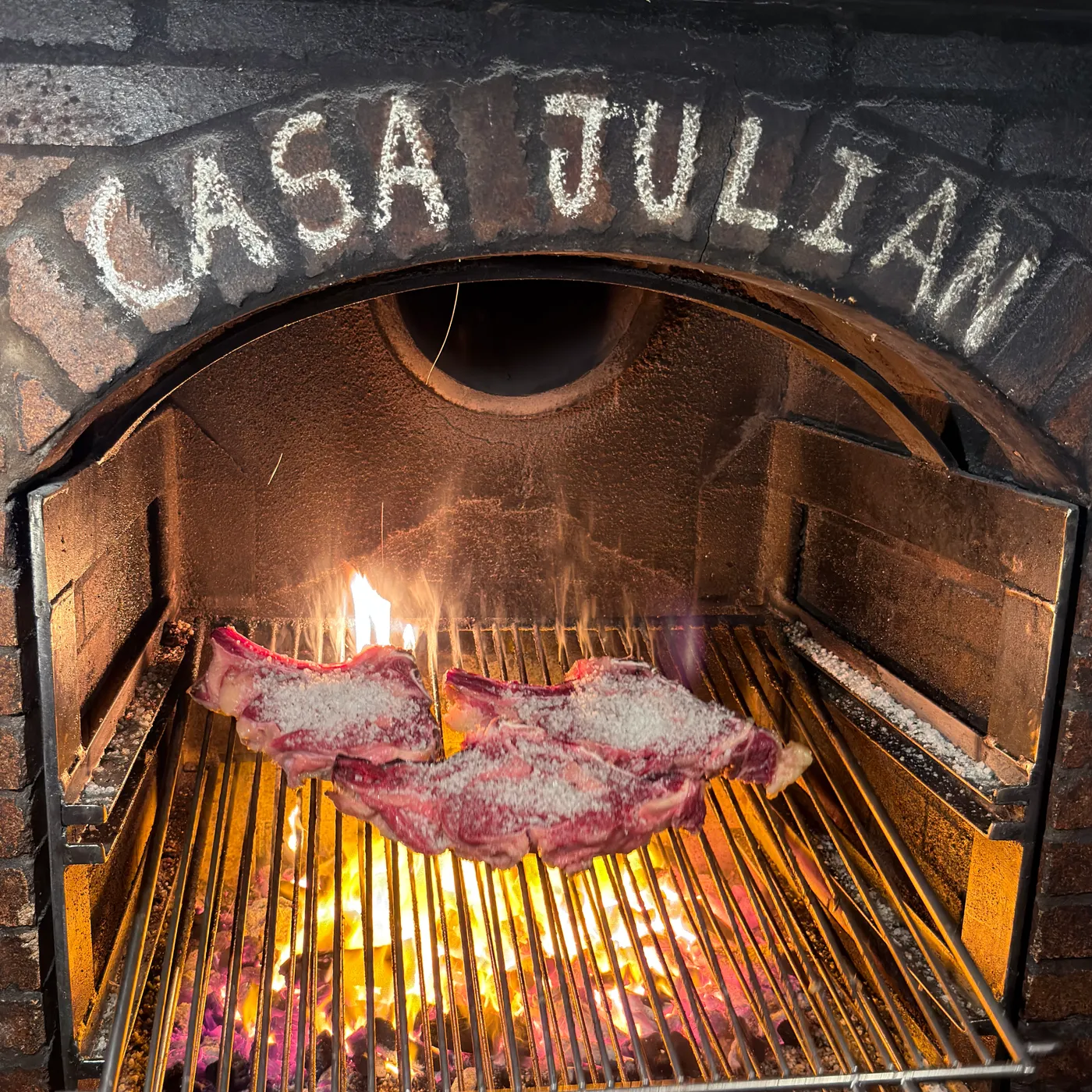
The grill at Casa Julián
Casa Julián was the last dinner of our GST tour.
Xavi is like a brother to me. We've been friends for almost ten years, and I love him to bits.
Xavi wasn't able to be there that evening. He answered my questions afterward in writing, beginning with what the restaurant means to him.
“It is my home, my family, and a fundamental part of my life.”
He grew up watching his parents work. In his memories of the restaurant, both his father and his mother are there: their effort, their dedication and the way they welcomed people. He remembers the customers and the smell of the grill. He is clear that both parents helped make Casa Julián what it is today.
The house began with Julián Rivas and a fruit shop in Tolosa in the early 1950s. A bar and a grill followed. Xavi credits Julián with pioneering the use of the inclined grill and choosing mature cattle at a time when veal was the usual choice.
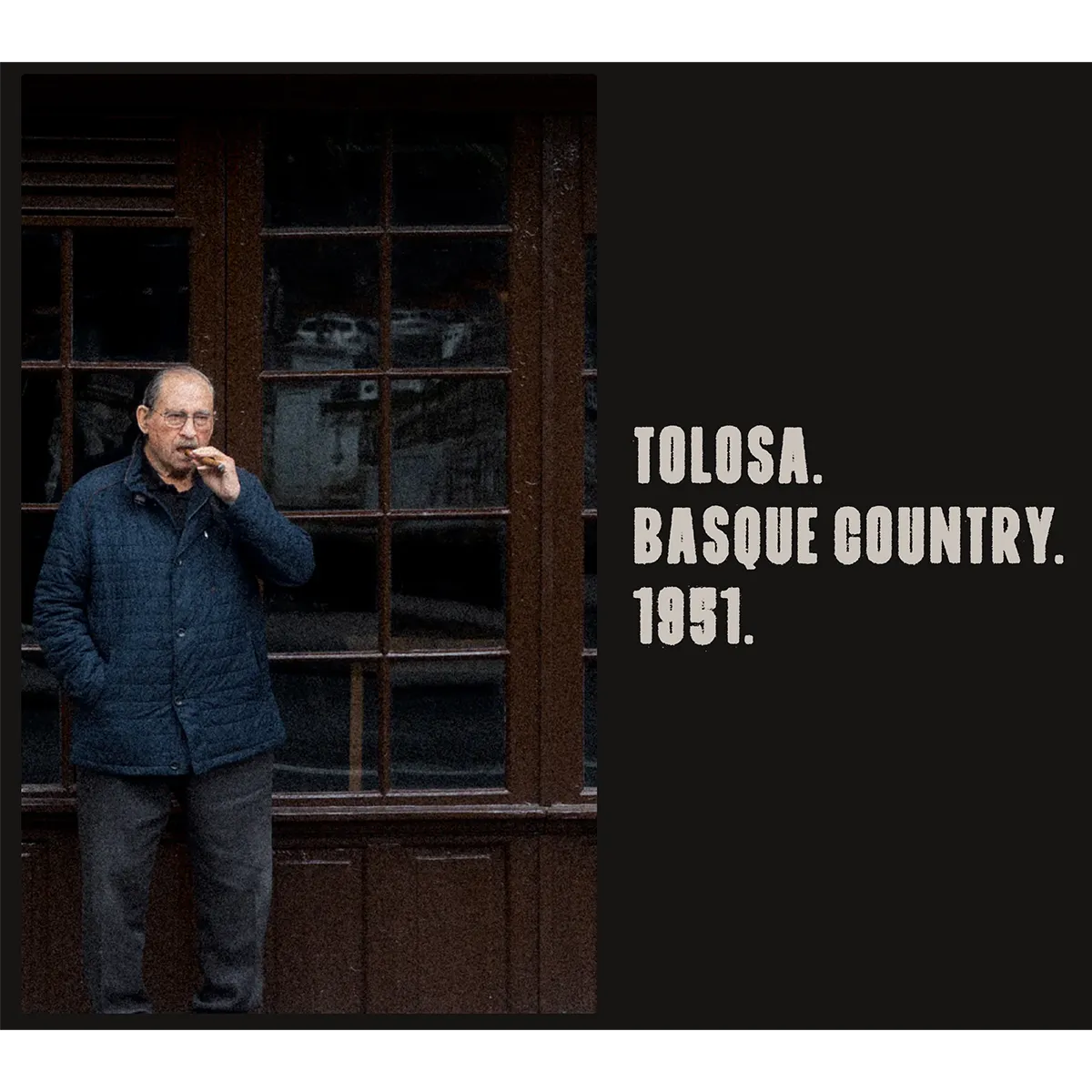
Julián Rivas
In 1981, Matías Gorrotxategi took over, having learned the craft directly from Julián. Today, his son Xabier carries it forward.
For Xavi, inheriting Casa Julián means taking responsibility for what made it special, while continuing to learn and change.
“Tradition is the starting point, but knowledge is what allows us to evolve.”
That thought connects naturally to the dinner we ate. The charcuterie grew out of finding uses for different parts of both cow and pig. The green beans were a recent addition, cooked in txuleta fat and served over a cream flavored with cecina trimmings. Seasonal boletus and slowly confited leeks had their own place before the meat arrived.
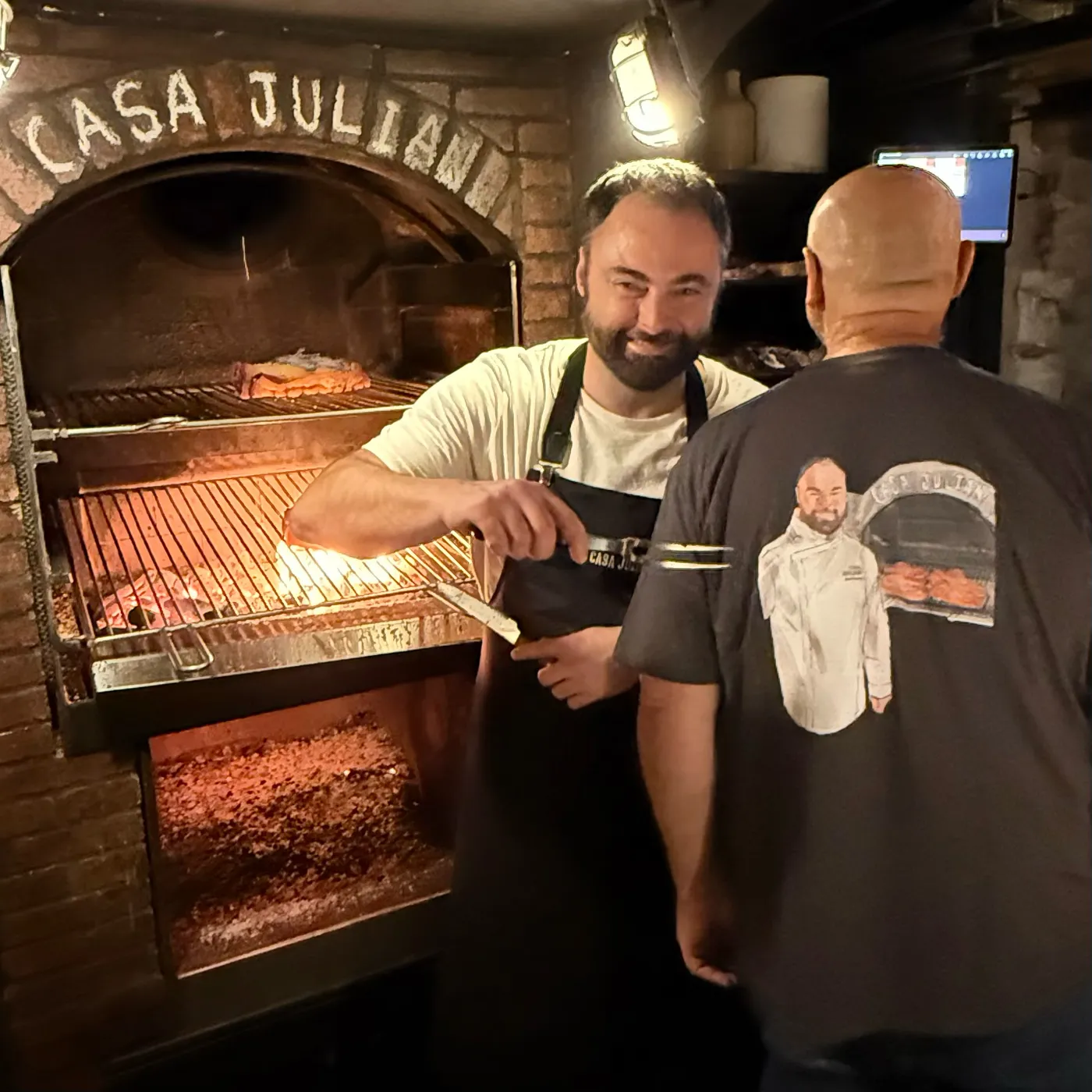
Mi hermano Xavi
The txuleta begins with selecting the animal. Xavi favors mature cattle and relatively short, carefully controlled aging, generally under 35 days, to preserve the meat's natural character. At the grill, he describes attention to temperature, distance from the fire and the moment of salting. The excess salt is removed before serving.
These are the details behind a chop that arrives carved at the table.
That evening, Gabriel Sandoval was at the grill, Ivan Calvo headed the kitchen, and Cristian Vasquez looked after the wine. Their explanations, followed by Xavi's answers, are part of the story of our final dinner.
What we ate
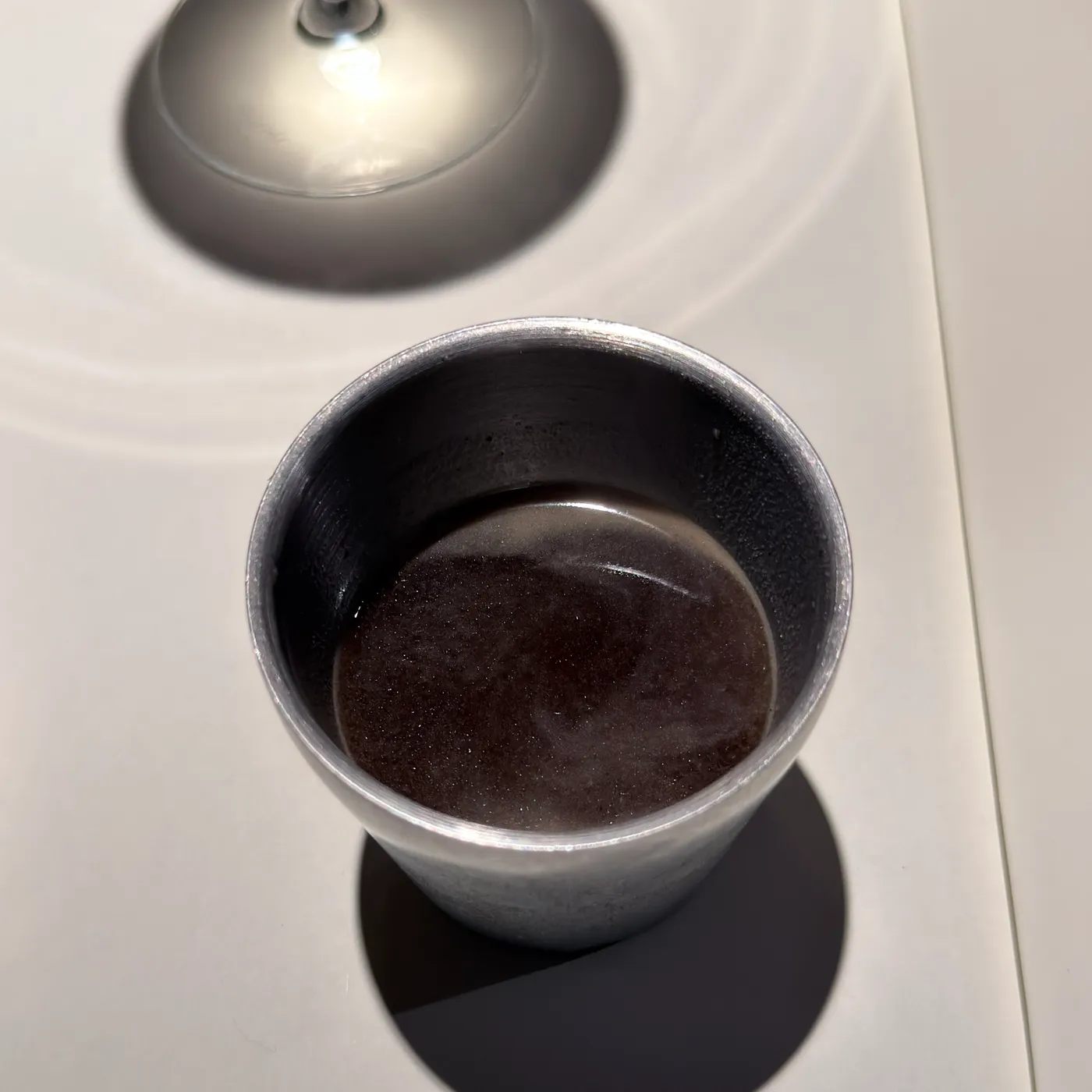
Broth
We began with a cup of broth, before the charcuterie arrived.
Charcuterie
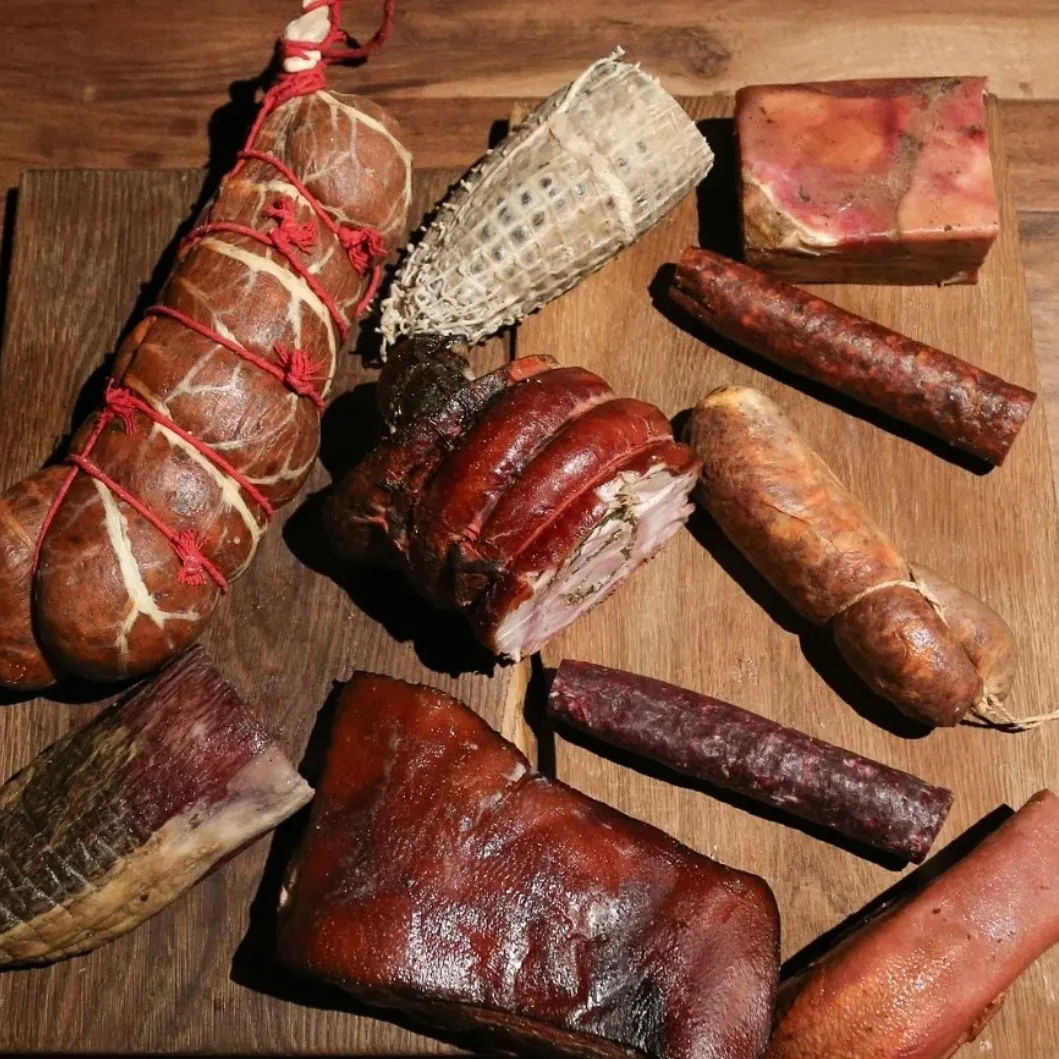
The kitchen took us through the charcuterie piece by piece. The starting point was a practical one: making good use of different parts of both the cow and the pig.
Each preparation takes a different route. Some cuts are cured, others brined and smoked, slowly cooked or pressed into a mold. There was plenty to ask about before the txuletas arrived.
Cured, smoked and slowly cooked
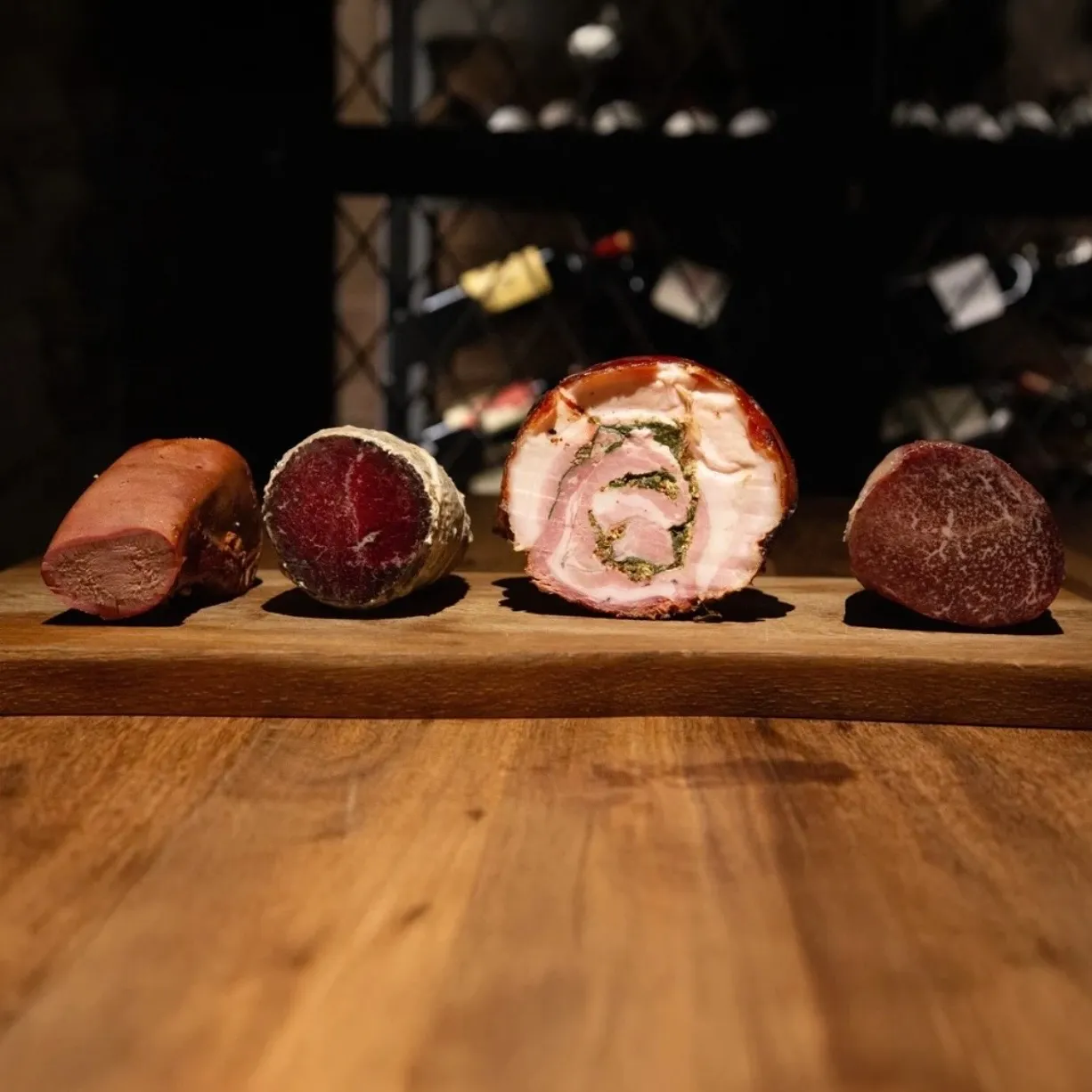
The cecina is made from cuts of beef hip, cured for approximately two years and served in thin slices.
Beef tongue takes another route. It spends about a day and a half in brine before being smoked in the oven and sliced for the plate.
There was also porchetta, cooked at low temperature, and a thick slice of sobrassada.
The charcuterie selection
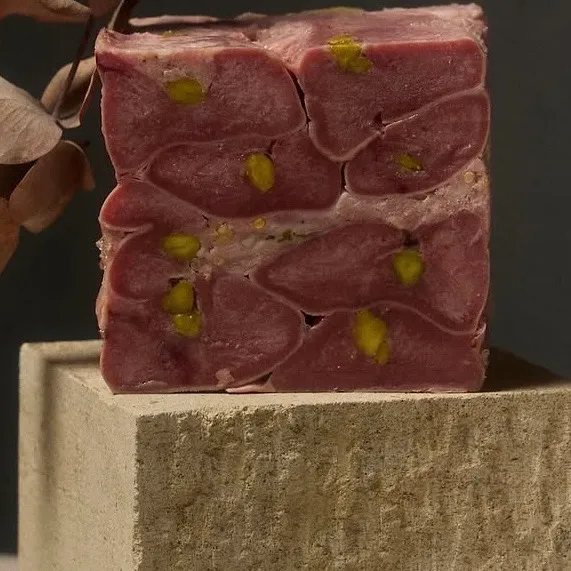
The pressed pig's ear involves several stages. The ears are slowly cooked, seasoned with salt, spices and coriander, then pressed into a mold and cooked again. Slicing the finished block reveals the layers within it.
The kitchen described cuixot as similar to morcilla, or blood sausage. Their version combines blood, lean pork and Iberian pork jowl with dried apricots and pistachios. It is gently cooked for about two hours.
Pâté de campagne completed our plate. Palo Cortado sherry goes into its mixture, a detail the kitchen pointed out as they explained the different preparations.
Green beans with txuleta fat and cecina cream
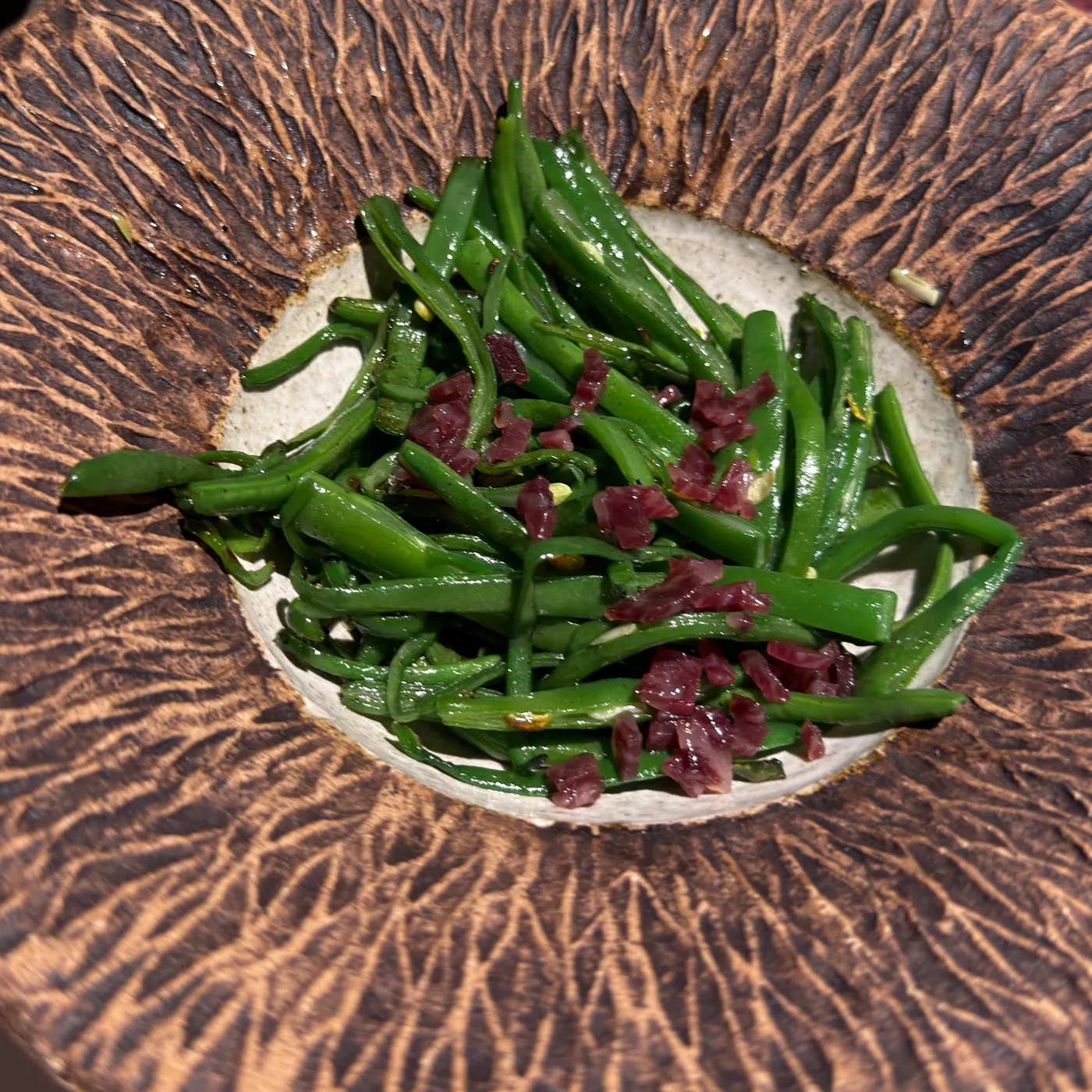
The green beans had joined the menu only a few weeks before our visit.
They are blanched, marked over the embers, then sautéed over very high heat in fat from the txuleta. Underneath is a cream infused with cecina trimmings and thickened with a little cooked potato.
The connection with the charcuterie plate is very direct. Cecina appears again, this time flavoring the cream, while fat from the chop is used to cook the beans.
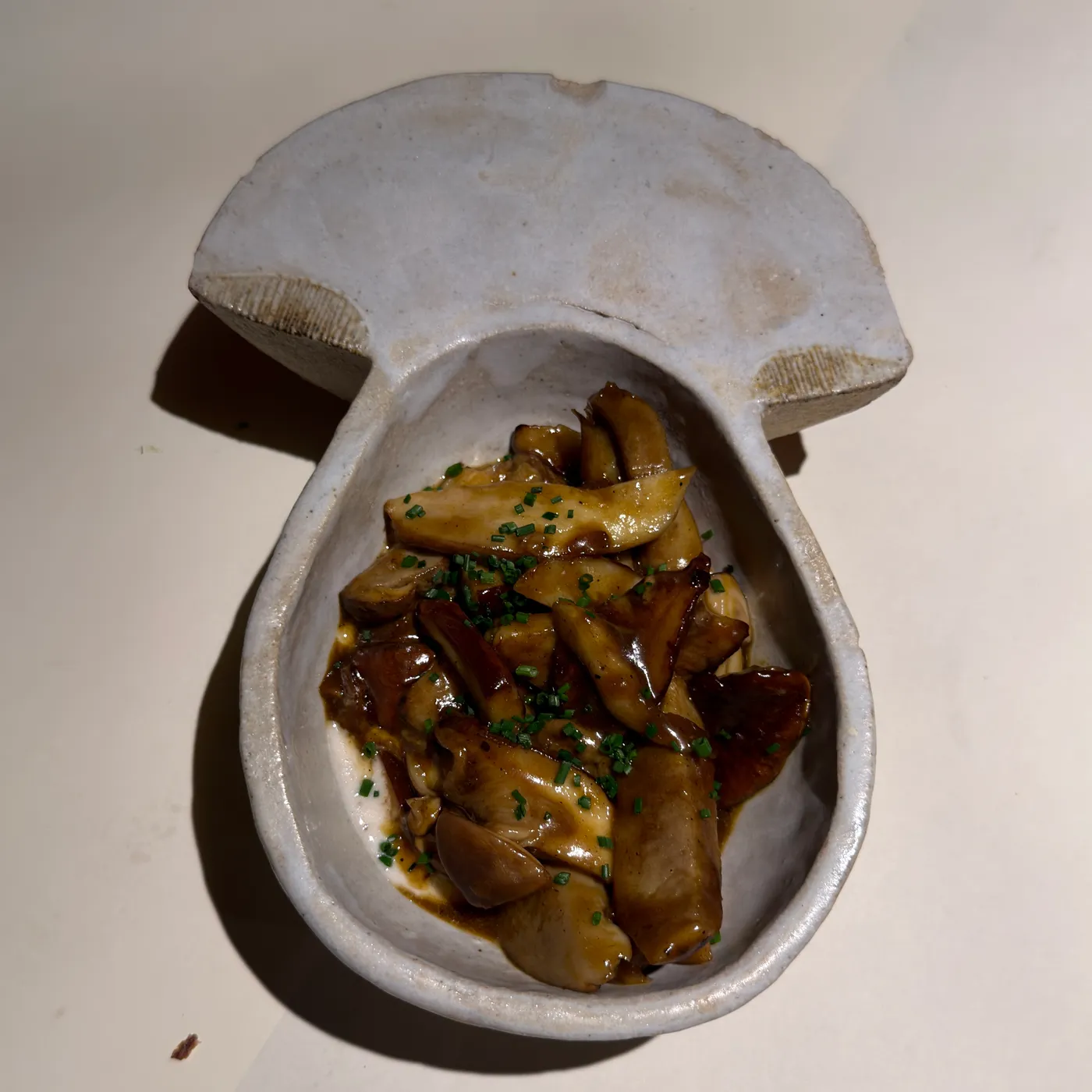
Boletus with meat demi-glace and egg yolk
The kitchen had started serving these seasonal boletus about a week earlier.
The mushrooms are sliced and marked over the embers. A meat demi-glace is mixed with egg yolk, and the grilled boletus are added. A little chopped chive and a slice of the mushroom finish the dish.
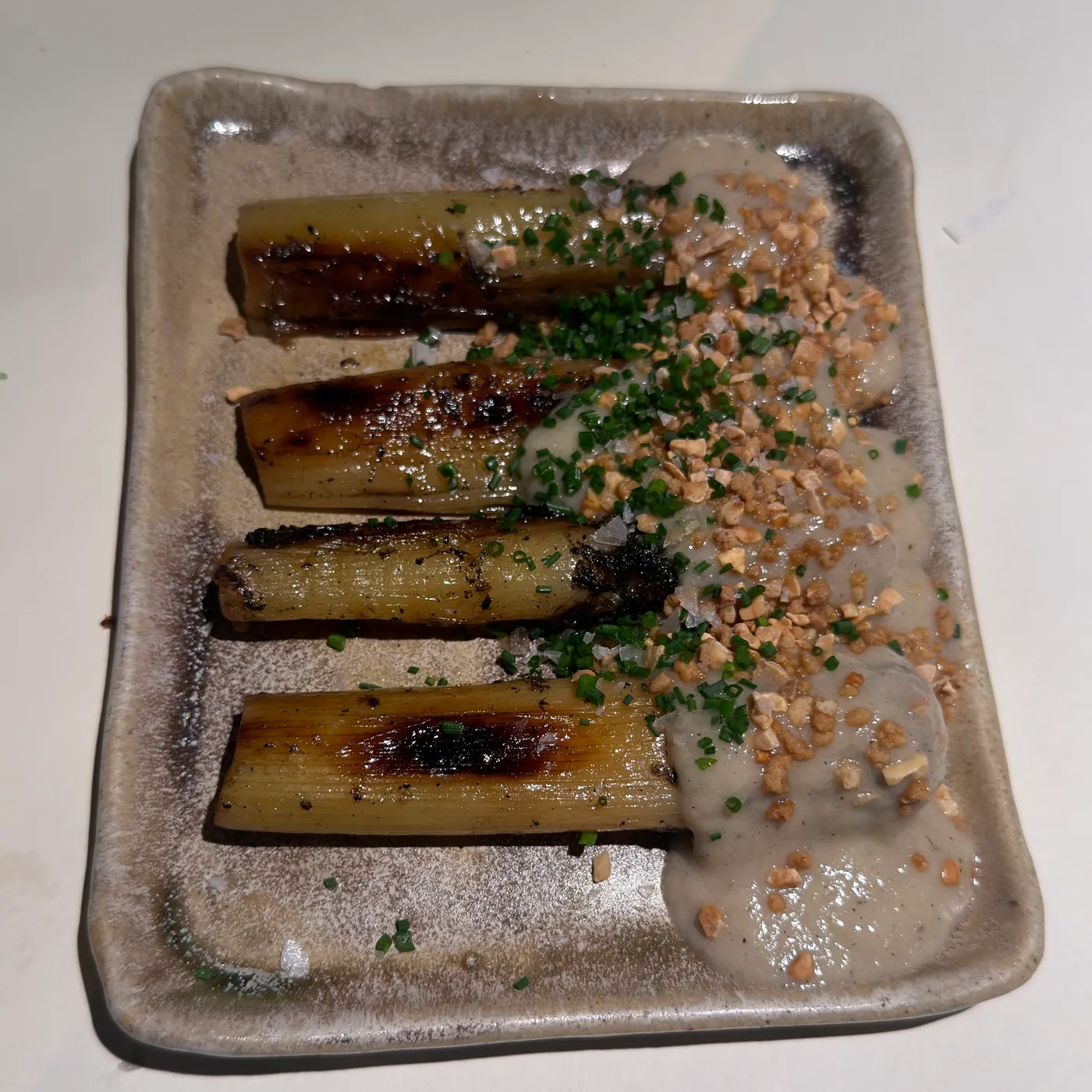
Leeks with leek cream and almond crocanti
The leeks spend approximately three hours confiting at 80°C before they are marked over the embers.
Their accompanying sauce is made by puréeing the confited leek itself. On top is almond crocanti, a slightly sweetened, crunchy almond preparation.
The leek appears in two forms on the same plate, with the almonds providing the contrast.
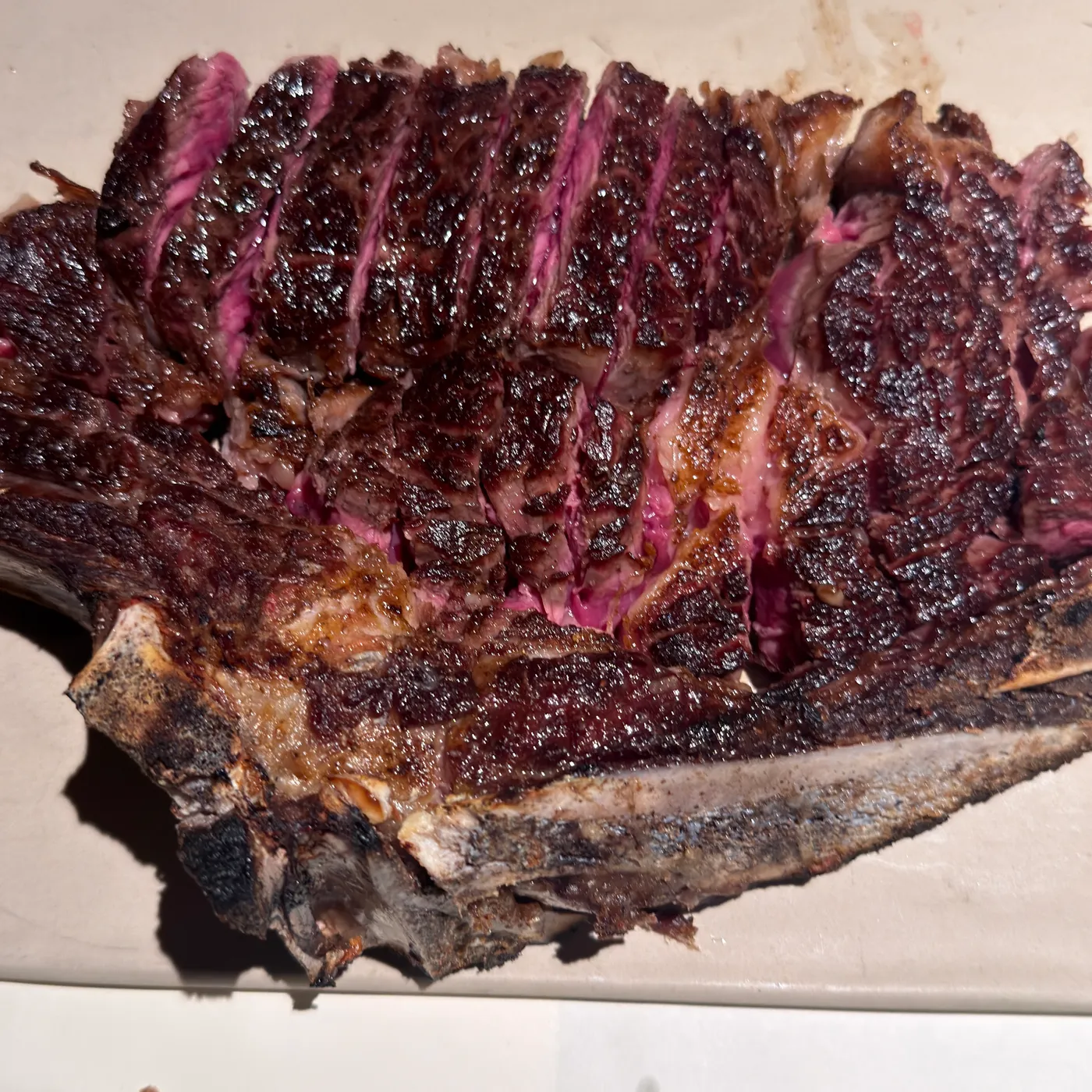
Txuleta
We were served three chops, all from Simmental cows.
The first two came from Lazkaomendi, nearby, where the restaurant keeps some of its cattle. The explanation given to us was an approximately eleven-year-old cow, 28 days of aging, and a cut from the lomo alto, the rib section.
The third was also Simmental, but from Bavaria: an eight-year-old cow, with the meat aged for 25 days.
Gabriel Sandoval was responsible for the grill. The method explained to us begins with a warming stage: the chop goes onto the grill, receives a generous covering of salt, and is allowed to come up in temperature for about ten to fifteen minutes before the main cooking.
Then comes the heat needed to brown the surface. The kitchen specifically mentioned the Maillard reaction, the browning that produces the crust. The chop is turned, the other side is salted, and the cooking is completed before the meat is carved.
Xavi later explained that they salt during grilling to help season the meat, then remove the excess at the end so diners taste the meat without encountering grains of salt as they chew. His general approach is to keep aging relatively short and carefully controlled, usually under 35 days. The 28- and 25-day aging periods described for our chops fit that approach.
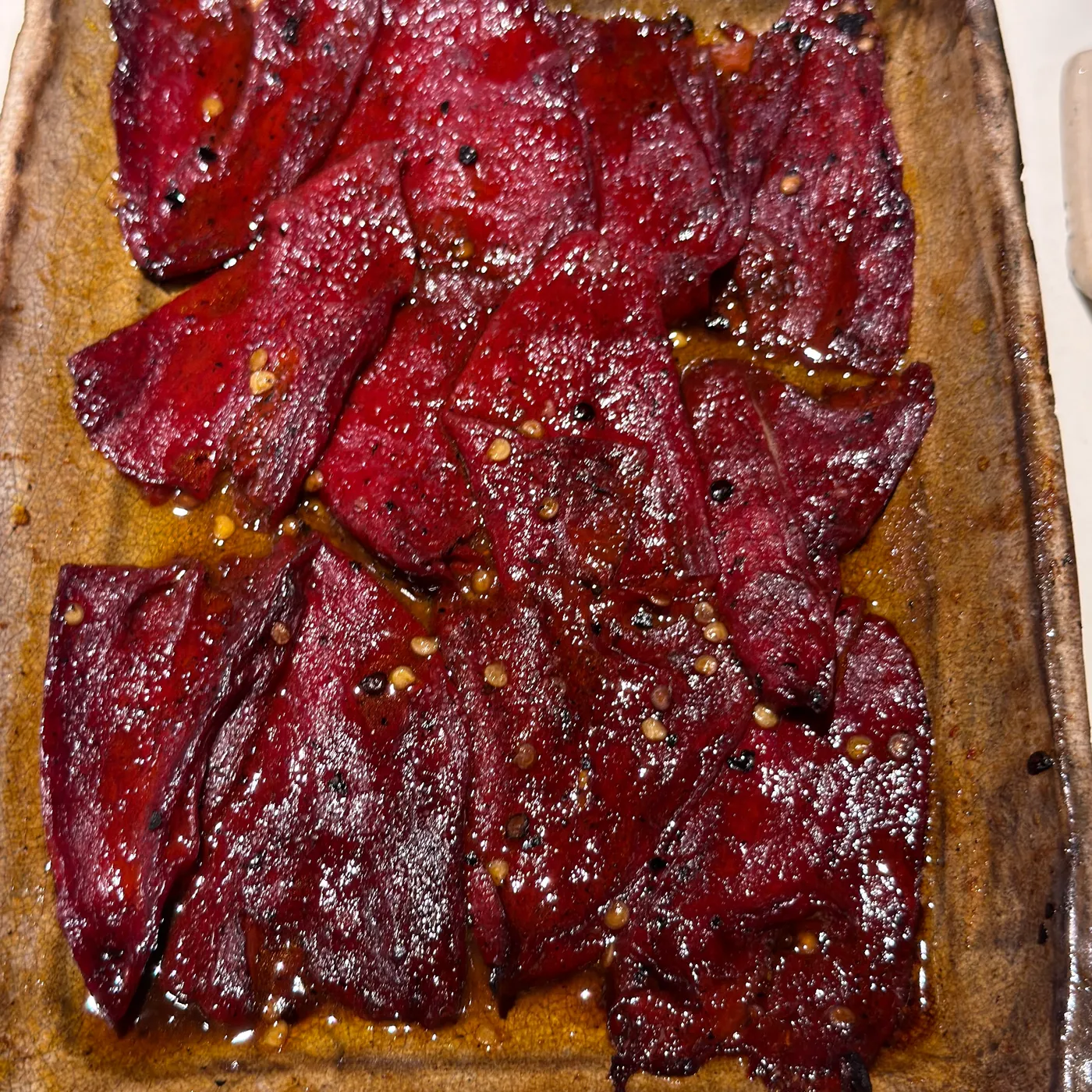
Piquillo peppers
The peppers deserve their own explanation.
Casa Julián works directly with the producer, who harvests the piquillos, roasts them so they can be peeled, and sends them to the restaurant.
In the kitchen, they are confited in oil to dehydrate them. Then, arranged on trays, they are rehydrated on the plancha two or three times with a concentrated stock made from piquillo peppers and red bell peppers.
As the liquid reduces over the heat, the peppers' own sugars caramelize. The preparation moves through dehydration, repeated additions of pepper stock, and reduction before the tray reaches the table.
There is a good deal of work behind a plate that can look so straightforward.
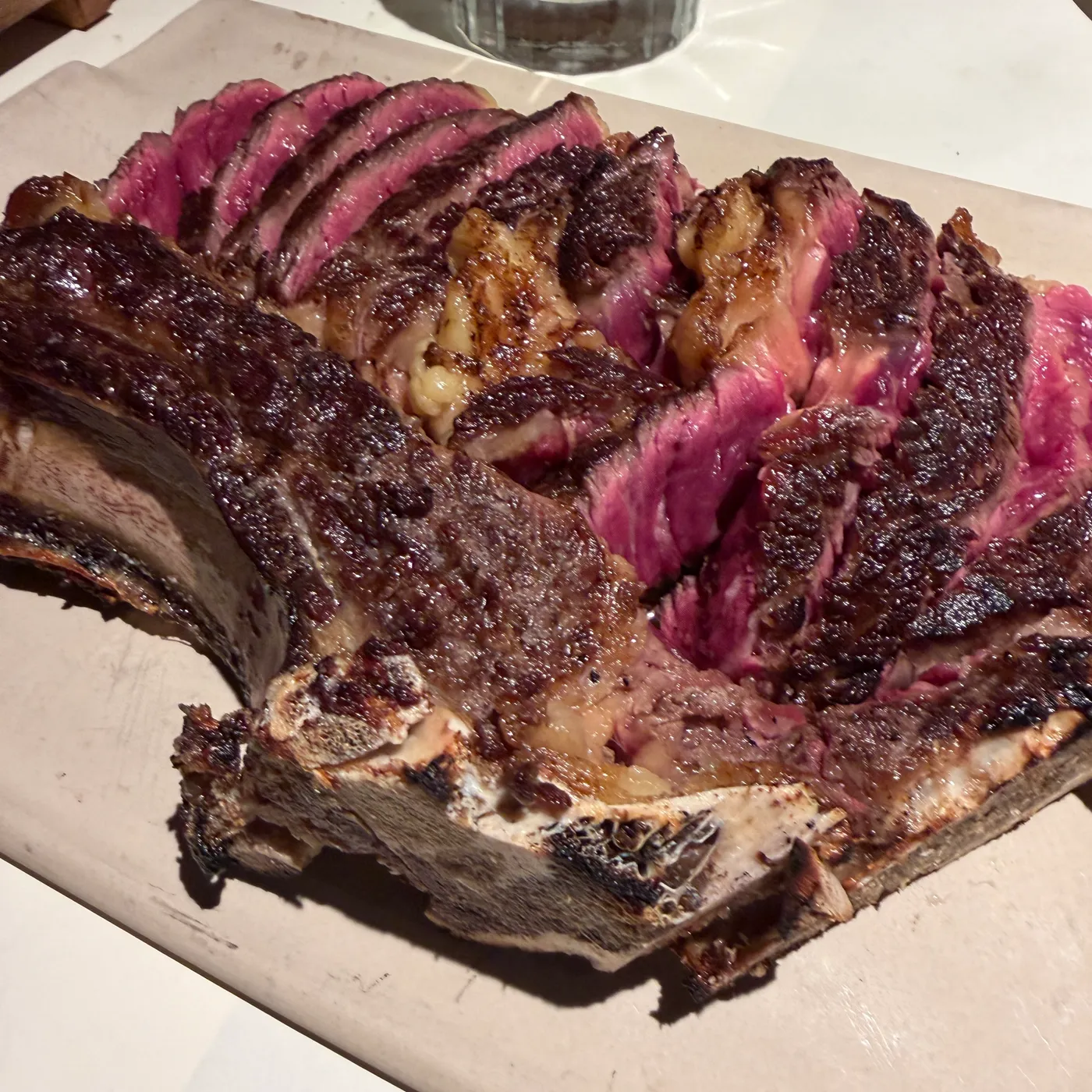
Txuleta
The chops reached us carved, with the slices arranged alongside the bone. The peppers remained part of that sequence, between the servings of meat.
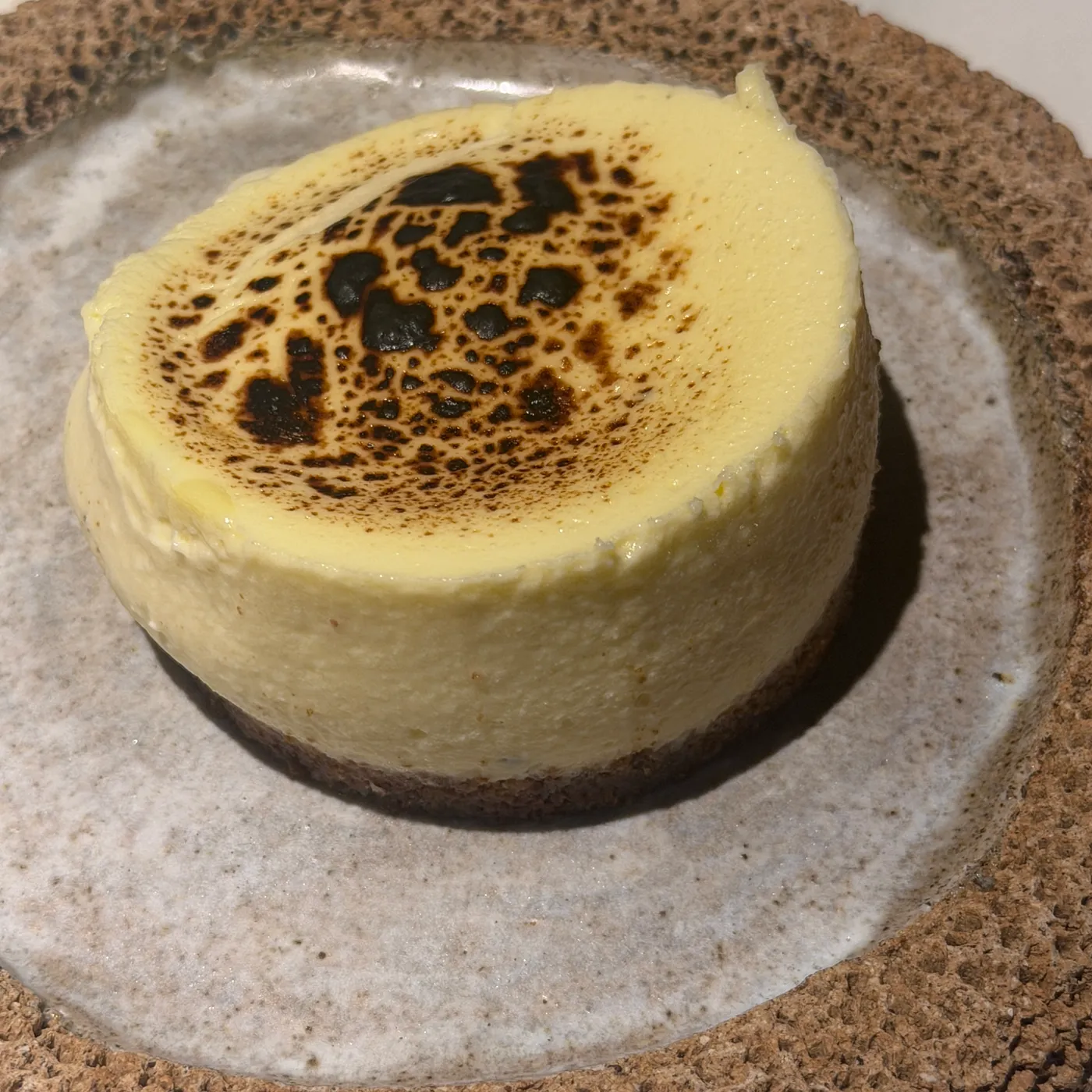
Cheesecake
An individual cheesecake, with a browned surface and a dark base.
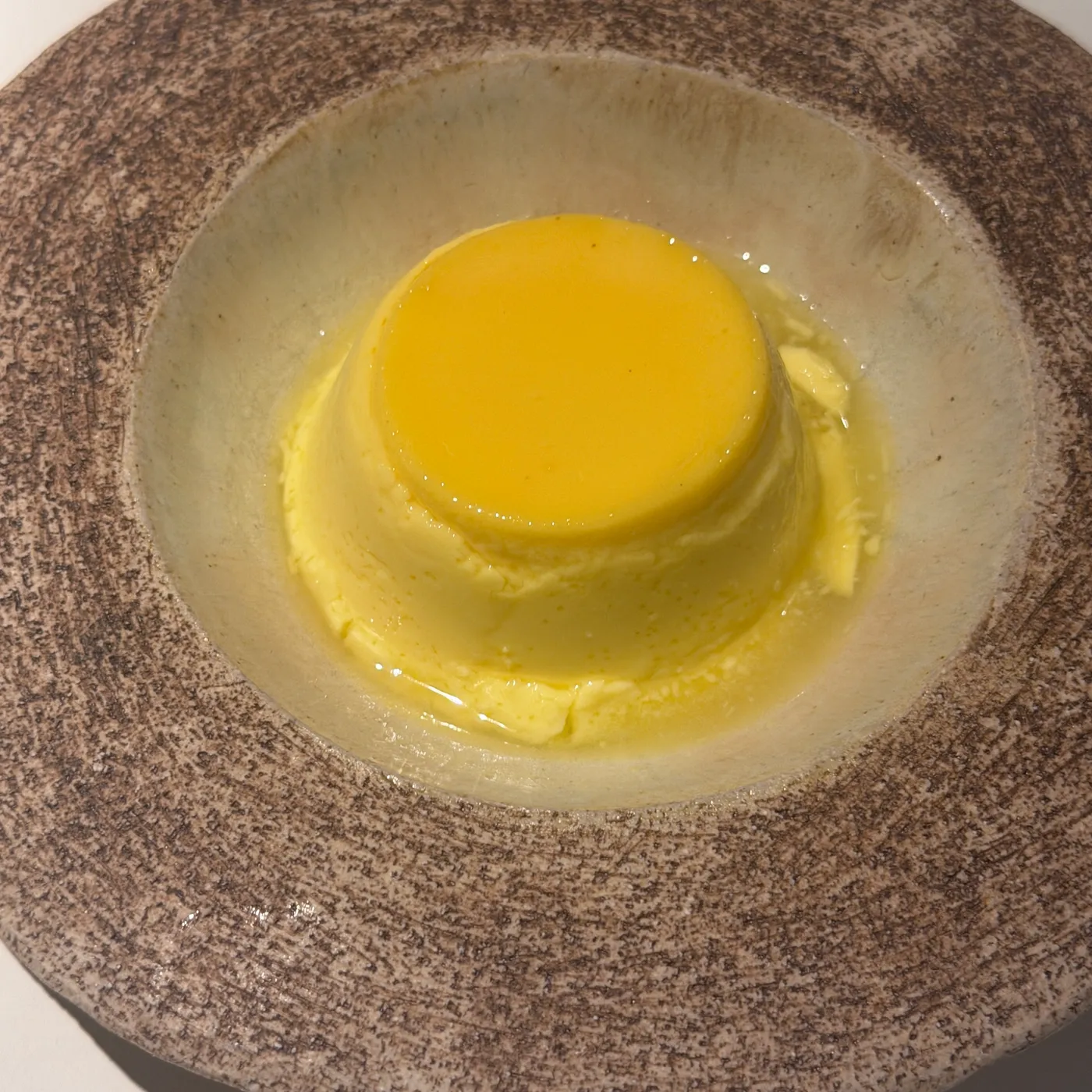
Flan
Flan, served simply in a shallow bowl.
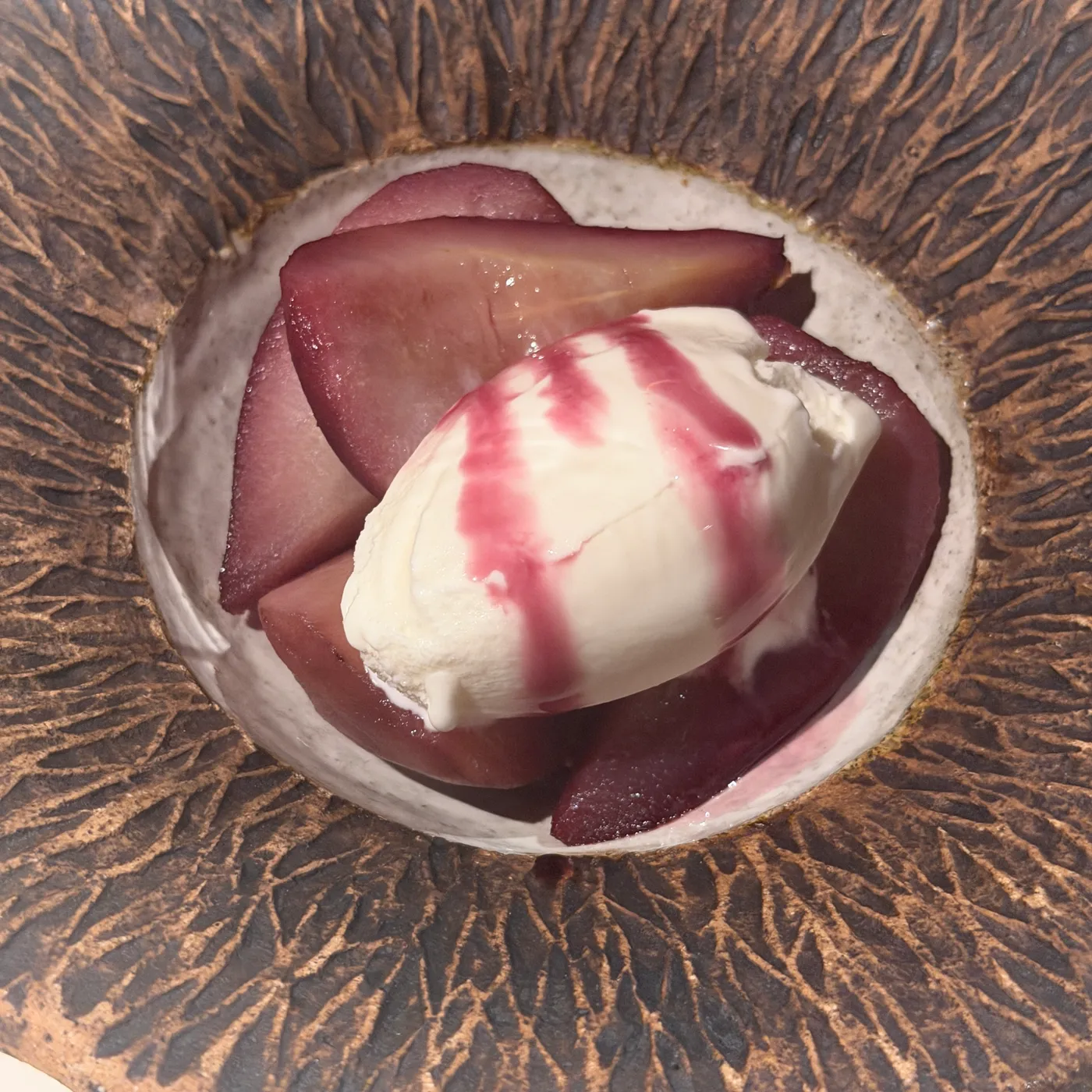
Pears with ice cream
Slices of pear with a scoop of ice cream and a red-purple sauce.
Cristian Vasquez talked us through the three bottles, in the order we drank them.
What we drank
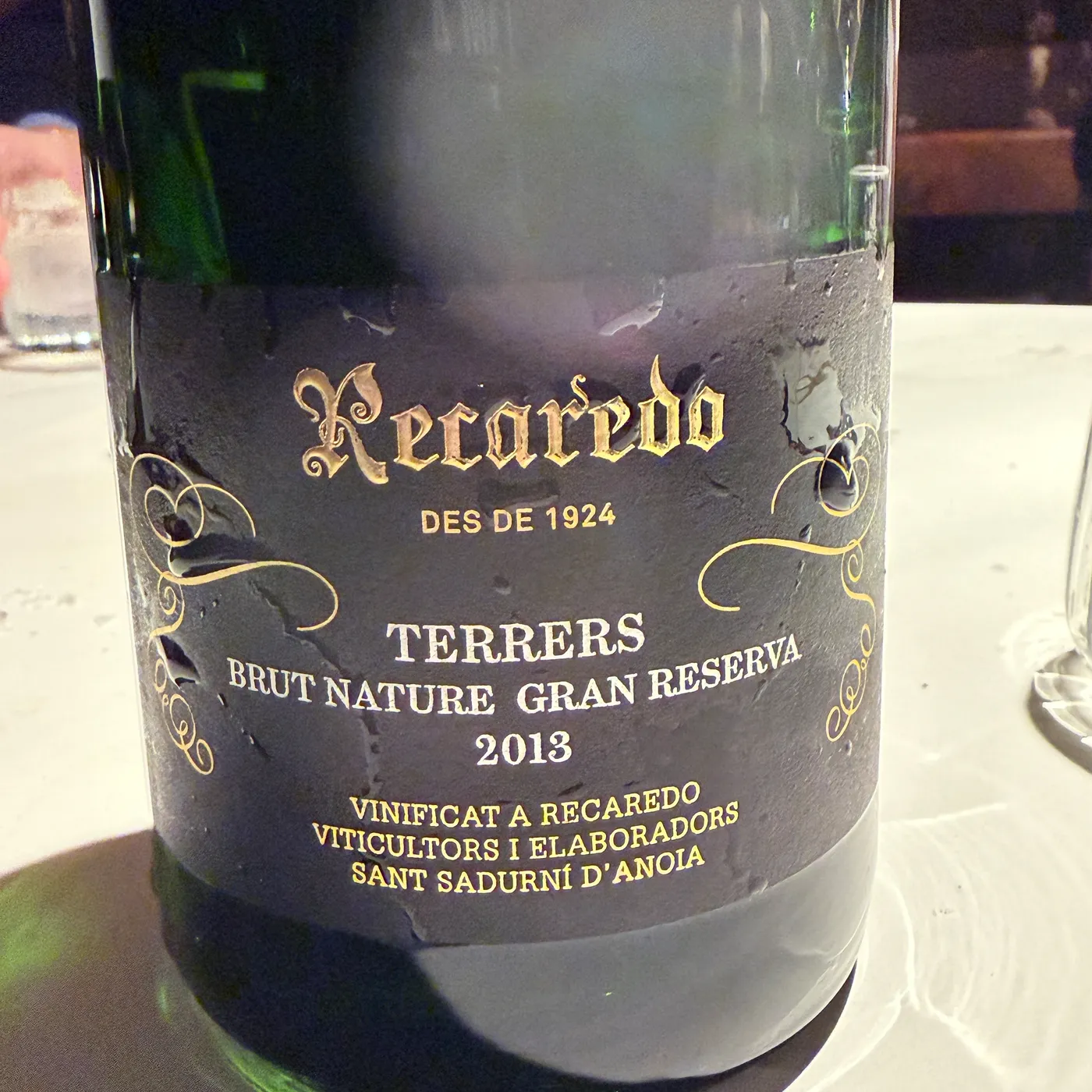
Recaredo Terrers Brut Nature Gran Reserva 2013
We opened with the 2013 Recaredo Terrers. Cristian told us there were just two bottles left at Casa Julián.
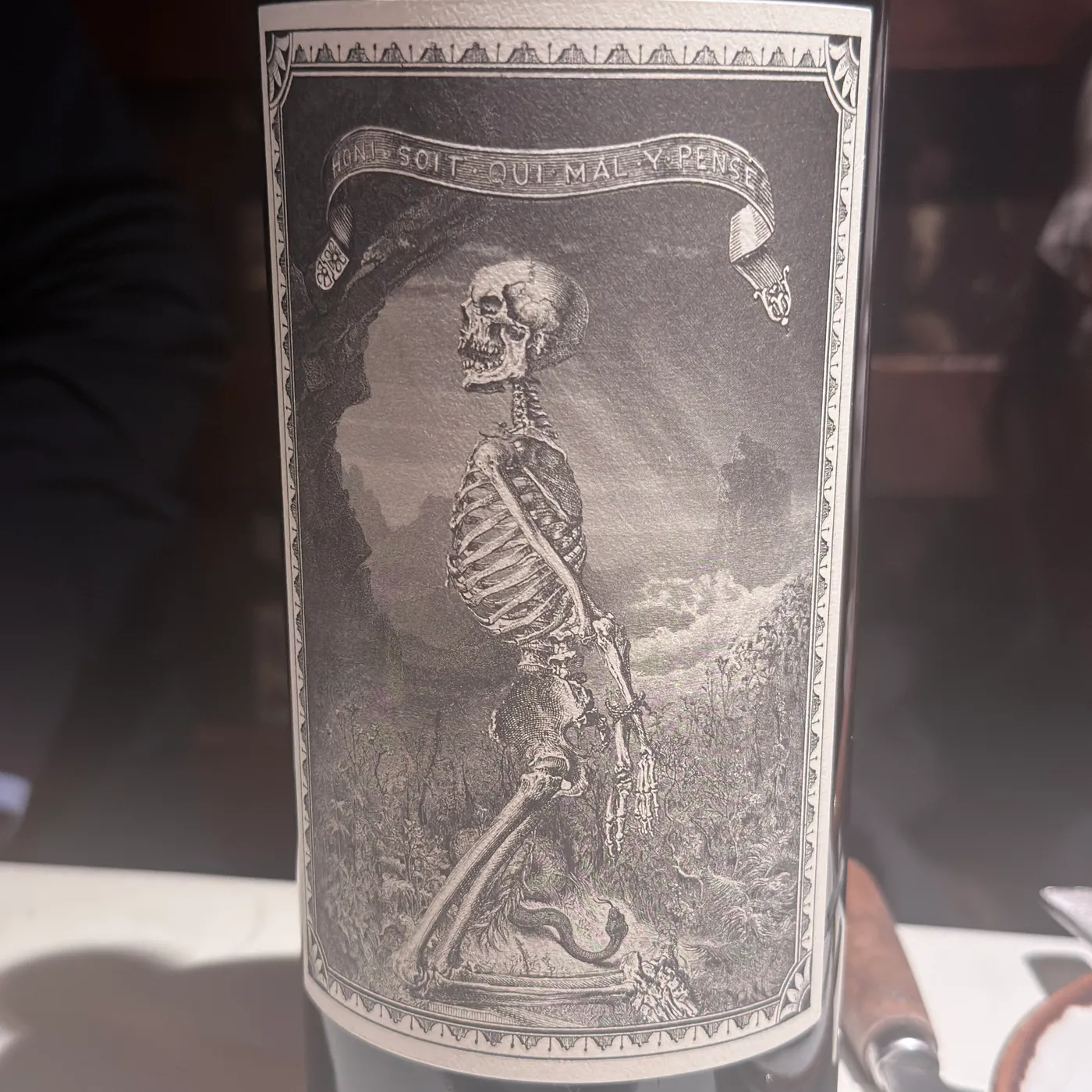
Oxer Bastegieta, Kalamity 2016, magnum
Next came a magnum of Kalamity 2016. Cristian introduced Oxer Bastegieta as part of Rioja's new wave and spoke about how beautifully this bottle had developed.
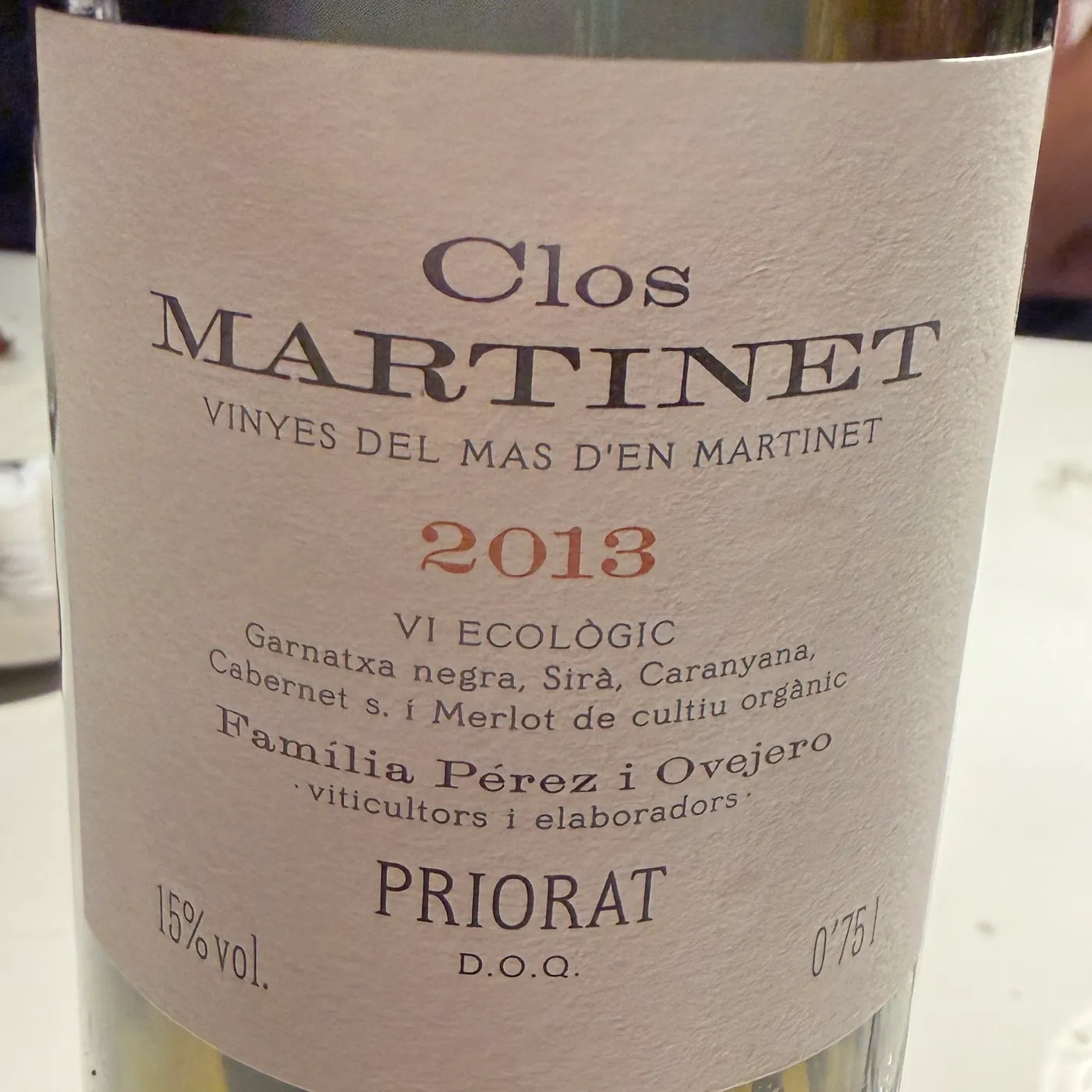
Clos Martinet 2013
We finished with Clos Martinet 2013, from Priorat. Cristian singled out its density and its suitability for the meat.
This was where our GST tour ended, with Gabriel at the grill, Ivan in the kitchen and Cristian looking after the bottles.
And plenty to talk about beyond the txuleta.